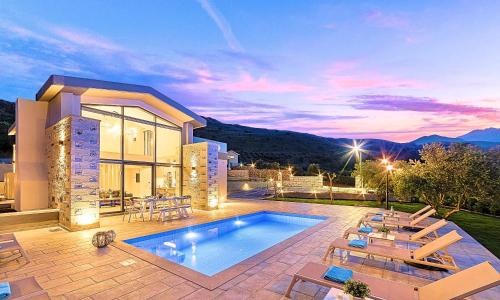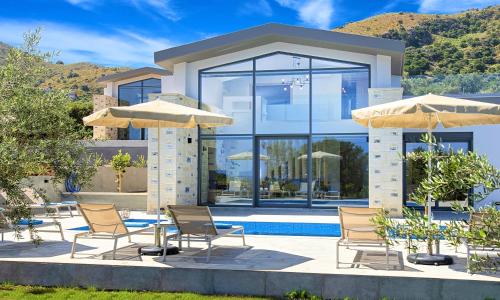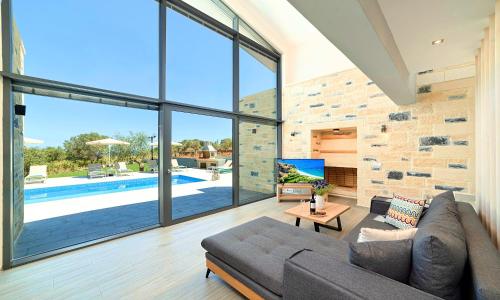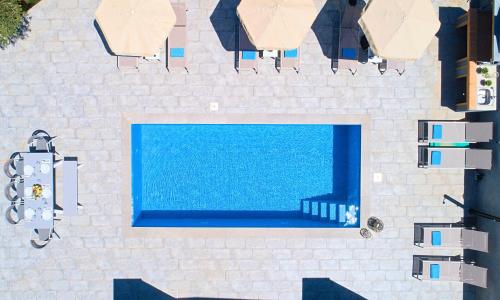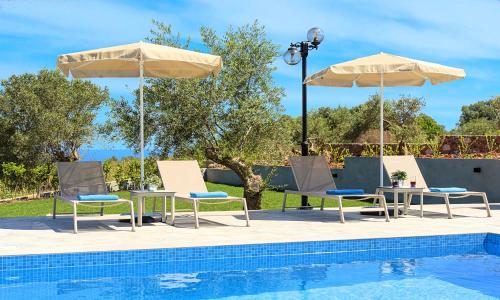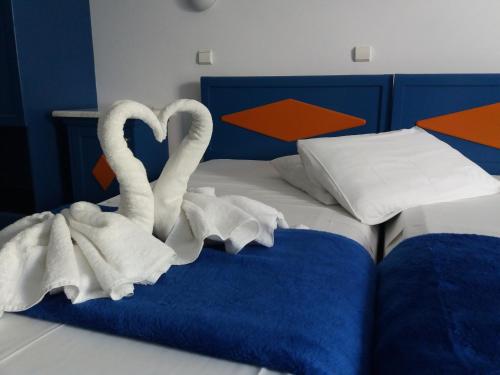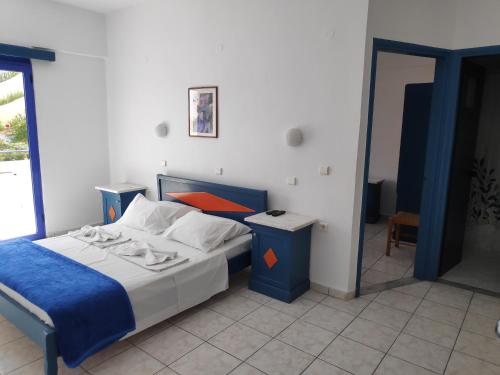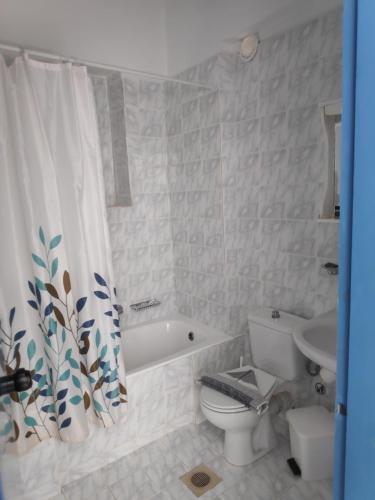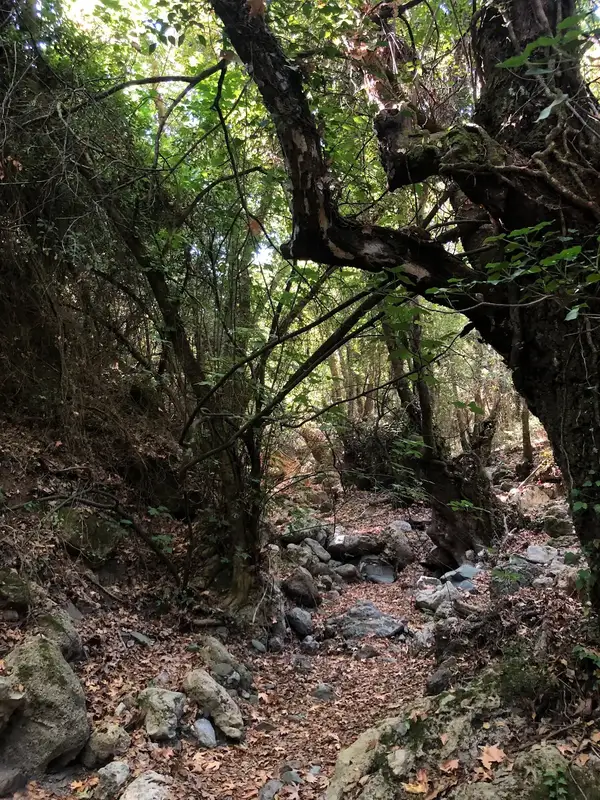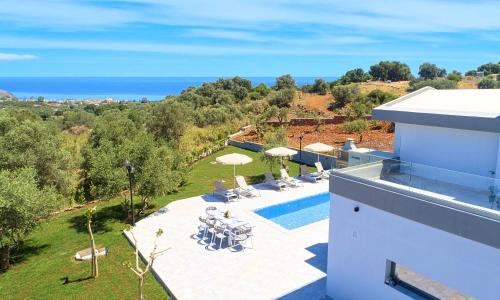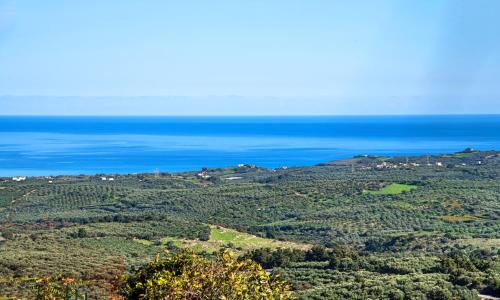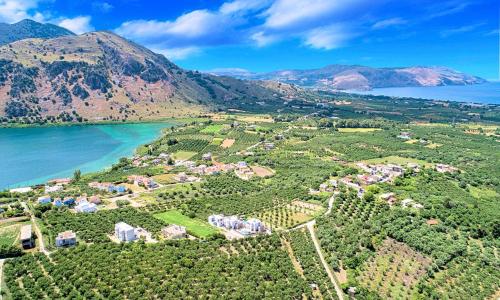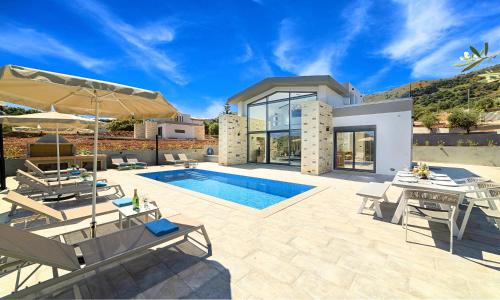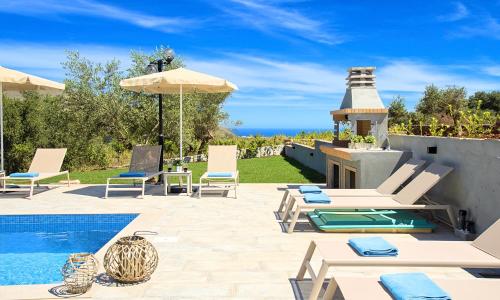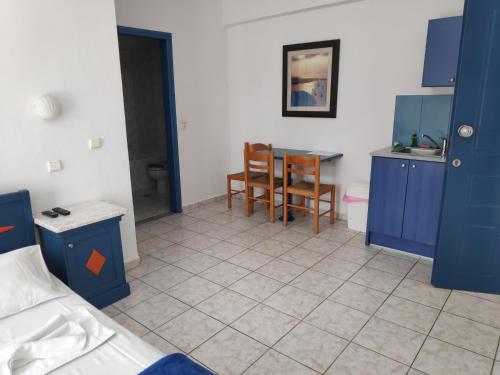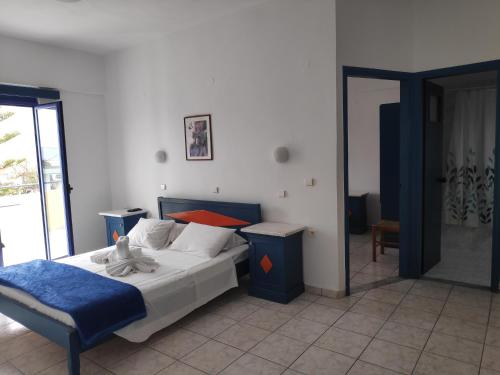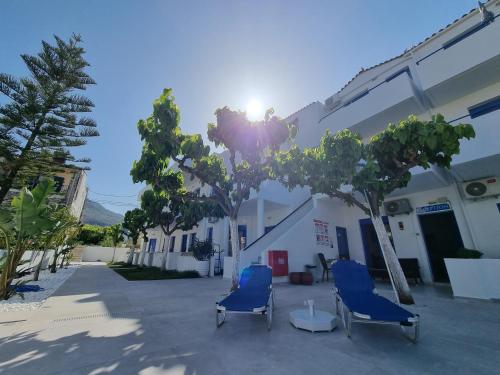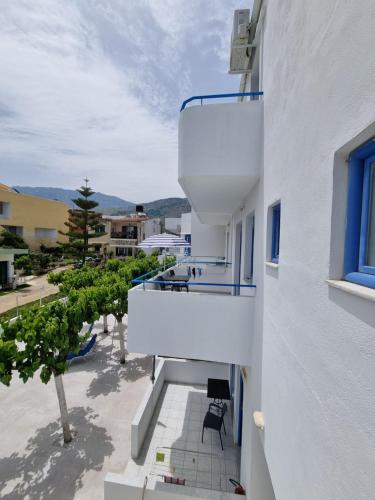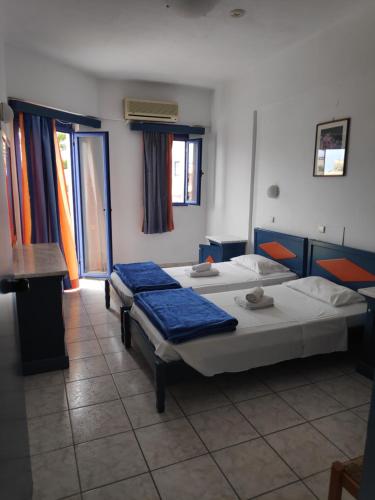

Set 2.1 km from Kalivaki Beach, Moonlights Villas Heated Pool offers pool with a view, a garden and air-conditioned accommodation with a balcony and free WiFi.
Each unit comes with a terrace, a fully equipped kitchen with a dishwasher, a fireplace, a seating area, a flat-screen TV, a washing machine, and a private bathroom with shower and a hair dryer. An oven, a microwave and toaster are also featured, as well as a coffee machine and a kettle.
The villa offers a barbecue.
Both a bicycle rental service and a car rental service are available at Moonlights Villas Heated Pool.
Georgioupolis Beach is 2.2 km from the accommodation, while Peristeras Beach is 2.4 km away. The nearest airport is Chania International, 49 km from Moonlights Villas Heated Pool, and the property offers a paid airport shuttle service.
from
€59
/night
Sunlight Villas features mountain views, free WiFi and free private parking, set in Mathés, 2.4 km from Georgioupolis Beach.
The villa provides guests with a terrace, sea views, a seating area, a flat-screen TV, a fully equipped kitchen with a dishwasher and an oven, and a private bathroom with bath and a hair dryer. A microwave, a toaster and fridge are also featured, as well as a coffee machine and a kettle.
Sunlight Villas offers a year-round outdoor pool.
Both a bicycle rental service and a car rental service are available at the accommodation.
Kalivaki Beach is 2.4 km from Sunlight Villas, while Peristeras Beach is 2.6 km away. The nearest airport is Chania International, 48 km from the villa, and the property offers a paid airport shuttle service.
from
€41
/night
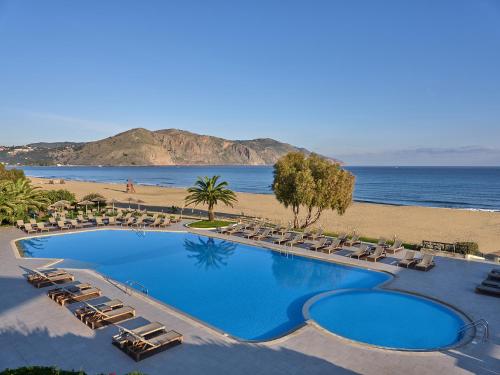
Situated on the beautiful Almyrou Bay, near Georgioupolis, Pilot Beach Resort offers a private sandy beach and picturesque gardens, with 5 swimming pools and excellent health and leisure facilities.
Relax in the well-appointed accommodation of your choice and enjoy your beautiful natural surroundings. Enjoy a great start to the day with an extensive complimentary buffet breakfast, before choosing from a wide variety of leisure activities.
Choose from 4 inviting outdoor pools and one heated indoor pool. Enjoy a relaxing stroll along the long, private beach. Make time for yourself in the sanctuary of Pilot Beach Resort’s professional spa. Join in with one of the fitness classes on the resort, including yoga, Pilates and aqua gymnastics. Get creative at the art workshop.
In the evening, Pilot Beach Resort offers a variety of dining options. Children can enjoy their own menu under the supervision of the energetic animation team, whilst you savour traditional Greek and Cretan delicacies at the seaside restaurant. Afterwards, enjoy a drink at the cocktail bar or enjoy dance music at the lively Ermis Bar.
from
€253
/night
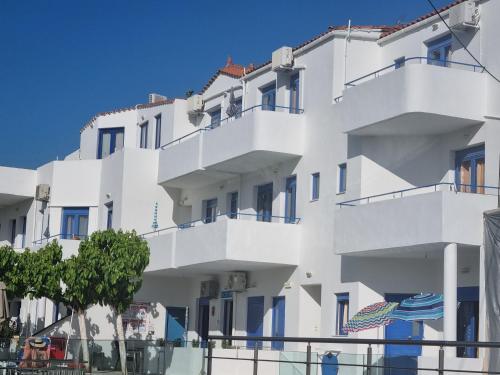
Located in the seaside village of Georgioupolis, Athena Hotel is 300 metres away from the sandy beach. It offers a swimming pool, a separate children’s pool and rooms with kitchenette facilities.
Athena studios and apartments are tastefully furnished and have a balcony with views of the pool or the hotel’s gardens. Each is fitted with air conditioning, a satellite TV and safety box. All units feature a living room and a dining area.
The bar serves refreshing drinks, coffees and snacks. Wi-Fi access is also provided free of charge in the hotel’s public areas.
In the village of Georgioupolis, guests can find many cafes, fish taverns and car rental services. The city of Rethymno is 22 km away, while the city and port of Chania is at 35 km. Free on-site parking is possible.
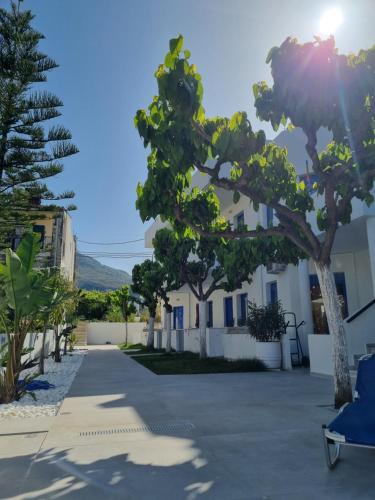
Leonidas Studios & Apartments features an outdoor swimming pool, sun terrace and apartments with a balcony overlooking the sea and garden. It is located in Georgioupolis in Crete, 100 metres from the nearest beach and 200 metres from bars and restaurants.
All soundproofed apartments include a flat-screen TV with satellite channels and a kitchenette with fridge. Each has a bathroom with bath. Free Wi-Fi is offered throughout.
Leonidas Studios & Apartments is located 25 km from the lively city of Rethymno. Chania International Airport is 45 km away. The property offers free parking on site.
from
€55
/night
Minoas Villas Heated Pool has mountain views, free WiFi and free private parking, set in Kournás, 23 km from Archaeological Museum of Rethymno.
The villa provides guests with a terrace, sea views, a seating area, satellite flat-screen TV, a fully equipped kitchen with a dishwasher and an oven, and a private bathroom with hot tub and bathrobes. A microwave, a toaster and fridge are also offered, as well as a coffee machine and a kettle.
Spa and wellness facilities including a hot tub, a spa facilities and a fitness room are at guests’ disposal during their stay at Minoas Villas Heated Pool.
Both a bicycle rental service and a car rental service are available at the accommodation, while cycling can be enjoyed nearby.
Museum of Ancient Eleftherna is 47 km from Minoas Villas Heated Pool, while Historical – Folklore Museum of Gavalochori is 18 km from the property. The nearest airport is Chania International, 52 km from the villa, and the property offers a paid airport shuttle service.
from
€664
/night
No results available



Start your day of adventure at your first stop of the trip, a local oil mill. Here you will have the opportunity to see how Crete’s famous olive oil is produced on this fascinating and informative outing.
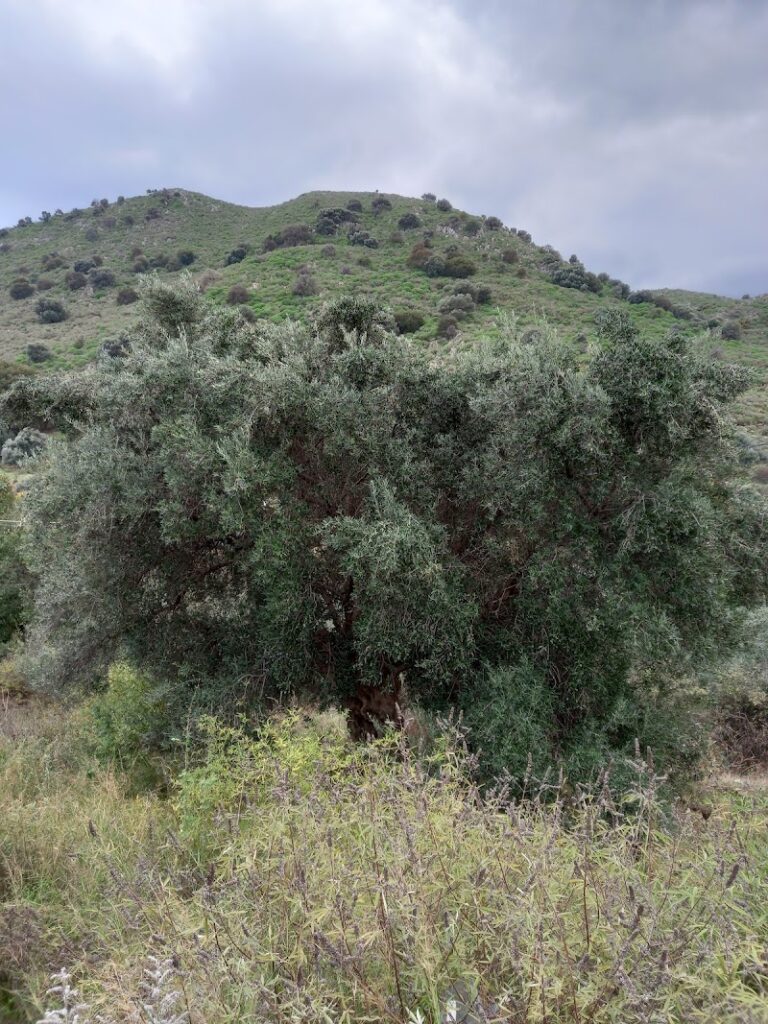
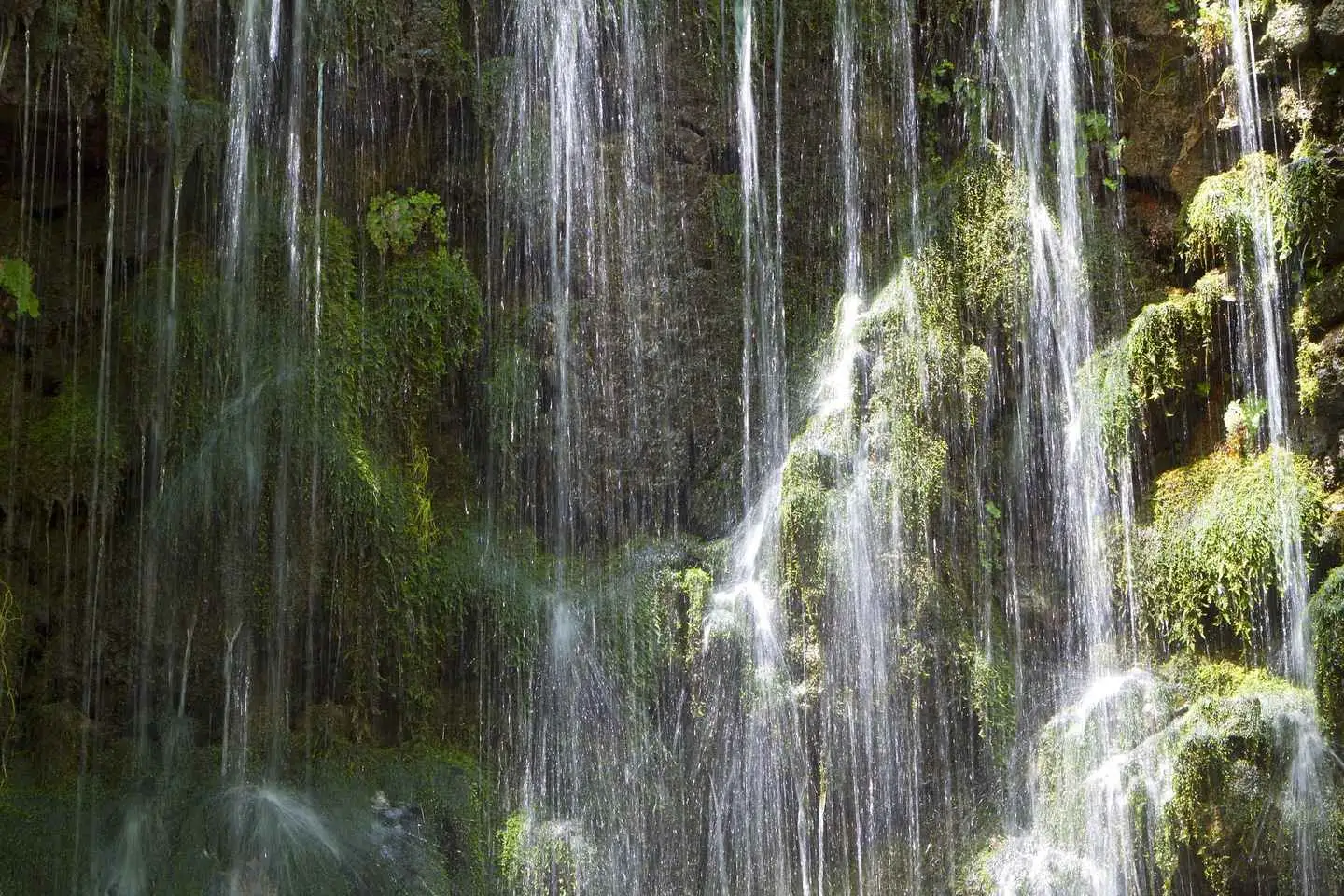
Follow on your journey through Crete and make a quick stop at the watersprings of Argyroupolis. These watersprings are responsible for the rich vegetation that surrounds the village, a truly magical and refreshing experience. Your last stop of the tour, lasting roughly 2,5 hours, will give you enough time to enjoy a swim and eat Cretan delicacies at the many taverns that are located around the lake.


Argiroupolis – Kournas Lake – Gergioupolis
Embark on an extraordinary adventure to Kournas Lake, Argiroupoli, and Georgioupoli, immersing yourself in their mesmerizing beauty. Delight in the pristine, transparent waters of Kournas Lake, lose yourself in the enchanting ambiance of Argiroupoli’s traditional village, and unwind on the picturesque golden beaches of Georgioupoli. This captivating journey guarantees awesome inspiring landscapes and treasured memories,a must for families with young children and those seeking to minimize bus travel time.
Private Family Full Day Tour to Lake Kournas | Rethymno
9:00 pick up at your Hotel , coffee stop on the road!
9:30 arrival at Rethymno old town , so you can explore the Old Town of Rethymno is a maze of narrow streets, alleys, and picturesque squares. Take a leisurely stroll through the winding streets, admire the well-preserved Venetian and Ottoman architecture, and discover hidden gems, such as the Venetian Loggia and Rimondi Fountain.
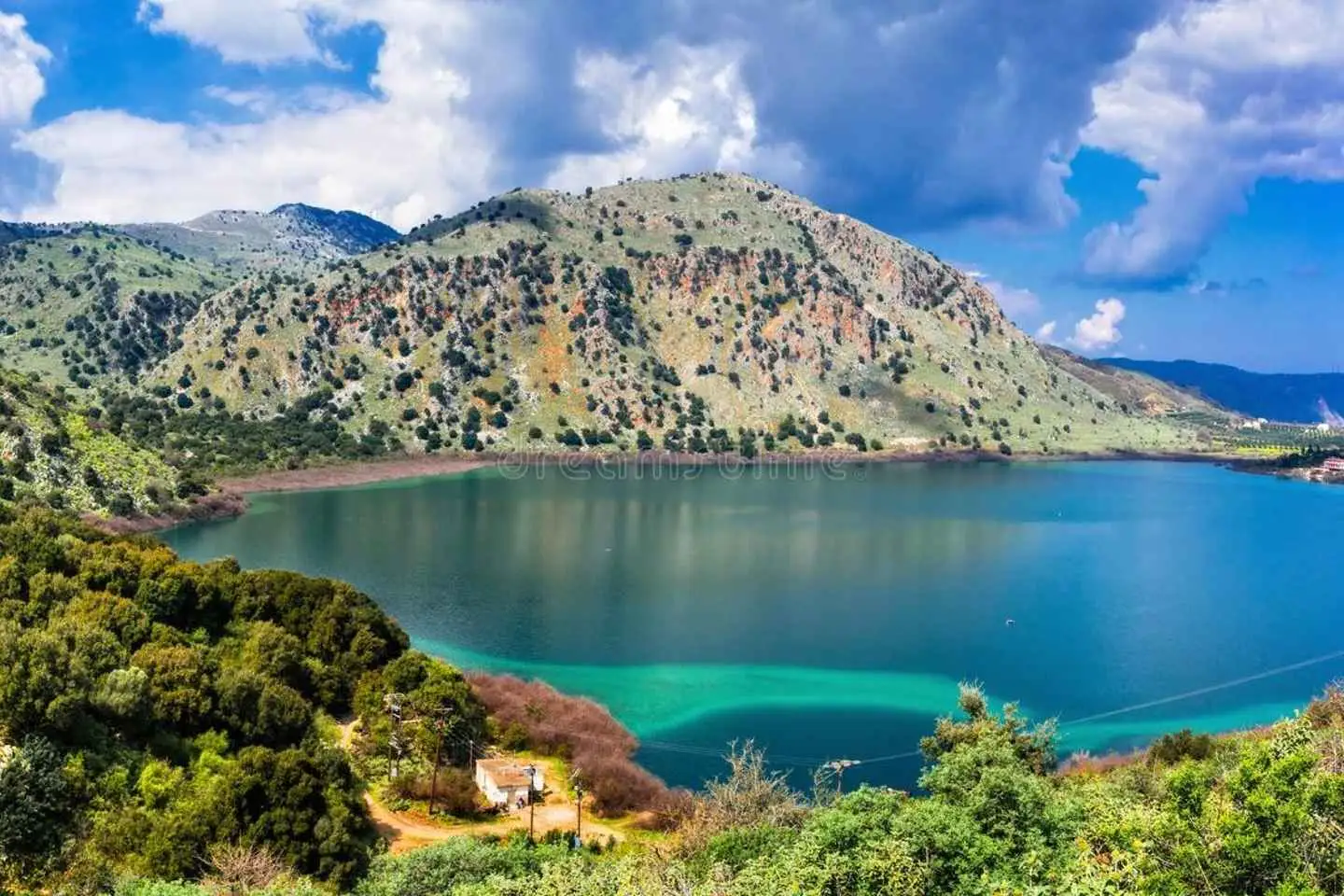
12:00 We start our way to Kournas Lake. Kournas Lake is renowned for its natural beauty. The lake’s crystal-clear turquoise waters reflect the surrounding hills and lush vegetation, creating a stunning visual spectacle. The picturesque landscapes, including olive groves and rolling hills, provide a serene backdrop for relaxation and exploration.
The surrounding area of Kournas Lake offers several walking trails that allow you to explore the natural landscapes and enjoy scenic views. The trails take you through olive groves, meadows, and hills, providing a chance to connect with nature and enjoy the tranquility of the surroundings. Some paths lead to elevated viewpoints, offering panoramic vistas of the lake and its surroundings.
15:00 Begin to return at your respective Hotel.
Any changes to the schedule can be arranged upon contacting us !
Embark on a journey to explore the hidden gems of Western Crete, where you’ll experience the region’s rich history, charming villages, and breathtaking landscapes. With our expert guide, uncover the authentic Crete and its unique selling points, ensuring a memorable adventure.
Begin by venturing into the captivating Melidoni Cave, filled with fascinating geological features and ancient legends. Then, wander through the picturesque Margarites village, renowned for its traditional pottery. Participate in a pottery-making show with a local artisan and explore the charming alleys.
Head to Kournas Lake, Crete’s only natural freshwater lake, and marvel at its serene beauty. Take the opportunity to spot local wildlife and enjoy the peaceful atmosphere that surrounds this unique location.
Immerse yourself in the vibrant atmosphere of Rethymno, the main western town, boasting stunning Venetian architecture and a rich historical past. Stroll through its enchanting streets, taking in the sights and sounds of local life.
After a day of exploration, you’ll be dropped off at your hotel, leaving you with unforgettable memories of Crete’s hidden treasures.
The magical Kournas Lake is one of the most fascinating destinations of Crete, a wondrous natural treasure that offers plenty of things to experience. The first impression of the lake is astonishing, with its unbelievable blue shades surrounded by green vegetation and the imposing rocky hills of the White Mountains.
Kournas Lake is the ideal place for an afternoon walk or a daytrip nearby. The place is ideal for walks and flower picking while the biggest fun for the kids is the pedal boat around the lake. Ride a pedalo on the waters of the lake, swim and enjoy a meal in one of the little tavernas. Watch the ducks and feed them. There are many ducks with their ducklings on Lake Kournas, and when they all start quacking together it can be deafening.
Book the pedal boat you like and enjoy a day at Kournas Lake. You will have 4 hours free time to walk and explore Kournas. You will find a lot of tavernas where you can enjoy your lunch with lake view.
The first stop is the town of Rethimno, the third biggest town in Crete west of Heraklion on the north coast of Crete. Here, archeological monuments of the Ottoman and Venetian eras co-exist. Enjoy a stroll in the alleys of the old town, a visit to the Turkish minarets and the Venetian fortresses, or a coffee at the magnificent harbor.
The next stop is Chania town, the second largest town of Crete on the north coast west of Rethymno. The city of Chania is divided into the Old City, with the gorgeous harbor, and the New City, beyond its Venetian fortifications. The Old City is one of the most beautiful cities in the Mediterranean and is called “Venice of the East”. You can find Turkish minarets and mosques, Muslim neighborhoods, Venetian fortresses, dockyards, fountains, squares, arches, mansions, Loggia and the Lighthouse. Visit the famous Agora (market), which houses traditional little shops and taverns.
The last stop of the day is Kournas lake, a beautiful habitat with natural freshwater, one of a kind in Crete. The whole area of Kournas is protected under ‘Natura 2000’, as it’s a designated wetland. Vast greenery, steep cavities between hills, and rare species of fish and birds make Kournas the ideal place to enjoy an early afternoon walk.
No results available
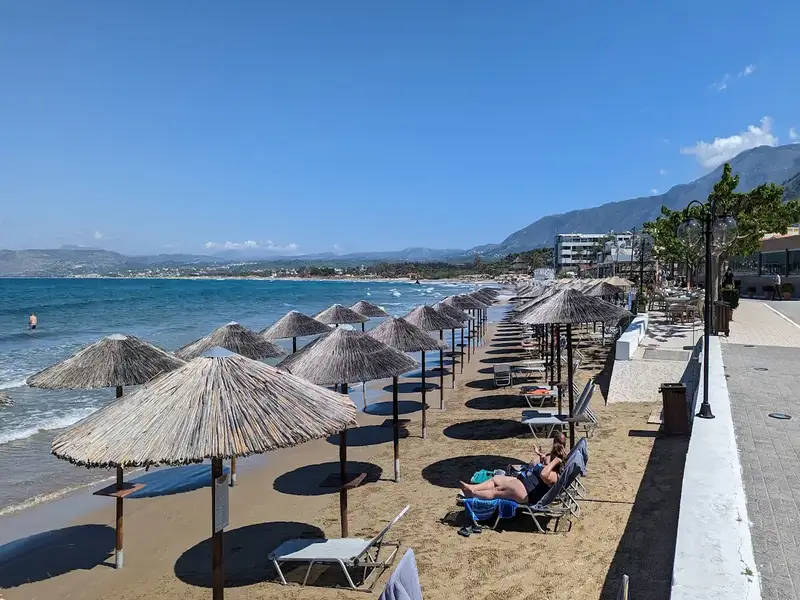
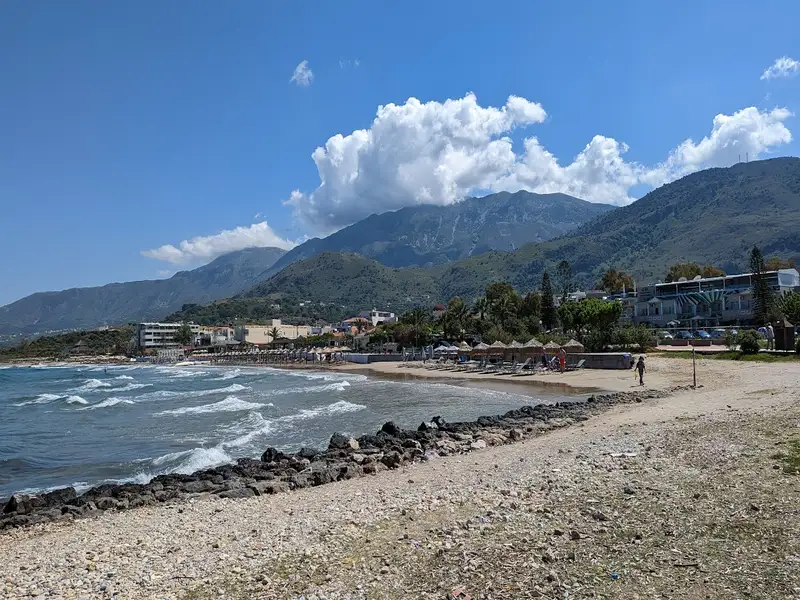
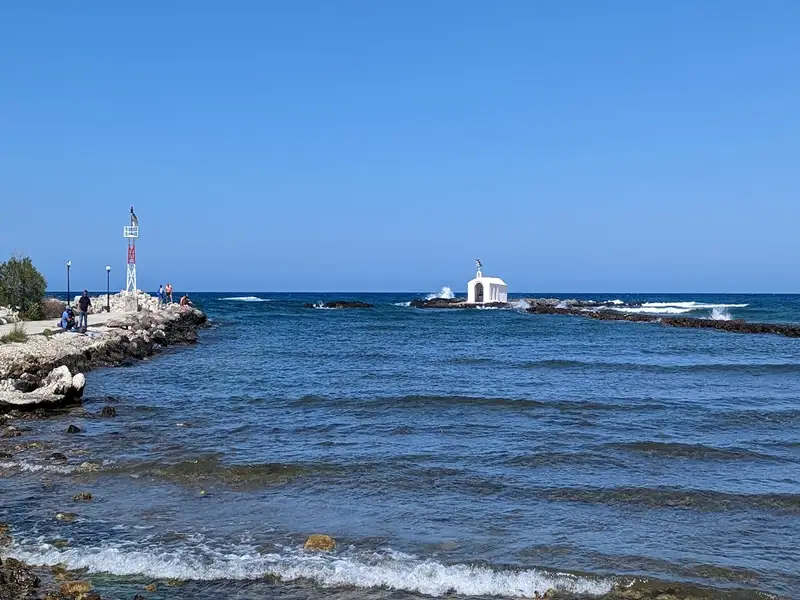
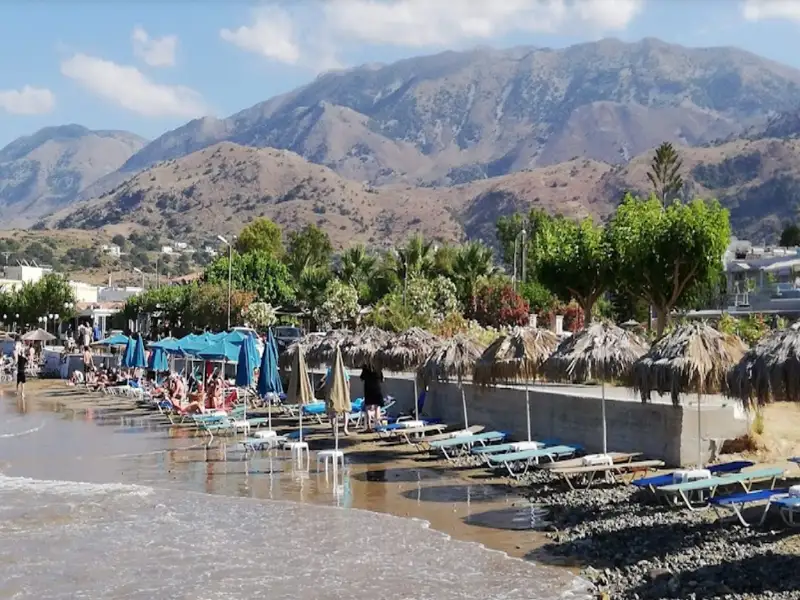
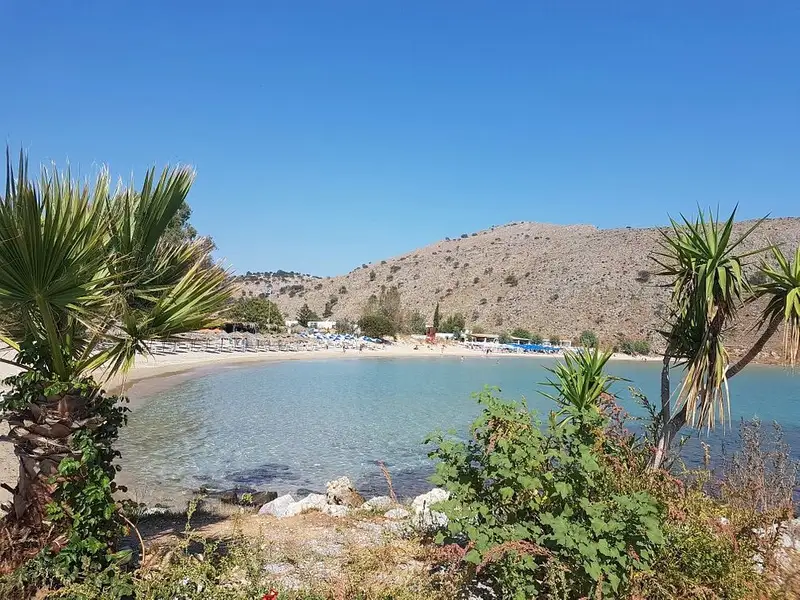
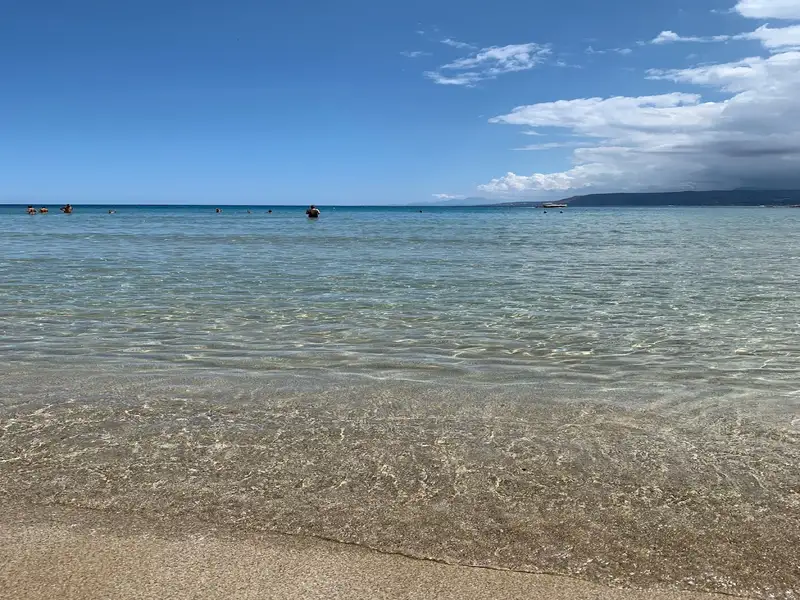
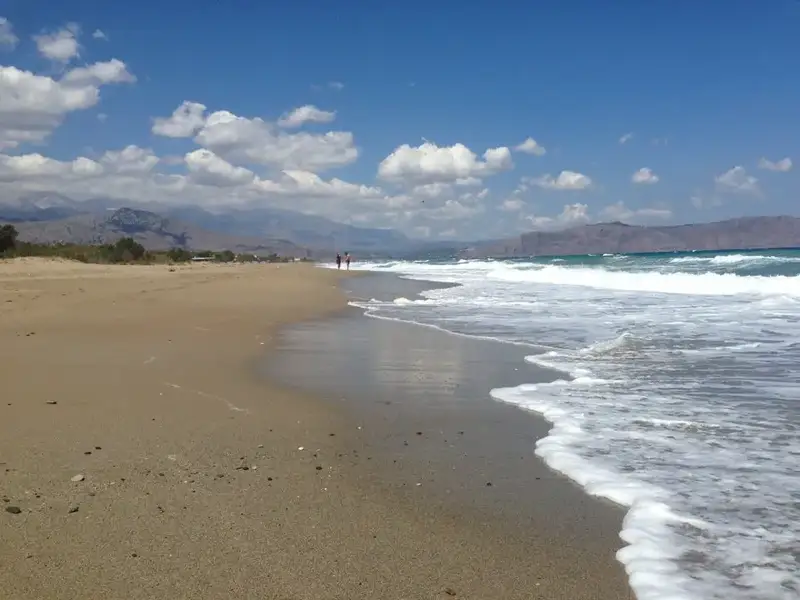
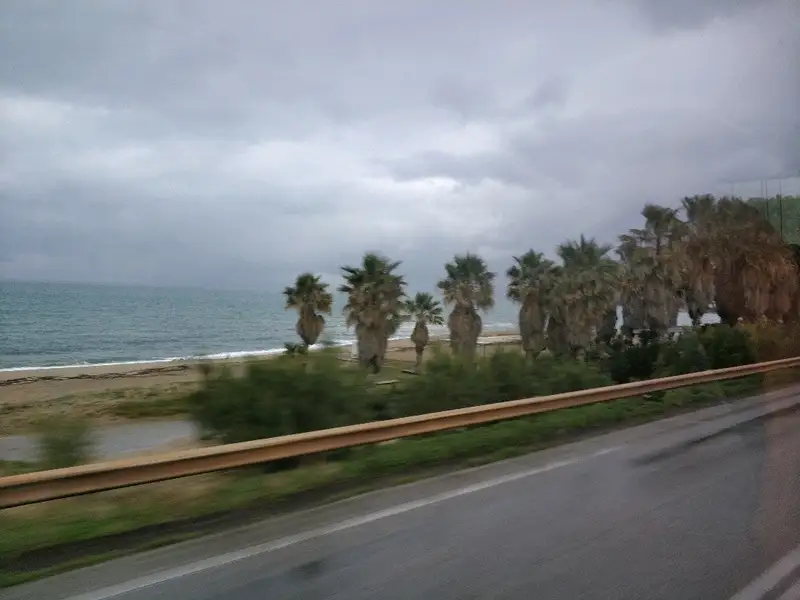
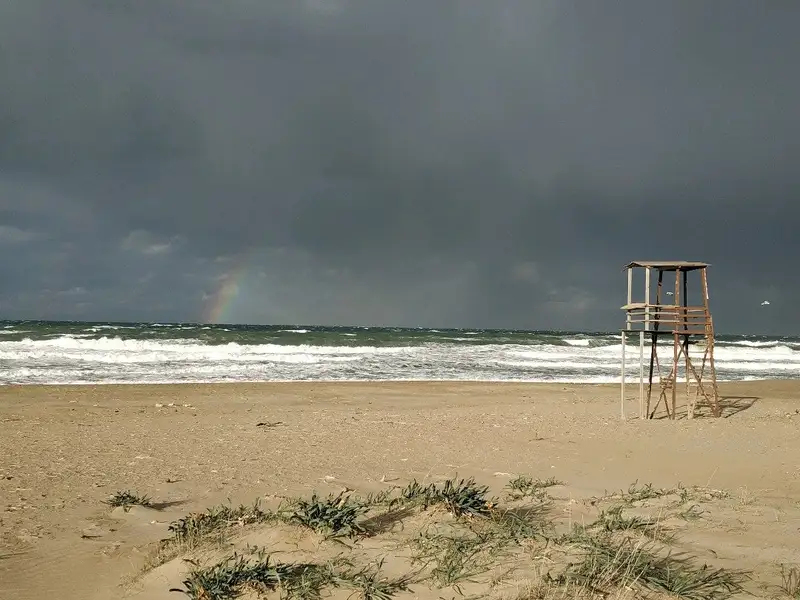
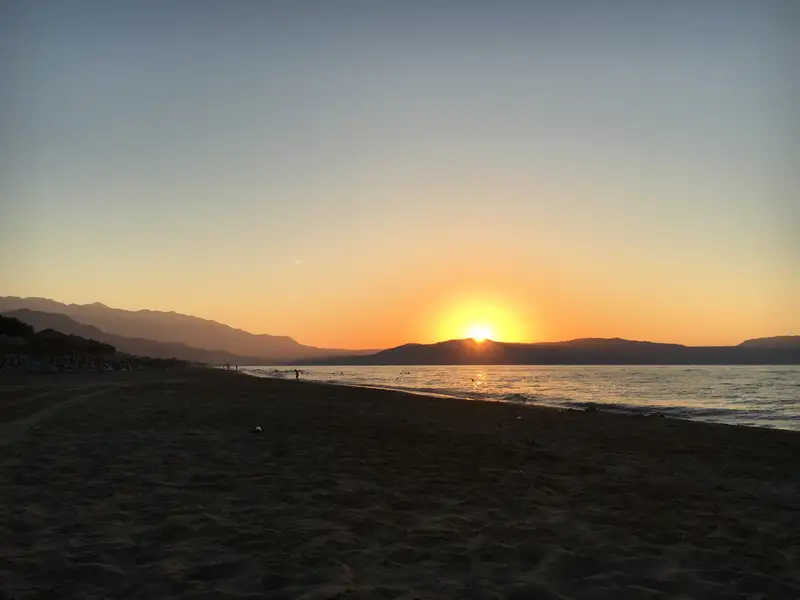
Georgioupolis, a small coastal town located 38km east of Chania and 21km west of Rethymnon, is a seaside resort nestled in a verdant valley crisscrossed by rivers and springs. Situated on the western edge of a sprawling 10km beach, the town’s beach spans 2km to the east, beginning at the Almiros river and terminating at Kavros beach, a natural continuation of the former. The beach in Georgioupolis is sandy, dotted with dunes, and has shallow waters.
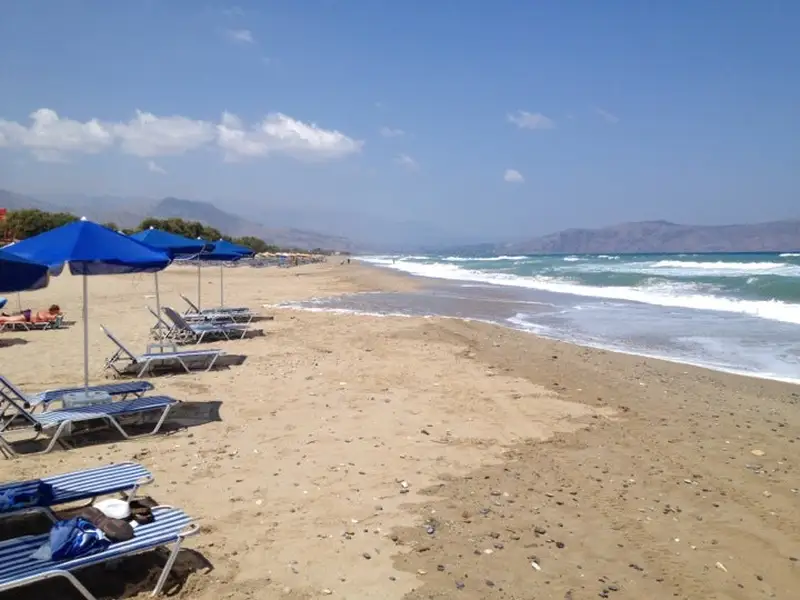
The beach is well-maintained and child-friendly, with lifeguards on duty. Caution is advised during windy conditions due to sea currents. Amenities such as umbrellas, showers, and food and drink stalls are available for beachgoers. Approximately 700m east of the port, the Perastikos river bifurcates the beach, which then widens as it continues eastward. On the opposite end, west of Georgioupolis’s port and near the Almyros river’s exit, lies the picturesque Kalivaki beach.
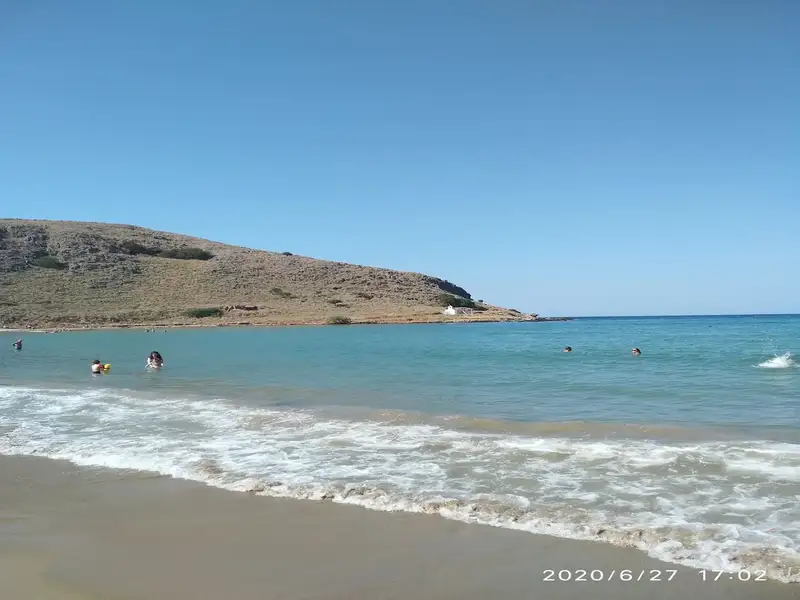
Kalivaki beach is the westernmost beach of Georgioupolis bay, on the north coast of Crete, 38 km east of Chania and 21 km west of Rethymno. Kalivaki sits at the mouth of the Almyros river, where the river meets the sea, so its sandy shore stays sheltered from the wind and its shallow water runs noticeably cool. This sheltered, family-friendly setting makes Kalivaki a good choice for children, especially on days when the wind stirs up the more open beaches nearby.
Kalivaki beach lies at the western edge of Georgioupolis bay, west of the Georgioupolis port and the church of Agios Nikolaos, 38 km east of Chania and 21 km west of Rethymno. Kalivaki sits at the exit of the Almyros river, joined by the smaller Boutakas stream, and both keep a steady flow of fresh water into the sea all year. The beach faces the open north coast, so its surface is calm in the sheltered corner near the river and turns wavy further out when the wind picks up. This position, tucked at the protected western end of the bay, is what sets Kalivaki apart from the longer, more exposed Georgioupolis beach to the east.
The water at Kalivaki is noticeably cooler than the open sea because the Almyros river and freshwater springs push cold water into the shallows. This cool current is strongest at the parts of the beach closest to the river mouth, where the cold river water meets the warmer sea. Many families come to Kalivaki for exactly this refreshing dip, which feels sharper and cooler than a swim on the neighbouring sandy beaches. Swim towards the eastern side of the beach, away from the river outflow, if you prefer warmer water.
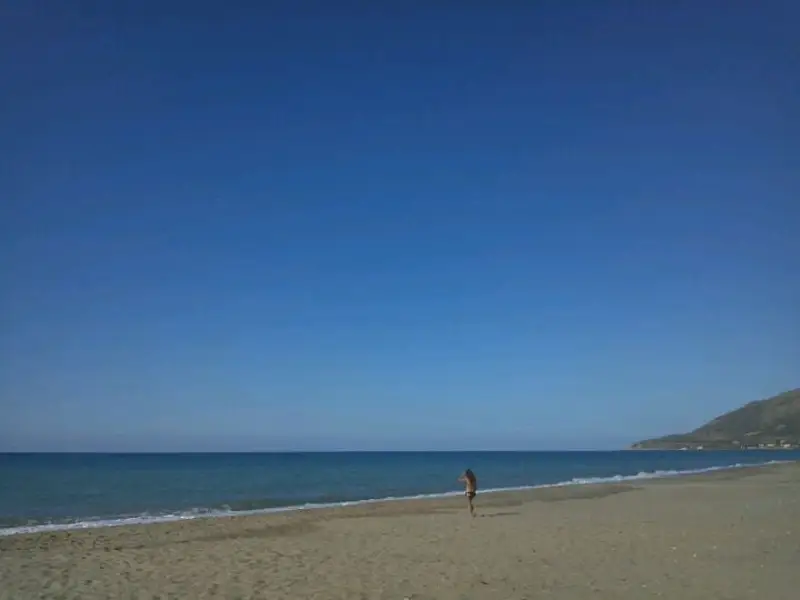
Kalivaki is a sandy beach with soft sand and small dunes behind the shore, and its shallow, sheltered water suits families with young children. Kalivaki usually stays less crowded than the other Georgioupolis beaches, though visitor numbers rise on summer weekends. The sheltered cove keeps the water calm on windy days, when the longer beaches to the east grow choppy, so Kalivaki works well as a fallback when the wind is up. Where the Almyros river meets the sea the outflow can create a noticeable current and colder water, so keep children in the calmer, sheltered part of the cove and take extra care on windy days.
Kalivaki gives visitors umbrellas and sunbeds to rent, with beach bars and taverns nearby for food and water a few steps from the sand. Parking sits close to the shore and the beach is free to enter, so a family beach day here needs little planning. Services such as showers, changing rooms and a lifeguard are not a guaranteed feature at Kalivaki, so check what is open on arrival if you rely on them. Most of the beach services run mainly through the summer season, and they thin out in the quieter spring and autumn months.
Kalivaki beach is a recorded nesting point for the loggerhead sea turtle (Caretta caretta), which lays its eggs in the sand in the warm months. Keep clear of the soft dry sand and any marked nests, and avoid digging or pushing umbrella poles deep into the sand near the back of the beach. Take your litter home with you, because a single nest can sit just below the surface. These small steps let the turtles and their eggs stay undisturbed while you enjoy the beach.
Reach Kalivaki beach in a few simple ways from Georgioupolis and the main coast road:
Kalivaki sits between Chania and Rethymno, so a beach morning here fits easily with Lake Kournas, the Georgioupolis waterfront, and the quieter coves along the Apokoronas coast. Reaching them all on your own schedule is simplest with your own vehicle, which you can compare on our car rental in Crete page.
Kalivaki beach is the westernmost beach of Georgioupolis bay, on the north coast of Crete, 38 km east of Chania and 21 km west of Rethymno.
Yes, Kalivaki beach suits families, because the water is shallow, the cove is sheltered from the wind, and the beach stays calmer than the neighbouring Georgioupolis beaches. Keep children near the calmer part of the cove and away from the stronger current at the river mouth.
The water at Kalivaki is cold because the Almyros river and freshwater springs feed cool water into the shallows, and the effect is strongest close to the river mouth.
Kalivaki beach has umbrellas and sunbeds to rent, with beach bars and taverns nearby for food and water, and free parking close to the shore. Showers, changing rooms and a lifeguard are not guaranteed, so check what is open on arrival.
Drive or take a local bus to Georgioupolis, then follow the paved road or walk west from the port to the river mouth at the western end of the bay.
The main season runs from June to September, when the weather is warm and the beach services are open, while late spring and early autumn stay quieter for a calmer visit.
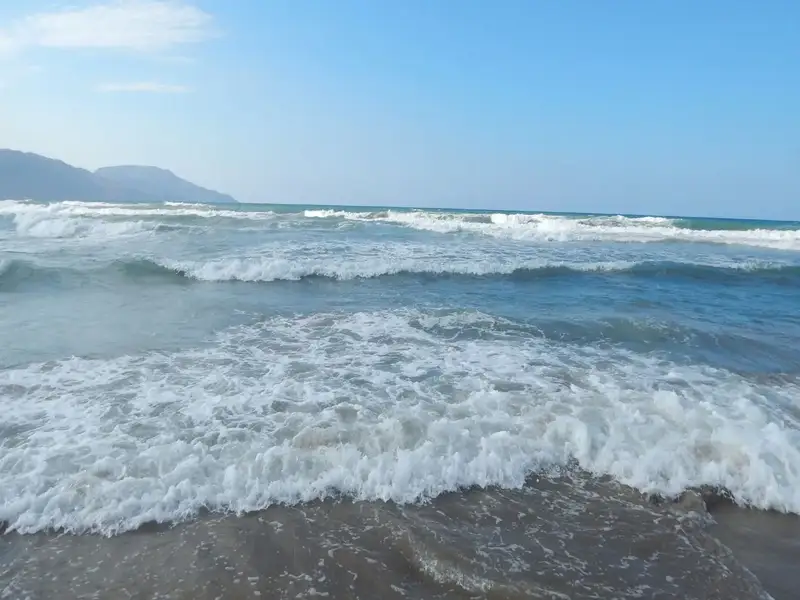
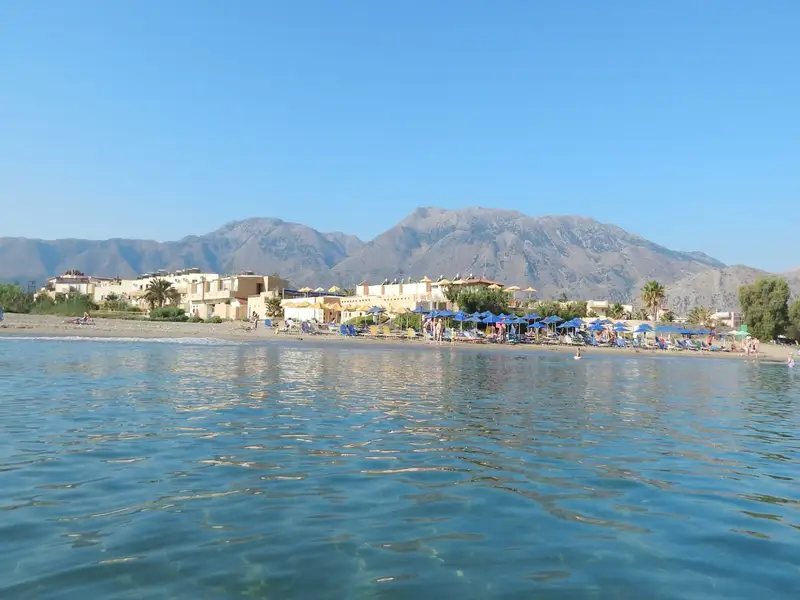
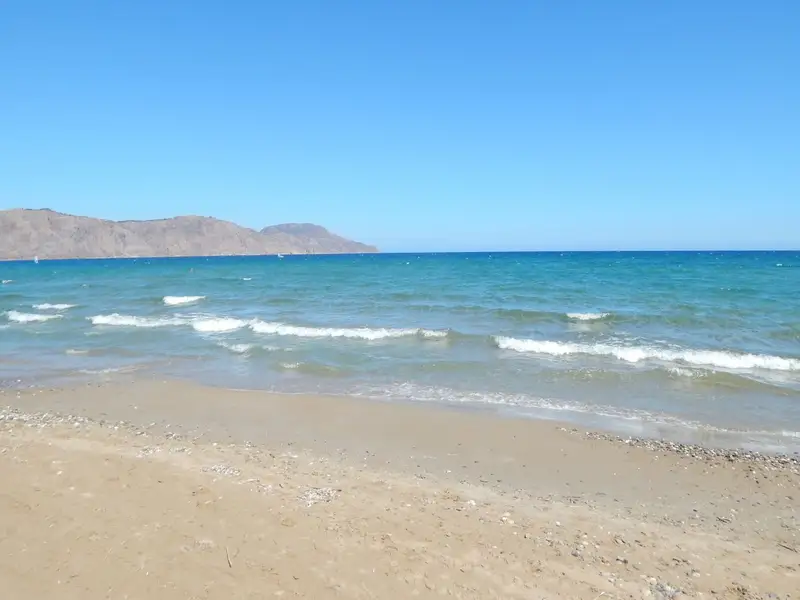
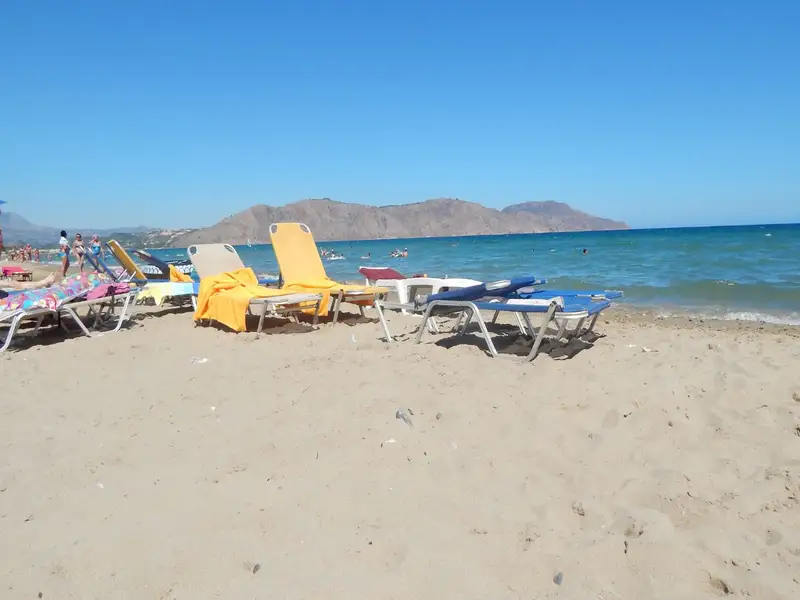
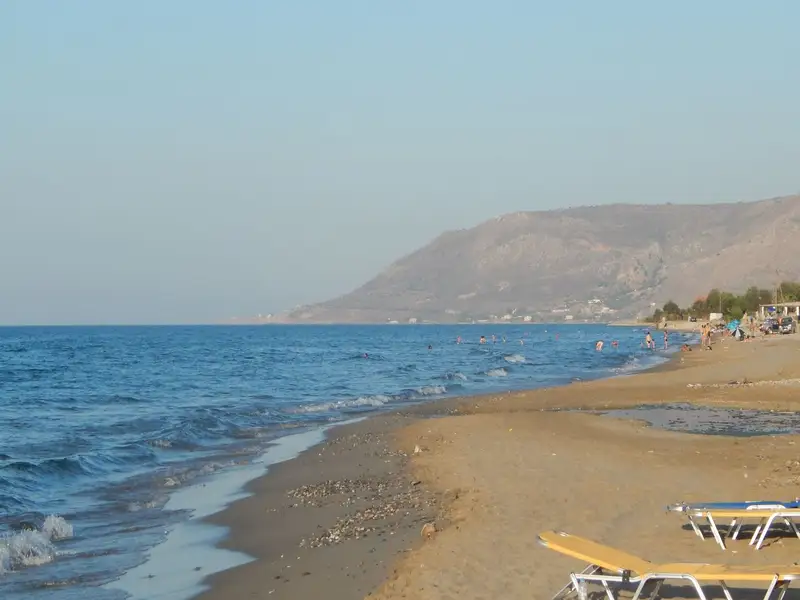
Located between Georgioupoli and Pyrgos, Kavros refers to the expansive beach situated just 4 km east of Georgioupoli, near the hotel bearing the same name. Though the area has experienced substantial tourist development, it’s somewhat less commercialized compared to the adjacent Georgioupolis. Kavros beach is a sandy stretch with transparent, shallow waters; however, its openness to the wind often results in notable wave activity. The beach provides several facilities for visitors, including an array of restaurants, cafes, and bars, making it a perfect spot for an all-day excursion. For those seeking tranquillity, parts of the beach remain unorganized, offering a more serene experience.
The place at its greatest part is developed and only a very small part of it has been left untouched. Between the remaining virgin parts of the beach, there is an extensive and very important ecosystem of dunes. The dunes of Kavros, like all dunes, host a significant and very fragile ecosystem that is home to its own plants. The most important role of the dunes in Crete is that they protect the inner lands from erosion. In the area, in winter we meet small ponds and the landscape is quite different from the summer.
Episkopi beach is a 3.5 km sandy beach on the north coast of Crete, 14 km west of Rethymno and 45 km east of Chania. Episkopi beach sits in a fertile valley between the Mouselas river and the river that runs out of the Petres gorge. The water is shallow and usually a little wavy, like most beaches on Crete’s north coast, and it takes its name from the village of Episkopi, 2 km inland to the south.
At a glance:
The sand is soft, with a short pebbly strip at the waterline that turns sandy underfoot as you walk in. Mornings are usually calm and clear enough to see the bottom, while an afternoon breeze can raise small waves. The shallow, gently shelving water suits families with children and makes the beach a good spot for a slow swim or a snorkel.
The western part of the beach is well organized. There you find lifeguards, showers, changing rooms, umbrellas and sunbeds, snack bars, and water sports. Tavernas and bars line the shore, several renting sunbeds under thatched umbrellas. Because the beach runs for about 3.5 km, you can still find a quieter, less developed stretch toward the eastern end near the Petres bridge.
The main coastal road between Rethymno and Chania runs parallel to the beach, so access by car is easy. Frequent KTEL public buses connect Chania and Rethymno and stop on the highway beside the beach, and parking is available at the shore. The simplest way to reach Episkopi and explore the rest of the north coast is to rent a car.
Loggerhead sea turtles (Caretta caretta) nest along this coast between May and September, and Episkopi is a recorded nesting point. If you visit in those months, keep clear of any marked nests and take your litter home with you.
Episkopi sits within a short drive of these stops:
The name Episkopi means “Diocese”: the village was the seat of the local diocese in the Byzantine period, and the old Episcopal church of St Nicholas nearby now stands in ruins. Almost unknown to travelers, the area is also the ancestral home of the Vardinoyannis family.
Episkopi beach is on the north coast of Crete in the Rethymno area, 14 km west of Rethymno and 45 km east of Chania. It lies below the village of Episkopi, between the Mouselas and Petres rivers.
Yes. The water is shallow and the sand is soft, and the organized western section has a lifeguard, so it suits children and less confident swimmers.
The western part is organized, with lifeguards, showers, changing rooms, umbrellas and sunbeds, snack bars, and water sports. The eastern end near the Petres bridge is quieter and less developed.
Yes, water sports are offered in the organized western section, alongside the lifeguard, showers, umbrellas, and snack bars.
The coastal Rethymno to Chania road runs next to the beach, so you can drive or take a KTEL public bus that stops on the highway. Parking is available at the beach.
The main season is June to September, when the weather is warm and dry. Late May, June, and September are usually quieter than midsummer.
Yes. The water is clear and shallow, and the rockier seabed near Petres beach to the east is a favorite for snorkeling and fishing.
No results available
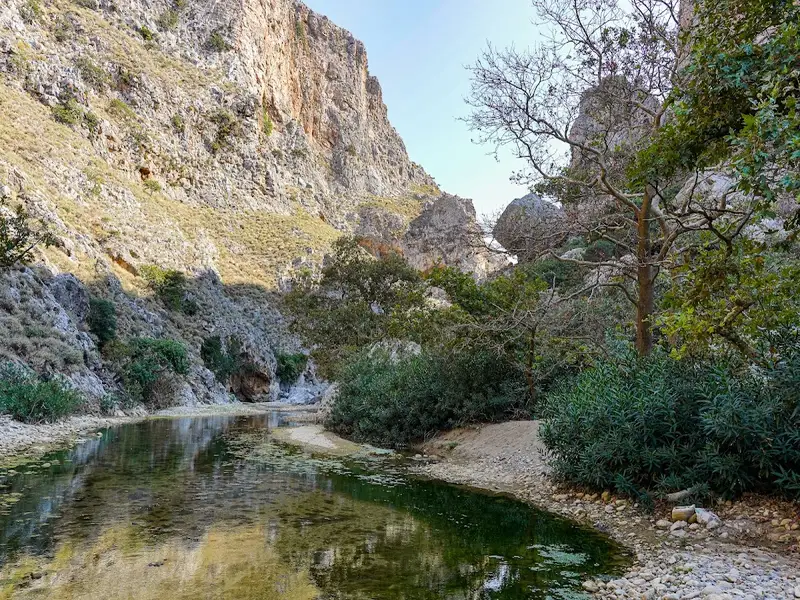
Situated 13km west of Rethymno, Petres Gorge opens up at the Petres beach. It houses the longest river in Rethymnon province, which is replenished by multiple tributaries that gather the waters of Kollita Gorges from the west to Mount Vrysinas in the east, spanning almost half of Rethymnon Prefecture. The river flows throughout the year and forms a significant wetland of Crete, particularly near its mouth at Episkopi.
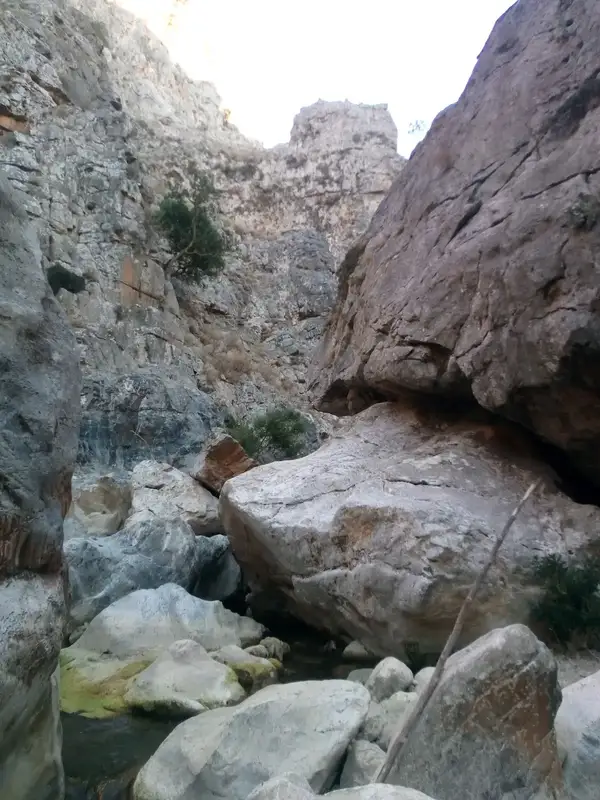
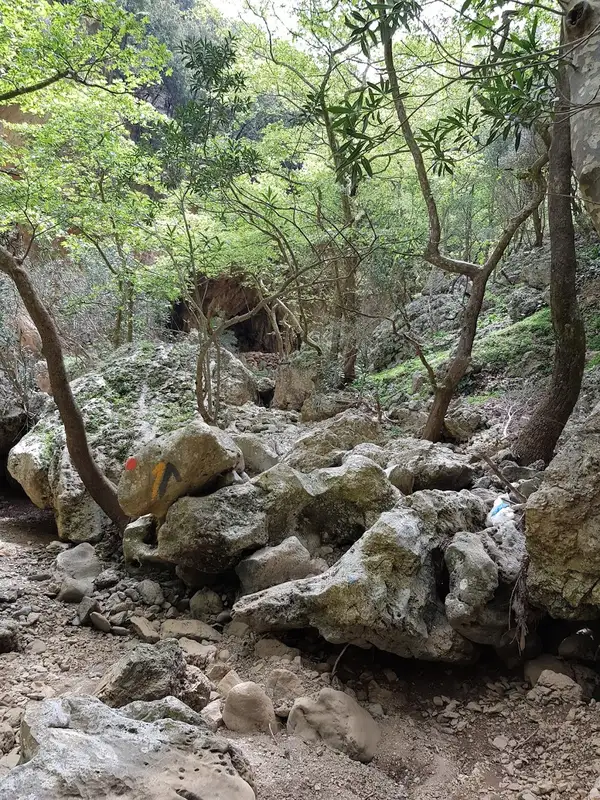
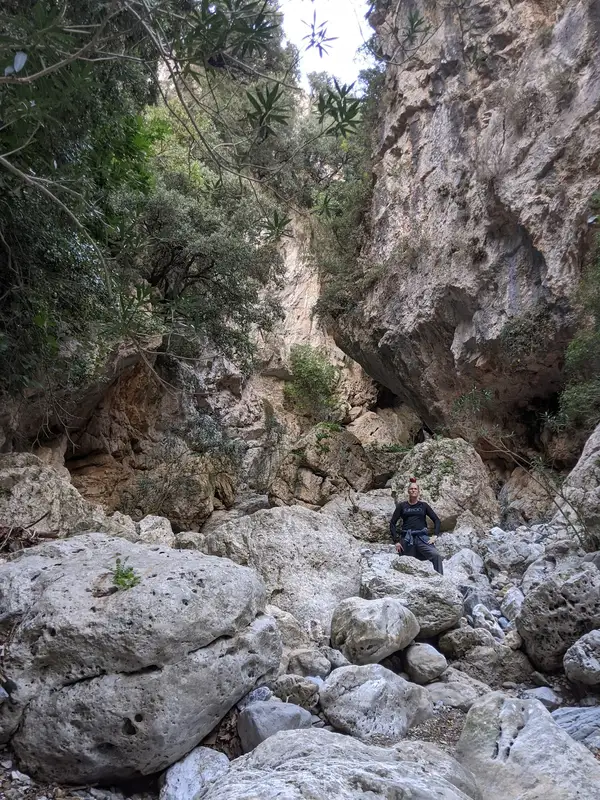
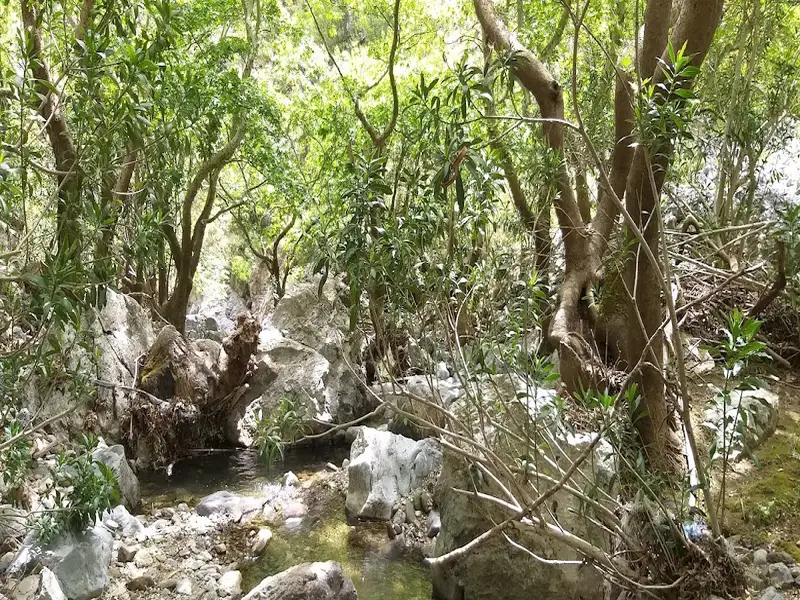
The gorge narrows down to a small section about 1km long, beginning near the village of Karoti. Despite its short length, it is definitely worth exploring. It is easily accessible and perfect for swimming in the ponds that form along its course. However, fences are installed to confine goats, so carrying a cutter might be useful in case the fences are locked. Certain areas with large rocks may require a bit of climbing and extra caution.
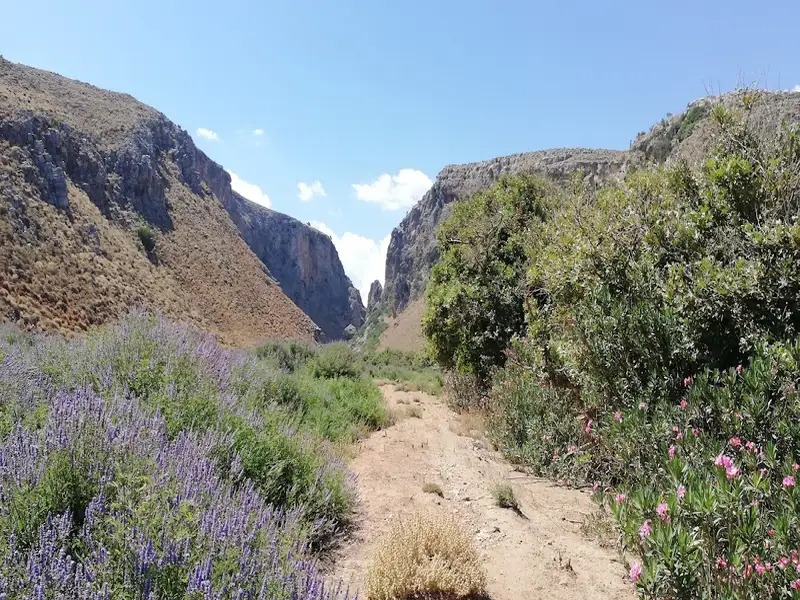
The Twin Ravines, or Kollita Gorges, can be found near the charming village of Argyroupolis, approximately 22km southwest of the city of Rethymnon. The name refers to the two parallel canyons that conclude near the village of Kato Poros. The easternmost canyon, Moundros Gorge, is bordered by the Vigla peak (567m) to the east and the Nissiani hill to the west, where you can find the abandoned settlement of Nissi. Adjacent to Moundros Gorge to the west, is the Vilandredo Gorge, named after the village at its entrance and often referred to as Kollita Gorge.
The gorges offer an ideal hiking experience for novices due to their ease and stunning surroundings. It’s a perfect outing for groups of friends – park your car in Kato Poros or Argyroupolis, explore the Moundriano canyon, and return via the second Kollita Gorge for a round trip.
A suggested itinerary for the two gorges starts in the verdant Argiroupoli, built on the site of the ancient city of Lappa. From there, head east to the village of Moundros, known for its springs, fountains, and beautiful Venetian architecture. Don’t miss a stroll through the narrow streets of Moundros and a visit to the churches of Saint Constantine, Saints Anargyri (11th century), and Saint Nicholas. Near Moundros, you’ll find the deserted settlement of Nissi, notable for its impressive stone structures.
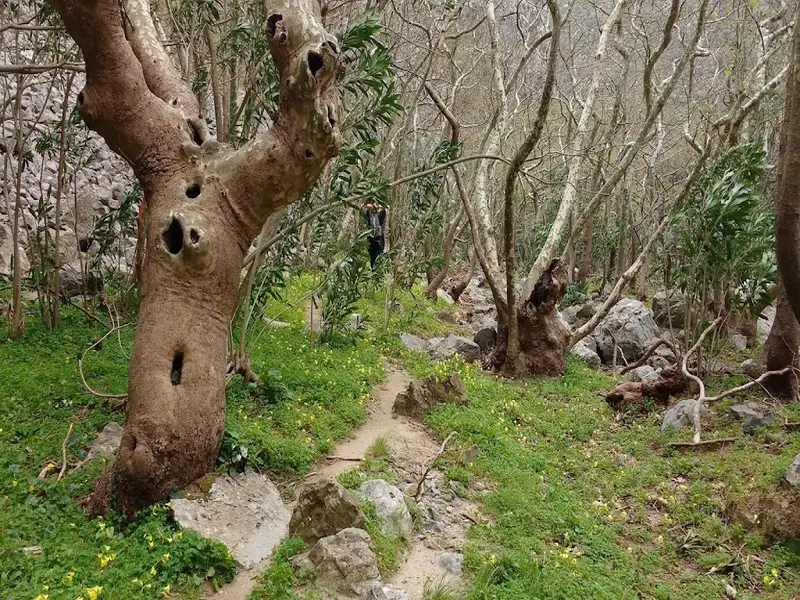
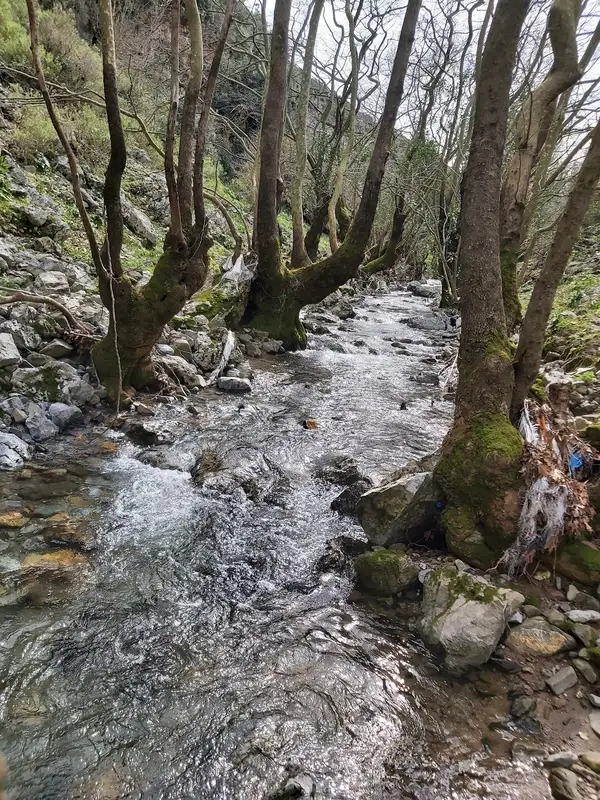
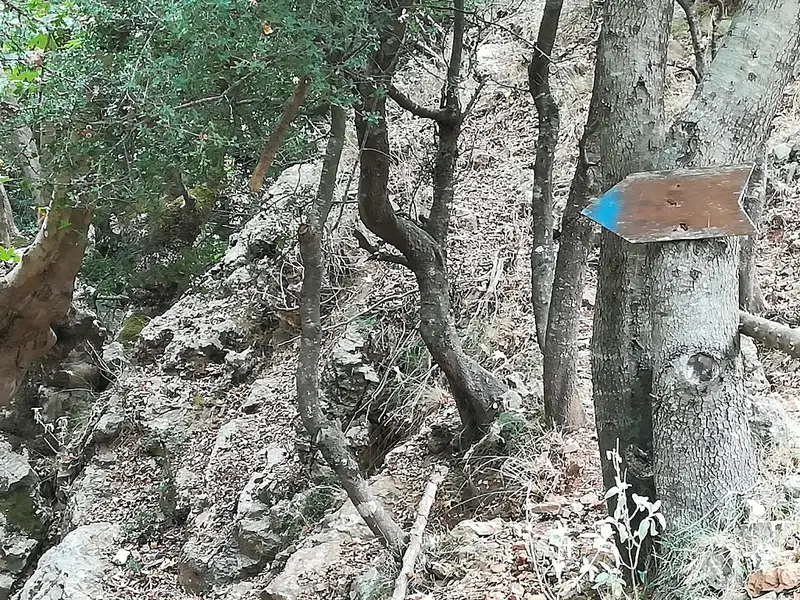
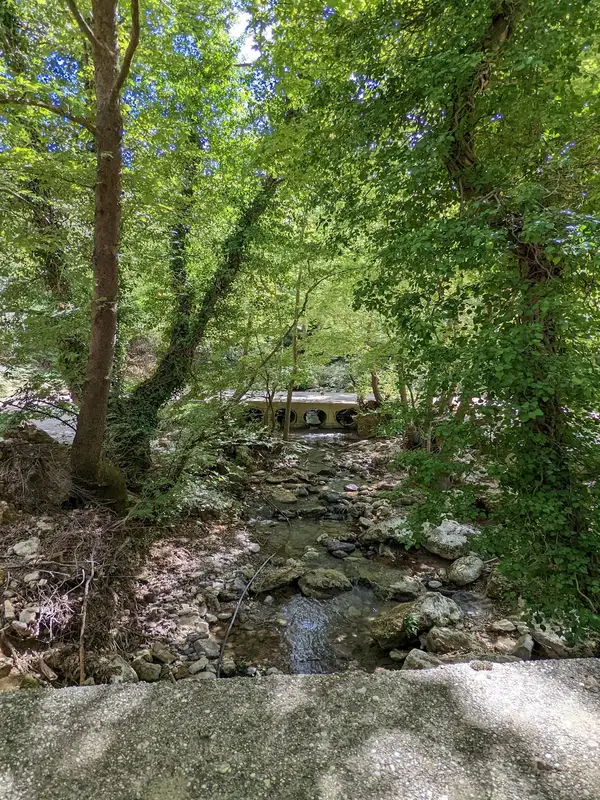
From the village, make your way to the northern entrance of the lush Moundros Gorge, which leads to the village of Velonado. A well-marked path descends to the riverbed, which is typically full of water. The canyon boasts towering plane trees and several freshwater ponds. After about a 1.5-hour walk, you’ll reach the southern entrance of Moundriano Gorge near Velonado.
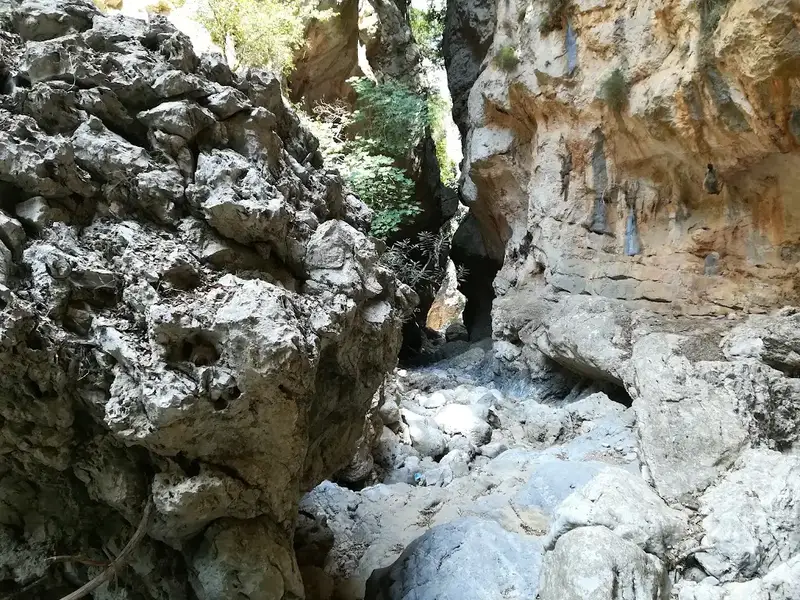
Exiting the canyon, head west on the asphalt road to the entrance of the second canyon, Kollita Gorge, near Vilandredo. This canyon is even more impressive than Moundriano, filled with plane trees and a path that runs along the riverbed. The most breathtaking part of the canyon is where its towering walls nearly touch, creating a very narrow passage. Along the slopes of the gorge, you’ll spot numerous fig and holly trees. After a total of four hours, you’ll exit the canyon, which once supplied water to the Roman baths of Lappa, now Argyroupolis.
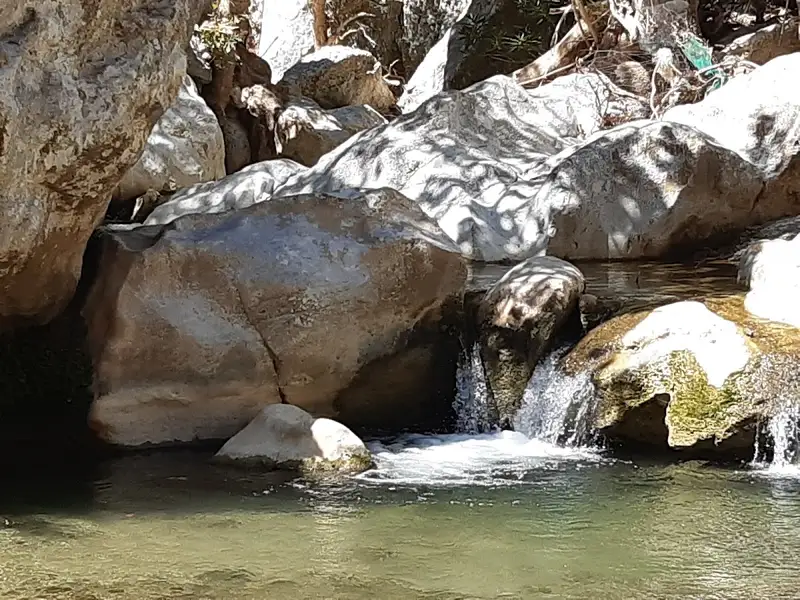
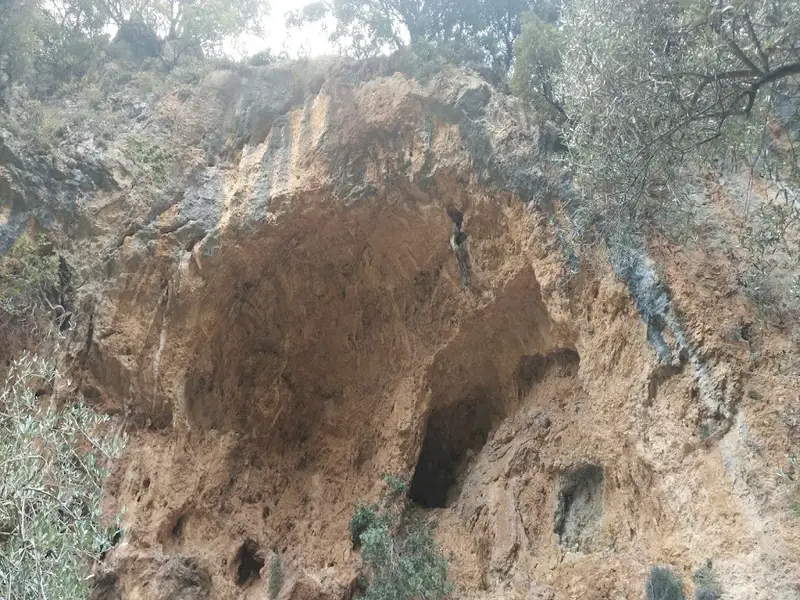
Following the old stone path amidst laurels, myrtles, and hollies, you’ll reach Kato Poros and the area of Pente Parthenes (Five Virgins). Here, you’ll find a spring under the perennial plane tree of Pente Parthenes, the chapel of the Five Virgins, and the Hellenistic and Roman tombs of Lappa. From here, the trail broadens and leads back to the lush green Argiroupoli. In Argiroupoli, be sure to visit the Venetian buildings, churches, and picturesque alleyways. The springs of Argyroupolis are a popular attraction, particularly the spring in the cavernous chapel of Agia Dynami. The area is lush with several small waterfalls and numerous restaurants.
The Twin Ravines, or Kollita Gorges, are situated near the scenic village of Argyroupolis, approximately 22km southwest of the city of Rethymnon. The name derives from two adjacent canyons that conclude near the village of Kato Poros. The eastern canyon, Moundros Gorge, is bordered by the Vigla peak (567m) to the east and Nissiani hill to the west, which houses the deserted Nissi settlement. West of Moundros gorge lies the Vilandredo gorge, named after the village at its entrance and more commonly referred to as Kollita Gorge.
These gorges are perfect for casual hikers due to their ease and stunning beauty. They are particularly suitable for groups of friends who can park in Kato Poros or Argyroupoli, explore the Moundriano canyon, and return via the second Kollita Gorge.
Suggested Two Gorges Route
Starting from the verdant Argiroupoli, built on the ancient city of Lappa, we journey east to the village of Moundros, known for its springs and fountains. The village is home to many beautiful Venetian structures (old courts, prisons, and noble houses) and the churches of Saint Constantine, Saints Anargyri (11th century), and Saint Nicholas are well worth a visit. Don’t forget to wander the narrow streets of Moundros. Close to Moundros, the deserted Nissi settlement, famous for its stunning stone structures, can be found.
From the village, the entrance to the verdant Moundros gorge is accessible, leading to the village of Velonado. A well-defined path descends to the riverbed, which is usually filled with water. The canyon is filled with towering plane trees and several fresh water ponds. After roughly 1.5 hours of walking, we reach the southern entrance of Moundriano Gorge, near Velonado.
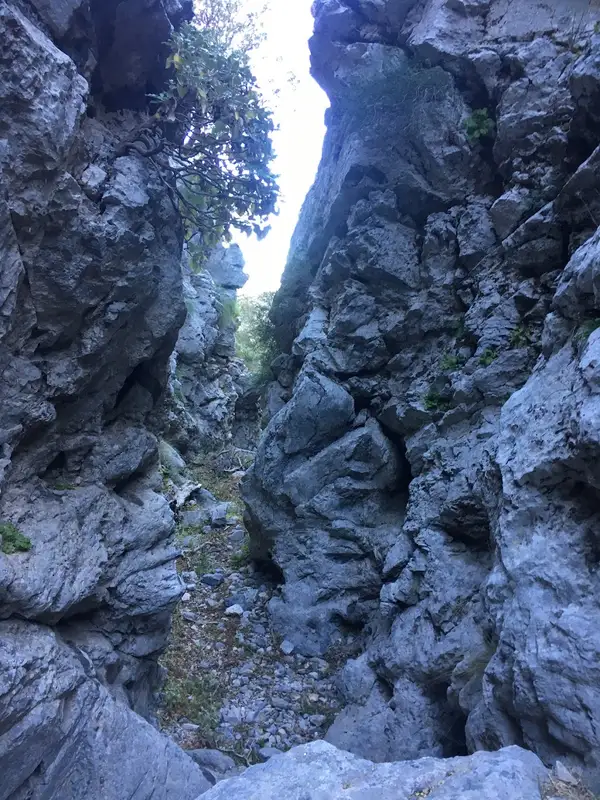
Upon exiting the canyon, we follow the asphalt road west to the entrance of the second canyon, Kollita Gorge, near Vilandredo. This canyon, more magnificent than Moundriano, is lush with plane trees, and the path follows the riverbed. The most beautiful section of the canyon is where the high walls nearly touch, forming a narrow passage. Fig and holly trees can be seen on the gorge’s slopes, hanging overhead. After approximately four hours, we exit the canyon, which once provided water for the Roman baths of Lappa, now Argyroupolis.
Following the ancient stone path through laurels, myrtles, and hollies, we reach Kato Poros and the area of Pente Parthenes (Five Virgins). Here, one can find the spring beneath the perennial plane tree of Pente Parthenes, the chapel of the Five Virgins, and the Hellenistic and Roman tombs of Lappa. From here, the trail broadens and leads us back to the lush green Argiroupoli. In Argiroupoli, the Venetian buildings, churches, and picturesque alleys are worth a visit. A popular attraction is the springs of Argyroupolis, with the most notable spring located in the cavernous chapel of Agia Dynami. The area is lush with several small waterfalls and numerous restaurants.
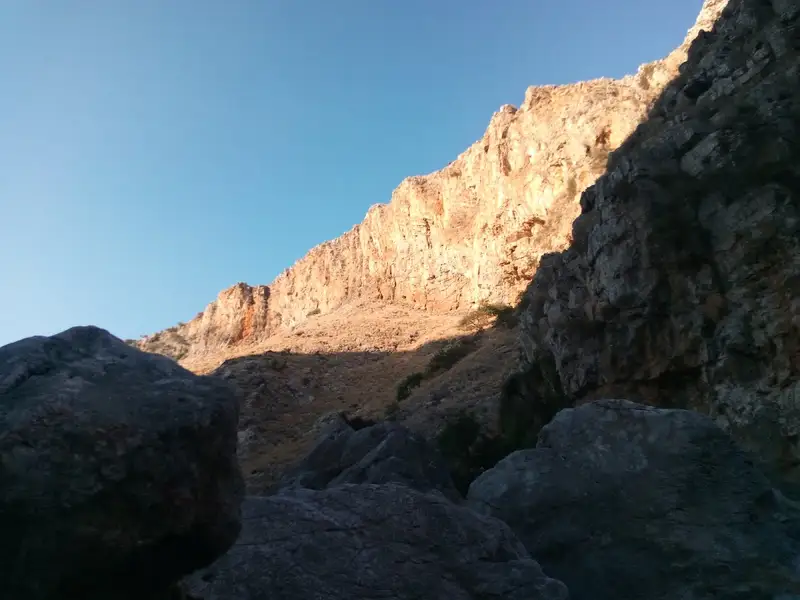
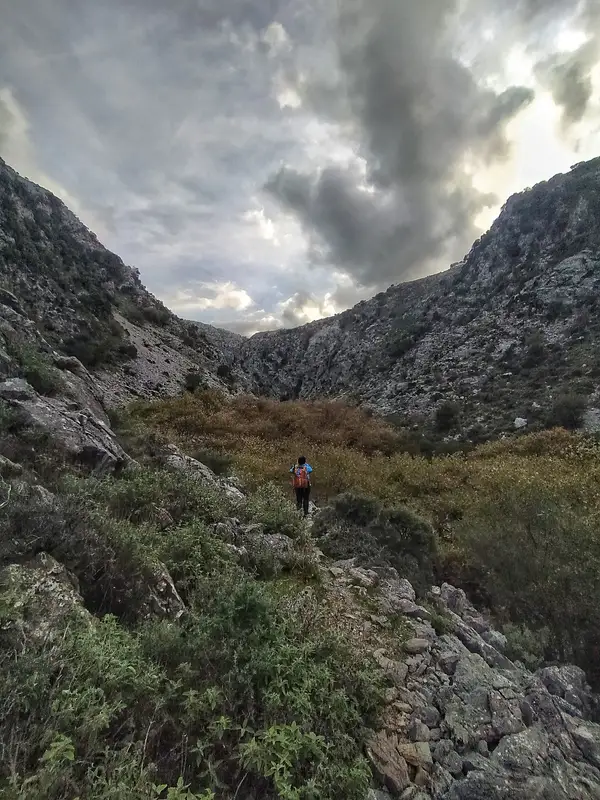
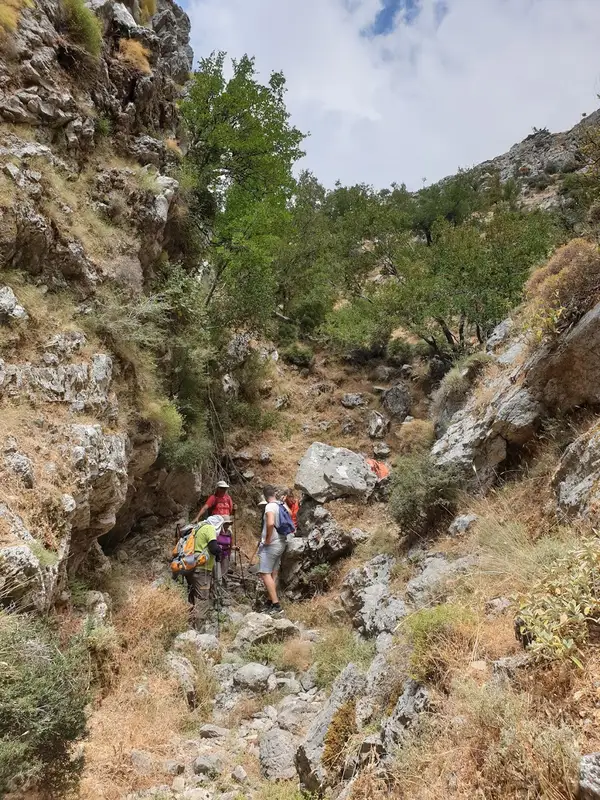
The Kapni Gorge, one of Eastern Sfakia’s most stunning canyons, remains largely undiscovered. The gorge begins as an open stream south of the Akones peak at Hionistra, located on the road between Askyfou and Asfendou villages. It concludes in the village of Nomikiana in the Sfakia province. In Hionistra, two streams in calcareous soils converge to form the Kapni Gorge after an hour’s walk. The canyon is extensive, requiring around four hours to traverse. It is among Crete’s challenging and perilous trekking gorges, with a rugged riverbed that forms dry waterfalls in certain areas, necessitating climbing.
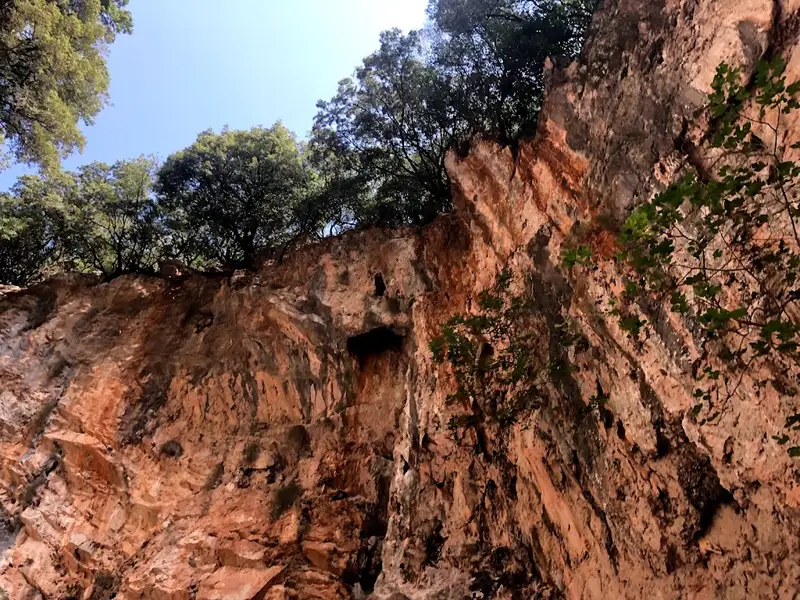
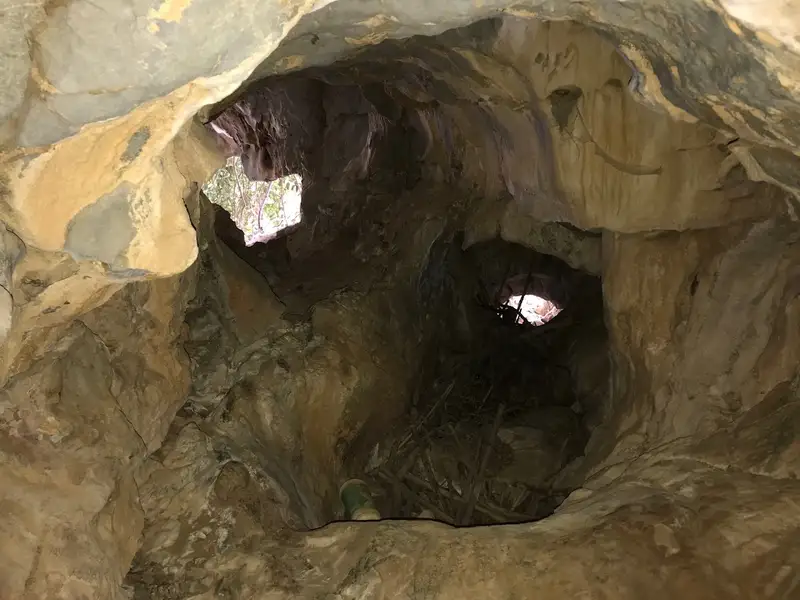
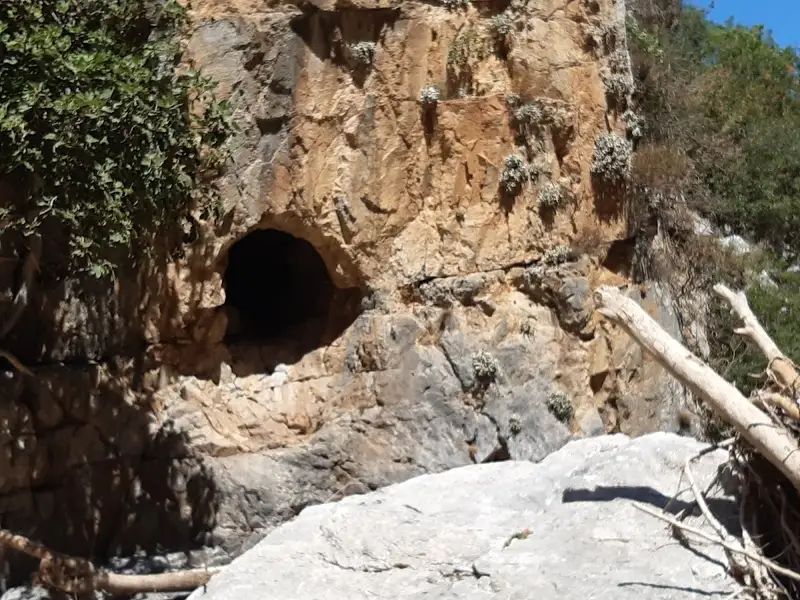
It is not advisable for those inexperienced in mountaineering. The riverbed features several small caves that were previously used as sheepfolds. In one of these caves, there is drinking water, the only source in the harsh Kapni region. This water source is hard to find unless one is very familiar with the area. Kapni is home to beautiful vegetation, including maples and oak trees, and stunning walls of platy limestone in several places.
The name Kapni, meaning smoke, traces back to a story from the Venetian era. East Sfakia was once densely forested, providing refuge for Cretans fighting the Venetians. To counter this, the Venetians burned these forests, including the one in Kapni, which was so dense that the fire burned for weeks. The narrowness of the gorge created an oven-like effect, trapping the fire and significantly raising the temperature. The intense heat baked the mountain rock, similar to a lime kiln, and smoke lingered for days after the fire ceased. That autumn, a massive flood swept through the bare, fire-scorched hillsides, moving rocks with immense force to the gorge’s exit. This event resulted in a large deposit of sediment, creating the most impressive scree (locally known as sara) in Crete, visible from miles away. This scree starts at the gorge’s exit and extends to the village of Nomikiana.
No results available
No results available
No results available
© All rights reserved. Crete Locals