Best Beaches near Karé in Rethymno region, Crete Island

Best beaches near Karé

Find below the list of beaches near Karé:
  • 8.9 km
Rethymnon beach is located 8.9 km away.

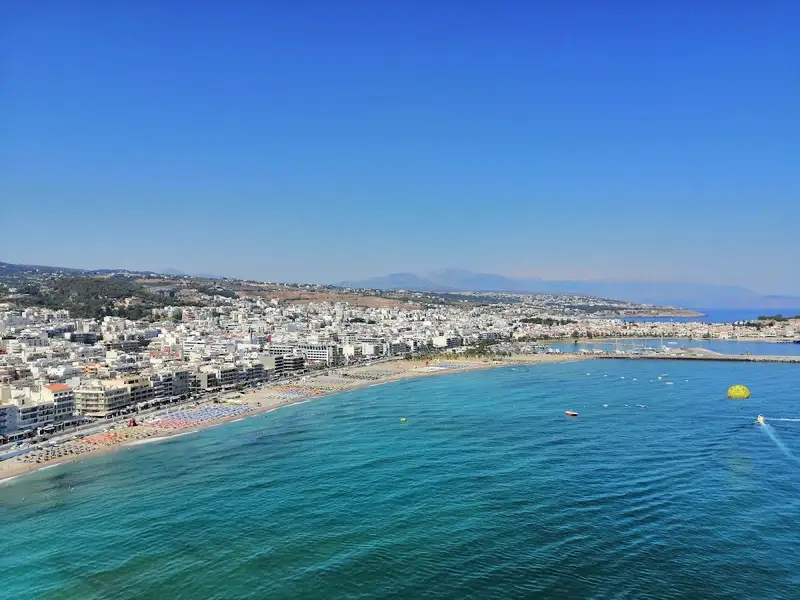
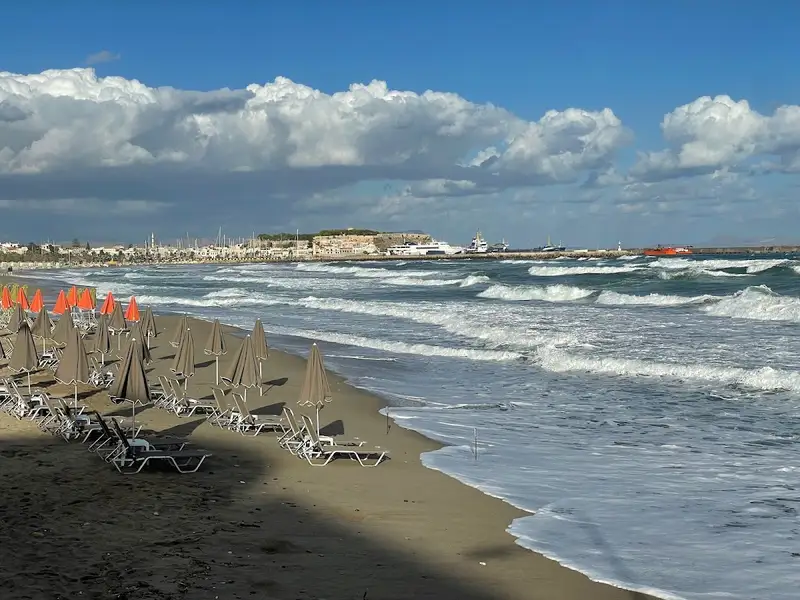
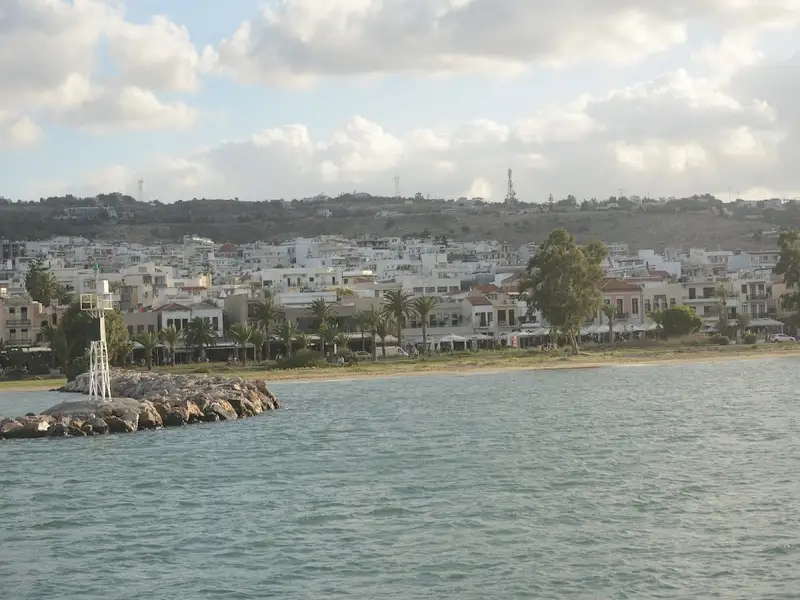
The golden sands and crystal clear shallow waters of Rethymno city’s beach, located a mere 500m east of the city’s core and adjacent to the Venetian port, are truly captivating. The well-organized beach is conveniently located near the city’s amenities and is the westernmost edge of Rethymno Bay’s 13km beachfront that extends eastwards to Skaleta. Despite being constantly bustling with activity, the expansive beach never feels excessively crowded. The city’s seafront road, Eleftheriou Venizelou Str., which runs parallel to the beach, provides an idyllic setting for evening strolls.

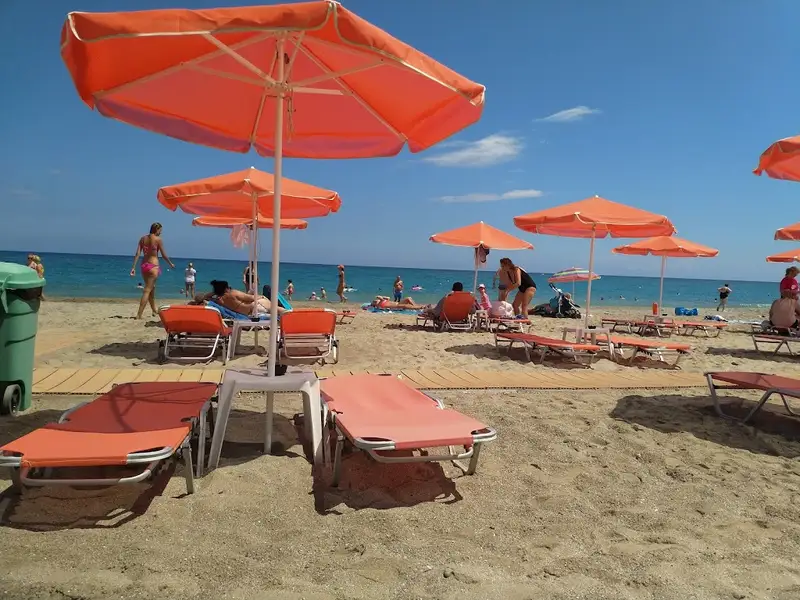
The beach offers numerous services including umbrellas, lifeguards, beach bars, showers, changing rooms, and water sports. A noteworthy fact about this beach is the presence of the loggerhead sea turtle (Carretta carretta) that nests here. Therefore, don’t be surprised to encounter roped-off areas; these are spots where eggs have been discovered and are safeguarded from swimmers. With over 400 nests annually, Rethymno Gulf ranks among Greece’s three most significant loggerhead sea turtle nesting sites.

  • Rethymnon beach
  • Sand
  • Shallow
  • Blue
  • 8.9 km
Koumbes beach is located 8.9 km away.

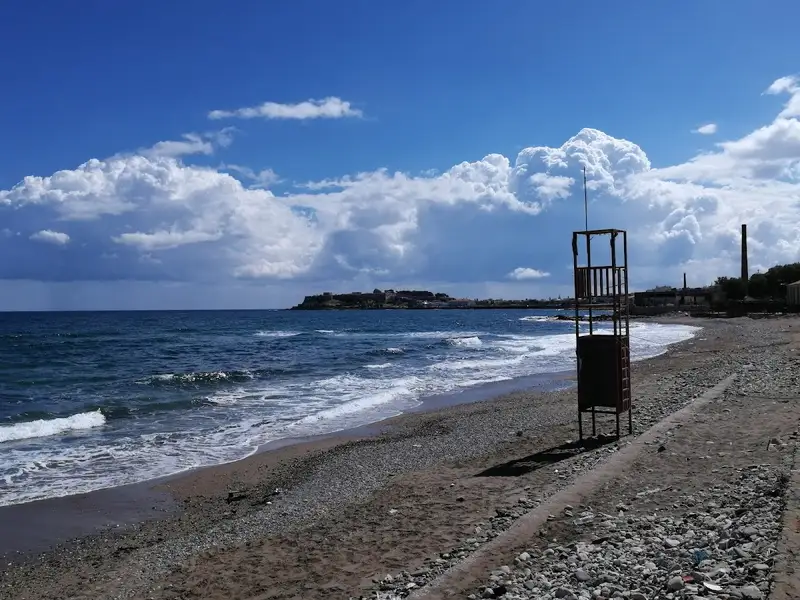
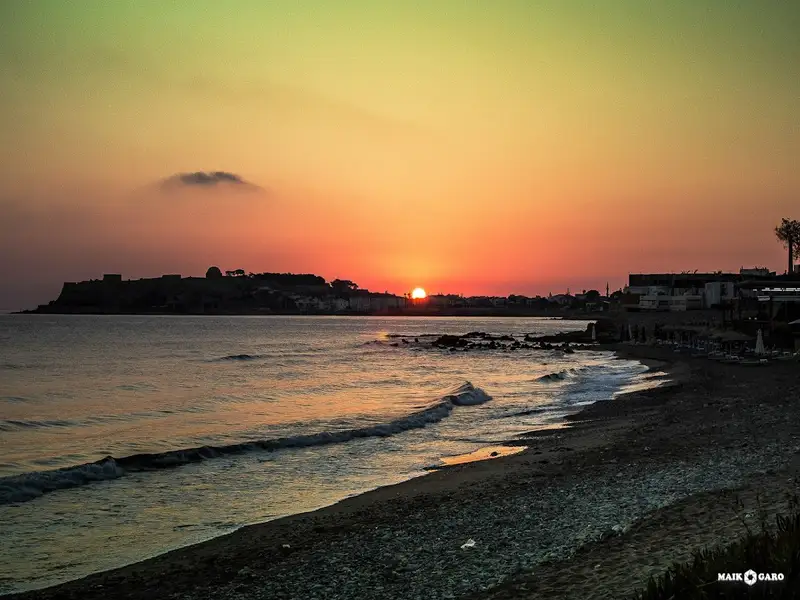
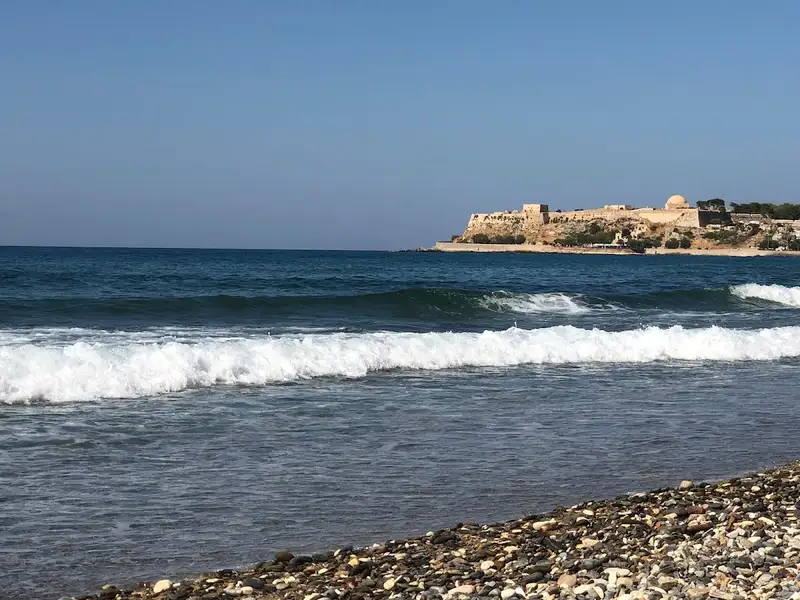
Koumbes, situated 2km west of Rethymnon’s center, is the only beach on the city’s western side. The beach offers stunning vistas of the impressive Fortezza fortress, located several hundred meters to the east. Koumbes derives its name from the Turkish word ‘Kubbe,’ which translates to ‘dome.’ This expansive beach, adorned with sand and fine pebbles, has seen significant growth in recent years, and its development has become a top priority for the Rethymno Municipality. This growth has led to numerous improvements, including the addition of walkways and similar enhancements along the coast.

At Koumbes, visitors can avail themselves of all necessary tourist amenities, such as lifeguard services, umbrellas, showers, changing rooms, and water sports. The area also boasts numerous hotels, accommodations, restaurants, taverns, snack bars, and cafes. Access to Koumbes from the city center is convenient, either by bus or on foot. Walking takes no more than 20 minutes.

  • Koumbes beach
  • Sand
  • Shallow
  • Blue
  • 9.3 km
Pervolia beach is located 9.3 km away.

Three neighbouring suburbs of Rethymnon, Pervolia, Misiria, and Platanias (also known as Platanes) are situated 3-5km west of the city. Initially independent settlements, they have been subsumed into Rethymnon’s urban region due to expansion in residential development.

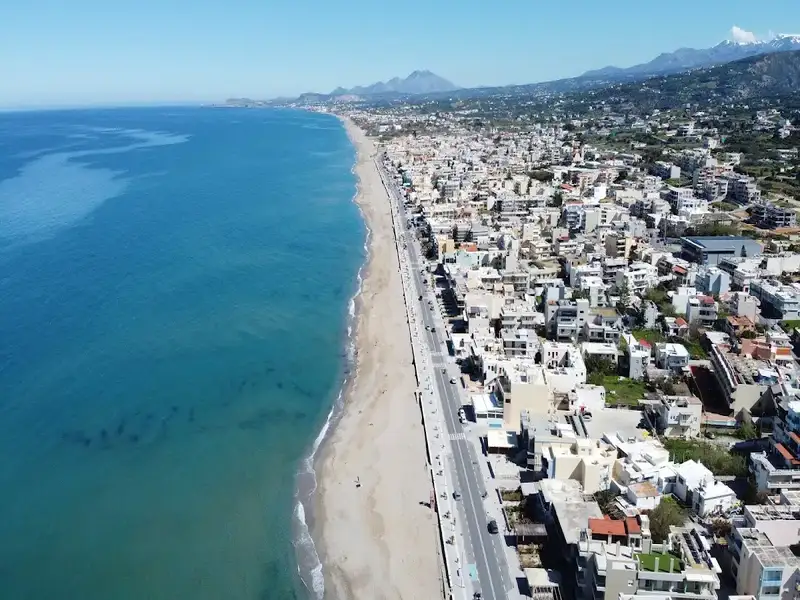
A lengthy sandy beach, part of Rethymnon bay’s expansive beachfront, extends in front of these suburbs. The beach begins near Rethymnon’s harbour and continues eastwards for 13km until reaching Skaleta. The beach is well-maintained and offers a wide selection of food, drink, and lodging options.

A notable feature of this beach, like the entirety of the vast beachfront, is the nesting activity of the Caretta caretta sea turtle. These turtles, protected by international law, lay their eggs in the sand. Rethymno Gulf is one of Greece’s three critical habitats for Caretta caretta, with over 400 nests documented annually.

  • Pervolia beach
  • Sand
  • Shallow
  • Blue
  • 9.6 km
Misiria beach is located 9.6 km away.

Pervolia, Misiria, and Platanias, also known as Platanes, form a trio of suburbs that adjoin the city of Rethymnon, and are situated 3-5km west of the city. Previously individual settlements, they have now merged into Rethymnon’s urban district due to the growth of residential areas.

A sprawling sandy beach extends in front of these suburbs, forming part of a 13km long coastal strip that begins near Rethymno’s harbour and reaches as far as Skaleta beach. This well-maintained beach offers a wide variety of options for dining, drinking, and lodging. Along this extensive stretch of coastline, loggerhead sea turtles (Caretta caretta) come to nest. These turtles are at risk of becoming extinct, but the Rethymno Gulf stands as one of the three most crucial habitats for the species in Greece, hosting an average of over 400 nests each year.

The name Misiria originates from the Arabic term ‘Misr’, referring to a suburb of Cairo known for its fertile soil. In a similar vein, Misiria is so named due to its productive land, which continues to yield a bounty of vegetables.

  • Misiria beach
  • Sand
  • Shallow
  • Blue
  • 10.2 km
Platanes beach is located 10.2 km away.

The suburbs of Pervolia, Missiria, and Platanias, also known as Platanes, are situated 3-5km to the west of Rethymnon city. Initially, these were independent settlements that have now merged into the urban region of Rethymnon, as a result of the residential growth over the previous century.

A vast sandy beach extends in front of these suburbs, forming part of the extensive coastline of Rethymnon Bay. Originating near the Rethymno harbour, the beach stretches eastward for 13km until it reaches Skaleta. This well-maintained beach offers a wealth of options for food, drink, and accommodation.

Just like the rest of the lengthy coastline, this beach also serves as a nesting ground for the loggerhead sea turtle. These turtles are under the protection of the Greek State. Rethymno Bay is counted among the three most crucial nesting sites for this species in Greece, with more than 400 nests reported annually.

  • Platanes beach
  • Sand
  • Shallow
  • Blue
  • 10.9 km
Kamari beach is located 10.9 km away.

Kamari Beach is situated roughly 7km west of Rethymnon, close to Gerani village, at the entrance of Vederi Gorge. The coastal highway linking Chania and Rethymnon runs adjacent to the beach and over the Gerani bridge.

The beach is relatively compact, featuring pebbles and rocks in certain areas, making it a favourite among snorkelers. Despite being exposed to frequent northerly winds, it offers some amenities such as a few umbrellas, taverns, and rooms. Additionally, a quaint harbour and the charming Panagia Kamariani church can be found nearby.

A short distance south of the beach, one can find the sealed entrance to the Gerani cave, a significant archaeological site in central Crete, discovered unexpectedly during the construction of the main road. Moreover, visitors can explore the scenic narrow streets of Gerani village and visit the St George church along with several smaller churches.

  • Kamari beach
  • Rocks in places, Sand
  • Normal
  • Blue
  • 11.1 km
Adelianos Kambos beach is located 11.1 km away.

Adelianos Kambos, also known as Adele Beach, is a seaside suburb of Rethymnon situated 6km to the east on a flat plain. This area, previously used for vegetable cultivation by residents of the adjoining village Adele, has seen considerable development over the past century, becoming an integral part of Rethymnon city. Access to Adelianos Kambos is straightforward, with local buses running regularly from the city centre.

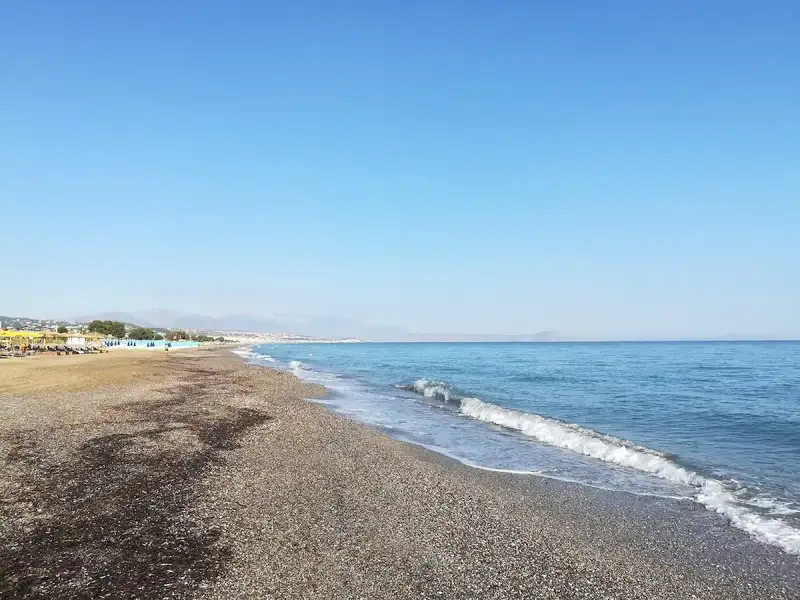
The extensive sandy stretch of Rethymnon Gulf beach begins at Adelianos Kambos and continues to Skaleta. The suburb offers a variety of accommodation options, from large hotels to smaller establishments, and plenty of choices for dining, shopping, and entertainment. The beach is well-equipped with amenities like umbrellas, lifeguards, changing rooms, showers and bars, making it a popular spot for beach sports and water activities. The sea here is typically shallow but can be wavy, a characteristic of all open beaches on the northern side of Crete. An interesting feature of this beach is the sea turtles that lay their eggs here, leading to the occasional sight of marked nests protected by ropes and signboards.

  • Adelianos Kambos beach
  • Sand
  • Shallow
  • Blue
  • 12.4 km
Pigianos Kambos beaches is located 12.4 km away.

Pigianos Kambos, also known as Pigi beach, is situated 8km to the east of Rethymno, centrally positioned along Rethymno Bay’s extensive beach. The name, Pigianos Kambos, translates to “Plane of Pigi” from Greek, reflecting the fertile fields that belong to the inhabitants of the nearby Pigi village. Today, Pigianos Kambos serves as a coastal tourist destination, albeit less developed than its neighbor, Adelianos Kambos. The area boasts a variety of accommodations, from apartments and rooms to larger hotels, complemented by multiple dining, entertainment, and shopping options.

The beach in Pigianos Kambos offers a peaceful and quieter atmosphere compared to the other beaches in Rethymnon. Between Pigianos Kambos and Stavromenos, visitors can enjoy swimming and snorkelling in the numerous small, rocky coves. A unique feature of Pigianos Kambos is the opportunity to spot protected sea turtle nests, as these creatures choose this sandy beach to lay their eggs.

Regular bus services from the center of Rethymnon make Pigianos Kambos easily accessible.

  • Pigianos Kambos beaches
  • Rocks in places, Sand
  • Shallow
  • Blue
  • 13.4 km
Petres beach is located 13.4 km away.

Situated at the eastern edge of the expansive Episkopi beachfront, Petres beach, or Stones beach, is a 46km journey east from Chania and 13km west from Rethymnon. The beach owes its name to the majestic Petres Gorge that concludes at this point. The area is dotted with facilities such as accommodations, eateries, and even a diving school. The Vythos cove, positioned north of the other areas, offers umbrellas and a less sandy terrain. The rocky underwater landscape makes it a hotspot for fishing and snorkelling. However, the frequent northern winds can cause the sea to become wavy.

  • Petres beach
  • Rocks in places, Sand
  • Shallow
  • Blue
  • 13.8 km
Plakias beach is located 13.8 km away.

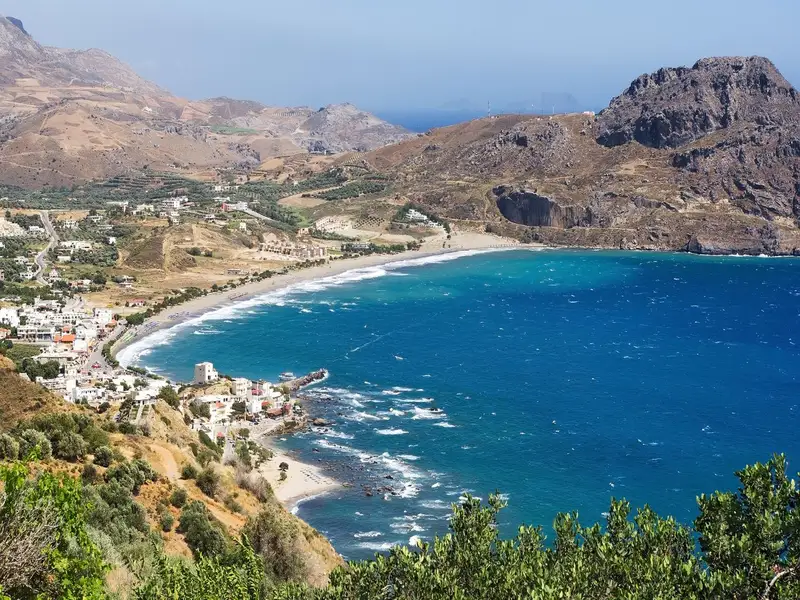
Situated 36km to the south of Rethymno city, Plakias is a charming tourist haven nestled at the mouth of a fertile valley just beyond the Kouroupa range, where the Kotsifos river meets the sea. It owes much of its popularity to the impressive Gialia beach, stretching for 1.3km from the edge of the town to the east, ending at Cape Mouri. This fully-equipped beach, characterized by its crystal-clear, cool waters, is an ideal location for leisurely walks or cycling along the adjacent road. It features numerous hotels and restaurants, as well as beach essentials such as umbrellas, water sports facilities, beach volley courts, snack bars, changing rooms, and showers.

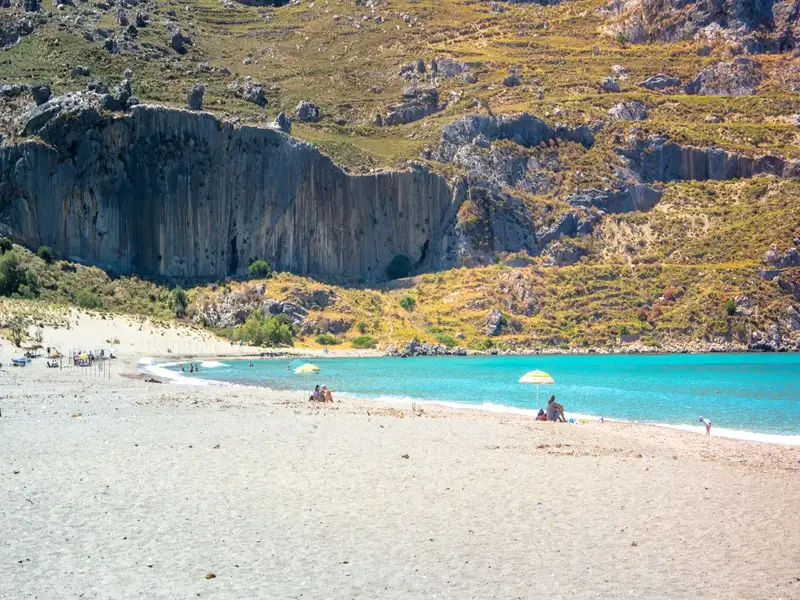
Paligremnos, the eastern portion of the beach, boasts fine sandy shores and is well-appointed with various amenities close to local accommodation and eateries. Noteworthy are the tall, vertical cliffs nearby that prove to be a magnet for climbing enthusiasts. This spot, also known as “Gonates” (knees), is steeped in local lore; it’s said that the epic hero Digenis knelt here to drink from a local spring. An intriguing phenomenon takes place here every full moon from September to January, as the moon’s reflection on the sheer cliffs draws large squids to the beach, which locals catch with long sticks. A few meters south of Paligremnos, you can also discover tunnels once used for transporting coal to waiting cargo ships.


  • Plakias beach
  • Sand
  • Shallow
  • Blue

© All rights reserved. Crete Locals