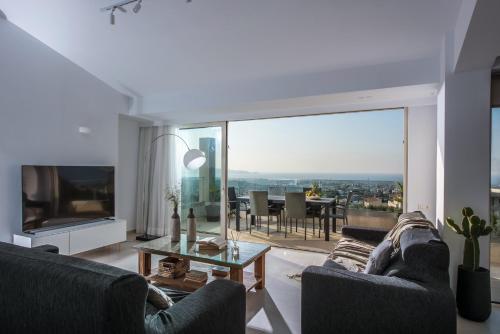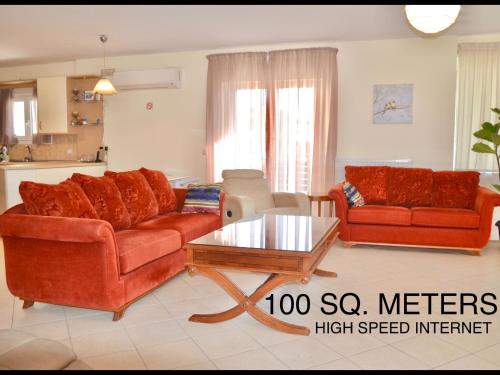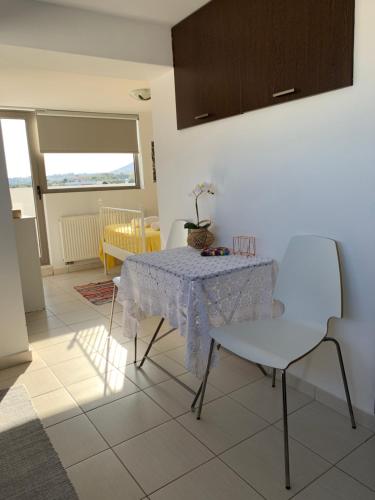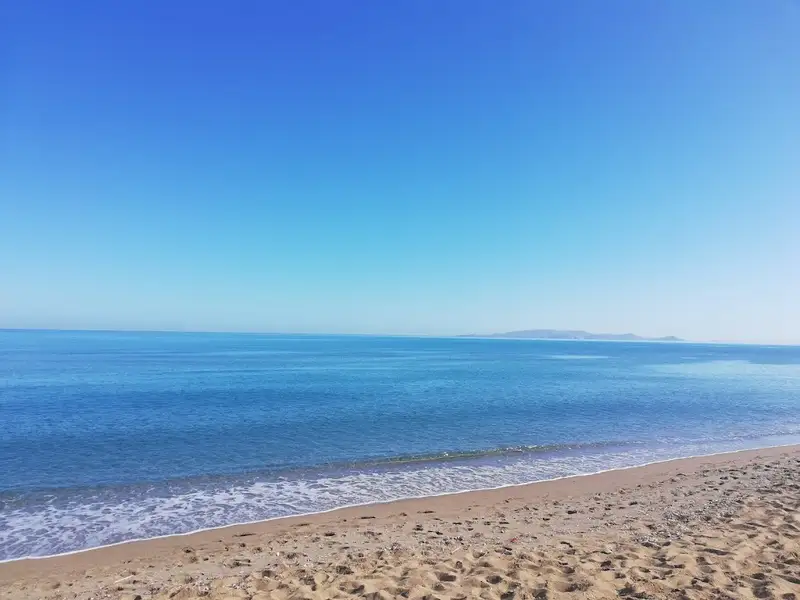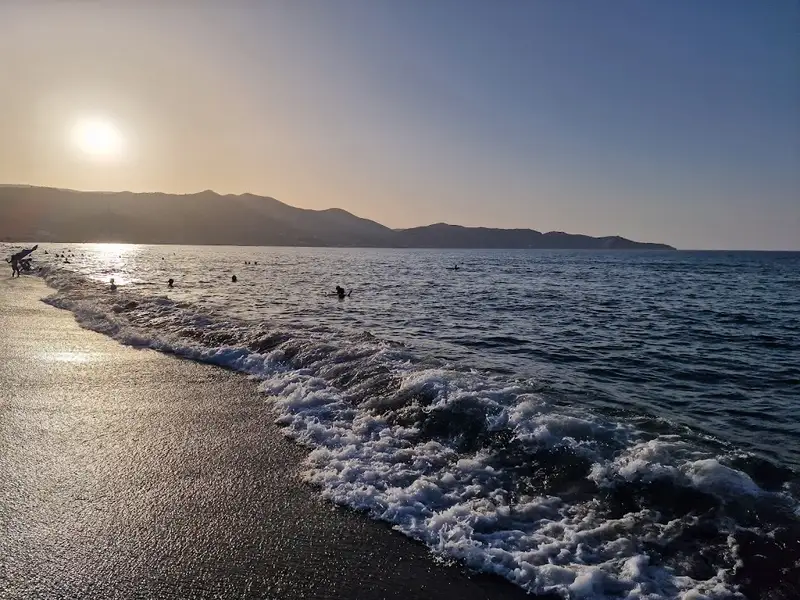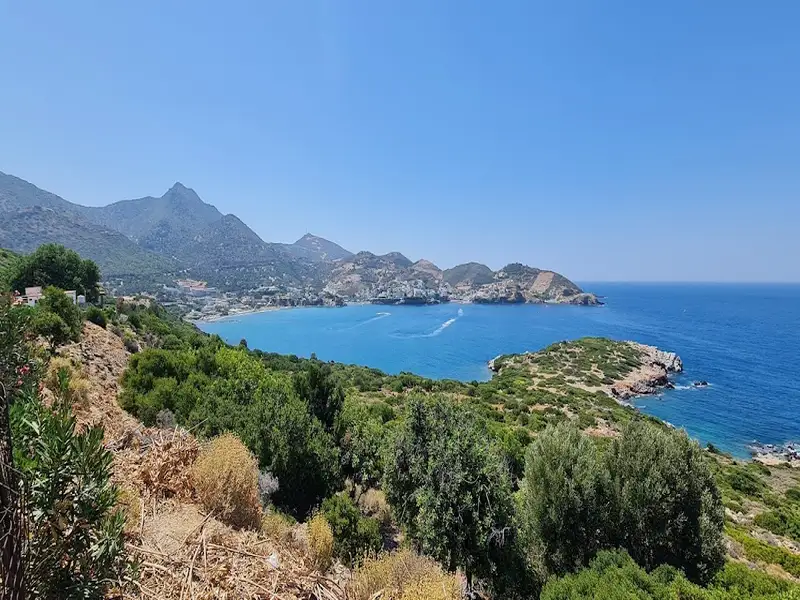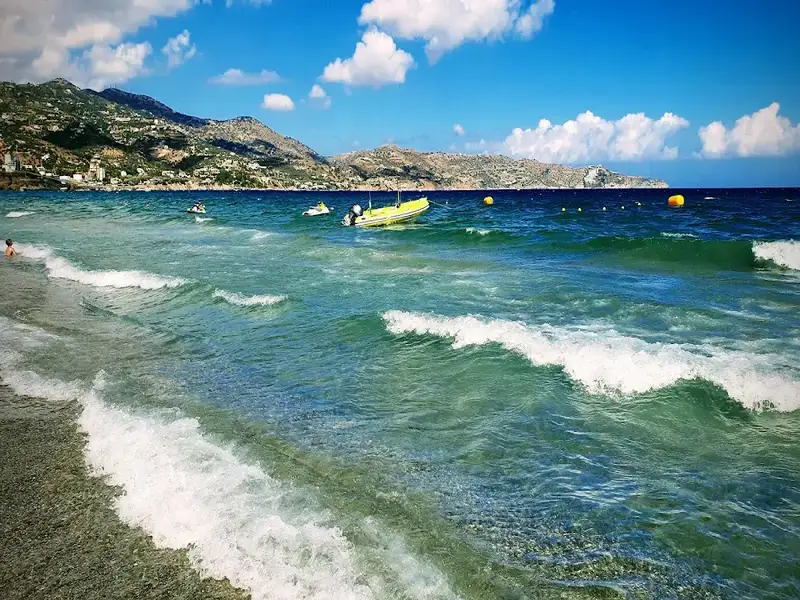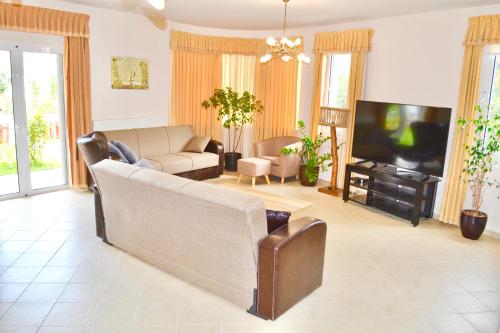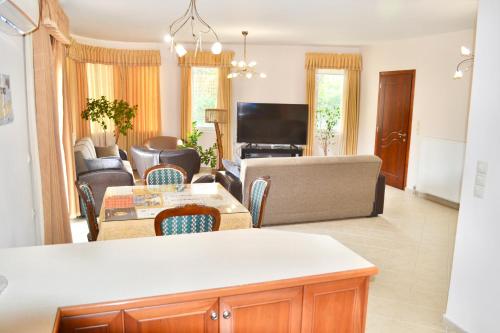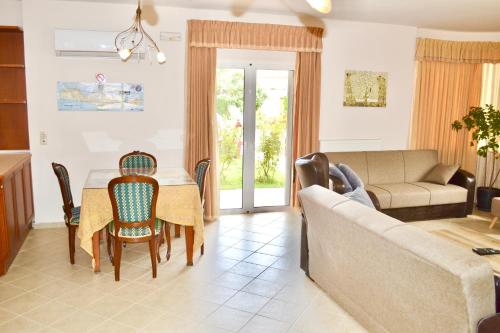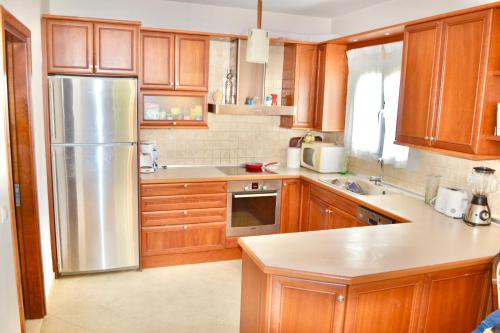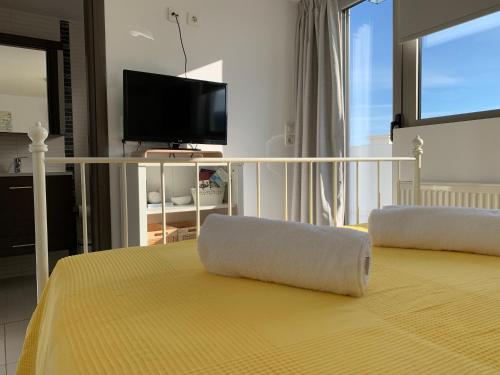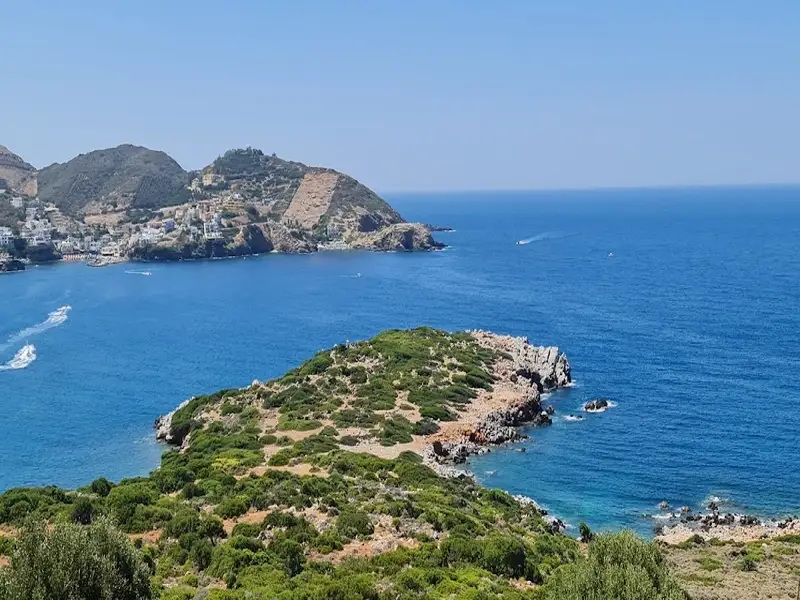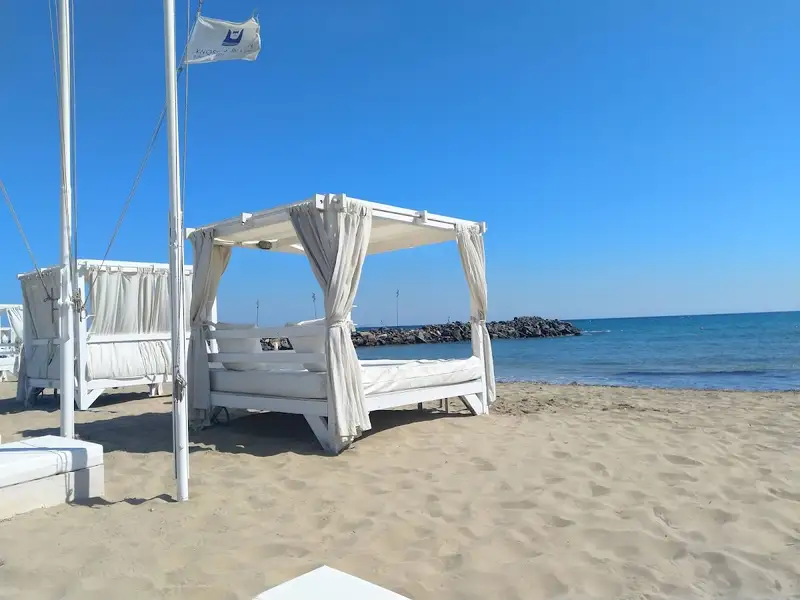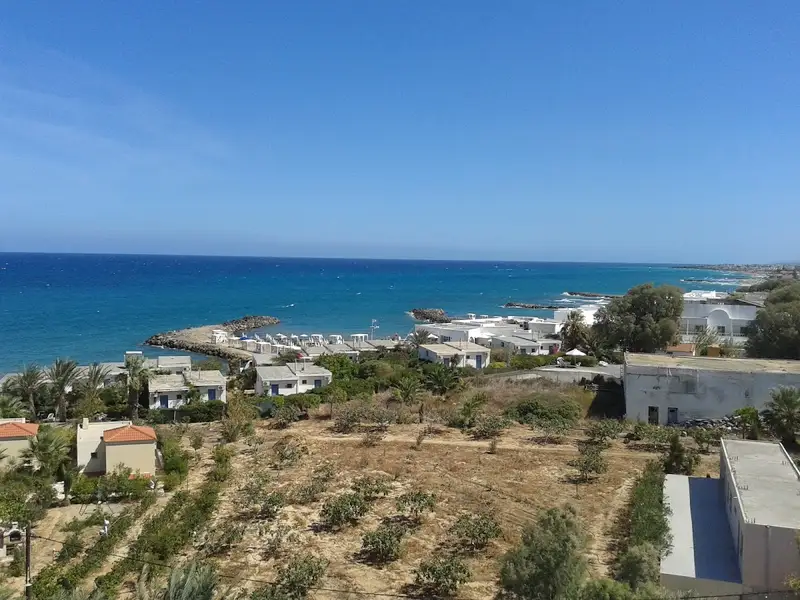
Olea Luxury Suites Heraklion features pool views, free WiFi and free private parking, set in Áno Fortétsa, 3.9 km from The Palace of Knossos.
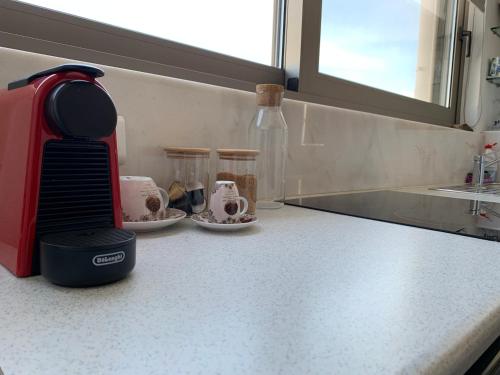
The apartment provides guests with a patio, sea views, a seating area, a flat-screen TV, a fully equipped kitchen with a dishwasher and an oven, and a private bathroom with walk-in shower and a hair dryer. A microwave, a fridge and stovetop are also featured, as well as a coffee machine and a kettle.
Guests can also relax in the garden, beside the pool with a view, or on the sun terrace.
Venetian Walls is 5.2 km from Olea Luxury Suites Heraklion, while Heraklion Archaeological Museum is 6.1 km away. The nearest airport is Heraklion International Airport, 7 km from the accommodation.
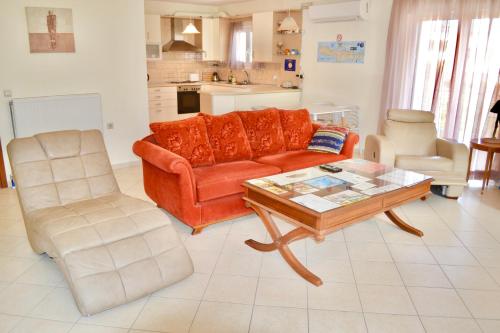
Located in Heraklio Town, 2.4 km from The Palace of Knossos, EZITH LUXURY APARTMENTS offers accommodation with free WiFi, a terrace or a balcony and access to a garden and a seasonal outdoor pool.
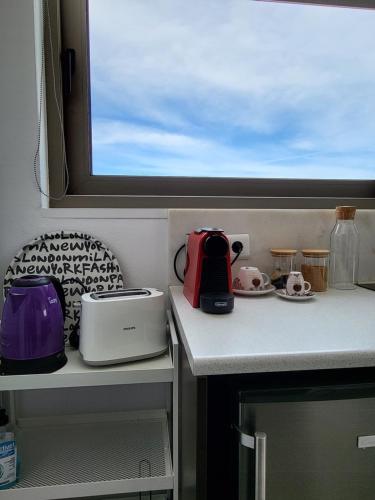
The apartment provides guests with a patio, garden views, a seating area, satellite flat-screen TV, a fully equipped kitchen with an oven and a microwave, and a private bathroom with walk-in shower and bathrobes. A toaster, a fridge and stovetop are also provided, as well as a coffee machine and a kettle.
EZITH LUXURY APARTMENTS offers a picnic area.
A car rental service is available at the accommodation.
Venetian Walls is 4 km from EZITH LUXURY APARTMENTS, while Heraklion Archaeological Museum is 4.5 km away. The nearest airport is Heraklion International, 5 km from the apartment, and the property offers a paid airport shuttle service.
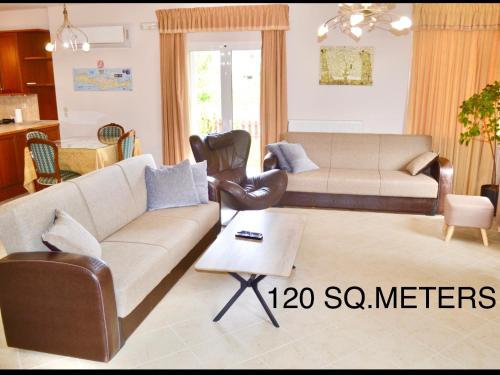
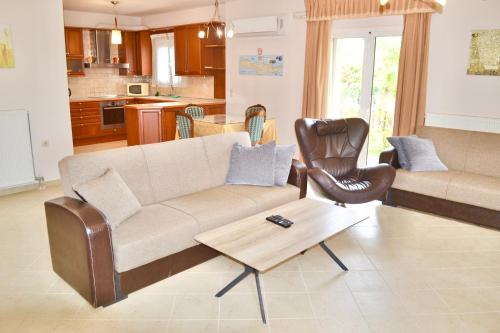
Situated near Knosós, this air-conditioned apartment features a patio and offers free WiFi access. The unit is 3.4 km from Heraklio Town.
The kitchen features a dishwasher, an oven and a microwave, as well as a coffee machine. A flat-screen TV is featured.
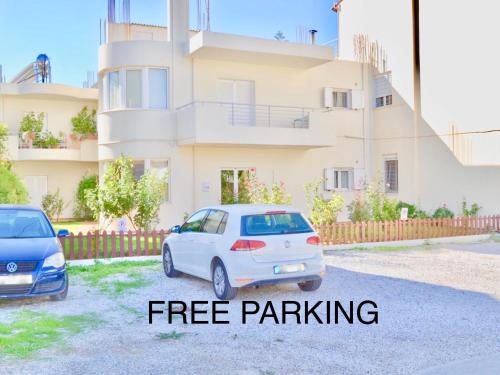
A bus stop offering access to Heraklio City is within walking distance. Hersonissos is 22 km from Giorgos Large Size Apartments -Family Friendly with Free Parking and Yard Views, while Bali is 35 km away. The nearest airport is Heraklion International Airport, 4 km from Giorgos Large Size Apartments -Family Friendly with Free Parking and Yard Views.
from
€69
/night
Situated in Heraklio Town, 2.7 km from The Palace of Knossos and 3.5 km from Venetian Walls, Holiday House Heraklion Deluxe features air-conditioned accommodation with a patio and free WiFi. The property has city and quiet street views, and is 4 km from Heraklion Archaeological Museum.
The apartment features 3 bedrooms, 1 bathroom, bed linen, towels, a flat-screen TV with streaming services, a dining area, a fully equipped kitchen, and a balcony with garden views.
The apartment offers a terrace.
Cretaquarium Thalassocosmos is 17 km from Holiday House Heraklion Deluxe, while Cultural Conference Centre of Heraklion is 3.5 km from the property. The nearest airport is Heraklion International Airport, 4 km from the accommodation.
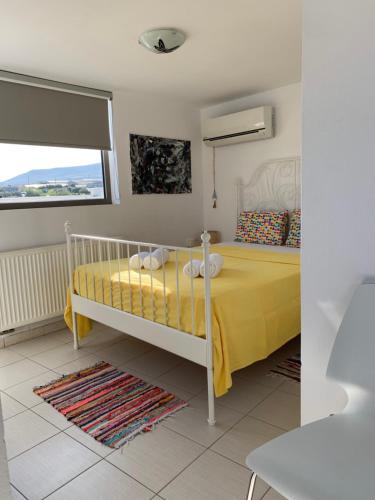
Featuring air-conditioned accommodation with a rooftop pool, garden view and a balcony, Holiday House Heraklion & Roof Garden is set in Heraklio Town. It features city views and free WiFithroughout the property.
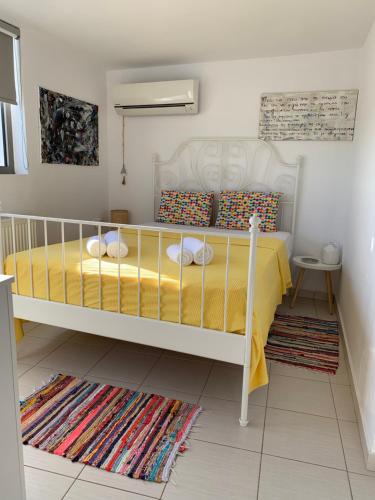
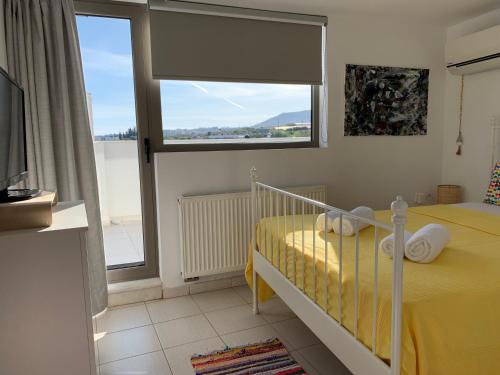
The apartment is fitted with 1 bedroom, 1 bathroom, bed linen, towels, a flat-screen TV with streaming services, a dining area, a fully equipped kitchen, and a terrace with mountain views.
Guests at the apartment can enjoy an à la carte breakfast.
Holiday House Heraklion & Roof Garden offers a picnic area. A outdoor play equipment is also available for guests at the accommodation.
The Palace of Knossos is 2.7 km from Holiday House Heraklion & Roof Garden, while Venetian Walls is 3.5 km away. The nearest airport is Heraklion International Airport, 4 km from the apartment.
from
€157
/night
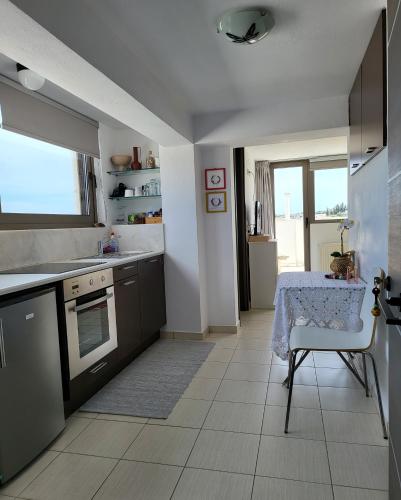
Situated in Áno Fortétsa, 2 km from The Palace of Knossos and 4.2 km from Venetian Walls, Melina Knossos Iraklio Crete features air-conditioned accommodation with a balcony and free WiFi. It is located 4.7 km from Heraklion Archaeological Museum and provides a lift.
The apartment features 1 bedroom, 1 bathroom, bed linen, towels, a flat-screen TV, a fully equipped kitchen, and a terrace with mountain views.
Guests can relax in the garden at the property.
Cretaquarium Thalassocosmos is 17 km from the apartment, while Cultural Conference Centre of Heraklion is 4.2 km from the property. The nearest airport is Heraklion International Airport, 5 km from Melina Knossos Iraklio Crete.
from
€45
/night
No results available
Settlements in Knossos date as far back as the Neolithic period. Neolithic remains from around 7000 BC are found throughout Crete. Explore the ruins of the ancient Minoan civilization and enjoy a skip-the-line tour of the Knossos Palace.
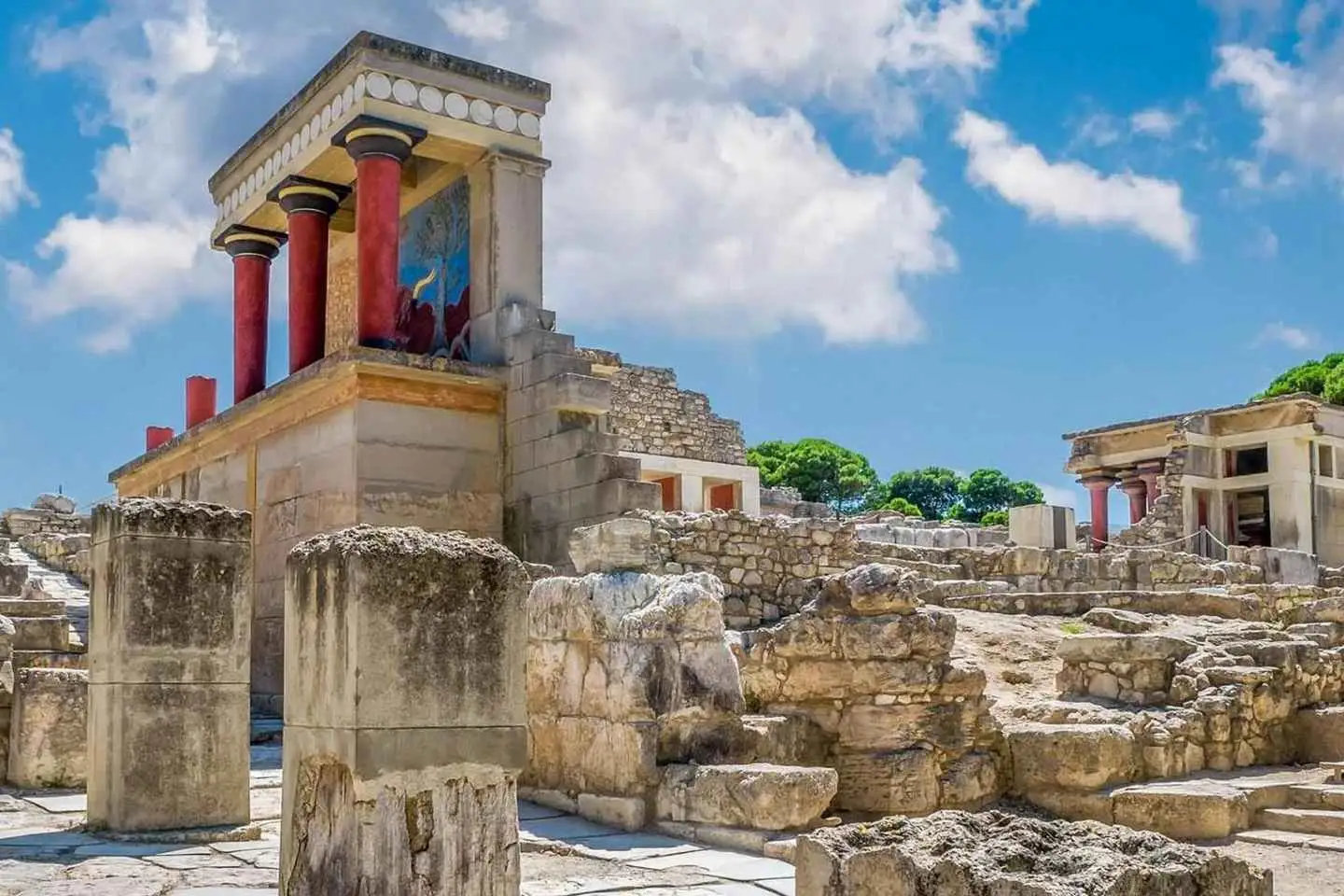
The Knossos Palace was built from 1700 to 1400 BC. Advanced architectural techniques were used in its construction, and sections of the palace stood up to 5 stories high.
It featured 1,300 rooms connected by corridors, and a theater and extensive storerooms, which held large clay containers of oil, grains, dried fish, beans and olives – often with gold hidden beneath.
Take the hassle out of visiting Crete’s capital and the Palace of Knossos with transport arranged for you. Relax on a day tour including hotel pickup, a transfer to the palace, then Heraklion, and drop-off back at your hotel in Rethymno. Take your time exploring the attractions at your own pace.
After hotel pickup, head straight to the first stop, the Palace of Knossos. Marvel at the ruins of the neolithic settlement and explore the ceremonial and political center of the Minoan civilization. Discover where thrilling legends, such as the myth of the Minotaur and labyrinth, were born.
Next, stop at Heraklion, where you will have 4 hours of free time to spend as you wish. Explore the city and visit the archeological museum. Buy some souvenirs. Grab a coffee, or tuck into a delicious lunch at a local restaurant. Then, climb back on the bus to be returned to your hotel in Rethymno.
Embark on a captivating journey through Crete, a land brimming with history, natural beauty, and cultural treasures. Our tour commences at Knossos Palace, the heart of the ancient Minoan Civilization during the Bronze Age. Immerse yourself in the legacy of King Minos, exploring the oldest city in Europe and the cradle of Western Civilization.
Departing from Knossos, our scenic coastal route leads eastward to a traditional olive oil factory. Delight in the process of cultivating the ‘liquid gold’ – olive oil, discovering its rich history, beneficial properties, and savoring its exceptional flavor.
As we traverse mountains adorned with olive trees, immerse yourself in the lush flora and fauna. Visit the village of Krasi to capture unforgettable moments by one of the world’s oldest plane trees. Indulge in a taste of tradition as you sip on “raki” next to natural springs, creating memories to last a lifetime.
En route to the Lasithi Plateau, pass through the historic Kera Kardiotissa Monastery in Northern Diktis, adding a touch of cultural richness to your adventure. Arrive at the vast Plateau of Lasithi, once home to the world’s first and most extensive wind farm. Although only a few windmills operate today, the fertile plain surrounded by the imposing Dikti Mountains provides a stunning backdrop.
Explore the mythological Diktaean Cave, the supposed birthplace of Zeus, located above Psychro village in Lassithi Plateau. Take in the breathtaking views of the plateau and enjoy a stop at a traditional local taverna, where you’ll savor authentic Cretan cuisine made with local products.
Conclude your journey in the traditional village of Mochos, where village cafes beckon you to mingle with locals and immerse yourself in the spirit of Crete. As the tour concludes, you’ll be driven back to your location, brimming with cherished memories, and a beaming smile, marking the end of an unforgettable Cretan adventure.
Explore the Labyrinth and Palace of Knossos. Skip the long ticket line upon arrival and you meet your own exclusive guide. This site is home to: the Minotaur, the oldest throne in Europe, elegant wall paintings that inspired art Nuevo works centuries later, huge clay earns, advanced draining systems, and quarters sunk into the earth. Together you will see the oldest civilization unfold before your eyes and you will be able to get the best out of your visit to this magnificent structure.
Knossos, a complex of more than 1500 interlocking rooms, was an astonishing palace, built for a mighty king of the Bronze Age. As you wander through the labyrinthine ruins, you will have the chance to see the original throne of Minos, the mystifying sanctuaries, the luxurious domestic quarters of the royal family, that were, once upon a time, bursting with Crete’s treasures.
Knossos is considered Europe’s oldest city. The first palace of Knossos was erected soon after 2000 BC. In 1700 BC, a catastrophic earthquake destroyed the Palace. A new palace was then immediately built and for more than 300 years it represented the pre-eminent center of power in Bronze Age Crete. The new palace was an imposing complex with important architectural innovations, splendid frescoes adorning the walls, hundreds of rooms distributed across four storeys, impressive storage areas, specialized workshops, and spacious courts hosting ceremonies and feasts.
Enjoy a tour of the mythological Labyrinth with your own licensed guide who will take you through Knossos, focusing on the highlights of the area and its most prominent features. Afterward, the driver will take your group to the Archaeological Museum of Heraklion where your private tour will continue.
Discover Knossos, the capital of Minoan Crete, considered Europe’s oldest city. Hear about the islands long history from your guide and learn about the peak of the Minoan culture in 2000 B.C. Later visit the Archaeological Museum of Heraklion where you can marvel at the findings of the first civilization of Europe, the Minoans.
The tour will guide you through the ages, in a period of time that extends over a 5.000 years, from the neolithic to the roman era.
Join a guided tour of Knossos, a complex of more than 1500 interlocking rooms, once an astonishing palace built for a mighty king of the Bronze Age. Knossos is considered Europe’s oldest city.
As you wander through the labyrinthine ruins, get the chance to see the original throne of ‘’Minos”, the mystifying sanctuaries, the luxurious domestic quarters of the royal family, Crete’s treasures pantries, and the water-management systems.
The first palace of Knossos was erected soon after 2000 BC. In 1700 BC, a catastrophic earthquake destroyed the Palace. A new palace was built immediately, the most monumental of all, and for over 300 years it represented the pre-eminent center of power in Bronze Age Crete.
The new palace was an imposing complex with important architectural innovations, splendid frescoes adorning the walls, hundreds of rooms distributed in four storeys, impressive storage areas, specialized workshops, and spacious courts hosting ceremonies and feasts.
Learn how during the last decades of the 14th century BC, a series of earthquakes led to the final destruction of the palace.
No results available
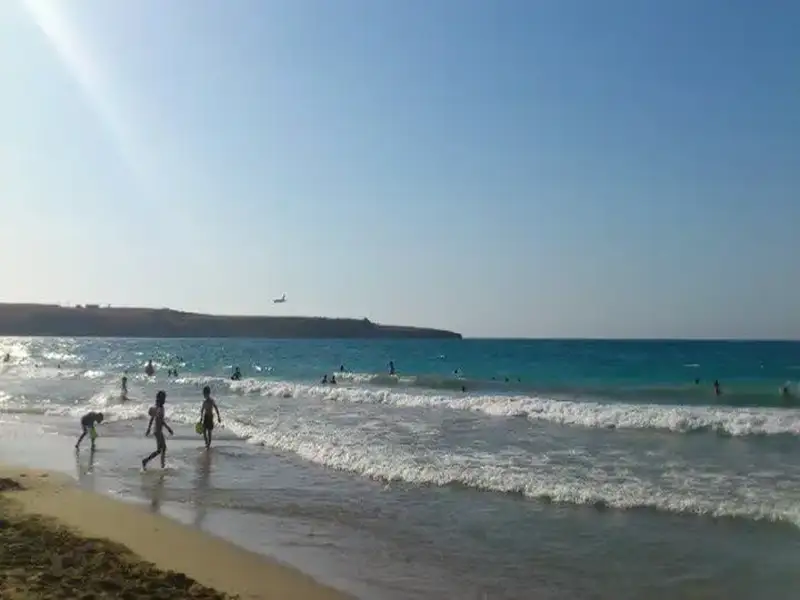
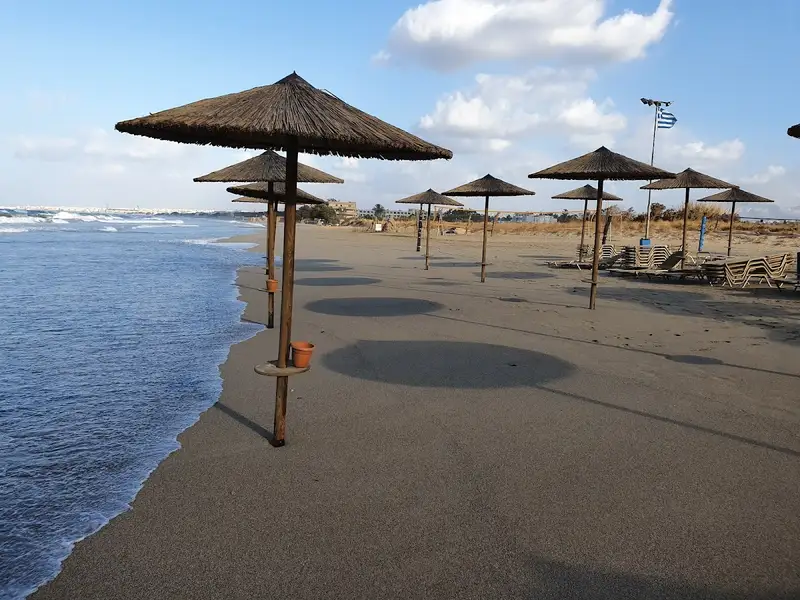
Karteros beach is a wide, fine-sand bay on the north coast of Crete, about 7 km east of Heraklion and right beside the island’s airport. The bay stretches roughly 3 km east from the mouth of the Karteros Gorge and takes in two neighbourhoods, Karteros and Amnissos, which have grown together as the area developed. Its name honours the Byzantine general Krateros, who landed here in 824 AD in a failed attempt to free Crete from the Saracens.
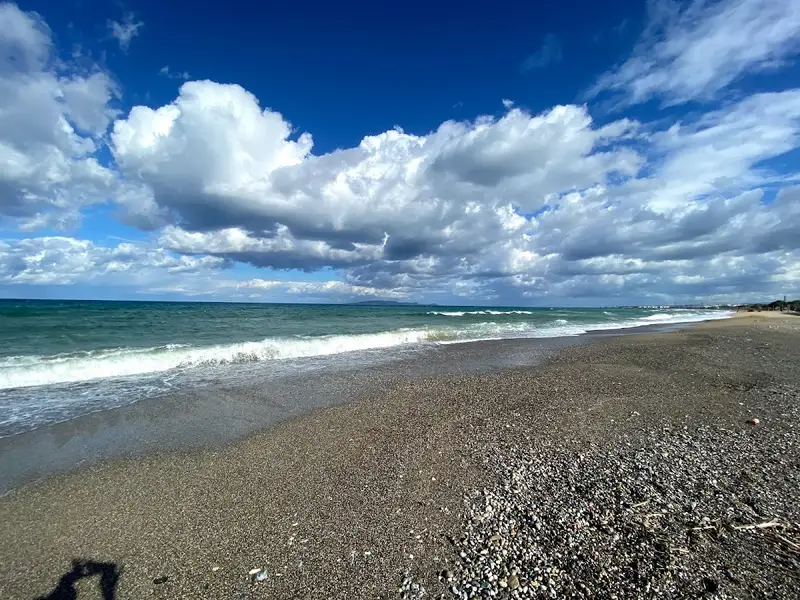
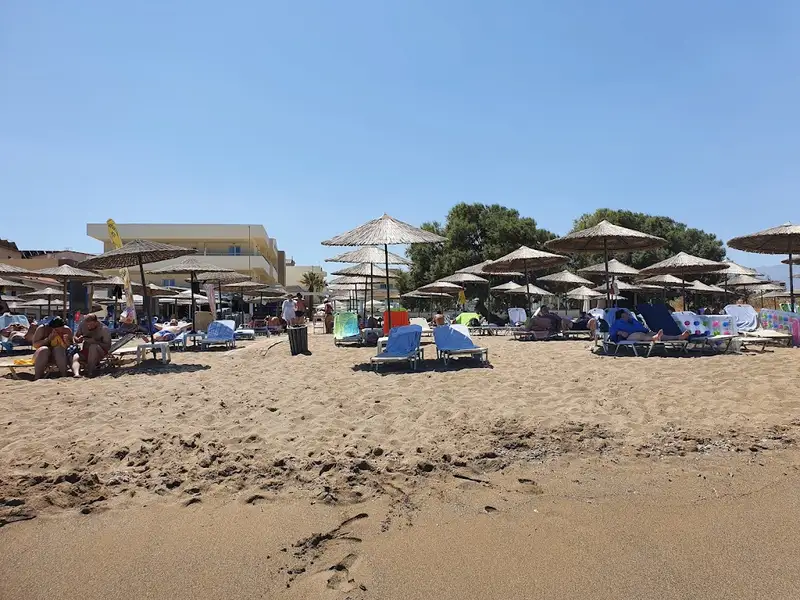
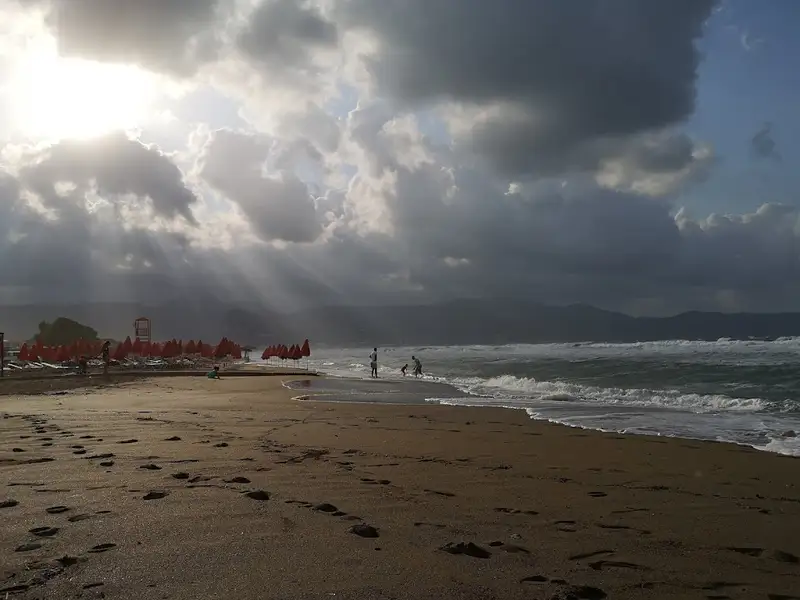
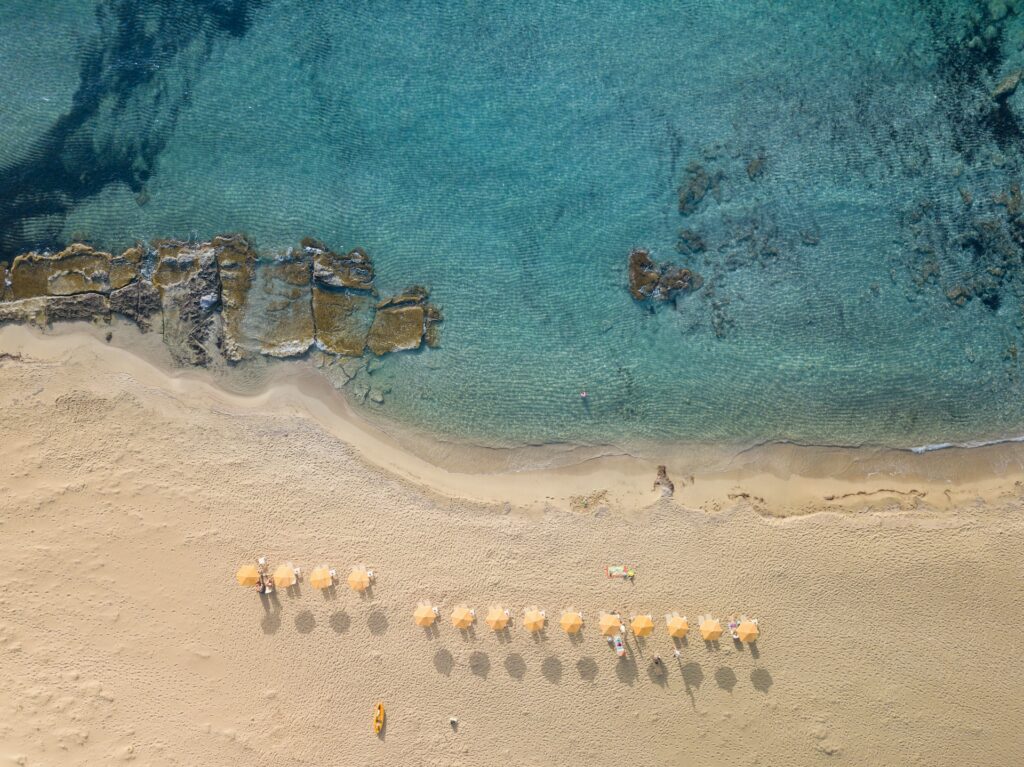
The sand is fine and golden, mixed with a little pebble in places, and the water is shallow with almost no rocks. The bay faces the open sea and catches the northern winds, so the surface is often wavy, especially towards the eastern end. Those same winds make Karteros a popular spot for windsurfing. The shallow, gently deepening water suits children and families, and lifeguards watch the organised stretches in season.
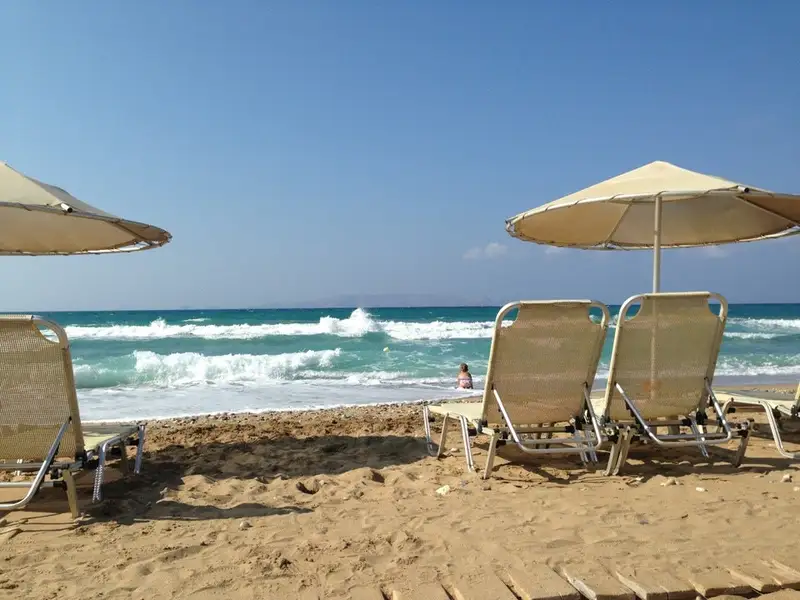
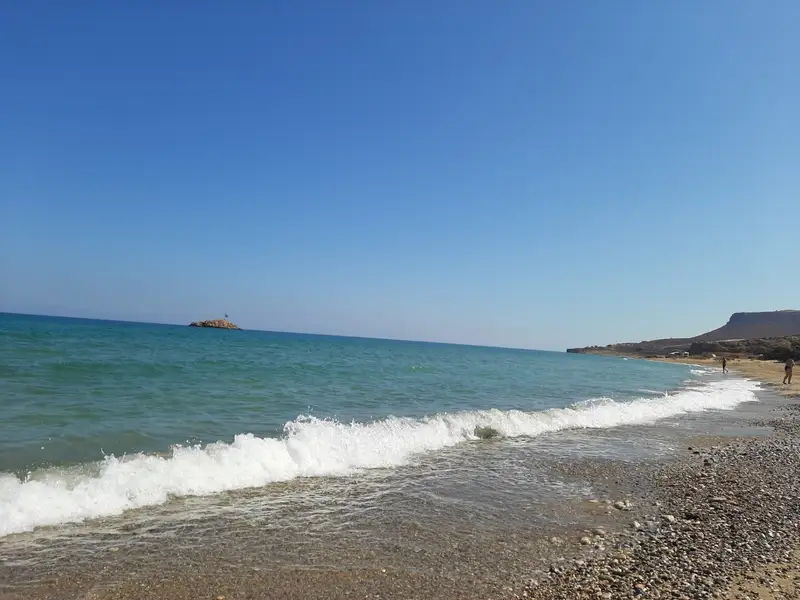
You will find tavernas, cafes, and beach bars along the shore, together with umbrellas and sunbeds on the organised sections. A paved road and a city bus from Heraklion reach the beach, and there is a parking area by the shore, so getting here without a car is straightforward. Off the bay lies the small rocky islet of Monochorako, close enough for confident swimmers to reach from the sand.
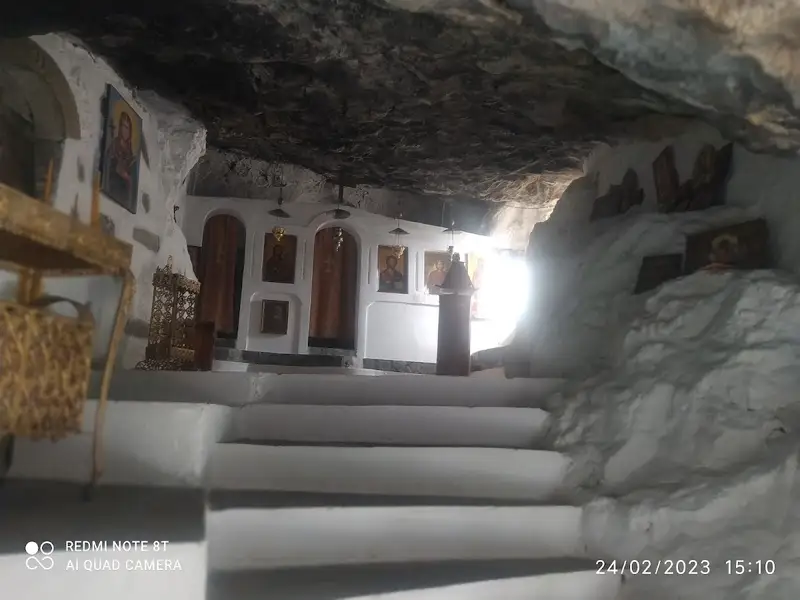
The quietest part of the bay is Florida, at the western end next to Heraklion’s Nikos Kazantzakis airport. Here the Karteros River flows out of the gorge and forms a small seasonal wetland that dries up in summer, and there are fewer umbrellas and facilities than further east. The wetland is easiest to see in spring, before the summer heat dries it out. While you are at this end, look for the small church of St John and St Nikon, built inside a cave in the rock face across the old national road. Do not be surprised to see horses on the sand here either, as the Heraklion Riding Club brings them down to the beach.
A rental car makes it easy to combine Karteros with the beaches and sites further east along the coast. Compare options for your trip on the Crete car rental page.
Karteros beach is on the north coast of Crete, about 7 km east of Heraklion and directly east of the island’s airport. The bay stretches around 3 km and includes the Karteros and Amnissos neighbourhoods.
A paved road links Karteros beach to Heraklion, and a city bus serves the area, so you can reach it with or without a car. There is a parking area next to the shore for visitors who drive.
Yes. The water is shallow and deepens gently with few rocks, which suits children, and lifeguards watch the organised stretches in season. The sea is often wavy because the bay faces the northern winds, so keep an eye on the conditions and any warning signs.
The bay is exposed to the northern winds and the surface is frequently wavy, most of all towards the eastern end. Calmer conditions are more likely early in the day and on the more sheltered western sections.
The organised sections have umbrellas, sunbeds, showers, and lifeguards in season, with tavernas, cafes, and beach bars along the shore. The western Florida stretch, next to the airport, is quieter and has fewer facilities.
Yes. The steady northern winds make the bay well suited to windsurfing, and water-sports operators work the organised stretches in the summer season.
The beach is named after the Byzantine general Krateros, who landed on the bay in 824 AD to try to free Crete from the Saracens but was defeated. The nearby river and settlement carry the same name.
At the western Florida end, the Karteros River forms a small seasonal wetland, and the cave church of St John and St Nikon sits across the old national road. Off the bay lies the small islet of Monochorako, which strong swimmers can reach, and the eastern Amnissos area continues the same long stretch of sand.
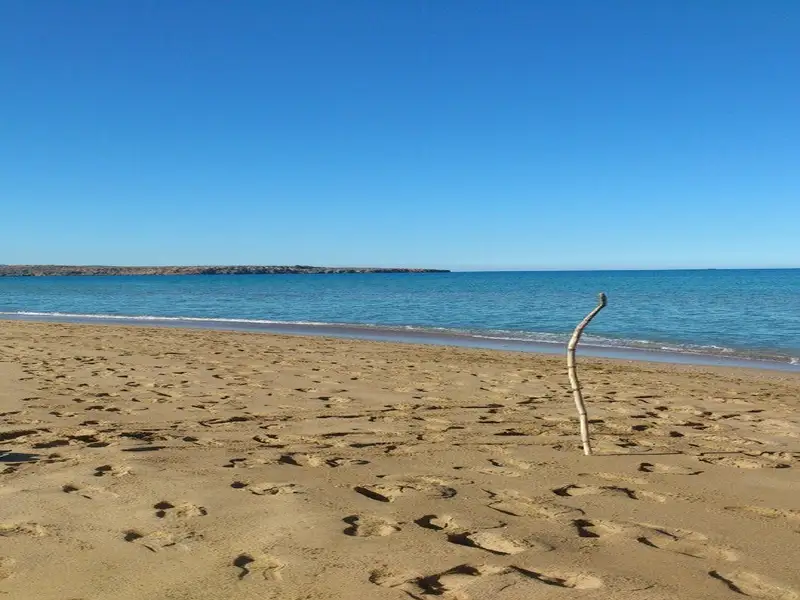
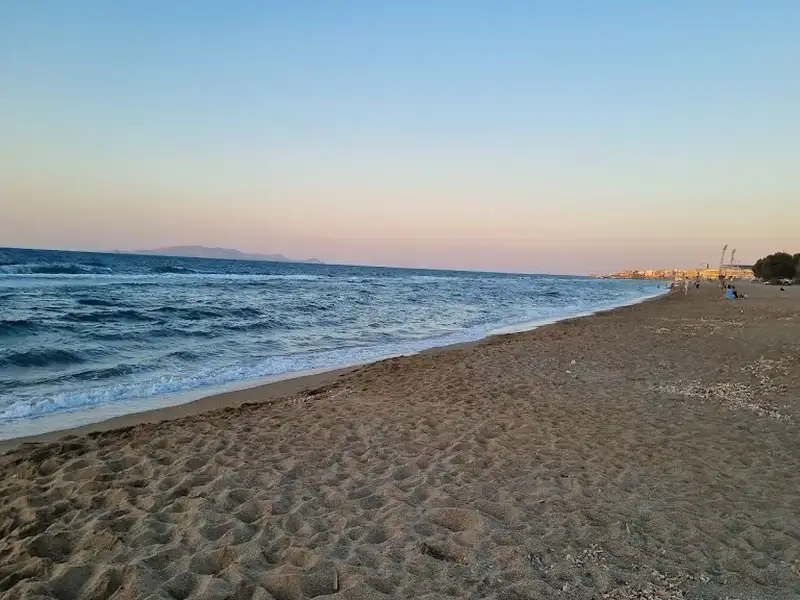
Ammoudara is a 7 km organized sandy beach that begins about 1 km west of Heraklion’s centre and runs west toward the mouth of the Almiros river. Ammoudara pairs long stretches of fine brown sand and shallow blue water with sunbeds, beach bars and water sports, so it suits both a busy family beach day and a quiet swim near the dunes. The beach starts at the Giofyros river mouth by the Pancretan Stadium, and a low rock strip about 50 m inland marks where the ancient shoreline once stood.
Ammoudara is one of the longest beaches in the Heraklion area, which is why it can feel busy and lively in one stretch and almost empty in the next. The sand is fine and brownish, the water is blue and shallow close to shore, and the sea often turns choppy when the wind picks up. Now effectively a suburb of Heraklion, the beach draws thousands of visitors each summer because it is close to the city yet still has open sand and dunes at its western end.
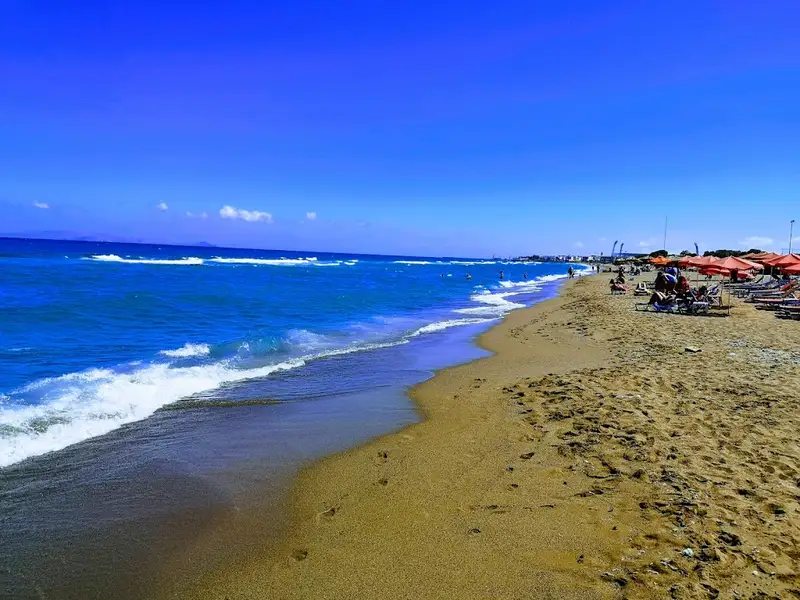
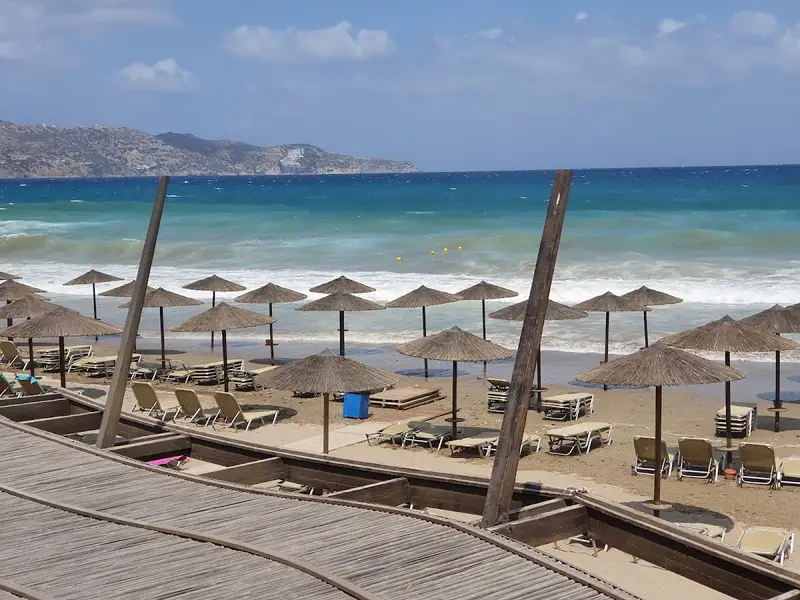
The organized sections of Ammoudara offer sunbeds, umbrellas, beach bars, lifeguards, showers and changing rooms, and several stretches carry a Blue Flag for water quality and safety. Because the beach is exposed to steady north winds, it is a popular spot for windsurfing and kitesurfing, and local schools rent equipment and give lessons. Visitors also find jet ski hire, parasailing, and snorkeling or diving and boat trips along the coast. Tavernas, cafes and beach bars line much of the front, so food, coffee and evening drinks are within a short walk of the sand.
For a calmer swim, head to the western part of the beach, which runs from the Pancretan Stadium toward the Xeropotamos wetland and its dunes. The river mouths of the Almiros and Gazanos, together with the Ellinoperamata area, stay quiet because they are protected natural spots rather than organized plazas. Just inland lies the Almiros spring, the largest water source in Crete, which feeds the most extensive wetland habitat in the area. Walkers can follow the easy Almiros gorge or climb Stroumboulas, the volcano-like mountain that rises over Heraklion, and from the western end the coastline continues toward Ellinoperamata beach.
Take Heraklion city bus line 6 from the centre, or drive the coastal road west, to reach Ammoudara in a few minutes. Heraklion International Airport sits about 9 km east, so a taxi or transfer from arrivals is short. Parking is available on the side streets near the beach, though it fills up on peak summer days. Renting a car is the simplest way to reach both the organized front and the quieter western spots, which you can arrange through Crete Locals car rental.
Ammoudara beach is on the north coast of Crete, starting about 1 km west of Heraklion’s centre and running roughly 7 km west toward the Almiros river. It lies in the Gazi area of the Malevizi municipal unit, so the city and the beach almost merge.
Take Heraklion city bus line 6 from the centre, or drive the coastal road west. Heraklion International Airport is about 9 km away, a short taxi or transfer ride to the beach.
Yes, the shallow, gently shelving water near the shore suits families with children. Lifeguards, showers, changing rooms and beach bars along the organized sections add to the convenience for a day out with kids.
Windsurfing and kitesurfing are the signature activities, thanks to the beach’s steady north winds. Jet ski hire, parasailing, and snorkeling or diving and boat trips are also offered along the coast.
Yes, several organized stretches of Ammoudara carry a Blue Flag for water quality and safety. The water is generally clean and blue, and it is shallow near the shore.
Ammoudara has fine, brownish sand along its full length. A low rock strip about 50 m inland marks the ancient shoreline behind the modern beach.
Yes, Ammoudara is known for steady winds and can get wavy, which makes it a favourite for windsurfers and kitesurfers. On calmer days the same open water is fine for swimming.
The best time to visit is summer, from June to September, when the sea is warm and the organized beach is in full swing. For fewer crowds, choose late spring or early autumn, or use the quieter western end near the wetland and dunes.
Yes, you can park on the side streets near the beach, and some hotels offer parking. Spaces fill up quickly on peak summer days, so arriving early helps.
Nearby you can visit the Palace of Knossos, Heraklion’s old town and Venetian walls, and the Cretaquarium. Closer to the beach, the Almiros gorge gives an easy walk and Stroumboulas mountain offers a longer hike.
No, this Ammoudara is the long organized beach west of Heraklion, not the smaller Ammoudara beach near Agios Nikolaos in Lasithi. The two beaches share a name but sit at opposite ends of the north coast.
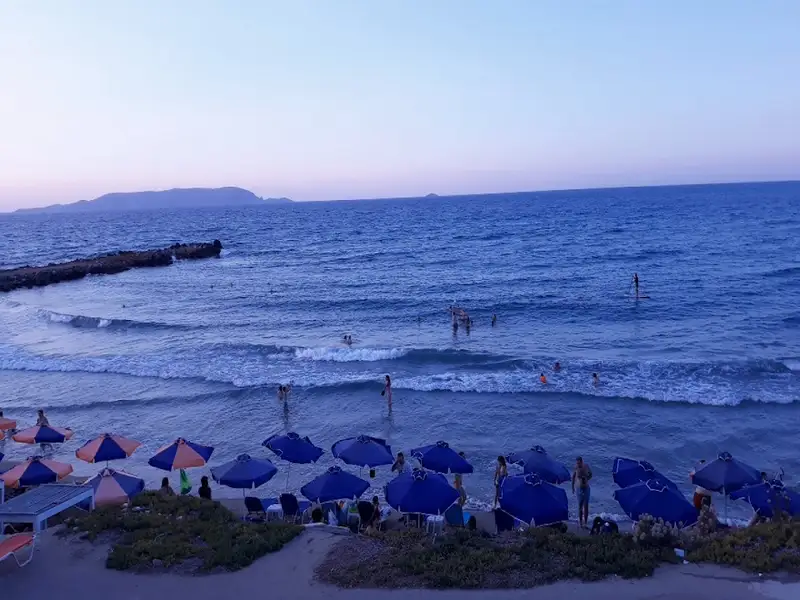
Situated 15km east of Heraklion lies the well-liked tourist resort of Vathianos Kambos. It derives its name from the nearby village of Vathia, found just a few kilometers to the south. The region is known for the Vathianos River that drains into the area and dries up during the summer. It is characterized by several contiguous bays with golden sands and shallow waters. Due to its north-facing beach front, the area experiences regular wave activity in the months of July and August, leading to the construction of numerous small piers that help to break the waves, retain the sand, and safeguard swimmers.
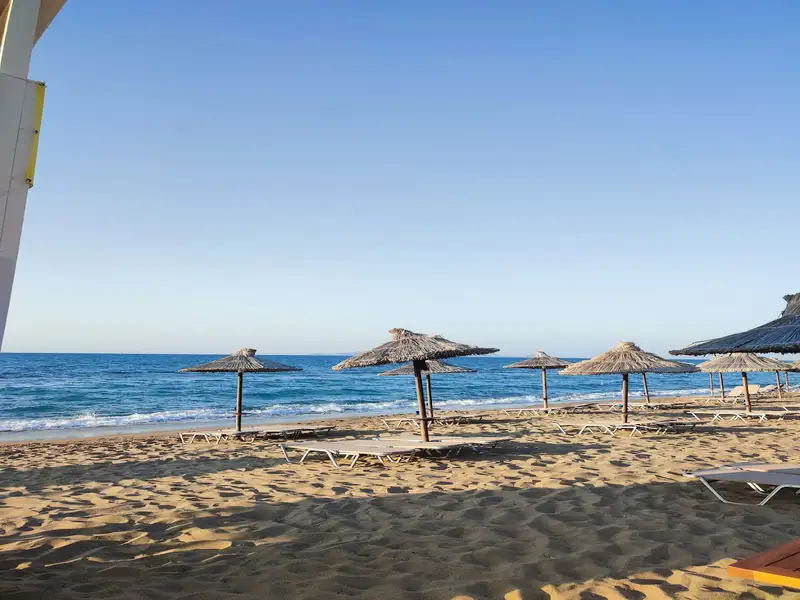
The most developed beach of Heraklion is found in the westernmost part of Vathianos Kambos, within the Estavromenos settlement. It is widely recognized as Arina, named after a local hotel. This extensive sandy beach attracts thousands of locals who flock there daily for a swim. The beach is teeming with umbrellas, bustling beach bars, and offers a plethora of beach sports options.
Moving east of Arina, you’ll come across the small bay of Agii Theodori. Here, you can still find the carved Minoan shipyard visible in the sea. Further on, you’ll encounter the successive coves of Vathianos Kambos, hidden from the main road due to the hotels interspersed between them. These bays are somewhat protected due to the presence of small piers. Only a handful of locals are privy to these secluded beaches, which extend all the way to Kokkini Hani.
Situated 8km west of Heraklion city, Linoperamata, also known as Ellinoperamata, is a scenic sandy beach stretching up to 7km long, beginning from Linoperamata and culminating at the Pancretan Stadium, 1km west of Heraklion. The beach is uniquely bordered by the Almiros river in the west.
The locals do not frequent Linoperamata as much due to the presence of a local Power Station and heavy industries in its western region. Nevertheless, the beach boasts of clean water and a serene atmosphere. Unlike the highly organized beaches in the neighboring Ammoudara, Linoperamata has a more natural appeal, although there are a few hotels in the vicinity.
Open to the northern winds, the beach is often wavy, making it a favorite among windsurfers. Getting to Linoperamata from Heraklion is convenient via the city’s bus service.
No results available
The Astrakiano and Kounaviano canyons are two verdant gorges that converge near Skalani village and empty out onto Karteros beach. The combined length of these canyons is roughly 21 km. Situated to the east of Heraklion city, these gorges are part of the broader Mount Jiouktas area. They offer easy walking trails, making them perfect for families and children.
The longer of the two, Astrakiano, begins at the Paliarda location in Kolomodi and extends to the area beneath the deserted Kato Astraki village, after crossing the picturesque Astrakiani Kamara bridge. From Kato Astraki, a brief trail leads to the Neraidospilios site, known for its stunning pond and gushing water caves.
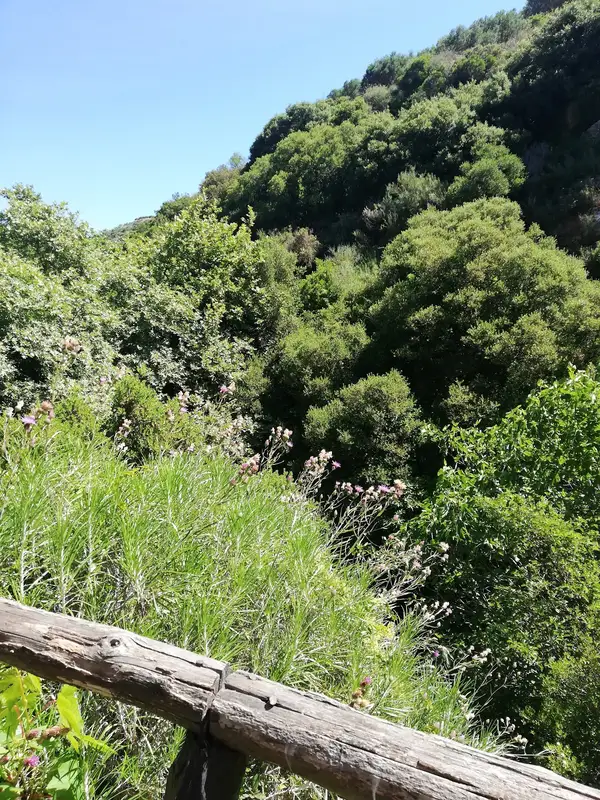
The path along the Karteros river commences from this point, offering a lush green trail equipped with wooden bridges and railings. After crossing the Aitania bridge at Kaki Rachi, we reach Kali Rachi where the Astrakiano and Kounaviano Gorges, originating from Peza, merge. From Kali Rachi, the river continues to Karteros along a well-structured path. This section, known as Karteros Gorge, passes by ancient water mills and the historic Saint Nicholas Church (Agios Nikolaos). Near the Karteros gorge exit, at the Mesa Karteros spot, you’ll find an old inn and a second chapel dedicated to Saint Nicholas. This location, accessible by car from Karteros, is an ideal picnic spot.
The Astrakiano canyon (Astraki – Kali Rachi) measures about 7km, with a hiking duration of 3-4 hours. The Kounaviano Gorge (Peza- Kali Rachi) is roughly 4km long, requiring about 2 hours for trekking. The shared section of the Karteros gorge (up to the second Saint Nicholas chapel (Kali Rachi – Mesa Karteros)) is approximately 6km.
The canyons’ route is abundant in natural, morphological, aesthetic, historical, and cultural aspects. The landscape boasts exceptional natural beauty, featuring springs, ponds, rivers, mini waterfalls, and lush vegetation. Prior to World War II, the canyon housed 10 watermills, and locals would fish for eels and crabs, some of which still exist today.
The Kounaviano gorge, known for its lush vegetation, is the greenest canyon in the entire Heraklion prefecture, serving as a verdant oasis in the heart of Pediada province. The gorge is named after the village of Kounavi in its district, even though it actually begins from the village of Peza, hence it could be referred to as Pezzano Gorge. This gorge is a tributary of the Karteros river and runs parallel to the Astrakiano gorge. The Astrakiano and Kounaviano gorges converge at the Kaki Rachi area near Skalani, forming the Karteros Gorge. Kounaviano’s entrance is situated at the northernmost point of the fertile Peza plain, collecting all the area’s water. It has numerous springs along its bed, some of which retain water throughout the year.
In recent years, the gorge’s trail has been marked and cleared, with the addition of small bridges, wooden railings, and informational signs. Walking along this trail is a delightful and easy experience, shaded by perennial plane, oak, and other trees. The riverbed walk is simple, without significant altitude changes or difficulties. At the gorge’s starting point, two small waterfalls can be seen. Old watermills, once used to grind the area’s cereals, can be found at three different points along the trail. This region has always been one of Crete’s most productive. Additionally, limestone kilns and various fruit tree gardens can be spotted. A walk from the gorge’s entrance at Peza to its exit at Kaki Rachi near Skalani takes approximately 2 hours.
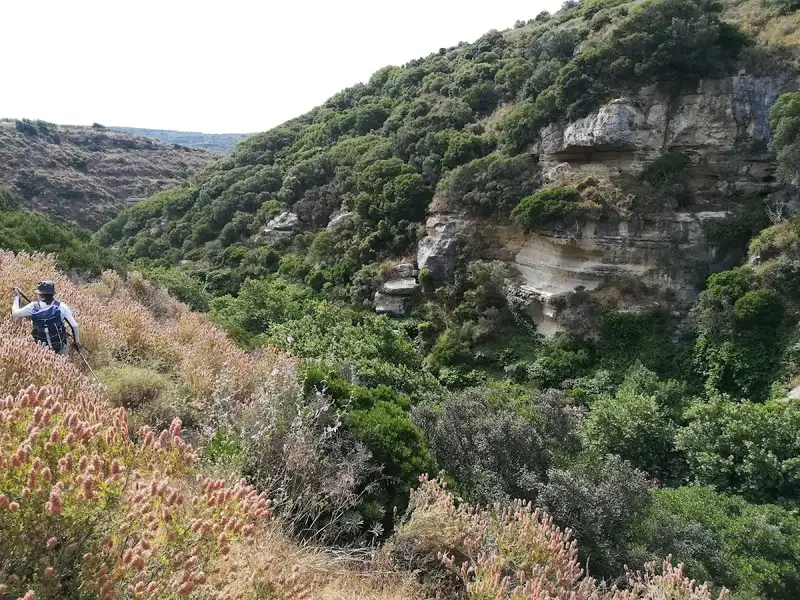
Almiros Gorge is a 3 km walking gorge in Ellinoperamata, the closest canyon to the west of Heraklion city. The route takes about 1.5 hours, gains 150 meters in elevation, and rates 1 out of 10 for difficulty, so it suits families and first-time hikers who want a short walk close to the city. A paved road reaches the trail, water runs here only until spring, and the path links a 14th-century monastery, three small chapels, a spring-fed lake, and three seasonal waterfalls.
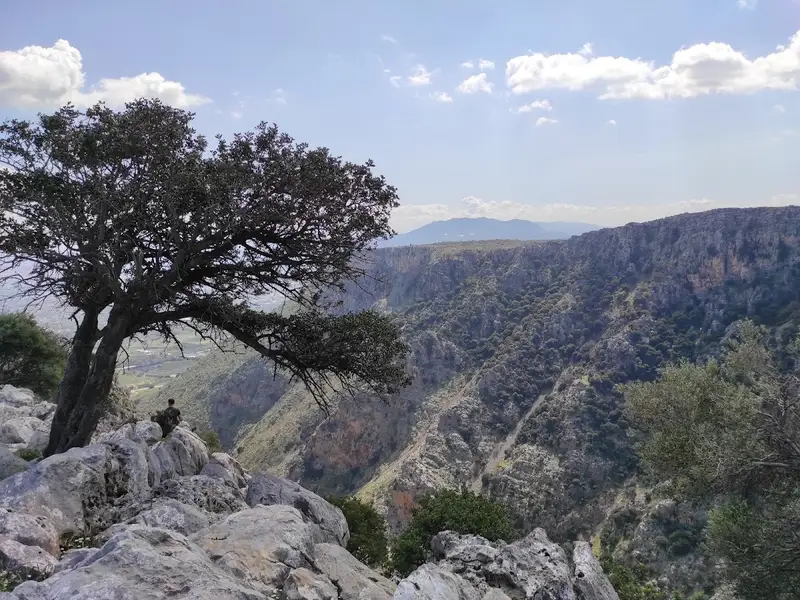
Almiros Gorge is a small canyon and hiking trail in Ellinoperamata, formed between the Keri hills and the post-Minoan town of Kastrokefala. Almiros Gorge sits west of Heraklion and counts as the closest gorge to the city on that side. The eastern side holds the largest holly wood (Phillirea media) in Crete, and platan trees, carob, and wild olive trees also grow here despite overgrazing.
The gorge carries several local names, each tied to its geography or folklore: Keri Gorge after the neighboring hill, Almiros after the nearby Almiros river, Ellinoperamata after the area where it ends, Porofarago (a common Cretan gorge name), the Three Churches after its three chapels (Santa Marina, St. Antonios, and St. Paraskevi), Strouboulas after the Strouboulas peak near its start, and the Ghosts’ Gorge, a spooky local nickname. Few visitors make the trip despite the short distance from central Heraklion.
Almiros Gorge rates 1 out of 10 for difficulty, which makes it one of the easiest gorges to hike near Heraklion. The full walk covers 3 km and takes about 1.5 hours, with 150 meters of elevation change along the way. The chapel of Lord Christ at the gorge’s starting point is reached after nearly 1 hour 30 minutes of walking.
The gentle grade and short length make the gorge a good option for a half-day outing rather than a demanding trek. Because the terrain stays easy throughout, most walkers of average fitness finish the route without difficulty.
A paved road leads to Almiros Gorge, and cars can reach the location near the canyon exit. The 14th-century monastery of Agios Ioannis Farangitis stands near that exit, which gives you a clear landmark to aim for on arrival.
The gorge lies a short drive west of Heraklion, so most visitors arrive on their own wheels. Having a car also makes it easy to combine the walk with the nearby villages and coast, and you can compare options on the car rental page.
Almiros Gorge packs a monastery, three chapels, a seasonal stream, three small waterfalls, and a spring-fed lake into a single short walk. The trail is lined with trees, and the vegetation thickens as you climb.
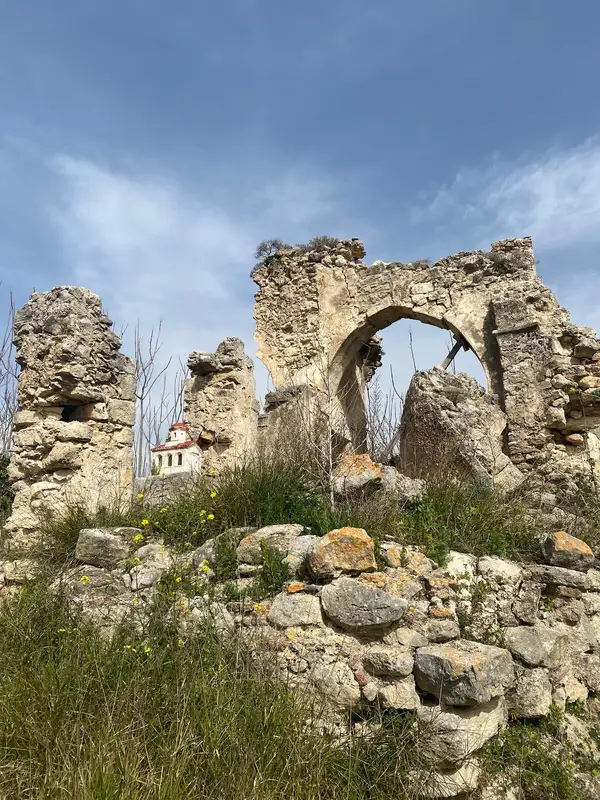
The 14th-century monastery of Agios Ioannis Farangitis (Saint John inside the Gorge) was built near the canyon exit and is dedicated to Saint John the Baptist. The monastery gives the gorge much of its religious character and its “Saint John inside the Gorge” name.
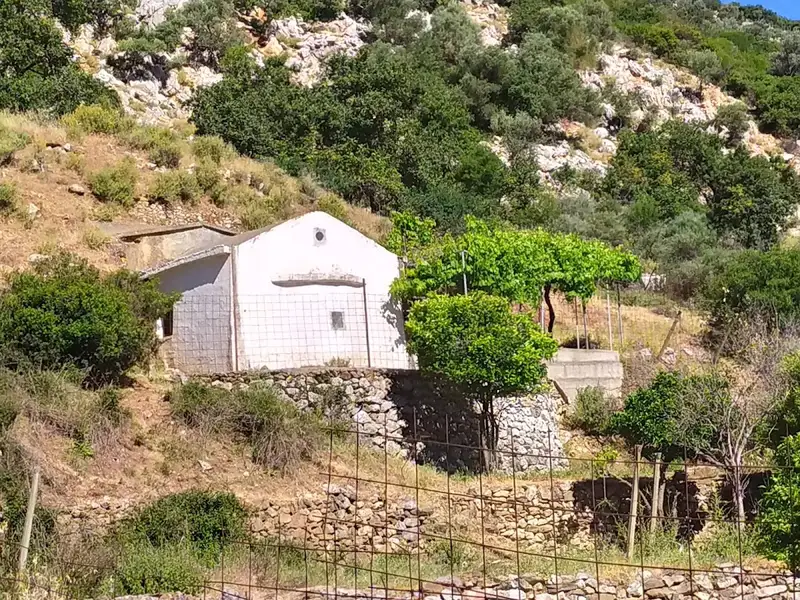
The surviving chapel of Saint Marina was used as a cemetery, while the main temple was the two-aisled chapel of Saint Anthony and Saint Paraskevi, which holds significant frescoes. Further along, a shrine dedicated to Saint George appears, and the chapel of Lord Christ marks the gorge’s starting point.
The gorge is usually dry and turns into a small stream during spring. Water stays in the gorge only until spring, so plan a visit for the wetter months to see the streambed flowing. After prolonged, heavy rainfall, three small waterfalls form at a site with a pinkish limestone hue.
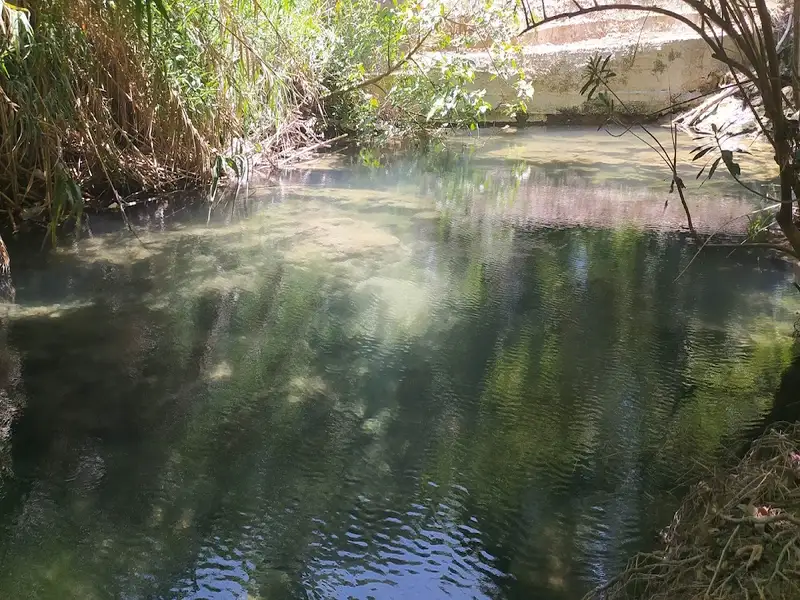
Lake Almiros sits beside the gorge and is a wonder in itself. The lake’s crystal-clear water flows directly from the spring-fed mountain cliffs and stays clear enough to see all the way to its bed. For more swimming spots along the coast nearby, the beaches near Heraklion are a short drive away.
Almiros Gorge needs only light hiking gear, because the trail is short and easy. Pack for a half-day walk in a mostly open canyon:
Several gorges sit within a short drive of Almiros, which makes it easy to pair this walk with another. Each of the following canyons lies in the wider Heraklion area:
You can browse the full set of routes on the Crete gorges guide.
No. Almiros Gorge rates 1 out of 10 for difficulty, one of the easiest gorge walks near Heraklion, and the route gains only 150 meters over its length.
The trail is 3 km long and takes about 1.5 hours, with 150 meters of elevation change from end to end.
Yes, until spring. The gorge is usually dry and turns into a small stream in spring, and three small waterfalls form after prolonged, heavy rainfall.
Yes. A paved road reaches the gorge, and cars can get to the location near the canyon exit, where the monastery of Agios Ioannis Farangitis stands.
“Ghosts’ Gorge” is one of several local names for Almiros, alongside Keri Gorge, Porofarago, and the Three Churches, each tied to the gorge’s geography, chapels, or folklore.
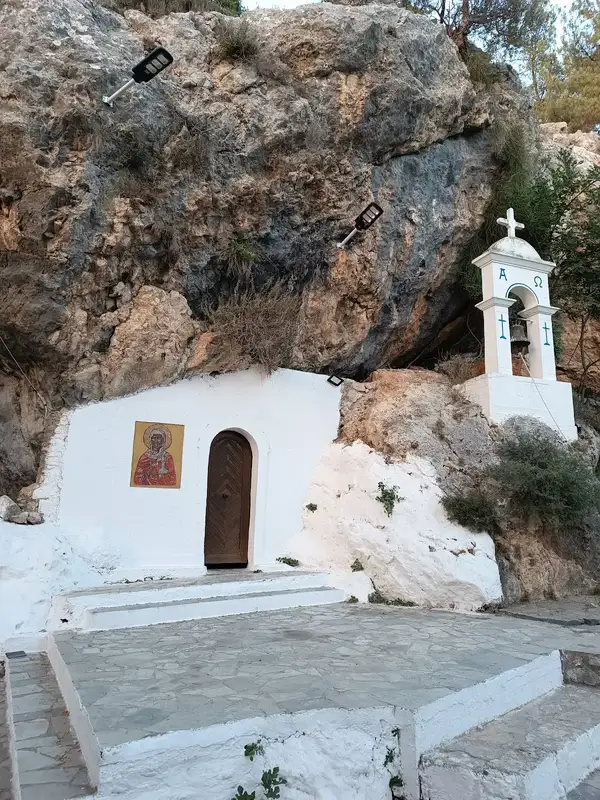
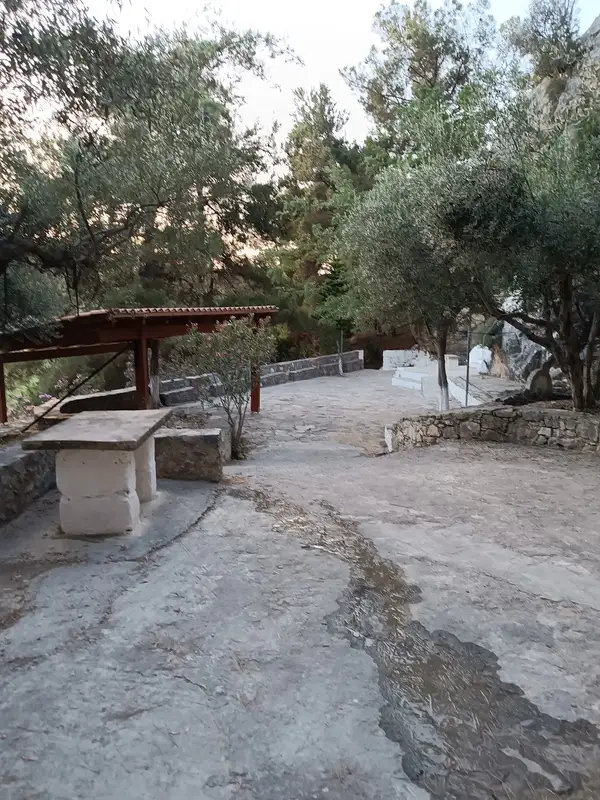
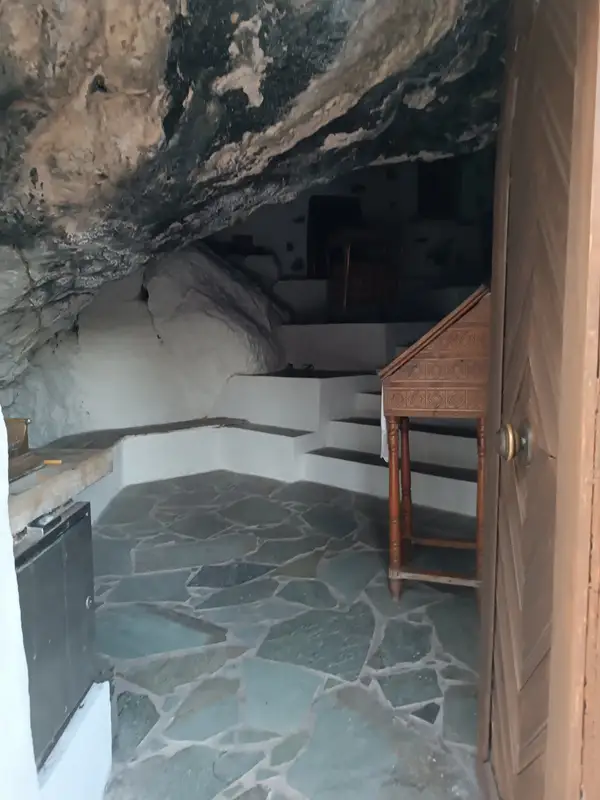
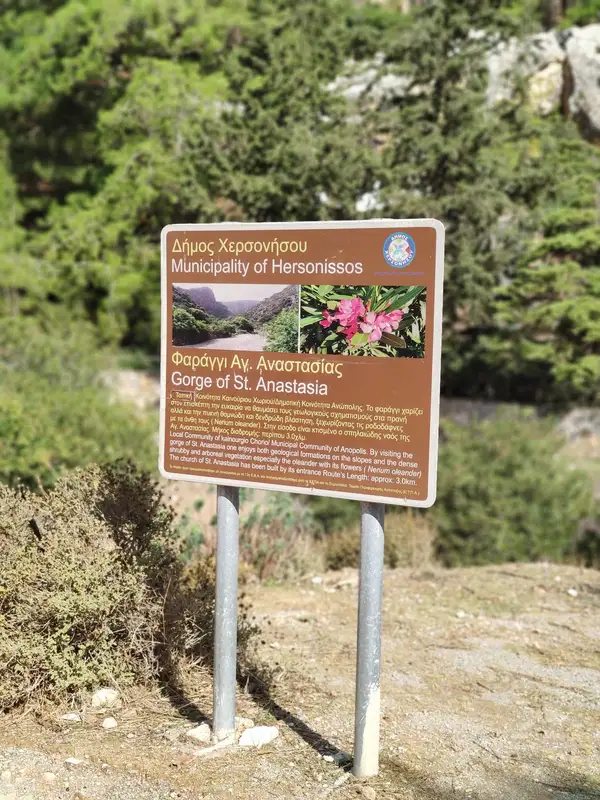
The Agia Anastasia Gorge commences from Kenourgio Horio in the Pediada Province (at an elevation of 160m) and concludes at the coastal village of Gournes. It’s named after the cavernous chapel of Saint Anastasia situated near its entry point. The stream that flows within it collects water from the region east of Sgourokefali and originates near Agia Triada.
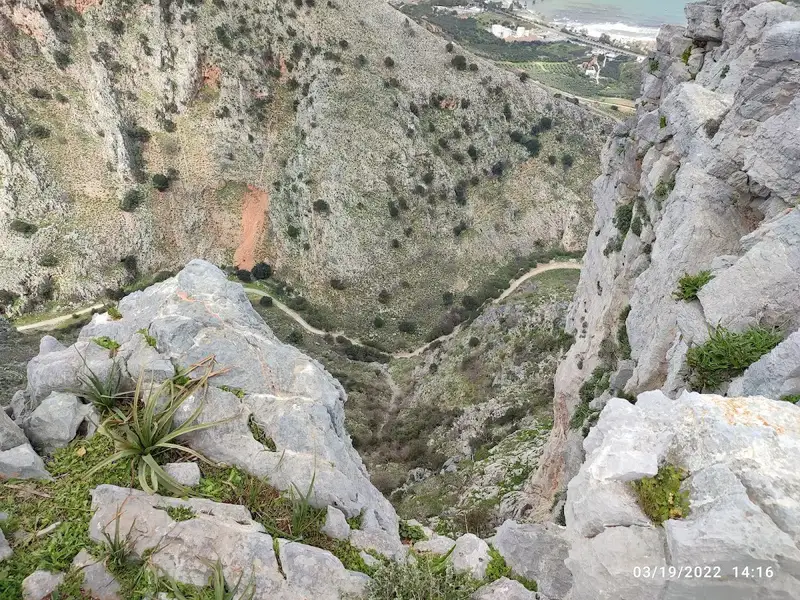
Its plant life mainly consists of oleanders and the gorge narrows at various points along its path. A descent through the gorge typically takes around three hours. Regrettably, the gorge has been heavily polluted by trash and waste from nearby sheepfolds. Despite ongoing appeals from hiking clubs to the Hersonissos municipality, the situation remains dire.
No results available
No results available
No results available
© All rights reserved. Crete Locals