Travel from Crete to Santorini on a high-speed cruise ship with an open deck and comfortable lounges for passengers.
Santorini (Thira) – the southern island of the Cyclades, with an area of 76 km square and a coastline of 70 km long. Many legends take place in this island, as it is called the “Lost Atlantis” or the “Pompeii of the Aegean”. Around 1450 BC, as a result of powerful volcanic explosion, most of the island sank into the sea, shaping the island as warped crescent
You will have the opportunity to learn the fascinating history of this amazing place, take unique photos.
tour on the Santorini island starts at the Port of Athinios.
The tour starts at the Port of Athinios and will be by bus with free time in the towns of Oia and Fira.
Transfer from hotels located in the Heraklion area: Amudara, Analipsi, Anissaras, Gouves, Gournes, Carteros, Kokkini Hani, Hersonissos, Malia, Stalida (except for hotels in the city of Heraklion itself).
Tickets for the comfortable and fastest ship.
English speaking staff at the port. Accompanying throughout the trip with a guided tour in the language of your order:
Monday: English, German, French, Polish, Russian, Romanian
Tuesday: English, German, French, Polish
Wednesday: English, German, French, Polish, Russian
Thursday: English, German, French, Polish, Romanian
Friday: English, German, French, Polish, Russian
Saturday: English, German, French, Polish
Sunday: English, German, French, Polish, Russian, Romanian
ATTENTION: Departure from Santorini is sometimes a delay, but the bus transfer in Crete is always consistent with the time of arrival of the ship.
Duration:
2 hour 30 min – On the ship, between Crete and Santorini.
6 hours – Stay in Santorini.
Board a high-speed vessel and enjoy a nice ferry cruise from Heraklion or Rethymno to the island of Santorini.
Upon arrival in Santorini, you will be transferred from the port to the magnificent village of Oia in the north.
During the transfer, an experienced guide on the bus will share many interesting facts about Santorini, its history, features, and secrets.
In Oia, you will have approximately 2 hours of free time to visit picturesque spots and viewpoints and enjoy breathtaking views.
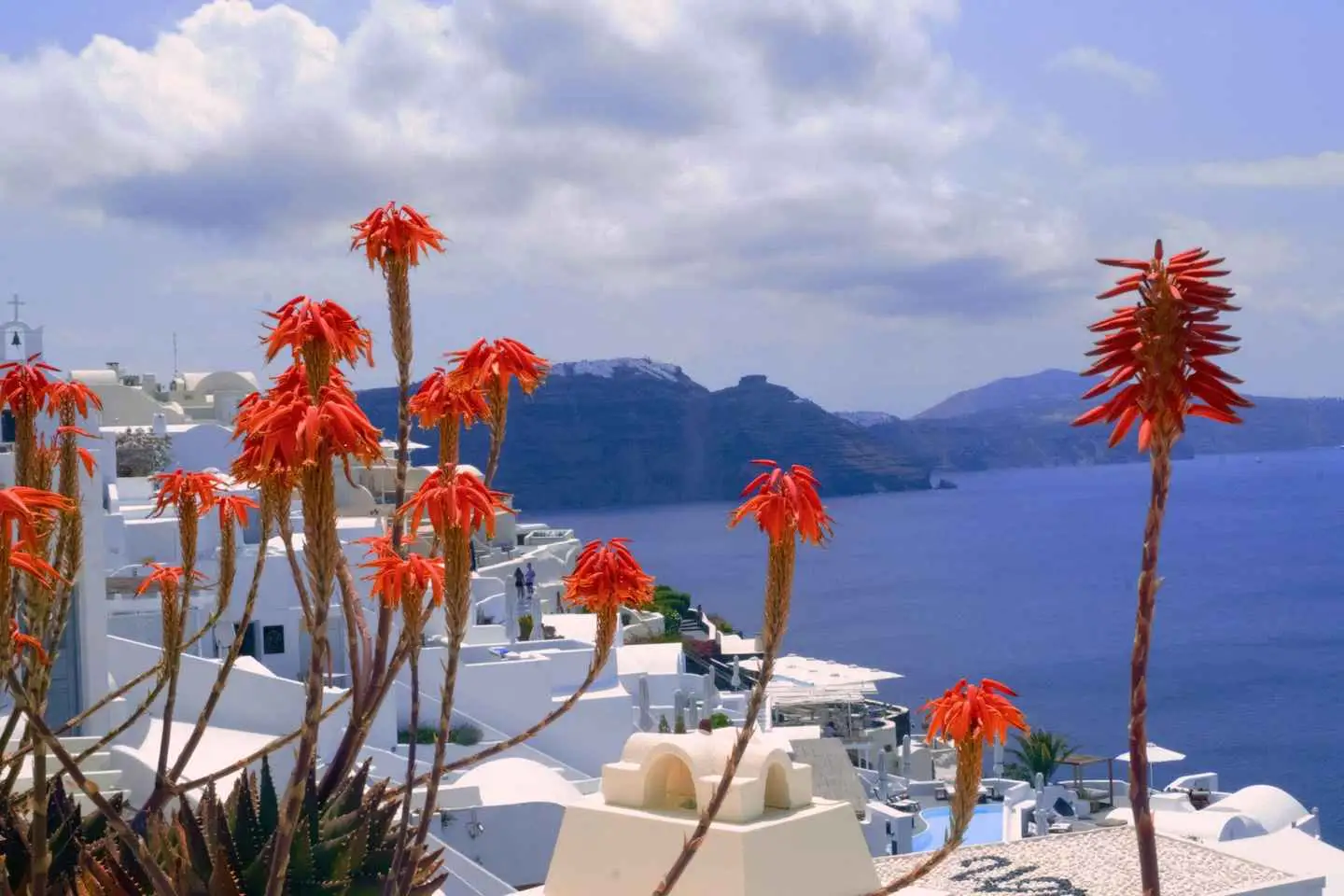
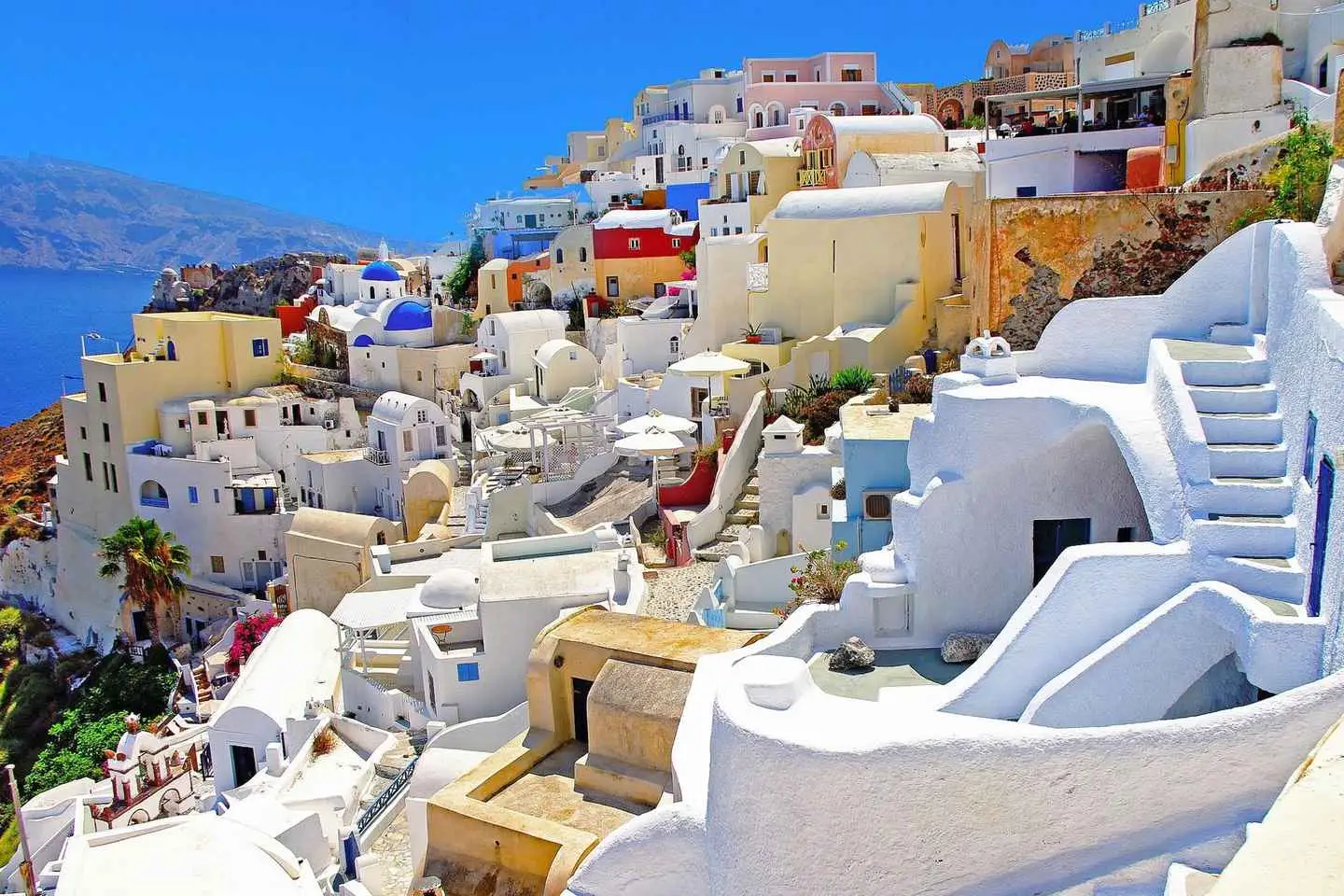
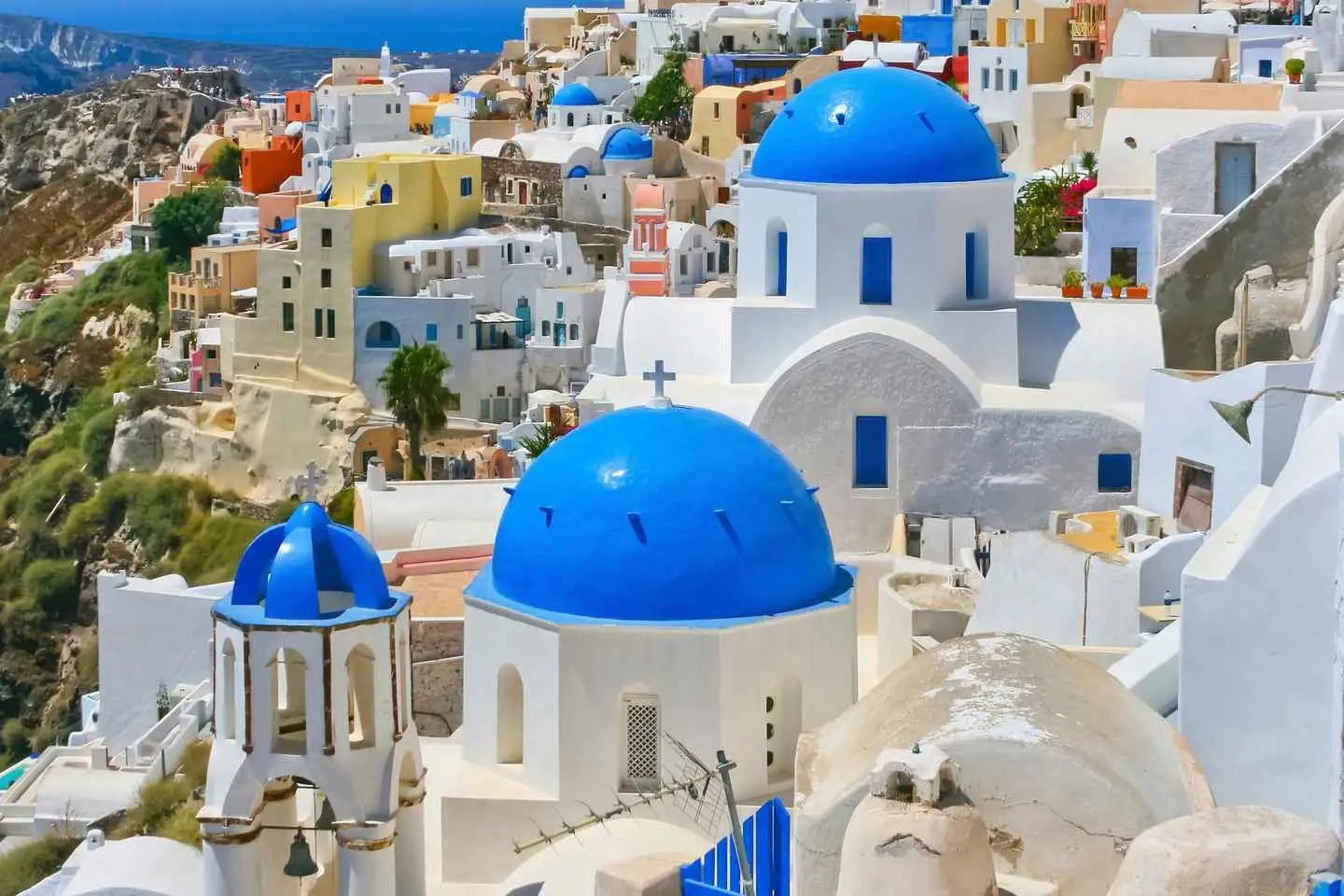
The town of Oia is famous worldwide for its iconic panoramic views, Cycladic architecture with white houses and churches with blue domes.
After Oia, the tour continues to the capital of Santorini – the town of Fira.
Fira is just as beautiful as Oia, with breathtaking views of the sea and Caldera from its streets.
You can visit the big Orthodox Cathedral on the main square in the center of Fira and walk through the city.
Fira is full of interesting and picturesque spots and corners. You will have almost 1.5-2 hours there to explore on your own.
The tour will end with a transfer to the Santorini port, where you will take a return trip to Crete.
The day trip ends at the port of Heraklion or at your hotel area if you select the option that includes hotel transfer.
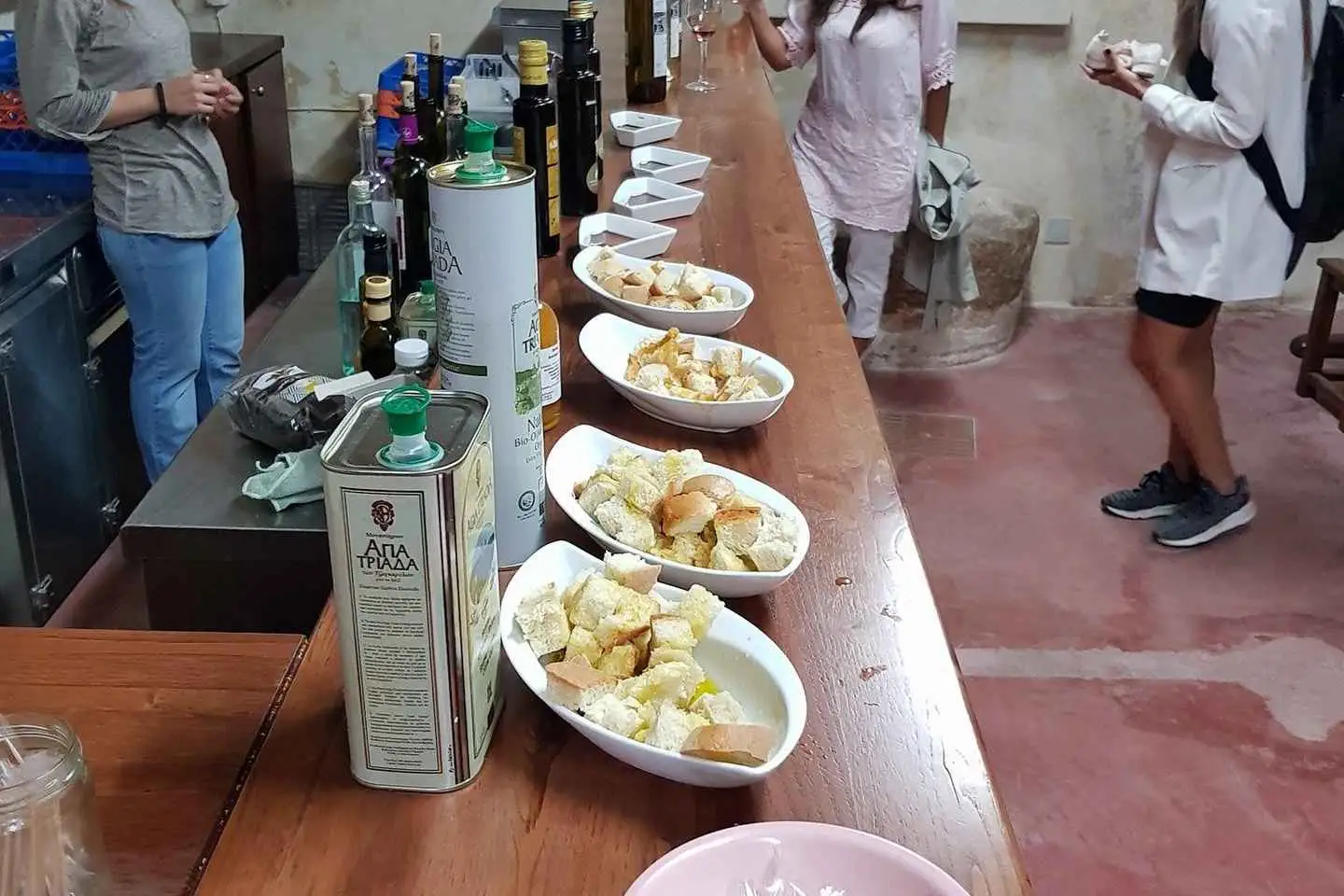
Meet our local escort in front of the archaeological museum who will have your name on a sign to identify him and wander charming Heraklion, starting with iconic sights such as the open-air market, where you’ll sample fine olive oils and cheeses.
Explore the historic Venetian Loggia and the majestic Cathedral of Agios Minas or the Church of Agios Titos, The Venetian Castle of Heraklion ”Koules,” the Castle is a massive fortress with two storeys that used to guard the entry to the port (entrance fee to the castle 4€ p.p). Visit the unique ”Pastry Museum” includes 232 rare exhibits with 32 of them being unique in the world !! Each of which reveals unique aspects of Cretan heritage.
Then enjoy the culinary journey:
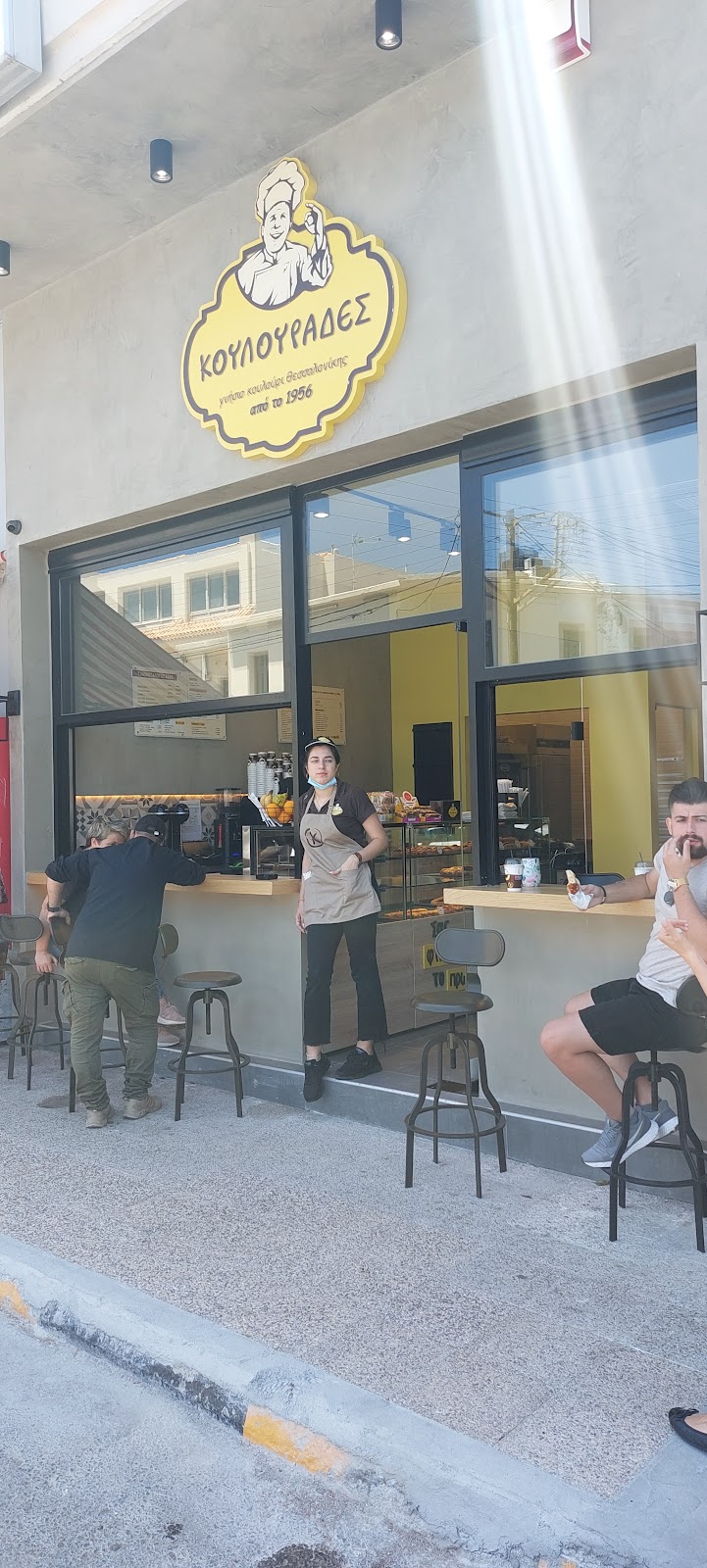
Bougatsa with Greek Coffee: Start with the classic Cretan pastry, Bougatsa, paired with rich Greek coffee. Indulge in flaky layers of puff pastry filled with sweet or savory delights.
Tavern Experience:
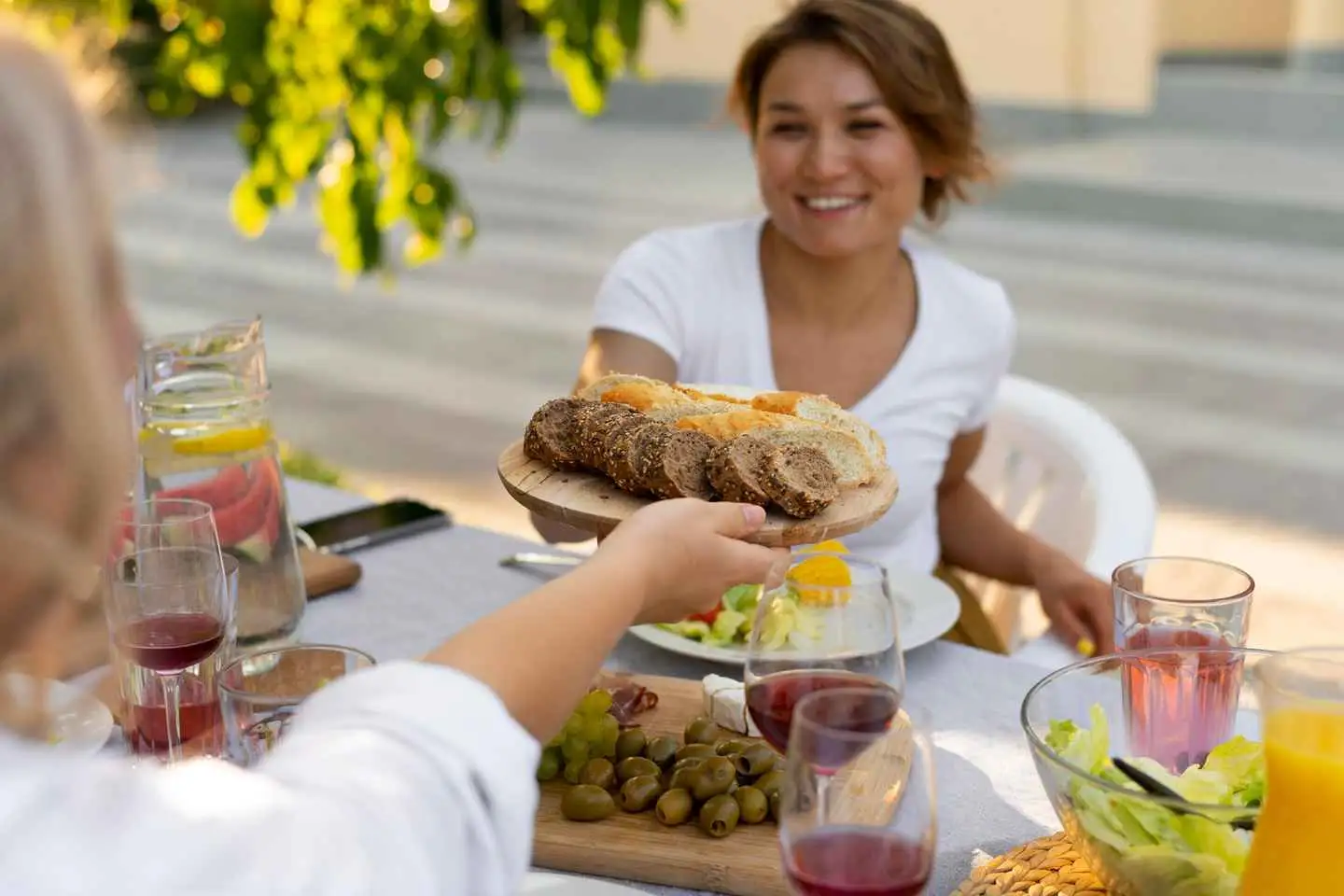
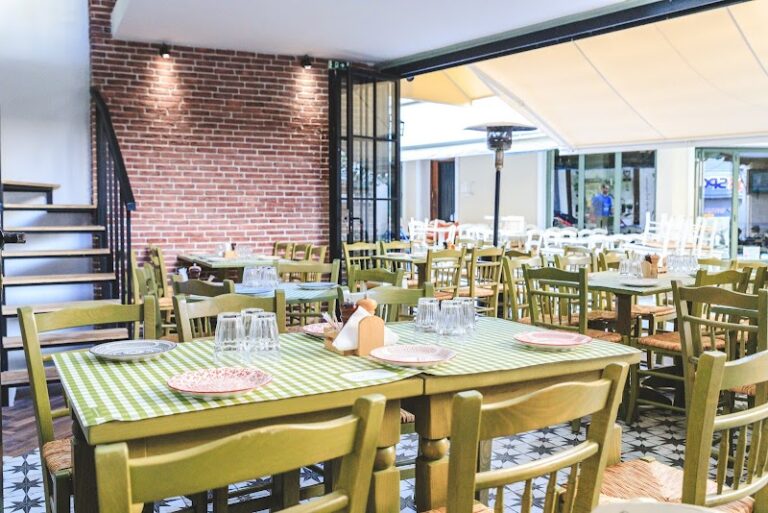
Enjoy a feast of flavors in a traditional mezedopoleio (tavern), where the table overflows with Cretan mezes. Enjoy lively dishes such as: Eggplant Salad: A delicious mix of eggplant, tomatoes, garlic, herbs and olive oil. Roast goat or mezes Bekri: Slow roasted goat or pork in red wine sauce, highlighting the richness of Cretan meat dishes. Sausage: Enjoy delicious Cretan sausages, either with vinegar or as delicious meatballs. You will have the oprtunity among the “mezedes” to taste the Cretan olive oil and the Cretan cheese. Raki accompaniments: Complete your meze experience with a taste of raki, the traditional Cretan spirit.


Early in the mornisg we will pick you up from your hotel or at the nearest suitable pick up point with one of our air conditioned and comfortable buses so that we lead you at first to Knossos Palace, where for one and a half hour you can explore and admire the most important ruins of the Ancient Minoan civilazation. After our visit to Knossos we will go to the centre of Heraklion city outside the Archaelogical Museum, in case you would like to visit it and admire the treasures of the Ancient times. In Heraklion you will have three and a half hours free time, to enjoy a visit to Lion Square, the Loggia, St.Titus cathedral, Koules fortress, shopping or having a drink or a snack in one of the picturesque little cafe in the alleys of the town. We will meet you again outside the Archaelogical Museum to start our way back to Rethymno city, where our trip will come to an end.
No results available
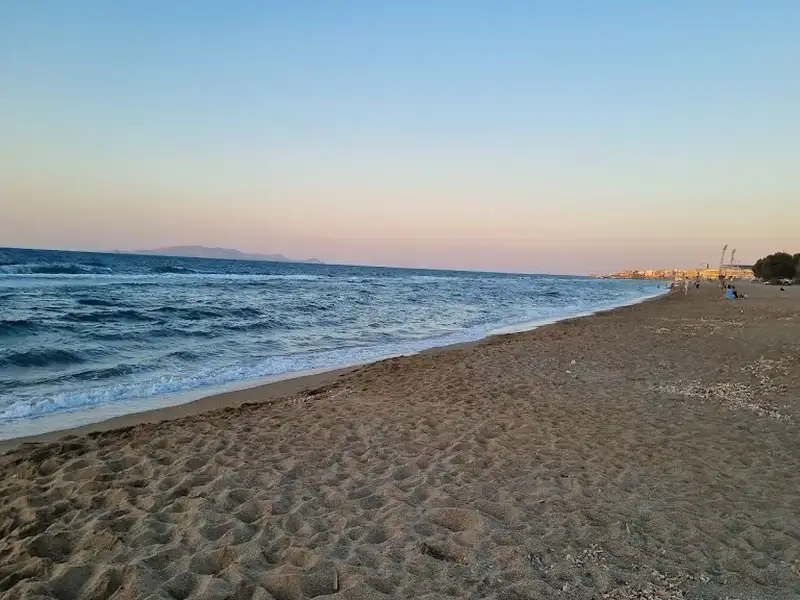
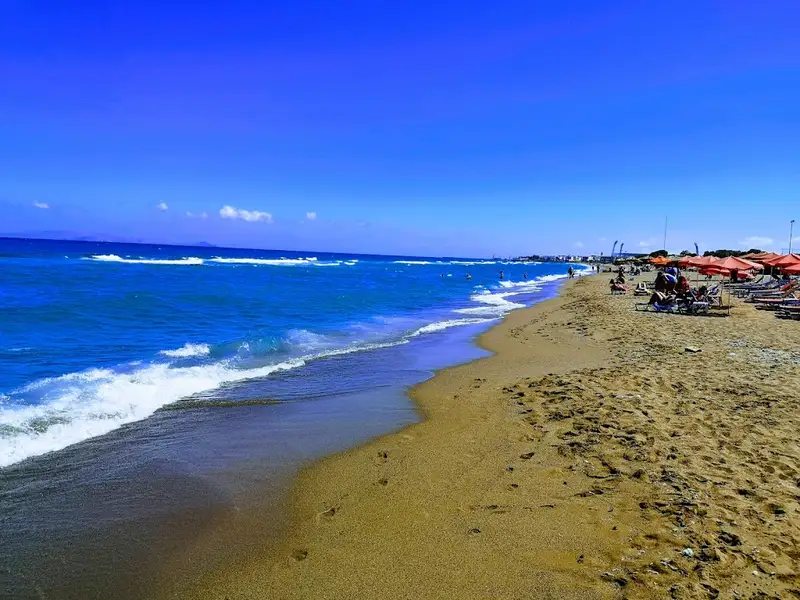
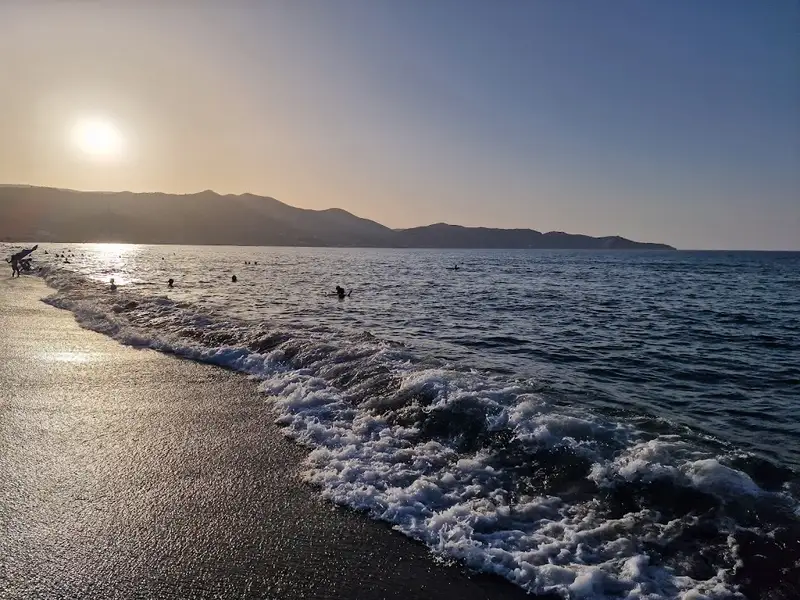
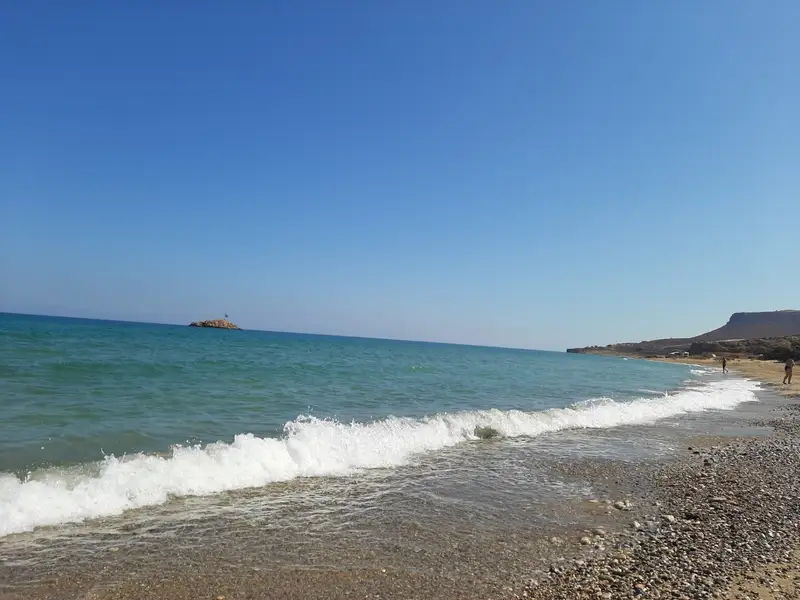
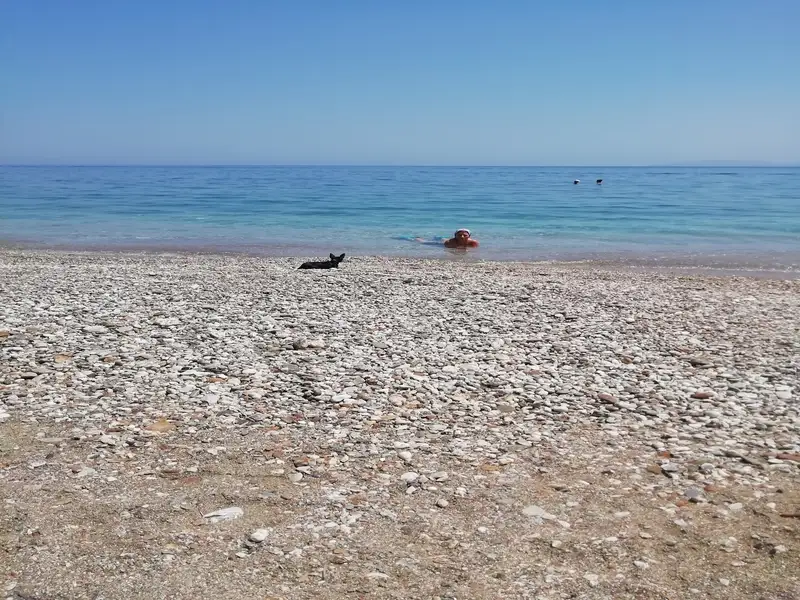
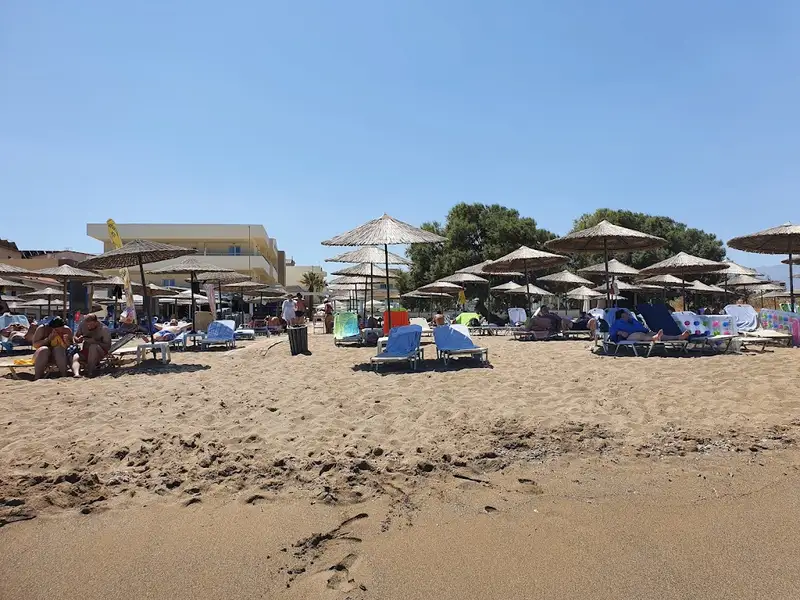
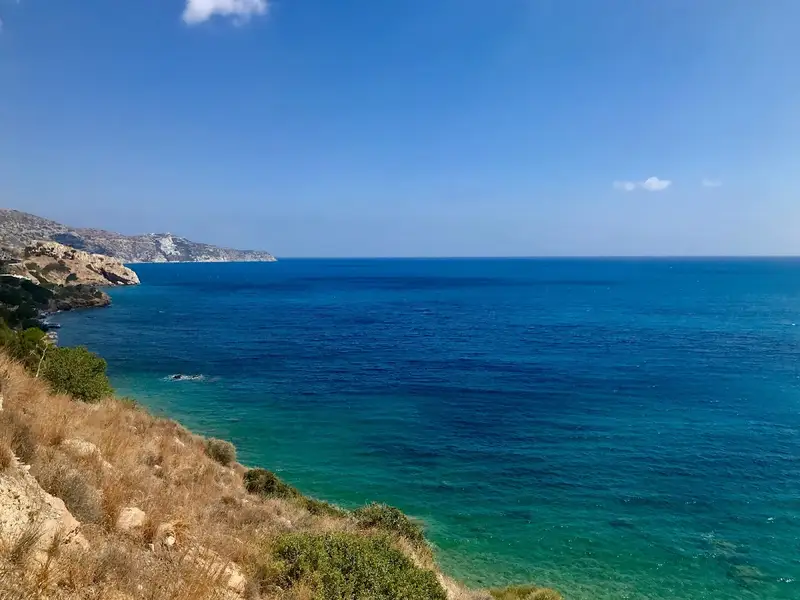
Ammoudara is a 7 km organized sandy beach that begins about 1 km west of Heraklion’s centre and runs west toward the mouth of the Almiros river. Ammoudara pairs long stretches of fine brown sand and shallow blue water with sunbeds, beach bars and water sports, so it suits both a busy family beach day and a quiet swim near the dunes. The beach starts at the Giofyros river mouth by the Pancretan Stadium, and a low rock strip about 50 m inland marks where the ancient shoreline once stood.
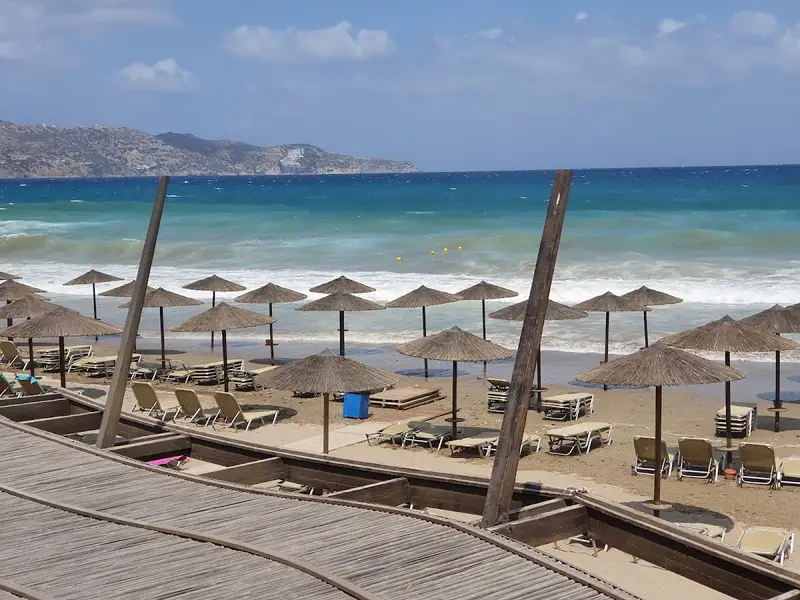
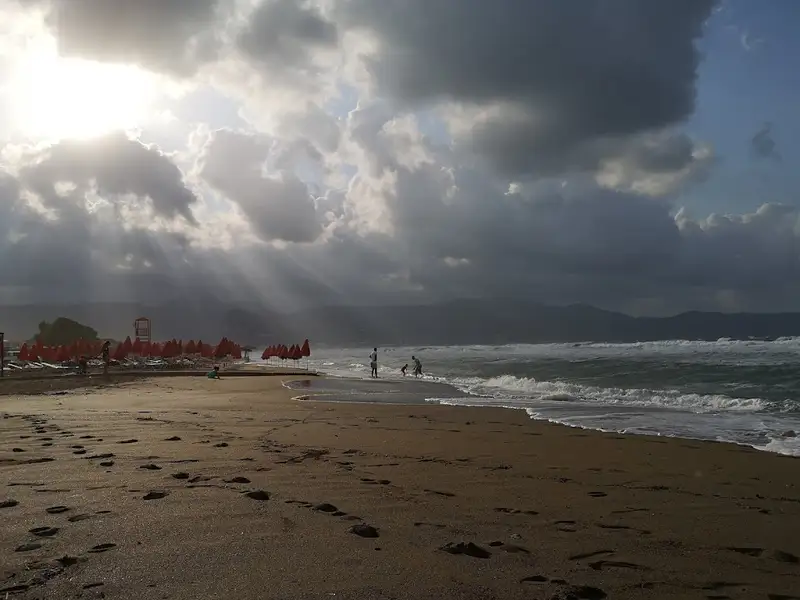
Ammoudara is one of the longest beaches in the Heraklion area, which is why it can feel busy and lively in one stretch and almost empty in the next. The sand is fine and brownish, the water is blue and shallow close to shore, and the sea often turns choppy when the wind picks up. Now effectively a suburb of Heraklion, the beach draws thousands of visitors each summer because it is close to the city yet still has open sand and dunes at its western end.
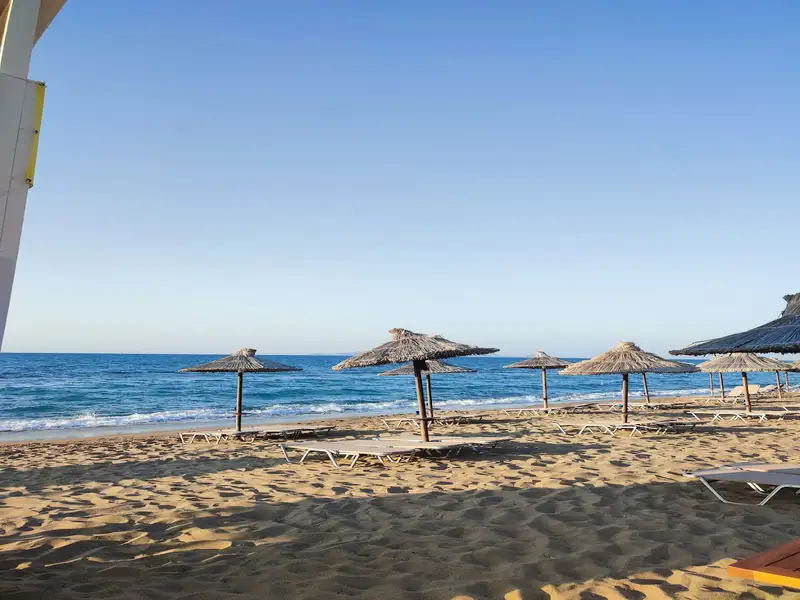
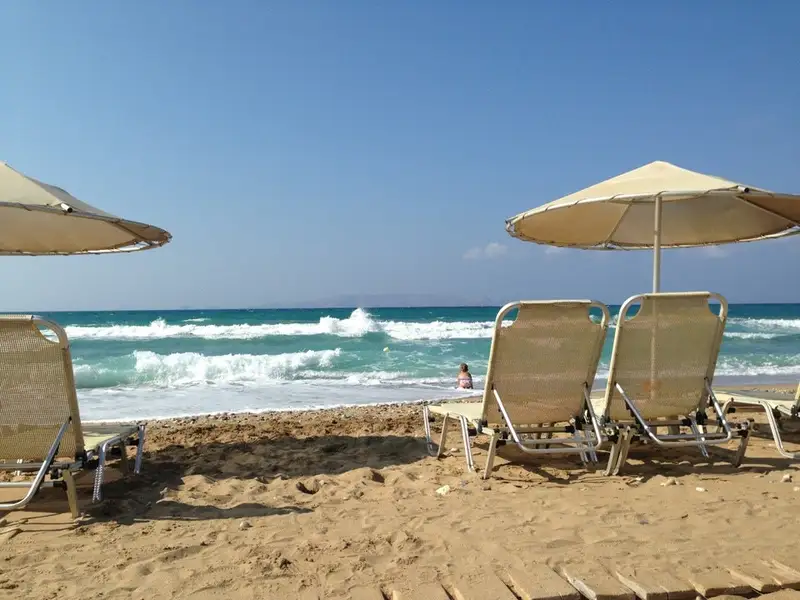
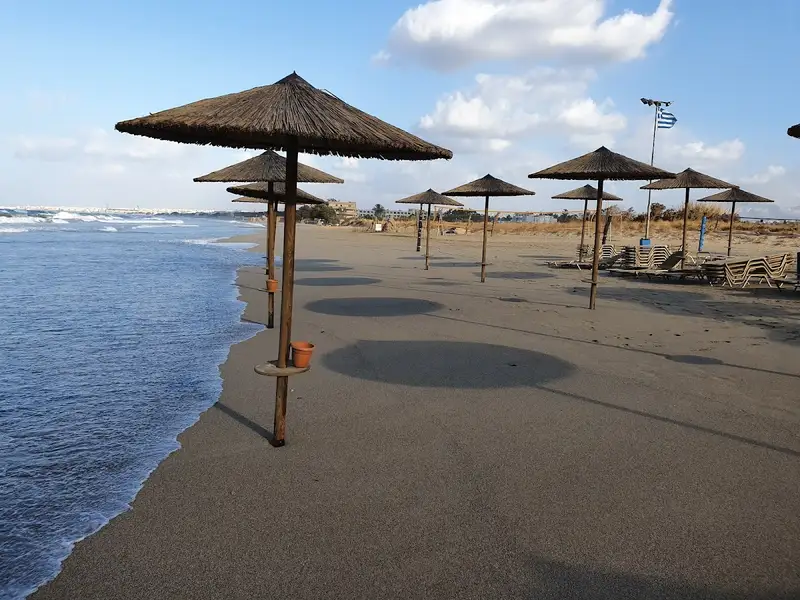
The organized sections of Ammoudara offer sunbeds, umbrellas, beach bars, lifeguards, showers and changing rooms, and several stretches carry a Blue Flag for water quality and safety. Because the beach is exposed to steady north winds, it is a popular spot for windsurfing and kitesurfing, and local schools rent equipment and give lessons. Visitors also find jet ski hire, parasailing, and snorkeling or diving and boat trips along the coast. Tavernas, cafes and beach bars line much of the front, so food, coffee and evening drinks are within a short walk of the sand.
For a calmer swim, head to the western part of the beach, which runs from the Pancretan Stadium toward the Xeropotamos wetland and its dunes. The river mouths of the Almiros and Gazanos, together with the Ellinoperamata area, stay quiet because they are protected natural spots rather than organized plazas. Just inland lies the Almiros spring, the largest water source in Crete, which feeds the most extensive wetland habitat in the area. Walkers can follow the easy Almiros gorge or climb Stroumboulas, the volcano-like mountain that rises over Heraklion, and from the western end the coastline continues toward Ellinoperamata beach.
Take Heraklion city bus line 6 from the centre, or drive the coastal road west, to reach Ammoudara in a few minutes. Heraklion International Airport sits about 9 km east, so a taxi or transfer from arrivals is short. Parking is available on the side streets near the beach, though it fills up on peak summer days. Renting a car is the simplest way to reach both the organized front and the quieter western spots, which you can arrange through Crete Locals car rental.
Ammoudara beach is on the north coast of Crete, starting about 1 km west of Heraklion’s centre and running roughly 7 km west toward the Almiros river. It lies in the Gazi area of the Malevizi municipal unit, so the city and the beach almost merge.
Take Heraklion city bus line 6 from the centre, or drive the coastal road west. Heraklion International Airport is about 9 km away, a short taxi or transfer ride to the beach.
Yes, the shallow, gently shelving water near the shore suits families with children. Lifeguards, showers, changing rooms and beach bars along the organized sections add to the convenience for a day out with kids.
Windsurfing and kitesurfing are the signature activities, thanks to the beach’s steady north winds. Jet ski hire, parasailing, and snorkeling or diving and boat trips are also offered along the coast.
Yes, several organized stretches of Ammoudara carry a Blue Flag for water quality and safety. The water is generally clean and blue, and it is shallow near the shore.
Ammoudara has fine, brownish sand along its full length. A low rock strip about 50 m inland marks the ancient shoreline behind the modern beach.
Yes, Ammoudara is known for steady winds and can get wavy, which makes it a favourite for windsurfers and kitesurfers. On calmer days the same open water is fine for swimming.
The best time to visit is summer, from June to September, when the sea is warm and the organized beach is in full swing. For fewer crowds, choose late spring or early autumn, or use the quieter western end near the wetland and dunes.
Yes, you can park on the side streets near the beach, and some hotels offer parking. Spaces fill up quickly on peak summer days, so arriving early helps.
Nearby you can visit the Palace of Knossos, Heraklion’s old town and Venetian walls, and the Cretaquarium. Closer to the beach, the Almiros gorge gives an easy walk and Stroumboulas mountain offers a longer hike.
No, this Ammoudara is the long organized beach west of Heraklion, not the smaller Ammoudara beach near Agios Nikolaos in Lasithi. The two beaches share a name but sit at opposite ends of the north coast.
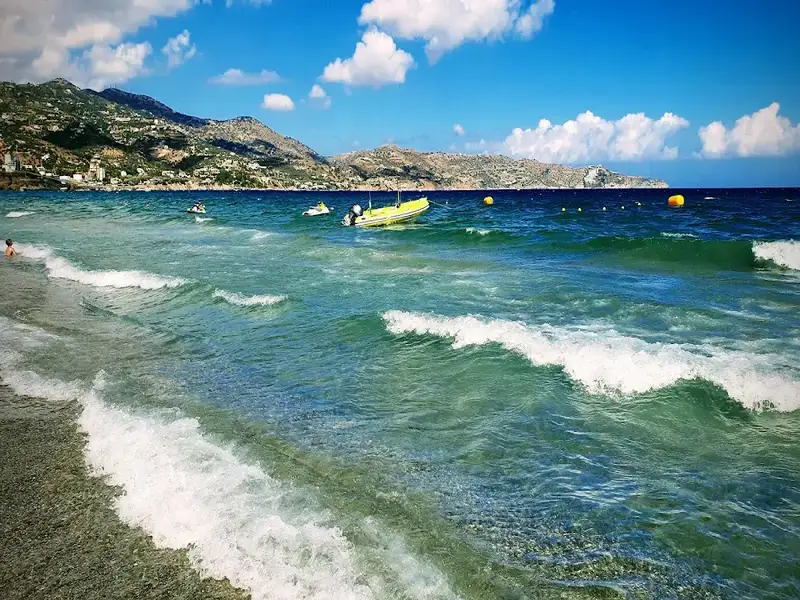
Karteros beach is a wide, fine-sand bay on the north coast of Crete, about 7 km east of Heraklion and right beside the island’s airport. The bay stretches roughly 3 km east from the mouth of the Karteros Gorge and takes in two neighbourhoods, Karteros and Amnissos, which have grown together as the area developed. Its name honours the Byzantine general Krateros, who landed here in 824 AD in a failed attempt to free Crete from the Saracens.
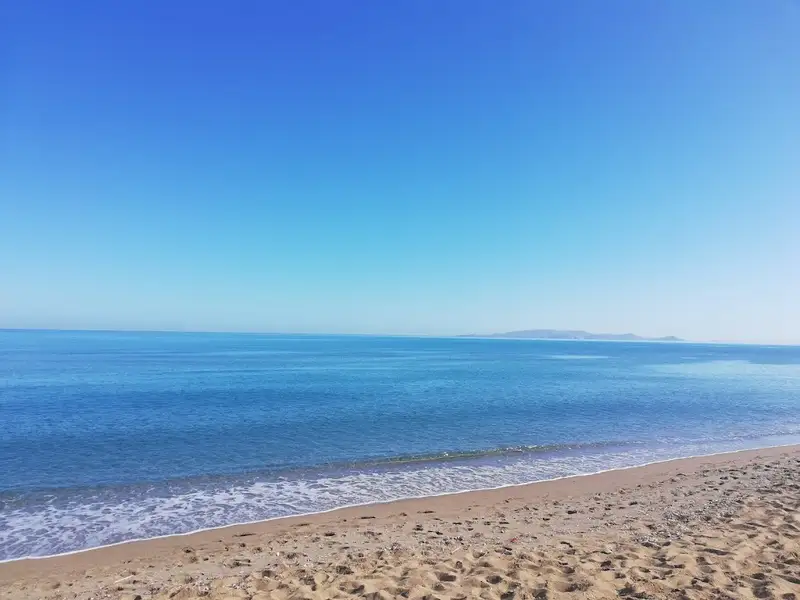
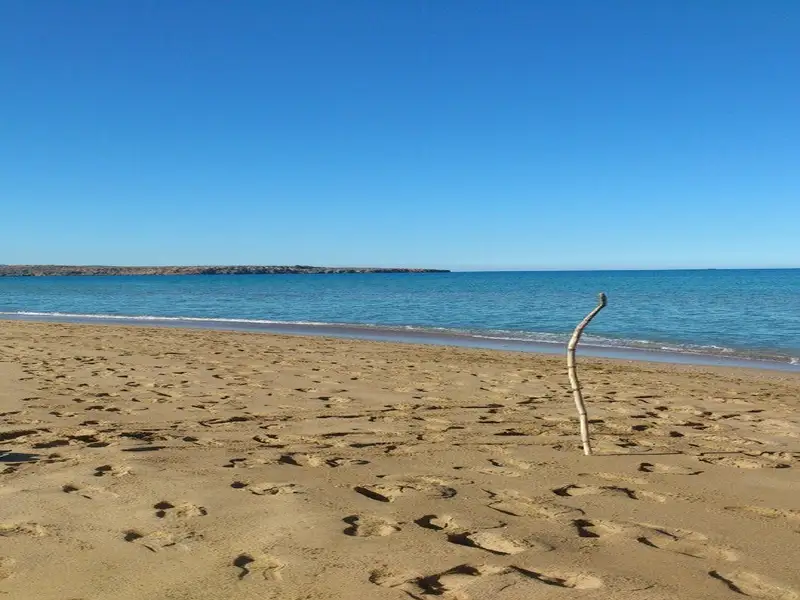
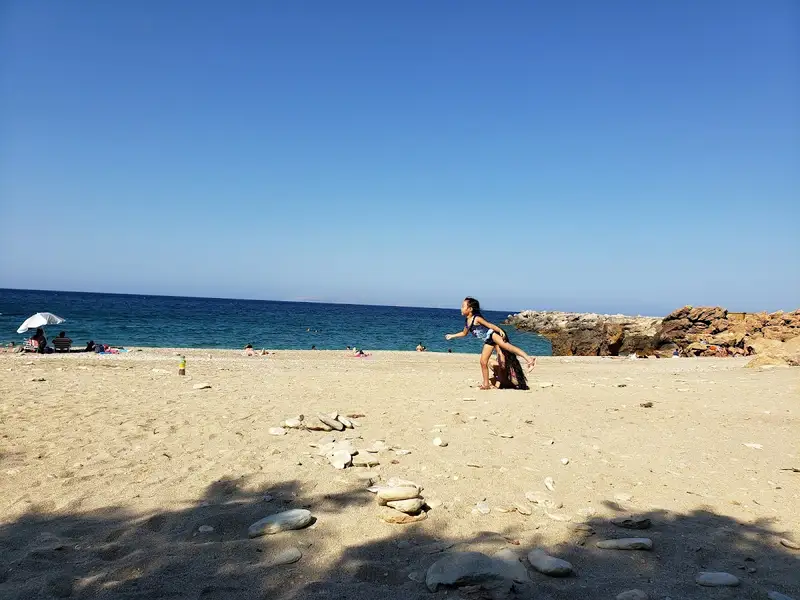
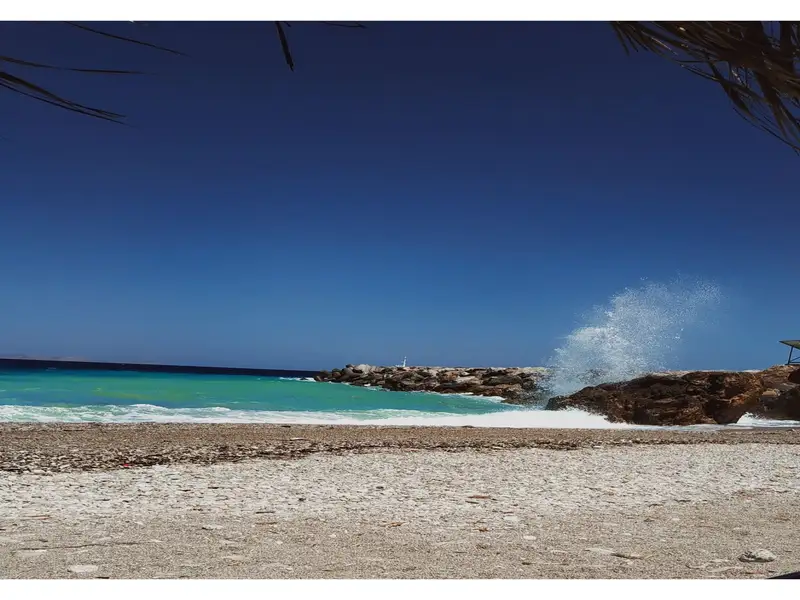
The sand is fine and golden, mixed with a little pebble in places, and the water is shallow with almost no rocks. The bay faces the open sea and catches the northern winds, so the surface is often wavy, especially towards the eastern end. Those same winds make Karteros a popular spot for windsurfing. The shallow, gently deepening water suits children and families, and lifeguards watch the organised stretches in season.
You will find tavernas, cafes, and beach bars along the shore, together with umbrellas and sunbeds on the organised sections. A paved road and a city bus from Heraklion reach the beach, and there is a parking area by the shore, so getting here without a car is straightforward. Off the bay lies the small rocky islet of Monochorako, close enough for confident swimmers to reach from the sand.
The quietest part of the bay is Florida, at the western end next to Heraklion’s Nikos Kazantzakis airport. Here the Karteros River flows out of the gorge and forms a small seasonal wetland that dries up in summer, and there are fewer umbrellas and facilities than further east. The wetland is easiest to see in spring, before the summer heat dries it out. While you are at this end, look for the small church of St John and St Nikon, built inside a cave in the rock face across the old national road. Do not be surprised to see horses on the sand here either, as the Heraklion Riding Club brings them down to the beach.
A rental car makes it easy to combine Karteros with the beaches and sites further east along the coast. Compare options for your trip on the Crete car rental page.
Karteros beach is on the north coast of Crete, about 7 km east of Heraklion and directly east of the island’s airport. The bay stretches around 3 km and includes the Karteros and Amnissos neighbourhoods.
A paved road links Karteros beach to Heraklion, and a city bus serves the area, so you can reach it with or without a car. There is a parking area next to the shore for visitors who drive.
Yes. The water is shallow and deepens gently with few rocks, which suits children, and lifeguards watch the organised stretches in season. The sea is often wavy because the bay faces the northern winds, so keep an eye on the conditions and any warning signs.
The bay is exposed to the northern winds and the surface is frequently wavy, most of all towards the eastern end. Calmer conditions are more likely early in the day and on the more sheltered western sections.
The organised sections have umbrellas, sunbeds, showers, and lifeguards in season, with tavernas, cafes, and beach bars along the shore. The western Florida stretch, next to the airport, is quieter and has fewer facilities.
Yes. The steady northern winds make the bay well suited to windsurfing, and water-sports operators work the organised stretches in the summer season.
The beach is named after the Byzantine general Krateros, who landed on the bay in 824 AD to try to free Crete from the Saracens but was defeated. The nearby river and settlement carry the same name.
At the western Florida end, the Karteros River forms a small seasonal wetland, and the cave church of St John and St Nikon sits across the old national road. Off the bay lies the small islet of Monochorako, which strong swimmers can reach, and the eastern Amnissos area continues the same long stretch of sand.
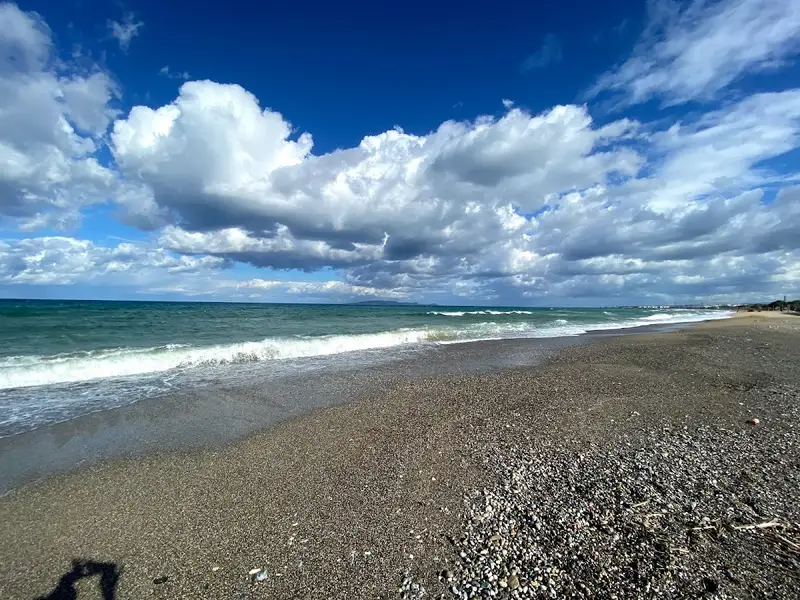
Situated 8km west of Heraklion city, Linoperamata, also known as Ellinoperamata, is a scenic sandy beach stretching up to 7km long, beginning from Linoperamata and culminating at the Pancretan Stadium, 1km west of Heraklion. The beach is uniquely bordered by the Almiros river in the west.
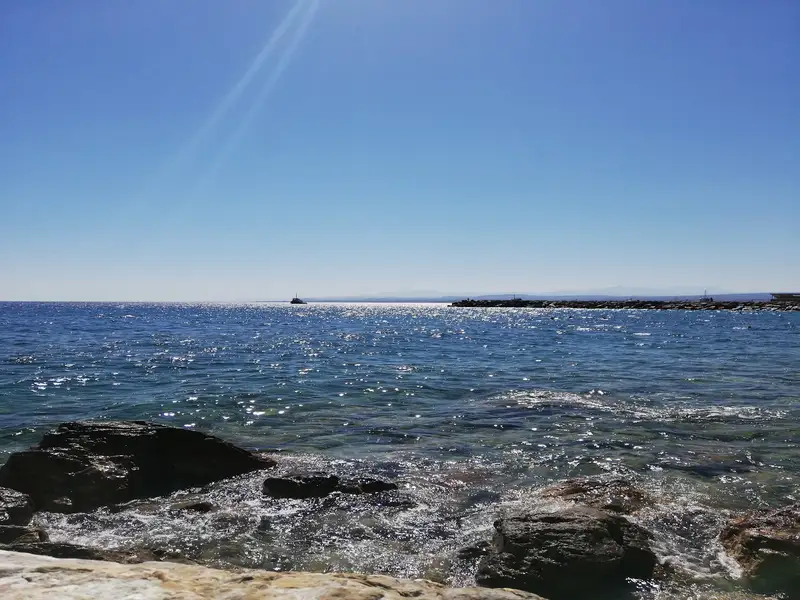
The locals do not frequent Linoperamata as much due to the presence of a local Power Station and heavy industries in its western region. Nevertheless, the beach boasts of clean water and a serene atmosphere. Unlike the highly organized beaches in the neighboring Ammoudara, Linoperamata has a more natural appeal, although there are a few hotels in the vicinity.
Open to the northern winds, the beach is often wavy, making it a favorite among windsurfers. Getting to Linoperamata from Heraklion is convenient via the city’s bus service.
Pantanassa, situated 12km west of Heraklion, is named after the Monastery of Panagia Pantanassa, which is dedicated to the Virgin Mary. The beach lies adjacent to the quaint port of Pantanassa. Prior to the establishment of the port, Pantanassa boasted an enchanting beach, concealed by a small pine forest and possessing crystal-clear waters. Now, the beach has been divided by the port, causing Pantanasa beach to lose some of its former allure. Nonetheless, it still retains its beauty, featuring pebbles and clear waters.
The beach offers amenities such as umbrellas and sunbeds, and some pine trees still grace the nearby cliffs. A pathway from the port allows for easy access. If hunger strikes, there are eateries in the port of Pantanassa and nearby areas. Visitors can combine their beach visit with a trip to the Pantanassa Monastery, perched atop the pine-covered hill above the beach. Built in the mid-20th century, it was envisioned to serve as a charity monastery, but the founder, Nikolaos Xenos, passed away before realizing his dream. Today, the monastery functions as a nunnery.
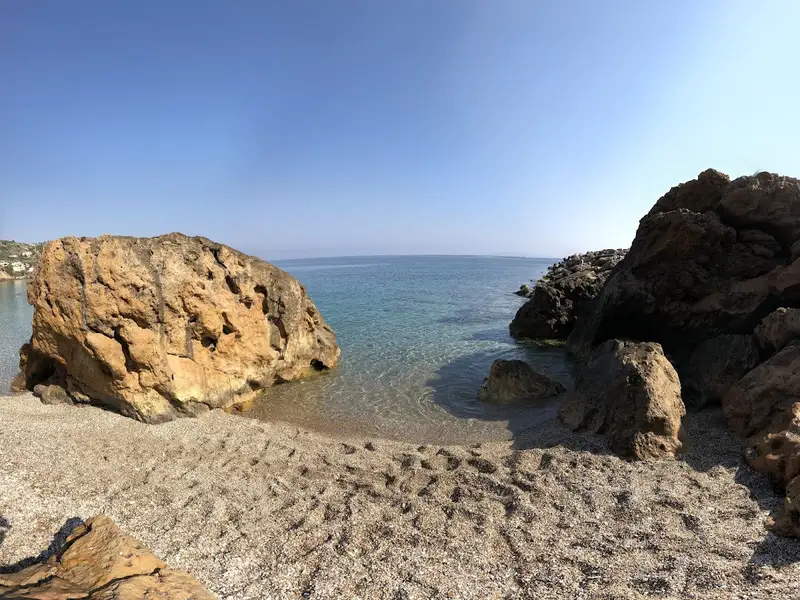
The Lefkadia area lies to the west of Pantanassa beach. Here, two secluded bays, largely unknown to most Heraklion residents, provide an ideal spot for relaxation. Recently, a beach bar was established and a trail leading to the beach was opened. Helidoni beach, featuring sandy and pebbly areas with a predominantly rocky seabed, is perfect for snorkeling. The western view is captivating, with the ruins of the old Paliokastro castle visible. Visitors can park in the nearby small pine grove and hike up to the castle.
No results available
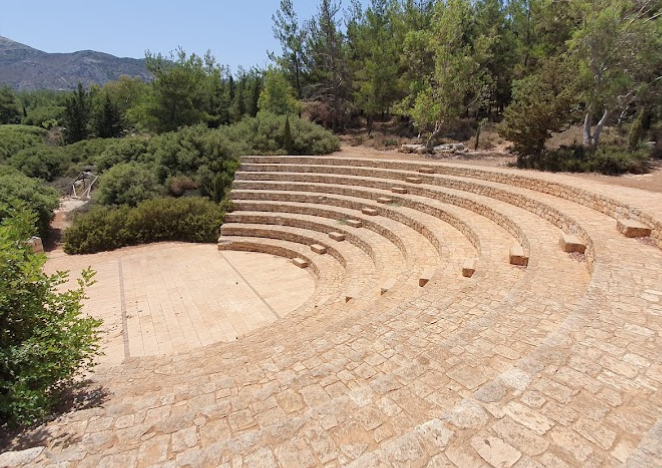
The archaeological site of Fourni can be found on a hill with the same name, situated 17km south of Heraklion and southwest of Kato Archanes. To visit the site (which is not always open, but you can contact the guard), you can either walk along the Minoan path that starts from Kato Arhanes and crosses the stunning artificial grove of Fourni, or climb the stairs from the Apano Archanes ring road.
At Fourni, archaeologists have identified a preminoan cemetery (2800BC-2200BC) which is, in fact, the largest prehistoric cemetery in the Aegean Sea. Additionally, more graves have been discovered, dating back to the period between 2200BC and 1200BC. You can also see the quarry from which the materials for the cemetery’s construction were extracted.
Archaeologist Ioannis Sakellarakis began excavations in 1964, and so far, 26 buildings have been uncovered, with most of them being graves. The objects found in these graves suggest that ancient Archanes had strong connections with the Aegean, Egypt, and the East.
Due to its significant findings, Fourni is considered the most important Minoan cemetery on Crete. The most notable discovery was the unlooted sarcophagus of the “Queen,” containing jewelry (over 140 pieces) of immense value and other items believed to accompany her to the next world. Remains of an ox and a horse sacrifice were also found. Many of these findings are exhibited in the Archaeological Museum of Heraklion and the Archaeological Museum of Archanes.
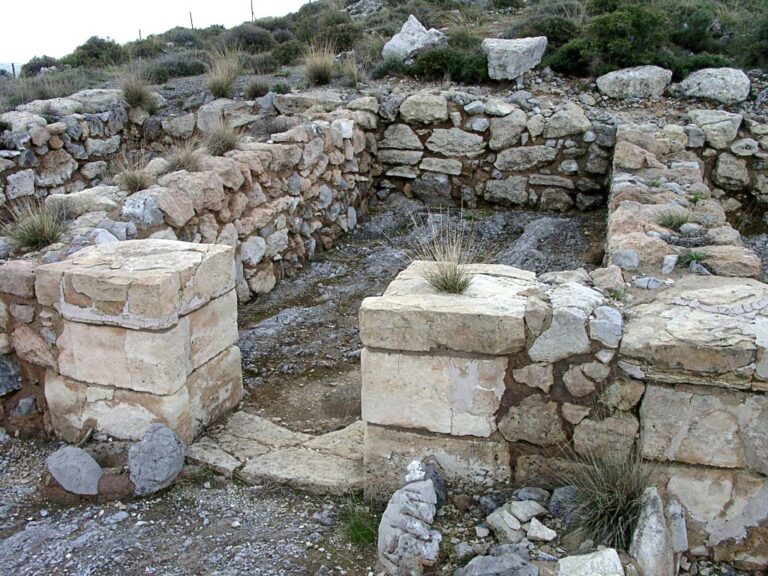
At the location known as Anemospilia, situated on the northern slopes of Mount Jiouchtas, archaeologists Giannis and Efi Sakellarakis discovered a small Minoan-era sanctuary in 1979 that took the global archaeological community by surprise. This modest sanctuary provided the first evidence of human sacrifices in Minoan Crete.
The two-story structure was constructed in the 17th century BC and was later destroyed by an earthquake a few decades afterward. To date, four sites have been uncovered, but there could potentially be more.
In the temple’s first room, numerous utensils were discovered, including around 150 pots of various shapes. The main room was filled with the largest temple utensils, pots, and jars. The east room, where bloodless rituals occurred, contained many objects and a stepped altar on which all worship utensils were placed. The bloody sacrifices took place in the temple’s west room, which had fewer findings.
The most significant discovery of the excavation was the presence of four human skeletons. Scientific investigations revealed that three of them (including one woman) were killed by the collapsing roof and a simultaneous fire. They were likely two priests and a priestess. The fourth deceased individual was the most intriguing discovery, as he was found lying on a trapezoidal table with a short sword or spear in his body. According to anthropologists and forensic experts, this man was a victim of human sacrifice, and the scene was preserved for posterity due to the earthquake.
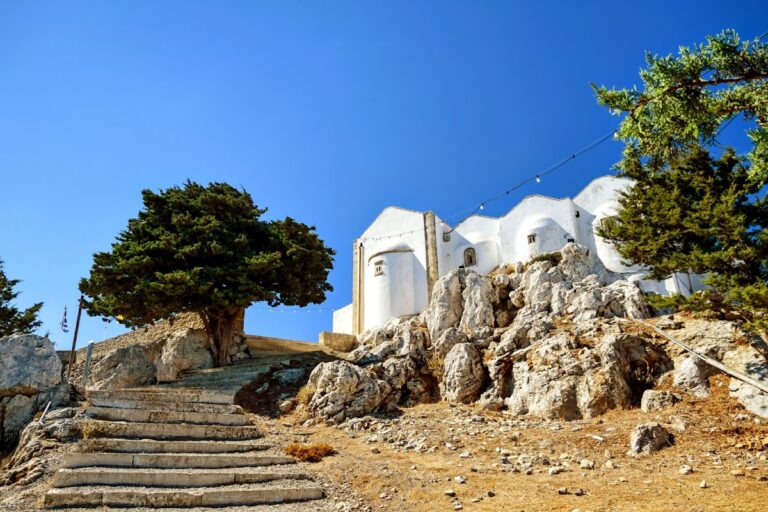
Jiouchtas, in ancient times, was considered a sacred mountain, primarily because it resembles a human face that looks to the sky from the northwest. Even today, the mountain’s anthropomorphic shape sparks interest. According to legend, this is the face of the Greek god Zeus, and the mountain is his tomb. Indeed, the name Jiouchtas is a corruption of the Latin word for Zeus, Jupiter.
The mountain was very important for the Minoans, as it was the first mountain they saw while their ships approached the shores of Crete. Here, they built at least two Minoan sanctuaries, one at the highest point of the mountain (Psili Korfi) and the second at the position Anemospilia.
The sanctuary of the Giouchtas peak is the most important and largest peak sanctuary in Crete and was directly dependent on Knossos, with covered and open spaces for accommodation, storage, and rituals.
The Psili Korifi peak hosted an 8mx5m worship building with a precinct surrounded by a cyclopean wall, in the sanctuary of which archaeologists have revealed many idols of men, women, animals, body parts, offering tables, inscriptions on Linear A script, bronze and silver pendants, bronze axes, and golden items. The natural trench of the sanctuary on the mountain’s rock, where many of the archaeological findings were found, was used for placing the devotees of the worshippers.

On the eastern end of the extensive Vathianos Kambos beach, near the Agii Theodori church, lies a rocky peninsula. Here, one can still see the carved rock that once housed a large shipbuilding yard during the Minoan Era.
Researchers have found that this large carving, measuring 48 meters in length and 11 meters in width, could have been used by the Minoans to build ships up to 50 meters long. Additionally, there is a smaller carving to the south that was likely used for storing timber.
It is interesting to note that the surrounding area has sunk into the sea over the centuries, with remnants of Minoan buildings both inside and outside the water. The carving was likely filled with water when the ship was completed, allowing it to be easily lowered into the sea.
No results available
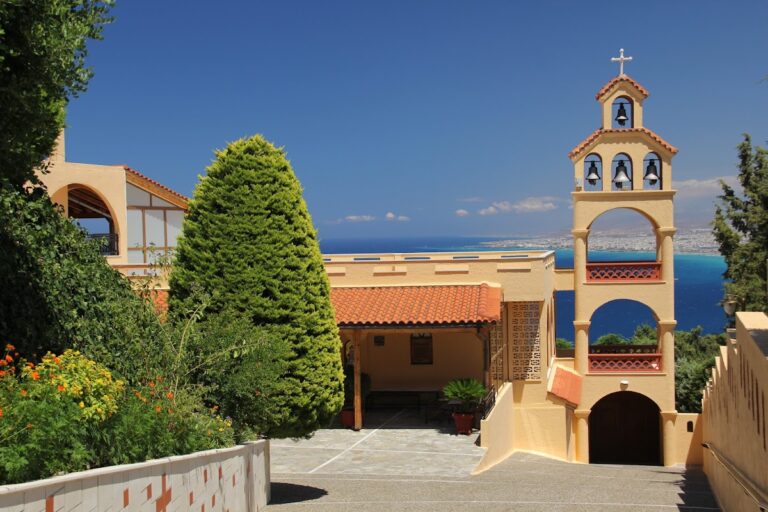
The Rodia nunnery, also known as the Holy Monastery of the Virgin Mary, was established in 1990 by Bishop Nektarios Papadakis. The land for the monastery was generously donated by Agapi Sbokou to the Archdiocese of Crete for the purpose of founding the monastery.
In the center of the monastery’s courtyard, visitors can find the temple of the Virgin Mary, along with the cells, guest houses, and other facilities. The small, aisle church is constructed in the Aegean style and holds a celebration on November 21.
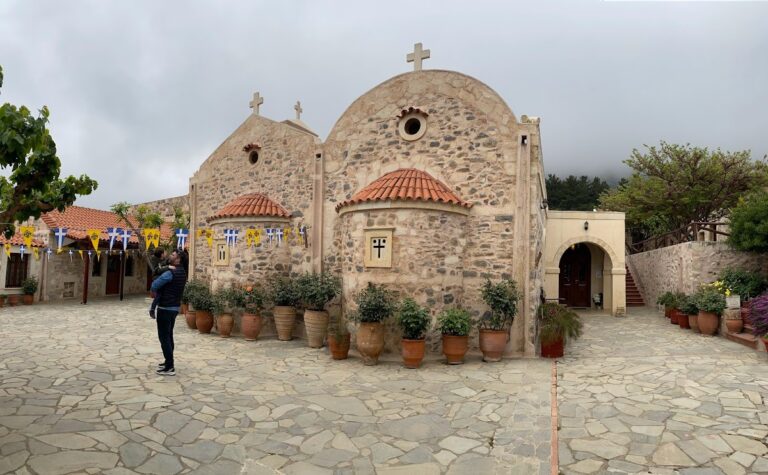
The Agia Irini monastery can be found 25km south of Heraklion and 3km west of Kroussonas village, situated on the slopes of Psiloritis at an elevation of 630m. To reach it, take the road that connects Kroussonas with the Livadi plateau.
Functioning as a nunnery, this monastery is among the oldest in Crete. It is thought to have been constructed towards the end of the Venetian Era, but was destroyed by the Turks in 1822 and later rebuilt in 1944.
Dedicated to St. Irene (celebrated on May 5) and the Assumption (celebrated on August 15), the two-aisled church is part of the monastery. As one of the thriving monasteries in modern Crete, it is exceptionally well-maintained by the resident nuns.
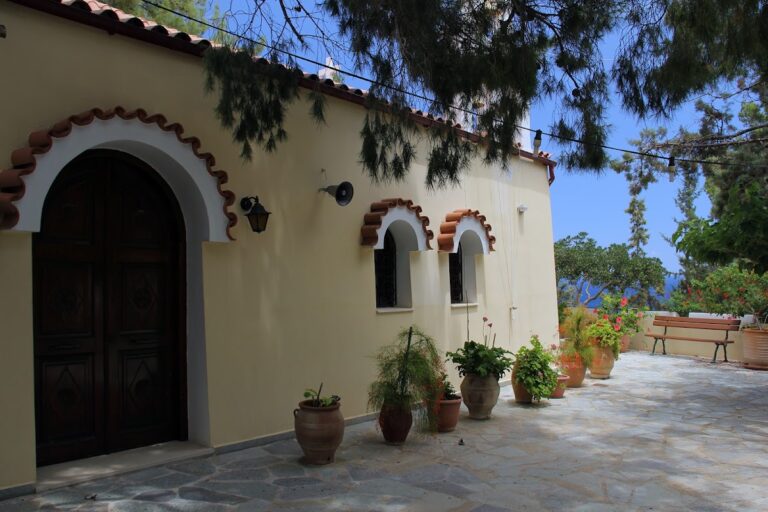
Located on a pine-covered hill by the sea at an elevation of 30m, the Pantanassa Monastery (Panagia Pantanassa) is situated approximately 14km west of Heraklion. This relatively new female monastery is dedicated to the Nativity of Mary, with celebrations held on September 8.
Initially, Pantanassa was established to perform charitable work, similar to the Kalyviani Monastery near Mires. Unfortunately, its founder, Bishop Nikolaos Xenos, passed away before he could realize his ambitious dreams of creating an orphanage, nursing home, kindergarten, nursery, and more.
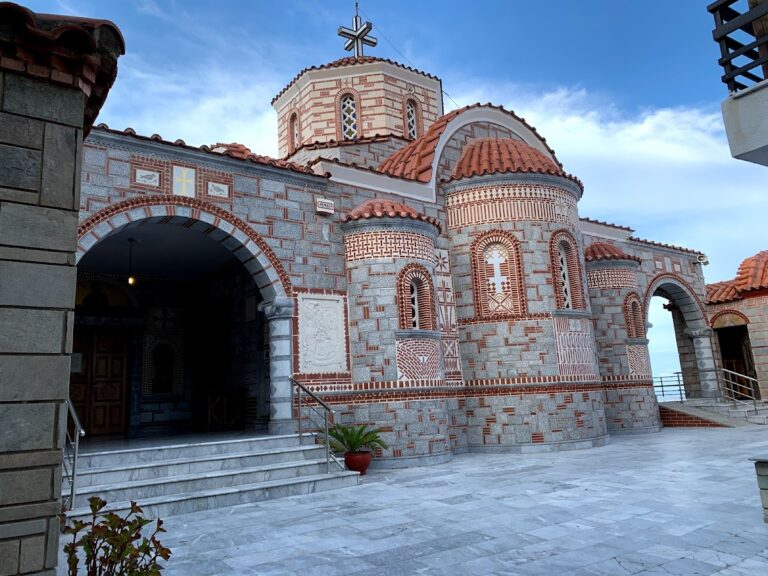
Located in Ellinoperamata, Malevizi district, on the road to Rodia village, the Monastery of Agia Fotini the Samaritan was established in June 1991 by Archbishop Timotheos of Crete. Within the monastery, you can find the church of Agia Fotini, the chapel of St. Fanourios, the nuns’ cells, and the tomb of Timotheos, the monastery’s founder.
Martyr Fotini, who originated from the city of Sihar in Samaria, is mentioned in the life of evangelist John (D’1 – 38). Agia Fotini dedicated her life to spreading the Gospel throughout Africa and Rome during Emperor Nero’s reign (54-68 AD). She was ultimately martyred alongside her sons and five sisters.
The church observes celebrations on February 26th and the Sunday of the Samaritan woman.
No results available
No results available
No results available
No results available
No results available
Almiros Gorge is a 3 km walking gorge in Ellinoperamata, the closest canyon to the west of Heraklion city. The route takes about 1.5 hours, gains 150 meters in elevation, and rates 1 out of 10 for difficulty, so it suits families and first-time hikers who want a short walk close to the city. A paved road reaches the trail, water runs here only until spring, and the path links a 14th-century monastery, three small chapels, a spring-fed lake, and three seasonal waterfalls.
Almiros Gorge is a small canyon and hiking trail in Ellinoperamata, formed between the Keri hills and the post-Minoan town of Kastrokefala. Almiros Gorge sits west of Heraklion and counts as the closest gorge to the city on that side. The eastern side holds the largest holly wood (Phillirea media) in Crete, and platan trees, carob, and wild olive trees also grow here despite overgrazing.
The gorge carries several local names, each tied to its geography or folklore: Keri Gorge after the neighboring hill, Almiros after the nearby Almiros river, Ellinoperamata after the area where it ends, Porofarago (a common Cretan gorge name), the Three Churches after its three chapels (Santa Marina, St. Antonios, and St. Paraskevi), Strouboulas after the Strouboulas peak near its start, and the Ghosts’ Gorge, a spooky local nickname. Few visitors make the trip despite the short distance from central Heraklion.
Almiros Gorge rates 1 out of 10 for difficulty, which makes it one of the easiest gorges to hike near Heraklion. The full walk covers 3 km and takes about 1.5 hours, with 150 meters of elevation change along the way. The chapel of Lord Christ at the gorge’s starting point is reached after nearly 1 hour 30 minutes of walking.
The gentle grade and short length make the gorge a good option for a half-day outing rather than a demanding trek. Because the terrain stays easy throughout, most walkers of average fitness finish the route without difficulty.
A paved road leads to Almiros Gorge, and cars can reach the location near the canyon exit. The 14th-century monastery of Agios Ioannis Farangitis stands near that exit, which gives you a clear landmark to aim for on arrival.
The gorge lies a short drive west of Heraklion, so most visitors arrive on their own wheels. Having a car also makes it easy to combine the walk with the nearby villages and coast, and you can compare options on the car rental page.
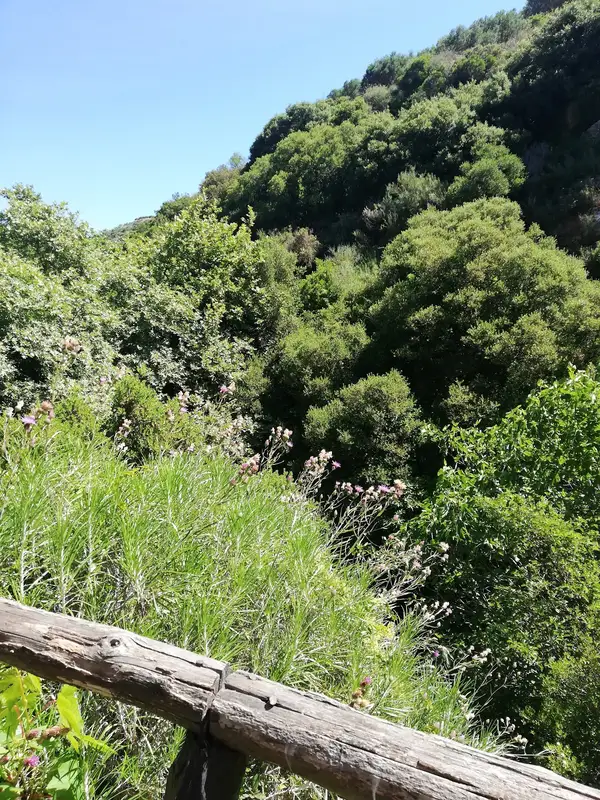
Almiros Gorge packs a monastery, three chapels, a seasonal stream, three small waterfalls, and a spring-fed lake into a single short walk. The trail is lined with trees, and the vegetation thickens as you climb.
The 14th-century monastery of Agios Ioannis Farangitis (Saint John inside the Gorge) was built near the canyon exit and is dedicated to Saint John the Baptist. The monastery gives the gorge much of its religious character and its “Saint John inside the Gorge” name.
The surviving chapel of Saint Marina was used as a cemetery, while the main temple was the two-aisled chapel of Saint Anthony and Saint Paraskevi, which holds significant frescoes. Further along, a shrine dedicated to Saint George appears, and the chapel of Lord Christ marks the gorge’s starting point.
The gorge is usually dry and turns into a small stream during spring. Water stays in the gorge only until spring, so plan a visit for the wetter months to see the streambed flowing. After prolonged, heavy rainfall, three small waterfalls form at a site with a pinkish limestone hue.
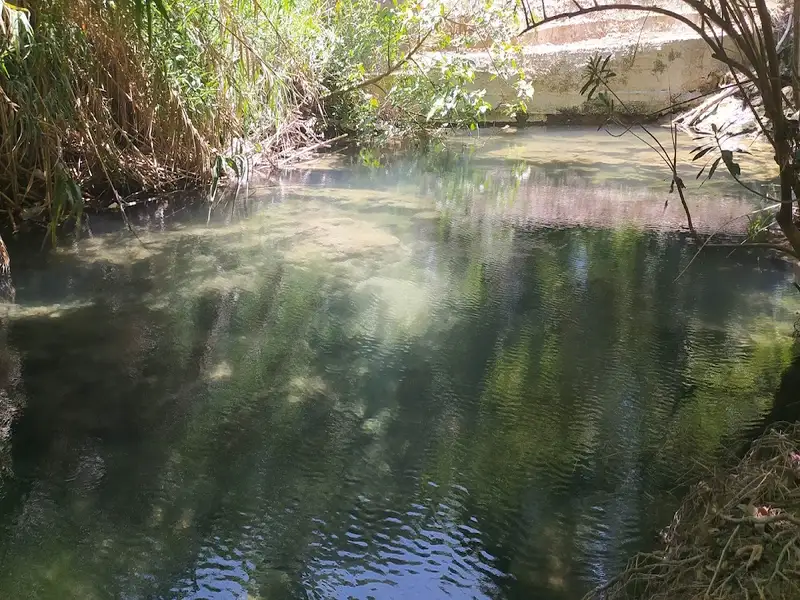
Lake Almiros sits beside the gorge and is a wonder in itself. The lake’s crystal-clear water flows directly from the spring-fed mountain cliffs and stays clear enough to see all the way to its bed. For more swimming spots along the coast nearby, the beaches near Heraklion are a short drive away.
Almiros Gorge needs only light hiking gear, because the trail is short and easy. Pack for a half-day walk in a mostly open canyon:
Several gorges sit within a short drive of Almiros, which makes it easy to pair this walk with another. Each of the following canyons lies in the wider Heraklion area:
You can browse the full set of routes on the Crete gorges guide.
No. Almiros Gorge rates 1 out of 10 for difficulty, one of the easiest gorge walks near Heraklion, and the route gains only 150 meters over its length.
The trail is 3 km long and takes about 1.5 hours, with 150 meters of elevation change from end to end.
Yes, until spring. The gorge is usually dry and turns into a small stream in spring, and three small waterfalls form after prolonged, heavy rainfall.
Yes. A paved road reaches the gorge, and cars can get to the location near the canyon exit, where the monastery of Agios Ioannis Farangitis stands.
“Ghosts’ Gorge” is one of several local names for Almiros, alongside Keri Gorge, Porofarago, and the Three Churches, each tied to the gorge’s geography, chapels, or folklore.
The Astrakiano and Kounaviano canyons are two verdant gorges that converge near Skalani village and empty out onto Karteros beach. The combined length of these canyons is roughly 21 km. Situated to the east of Heraklion city, these gorges are part of the broader Mount Jiouktas area. They offer easy walking trails, making them perfect for families and children.
The longer of the two, Astrakiano, begins at the Paliarda location in Kolomodi and extends to the area beneath the deserted Kato Astraki village, after crossing the picturesque Astrakiani Kamara bridge. From Kato Astraki, a brief trail leads to the Neraidospilios site, known for its stunning pond and gushing water caves.
The path along the Karteros river commences from this point, offering a lush green trail equipped with wooden bridges and railings. After crossing the Aitania bridge at Kaki Rachi, we reach Kali Rachi where the Astrakiano and Kounaviano Gorges, originating from Peza, merge. From Kali Rachi, the river continues to Karteros along a well-structured path. This section, known as Karteros Gorge, passes by ancient water mills and the historic Saint Nicholas Church (Agios Nikolaos). Near the Karteros gorge exit, at the Mesa Karteros spot, you’ll find an old inn and a second chapel dedicated to Saint Nicholas. This location, accessible by car from Karteros, is an ideal picnic spot.
The Astrakiano canyon (Astraki – Kali Rachi) measures about 7km, with a hiking duration of 3-4 hours. The Kounaviano Gorge (Peza- Kali Rachi) is roughly 4km long, requiring about 2 hours for trekking. The shared section of the Karteros gorge (up to the second Saint Nicholas chapel (Kali Rachi – Mesa Karteros)) is approximately 6km.
The canyons’ route is abundant in natural, morphological, aesthetic, historical, and cultural aspects. The landscape boasts exceptional natural beauty, featuring springs, ponds, rivers, mini waterfalls, and lush vegetation. Prior to World War II, the canyon housed 10 watermills, and locals would fish for eels and crabs, some of which still exist today.


A petite gorge forms to the west of the Rogdia village and opens up at the Paliokastro area. The journey begins from the ancient Koukos watermill, situated on the primary road linking Rogdia to Achlada, and takes you down to its most striking feature, the 10-meter tall Rechtra waterfall, which can be accessed through a relatively steep descent with ropes. As you traverse down the gorge, you’ll encounter several small waterfalls, the cave-like chapel of Panagia Spiliotissa, and finally arrive at the Paliokastro beach.
One of the most astounding sights is a cave situated right in the heart of the gorge, which has been converted into a studio for creating Christian icons by a hagiographer, seemingly in the middle of nowhere. It is highly recommended to stop by this unique site, engage in conversation with the artist, admire the icons, and perhaps purchase a few.
You can also conveniently reach the fall by trekking up the gorge from Paliokastro.
The Kounaviano gorge, known for its lush vegetation, is the greenest canyon in the entire Heraklion prefecture, serving as a verdant oasis in the heart of Pediada province. The gorge is named after the village of Kounavi in its district, even though it actually begins from the village of Peza, hence it could be referred to as Pezzano Gorge. This gorge is a tributary of the Karteros river and runs parallel to the Astrakiano gorge. The Astrakiano and Kounaviano gorges converge at the Kaki Rachi area near Skalani, forming the Karteros Gorge. Kounaviano’s entrance is situated at the northernmost point of the fertile Peza plain, collecting all the area’s water. It has numerous springs along its bed, some of which retain water throughout the year.
In recent years, the gorge’s trail has been marked and cleared, with the addition of small bridges, wooden railings, and informational signs. Walking along this trail is a delightful and easy experience, shaded by perennial plane, oak, and other trees. The riverbed walk is simple, without significant altitude changes or difficulties. At the gorge’s starting point, two small waterfalls can be seen. Old watermills, once used to grind the area’s cereals, can be found at three different points along the trail. This region has always been one of Crete’s most productive. Additionally, limestone kilns and various fruit tree gardens can be spotted. A walk from the gorge’s entrance at Peza to its exit at Kaki Rachi near Skalani takes approximately 2 hours.
No results available
Set in Heraklio Town, 400 metres from Heraklion Archaeological Museum and 500 metres from Heraklion Venetian Harbour, Kliklis Apartment offers free WiFi and air conditioning. The property is 500 metres from Venetian Walls and 5 km from The Palace of Knossos.
The apartment comes with a flat-screen TV and 1 bedroom. The accommodation is equipped with a kitchen.
Morosini Fountain is 60 metres from the apartment. The nearest airport is Heraklion International Airport, 4 km from Kliklis Apartment.
from
€47
/night
Right in the centre of Heraklio Town, set within a short distance of Venetian Walls and Heraklion Archaeological Museum, The Fifty Condo offers free WiFi, air conditioning and household amenities such as a stovetop and coffee machine. With quiet street views, this accommodation offers a balcony.
The apartment with a terrace and city views has 1 bedroom, a living room, a flat-screen TV, an equipped kitchen with an oven and a fridge, and 1 bathroom with a walk-in shower. Towels and bed linen are offered in the apartment.
A car rental service is available at the apartment.
Popular points of interest near The Fifty Condo include Historical Μuseum of Crete, Morosini Fountain and Municipal Art Gallery. The nearest airport is Heraklion International Airport, 4 km from the accommodation.
from
€147
/night
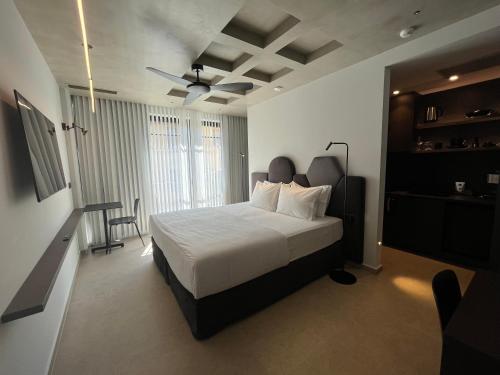
Located in Heraklio Town, 300 metres from the centre and 2.3 km from Amoudara Beach, Pleiades Urban Stay by Semavi provides accommodation with amenities like free WiFi and flat-screen TV.
A microwave, a fridge and kitchenware are also provided, as well as a coffee machine and a kettle.
Popular points of interest near the aparthotel include Venetian Walls, Heraklion Archaeological Museum and Historical Μuseum of Crete. The nearest airport is Heraklion International Airport, 3 km from Pleiades Urban Stay by Semavi.
In a central area of Heraklio Town, located within a short distance of Venetian Walls and Heraklion Archaeological Museum, 25 Dikaiosinis Ave. Offers free WiFi, air conditioning and household amenities such as an oven and coffee machine. With city views, this accommodation provides a balcony.
The apartment features a flat-screen TV. The kitchen comes with a microwave, a toaster and a fridge and there is walk-in shower with slippers and a hair dryer.
Popular points of interest near the apartment include Historical Μuseum of Crete, Morosini Fountain and Municipal Art Gallery. The nearest airport is Heraklion International Airport, 3 km from 25 Dikaiosinis Ave..
No results available
Connect with thousands of Crete visitors and boost your bookings.
No results available
© All rights reserved. Crete Locals