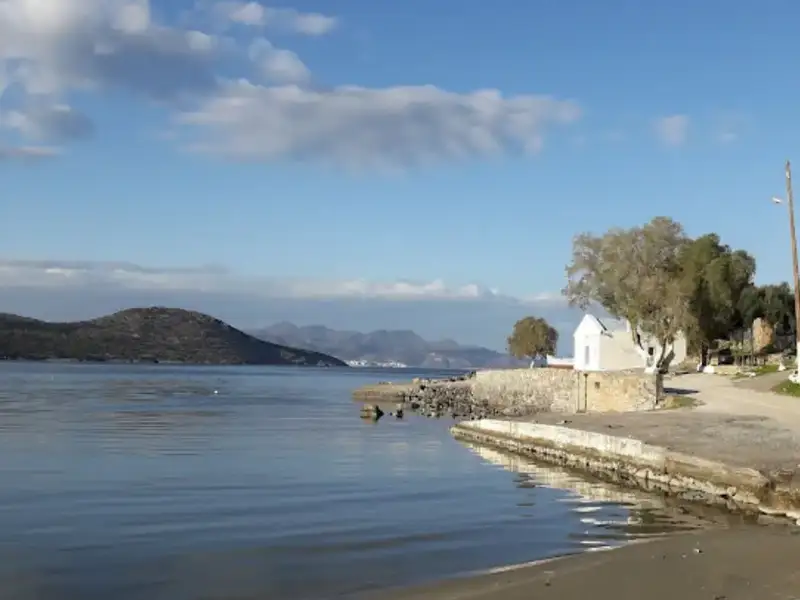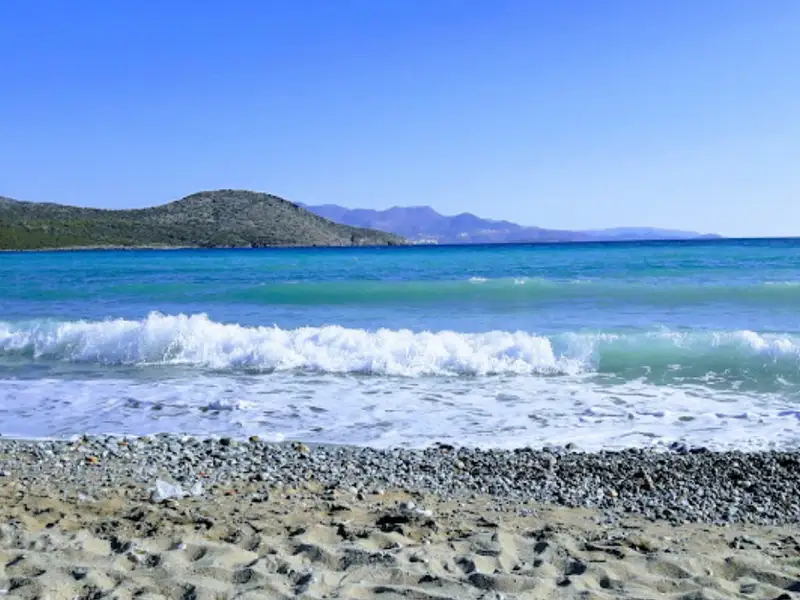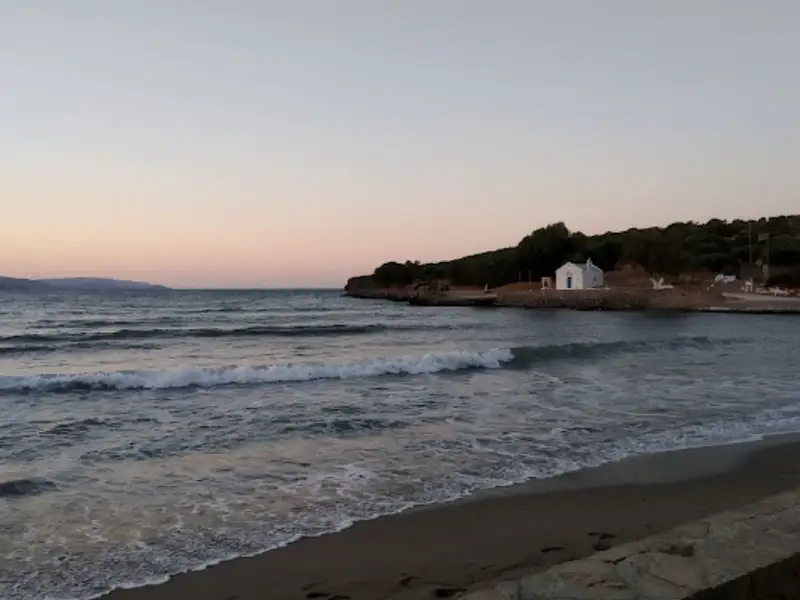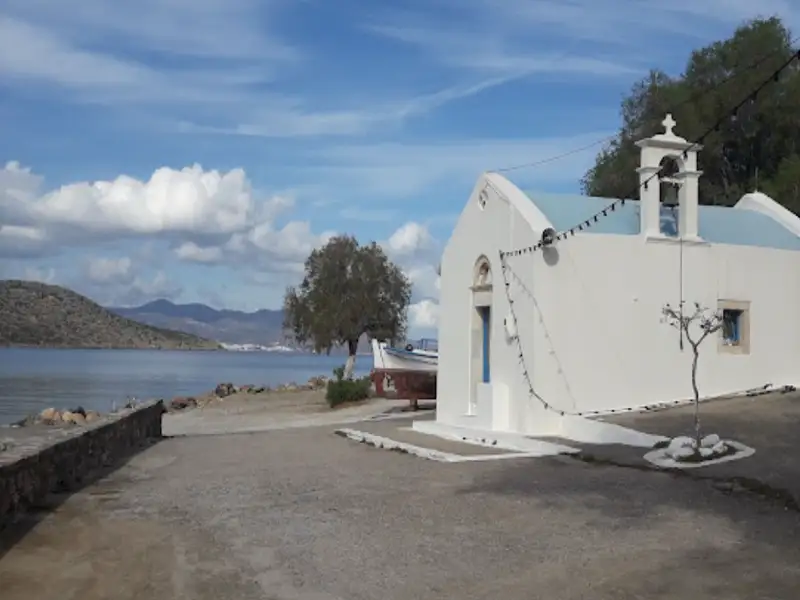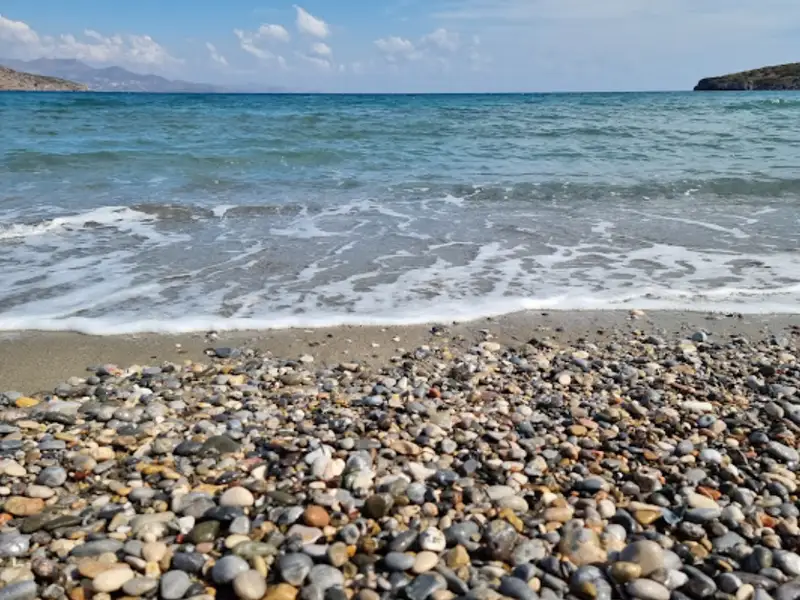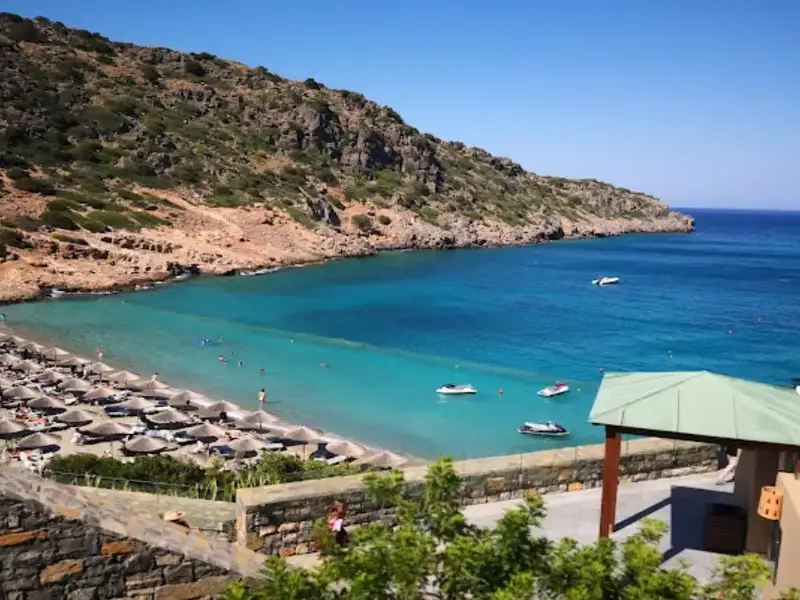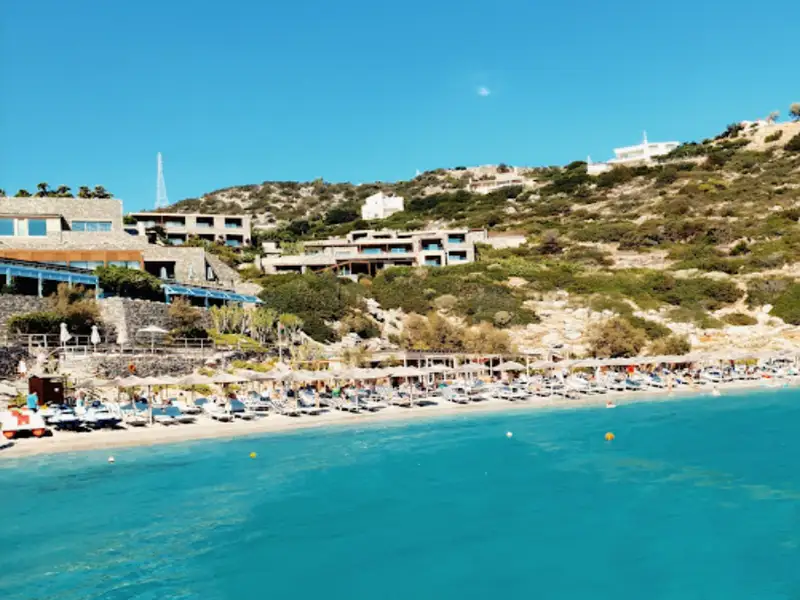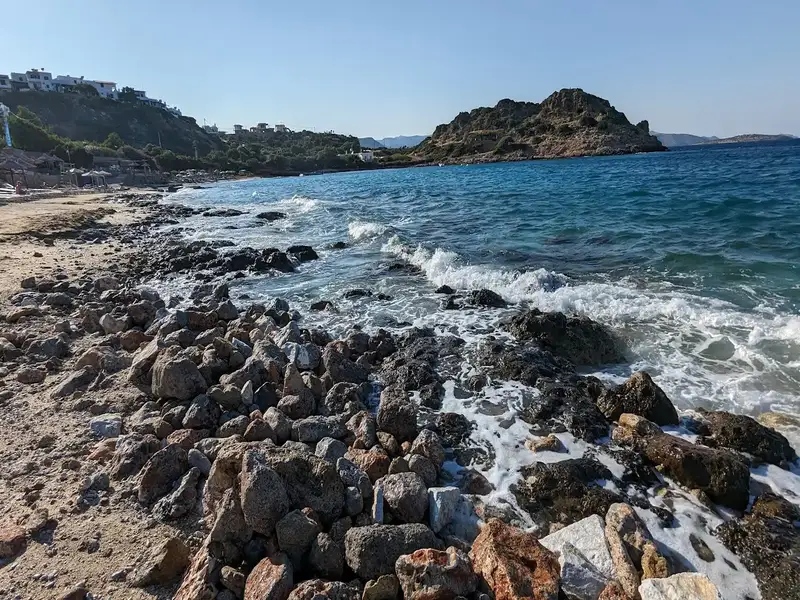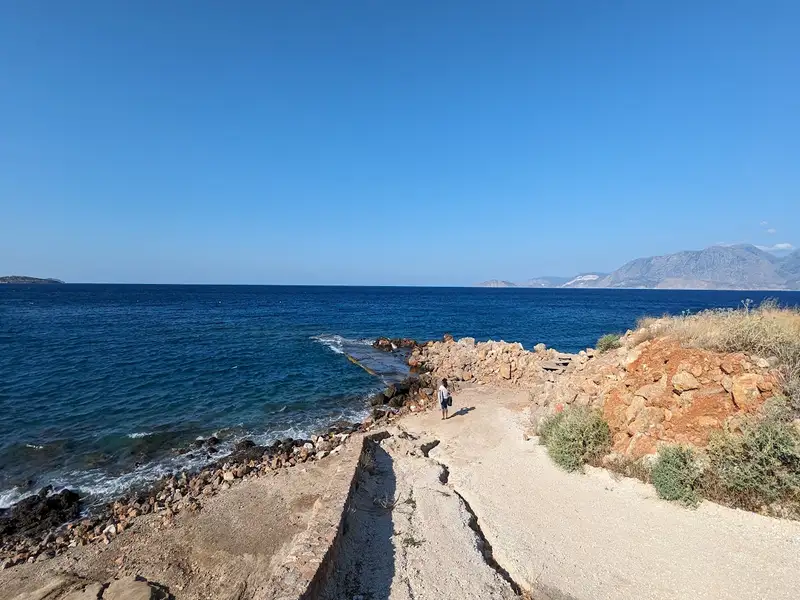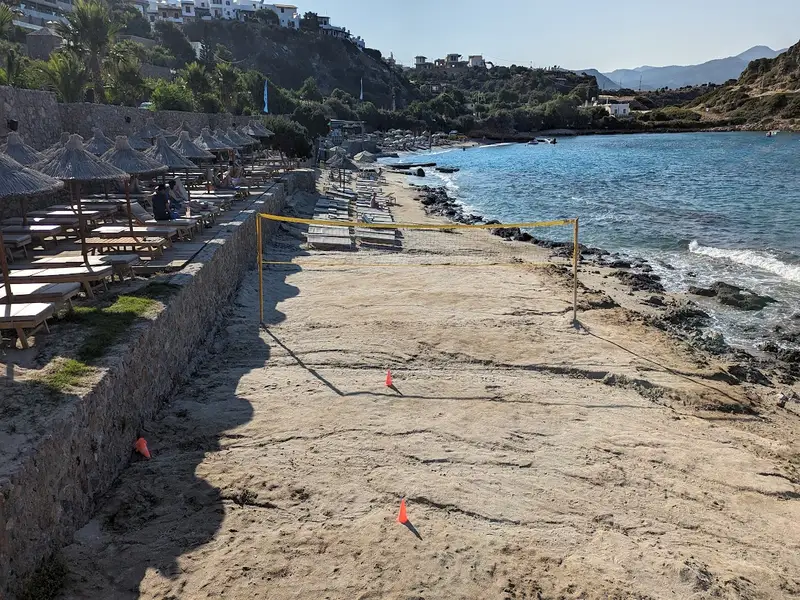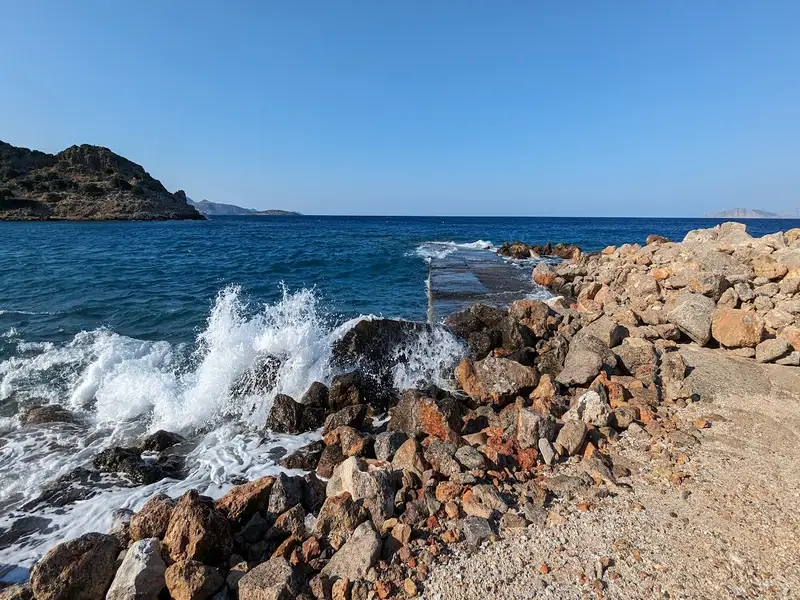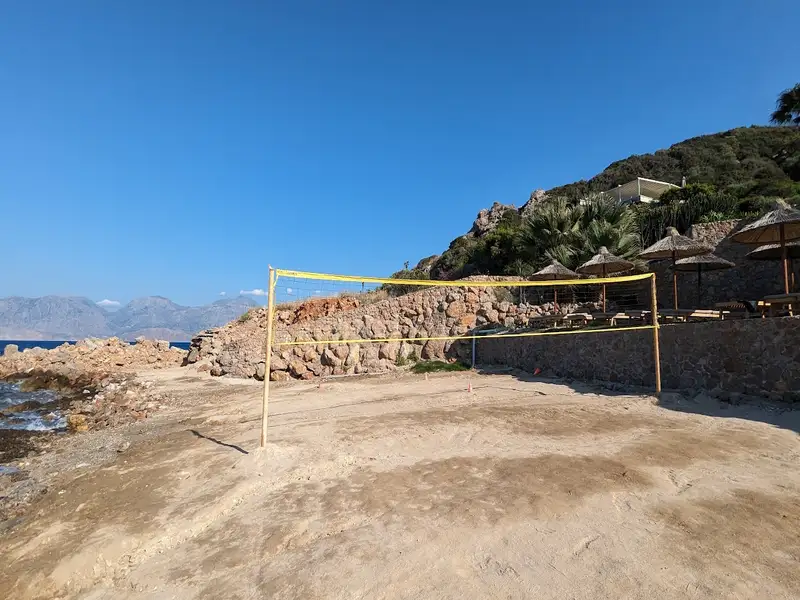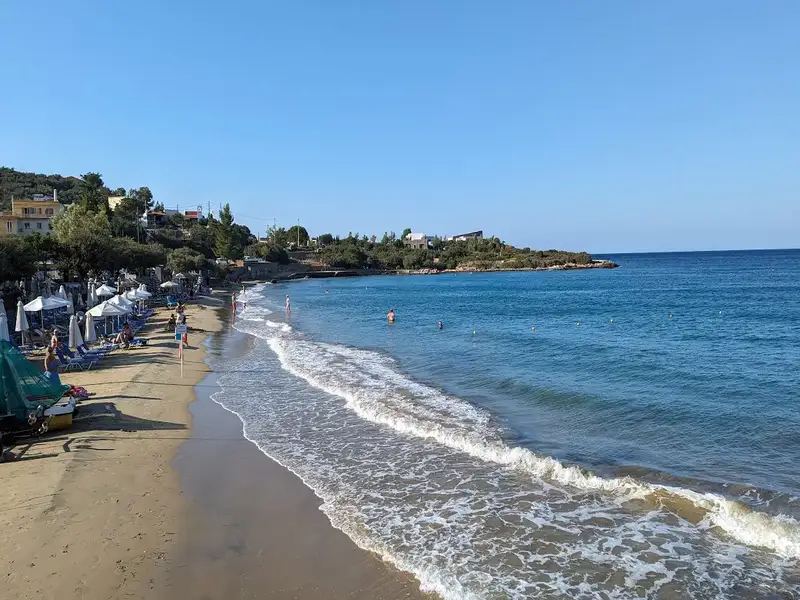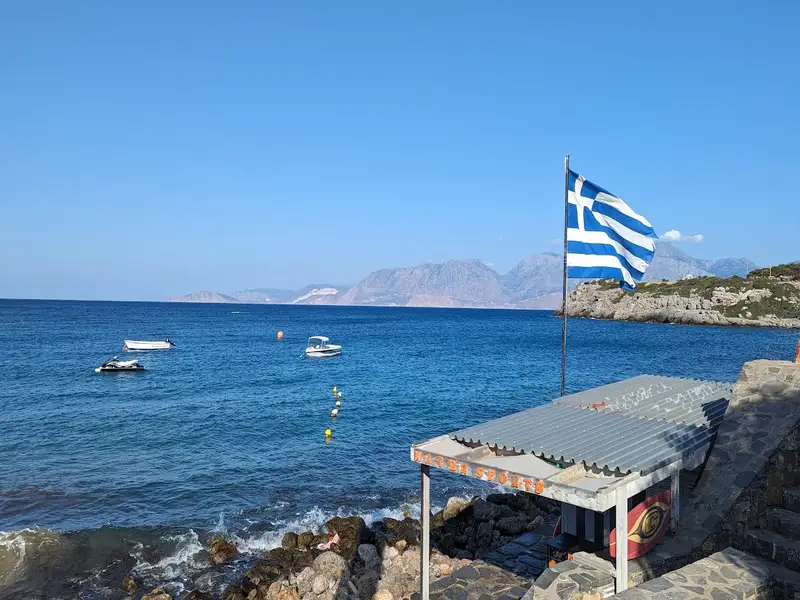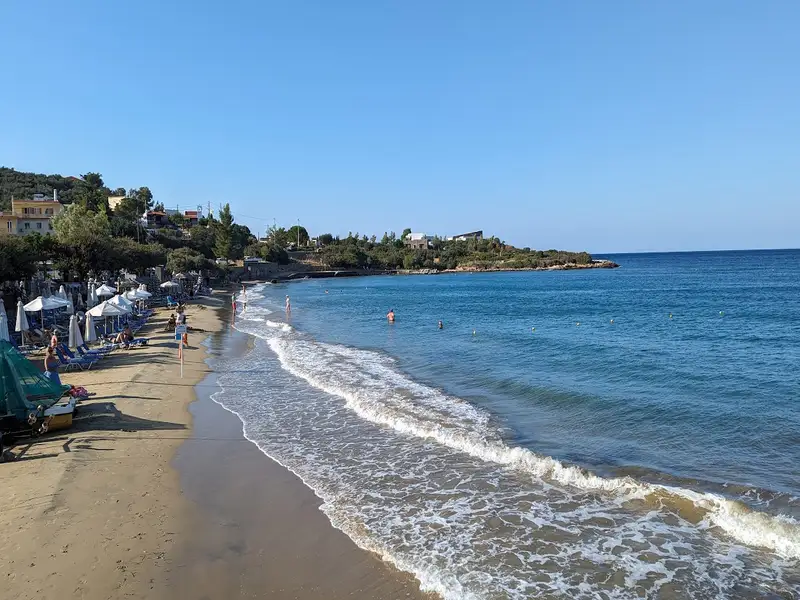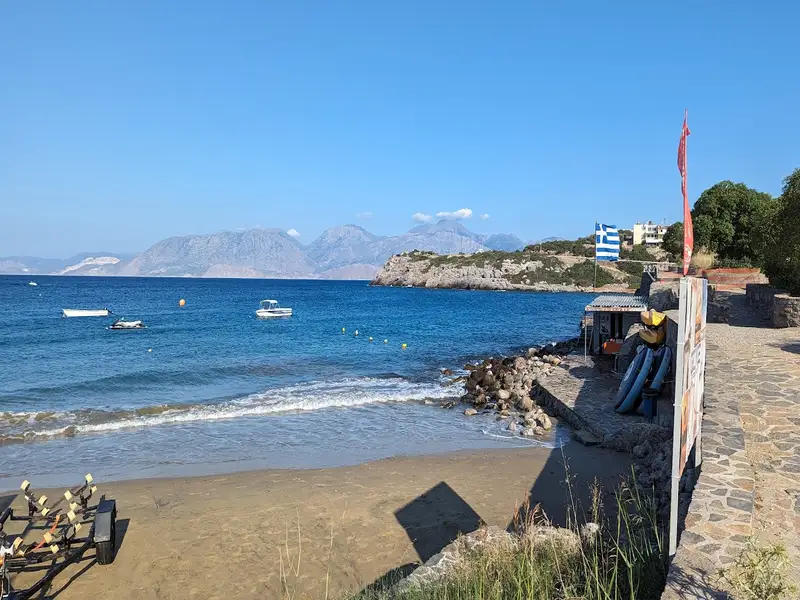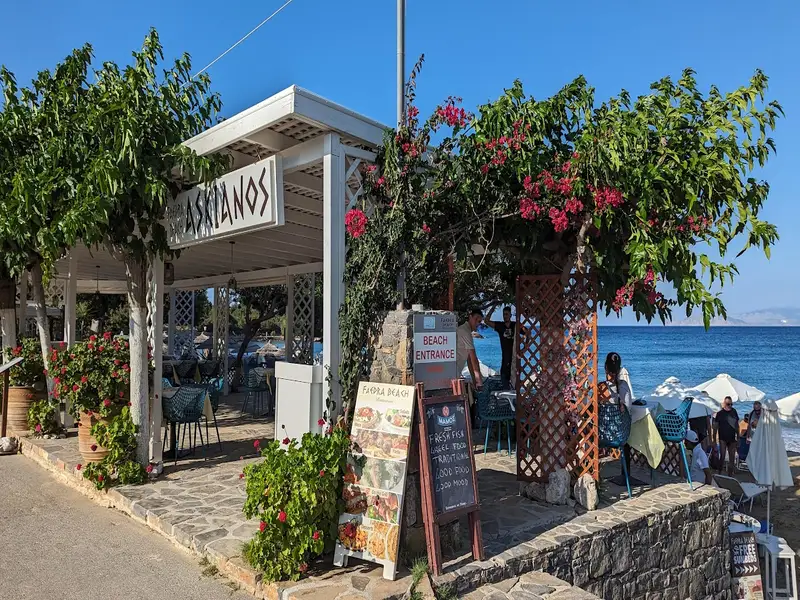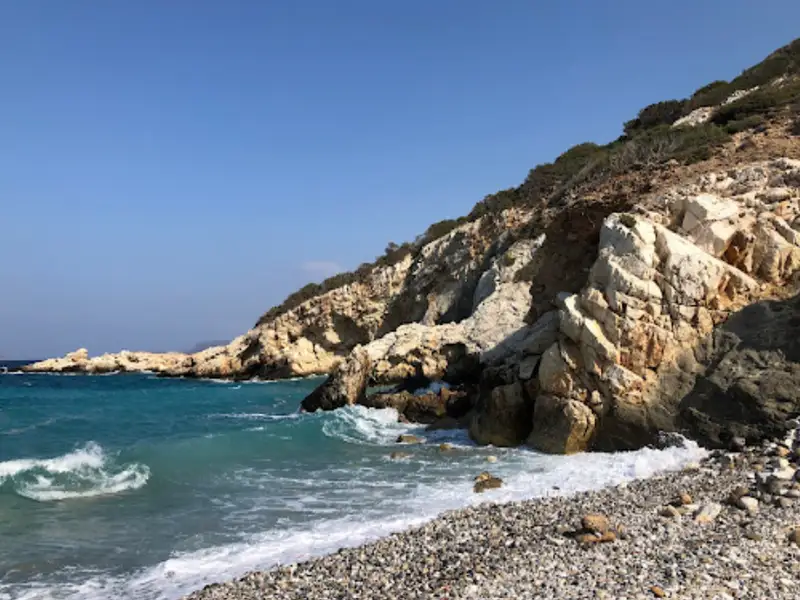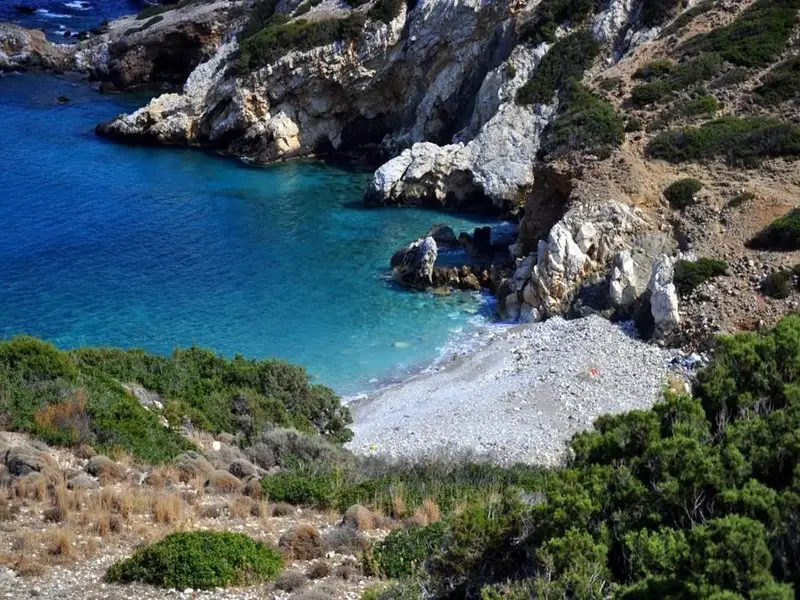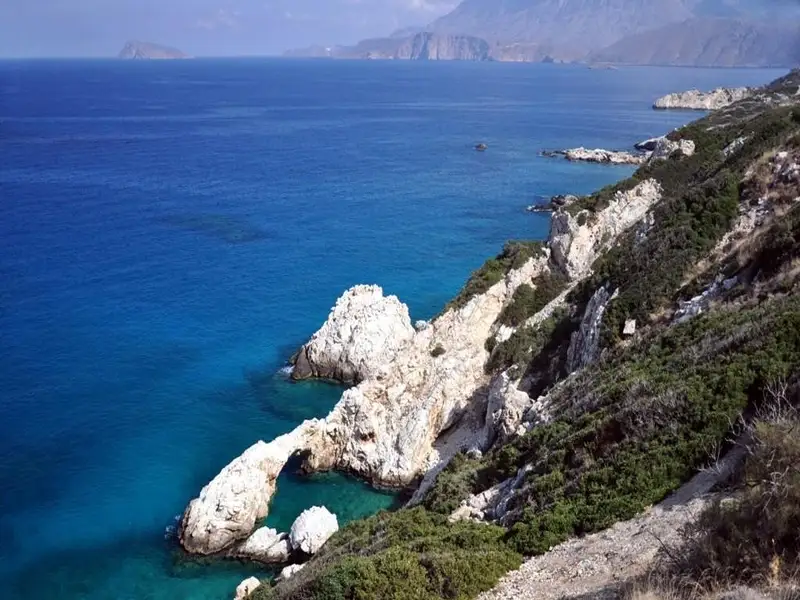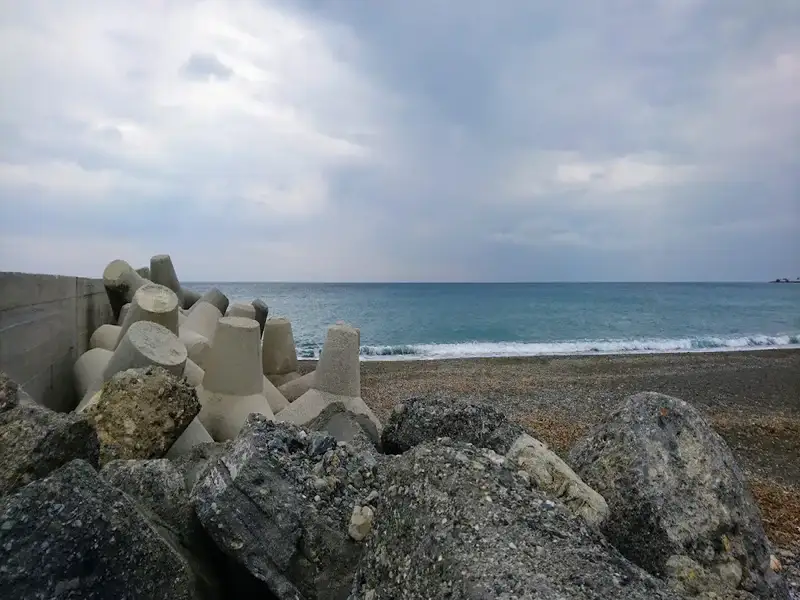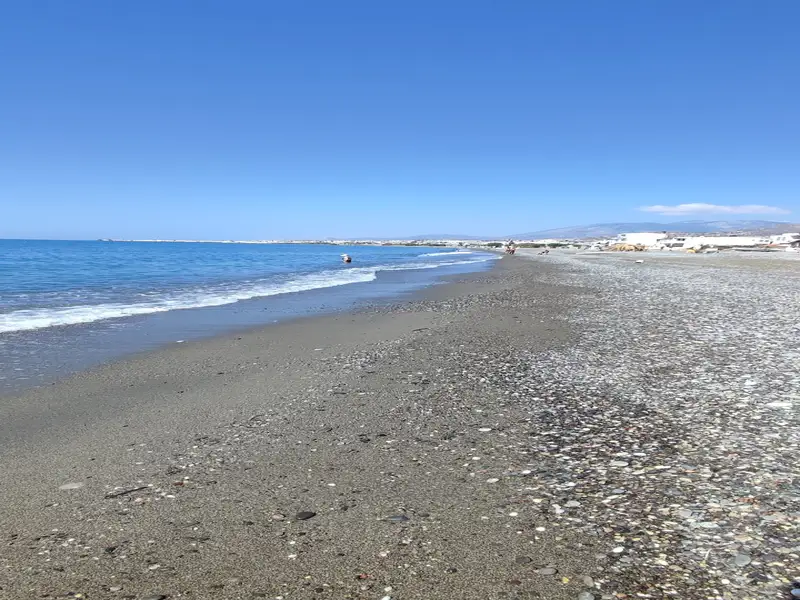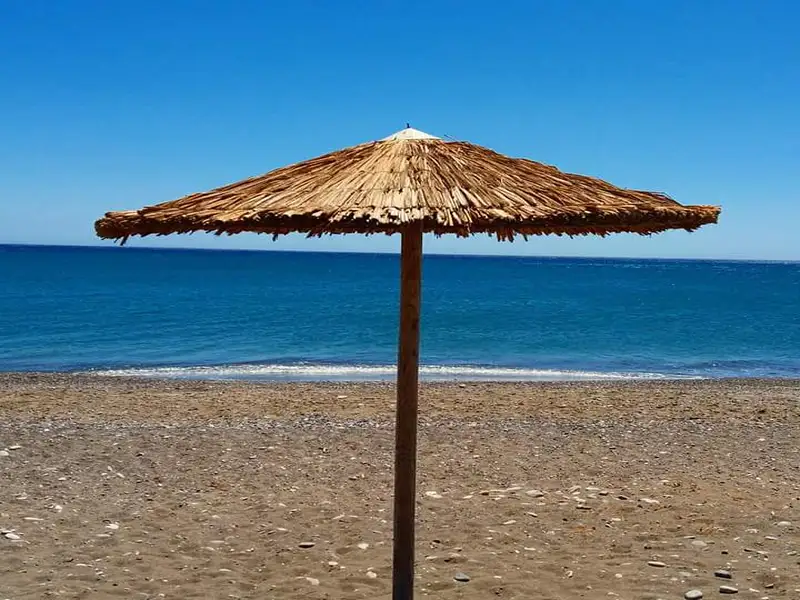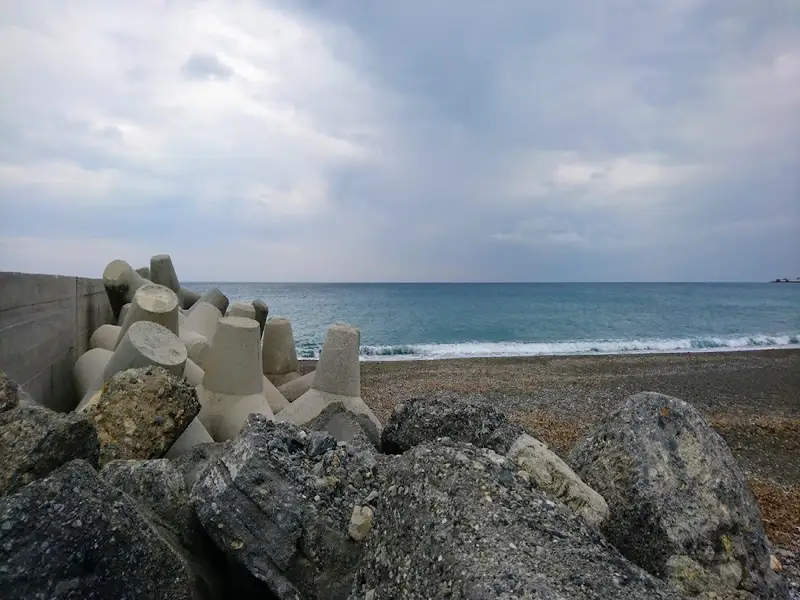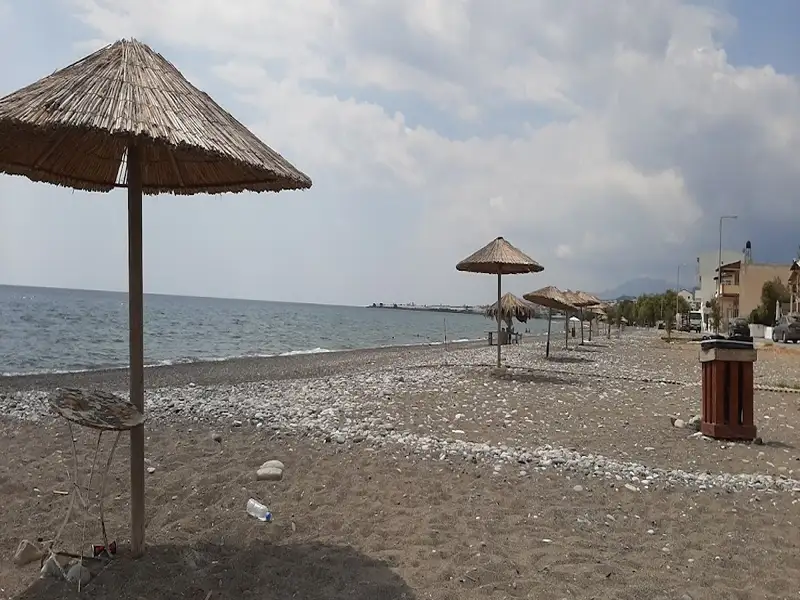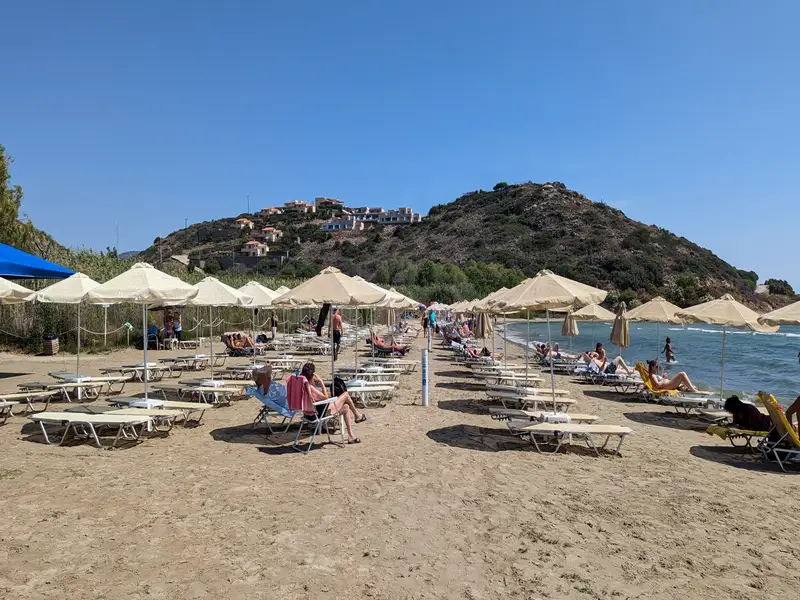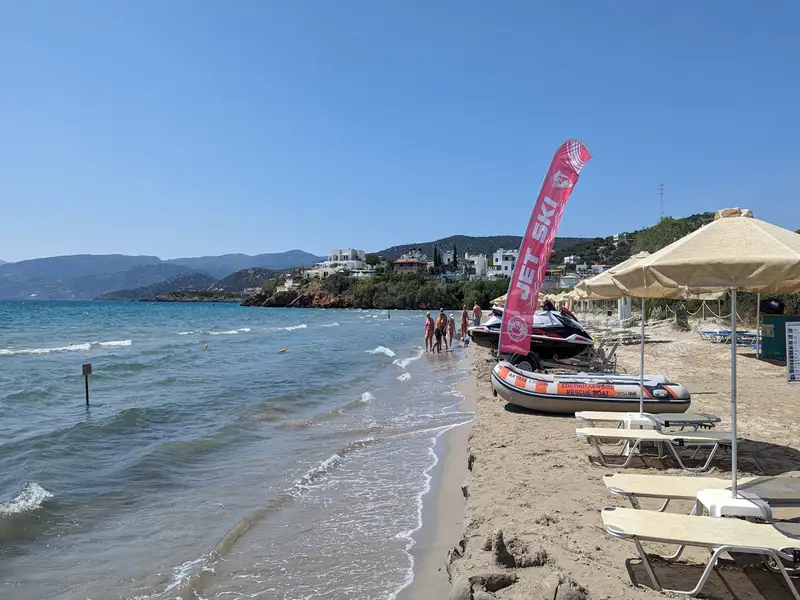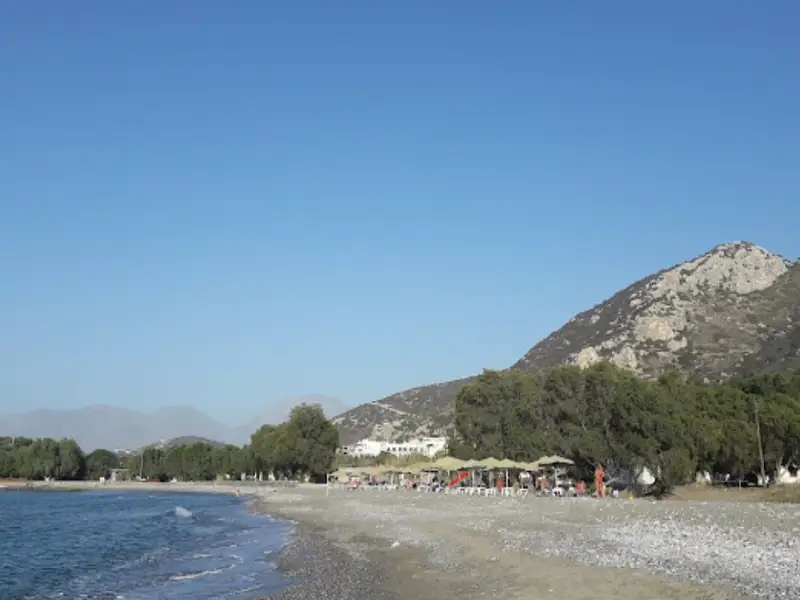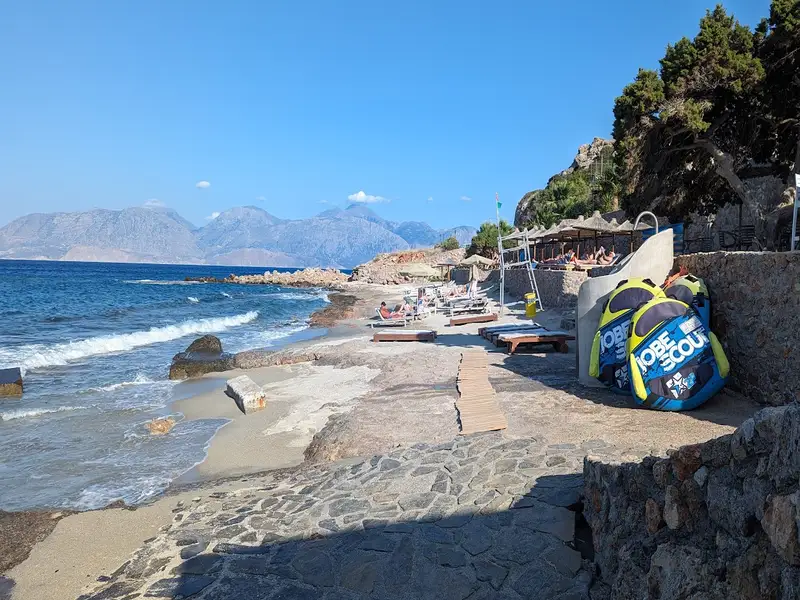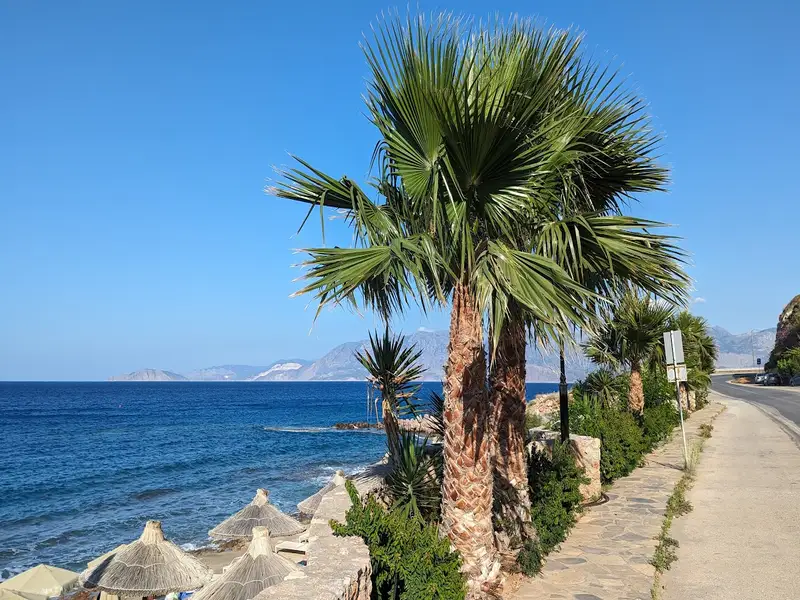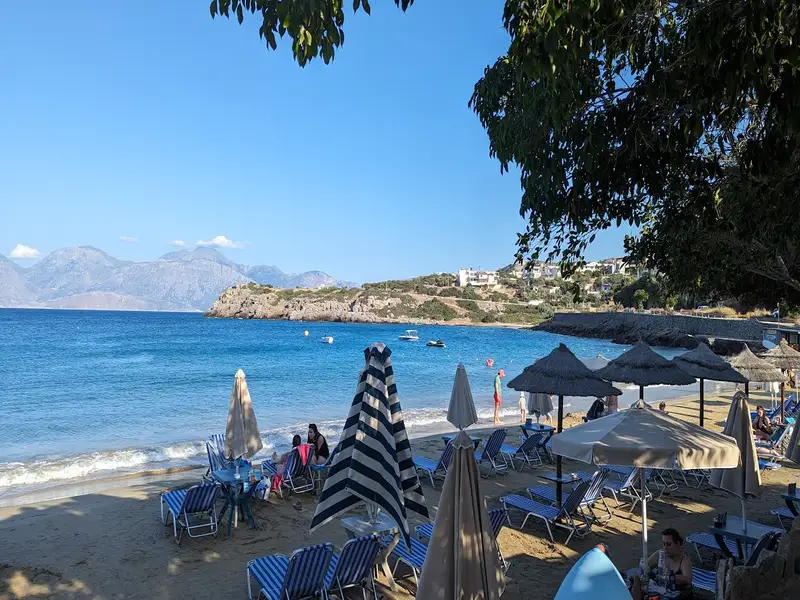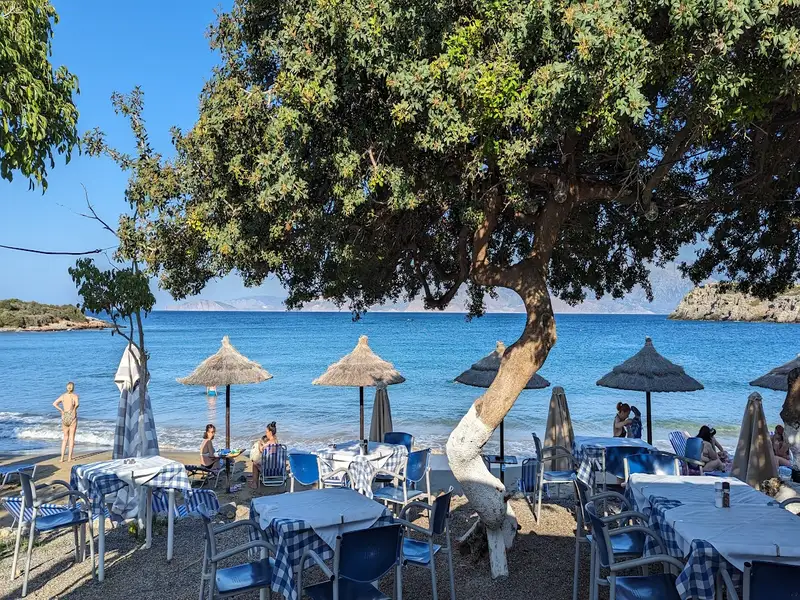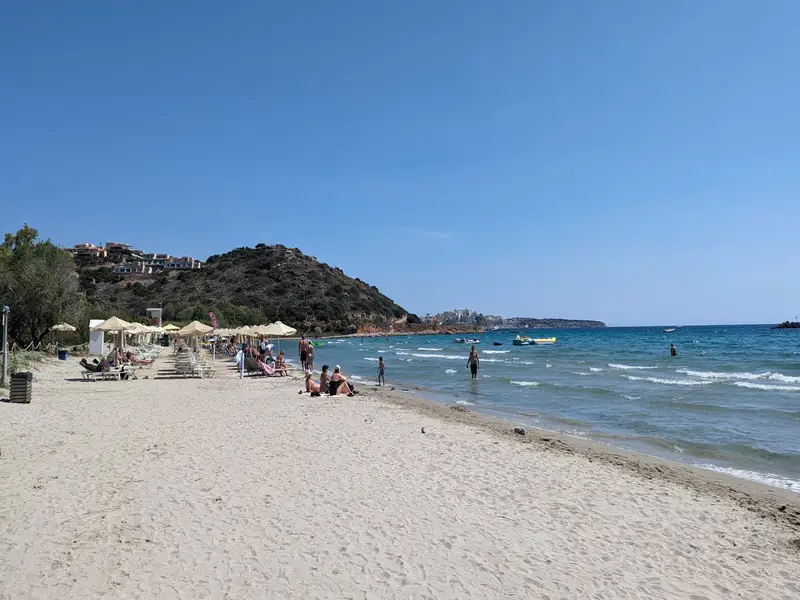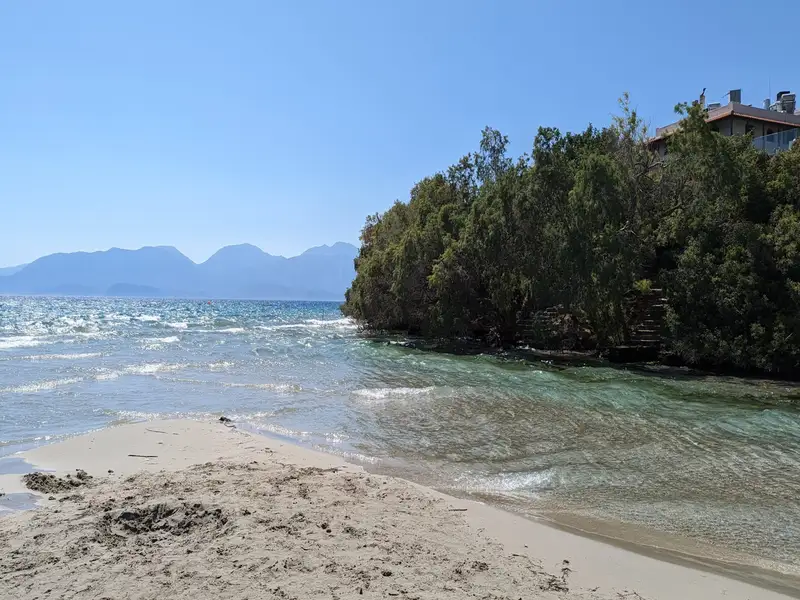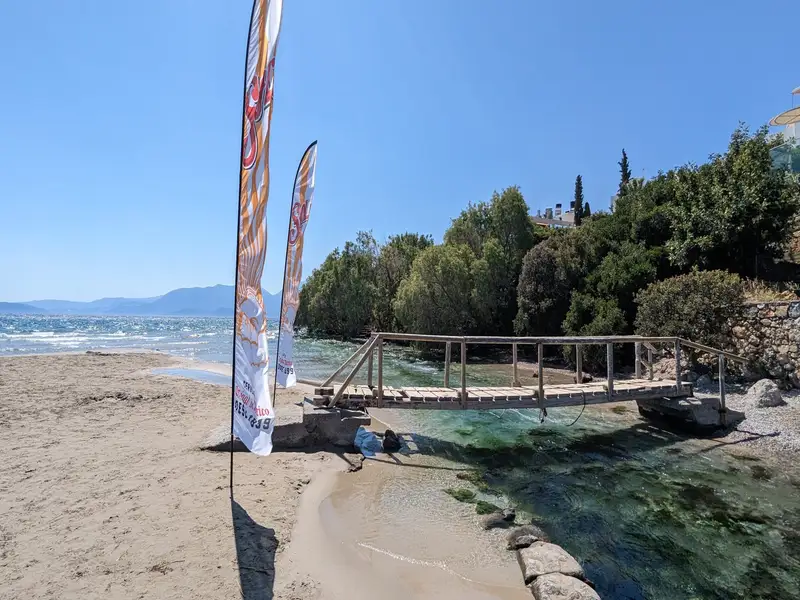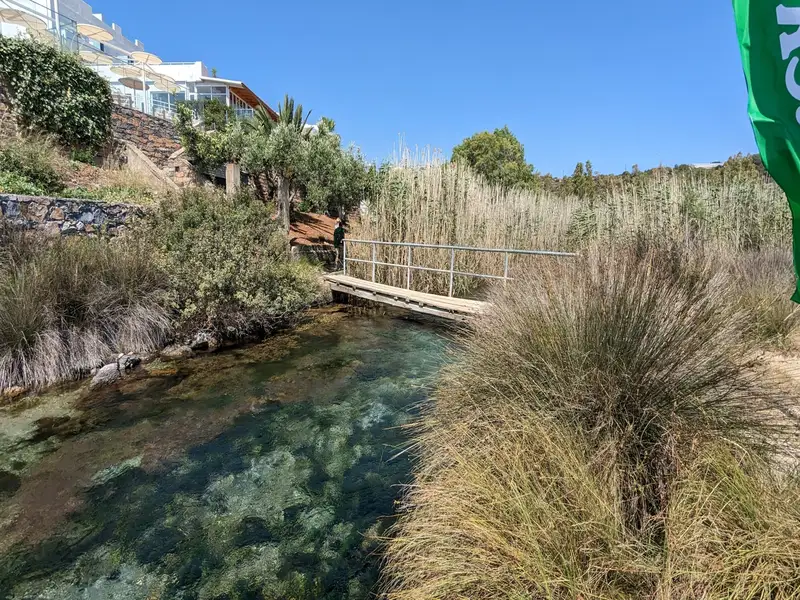
Agios Panteleimon beach, nestled in Istro, a village 12km east of Agios Nikolaos en route to Sitia, owes its name to a petite church located nearby. Featuring both sandy and pebbly stretches, the beach is set against the backdrop of vibrant turquoise waters. As it doesn’t draw the same crowds as the neighboring Voulisma beach, Agios Panteleimon is the perfect spot for those seeking relaxation and serenity.
In the vicinity, you’ll also find Karavostasi beach. This sandy, unspoiled beach is tucked away in the western part of Istro’s largest gulf and provides the perfect setting for peaceful moments. The surrounding area is rich in tamarisk, carob, and olive trees, adding to the beach’s charm. Just east of Karavostasi, there’s a large rock bearing the remnants of the Minoan settlement Priniatikos Pirgos.
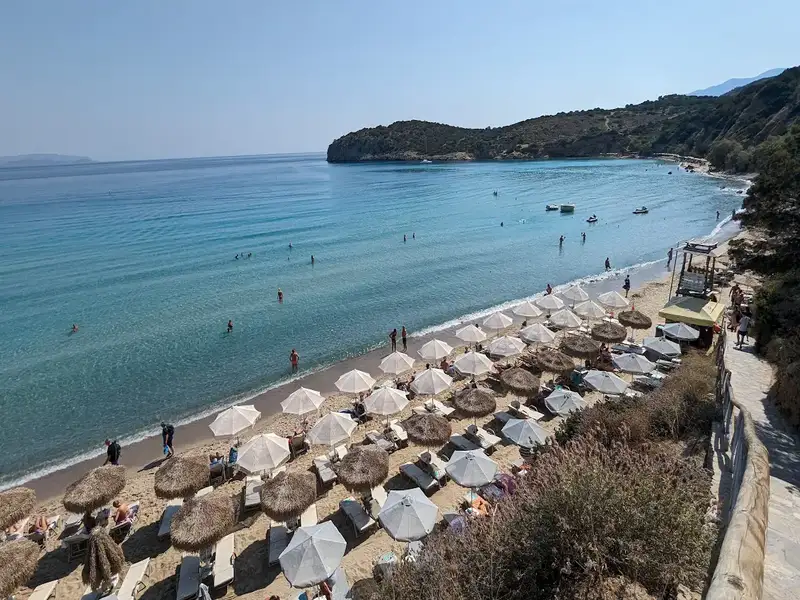
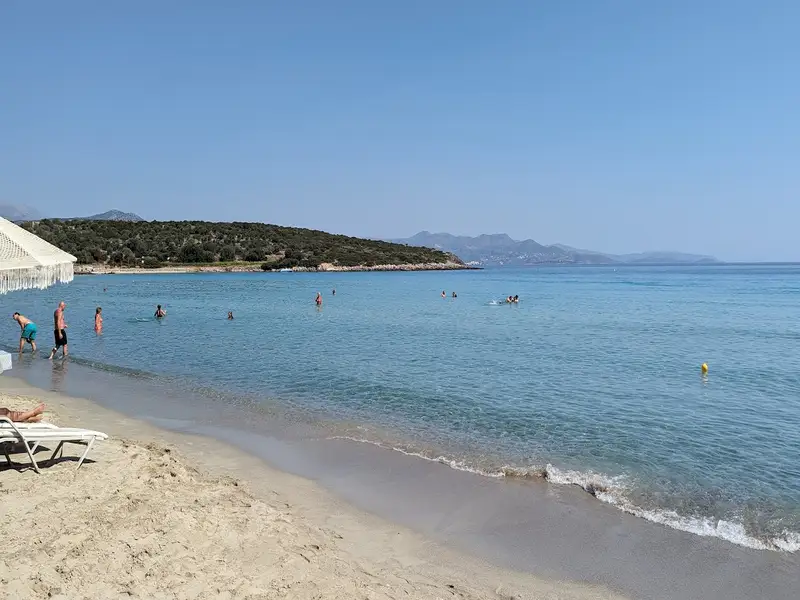
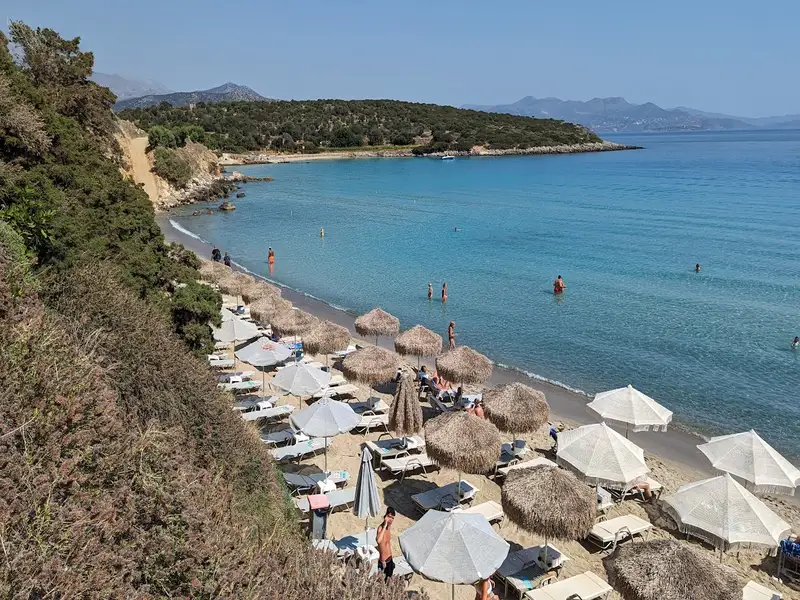
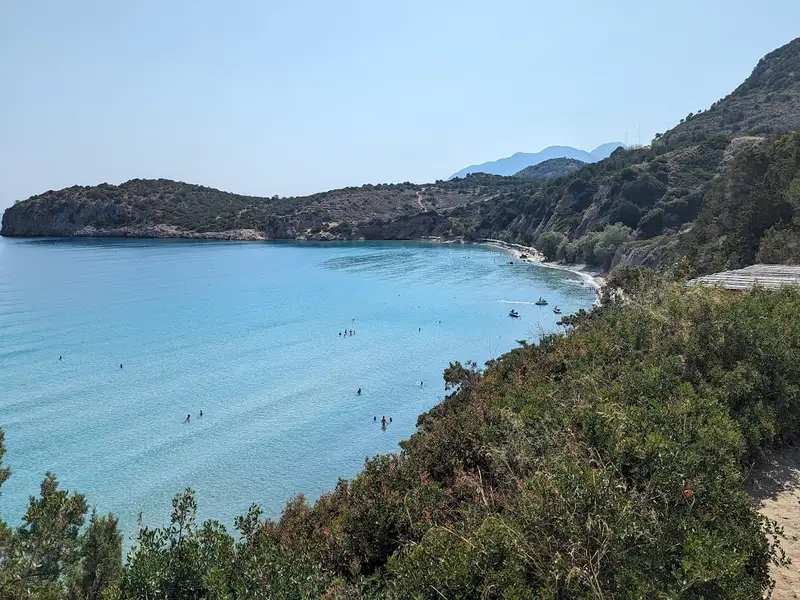
Voulisma Beach is a Blue Flag beach on the north coast of East Crete, known locally as Golden Beach for its fine golden-white sand. Voulisma Beach sits in a sheltered cove at the southern end of Mirabello Bay, 12 kilometres (8 miles) east of Agios Nikolaos and 22 kilometres north of Ierapetra, next to the village of Istron. It is the main bay of the three that indent the Istron coastline, and it appears on many postcards of Crete.
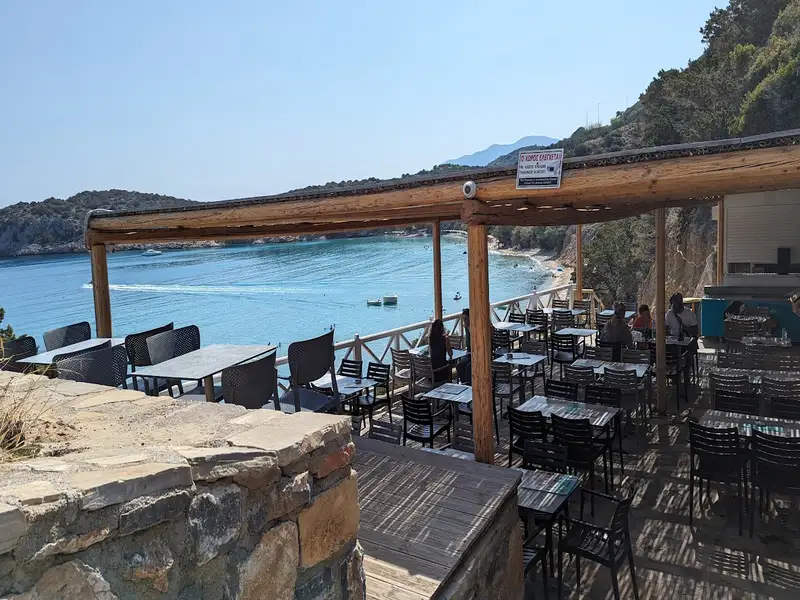
The beach is fine golden-white sand that shelves gently into shallow, calm, turquoise water, which makes swimming easy for children and weaker swimmers. Voulisma Beach is fully organised in summer with sunbeds, umbrellas, a beach bar, a lifeguard, showers, and water sports, and there is food, water, and accommodation within walking distance. The cove earns its water-quality standing every year, one of the island’s Blue Flag beaches in Crete.
To reach Voulisma Beach by car, drive the coastal road that links Agios Nikolaos with Sitia, because that road runs past the beach car parks on the edge of Istron village. Roadside parking sits directly above the sand. Rent a car in advance if you want to combine the beach with the quieter coves and Minoan sites nearby, which you can arrange through car rental in Crete.
To reach Voulisma Beach by bus, take a service from Agios Nikolaos bus station towards Istron and Sitia, then walk down to the shore from the main road. Buses run through the day from Agios Nikolaos in the summer season.
The best time to visit Voulisma Beach is from June to September, when the sea is warm and the beach is fully staffed with sunbeds and umbrellas. July and August are the busiest months, and the narrow strip of sand fills quickly around midday. Arrive before 11:00 or after 17:00 in high summer to find space and a free sunbed.
Check the wind forecast before you travel, because Voulisma faces the open bay and north-westerly winds change the beach. Strong winds push waves onto the narrow sand and can wash plastic litter ashore, so a calm, low-wind day gives the clearest water and the widest beach. In April, May, and October the beach is quiet and unstaffed, and the sea is cooler for swimming.
Two small coves sit just west of the main beach, and both are more sheltered from the wind and far less crowded than Voulisma. Istron Beach, the narrower and rockier stretch to the east, holds fewer sunbeds and suits visitors who want more room. For a pebbly alternative with olive groves and greater privacy, walk to the neighbouring Agios Panteleimon beach, about 700 metres away.
Voulisma Beach also works as a base for East Crete’s Minoan history. Gournia, one of the best-excavated Minoan towns, lies 10 kilometres (6 miles) east near Pachia Ammos, and you can walk its streets and staircases at the archaeological site of Gournia. Panagia Faneromeni Monastery stands 11 kilometres (7 miles) south-east on a steep slope, with a church built into a cave and wide sea views, and it draws pilgrims every year on 15 August. The fishing village of Mochlos and the port town of Sitia lie further east for a longer day out.
Three tavernas within reach of Voulisma Beach serve traditional Cretan food:
Yes, Voulisma Beach is worth visiting for its fine golden sand, shallow turquoise water, and Blue Flag facilities. It is one of the most photographed beaches in East Crete and holds full summer services, so it suits both families and day-trippers.
Access to Voulisma Beach is free, because beaches in Greece are public. You pay only for extras such as a sunbed and umbrella set or food and drinks at the beach bar.
Park in the car parks beside the beach along the Agios Nikolaos to Sitia road, at the edge of Istron village. Spaces fill early on summer weekends, so arrive in the morning for the easiest parking.
Voulisma Beach is widely rated among the prettiest beaches near Agios Nikolaos, alongside the quieter Istron and Agios Panteleimon coves in the same bay. Its golden sand and clear turquoise water are the reason it is nicknamed Golden Beach.
Yes, Voulisma Beach suits families with children, because the water is shallow and usually calm, and a lifeguard is on duty during the day in summer.
Yes, Voulisma Beach offers water sports in summer, including jet skiing, parasailing, and banana-boat rides.
Yes, you can rent sunbeds and umbrellas at Voulisma Beach for a fee, and the beach bar above the sand runs the sets.
Yes, Voulisma Beach has step-free access, with wheelchair ramps and accessible toilets available.
Voulisma Beach has sunbeds and umbrellas, a beach bar, a lifeguard, showers, water sports, and a Blue Flag, with food, water, and accommodation nearby. Bus services and a paved road reach the beach, and there is tree shade behind the sand.
Situated just 10km south of Agios Nikolaos before reaching Istron’s beaches, you’ll discover the lesser-known beach of Vathi. This hidden gem wasn’t on the map before 2010, as it’s a man-made creation and is not visible from the main road connecting Agios Nikolaos with Eastern Crete.
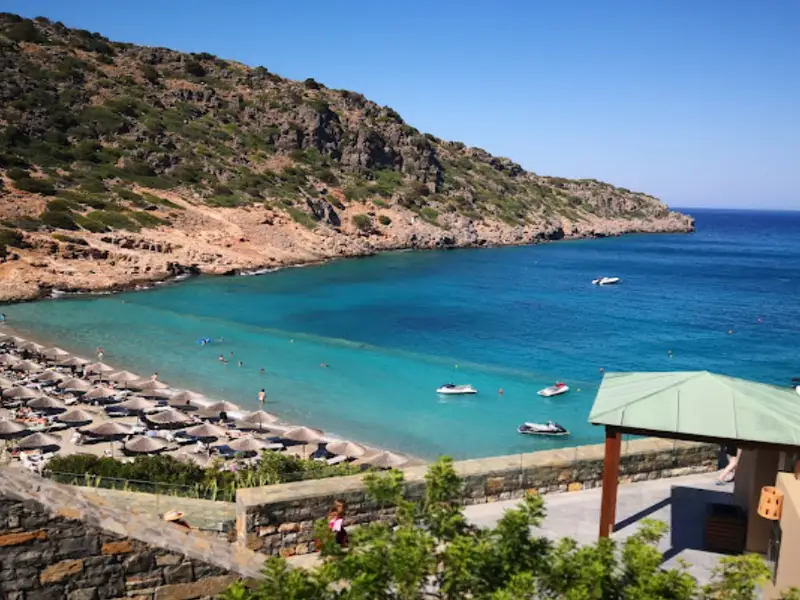
Nestled within a well-protected cove, Vathi remains largely unaffected by wind, except for the infrequent easterly gusts. The beach is characterized by its pristine white sand that enhances the mesmerizing hue of the sea. Managed by the nearby luxury resort, Daios Cove, the beach is well-equipped with amenities.
For non-hotel guests, accessing Vathi involves a descent down a concrete pathway and staircase. To find the entrance, take a left just before the hotel gates and follow the road until it leads to a narrow path heading towards the stairs. Vathi is an excellent choice for families thanks to its calm, waveless waters. For those keen on exploring, snorkelling along the rocky edges of the bay offers another dimension of this unique beach.
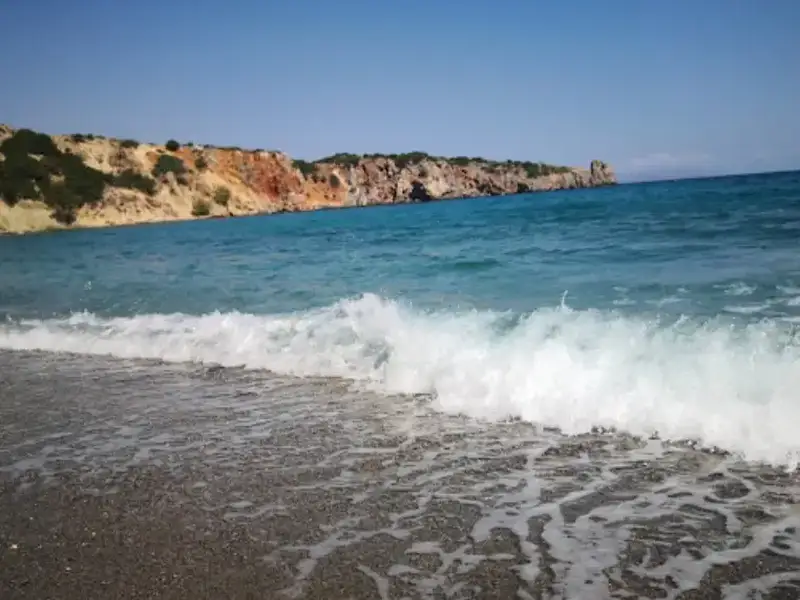


Just 1km east of Istron village lies a hidden gem nestled in a precipitous bay – Pilos beach. Though widely recognized as Istron Bay, in honour of the eponymous hotel perched on the bay’s rugged slopes, the beach is accessible to all through a pathway originating from the west of the hotel. No beaches in Greece are private. Pilos beach is characterized by its sandy stretch and serene blue waters, and offers facilities like umbrellas and a canteen (managed by the hotel) as well as a petite pier for boats.
To the east of Istron Bay, a tiny cove reveals three secluded beaches, reachable via a short walking path. These are known as the Vryonisi beaches, named after the small islet of Vryonisi (or Prasonisi) that appears just opposite the small bay.
The picturesque Listi Spilios, situated 7km south of Agios Nikolaos along the old road to Sitia and Ierapetra, has become a bustling tourist spot over the years with a variety of accommodations, ranging from large hotels to smaller lodges. The beach is characterized by its rocky terrain and sandy patches, with a charming smaller beach nestled to the north of the main area. Unfortunately, recent extensive alterations by a major hotel in the vicinity have significantly changed the original rocky nature of the coastline, including the construction of a pier to retain sand. Visitors can enjoy amenities like umbrellas, a snack bar, water sports and a beach volleyball court. The quieter western side of the beach, boasting lush vegetation due to nearby freshwater springs, provides a serene escape.
The beach’s intriguing name, Listi Spilios, translates to ‘Robber’s Cave’ in Greek. This stems from a tale from the Middle Ages when the primary road used by locals to commute to island cities ran through this area. On the beach’s west end, there’s a petite peninsula home to several small caves, which, as the legend tells, were used as hideouts by robbers who targeted travellers on the road.
Situated 6km southeast of Agios Nikolaos, along the old route that links Agios Nikolaos to Sitia and Ierapetra, is Ammoudara Beach. This developed area boasts a variety of hotels, rental properties, taverns, and restaurants. There’s a beautiful sandy beach fronting the tourist settlement, with crystal-clear, light-blue waters. Thanks to its eastward orientation, the beach typically enjoys calm seas as the prevalent winds in Crete blow from the west. Beachgoers can enjoy amenities such as umbrellas, sunbeds, and water sports facilities.
Ammoudara provides an ideal setting for family vacations, but the beach’s small size can lead to it feeling somewhat crowded. For those seeking a less populated spot, heading west to the expansive Almiros beach might be a good alternative.
Gournia, situated 17km east of Agios Nikolaos and just 2km west of Pachia Ammos, is renowned for its ancient Minoan town, built atop a small hill. Named after the stone and wooden troughs (‘urna’ in Venetian) found in the vicinity, the original Minoan name of the town remains a mystery.
Nearby, a brief 1km journey north of the archaeological site of Gournia, lies the secluded Frouzis beach. Accessible by car, it sits nestled within a rocky bay, featuring pebbly shores and zero commercial facilities. While the broader area boasts beautiful sea caves and natural rock pools, the beach tends to accumulate litter carried by sea currents. This is also the case for the neighbouring beach, which houses an abandoned camping site.
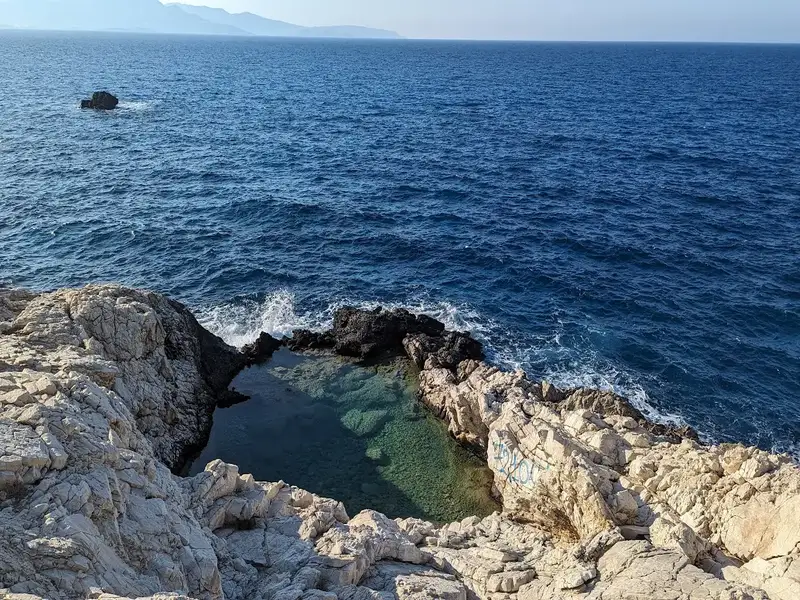
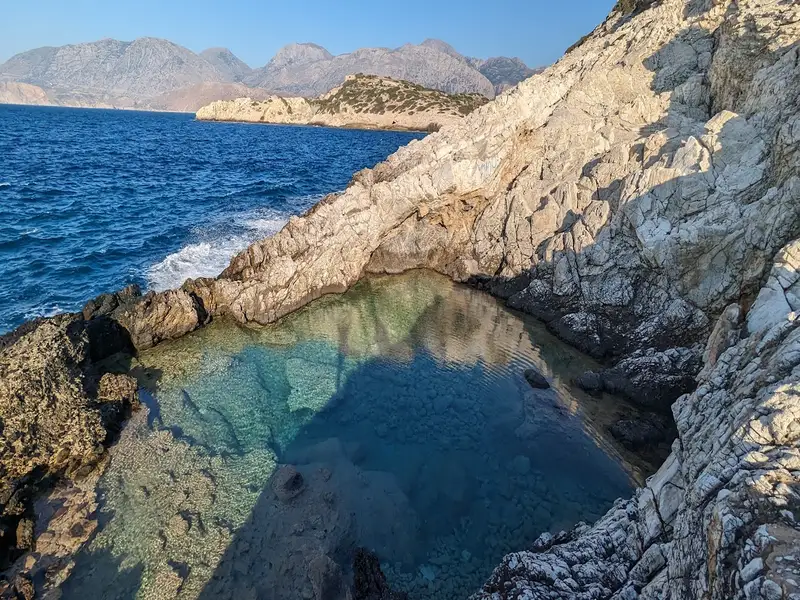
One of Crete’s most breathtaking natural pools is found near Gournia. This serene rock-bound pond offers an inviting swim, especially when the nearby sea is choppy. The vast cave next to it also provides a fascinating sight.
A trip to Gournia would not be complete without exploring the archaeological site to understand the layout of a small Minoan city. Having thrived in 1500BC, the city has been thoroughly excavated, revealing well-preserved walls, staircases, and streets. The city, centered around a hill housing a small palace, a market, and a temple, appears to have been destroyed by an earthquake around 1450BC, and it was completely abandoned by 1200BC. The Gournia cemetery was discovered in the Sfougaras region, near Kamini.
Gra Ligia is a coastal village located a short 5km journey to the west of Ierapetra and a 39km trip south from Agios Nikolaos. Nestled at the mouth of a rich valley, the village is surrounded by greenhouses filled with early-ripening vegetables. The locals of Gra Ligia were pioneers in the use of greenhouse agriculture, a practice that has since spread throughout the Ierapetra region. The profusion of greenhouses has even earned the village the nickname of “Silicon Valley of Greece”. The Bramiana dam, situated 2km north of the village, plays a crucial role in the area’s agriculture, supplying water to all Ierapetra crops and forming one of Crete’s key wetlands.
Aside from farming, tourism also forms an essential part of the local economy. Gra Ligia, with its recent mild growth, is among the newest holiday destinations on Crete. This growth has been facilitated by the appealing long beach, fringed with coarse sand that extends from Ierapetra to the Stomio region. The beach is known for its tranquil waters and is well-equipped with amenities like umbrellas and showers, albeit not on a large scale. Tamarisk trees pepper the landscape, providing shade and greenery. The beach is a popular spot for locals who enjoy swimming and fishing from their boats docked in the local harbour.
The beach is also a venue for local events such as beach soccer tournaments. If you’re fortunate, you might even have a chance to partake in the unique “xentomatiasmata” or tomato war, a tradition revived and celebrated in early summer. Gra Ligia is an ideal destination for those seeking a peaceful and relaxing holiday. In the evenings, visitors can unwind with a drink at local bars or take a short trip to Ierapetra. To reach Gra Ligia from Ierapetra, simply travel westward on the city road. Alternatively, there are bus services that pass through the village.
Almyros beach (Almiros) is located 2.5km south of Agios Nikolaos and 12 km from Elounda. It is shaped near the exit of Almiros River, which empties on the south part of the beach. Next to the beach, the protected wetland of Almiros hosts several rare birds, towering eucalyptus trees, reed and some palm trees.
The beach is quite long – 300 m – and very well-organized. It is sandy and the water is shallow and usually calm, making it ideal especially for young children. There are a lot of trees behind the beach, and to the east, you can see the pretty Thrypti Mount. The entrance to the water is very smooth. This beach is suitable for different categories of people, lonely travellers, relaxation getaway lovers, families with children, seniors etc. It is partially crowded during the high season. The area has a few canteens, while there are also many options for water sports. The sea water is very cold in some places due to the river that flows all year round. On the south side of the beach, there are small hotels and apartments.
To reach the beach from Agios Nikolaos city centre, if you do not have a car, you should walk the pedestrian street (5 ‘) which runs along the rocky coasts north of the beach. The pathway starts from Gargadoros beach, which is located 5 minutes south of the town’s marina.
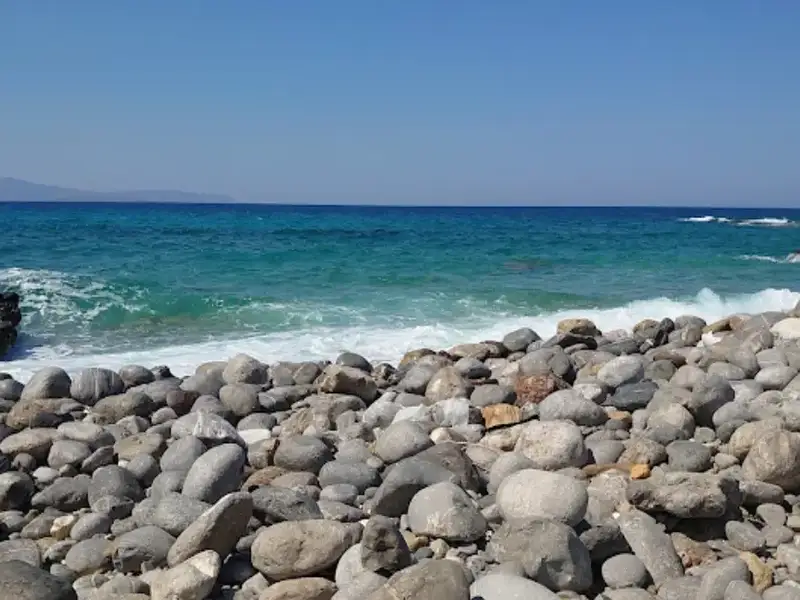
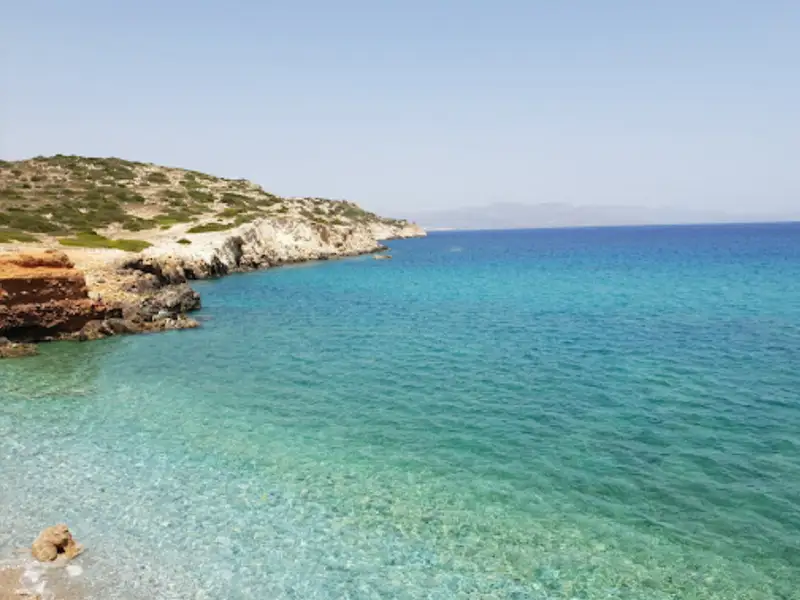

Kamini, situated near the renowned Minoan settlement of Gournia by Pahia Ammos, is an enchanting location composed of five sequential pebble beaches. Positioned north of the archaeological site, Kamini was most likely Gournia’s access point to the sea, explaining the presence of Minoan structures in the area, such as remnants of rooms, walls, and ship sheds or boathouses. The Gournia necropolis is also found in this area.
Kamini’s natural allure is as significant as its archaeological value. The coastline, adorned with limestone conglomerates and strikingly red soil, presents a stunning display of colors. The area boasts intriguing geological formations, sea caves, rock bridges, and five beaches speckled with fine or coarse pebbles. However, some of these beaches can be difficult to access.
Regrettably, the north winds often bring a disheartening amount of trash from across the Aegean Sea, littering the otherwise pristine landscape. This, coupled with the strong winds, tends to deter visitors. However, when the winds shift to the south, Kamini’s true splendor emerges, with turquoise and crystal-clear waters that truly are a sight to behold.
No results available
© All rights reserved. Crete Locals