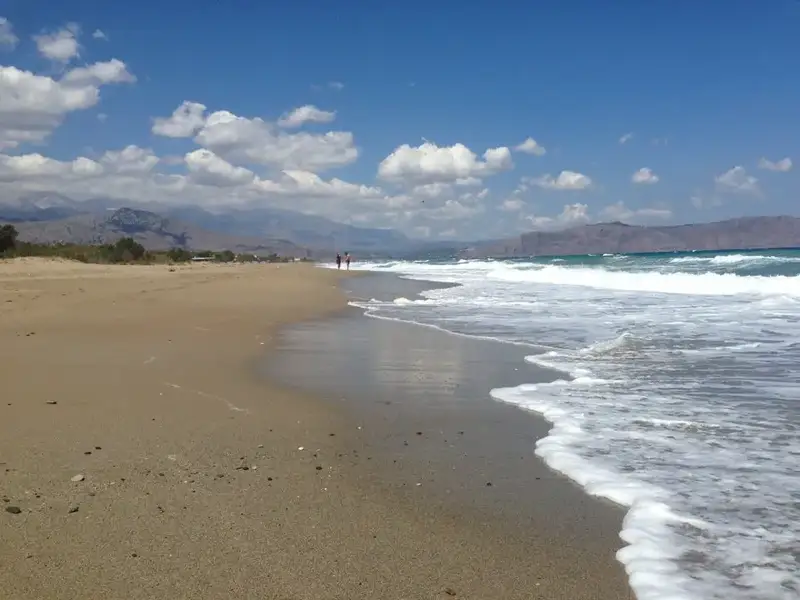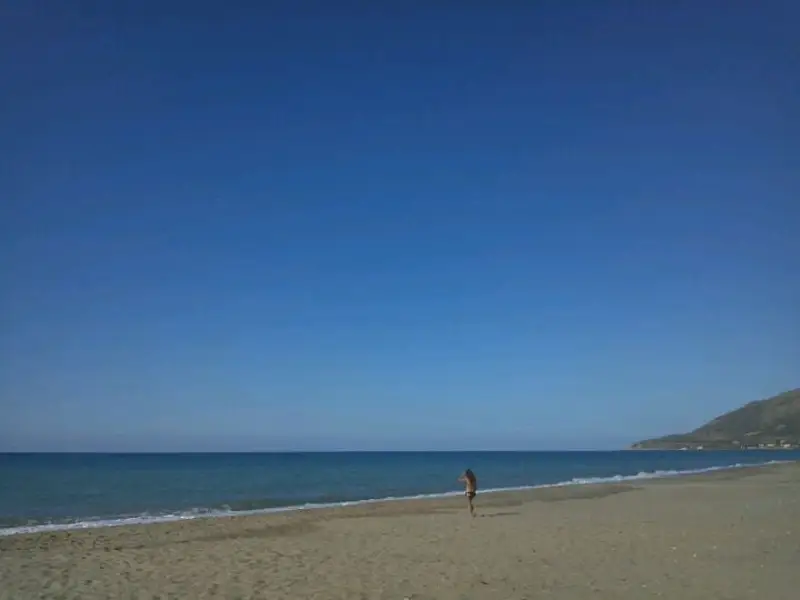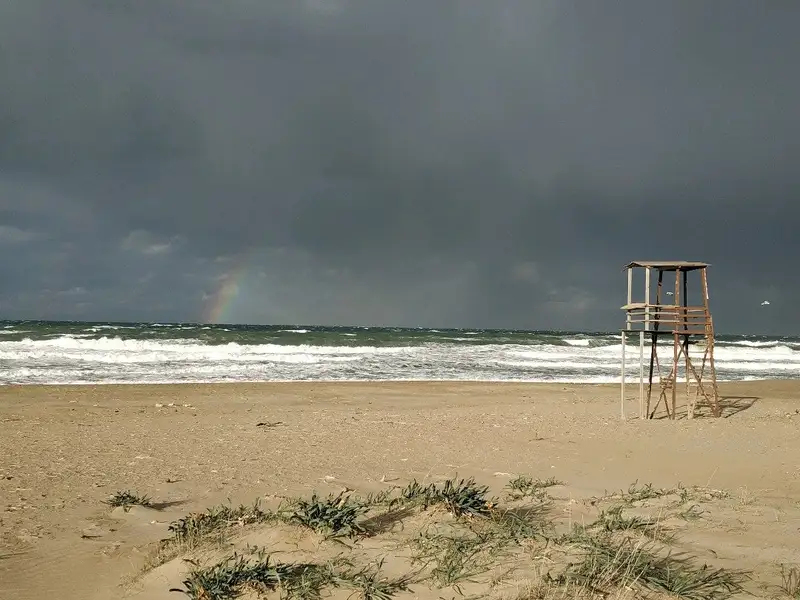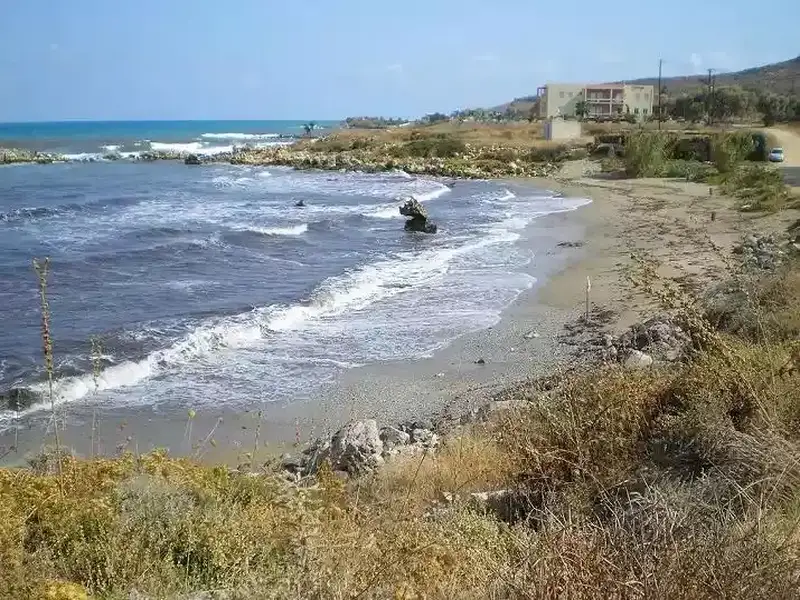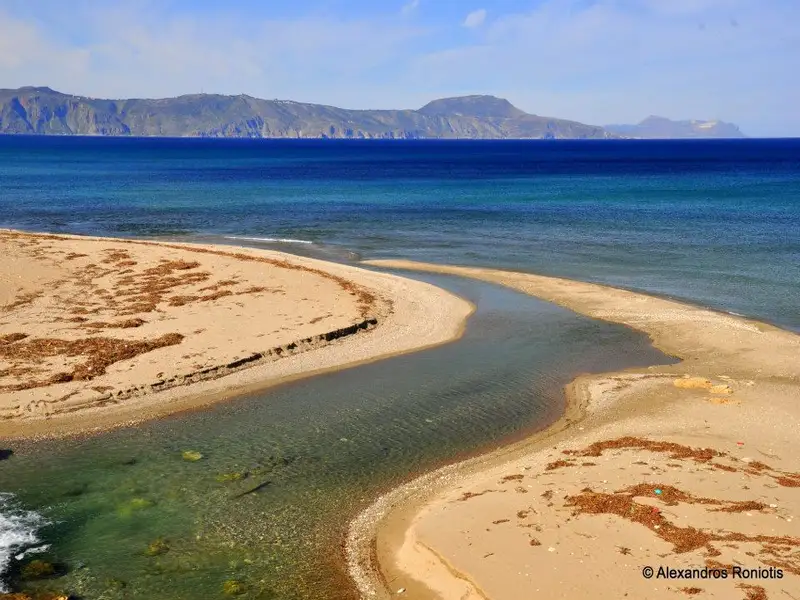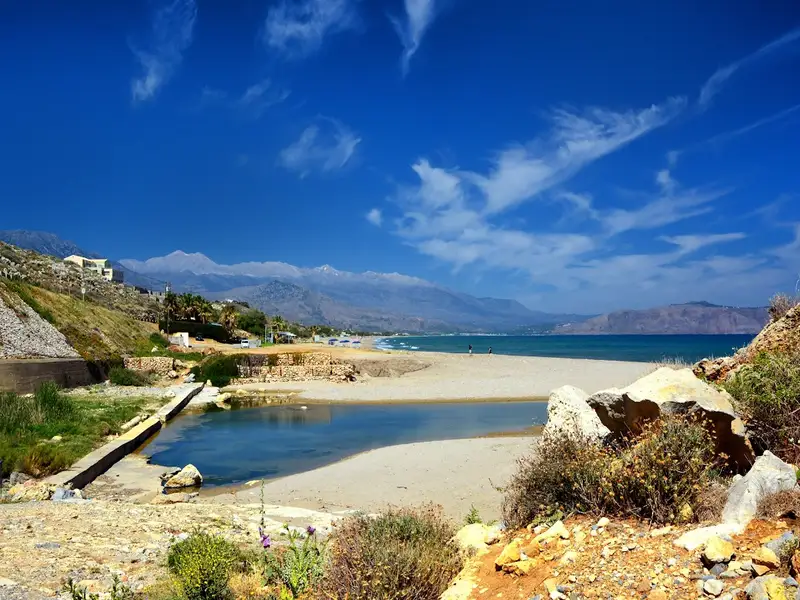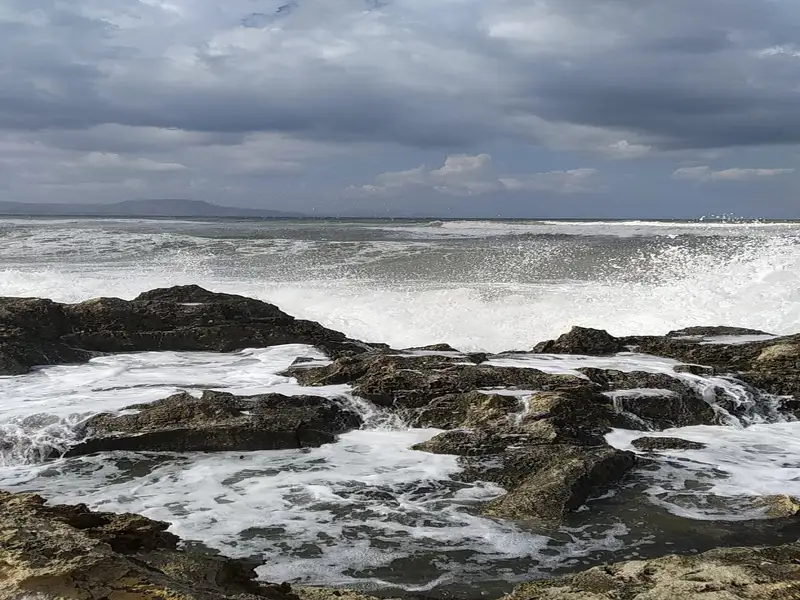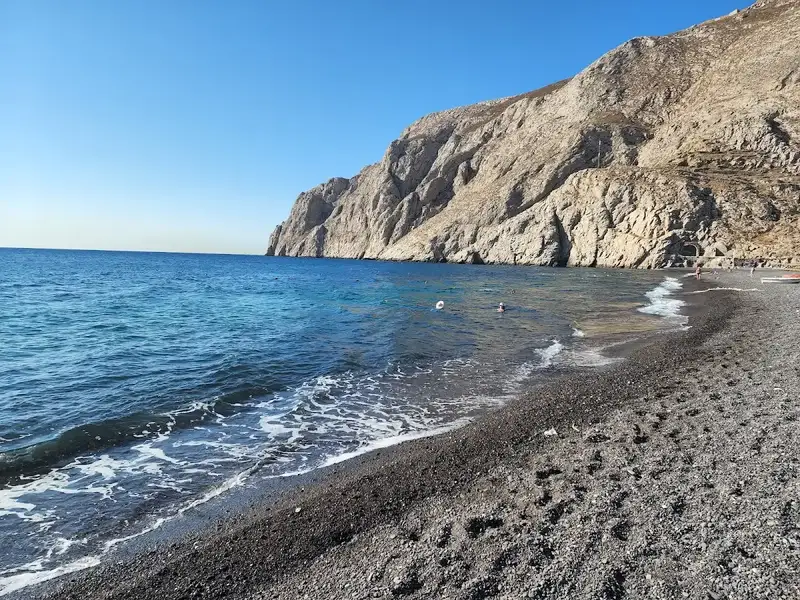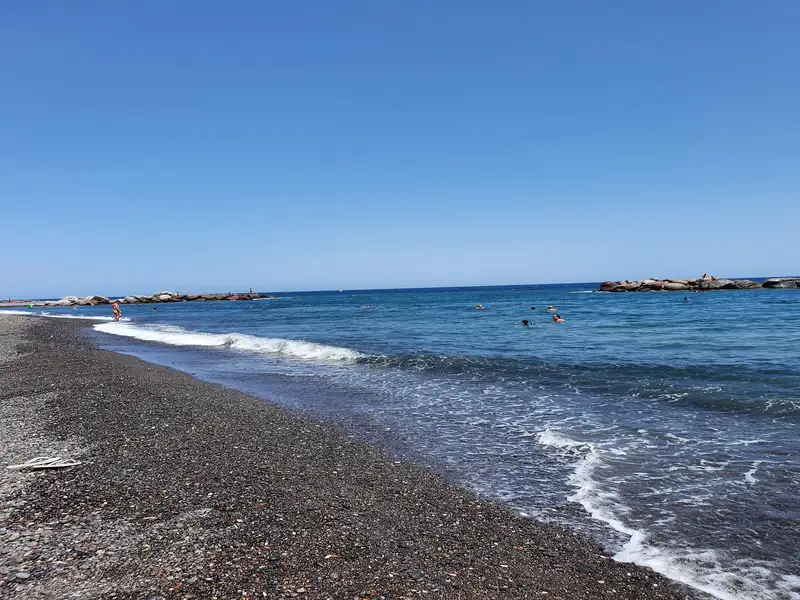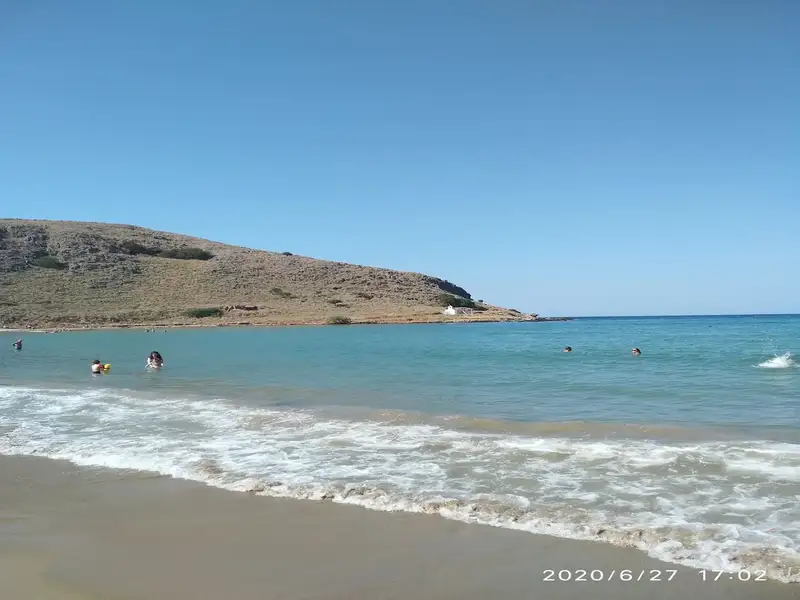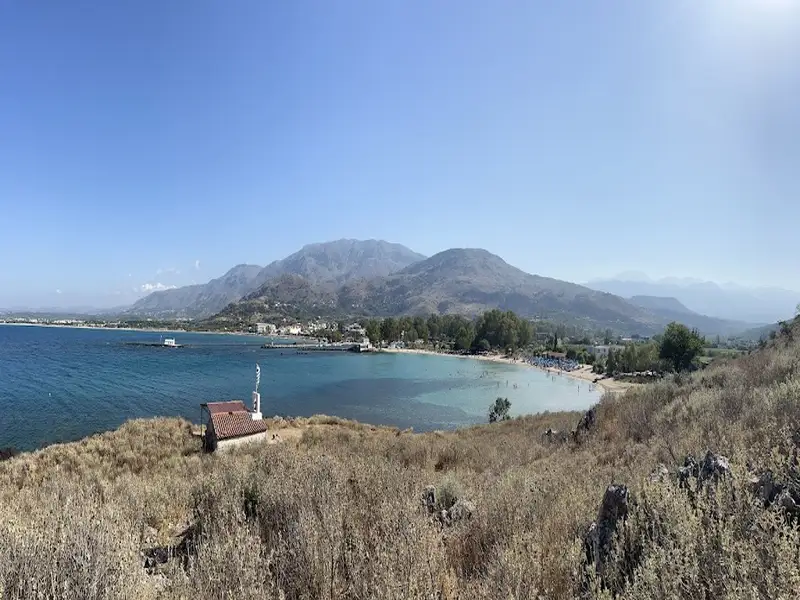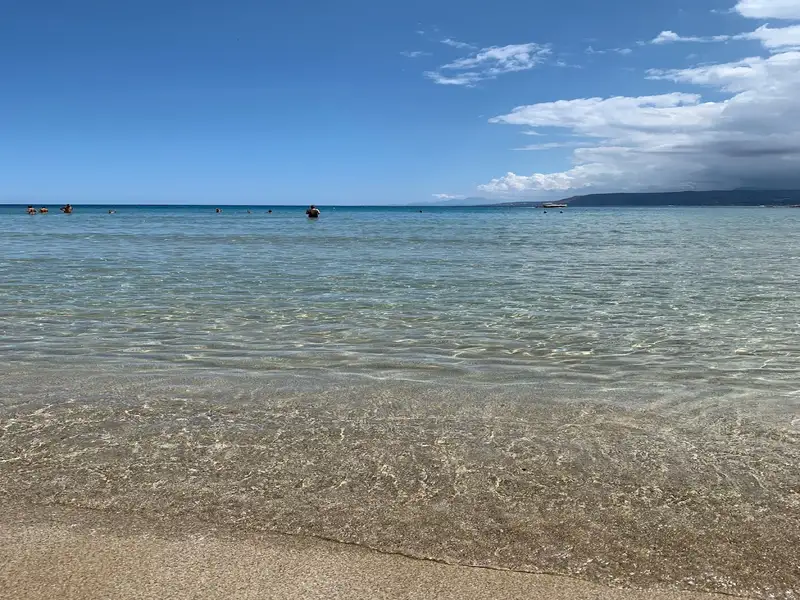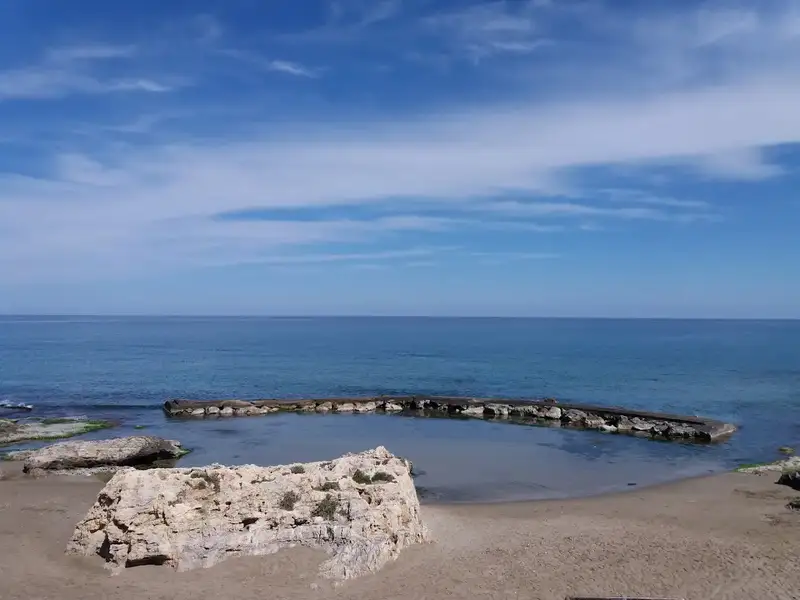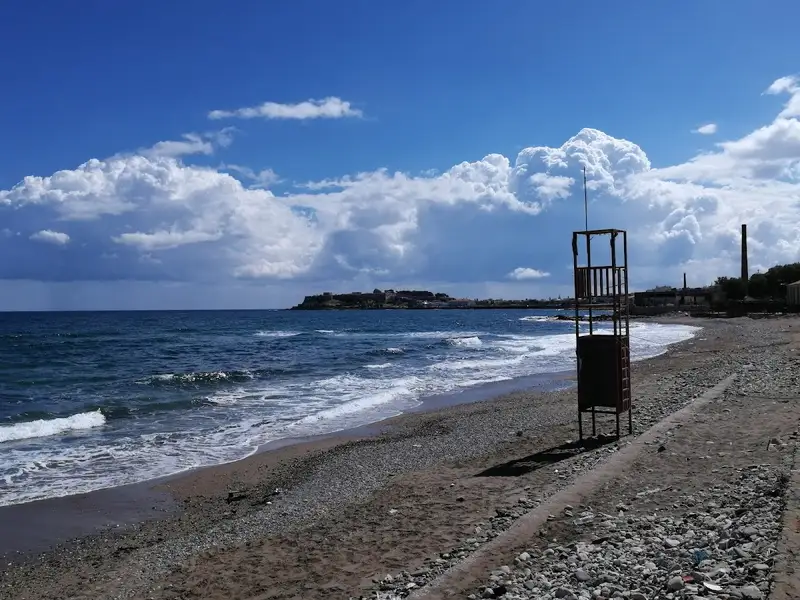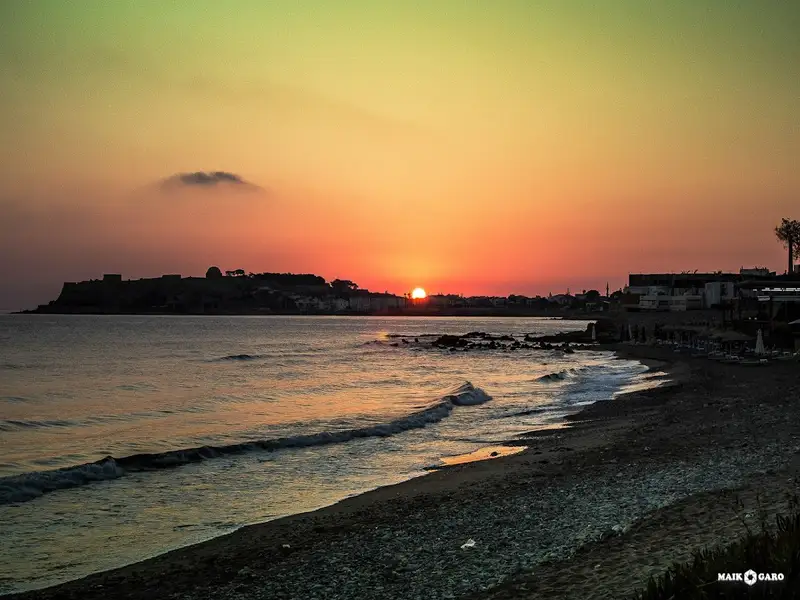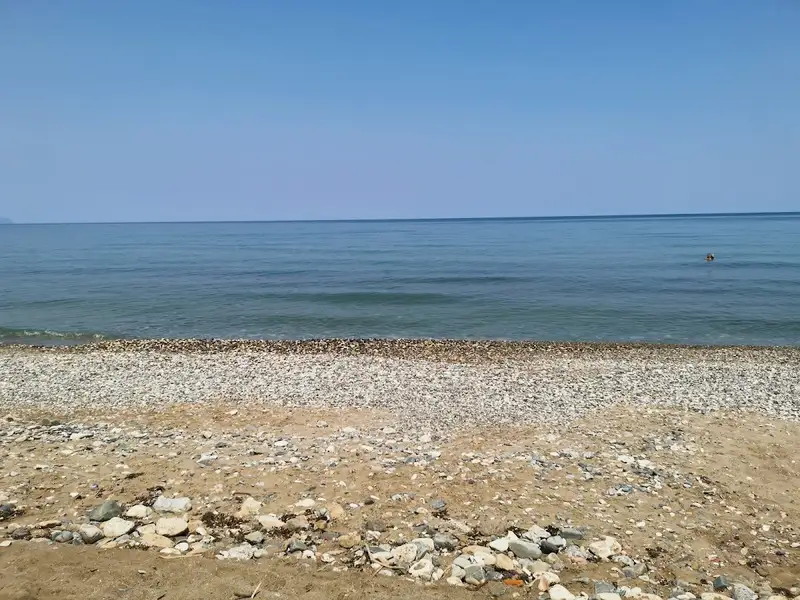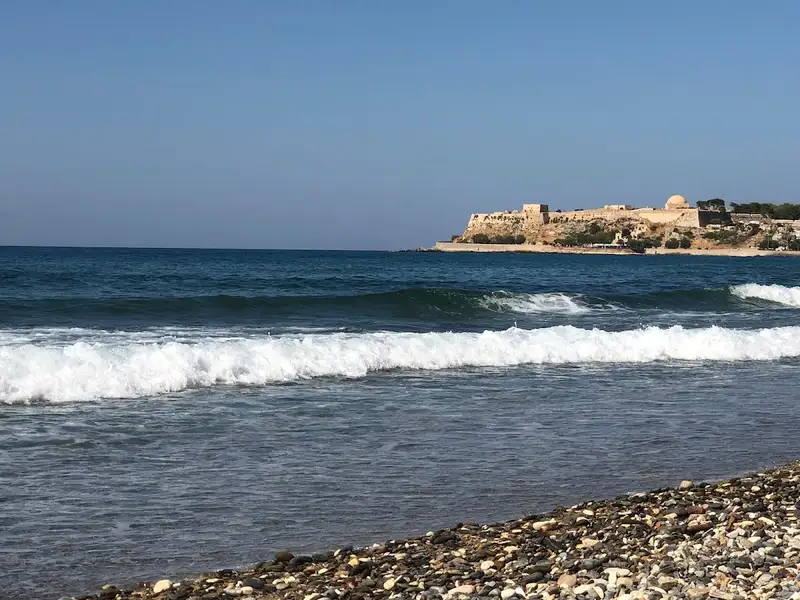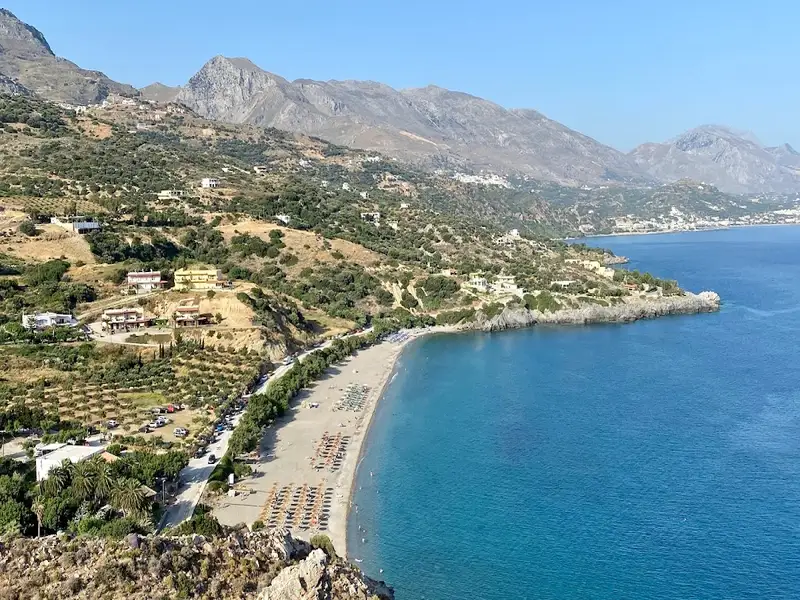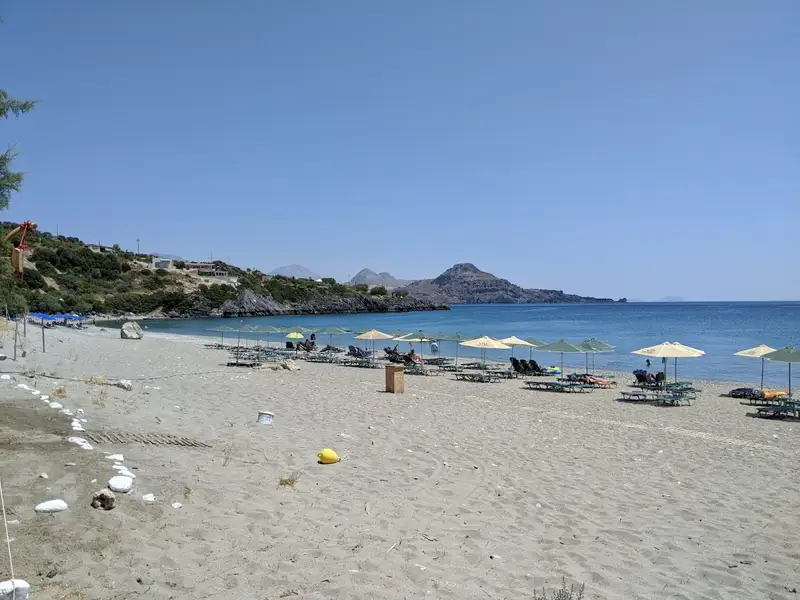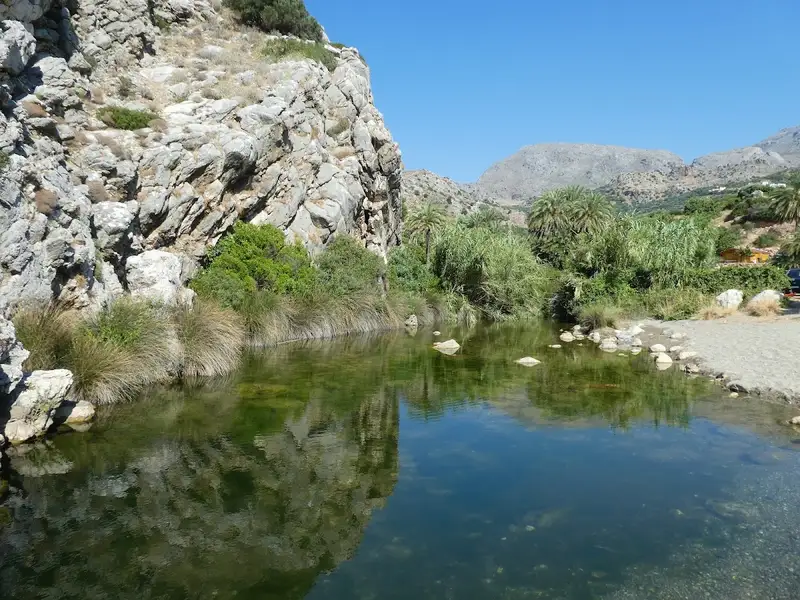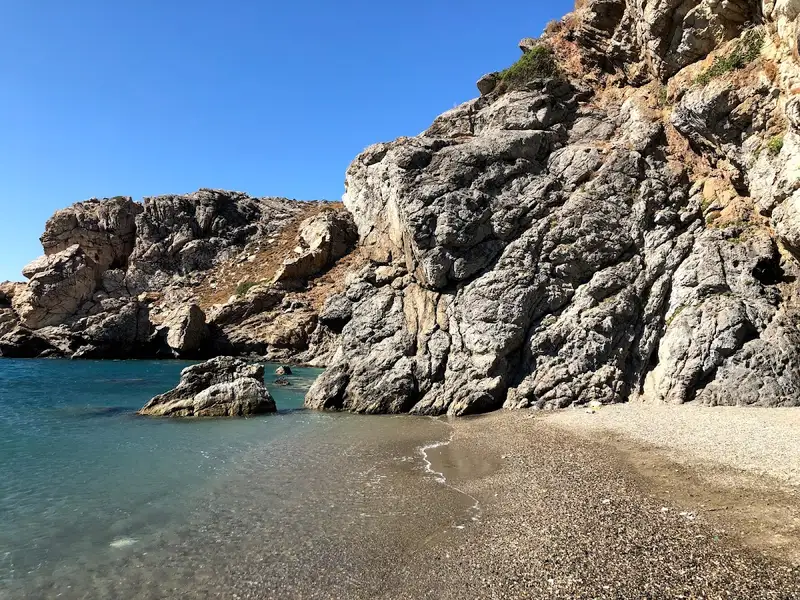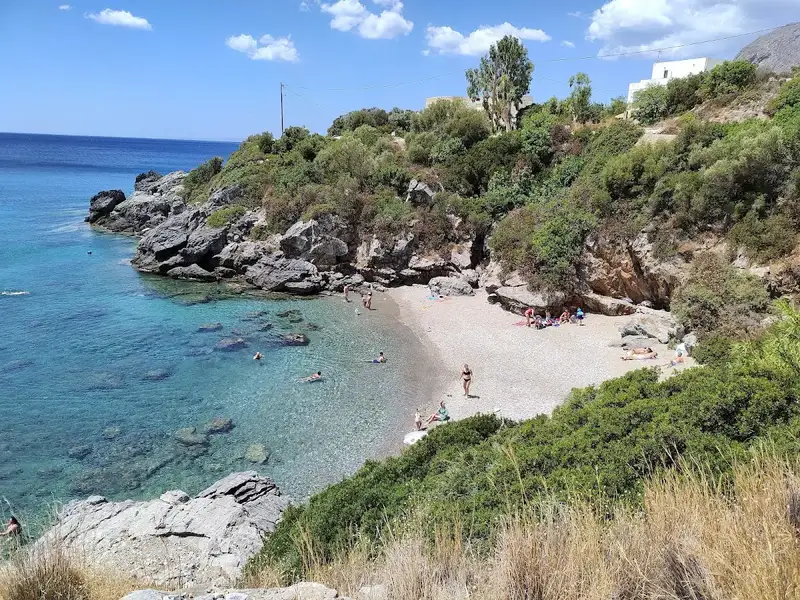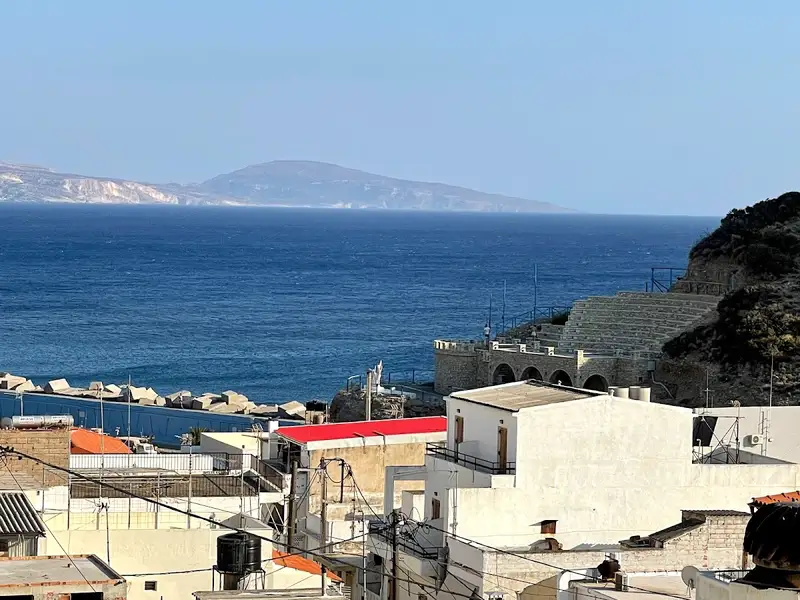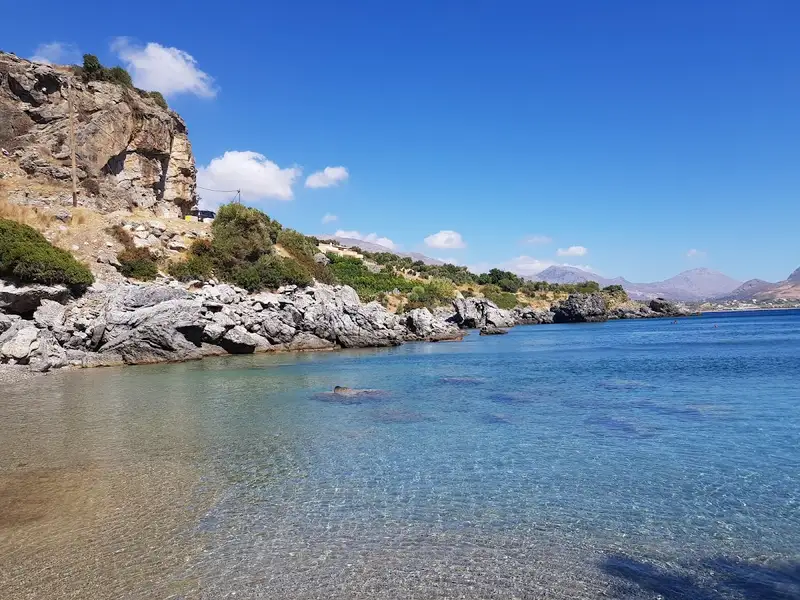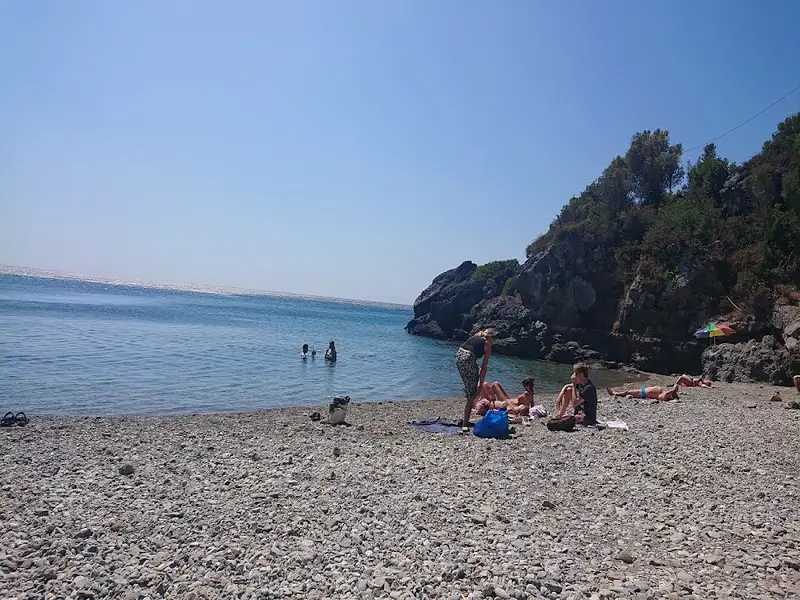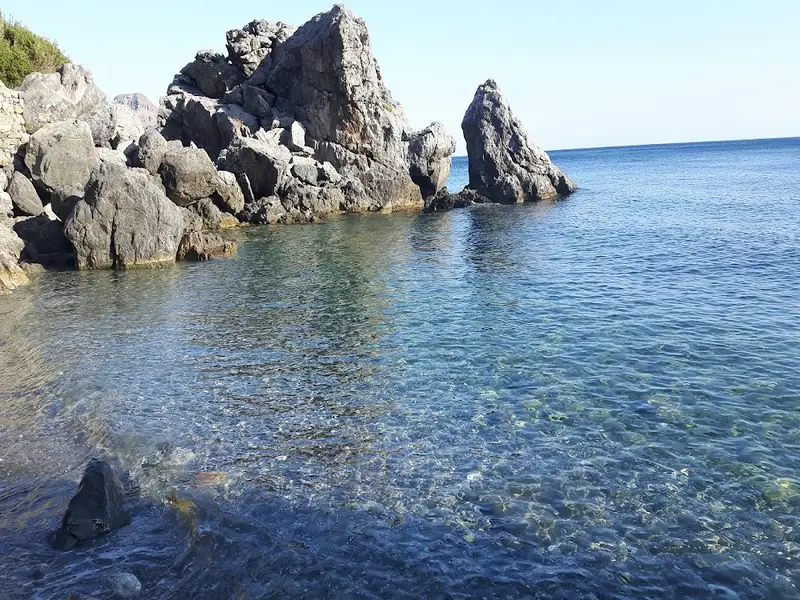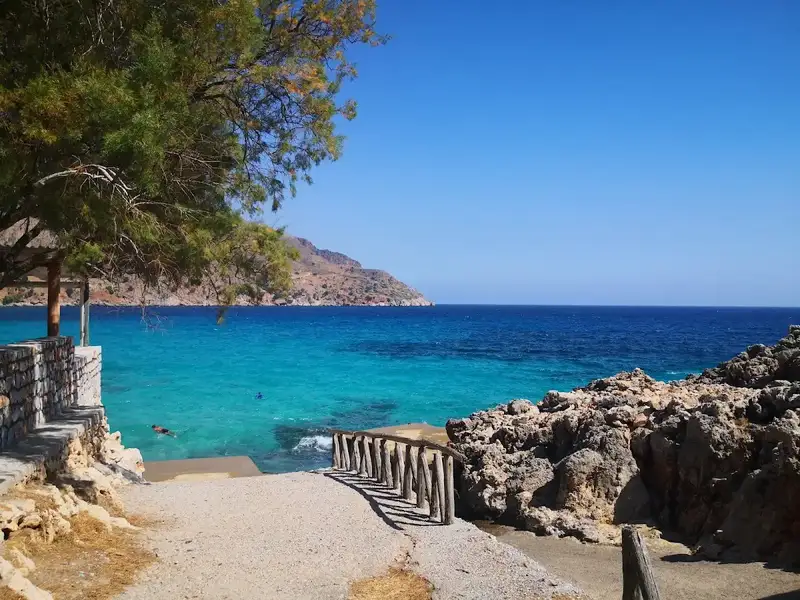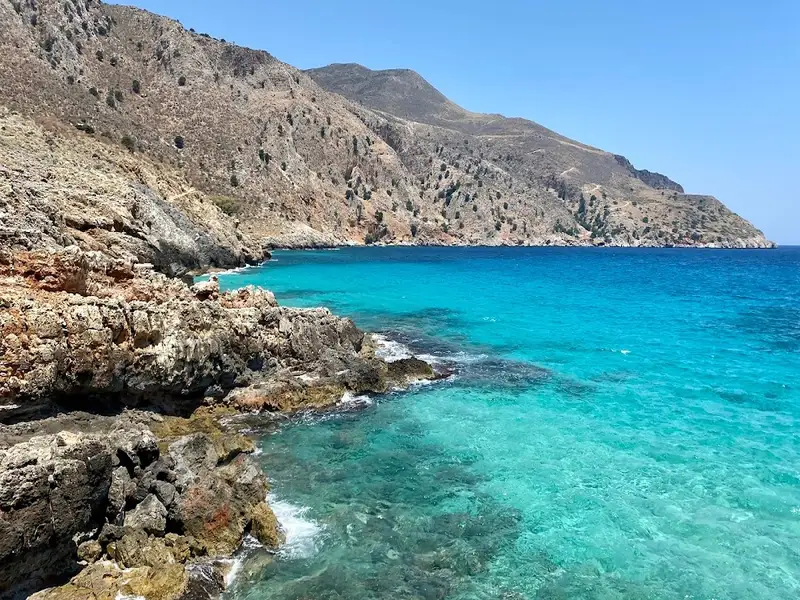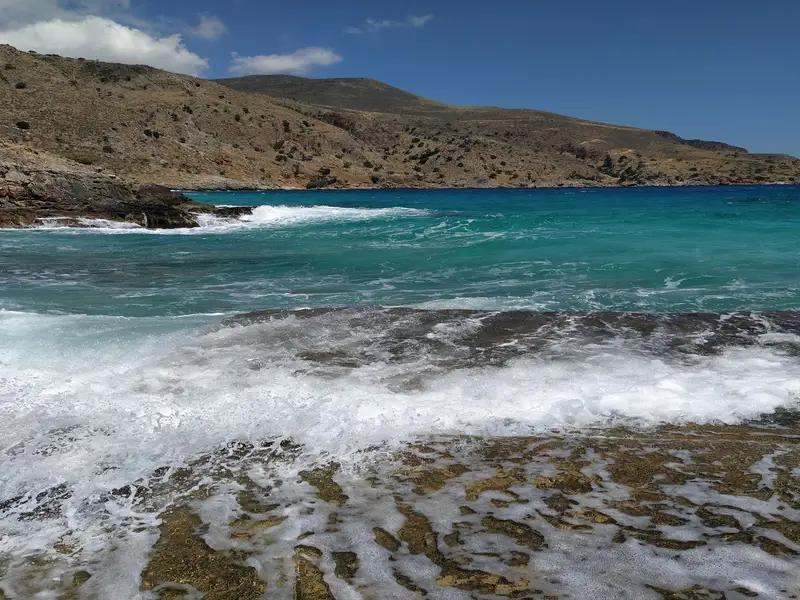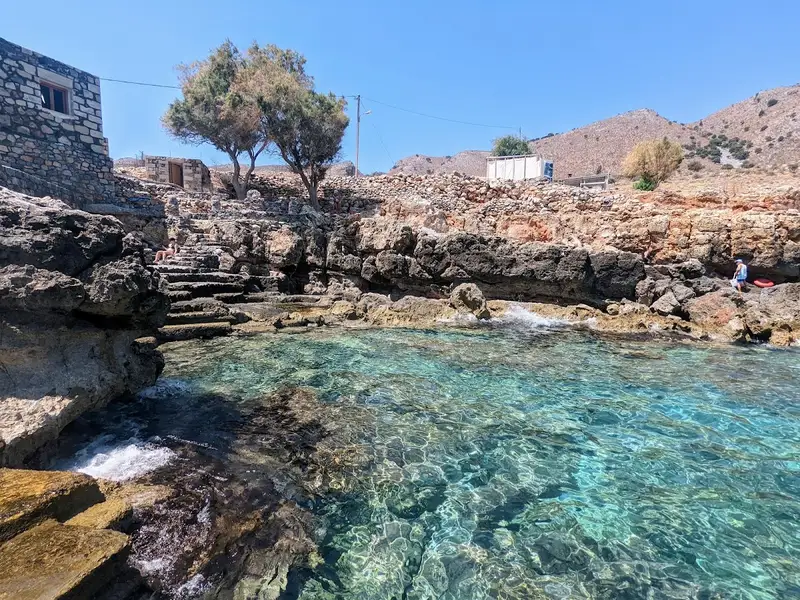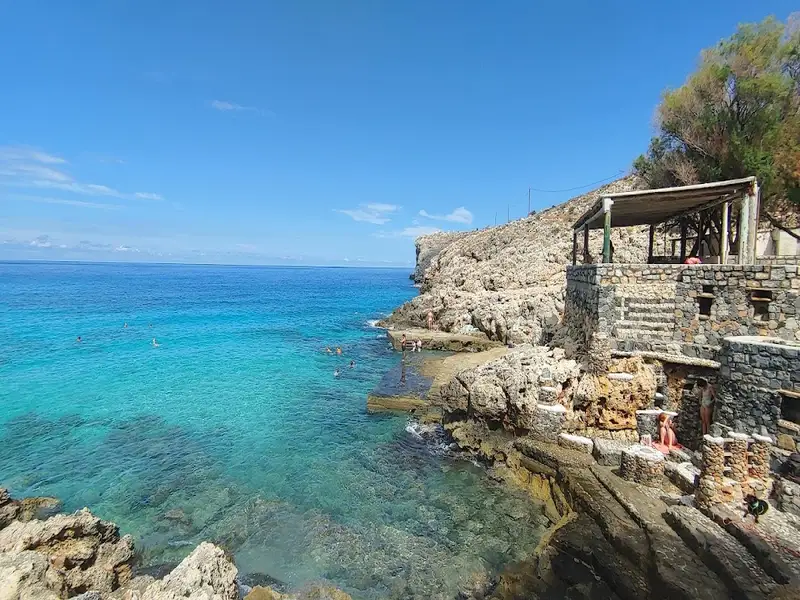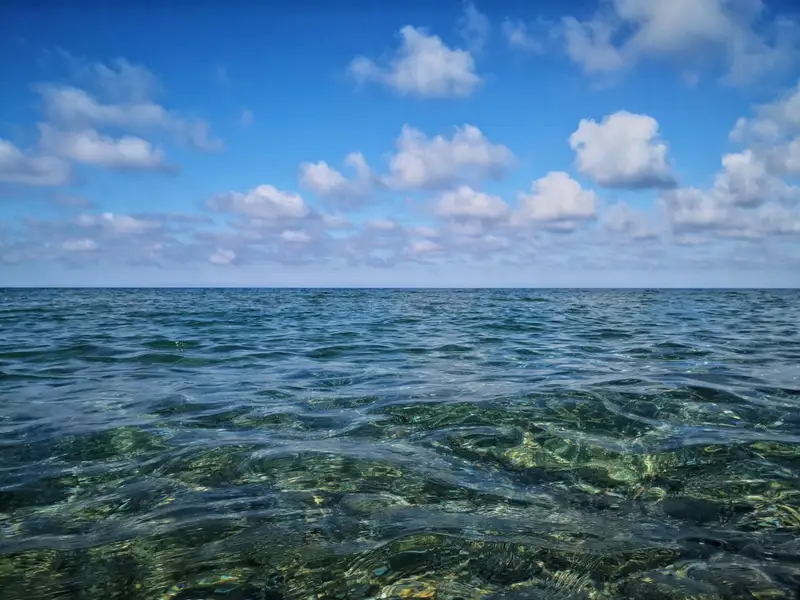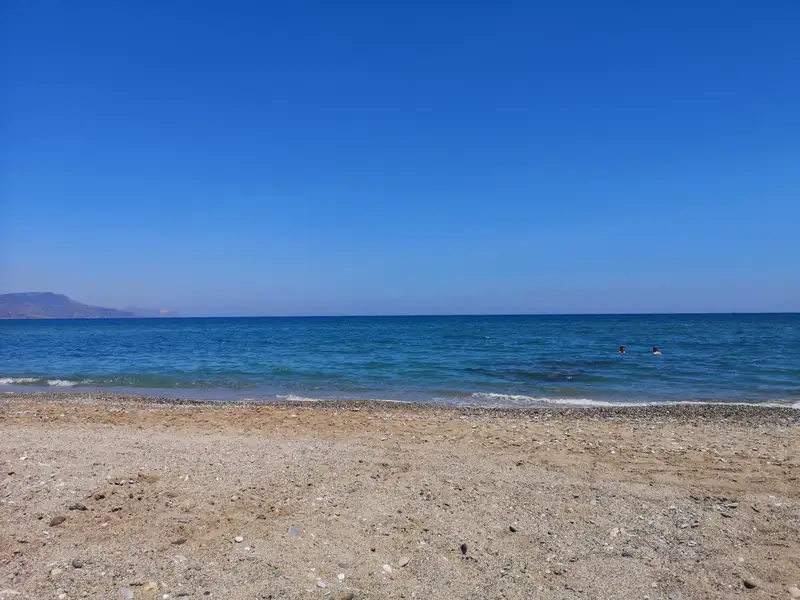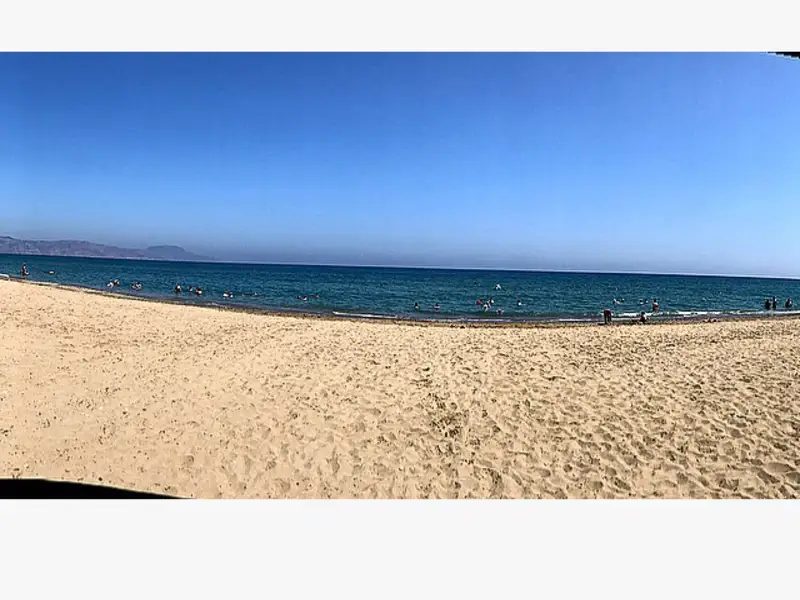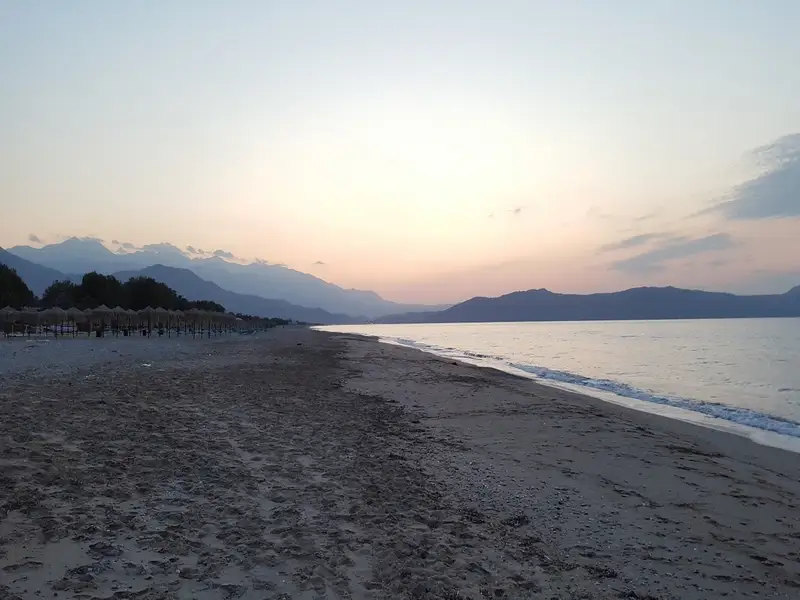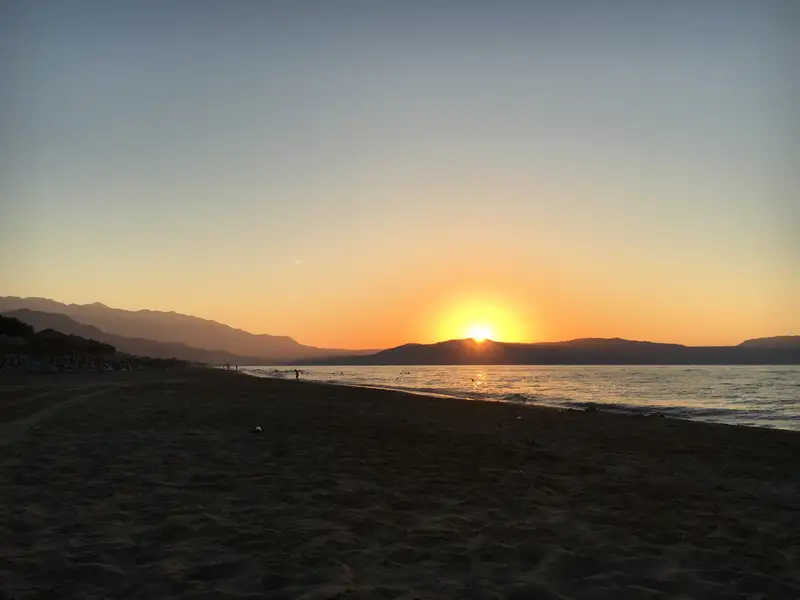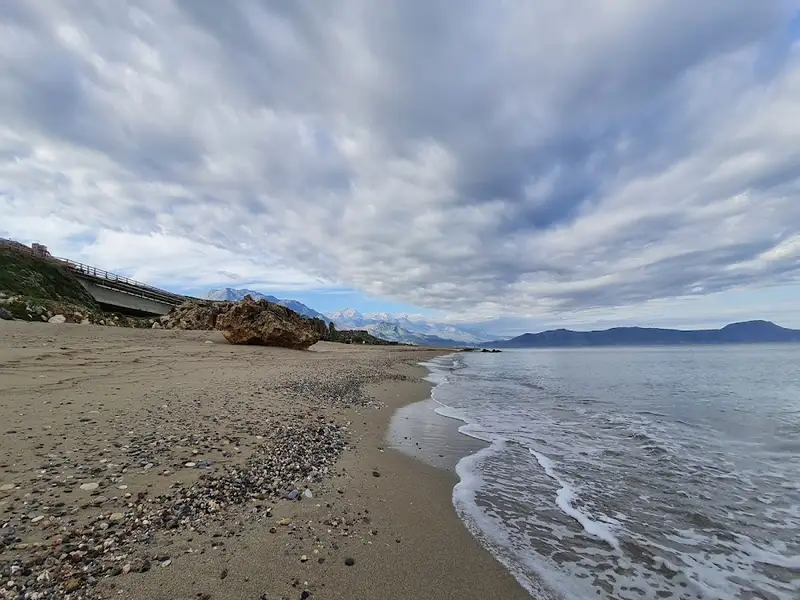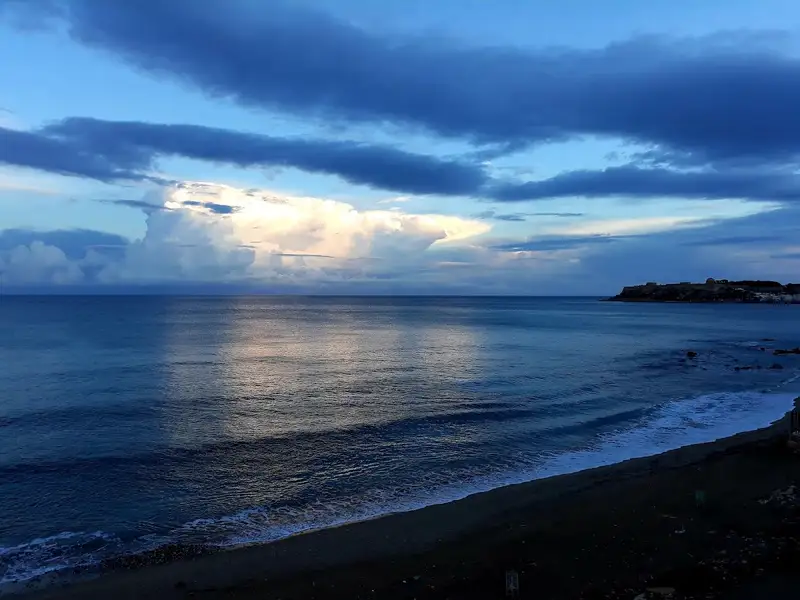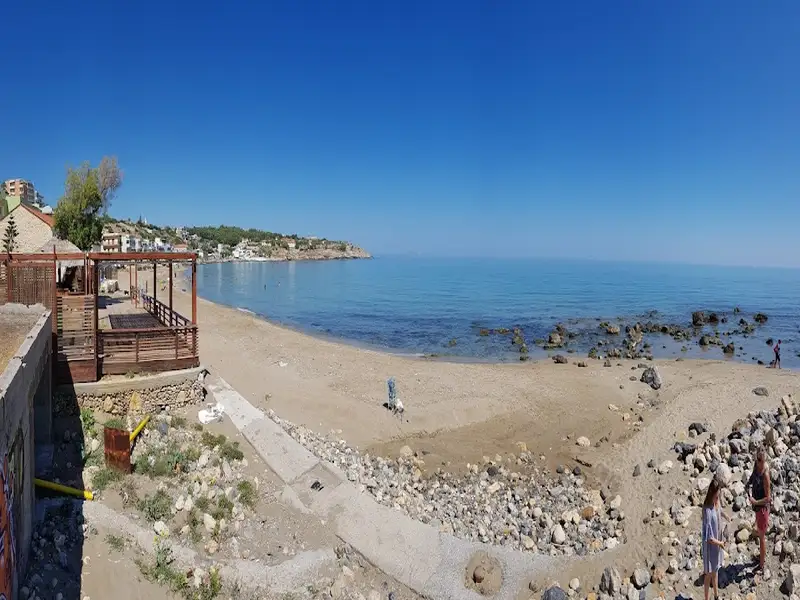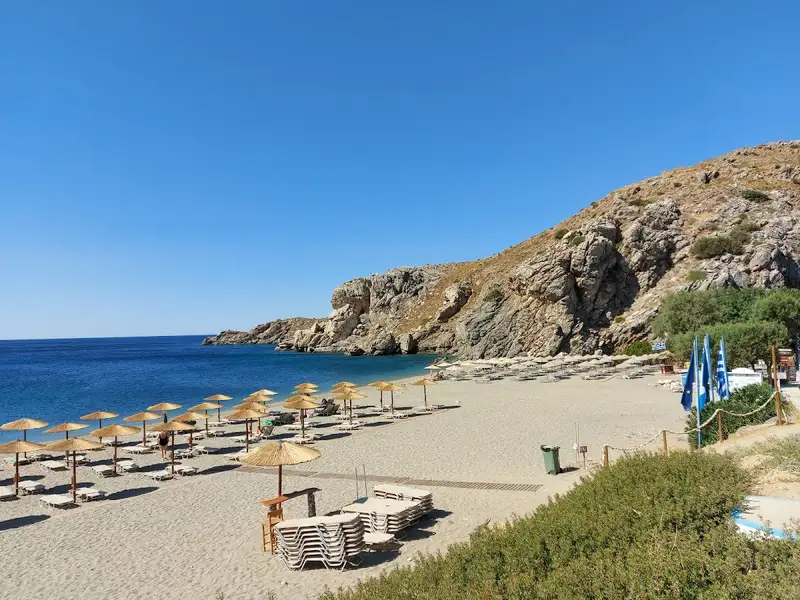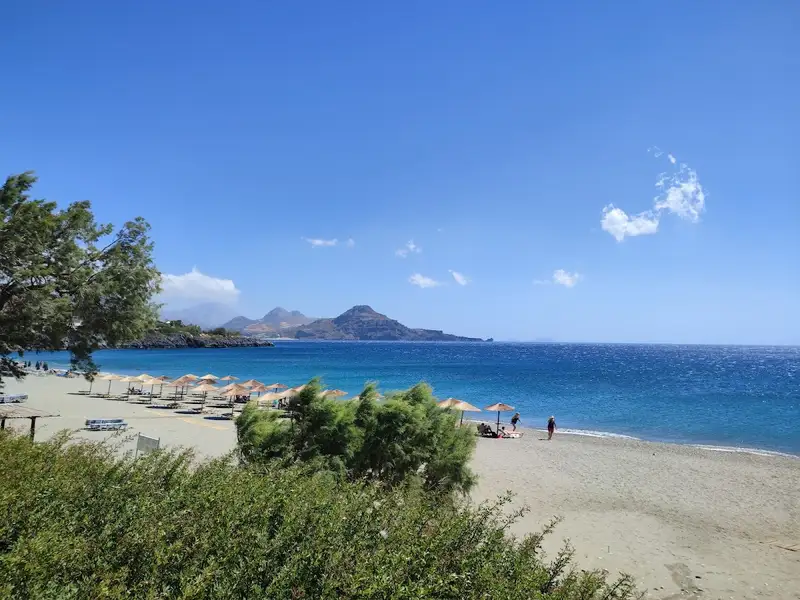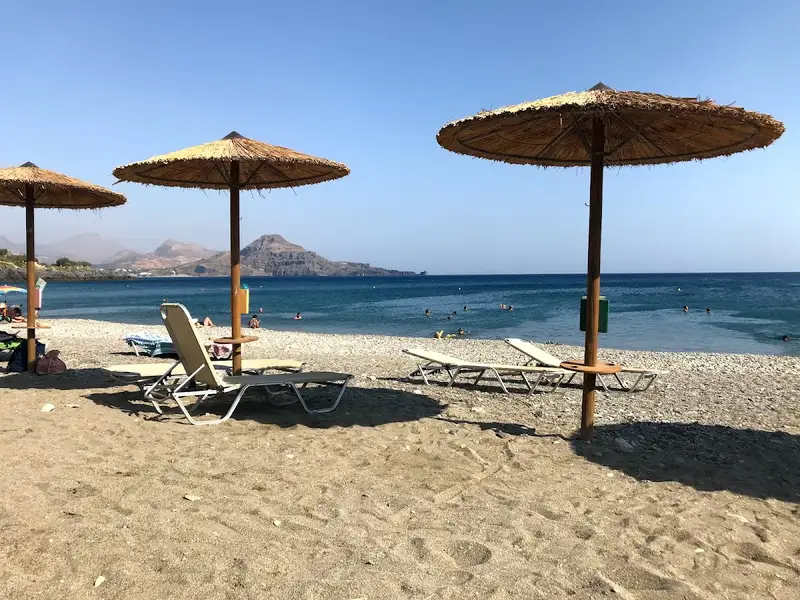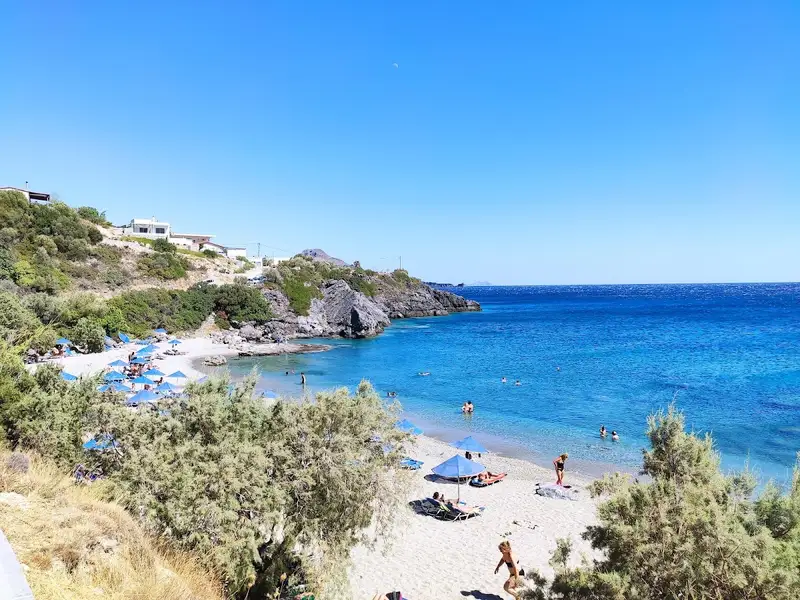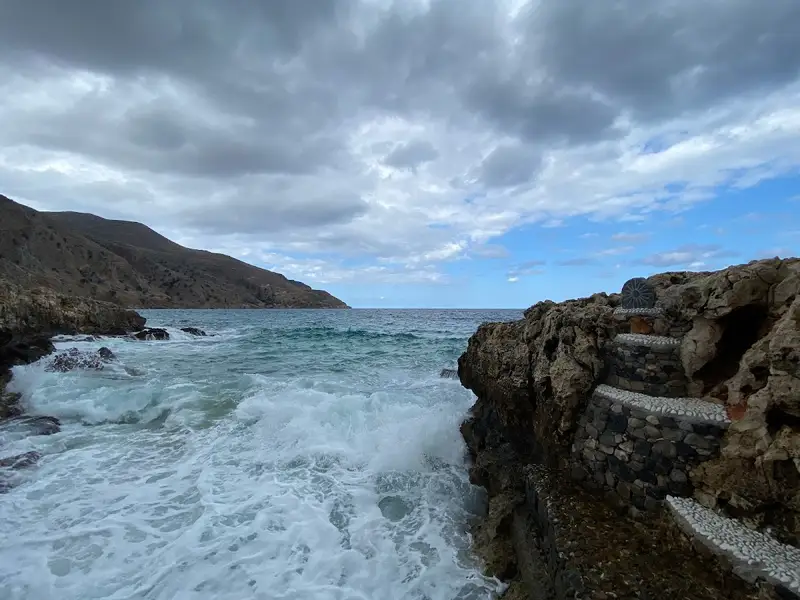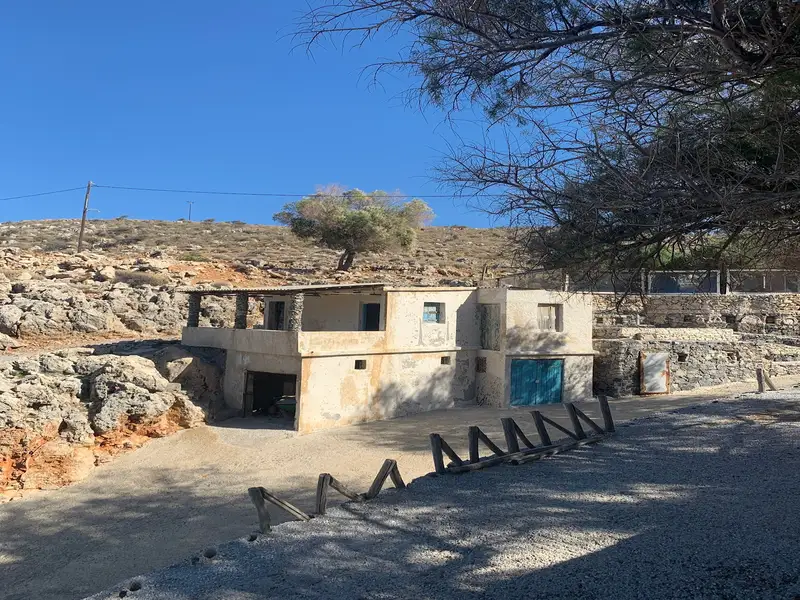
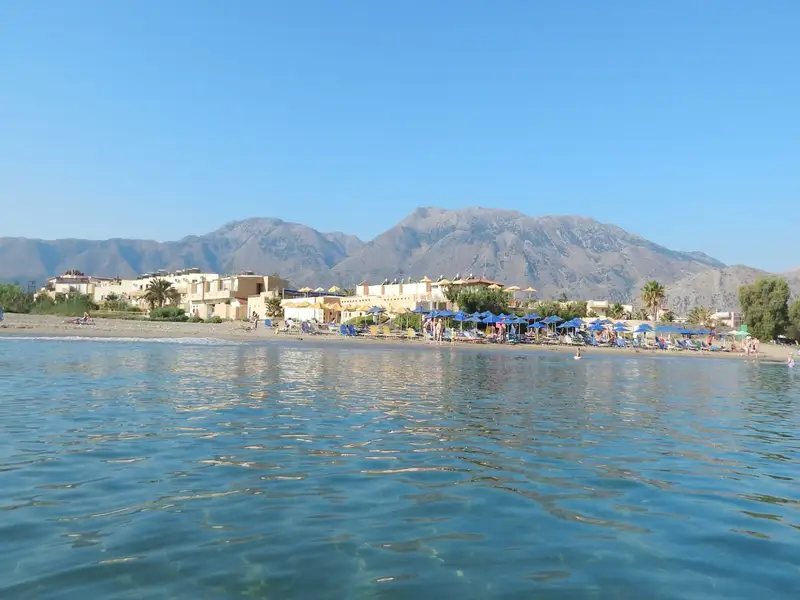
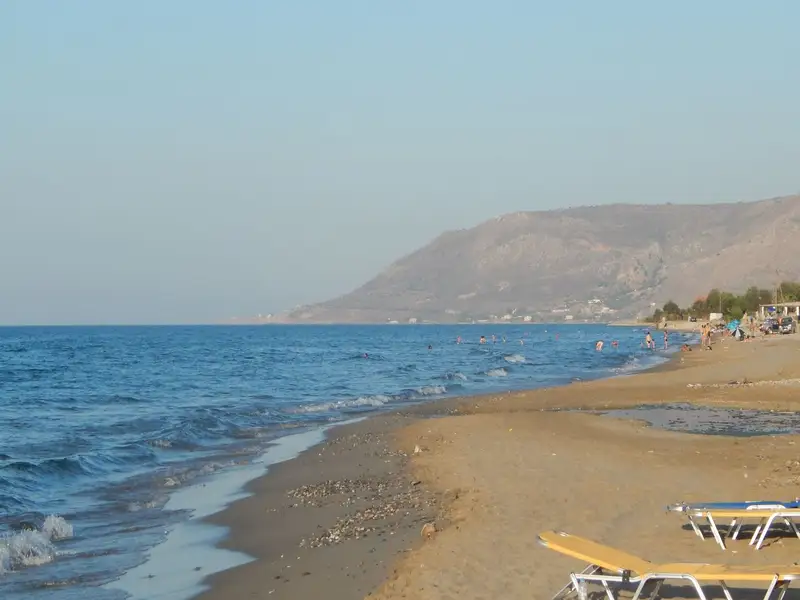
Episkopi beach is a 3.5 km sandy beach on the north coast of Crete, 14 km west of Rethymno and 45 km east of Chania. Episkopi beach sits in a fertile valley between the Mouselas river and the river that runs out of the Petres gorge. The water is shallow and usually a little wavy, like most beaches on Crete’s north coast, and it takes its name from the village of Episkopi, 2 km inland to the south.
At a glance:
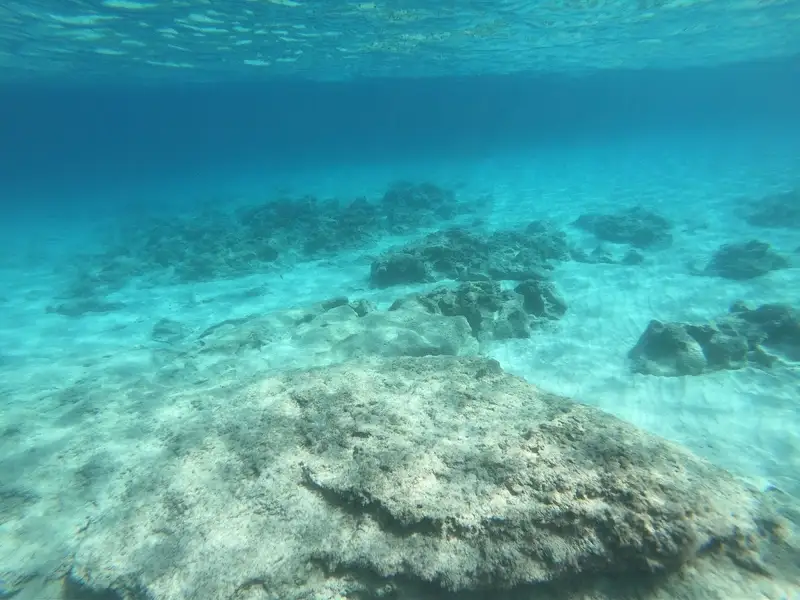
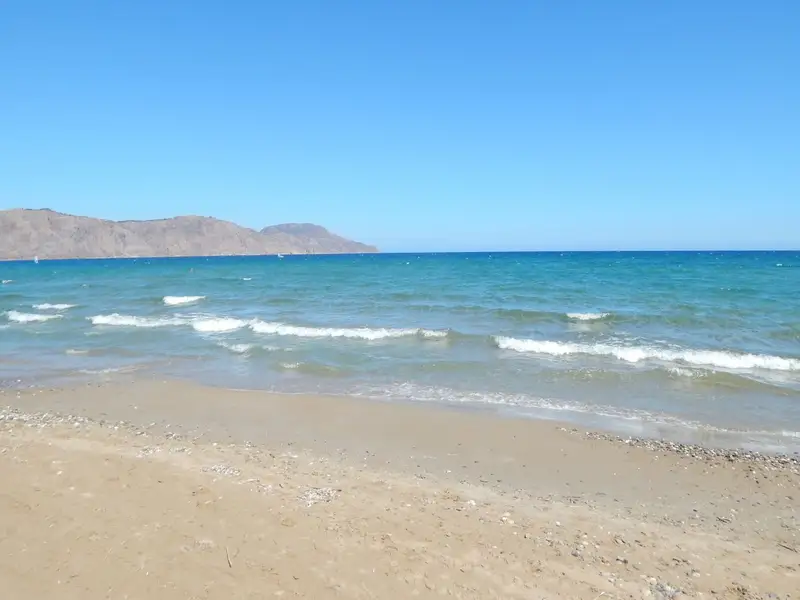
The sand is soft, with a short pebbly strip at the waterline that turns sandy underfoot as you walk in. Mornings are usually calm and clear enough to see the bottom, while an afternoon breeze can raise small waves. The shallow, gently shelving water suits families with children and makes the beach a good spot for a slow swim or a snorkel.
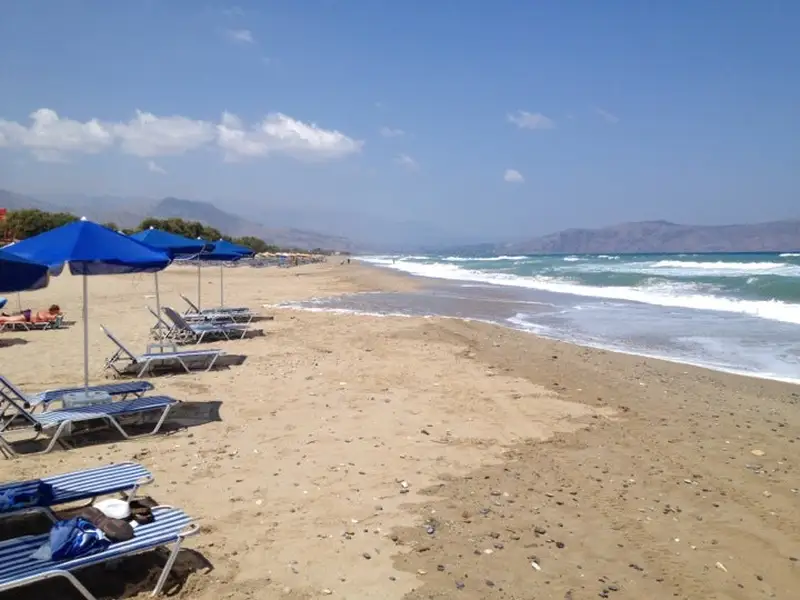
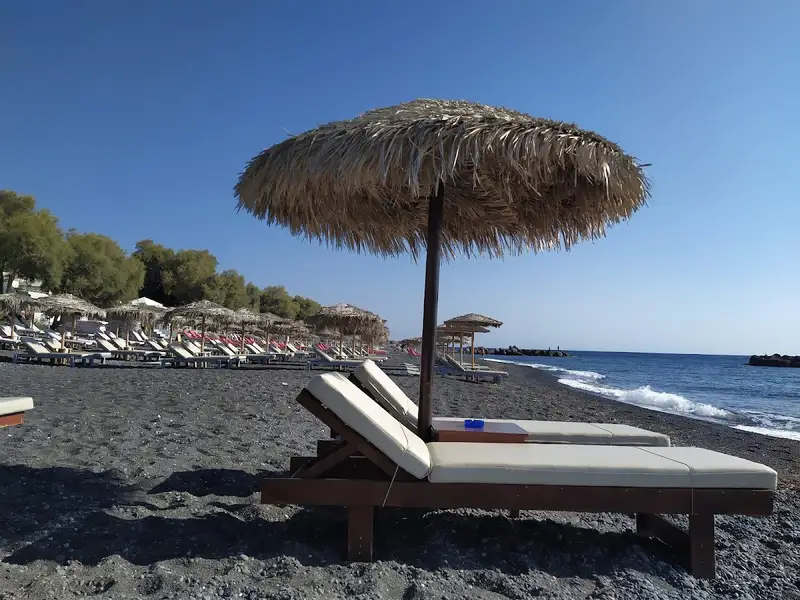
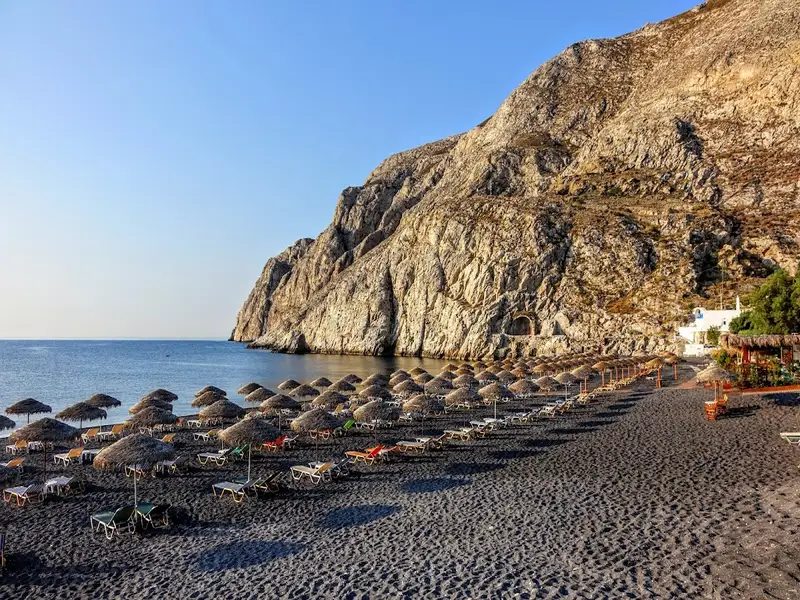
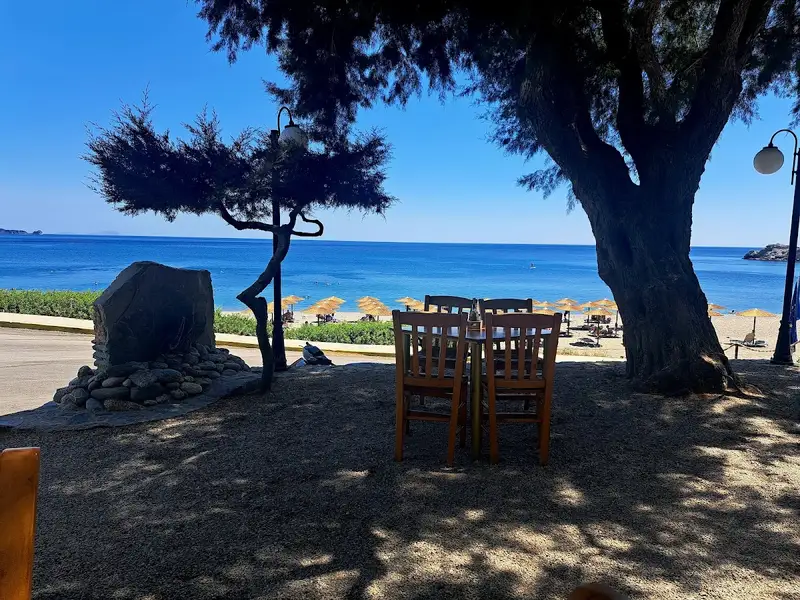
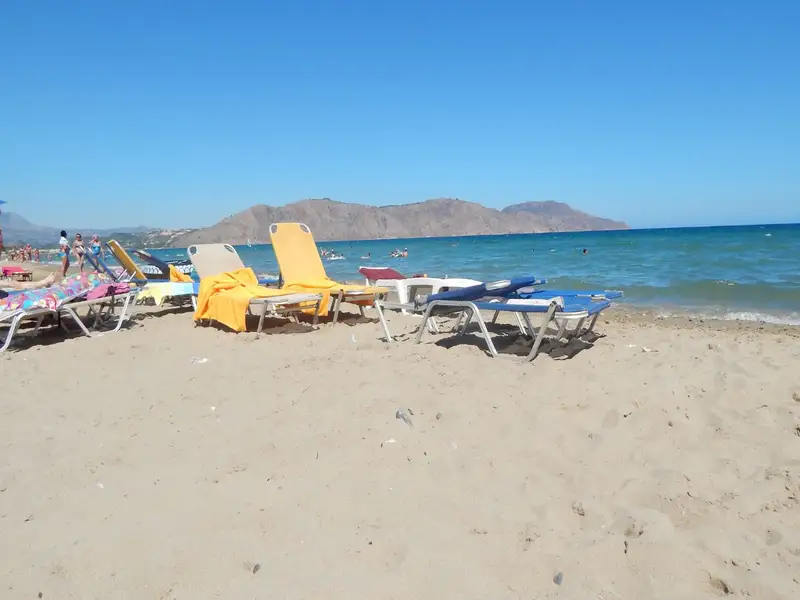
The western part of the beach is well organized. There you find lifeguards, showers, changing rooms, umbrellas and sunbeds, snack bars, and water sports. Tavernas and bars line the shore, several renting sunbeds under thatched umbrellas. Because the beach runs for about 3.5 km, you can still find a quieter, less developed stretch toward the eastern end near the Petres bridge.
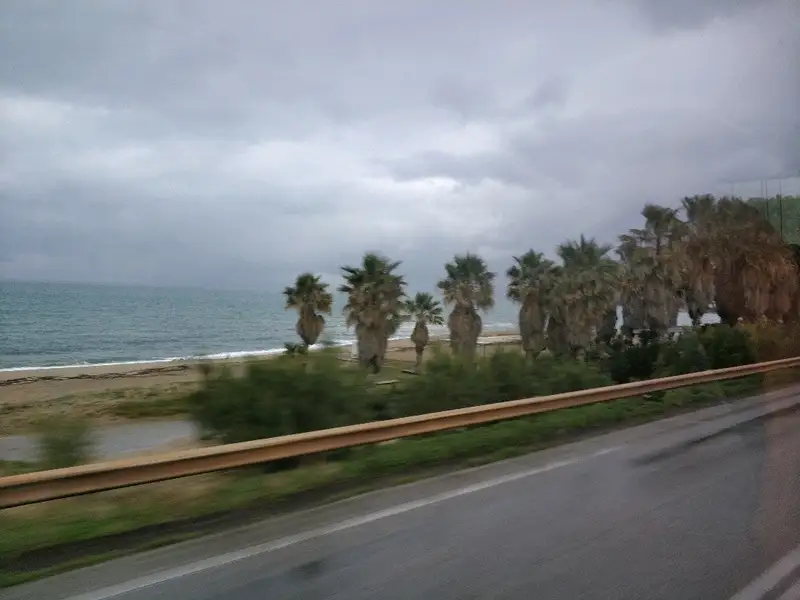
The main coastal road between Rethymno and Chania runs parallel to the beach, so access by car is easy. Frequent KTEL public buses connect Chania and Rethymno and stop on the highway beside the beach, and parking is available at the shore. The simplest way to reach Episkopi and explore the rest of the north coast is to rent a car.
Loggerhead sea turtles (Caretta caretta) nest along this coast between May and September, and Episkopi is a recorded nesting point. If you visit in those months, keep clear of any marked nests and take your litter home with you.
Episkopi sits within a short drive of these stops:
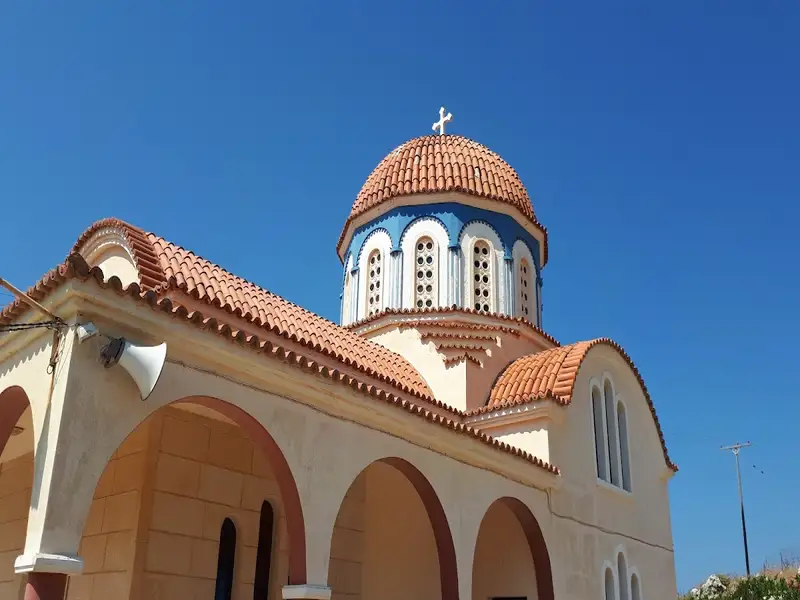
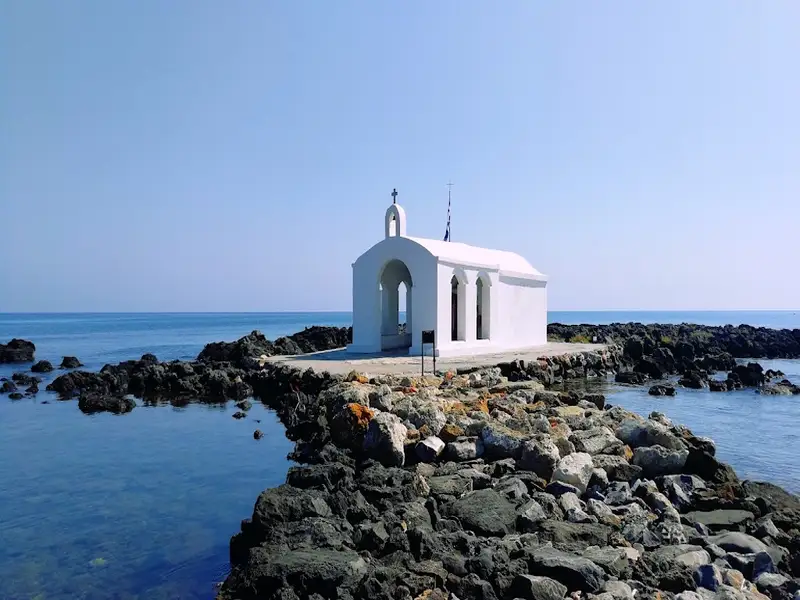
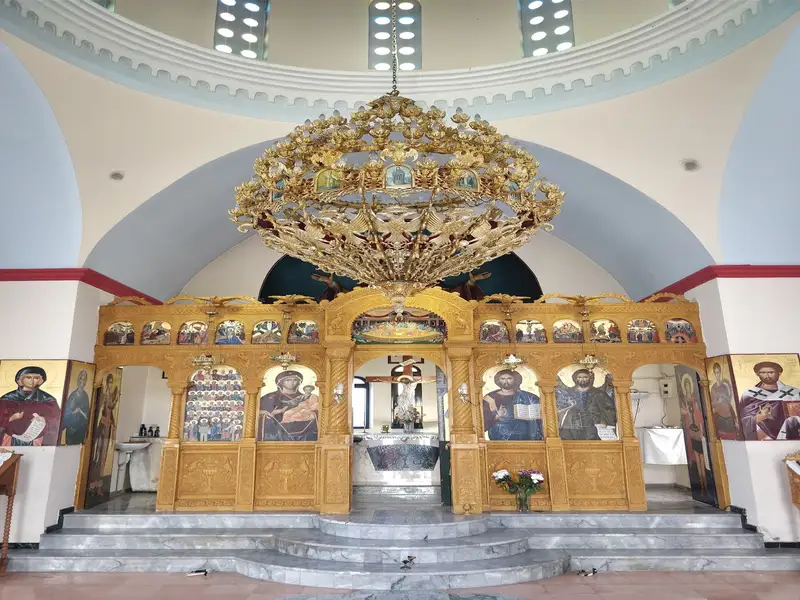
The name Episkopi means “Diocese”: the village was the seat of the local diocese in the Byzantine period, and the old Episcopal church of St Nicholas nearby now stands in ruins. Almost unknown to travelers, the area is also the ancestral home of the Vardinoyannis family.
Episkopi beach is on the north coast of Crete in the Rethymno area, 14 km west of Rethymno and 45 km east of Chania. It lies below the village of Episkopi, between the Mouselas and Petres rivers.
Yes. The water is shallow and the sand is soft, and the organized western section has a lifeguard, so it suits children and less confident swimmers.
The western part is organized, with lifeguards, showers, changing rooms, umbrellas and sunbeds, snack bars, and water sports. The eastern end near the Petres bridge is quieter and less developed.
Yes, water sports are offered in the organized western section, alongside the lifeguard, showers, umbrellas, and snack bars.
The coastal Rethymno to Chania road runs next to the beach, so you can drive or take a KTEL public bus that stops on the highway. Parking is available at the beach.
The main season is June to September, when the weather is warm and dry. Late May, June, and September are usually quieter than midsummer.
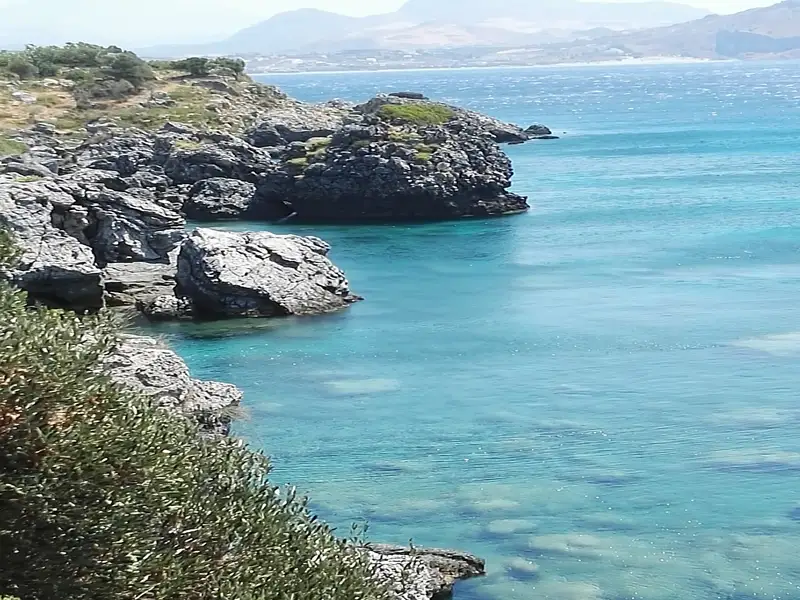
Yes. The water is clear and shallow, and the rockier seabed near Petres beach to the east is a favorite for snorkeling and fishing.
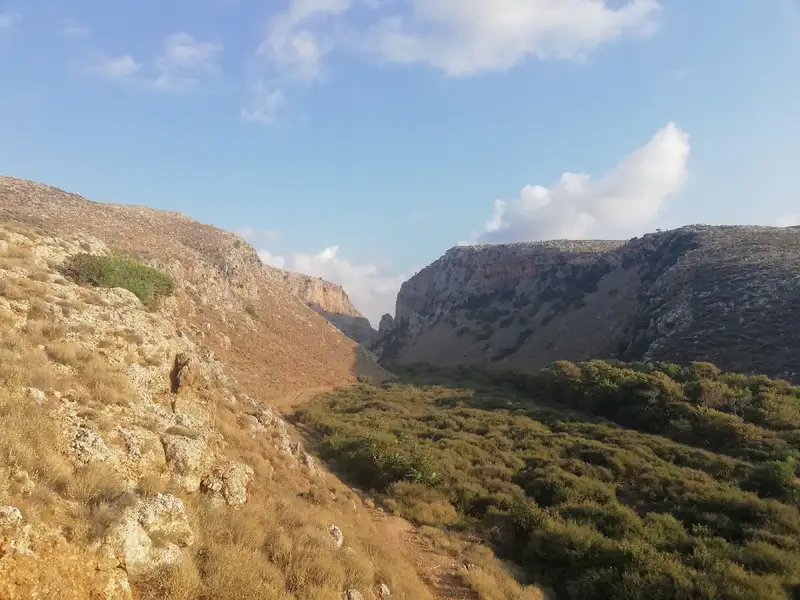
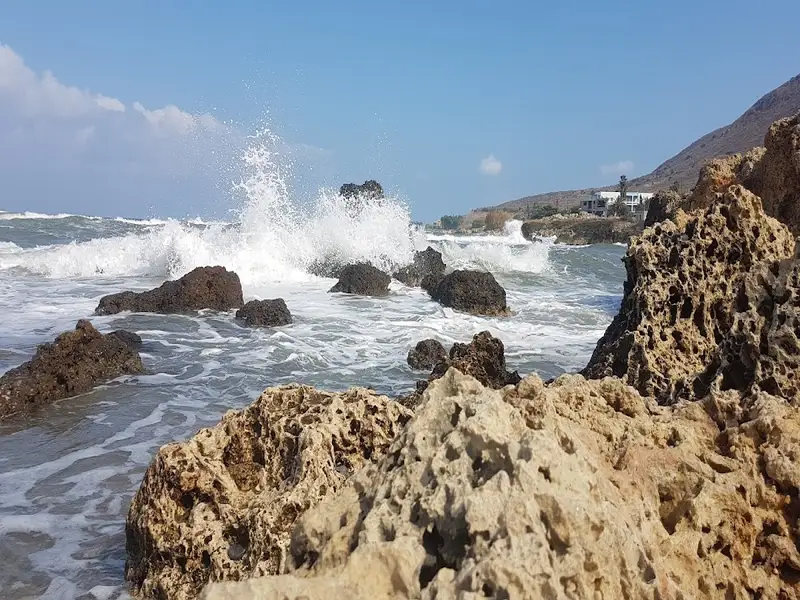
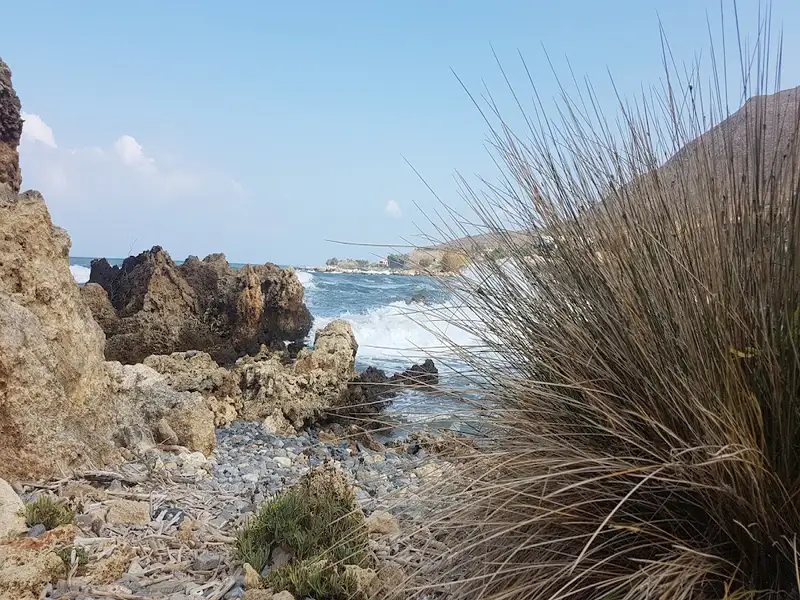
Situated at the eastern edge of the expansive Episkopi beachfront, Petres beach, or Stones beach, is a 46km journey east from Chania and 13km west from Rethymnon. The beach owes its name to the majestic Petres Gorge that concludes at this point. The area is dotted with facilities such as accommodations, eateries, and even a diving school. The Vythos cove, positioned north of the other areas, offers umbrellas and a less sandy terrain. The rocky underwater landscape makes it a hotspot for fishing and snorkelling. However, the frequent northern winds can cause the sea to become wavy.
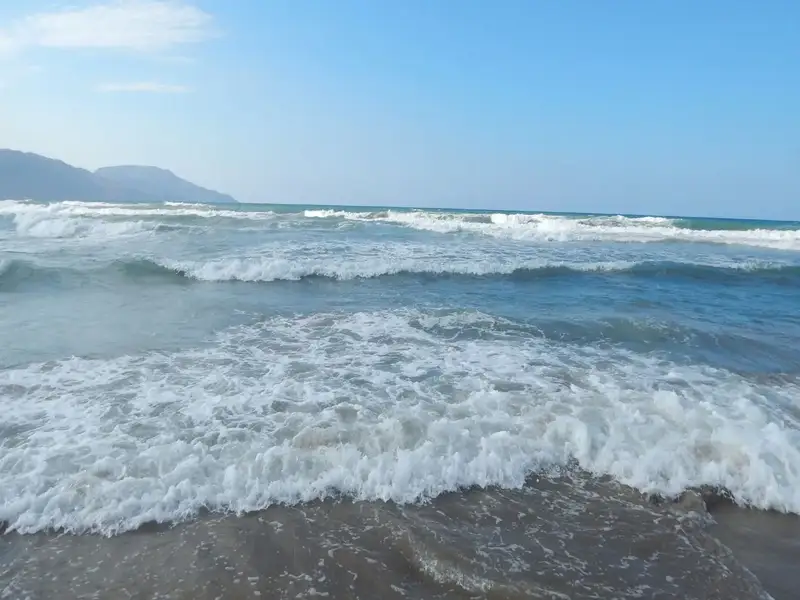
Located between Georgioupoli and Pyrgos, Kavros refers to the expansive beach situated just 4 km east of Georgioupoli, near the hotel bearing the same name. Though the area has experienced substantial tourist development, it’s somewhat less commercialized compared to the adjacent Georgioupolis. Kavros beach is a sandy stretch with transparent, shallow waters; however, its openness to the wind often results in notable wave activity. The beach provides several facilities for visitors, including an array of restaurants, cafes, and bars, making it a perfect spot for an all-day excursion. For those seeking tranquillity, parts of the beach remain unorganized, offering a more serene experience.
The place at its greatest part is developed and only a very small part of it has been left untouched. Between the remaining virgin parts of the beach, there is an extensive and very important ecosystem of dunes. The dunes of Kavros, like all dunes, host a significant and very fragile ecosystem that is home to its own plants. The most important role of the dunes in Crete is that they protect the inner lands from erosion. In the area, in winter we meet small ponds and the landscape is quite different from the summer.
Kamari Beach is situated roughly 7km west of Rethymnon, close to Gerani village, at the entrance of Vederi Gorge. The coastal highway linking Chania and Rethymnon runs adjacent to the beach and over the Gerani bridge.
The beach is relatively compact, featuring pebbles and rocks in certain areas, making it a favourite among snorkelers. Despite being exposed to frequent northerly winds, it offers some amenities such as a few umbrellas, taverns, and rooms. Additionally, a quaint harbour and the charming Panagia Kamariani church can be found nearby.
A short distance south of the beach, one can find the sealed entrance to the Gerani cave, a significant archaeological site in central Crete, discovered unexpectedly during the construction of the main road. Moreover, visitors can explore the scenic narrow streets of Gerani village and visit the St George church along with several smaller churches.
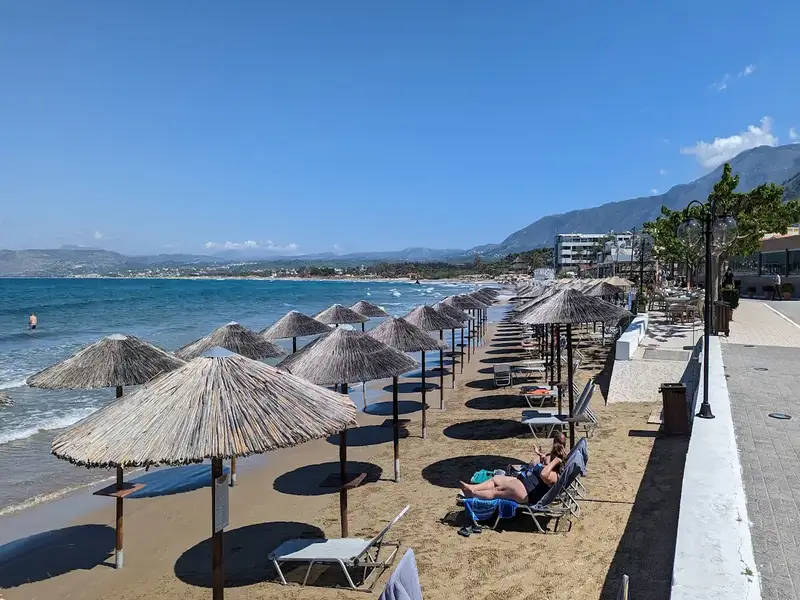
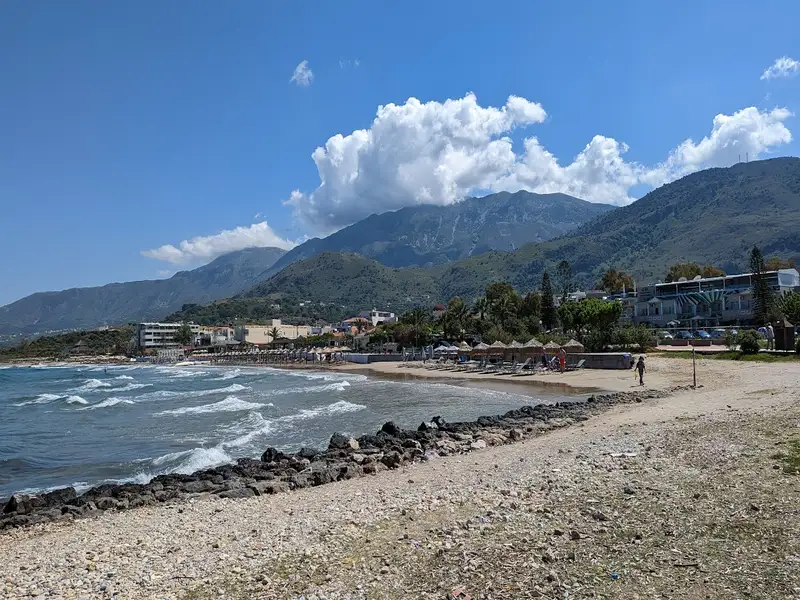
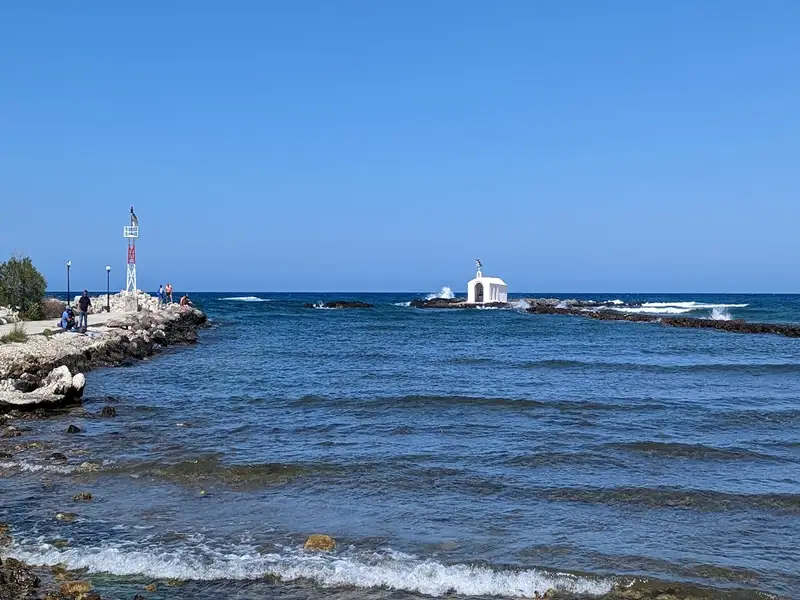
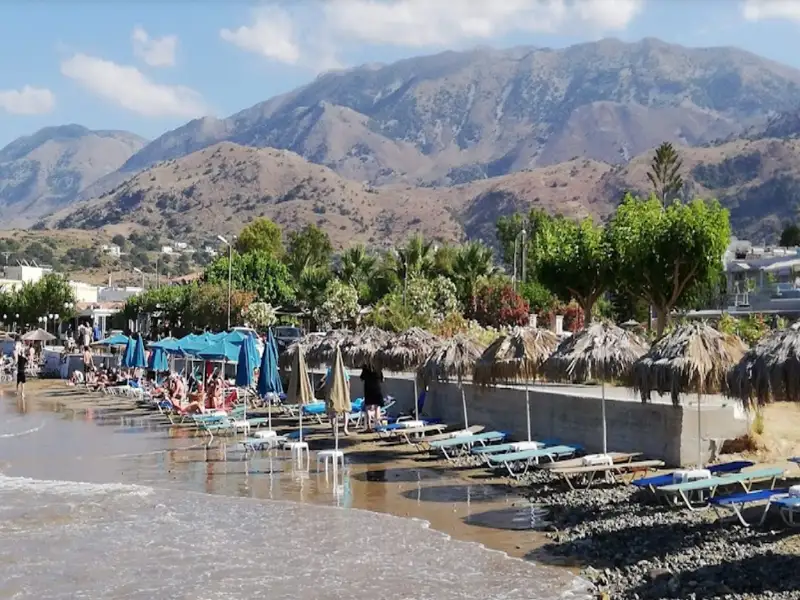
Georgioupolis, a small coastal town located 38km east of Chania and 21km west of Rethymnon, is a seaside resort nestled in a verdant valley crisscrossed by rivers and springs. Situated on the western edge of a sprawling 10km beach, the town’s beach spans 2km to the east, beginning at the Almiros river and terminating at Kavros beach, a natural continuation of the former. The beach in Georgioupolis is sandy, dotted with dunes, and has shallow waters.
The beach is well-maintained and child-friendly, with lifeguards on duty. Caution is advised during windy conditions due to sea currents. Amenities such as umbrellas, showers, and food and drink stalls are available for beachgoers. Approximately 700m east of the port, the Perastikos river bifurcates the beach, which then widens as it continues eastward. On the opposite end, west of Georgioupolis’s port and near the Almyros river’s exit, lies the picturesque Kalivaki beach.
Located 38km east of Chania and 21km west of Rethymnon, Kalivaki is the furthest beach to the west in the bay of Georgioupolis. Nestled near the exit of the Almyros and Boutakas rivers, which maintain a steady flow of water year-round, Kalivaki is a gorgeous sandy beach. The water here is particularly cool, owing to the influence of the rivers and freshwater springs. Kalivaki is a well-appointed beach, complete with umbrellas, water sports facilities, and nearby restaurants. Its protective positioning relative to the other Georgioupolis beaches makes it an excellent choice for children, especially on windy days.
Koumbes, situated 2km west of Rethymnon’s center, is the only beach on the city’s western side. The beach offers stunning vistas of the impressive Fortezza fortress, located several hundred meters to the east. Koumbes derives its name from the Turkish word ‘Kubbe,’ which translates to ‘dome.’ This expansive beach, adorned with sand and fine pebbles, has seen significant growth in recent years, and its development has become a top priority for the Rethymno Municipality. This growth has led to numerous improvements, including the addition of walkways and similar enhancements along the coast.
At Koumbes, visitors can avail themselves of all necessary tourist amenities, such as lifeguard services, umbrellas, showers, changing rooms, and water sports. The area also boasts numerous hotels, accommodations, restaurants, taverns, snack bars, and cafes. Access to Koumbes from the city center is convenient, either by bus or on foot. Walking takes no more than 20 minutes.
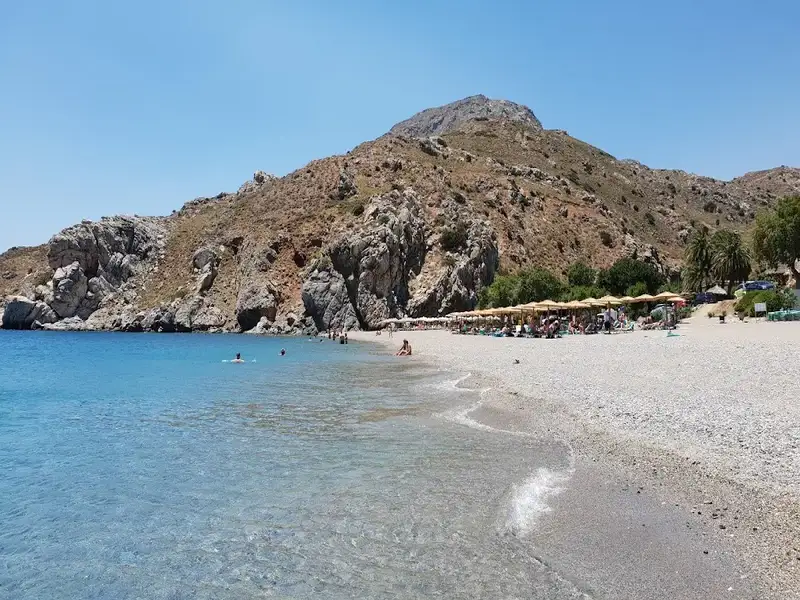
Souda is nestled 41km to the southwest of Rethymno city, and a mere 3km east from the bustling resort of Plakias. Don’t mistake it for Souda Bay, the natural harbour of Chania city. It is, in fact, the final beach along the Plakias seafront, known as Yialia, commencing at Shinaria many kilometers away. Situated at the mouth of a verdant valley, Souda is crisscrossed by the Finikas river, which flows all year round. Cretan palm trees of Theophrastus, native to the area, flourish along the river and numerous other locations, establishing Souda as a significant refuge for the species.
In the midst of this stunning landscape, a sandy beach stretches out, adored by all who visit. However, this affection can quickly turn to annoyance when the northern winds whip up the sand, blasting unsuspecting swimmers. The landscape today bears no resemblance to the secluded paradise of the 90s, where a narrow dirt path led to a rocky shoreline and a sparsely populated nudist beach. While nudists still frequent the area, they no longer enjoy the same level of comfort. The beach is now more accessible with paved roads, organized facilities, umbrellas, and showers. There are several taverns and accommodations nearby. The rocky beach edges offer ideal conditions for fishing and snorkeling. A few benches can be found above the eastern rocks on the main road, offering panoramic views of the South Cretan Sea.
Situated 37km south of Rethymno, nestled between Plakias and Souda’s beach, Fotinari (also known as Foteinari) offers two serene beaches resting in a compact bay rich with vegetation. The rocky seabed provides a perfect spot for fishing and snorkelling activities.
These adjoining pebbly beaches lack organisation, however, you can easily find accommodation and dining options nearby. As you approach from Plakias, heading towards Souda beach, the first beach you’ll encounter is the Small Fotinari, also referred to as Fotinaraki, due to its smaller size compared to the following beach, the Big Fotinari.
Both beaches are conveniently located near the main road, which runs directly over them. Two brief stone paths cut through a pair of small woods, leading straight to the beach. Additionally, Big Fotinari offers shade beneath the towering rocks that surround it.
Ombros Gialos (or Omprosgialos) is located 26km east of Chania, on the east coast of Drapanokefala, near Kefalas and Paleloni villages. It is a rocky beach with blue deep water. There is a small harbour with a dock, from which swimmers usually dive in the crystal waters. Next to the harbour, there is only one tavern, very famous for its fish dishes. The coast is not well organized and is quite far from well-organized accommodation choices. The sea around Ombrosgialos is ideal for snorkelers and scuba divers.
Ombrosgialos can be accessed by car through the asphalt road that starts from Paleloni. Though, another way is to come here by private boat from any nearby port, such as Georgioupolis or Kalives.
No results available
No results available
© All rights reserved. Crete Locals