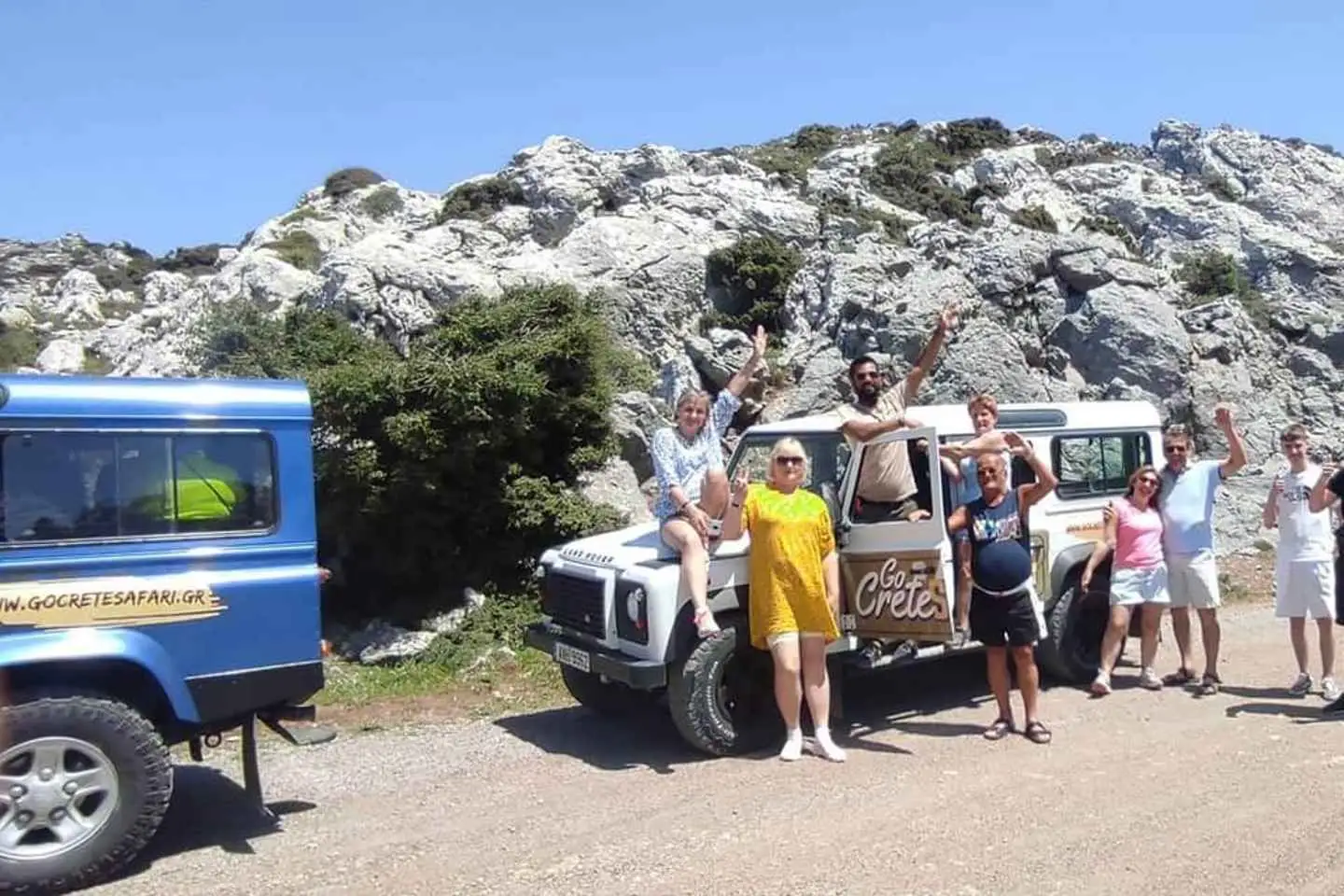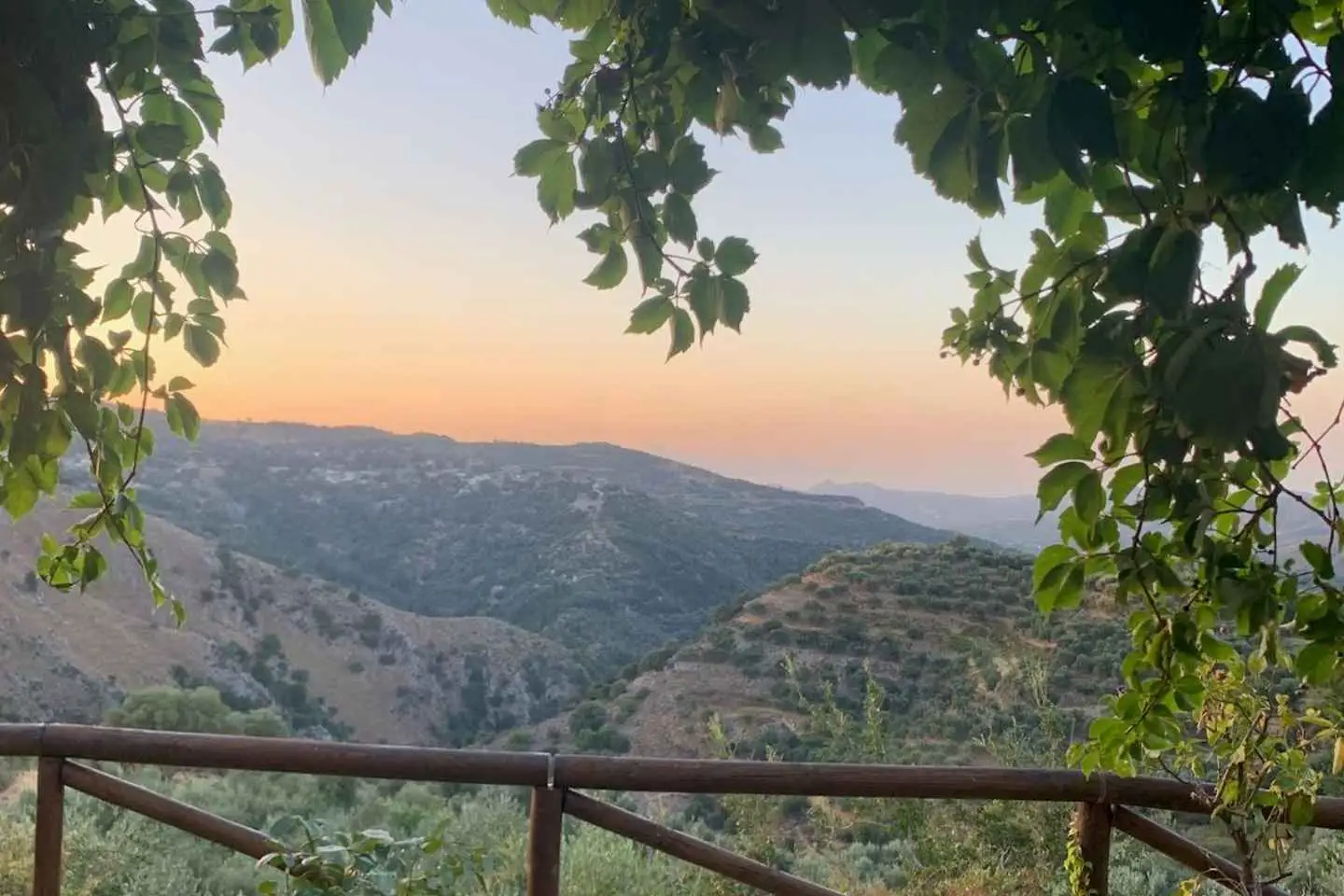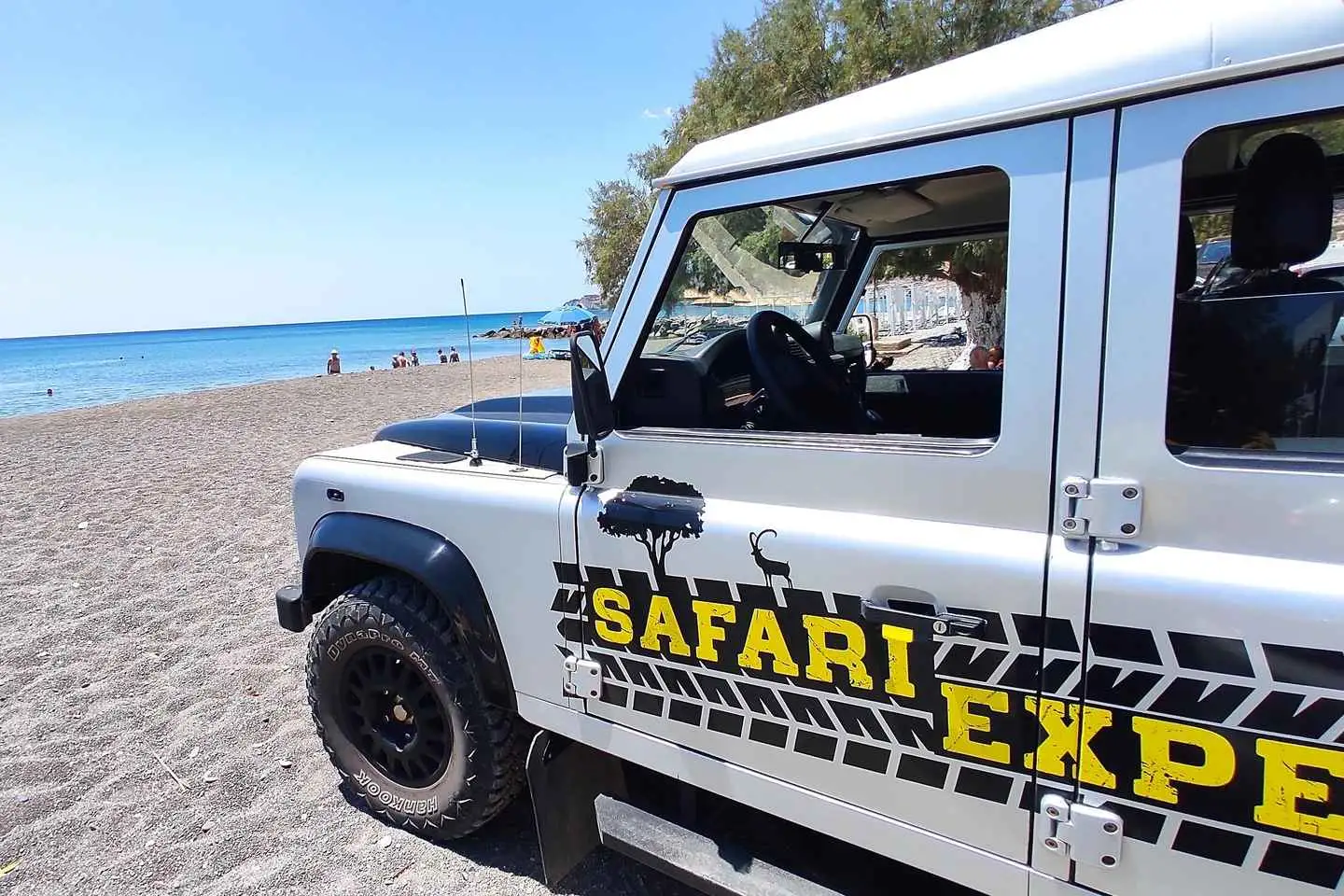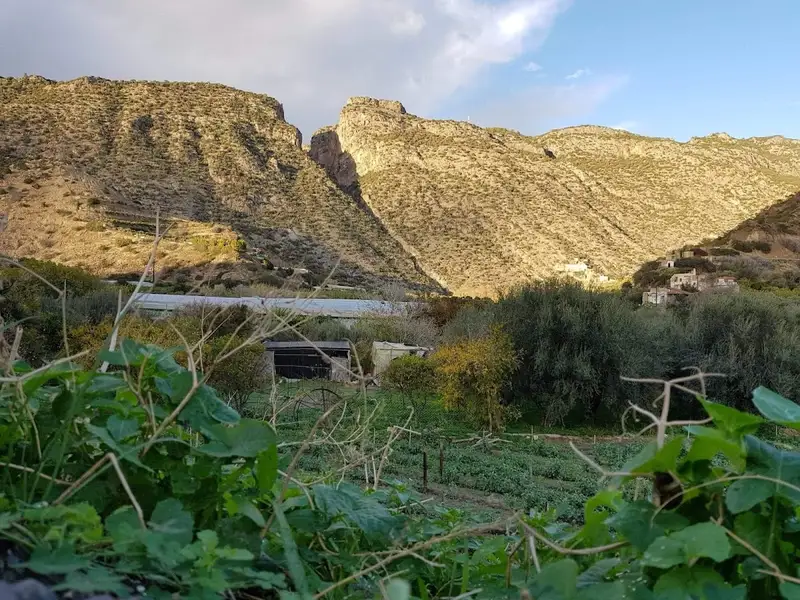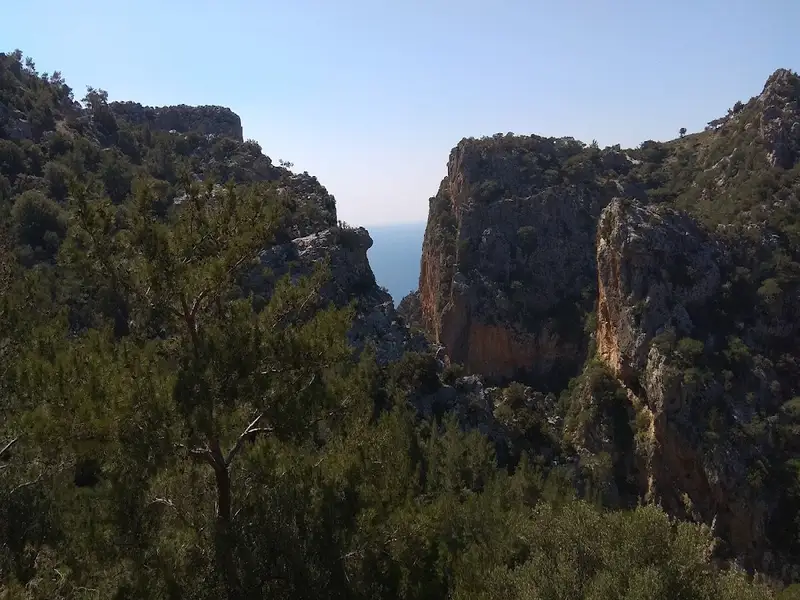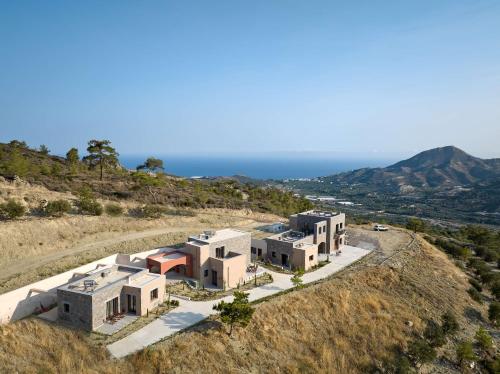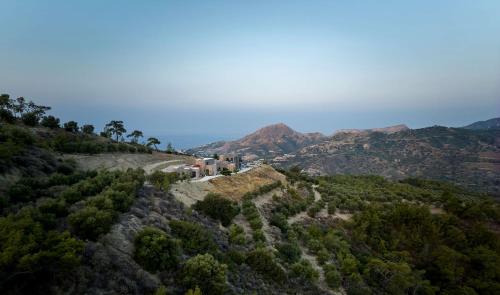
Through this route we explore the south-eastern Crete. We head to Agios Nikolaos and stop in the traditional village of Kritsa, one of the most famous villages of Crete with its narrow picturesque alleys and its traditional shops.
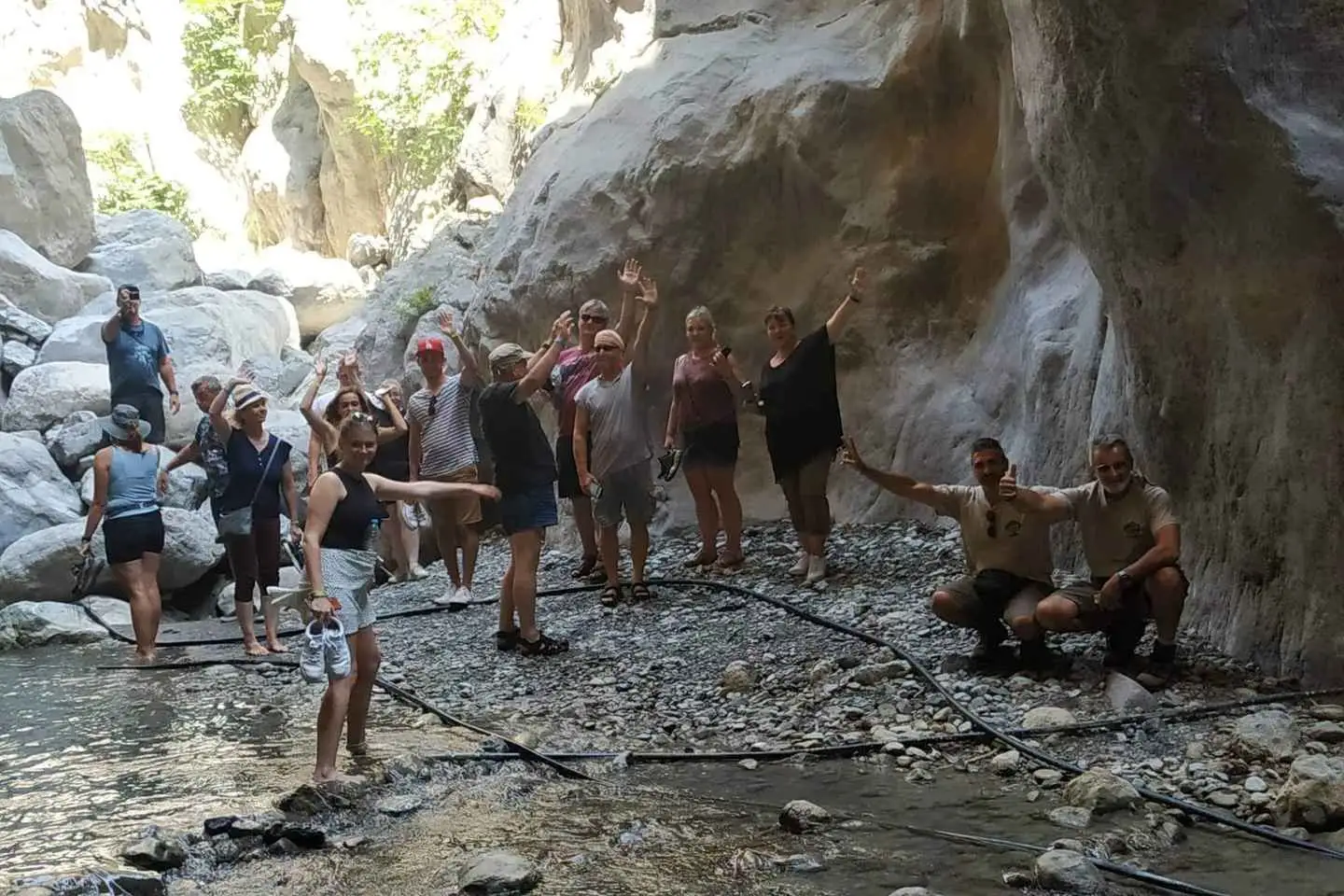
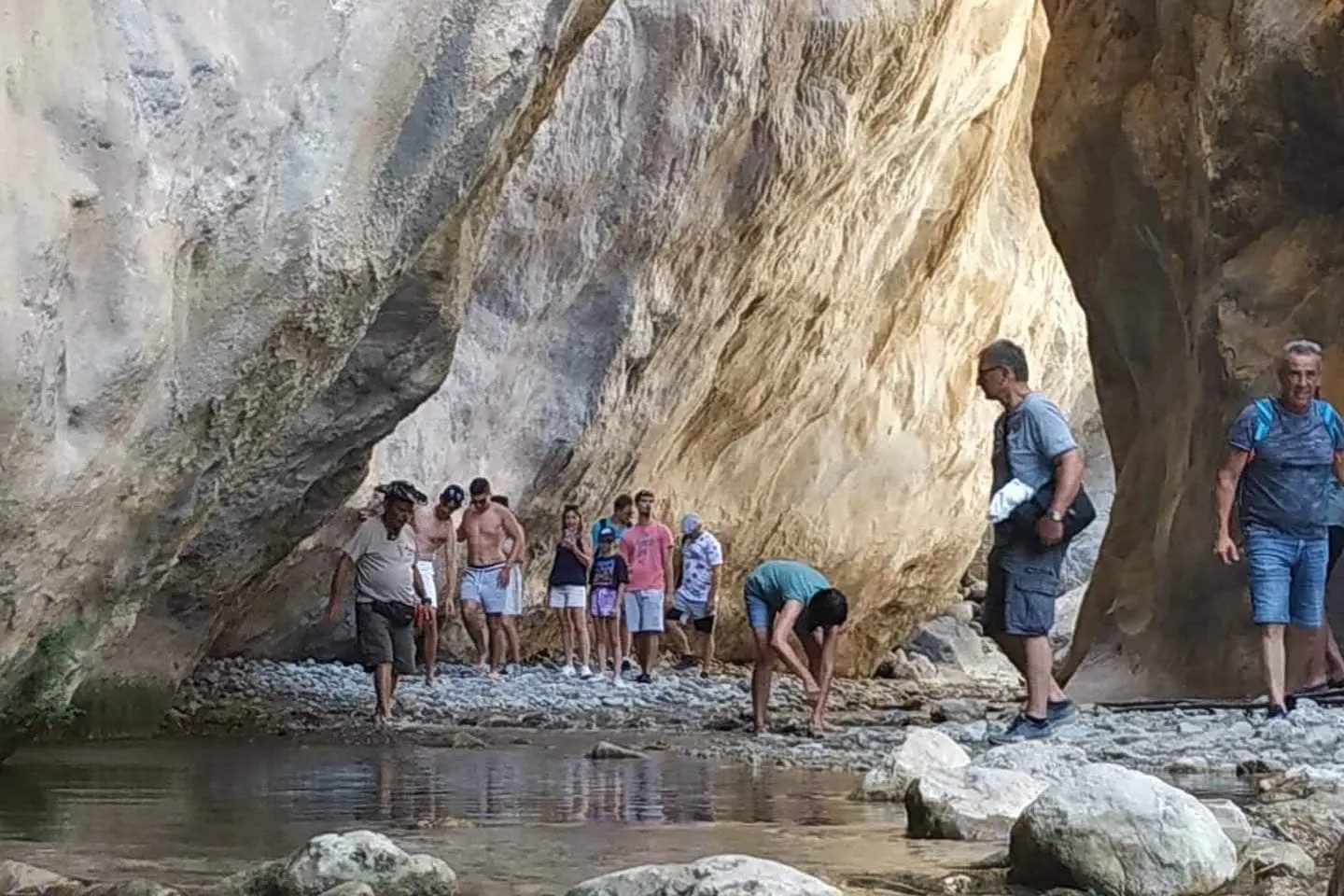
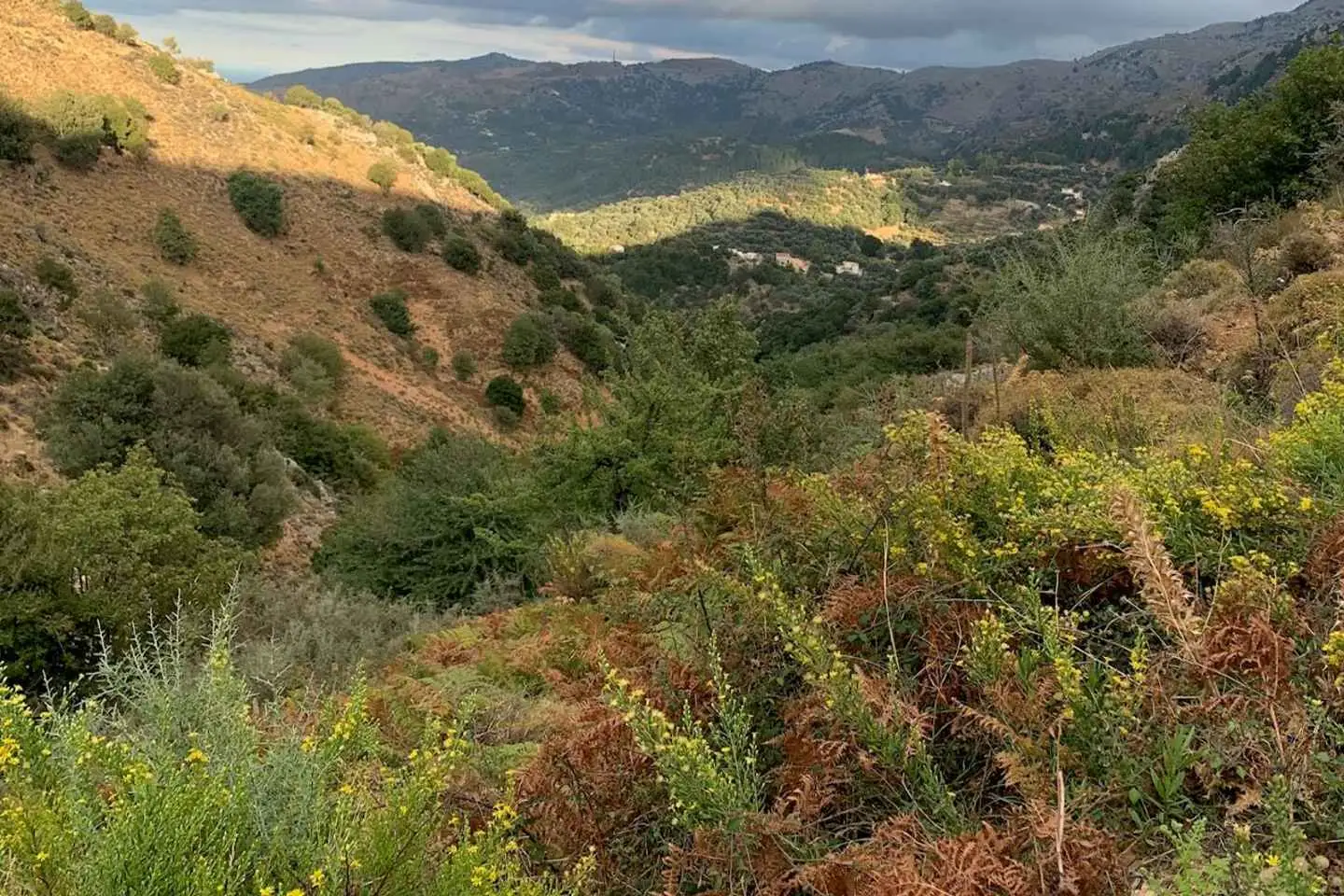
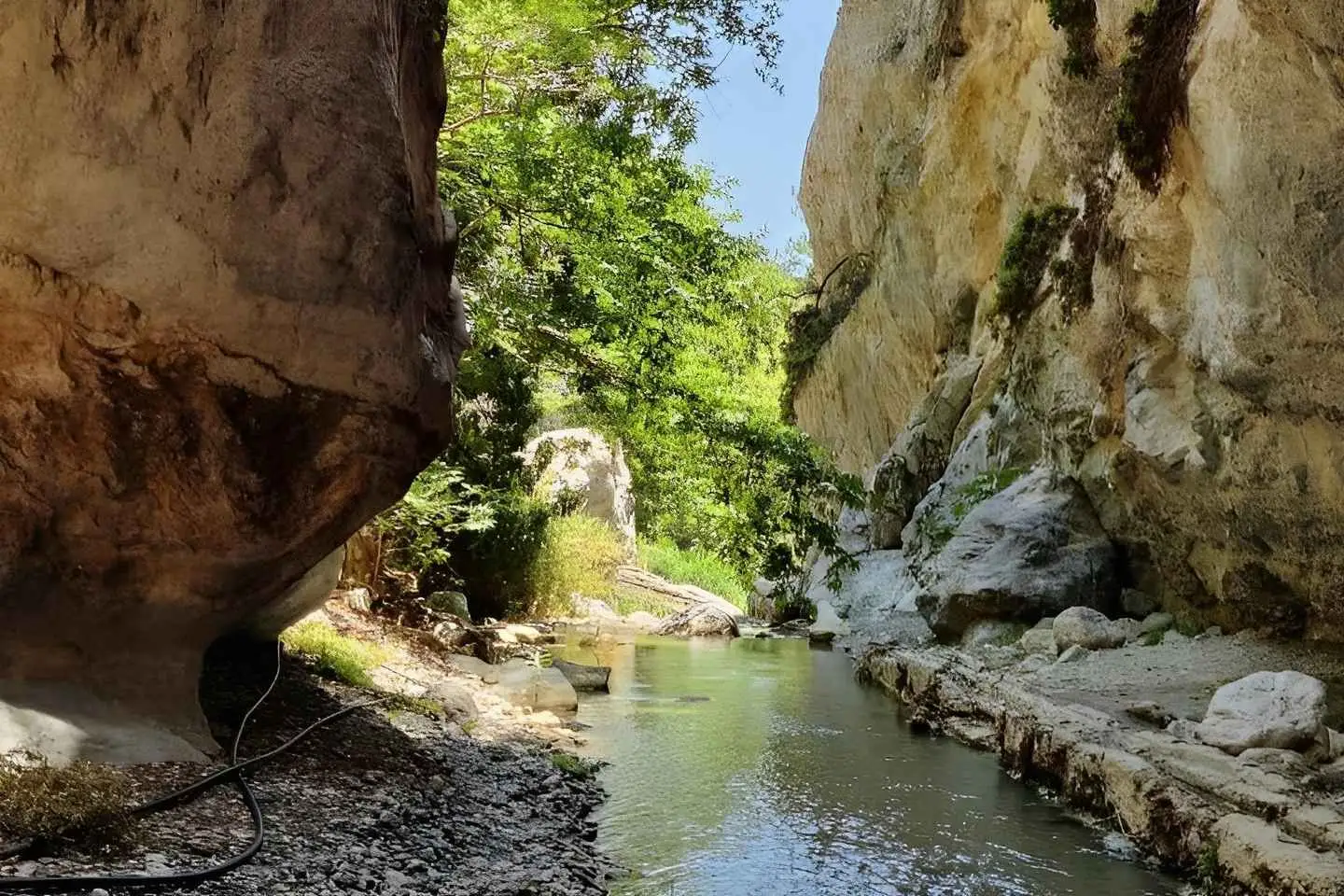
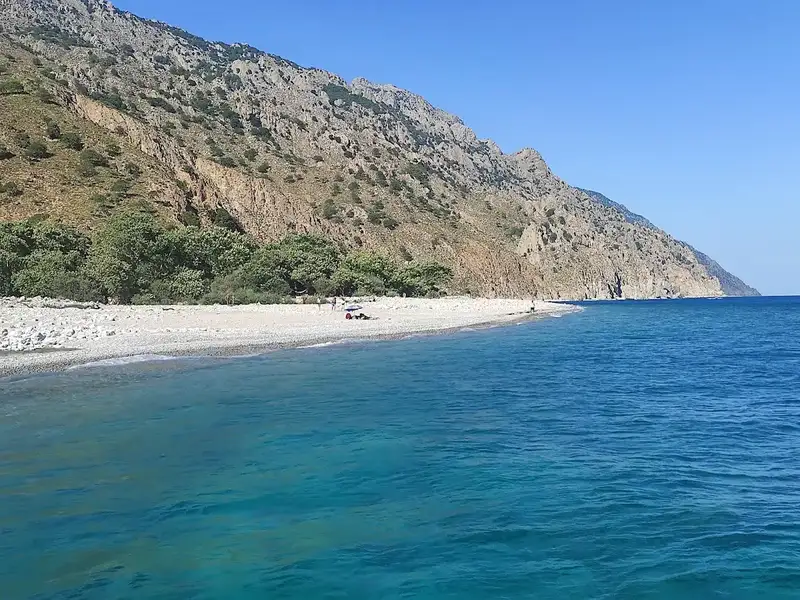
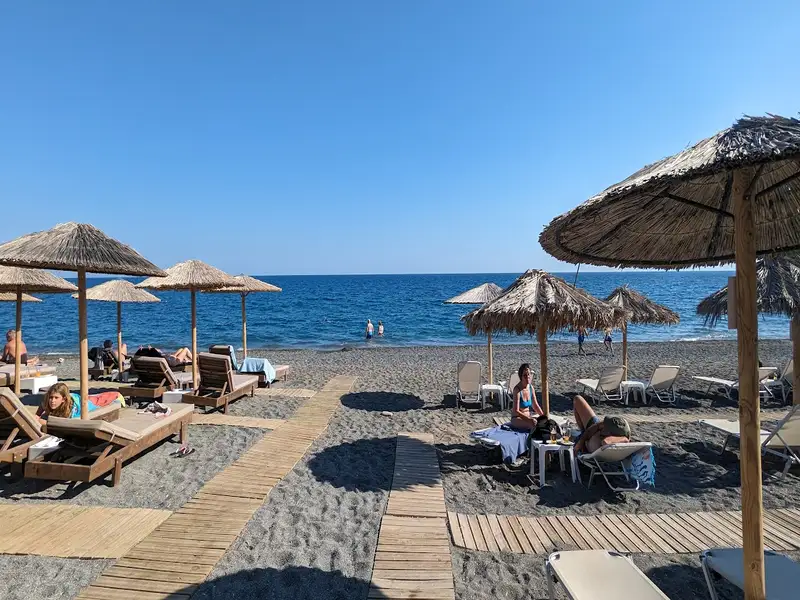
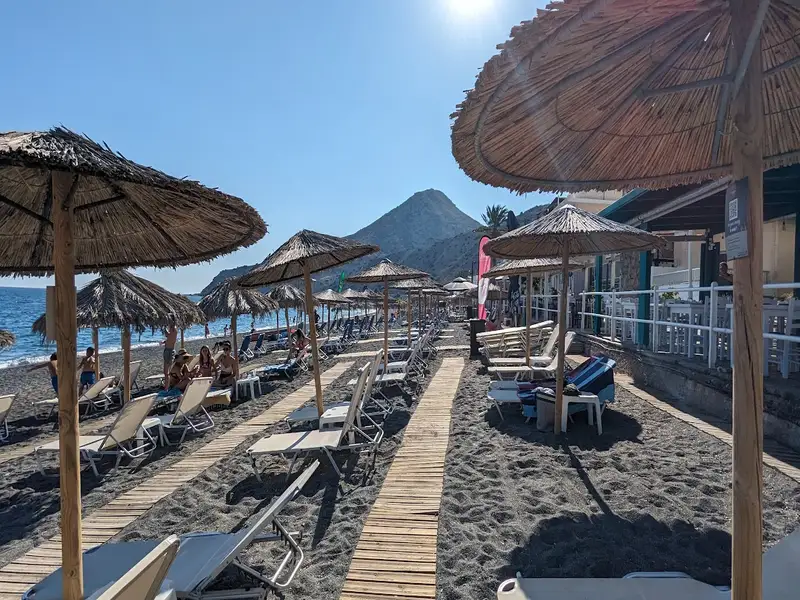
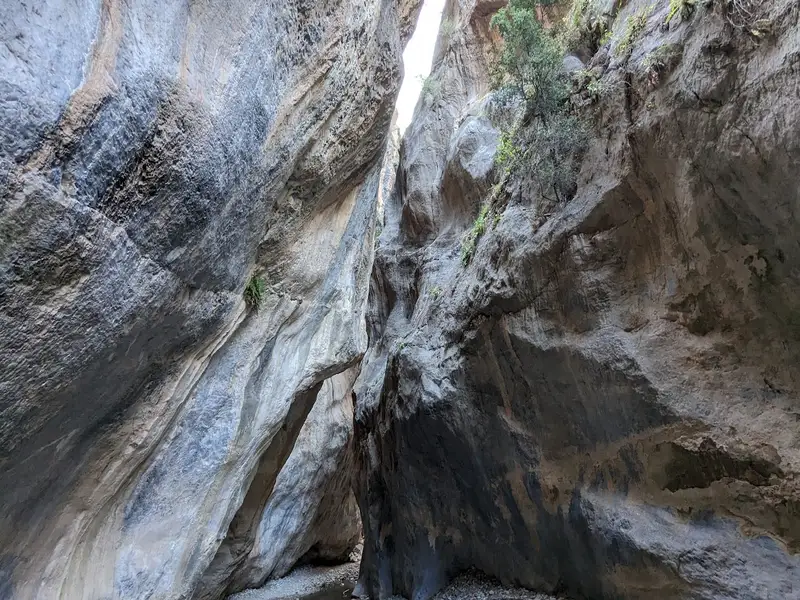
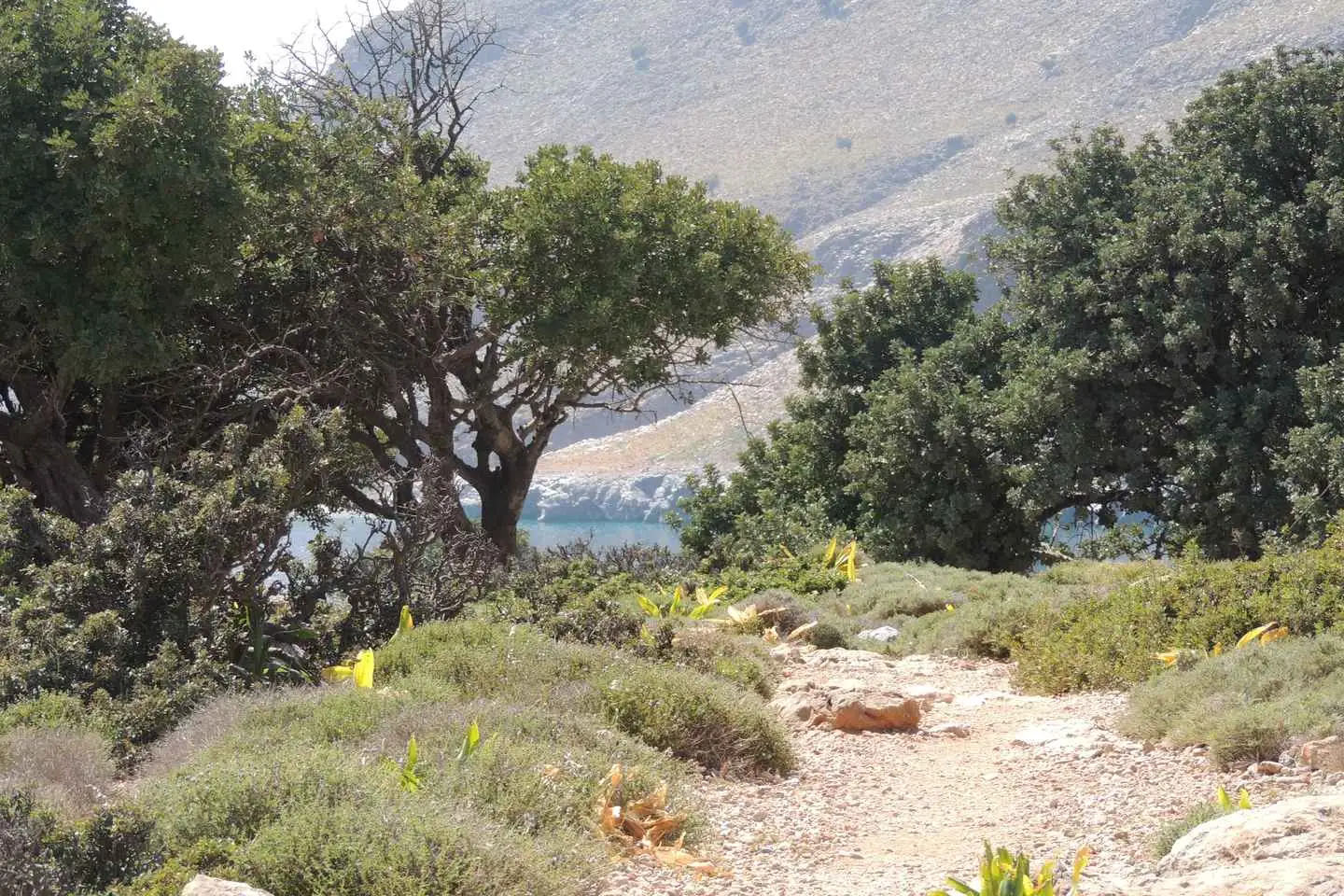
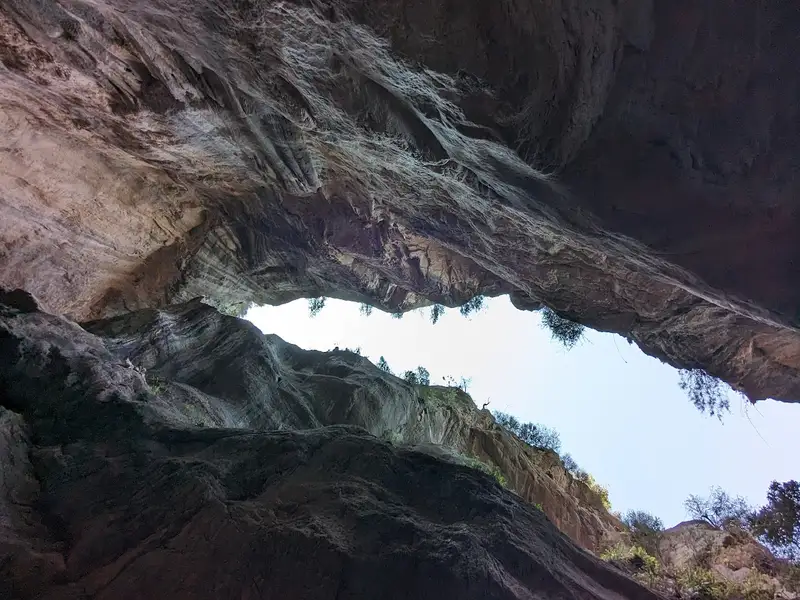
Afterwards we ascend through a beautiful route with magnificent views and end up at the Katharo Plateau at an altitude of 1250 meters where we stop for coffee in a traditional cafe. We cross the forest of SELAKANO and end up in the SARAKINA Gorge which will surprise you with its beauty. Continuing and after our amazing meal, we reach the southernmost end of eastern Crete, the village of Myrtos with its amazing beach where you can have a swim in the crystal clear waters of the LIBIAN SEA.
Returning through a very beautiful route we arrive at your hotel.
This route will leave you with the very best memories.
Discover the scenery of Crete’s White Mountains on a road trip from Platanias to Zourva. Explore local villages, stop to take photos of gorges, and savor a typical snack in Zourva.
Begin the tour with pickup in Platanias, then set off through the colorful scenery of the Orange Valley. Continue climbing slowly up the west side of the White Mountains, admiring the views as you go.
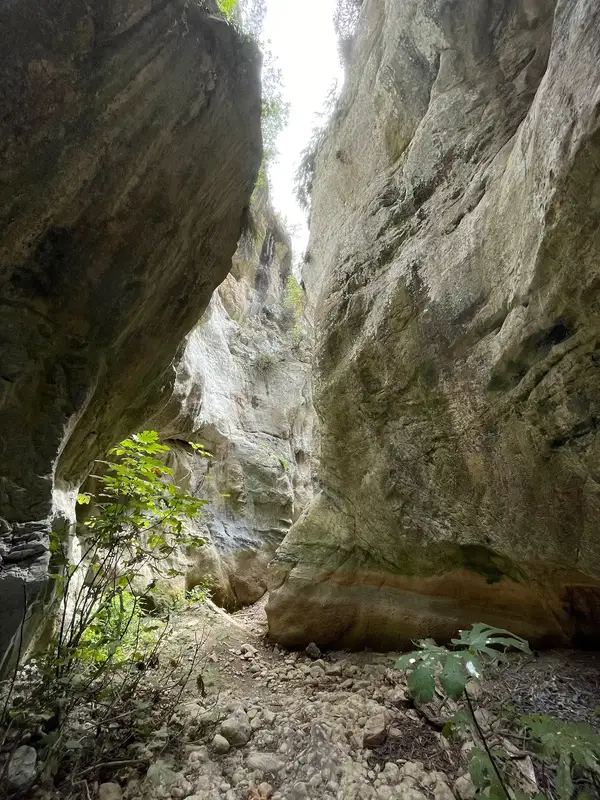
After passing Meskla village we will have a short stop to visit a small Sarakina gorge where we will see the impressive rock walls of the gorge just a short walk away from the road. Curvy road will take us all the way up at Zourva where we will have a break with a simple snack with incredible view.
Breathtaking sceneries will continue to the next village Therisso which played an important role in Crete’s modern history. On the way back to Platanias we will drive along the Therisso gorge where you can admire the high vertical cliffs and the huge Plane trees.
Route: Platanias – Patelari – Meskla – Zourva – Therisso – Varipetro – Agia – Drakiana – Platanias
Explore the natural beauty of South Crete on our “Sarakina Gorge” safari tour! Discover the charm of Kritsa village, capture breathtaking Mirabello Gulf views, and navigate the off-road terrain of Kroustas Pine Forest. Savor a cup of coffee in Males village. Afterward… The highlight of your tour awaits at Sarakina Gorge, a sublime natural spectacle that is certain to fill you with wonder and amazement. Hike through this stunning canyon, surrounded by towering rock formations and lush vegetation. The brave may even take a dip in the natural pools that dot the landscape. After hiking … Taste Crete with a delicious lunch combined with local wine in the family’s restaurant. As the journey continues, venture to the coastal haven of Myrtos, where crystal-clear waters beckon you to refresh in the embrace of the South Cretan sea. Dive into a Cretan paradise!
Through this route you will have the opportunity to take a wine tour at a local winery with tasting and information on wine production from ancient times to the present day. Also enjoy the route which combines impressive mountains, a panoramic view of southern Crete, the impressive gorge with the incomparably beautiful waterfall Richtra and the charming beaches of southern Crete.
Starting from your hotel we head to the winery where the wine experts will introduce you to this special world of wine. You will have the opportunity to taste but also to learn all the secrets of production, of the varieties we have in Crete, as well as winemaking techniques of yesterday and today. Then we will cross a route through small traditional villages surrounded by verdant hills and olive groves. Just before our descent into the gorge we will make a photo stop at a spot with an incredibly beautiful panoramic view of the South Cretan sea that will amaze you!
Then we will head to the local gorge by a highly impressive off-road descent with continuous spectacular views amidst nature. The Portela Gorge which has an extremely unspoiled landscape that will be deeply etched in your memory as its river passes through cliffs and sheer cliffs, rich in both flora and fauna ending in the spectacular Richtra waterfall with flowing water until the spring that ends in Keratokampos.
Having enjoyed our walking exploration among this magical landscape we will be transferred to the beach of Tsoutsouros, where you will have enough time to enjoy both the crystal clear waters of southern Crete and a wonderful bbq lunch by the sea. This quiet and welcoming place will enchant you and the photos you will take will be impressive.
Full of unique memories and images we take the way back having visited unique places and having experienced life experiences!
No results available
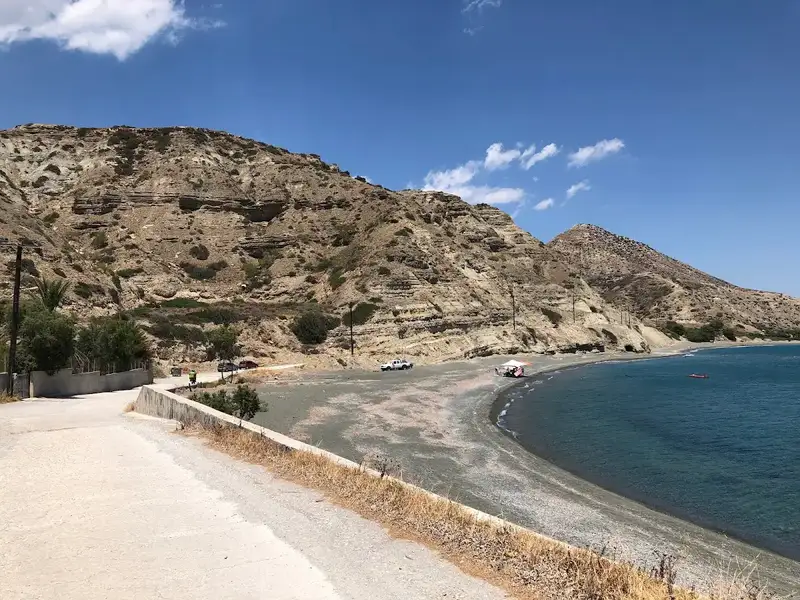
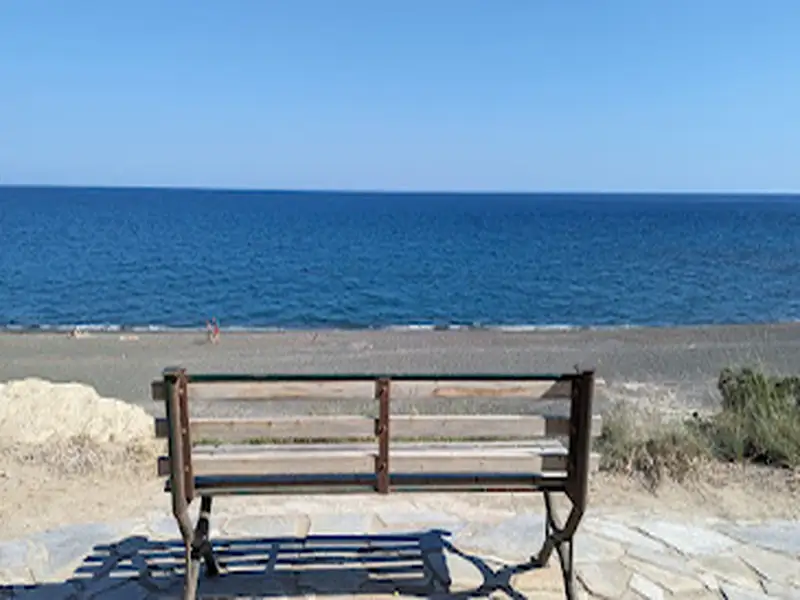
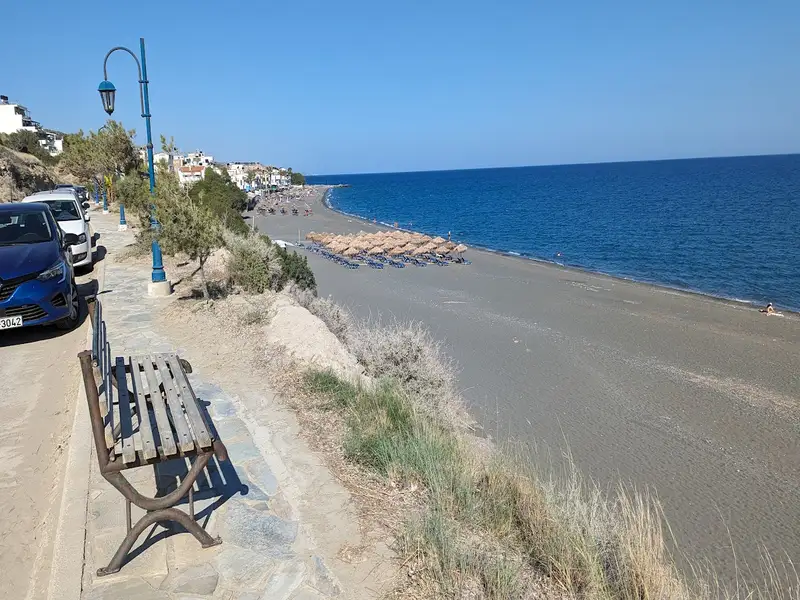
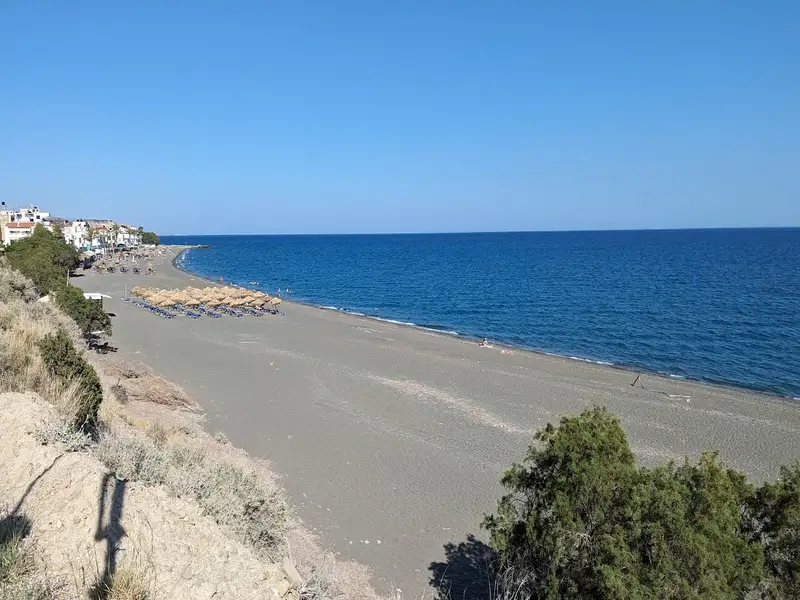
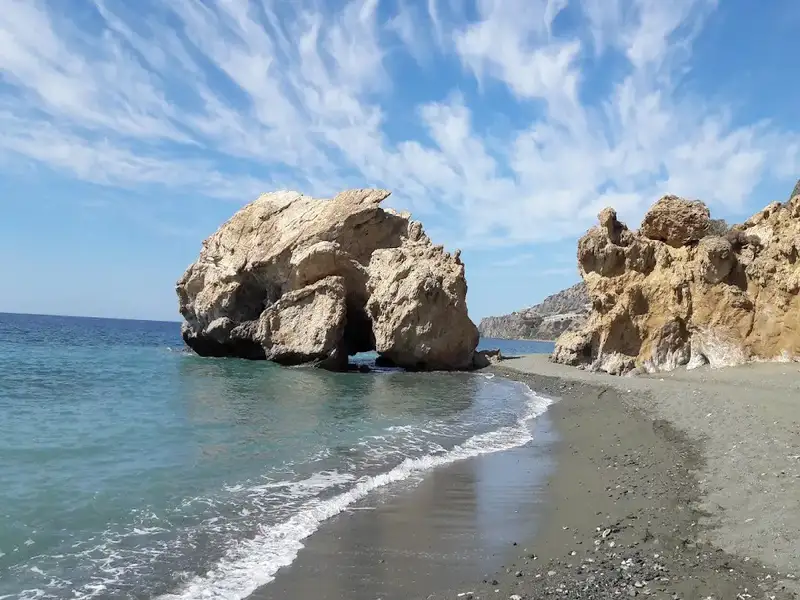
Vatos, a small settlement situated 18km west of Ierapetra and 3km east of Myrtos, falls within the jurisdiction of the village Gdohia. The village is accessible via the asphalt road that links Mirtos and Tertsa. Most of the locals earn their living by growing bananas and vegetables in the area’s greenhouses. Positioned at the entrance of a lush valley that starts in the north at Gdohia, the village boasts the expansive Vatos beach which extends east to Mirtos, featuring numerous secluded beaches along its coastline. The beach is distinguished by its unique grayish pebbles typical of southern Crete, and it’s known for its deep waters. As Vatos is not a developed area, the beach is usually tranquil, frequented mostly by locals. Some parts of the coast are adorned with tamarisk trees. To the west of Vatos, you’ll find the settlement of Kalikovrehtis, home to another pebbly beach.
If you happen to visit Vatos on July 27th, you’ll have the opportunity to participate in the feast day of the church of Saint Panteleimon. It’s also worth visiting the nearby village of Gdohia, with its narrow lanes and rejuvenating springs. A sad incident occurred in Gdohia in the autumn of 1943 when 43 residents were executed by the Nazis in revenge for the killing of two German soldiers in the village of Kato Simi. The village is also home to the ancient chapel of Annunciation, which houses rare Byzantine icons. Lastly, archaeologists have discovered traces of a pre-Minoan settlement between the beach and the village.
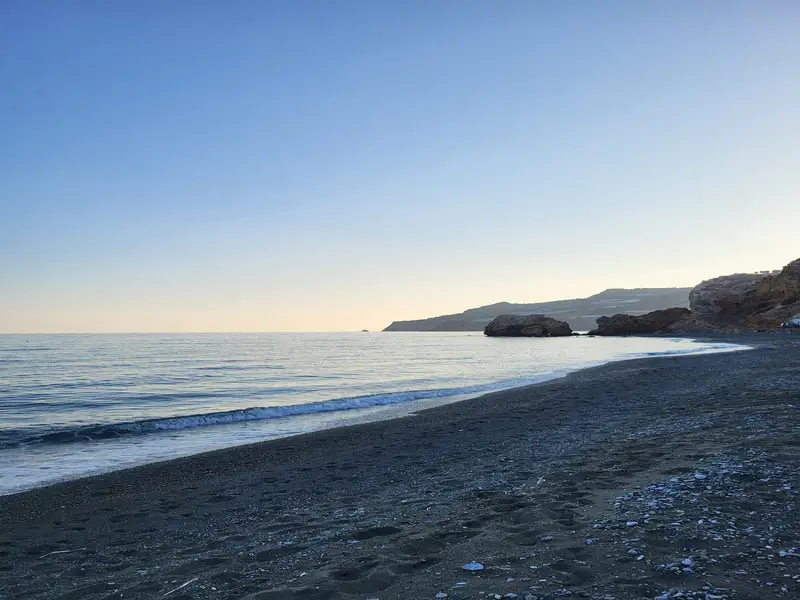
The Kallikovrechtis beach, situated 19km west of Ierapetra and 4km east of the scenic town of Myrtos, can be accessed via an asphalt road from Myrtos or Tertsa. This beach is part of the Ghodia village outskirts and is created at the Kalikovrechtis stream’s exit, nestled between the peaks of Kolechtos and Kako Oros, right on the boundary that separates the counties of Heraklion and Lassithi.
Kallikovrechtis is home to only a handful of cottages, and the beach itself is entirely untouched. It boasts beautiful, fine, greyish pebbles, and the water is typically tranquil. A few tamarisk trees provide shade, and due to the high and steep slopes, the beach gets shaded early in the afternoon. The road linking Teresa and Myrtos runs directly above the beach, making access quite easy.
Myrtos, a quaint seaside village, lies 13km west of Ierapetra where the River Kryos meanders through the stunning Sarakina Gorge and into a valley abundant with greenhouses and citrus groves. Despite recent mild development, Myrtos has retained its traditional charm. Its appealing beaches, characterized by coarse grey sand that doesn’t stick to the skin, have amassed a global following. The village offers small hotels, bars, cafes, restaurants, supermarkets, a gas station, and a clinic, in addition to a nearby pharmacy and accessible bus route to Ierapetra.
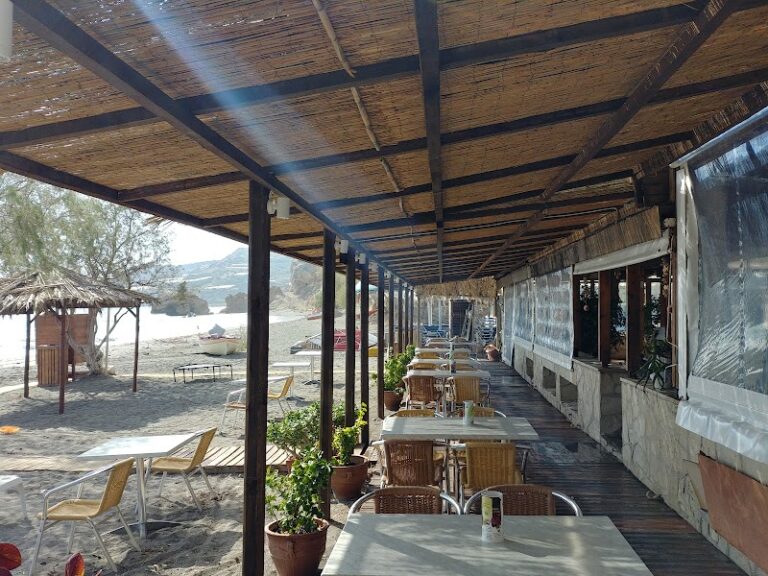
The extensive beach, considered among the finest in southern Crete, is ideal for serene family vacations as it’s sheltered from strong winds. According to locals, Myrtos is where the wind never rages. The beach is well-equipped with lifeguards, umbrellas, showers, changing rooms, cafes, restaurants, water sports, and beach volleyball. As you head west, the beach widens and offers even more tranquility.
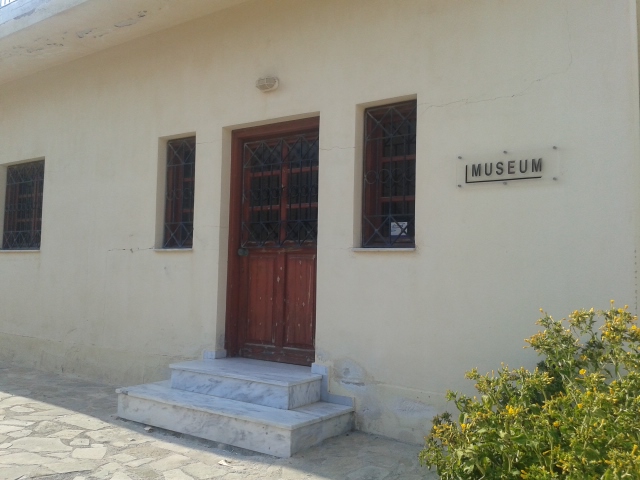
Take a leisurely stroll around Myrtos’ local harbor or wander through its traditional narrow streets filled with lush gardens and homes that echo Aegean landscapes. The surrounding nature and gorges are also worth exploring. Notably, you can visit two Minoan settlements, Fournou Korifi (near Nea Myrtos) and Pirgos (on the east shores of the River Kryos), which were uncovered during excavations. The Archaeological and Folk Art Museum of Myrtos, situated next to the old church of St. Anthony, is a point of interest. Lastly, a monument in the village commemorates the 18 victims who were executed by the Nazis in 1943 as retribution for the deaths of two Germans in the neighboring village of Symi.
Tertsa, a quaint village, is nestled 91km south of Iraklion and 54km southwest of Agios Nikolaos, positioned between Myrtos and Psari Forada. The village, situated in a lush valley carved by the Tsounas river, houses a fresh water spring within a small gorge formed by the river. The majority of the land in Tertsa is owned by settlers from the northern village of Sykologos, just 7.5km away. Originally, the structures in the settlement served as storage depots for carobs and citrus fruits harvested in the region. Presently, the handful of villagers continue their agricultural pursuits, their land teeming with greenhouses of bananas and fields of tomato, pepper, cucumber and more. The Byzantine church of St. George is a significant landmark near the village.
The village overlooks a tranquil beach adorned with rough grey sand. Despite its lack of development, Tertsa retains its traditional Cretan charm, with just a few taverns and rooms available. The settlement is shaded by several tamarisk trees. The beach extends westward to Vourdolakos bay, beyond the rock of Psaroharako. The beach beyond the rock, also named Psaroharako, is more secluded and beautiful than the one in front of the settlement.
No results available
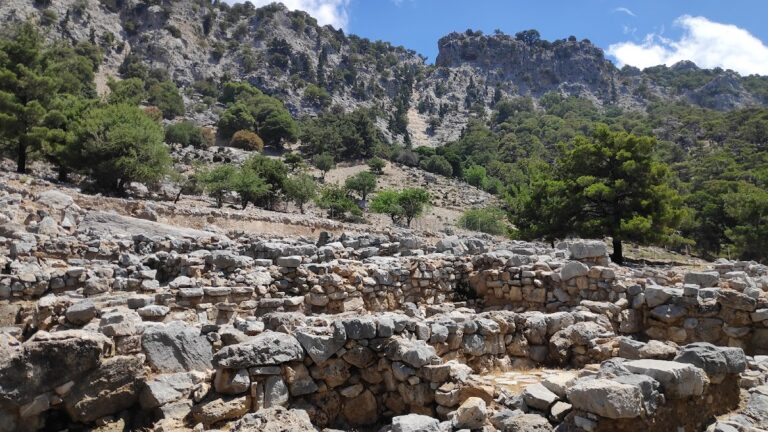
The Sanctuary of Hermes and Aphrodite can be found in a stunning location in the southern part of the Dikti mountain range, at an altitude of 1150m, near the Krya Vrysi spring, and about 5 km northeast of the village Kato Symi. The site spans 1.7 hectares, with only a portion having been excavated. To this day, it remains the most significant archaeological site in the Viannos province. Established around 2000 BC, like many other Minoan Peak Sanctuaries in Eastern Crete, worship at this sanctuary continued until Roman times, making it one of the most enduring sanctuaries of Greek Antiquity. Hermes was worshipped from the 7th century BC, while Aphrodite was worshipped during the Hellenistic Times (around 330BC). In the early Christian era, a small chapel was built at the site.
The sanctuary’s location is associated with the Ieron Oros (Holy Mountain), as according to Ptolemy, it was situated between the ancient Tsoutsouras (Inatos) and the ancient Ierapetra (Ierapytna). Due to its immense importance, it is believed to have been a point of contention among various powerful cities in the region. However, the respect that everyone had for the sanctuary is evident in the fact that it was never destroyed by vandalism, but only by natural causes.
Most archaeological findings from the 11th century BC include evidence of animal sacrifice and religious feasts, while animal replicas, tubular utensils, plates with male figures carrying or leading animals, clay cups, three swords, a golden ring-seal depicting a runner, and a hieroglyphic plate were discovered in the ashes. Ritual vessels and utensils do not display the typical female figures of the Minoans, so it has not been determined which deities the sanctuary was dedicated to during the Minoan times. After the 11th century BC, the vessels were replaced by figurines whose main theme was the coming of age of the visitors. According to inscriptions found at the sanctuary, the patron saint of adulthood was Hermes Kedritis, who was worshipped alongside the goddess Aphrodite. The most significant findings from the sanctuary are exhibited in the Archaeological Museum of Heraklion.
Excavations began in 1972 and continue sporadically. The site can be visited after contacting the guard. A forest dirt road leading to the sanctuary starts from Kato Symi and goes towards the Lapathos plateau.
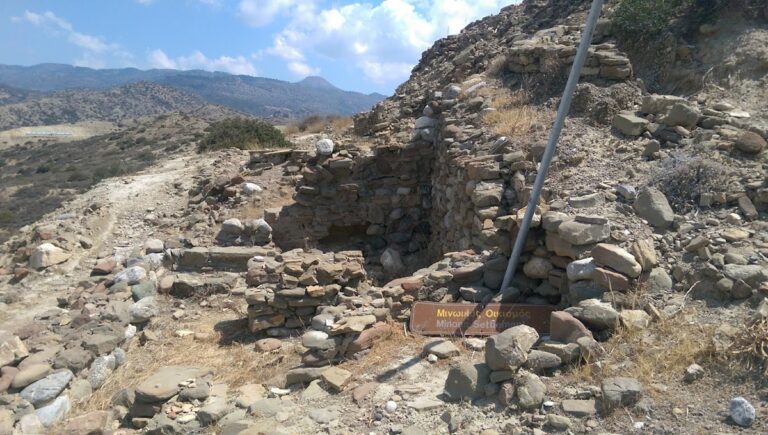
The lesser-known Minoan settlement of Pirgos can be found just east of the coastal village of Myrtos, near Ierapetra, situated on a low hill overlooking the eastern bank of the river Krygios. With views of both the sea to the south and the forested Dikti range to the north, this location was chosen by the Minoans after they abandoned the nearby settlement of Fournou Kefali. Pirgos thrived from 2200 BC until around 1450 BC.
Archaeologist Gerald Catogan first excavated the site in 1969-70, with the British School of Archaeology continuing his work in 1981-82. Numerous building ruins were discovered, including a luxurious building at the top of the hill, believed to be the leader’s residence. The pottery found at Pirgos was quite elegant, showcasing sophisticated and impressive art.
A short trail leads visitors through the various buildings to the top of the hill, which is the most interesting point of the site. Here, floors, foundations, walls, and various stairs made from colorful stones ranging from white to purple create a visually striking puzzle.
No results available
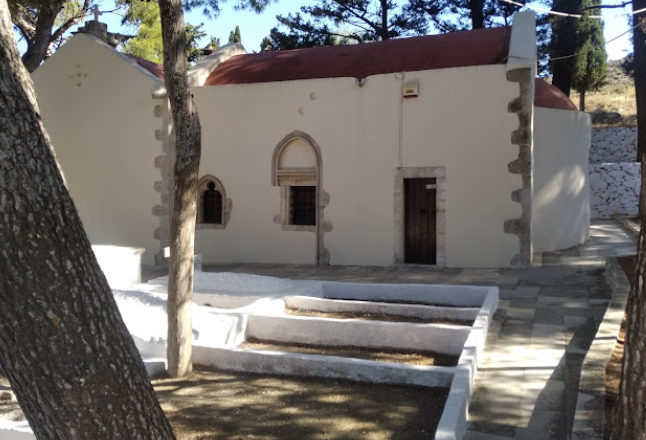
The Agia Moni (Holy Monastery) is situated approximately 60km east of Heraklion and 38km west of Ierapetra, close to Kavoussi Gorge. It is reachable through a brief road that begins at Ano Viannos and traverses a lush landscape.
Functioning as a male monastery, Agia Moni is small and ancient. The Monastery’s church, featuring a striking gate, is dedicated to the Assumption (celebrated on August 15). Surrounding the church are the monks’ quarters.
While the exact date of its establishment is uncertain, tradition holds that it was constructed by three Cypriot nuns who initially built the church of Agios Dimitrios in Keratokambos. Due to ongoing pirate attacks, they were compelled to relocate to the mainland, where they established Agia Moni at its present location. It is also believed that one of these nuns founded the Panagia Keralimeniotisa monastery near Psari Forada.
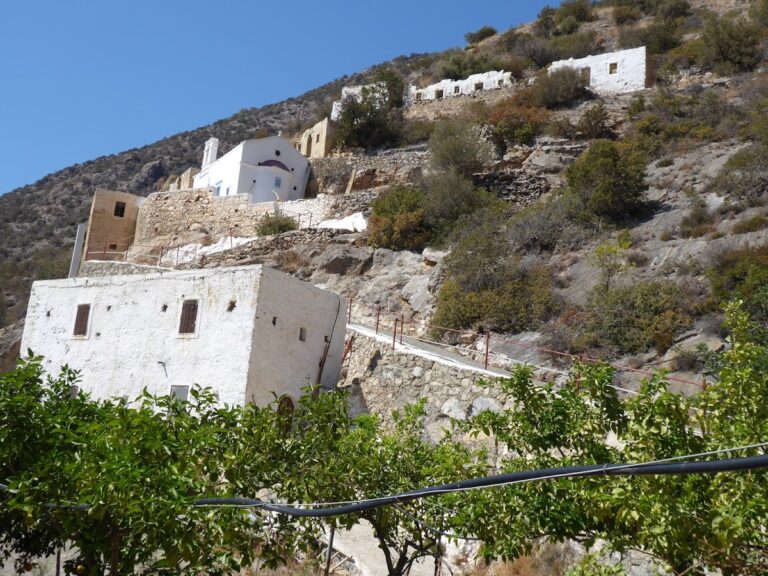
The Arvi Monastery is situated near the Arvi Gorge, atop a high vantage point with stunning views of the sea. Currently abandoned, the remaining monks’ cells provide a glimpse into its history.
It is thought that the monastery was initially constructed on the remnants of the ancient Temple of Arvian Zeus, located in the valley formed at the exit of the Arvi Gorge. However, due to the formation of marshes in the valley, it was eventually relocated to its present elevated location.
Within the monastery grounds, there are two churches – one quite old and the other relatively new – both dedicated to Saint Anthony.
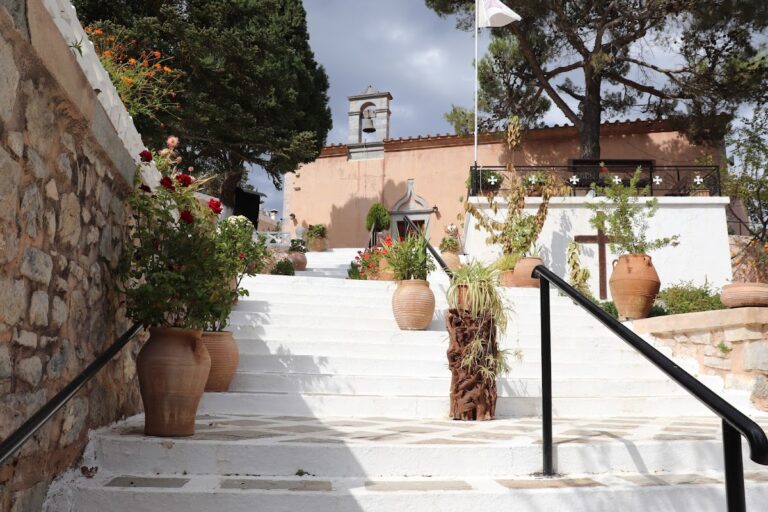
Located on a small hill adorned with oak trees near the villages of Agios Konstantinos and Marmaketo in the Lassithi Plateau, the Monastery of Panagia Kroustallenia is a historically significant site in Crete that is always worth exploring.
As per local tradition, the monastery’s name is believed to have originated either from its first founder, Kroustallenia, or from an icon of Panagia (Virgin Mary) discovered in a nearby cave, which was engraved on crystal (Kroustalenia also translates to “made of crystal” or “glass”).
The primary temple within the monastery is devoted to the Virgin Mary and observes its celebration on August 15. The monastery complex primarily features 20th-century buildings due to the multiple destructions it faced during the Turkish occupation.

Located in the picturesque green area of Malles near Ierapetra, the Monastery of Panagia Exakousti now serves as a convent for women. The nuns run a textile workshop, a tailoring and needlework shop, and sell various souvenirs.
The monastery’s history is closely tied to a captivating figure who once resided there, Abbot Hatzi Ananias. It is said that as a baby, Ananias would not nurse on Wednesdays and Fridays, and refused to touch his mother’s breast. He never consumed meat, fish, or cheese, and dressed in animal skins while using a stone as a pillow. At 14 years old, he moved to Kapsas Monastery, where he was influenced by Monk Gerontoyannis. In 1877, he returned to Malles and discovered the icon of the Virgin Mary (Panagia) in a cave amidst the ruins of the Exakousti Monastery. This inspired him to rebuild the monastery. Following his death, Ananias was declared a saint, and during his lifetime, he was believed to have performed miracles. Pilgrims would travel to Exakousti to receive his blessings or healing. Today, the monk’s tomb can be found within the monastery.
The monastery’s church is a single-aisled, vaulted basilica dedicated to the Virgin Mary’s Birthday, celebrated on September 8th. While the icons on the iconostasis are more recent, two older icons of Panagia and John the Baptist are also present. The iconostasis was crafted by the Makrakis and Farsaris brothers, renowned wood carvers in Crete’s religious community. Additionally, the monastery houses a small cave with a chapel dedicated to the Transfiguration of Christ, where Ananias discovered the Virgin Mary’s icon. In the northeastern corner of the monastery, the nuns have also constructed a chapel dedicated to the Blessed Fathers and Mothers.
No results available
No results available
No results available
No results available
No results available
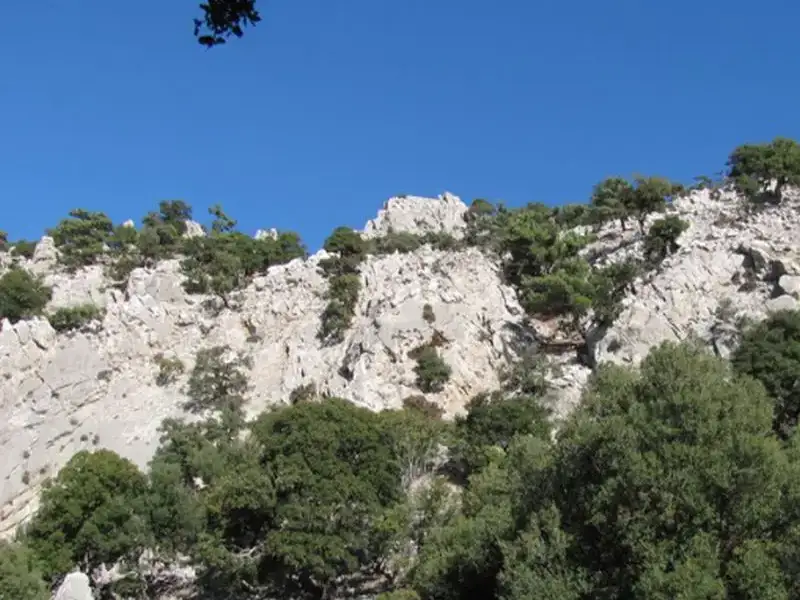
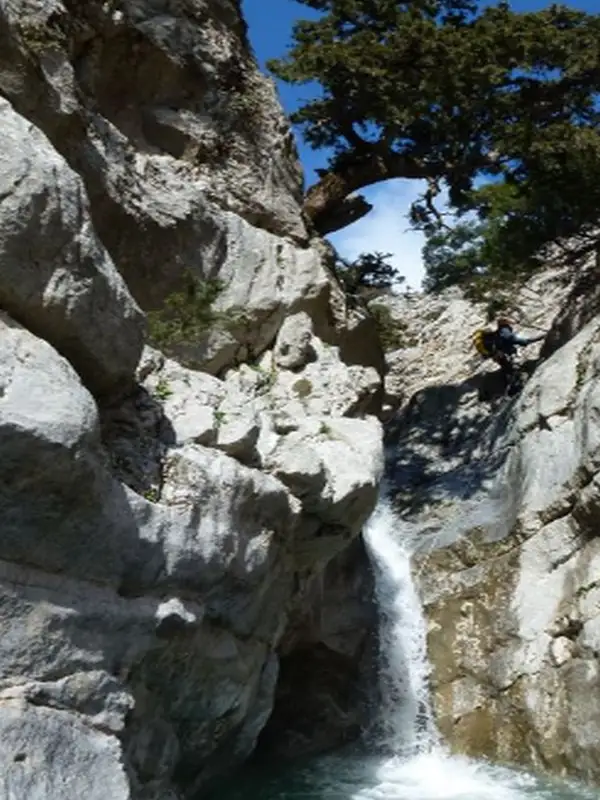
The Holy Apostles (Agii Apostoli) or Lapathos Gorge is situated on the southern part of Mount Dikti, 28km to the west of Ierapetra and 72km to the south of Heraklion, in the broader vicinity of the village of Kato Simi. This is a technical canyon, implying that crossing it necessitates technical gear and specific training. The Lapathos canyon is an ideal challenge for highly skilled canyoners. It spans approximately 4km and there is a height difference of about 900m between the start and finish points.
The canyon originates from the small plateau of Lapathos, where the Holy Apostles church stands, and concludes on the road that links the village of Pefkos with Ierapetra. Although it’s typically a dry canyon, in 2009, the team of seasoned canyoners Vassilis Vagias, Savvas Paragamian, and Giannis Skondinakis discovered it to contain surprisingly large amounts of water.
The gorge features 28 steep descents that demand excellent rappelling skills. The tallest rappel is 80m, making it one of the highest in all of Crete. The sheer walls of Lapathos serve as nesting grounds for a variety of birds including vultures, hawks, and crows. Towards the gorge’s exit, the vegetation is predominantly made up of pines and cypresses. Following the exit, the stream continues its journey to Tertsa beach.
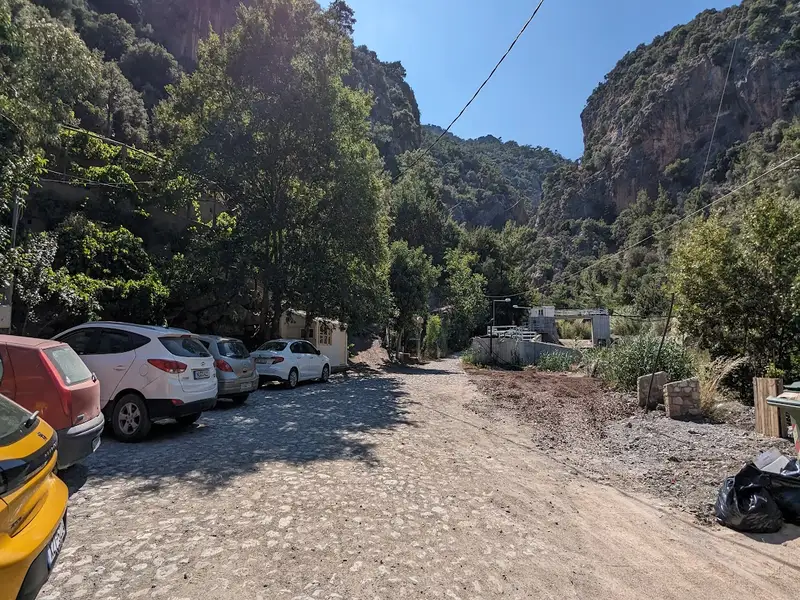
This magnificent natural phenomenon – Sarakina Gorge – can be found near the traditional village of Mythi and the coastal settlement of Myrtos, where the Kryos river merges with the sea.
As the tale goes in Greek mythology, Zeus’s son, the giant Sarantapihos, once paused to quench his thirst from the Myrtos or Kryos river, near Ierapetra. His sweeping beard slashed the mountain, dividing it into two parts, thereby forming the Sarakina canyon.
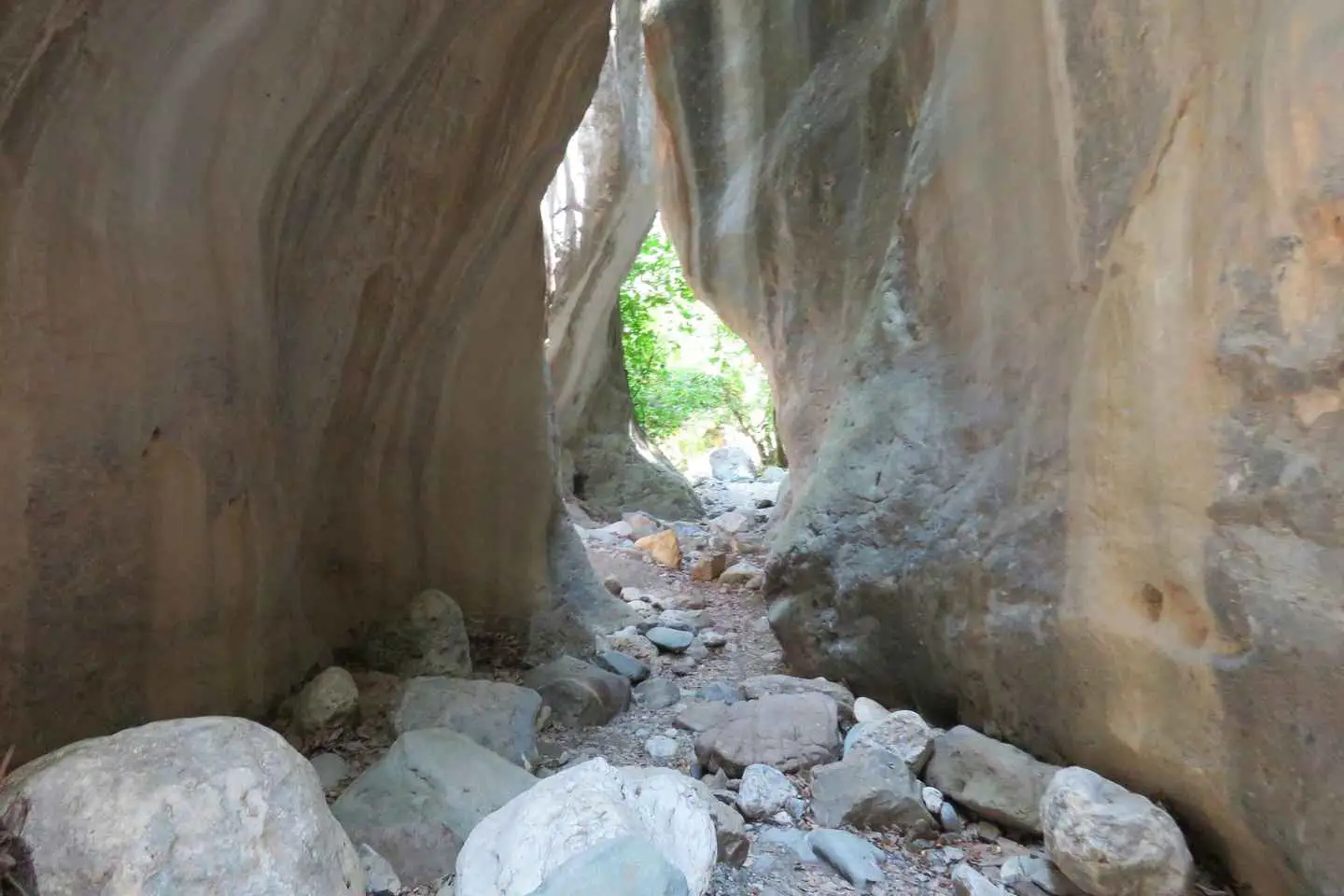
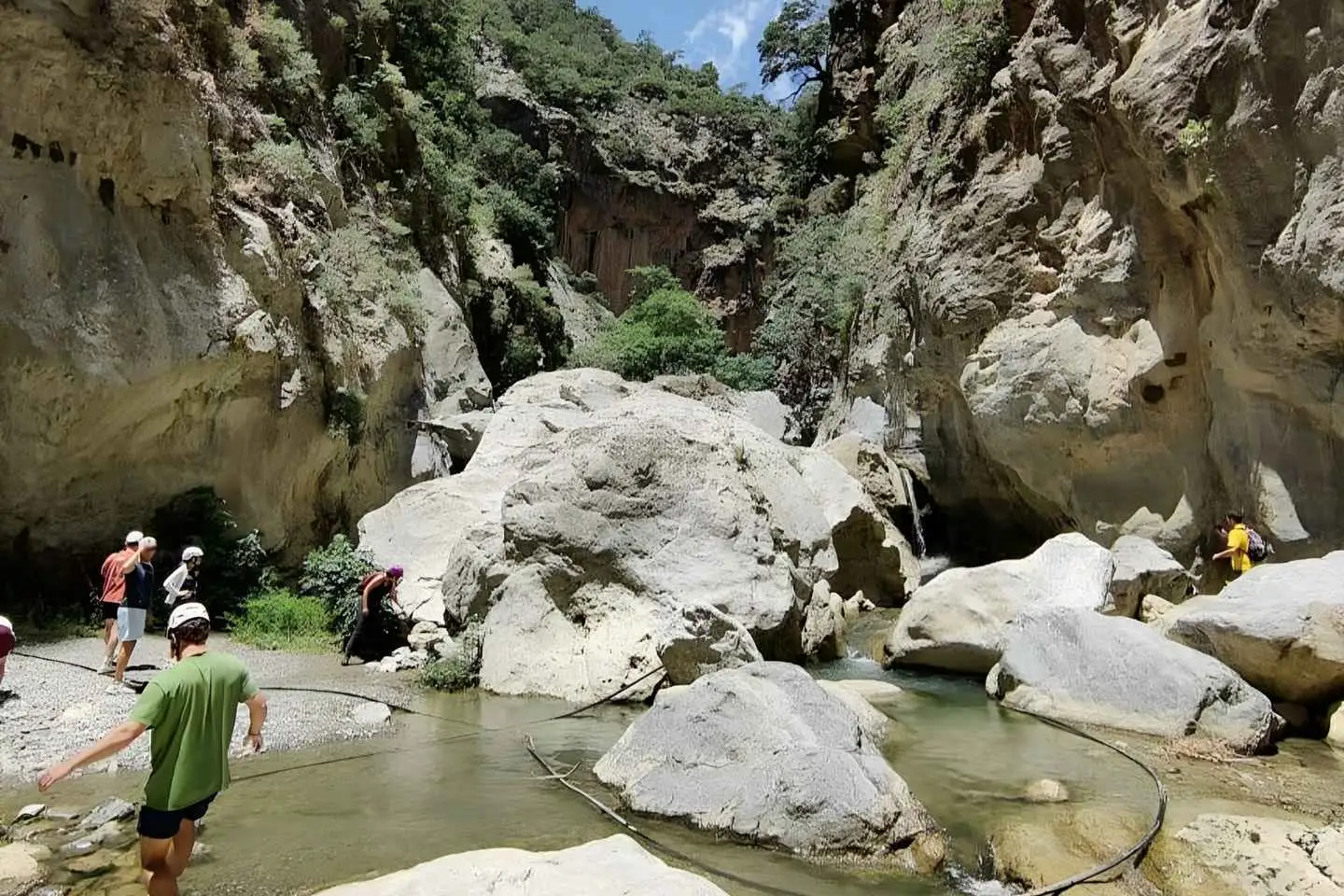
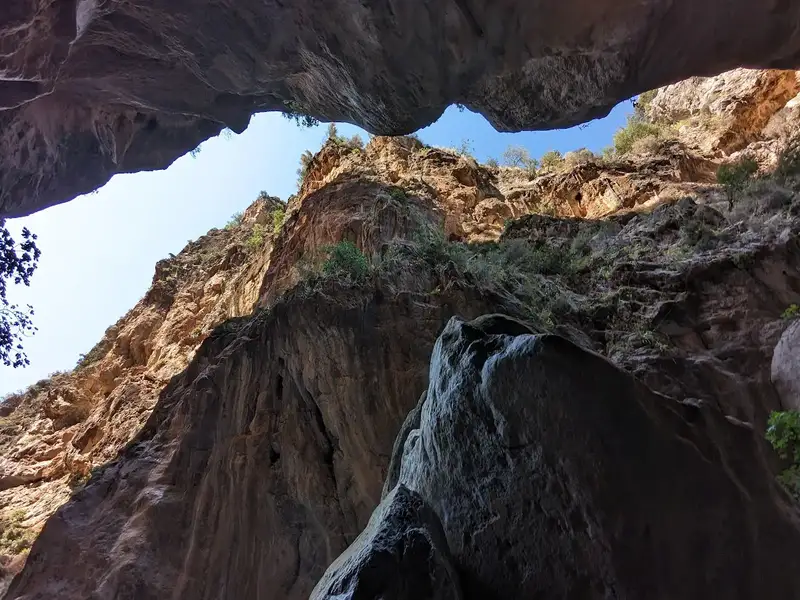
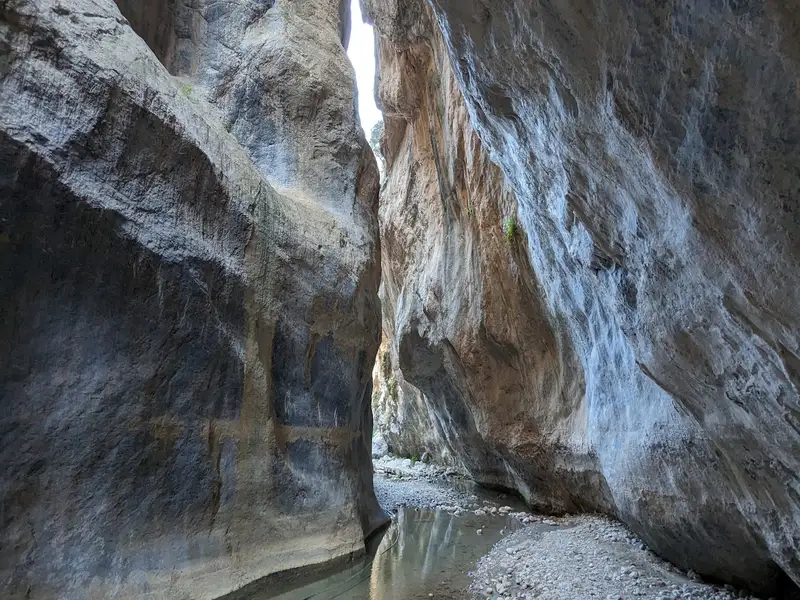
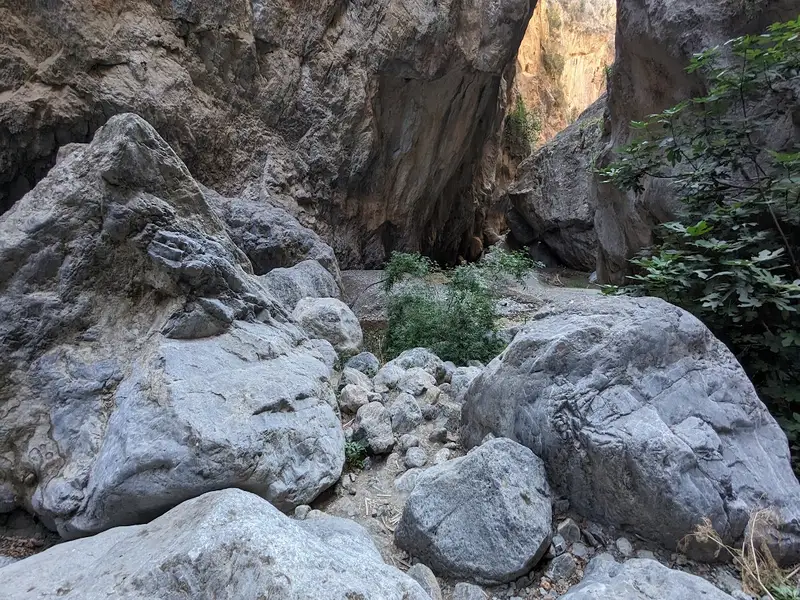
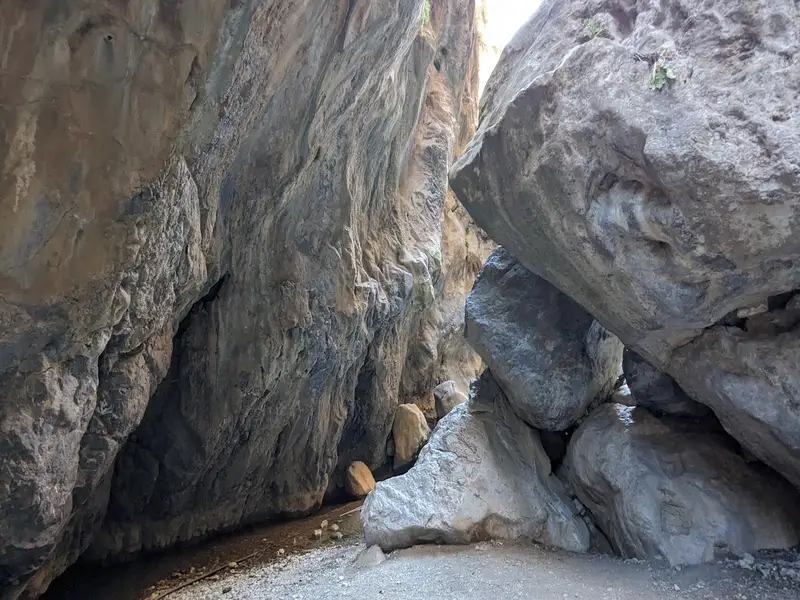
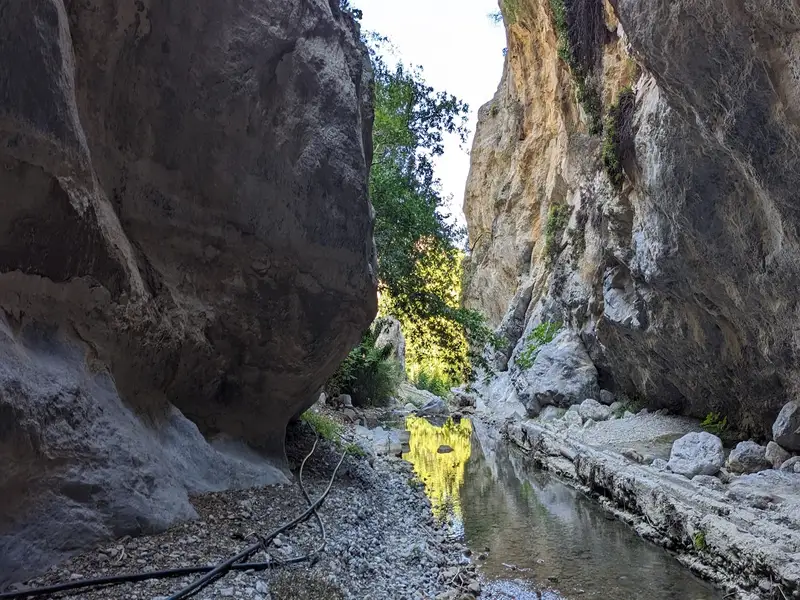
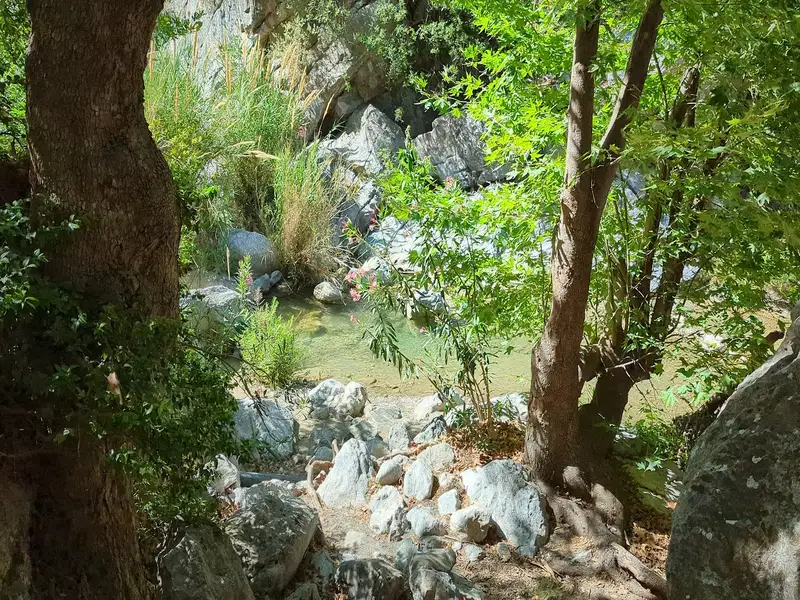
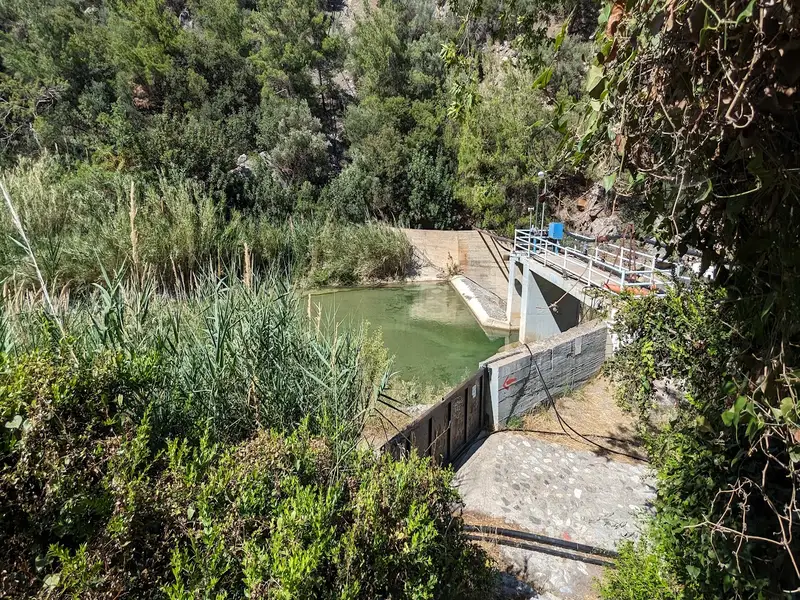
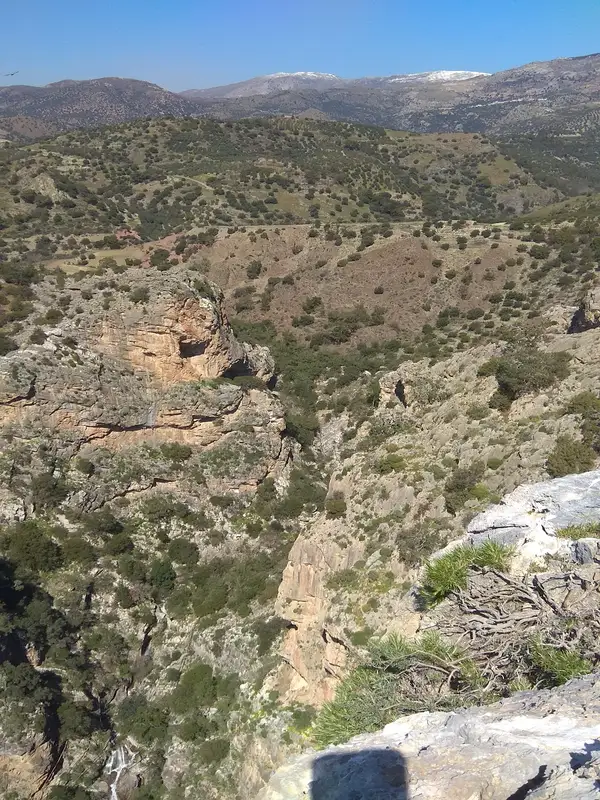
Regarded by many visitors as Crete’s most captivating hiking gorge, Sarakina may only stretch 1.5km, but within this concise journey, one encounters an awe-inspiring spectacle of nature, a natural sculpture painstakingly crafted by water over countless years. The canyon boasts towering walls that rise up to 150m high and extremely narrow passages often found in technical gorges that require canyoneering equipment. The width of Sarakina fluctuates between 3 to 10 meters, rarely extending beyond these points.
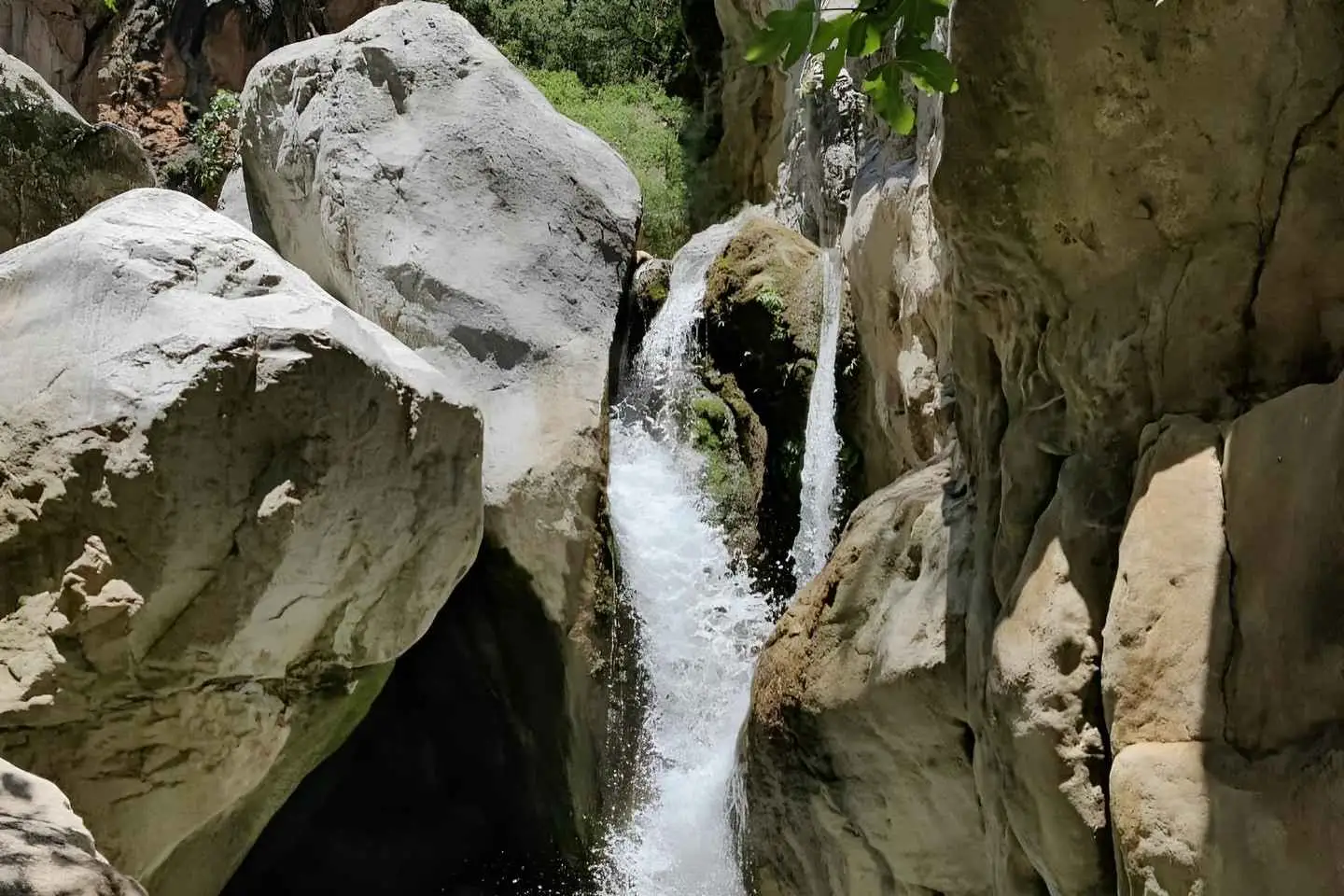
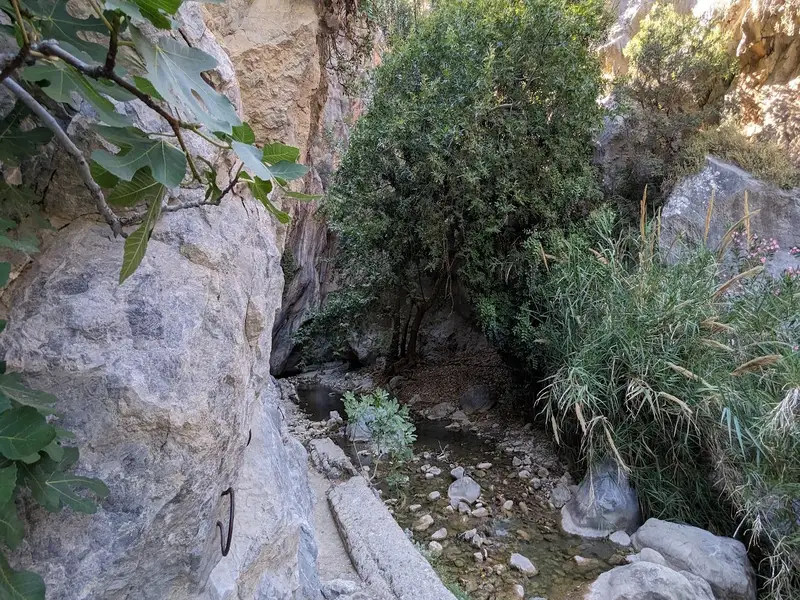
The majority of the canyon is accessible to explorers of all abilities, featuring water, pools, and a handful of climbing points that necessitate careful navigation. A standout feature is the abundant water almost all year round, creating picturesque waterfalls and ponds perfect for a refreshing dip, even in the summer. In winter, traversing the gorge without getting soaked is a challenge. As one embarks on the route, they’ll encounter the need to climb, navigate immense boulders, and cross rocky bridges. Carved stone stairs and tree trunks are present in tricky spots to facilitate easier climbing.
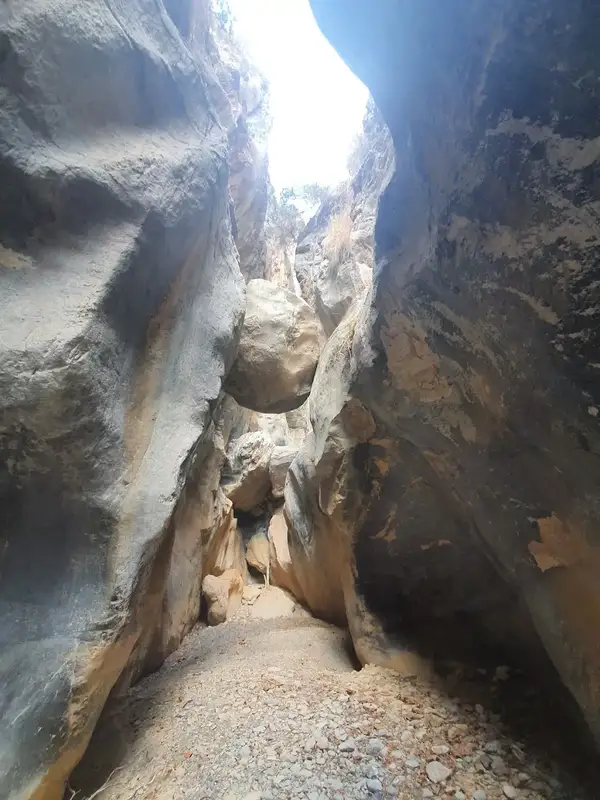


Also known as Kalami I, the Panagia (Virgin Mary) Canyon runs in parallel to the Xerofarago Gorge, or Kalami II. It’s named after the Panagia Keralimeniotissa Monastery, which used to be located at the canyon’s exit. This canyon is technical, meaning it features steep descents and requires special canyoning gear to traverse. Spanning roughly 600 meters, the canyon includes six rappels, the highest of which is about 15 meters. It’s rich in vegetation and has a distinct beauty. The riverbed holds water until spring. Crete’s speleological clubs have bolted the canyon, and a small canyoning group can navigate it in about 1:30 hours.
If you’re planning to use two cars and park them at the canyon’s entrance and exit, the distance between the two parking spots is around 2.5 km or a 10-minute drive. Alternatively, you can reach the entrance by walking along the canyon walls for approximately 20-25 minutes.
Crete is home to numerous stunning locations, but a select few can truly be classified as natural marvels. One such marvel is the Arvi gorge, which dramatically splits Arvion Mount in two. This is the location where the shrine of Zeus Arveios once stood. The Arvi and Cha gorges are considered the most awe-inspiring canyons in Crete. The Arvi gorge can be found to the north of the coastal village of Arvi, in the southern region of the Heraklion prefecture, and it has been carved out of the limestone of Mount Dikti.
This gorge is technical in nature, meaning it necessitates canyoning equipment and flashlights to navigate due to the presence of numerous waterfalls in succession. It is a truly perilous area, and any attempts to cross it by those unaccustomed to canyoning could result in tragedy. From winter until the onset of summer, the canyon is filled with water, which adds to its awe-inspiring beauty. The majority of this water originates from the perennial springs of Kefalovrysi. The Arvi gorge presents a high level of difficulty.
The entrance to the gorge is located in the Konisma (Icon) forest, named after a rock that resembles an icon of Christ. The gorge stretches across the Fournos area and features numerous descents, the most remarkable of which is an astounding 85-meter waterfall named Kapnistis (Smoker). This waterfall is named for its smoke-like water spray, which is a result of its incredible height. Kapnistis is one of Crete’s tallest and most impressive waterfalls. However, what truly sets this canyon apart from others in Greece is the section after the high rappel of Kapnistis, where the river flows into the earth for 150 meters, forming an underground river within a cave. In this underground section, the river continues to form waterfalls. Lighting equipment is necessary to navigate this completely dark area. After this dark section, the gorge remains incredibly narrow with extraordinary formations and large rocks, known as splines, beneath which we pass.
Following approximately 20 waterfalls, the gorge concludes and leads to the fertile plains of Arvi, renowned for their banana crops, and situated next to the monastery of Saint Anthony (Agios Antonios). The area at the gorge’s exit is humorously named Donkey’s Ass! In ancient times, a bountiful water spring existed here, but it has since dried up due to the construction of wells. This natural wonder has been a popular attraction for travelers since ancient times. The gorge’s river ends in the South Cretan Sea, but the water never reaches the sea due to its use for irrigation.
No results available
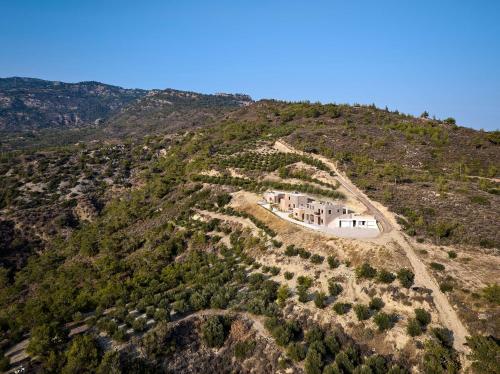
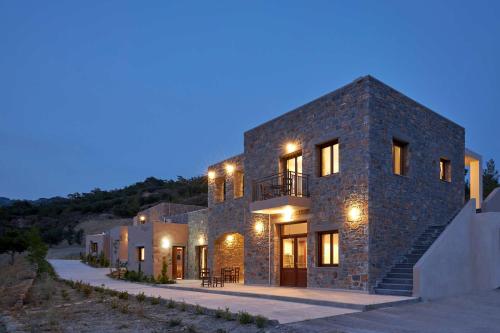
OMythos features garden views, free WiFi and free private parking, located in Míthoi, 40 km from Lake Voulismeni.
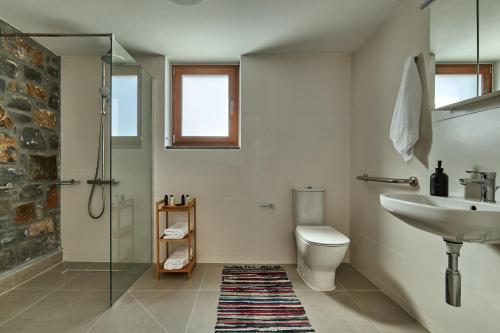
The villa provides guests with a terrace, mountain views, a seating area, a flat-screen TV, a fully equipped kitchen with an oven and a toaster, and a private bathroom with shower and slippers. A fridge, a stovetop and kitchenware are also provided, as well as a coffee machine and a kettle.
An à la carte breakfast is available daily at OMythos.
Guests at the accommodation can enjoy cycling and hiking nearby, or make the most of the garden.
Panagia Kera Church (in Kritsa) is 39 km from OMythos, while Agios Nikolaos Port is 40 km away. The nearest airport is Sitia Public Airport, 76 km from the villa.
Only 250 metres from the nearest beach, Villa Aliki is located in Mirtos of Crete Island. From the spacious terraces, you will enjoy sea views, while free WiFi connection is available.
Villa Aliki offers apartments with 1 or 2 bedrooms, a fully equipped kitchen and living room with a flat-screen, satellite TV. Bed linen and towels, as well as ceiling fans are included.
Car hire is available at the property and the area is popular for snorkelling. A range of activities are offered in the area, such as diving and cycling. Malia is 50 km from Villa Aliki, while Elounda is 36 km from the property. The nearest airport is Heraklion International Airport, 80 km from Villa Aliki.
from
€75
/night
Situated in Myrtos, 300 metres from Myrtos Beach and 2.5 km from Vatos Beach, Villa Mertiza features accommodation with free WiFi, air conditioning, a garden and a terrace.
Each unit features a balcony offering mountain views, a flat-screen TV, a well-fitted kitchenette and a private bathroom with shower, a hair dryer and free toiletries. A toaster, a fridge and stovetop are also available, as well as a kettle.
A continental breakfast is available each morning at the aparthotel.
A car rental service is available at Villa Mertiza.
Lake Voulismeni is 46 km from the accommodation, while Panagia Kera Church (in Kritsa) is 45 km from the property. The nearest airport is Sitia Public Airport, 72 km from Villa Mertiza.
from
€55
/night
Featuring river views, Sophie’s Village House offers accommodation with a balcony and a coffee machine, around 300 metres from Myrtos Beach. It features mountain views and free WiFithroughout the property.
The apartment is fitted with 2 bedrooms, 1 bathroom, bed linen, towels, a flat-screen TV with cable channels, a dining area, a fully equipped kitchen, and a terrace with sea views.
If you would like to discover the area, hiking is possible in the surroundings.
Vatos Beach is 2.5 km from the apartment, while Lake Voulismeni is 46 km away. The nearest airport is Sitia Public Airport, 72 km from Sophie’s Village House.
No results available
Connect with thousands of Crete visitors and boost your bookings.
No results available
© All rights reserved. Crete Locals