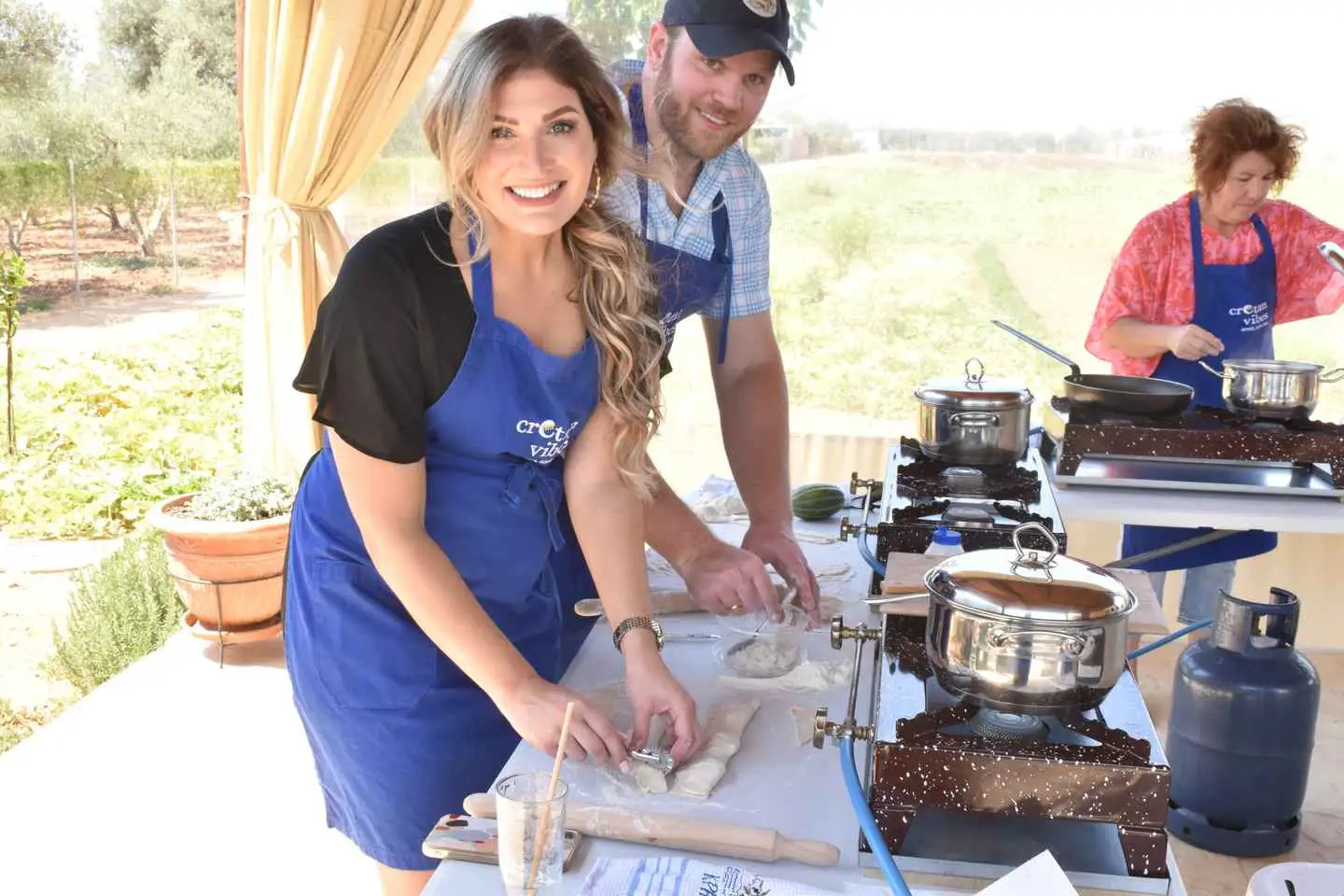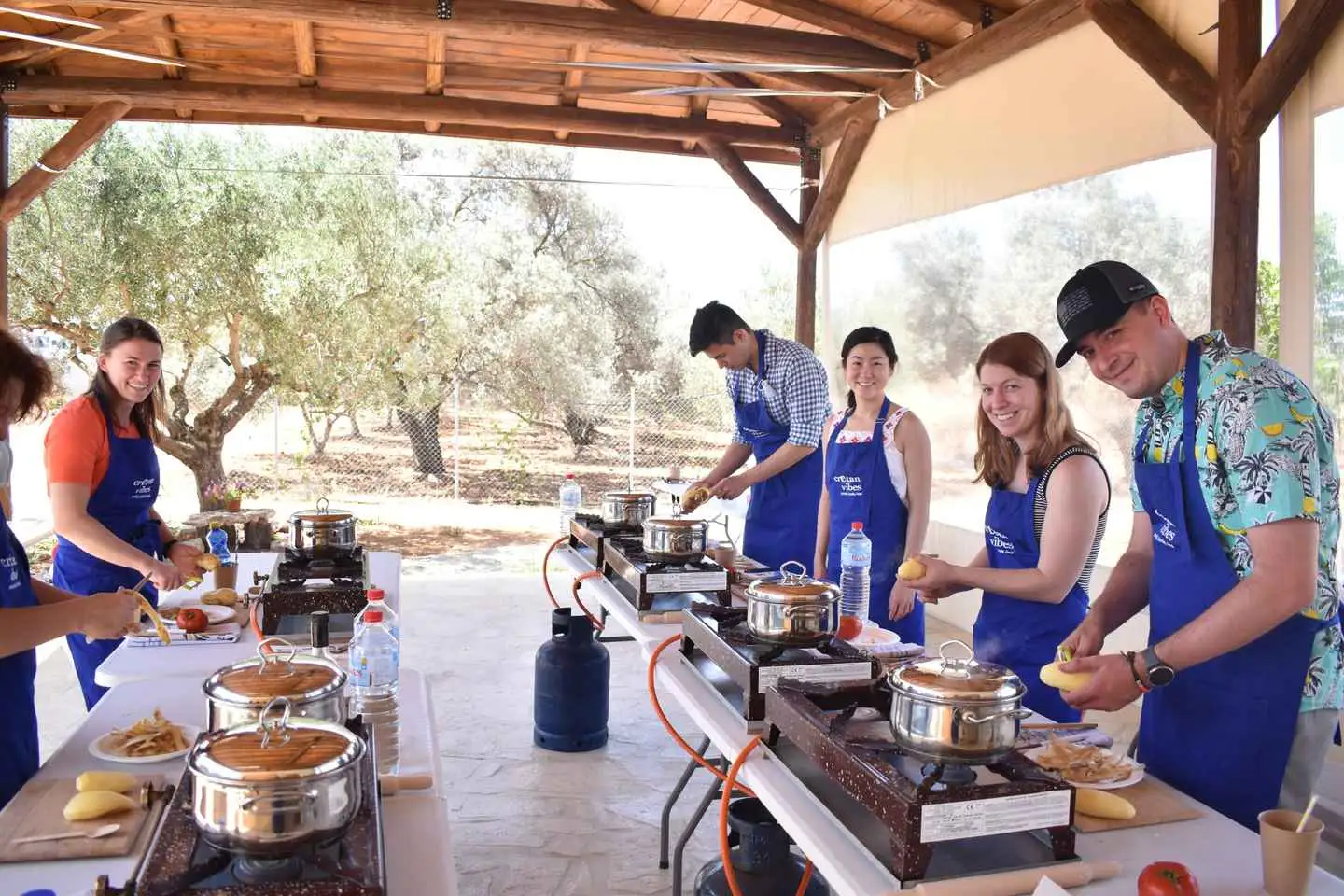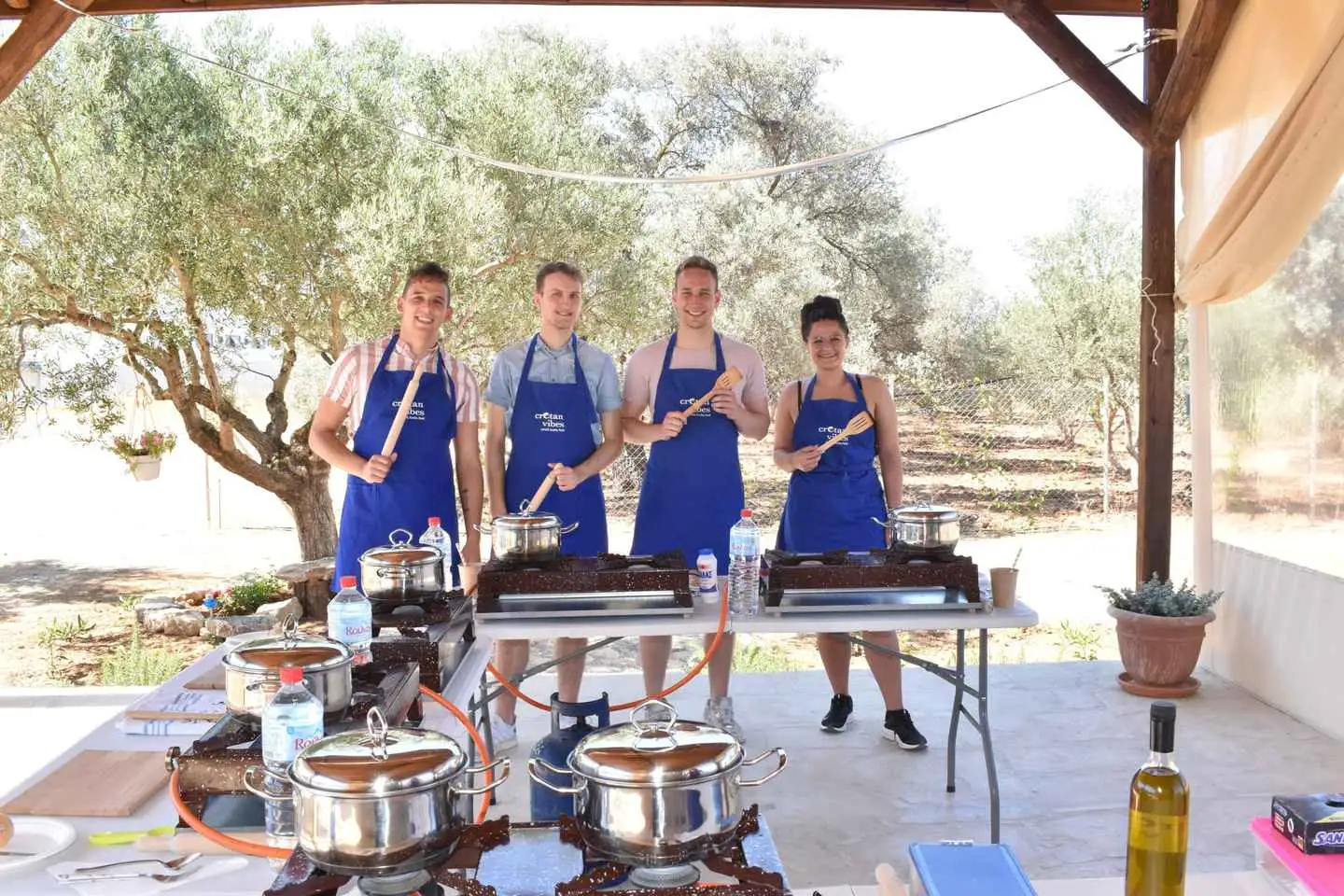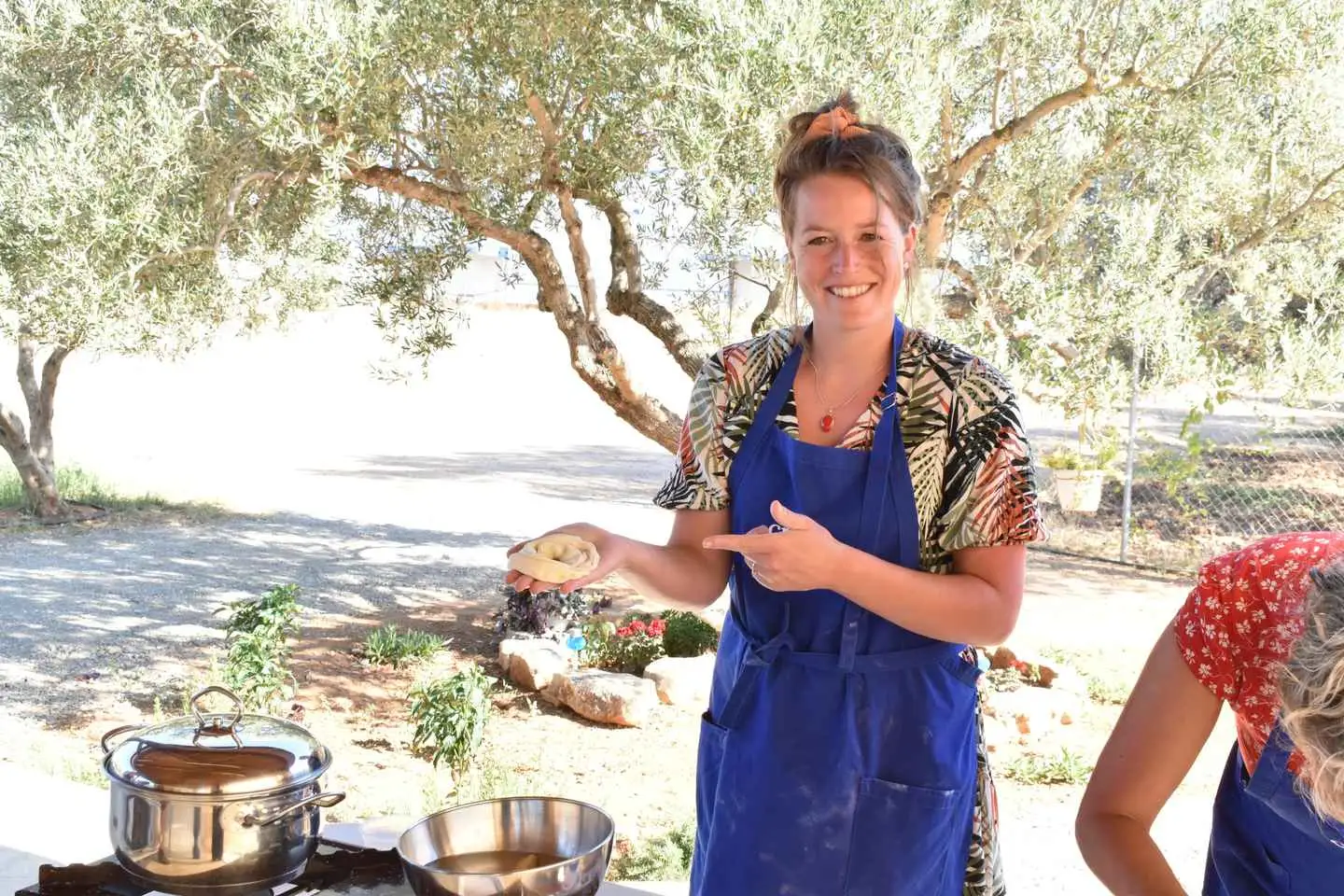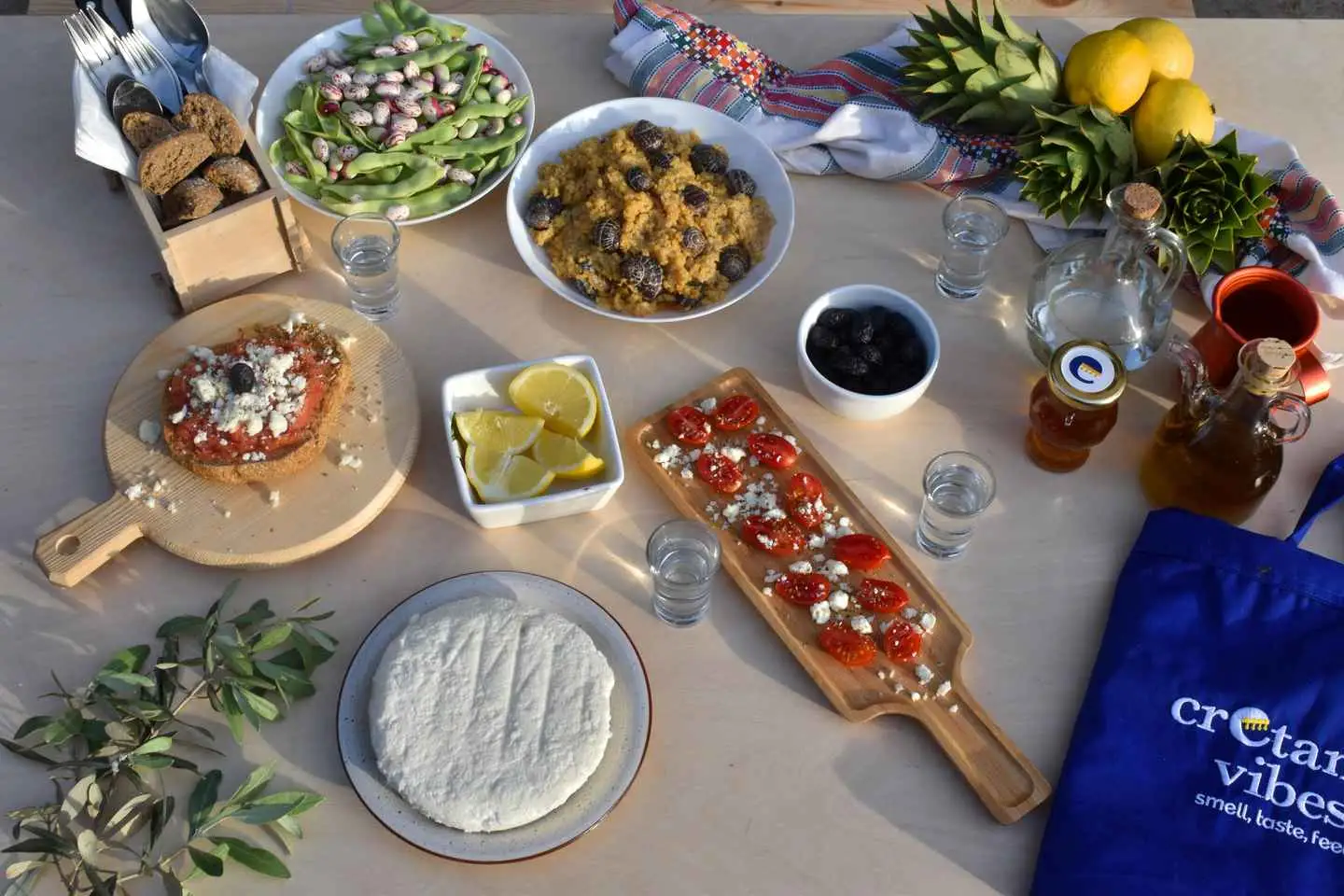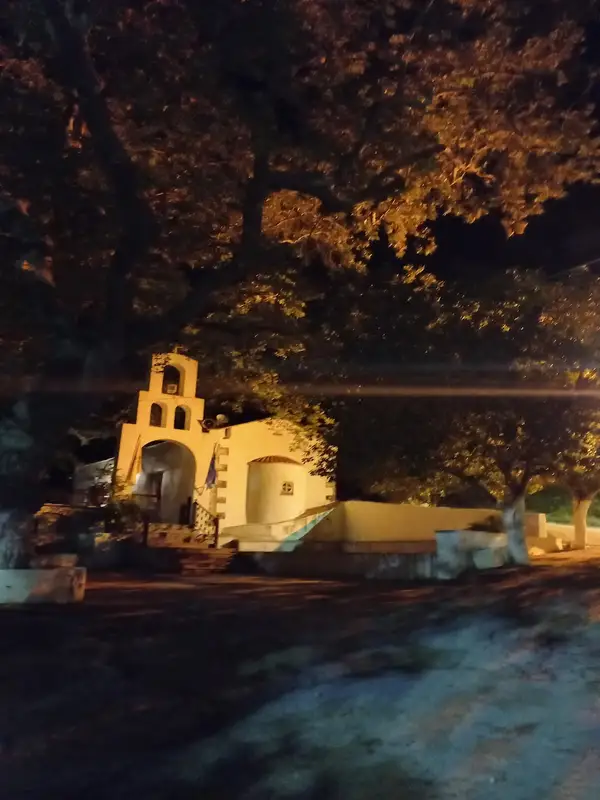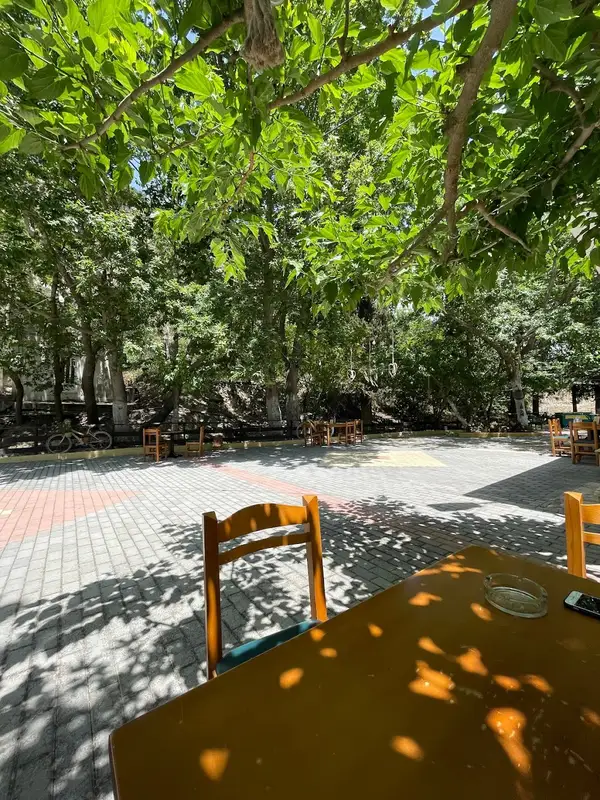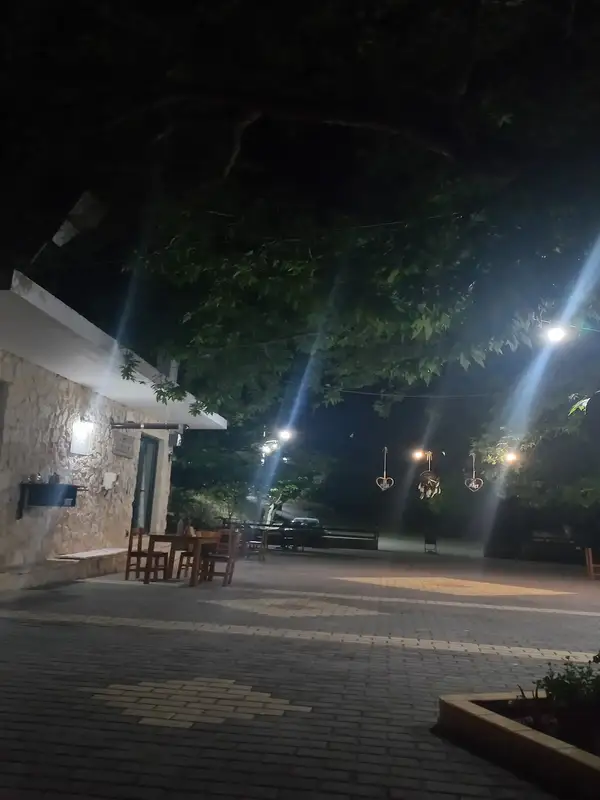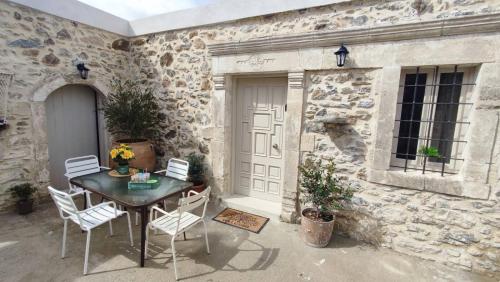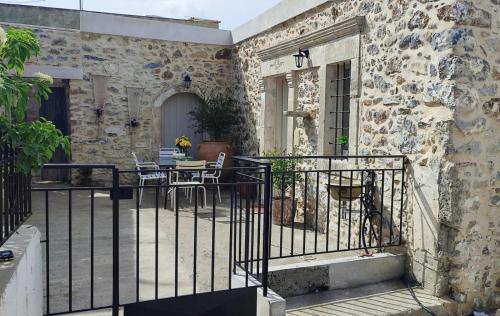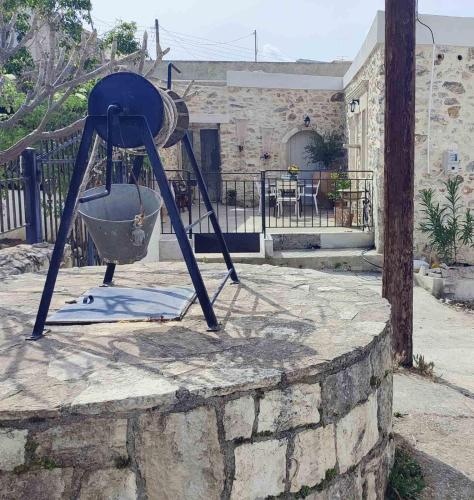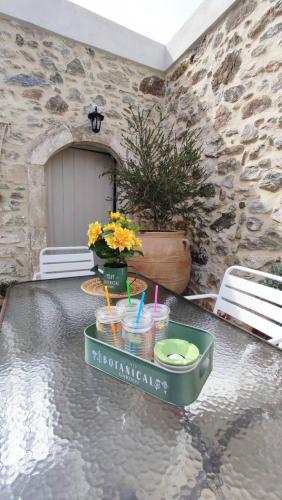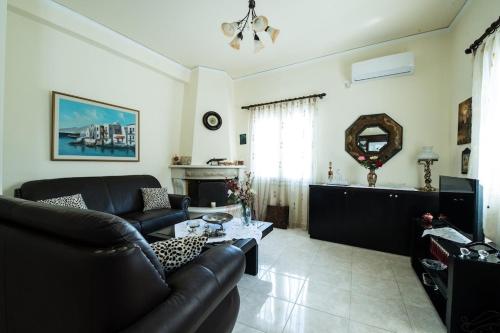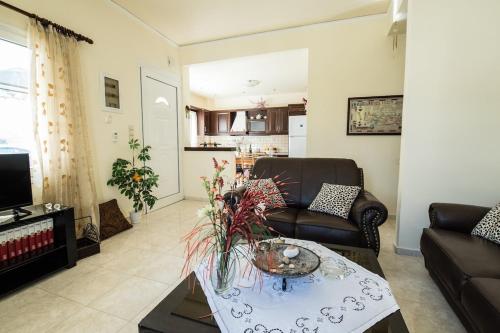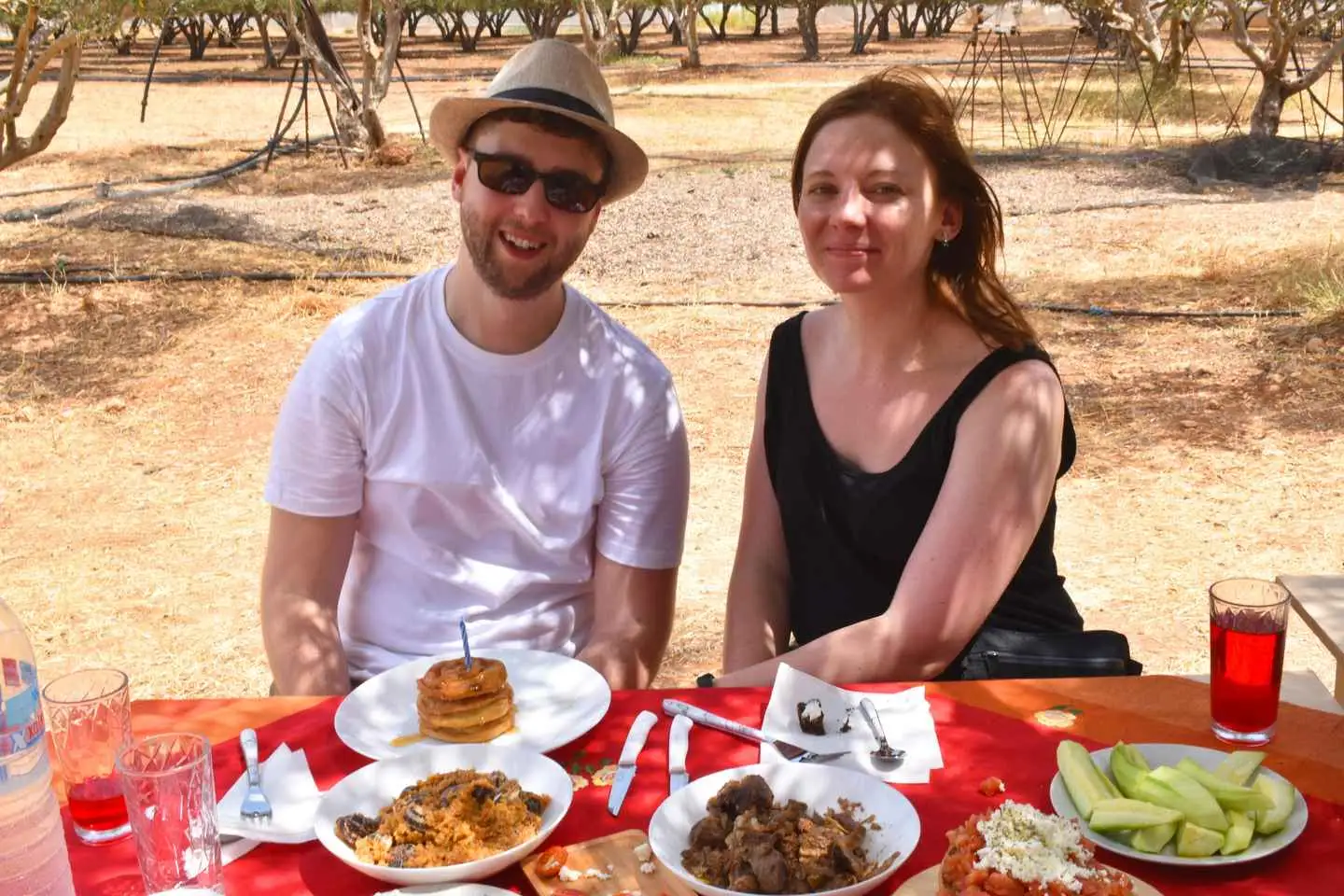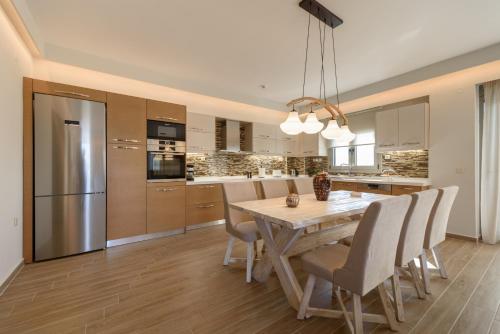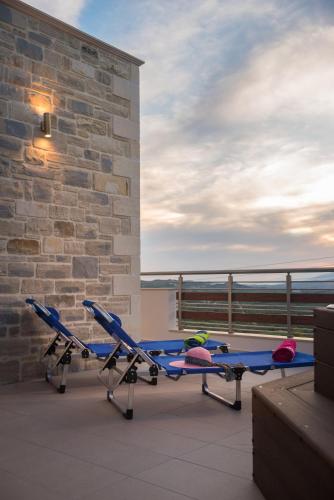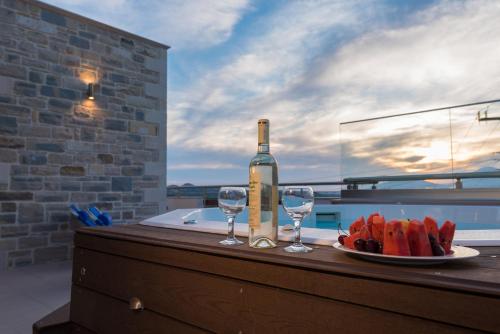
Our Cretan cooking class is a 100% hands-on experience, perfect for those eager to explore and indulge in the flavors of Cretan gastronomy. Whether you’re a beginner or an experienced cook, what truly matters is your open heart and eagerness to embrace the warmth of Cretan culture, becoming a cherished part of our family along the way!”
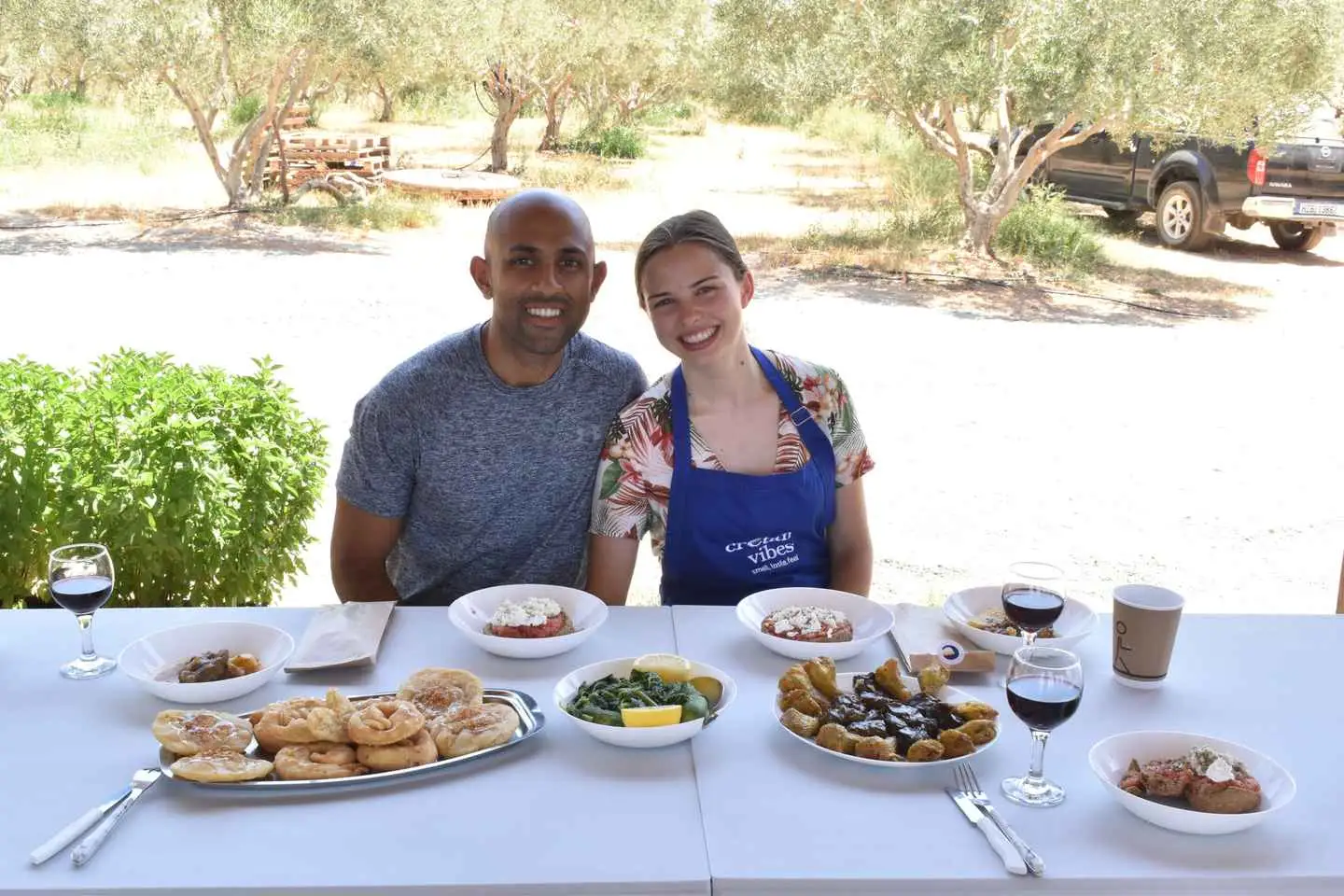
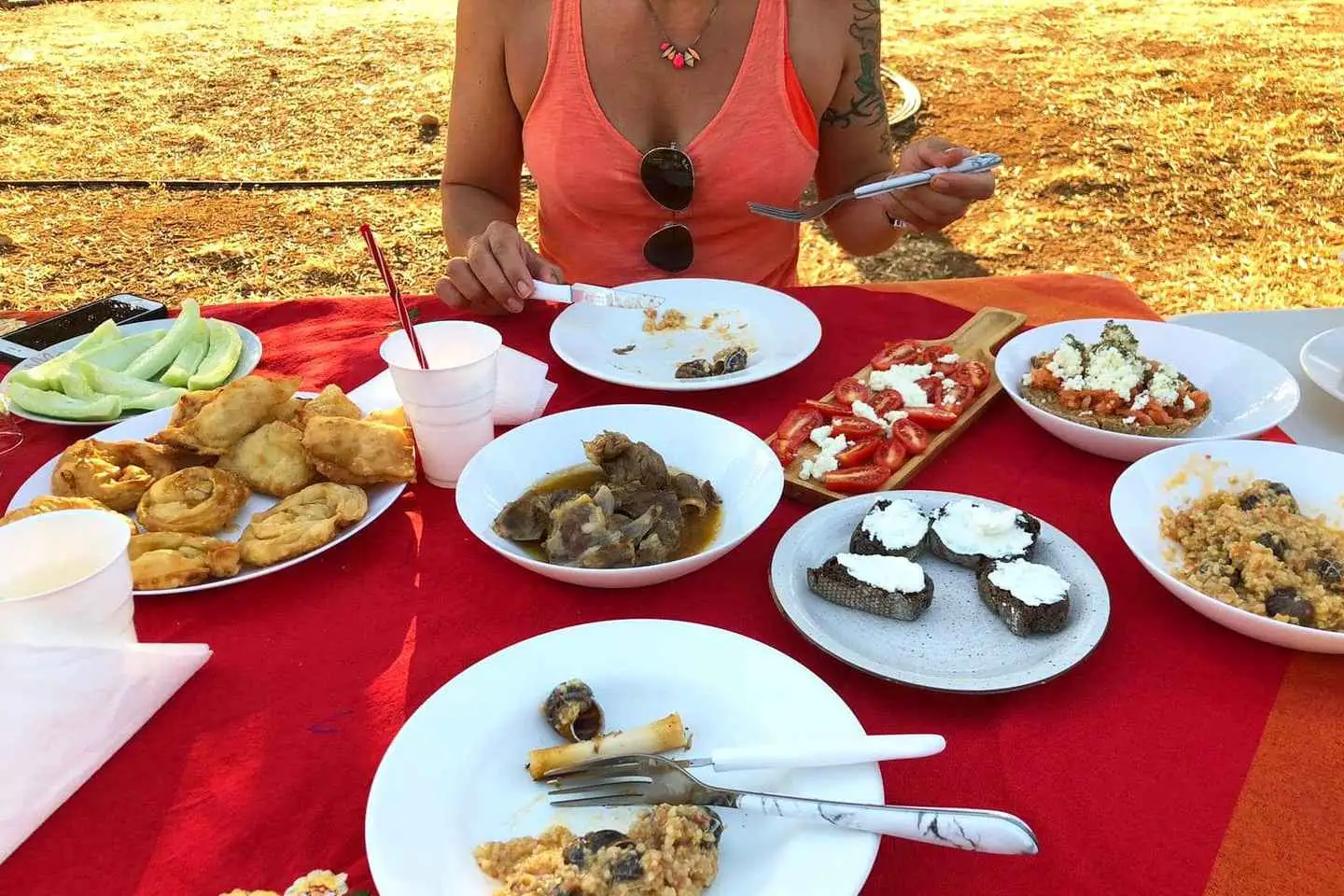
Mama Stella, my wonderful mum, loves to share her culinary knowledge and techniques with you! We will cook a 4-course meal, by providing all you need, from aprons to fresh, farm-sourced ingredients ensuring a 100% hands-on cooking experience! Local homemade refreshments and water will also be provided. After your cooking adventure, revel in the joy of your creations accompanied by local Cretan wine. Leftovers are carefully packed for you to take along.
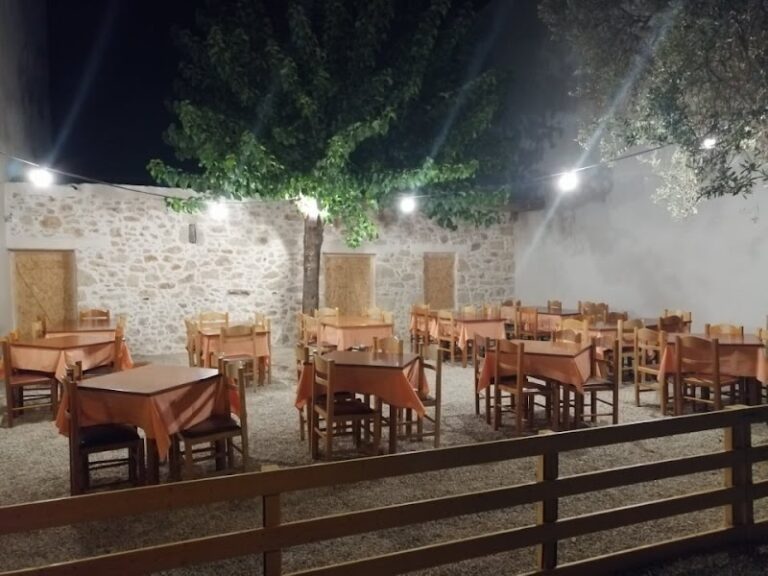
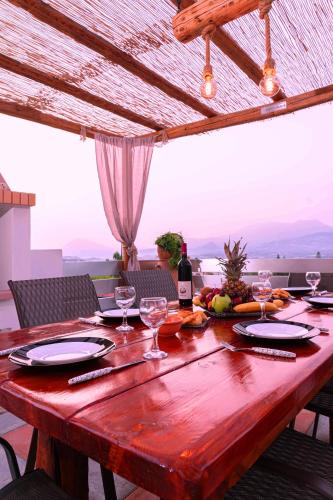
Immerse yourself in this unique, 3.5 to 4-hour experience at our olive oil farm. Cooking unfolds in an outdoor space beneath a beautiful wooden roof, surrounded by olive trees on one side and a lush garden on the other. Engage your senses—smell, taste, and feel our culture through a one-of-a-kind cooking adventure. Join us, cook with passion, and savor the moments!”
Born and raised in Crete, we would love to guide you through our way of life and explore the rural aspects of Crete!
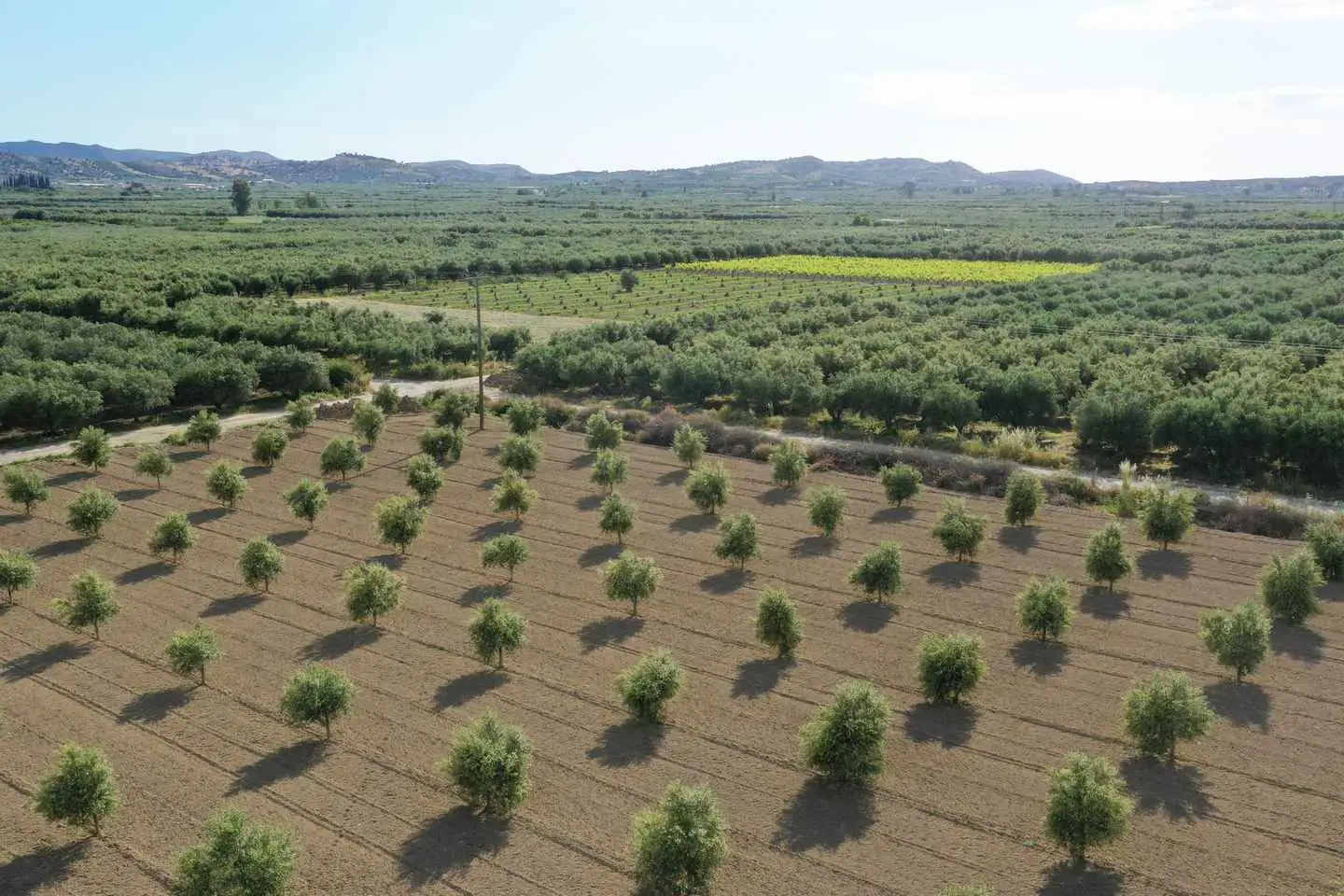
We carefully designed this tour for those who wish to see Crete through the eyes of a local family! The journey begins with an engaging walking tour in our family’s olive groves and greenhouses. Discover the secrets of olive cultivation, the meticulous process of harvesting, and the art of producing the finest extra virgin olive oil.
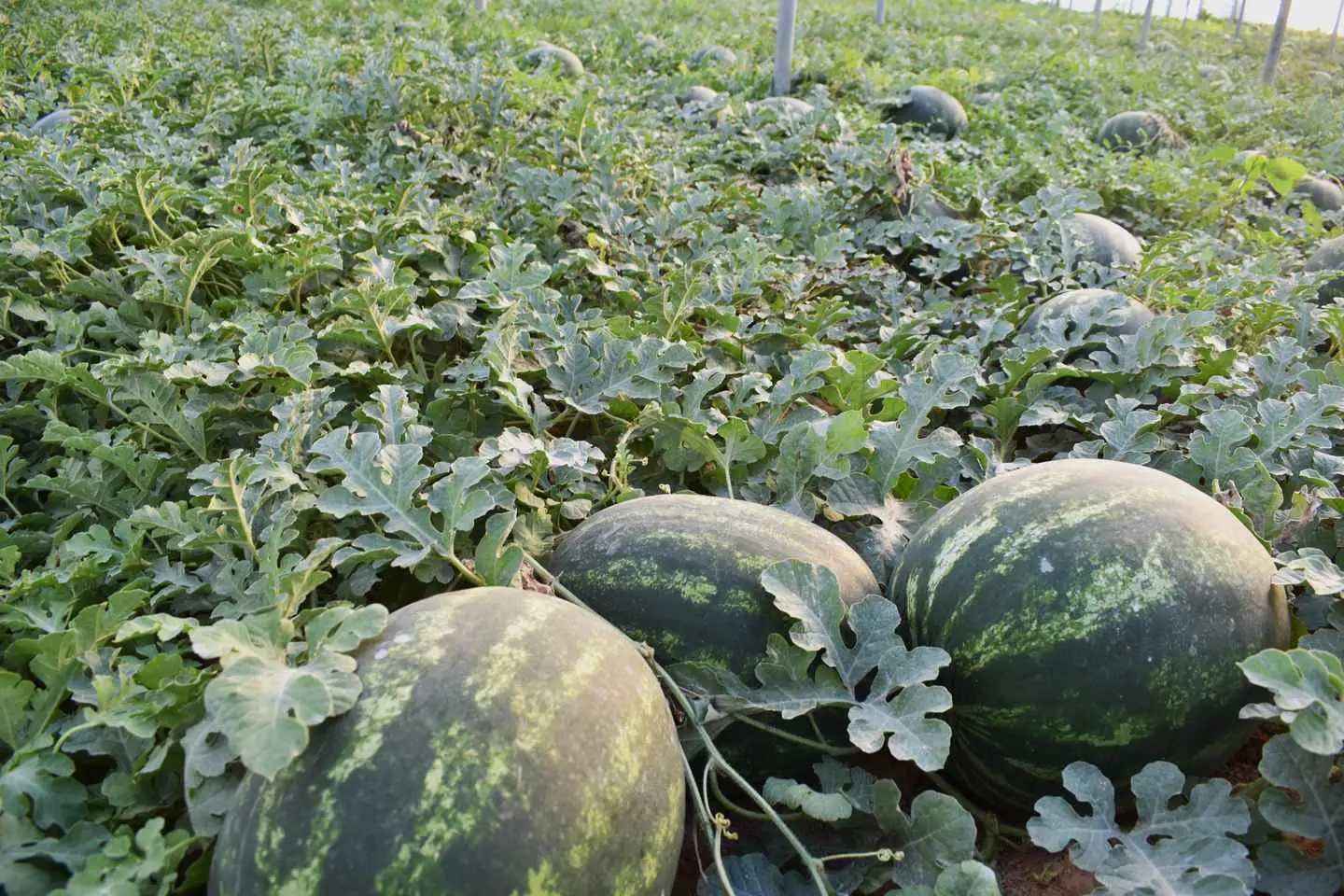
Explore how locals cultivate greenhouses, learn about the variety of vegetables and fruits grown, and understand why these local products hold significance not only for local markets but also for the metropolitan markets of Greece. We are eager to share this information and more with you!
The walking tour concludes in an outdoor space beneath a beautiful wooden roof, surrounded by olive trees on one side and a lush garden on the other. There, we’ll have the pleasure of meeting my lovely mother, Mama Stela, and savoring authentic Cretan food prepared by her! Of course, the Cretan spirit, Raki, is an integral part of our meal! You might even get the chance to meet more members of my family.
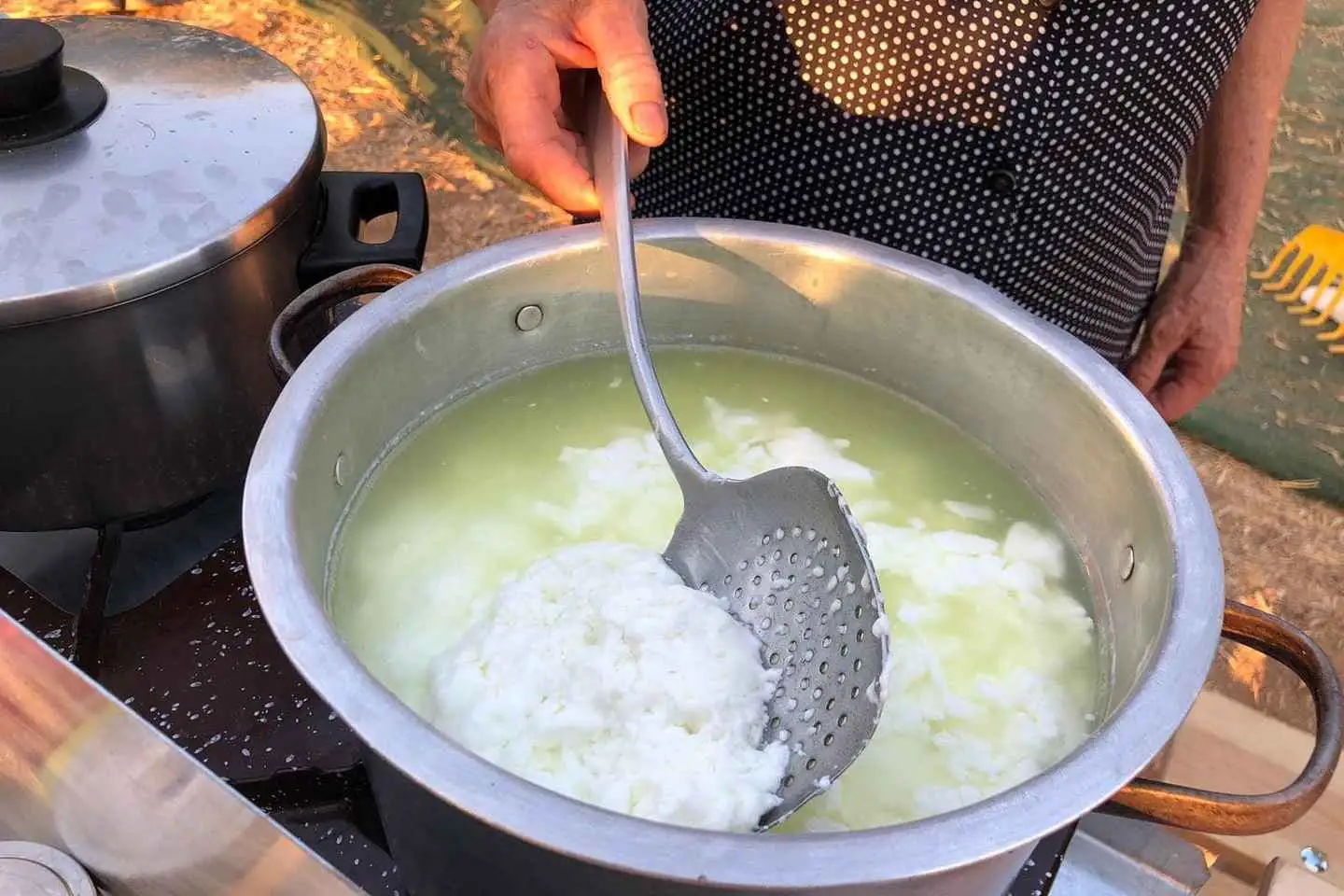
A standout moment during the food tour is witnessing my mom demonstrate the crafting of Cretan cheese, followed by the delightful experience of tasting it!
The entire event will last approximately 2.5 hours. Our sincere desire is for you to become a part of our world and immerse yourself in the authentic way of Cretan living!
Hop down to the heart of Central Crete, the beloved land of our ancestors, and let the wonders of the Minoan world collide on this luxurious passage of time.
From the comfort of a premium chauffeured vehicle & escorted by our top local insider, revel in the endless luxuries of the ancient Messara plain where wine-red fertile soils treasure lavish vineyards & the oldest olive groves stretch perennially toward the horizon.
Visit a family award-winning winery set on the peak of alluring panoramas & let our passionate winemakers immerse you into their intoxicating world. Luxuriate in ages, unearthing the Bronze Age palaces of Phaistos & Gortyna along with storied villages & monasteries.
In the afternoon, tuck in the bohemian vibe of Matala that captivated Bob Dylan & Janis Joplin. Bask in the turquoise waters of the Libyan Sea & unwind in the charming village, irresistible for its freshly caught grilled fish & finest ouzo.
To us, travel means putting fire in your soul with the best stories.
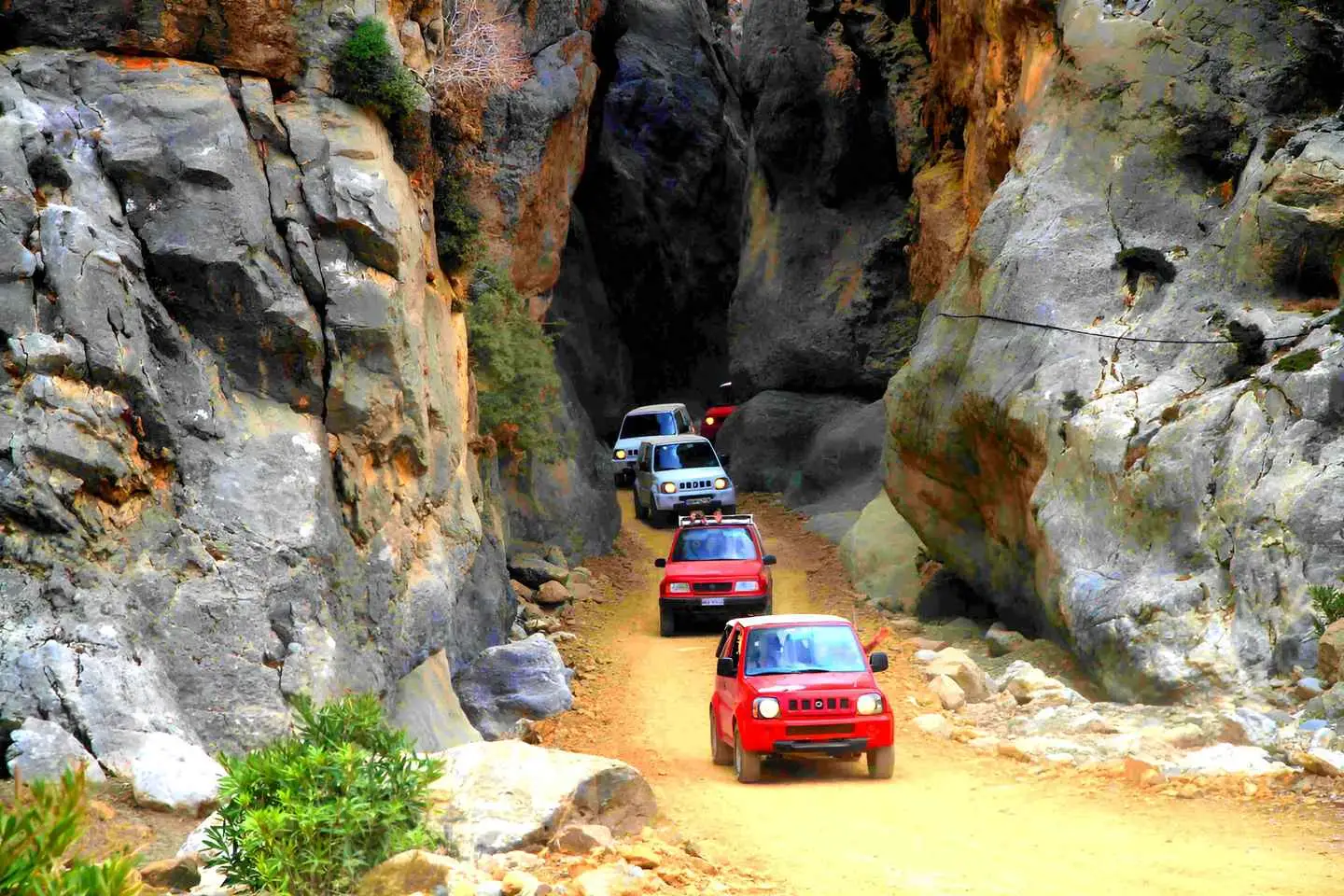
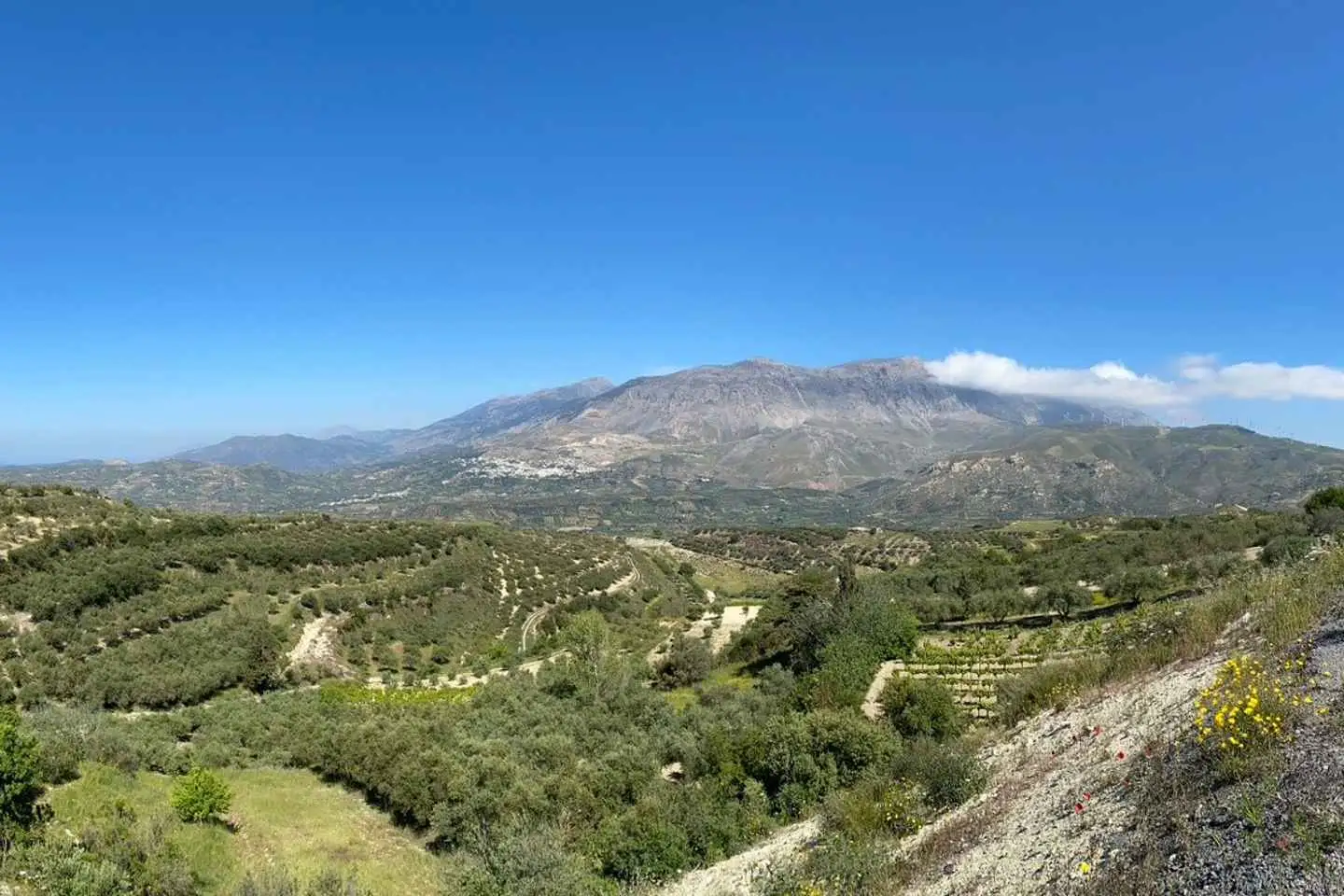
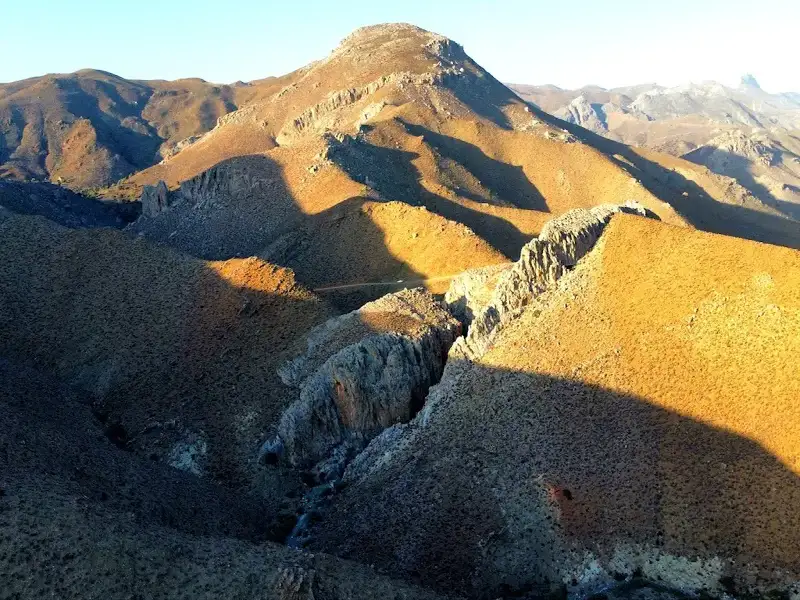
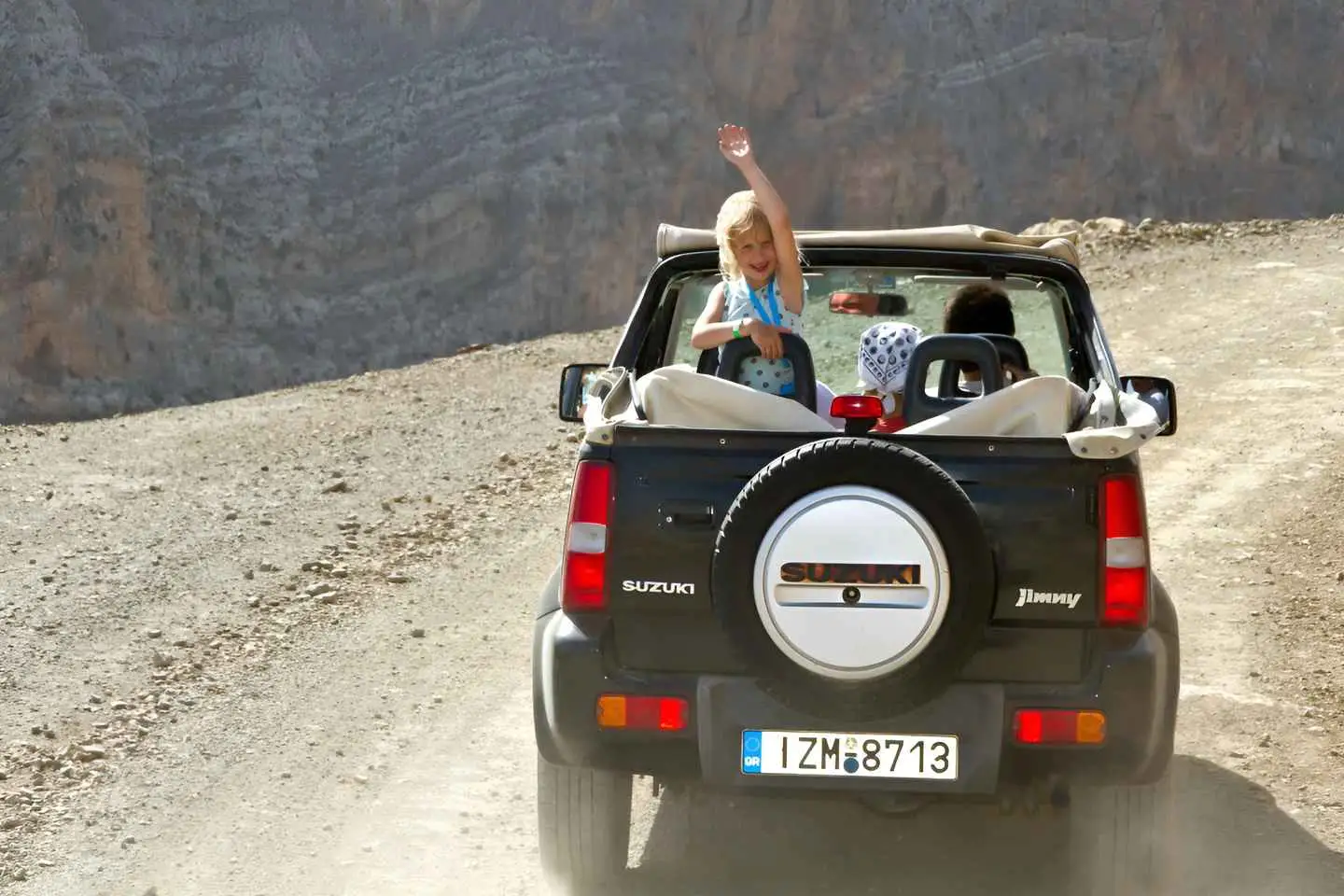
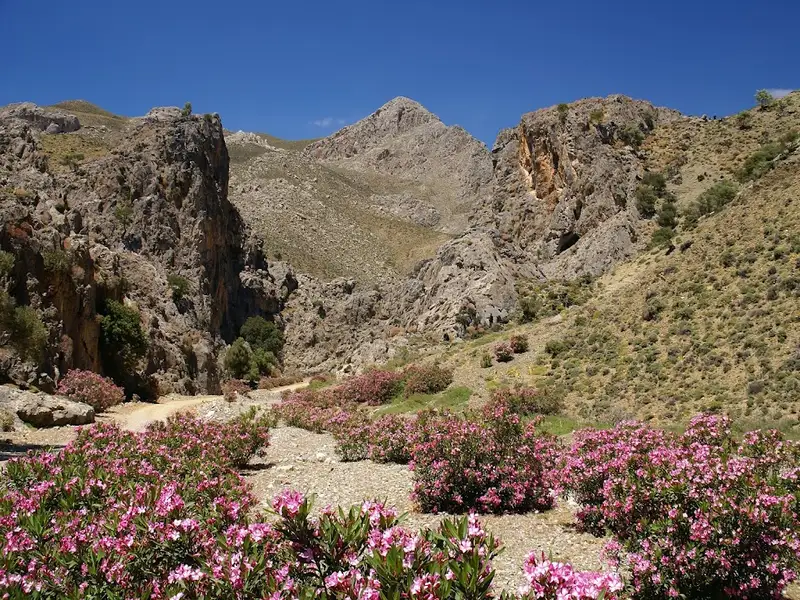
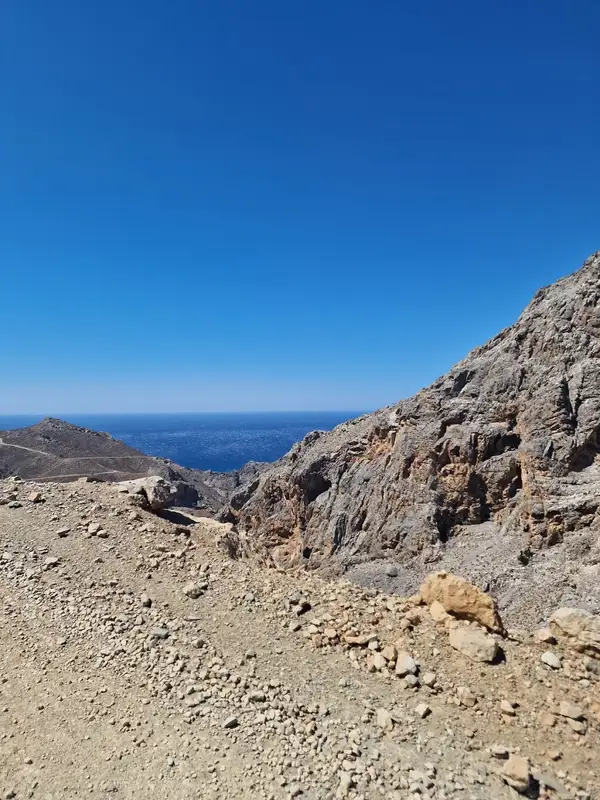
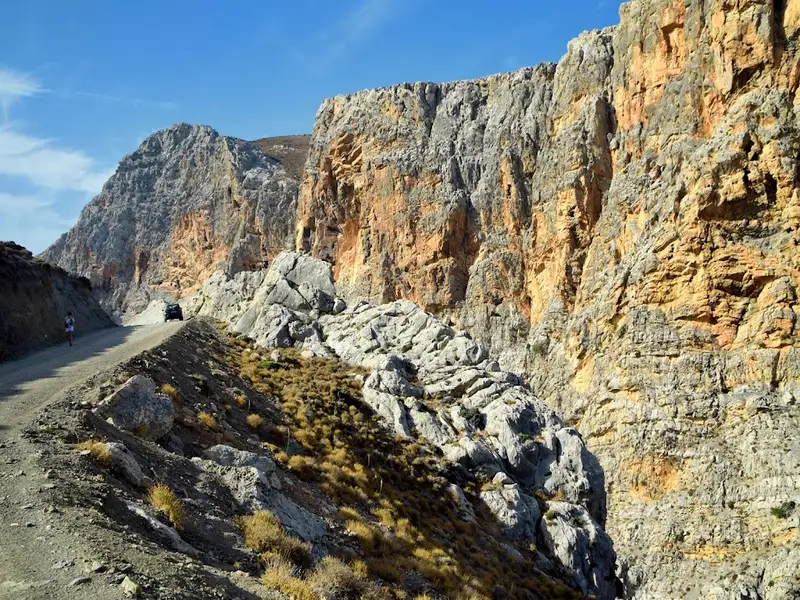
Join us on an unforgettable adventure through the stunning valleys of Malevizi and Messara, home to millions of olive trees. Experience the thrill of an off-road jeep ride through the Asterousia mountain range, exploring rarely seen areas, and stopping at an observation deck at the peak of the mountains to admire eagles and the breathtaking canyon and Libyan Sea in the background.
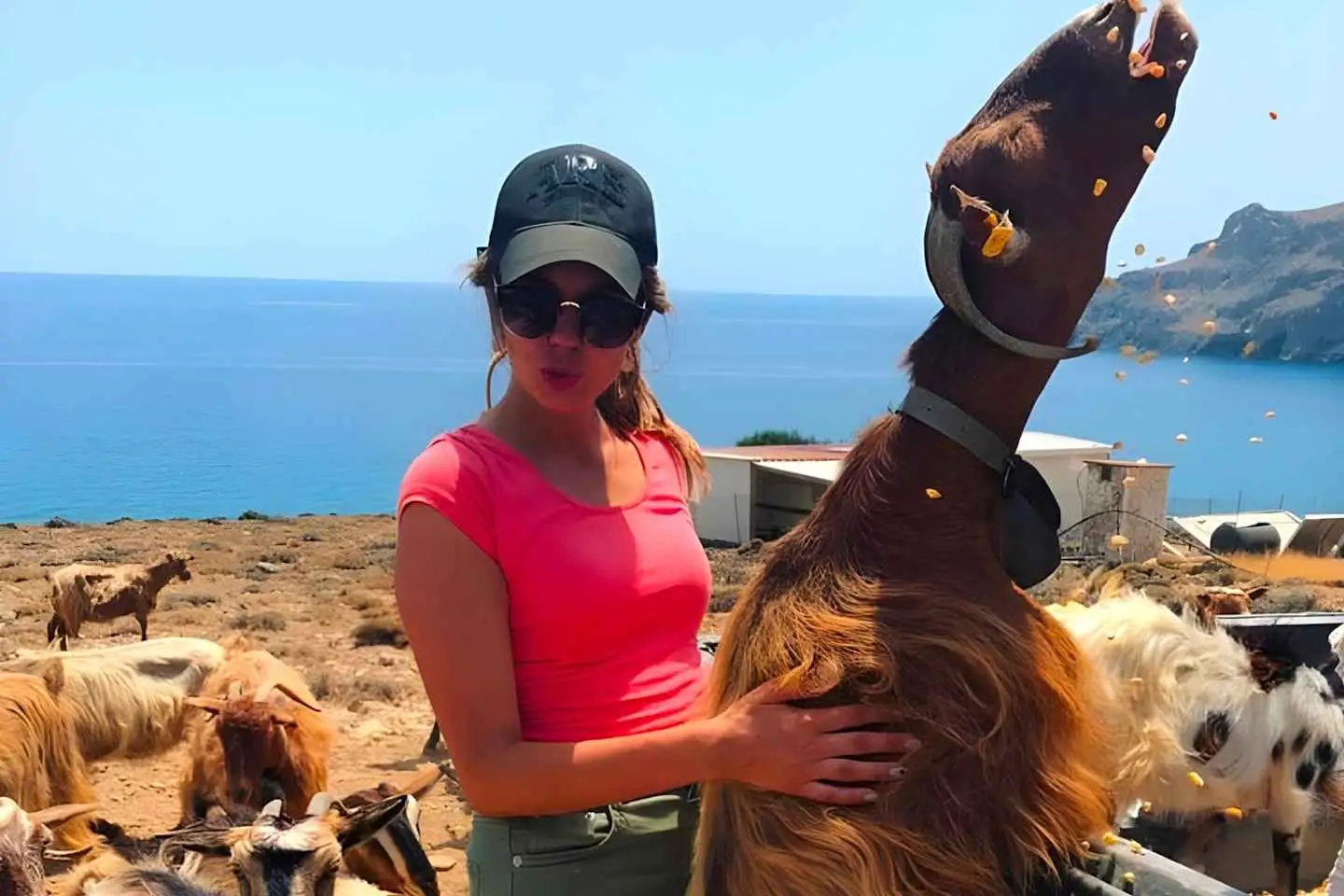
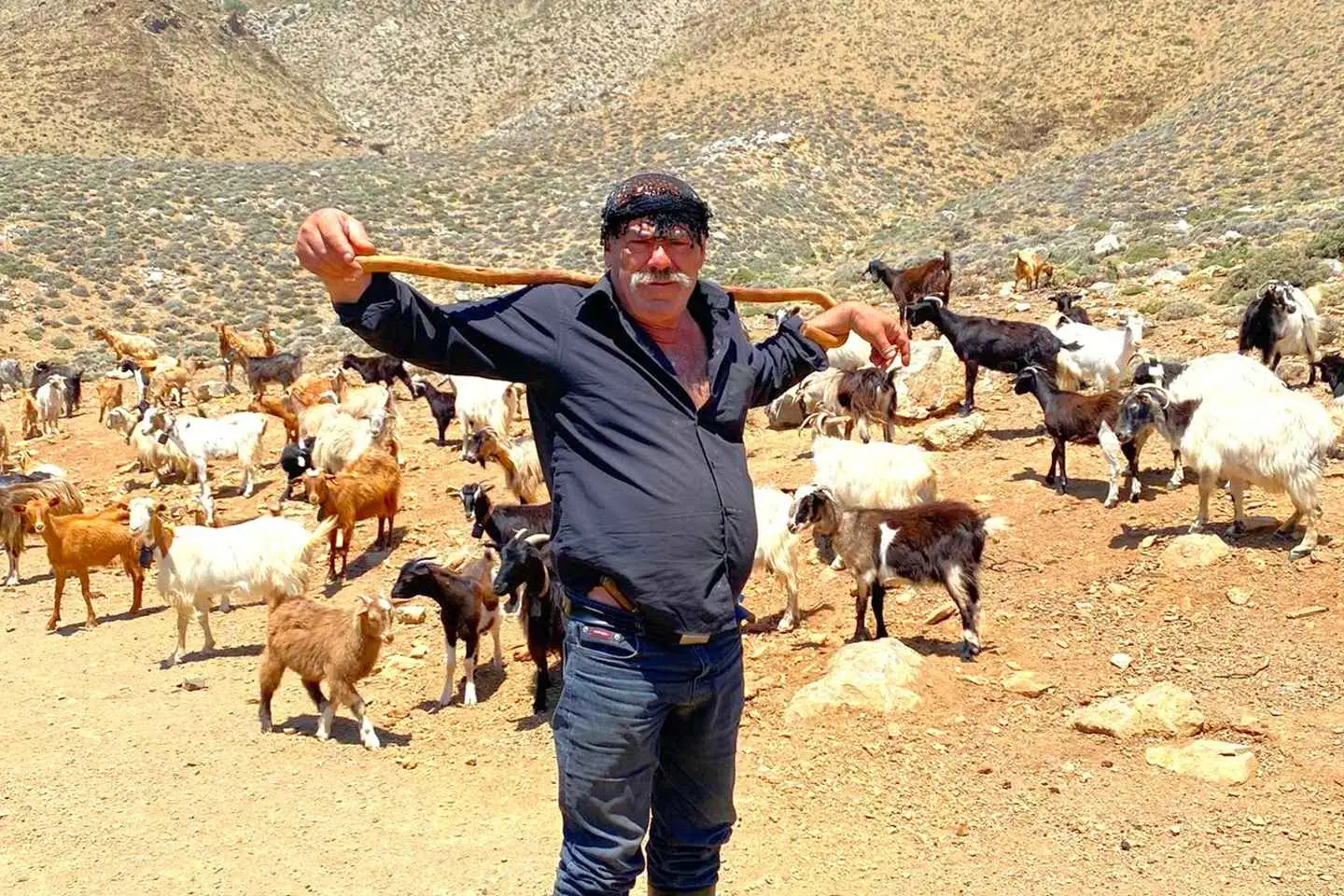
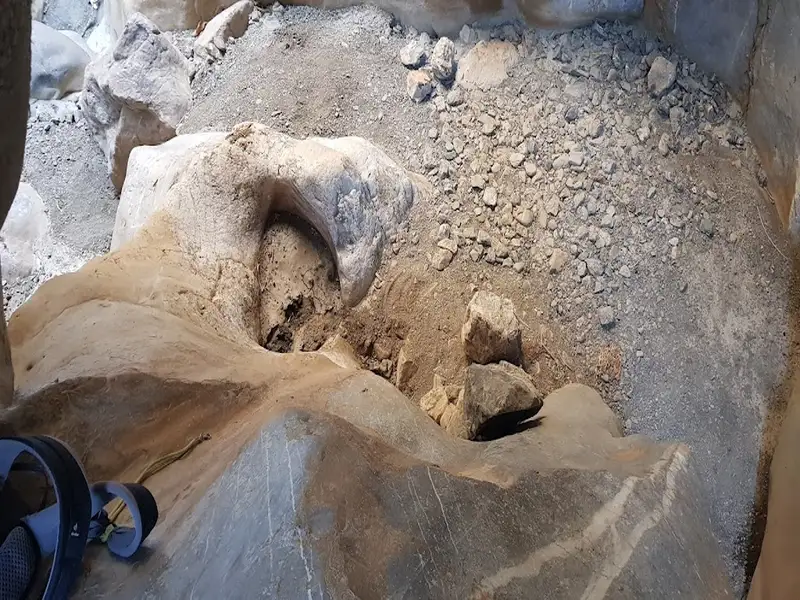
During our trip to southern Crete, you’ll learn about the local tradition of goat-keeping from a shepherd. He’ll show you how to feed, milk, and catch goats. Then, you’ll cook Cretan goat cheese with him inside a cave, which is a unique experience. Finally, you’ll get to taste the delicious cheese you made together.
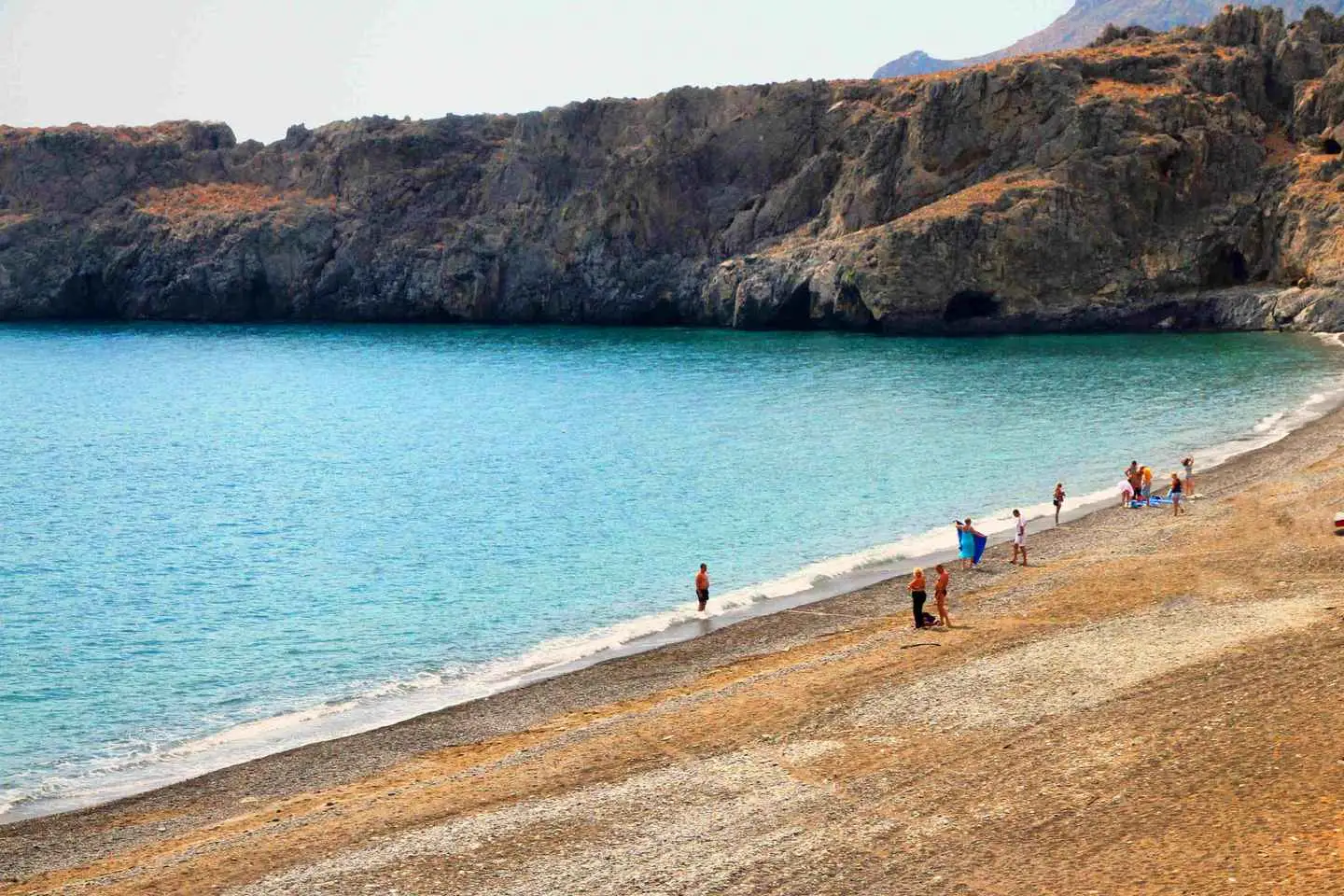
We’ll have lunch at a charming seaside tavern, take a refreshing swim at the tranquil Tripitis beach, make a wish at a picturesque church, and experience a true Cretan farewell with the hospitable old man who owns the tavern and takes care of the church.
This adventure is perfect for anyone looking for an exciting and unique experience in Crete. Book your trip with us now and let us take you on an unforgettable journey.
No results available
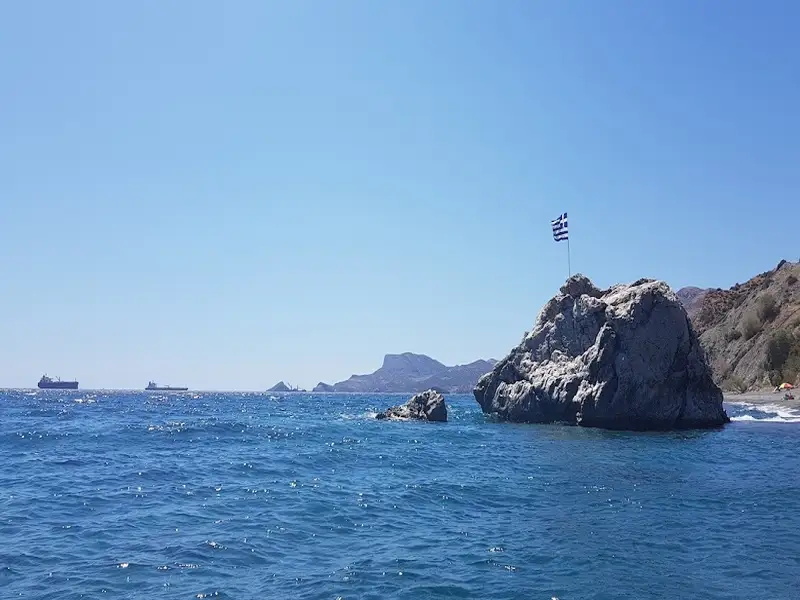
The longest beach in the region, Psili Ammos, is situated to the east of the village Platia Peramata. This secluded and stunning beach does not cater well to camping due to the lack of tree shade. Still, at the eastern extremity, one can find large white rocks known as Asproharaki, which provide shade to those fortunate enough to claim them. The beach was thrust into prominence in 2010 when a significant Russian oil tanker was stranded there during a storm. Thankfully, no one was at risk and no environmental harm was done.
Paliomandra beach
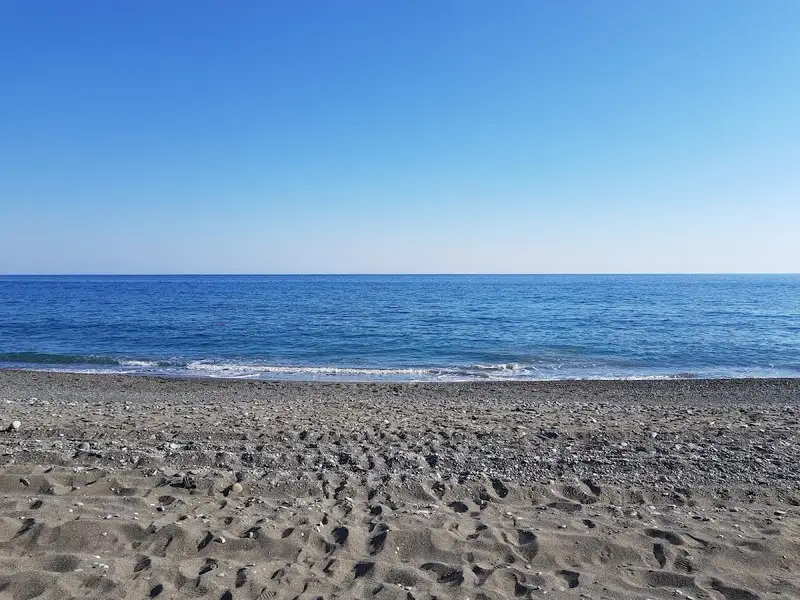
On your way to Psili Ammos from Tsigounas, you will encounter several minor beaches. The furthest east cove, reachable via a dirt road, is known as Paliomandra and is rather secluded. The beach features coarse sand and a rocky seabed, making it ideal for fishing and snorkeling.
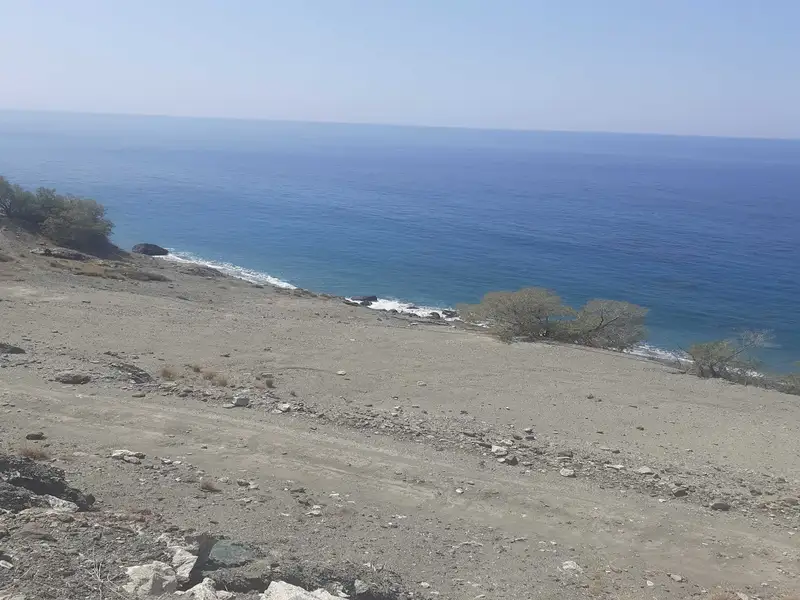
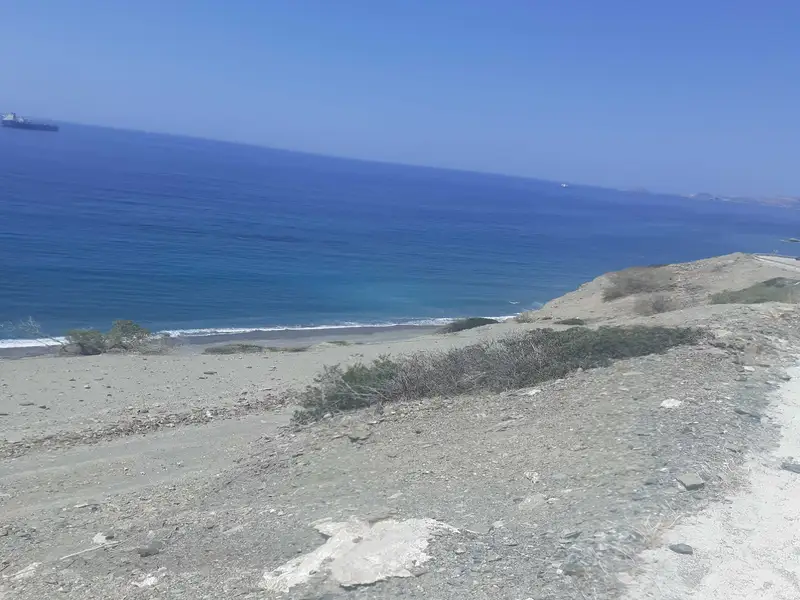
Platia Peramata, a quaint village situated 69km south of Heraklion and 7km east of both Kali Limenes and Lendas, nestles at the exit of a small, fertile valley that cuts through the rugged Asterousia Mountains. This valley begins at Antiskari village and concludes in a settlement, its rich soil used for growing early vegetables like tomatoes, cucumbers, and peppers in greenhouses due to the consistently high temperatures.
The region features numerous adjacent bays that form serene and picturesque beaches, frequented primarily by locals. At the heart of the settlement lies the small beach of Platia Peramata, known for its fine pebbles which are predominantly used to moor the locals’ boats. Despite the beach’s lack of extensive facilities, a handful of tavernas and rooms are available nearby. Tamarisk trees line the beach and are often used as camping spots. To the east of the settlement, East Platia Peramata beach, less favored by swimmers, offers another pebbly shoreline.
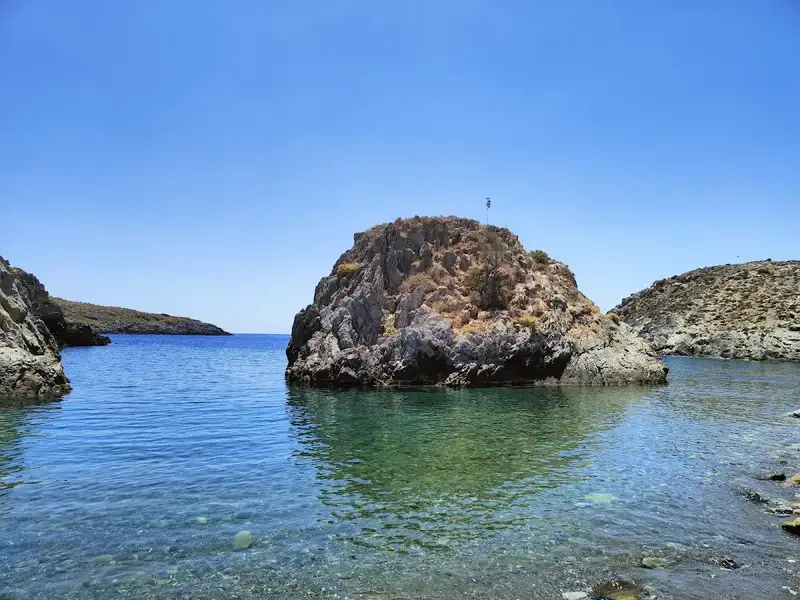


To the west of the village of Platia Peramata, you’ll discover the humble settlement known as Krigioi, with its array of unlawfully constructed homes and cottages. A brief drive along the local stream leads you to a stunning beach adorned with fine pebbles and crystal clear water. The uniqueness of Krigi lies in its numerous miniature beaches that stretch along the coast to Platia Peramata and the awe-inspiring soft limestone formations.
Overlooking Krigi is the quaint chapel of Saint Demetrius. To its west, you will find another secluded pebbly beach, Aspros Harakas, or White Rock, named for the pale rocks at its western end. However, Aspros Harakas may not appeal to everyone as it can only be reached by boat, boasts large stones and lacks shade.
Venturing further westward, you’ll stumble upon the three consecutive beaches of Kokkines Plakes, or Red Rocks. True to their name, these beaches are surrounded by reddish rocks and are primarily accessible via the sea.
To the west of Lendas, you’ll encounter the quaint village of Tsigounas, which is home to the modest beach of Limanaki that serves as a local harbour due to its safeguarded orientation. The village of Tsigounas derives its name from the term ‘tsigounis’, meaning ‘stingy’, which is a reference to a local spring that produces a limited amount of water.
No results available
Lendas is located where the ancient city of Levina once stood, 74km south of Heraklion, nestled amidst the breathtaking Asterousia Mountains. The name “Levina” is believed to stem from the Phoenician word “Lavi,” meaning “Lion.” This reference is evident in a nearby cape shaped like a lion’s head, considered one of the lions that once drew goddess Rhea’s chariot and turned to stone. Another theory proposes the name originates from the Phoenician term “levina,” indicating the pale hue of the region’s rocks. The present name, Lendas, evolves from the Greek “Leondas,” translating to “lion.” This lion-shaped cape is an esteemed archaeological site, with a short 15-minute trek offering a mesmerizing sunset view.
Archaeological excavations have unveiled Minoan graves and a settlement here, revealing ties to ancient Egypt. Levina prospered during the Hellenistic and Roman periods, operating as a port for Gortys, Crete’s predominant city at the time.
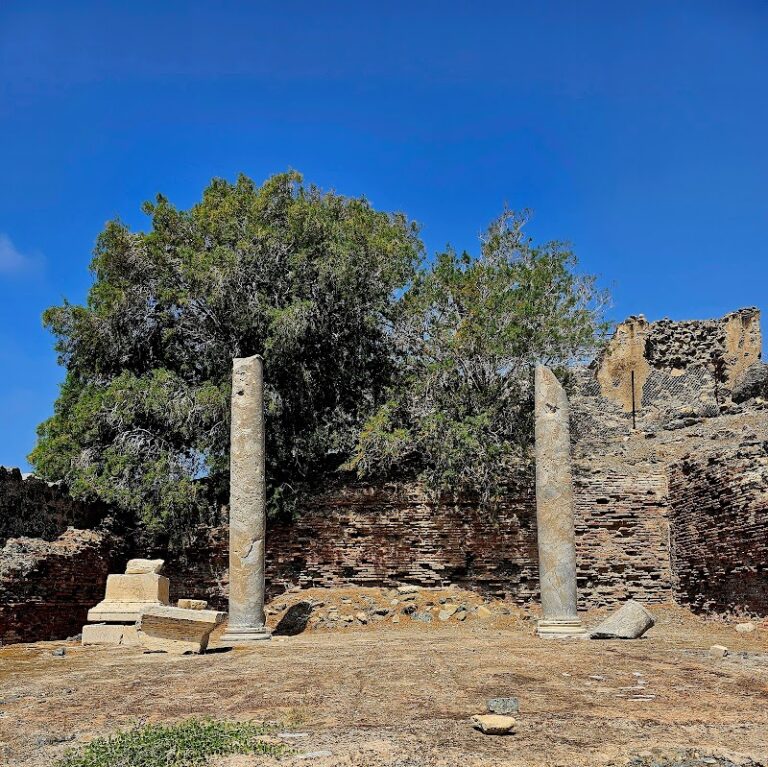
To Lendas’ east lies a therapeutic spring, reputed for its curative properties, especially for stomach issues, blood disorders, and bleeding tendencies. This led to the establishment of a grand temple in the 4th century AC, dedicated to the revered physician deity, Asclepius, and the goddess Hygeia Sotira. This temple was renowned for its hydrotherapy, physiotherapy, and psychiatric treatments, attracting patients from regions as far as Libya. From this sanctuary, remnants like the altar, two marble pillars, and Asclepius’s statue base remain visible. Using materials from this temple, a Byzantine church was later constructed, dedicated to Agios Ioannis Theologos. Additionally, Roman bath ruins have been found near the springs.
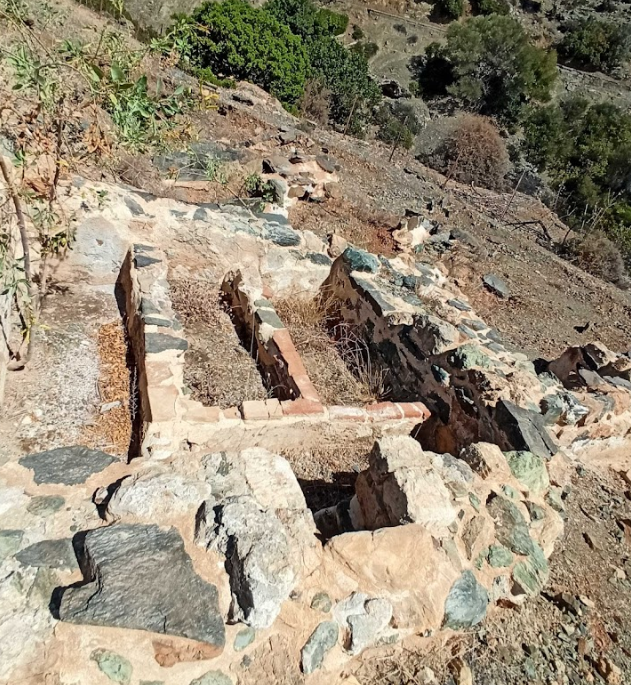
Lassea was one of the ports of the Roman city Gortyn, the capital of Crete in the Roman Era, and is located at the site of the current settlement Chrysostomos. Lassea was rich in copper deposits, which were used for trading copper. Saint Paul mentions the town in his Acts for his stay on Crete.
On the west end of the beach of Chrisostomos, there is a “line” of rocks that heads towards the small islet Trafos. This is the old dock of the ancient town Lassea. The rocks were in that place since the 1960s when they were used for the construction of the Oil Tanks in Kali Limenes. On the island and on the beach, opposite Trafos, you can still see remains of the ancient town of Lasea. A bit further to the west, tombs have been identified.
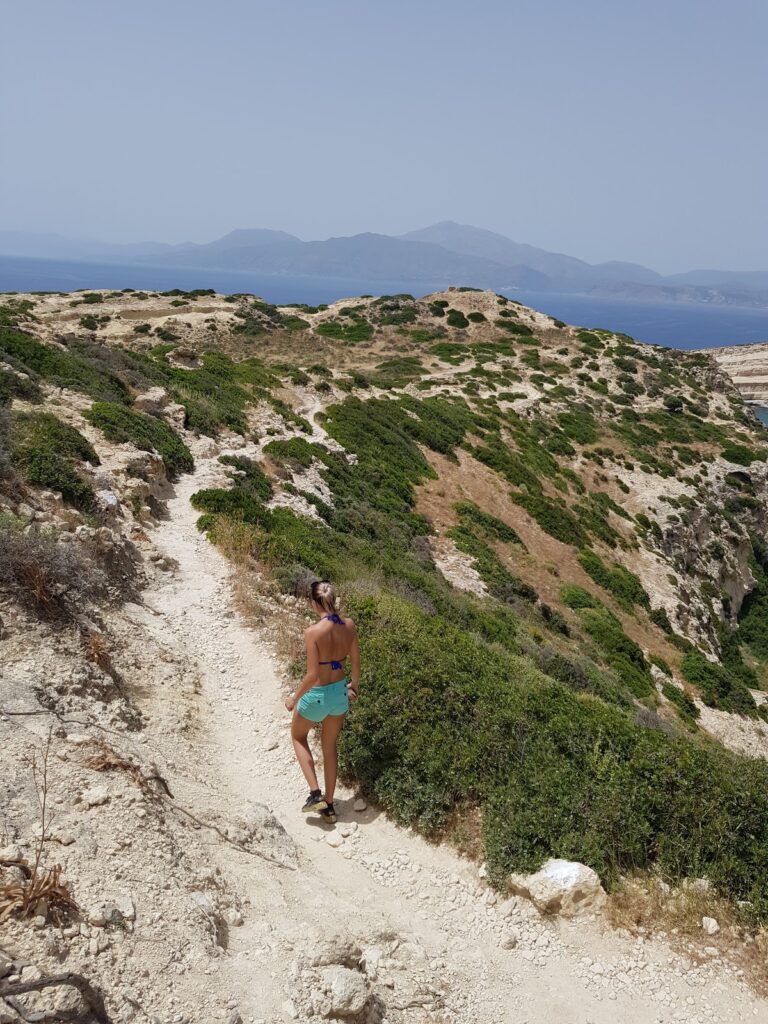
Matala, originally known as Matelon, functioned as a port for Phaestus and Gortyn and is famous for its carved caves, which were used as graves during the Grecoroman era. The cape to the south of Matala has been identified as Cape Nysos, the site where Menelaus’ ships were wrecked, as mentioned in the Odyssey.
Excavations in the 1980s at the archaeological site near the village, which was the heart of the ancient town, revealed large buildings and workshops for metallurgy, pottery, and woodworking. The town appeared to have thrived from the 6th century BC until the 7th century AD but was never deserted.
Remnants of an ancient temple can be found southeast of the village, and a marble urn was discovered near the beach of Matala. The town’s acropolis was situated on a nearby hilltop, where a Turkish tower, known as a koules, was later constructed.
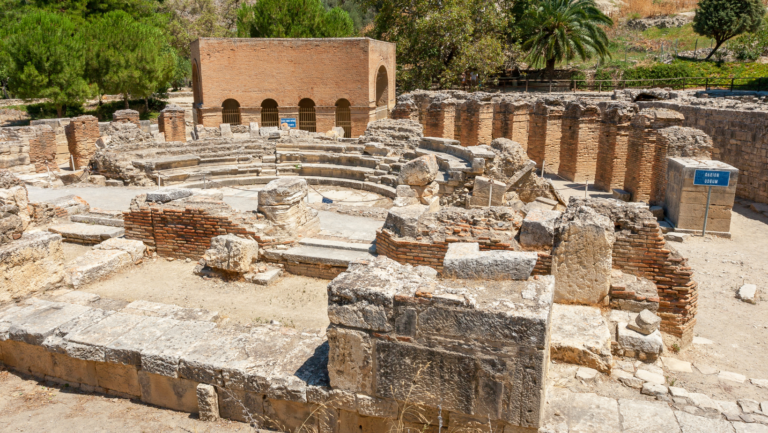
The archaeological site of Gortyna (Gortyn or Gortys) can be found 45km south of Heraklion, close to the village Agii Deka and next to the road connecting Agii Deka with Mires. The city covered a large area on the sides of the river Mitropolianos (or Litheos), even today surrounded by the ancient olive grove of Gortyna.
People have inhabited the area since 3000 BC, while during the Minoan era it evolved as one of the largest cities of Crete. In the 3rd century BC, it surpassed Phaestus and managed to possess the harbor of Matala, while retaining its port in Levina (current Lentas) and Lassea (current Chrysostomos). The town reached its peak during the Roman Empire when the Romans moved the capital of Crete and Cyrenaica (today’s Libya) to Gortyna. The city was finally destroyed by the Arabs in 828 AD, after around ten centuries of prosperity.
Gortyna is one of the most important archaeological sites in Greece. The first archaeological works started in 1884 by archaeologists Federico Halbherr and Stefanos Xanthoudides, after they discovered the Great Inscription of Gortyna. In 1898 the first excavations started, which continue until today.
Inside the main archaeological site (near the road) still stands a small part of the imposing basilica dedicated to the first bishop of Crete, Saint Titus. The temple was built in the 6th-7th century and was dedicated to Saint Titus after the destruction of the larger basilica of Saint Titus located nearby. The small part that has survived is currently used for the worship of Panagia (Virgin Mary). Around the church, several stone sarcophagi have been identified, used for burying the priests.
The Roman Odeon is the largest Odeon in ancient Crete, which is actually an indoor Roman theater. It was a very important part of the ancient city, where the Romans watched performances and talks. The auditorium has been maintained in quite good condition, as well as the semicircular orchestra and the stage which was decorated with statues. Next to the theater, there was the Agora and temple of Asclepius.
Next to the small theater, Halbherr discovered in 1884 four stone columns in the Doric dialect, where the civil law of Gortyna was engraved in boustrophedon script (bi-directional / alternation writing direction per line). Later, parts of the rest eight columns were found, some of them embedded on walls of houses in the village Agii Deka(!), thus completing the puzzle of the Law of Gortyn. The twelve columns (deltas) of Gortyna had about 640 verses, 605 of which have been found. The very progressive laws refer to 450 BC and were inspired by Minoan elements. The Law of Gortyn is the oldest surviving law in ancient Greece.
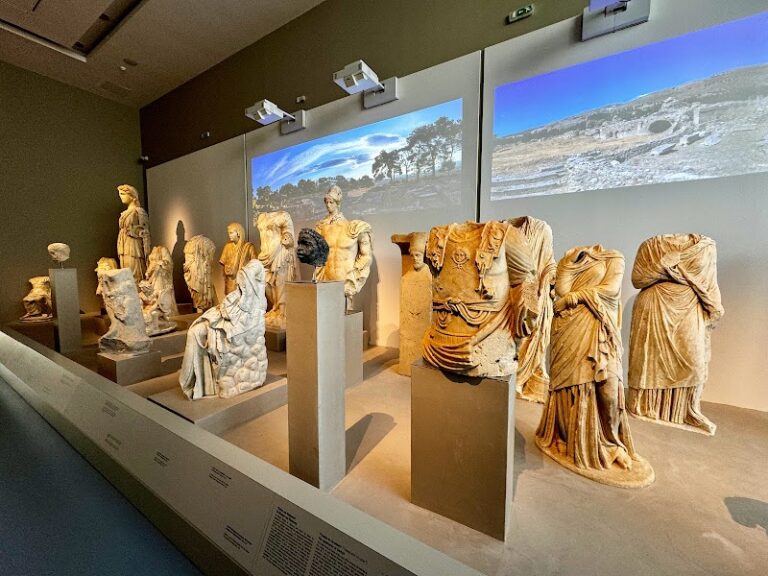
Near the parking place, a small room houses the Roman sculptures found in Gortyna. One of the most important statues probably depicts the emperor Antoninus Pius.
At the back side of the archaeological site, you will find a tall plane tree, which has something very rare. It is evergreen, unlike other deciduous plane trees, and has been the center of a fabulous myth. According to Greek Mythology, this is the perennial plane tree of Gortyna under which Zeus and Europe mated. From this union, the three kings of Crete were born (Minos, Rhadamanthys, and Sarpedon). Indeed, it is no coincidence that at Gortyna, several coins were found depicting Europe and Minos (or Zeus). Moreover, the name of Gortyna is believed to be related to Gortyna, the son of Radamanthys.
Within walking distance from the city (northwest) and atop a hill, you can visit the ruins of the acropolis of Gortyna. The hill was inhabited until 6000 BC, but after the Dorian invasion (1100 BC) it was fortified with a polygonal wall with towers at its corners. On the Acropolis, the archaeologists have identified the ruins of a Byzantine basilica (6th century AD) built on the site of an older Greek temple dedicated to Athena (7th century BC).
Within walking distance from the main archaeological site of Gortyna and south from the main road, there is the Praetorium (1st century AD). The Praetorium was a large, luxurious, and imposing building used as the headquarters of the Roman Province of Crete and Cyrenaica. It is still interesting to see the elaborate luxury marble floors, columns, and statues. In the complex, there were Roman baths, a courtyard with columns, a temple for the deified Augustus, courts, and other public buildings. During the Byzantine period, the building housed a monastery.
The Romans, as in every place they went, they built their favorite spas. As expected, in Gortyna they built a large complex of spas (thermae) with several auxiliary rooms and toilets. Like most Roman baths, in Gortyna there were warm baths, baths of intermediate temperature, and cold baths. The ruins of the spas in Gortyna have not been fully excavated, but still, the visitor can get a good feel for the area (near Praetorium).
The ruins of the Great Basilica of Gortyna are located 200m south of the main archaeological site, on the way to Mitropoli village. The five-aisled temple, discovered accidentally in 1978, was the largest church in Crete. The temple was dedicated to Saint Titus, but after its destruction by an earthquake (670 AD), it was moved to the temple inside the current archaeological site.
A few meters north of the Great Basilica, you can follow the path that leads to the Praetorium and will soon meet the sanctuary of the Pythian Apollo (7th century BC), discovered in 1887. The temple was the largest temple of Gortyna before the advent of Christianity in Crete (and the building of the church of Saint Titus). Next to the church, there was a small theater, an aqueduct, and some houses.
Near the Temple of Apollo, you will also see the temple of Isis, Sarapis, and Hermanubis. This temple is the only temple in ancient Crete dedicated to Egyptian deities. The temple was equipped with an underground crypt and a cistern.
No results available
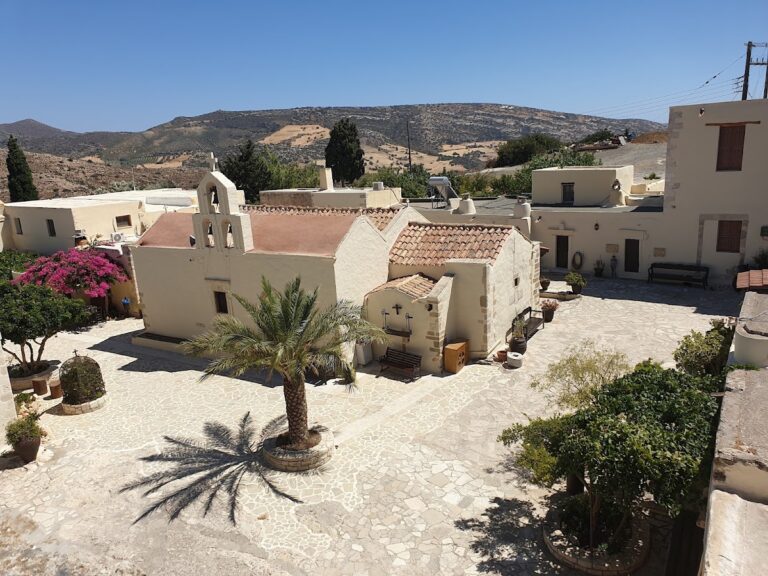
The male monastery of Panagia Odigitria is nestled in the protected area of the Asterousia Mountains, at an elevation of 250m. Accessible through the village of Sivas, it is one of the most historic monasteries in Crete, boasting a vast estate with numerous chapels and extensive land holdings.
Asterousia has long been a significant center for asceticism in Crete, particularly in the sacred gorges of Agiofarago and Martsalo, which are now part of the monastery’s domain. The area is often referred to as the Mount Athos of Crete, after the renowned monastic state in Northern Greece. The strong monastic tradition in the region is believed to be connected to the Apostle Paul, who is said to have stopped in the area during his journey to Rome.
In this hallowed location, hermits constructed the monastery of Odigitria in the 14th century. Its name is likely derived from a copy of the renowned icon of the Monastery Odigon in Constantinople, which is attributed to the evangelist Luke and was one of the most famous miraculous icons in the Byzantine Empire. A 14th-century cross-roofed narthex still partially remains, with important frescoes such as two scenes from the synaxari of Agios Antonios and Paul of Thebes, as well as the 16 houses from the Akathist Hymn. The pictorial decoration also features a scene of monk Gregory and other monks being blessed by Christ.
The monastery’s architecture resembles a fortress, with part of its wall still visible. The complex’s buildings encircle the central two-aisled church, which is dedicated to the Dormition of the Virgin Mary (Kimisis) and the Apostles Peter and Paul. A third aisle, once devoted to Saint Fanourios, has since been demolished. Near the main entrance, visitors can find the legendary Tower of Xopateras and its fascinating story. Other notable features include the baking house, the olive mill, the wine press, several warehouses, the cheese cellar, a small well used during sieges, the guest house (formerly the abbot’s cell), the abbot’s cell with the library, the monks’ cells, and the graves of the monastery’s abbots. Additionally, four icons created by the famous 15th-century Cretan artist Angelos have survived to this day.
At one time, the monastery was home to brothers Parthenios and Eumenios, who later founded the monastery of Koudoumas and are now honored as saints. During the Turkish occupation, the monastery became stavropegic (directly governed by the Patriarch) in order to preserve its property. The monastery is also home to some of the oldest chapels in Asterousia, which feature remarkable frescoes. Among these are the cavernous chapel of Agia Kiriaki (celebrated on July 7), the church of Saint Anthony in Agiofarago Gorge, the Panagia chapel in Martsalo canyon, and the chapels of Saints Eftychiani (celebrated on August 17), Saint Andrew (November 30), and Saint John the Baptist (August 29) in the Vathys Lagos area.
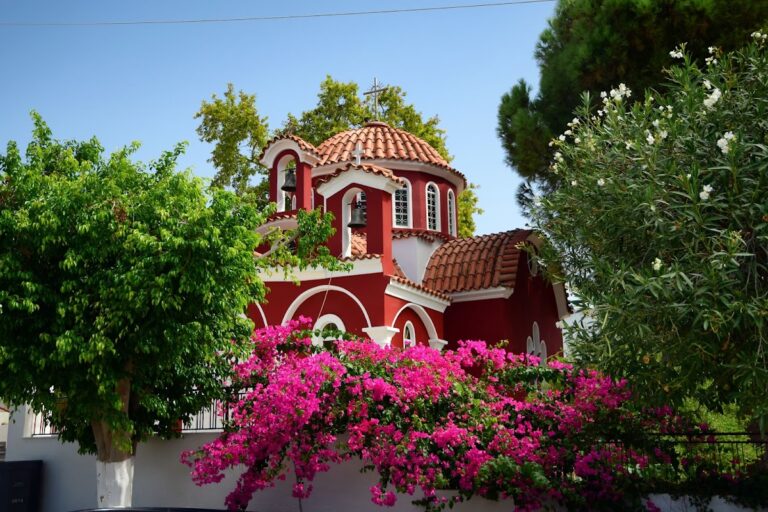
The Panagia Kalyviani Monastery is situated at a height of 80m, approximately 60km south of Heraklion, close to the villages of Mires and Kalyvia. This relatively new monastery was constructed on the remains of an older one.
In 1873, the current church was built on the site of the previous monastery, and the icon of Panagia (Virgin Mary) was discovered in the same year. The Kalyviani complex includes the old church as well as the new temple, which was constructed in 1924 and houses the ancient icon. The new church features three aisles dedicated to the Nativity, the Annunciation, and the Assumption of the Virgin Mary (celebrated on August 15). Additionally, there is a small church dedicated to Saint Haralambos, who was a monk in the monastery and is celebrated on August 23.
Kalyviani exemplifies a foundation that provides assistance and charity to the poor and disadvantaged. In 1956, Bishop Timothy Papoutsakis established a Christian Foundation at the monastery. He constructed an orphanage, hospice, housekeeping school for girls, elementary school, kindergarten, summer camps, and workshops for weaving, knitting, and vestment-making, among other things.
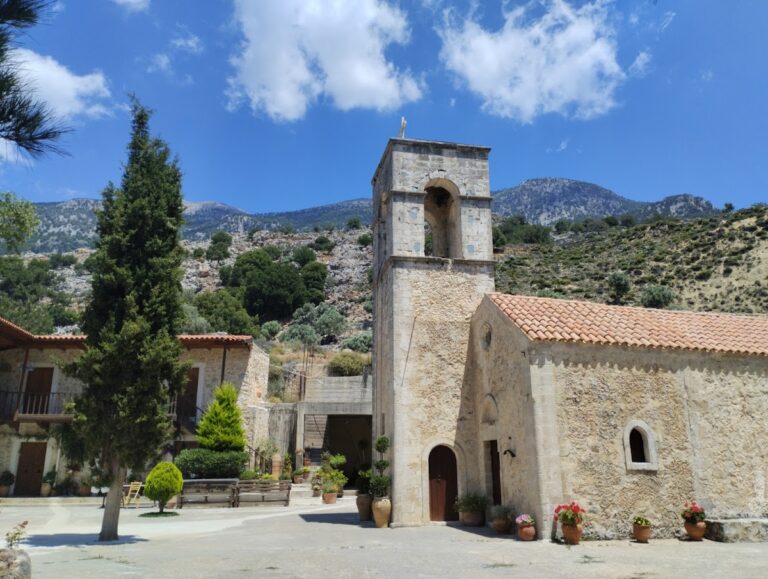
The Vrontissi Monastery can be found 49km southwest of Heraklion, situated near Vorizia Gorge and nestled between the villages of Zaros and Vorizia. From this vantage point, one can enjoy panoramic views of Vorizia village and the Messara plain. Dedicated to Saint Anthony, the monastery is among the oldest in Crete.
While the exact date of its construction remains unknown, it is believed that the monastery’s name comes from its founder. Initially, Vrontissi was a dependency of the nearby Valsamonero Monastery, but it eventually grew so wealthy that it surpassed its parent monastery and became one of Crete’s most significant monastic centers.
According to tradition, Michael Damaskinos and El Greco, two prominent figures in the Cretan School of Iconography, lived and worked at Vrontissi Monastery. In fact, six of Damaskinos’ icons, now on display at the Museum of St. Catherine in Heraklion, were once housed at Vrontissi. The surviving 14th-century frescoes in the church, which show influences from the Renaissance, demonstrate the high level of artistic expression that developed at the monastery.
The church itself is a two-aisled structure dedicated to St. Anthony (celebrated on January 17) and St. Thomas (celebrated on the first Sunday after Easter). Its bell tower, built in Venetian architectural style, stands as a separate structure. Several frescoes are preserved in the south aisle, including the Supper at Emmaus, the Apostles, Minologia, and Saint Symeon holding baby Jesus. The church also houses the 16th-century icon of Ambelos, created by Cretan artist Angelo.
Despite once being fortified, the monastery’s walls were eventually demolished in the name of modernization. The most striking remnant of the monastery’s former glory is the impressive 15th-century fountain that features depictions of Adam and Eve. At the feet of these figures, four others release water from their mouths, symbolizing the four rivers of Eden. This fountain is considered the most beautiful provincial example of fountains in Crete. The Turks referred to Vrondisi as Santrivanli Monastir, meaning Fountain Monastery.
Today, the Vrontissi Monastery serves as the International Village of Cretan Youth.
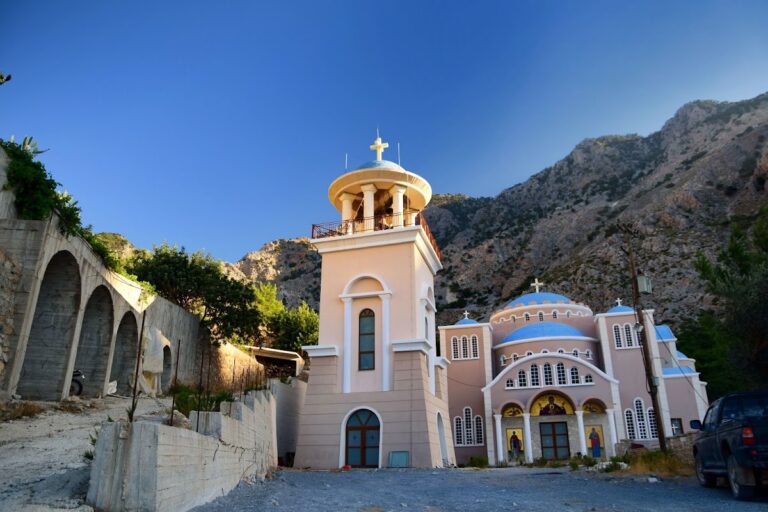
Agios Nikolaos Monastery (Saint Nicholas) can be found at the end of the stunning Gafaris (or Rouvas) canyon, approximately 48km southwest of Heraklion and 3km north of Zaros village. In 1994, a massive fire destroyed much of the gorge’s beautiful pine forest, and the monastery is located near this site.
Visitors can reach the monastery by car from Zaros, taking the path that leads to the gorge (20 minutes north of Lake Zaros). Regrettably, the monastery’s architecture is a modern and unattractive anomaly within this landscape. The only points of interest for visitors are the old church of St. Nicholas, featuring 14th-century Paleologean-style frescoes, and the restored temple of Agia Paraskevi.
Originally, the monastery functioned as a secondary monastery of Varsamonero Monastery. It was later abandoned but has since been repurposed as a monastery for Old Calendarists. They have constructed a large modern temple and various cells, utility rooms, and other facilities. The current temple is dedicated to the Resurrection of Christ and Agia Kiriaki, while the bell tower houses eight bells, the heaviest of which weighs 12 tons.
In the surrounding area, visitors can also explore the ancient cavernous church of St. Efthimios, adorned with numerous frescoes and featuring an inscription dating back to 1438.
No results available
No results available
No results available
No results available
No results available
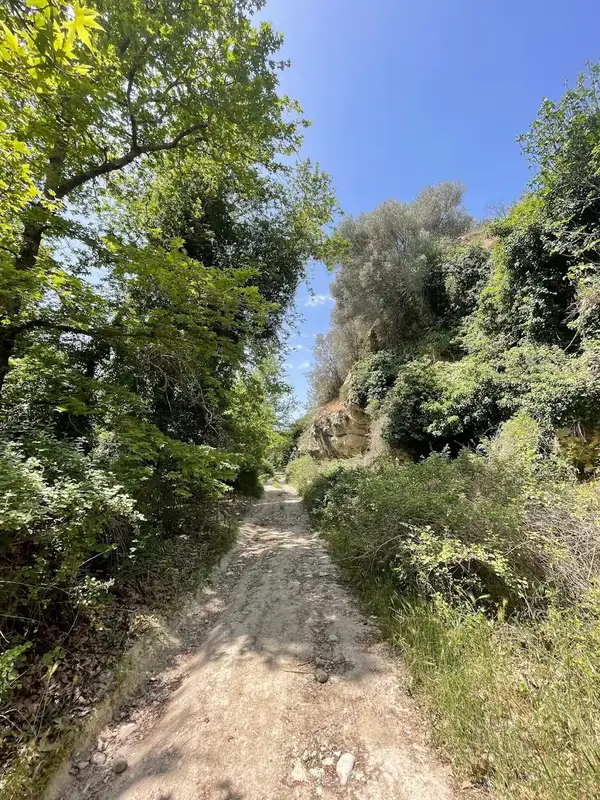
The Apolychnos Gorge, situated just a few kilometers north of the town of Mires, is nestled in an area abundant with olive groves. This gorge is essentially a narrow valley that traces the path of a river, which in certain areas deepens and is surrounded by thick vegetation. The Tourki stream that flows through it carries water from a valley that begins west of Makres village to the Geropotamos river. The gorge, which is roughly 3 km long, begins near the village of Panagia and concludes at the traditional settlement of Agios Antonios (Vrelis). It’s conveniently accessible, particularly near its exit close to Agios Antonios, as it’s adjacent to the main road from Mires.
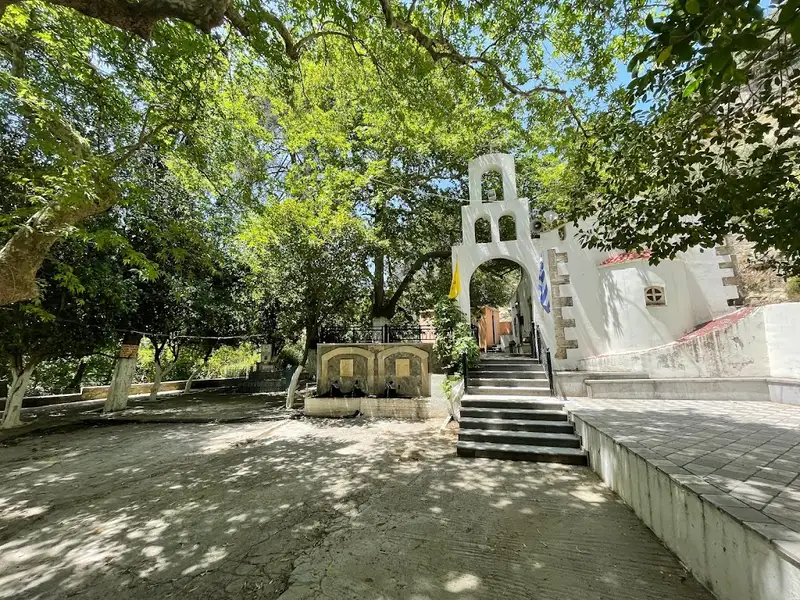
The gorge is named after the deserted village of Apolychnos, which is situated within the gorge at an elevation of 220m. This village, enveloped by verdant trees and bubbling springs, is home to the stunning Byzantine church of Saint Panteleimon, located in the village square.
On the southeastern flank of Mount Sanida, near the quaint village of Skourvoula, you’ll find a petite yet wildly untamed chasm known as Rizopetro. This gorge culminates in a striking 60m waterfall that cascades into the lake of the Faneromeni dam, a sight to behold especially after heavy downpours.
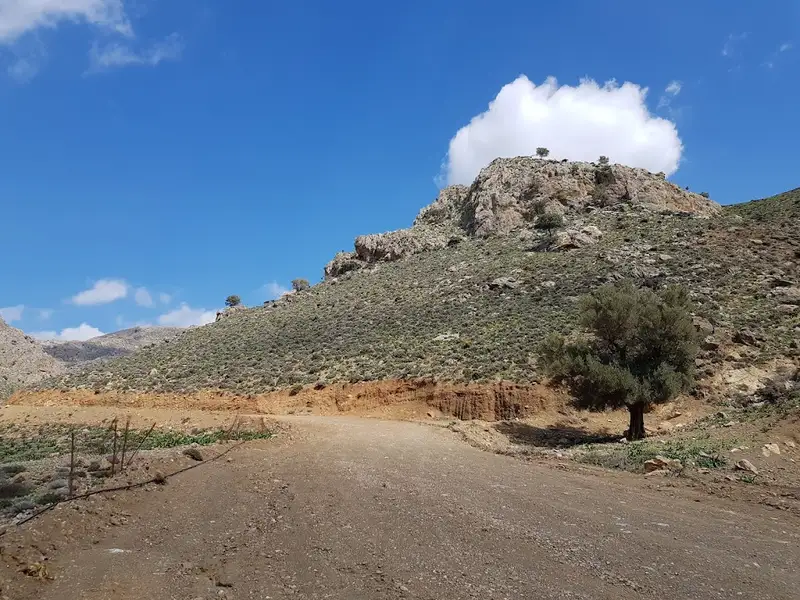
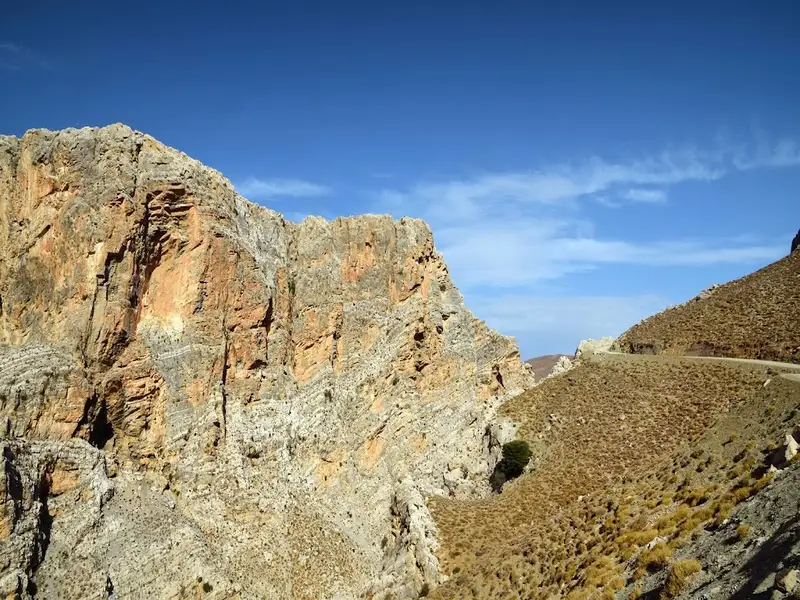
The Trypiti Gorge, nestled in the Asterousia mountain range, lies south of Vassiliki village and channels water from the valley east of Miamou village through the Agiosavvitis river. Stretching over 4 km, the gorge ends in a stunning pebble beach named Tripiti. A dirt road, running along the eastern side of the gorge, provides access to the beach, following several kilometers before reaching the riverbed at the sea’s edge.
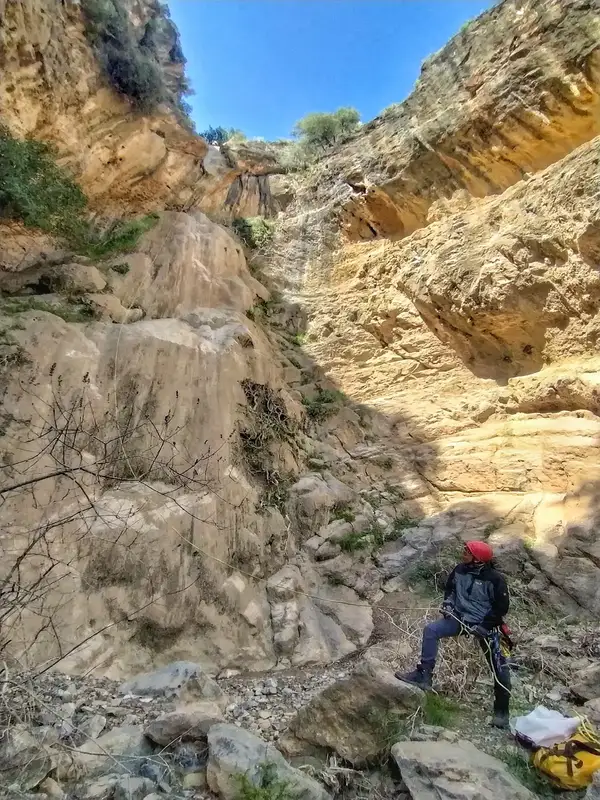
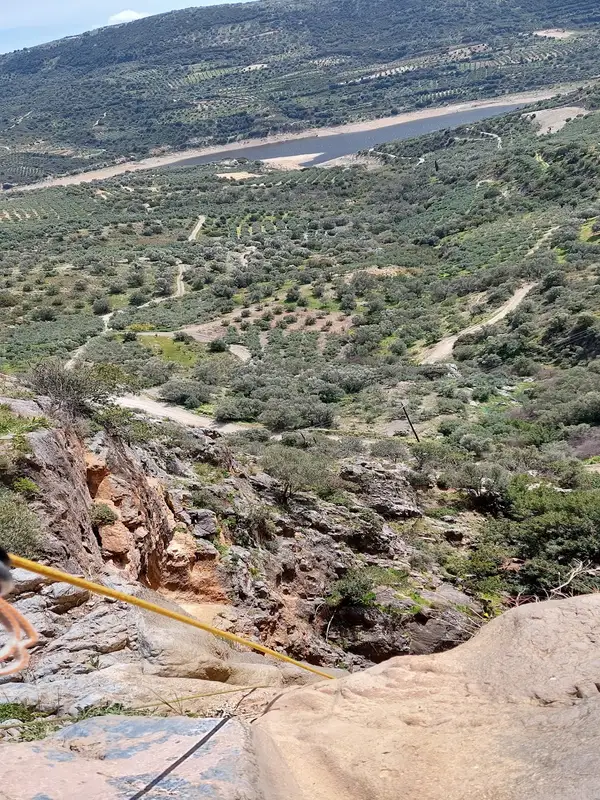
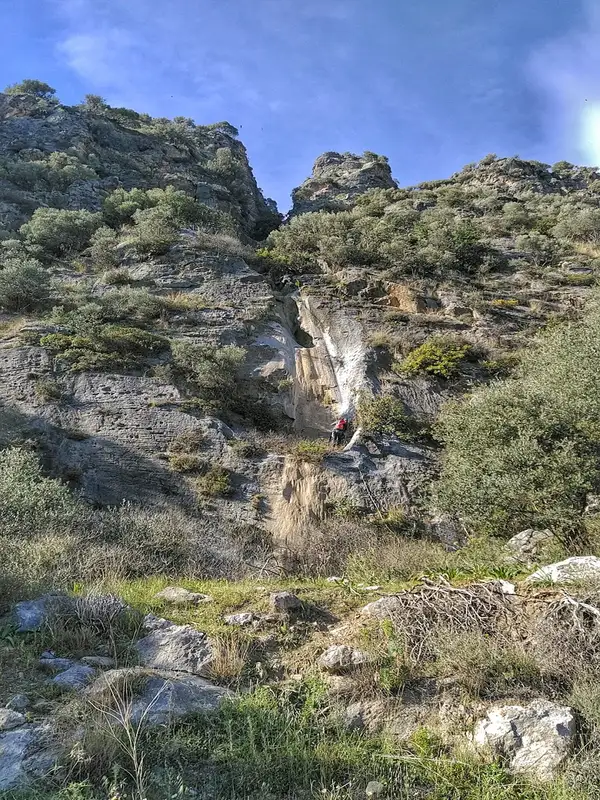
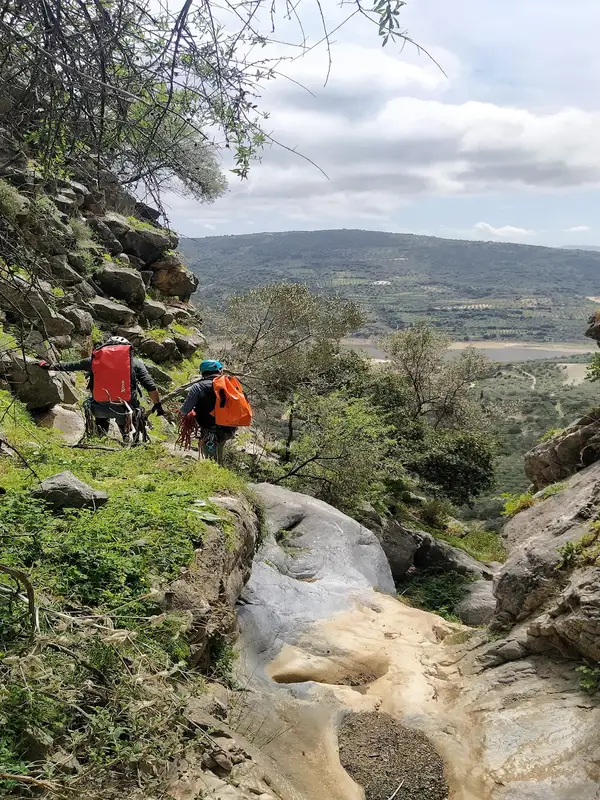
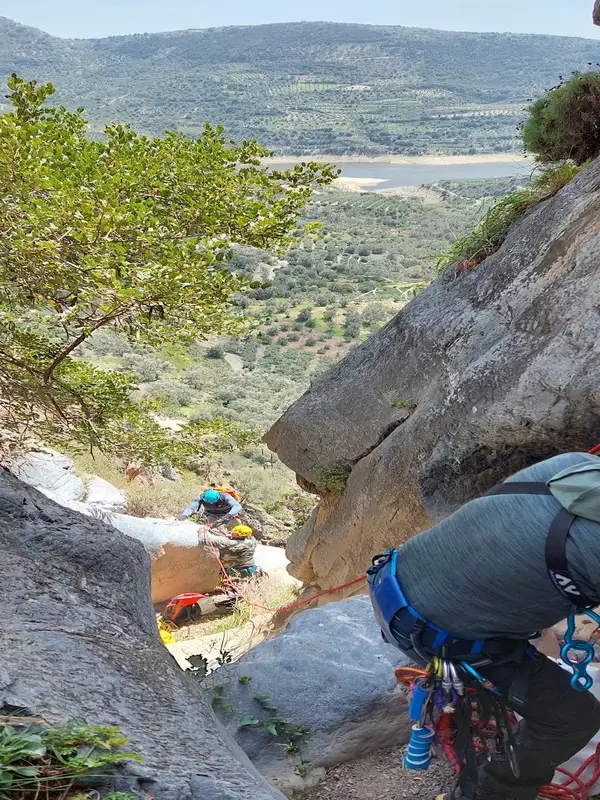
The gorge narrows near Saint Paraskevi church, situated at an elevation of 655m. The initial section of the gorge houses steep waterfalls, making it inaccessible without technical expertise and canyoneering equipment. The western side, in particular, is incredibly steep and dangerous. The Prophet Elijah church is a prominent feature at Katsakne, the peak of the western slopes. This church can be accessed via another dirt road that begins about half a kilometer before the gorge’s entrance.
Midway through the gorge, close to the dirt road, lies the Saint Savas church, surrounded by wild olive trees. The unique feature of this woodland is its wild, uncultivated olive trees, offering a glimpse into the natural habitat of these trees. The gorge is also home to an array of wildlife and bird species.
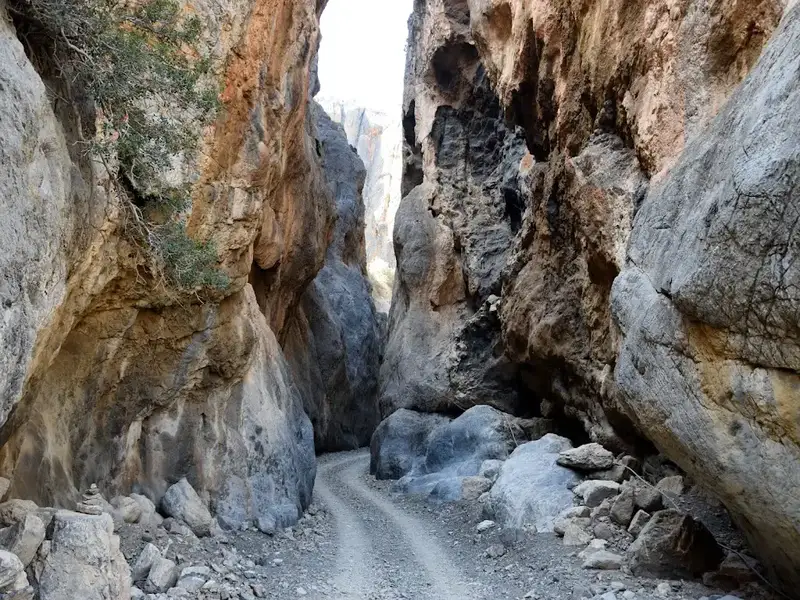
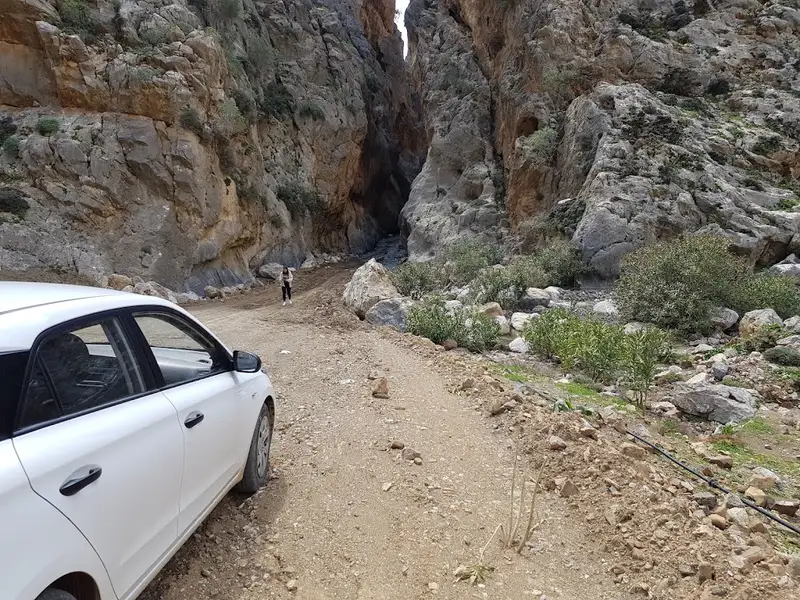
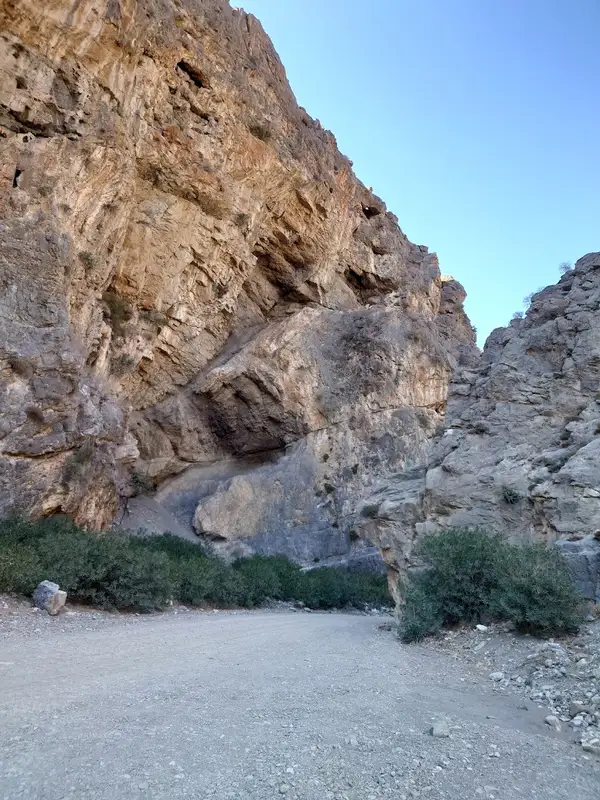
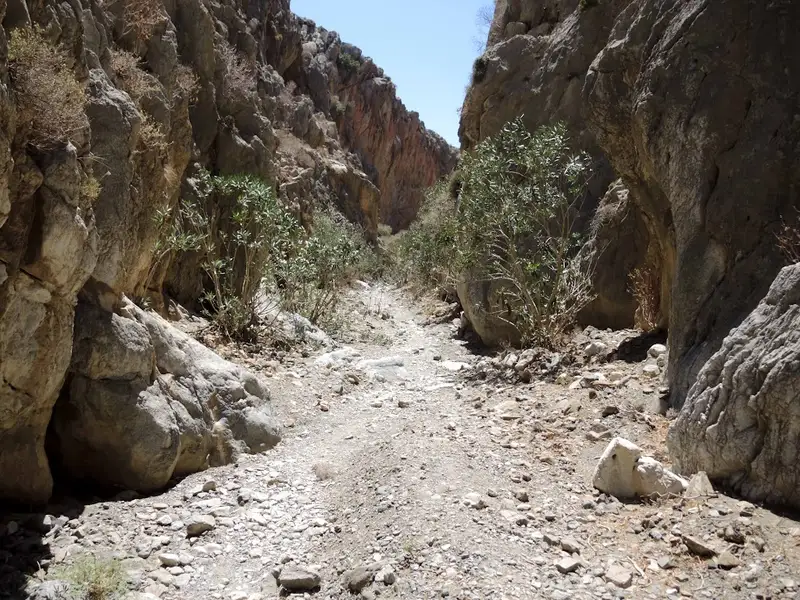
As you continue towards the sea, the road merges with the ravine and soon leads to the most picturesque part of the gorge: the narrow canyon, also known as Steno Faragi. Here, the sides of the gorge come so close together that they appear to touch. A road, just wide enough for a car, passes through this narrow gap. At the end of this narrow section, next to the beach, you’ll find the Panagia Tripiti church, built inside a cave, that celebrates its feast on September 1st.
The Trypiti Gorge is known by various other names, including Saint Savas Gorge, Katsakne, and Lavri. On the eastern side’s Papouri hill, archaeologists have uncovered a significant Preminoan settlement. Additionally, vaulted graves have been discovered at the Kalokambos location.
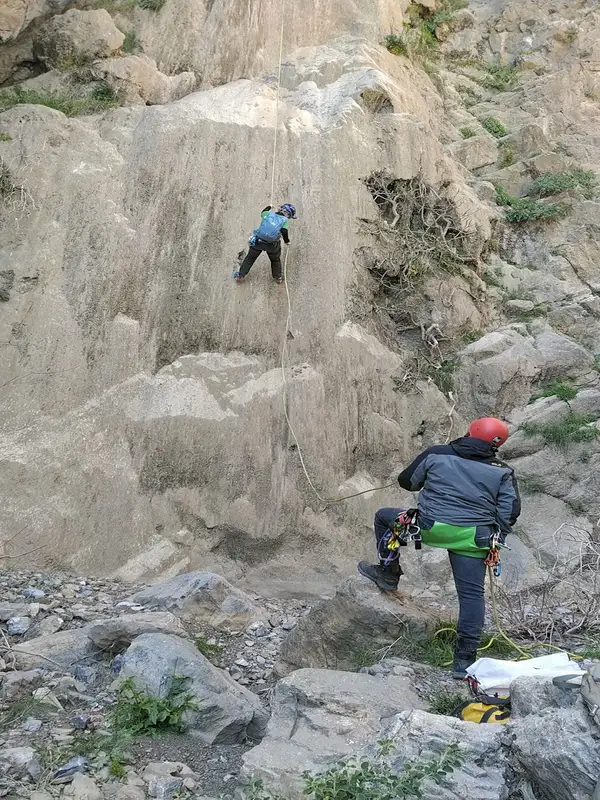
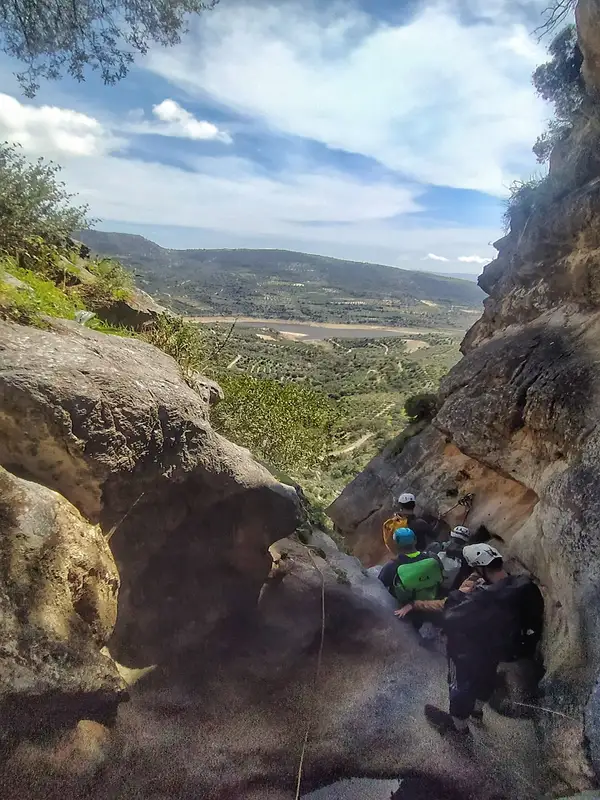
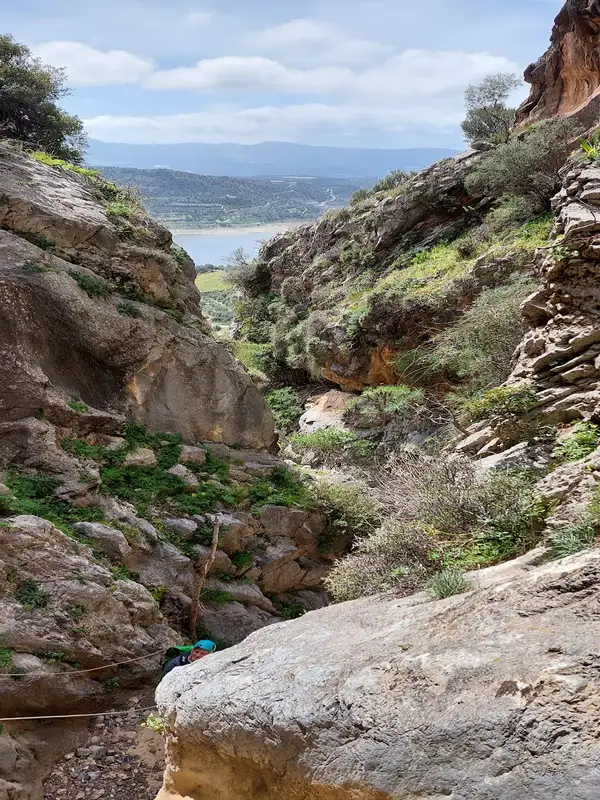
The Trafoulas Gorge, located in the Asterousia Range, begins southeast of Krotos village and concludes at the Psili Ammos beach on the southern coast of the Cretan Sea. The majority of trekkers only explore a small portion of the gorge, typically from where they park their vehicle to the beach, despite the gorge’s origin being at a greater altitude. Even this limited section of the gorge is quite striking, characterized by narrow walls and towering rocks. According to local lore, the most narrow section of the gorge is referred to as the Pidimatou Gorge, or Jumping Gorge, given that a goat could feasibly leap from one side to the other.
No results available
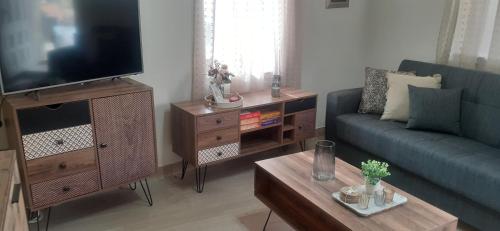
Hercules has mountain views, free WiFi and free private parking, situated in Moírai, 48 km from Venetian Walls.
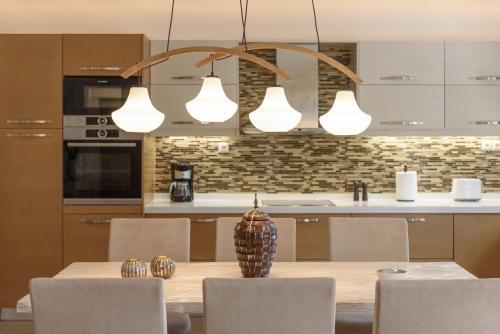
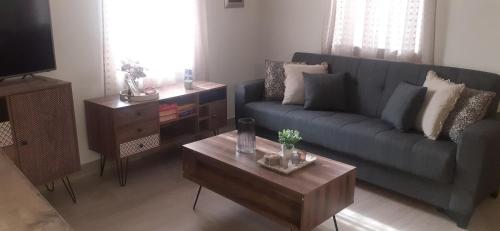
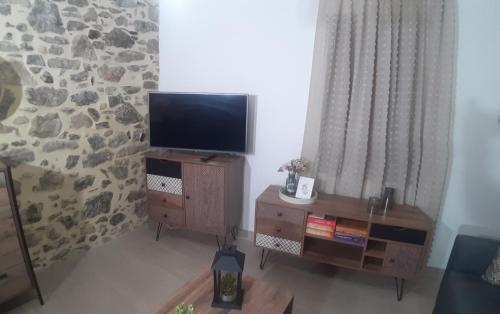
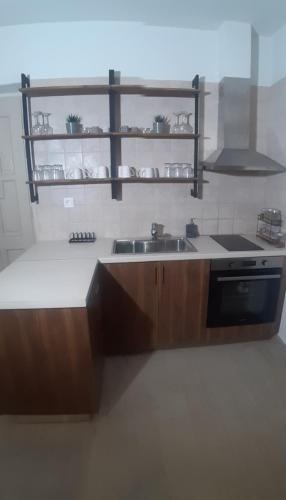
Featuring a kitchen with an oven and a toaster, each unit also comes with a satellite flat-screen TV, ironing facilities, desk and a seating area with a sofa. A fridge, a stovetop and kitchenware are also available, as well as a coffee machine and a kettle.
The apartment offers a barbecue.
Guests at Hercules can enjoy cycling and fishing nearby, or make the most of the sun terrace.
Heraklion Archaeological Museum is 49 km from the accommodation, while Phaistos is 11 km from the property. The nearest airport is Heraklion International, 51 km from Hercules, and the property offers a paid airport shuttle service.
from
€65
/night
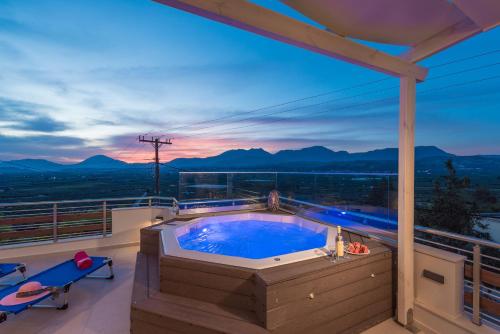
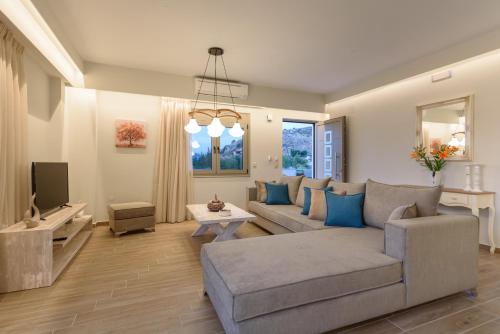
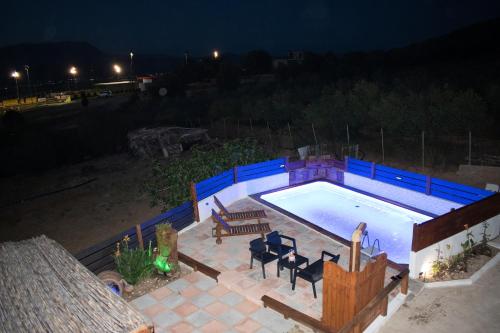
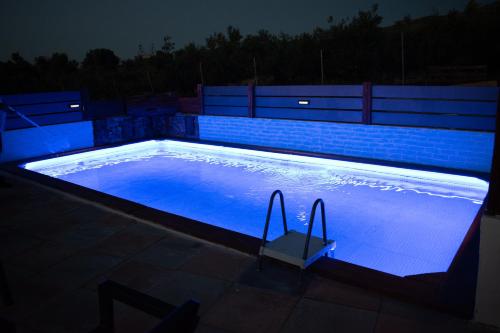
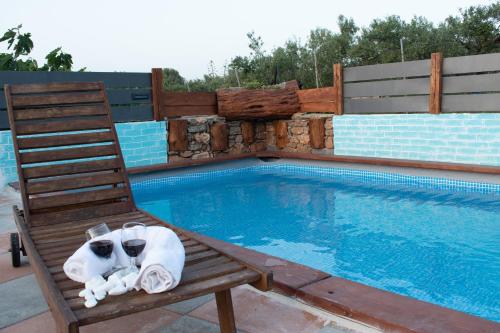
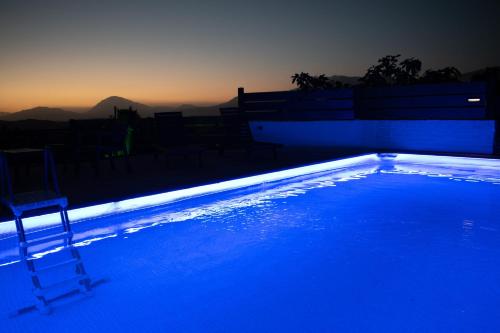
Featuring garden views, Haritos Holidays Home offers accommodation with a patio and a coffee machine, around 11 km from Phaistos. This holiday home features a private pool, a garden, barbecue facilities, free WiFi and free private parking.
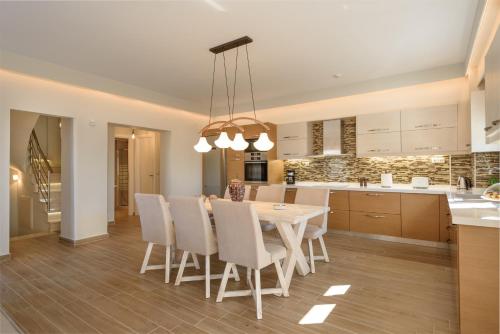
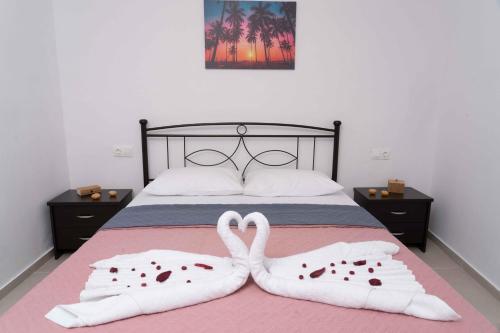
The holiday home is fitted with 4 bedrooms, 2 bathrooms, bed linen, towels, a flat-screen TV with streaming services, a fully equipped kitchen, and a terrace with mountain views.
Museum of Cretan Ethnology is 12 km from the holiday home, while Pankritio Stadium is 49 km away. The nearest airport is Heraklion International Airport, 54 km from Haritos Holidays Home.
from
€145
/night
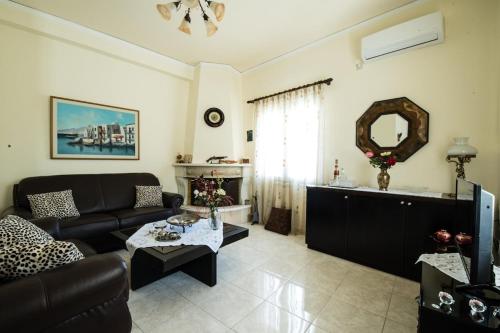
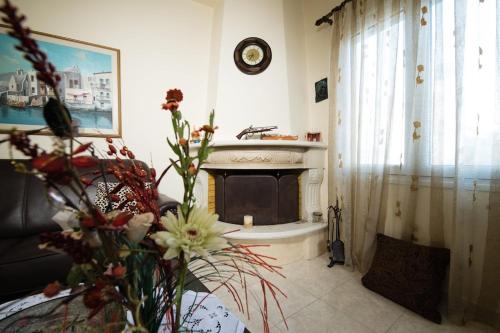
Featuring inner courtyard views, Namaste Family House provides accommodation with a patio and a kettle, around 11 km from Phaistos. It features a garden, a terrace, garden views and free WiFithroughout the property.
The air-conditioned holiday home consists of 2 bedrooms, a living room, a fully equipped kitchen with an oven and a coffee machine, and 1 bathroom with a walk-in shower and a hair dryer. Towels and bed linen are provided in the holiday home.
A a baby safety gate is also available for guests at the holiday home.
Museum of Cretan Ethnology is 11 km from Namaste Family House, while Pankritio Stadium is 49 km away. The nearest airport is Heraklion International Airport, 54 km from the accommodation.
from
€74
/night
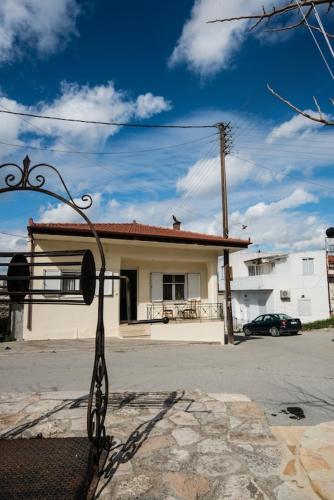
Boasting mountain views, Kreta House offers accommodation with a balcony and a coffee machine, around 11 km from Phaistos. This property offers access to a terrace and free private parking.
This holiday home has 2 bedrooms, a kitchen with an oven and a microwave, a flat-screen TV, a seating area and 1 bathroom fitted with a shower. Towels and bed linen are offered in the holiday home.
Museum of Cretan Ethnology is 11 km from the holiday home, while Pankritio Stadium is 49 km from the property. The nearest airport is Heraklion International Airport, 54 km from Kreta House.
from
€52
/night
No results available
Connect with thousands of Crete visitors and boost your bookings.
No results available
© All rights reserved. Crete Locals