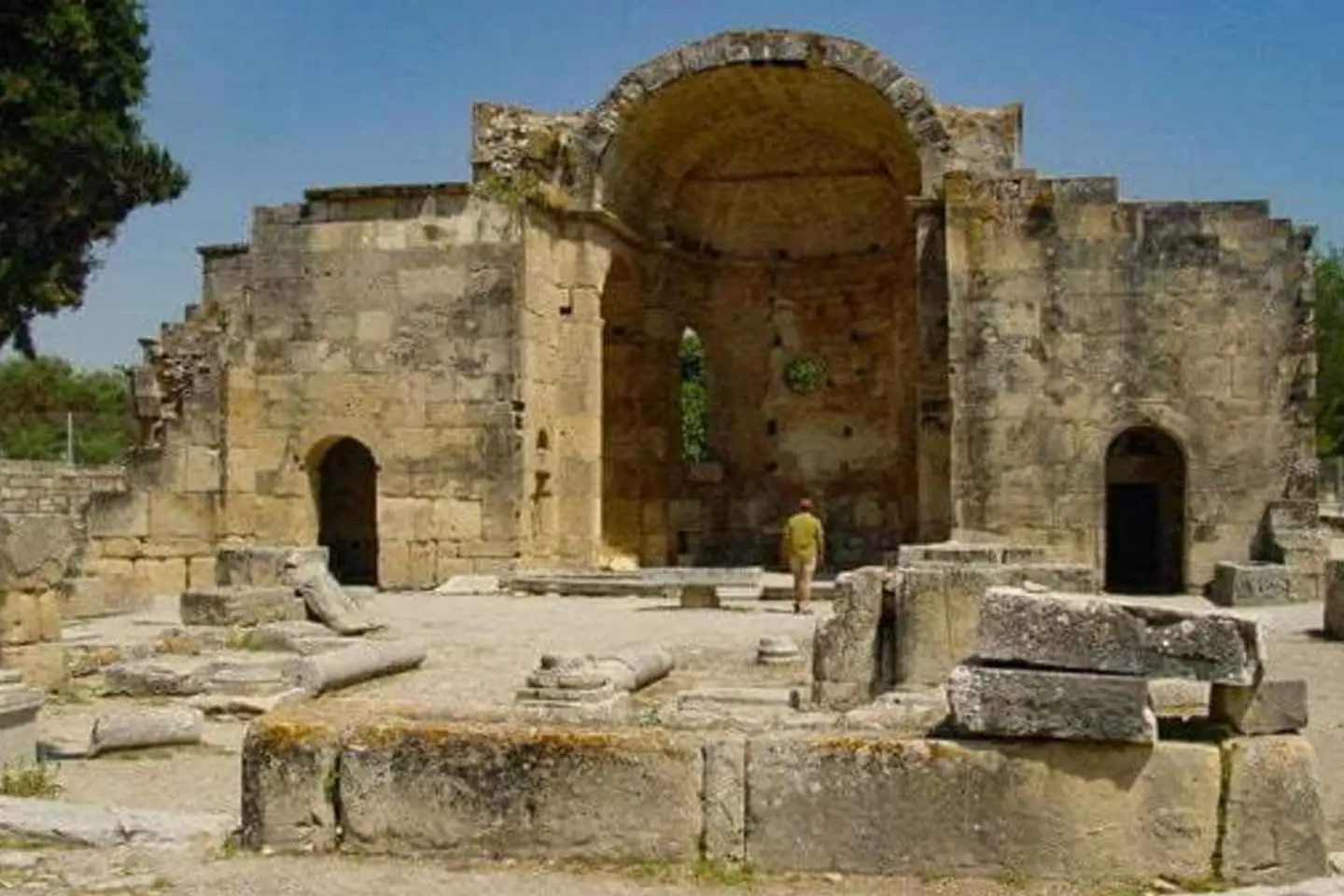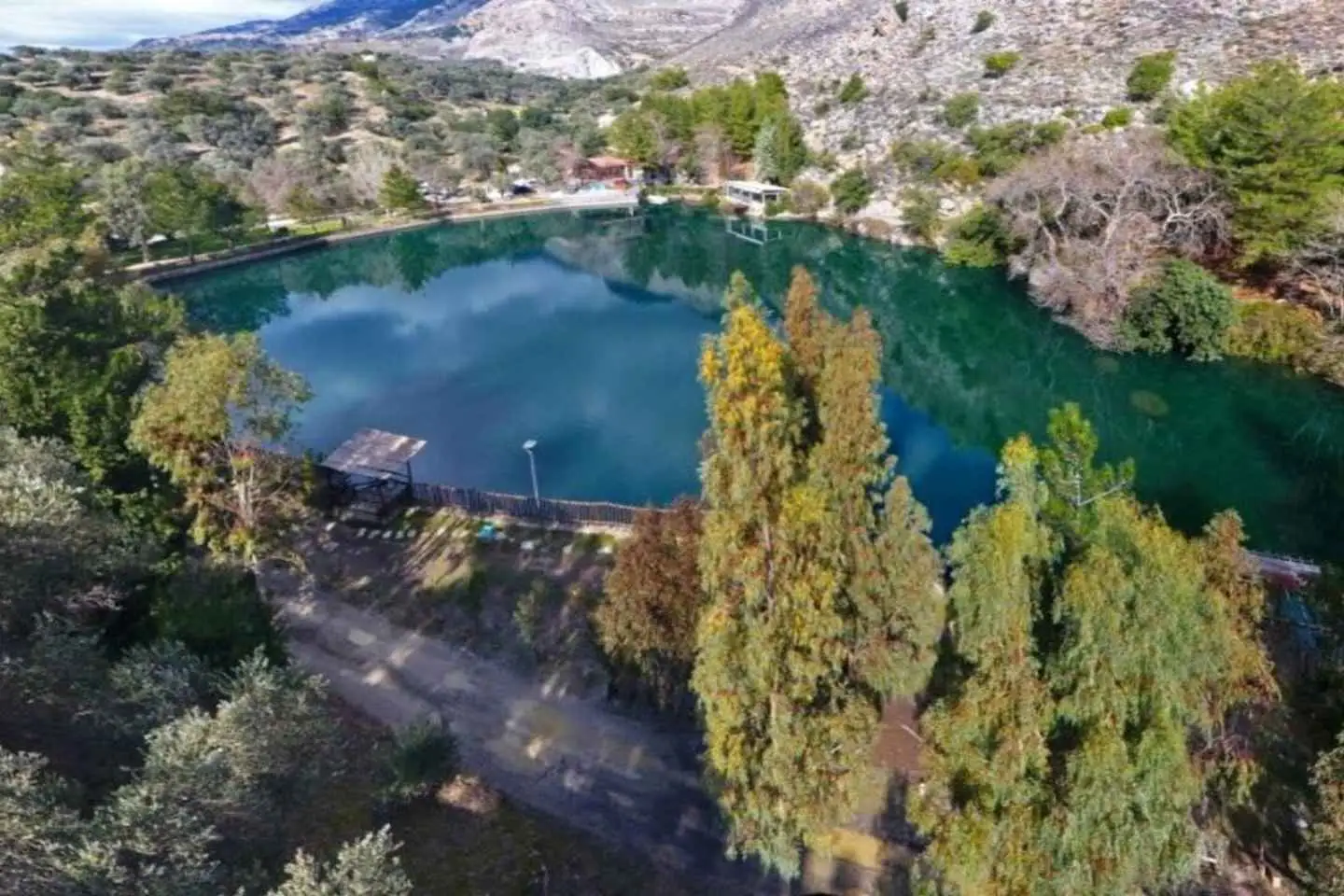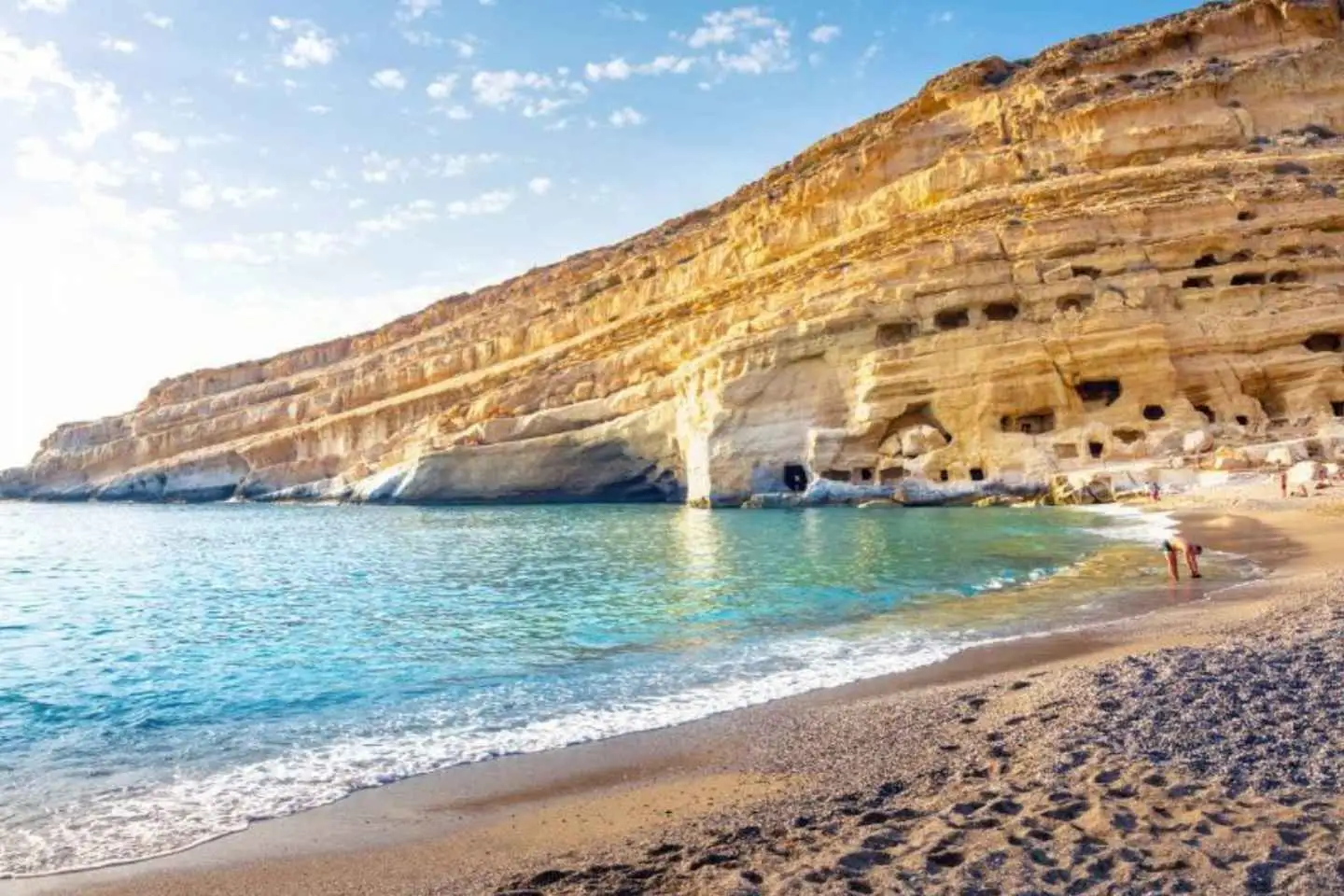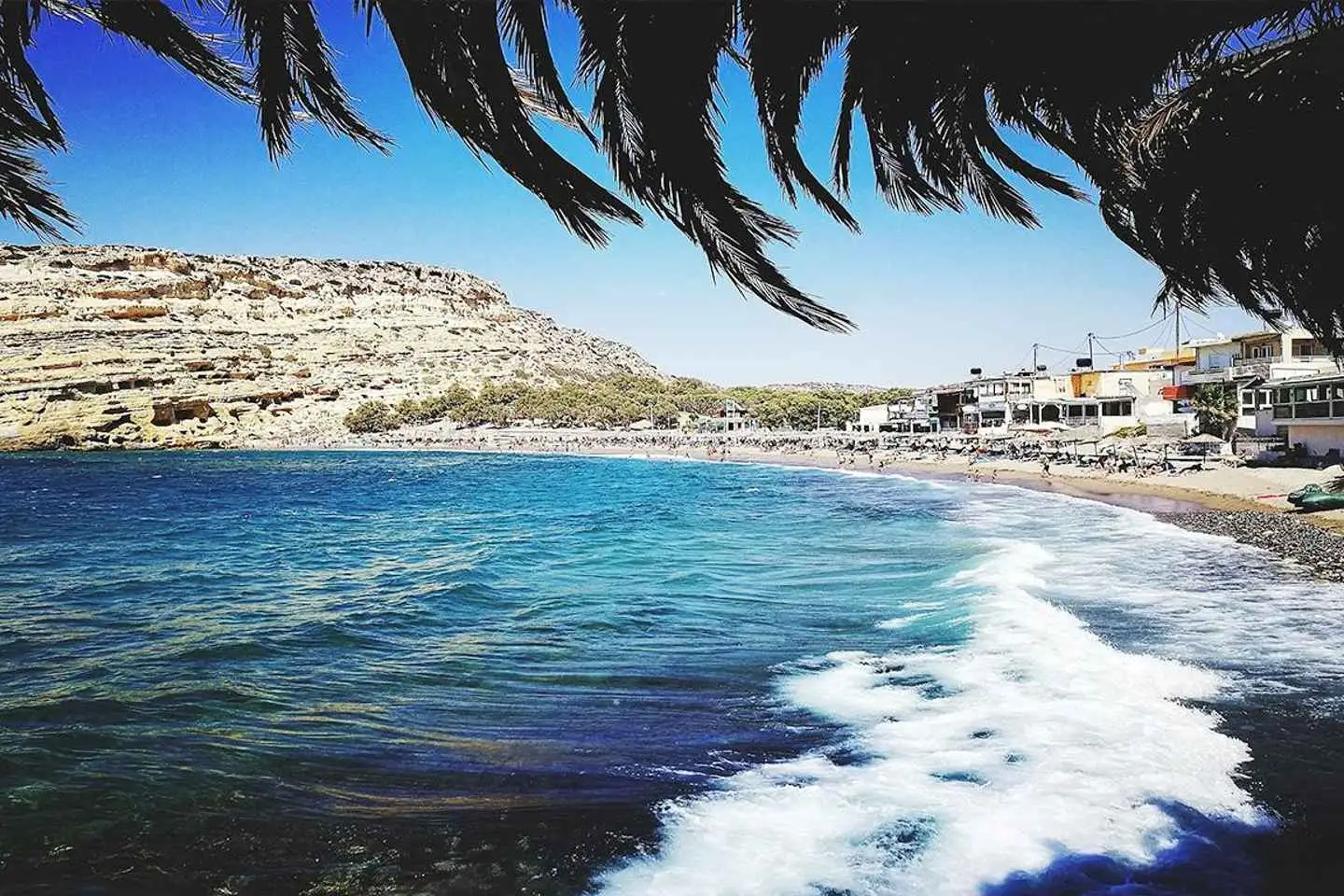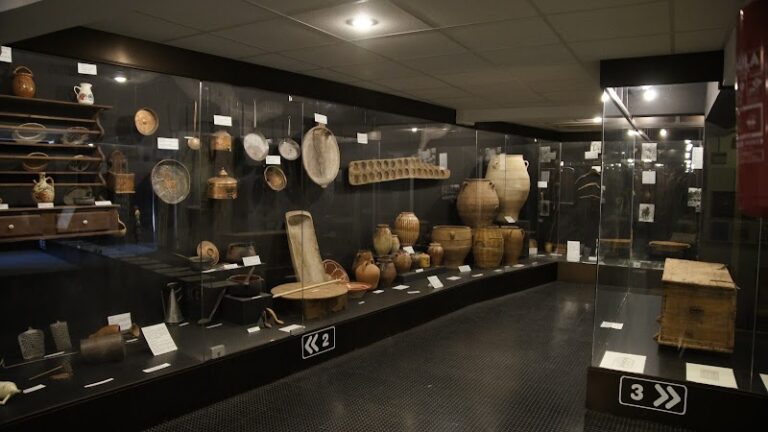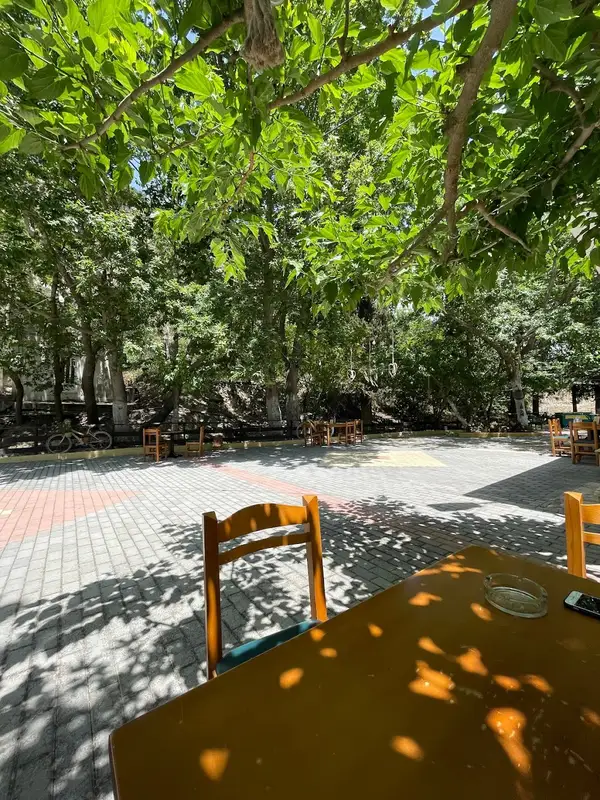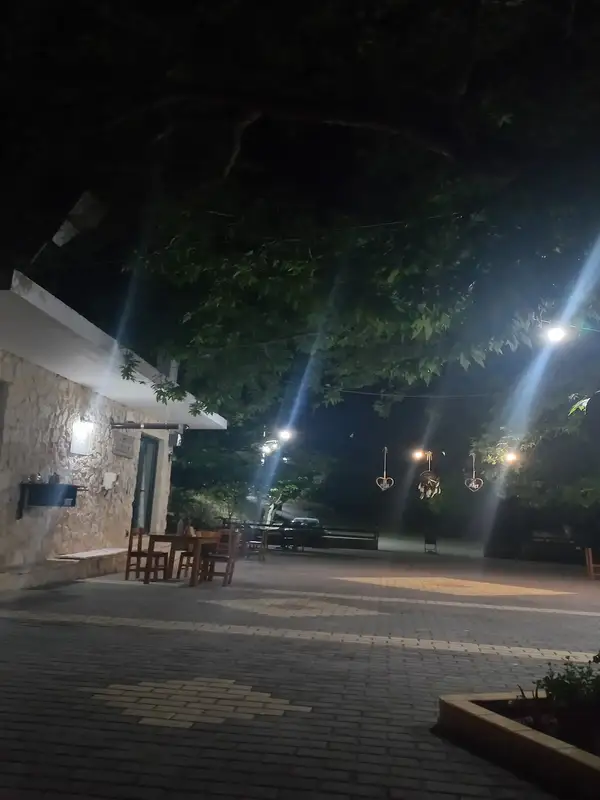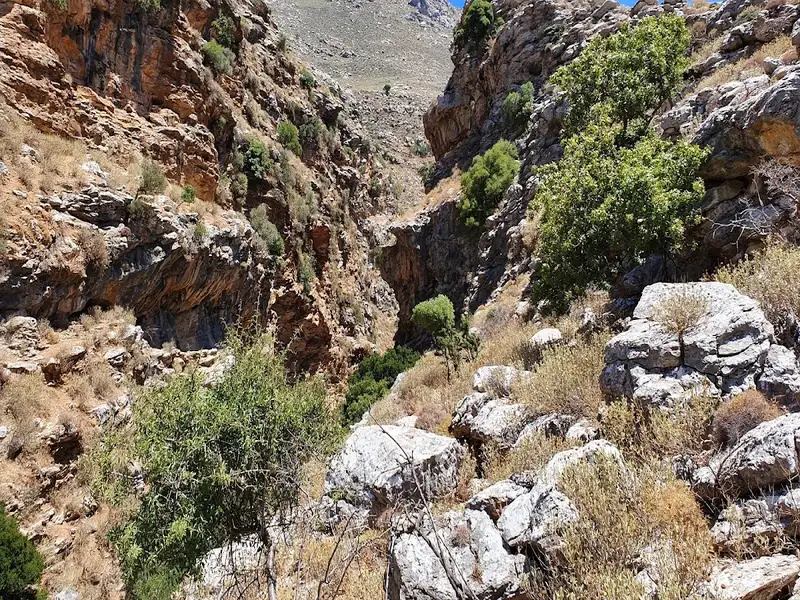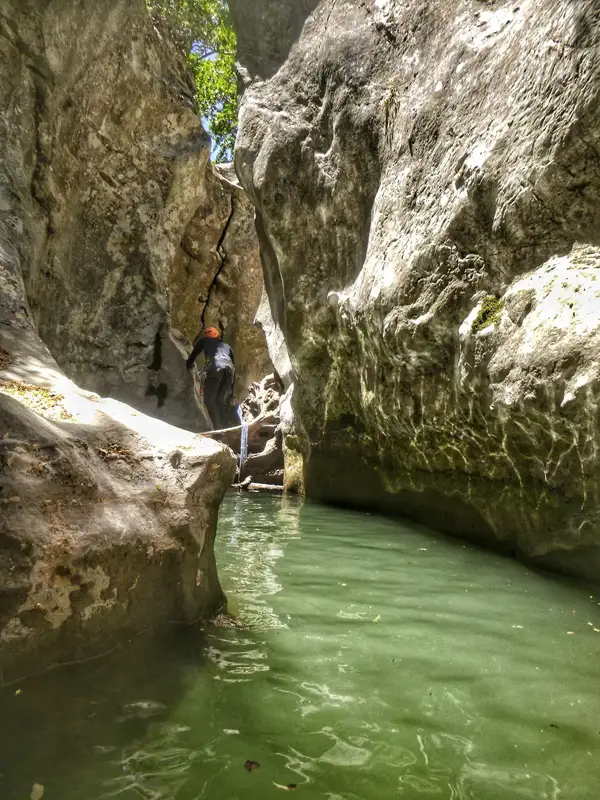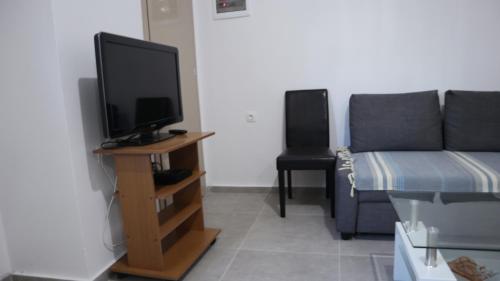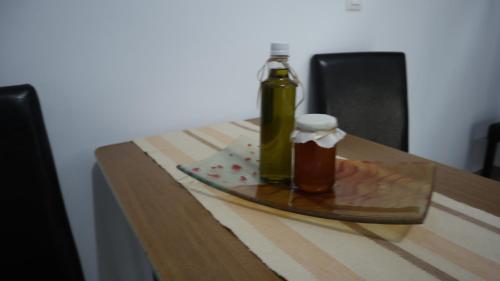
Meet with your guide at the terminal of Cretan Spiti Travel at Eleftherias Square in front of Astoria Capsis Hotel at 08.30, we drive to Gortyna, the Roman capital of Crete and Cyrenaica and was first inhabited around 3200 BC. After the visit of Gortyna, we drive through valley of Mesara to visit the archaeological site of Phaistos and its palace, the most important center of the Minoan civilization, and the most wealthy and powerful city in southern Crete. After our visit to Phaistos, we drive to Matala where you will enjoy some free time to swim in the crystal clear waters and optional lunch. Finally we arrive to Zaros, attractive, refreshingly unspoiled village famous for its spring water, which is now bottled and sold all over Greece, and an ideal base for walkers to explore the beautiful nature. Zaros also has some fine Byzantine monasteries, and delicious farm-raised trout served up in tavernas around town and on emerald-green Lake Votomos which will be visited. Late in the afternoon at 17:00, we return to Heraklion at the terminal in front of Astoria Capsis Hotel.
Flexible Private Tour in Crete. Four choices of Tour/Daytrip directions ……………… Have a unique experience, sightseeing and traveling in a Classic Mercedes without missing any of the comforts you need! Ice cold AC, plush leather seats, modern sound system ect, all while driving around in classic! Very experienced local driver, fluent in English and very knowledgable of the island and its hidden jewels …………………. East Crete: Ag. Nikolaos-Elounda-Plaka-Spinalonga: Made famous also by Victoria Hishop’s homonymous novel, Spinalonga (The island) bears way more history than its size would ever suggest. Being a Venetian Fortress overseeing the Bay – Port of Elounda as well as a later leper Colony, “The island” is basically a nutshell full of our past! Elounda being one of the most beautiful places / beaches of the north of Crete, and St. Nicolas with its famous narrow walking streets will definitely complete the experience of a nice day’s trip.
…………………. East Crete: Kera-Lasithi Plateau-Cave of Zeus: One of Pithagoras’s favorite meditation sights, the “Cave of Zeus” has been the subject of myths and stories alike, for millennia… Today you’ll probably not find Zeus himself in the cave, but you’ll certainly be awarded with spectacular views, both on the way, and on top of the Cave’s mount. Through traditional Villages, mountain trails and the Plateau of Lasithi, you’ll probably find yourself on a trip worth remembering.
………………… South Crete: Faistos Palace-Gortyna-Matala: The second of the four Minoan Palaces to have been found on the island, Festos makes a good fit for the connoisseur’s kind of choice… Lacking the famous red pillars of Knossos, it nevertheless offers a more authentic bare-bones experience, due to the simple fact that it has not been reconstructed! Also the original home of the famous Festos’s Disk! Gortyn. Home of most major civilizations to ever pass from Crete, also served as the Praetorium for the Roman Governor of Crete! Matala! The beach of the hippies! A tripping and relaxing way to complete a nice day trip, enjoy the beach, the caves and the hippie vibes. ……………….. Heraklion: Knossos Palace-Spilia-Arc. Museum-Heraklion City: Experience Heraklion, one of the most intimidating “star – fortress” cities of its time, that managed to endure 21 years of Ottoman siege! Now a modern city, with all the positives and negatives of such…
Knossos Palace, basically the headquarter of Europe’s first, known, advanced civilization, along with the Archeological Museum of Heraklion, will definitely paint a vivid picture of how and where the “West” started!
St. Irene of Spilia, one of the many hidden Jewels of Crete just three minutes from Knossos, an imposing Roman aqueduct and an overall stunning place to spend some time and enjoy nature.
Intro:
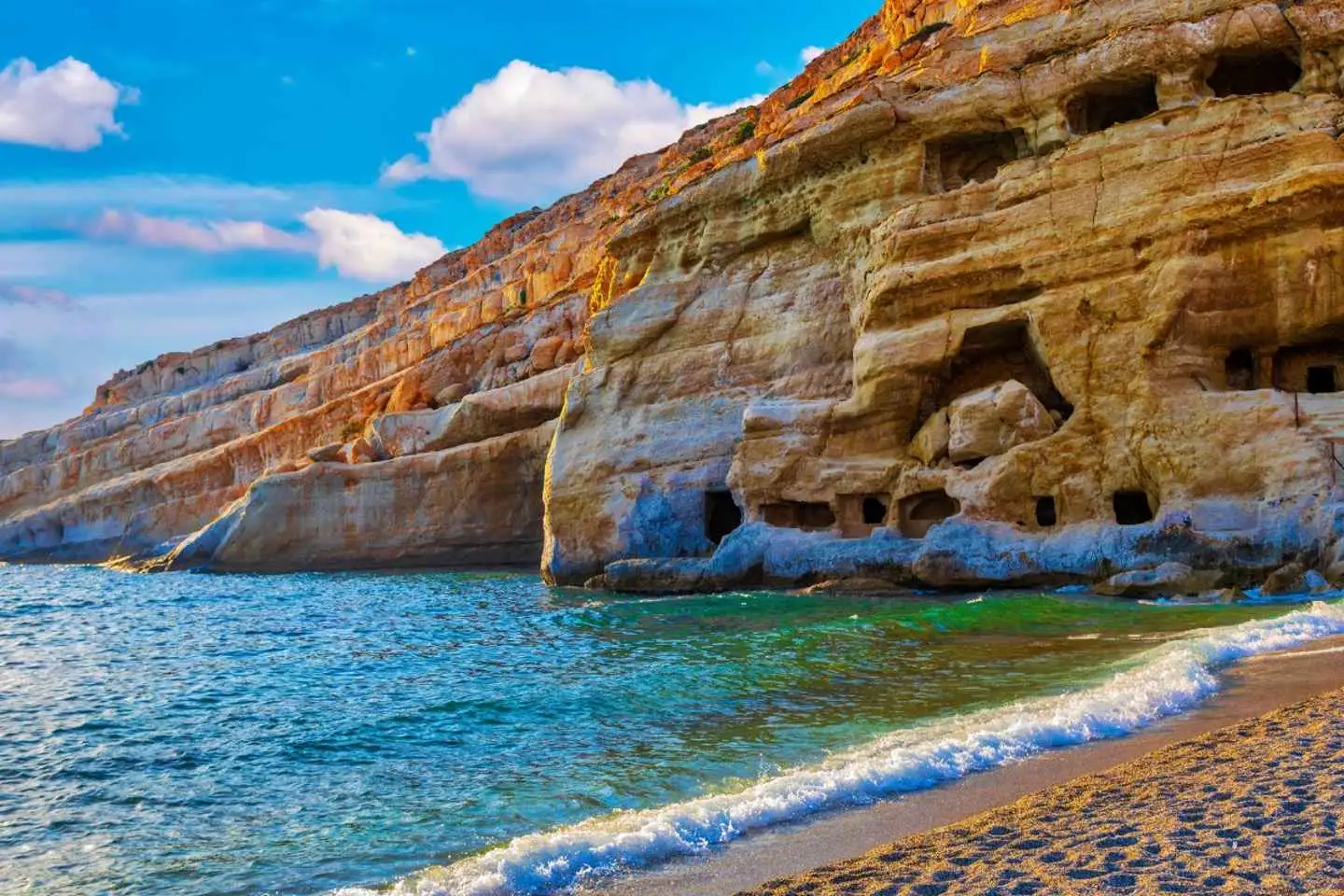
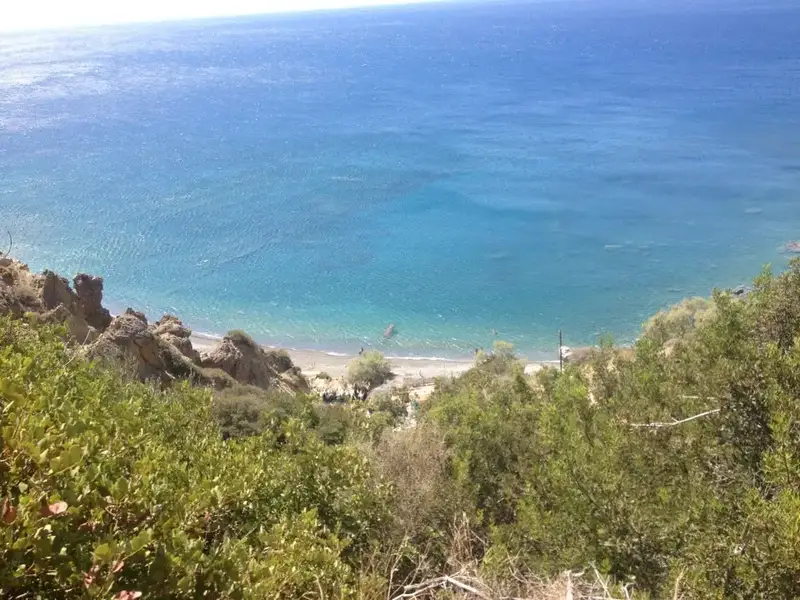
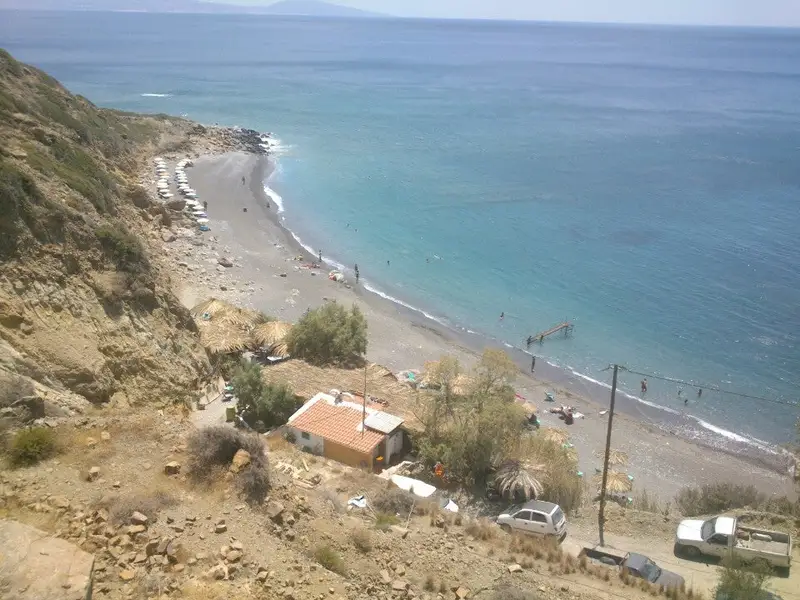
Located approximately 68 km southwest of Heraklion, Matala is one of the most popular destinations and one of the most beautiful beaches of our island. Mostly famous for the caves carved in the rocks next to the beach and the hippies of the 60’s.
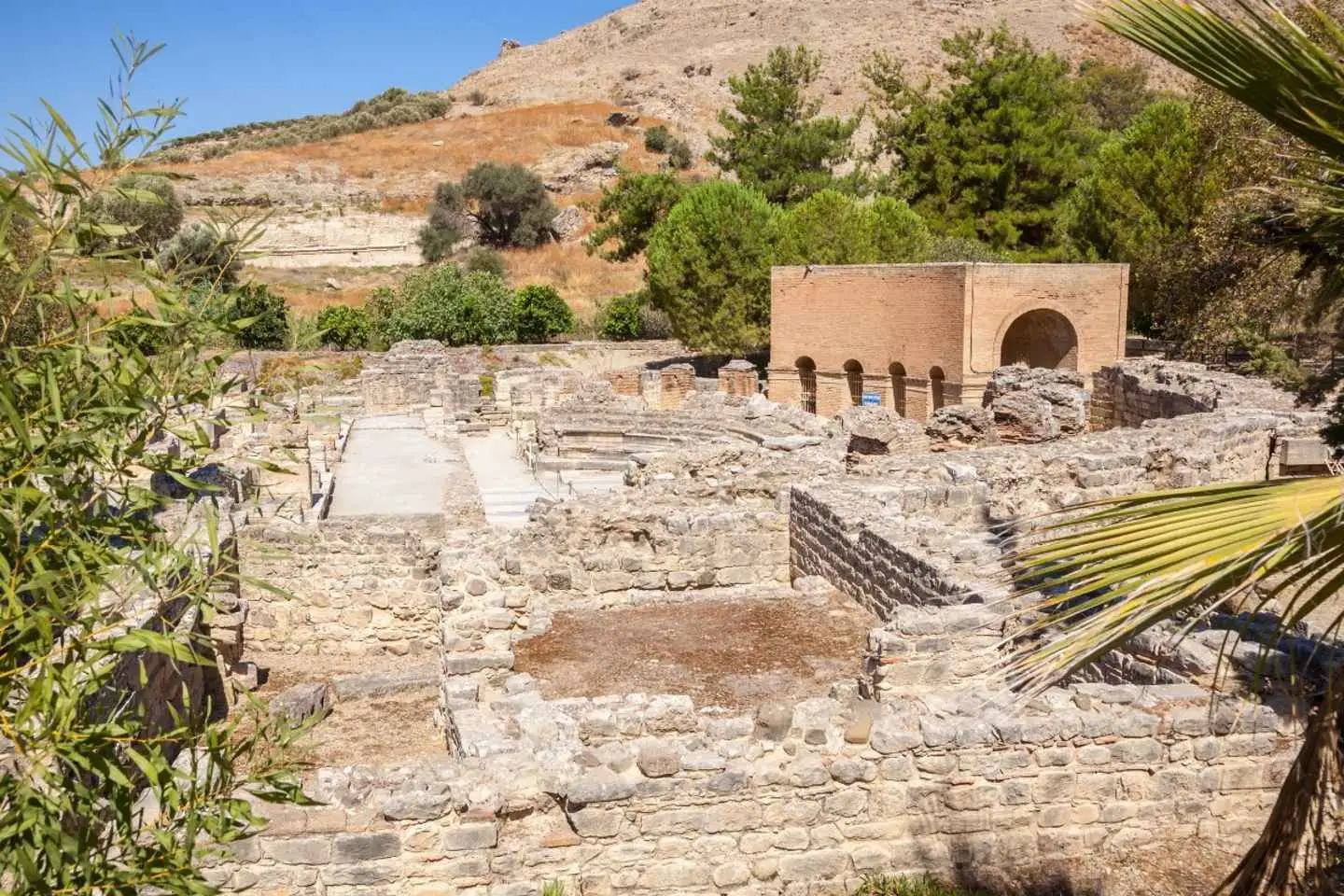
Gortyna,also known as Gortys, was a city of ancient Crete mentioned by numerous ancient writers for its importance and splendor that is by no means inferior to that of Knossos.
Full description:
Once you are greeted by our friendly driver and guide, your day trip is about to begin.
Our first stop of the day is a visit to the archaeological site of Gortyn which is located 45 km south of Heraklion. Inhabited since 3000 BC, evolved as one of the largest cities during the Minoan era, finally reaching its peak during the Roman Empire, the city of Gortyn is one of the most important archaeological sites in Greece. Walk around the site and have a chance to travel back in time while admiring the ancient ruins.
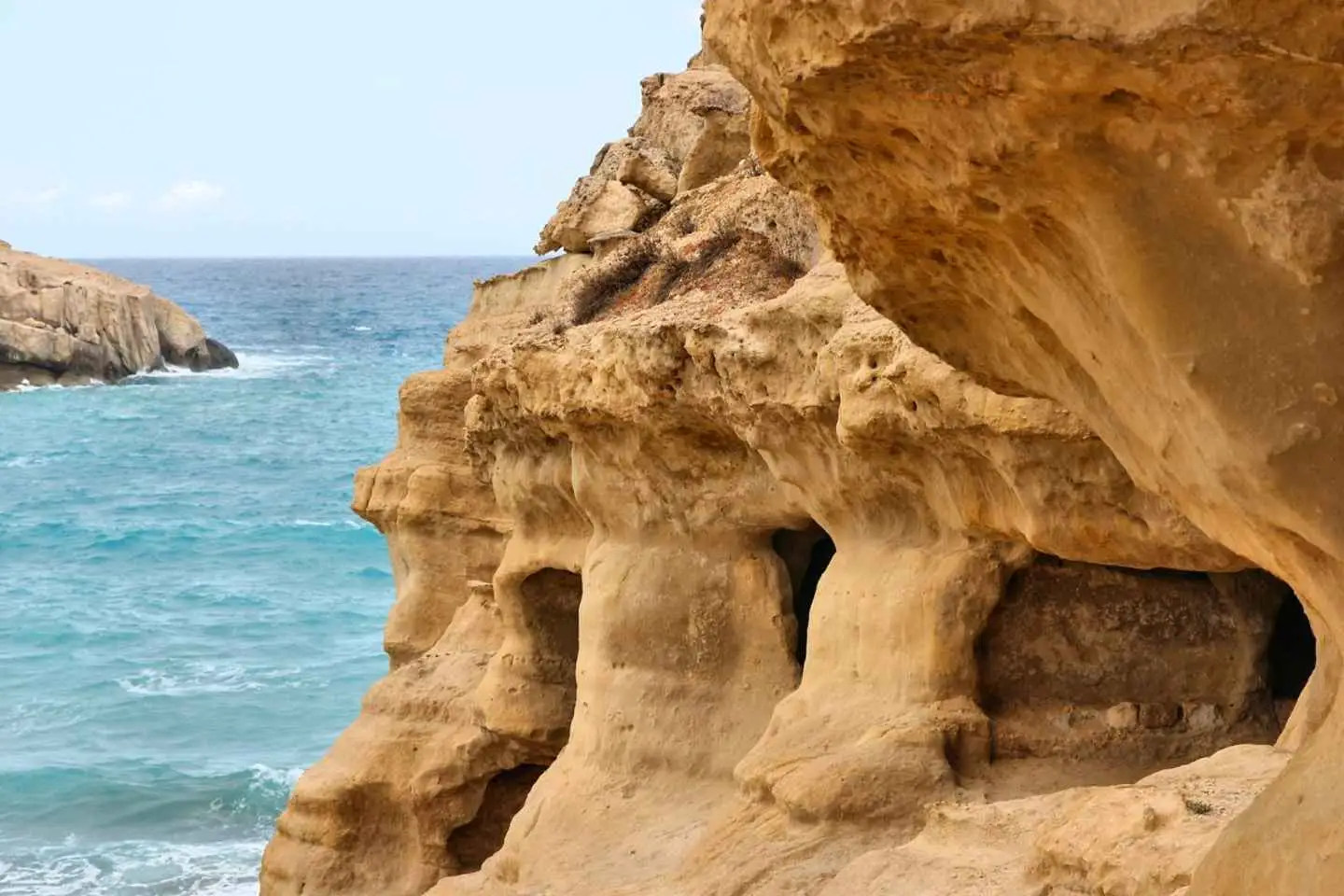
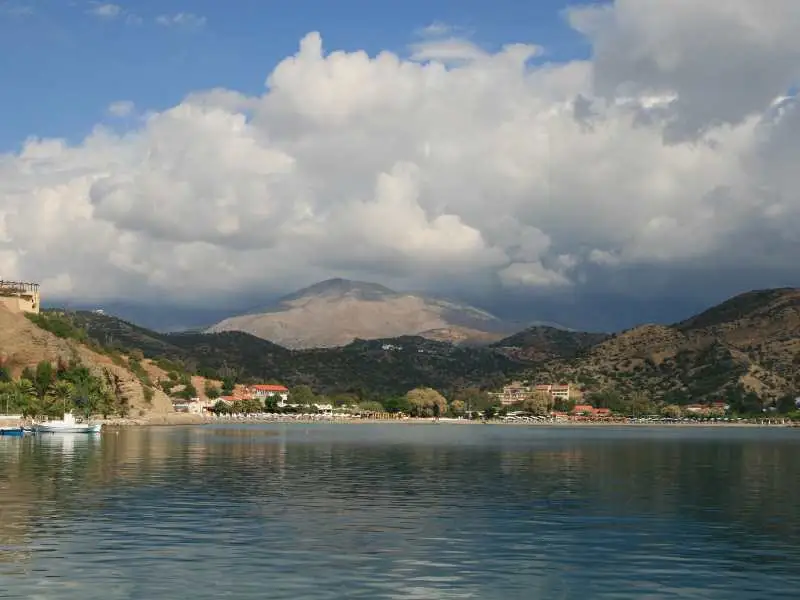
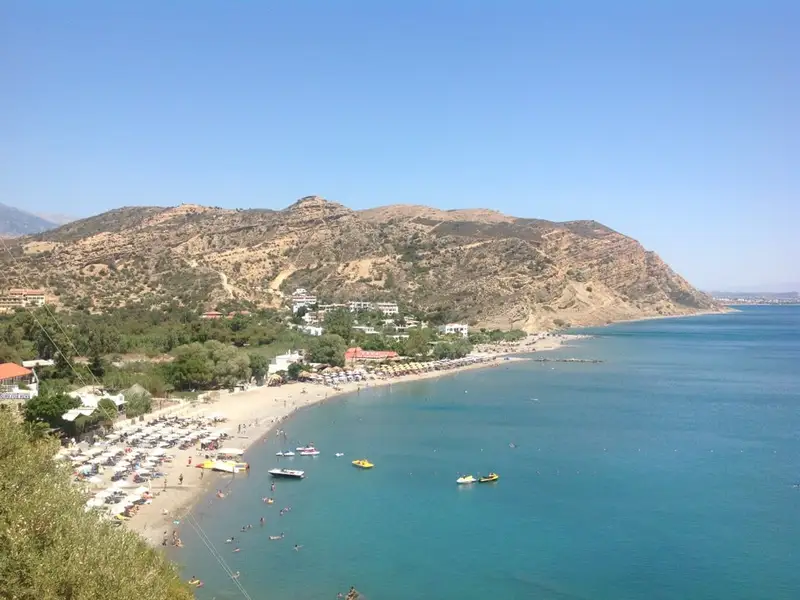
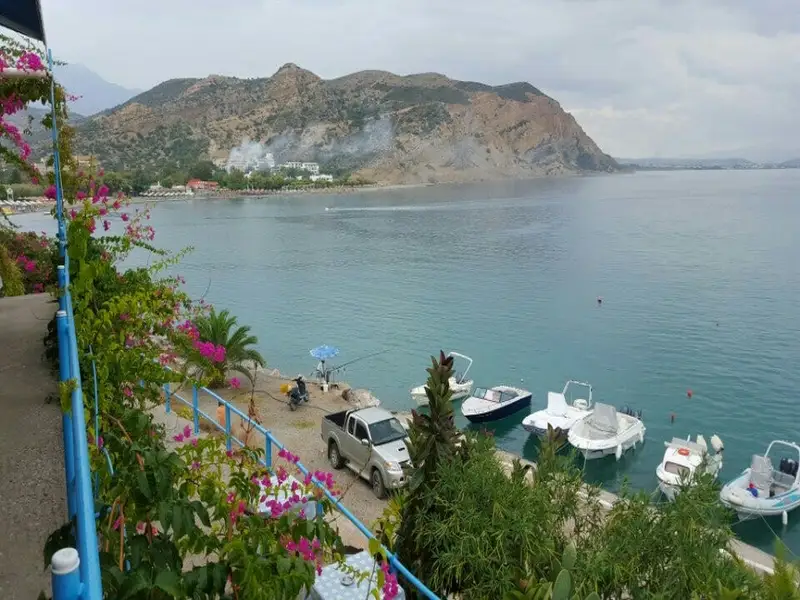
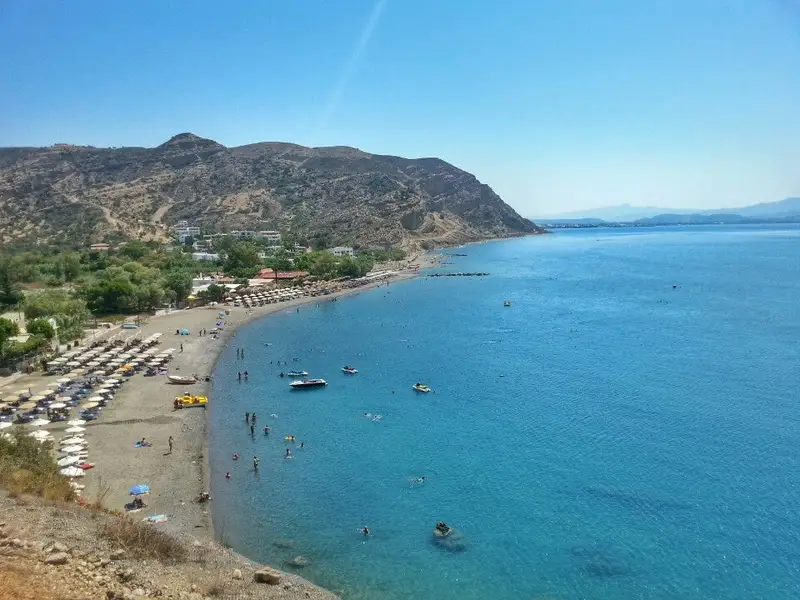
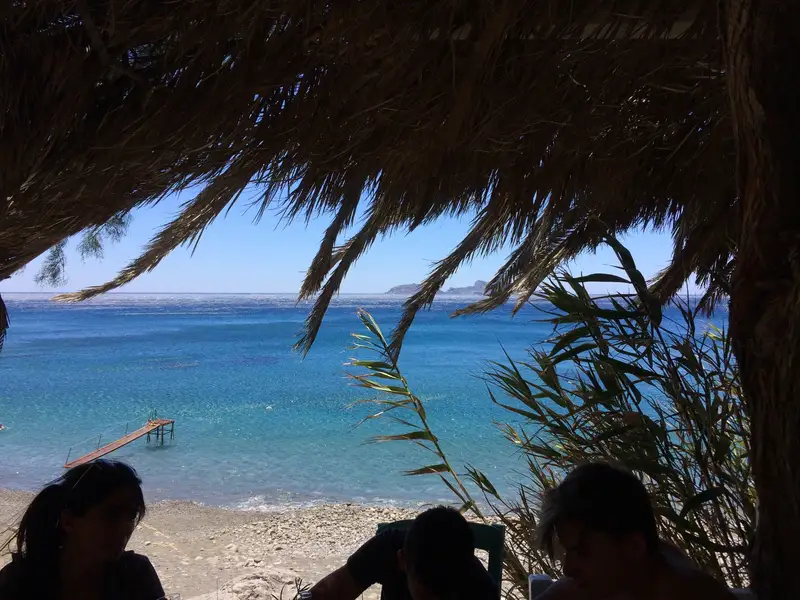
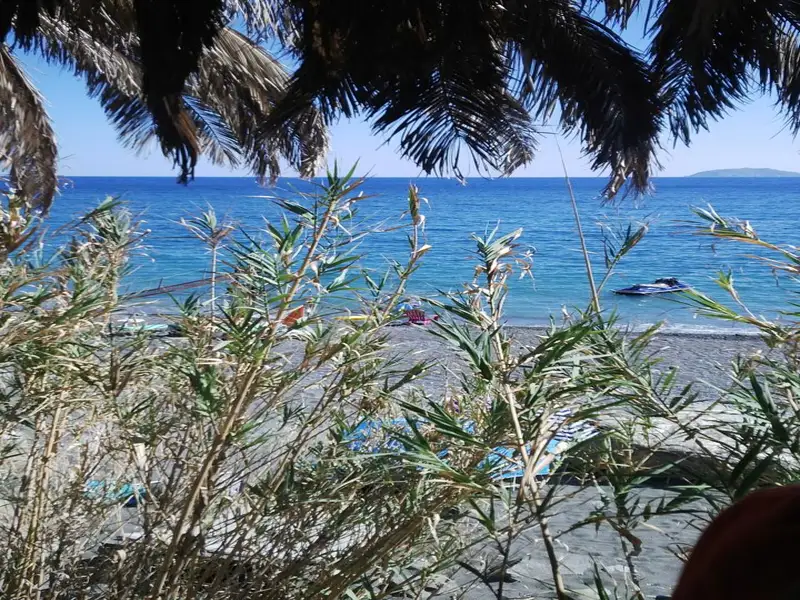
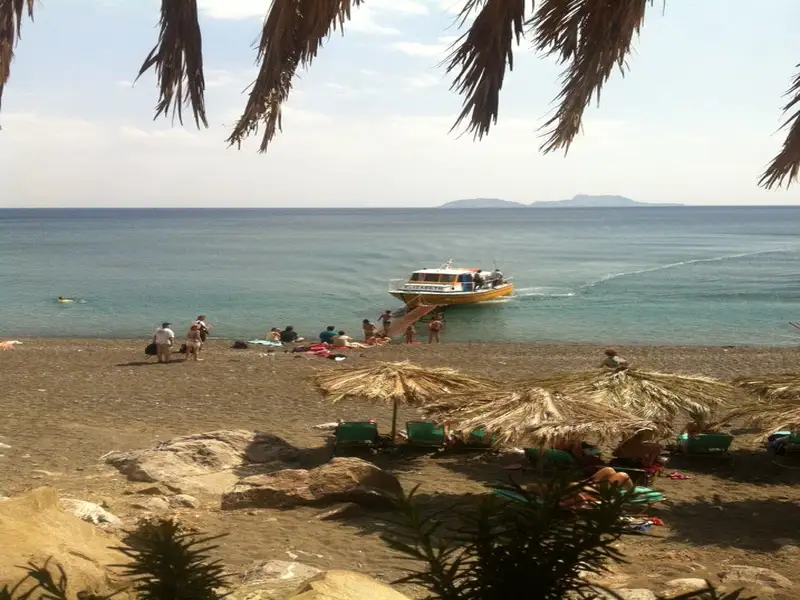
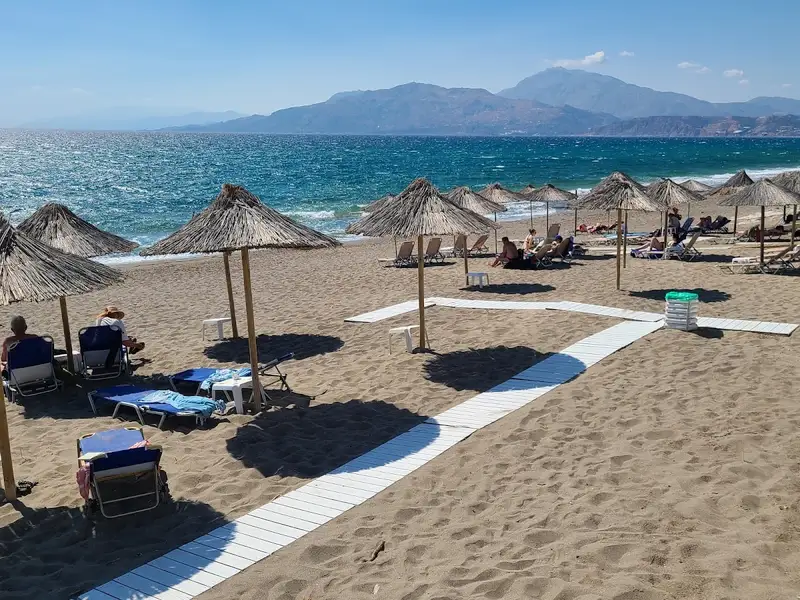
After a quick ride, we reach our second destination, the village of Matala. As we approach the village, a beautiful sandy beach of around 300 m long will greet you. You will have plenty of time to dive in the crystal clear deep water, swim under the Cretan sun and have lunch in one of the traditional taverns surrounding the beach. Matala is also known for its hand-carved caves that are found in the cliff of its bay. The caves were created in the Neolithic Age and were used throughout history as living spaces. During the 60’s the caves were occupied by the hippies who travelled from all over the world in search of their very own paradise on earth.
Explore the intriguing caves, enjoy a refreshing dive and allow us to take you on an unforgettable experience.
Set off on a memorable day trip to southern Crete, a journey that weaves together the island’s historical richness with the stunning beauty of the Mediterranean.
Visit to Gortys Site:
Start with a 1.5-hour exploration of the ancient Gortys Site, delving into 5000 years of history. Wander among ruins that narrate the island’s past, from Minoan civilization to Roman dominion, revealing ancient laws, temples, and the essence of life in antiquity.
Matala’s Scenic Charm:
Then, take a scenic bus ride to the captivating town of Matala, once a haven for 60s and 70s hippies and still a magnet for those drawn to its relaxed atmosphere and scenic beauty. Spend over 4 hours enjoying Matala’s clear waters, exploring its iconic cliffside caves, and savoring a seaside lunch that offers a taste of Crete’s culinary delights.
Peaceful Return
Conclude your day with a peaceful bus ride back, reflecting on the day’s adventures and the everlasting beauty of Crete’s landscapes.
This day trip promises a blend of history, culture, and natural beauty, ensuring lasting memories.
No results available
Kokkinos Pirgos, also known as Red Tower, resides 67km west of Heraklion, near the town of Tymbaki. Its name is derived from a tower constructed from red soil, situated at the mouth of the Geropotamos river. As the coastal village of Timbaki’s main port and a hotspot for tourism, Kokkinos Pirgos is home to numerous hotels, dining establishments, and cafes. The area’s climate is typically warm, enabling locals to cultivate fresh vegetables in greenhouses.
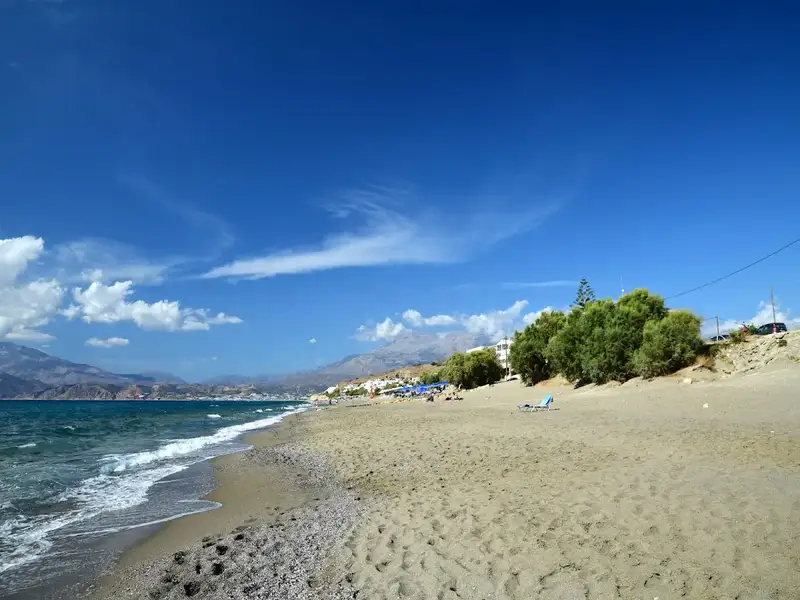
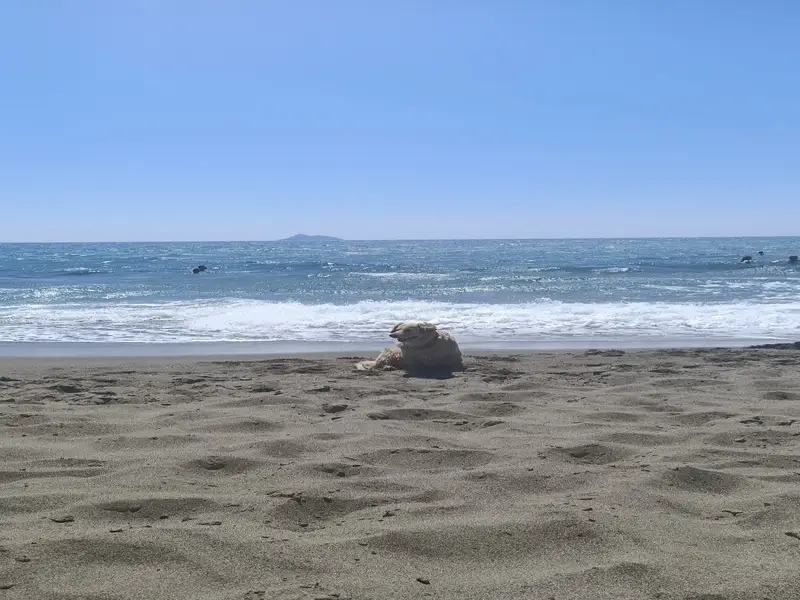
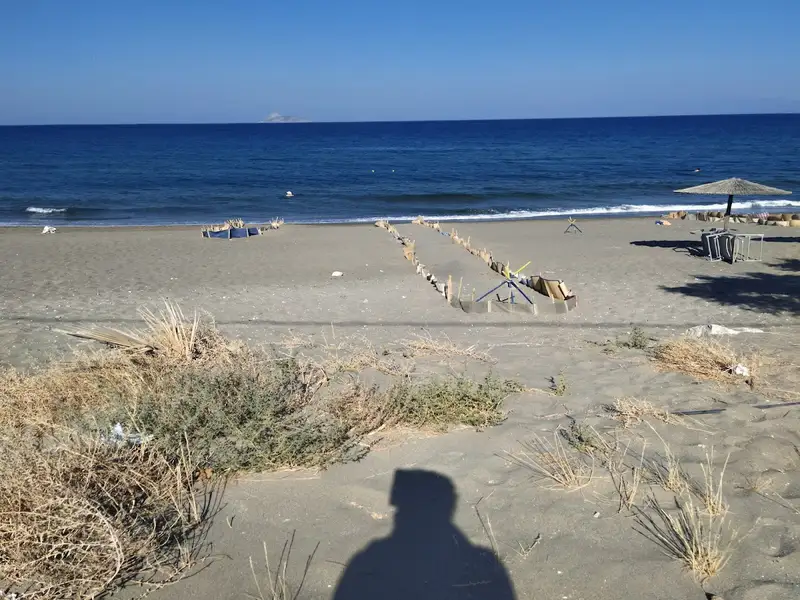
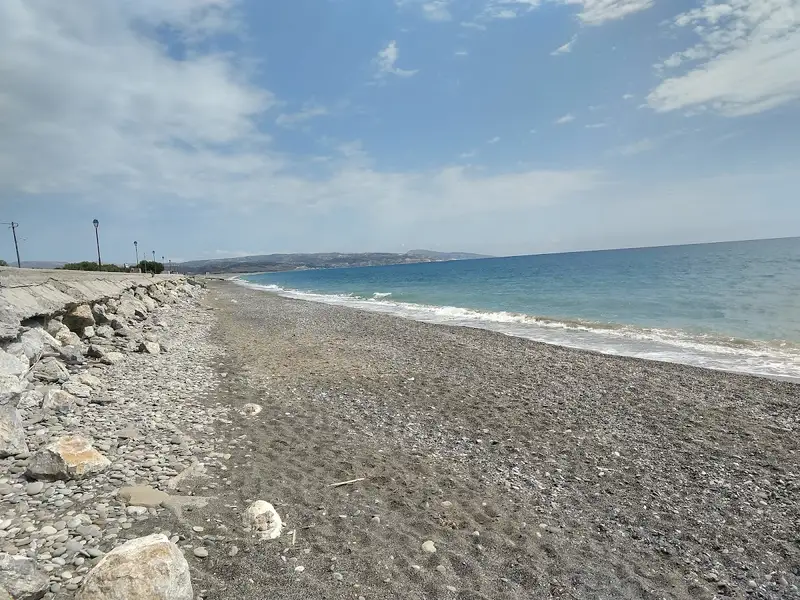
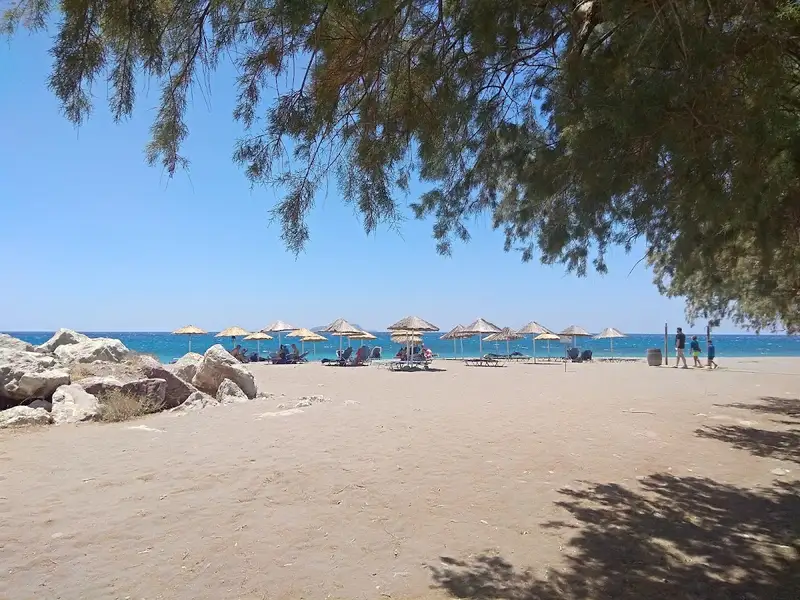
The village boasts a lengthy sandy beach that stretches southeast towards Kommos for several kilometres. This expansive beach is a nesting ground for loggerhead sea turtles (Carretta Carretta) during the summer months. Conservation organizations such as Archelon work to protect these sea turtles and their nests. The beach, which is susceptible to western winds, begins at Timbaki’s military airport wire fence on the east and extends to Agia Galini on the west.
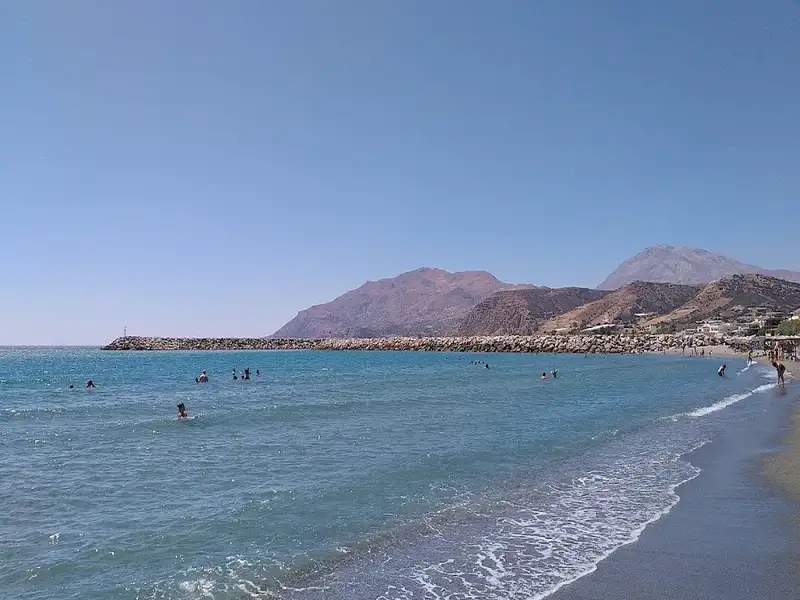
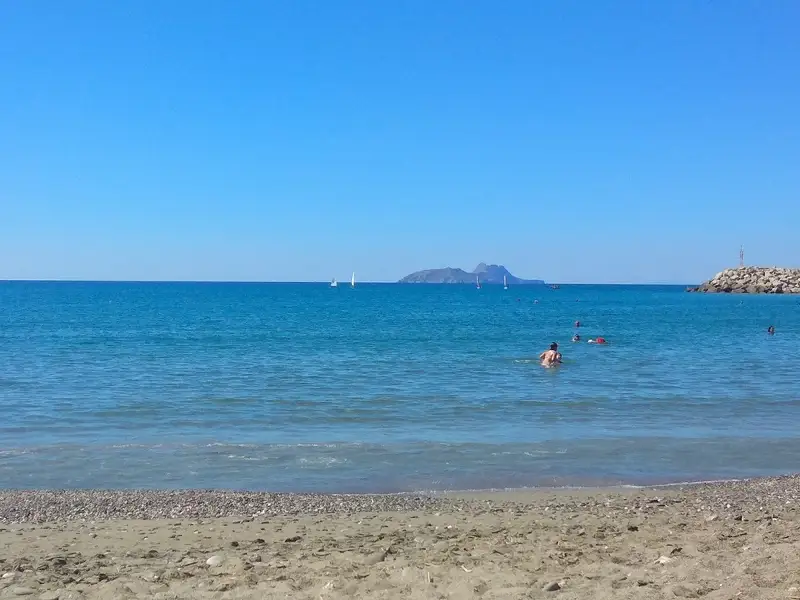
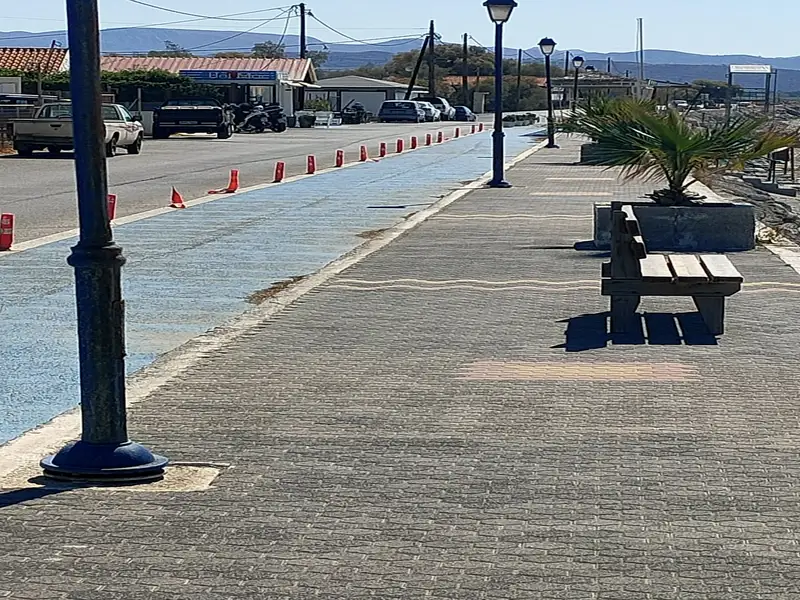
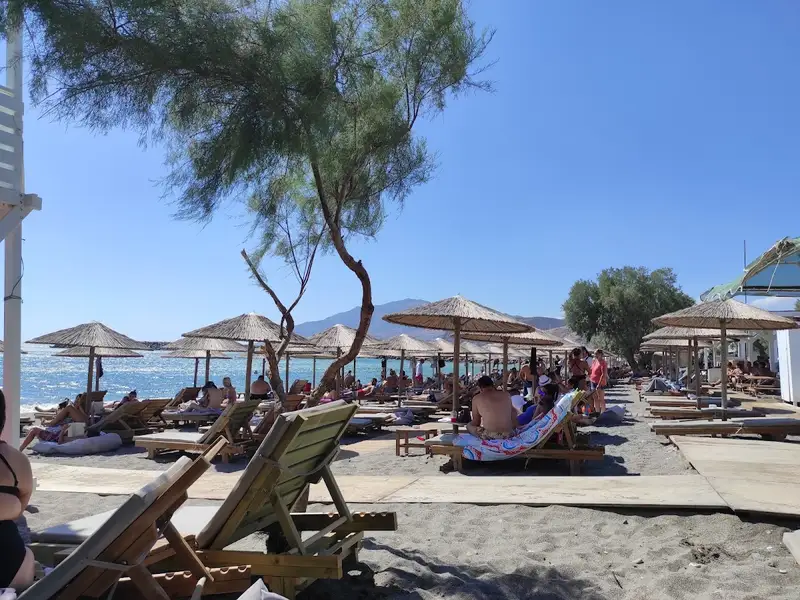
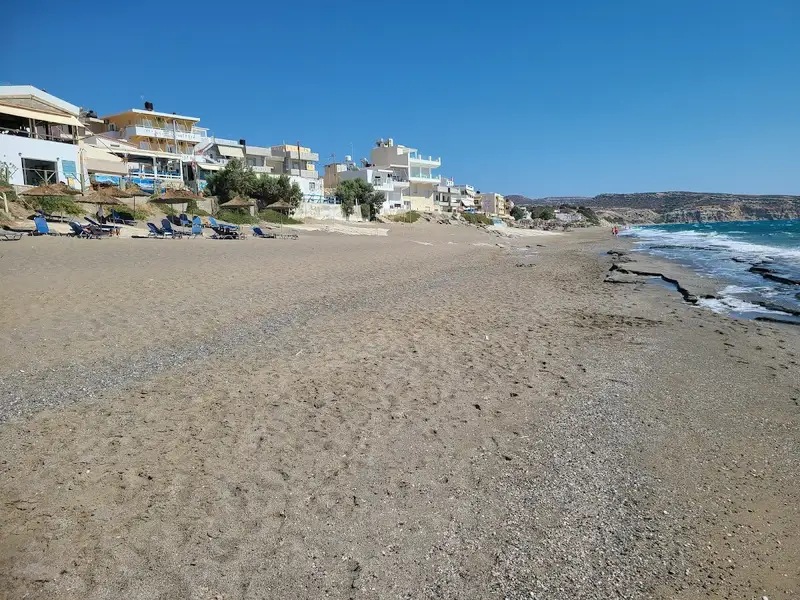
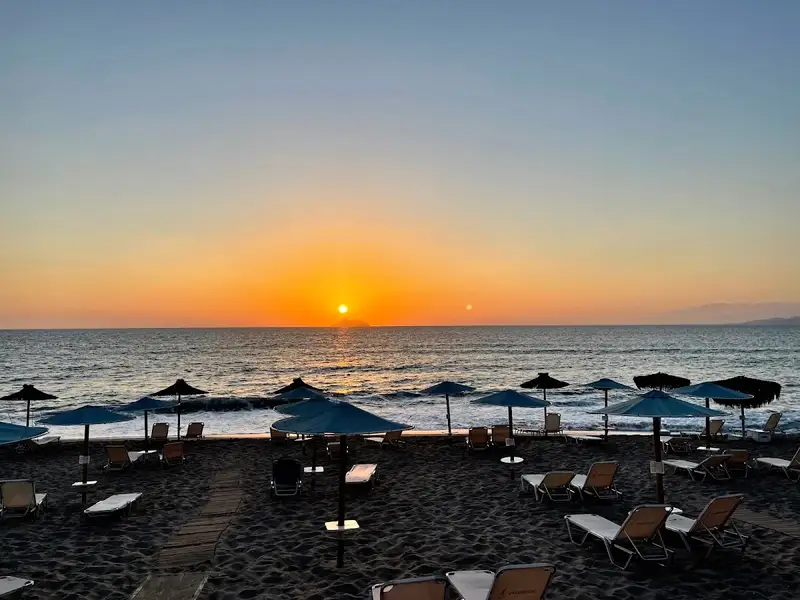
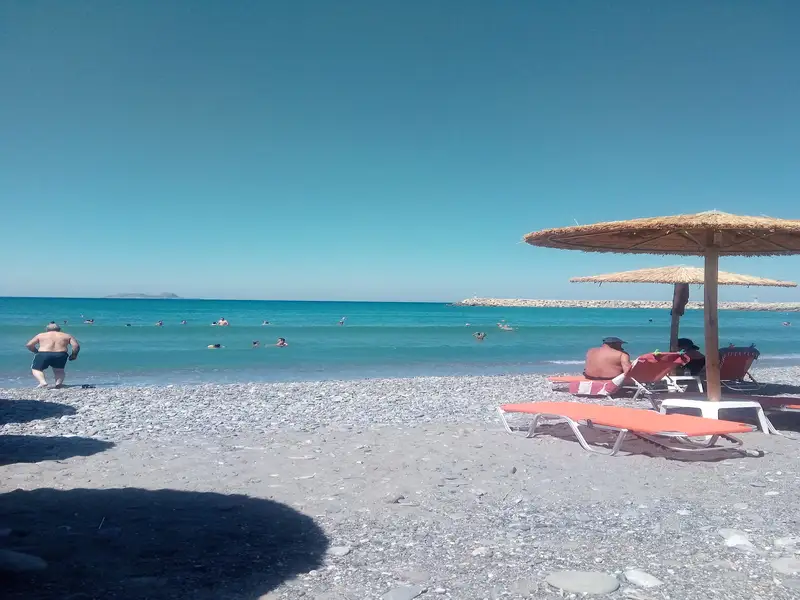
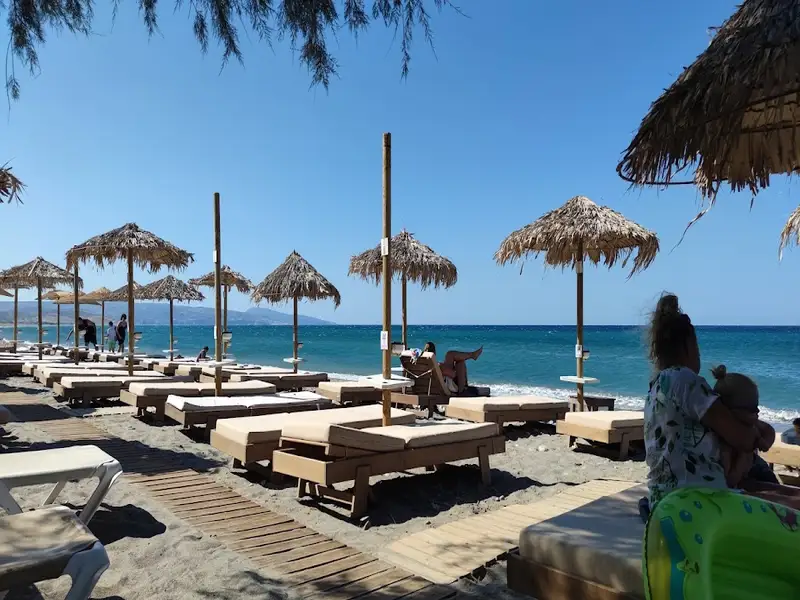
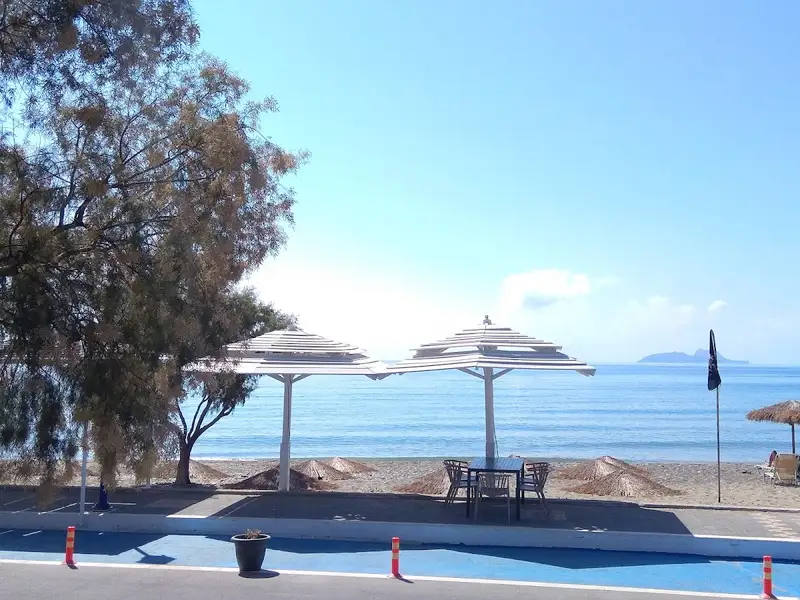
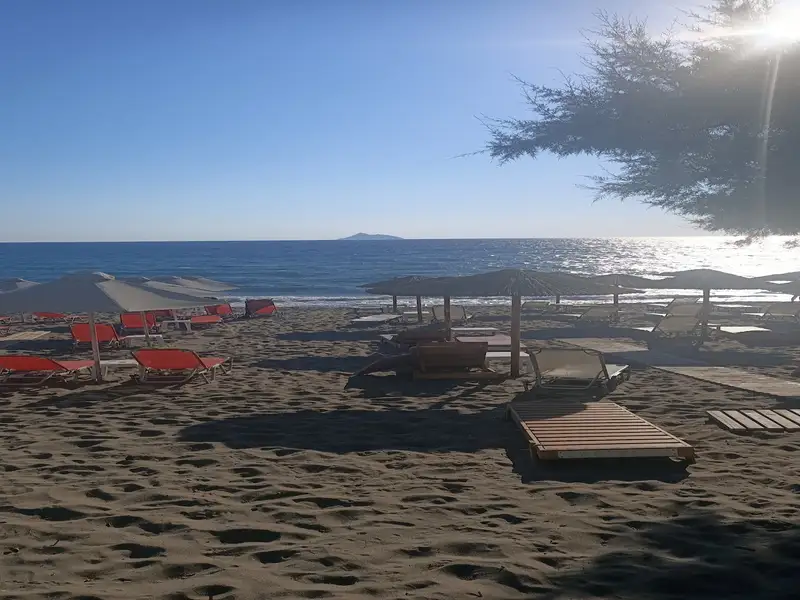
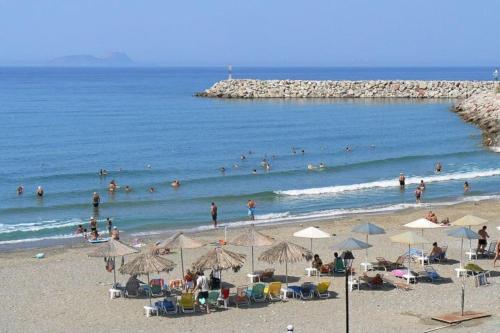
The beach’s eastern portion, stretching from the port to the airport, is known as Katalyki. This well-equipped beach features amenities such as umbrellas, sunbeds, lifeguards, and water sports. A coastal road lined with cafes and restaurants runs alongside the beach, making it a popular spot for refreshments. East of Katalyki lies a sizable marsh, a key wetland in the Mesara plain, which is irrigated by the Geropotamos River.
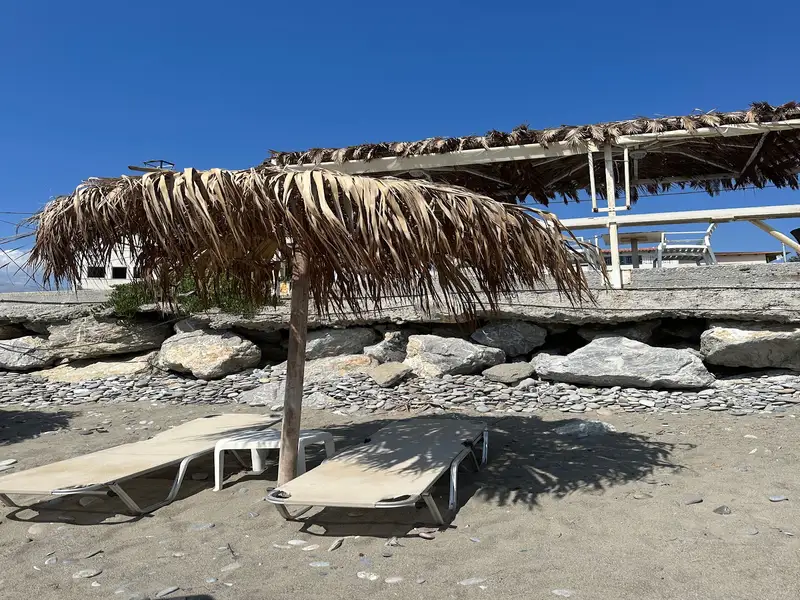
The beach area west of the harbor is known as Makrimaliana. The beach near Kokkinos Pirgos is relatively broad, but as it extends towards Agia Galini, gravel massifs encroach upon it, narrowing the beach and in some places, eliminating it during high tide. This unorganized, remote beach may not be extraordinary, but the wind and sea-carved rock formations that flank it are certainly impressive.
Agia Galini, a well-loved seaside resort in the southern part of the Rethymnon prefecture, is located near the Amarianos or Platys River mouth. It’s 61km south of Rethymno city and 68km southwest of Heraklion. This quaint town flourishes with activity in the summer and offers all necessary tourist facilities. The stunning green beaches, the fascinating caves in the west, the legends of Icarus and Daedalus, the hippie memories and the peaceful sea, make this village a popular spot for numerous visitors.
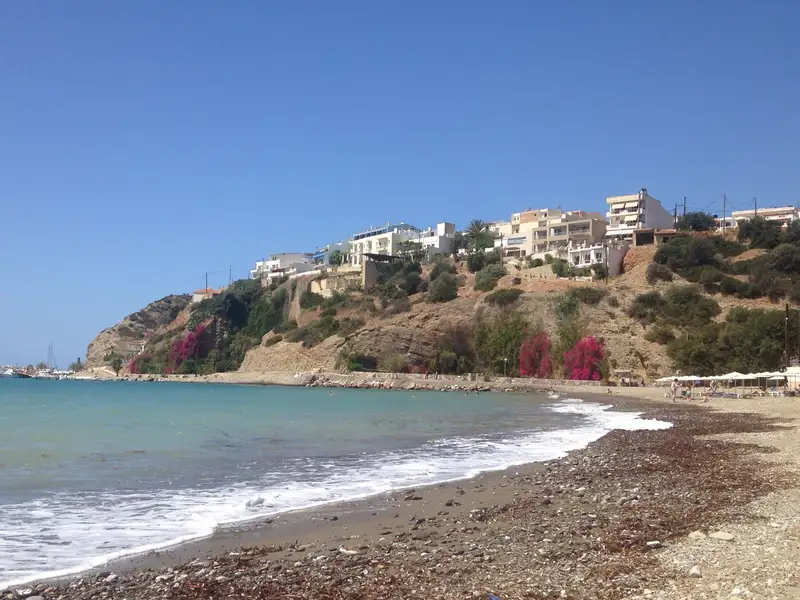
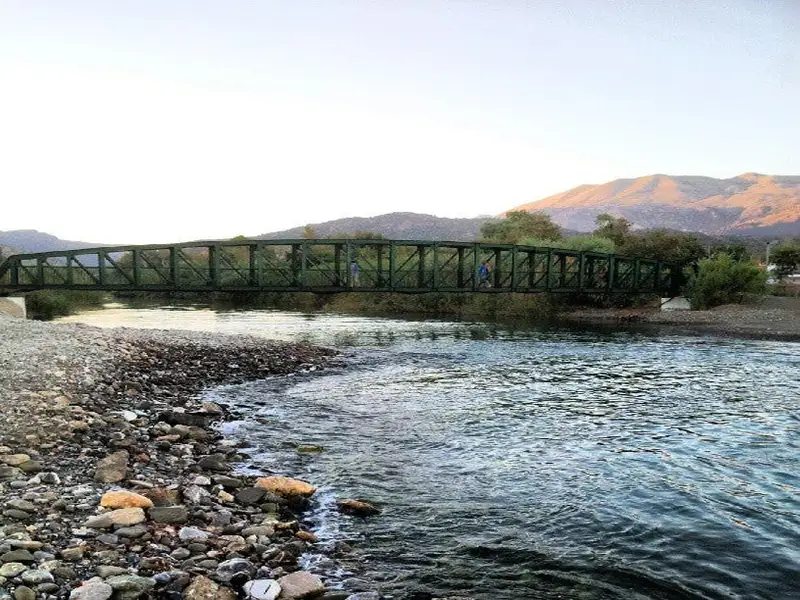
Starting east of the port, a long beach extends to Kokkinos Pirgos. The sea here is typically serene. The beach section near the port is well-facilitated and features fine pebbles and chilled water, due to the nearby Platys or Amarianos River, located 200m east of the port. Near the river, remnants of an ancient Artemis temple have been discovered.
Crossing the river via a metal bridge leads to the second beach, which stretches another 1km to the east. This beach, with small pebbles and less organization, is adjacent to the Agia Galini camping site. As you progress eastwards, the beach becomes narrower and more rugged. A 1.5-2 hour walk will take you to Kokkinos Pirgos. This beach, inaccessible by road and favored by nudists, is completely unorganized so be sure to bring food, water, and umbrellas.
On the beach’s west end, beneath a hill with houses, there’s a small network of tunnels from World War II. You can explore these to reach the hilltop.
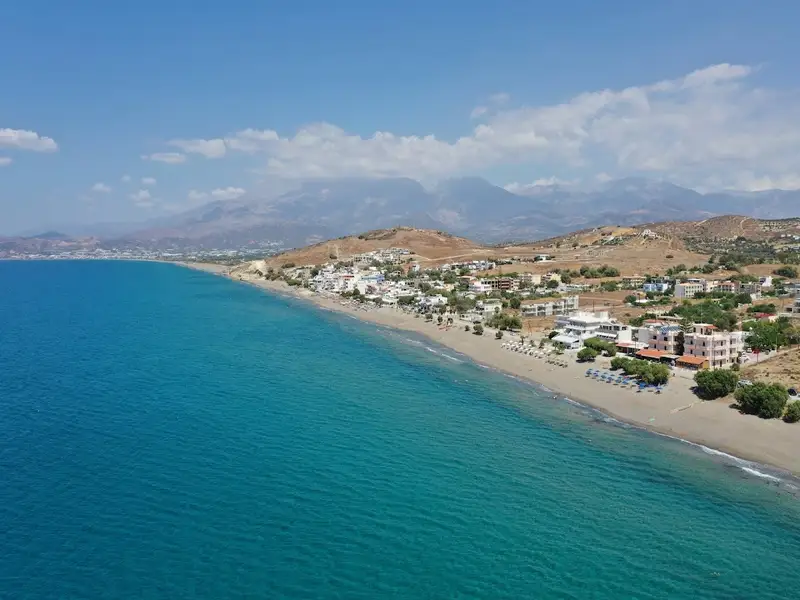
Kalamaki, a quaint seaside hamlet, is nestled between Matala and Kokkinos Pirgos, 65km southwest of Heraklion. The beach, a 2.5km stretch of the vast Messara Bay coastline, graces the village’s front. Its sandy shore is kissed by the sea, which conceals a slick, flat rock bed beneath its surface. It features large waves, usually stirred by northwest winds, making beach access challenging at times due to the rocky seabed.
The village-facing part of the beach is well-equipped with sunbeds, umbrellas, eateries, accommodation, a lifeguard, playground, and water sports. For a more isolated experience, head southeast towards Kommos beach, a favorite among nudists.
To the north, you’ll find Afratias and the Pahia Ammos beach, which features patches of rocks. Devoid of amenities, the beach does boast a small park used for hosting cultural events like concerts during summer months.
Further north lies the Timbaki military airport, now serving as a resort for Greek Air Force staff. Although the beachfront is accessible, trespassing beyond the fence is prohibited and could lead to arrest. Sometimes, parachuters and skydivers can be spotted descending from small aircraft, courtesy of a local club based at the airport. In 2008, a small plane crashed into the Kalamaki sea, with the pilot miraculously surviving the ordeal. The Tymbaki airport holds ecological significance for the Mesara plains as it’s intersected by the Geropotamos River, which flows out to the beach. This river, the area’s largest, serves as a sanctuary for hundreds of rare birds across its numerous ponds.
The sandy coast of Messara Bay is a protected breeding ground for the loggerhead sea turtle. To prevent nest destruction and avoid frightening these creatures, it’s best not to roam the beach’s darker areas during summer nights.
Although Kalamaki doesn’t boast a significant history due to its relatively new establishment, it’s a popular seaside resort for Kamilari locals. Some believe it once served as a small harbor for Phaestus or Gortys in ancient times, though no concrete evidence supports this claim.
Situated 3km west of Agia Galini, 69km southwest of Heraklion, and 60km south of Rethymno, you’ll find the tranquil valley of Agios Georgios. This spot is home to two small bays, each boasting beautiful pebbly beaches separated by a rocky shore. The weather is often mild, making these beaches perfect for year-round swimming.
The area remains relatively undeveloped, but on the eastern beach, known as Lichnistis, you’ll find a handful of rooms, a tavern, and some umbrellas for shade. A visit to Agios Georgios offers the chance to explore the rugged Cretan countryside and take a stroll to the historic Monastery of St. George, located 500m to the north. The church’s sloping walls show signs of age and soil sedimentation, and inside, you’ll find ancient frescoes.
For those seeking solitude, the western beach, Kolimbistiri, or “swimming area”, is the ideal location. Here, you can swim in peace, and the seabed offers excellent snorkelling opportunities. To reach Agios Georgios’ beaches, take the asphalt-paved road from Agia Galini to Agios Pavlos, or hop on a boat from Agia Galini.
No results available
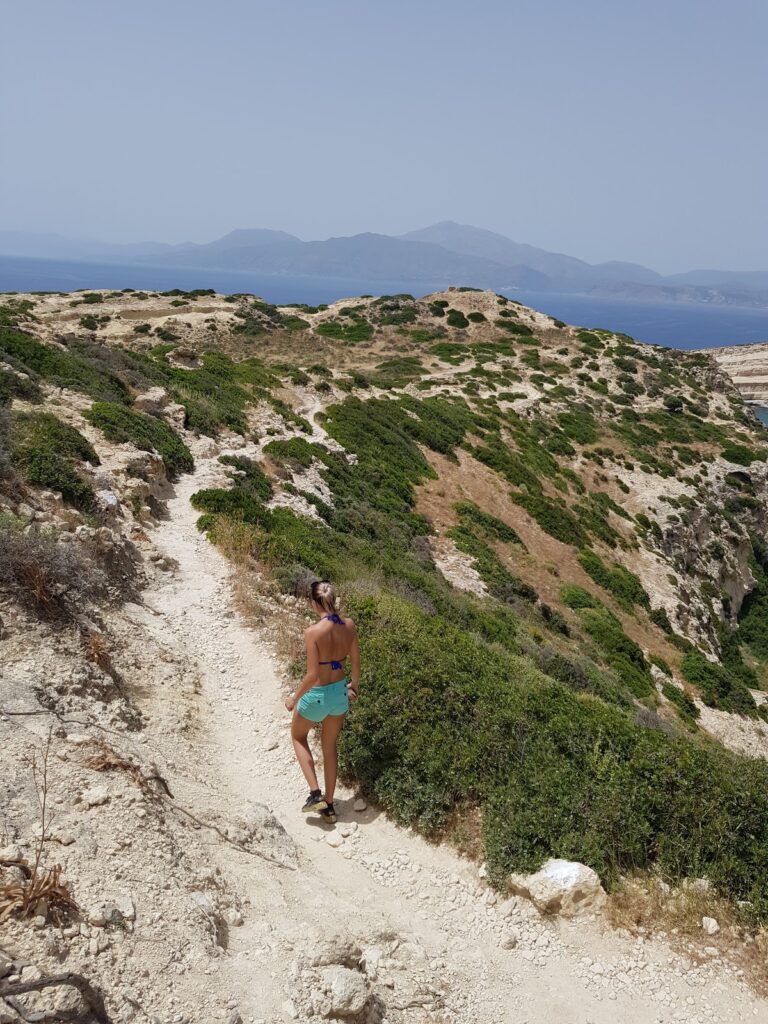
Matala, originally known as Matelon, functioned as a port for Phaestus and Gortyn and is famous for its carved caves, which were used as graves during the Grecoroman era. The cape to the south of Matala has been identified as Cape Nysos, the site where Menelaus’ ships were wrecked, as mentioned in the Odyssey.
Excavations in the 1980s at the archaeological site near the village, which was the heart of the ancient town, revealed large buildings and workshops for metallurgy, pottery, and woodworking. The town appeared to have thrived from the 6th century BC until the 7th century AD but was never deserted.
Remnants of an ancient temple can be found southeast of the village, and a marble urn was discovered near the beach of Matala. The town’s acropolis was situated on a nearby hilltop, where a Turkish tower, known as a koules, was later constructed.
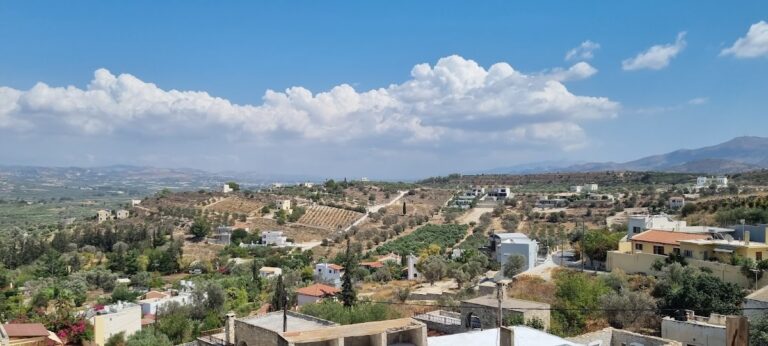
At Grigori Peak, situated in the broader region of Kamilari, one can find the remnants of a large domed tomb with a 34-meter long perimeter that offers breathtaking sea views. The tomb was first uncovered in 1959 by Italian archaeologist Doro Levi and dates back to 2000 BC.
This semi-subterranean tomb was constructed using vaulted (tholos) architecture, comprised of stone and mud. It featured five rooms and a yard outside the tomb, while the roof was made of wood. The most significant artifact from the tomb is displayed in the Archaeological Museum of Heraklion and portrays four dancers in a circle, known as the “Dancers from Kamilari.”

The historic Monastery of Panagia Odigitria on the way to Agiofaraggo hides many treasures. Beyond the monastery itself with its great history and the tower of Xopateras, it conceals another surprise north of the monastery. This is the prepalatial necropolis of Odigitria, named after the monastery, as we still don’t know the name of the town it belonged to.
Today, we can say that the area of Odigitria, the surrounding hills, the area of Agiofarago, and the land of Asterousia till the tip of Cape Lithino, attracted the attention of man who settled here and formed settlements, places of worship, and burial.
The Prepalatial Cemetery of Odigitria, as its name suggests, was developed before the glorious period of the palaces in the early stages of the Minoan era. The necropolis was looted by illegal excavations, like so many other places in Asterousia Range. It was used continuously by the Minoans for about a thousand years. The first formal archaeological excavation took place in 1979-1980 by archaeologist Nota Dimopoulou and was continued by Antonis Vasilakis. The illegal excavations prior to the official one unearthed numerous finds, many of which concluded in the private collection of Konstantinos Mitsotakis, the former Prime Minister of Greece coming from Chania. The rich finds included ceramics, stamps, metal objects made of gold and other metals, and stone tools.
The prepalatial necropolis with the old graves occupies a large area and consists of two domed tombs, rooms for offerings, an ossuary, and a paved courtyard with altars. It is open to visitors and has been maintained by the archaeologists. To find the site, there is a sign inside the monastery.
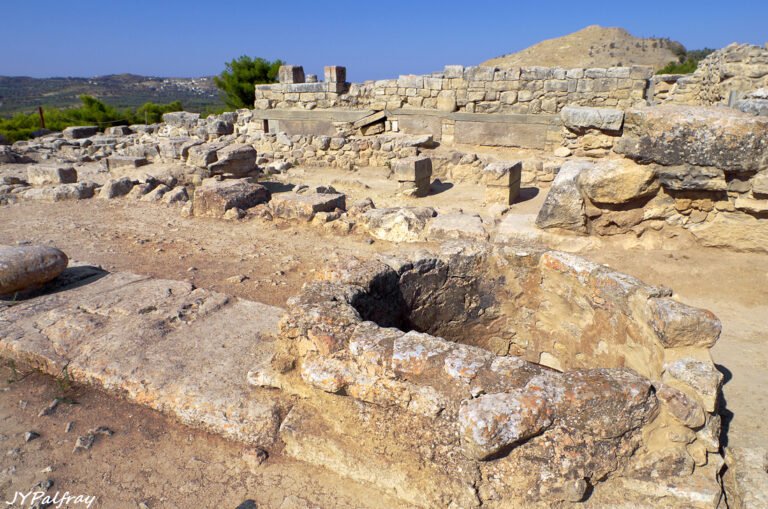
Located on the banks of the Geropotamos River at Agia Triada, a small palace was constructed by the Minoans. The Italian Archaeological School at Athens excavated this site between 1902 and 1914. Built in the 16th century B.C. during the New Palace period, this Royal Villa may have served as a summer residence for the king of Phaestus or as a permanent dwelling after the destruction of the Phaestus palace in 1450BC.
Since the 8th century BC, the site has maintained a continuous religious presence. Evidence suggests that during the Geometric period (8th century B.C.), the site held religious significance. In the Hellenistic period (4th-3rd centuries B.C.), the sanctuary of Zeus Velchanos was established, and much later, during the Venetian occupation, the church of St. George Galatas (14th century AD) was built in the courtyard area, which still stands today.
The Aghia Triada Villa consists of two wings, forming an L-shaped structure that encloses a court. Although smaller than the palaces at Knossos and Phaestus, it contains all the characteristic features of Minoan palatial architecture. The villa includes halls with polythyra (pier-and-door partitions), light-wells, shrines, storerooms, repositories, workshops, staircases, porticoes, courtyards, terraces, balconies, and streets and courtyards paved with flagstones. Numerous artifacts were discovered during the excavations and are now on display at the Archaeological Museum of Heraklion.
No results available
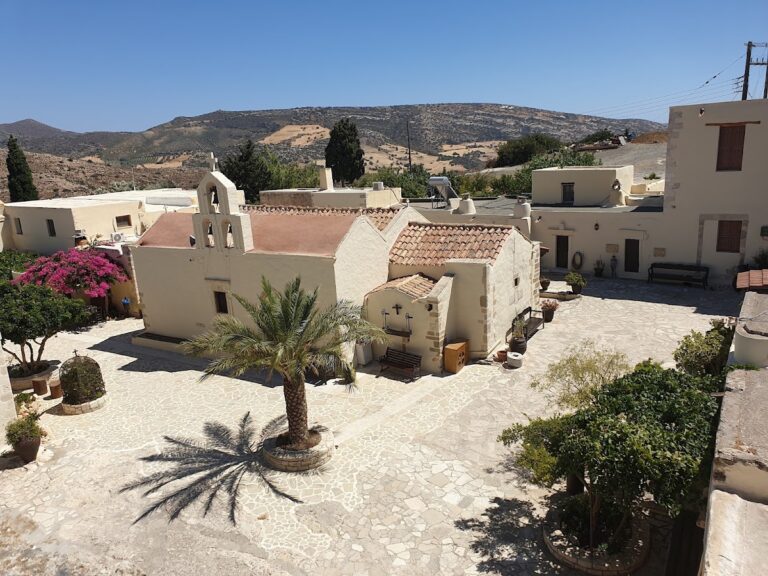
The male monastery of Panagia Odigitria is nestled in the protected area of the Asterousia Mountains, at an elevation of 250m. Accessible through the village of Sivas, it is one of the most historic monasteries in Crete, boasting a vast estate with numerous chapels and extensive land holdings.
Asterousia has long been a significant center for asceticism in Crete, particularly in the sacred gorges of Agiofarago and Martsalo, which are now part of the monastery’s domain. The area is often referred to as the Mount Athos of Crete, after the renowned monastic state in Northern Greece. The strong monastic tradition in the region is believed to be connected to the Apostle Paul, who is said to have stopped in the area during his journey to Rome.
In this hallowed location, hermits constructed the monastery of Odigitria in the 14th century. Its name is likely derived from a copy of the renowned icon of the Monastery Odigon in Constantinople, which is attributed to the evangelist Luke and was one of the most famous miraculous icons in the Byzantine Empire. A 14th-century cross-roofed narthex still partially remains, with important frescoes such as two scenes from the synaxari of Agios Antonios and Paul of Thebes, as well as the 16 houses from the Akathist Hymn. The pictorial decoration also features a scene of monk Gregory and other monks being blessed by Christ.
The monastery’s architecture resembles a fortress, with part of its wall still visible. The complex’s buildings encircle the central two-aisled church, which is dedicated to the Dormition of the Virgin Mary (Kimisis) and the Apostles Peter and Paul. A third aisle, once devoted to Saint Fanourios, has since been demolished. Near the main entrance, visitors can find the legendary Tower of Xopateras and its fascinating story. Other notable features include the baking house, the olive mill, the wine press, several warehouses, the cheese cellar, a small well used during sieges, the guest house (formerly the abbot’s cell), the abbot’s cell with the library, the monks’ cells, and the graves of the monastery’s abbots. Additionally, four icons created by the famous 15th-century Cretan artist Angelos have survived to this day.
At one time, the monastery was home to brothers Parthenios and Eumenios, who later founded the monastery of Koudoumas and are now honored as saints. During the Turkish occupation, the monastery became stavropegic (directly governed by the Patriarch) in order to preserve its property. The monastery is also home to some of the oldest chapels in Asterousia, which feature remarkable frescoes. Among these are the cavernous chapel of Agia Kiriaki (celebrated on July 7), the church of Saint Anthony in Agiofarago Gorge, the Panagia chapel in Martsalo canyon, and the chapels of Saints Eftychiani (celebrated on August 17), Saint Andrew (November 30), and Saint John the Baptist (August 29) in the Vathys Lagos area.
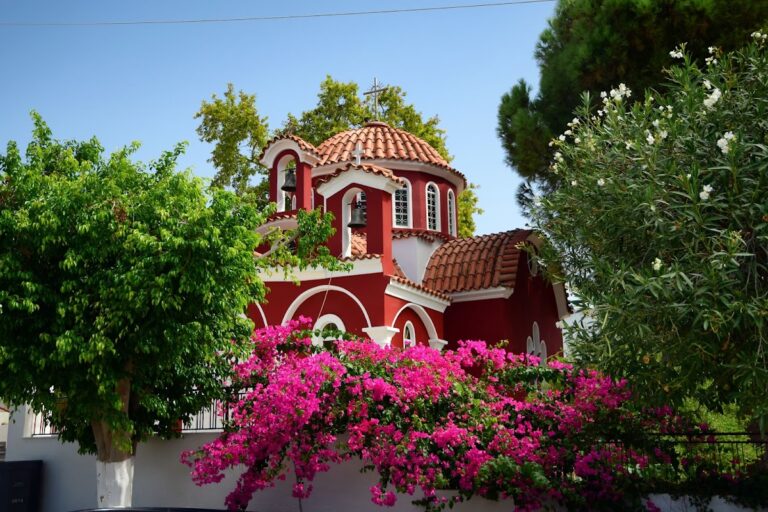
The Panagia Kalyviani Monastery is situated at a height of 80m, approximately 60km south of Heraklion, close to the villages of Mires and Kalyvia. This relatively new monastery was constructed on the remains of an older one.
In 1873, the current church was built on the site of the previous monastery, and the icon of Panagia (Virgin Mary) was discovered in the same year. The Kalyviani complex includes the old church as well as the new temple, which was constructed in 1924 and houses the ancient icon. The new church features three aisles dedicated to the Nativity, the Annunciation, and the Assumption of the Virgin Mary (celebrated on August 15). Additionally, there is a small church dedicated to Saint Haralambos, who was a monk in the monastery and is celebrated on August 23.
Kalyviani exemplifies a foundation that provides assistance and charity to the poor and disadvantaged. In 1956, Bishop Timothy Papoutsakis established a Christian Foundation at the monastery. He constructed an orphanage, hospice, housekeeping school for girls, elementary school, kindergarten, summer camps, and workshops for weaving, knitting, and vestment-making, among other things.
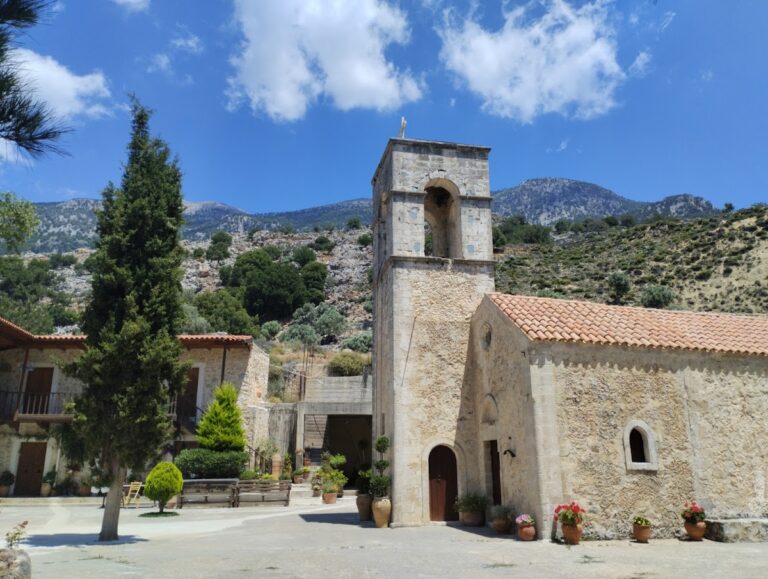
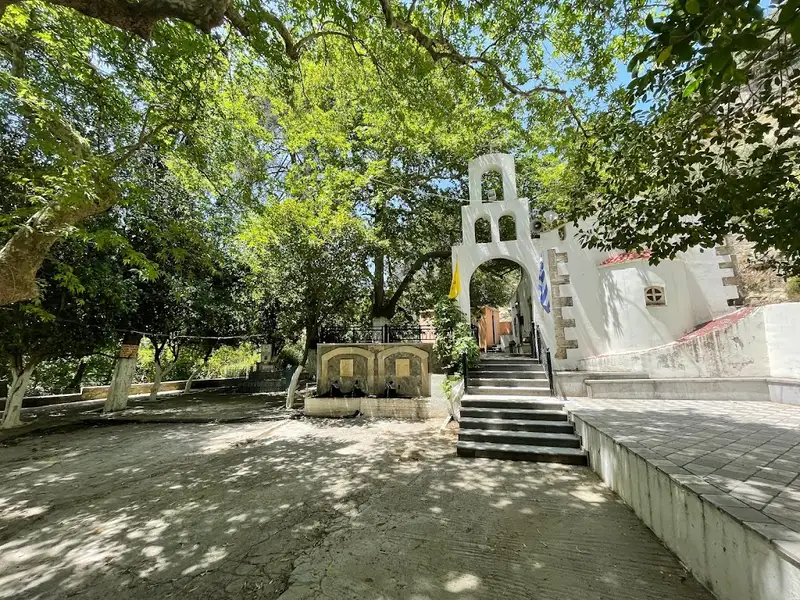
The Vrontissi Monastery can be found 49km southwest of Heraklion, situated near Vorizia Gorge and nestled between the villages of Zaros and Vorizia. From this vantage point, one can enjoy panoramic views of Vorizia village and the Messara plain. Dedicated to Saint Anthony, the monastery is among the oldest in Crete.
While the exact date of its construction remains unknown, it is believed that the monastery’s name comes from its founder. Initially, Vrontissi was a dependency of the nearby Valsamonero Monastery, but it eventually grew so wealthy that it surpassed its parent monastery and became one of Crete’s most significant monastic centers.
According to tradition, Michael Damaskinos and El Greco, two prominent figures in the Cretan School of Iconography, lived and worked at Vrontissi Monastery. In fact, six of Damaskinos’ icons, now on display at the Museum of St. Catherine in Heraklion, were once housed at Vrontissi. The surviving 14th-century frescoes in the church, which show influences from the Renaissance, demonstrate the high level of artistic expression that developed at the monastery.
The church itself is a two-aisled structure dedicated to St. Anthony (celebrated on January 17) and St. Thomas (celebrated on the first Sunday after Easter). Its bell tower, built in Venetian architectural style, stands as a separate structure. Several frescoes are preserved in the south aisle, including the Supper at Emmaus, the Apostles, Minologia, and Saint Symeon holding baby Jesus. The church also houses the 16th-century icon of Ambelos, created by Cretan artist Angelo.
Despite once being fortified, the monastery’s walls were eventually demolished in the name of modernization. The most striking remnant of the monastery’s former glory is the impressive 15th-century fountain that features depictions of Adam and Eve. At the feet of these figures, four others release water from their mouths, symbolizing the four rivers of Eden. This fountain is considered the most beautiful provincial example of fountains in Crete. The Turks referred to Vrondisi as Santrivanli Monastir, meaning Fountain Monastery.
Today, the Vrontissi Monastery serves as the International Village of Cretan Youth.
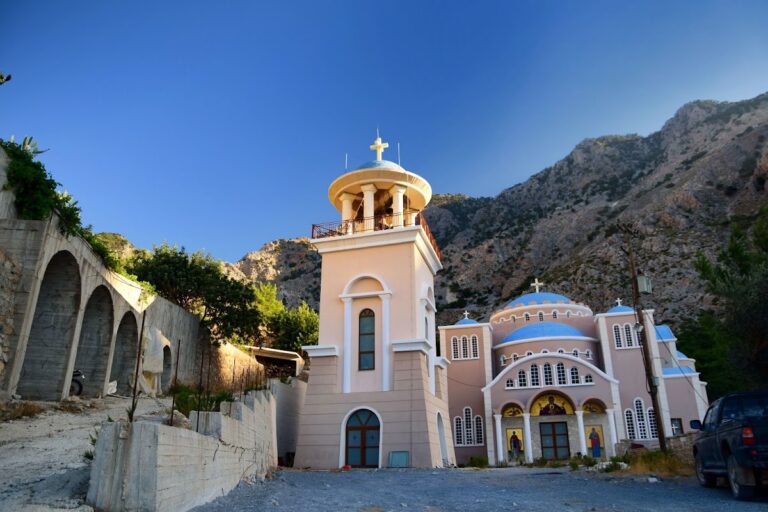
Agios Nikolaos Monastery (Saint Nicholas) can be found at the end of the stunning Gafaris (or Rouvas) canyon, approximately 48km southwest of Heraklion and 3km north of Zaros village. In 1994, a massive fire destroyed much of the gorge’s beautiful pine forest, and the monastery is located near this site.
Visitors can reach the monastery by car from Zaros, taking the path that leads to the gorge (20 minutes north of Lake Zaros). Regrettably, the monastery’s architecture is a modern and unattractive anomaly within this landscape. The only points of interest for visitors are the old church of St. Nicholas, featuring 14th-century Paleologean-style frescoes, and the restored temple of Agia Paraskevi.
Originally, the monastery functioned as a secondary monastery of Varsamonero Monastery. It was later abandoned but has since been repurposed as a monastery for Old Calendarists. They have constructed a large modern temple and various cells, utility rooms, and other facilities. The current temple is dedicated to the Resurrection of Christ and Agia Kiriaki, while the bell tower houses eight bells, the heaviest of which weighs 12 tons.
In the surrounding area, visitors can also explore the ancient cavernous church of St. Efthimios, adorned with numerous frescoes and featuring an inscription dating back to 1438.
No results available
No results available
No results available
No results available
No results available
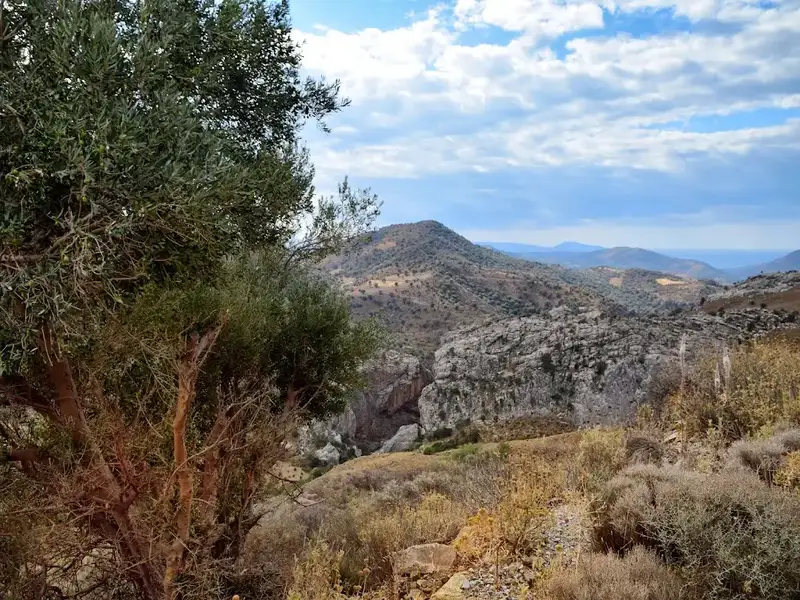
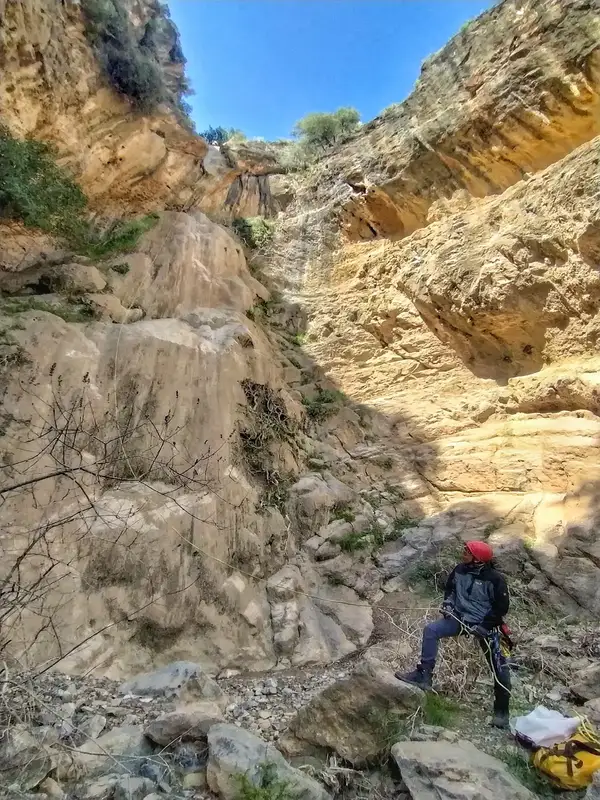
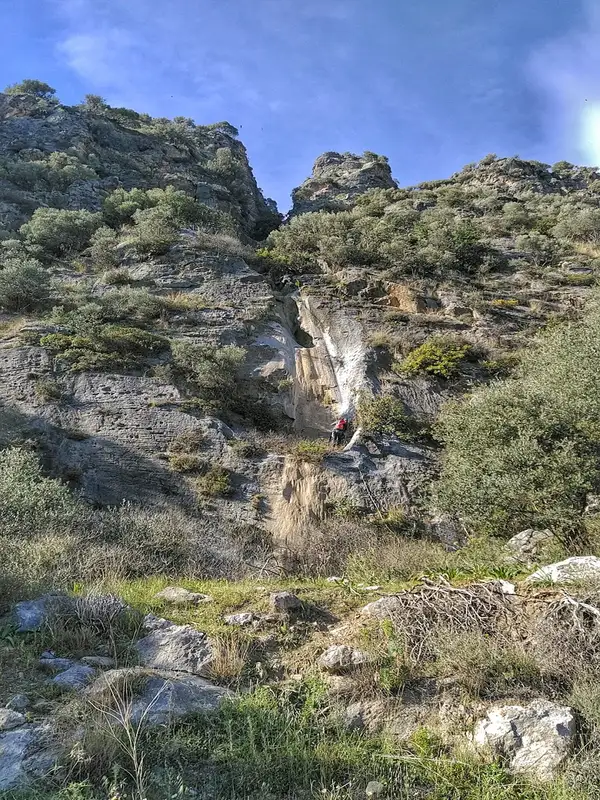
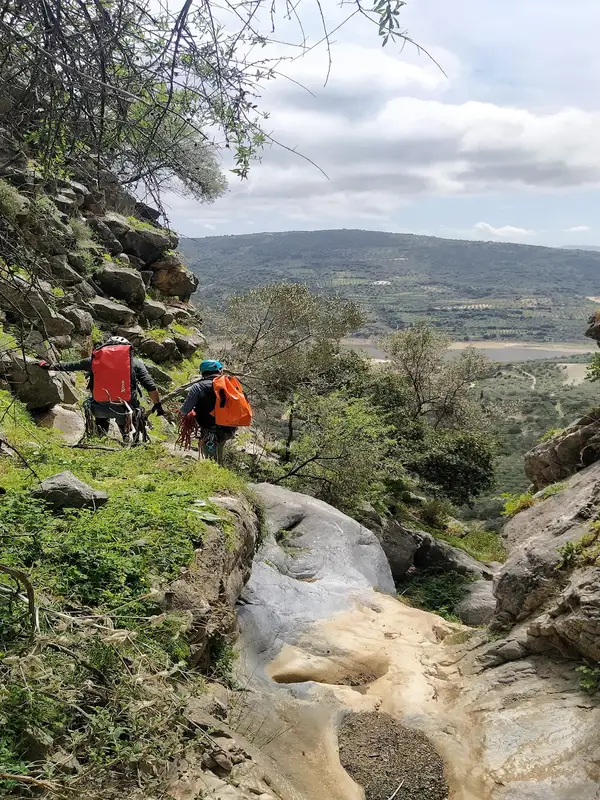
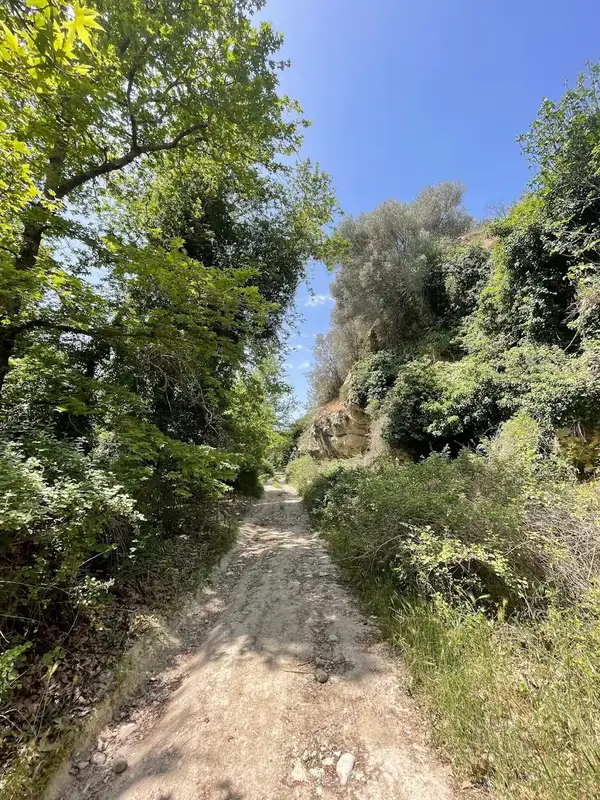
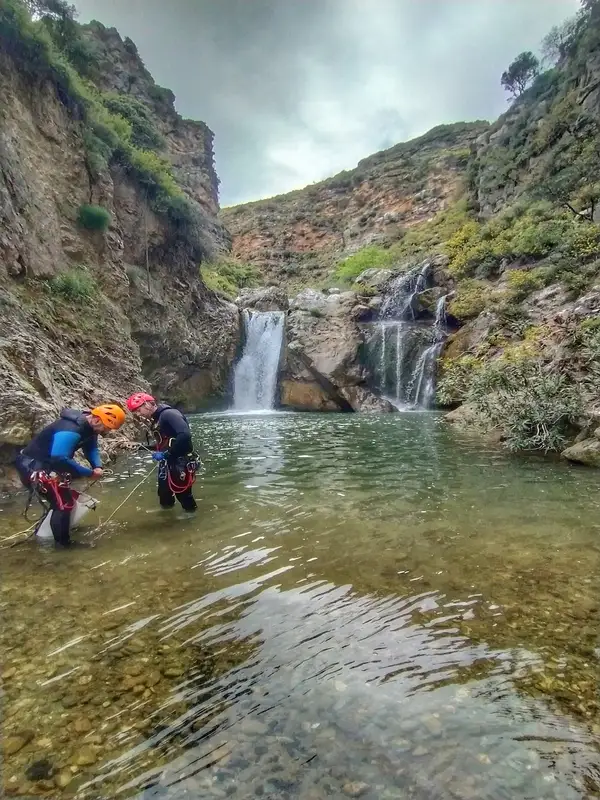
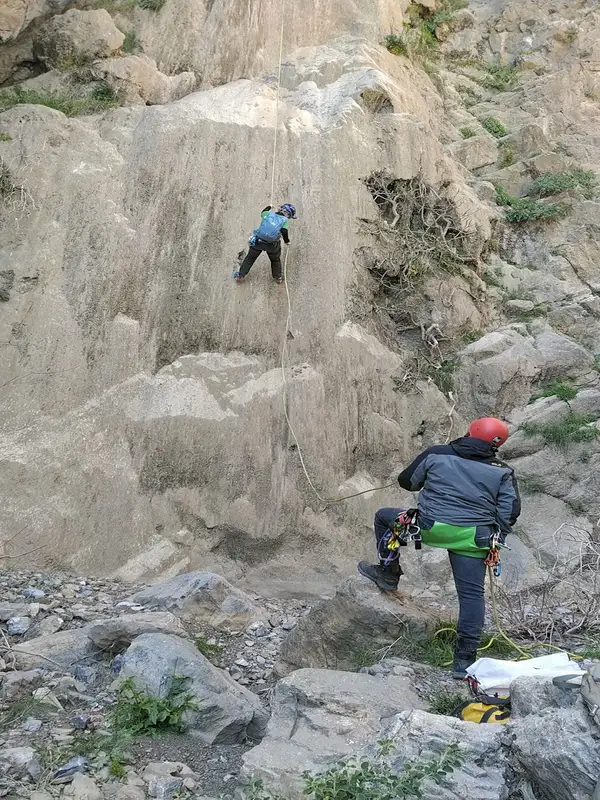
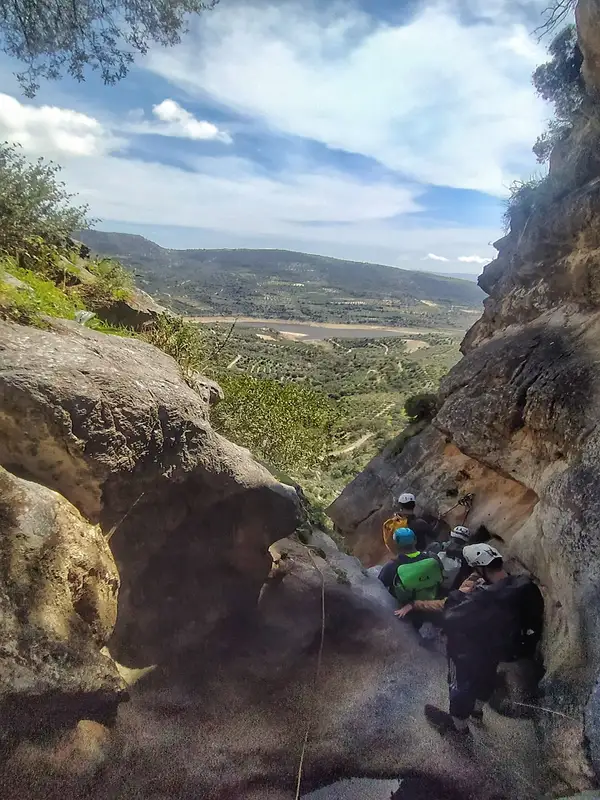
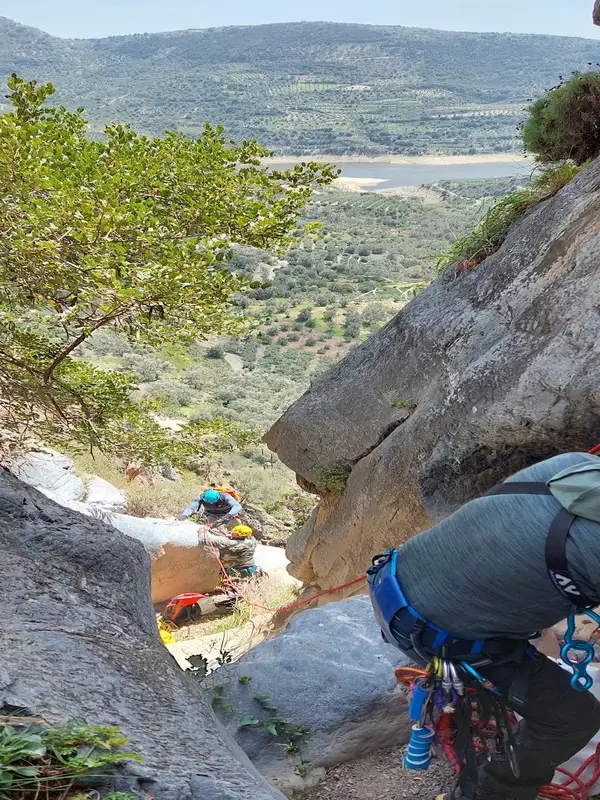
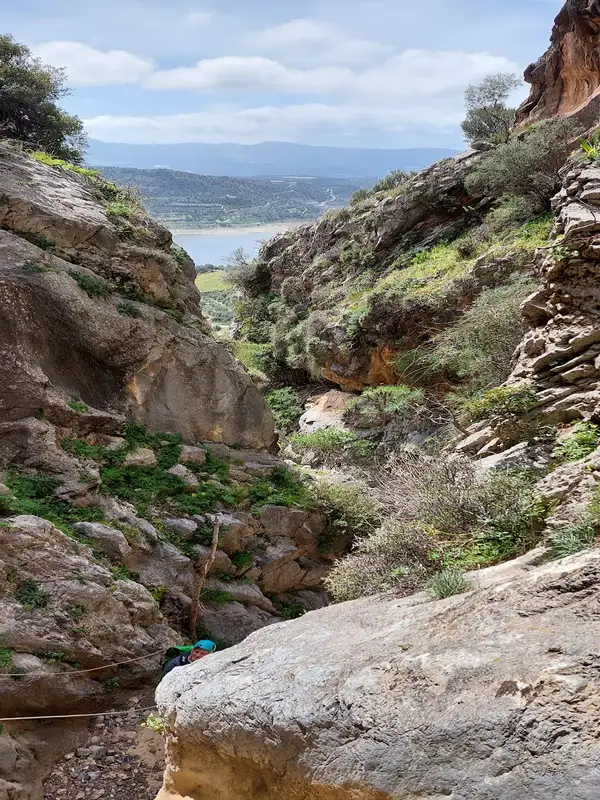
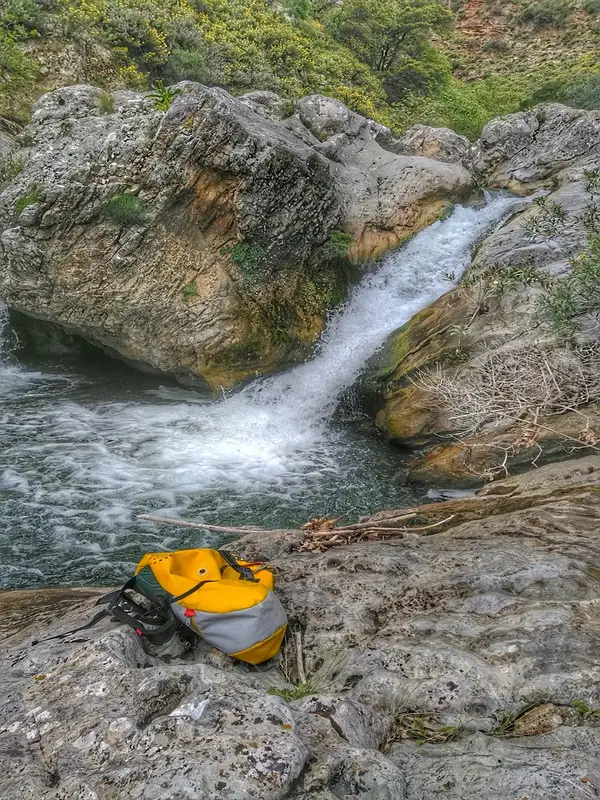
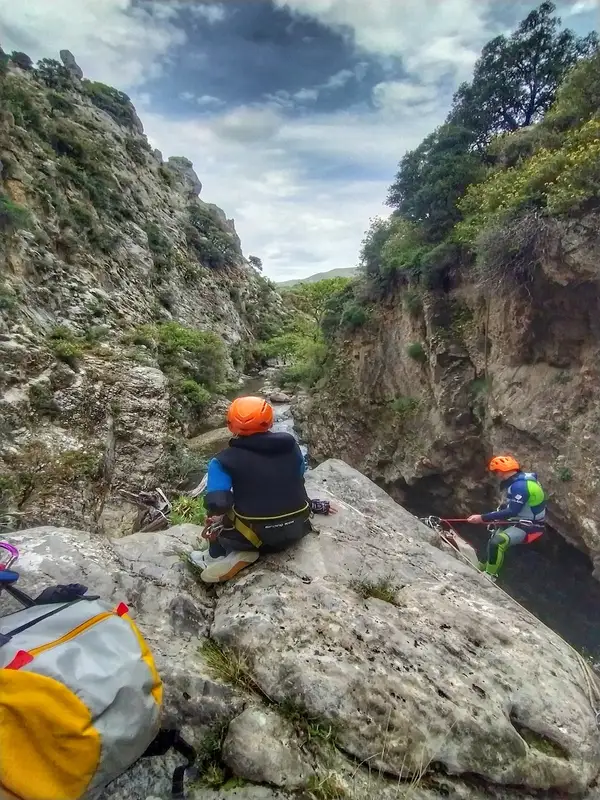
In the quiet, almost abandoned village of Chordaki, located in the Amari district, we discovered the hidden gem of Kynigospilios Canyon. Situated south of the village, this small but stunning canyon remains a secret, its location hidden from view, which contributes to its relative obscurity. The Kynigospilios Canyon boasts a significant water flow from the slopes of Mount Kedros, which lasts from winter through to late spring.
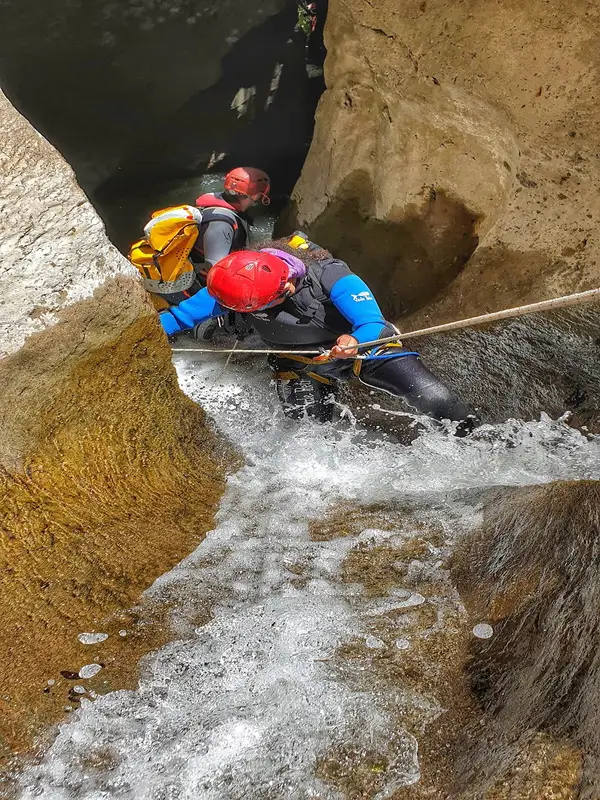
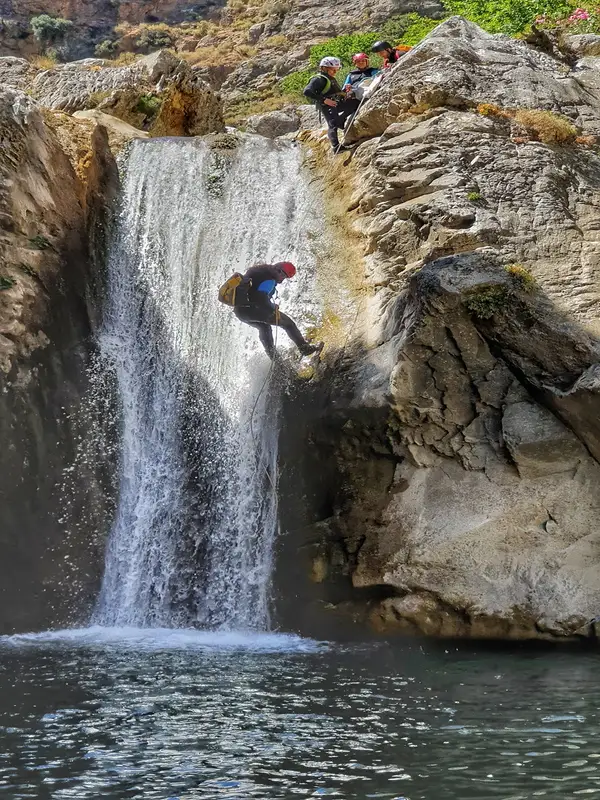
However, traversing the canyon requires the use of ropes and canyoning equipment due to the presence of eight stunning waterfalls along its path, with the last one being particularly breathtaking. Unfortunately, the canyon’s safety measures, installed by canyoners around 2011, are not ideally positioned, making them inaccessible during periods of high water flow. The canyon was christened ‘Koutsouna’ (meaning ‘small’) by the first group to cross it, as they couldn’t find an existing name for it.
At the canyon’s entrance, you’ll find two adjacent watermills, and the surrounding area is lush with greenery, including platans and oaks that provide ample shade. Beneath most of the waterfalls, you’ll find ponds perfect for swimming in the canyon’s crystal-clear river waters. The Kynigospilios Canyon eventually merges into the Platys River bed at its termination point.
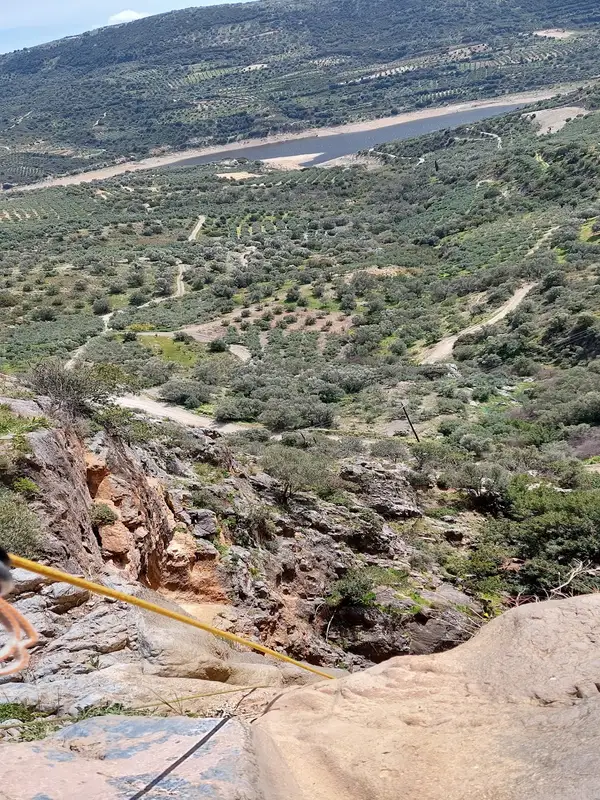
On the southeastern flank of Mount Sanida, near the quaint village of Skourvoula, you’ll find a petite yet wildly untamed chasm known as Rizopetro. This gorge culminates in a striking 60m waterfall that cascades into the lake of the Faneromeni dam, a sight to behold especially after heavy downpours.
The Apolychnos Gorge, situated just a few kilometers north of the town of Mires, is nestled in an area abundant with olive groves. This gorge is essentially a narrow valley that traces the path of a river, which in certain areas deepens and is surrounded by thick vegetation. The Tourki stream that flows through it carries water from a valley that begins west of Makres village to the Geropotamos river. The gorge, which is roughly 3 km long, begins near the village of Panagia and concludes at the traditional settlement of Agios Antonios (Vrelis). It’s conveniently accessible, particularly near its exit close to Agios Antonios, as it’s adjacent to the main road from Mires.
The gorge is named after the deserted village of Apolychnos, which is situated within the gorge at an elevation of 220m. This village, enveloped by verdant trees and bubbling springs, is home to the stunning Byzantine church of Saint Panteleimon, located in the village square.
Located approximately 100km southwest of Heraklion city, north of Ano Meros village, you’ll find the Kalamafka or Gorge Smiliano. The Lygiotis river, originating from the Gerakari valleys and the Samitos Mount slopes, flows through this gorge. The 2.5km long canyon begins near Vrysses village, close to the deserted settlement of Smile, and concludes north of Ano Meros, accessible via an asphalt road.
During winter, the gorge is filled with water, making entrance risky even for experienced canyoners. However, an alternative route via a dirt road descending from Drygies village leads just above the gorge. Here, the canyon’s steep walls form a slope with a trail, allowing relatively easy descent to the gorge’s heart, precisely at the point where the stunning waterfalls are formed continuously. The gorge comprises about 10 remarkable rappels, with the tallest waterfall being 13 meters. The ponds formed beneath each waterfall are equally breathtaking, and it’s worth noting that Gorge Smiliano boasts the largest and deepest ponds compared to any other gorge in Crete.
A journey through the canyon (as described in June of a particularly rainy year)
Starting near Smile, we first cross a small arched bridge. After just 50m, we enter the gorge’s main section, greeted by a large pond. The canyon then narrows to about 2m and forms a deep pond, 2-3m deep, requiring swimming. The first small rappel we encounter ends in a large, deep pond (perfect for jumping), where the depth exceeds 3m.
Following this, a rock lodged between the canyon walls forms a natural arch. After swimming for several meters (over 25) without touching the ground, we continue our journey unimpeded. We soon encounter the first high waterfall, and the gorge narrows further (1-1.5m). To continue through this narrow section of the canyon, ropes are required. Alternatively, we can walk alongside the canyon until we reach the 15m high rappel that ends in a very deep pond, perfect for a big jump.
The gorge extends eastward, and the deep ponds gradually become small, shallow ponds. Towards the end of the gorge, the water almost disappears, making it impossible to anticipate the aquatic paradise that lies just a few meters ahead.
No results available
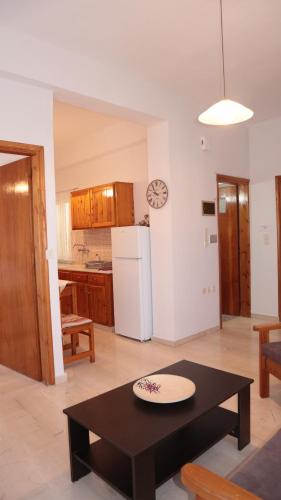
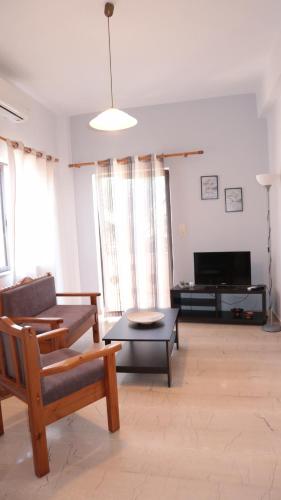
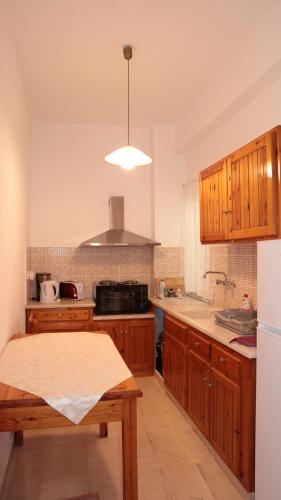
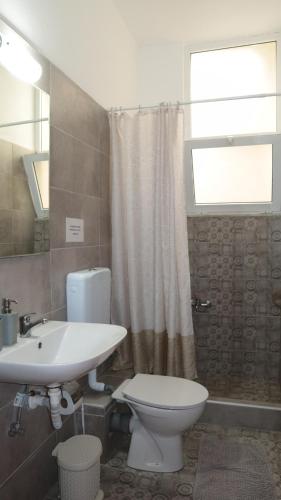
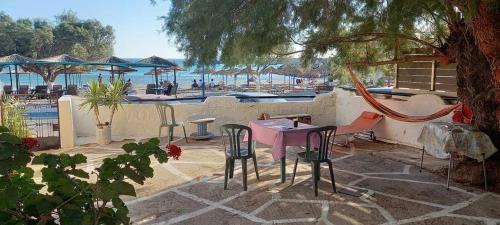
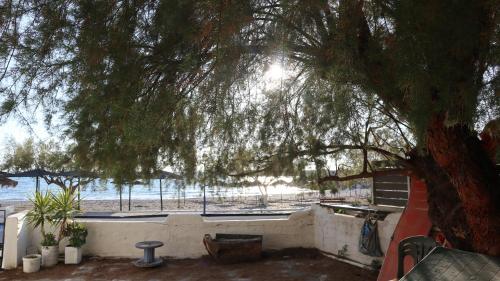
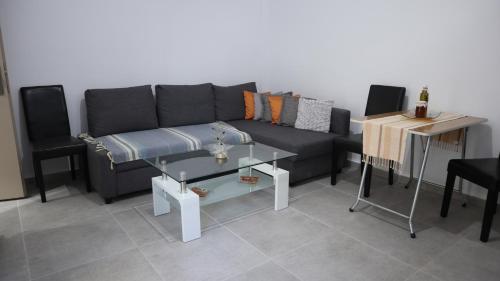
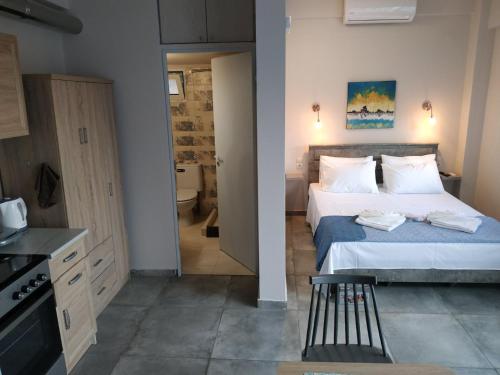
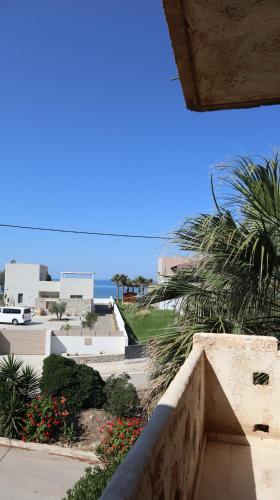
Situated in Kókkinos Pírgos, 700 metres from Kokkinos Pirgos Beach and 1.7 km from Katalyki Beach, cosy apartment near the sea offers air conditioning. This beachfront property offers access to a patio, free private parking and free WiFi.
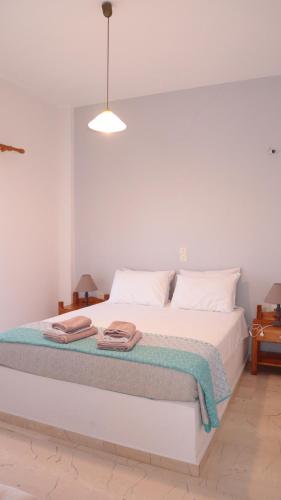
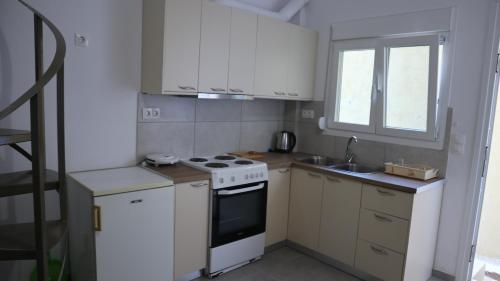
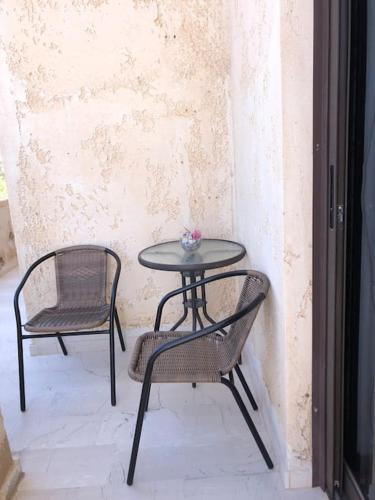
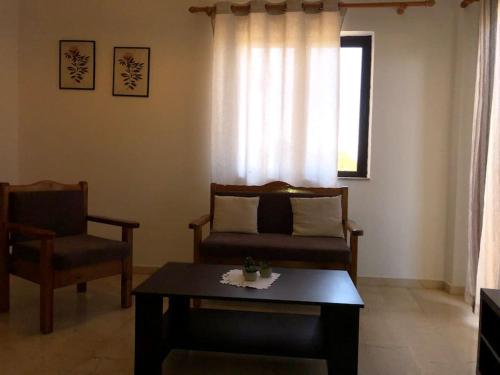
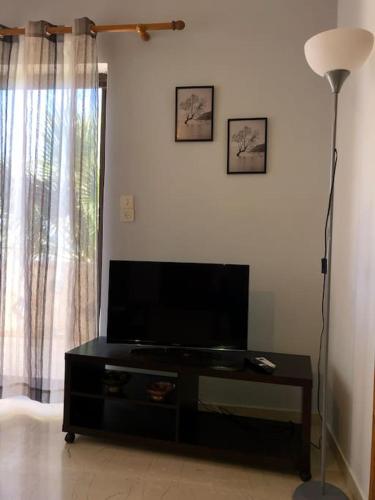
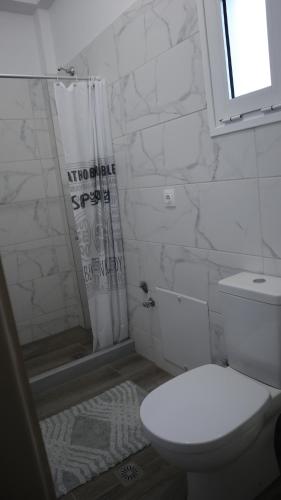
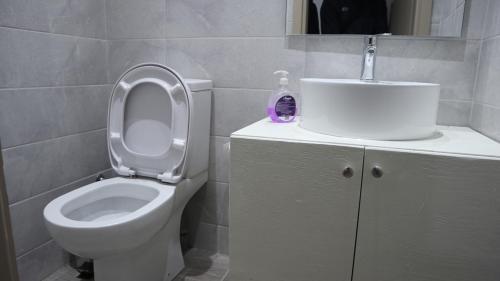
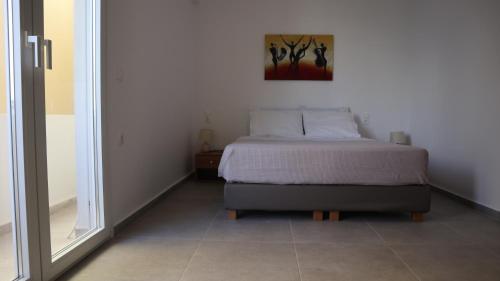
The apartment features 1 bedroom, 1 bathroom, bed linen, towels, a flat-screen TV with cable channels, a fully equipped kitchen, and a balcony with sea views.
Psiloritis National Park is 41 km from the apartment, while Museum of Ancient Eleftherna is 50 km from the property. The nearest airport is Heraklion International Airport, 64 km from cosy apartment near the sea.
from
€65
/night
Located 300 metres from Kokkinos Pirgos Beach, less than 1 km from Katalyki Beach and 41 km from Psiloritis National Park, Argiros Appartment provides accommodation situated in Kókkinos Pírgos. The apartment has access to a restaurant and free WiFithroughout the property.
Leading onto a terrace, the air-conditioned apartment consists of 1 bedroom and a fully equipped kitchen. A flat-screen TV is featured.
A car rental service is available at the apartment.
Museum of Ancient Eleftherna is 50 km from Argiros Appartment, while Museum of Cretan Ethnology is 7.1 km away. The nearest airport is Heraklion International, 63 km from the accommodation, and the property offers a paid airport shuttle service.
from
€81
/night
Situated in Kókkinos Pírgos, just a few steps from Kokkinos Pirgos Beach, Golden Sun features beachfront accommodation with free WiFi. The air-conditioned accommodation is less than 1 km from Katalyki Beach.
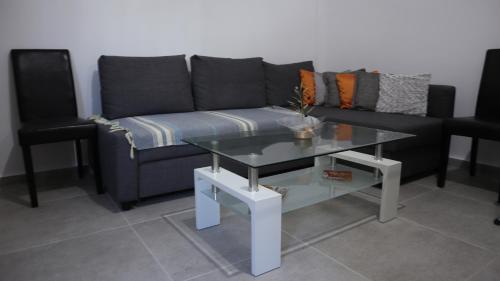
The apartment with a terrace and sea views has 1 bedroom, a living room, a flat-screen TV, an equipped kitchenette with a toaster and a fridge, and 1 bathroom with a walk-in shower. Towels and bed linen are available in the apartment.
If you would like to discover the area, cycling is possible in the surroundings and the apartment can arrange a car rental service.
Psiloritis National Park is 41 km from Golden Sun, while Museum of Ancient Eleftherna is 50 km from the property. The nearest airport is Heraklion International, 63 km from the accommodation, and the property offers a paid airport shuttle service.
from
€75
/night
South Wave Studio is a beachfront property located in Kókkinos Pírgos, a few steps from Kokkinos Pirgos Beach and less than 1 km from Katalyki Beach. It features a terrace, sea views and free WiFithroughout the property.
The apartment includes 1 bedroom, a kitchenette with an oven and a fridge, as well as a coffee machine. Towels and bed linen are featured in the apartment.
If you would like to discover the area, snorkelling is possible in the surroundings.
Psiloritis National Park is 41 km from the apartment, while Museum of Ancient Eleftherna is 50 km away. The nearest airport is Heraklion International Airport, 63 km from South Wave Studio.
No results available
Connect with thousands of Crete visitors and boost your bookings.
No results available
© All rights reserved. Crete Locals