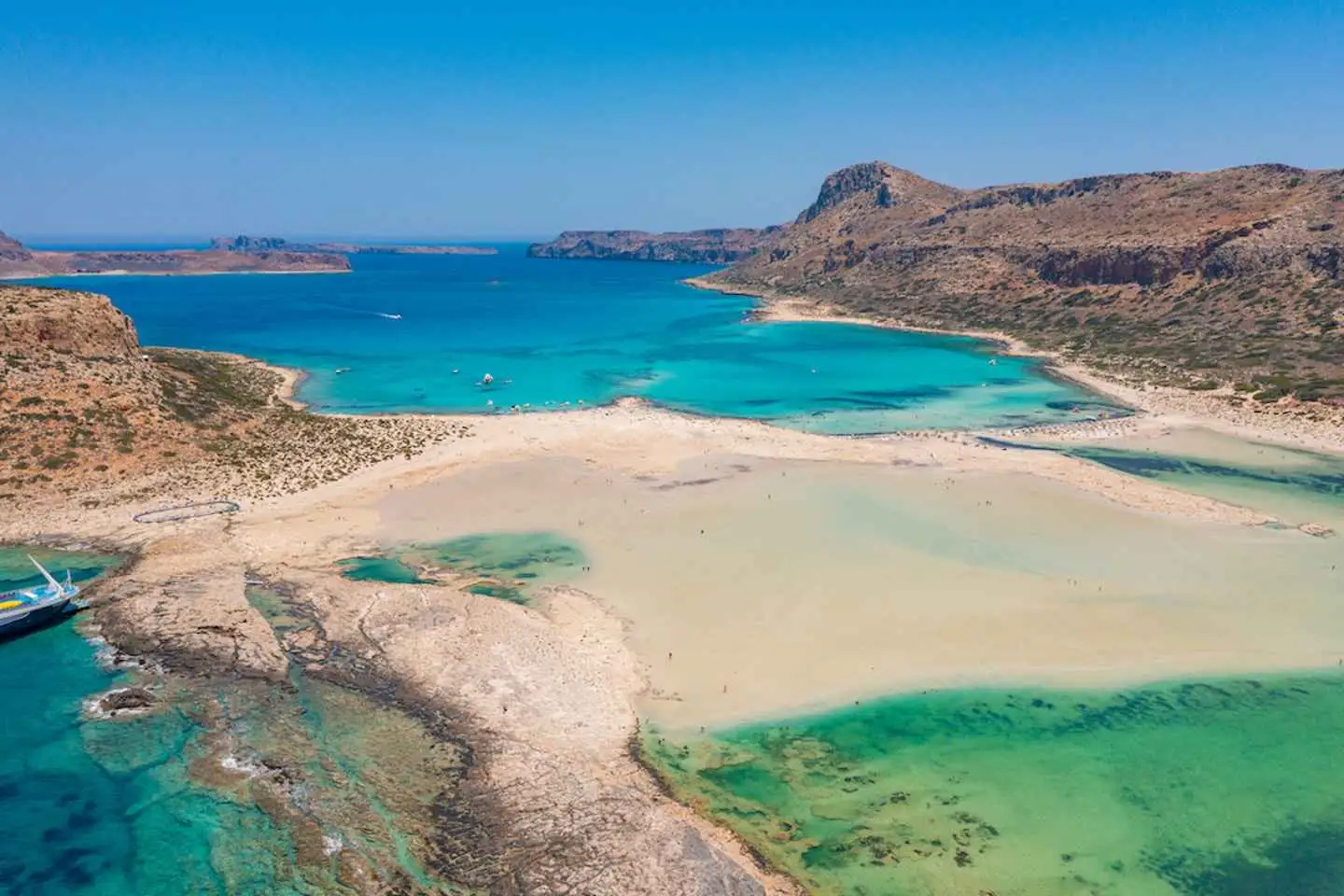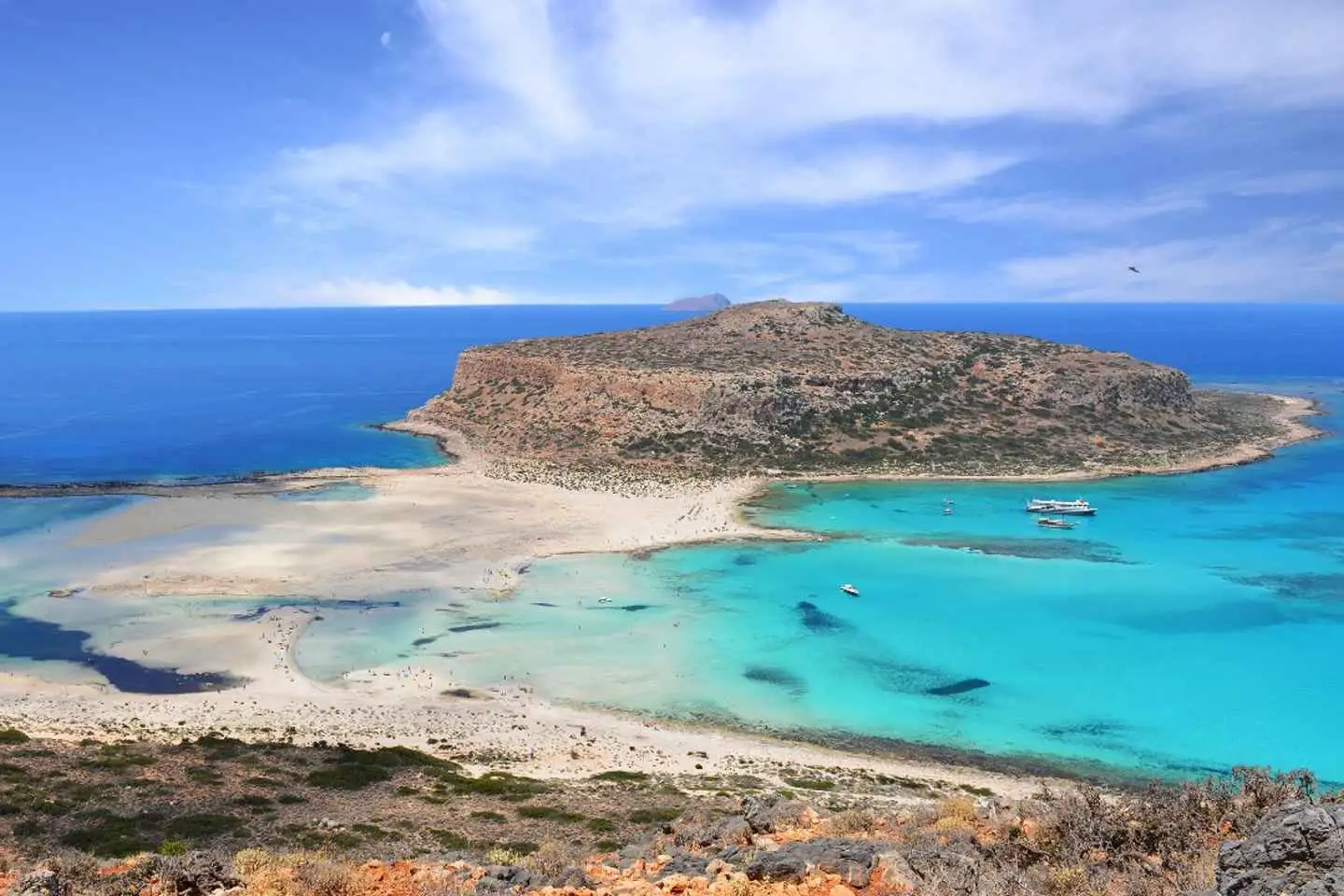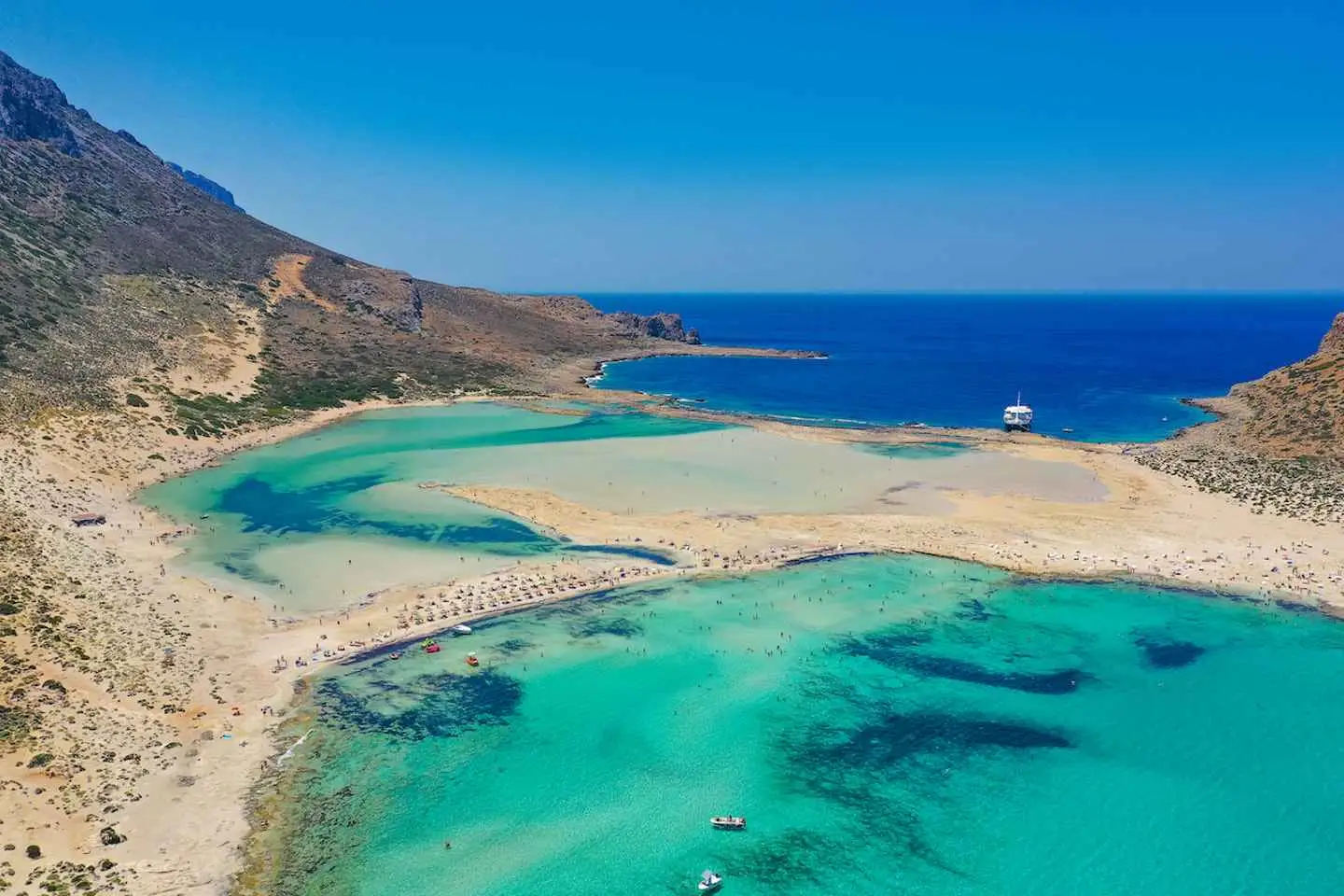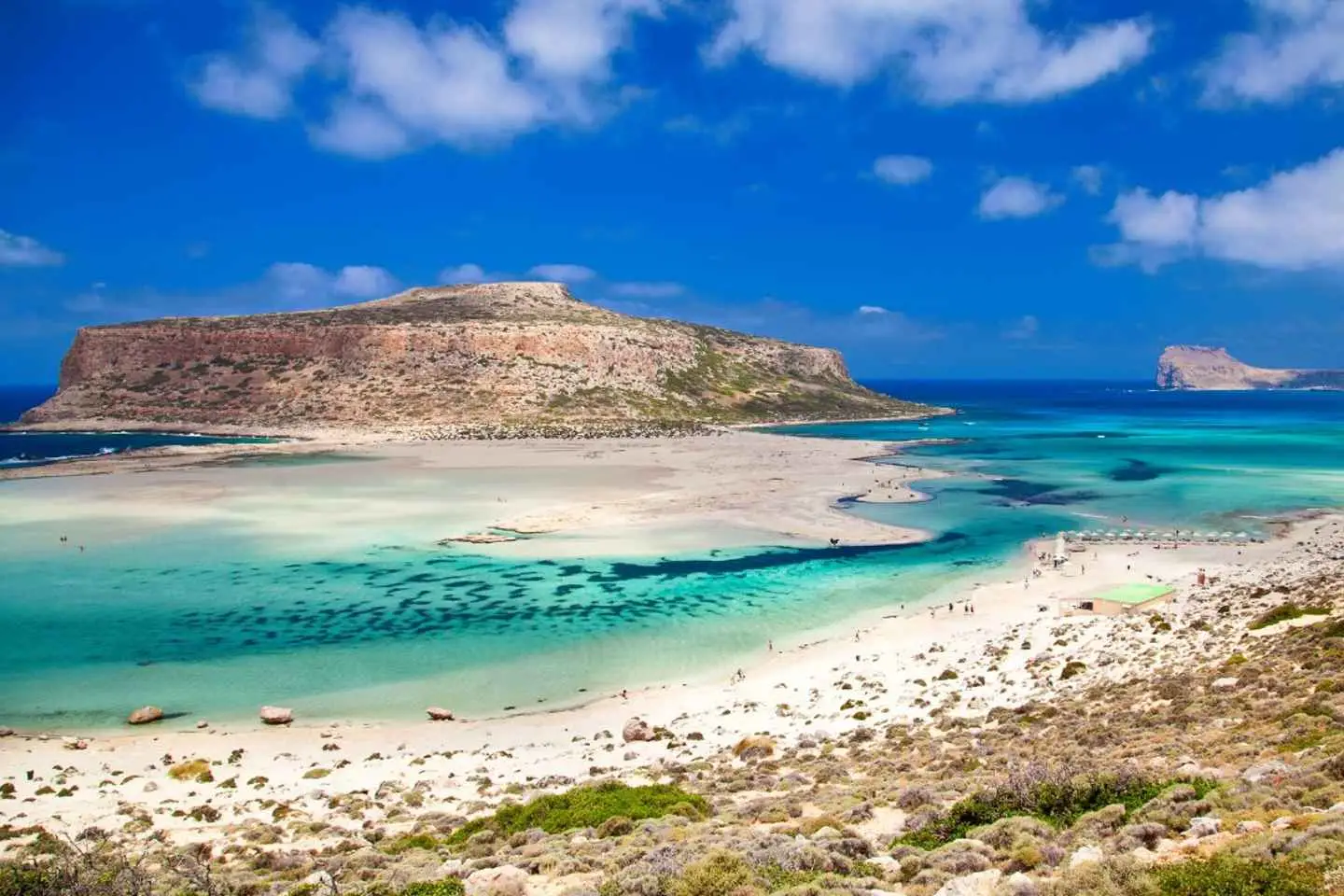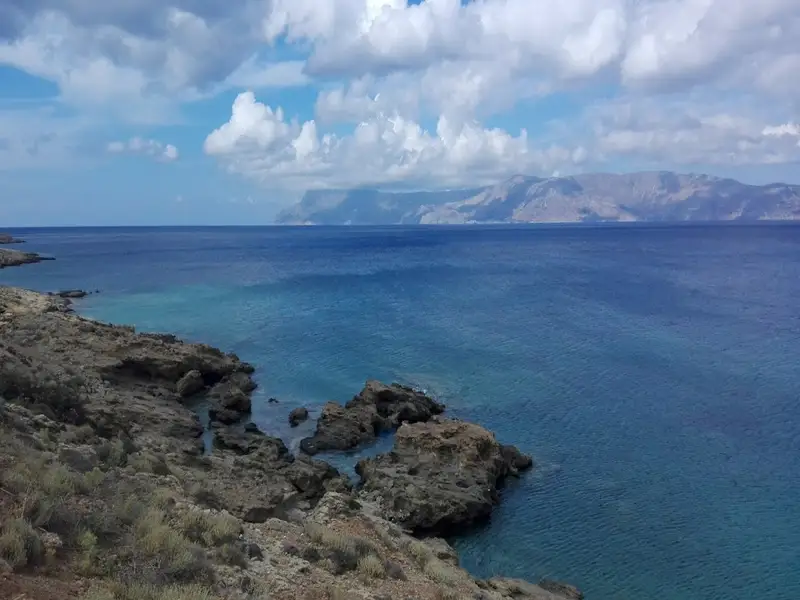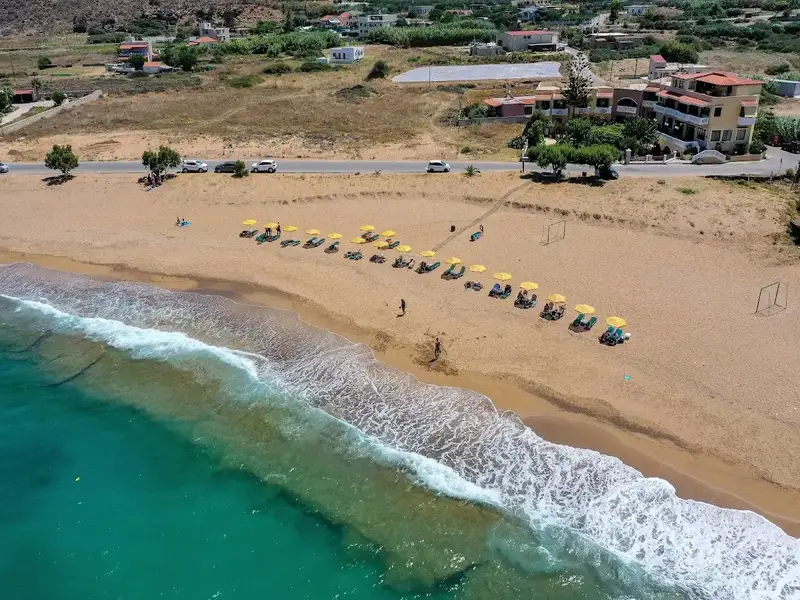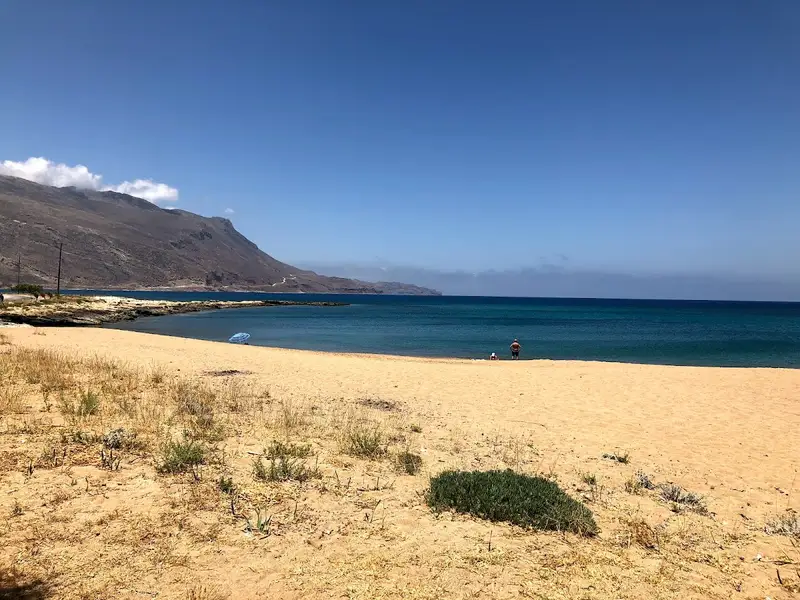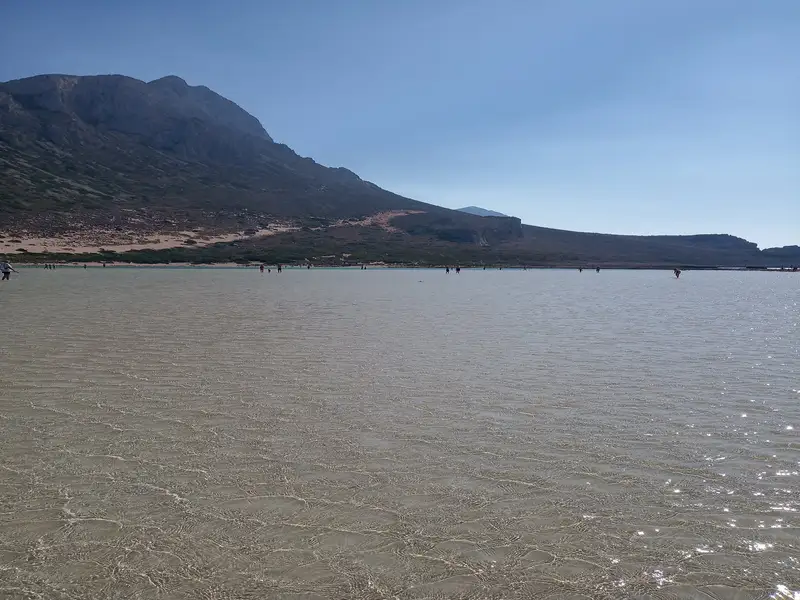
Book a private rigid inflatable boat (RIB) vessel and an experienced skipper to explore the western parts of Crete with your family or friends. Departing from Kissamos Port, board your boat and ride the waves to the famous Balos Lagoon and to the historic Gamvousa Island. The skipper will take you on an adventurous or relaxed ride (according to your preferences) and provide drinks and snacks on the way.
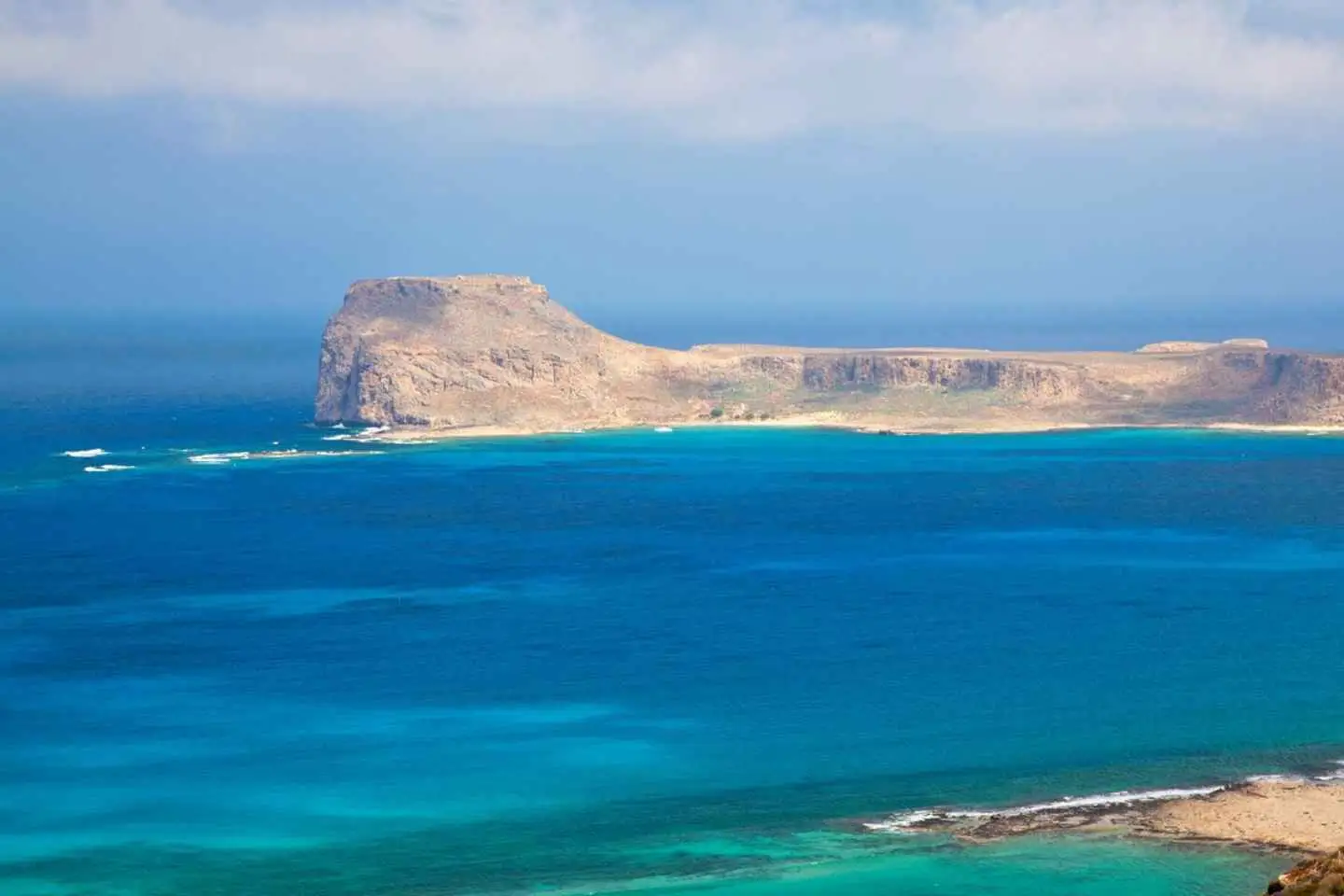
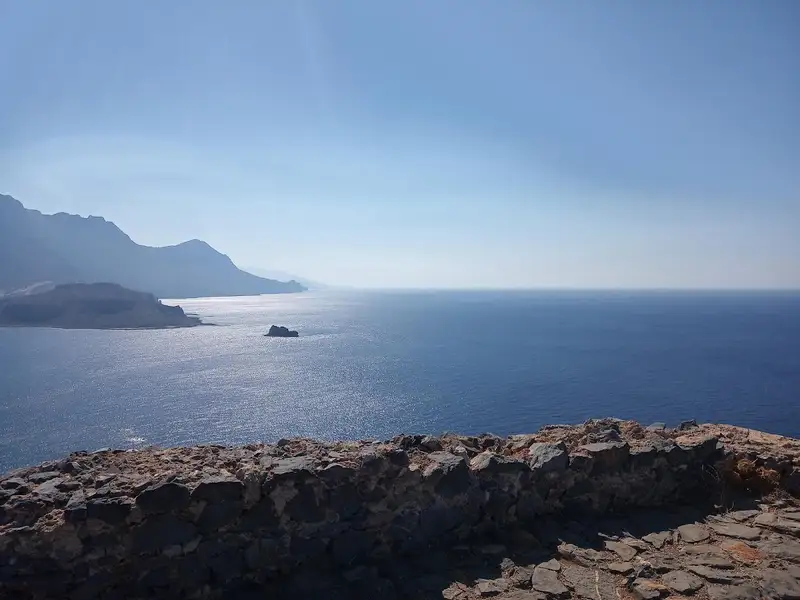
At your first stop, Balos, you’ll anchor and explore the area’s white sand beaches and vivid turquoise waters for 1.5 hours. You’ll then head to Gramvousa, an island with a medieval fortress at the top of the hill. There, you can sunbathe, snorkel, and swim for another 1.5 hours before returning to Kissamos.
Enjoy a relaxing cruise along the Aegean sea and admire stunning views as you sail for Balos Lagoon and Gramvousa Island. Take time to swim and explore these incredible locations at your own pace.
Start your morning at Kissamos port and board a private sailboat. After learning the safety procedures on board from your experienced skipper, set sail on a private cruise for Balos Lagoon and Gramvousa Island.
Relax on board while taking in the spectacular views of the Cretan coast. Learn a bit about sailing on the trip with the help of your skipper.
After 1.5 hours at sea, reach Balos Lagoon. Soak up the sun on the pristine shores of Balos Beach or even go for a swim in the clear water.
Next stop: Gramvousa Island. Hike to the extraordinary castle built high up on the island and admire panoramic views of the horizon from above. Take your time exploring this rugged island or practice your snorkeling.
At noon, relax on deck and enjoy a delicious lunch cooked on board. If it’s too hot, take a break in the cabins. Admire the beautiful views of the sea once more as you head for the port.
Join us in Kissamos Port for an evening of romance, adventure, and relaxation on the beautiful waters of Crete. Whether you’re celebrating a special occasion or simply looking to unwind, this sunset cruise promises an unforgettable experience. Sail in style and comfort on the premium-class catamaran, designed to provide a premium experience. From Prosecco to local delicacies, everything is included to make your evening special.
Create lasting memories with your loved one in a truly enchanting setting!
Welcoming Start: Enjoy a complimentary glass of Prosecco and delicious snacks, setting the perfect tone for your evening.
Scenic Lagoon Stop: Anchor in a calm lagoon near a charming Greek church. Dive into crystal-clear waters for a swim, snorkel, SUP surf, or try your hand at fishing.
Mesmerizing Sunset: As the day fades, we sail out to meet the sunset at sea. Marvel at the breathtaking views as the sky transforms with vibrant hues.
Delightful Snacks: Savor light snacks including local cheese and fresh fruits, while you relax on board.
Serene Return: After witnessing the stunning sunset, we gently cruise back to the port, enveloped in the tranquil evening light and calmness of the sea.
Start with pickup from Heraklion or the surrounding area. Drive over to Kastelli by bus to board your boat. Balos are Gramvousa are located on the West part of the island. Depending on the area your hotel is located is around 4 hours by bus to the place where the boats depart.
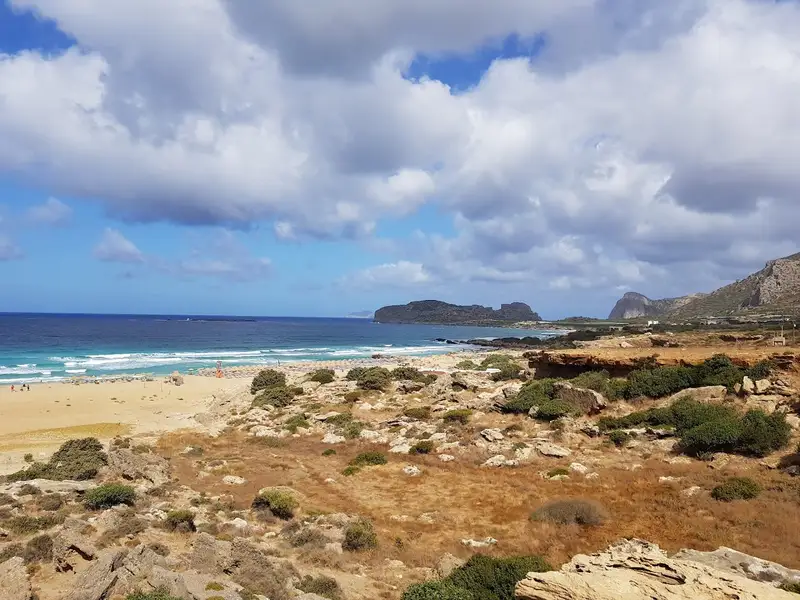
Embark the boat from the village of Kasteli and head over to Balos Lagoon and enjoy plenty of time to swim in the quiet crystal clear waters, walk across the golden sand beach and soak in the sun as you relax.
Cruise across the western Cretan sea and arrive at the tranquil Gramvousa. Swim along the coast and stroll up to the castle on the hill to admire panoramic views of the natural landscape as you hike up to that point.
The drivers will be awaiting you at the port, in order to begin the drive back to Heraklion.
No results available
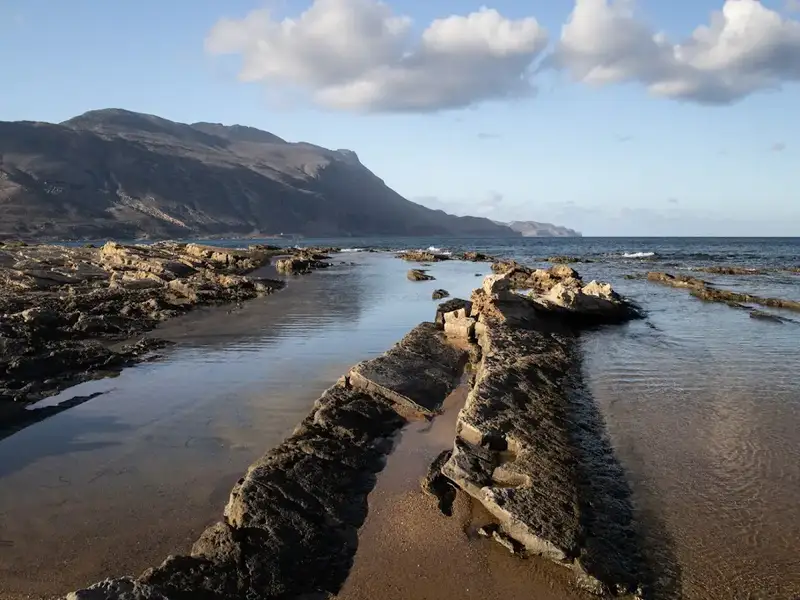
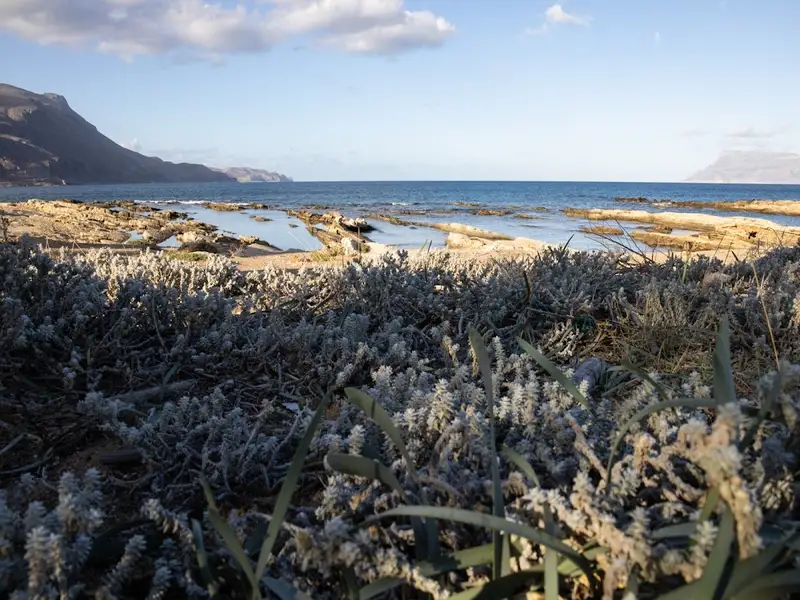
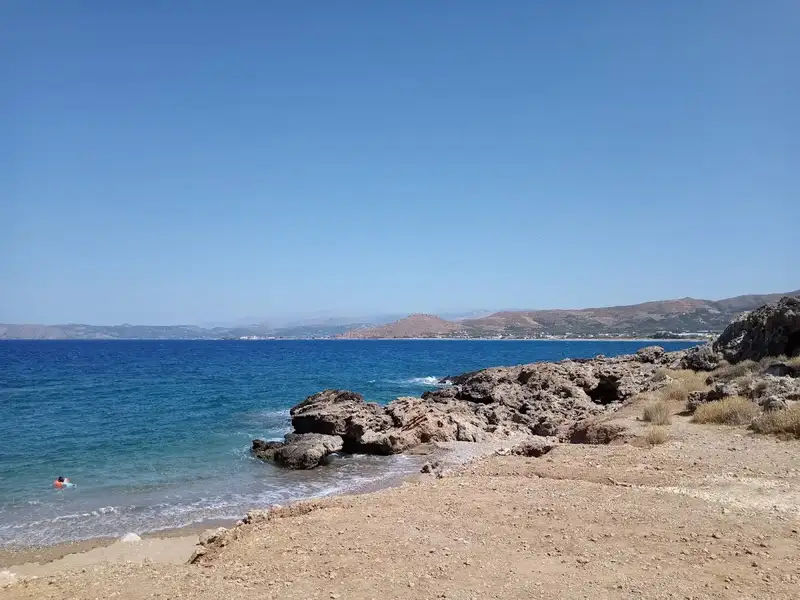
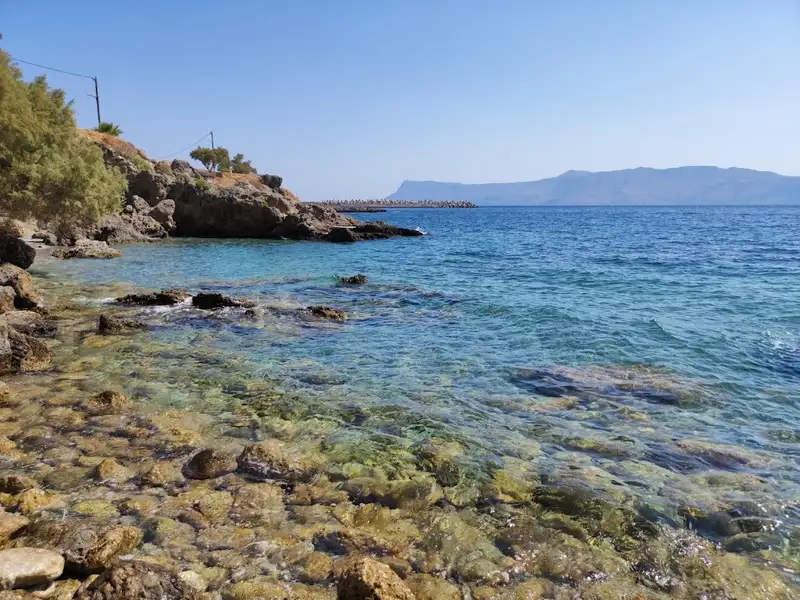
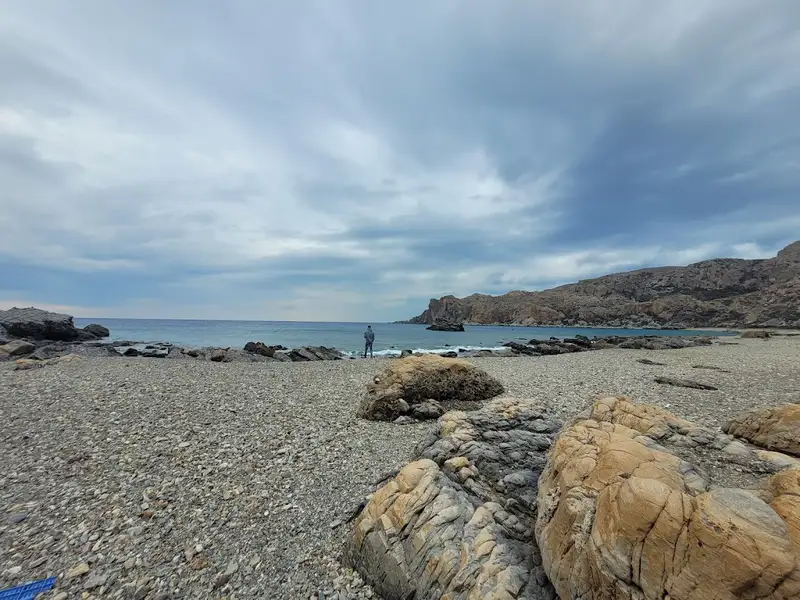
Kalyviani Beach, situated a mere 1km north of the eponymous traditional village at the foot of the Gramvousa Peninsula and 7km northwest of the town of Kissamos, is a lengthy stretch of coast that serves as a viable option for swimming for those visiting the scenic village of Kaliviani. However, its overall rocky terrain with sparse sandy patches doesn’t make it a favourite among swimmers. It is advised to avoid the beach during gusty days, as the large waves coupled with the rocky seabed can make swimming hazardous.
Despite its proximity to Kissamos and Kaliviani village, where accommodation and dining options are available, the beach lacks tourist facilities. It also tends to be less than pristine, as it often becomes a depository for trash brought in by the currents and waves.
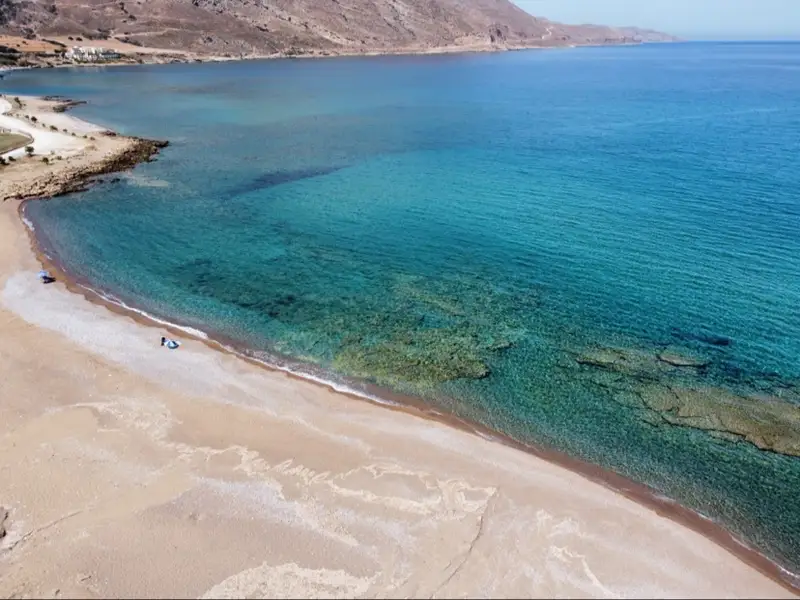
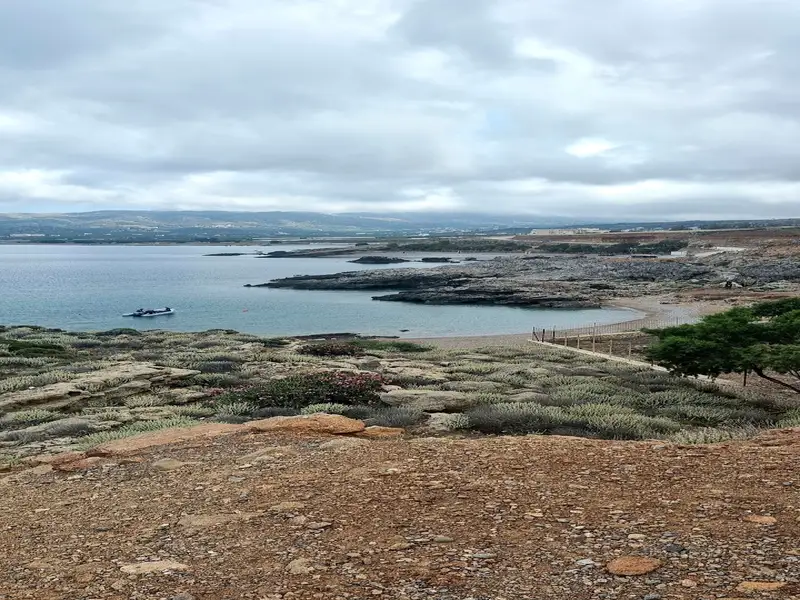
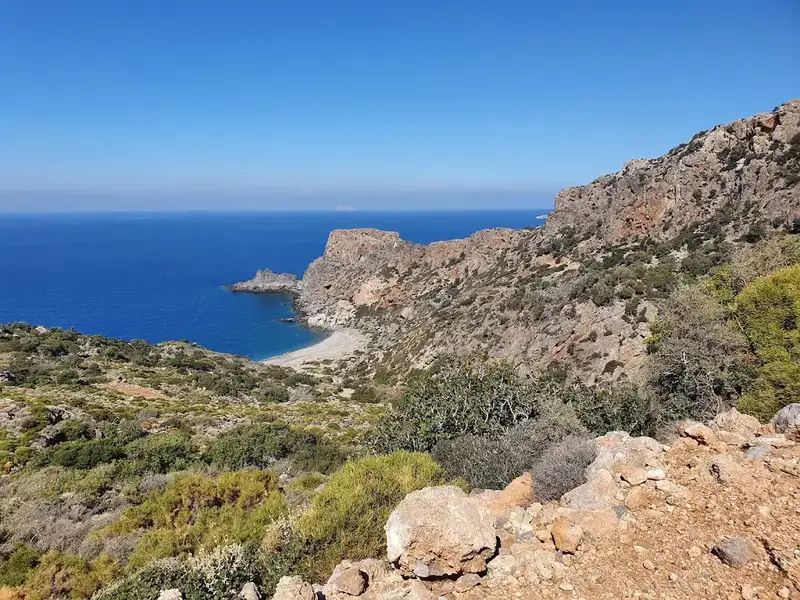
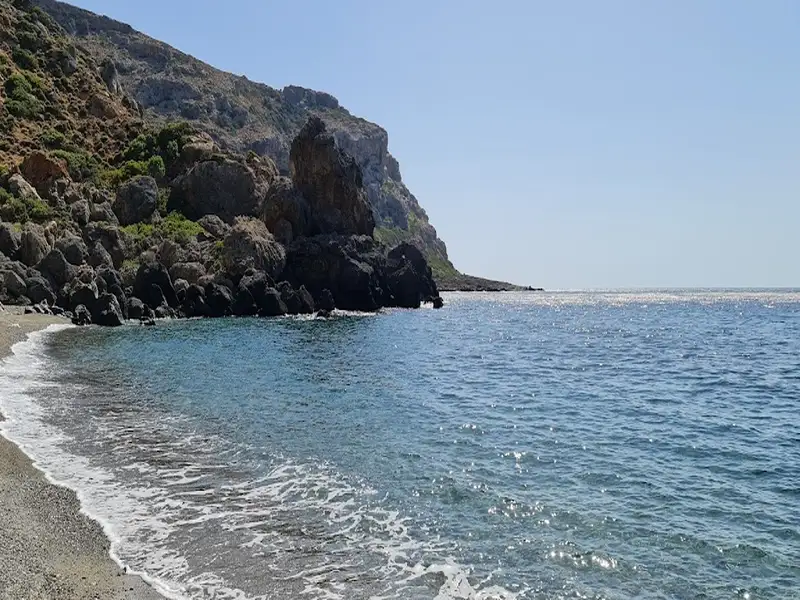
Tou Meri to Pigadi is located 8km northwest of Kissamos and 44km west of Chania, on the eastern side of Peninsula Gramvousa. The name means “Meri’s well”, probably named after the name of someone, who owned a well in the area. Meri Pigadi has three consecutive small protected bays, with fine pebbles and crystal clear deep waters. There are no facilities on the beaches; it is an ideal place to relax, away from the noise of cities.
There are a few small trees, under which you can find shade. The first bay, just behind the ticket kiosk of Balos lagoon, is called Mouri Lakkos. To get to Meri’s Well, you have to walk or drive 1.5km into the dirt road that starts from Kaliviani and leads to the lagoon of Balos. If you visit the beaches, do not forget to have water with you.
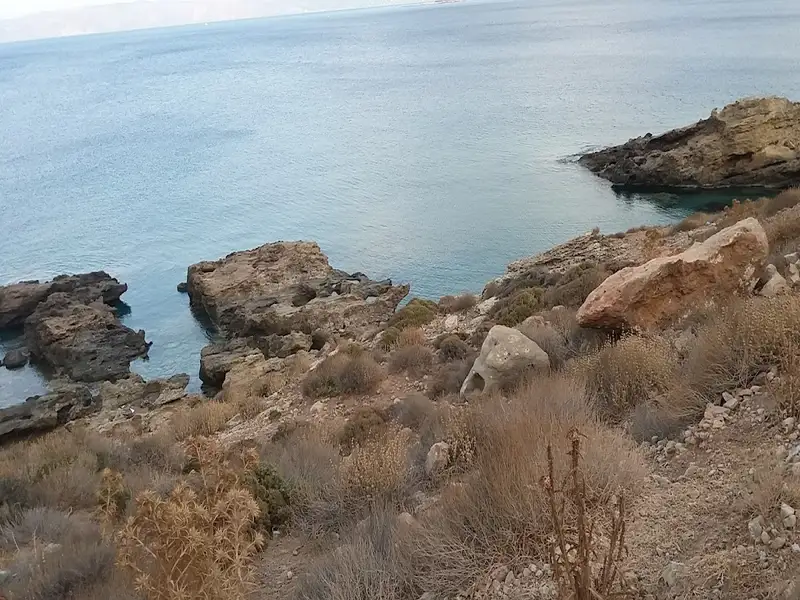
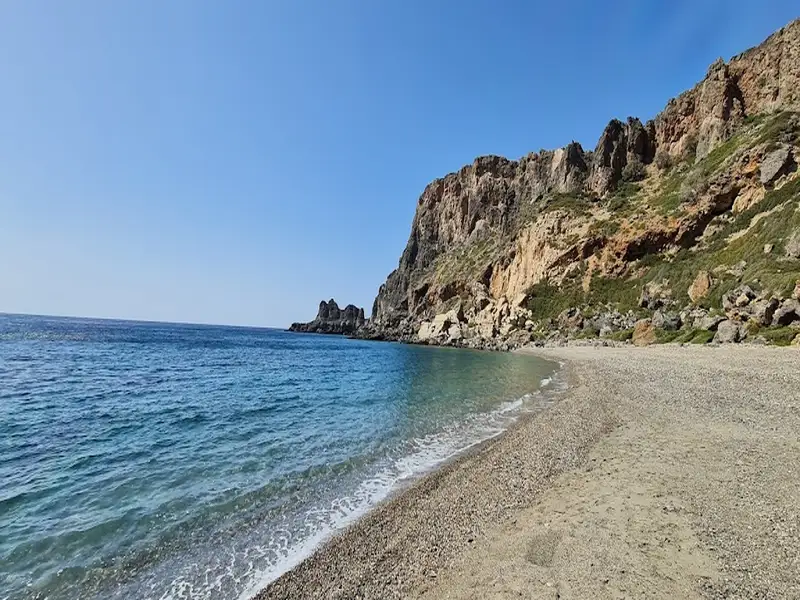
1.5km north of Meri Pigadi, at position Kakia Skala, there is a small beach with fine pebbles and gorgeous deep blue water, adjacent to the eastern cliffs of the cape. Access to the beach is not easy, as the rocky cliffs make the descent impossible.
Located 3km northwest of Kissamos town and 38km west of Chania, you’ll find the beach of Vigglia on Crete island. This beach begins near the “Madonna of the Harbor” church (Panagia) by the port of Kissamos, stretching along a 2km coastline featuring many coves, all the way to Kaliviani to the west. Notably, Vigglia’s primary beach boasts a nearly semicircular shape, with its coarse sand and transparent water. There are areas where the sandy beach is replaced with pebbles and rocks.
Although Vigglia doesn’t provide extensive tourist services, there are a few hotels in its vicinity and some basic facilities. Despite not being highly organized, Vigglia attracts many admirers who appreciate the area’s tranquillity and pristine sea. If you’re seeking a family-friendly destination in western Crete, Vigglia would be an excellent recommendation.
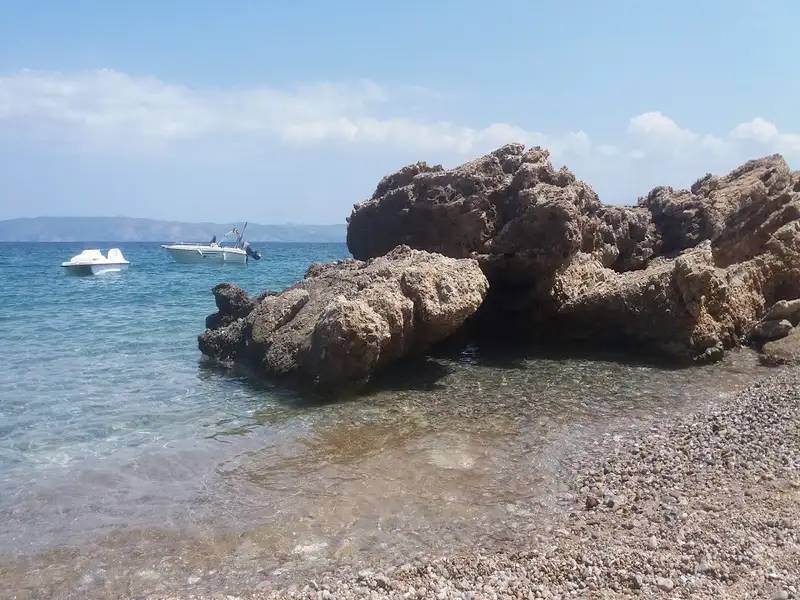
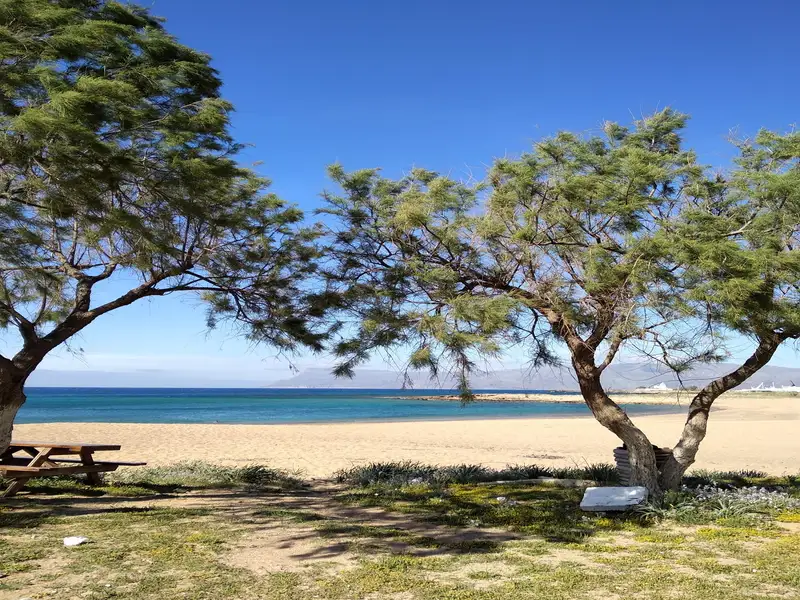
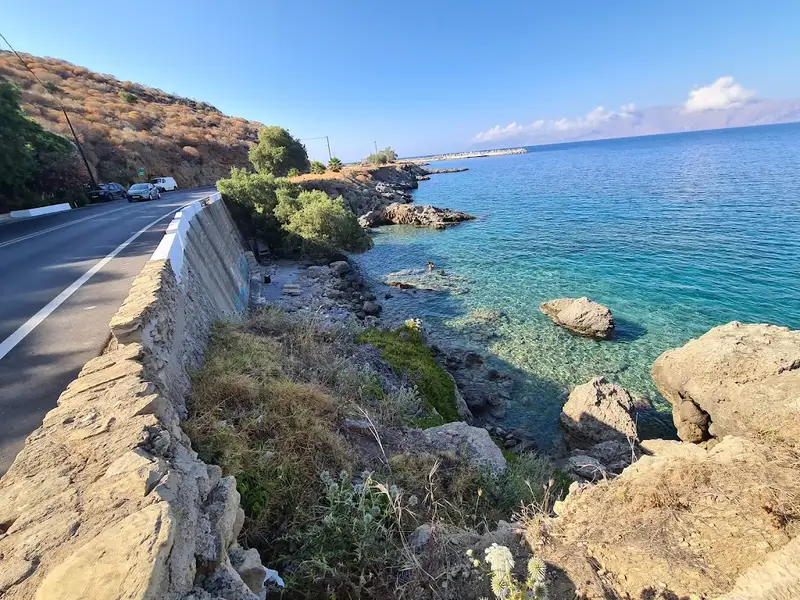
Damialis beach, situated 37km west of Chania and a short 1.5km north of Kissamos, can be easily accessed via the main road that connects Kissamos to Falassarna. This petite cove boasts pristine deep waters, eye-catching rocks, and tiny pebbles, all while being well-shielded from strong winds. Though the beach is not equipped with facilities, visitors can seek shade under the tamarisk trees. A springboard on the rocks also adds to the charm of the beach.
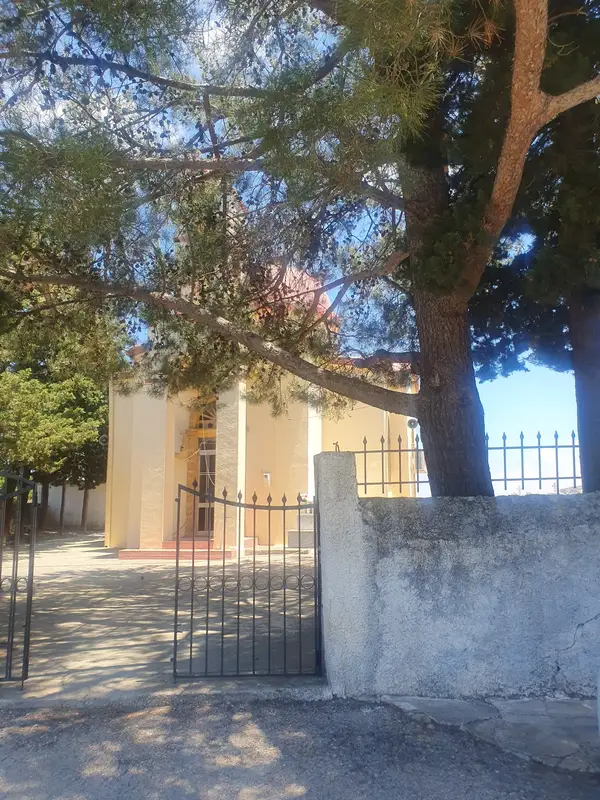
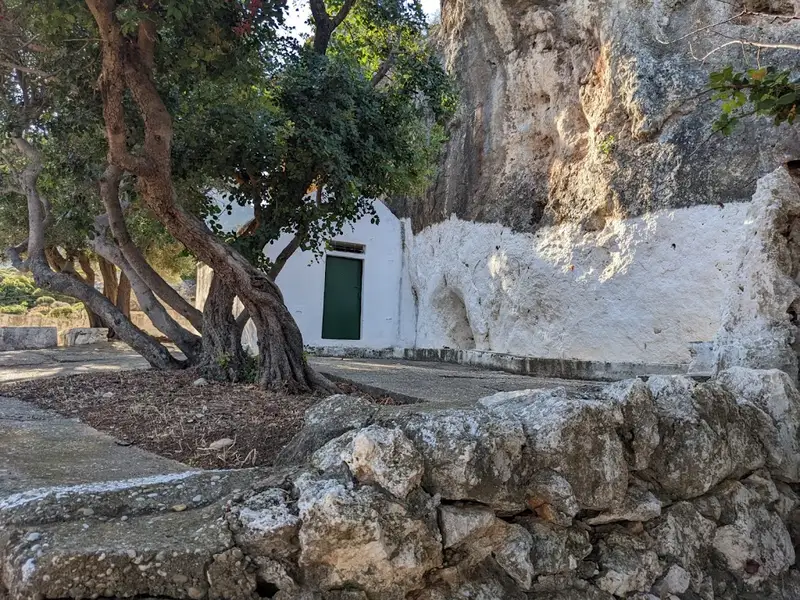
The beach derives its name from the picturesque St. John Damialis church, nestled inside a cave above the beach. A brief path from the church crosses the road via a small tunnel, leading straight to the beautiful beach.
A mere 200m south of Damialis, one can discover the three to four small coves of Delfini, or Dolphin, named after a local hotel. These secluded beaches are tranquil, though occasionally, streams may deposit rubbish on the shores.
No results available
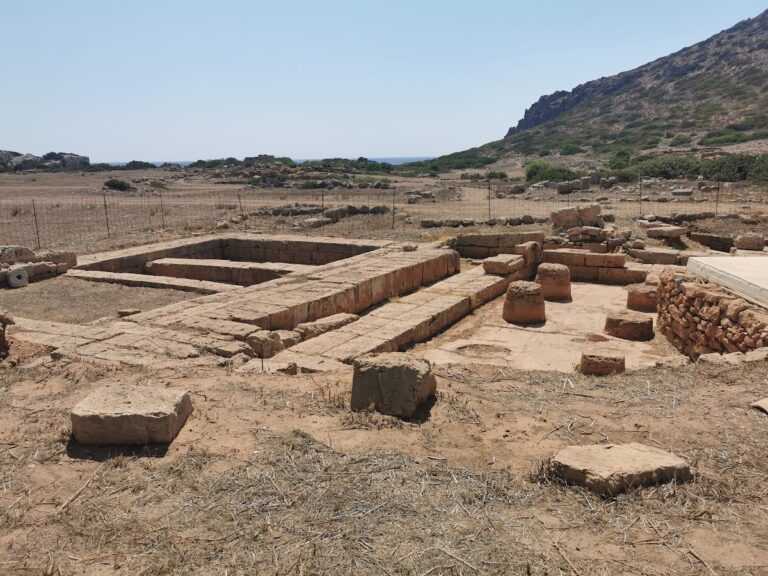
The ancient town of Falasarna (or Phalassarna) is situated at the western base of the Gramvousa peninsula and was one of the major towns of Crete during the Hellenistic and Roman Era. The city was renowned for its port, the only natural harbor in western Crete, constructed in a small lagoon. Nowadays, the area is well-known for its stunning beaches.
In antiquity, it was called Korikos, while the name Falasarna was possibly derived from the local nymph Falasarni. The rival town in the region was Polirinia, which managed to turn Falasarna into its port after 100 years of conflicts (186BC).
In Falasarna, archaeologists have identified parts of buildings and the acropolis overlooking the harbor with traces of strong walls and a temple dedicated to Demetra and a chthonic goddess. Additionally, east of the port, a cemetery with 43 archaic graves has been discovered. The territory of Falasarna extended up to the tip of the Gramvousa peninsula, where there was a temple. A carved throne has also been found within walking distance from the town, which was likely dedicated to the god of the sea, Poseidon, or was simply a throne for speakers.
The most fascinating part of the town is undoubtedly its port, which has now risen up to 9m from the sea surface due to the lifting of Western Crete by the earthquake of 365BC. It is truly impressive to see port facilities on land. The harbor was protected by four towers (2 of them have been identified), and the port was accessed through a narrow artificial canal.
It is believed that Falassarna was a haven for pirates. This forced the Romans to destroy the city in 69 BC and seal the port forever. The town could not recover and regain its former glory since then, leading to its abandonment during the 4th century AD.
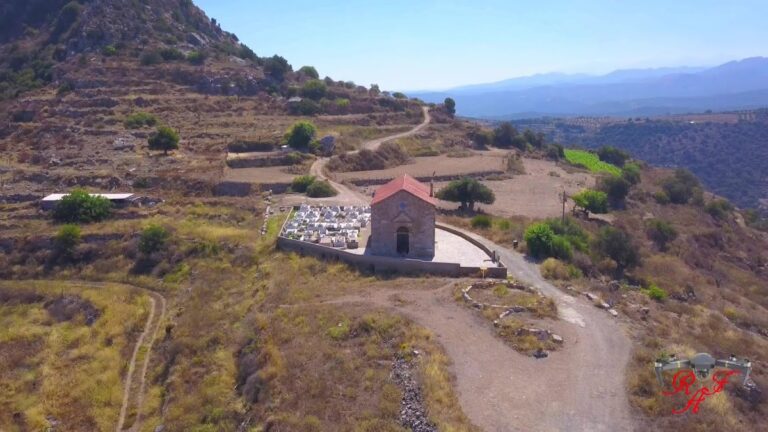
The ancient city ruins of Polirinia can be found on a steep hill overlooking the North Cretan Sea. It is believed that the city was founded by the Achaeans around 1100 BC and thrived during the Roman period, becoming the most important town in West Crete. Polirinia’s ports were Phalassarna and Kissamos, and the city had close trade relations with Sparta, Milos, Rhodes, Thiva, the coasts of Ionia (Asia Minor), and Egypt. Besides trade, the town was also known for its livestock, as its name is derived from the words “polla rinia,” meaning many lambs.
Polirinia reacted positively to the Roman invasion, and as a result, it was not destroyed like other cities in Crete. Instead, it formed an alliance and managed to defeat the most powerful city in western Crete, Kydonia, and gained control of the sanctuary of Diktynna at the Spatha peninsula.
The city’s coins depict a bull’s head (voukranio) and Jupiter. On top of the hill, there once stood another temple dedicated to the goddess Artemis or Diktinna, which was demolished in 1894 to build the temple of the Holy Fathers (using materials from the original sanctuary). Today, visitors can see parts of the strong city walls from the Byzantine period, a Hellenistic tower, an aqueduct, and a temple.
The phrase “Cretan Sacrifices” is still used by Greeks today when referring to unfulfilled desires or purposes. This phrase originated from the story of Agamemnon and Polirinia: When Agamemnon, the victor of the Trojan War, returned home, he anchored on Nopigia beach to offer a sacrifice to the gods of Polirinia. However, the prisoners on board started fires, and he had to leave in a hurry without completing the sacrifice.
No results available
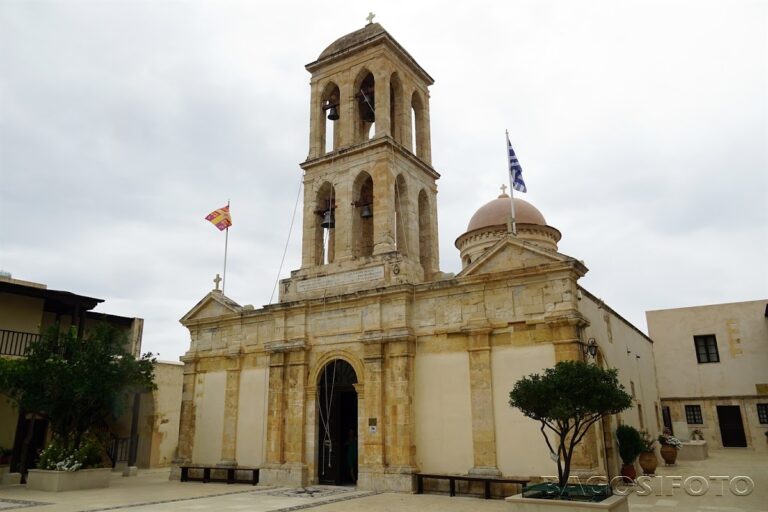
The coastal Monastery of Panagia Odigitria can be found at the base of the Spatha peninsula, approximately 26km west of Chania and 2.5km north of Kolimbari. It is also referred to as the Lady of the Angels Monastery of Gonia (Gonia = Corner) due to its position on the western edge-corner of Chania Bay.
Established in the 17th century, the monastery soon thrived as a rich monastic tradition developed in Spatha, and the monks congregated in Gonia. The Gonia Monastery has played a significant role in local history, often serving as a refuge for Cretan rebels and consequently being destroyed numerous times by various conquerors. Evidence of this can be seen in a cannonball embedded in the east wall.
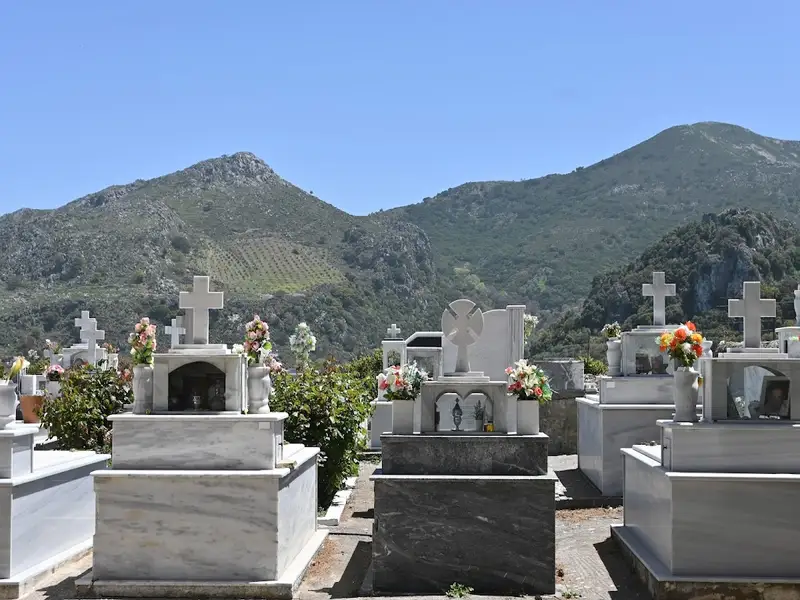
The original 14th-century church is situated in the current cemetery, close to the existing monastery complex. The complex is encircled by a high wall, reminiscent of a Venetian castle. The temple is dedicated to the Virgin Hodhegetria (celebrated on August 15th). Surrounding the temple are numerous other monastery buildings, including monk cells, an abbey, dining room, stores, cellars, and more. The Orthodox Academy of Crete, gym, pool, schools, county court, and other facilities are also housed within the monastery. In the monastery’s museum, visitors can view ancient icons, such as those by Constantine Palaiokapas.
Several notable individuals have served as abbots of the monastery, including Misael Apostolidis, who taught the Greek language to the Greek King Otto and was the first rector of the University of Athens. Others include Joachim Tzagarolos, Parthenios Kelaidis, and Parthenios Pieridis.
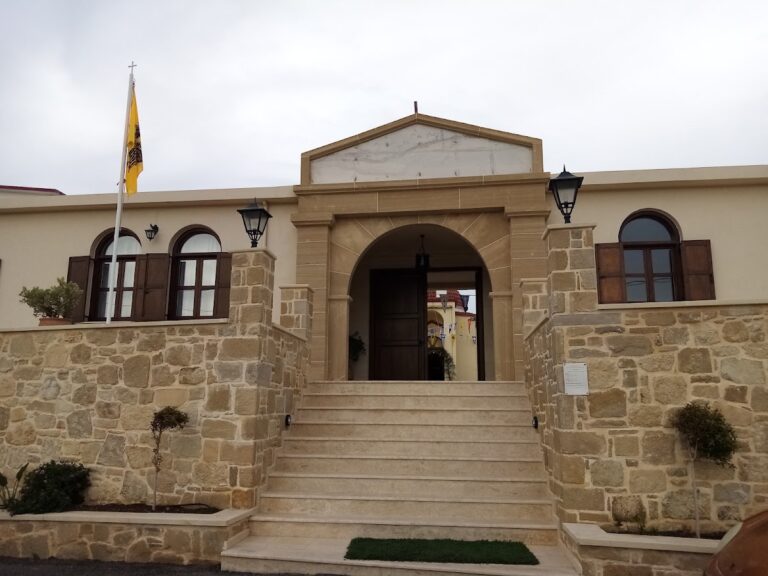
Parthenos Monastery, a contemporary convent devoted to the Life Giving Spring (Zoodochos Pigi), can be found atop a small hill in the town of Kissamos. Established in 1905, it underwent renovations in 1962. The monastery was once home to the Urban School of Girls and Crete’s first Deaf School.
No results available
No results available
No results available
No results available
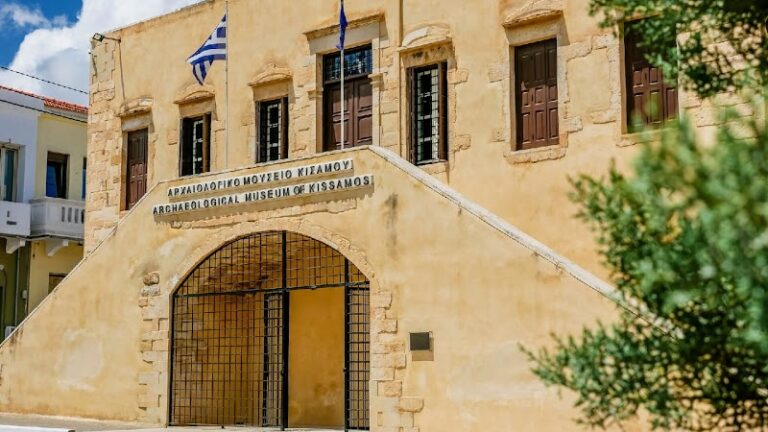
The Archaeological Museum of Kissamos, established in 2005, is located in the historic Diikitirio (“Headquarters”) of Kissamos, a Venetian-Turkish monument.
The museum’s exhibits offer a comprehensive overview of the region’s history, spanning from prehistory to early Christian times. The exhibition is divided into sections, covering the ground and first floor.
The ground floor showcases Minoan findings from Nopigia, highlighting the historical development of Polyrrhenia and Falassarna in the Hellenistic period. It also presents pottery, inscriptions, and sculptures from the Kissamos area, mainly from the Roman period.
The first floor focuses on Kissamos, featuring mosaic floors, amphorae, coins, workshop artifacts, and objects from local tombs, including those from Falassarna and Polirinia.
No results available
The Sirikari gorge, situated 55km west of Chania and 17km south of Kissamos, is nestled in a verdant area filled with canyons and streams. The paved road leading to Sirikari weaves through lush vegetation, offering a glimpse of the area’s beauty from the get-go. The gorge splits into two parallel paths here – Tsichliano to the west and Kioliano or Sirikariano to the east, both culminating at the Polirinia settlement, the site of the ancient town of Polirinia. The town’s ancient walls, still in a decent state of preservation, stand tall in its citadel, atop a hill with a panoramic view of the Kissamos bay.
Close to Sirikari, an enchanting forest unfolds, home to towering chestnut trees, quaint waterfalls, and babbling brooks. Although it isn’t the only chestnut forest in the Chania prefecture, with several others dotting the slopes of the White Mountains, its beauty and vastness set it apart.
Adjacent to Sirikari, in Sineniana, stand two well-preserved old watermills. A visit to the Church of the Assumption is also recommended, particularly on August 15th, when a traditional feast is held. The church, nestled in the chestnut grove, is surrounded by other trees like holm oaks, cypresses, and plane trees. A little further along, you can explore an abandoned village set amidst a stunning oak wood. Additionally, the Sirikari village houses the 15th-century Byzantine church of the Holy Apostles (Agii Apostoli), which is definitely worth a visit.
The Rocca, Roka, Rocka, or Rokka Gorge, situated 32km west of Chania in the Kolymbari region, stretches for 2km from the village of Deliana to the village of Roka. The settlement features Trouli hill, which is home to the remnants of a Byzantine fortress.
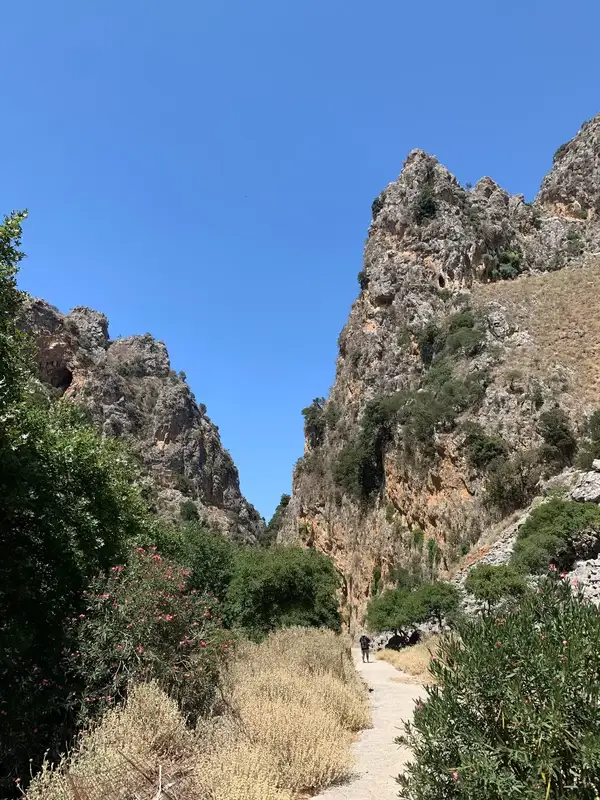
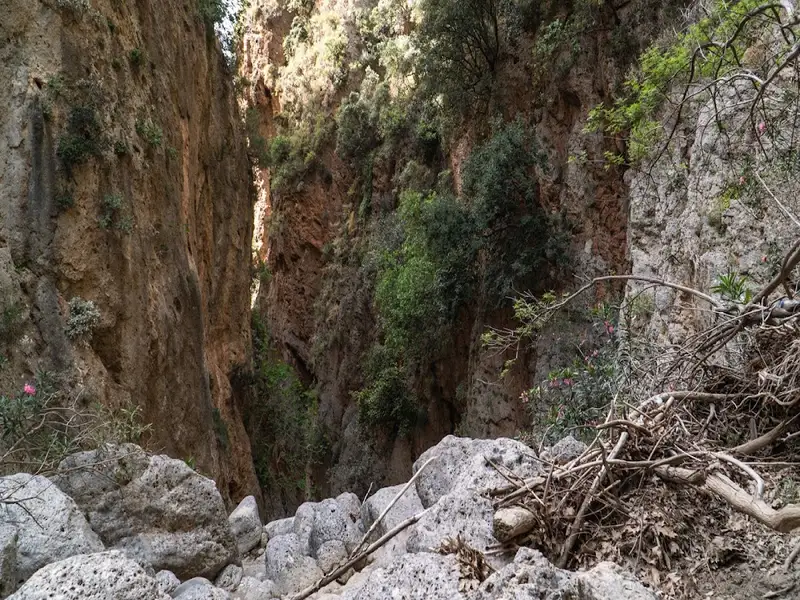
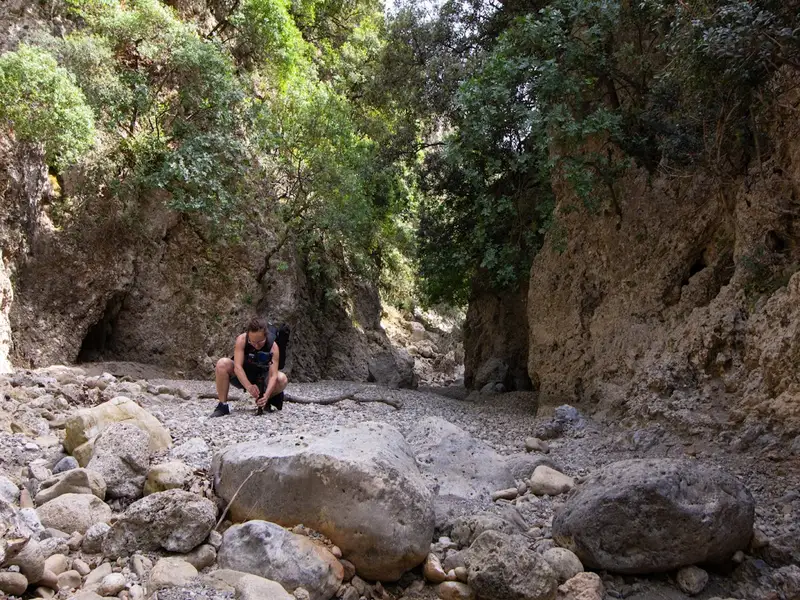
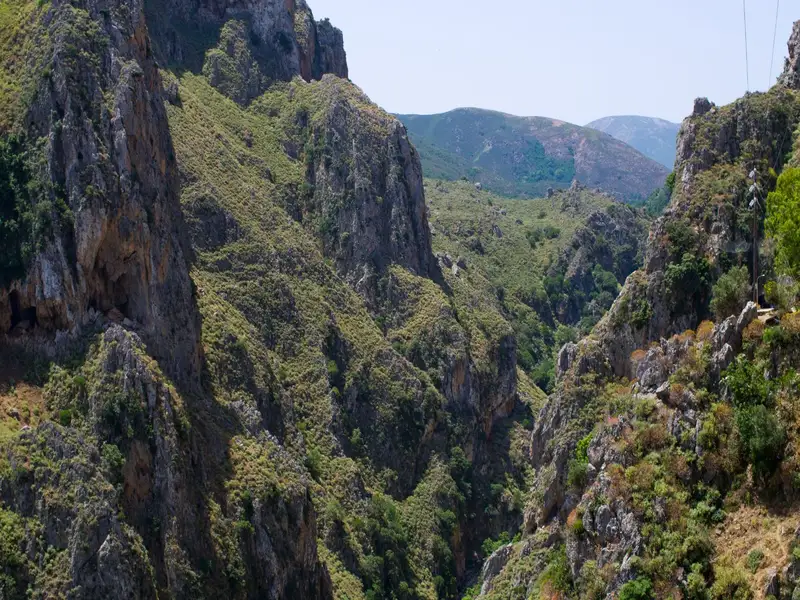
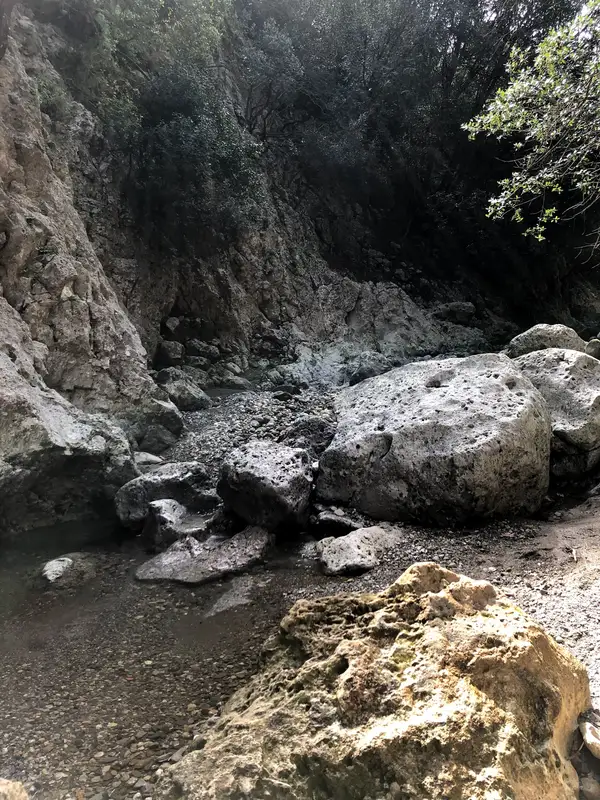
Despite the ease of hiking through the gorge (typically a 2-hour trek), it can be challenging to traverse without getting wet during periods of water flow in the narrower sections. The gorge is adorned with numerous plane trees that provide a cool respite from the sun. The gorge’s vertical sides are incredibly tall and impressive at certain points. The main path follows the dry riverbed during the summer.
Upon exiting Roka gorge, you’ll encounter the Mesonisi settlement. Following a dirt road will lead you to Roka village and Trouli hill. You can climb up to the castle ruins for a breathtaking view of the surrounding areas, or unwind in the local coffee shop.
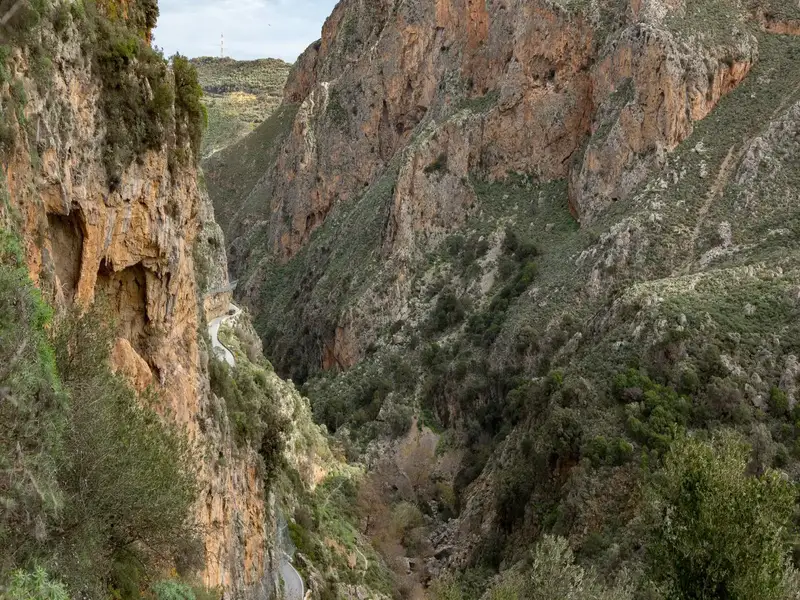
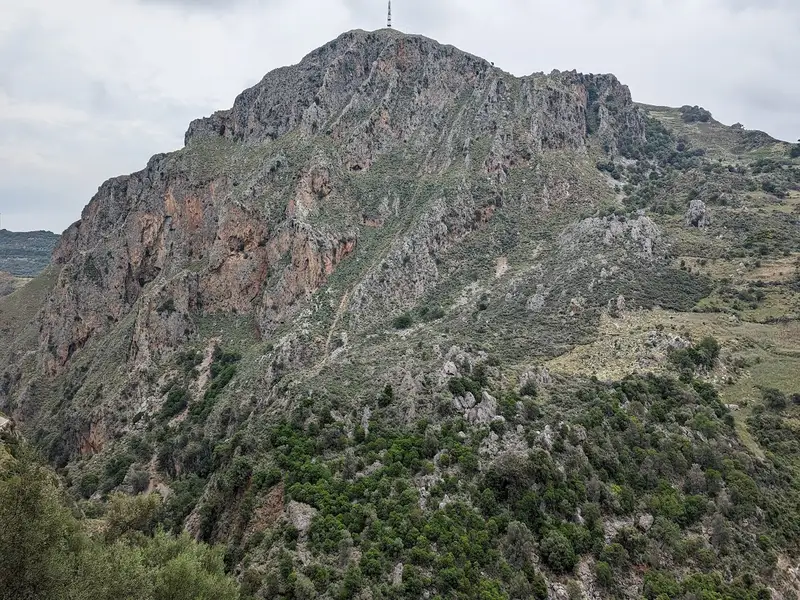
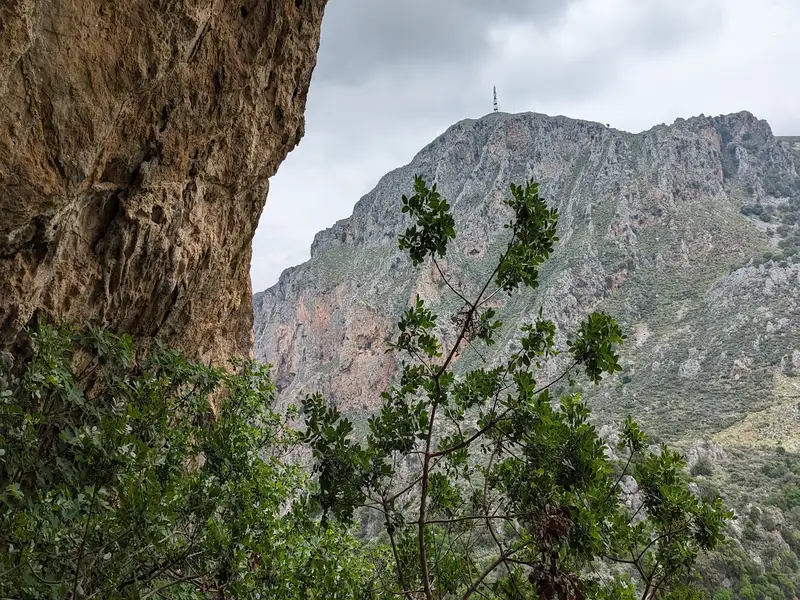
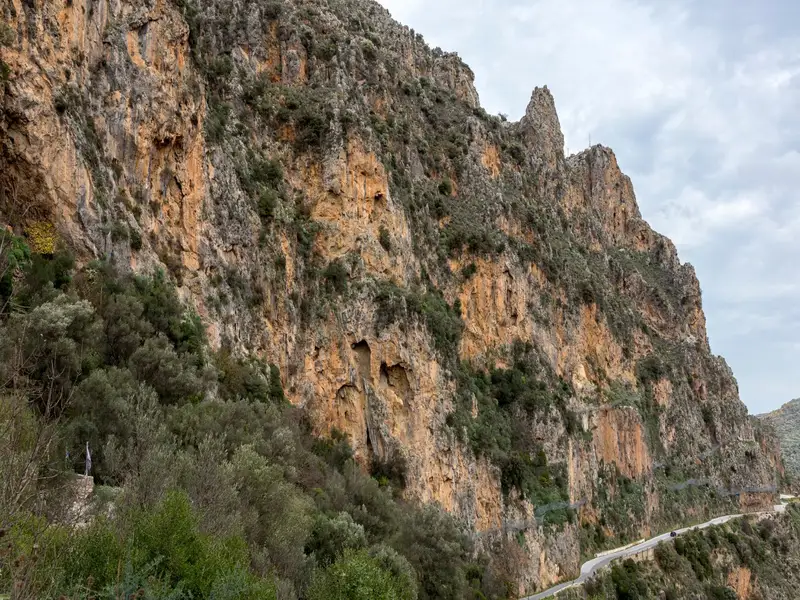
The gorge of Topolia (Topoliano) is located in west Crete and it runs along the road leading to Elafonissi via Elos. The canyon actually starts near the village Strovles at an altitude of 450m, and exits near the village Topolia, at an altitude of 150m. However, the narrowest and most impressive hiking part of the gorge is located between Katsomatados and Topolia, where the side rocks are very high and steep. The canyon is crossed by the River Tyflos, which originates from Mount Dikeos. At the beginning of the narrow part, it is worth visiting the Cave of Agia Sofia, located just above the main road.
The canyon and the wider area host rare and endemic plants of Crete, while the Cave of St. Sophia houses a species of cave spider that lives only there (Pholcus creticus). According to local traditions, Topolia Gorge hosted fairies and the Minoan goddess Vritomartis. Here, the legendary Talos used to stop and enjoy the divine music of the fairies. When Talos arrived at the place, rested inside a big cave, drank water and fell asleep. Then, the fairies and elves of the river arrived, singing and dancing.
Traveling along the western coast of Crete towards Elafonissi beach, you’ll encounter the picturesque village of Kambos, nestled within the Kissamos province. A brief detour off the main road to the west will bring you to the verdant Kambos canyon, the most westerly gorge on the island, which is fed by the small Koutroulis massif.
A scenic hiking trail winds its way through the canyon, beneath the shade of towering plane trees and alongside a river that flows year-round. The journey is punctuated by striking rock formations and culminates at a natural spring. From there, the path reconnects with the road descending from the village, leading to the subterranean churches of Agia Ekaterini and Agia Marina.
Continuing your trek along the riverbed can occasionally prove challenging due to thick vegetation and water, but the journey is worth it. From Agia Kyriaki, the path follows the riverbed to the secluded yet stunning Platanakia beach, where plane trees stretch their branches out to the sea.
No results available
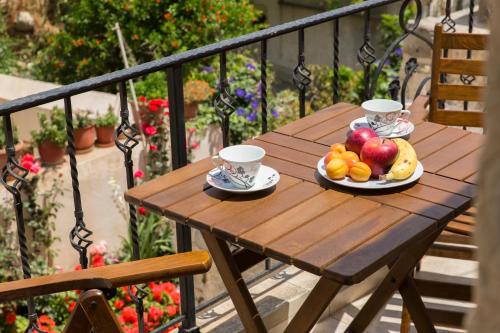
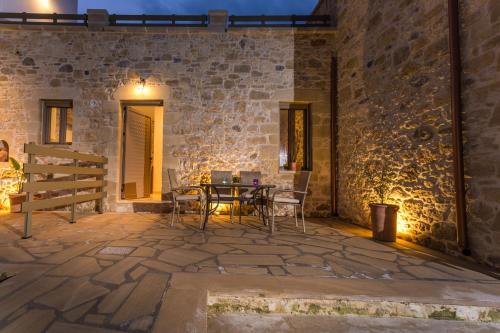
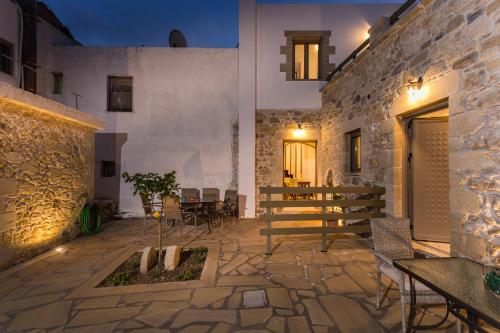
Set in Kalivianí and only 1.2 km from Beach Kaliviani, Sokaki House offers accommodation with mountain views, free WiFi and free private parking. This holiday home provides air-conditioned accommodation with a balcony.
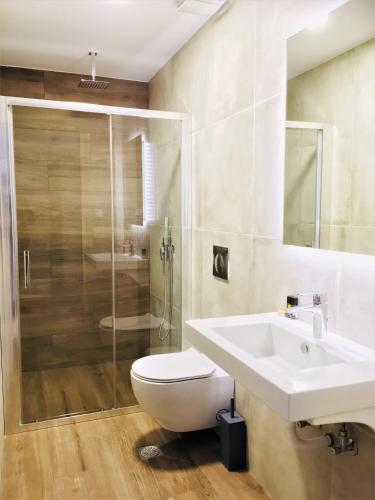
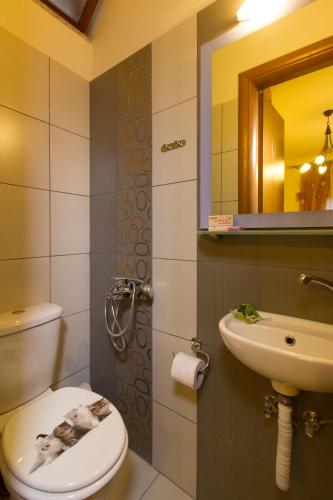
The holiday home with a terrace and sea views features 1 bedroom, a living room, a flat-screen TV, an equipped kitchen with an oven and a toaster, and 2 bathrooms with a shower.
A bicycle rental service is available at the holiday home.
Trachilos Beach is 1.6 km from Sokaki House, while Meri Pigadi Beach is 1.6 km away. The nearest airport is Chania International Airport, 57 km from the accommodation.
from
€98
/night
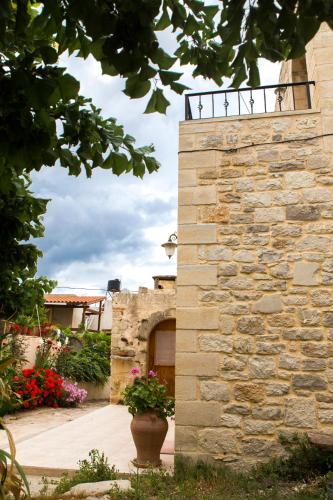
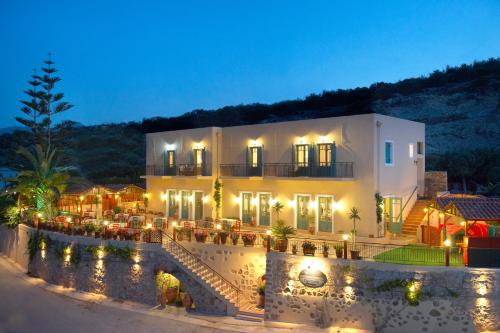
This traditional guest house, located at the tip of cape Gramvoussa, in the traditional village Kaliviani Traditional Hotel, offers accommodation with a satellite TV and unobstructed views of Kissamos Gulf. Free Wi-Fi is available throughout.
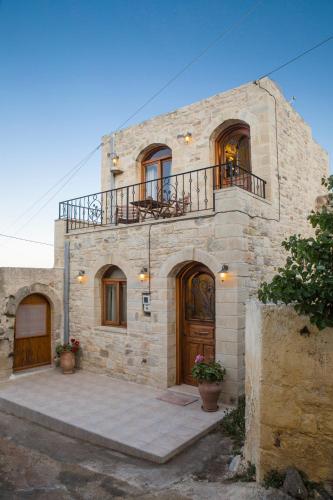
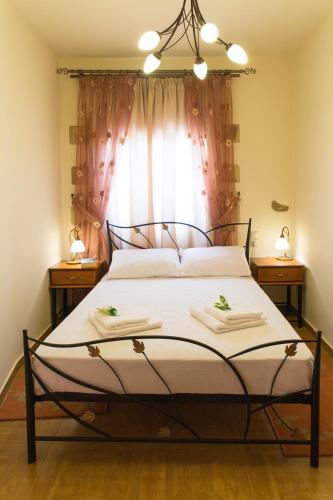
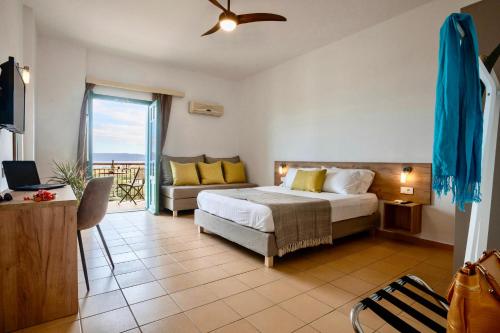
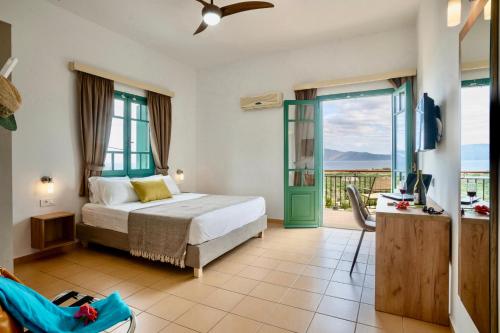
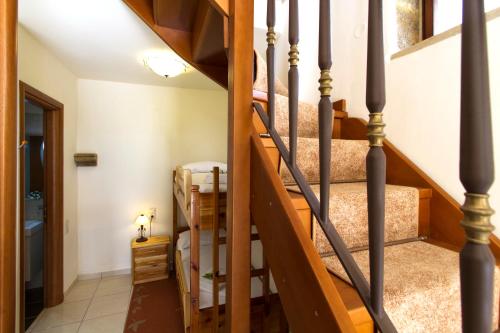
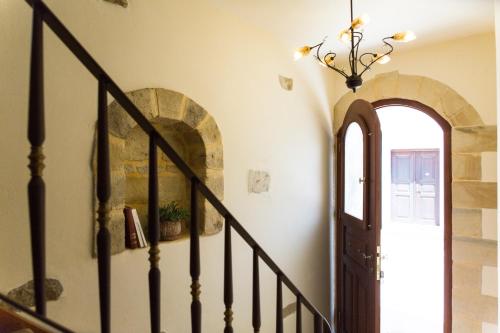
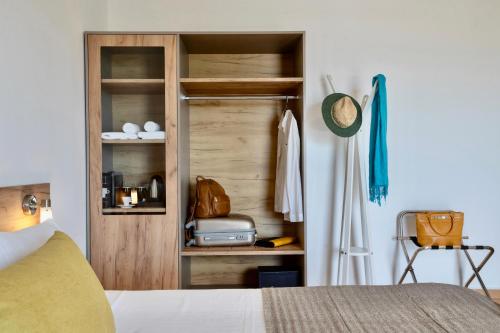
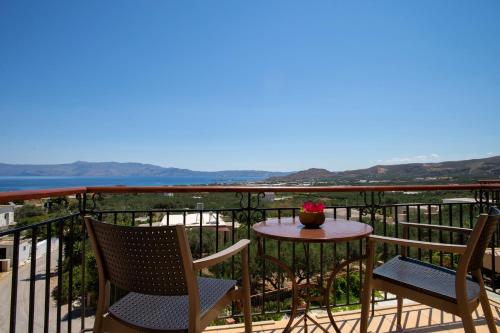
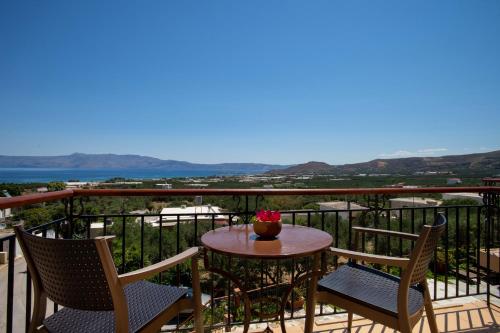
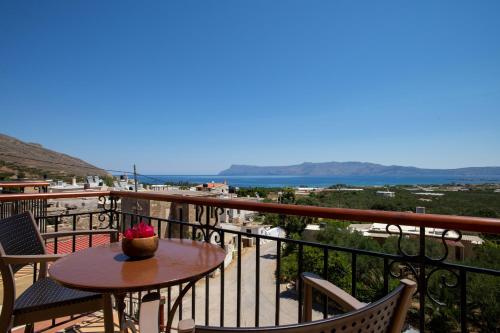
This 2 storey building features a spacious lounge on the ground floor and bedroom on the first floor with balcony enjoying views of both the sea and the plain.
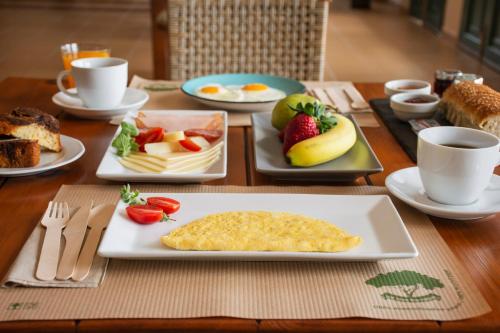
Traditional homemade breakfast is served daily.
Kaliviani Traditional Hotel is located in the northwest of Crete, just a 5 kilometres distance from Kissamos and 35 kilometres from Chania.
Hotel Kaliviani Traditional Hotel can serve as the ideal starting point to visit the lagoon of Balos, Falassarna beach and Elafonisi.
from
€91
/night
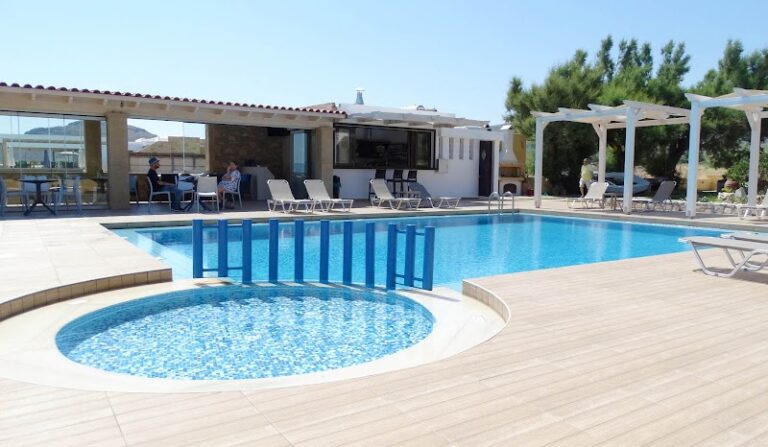
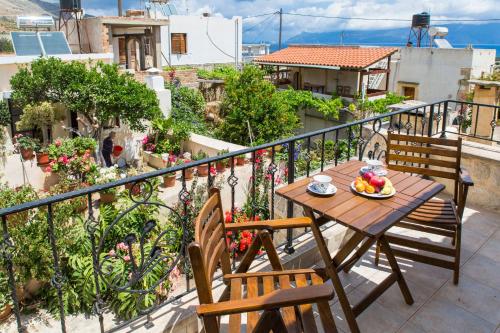
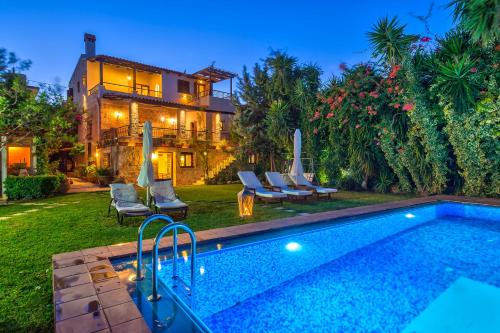
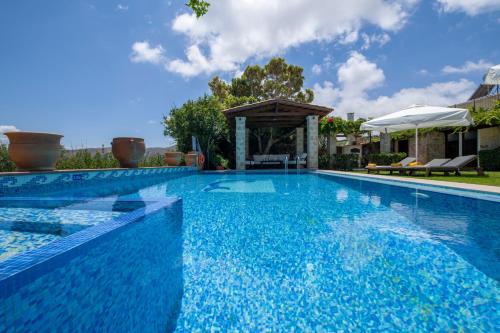
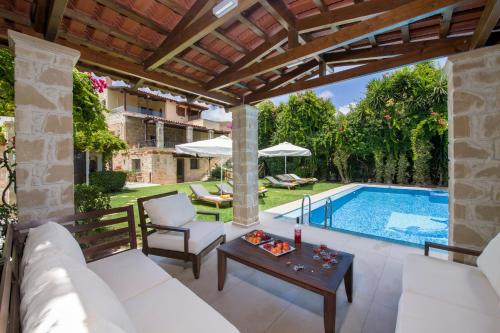
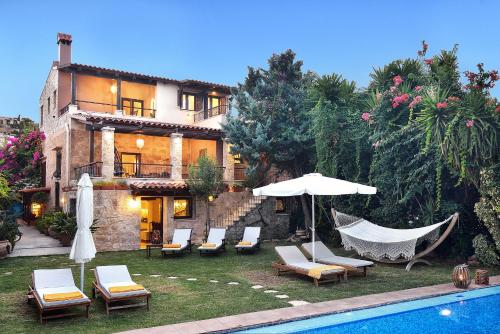
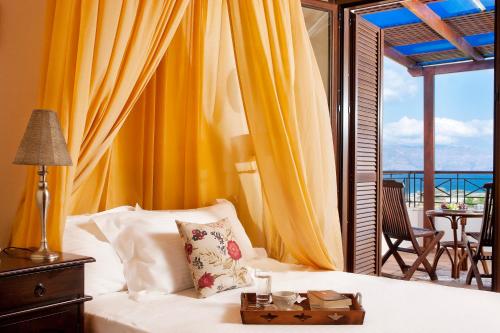
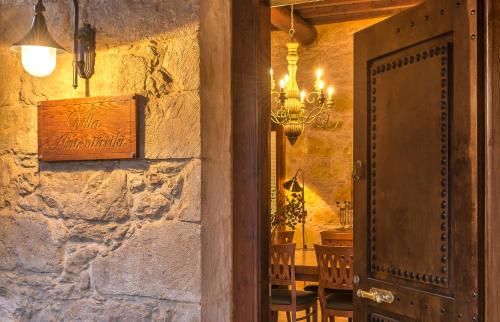
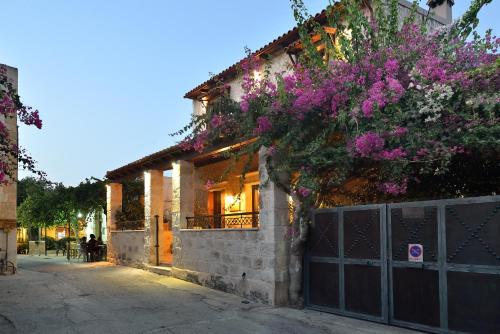
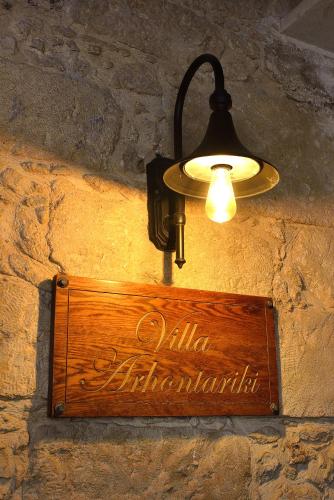
Located in scenic Kalyviani Village, 800 metres from the beach, Arhontariki is a traditional, self-catered villa with a private heated swimming pool and free Wi-Fi. It features furnished verandas overlooking Kissamos Bay.
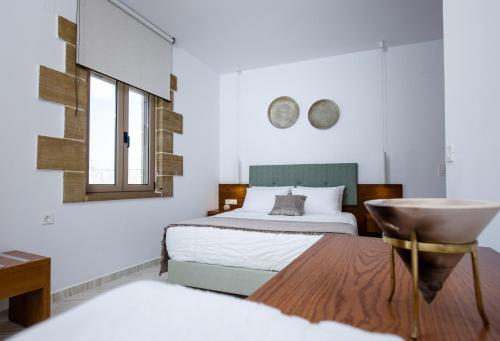
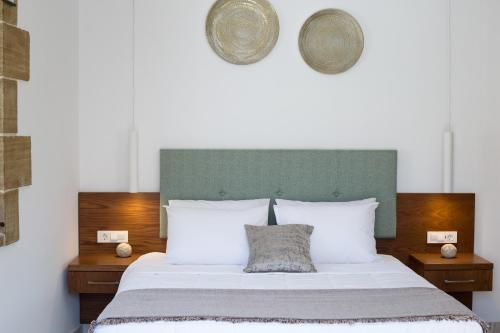
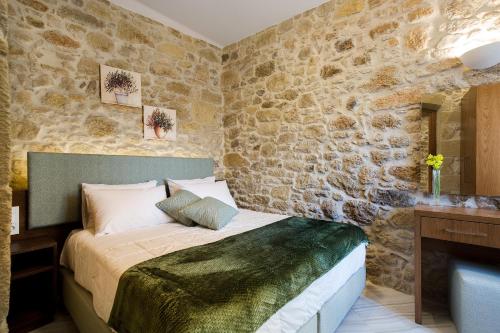
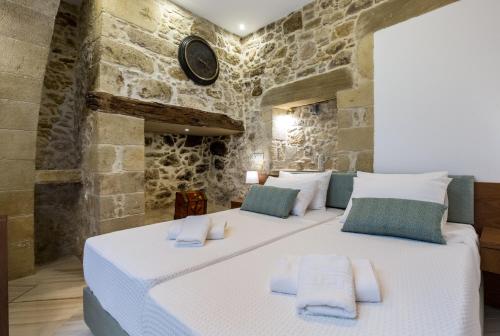
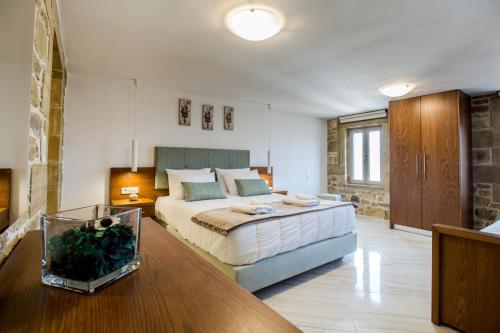
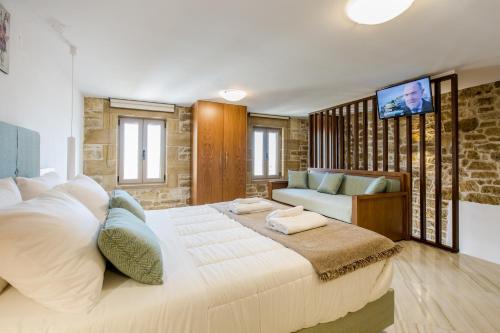
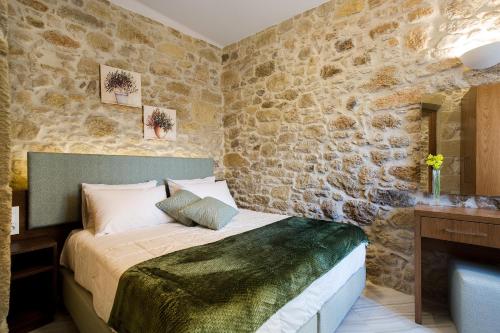
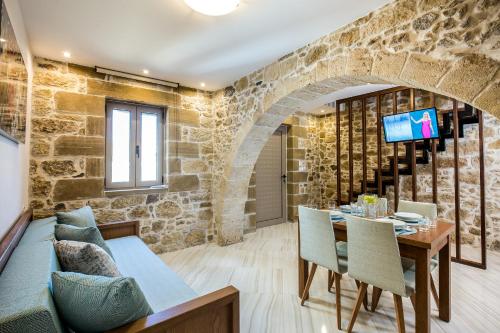
The fully air-conditioned Villa Arhontariki is furnished with antiques and features wooden ceilings and stone walls. It includes a fully equipped kitchen and dining room. Each bedroom features en suite facilities.
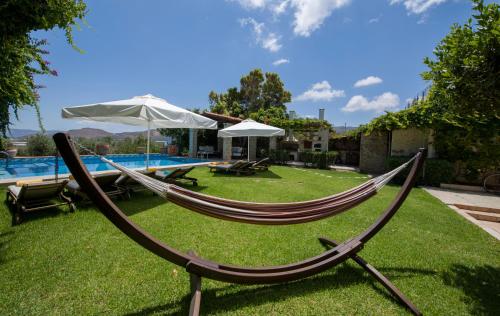
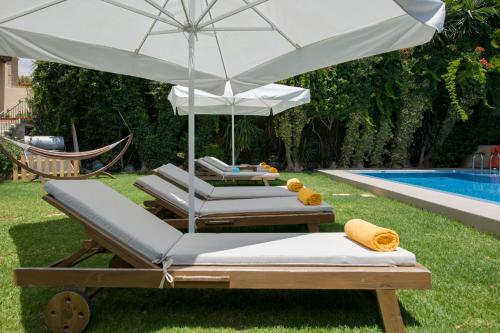
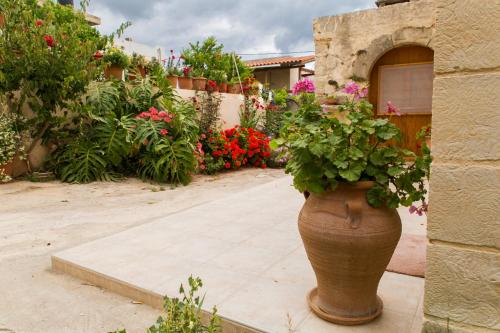
There is lots of seating space in the living room where guests can watch TV by the fireplace. A small gym and playroom with table tennis facilities are available. The heated swimming pool area is surrounded by a well-tended garden with lemon trees, palm trees and bougainvilleas. Free bicycles are offered to the guests.
Kalyviani Village is lively and has cafés and taverns serving Cretan dishes. The Port of Kasteli is just 800 metres away while the city of Chania is at 35 km. Free private parking is offered on our premises the Arhontariki Villa.
from
€65
/night
Situated 1.2 km from Beach Kaliviani, Agarathos Deluxe Homes offers a garden, and air-conditioned accommodation with a terrace and free WiFi.
Featuring a kitchen with an oven and a fridge, each unit also comes with a safety deposit box, a satellite flat-screen TV, ironing facilities, wardrobe and a seating area with a sofa. There is a private bathroom with shower in all units, along with a hair dryer and free toiletries.
The restaurant at the holiday home specialises in Greek, Mediterranean and grill bbq cuisine.
A car rental service is available at Agarathos Deluxe Homes.
Trachilos Beach is 1.6 km from the accommodation, while Meri Pigadi Beach is 1.6 km from the property. The nearest airport is Chania International, 57 km from Agarathos Deluxe Homes, and the property offers a paid airport shuttle service.
from
€72
/night
No results available
Connect with thousands of Crete visitors and boost your bookings.
No results available
© All rights reserved. Crete Locals