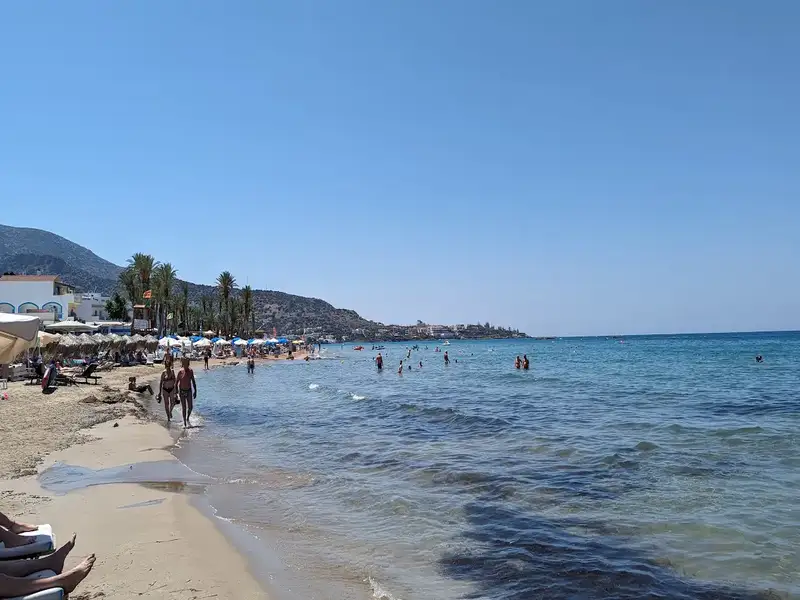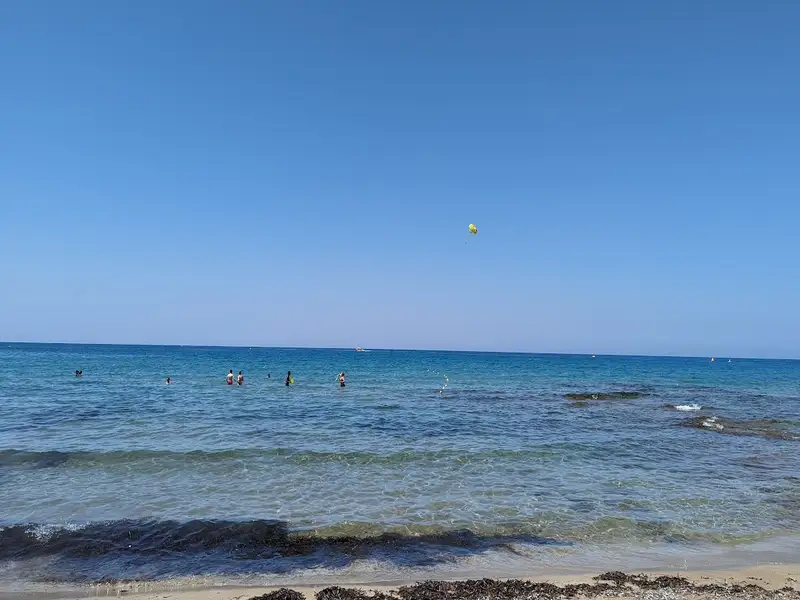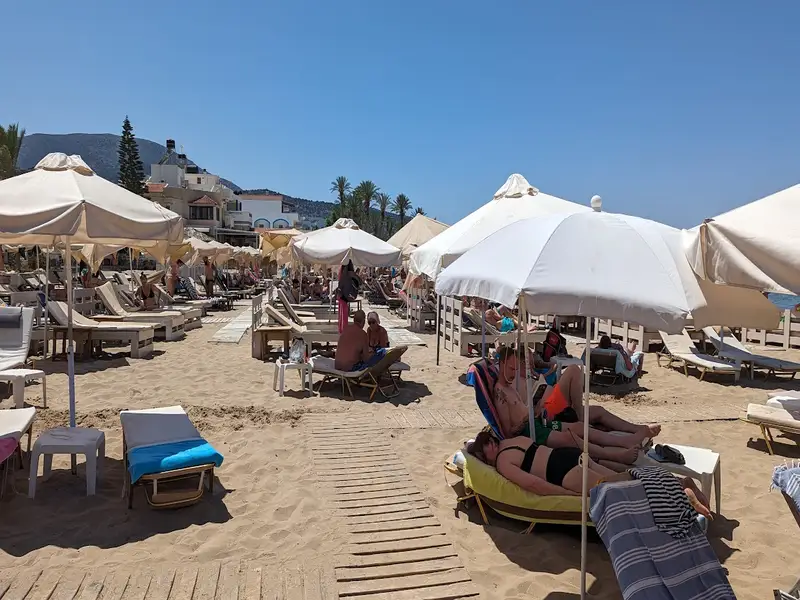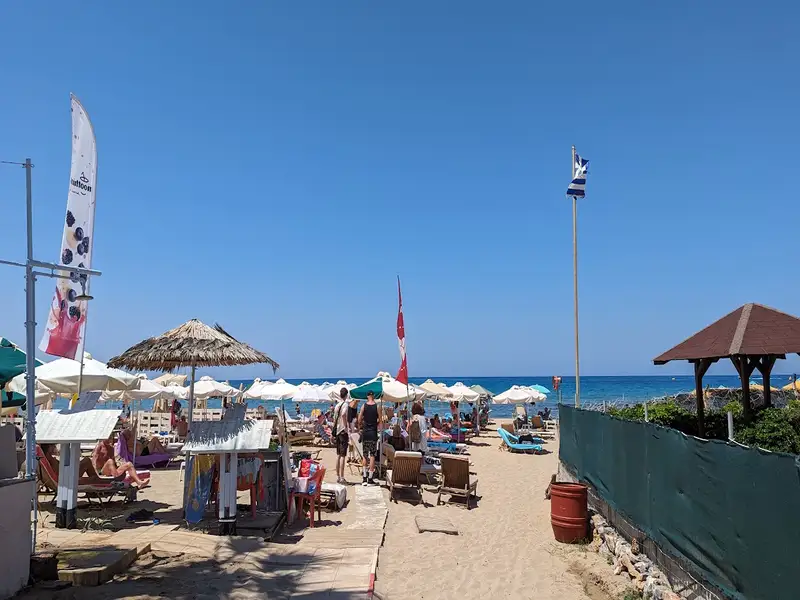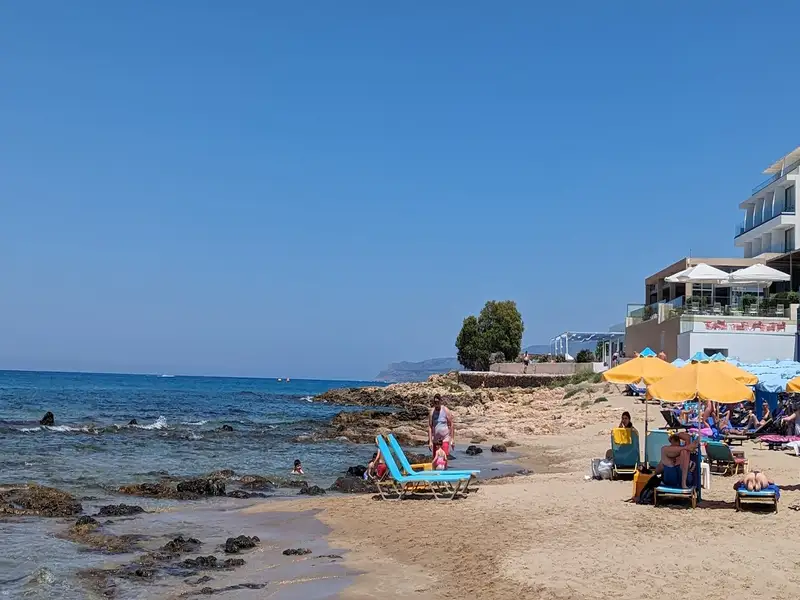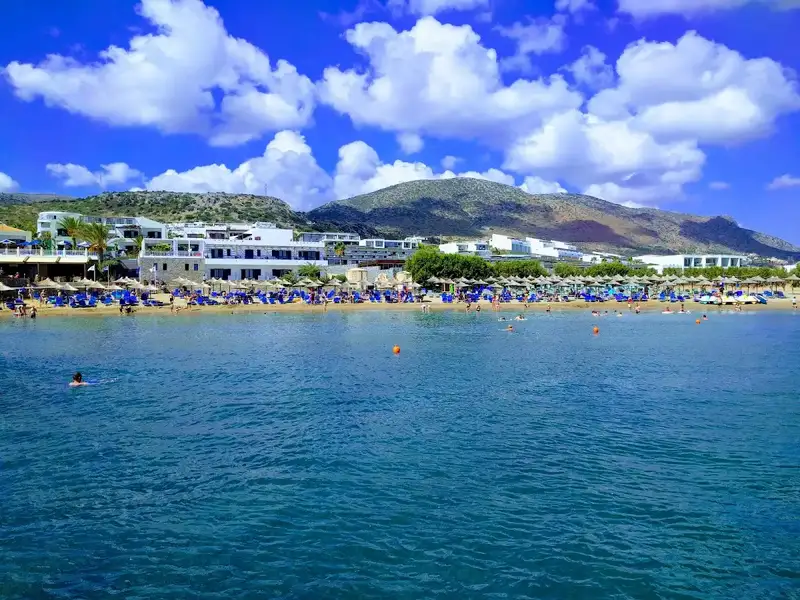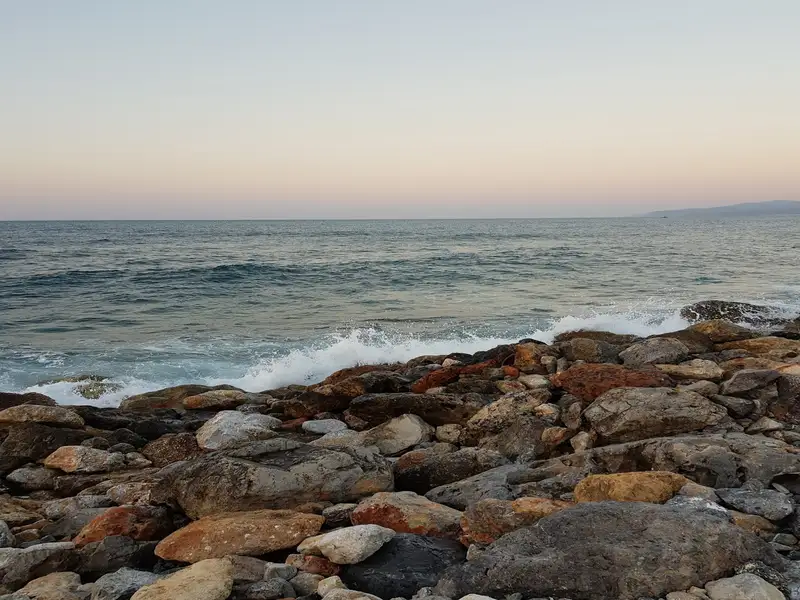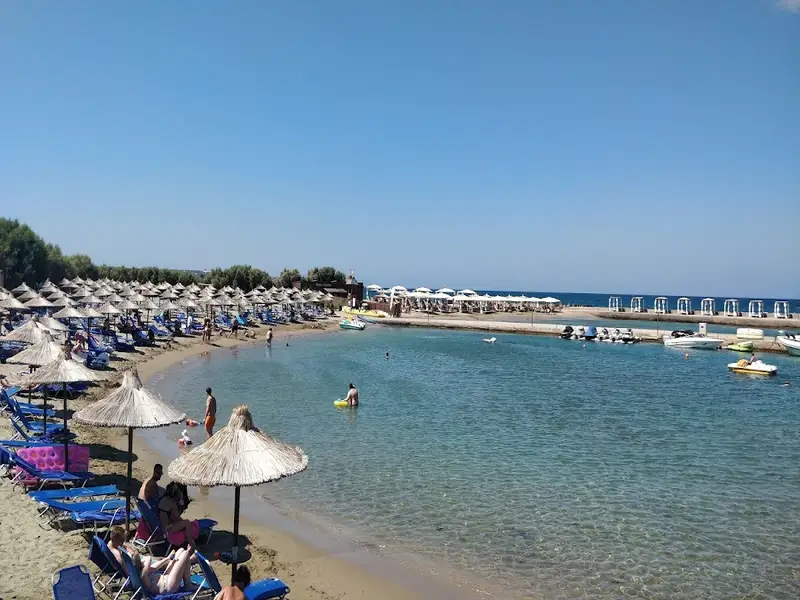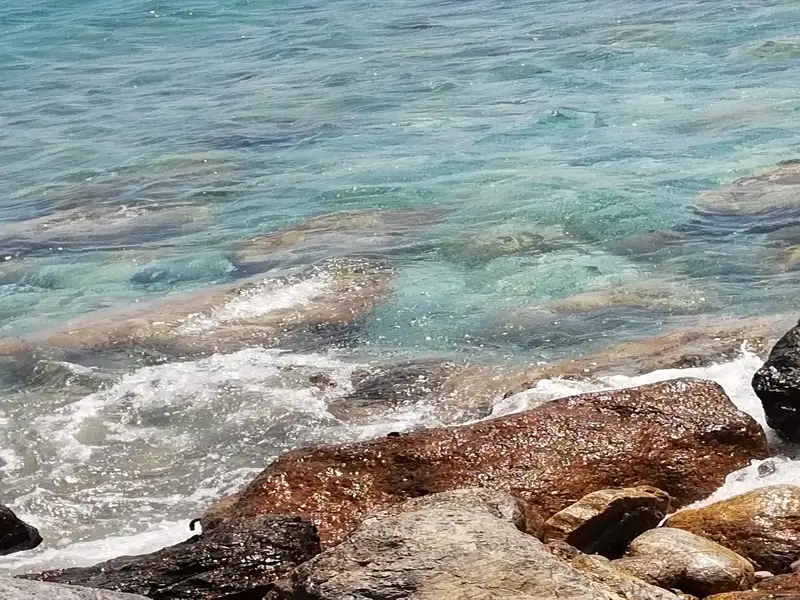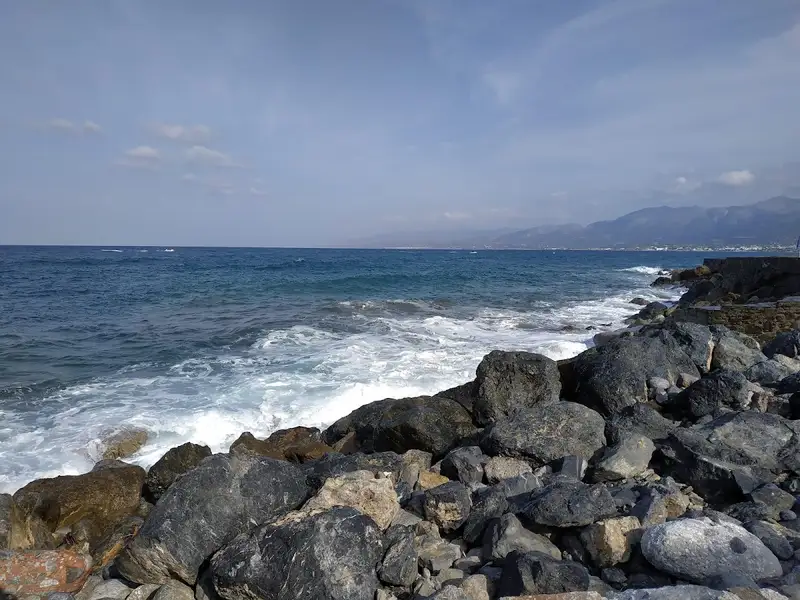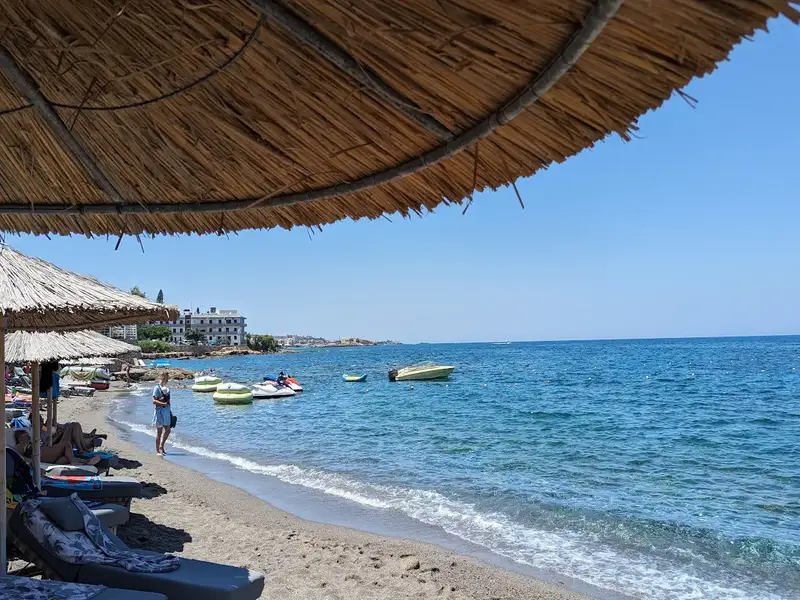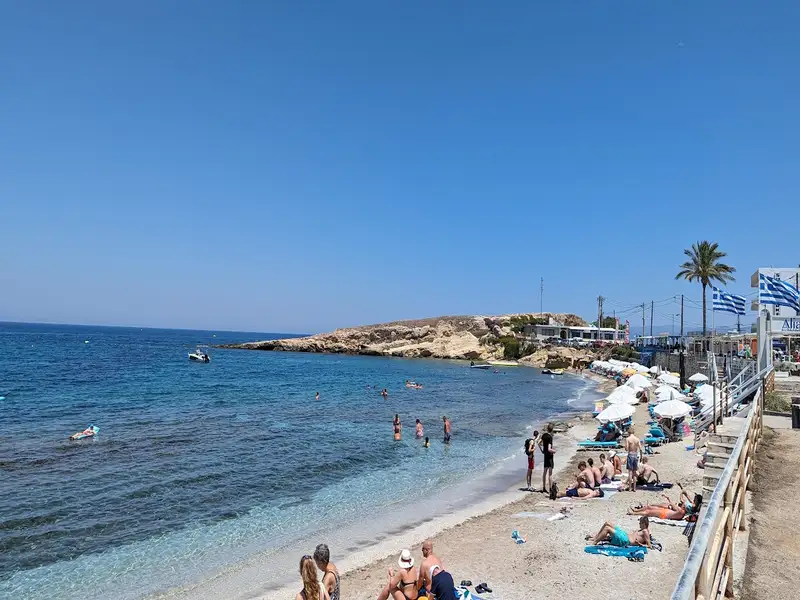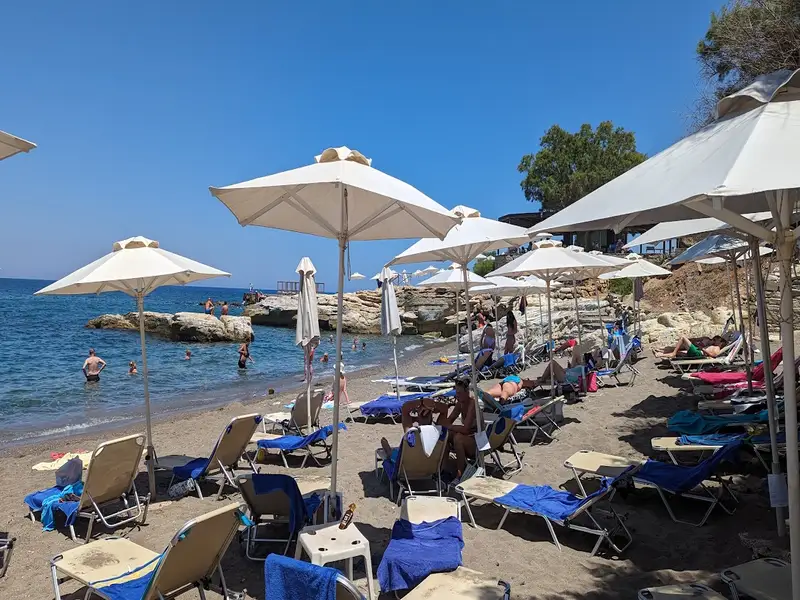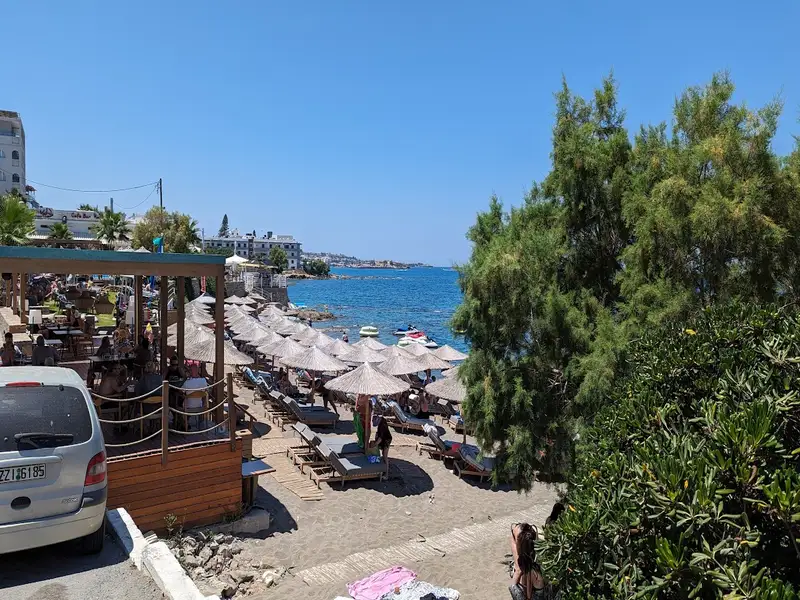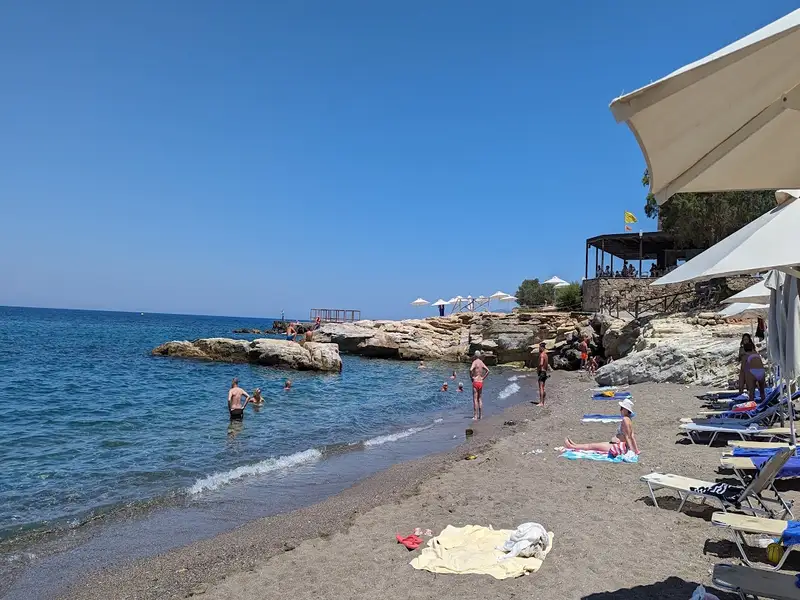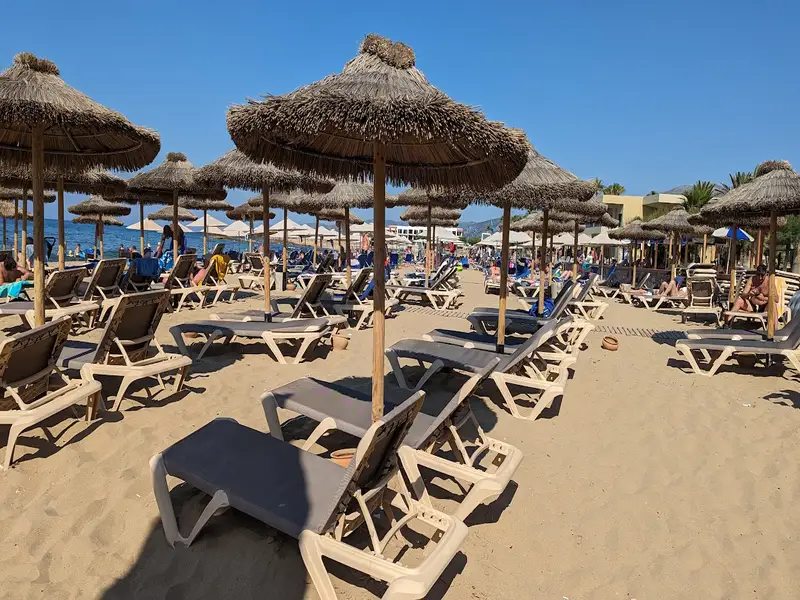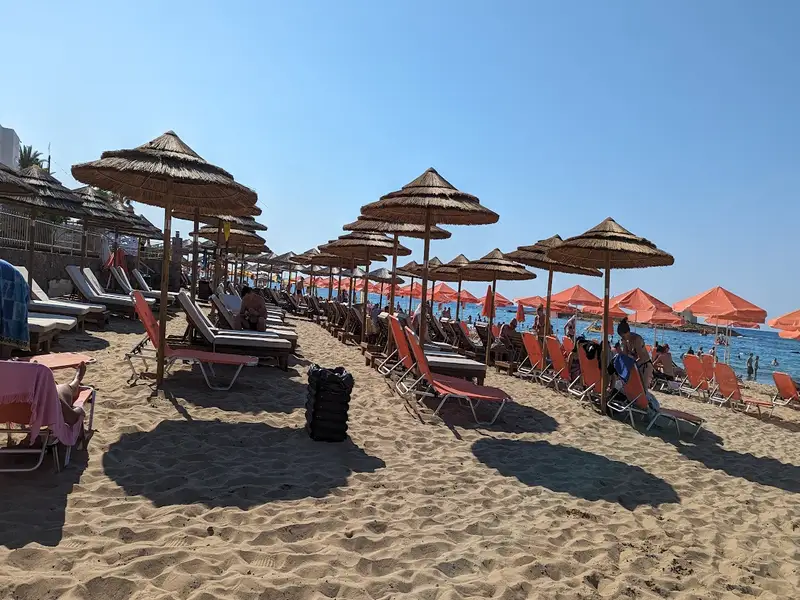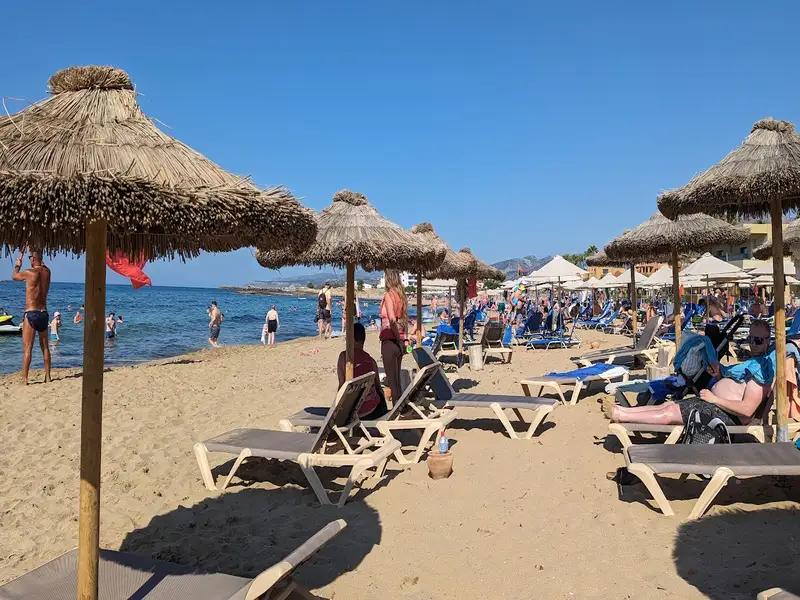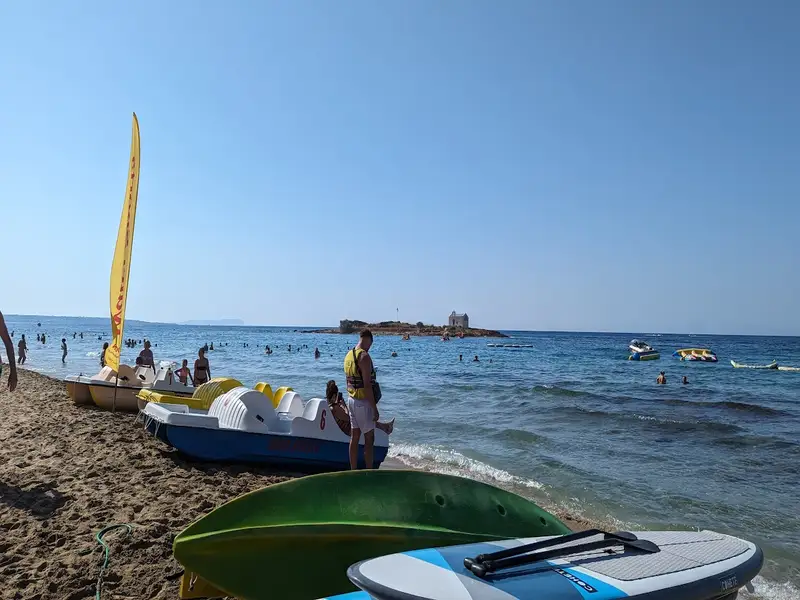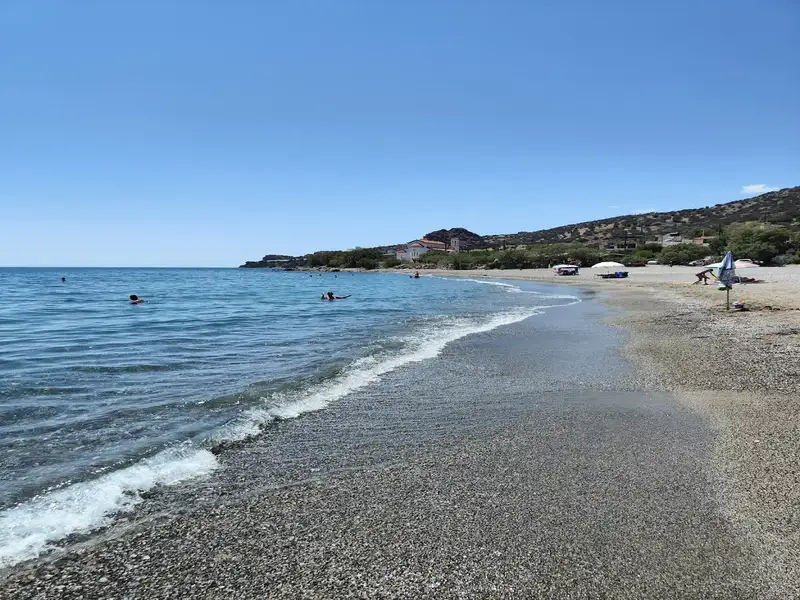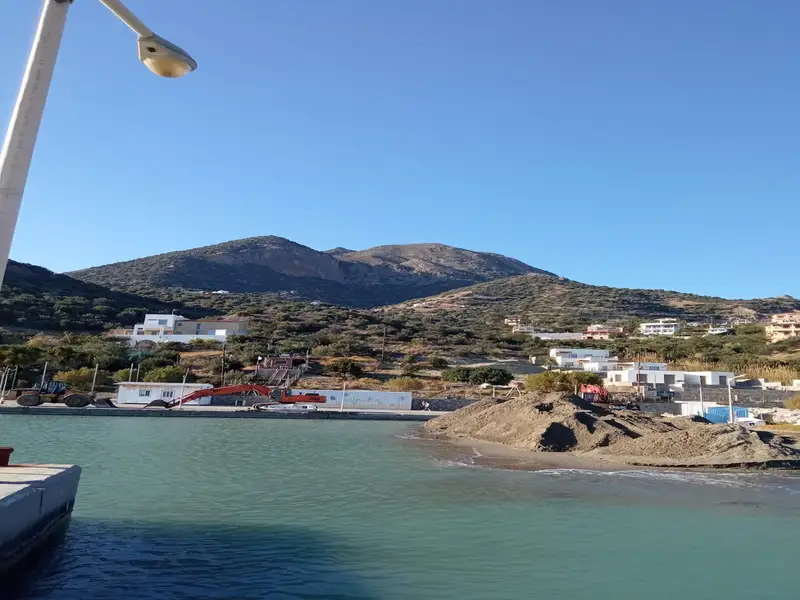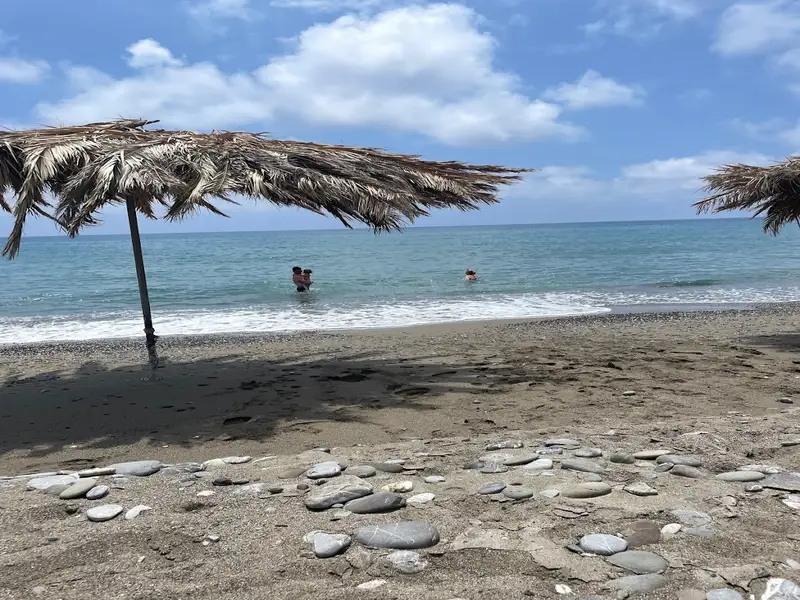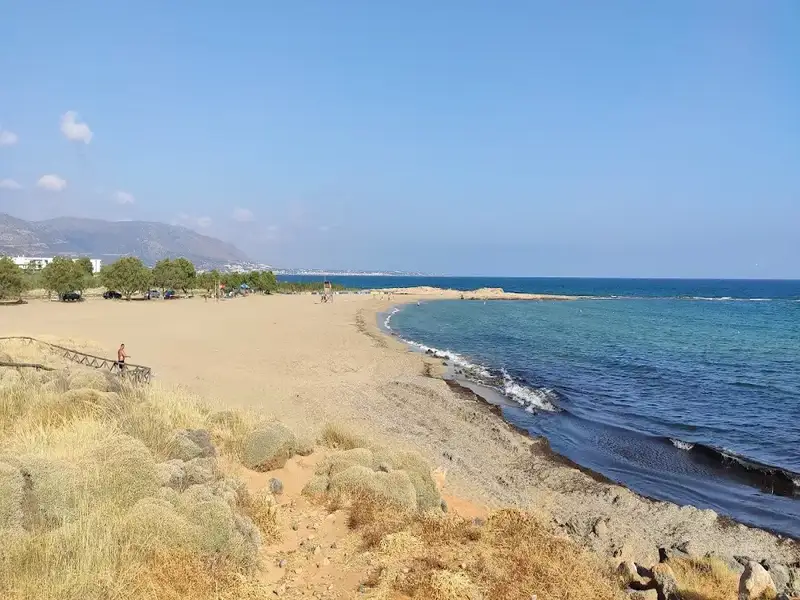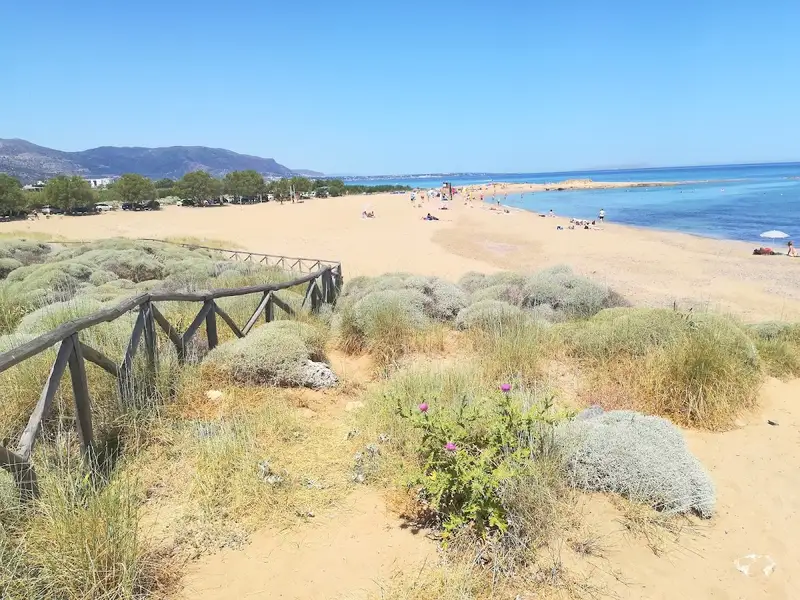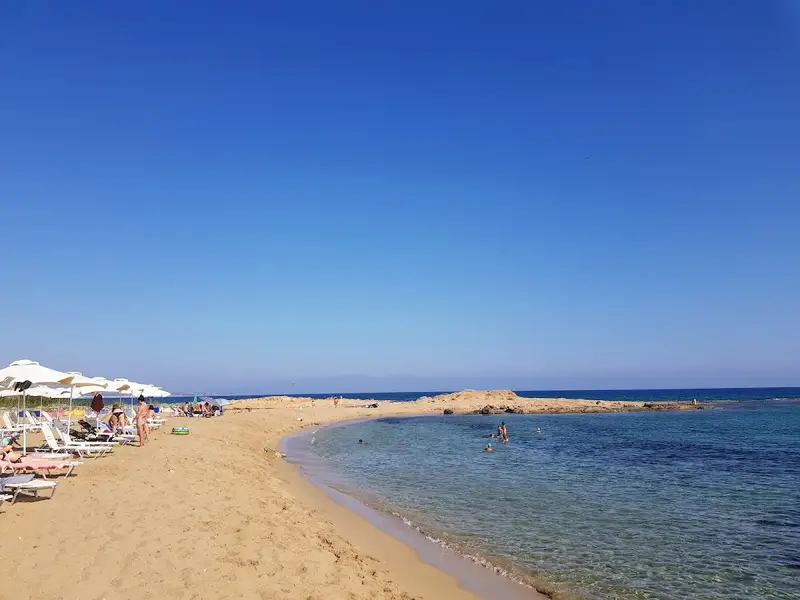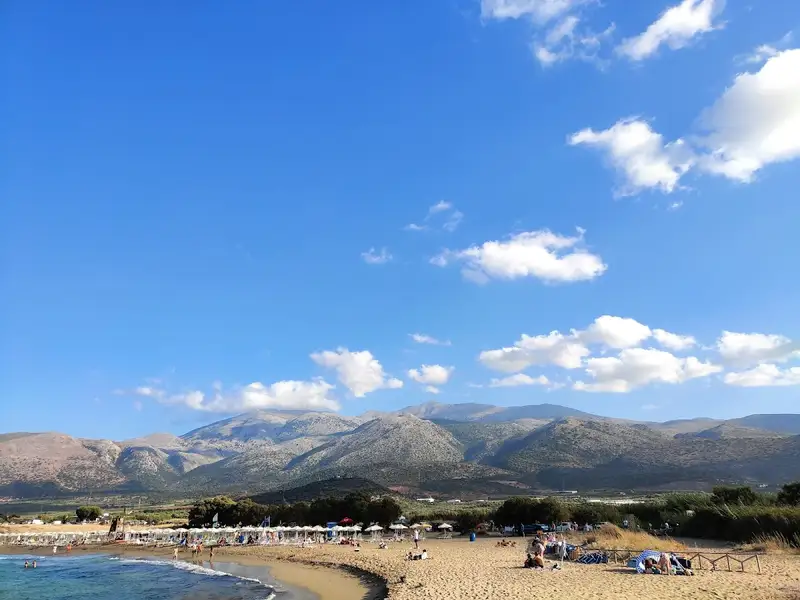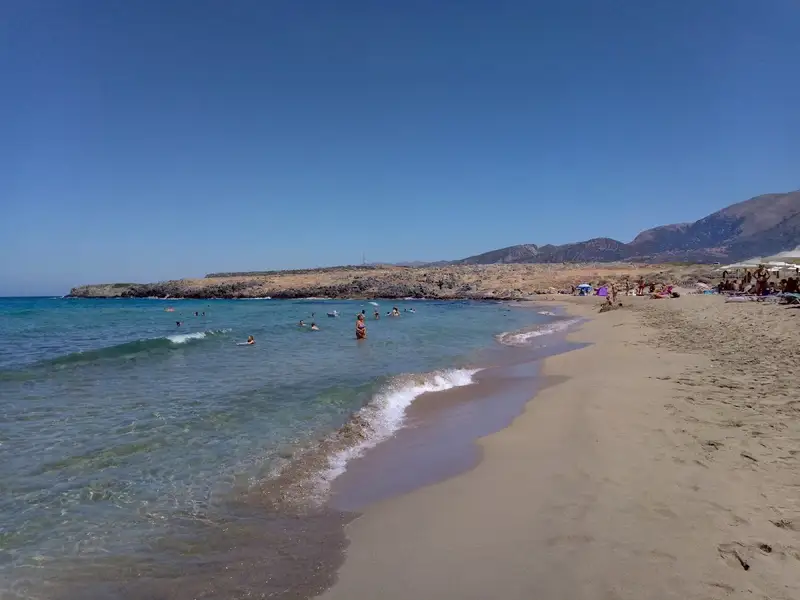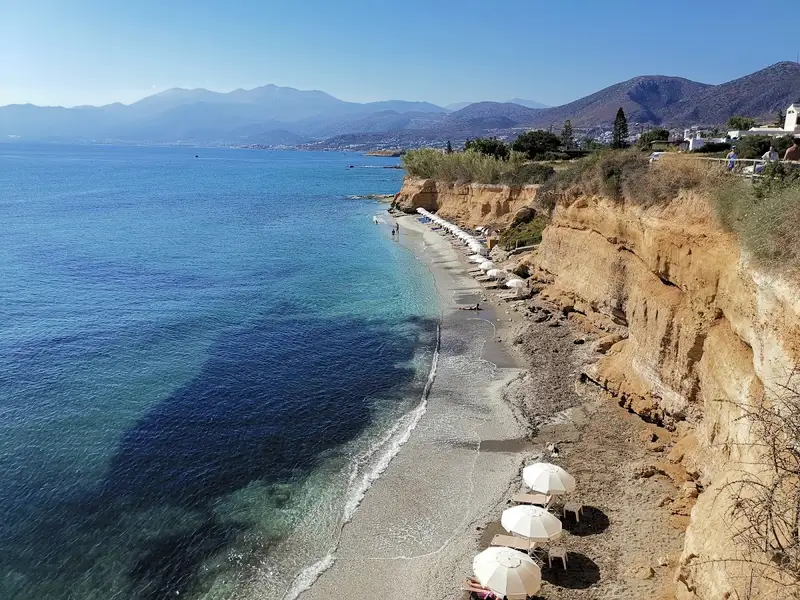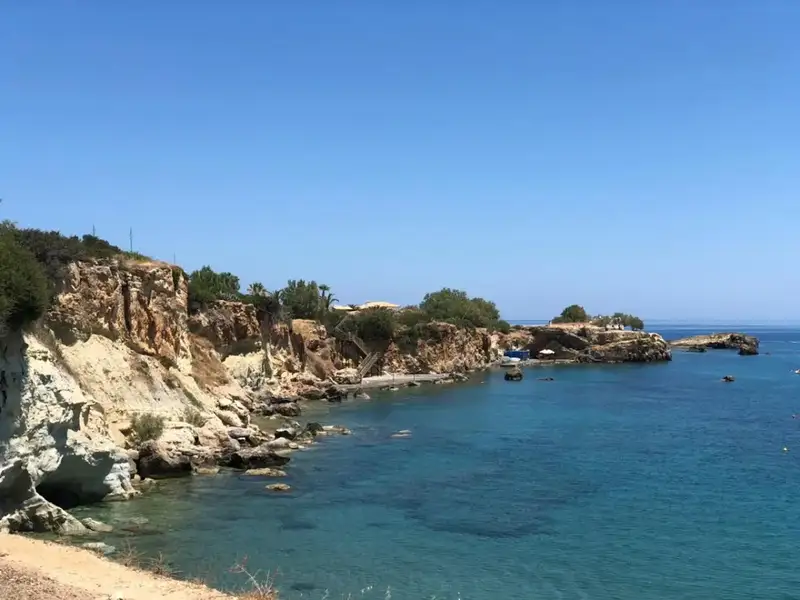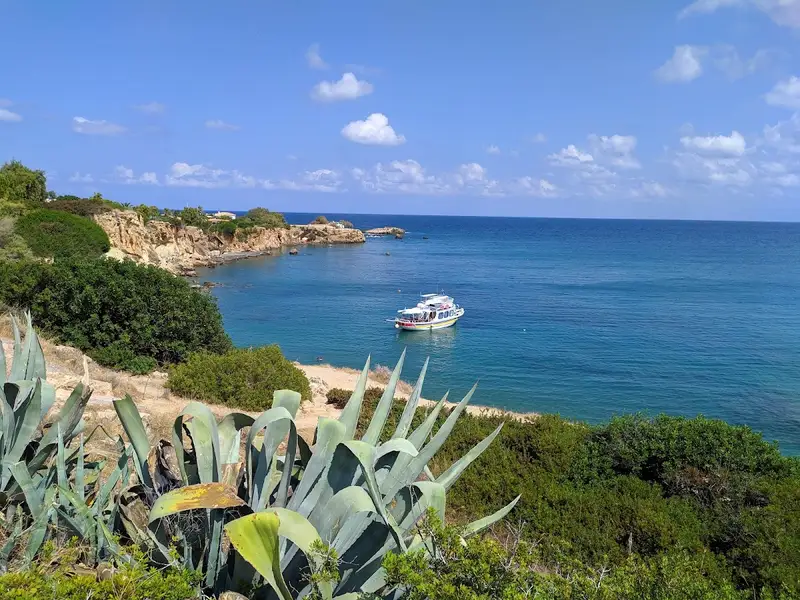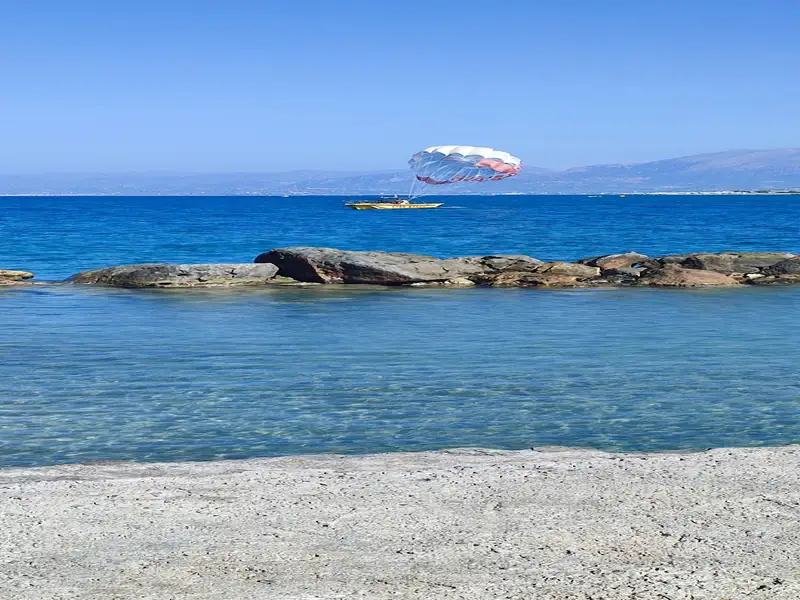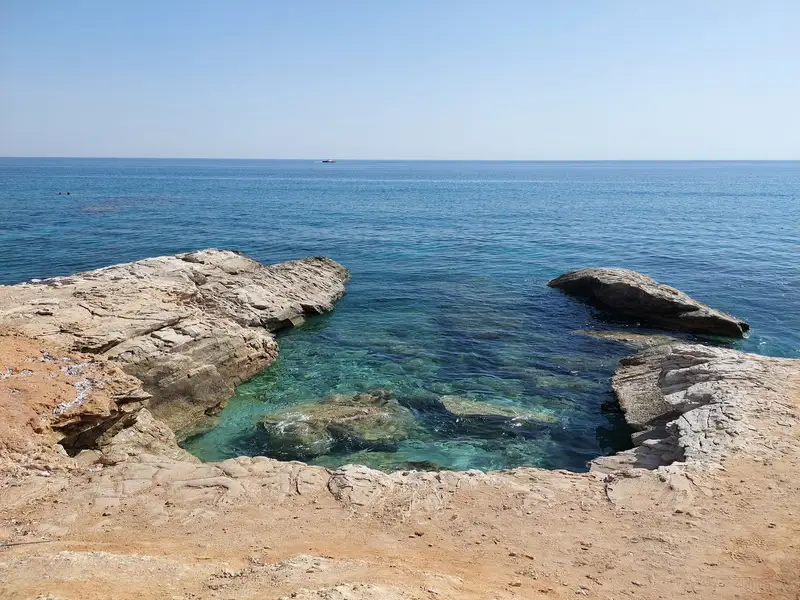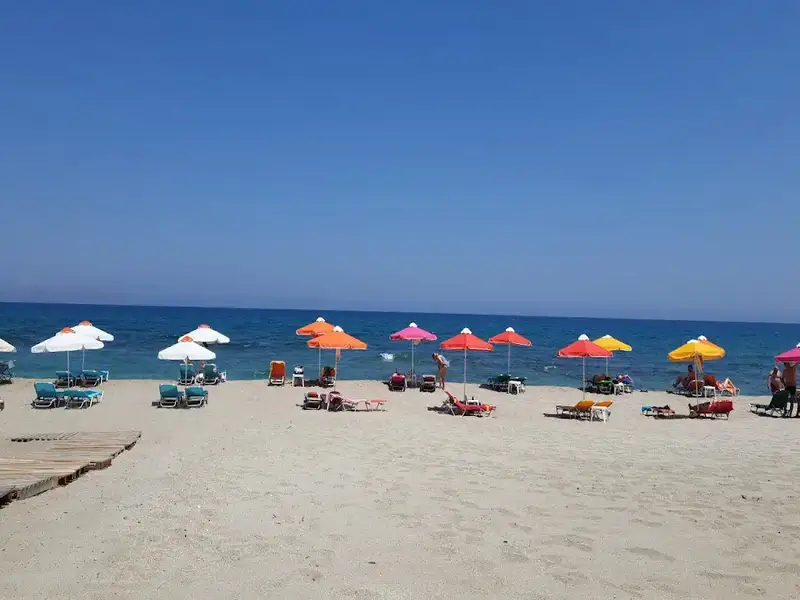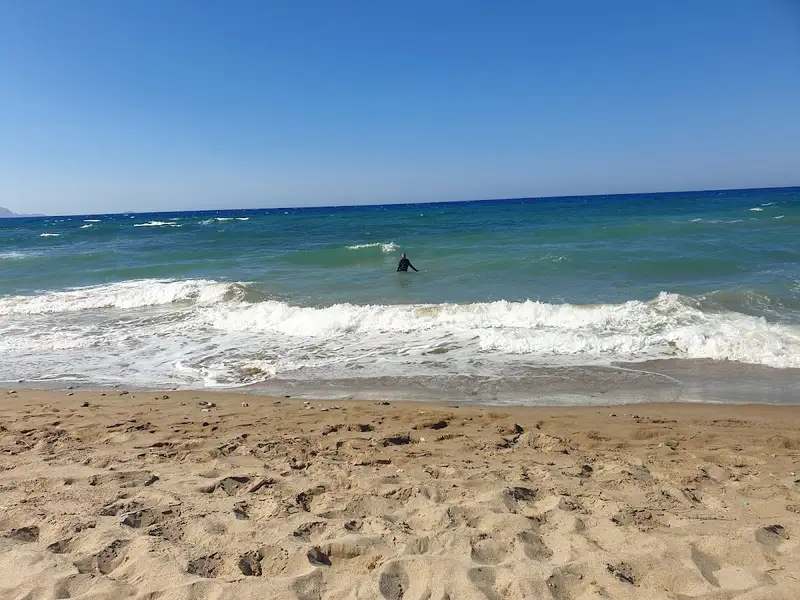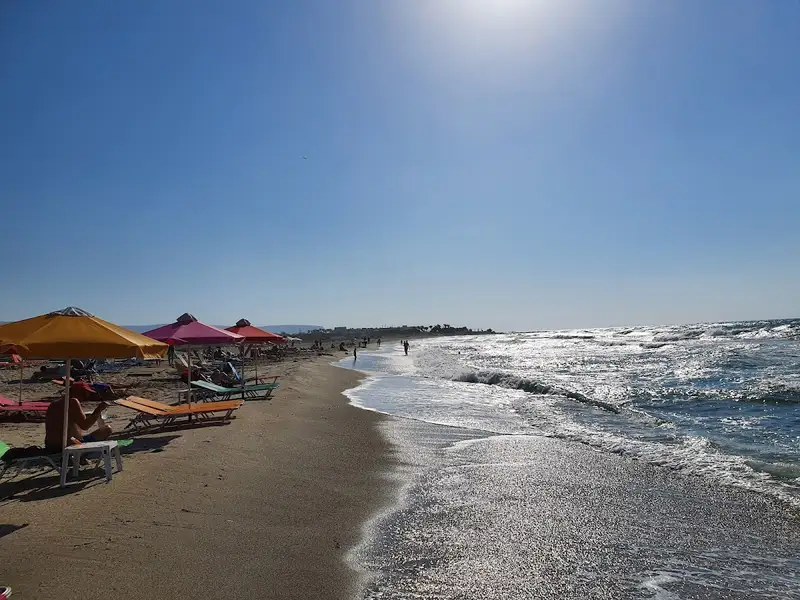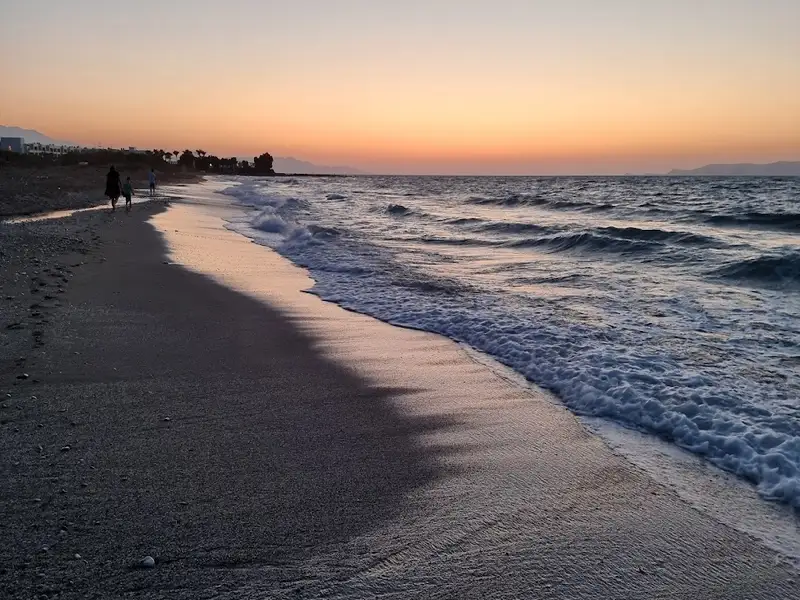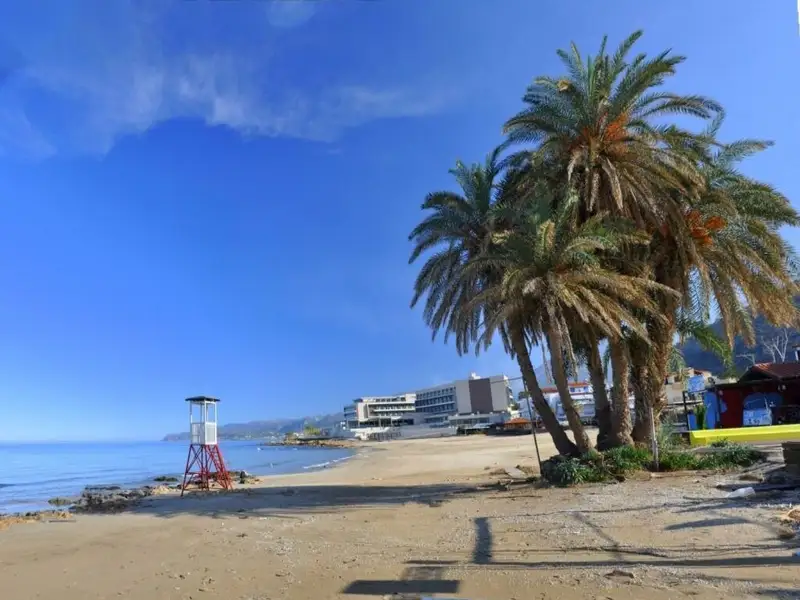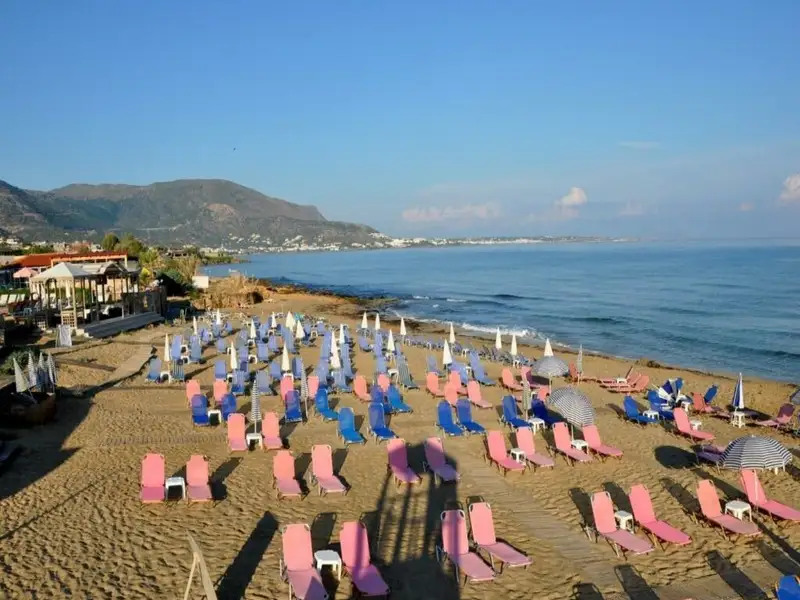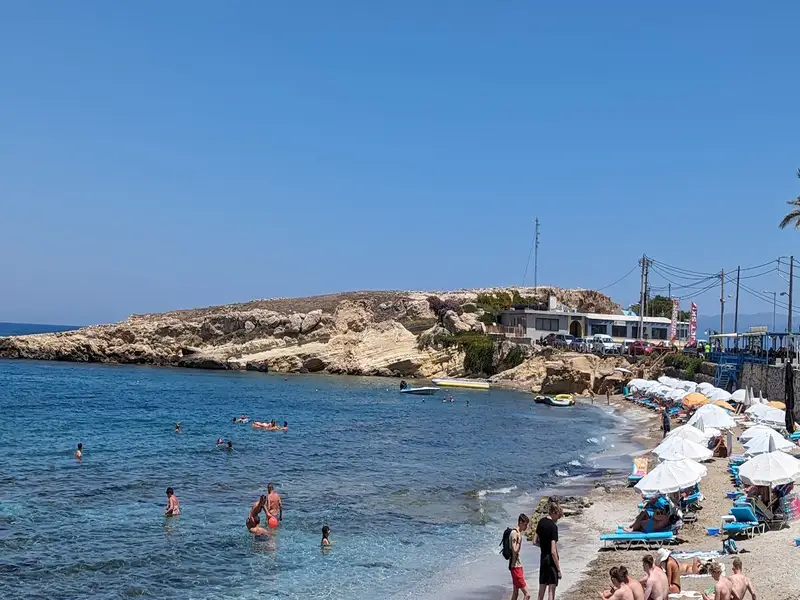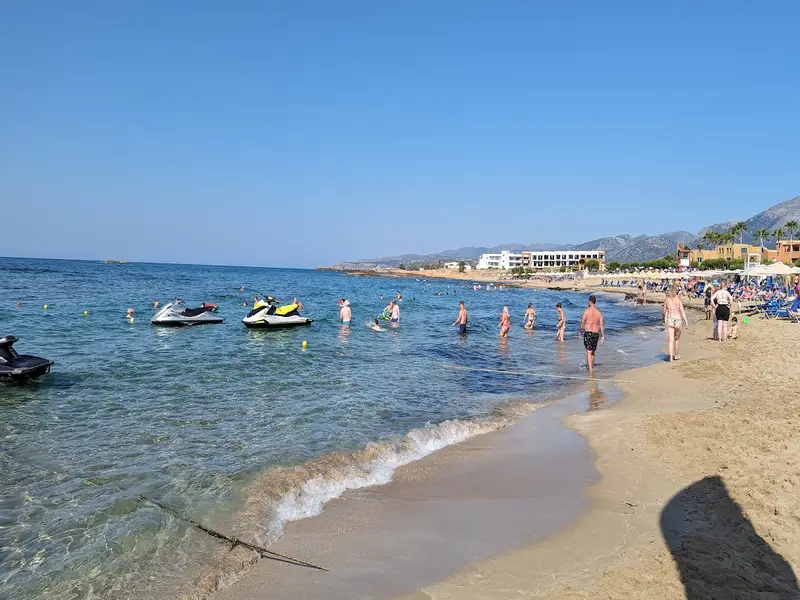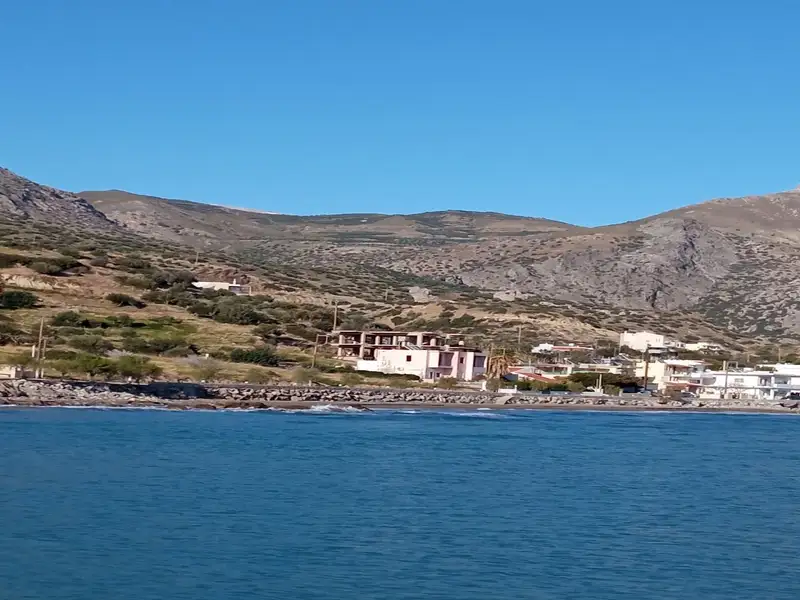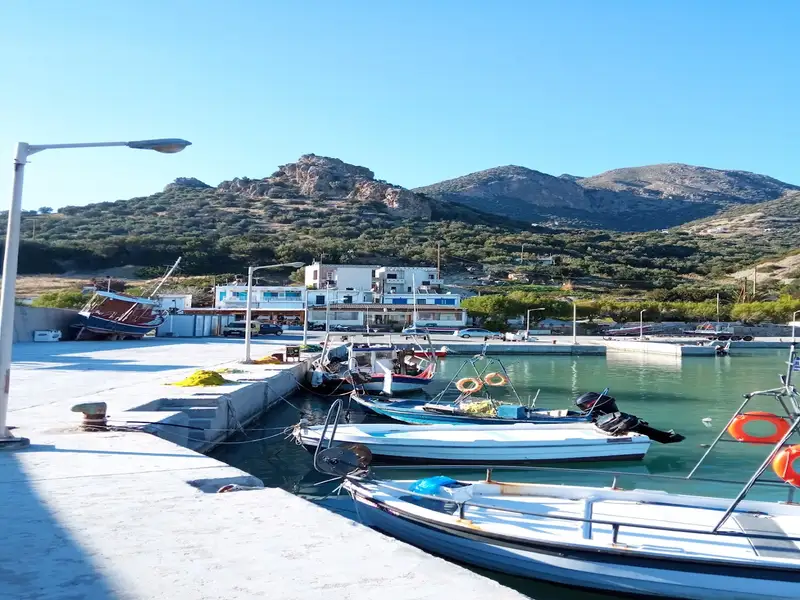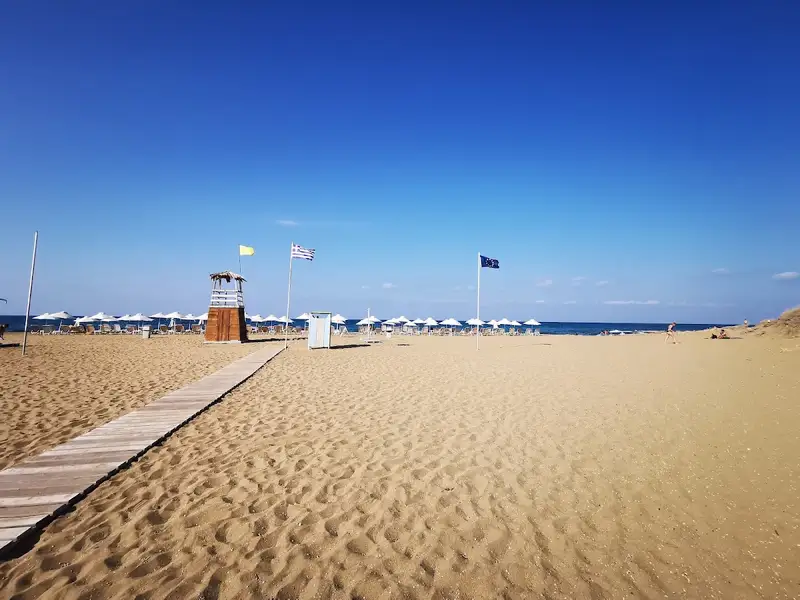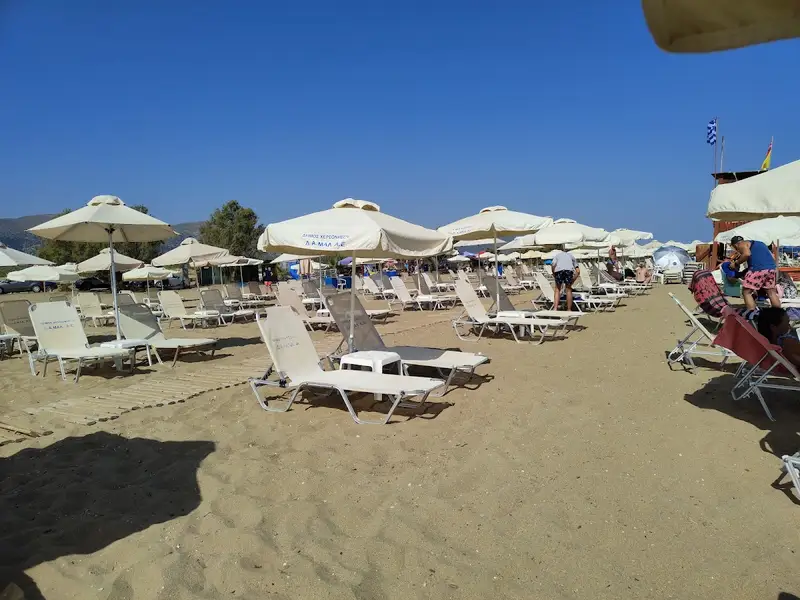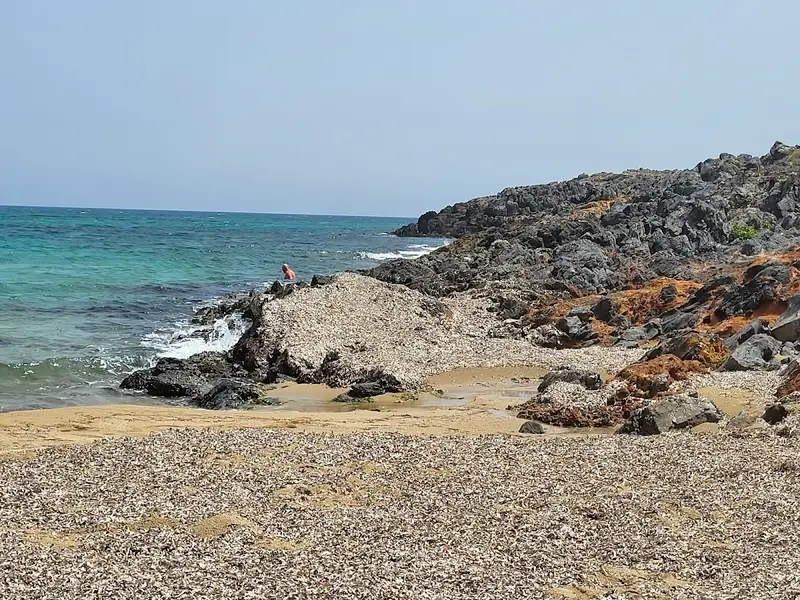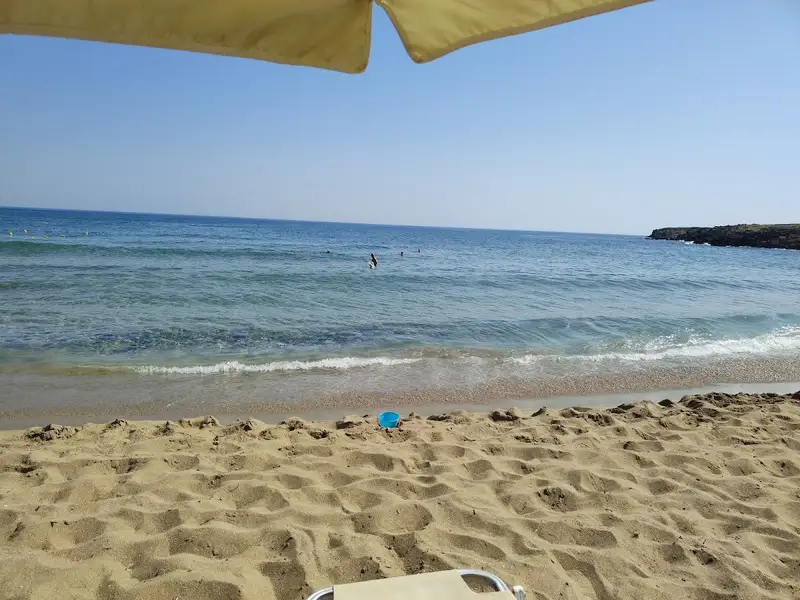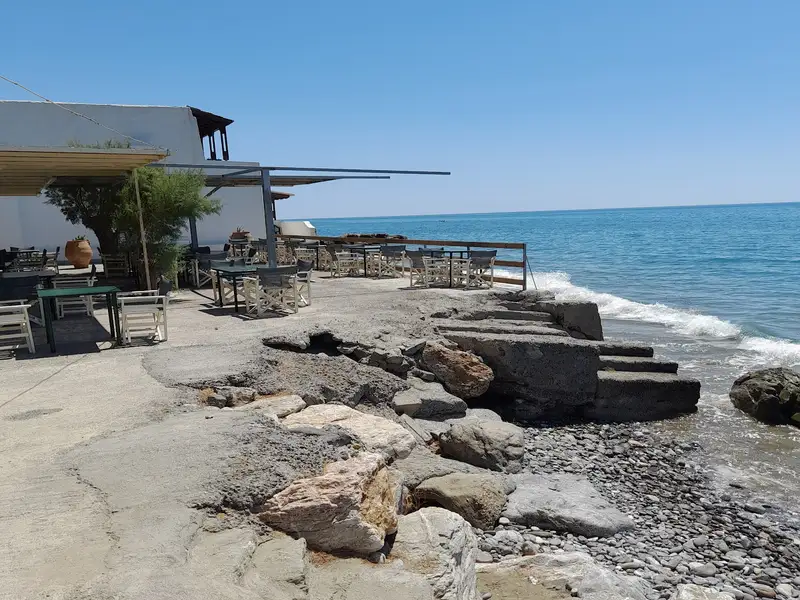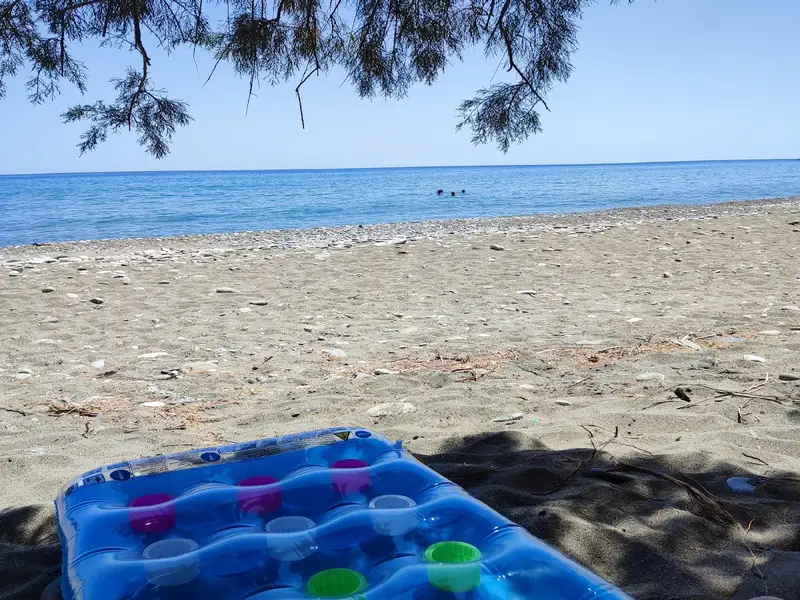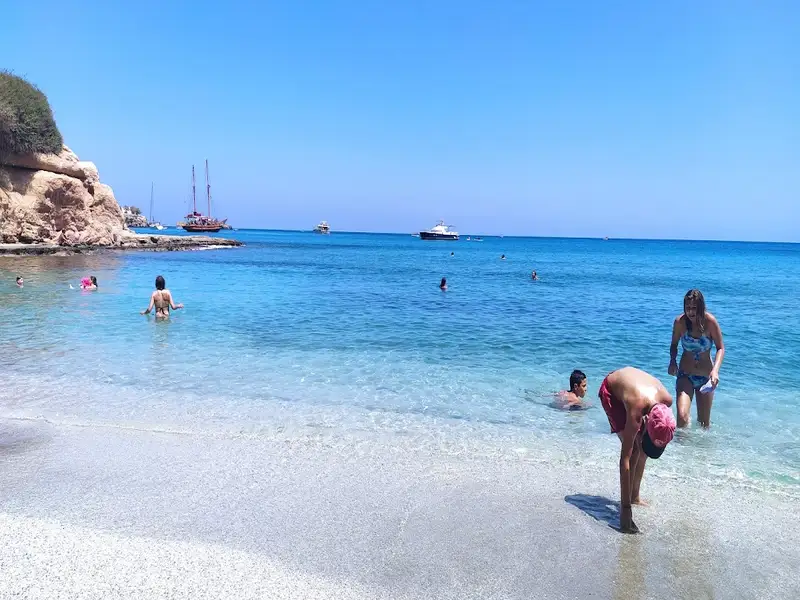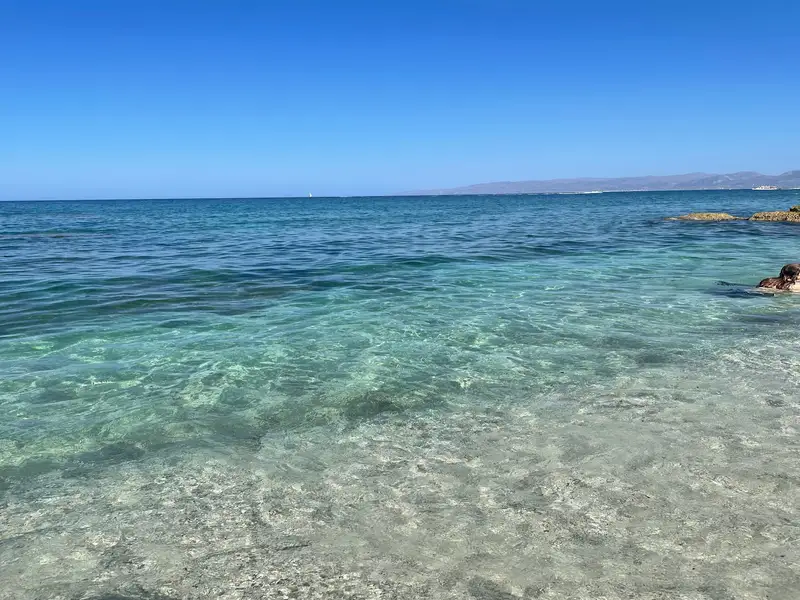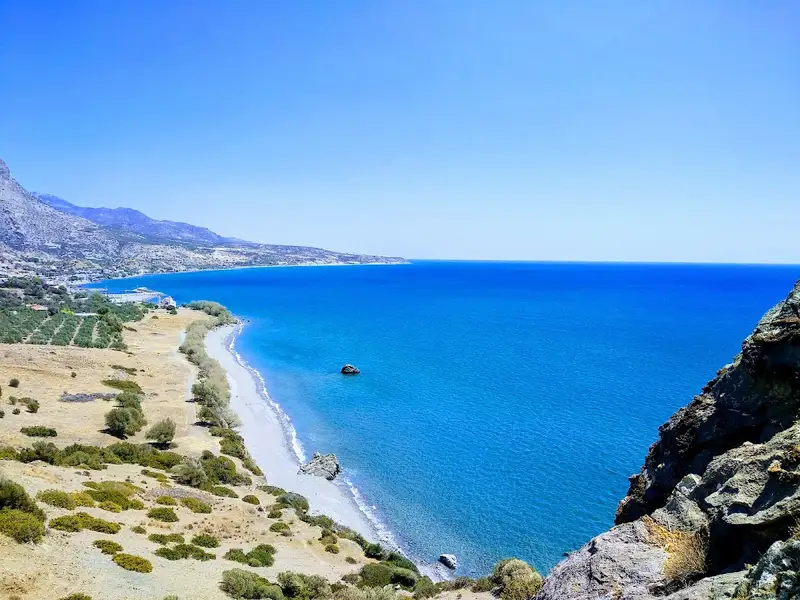
Stalida Beach (or Stalis) is located 30km east of Heraklion, between Malia and Hersonissos. Originally a small seaside village formed by the inhabitants of Mochos, it has now evolved into a bustling tourist destination, harmoniously blending into the neighbouring town of Malia. Stalis caters primarily to families seeking a tranquil retreat, and is beautifully equipped with a range of accommodations, eateries, bars, and taverns, not to mention an ATM and a pharmacy for convenience.
Stalida makes for a perfect base to explore the nearby attractions and engage in an array of activities. The locality is teeming with stunning beaches, enriching archaeological sites, and captivating cultural spots. A short 6km trip from the beach takes you to the Aquaworld Aquarium & Reptile Rescue Centre – a place where you can acquaint yourself with a variety of marine creatures and reptiles. Nearby, the Lychnostatis Open Air Museum offers a deep dive into Crete’s natural history and culture.
For those seeking aquatic thrills, the Acqua Plus waterpark, the island’s largest, is not far from the coastline. To the west, beyond Malia and Potamos Beach, lies the Malia Palace Archaeological Site, home to the third largest Minoan palace complex and steeped in millennia-old history. A further 20km south, the ancient Minoan settlement of Karfi offers another slice of history, believed to have been home to around 3,500 inhabitants.
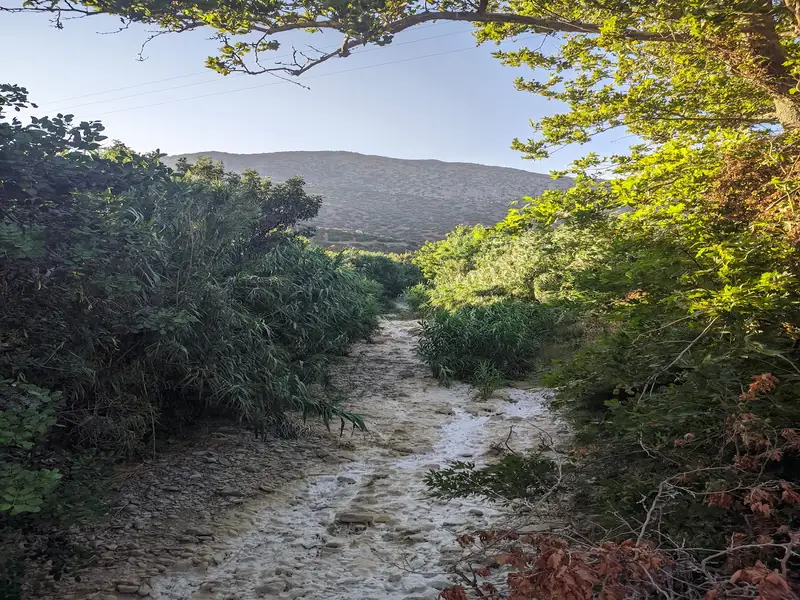
For those with a passion for hiking, the Bulgarian trail, starting from Stalis and leading up to Mohos, is a must. Named after the Bulgarian prisoners of war who constructed it during WWII, this 5km trail, though lengthy and ascending, is an experience in itself. Along the way, you’ll cross a pedestrian bridge spanning the highway and encounter the contemporary Panagia Theogenitor Monastery. Once in Mohos, enjoy a leisurely stroll along narrow lanes, relax with a coffee in the spacious square, and enjoy the warm company of the locals. You can choose to return via the same trail or follow a different one leading from Mohos to Malia.
Living on the island of Crete, about 28km east of Heraklion, you’ll find the popular tourist town of Hersonissos. It’s known for its array of beaches, particularly on the eastern side. Located a short 2km distance from the Hersonissos port, these delightful coves extend up to the Drapanos Cape. The most vibrant among them is Star Beach, known for being one of the island’s busiest spots.
As you travel further east, there are several small, scenic sandy and pebbly coves that offer a feeling of tranquillity. Some of these secluded spots enjoy cool water due to the presence of freshwater springs in the sea. Next to these coves, you’ll find the Lychnostatis Folklore Museum, a place where visitors can delve into the historical Cretan way of life.
The final beach in the Hersonissos vicinity is located in front of the Nana Beach Hotel, at the edge of Drapano Cape, and is accessible by heading east. This well-maintained beach has sunbeds and a lifeguard on duty, with a variety of water sports and beach bars available. Thanks to the protection offered by two long piers, this beach enjoys calm waters all year round, as it’s shielded from the north winds.
Hersonissos, a bustling tourist hotspot in Crete situated just 28km to the east of Heraklion, is renowned for its tranquil beaches and calm seas – a rarity along the northern coast of Crete due to the prevailing northern winds. The most serene beaches can be found to the west of the port, shielded by the Cape Sarandaris. Towards the east of the port, however, lie the resort’s most frequented beaches.
As you venture east from the port of Hersonissos, the first sight to greet you is a sprawling, narrow, sandy beach, buzzing with throngs of beachgoers. It’s impeccably organized and conveniently close to the city’s amenities, though it may not be the best choice for those seeking a more serene environment.
Journeying further east, a series of small, sandy coves become apparent, primarily situated in front of hotels. Of these, Silva Maris Beach stands out with its high level of organization, a lifeguard, and numerous facilities. Continuing eastwards, you’ll encounter Star Beach, one of Crete’s most populous beaches, largely patronized by British and Dutch tourists. Lastly, near Cape Drapanos lie the peaceful beaches of Eastern Hersonissos, offering a quieter seaside experience.
Situated 35km to the east of Heraklion, Malia is a vibrant hub known for its dynamic nightlife and historic appeal with the third largest Minoan palace in Crete, the Malia Palace. Malia’s appeal is augmented by its sandy beaches, a key catalyst for its tourism development.
The main beach in Malia forms the eastern stretch of a 6km long bay commencing from Stalis. This vast beach boasts fine sand and shallow water, often thrumming with life, so much so that there’s barely a gap between sunbeds! Catering to all your comfort needs, the beach offers not only standard amenities such as umbrellas and water sports but also exclusive services like beachfront massage, a beach gym, pool bars at the hotels, and more.
However, if tranquillity is what you’re after, Malia might not be the best fit. You could consider venturing east, beyond the local port, towards the serene beaches of Pirgos and Potamos.
Opposite Malia’s main beach lies a stunning spectacle – the small islet of Afendi Christos, home to the Metamorphosis tou Sotiros church. This quaint church becomes a hub of activity on August 6th each year, as many people congregate to partake in the service and the church’s festivities.
Nearby, a spring is believed by locals to contain holy water, said to aid women wishing to conceive. Accessible by a short swim from the shore, this islet offers a unique and serene experience just off the coast.
Situated 72km southeast of Heraklion, within the sheltered Keratokambos bay, you’ll find Kastri – the larger of the two conjoined settlements in the region, the other being Keratokambos. Over recent years, tourism in Kastri has seen significant growth, driven largely by the appeal of its surrounding beaches. The serene and welcoming atmosphere attracts many families, some of whom visit multiple times a year. Kastri is accessible by car, with the drive from Ano Viannos to Heraklion taking between 45 to 55 minutes.
Kastri’s distinctive port serves the local fishing community and welcomes other boats. Adjacent to the port, towards the west, there’s a small but stunning sandy beach, adorned with tamarisk trees. Given its proximity to the village amenities, such as rooms, taverns, and shops, it’s one of the most popular beaches in the area. Further west of this beach, you’ll find the longest beach in Skouros.
While in Kastri, don’t miss the opportunity to visit the Church of St. Demetrius Galatoktistos, which used to be a monastery, and the chapel of St. George Vagionitis, set amidst a verdant garden.
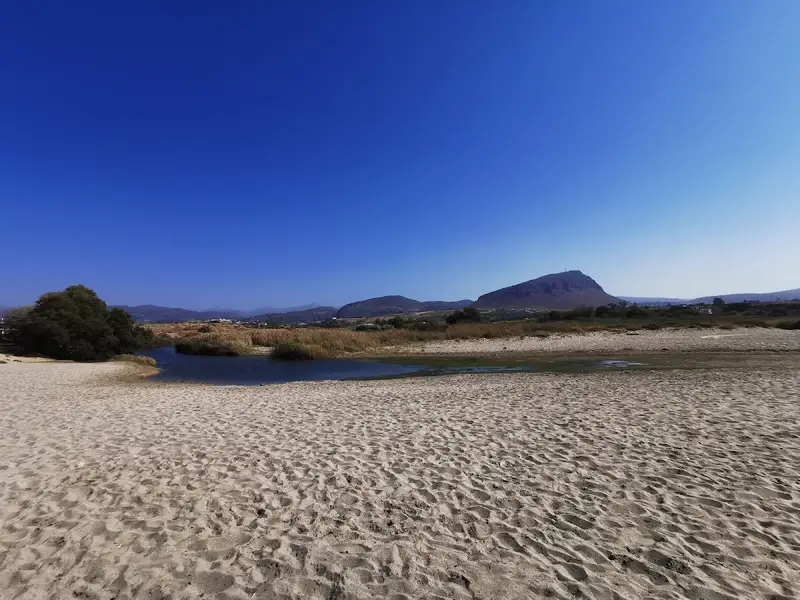
Potamos Beach is a quiet, sandy beach about 3 km east of Malia on the north coast of the Heraklion region of Crete, named after the small river that runs beside it. It sits just east of Malia’s port, next to the Malia wetland and the Minoan Palace of Malia, and stays calmer than Malia’s busy main beach. From Heraklion it is roughly a 30 to 35 minute drive east.
Potamos is a long, well kept stretch of sand that draws far fewer people than the main beach in the middle of Malia. The eastern end stays largely undeveloped because of the archaeological site and the protected wetland behind it, while a few hotels sit to the west, each with its own patch of sand.
The Malia wetland is an ecologically important reed bed that shelters many bird species and preserves coastal plants that have disappeared from much of Crete. Water flowing down from Mount Selena keeps a stream running here, turning into a small river close to the shore in winter and feeding clear water into the sea. The water is fresh enough that goats often come down from the hills to swim and drink at the edge of the beach. In autumn, white sand lilies bloom across the low dunes that back the shore.
The beach is fine golden sand, and the sea is clear and shallow, deepening gently over a soft, sandy seabed. That makes it a good choice for families with young children, who can paddle safely close to shore.
Potamos is really more than one beach: a couple of sandy stretches with small rocky coves in between. The eastern bay is more sheltered and calmer, while the longer western stretch catches the north and northwest winds and turns wavier, so pick your spot to match the day. The rocky coves between the sandy sections are good for snorkeling.
Sunbeds and umbrellas are available to rent, and there are showers and a lifeguard on duty in season. Tamarisk trees along the back of the beach give natural shade, which helps when the midday sun is strong, so bring sun protection as well. For food and drink there is a snack bar on the sand, plus tavernas and a few hotels on the western side. Potamos flies a Blue Flag for its water quality and organisation.
By car it is a short drive from Malia, with parking beside both main sections of the beach. By bus, the Heraklion to Malia and Agios Nikolaos service stops close by, near the Malia Palace, from where it is a short walk down to the shore. You can also walk from Malia in about 30 to 45 minutes along Machis Kritis or Grammatiki. If you would rather have a car for the day and reach the quieter coves and nearby villages easily, you can rent a car in Crete.
Potamos Beach sits within easy reach of several sights. It is a short walk from the Minoan Palace of Malia, one of the largest Minoan palace complexes on the island, so a beach day pairs easily with some history. The wetland right behind the sand is a good spot for a short nature walk and birdwatching.
A coastal path runs east over the headland to the next cove. That walk ends at the small, church-side Agia Varvara beach.
Potamos Beach is on the north coast of Crete, about 3 km east of Malia and roughly a 30 to 35 minute drive east of Heraklion. It takes its name from the small river that runs beside it, next to the Malia wetland.
You can drive from Malia in a few minutes and park beside the beach. The Heraklion to Malia and Agios Nikolaos bus stops nearby, close to the Malia Palace, and it is also walkable from Malia in about 30 to 45 minutes along Machis Kritis or Grammatiki.
Yes. The water is clear and shallow and deepens gently over a soft sandy seabed, which suits children. The eastern bay is the most sheltered, so it is the calmest part for young swimmers.
There are sunbeds and umbrellas to rent, showers, and a lifeguard on duty in season. Tamarisk trees give natural shade, and there is a snack bar on the beach with tavernas nearby on the western side.
Potamos is quieter than Malia’s main beach and keeps a relaxed feel. It is busiest in July and August, while June and September are calmer.
The long western stretch catches the north and northwest winds and can get wavy. The eastern bay is more sheltered, so head there on windier days.
Yes, Potamos Beach holds a Blue Flag, awarded for water quality and beach organisation.
The Minoan Palace of Malia is within walking distance, and the Malia wetland behind the beach is good for a nature walk and birdwatching. A short coastal walk east over the headland reaches Agia Varvara beach.
Located 72km southeast of Heraklion, the small seaside resort of Keratokambos, along with the nearby coastal settlement of Kastri, has evolved into a sought-after family destination over recent years. The village of Keratokambos is fronted by a lengthy sandy beach, extending for several kilometers in both directions.
The village’s main beach is situated to the east of the local harbour, extending eastwards up to the Keratokambitis river. The beach is quite organized where it adjoins the village, and in some areas, it is strewn with large pebbles, making it a suitable spot for snorkelling. The beach becomes more peaceful and secluded as you move eastwards. Following this is Monobouka beach, located near the Kapsali settlement, and equipped with a few tourist facilities. Monobouka beach, with its sandy terrain and shallow waters, is perfect for children. The beach is dotted with many tamarisk trees, providing ample shade.
A brief overview of the Keratokambos area reveals that Keratokambos (and Kastri) function as the harbour for the inhabitants of the mountainous village of Ano Viannos, situated further north. In the 1950s, the area housed only warehouses for storage of products like carob, citrus, oil, etc. The local harbour was employed for transporting these products to urban centres via cargo ships, as there was no road network at that time. Today, Kastri and Keratokambos form a unified village, which has witnessed significant growth in tourism in recent years. The village boasts of a school, a clinic and a notable gallery.
The name Keratokambos translates to Carob Fields in Greek, a name derived from the locust trees grown in the region for producing carobs. Another interpretation suggests that the name comes from the Greek word ‘Kerato’, meaning horn, referring to the towering steep rock, called Kerato, located north of the village in the Vigla area. The top of Vigla houses the ruins of a Venetian fortress, while its base is home to a large cave with rich stalagmite decorations and numerous bats.
The villages of Keratokambos and Kastri are built in a valley formed by several wild gorges, with the Keratokambitis river cutting through the rugged Portela gorge. In the Richtra region, a beautiful 10m high waterfall can be found, which is worth a visit (especially in spring).
The Kavousi and Piskopi Pidima (Bishop’s Jump) gorges are other impressive natural formations of the area. The latter gets its name from a local legend of a bishop and his horse miraculously leaping across the gorge to escape from the Turks. As a tribute to this miracle, the bishop built the church of St. George near the gorge.
The tranquil beaches of Hersonissos Coves, also known as Limanakia, are located 27km east of Heraklion, extending from Cape Sarandaris to Hersonissos harbour. The beaches are protected from the strong northwest winds by Cape Sarandaris (Sarantari), providing calm waters for visitors. These coves are easily reachable and are situated near the vibrant town of Hersonissos with plenty of bars and cafes.
The western edge of the coves features a concrete dock ideal for diving, nestled on the rocky western side of Cape Sarandaris (Sarantari) near the quaint St. George Sarandaris chapel. A staircase leads to a sunbathing spot with hotel umbrellas and a rocky seabed perfect for swimming and snorkeling.
Further down, at Cape Sarandaris’s base, you’ll discover the breathtaking Sarantari Cape beach, arguably the most picturesque and sheltered beach in Hersonissos. Its sandy beaches, shallow crystal-clear waters, and an intriguing sea cave make it a tranquil alternative to other beaches, despite the challenging descent through steep limestone cliffs.
Contrary to popular belief, Hersonissos also has a stony naturist beach located next to Sarandaris Cape, hidden discreetly by tall cliffs. This sandy, rocky cove provides a peaceful spot for swimming and solitude.
The well-known Sarandari beach comes next, popular among children due to its shallow waters and soft sands. The beach offers umbrellas, sunbeds, and a small canteen for convenience.
Next to Sarandari is Giofyri beach, situated under the main road and supported by a massive concrete wall. With its unique white coarse sand, deeper waters, and rocky seabed, it’s a popular choice among visitors, complete with umbrella and sunbed facilities.
Heading east from Giofyri along the coastal road, a series of small, slim beaches framed by white rocks awaits, their light-blue waters offering a truly mesmerizing sight. This captivating landscape stretches until you reach the large beach in front of the Creta Maris hotel, which extends up to Hersonissos port. This beach is well-equipped with sunbeds, umbrellas, water sports facilities, and a beach volleyball court, becoming busier and more exposed to winds nearer the harbor.
Regardless of whether you decide to swim, a casual walk from the port to Cape Sarandaris offers stunning views of Hersonissos Bay and St. George’s chapel in Sarandaris. At Hersonissos port, consider visiting the lighthouse and the Agia Paraskevi church, partially built into the rock. On Kastri Hill, the remnants of the early Christian Hersonissos basilica and its preserved mosaics are a must-see.
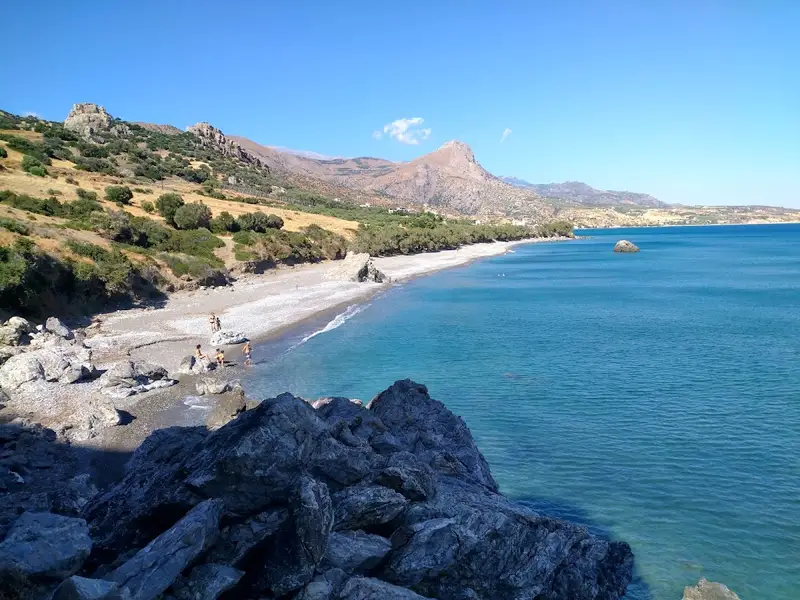
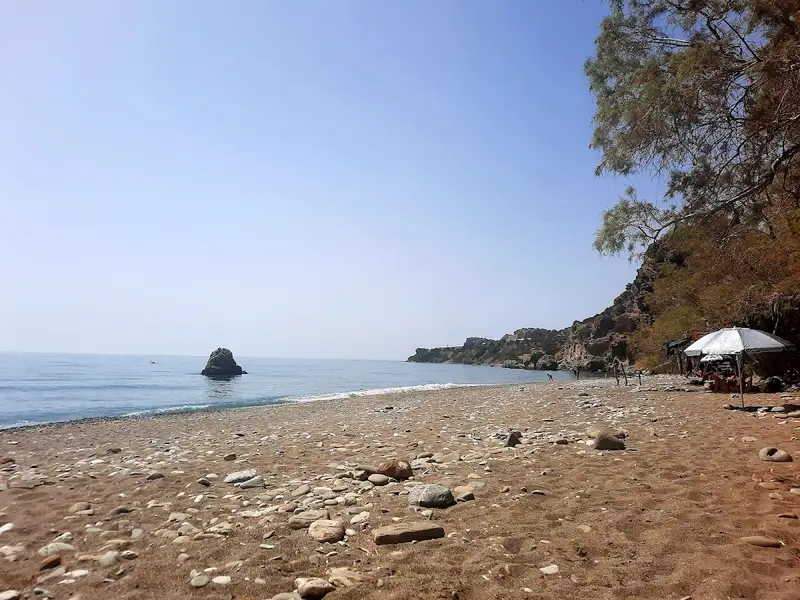
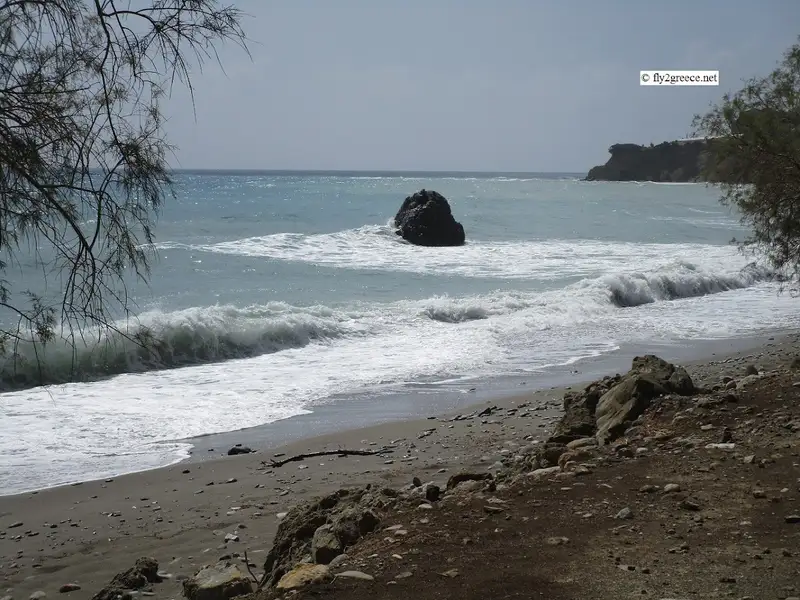
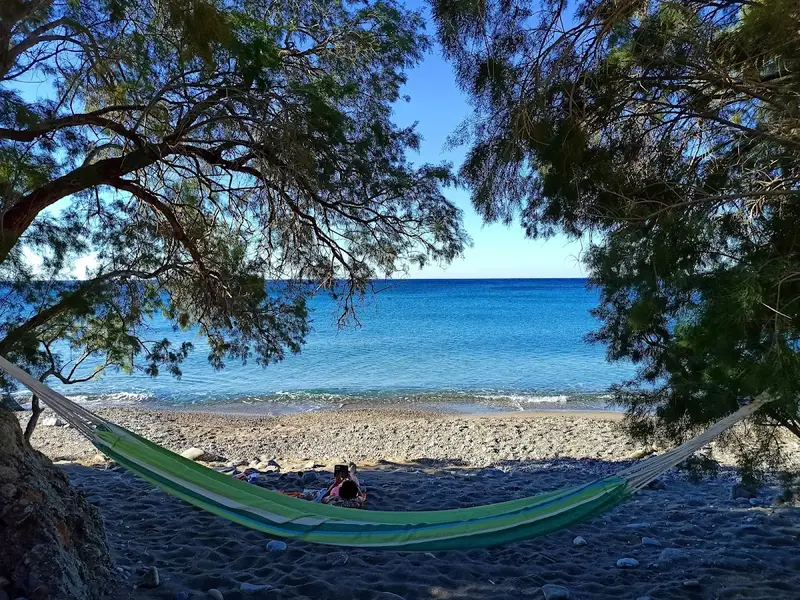
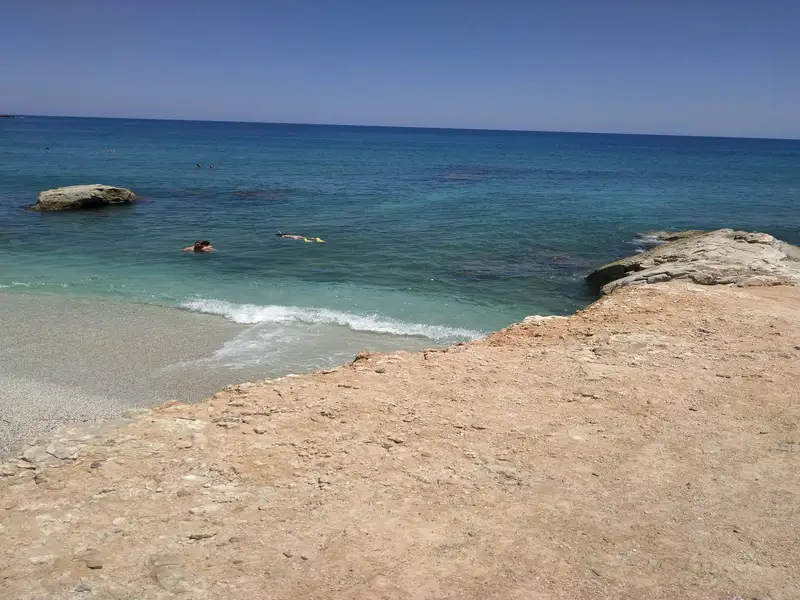
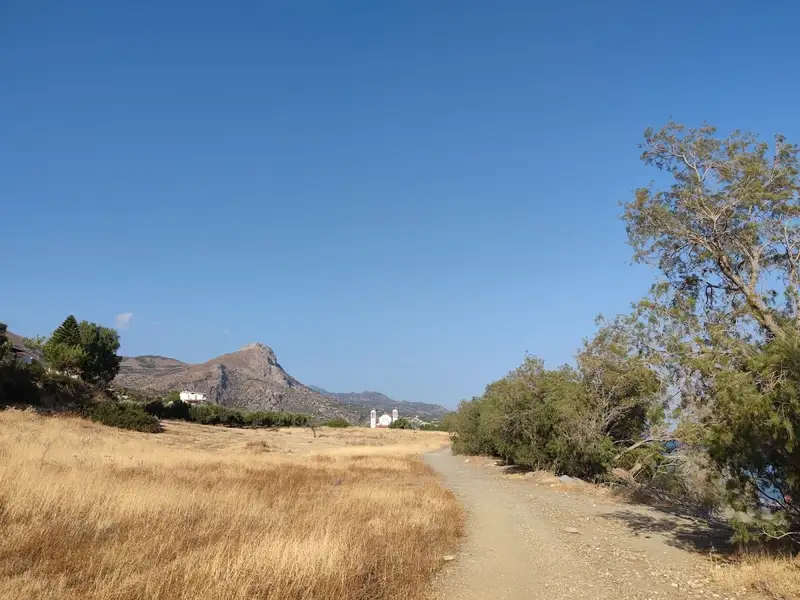
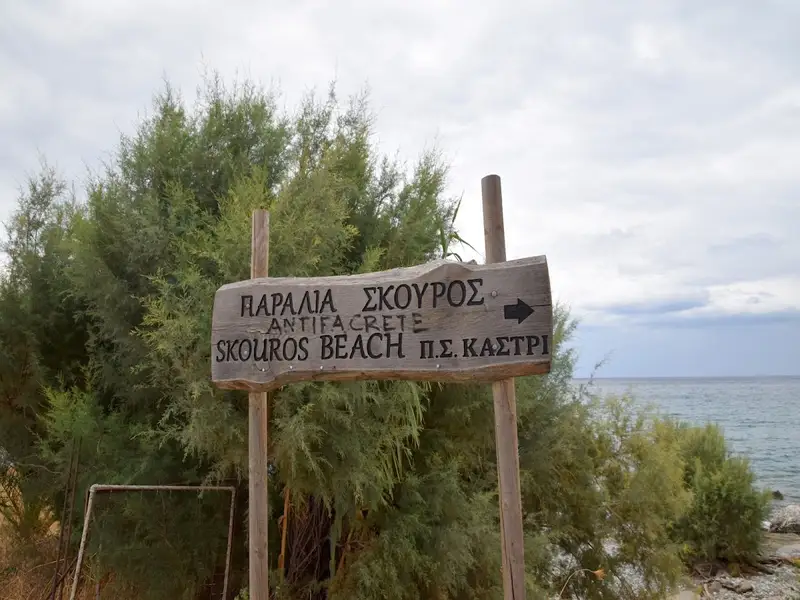
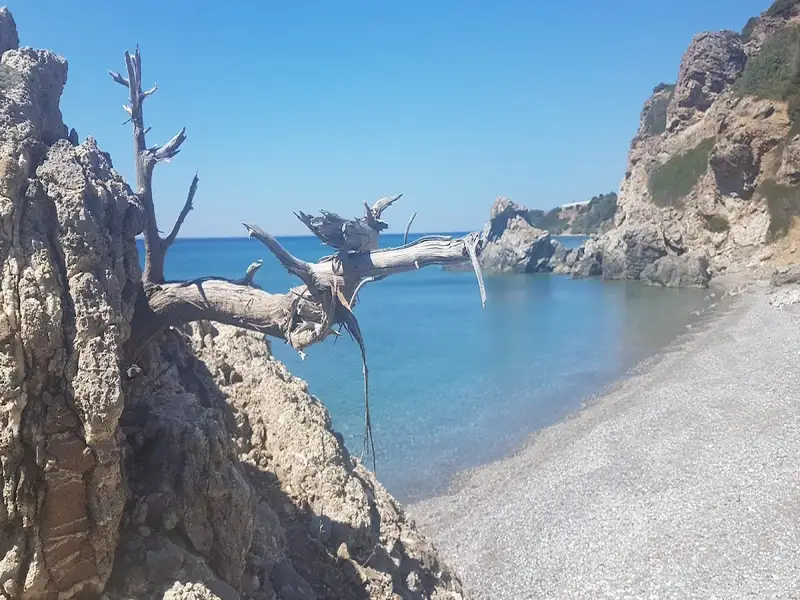
Kastri, a serene location nestled 72km southeast of Heraklion in the protected bay of Keratokambos, offers the longest beach of Skouros just to the west of its central beach, located next to the Saint Myronas church. The beach is a picturesque blend of sand and pebbles and remains largely unpopulated. A grove of tamarisk trees along the beach offers a haven of shade. The shoreline is dotted with unique rock formations, both on land and extending into the sea, adding to the beauty of the landscape. The beach derives its name from a large, dark rock known as Skouros, located in the western part. The beach is an ideal spot for free camping and offers a secluded retreat.
Further west of the Skouros rock, you can explore the most isolated beaches in the region, starting from Xerokambi and extending to the eastern edge of the Listis rock. Access to these beaches is via dirt roads leading to nearby greenhouses.
The Aposelemis River, situated 19km east of Heraklion, between Analipsi and Gouves, is a significant wetland in northern Crete. The pond that forms near the shoreline serves as a natural habitat for various migratory birds and rare species. The river’s outlet gives way to a beautiful sandy beach with shallow cool waters. Although it’s in close proximity to large hotels and tourist spots, the beach lacks organization compared to other top beaches in the vicinity, with only a handful of umbrellas and sunbeds available.
There are two alternative routes to reach the beach. One option is to drive towards the beach of Analipsi and then follow the coastal road heading west. After traversing a few meters past the region’s rocky shores, you’ll arrive at the extensive Aposelemis beach. Alternatively, you can take the coastal road of Kato Gouves to its eastern end, where the road veers right and runs along a hotel’s walls. Aposelemis beach is directly across from this hotel, adjacent to Gouves’ soccer field.
No results available
No results available
© All rights reserved. Crete Locals