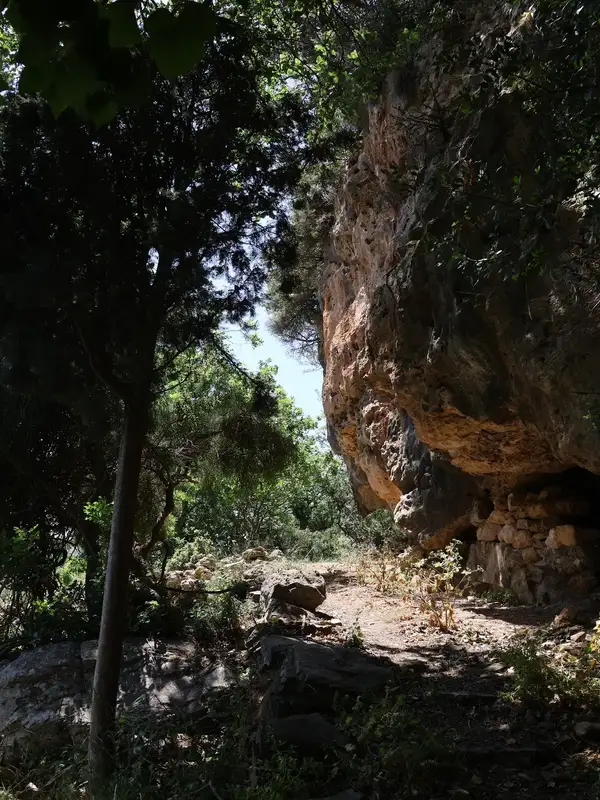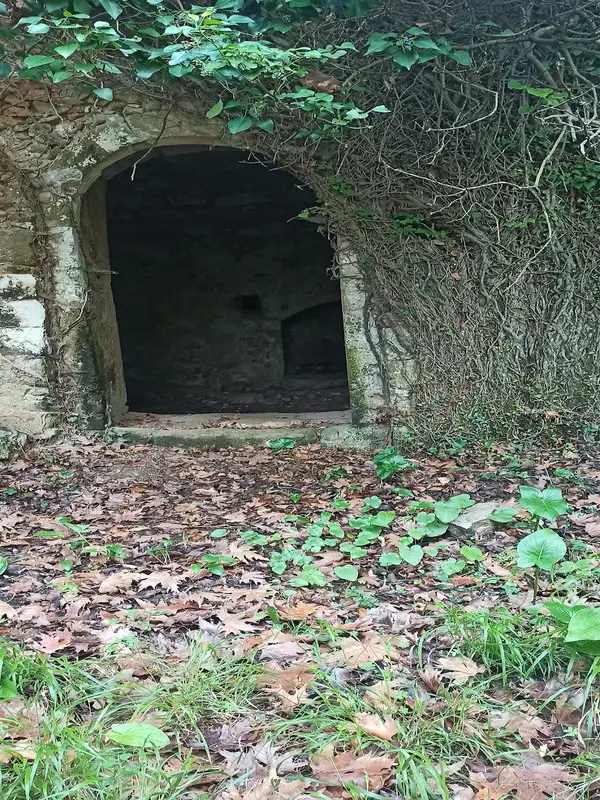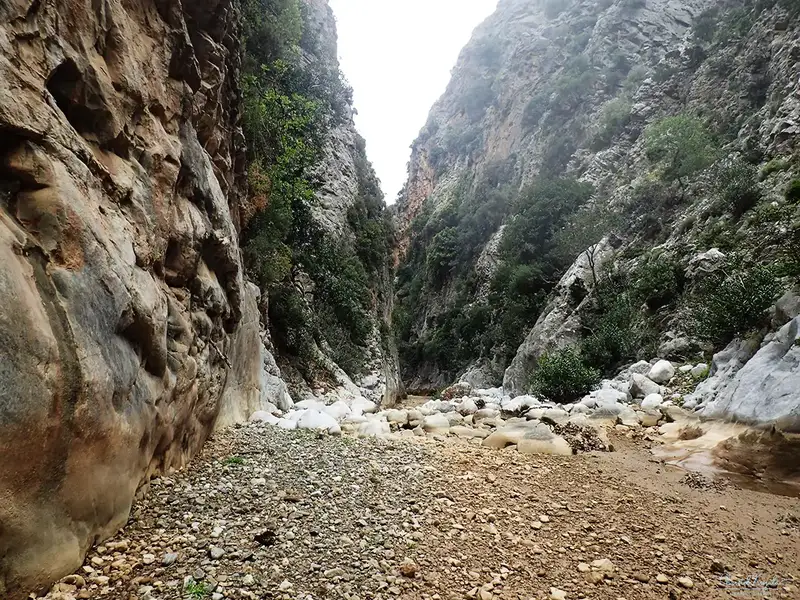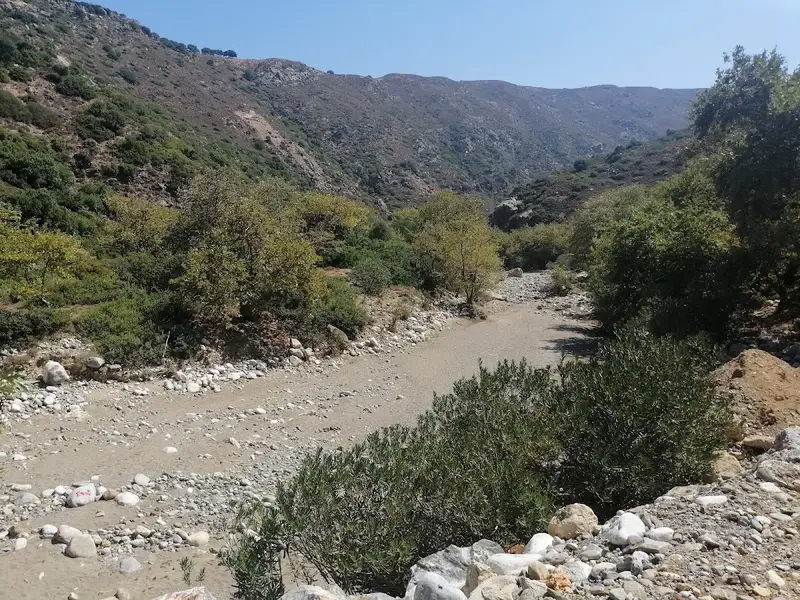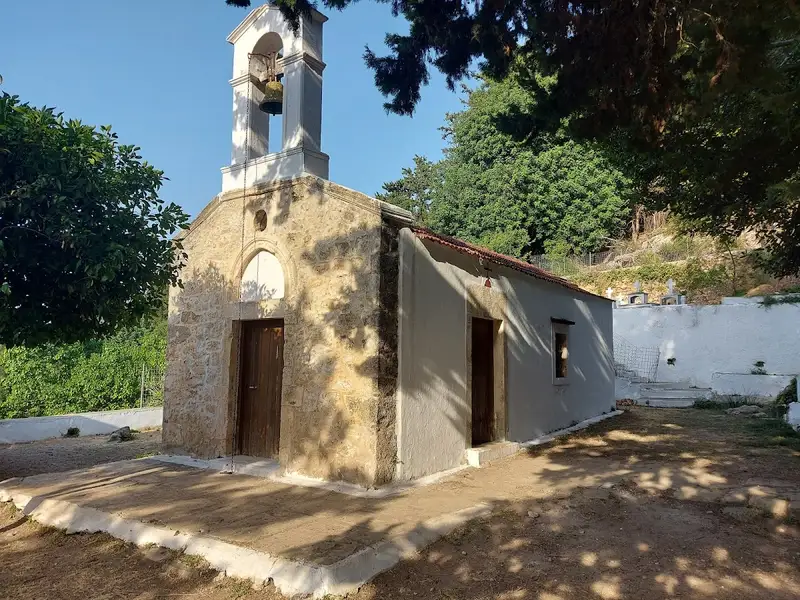
Discover the beauty surrounding Rethymno as you head uphill through picturesque olive groves and make the first stop at Halevi Monastery. See the church of Panagia with its flame-shaped windows and the ruin of the monastery building, which was recently renovated.
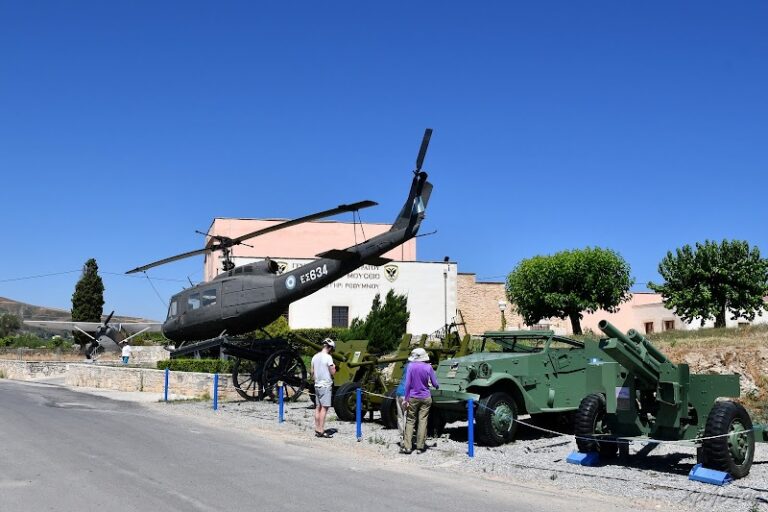
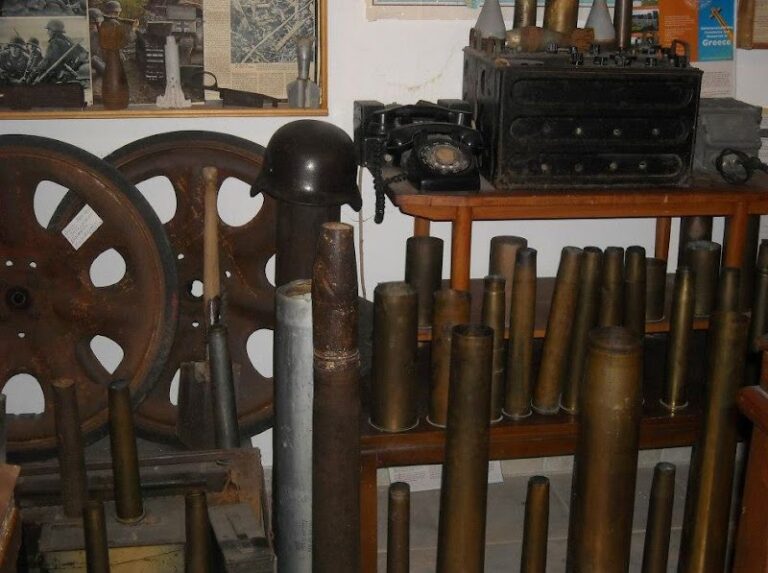
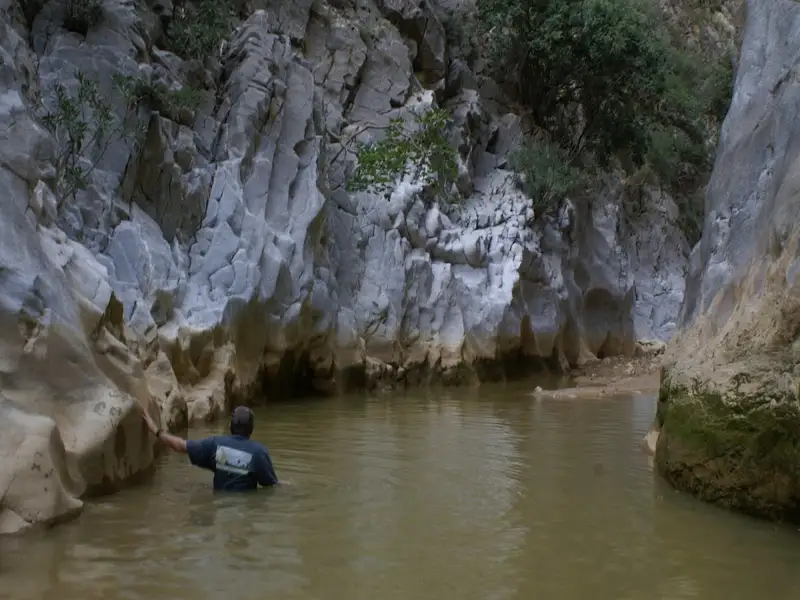
Continue to the village of Chromonastiri and visit Villa Clodio where the Military Museum is housed. As you reach the Myli Gorge, a small oasis close to the city, set out on a short hike through a gorge with diverse flora and fauna and visit the abandoned village of Myli.
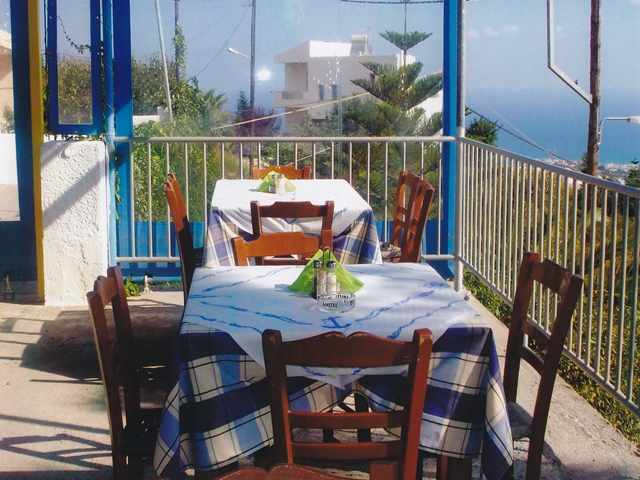
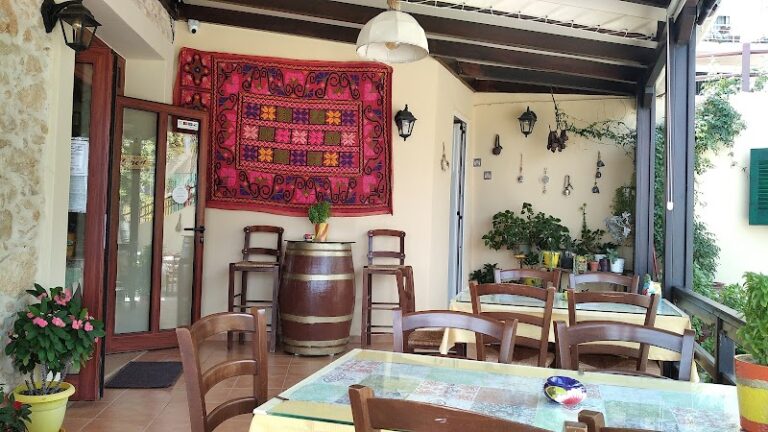
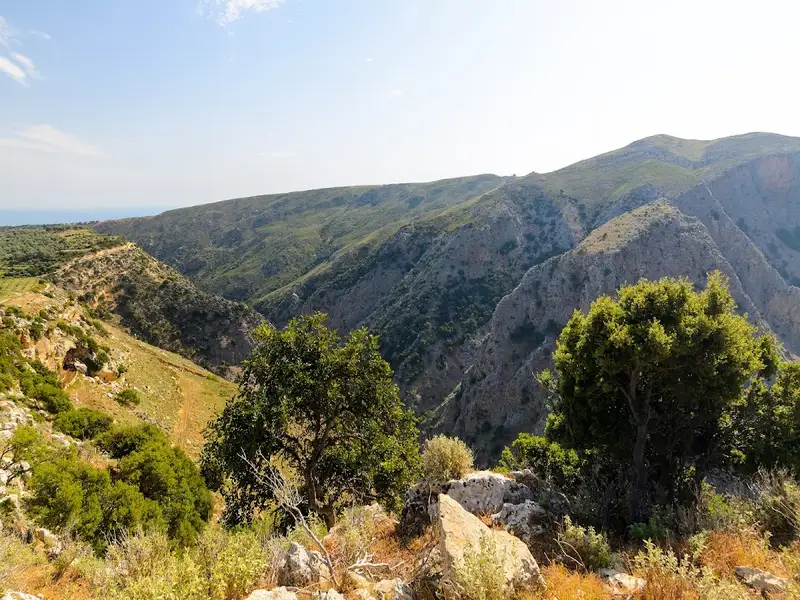
Stop and relax in the Cretan village of Roussospiti and be spoiled with a selection of traditional dishes from a family run taverna. Due to the elevated location you will have a breathtaking panoramic view over Rethymno and the Mediterranean coast. After lunch, ride to the monastery of Aghia Irini to talk to the nuns there and learn more about the history of this place before slowly starting your way back.
Journey back in time and visit the Minoan palace at Knossos on a day trip from Rethymnon. Learn more about the ancient civilization at the Heraklion Archaeological Museum.
Depart from Rethymnon, head eastwards along the north coast. Pass the city of Heraklion and continue towards the inland of Crete until you reach the tour’s highlight – your visit to the Palace of Knossos.
Later, continue towards the inland of Crete until you reach the tour’s highlight – your visit to the Palace of Knossos. This is one of the most significant archaeological sites in the world, a cradle of European culture and the center of the Minoan civilization.
Journey through the incredible history of King Minos and the Minoan civilization, and hear about some of the legends of Crete at what was once the island’s largest palace.
Hop off the bus and start your guided tour if you choose the guided tour option, or enjoy about two hours of free time through the detailed story of the Minoan period and hear about both the Minotaur and Ariadne.
Afterward, the bus brings you to the heart of the capital city of Crete, Heraklion. There you have the chance to visit the archaeological museum, where you can see and learn about the Minoan period while accompanied by your guide (if choosing the Heraklion tour option). Have two hours of free time in Heraklion.
Board the bus again at 6:00 PM the bus will depart on its return journey to Rethymnon.
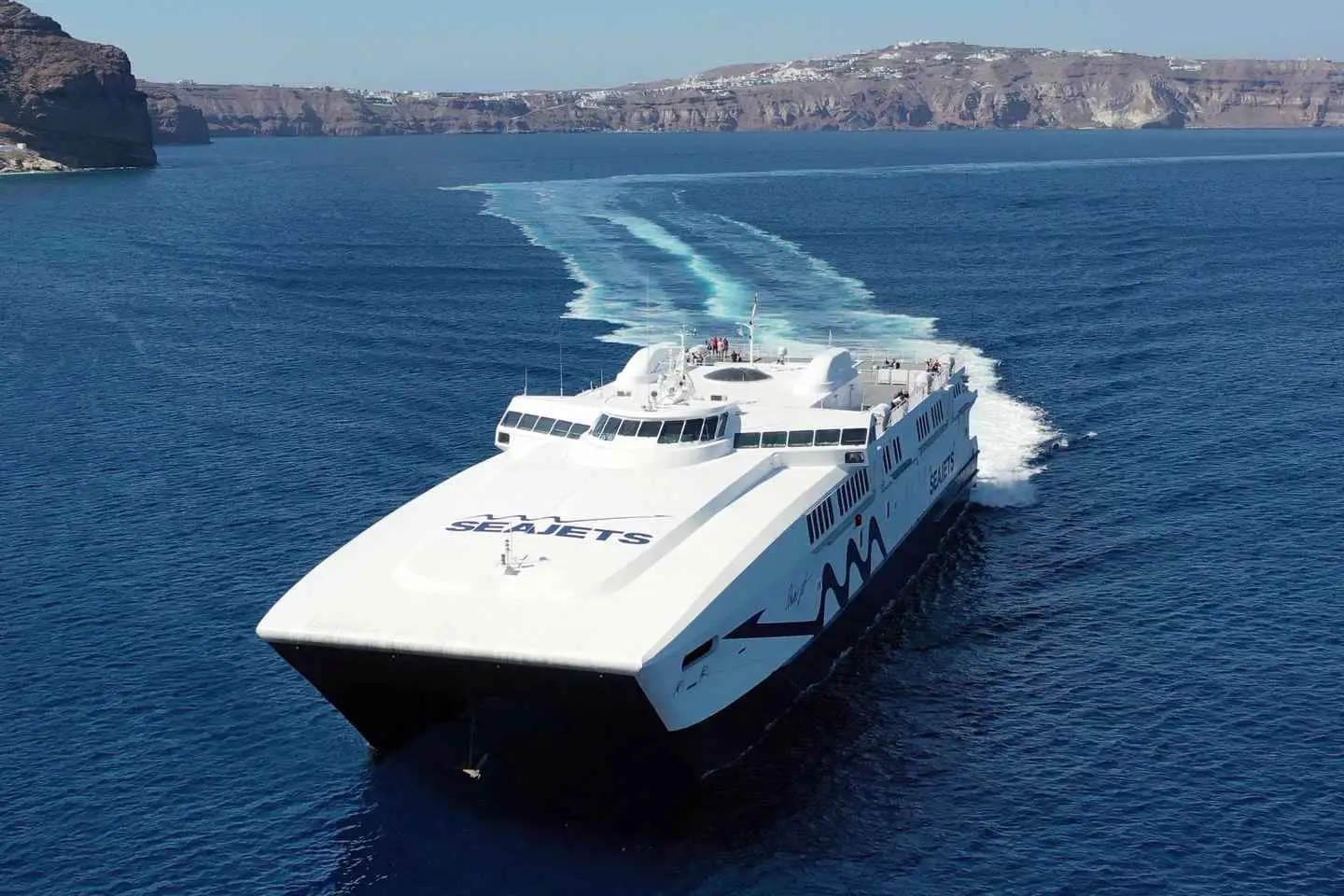


Ride on a high-speed catamaran “Elite Jet’ from Crete to Santorini on this day trip. Board an airconditioned coach and take a guided sightseeing tour of the island. Visit the white-washed villages of Oia and Fira.
Hop aboard a catamaran at the Port of Rethymno and glide across the water to Thiras port. Transfer to a comfortable and spacious bus and listen as your guide provides you with information about the island and its history.
Stop in the unique village of Oia which is built on the northern part of the Caldera rim, Oia offers magnificent views of houses studded along the volcanic rock hillside overlooking both the Mediterranean and Aegean sea.
Head to the island’s capital Fira, where you will have plenty of free time to explore the picturesque alleys, admire the incomparable Aegean architecture, shop, or simply enjoy a drink.
Finally, eturn to the port for the trip back to the Port of Rethymno in Crete.
Explore the beautiful island of Santorini on a guided day trip by boat and bus from Rethymno. Visit the charming towns of Oira and Fira and take some free time to wander through the winding streets, and admire the scenic views and stunning architecture.
Start with pickup from your hotel or meet directly at the port in Rethymno. Board the open-deck boat and relax during the journey across the Aegean Sea to Santorini.
Arrive at Santorini port and board a bus for a transfer north to Oia. During the transfer, hear interesting facts about the Santorini, its history, features, and secrets from your guide.
Upon arrival in Oia, enjoy 2 hours of free time to explore the charming narrow streets. Visit some of the stunning viewpoints and admire the fantastic panoramic vistas. Admire fine examples of Cycladic architecture in the form of white houses and churches with their iconic blue domes.
Next, continue south to the town of Fira, the capital of Santorini. Take 90 minutes to explore its bustling streets and admire the fantastic views of the Santorini caldera. Visit the Orthodox Cathedral located in the main square, or make your way to one of the scenic viewpoints.
Finally, hop back onboard the bus and travel back to Santorini port. Board the boat and relax on the return journey to Rethymno port.
No results available
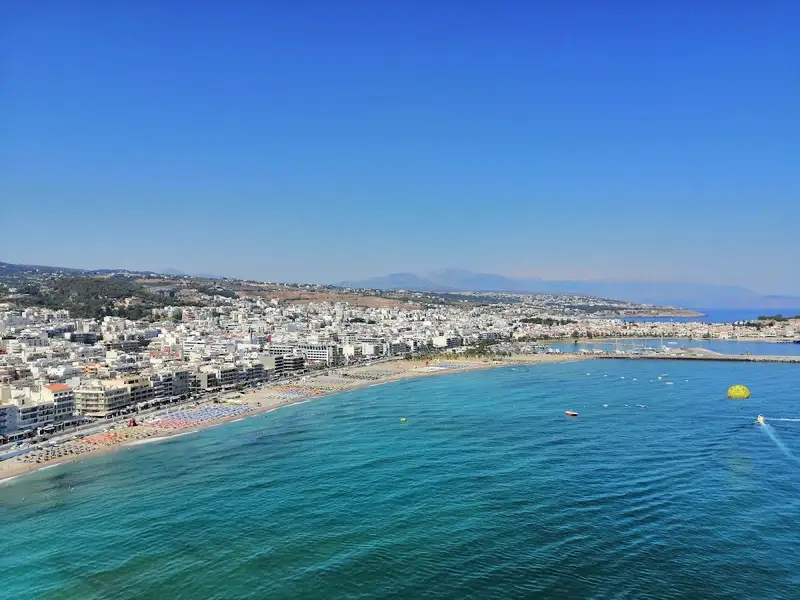
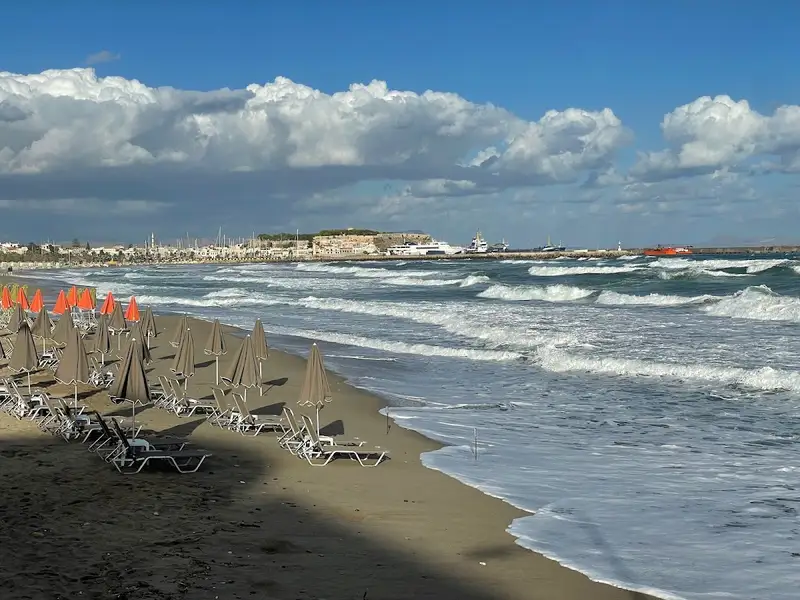
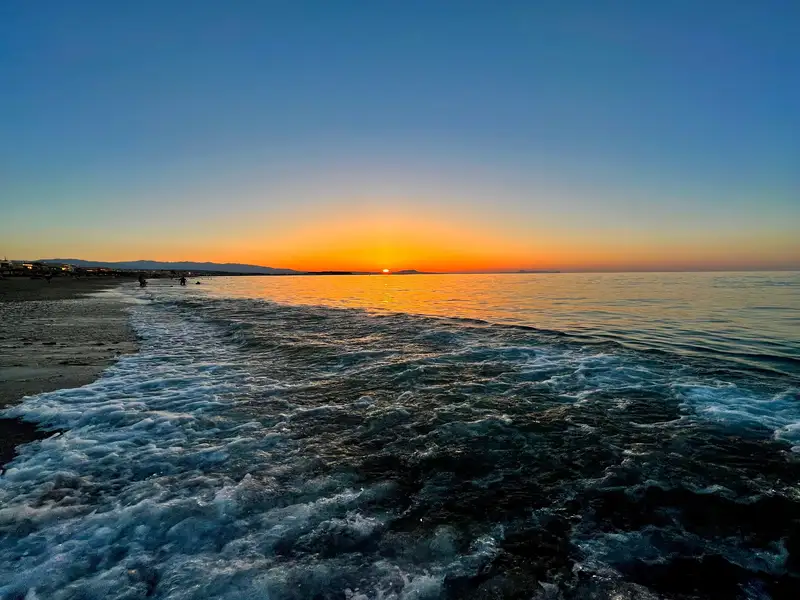
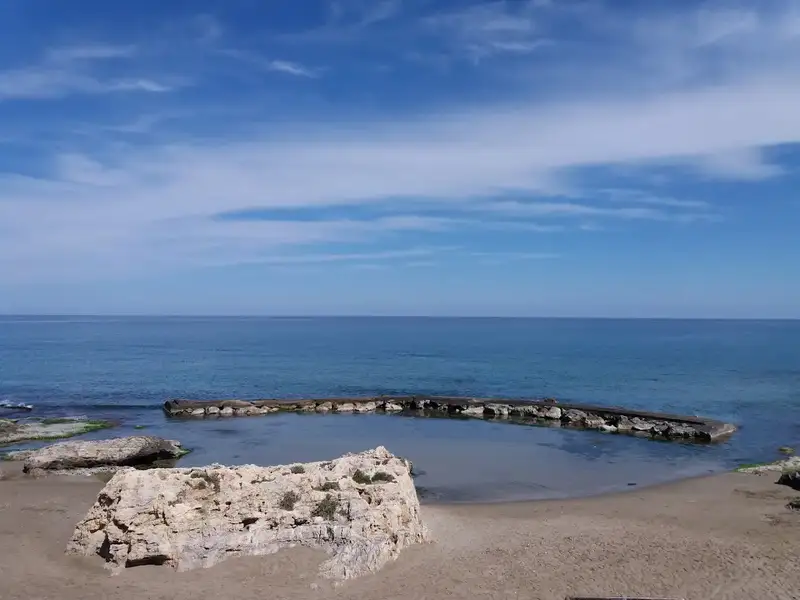
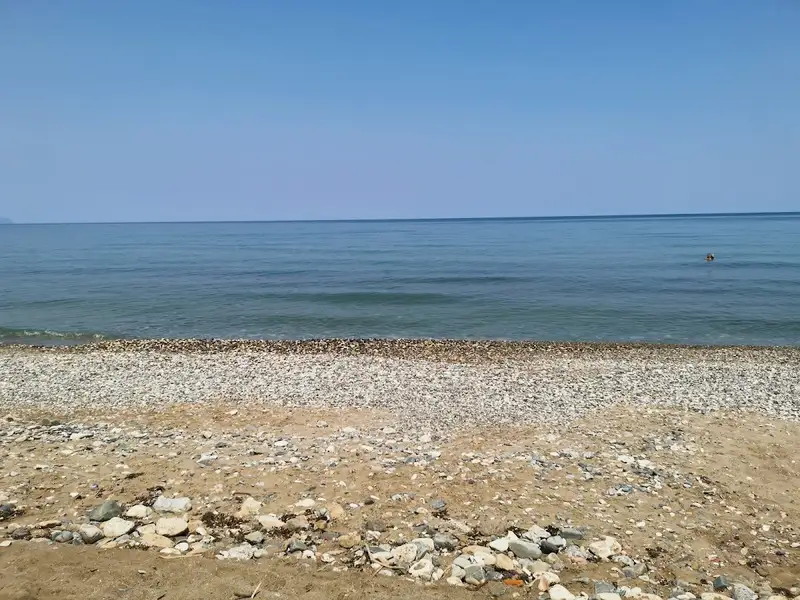
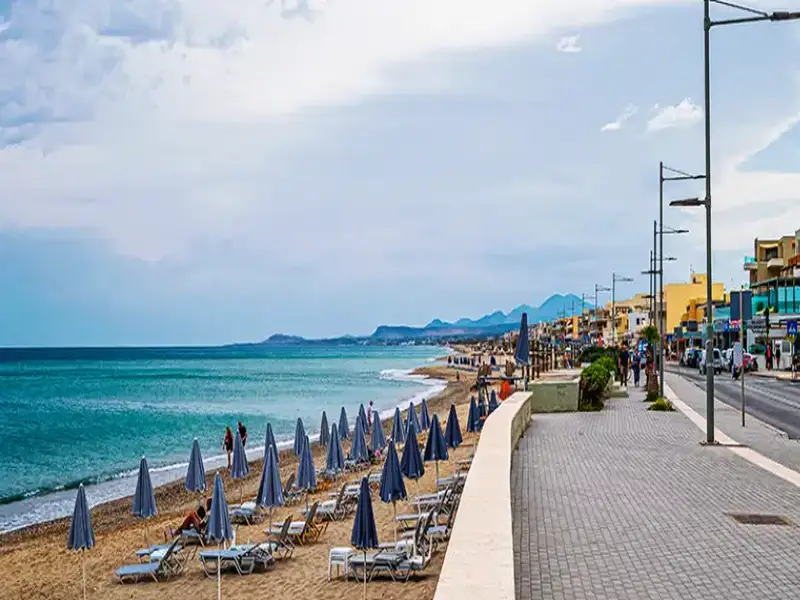
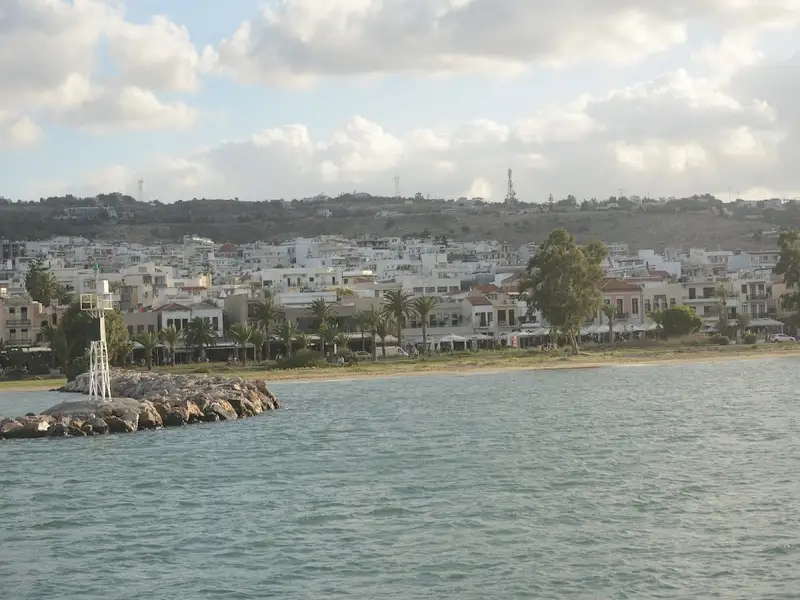
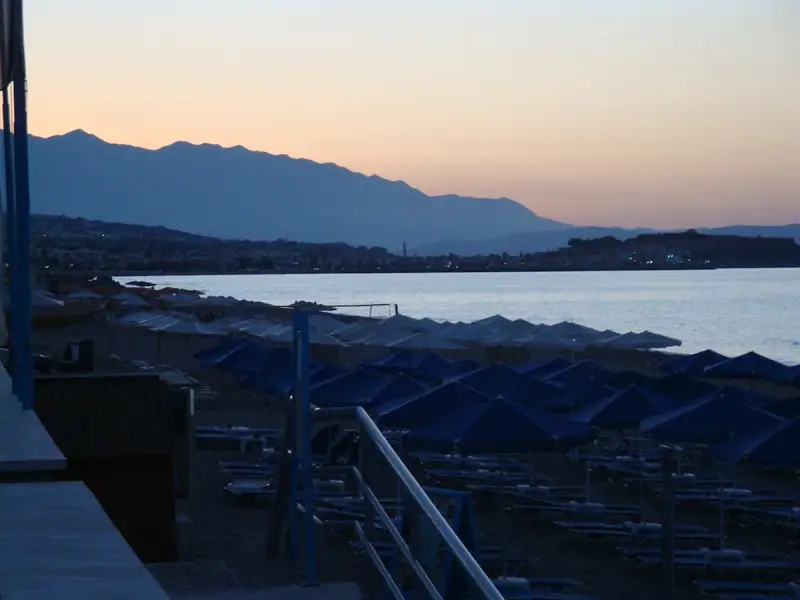
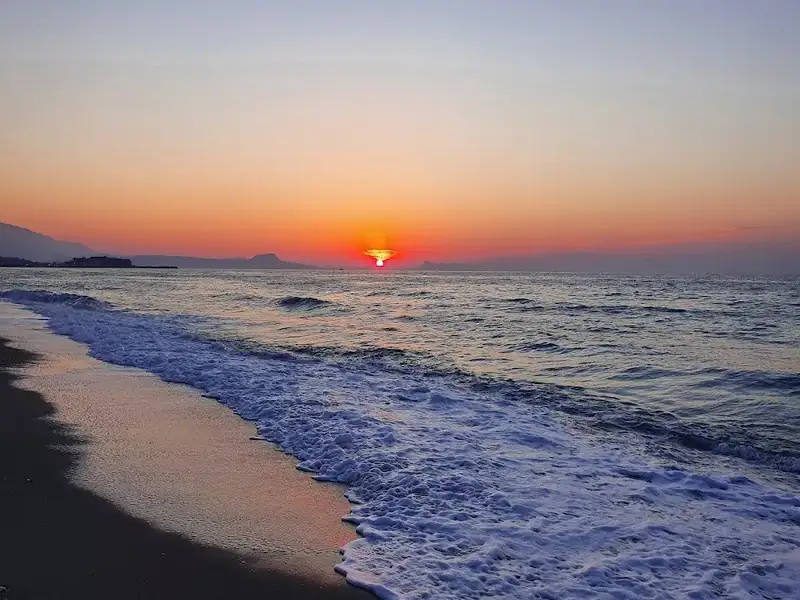
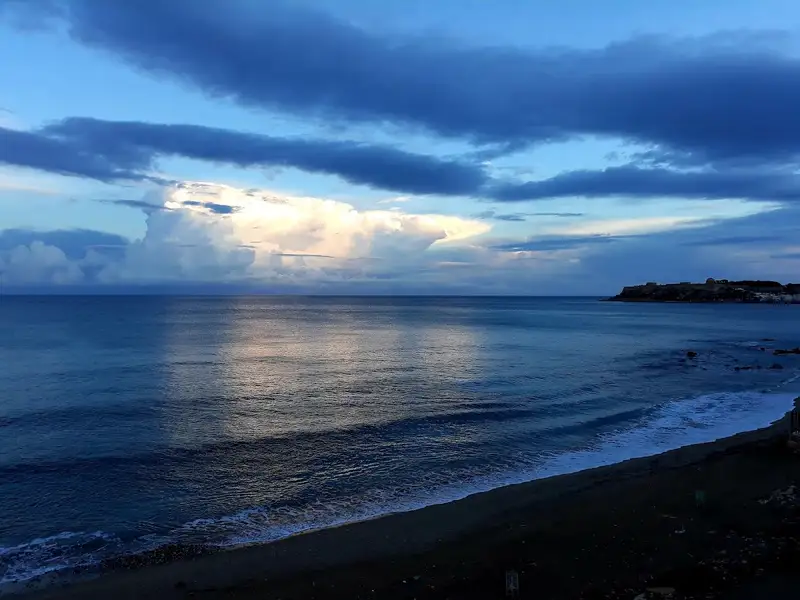
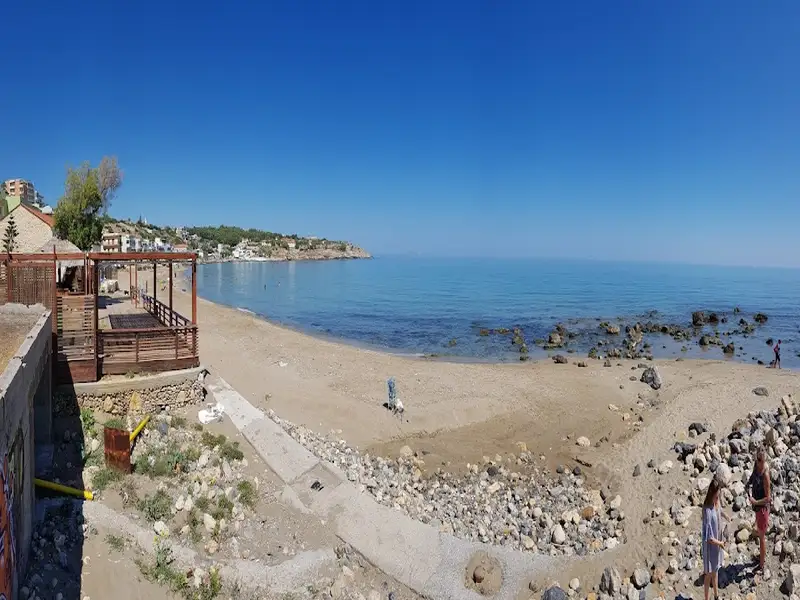
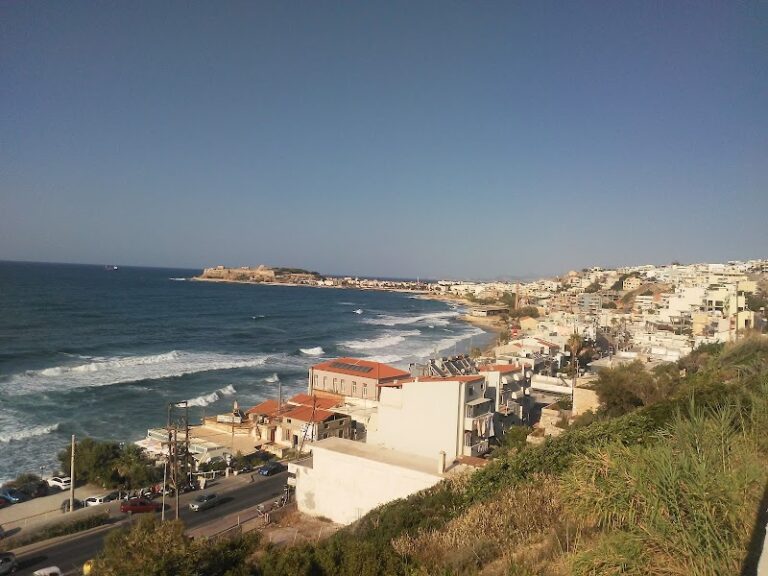
Rethymno beach is the organised town beach of Rethymno, a strip of golden sand and shallow, clear water on the city’s seafront about 500 metres east of the old town and next to the Venetian port. Rethymno beach forms the westernmost edge of Rethymno Bay’s long beachfront, which runs east from the harbour toward Skaleta. The beach stays busy through the day yet rarely feels packed, and the seafront road, Eleftheriou Venizelou, runs right alongside it for an evening walk.
Rethymno beach sits on the north coast of Crete, at the edge of Rethymno town. Rethymno beach is a short walk east along the seafront from the old town and the Venetian port. You can keep walking east past the town beach toward the suburbs of Perivolia and Platanes and on to Skaleta, since the town beach is the western end of the bay’s continuous sandy beachfront.
Rethymno beach is well organised, with amenities lined up along the sand and the promenade behind it:
The beach is wheelchair accessible, sits on a paved road, and is served by local buses, so you can reach it without a car.
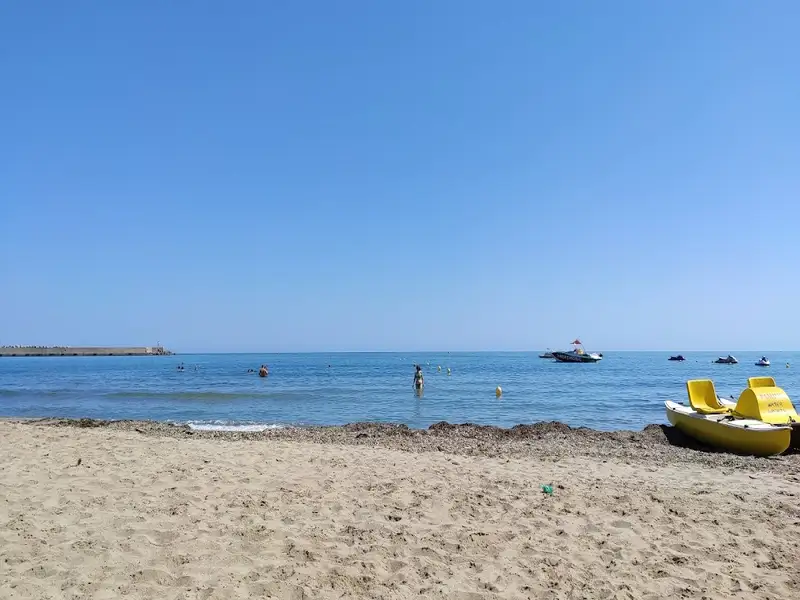
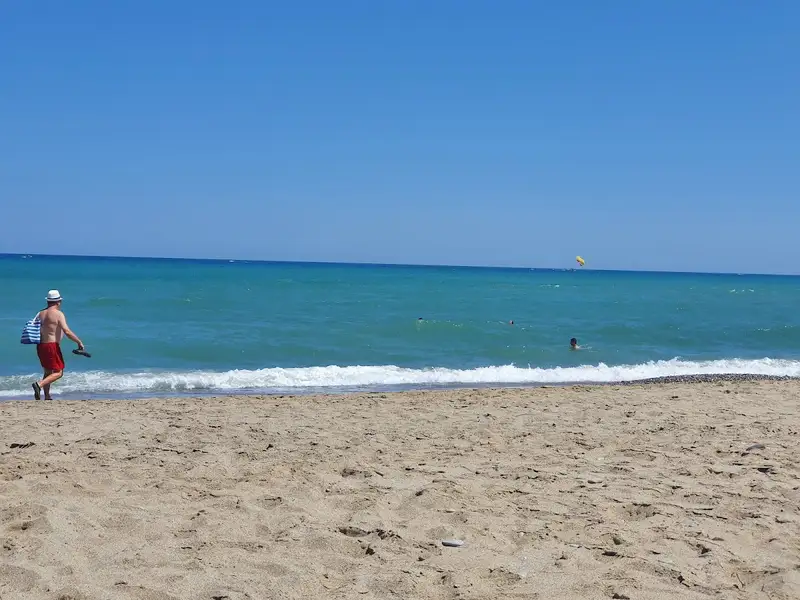
The water is shallow and clear, which makes the beach suitable for swimming and a safe choice for families with children. The sea surface can turn choppy when the wind picks up, so calmer mornings are the easiest time to swim. In peak season the beach fills quickly, and arriving early is the surest way to get a spot with shade.
Rethymno beach is a nesting site for the loggerhead sea turtle, Caretta caretta. Rethymno Gulf is one of Greece’s three most important nesting areas for the species, with more than 400 nests recorded here each year. During nesting season you may see roped-off patches of sand where eggs have been found and protected, so keep clear of the marked areas and leave them undisturbed.
Reaching Rethymno beach is simple. Walk east from the old town and the Venetian port along the seafront, take a local bus, or drive in on the paved road that runs beside the sand. A car makes it easy to reach the quieter beaches further east along the bay and the villages inland; you can arrange one through car rental in Crete.
Rethymno beach is on the north-coast seafront of Rethymno town in Crete, about 500 metres east of the old town and next to the Venetian port. It is the westernmost part of Rethymno Bay’s long beachfront.
Yes. The water is shallow and clear, which suits both swimmers and children. The surface can get choppy on windy days, so mornings are usually the calmest time to swim.
Yes. The shallow, clear water, the lifeguard service and the cafes and facilities along the promenade make it a practical choice for families with young children.
The beach is organised with sunbeds and umbrellas for hire, a seasonal lifeguard, showers, changing rooms, water sports, and beach bars, cafes and restaurants along the seafront. It also holds Blue Flag status.
You can walk east from the old town and Venetian port along the seafront, take a local bus, or drive in on the paved road beside the beach. The beach is also wheelchair accessible.
Rethymno beach is a nesting site for the loggerhead sea turtle, Caretta caretta. Roped-off patches of sand mark protected nests where eggs have been found, so swimmers are asked to keep clear of them.
The beach is busiest in peak summer, when it fills quickly during the day. Arriving early in the morning is the surest way to find shade and a quieter spot, and mornings also tend to have the calmest water.
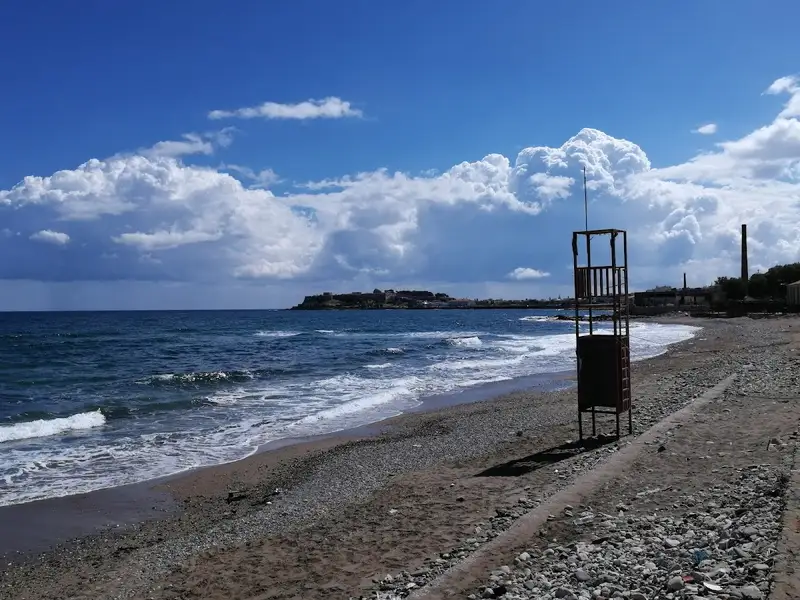
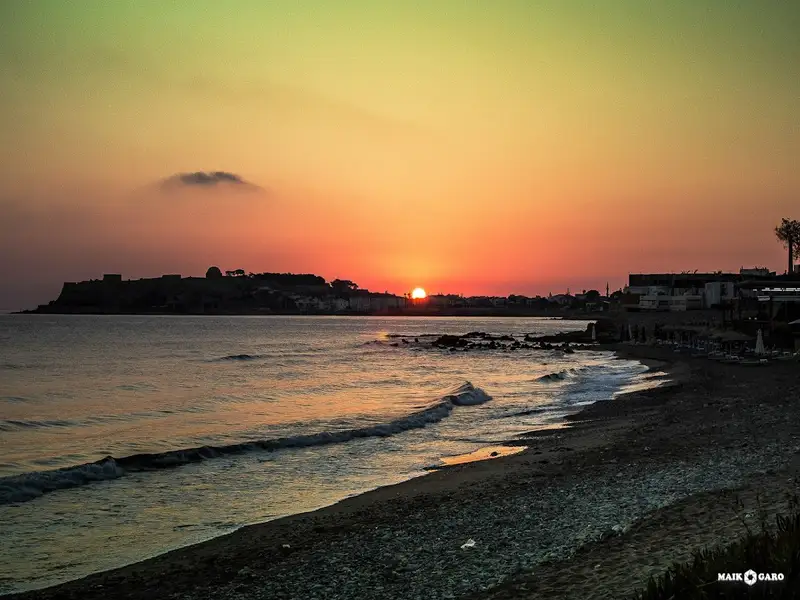
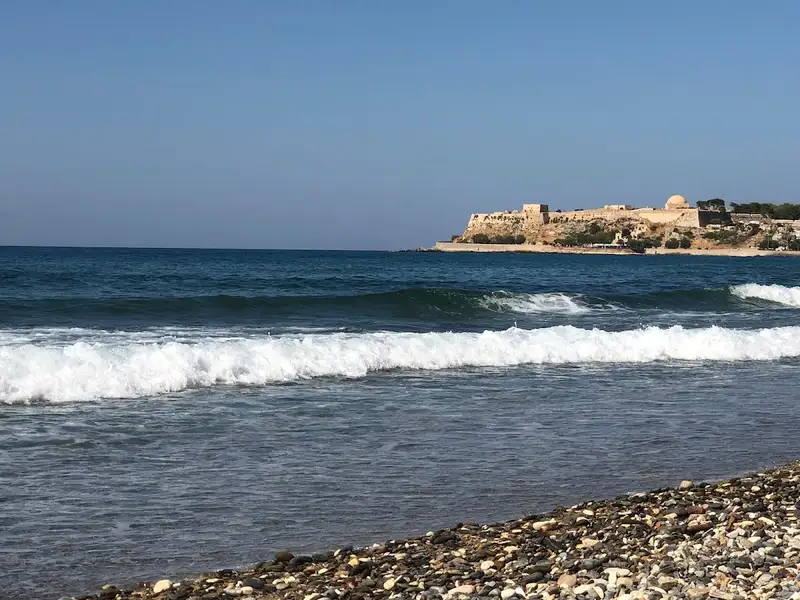
Koumbes, situated 2km west of Rethymnon’s center, is the only beach on the city’s western side. The beach offers stunning vistas of the impressive Fortezza fortress, located several hundred meters to the east. Koumbes derives its name from the Turkish word ‘Kubbe,’ which translates to ‘dome.’ This expansive beach, adorned with sand and fine pebbles, has seen significant growth in recent years, and its development has become a top priority for the Rethymno Municipality. This growth has led to numerous improvements, including the addition of walkways and similar enhancements along the coast.
At Koumbes, visitors can avail themselves of all necessary tourist amenities, such as lifeguard services, umbrellas, showers, changing rooms, and water sports. The area also boasts numerous hotels, accommodations, restaurants, taverns, snack bars, and cafes. Access to Koumbes from the city center is convenient, either by bus or on foot. Walking takes no more than 20 minutes.
Three neighbouring suburbs of Rethymnon, Pervolia, Misiria, and Platanias (also known as Platanes) are situated 3-5km west of the city. Initially independent settlements, they have been subsumed into Rethymnon’s urban region due to expansion in residential development.
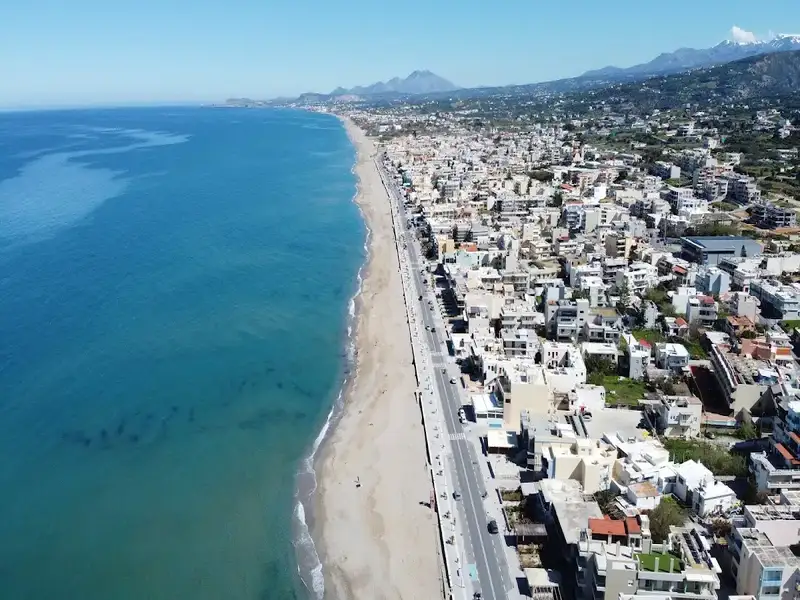
A lengthy sandy beach, part of Rethymnon bay’s expansive beachfront, extends in front of these suburbs. The beach begins near Rethymnon’s harbour and continues eastwards for 13km until reaching Skaleta. The beach is well-maintained and offers a wide selection of food, drink, and lodging options.
A notable feature of this beach, like the entirety of the vast beachfront, is the nesting activity of the Caretta caretta sea turtle. These turtles, protected by international law, lay their eggs in the sand. Rethymno Gulf is one of Greece’s three critical habitats for Caretta caretta, with over 400 nests documented annually.
Pervolia, Misiria, and Platanias, also known as Platanes, form a trio of suburbs that adjoin the city of Rethymnon, and are situated 3-5km west of the city. Previously individual settlements, they have now merged into Rethymnon’s urban district due to the growth of residential areas.
A sprawling sandy beach extends in front of these suburbs, forming part of a 13km long coastal strip that begins near Rethymno’s harbour and reaches as far as Skaleta beach. This well-maintained beach offers a wide variety of options for dining, drinking, and lodging. Along this extensive stretch of coastline, loggerhead sea turtles (Caretta caretta) come to nest. These turtles are at risk of becoming extinct, but the Rethymno Gulf stands as one of the three most crucial habitats for the species in Greece, hosting an average of over 400 nests each year.
The name Misiria originates from the Arabic term ‘Misr’, referring to a suburb of Cairo known for its fertile soil. In a similar vein, Misiria is so named due to its productive land, which continues to yield a bounty of vegetables.
No results available
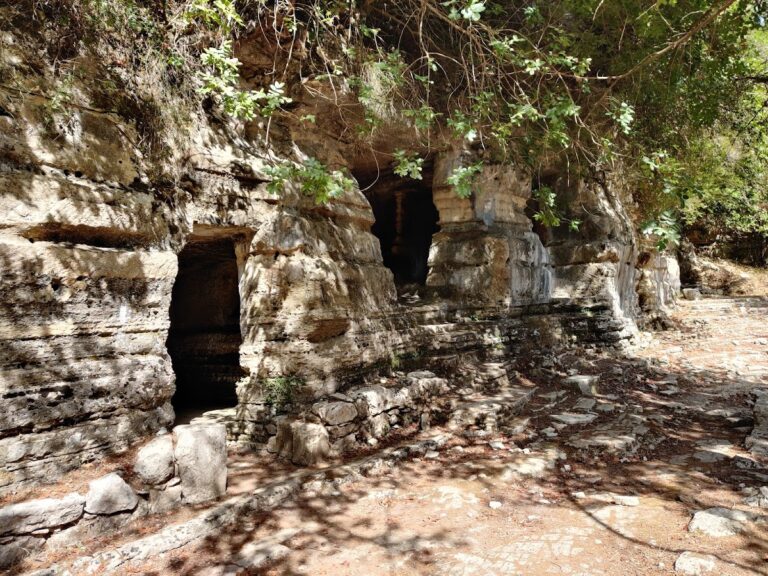
Ancient Lappa was built near the present-day town of Argyroupolis, situated 27km south of Rethymno. The area is now renowned for its springs with waterfalls, its old mills, and the lush green landscape that attracts thousands of visitors each year. Lappa, later known as Lappi or Lambi, is one of the towns believed to have been founded by Agamemnon in Crete. The citizens of Lyttos fled to Lapa after the massacre of Lyttos by Knossos. In 193 BC, Lappa became an ally with Teos, and in 183 BC with Pergamon.
The city thrived until 68 AD when the Roman general Quintus Caecilius Metellus destroyed it. It was later revived as a Roman town with special privileges at the end of the Roman Era. Its glory is reflected in the magnificent monuments that have been discovered and the coins minted. In the area, Roman baths and basilicas with mosaics have been identified, as well as inscriptions and statues of Zeus, Aphrodite, and Dionysus. The Cave of Agia Dynami also appears to have played a significant role, with its essential spring that gushes through the rock.
Additionally, near the village is the temple of the Five Virgins (Thekla, Marianna, Ethane, Martha, and Mary), who are believed to have died there. Beside it lies the Roman necropolis with carved tombs, in a green area with a water spring and a plane tree that has been designated as a natural monument.
After the arrival of the Arabs in Crete, the town and the Diocese founded by Apostle Titus were destroyed. During the Venetian period, the city passed from the hands of the Hortatsis family to Alexios Kallergis. It then thrived once more, which is strongly reflected in the splendid Venetian buildings of the village. The Turks called the town Gaidouropoli (i.e., Donkey Town) until 1822 when the rebels renamed it Argyroupolis. The General Assembly of Crete took place in Argyroupolis in 1867 and 1878, the year that Cretans declared the Union of Crete with Greece, though the attempt ultimately failed.
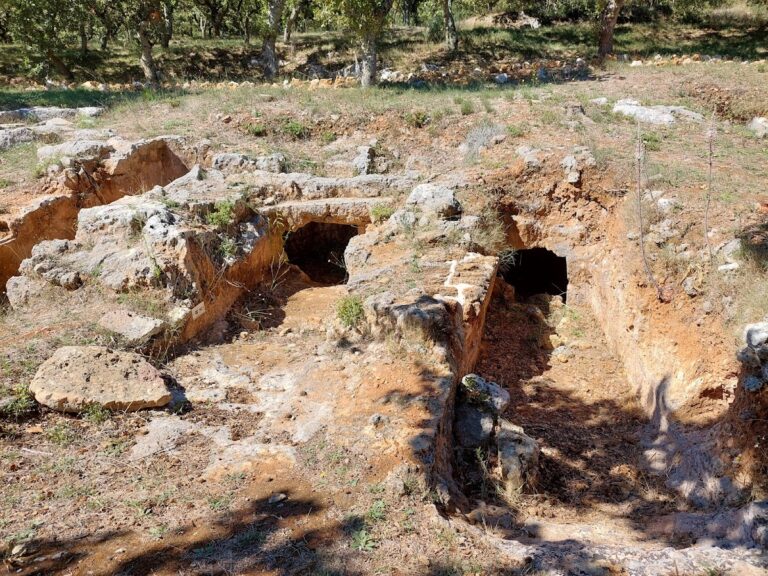
The Armeni Minoan necropolis is located 9km south of the town of Rethymnon, on the main road leading to the south coast of Crete. This significant Late Minoan III A-B (c. 1400-1200 BC) cemetery was found on a shallow hill called Prinokefalo, which translates to “hill of the wild oaks.”
Systematic excavations began in 1969, and by 2012, 231 tombs, including one tholos (domed grave), had been uncovered. A unique feature of the Armeni necropolis is that it initially had an overall plan, with specific areas designated for wealthy noblemen and the less fortunate. However, this plan was abandoned during the Late Minoan III B Period (1300-1200 BC), resulting in a mix of large and small tombs throughout the cemetery.
All the tombs were carved into the rock and consisted of a corridor and a chamber. The corridor was either a staircase or a ramp. Some tombs were left incomplete, with only a corridor and no burial chamber. The more affluent tombs had tombstones of varying sizes, with eleven found away from their original locations.
Each tomb likely represented a family group. Osteological (bone) analysis revealed that the average age at death for adult males and females was approximately 31 and 28 years, respectively. Most female deaths occurred between the ages of 20 and 25, likely due to the dangers of childbirth. Chemical analysis of bones indicated that the people buried at Armeni did not consume marine food, but their diet generally consisted of a fair amount of animal protein and plants. They suffered from various infectious and nutritional/metabolic diseases, as well as dental caries.
The primary discoveries in the tombs included clay larnakes, finely decorated pottery, bronze arms, utensils and ornaments, sealstones, and necklaces made from semi-precious stones. Among the most notable finds were a boar’s tusk helmet, a basket made of reeds and adorned with small bronze pins, a steatite pendant with Linear A script, and a stirrup jar with Linear B script (mentioning the name wi-na-jo).
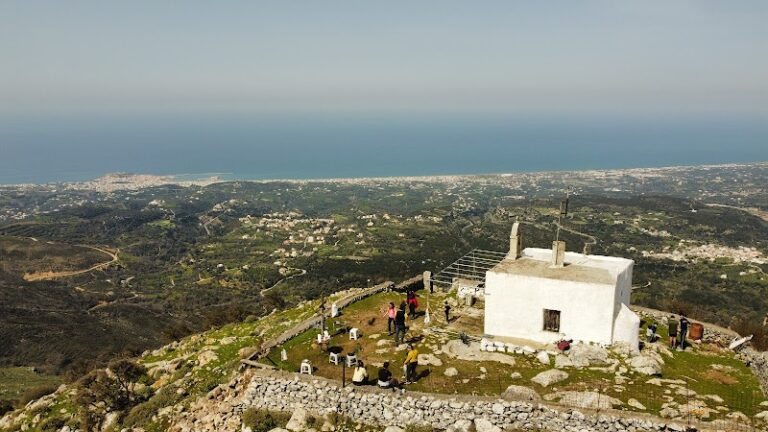
At the location of the chapel of Agio Pnevma (the Holy Spirit) on top of Mount Vrysinas, with an elevation of 858m, archaeologists have discovered what is likely the most significant Minoan Peak Sanctuary in West Crete, the peak sanctuary of Vrysinas. From this vantage point, one can see the northern coast of Rethymnon and the province of Agios Vasilios to the south.
Excavations at this open-air sanctuary have uncovered extremely important findings dating from 1900-1050 BC. The Minoans offered hundreds of zoomorphic and anthropomorphic clay offerings to their goddess. In 2011, a red steatite seal was discovered, engraved with the oldest known Minoan language, the hieroglyphic script. This is the only known example of this script in West Crete.
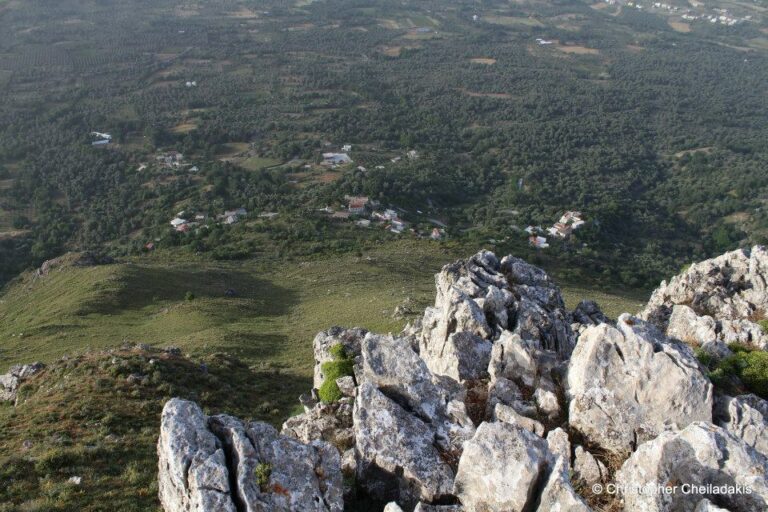
Above the Atsipades village in St Basil province, Rethymno, you can find a series of small peaks, with the highest being Kouroupa. The Kouroupa mountain range extends from west to east, separating the villages in the Agios Vassilios valley from the coastal settlements and creating a distinct climate. Kouroupa’s boundaries are well-defined, with two long and majestic canyons, Kourtaliotis and Kotsifos, marking its edges. Beyond Kouroupa’s peak, there are several smaller yet equally stunning peaks.
One of the most beautiful and unique peaks is Korakias, located just above Atsipades. The name Korakias means “the place with crows.” From a distance, Korakias appears impressive and peaky, with steep cliffs on each side and only the south side being easily accessible. This imposing, fortress-like location was chosen by the ancient Minoans as a peak sanctuary. Korakias was identified as a peak sanctuary in 1985, and its discovery has been announced in academic journals on several occasions. In 1989, Dr. Alan Peatfield excavated this peak sanctuary on behalf of the British School at Athens, and numerous papers have been published since then. A few artifacts from Korakias can be viewed at the Archaeological Museum in Rethymnon.
Unfortunately, there are no signs explaining the area’s history or providing directions to the site. Korakias can be reached via a rough dirt road starting from Atsipades, but the numerous side-streets can make identifying the peak difficult. However, the view from the peak sanctuary is breathtaking and stretches for several kilometers.
No results available
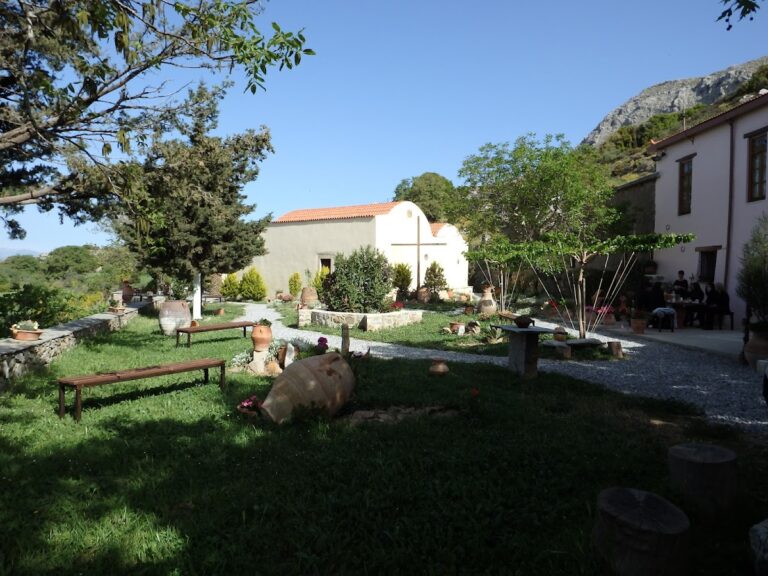
The Agio Pnevma (Holy Spirit) Monastery likely dates back to the 12th century and had already achieved autonomy and prosperity by the end of Venetian rule. Tragically, on June 15, 1821, local Turks slaughtered the monks and set fire to the monastery.
Subsequently, the damaged monastery became a subsidiary of the Preveli Monastery, and by 1836 it functioned as a widely known school throughout Crete and Gavdos, drawing thousands of students from all over the island.
In the present day, the monastery is home to a monument dedicated to the 200 volunteers led by Demetrios Petropoulakis, who lost their lives in a battle against the Turks on December 5, 1868. The monastery has since been restored and has resumed operations.
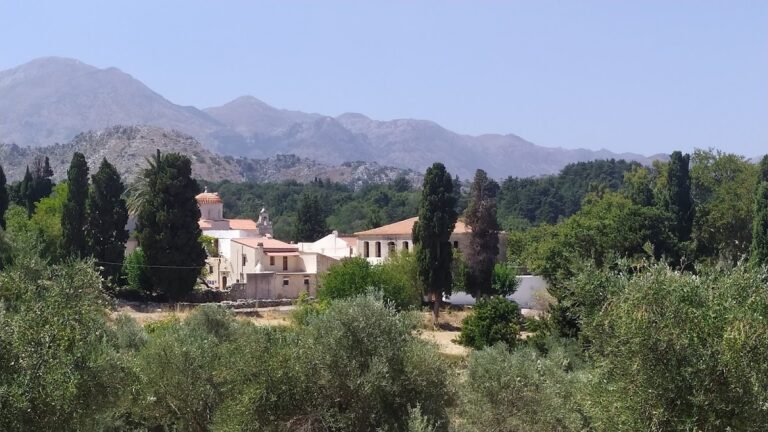
The Profitis Elias Monastery, situated on a hill with sweeping views 20km south of Rethymno and adjacent to Roustika village, is a relatively lesser-known monastery in Crete. Founded during the Venetian Era, it is among the island’s most historic convents.
Throughout its history, the monastery was repeatedly destroyed by the Ottomans, with the last instance occurring during the 1866 revolution. The monastery played an active role in the resistance against Turkish rule. Consequently, the monastery’s buildings, aside from the temple, were constructed in their present form after 1866. Additionally, Profitis Ilias made a significant contribution to preserving Cretan history by housing the Historical Archive of Crete during the German Occupation.
The monastery features a fortress-like architectural design. At the center of the courtyard, visitors will find a three-aisled basilica with a dome dedicated to Prophet Elijah (celebrated on July 20), the Holy Trinity, and Agia Zoni (August 31). The belfry of the monastery, along with that of Arkadi Monastery, are the only surviving Venetian bell towers in Crete. Surrounding the courtyard are the two-story monks’ cells, an incomplete guest house, and the refectory.
Within the temple, visitors can admire the ancient wooden iconostasis, the throne (dated 1843), and the pulpit. Additionally, numerous relics are housed in the sanctuary, including sacred vessels, vestments, gospels, crosses, relics of various saints, a brocade epitaph, old books (dating back to 1640), and manuscripts (from 1620).
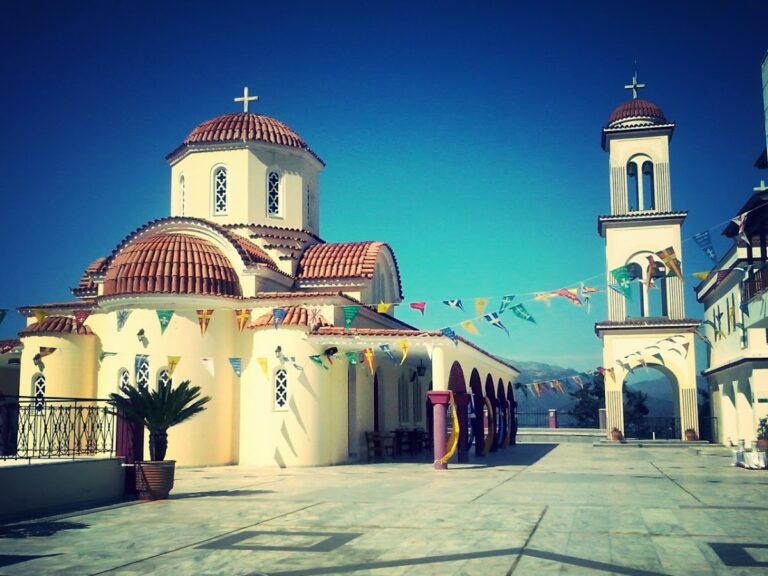
In the early 1990s, the monastery of Saints Raphael began operating on the hill of the Episcopacy (Diocese seat) of Lambi, Sivritos, and Sfakia in Spili. The primary temple is devoted to the martyrs Saint Raphael, Nikolaos, and Irini. Additionally, the monastery houses the chapels of Saint Irinaeus, Saint John the Baptist, Saint John the Hermit, and Archangel Michael.
Constructed atop Timios Stavros hill in the western suburb of Rethymnon called Koumbes, the Convent of Jesus Christ (Christ the Savior) likely dates back to the Venetian period, similar to numerous other temples and monasteries in the area.
Historians speculate that the monastery was originally home to the Convent of Our Lady of Erimitiani, as evidenced by a 17th-century Renaissance painting. However, the monastery was destroyed during the Turkish occupation of Rethymnon in 1645 and only reopened in 1935.
The monastery’s church features two aisles dedicated to the Transfiguration and St. John the Baptist. The nuns are responsible for the beautiful paintings and icons within the church. Additionally, the monastery houses a small museum and library containing books and memorabilia belonging to Bishop Titos Sylligardakis.
No results available
No results available
No results available
No results available
No results available
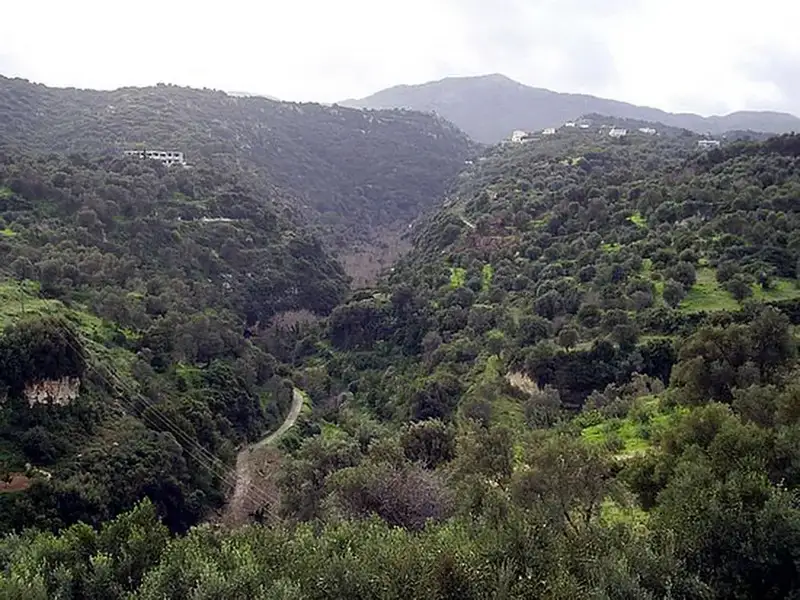
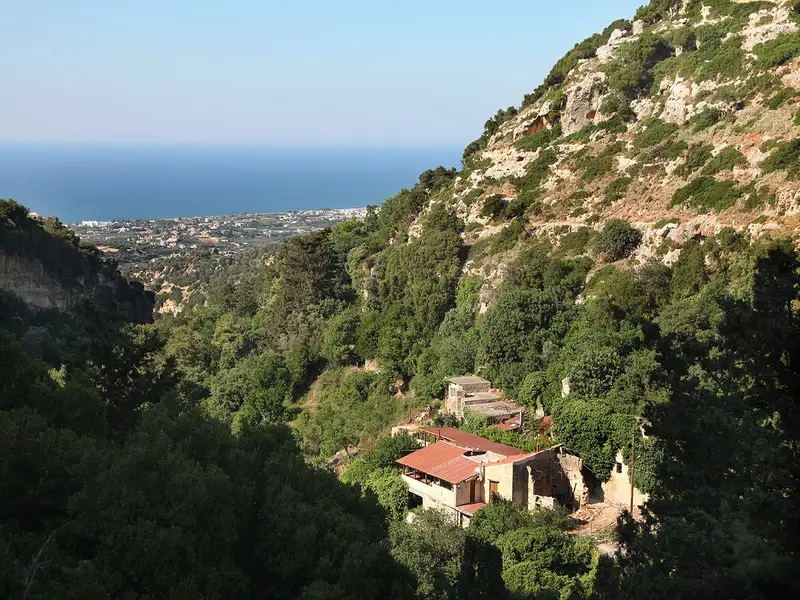
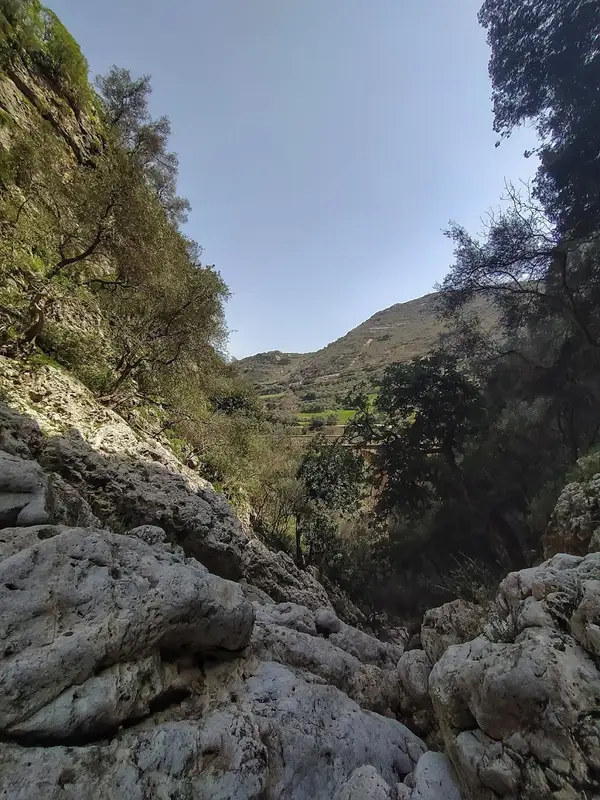
Located near the town of Rethymno, Mili Gorge is an enchanting green oasis. It’s essentially a ravine that houses a vast array of plants and trees, forming a genuine botanical garden. The gorge gathers water from the northern slopes of Mount Vrysinas, beginning north of the Chromonastiri village and south of the Xero Chorio settlement. In recent times, it has become a popular spot for hikers who enjoy the pleasant trail that spans the entire valley.
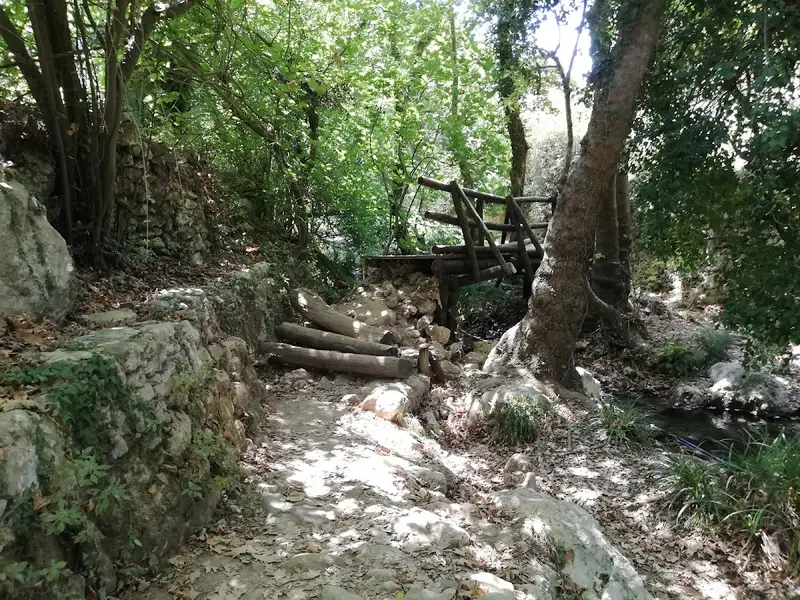
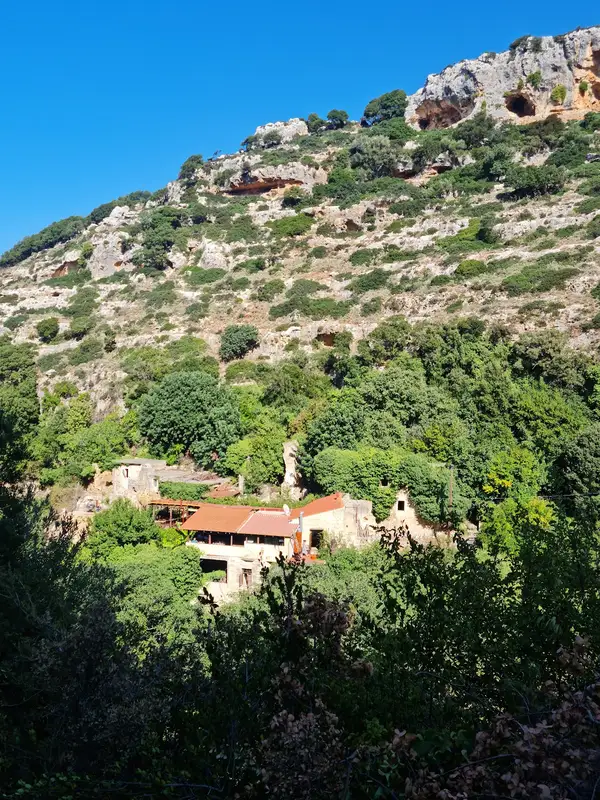
Within the heart of the canyon lies the abandoned village of Mili, named after the water mills that were once situated in the gorge. The village is split into two areas, Ano Mili (Upper mills) and Kato Mili (Lower mills). The majority of villagers were millers, with nearly all the cereals from the region and surrounding villages being milled at Mili.
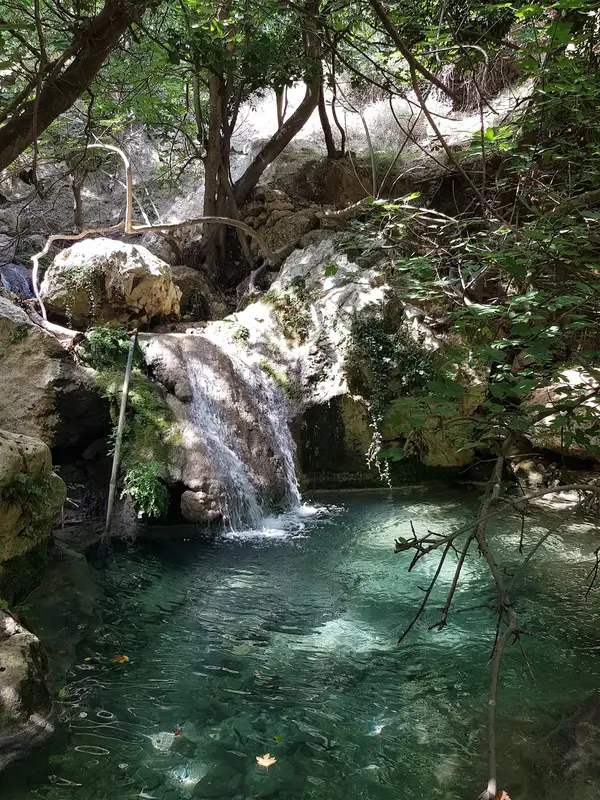
Nowadays, only one renovated watermill remains in good condition for visitors to understand its operation. Besides the numerous mills, the area is home to gardens filled with fruit trees and vegetables. Water continuously flows from the springs scattered throughout the canyon, with the largest springs being Saint Anthony and Five Virgins. The water along its course forms small waterfalls and lakes, perfect for a refreshing dip under the shade of towering plane trees.
The village of Mili was deserted in 1972 due to fear of landslides, with some mills being renovated into residences and a cafe-restaurant for guests. The villagers moved and built the village Nei Mili (new mills) high above the gorge on the west. The gorge also boasts a significant number of striking churches, including the cavernous church of Saint Anthony (Agios Antonios) and the cavernous church of Saint John (Agios Ioannis), as well as the cemetery church of the Holy Five Virgins (Pente Parthenes).
Further along Kato Mili, you’ll encounter the cavernous chapels of Saint Paraskevi (Agia Paraskevi) and Saint Nicholas (Agios Nikolaos).
The stunning Galliano canyon begins to the southeast of Gallos and concludes at the Rethymnon town, channeling water from the Armeni region to the Koumbes beach. It stretches over a distance of 5.5km, with the journey taking you through a lush ravine. Regrettably, there are multiple spots where shepherds have put up wires to confine their herds, making the trek along the stream challenging.
Close to the entrance, you’ll encounter the ancient Saounatsides watermill, which was operational until the 20th century. You can also see remnants of an old chapel nearby. A few meters south of the mill, another path leads to the cave-like temple of Saint Anthony.
The untamed Prassano gorge, also known as the Gorge of Prasses, is situated 10 km southeast of Rethymnon. It commences south of the Prasses village and provides a captivating three-hour hike through enormous rocks and some fairly challenging passages, adding to the intrigue of the trek. The Prasano Gorge, currently serving as the “overflow” channel for the Potami dam, winds its way through the rocky hills of Gargana, with its stream terminating in the suburb of Platania, east of the city of Rethymnon. The river is engulfed by lush vegetation and towering plane trees, making it an ideal spot for a refreshing excursion.
The Prassano gorge can only be accessed from mid-June to mid-October due to the water flow. It is a crucial biotope of Crete, providing a habitat for buzzards and a small group of Bonelli’s eagles.
The Prasses Village
Set amidst the verdant Cretan landscape on the slopes of Vrysinas, Prasses serves as an entrance to the southern coast. This medieval village showcases the intermingling of diverse cultures that have traversed Crete, evident in the Venetian mansions, Turkish farmsteads, and Orthodox churches. The rich natural and cultural diversity make the village an ideal location for tours and walks. Heading south from Prasses, the road leads to the Potami valley, home to the dam of the same name.
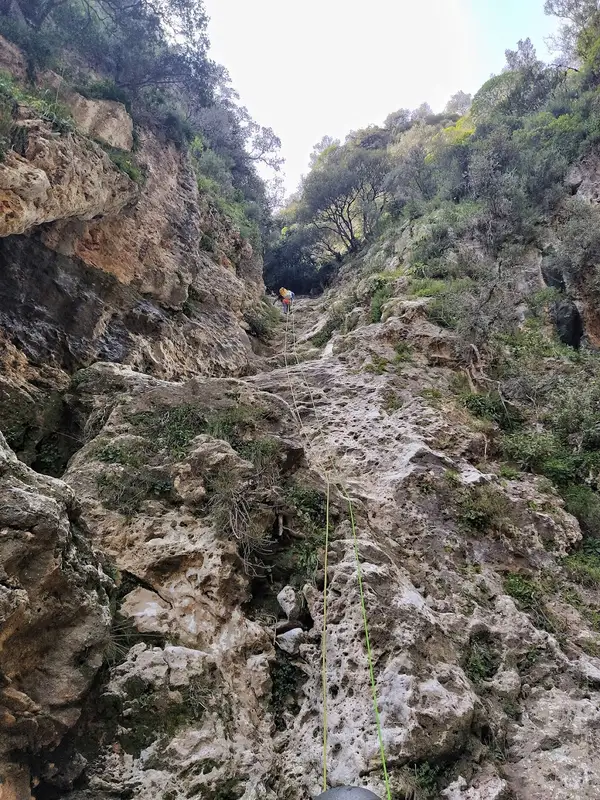
In northern Rethymnon, beneath the village of Myrthios (not to be confused with the Myrthios near Plakias), a petite ravine teeming with plane trees gives way to a wild and untamed gorge at Kaminolakos. The gorge is typically dry, only filling with water after significant rainfall. It is accessible only with canyoneering gear. This gorge remained unexplored until March 22, 2013, when Christopher Cheiladakis, Argyro Koghylaki, and Rudolf Riegler ventured into it for the first time, installing safety rings in the process.
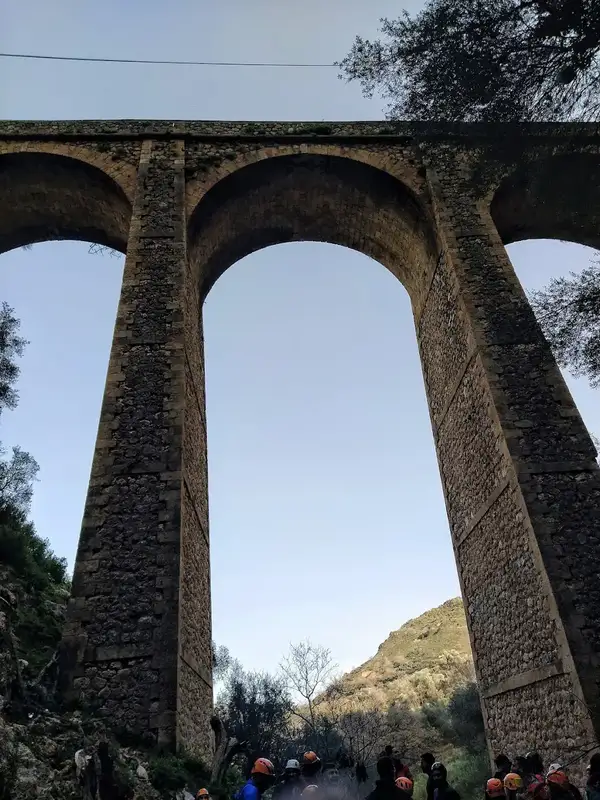
The initial stretch of the gorge is particularly wild, leading to a series of small rappels before reaching the final waterfall, a towering 55 meters high. This waterfall is nestled under an umbrella of large trees, hidden away in a shadowy enclave. The gorge culminates at the renowned stone bridge of Simas, which is situated on the road to Amari. This bridge, the highest in Crete, is considered an architectural marvel of its time.
No results available
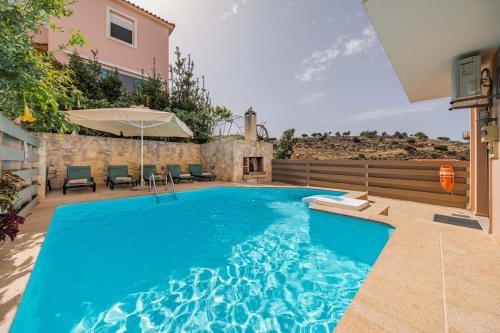
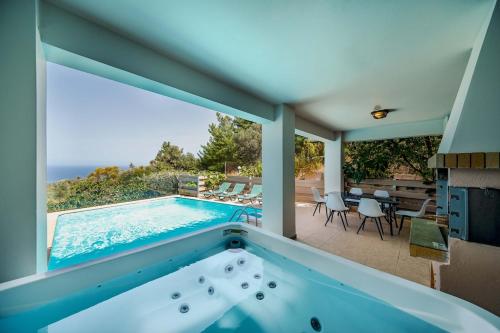
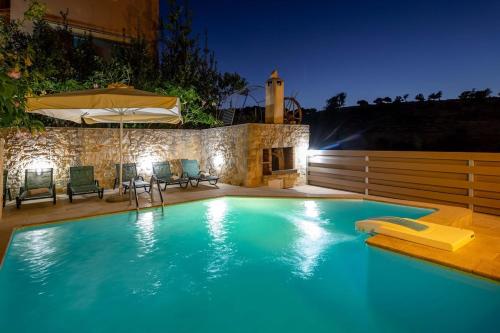
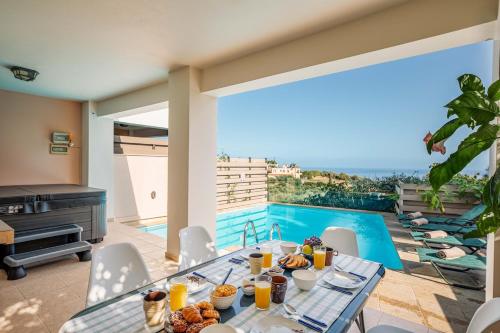
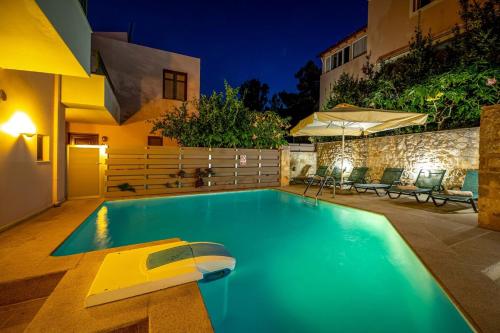
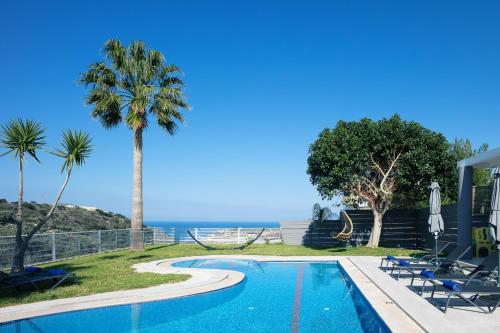
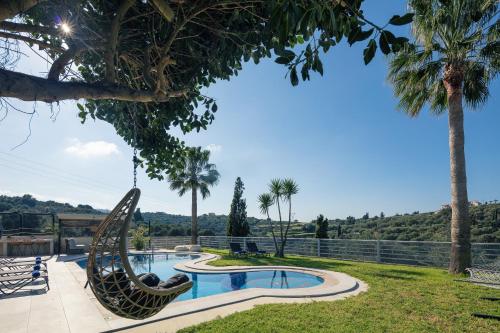
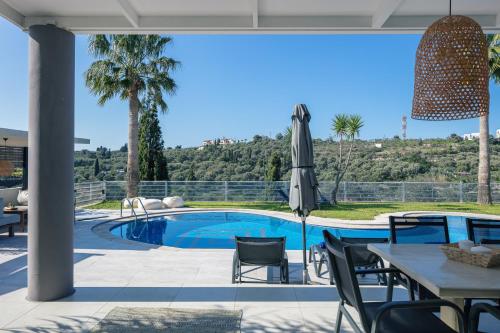
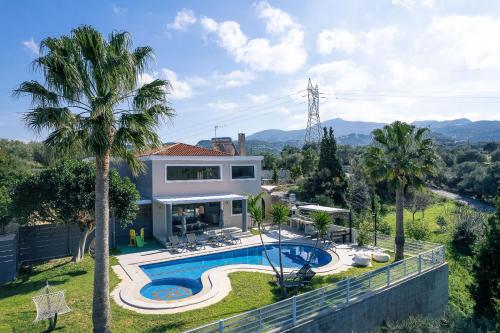
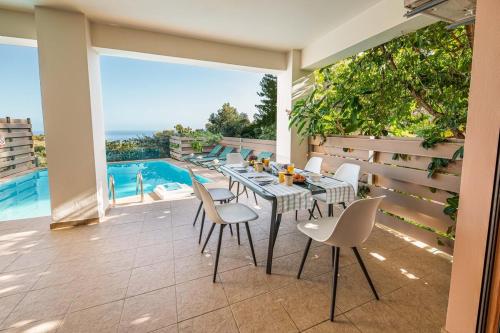
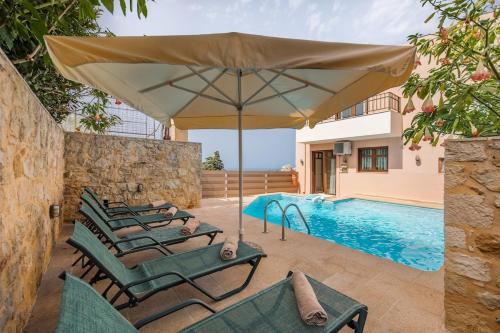
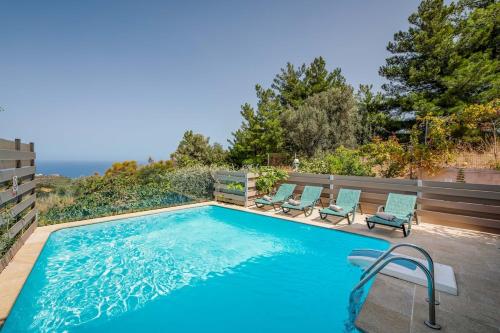
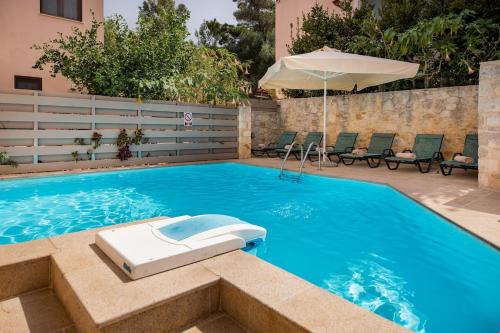
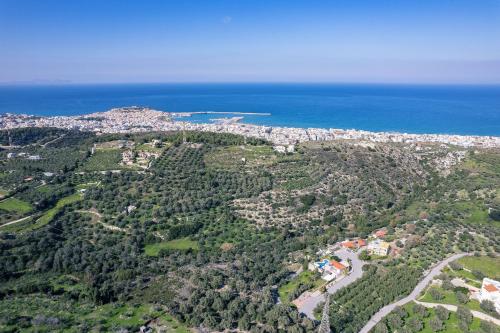
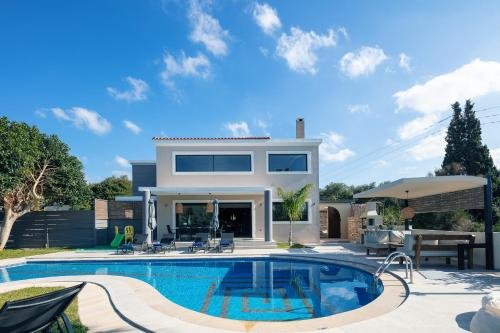
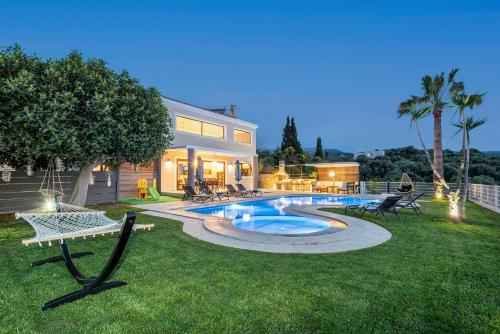
This luxurious villa complex is located in Mikra Anogia, just 3.5 km from Rethymnon and its port and beautiful sandy beaches. All villas have a private pool with furnished sun terrace.
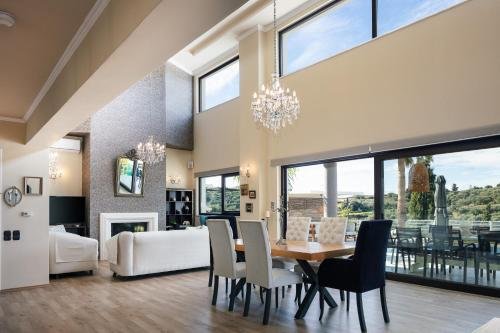
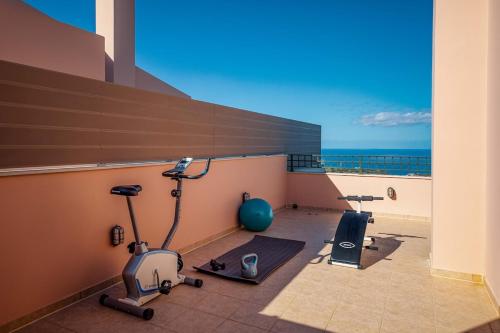
Each villa has a large balcony with panoramic view of the sea. Interiors are traditionally furnished and inlcude 3 bedrooms, kitchen and living room with fireplace. The luxurious bathrooms have a bathtub or shower cabin.
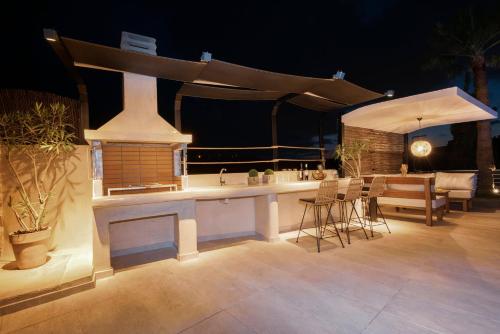
Guests may benefit from free internet access in all areas. Each villa enjoys free BBQ facilities and free parking.
The nearest beach is 3.5 km away and the nearest super market and tavern are 2 km from the villas. Heraklion and Chania airports are reached after a 45-minute drive.
from
€181
/night
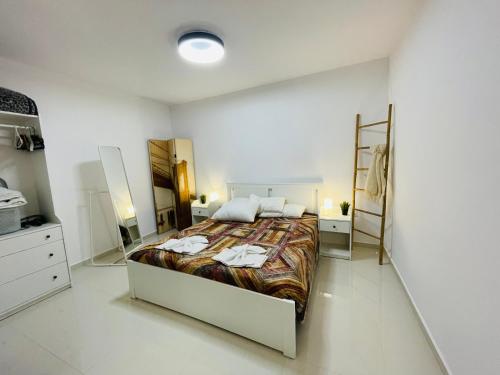
Set in Roussospítion in the Crete region, Haris white apartment features a terrace and inner courtyard views. It has a garden, mountain views and free WiFithroughout the property.
This air-conditioned 1-bedroom apartment comes with a kitchen, a seating area, and a flat-screen TV. Towels and bed linen are offered in the apartment.
The apartment offers a hot tub.
Archaeological Museum of Rethymno is 6.9 km from Haris white apartment, while Museum of Ancient Eleftherna is 27 km from the property. The nearest airport is Chania International Airport, 75 km from the accommodation.
from
€54
/night
Boasting garden views, Not a Villa offers accommodation with a balcony and a kettle, around 6.9 km from Archaeological Museum of Rethymno. It has a garden, mountain views and free WiFithroughout the property.
The holiday home has 2 bedrooms, 2 bathrooms, bed linen, towels, a flat-screen TV with satellite channels, a dining area, a fully equipped kitchen, and a terrace with sea views.
Museum of Ancient Eleftherna is 27 km from the holiday home, while Psiloritis National Park is 47 km from the property. The nearest airport is Chania International Airport, 75 km from Not a Villa.
from
€68
/night
Set in Mikra Anogia, 2.3 km from Rethymno Beach and 4.4 km from Archaeological Museum of Rethymno, Akira Villa offers air conditioning. This villa features a private pool, a garden, barbecue facilities, free WiFi and free private parking.
The villa is fitted with 4 bedrooms, 3 bathrooms, bed linen, towels, a flat-screen TV with streaming services, a dining area, a fully equipped kitchen, and a terrace with sea views.
Both a bicycle rental service and a car rental service are available at the villa, while cycling can be enjoyed nearby.
Museum of Ancient Eleftherna is 25 km from Akira Villa, while Psiloritis National Park is 45 km away. The nearest airport is Chania International Airport, 73 km from the accommodation.
No results available
Connect with thousands of Crete visitors and boost your bookings.
No results available
© All rights reserved. Crete Locals