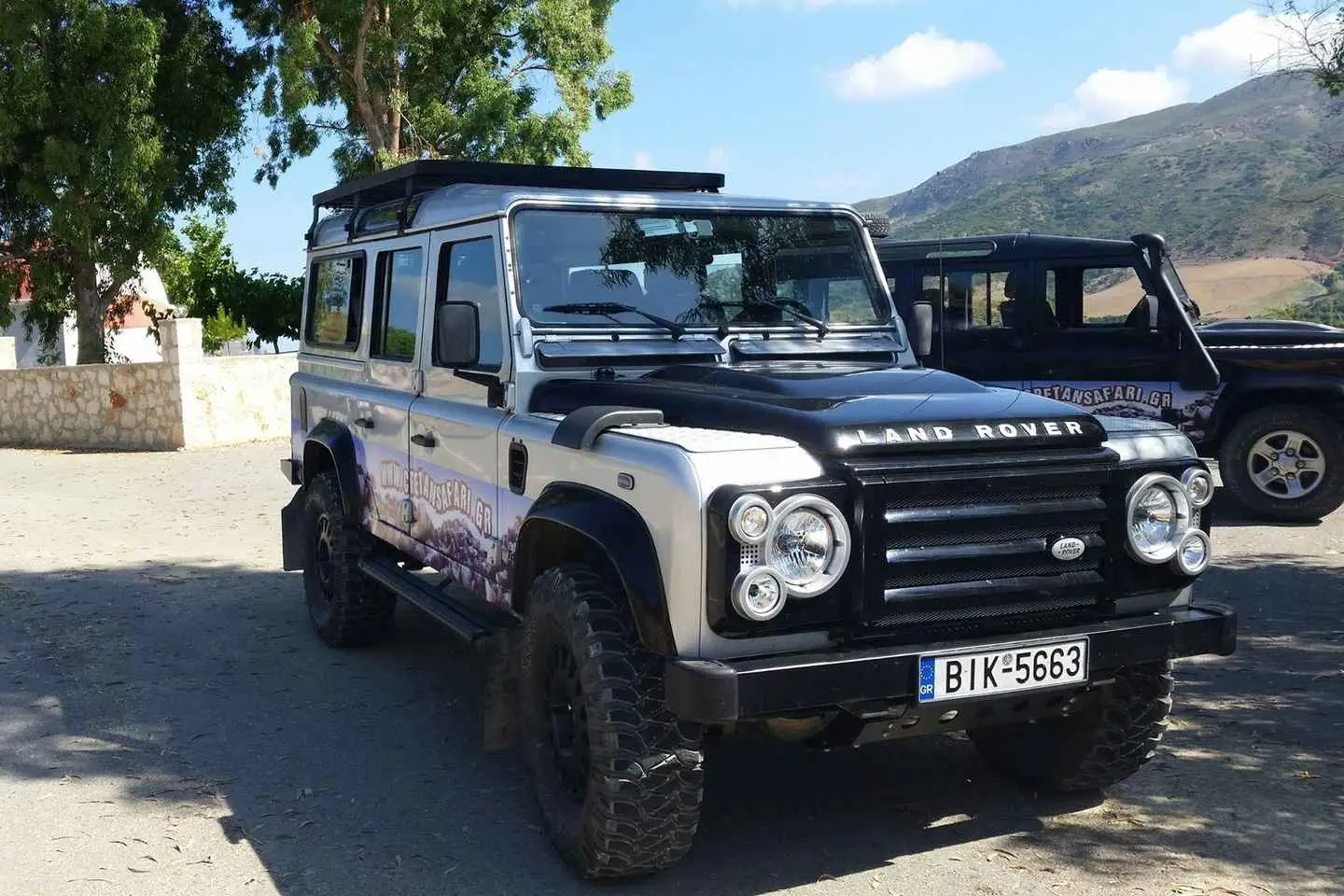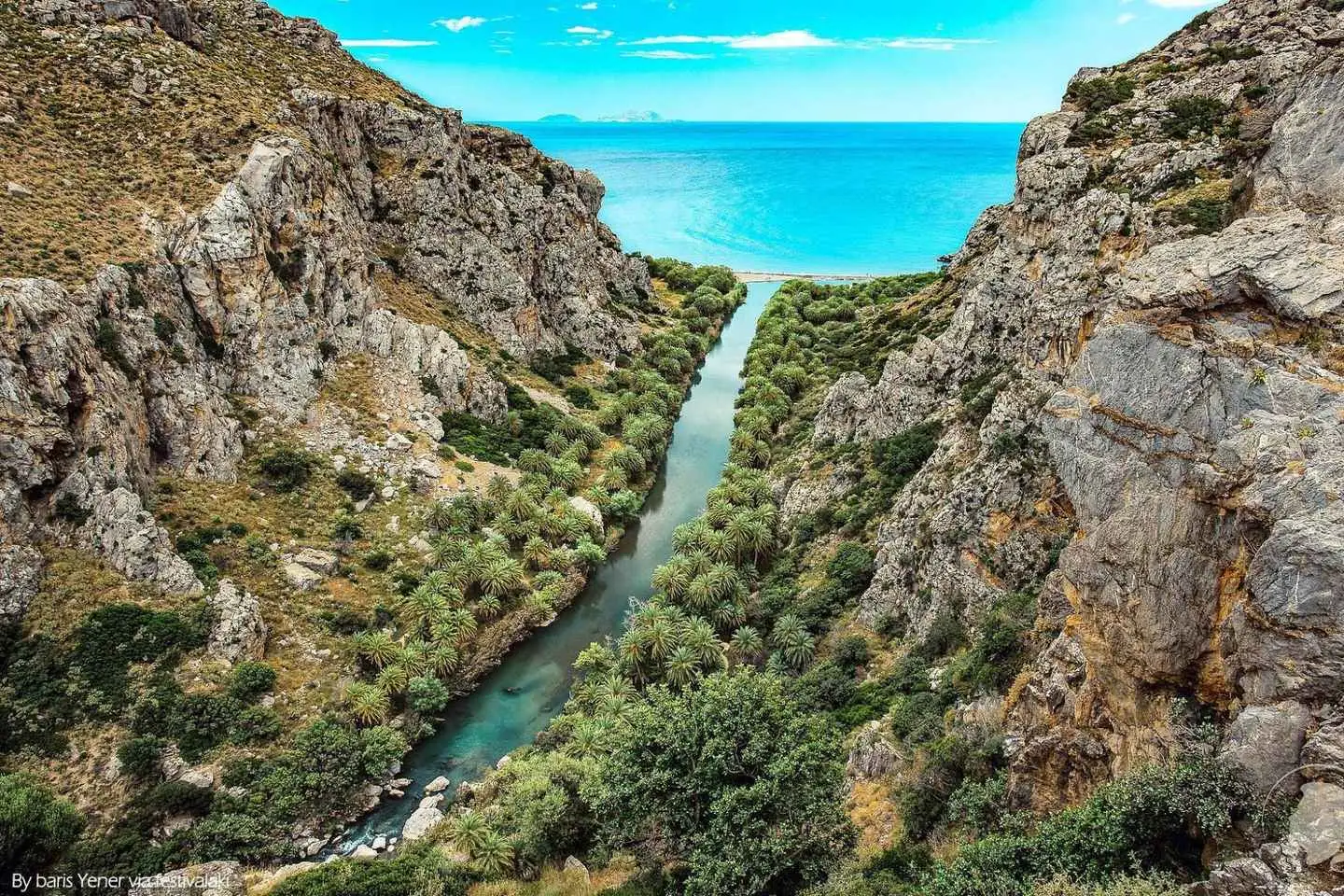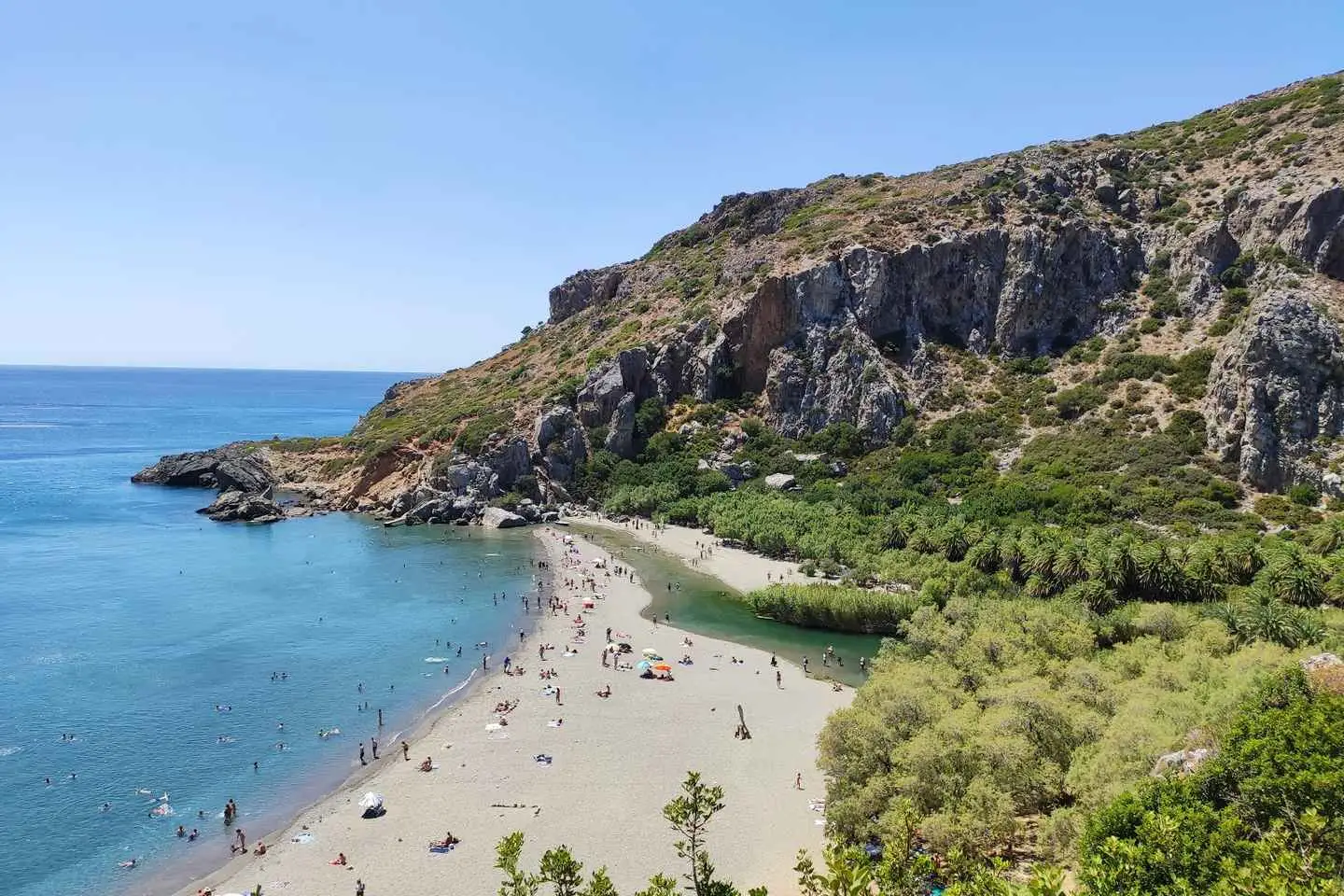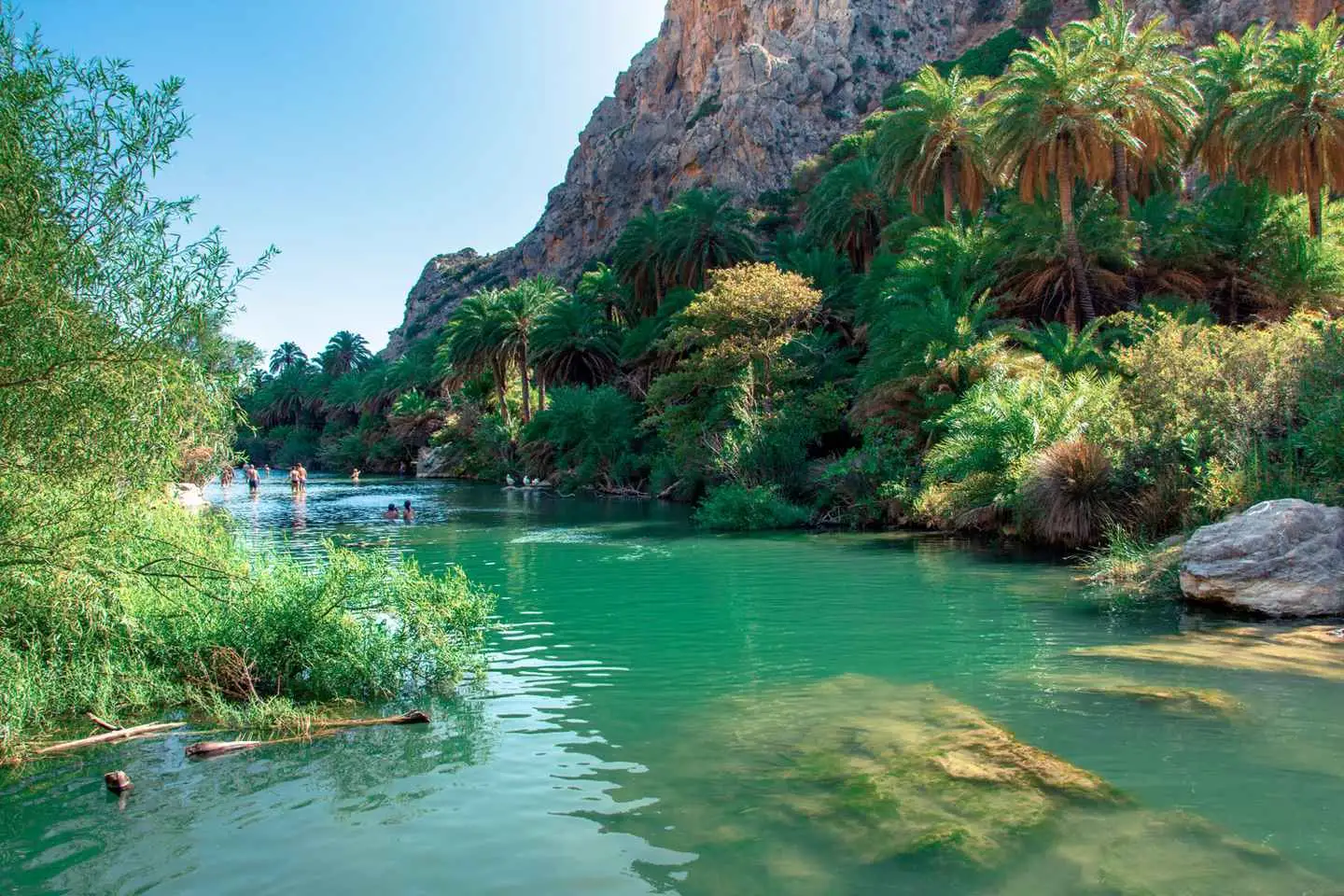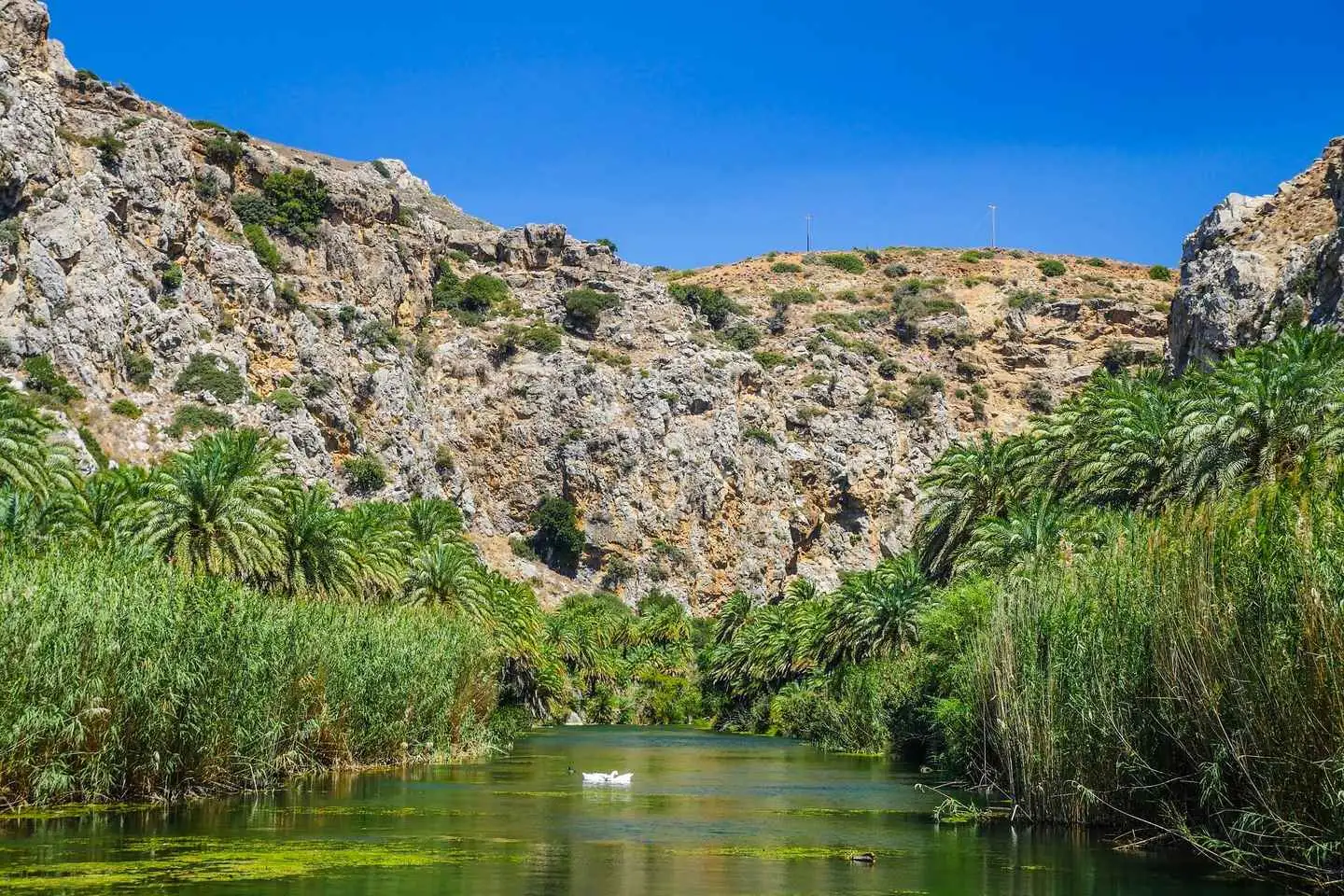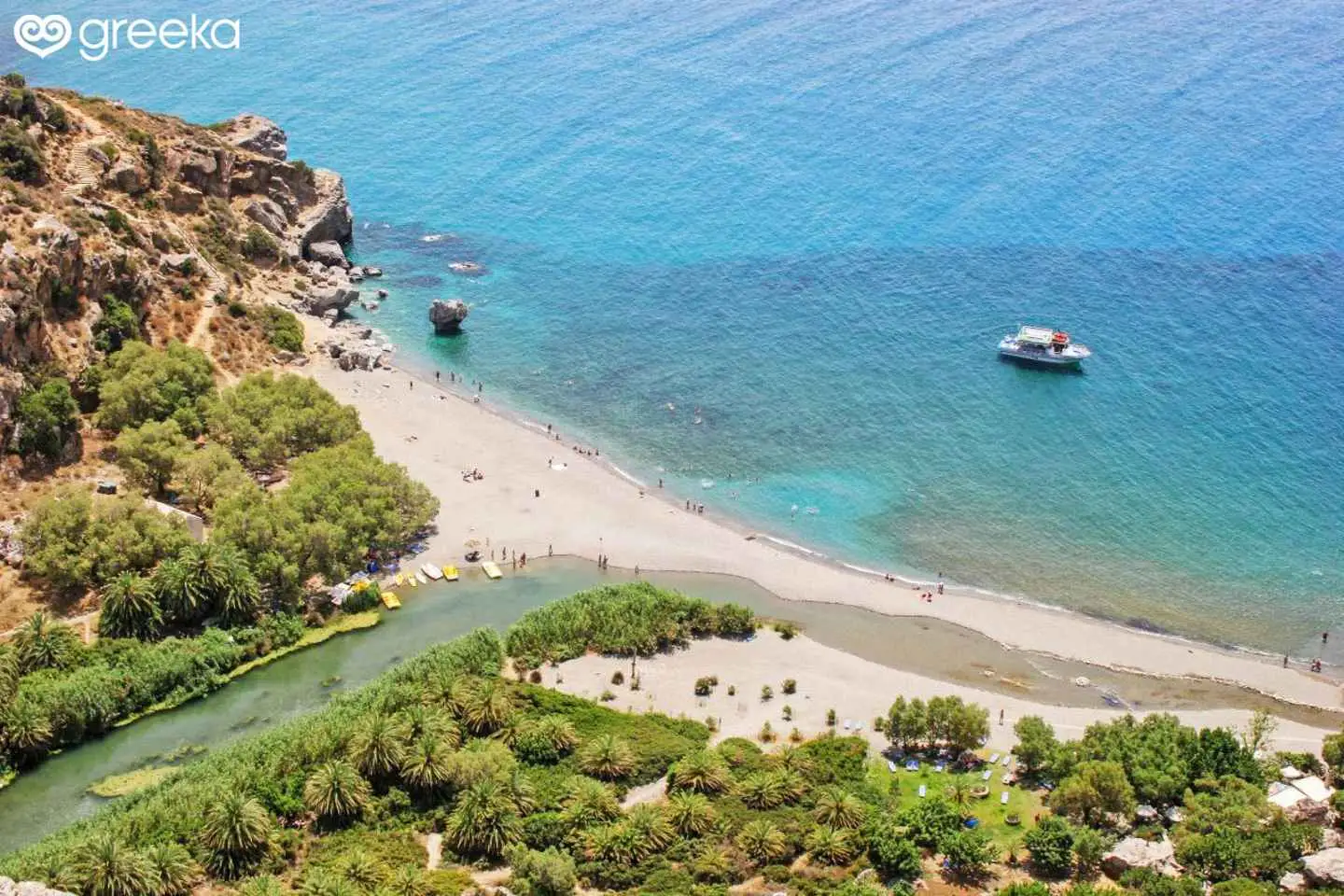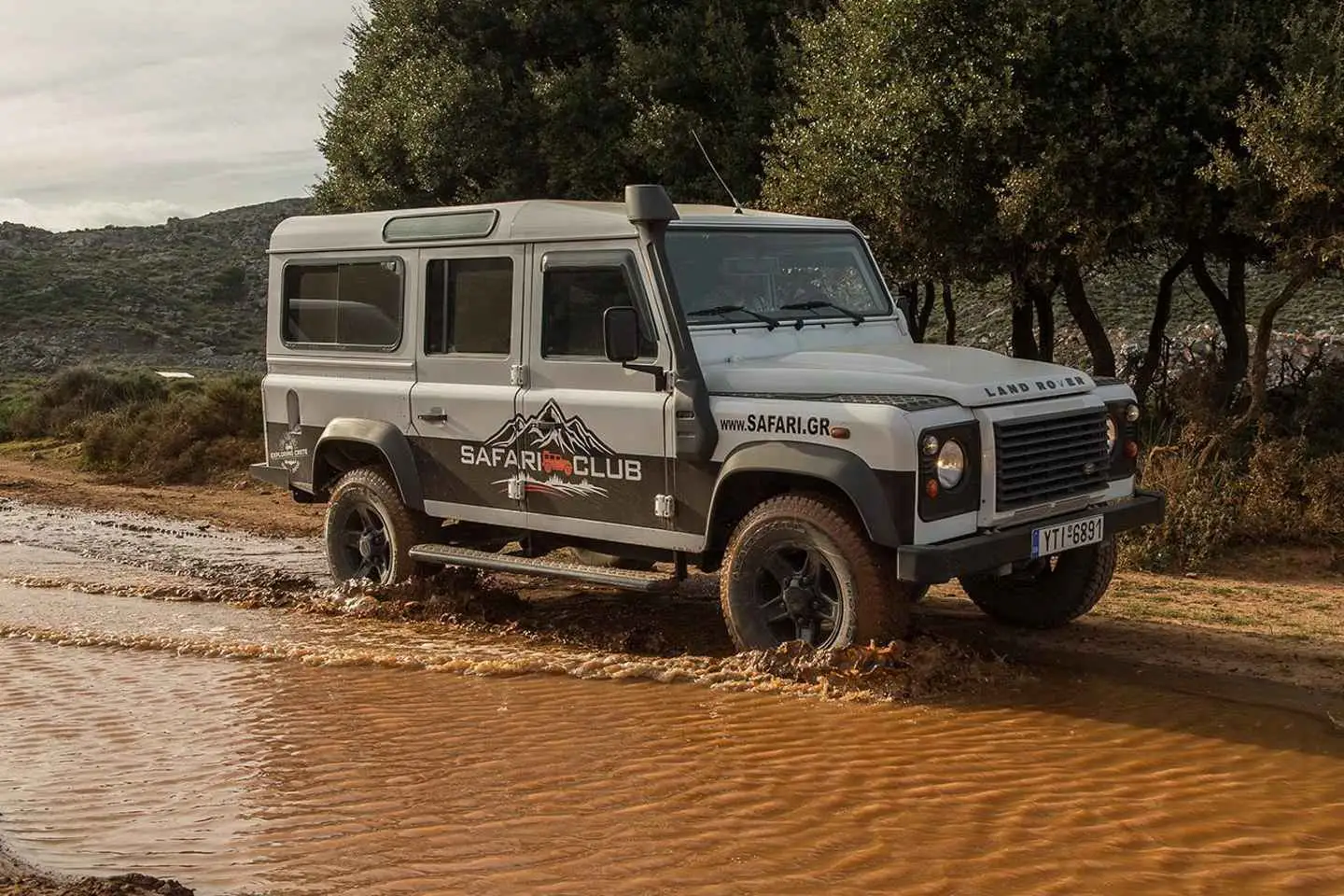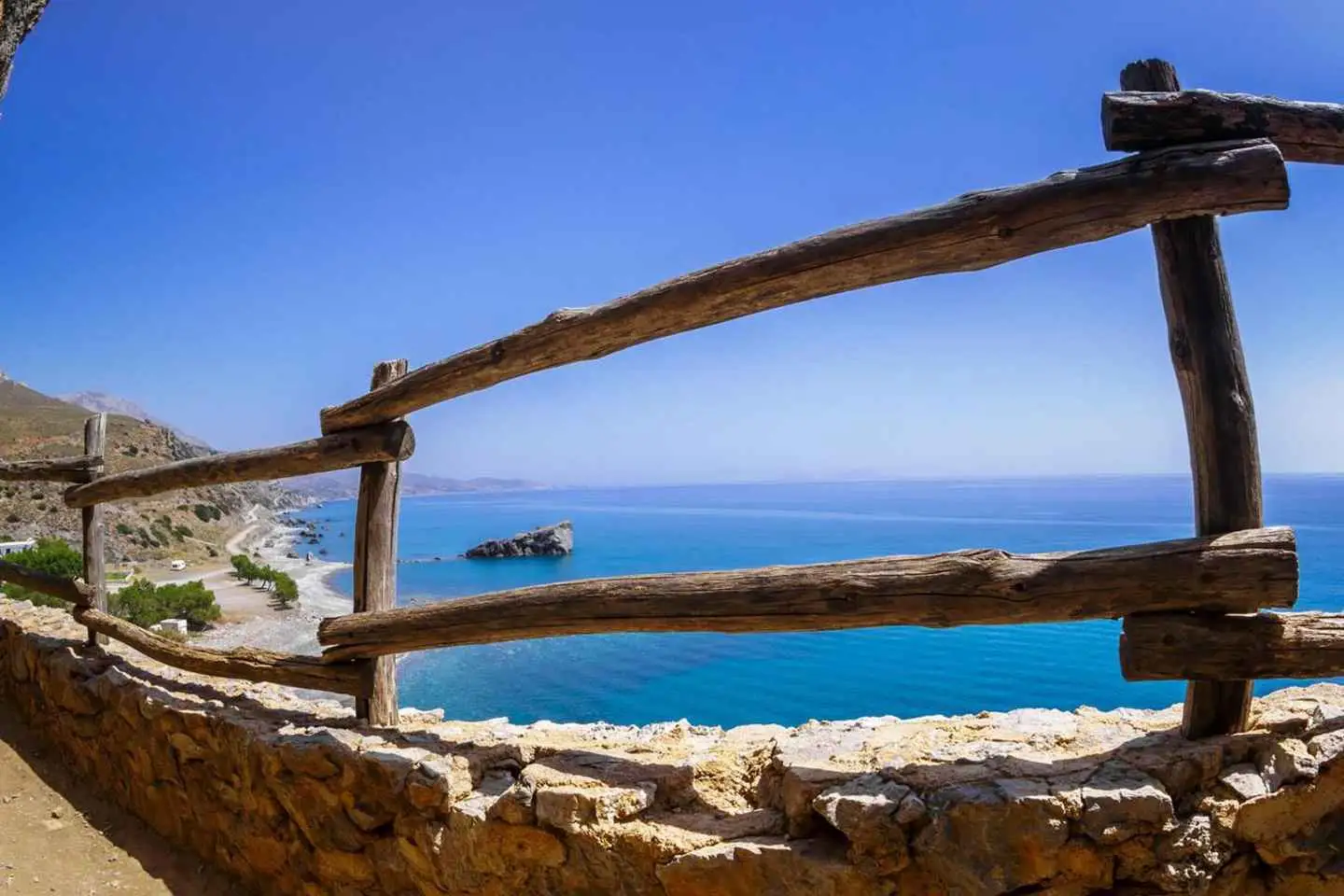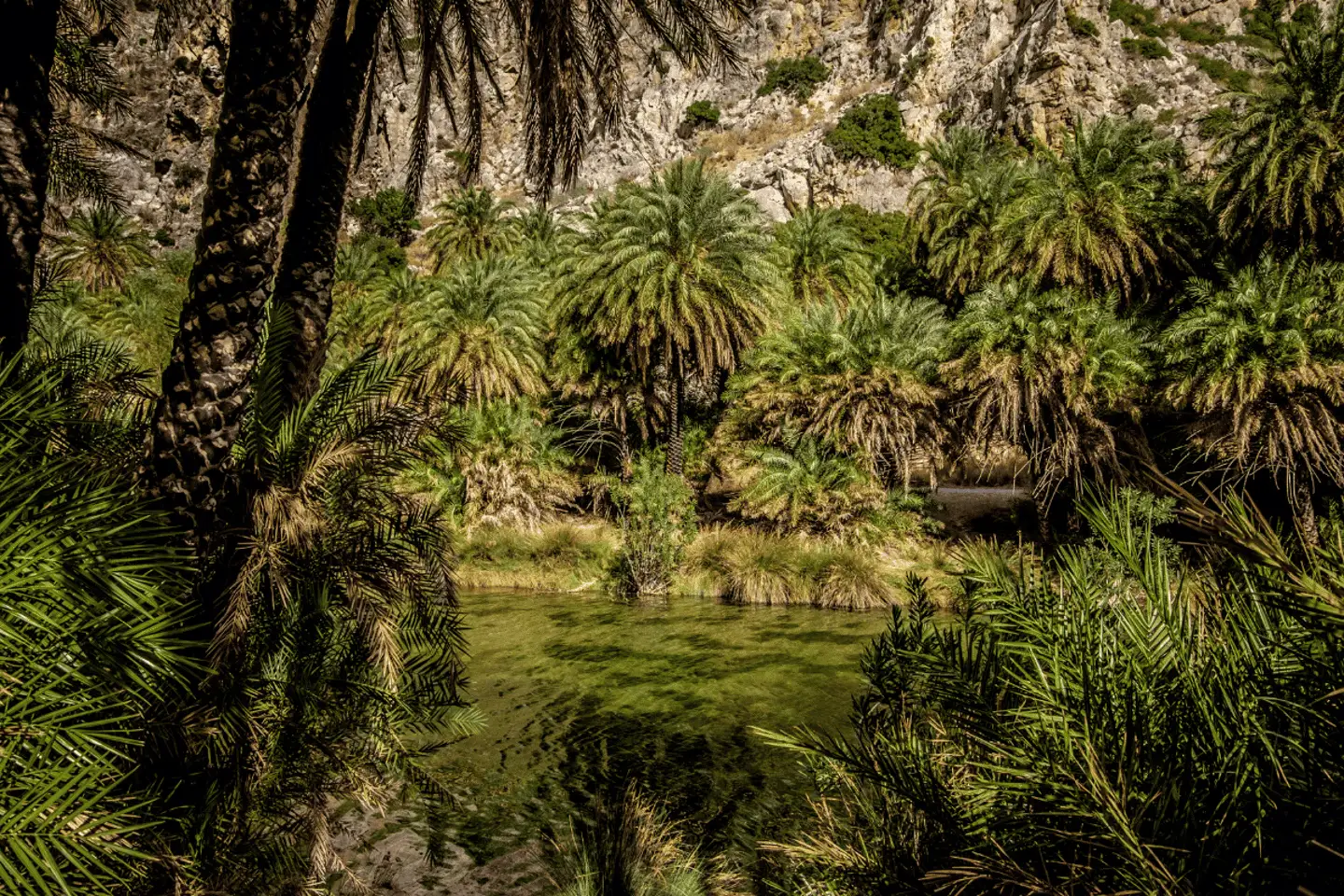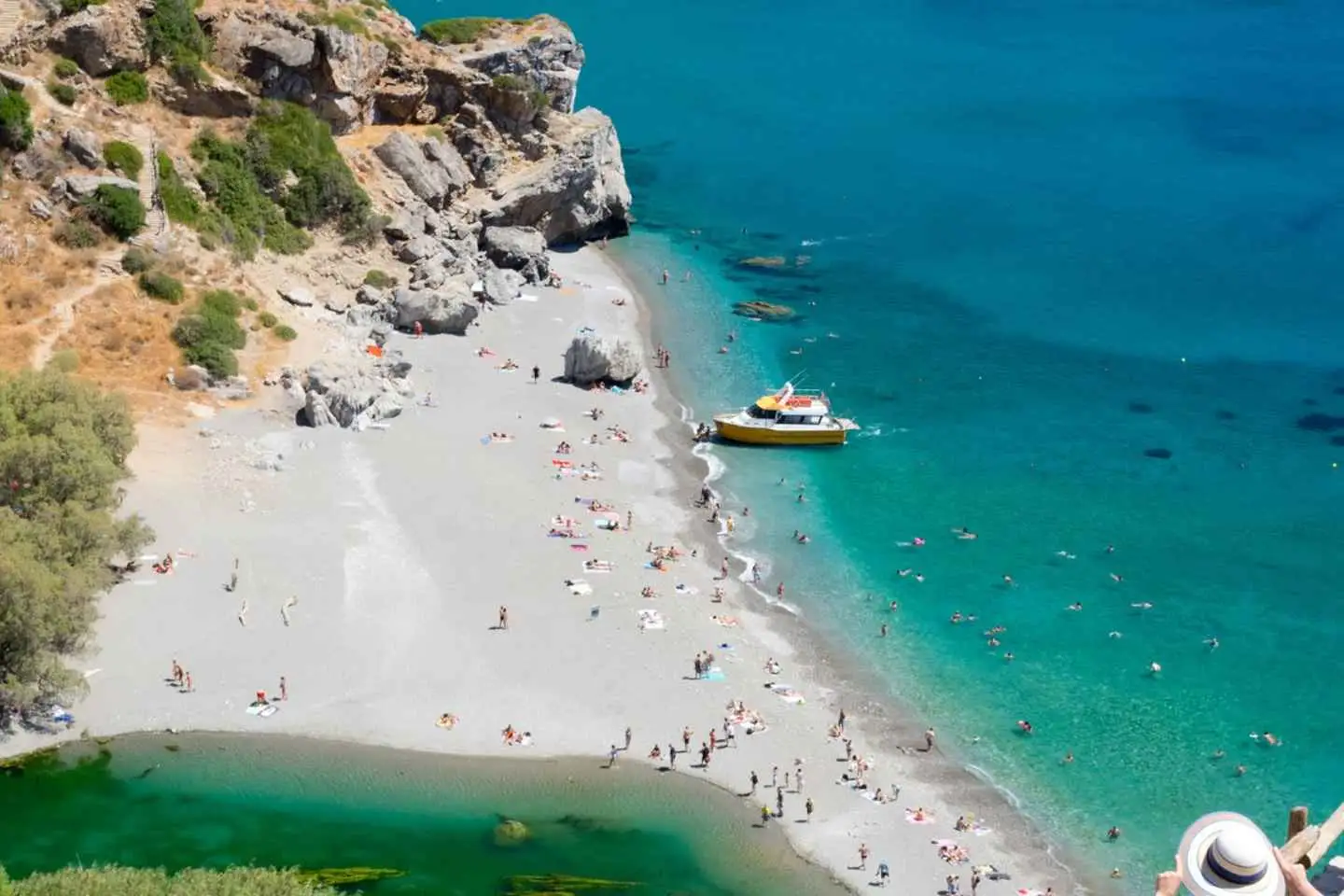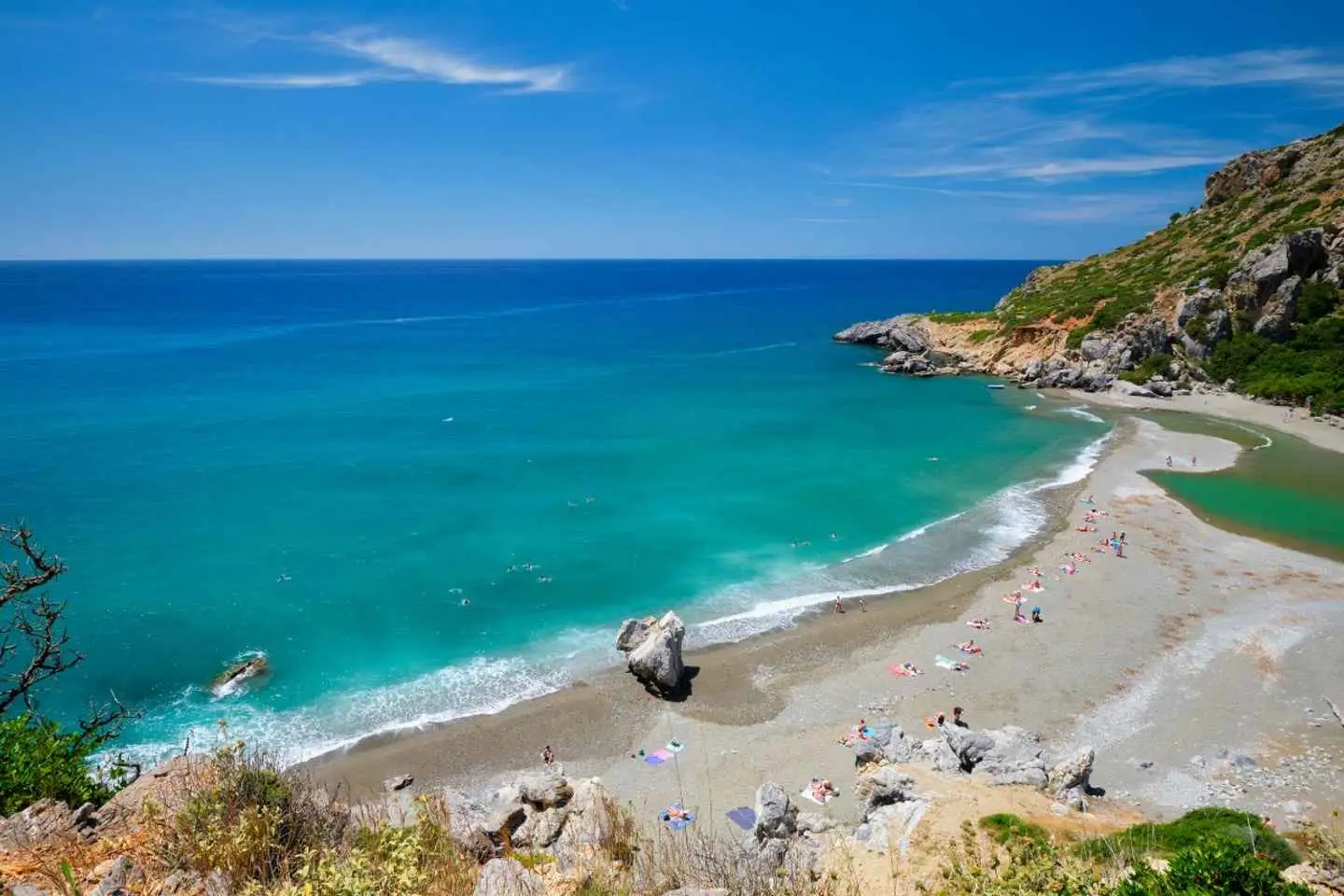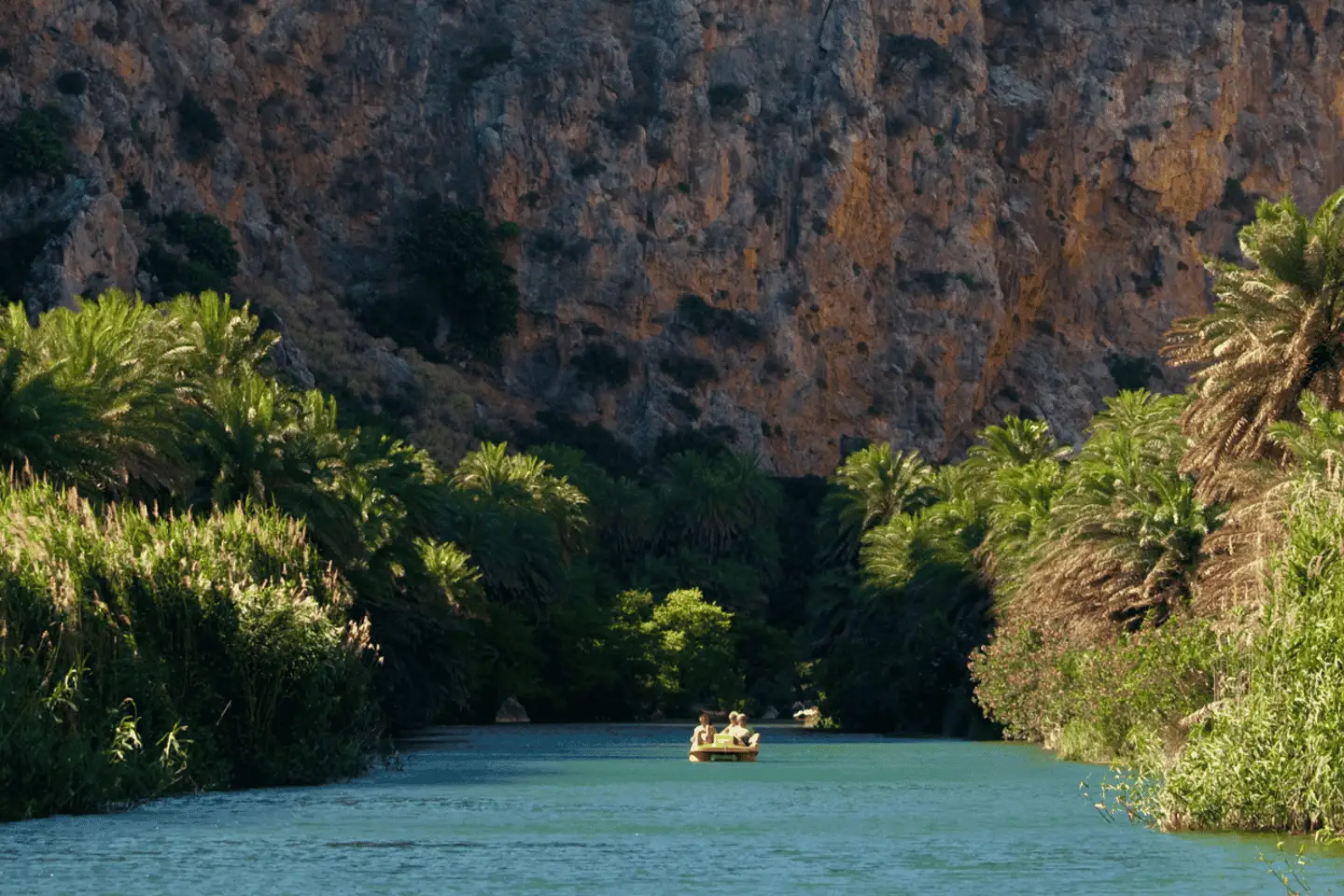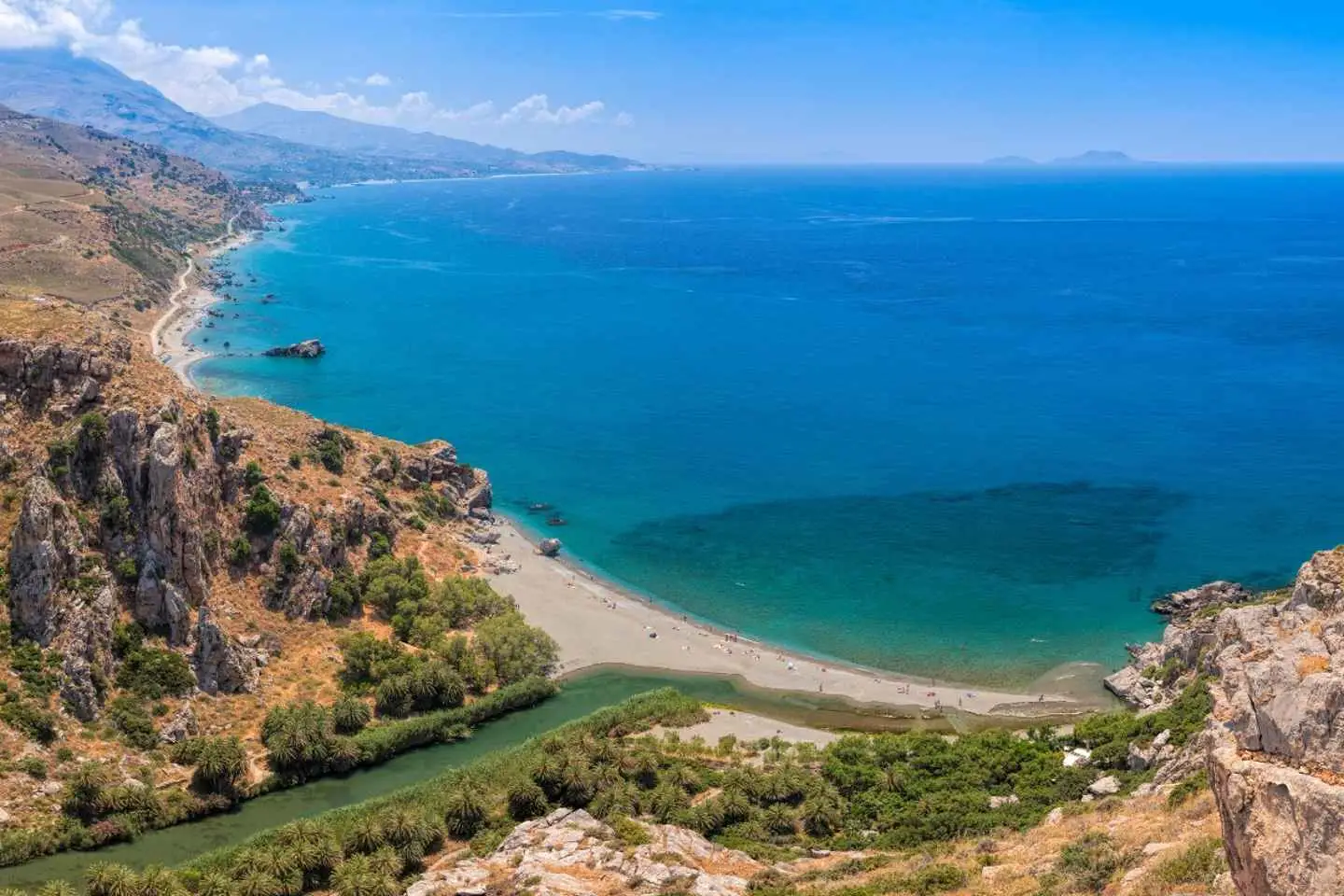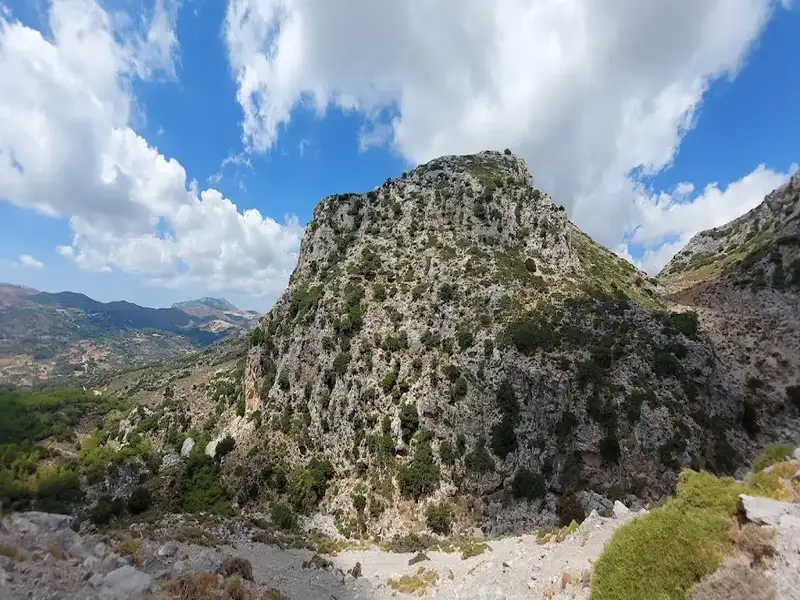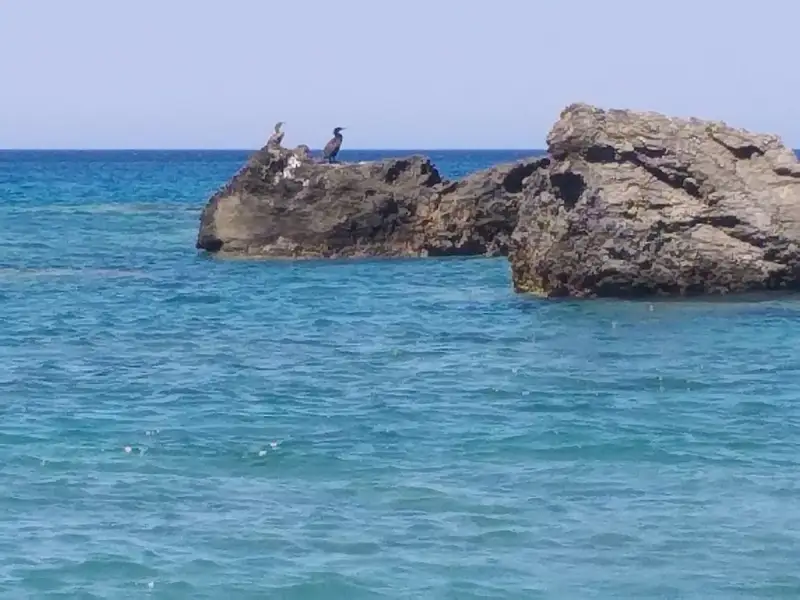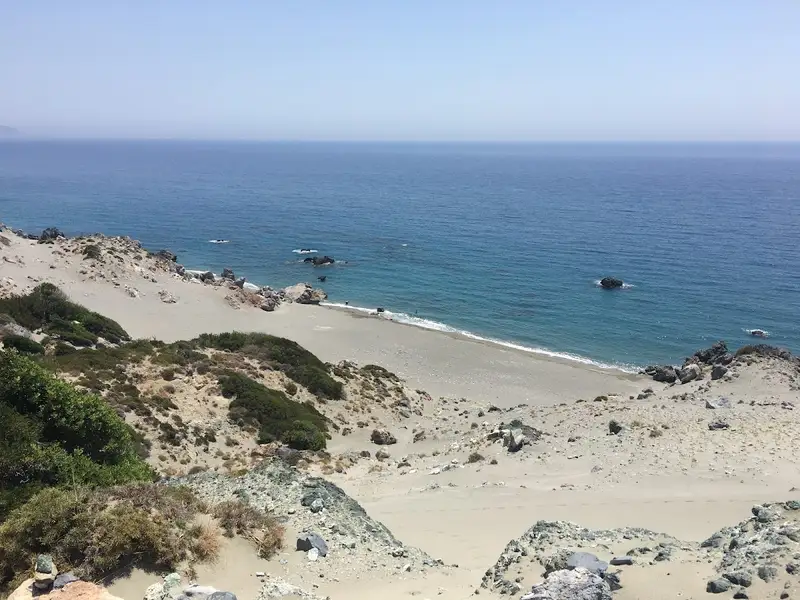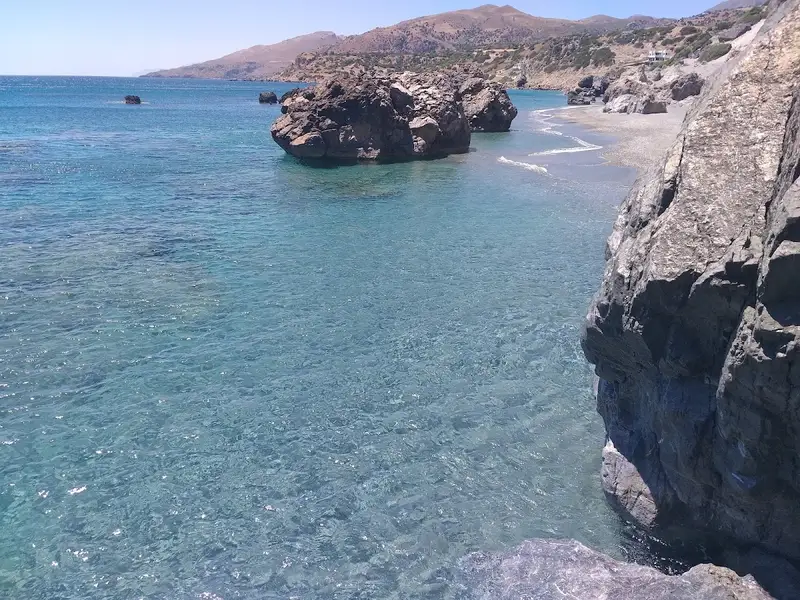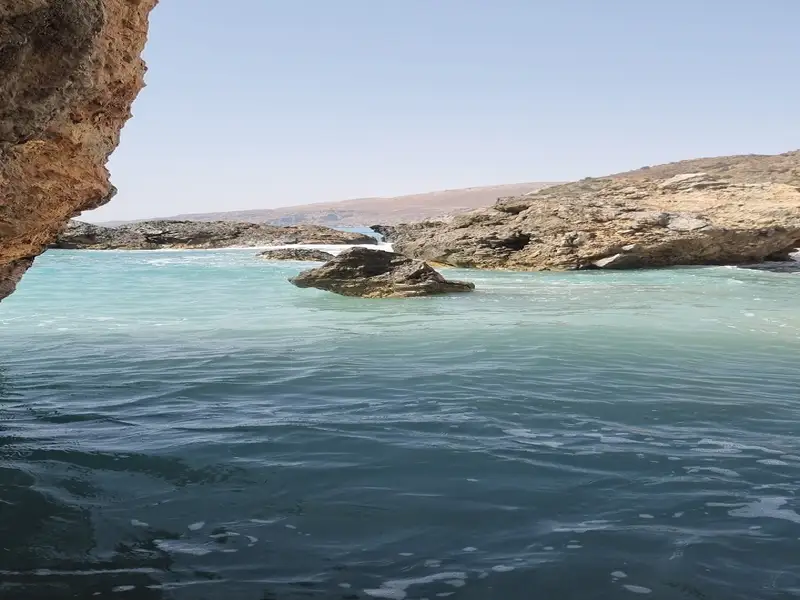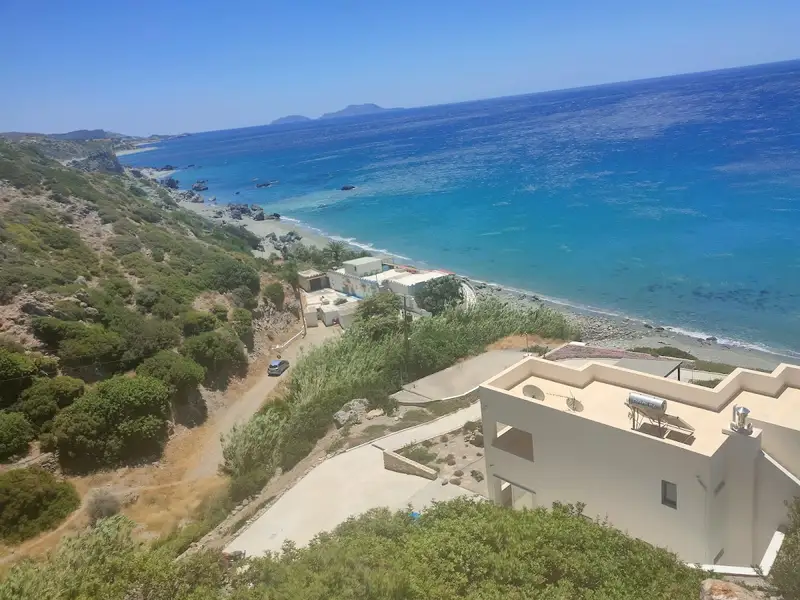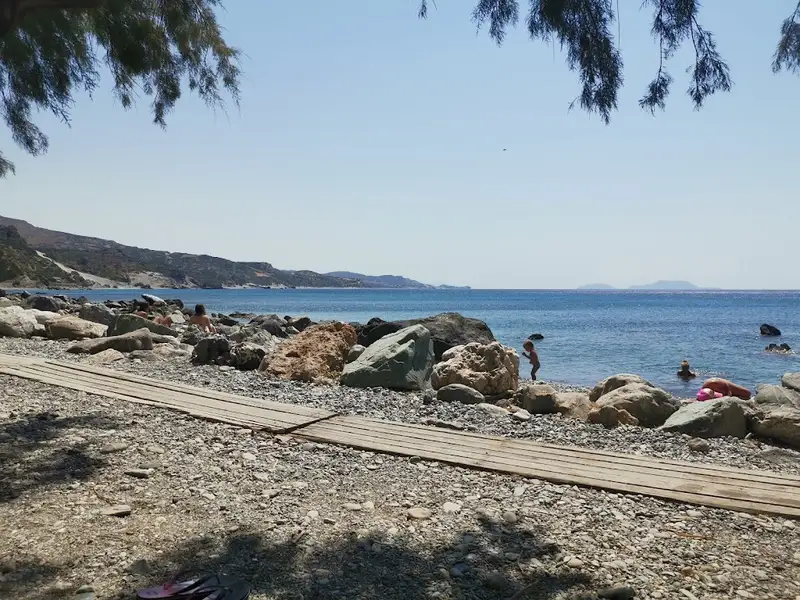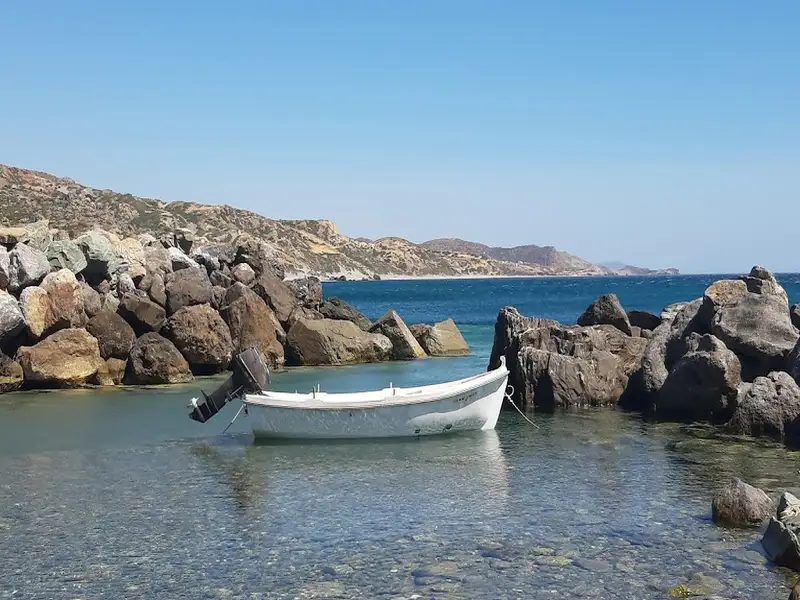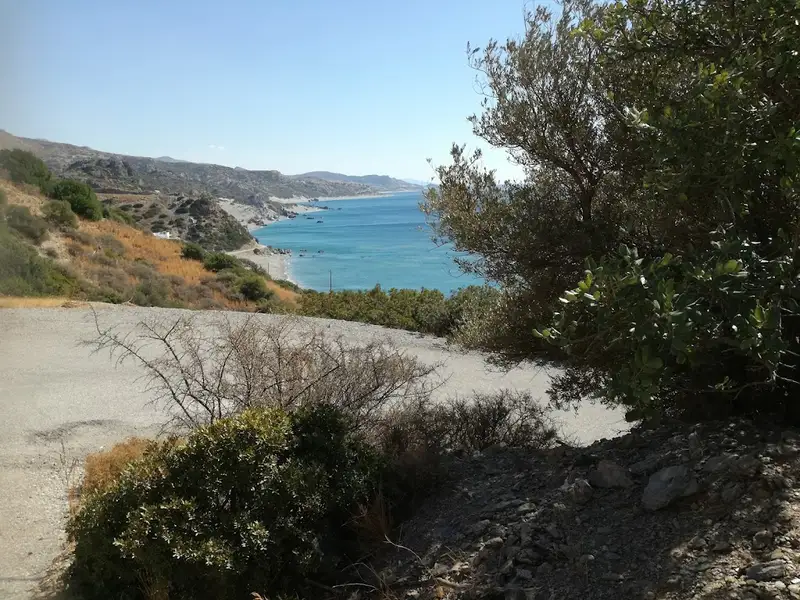
Discover Preveli on this Land Rover safari from Rethymno. Admire the beautiful scenery, taste locally-produced raki, take a swim, and explore the palm forest at Preveli before returning to Rethymno.
Benefit from pickup at your hotel. Start by taking in a breathtaking view of the Prasses Gorge. Look for resident wildlife, including the impressive vultures that live in the gorge. Continue to the Potamon Dam and admire the small church built by the lake as a reminder of the importance of religion on the island.
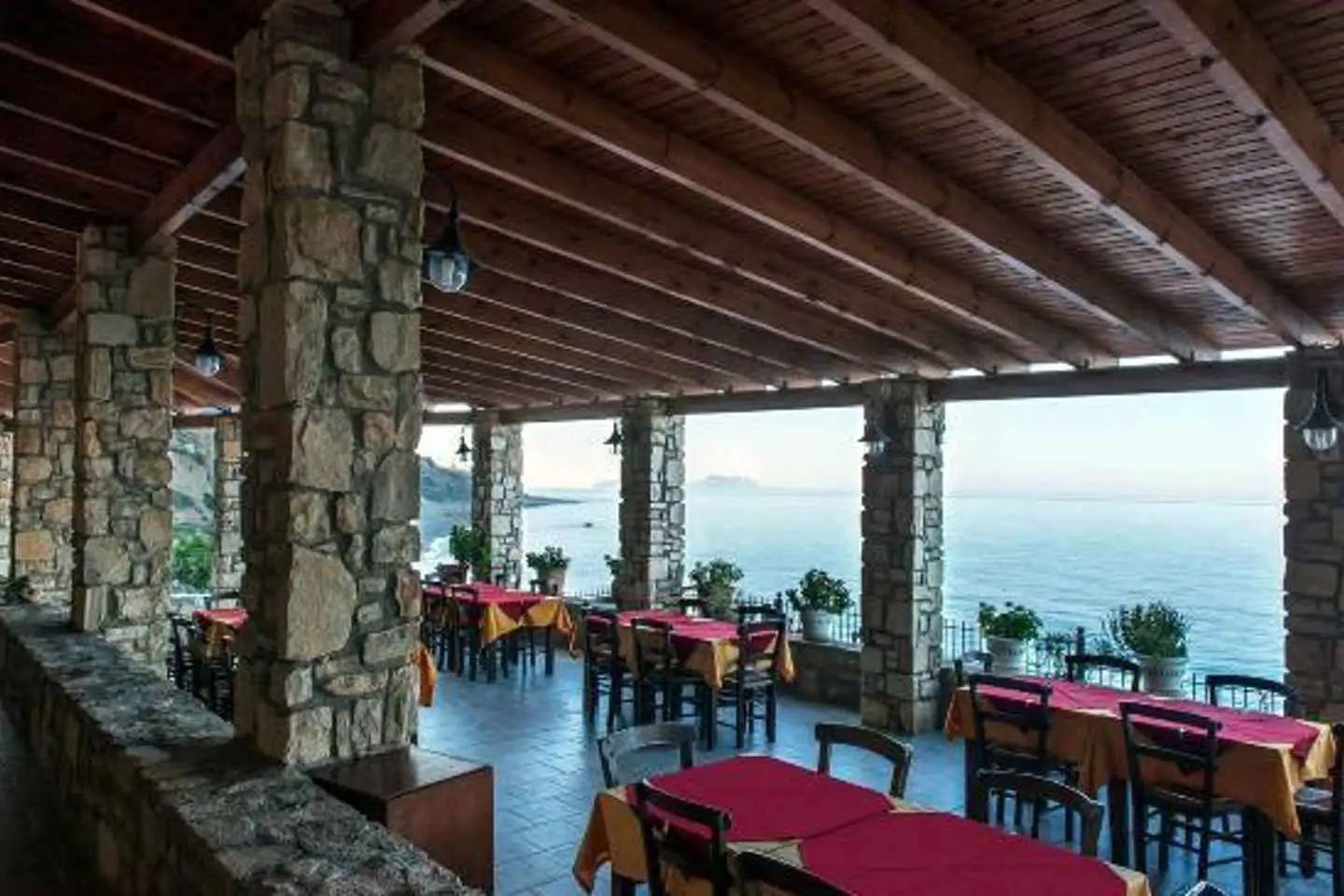
Pass through typical villages, such as Karines and Spili and learn about the local customs and habits. Savor an authentic raki produced in the village along with other specialties at a traditional tavern overlooking the Libyan Sea. Swim in the crystal-clear waters of Preveli and explore the palm forest.
Feel the wind in your hair as you get back to nature in the Kourtaliotiko Gorge. End with a panoramic view of Rethymno before drop off at your hotel.
This is the trip to the treasure of the South Coast. In the morning, our bus will pick you up and drive you to a small bay from where a boat will carry us to the beautiful beach of Preveli in the Libyan Sea. At the beach, you will see a natural palm forest,
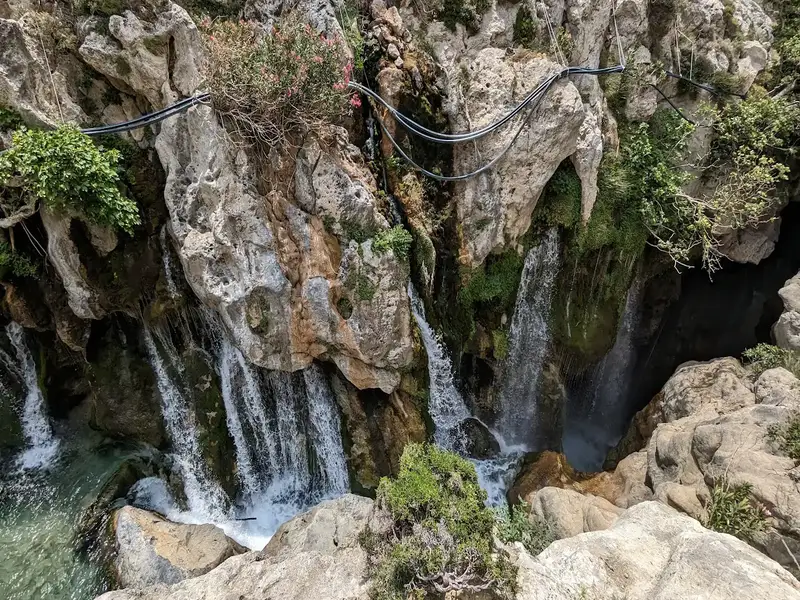
falls and a riverside. Everything around you makes you feel that you are on a tropical island. on the way back, we will pass the Kourtaliotiko Gorge with the pretty little churches built into the cliff.
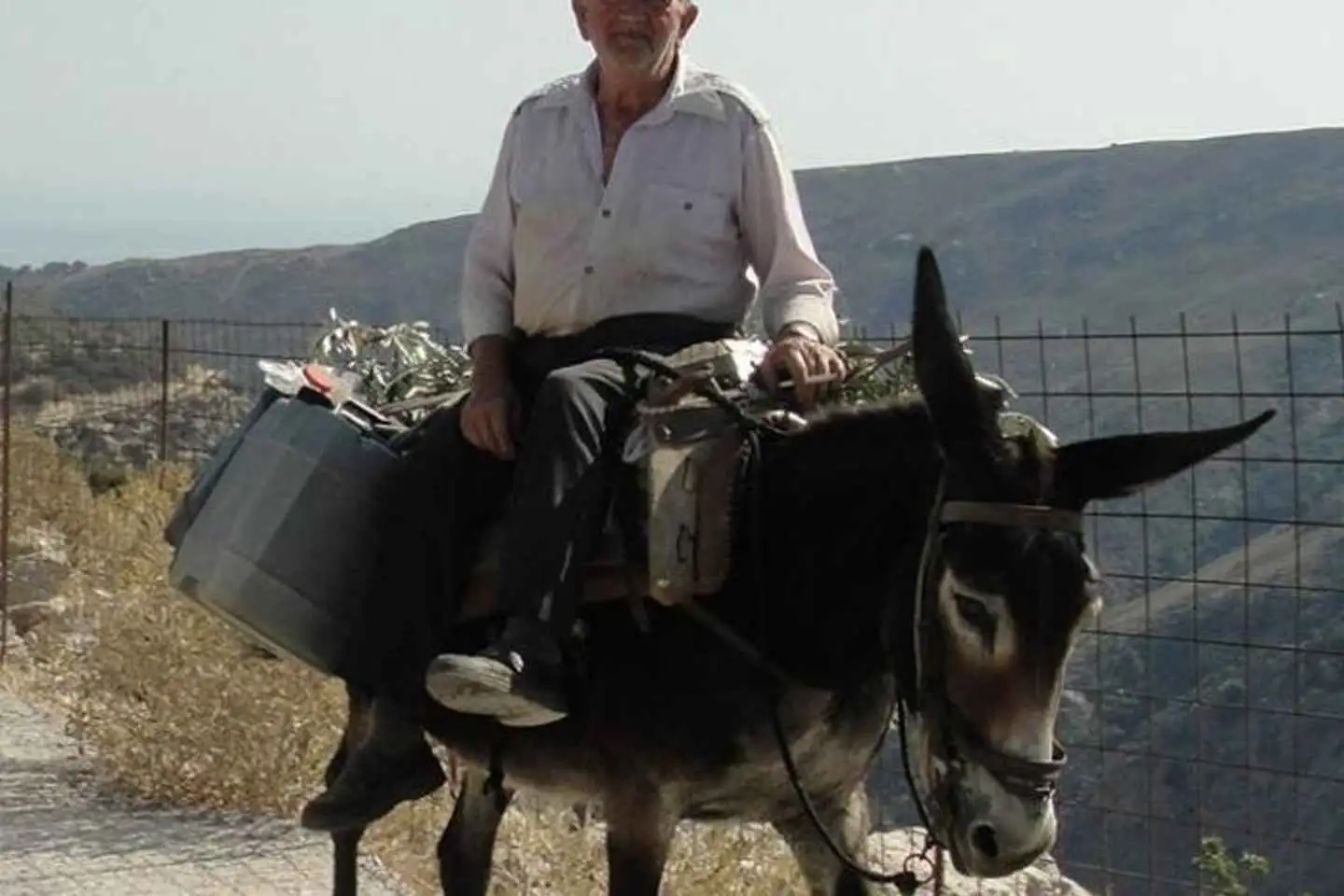
Get off the road and out into the wilderness of southwest Crete on this 8-hour Land Rover safari of stunning mountains and remote beaches. A professional driver will navigate the difficult terrain, taking you to places inaccessible to other vehicles, while teaching you about Cretan culture.
The day starts with a drive through the wilderness, up to high altitudes, where you will get aerial views of the magnificent gorges. Look out for vultures and eagles high above. Pass through small traditional villages full of character, and make a brief stop for coffee at one of the remote mountain villages.
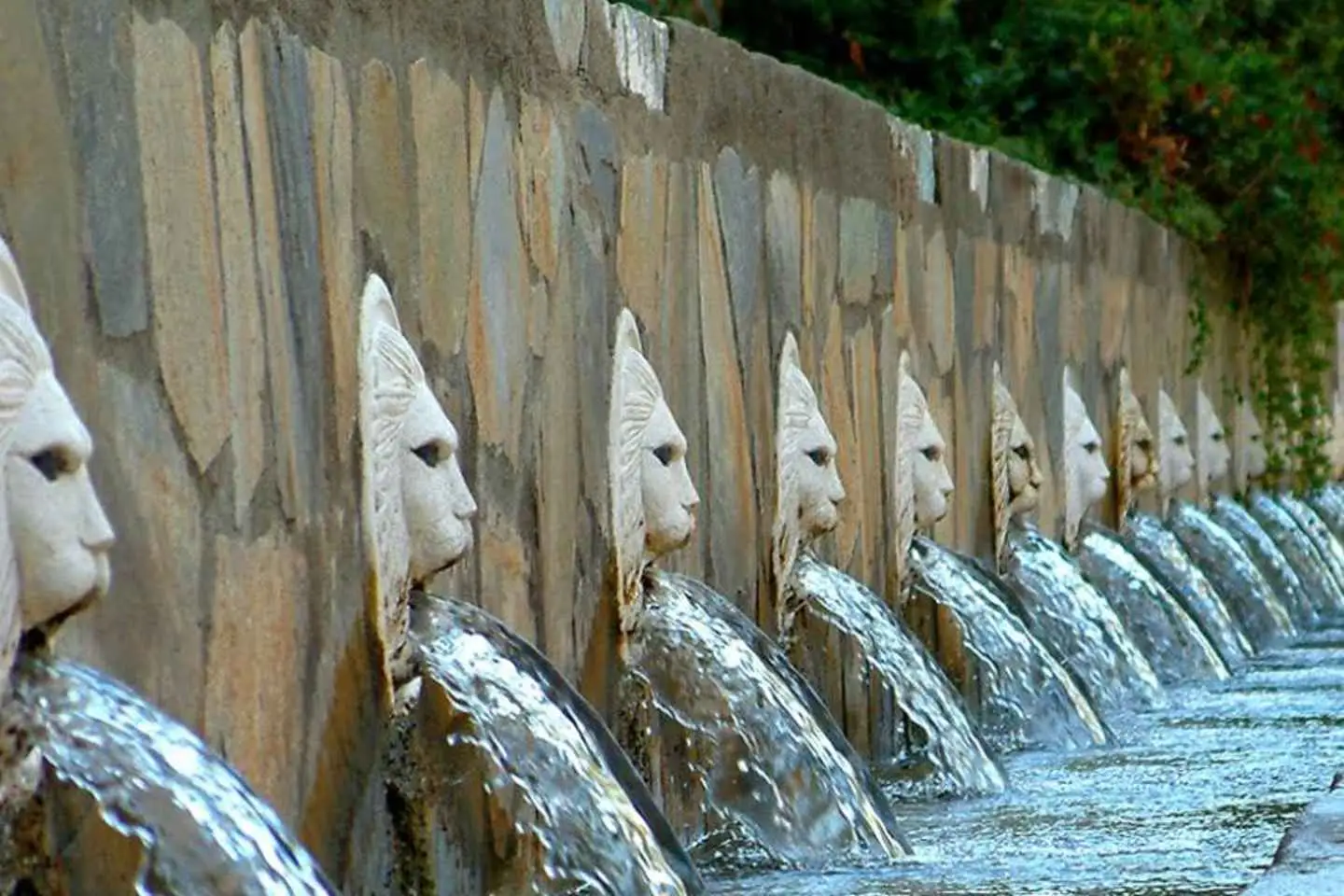
Back in the vehicle, drive through the mountains to the village of Spili, famous for its spring water. Located under the shadow of Mount Vorizi, the village has a Venetian fountain with a row of more than 25 lion heads supplying cold mountain water all year round. Stroll around the small shops selling handmade souvenirs and traditional handicrafts.
Continue along dirt tracks and bumpy roads through more villages, where time has virtually stood still. Passing Kerame, guests will see panoramic views of the southern Cretan coast and the Libyan Sea.
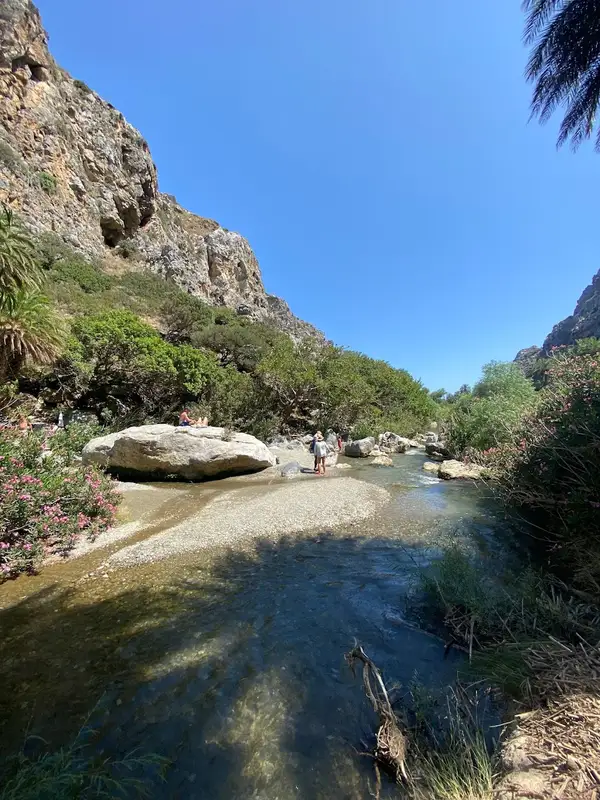
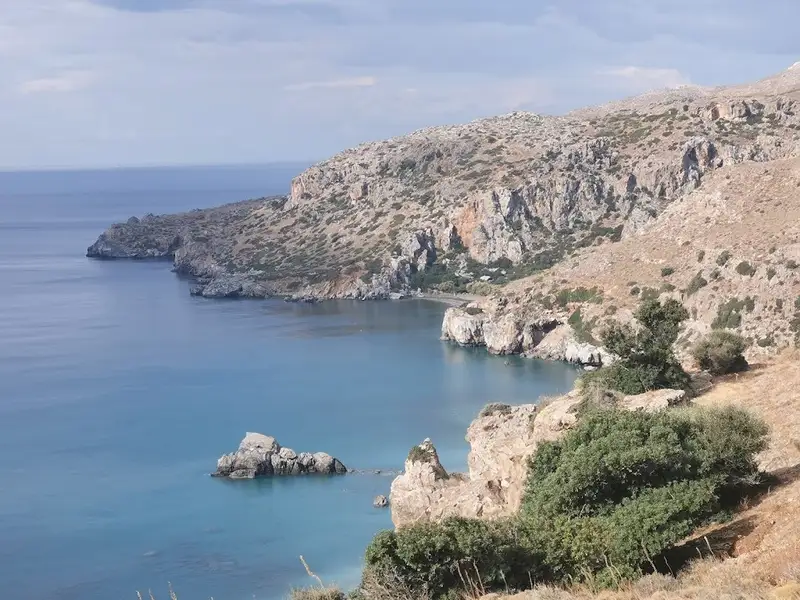
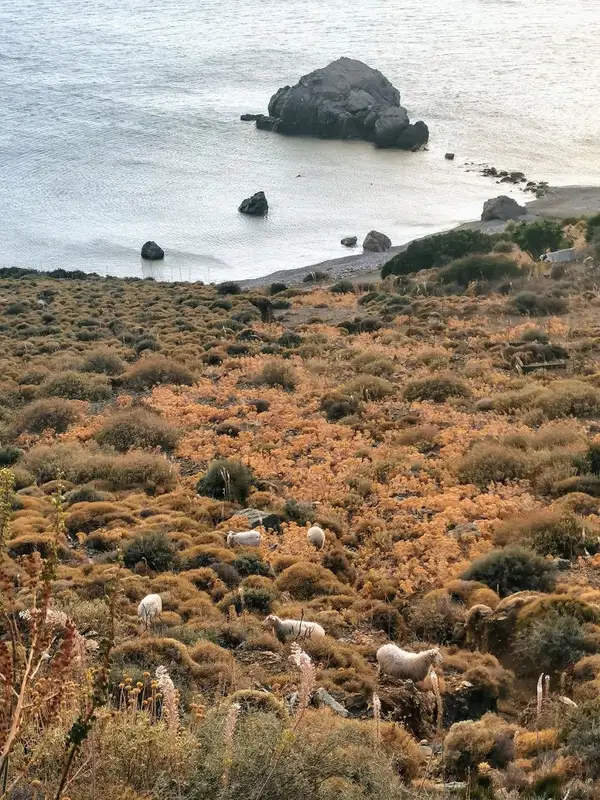
Stop for a swim at Preveli Beach to wash off the dirt and dust. Fringed with tall palm trees and boasting crystal clear water, Preveli is one of the most beautiful beaches on Crete, and was chosen by Bacardi as an ideal location for its TV adverts. It is also the only beach in Crete where you can swim in cold mountain water or ocean water in the same place!
Working up an appetite, walk back from the beach and stop for a traditional Cretan meal with unlimited wine. After lunch, drive back into the mountains for more dramatic scenery, and more photos as you climb through the stunning Gorge of Kroustaliotico.
As you head back towards the end of the tour, look at a magnificent panorama of the entire city of Rethymno from the top of a mountain that can only be reached by Land Rover.
Embark on a captivating day trip along Crete’s southwest coast, featuring a meticulously planned itinerary that showcases Damnoni Beach, Preveli Palm Beach, Kourtaliotiko Gorge, and the enchanting town of Rethymnon.
Here’s what to expect:
Departure: The journey begins with a 2-3 hour bus ride from your pickup location to Damnoni Beach, where your adventure to Preveli Palm Forest by boat starts.
Boat to Preveli Palm Forest: A 30-minute boat ride from Damnoni Beach unveils stunning coastal scenery, leading you to the mesmerizing Preveli Palm Beach.
Preveli Palm Beach Experience: Spend 1 hour and 30 minutes at this iconic location, enjoying the pristine waters, sandy shores, and the unique backdrop of palm trees and rugged terrain. It’s an idyllic spot for relaxation and exploration.
Return Boat Ride: Enjoy another scenic 30-minute boat trip back to Damnoni Beach.
Lunch at Damnoni Beach: Upon return, relish 1 hour of free time for lunch at a local taverna, experiencing the flavors of Cretan cuisine amidst the beach’s serene ambiance.
Visit Kourtaliotiko Gorge: A short 20-minute bus ride takes you to the breathtaking Kourtaliotiko Gorge for a quick 10-minute stop. Capture the essence of Crete’s wild beauty before proceeding.
Discover Rethymnon Town: The journey continues with a 30-minute ride to Rethymnon, where you’ll have about 1 hour and 20 minutes to wander through its picturesque streets, old port, and vibrant beach road.
Return Journey: Conclude your day with a 2-hour bus ride back, filled with memories of Crete’s stunning landscapes and rich cultural tapestry.
No results available
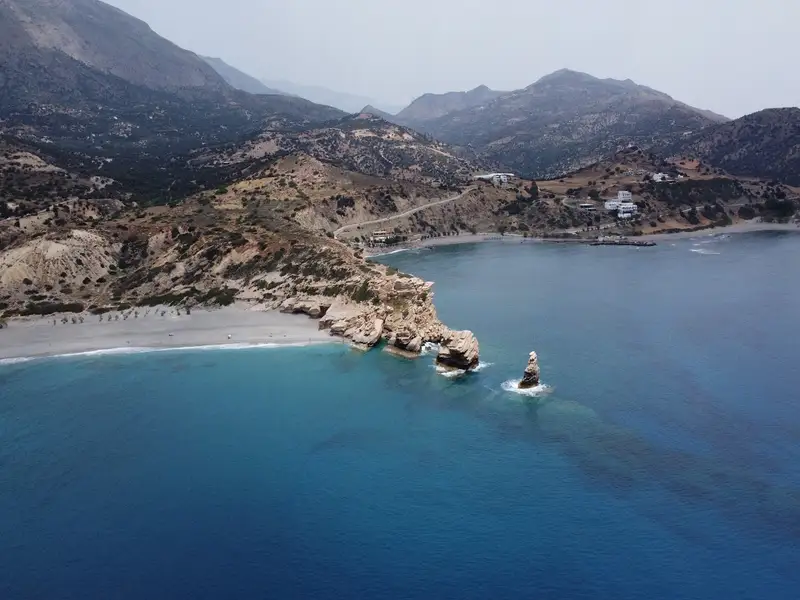
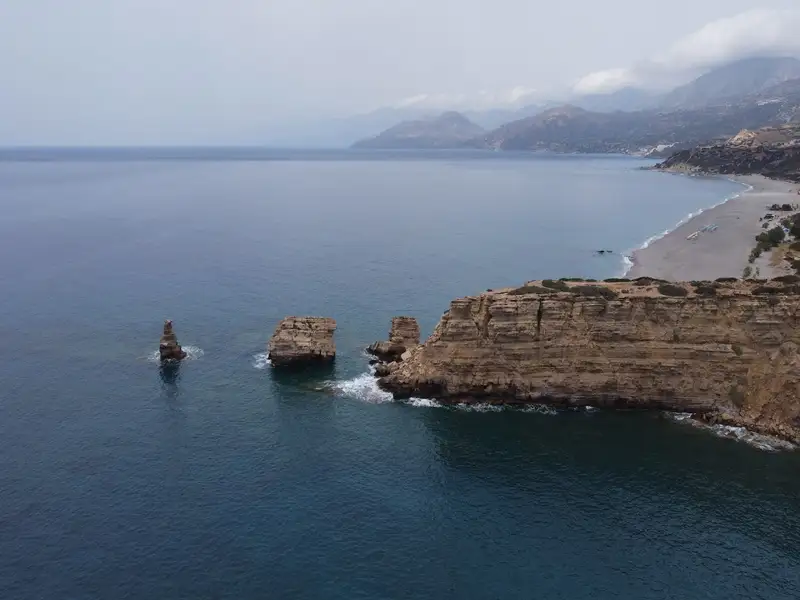
Kerames, a village situated 49km south of Rethymno, neighbors the village of Agalianos. It is surrounded by stunning beaches to its south, including the well-known beaches of Akoumiani Gialia, such as Ligres, Triopetra, and Agios Pavlos sandhills. Keramiani Giulia, or Keramean Beach, lies to the north of Akoumiani Gialia, its name derived from the nearby village.
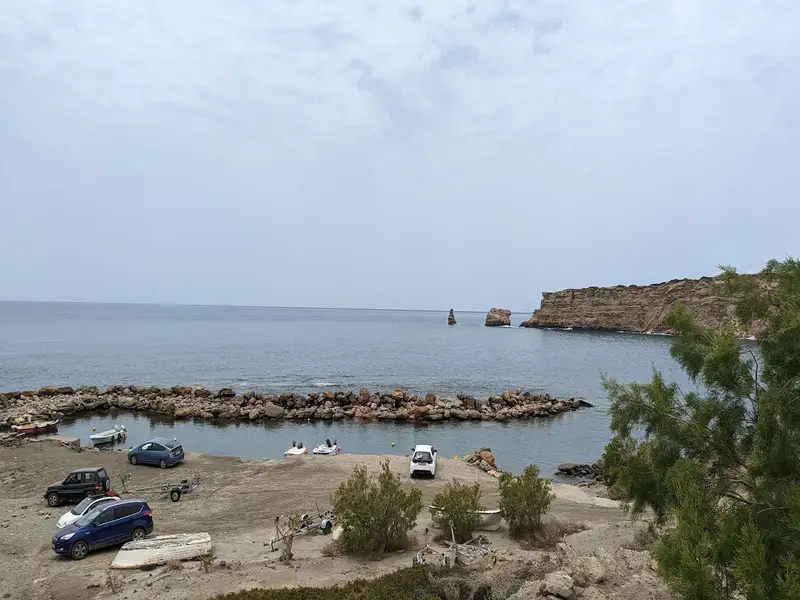
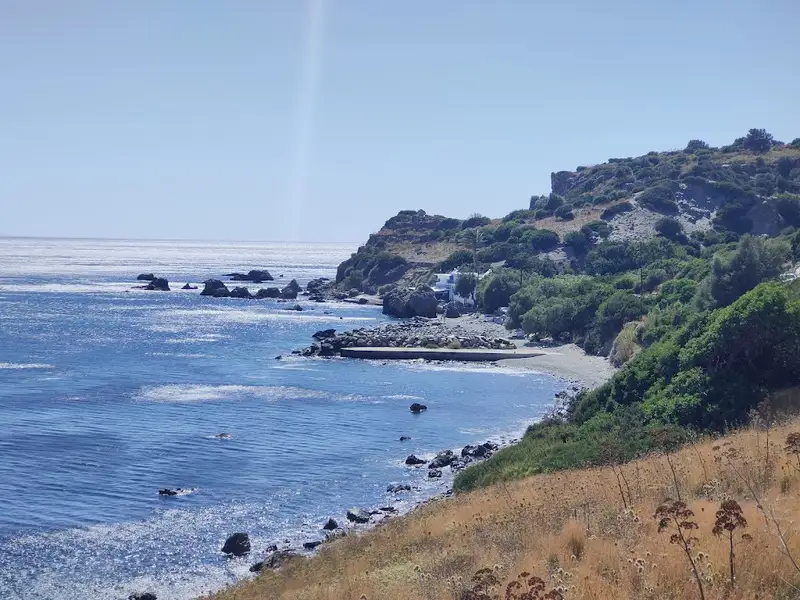
A somewhat dilapidated asphalt road leads to Keramiani Gialia, ending near the local harbour of Agia Fotini, also referred to as Agia Fotia. To the southeast of Agia Fotini, the primary beaches of Keramiani Gialia are located. A well-maintained dirt track from Agia Fotini leads to these beaches, the first being Podare. With its coarse sand and rocky areas, Podare is perfect for activities like fishing and snorkelling. Despite being an unorganized beach, it offers rental rooms for visitors.
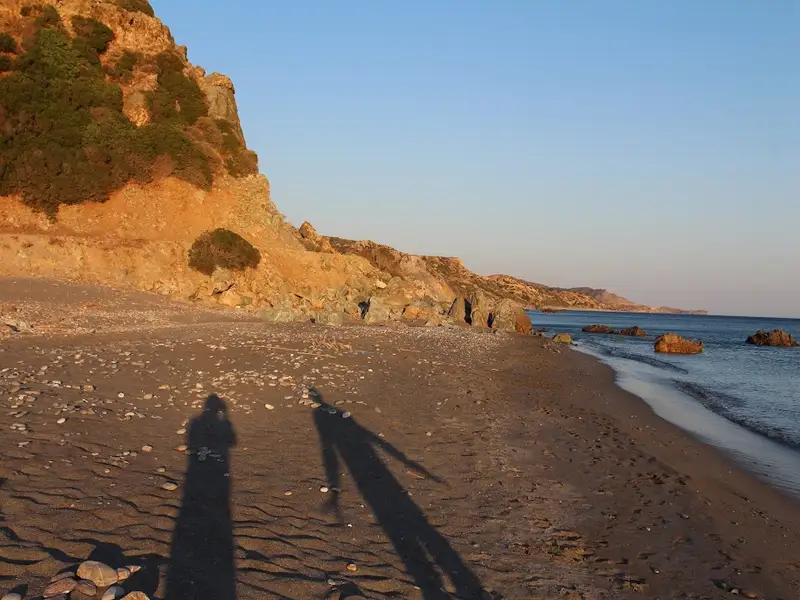
After leaving Podare, a simple dirt road heads eastward, taking you past a large hill to a parking area situated near more rental rooms. Here, the road ends, and the beach on your right, Glima, begins. This sandy, secluded, and unorganized beach offers total privacy.
Continuing eastward on foot for about 100m, a towering sandhill becomes visible to your left. Pahia Ammos, or Coarse Sand, lies in front of the sandhill and provides an ideal spot for those seeking complete seclusion.
The quaint village of Kerames is situated 49km to the south of Rethymno, in close proximity to the village Agalianos. South of Kerames, there are numerous stunning beaches, with Ligres, Triopetra and Agios Pavlos sandhills of Akoumiani Gialia being the most well-known. To the north of Akoumiani Gialia, there is Keramiani Gialia or Kerames Beach, named after the nearby village.
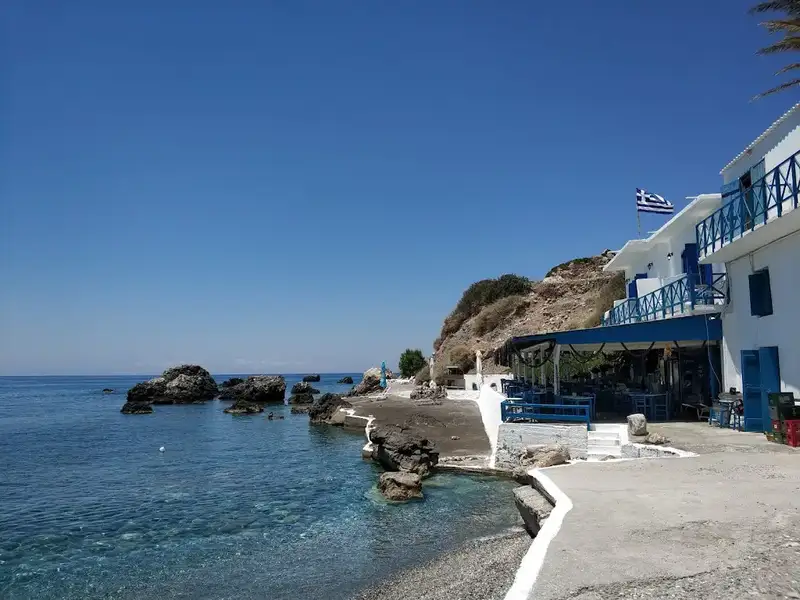
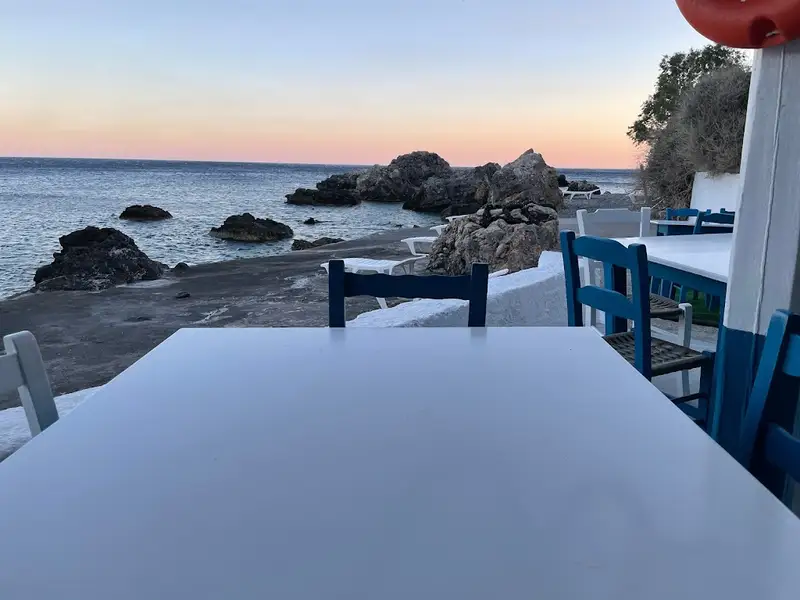
The narrow, poorly paved road leading to Keramiani Giulia ends near the local port of Agia Fotini, which is also known as Agia Fotia. This location is home to beautiful small pebble beaches, perfect for snorkelling and swimming, and is surrounded by large boulders. The traditional Stavros tavern is built on an old carob storehouse and serves fresh fish on the beach. It also offers accommodation, and has a reminiscent atmosphere of the Greek islands of the 1960s. The tavern provides free umbrellas and showers. Near Agia Fotia, there is a small river that forms a green forest. Following the path north along the river, you will encounter a tall palm tree and the old church of Agia Fotini, located near a small house with a lovely garden. A 5-minute walk west of the tavern along the rocky shore will lead you to another pebbly beach.
On the hill near Agia Fotini tavern, you can still see the remnants of the ancient town Kionia, which thrived in its heyday. Today, the ruins cover an area of over 150 meters east to west and 100 meters north to south, while the other half of the town is submerged underwater, in front of the tavern. Traces of buildings and terraces that suggest the existence of Kionia can be seen in the surrounding area. It is thought that the sinking of the town forced its inhabitants to leave and move to higher ground, where the villages Kerames and Agallianos now stand.
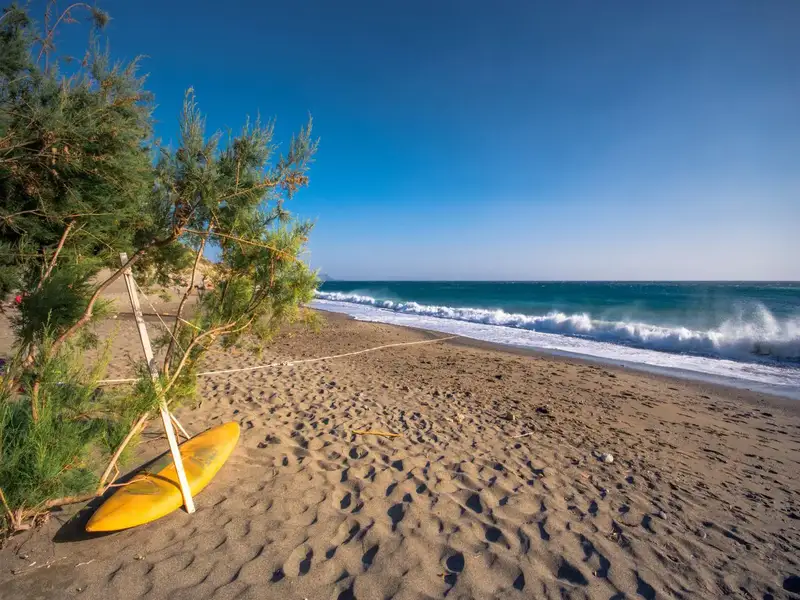
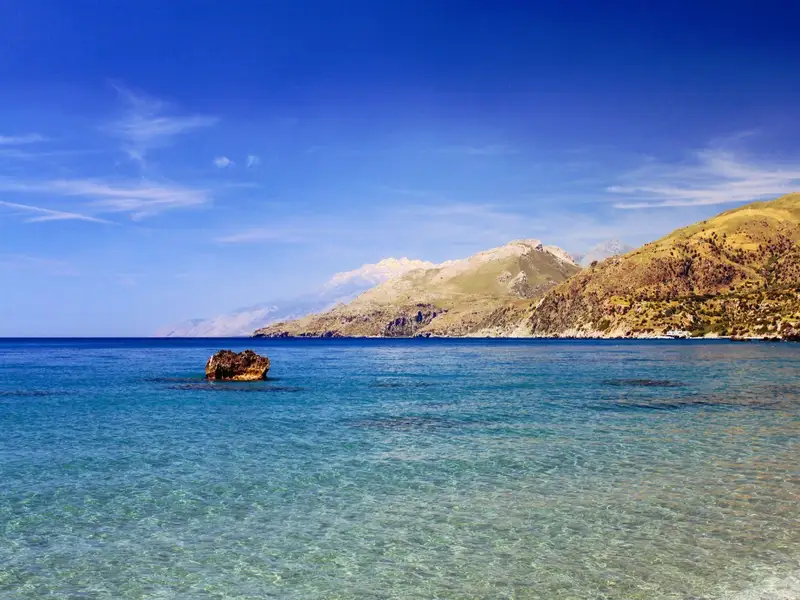
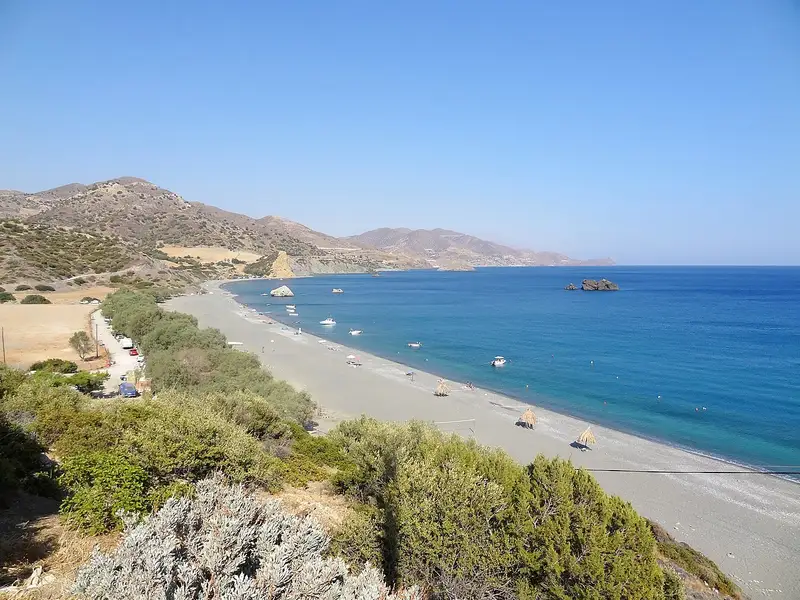

Situated 51km to the south of Rethymno and 7km below the village of Kerames, Ligres is nestled at the base of the grand Siderotas mountain. It forms the northern segment of the Akoumiani Gialia beachfront, which runs from the cape of Mellissa to the south.
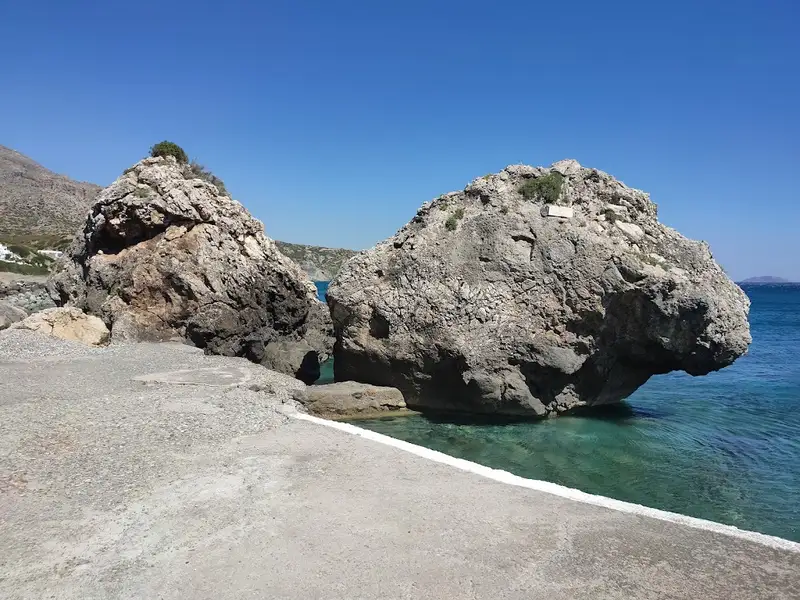
Ligres is an expansive beach graced with rough sand and a spectacular deep sea. Its somewhat challenging access has thankfully deterred the encroachment of tourism, preserving it as one of the most serene, secluded and pristine beaches on the island. Although the beach is not developed, there are a few taverns and rooms available on its western side accessible via a poorly maintained asphalt road. At the beach’s western tip, there is a stunning waterfall that boasts a year-round water supply, cascading right next to the sea.
Beyond the northern end of the beach, also known as Katsouni, lies a secluded beach favored primarily by nudists. Despite its seclusion, there are numerous spots along this vast, uninhabited beach where nude swimming is possible. It’s worth venturing along the beachfront to Triopetra, up to the Xiromilia area, to marvel at the astonishing rock formations. In the heart of Ligres, a remarkable reddish boulder stands out near the sea.
Triopetra beach, nestled at the base of Mount Siderotas and 52km south of Rethymno, can be reached via paved roads leading from either Akoumia or Sachtouria. Part of the extensive Akoumiani Gialia beachfront, Triopetra got its name as a historical winter refuge for the inhabitants of Akoumia, who built small huts near their olive groves. Presently, most land and hotels in the area are owned by descendants of these Akoumia residents.
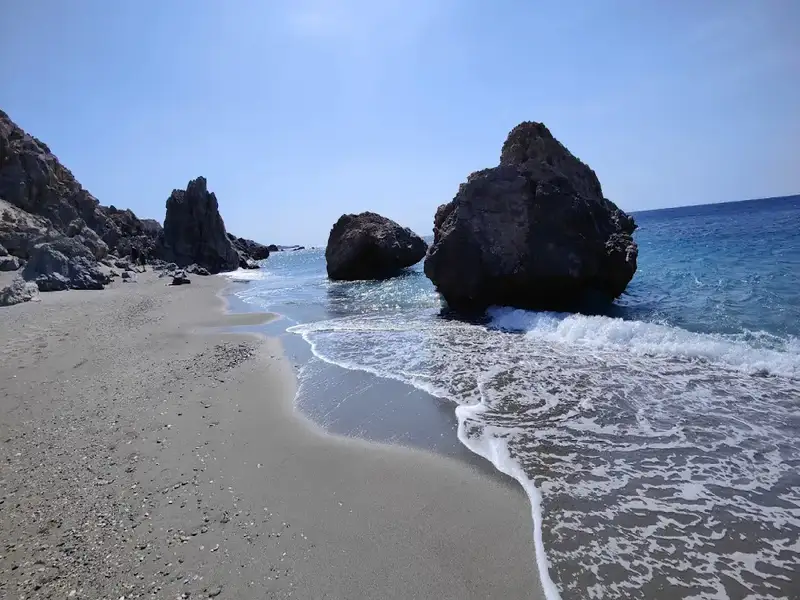
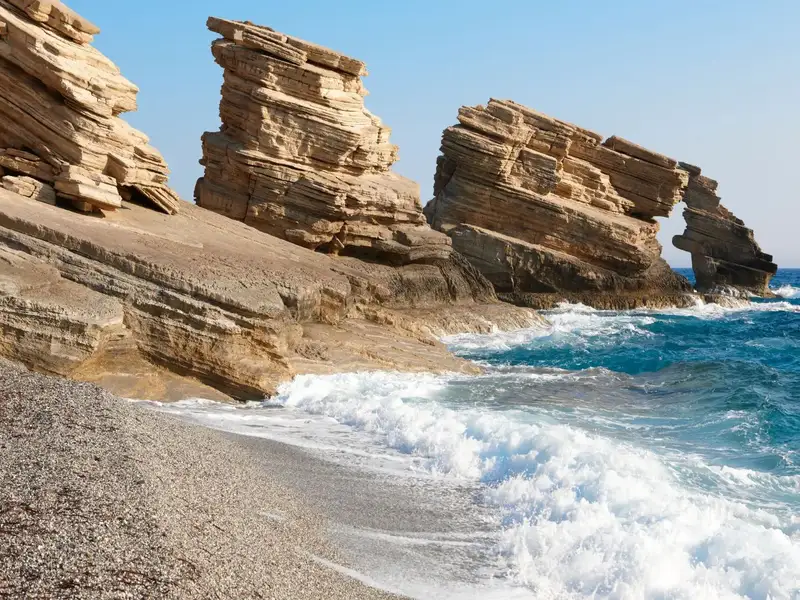
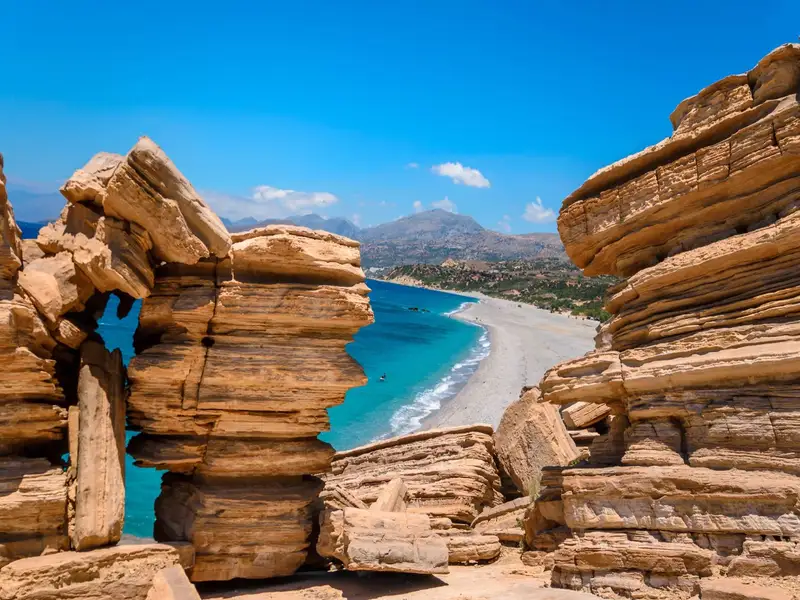
Triopetra boasts two distinct beaches, separated by a petite peninsula. The peninsula’s defining feature is the three spectacular rocks jutting out from the sea, giving Triopetra its name, which translates to “Three Rocks”.
The first beach, Small Triopetra or Koumado, resides in an enclosed bay lined with sand and rock to the south of the three rocks. Here, the Akoumianos river meanders into the sea, forming a natural boundary between Triopetra and the enchanting Agios Pavlos Sandhills at Cape Melissa. Small Triopetra hosts a handful of taverns and rooms, with umbrellas available for sun-seekers. Additionally, the southeast edge of the beach is home to a small harbour, known as Stomio or “mouth”, named after the river’s mouth meeting the sea. Just 1km northeast of the beach, the awe-inspiring chapel of Prophet Elias stands on a high hill, commanding an impressive view over Akoumiani Gialia.
No results available
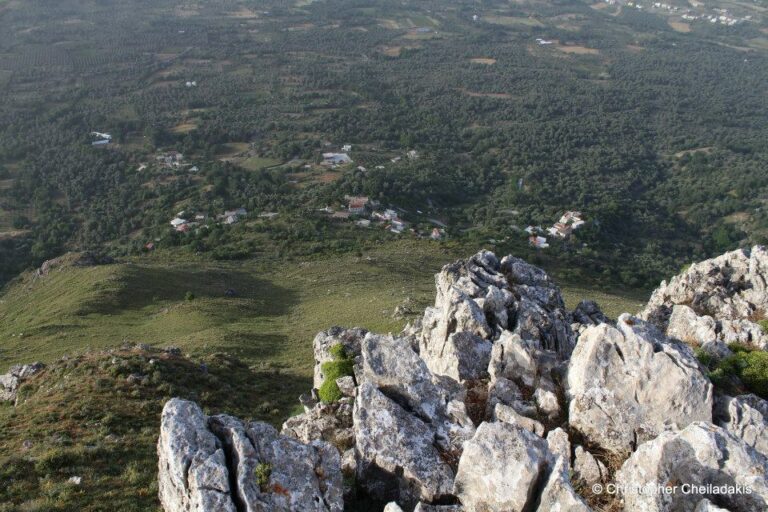
Above the Atsipades village in St Basil province, Rethymno, you can find a series of small peaks, with the highest being Kouroupa. The Kouroupa mountain range extends from west to east, separating the villages in the Agios Vassilios valley from the coastal settlements and creating a distinct climate. Kouroupa’s boundaries are well-defined, with two long and majestic canyons, Kourtaliotis and Kotsifos, marking its edges. Beyond Kouroupa’s peak, there are several smaller yet equally stunning peaks.
One of the most beautiful and unique peaks is Korakias, located just above Atsipades. The name Korakias means “the place with crows.” From a distance, Korakias appears impressive and peaky, with steep cliffs on each side and only the south side being easily accessible. This imposing, fortress-like location was chosen by the ancient Minoans as a peak sanctuary. Korakias was identified as a peak sanctuary in 1985, and its discovery has been announced in academic journals on several occasions. In 1989, Dr. Alan Peatfield excavated this peak sanctuary on behalf of the British School at Athens, and numerous papers have been published since then. A few artifacts from Korakias can be viewed at the Archaeological Museum in Rethymnon.
Unfortunately, there are no signs explaining the area’s history or providing directions to the site. Korakias can be reached via a rough dirt road starting from Atsipades, but the numerous side-streets can make identifying the peak difficult. However, the view from the peak sanctuary is breathtaking and stretches for several kilometers.
No results available
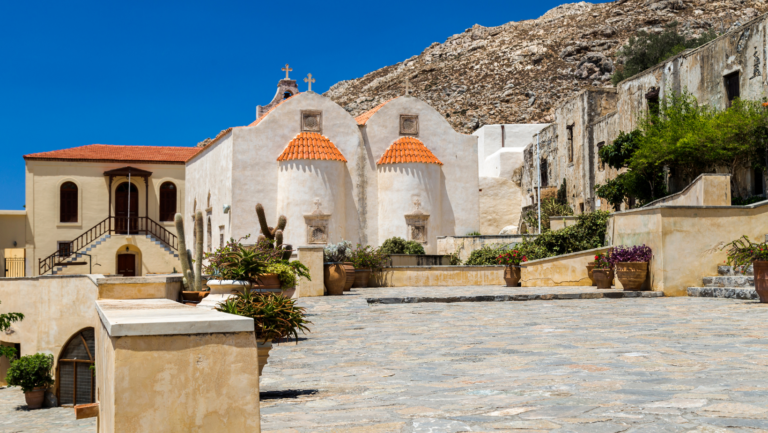
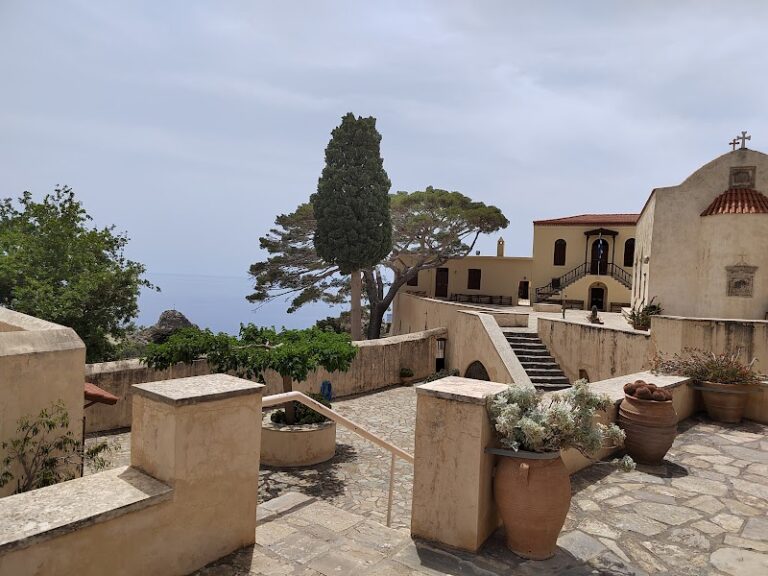
Preveli Monastery (also known as Prevelis Monastery) can be found 37km south of Rethymnon, nestled in a stunning natural landscape on the western slopes of Megalos Potamos (the end of Kourtaliotiko Gorge) and the nearby palm grove. The monastery complex consists of two separate monasteries situated 1.7km apart: the Kato (Lower) Monastery of Agios Ioannis Prodromos and the Piso (Back) Monastery of Agios Ioannis Theologos.
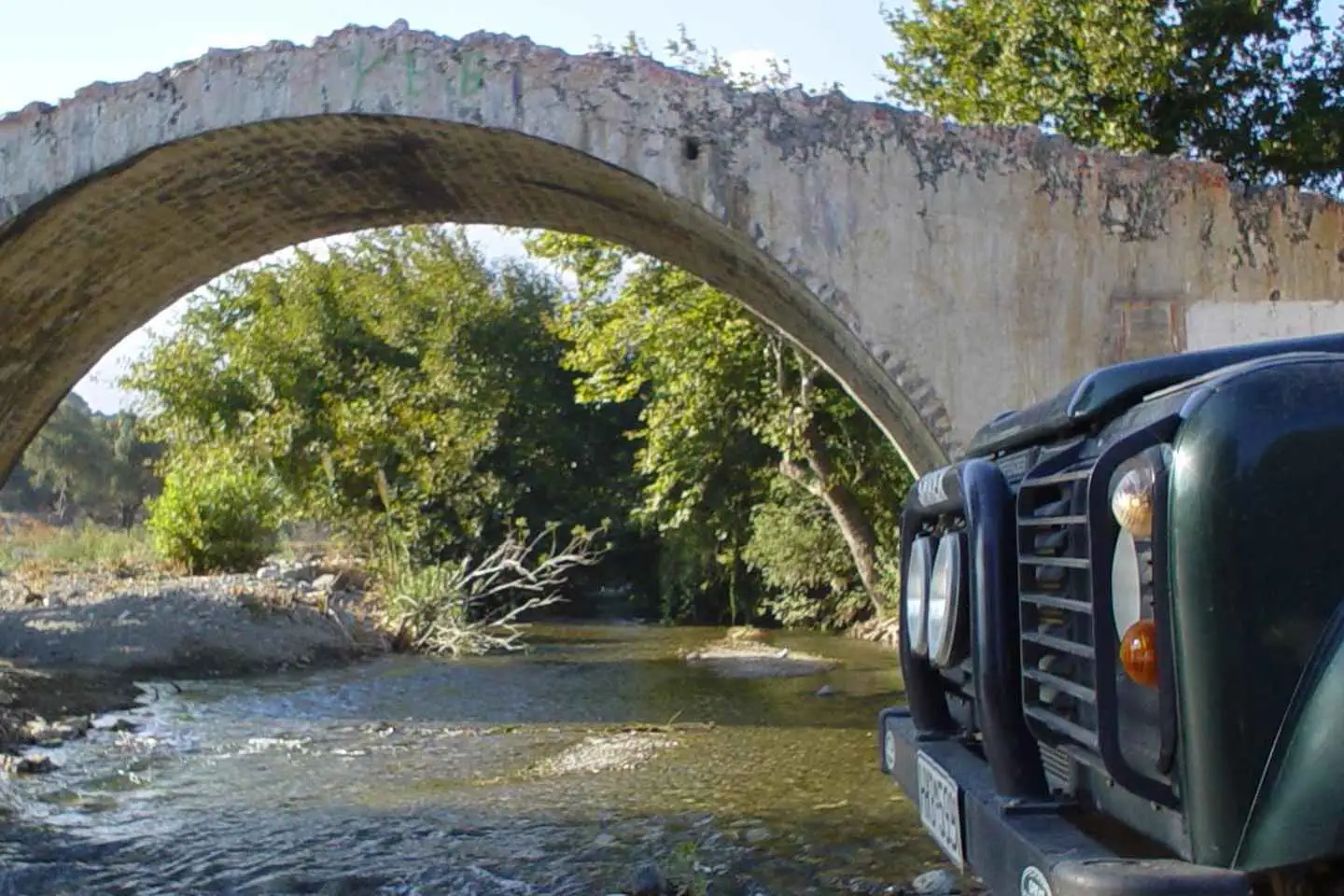
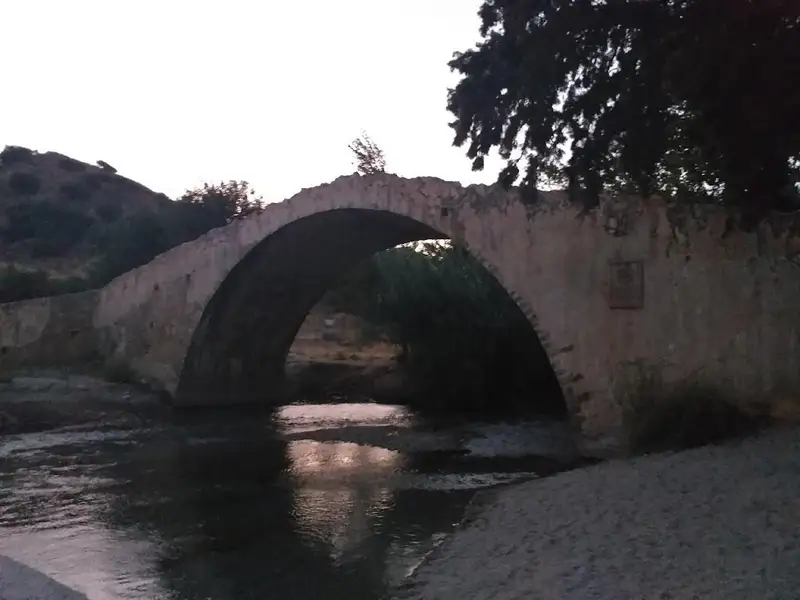
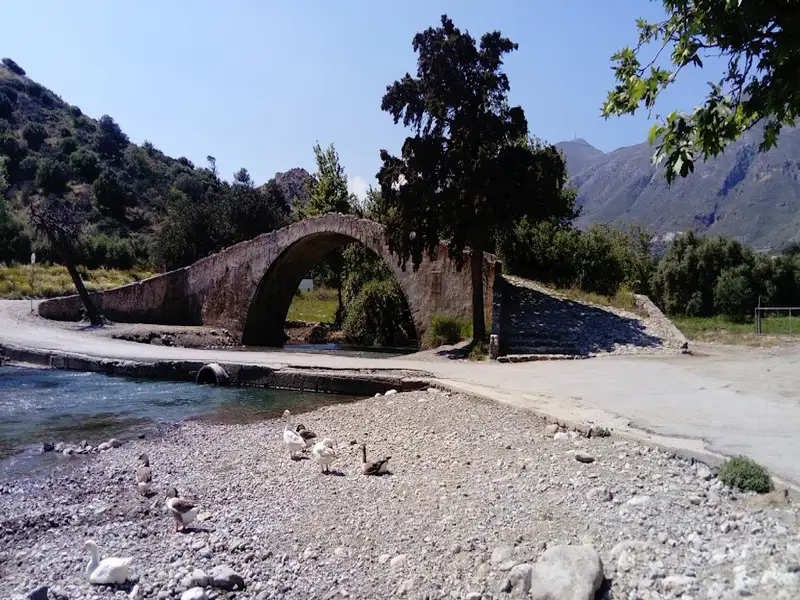
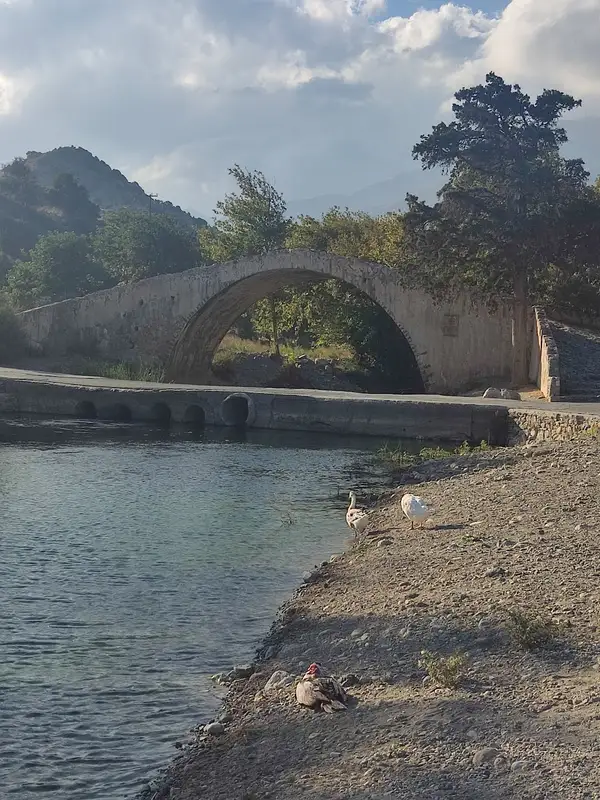
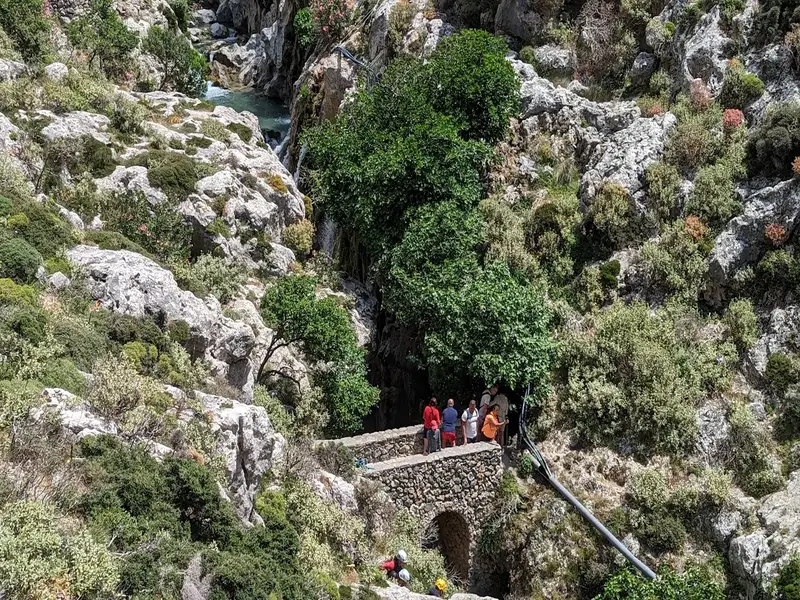
When approaching from Rethymnon, visitors first encounter the Kato Monastery of Agios Ioannis Prodomos (St. John the Baptist), which now lies in ruins. It is situated near the Megalos Potamos river and the region’s arched bridge. The monastery features an irregular arrangement of buildings centered around a courtyard, with the church of Saint John the Baptist at its heart. Surrounding the church are various structures that once housed the dining room, kitchen, abbot’s quarters, monks’ cells, an olive oil press, and storage rooms. The monastery was once in use year-round, as the surrounding land was ideal for cultivation and agriculture. However, it was eventually abandoned after being repeatedly destroyed and plundered by different conquerors of Crete.
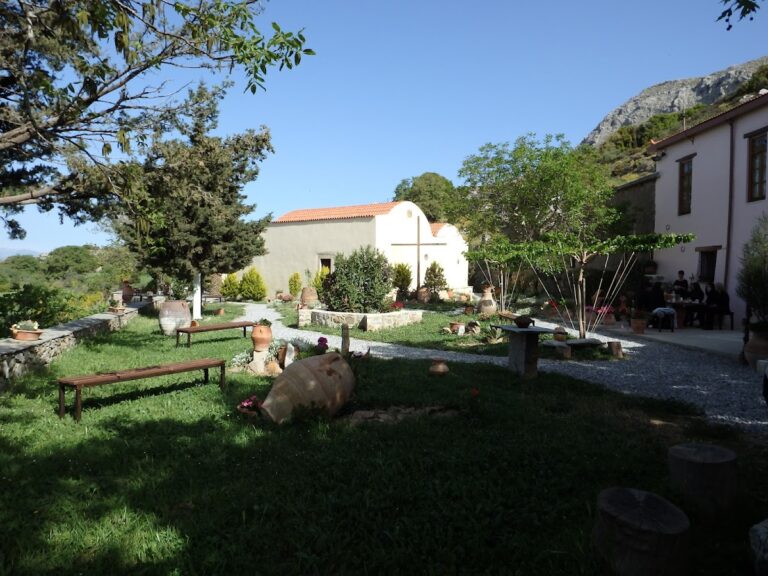
The Agio Pnevma (Holy Spirit) Monastery likely dates back to the 12th century and had already achieved autonomy and prosperity by the end of Venetian rule. Tragically, on June 15, 1821, local Turks slaughtered the monks and set fire to the monastery.
Subsequently, the damaged monastery became a subsidiary of the Preveli Monastery, and by 1836 it functioned as a widely known school throughout Crete and Gavdos, drawing thousands of students from all over the island.
In the present day, the monastery is home to a monument dedicated to the 200 volunteers led by Demetrios Petropoulakis, who lost their lives in a battle against the Turks on December 5, 1868. The monastery has since been restored and has resumed operations.
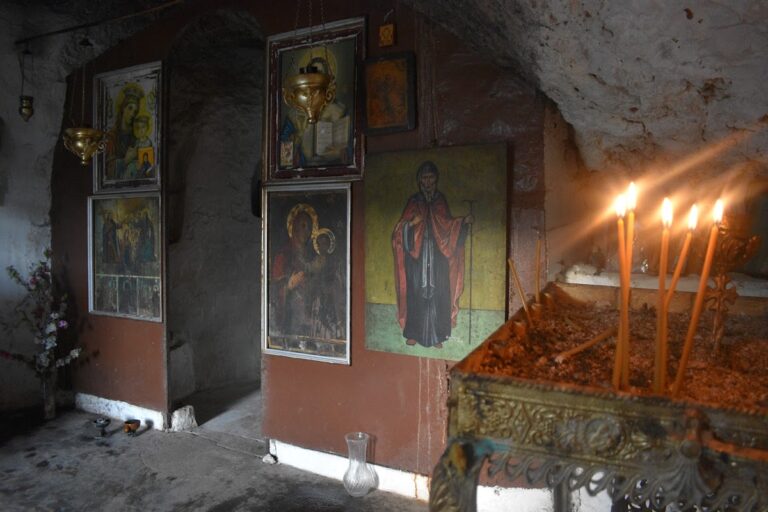
Located at Katevati, 6 km from Akoumia village and at an altitude of 525m, the Holy Monastery of St. Anthony (Agios Antonios) can be reached by a 15-minute car drive on a dirt road from Akoumia.
Constructed after liberation from the Germans in 1945, the monastery was rebuilt by Theodosius Damvakerakis, who spent around 50 years living as a hermit in the area. Until 1974, the location was home to a small chapel. The current monastic complex, complete with temples, monk cells, a courtyard, and ancillary areas, was established by Father Theodosius. Situated on his property at Katevati, the monastery houses the churches of Saint Anthony, Saint Nektarios, and Panagia (Virgin Mary). The most recent addition, the church of Saint Nektarios, features a massive icon representing all Saints. Meanwhile, the church of Panagia, built within a rock, contains the “Unwithering Rose” icon. The monastery’s celebration takes place on January 17.
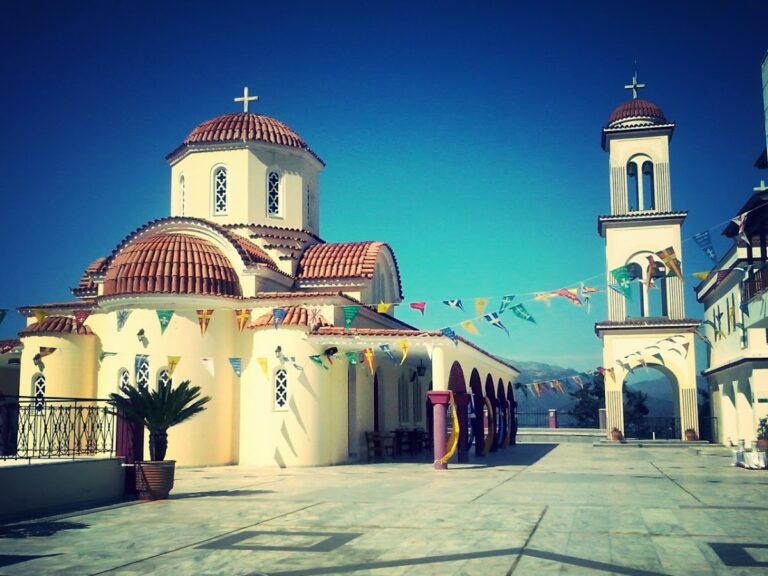
In the early 1990s, the monastery of Saints Raphael began operating on the hill of the Episcopacy (Diocese seat) of Lambi, Sivritos, and Sfakia in Spili. The primary temple is devoted to the martyrs Saint Raphael, Nikolaos, and Irini. Additionally, the monastery houses the chapels of Saint Irinaeus, Saint John the Baptist, Saint John the Hermit, and Archangel Michael.
No results available
No results available
No results available
No results available
No results available
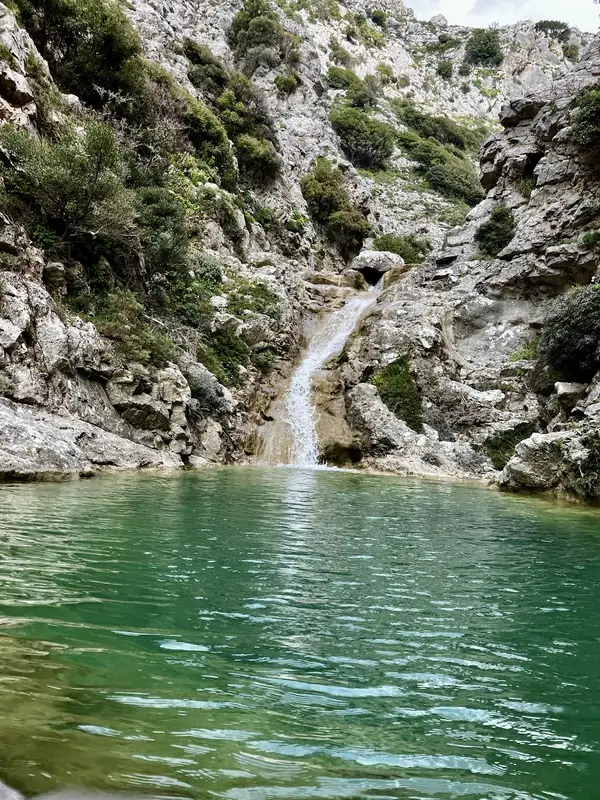
Located just 1km north of Kissos village in Agios Vasilios province and 34km southeast of Rethymnon, Kissano Gorge serves as a link between Kambos Kissou settlement and the small Gious Kambos plateau. The gorge’s river is a primary tributary of the Gorge Frati. The canyon, though not lush with vegetation, boasts small waterfalls, the tallest of which measure between 5-7m. These waterfalls make it an ideal location for canyoning, but it’s also possible to bypass them carefully from the sides without any specialized equipment.
The journey begins at the Gious Kambos plateau, a small haven of diverse flora. A 0 to 30-minute walk along or beside the riverbed leads you to a point where the river intersects the road connecting Kissos with Gerakari. Here, you’ll find a striking reddish rock peppered with numerous caverns known as Kokkinos Detis, leading locals to also refer to this area as the Kokkinos Detis Gorge.
While this marks the end of the main part of the canyon, the river continues its descent, creating more small waterfalls. It then passes through the 60-hectare artificial pine forest of Vatolakki, before continuing towards Spili and eventually to Frati.
Approximately 1 km to the east of Spili, in the Agios Vassilios province, you’ll find the church of Agia Fotini, also known as Saint Photini. Like many places in Crete, it’s often referred to as Agia Fotia. Situated on the main road leading to Agia Galini, the church is adjacent to a spring that flows with water throughout the year. Nearby, you’ll see a large, old watermill. This area marks the end of the picturesque Agia Fotia gorge, which is small but incredibly lush.
The gorge begins at the Gious Kambos plateau, which is 750m above sea level, and concludes at the spring, which sits at an altitude of 500m, after a 1.5km journey.
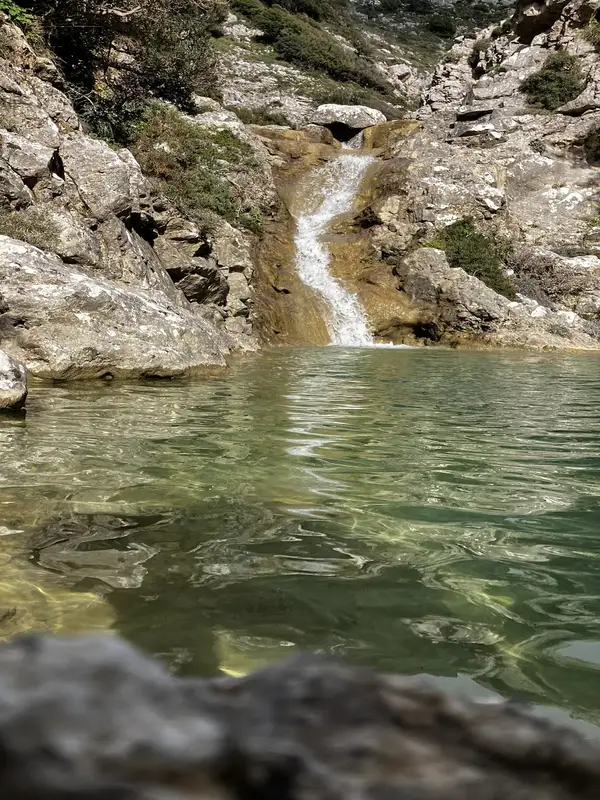
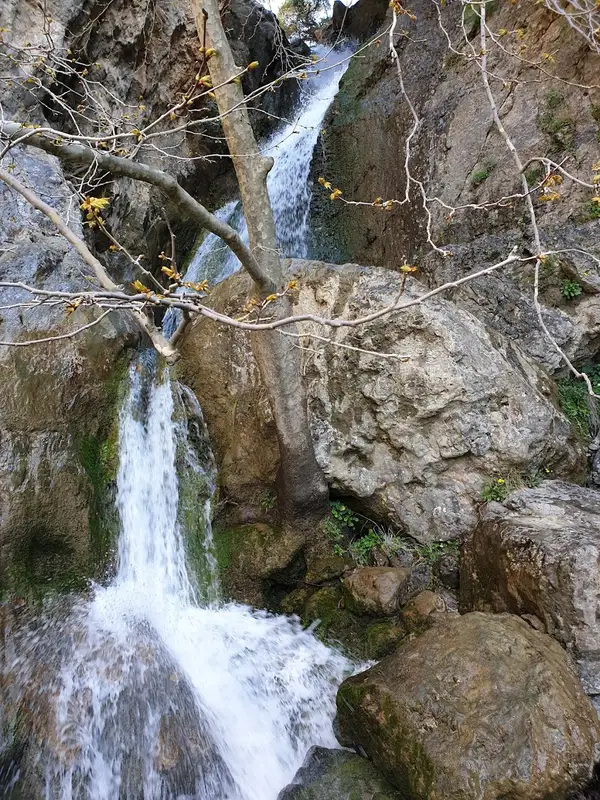
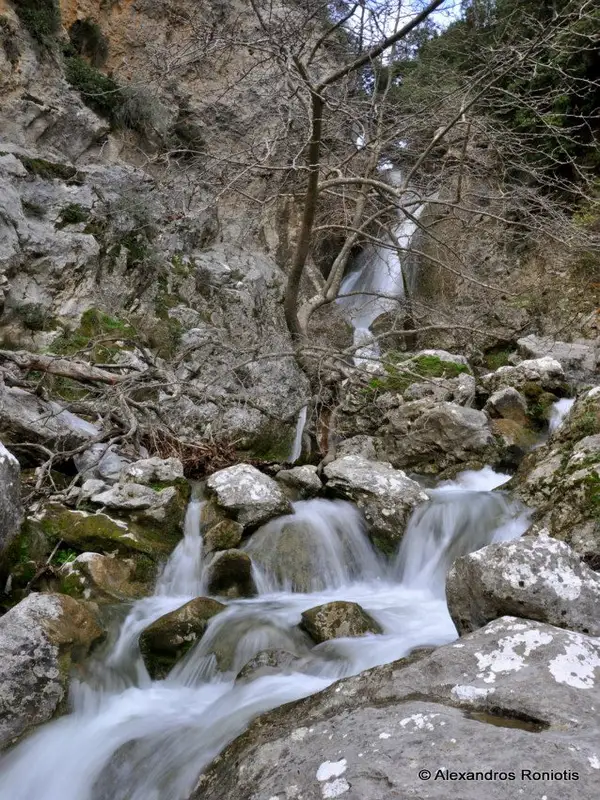
Close to the gorge’s starting point, you’ll discover waterfalls of unparalleled beauty. In the springtime, these falls are abundant with water, creating a unique and breathtaking landscape filled with plane trees. The easiest way to reach the waterfalls is by walking from the spring along the gorge. Alternatively, you can access them from Gious Kambos, though this route is more challenging. It requires bypassing the waterfalls from the sides and descending the steep slope to the riverbed.
The Swallow Gorge, situated 33km south of Rethymnon city, is in close proximity to the renowned Preveli beach, known for its magnificent palm grove and breathtaking river. The gorge begins from Kenda peak (881m altitude), passes through Drymiskos village, runs nearly parallel to the Kourtaliotiko canyon, and concludes at Drymiskiano Ammoudi beach. It gets its name from the swallows that flock here every summer.
Unlike Kourtaliotiko, this lesser-known canyon is dry during the summer but is still worth a visit. The vertical, awe-striking rocks and the verdant riverbed (which flows in winter) are a sight to behold. The winding Swallow Canyon is relatively easy to hike and doesn’t require any specific skills, despite not being marked.
A significant portion of the canyon runs parallel to the road leading to Amoudi beach, which is where the easy trail to Preveli begins. To find this road, take a left at the picturesque arched bridge of Megalos Potamos that you’ll come across en route to the Preveli monastery. Therefore, even if you’re not much of a walker, you can still enjoy the beauty of the gorge during your visit to Preveli.
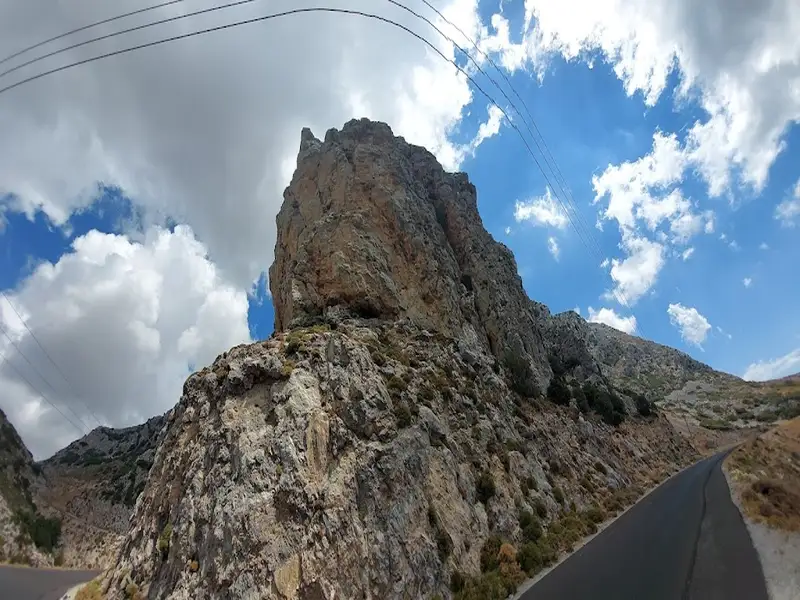
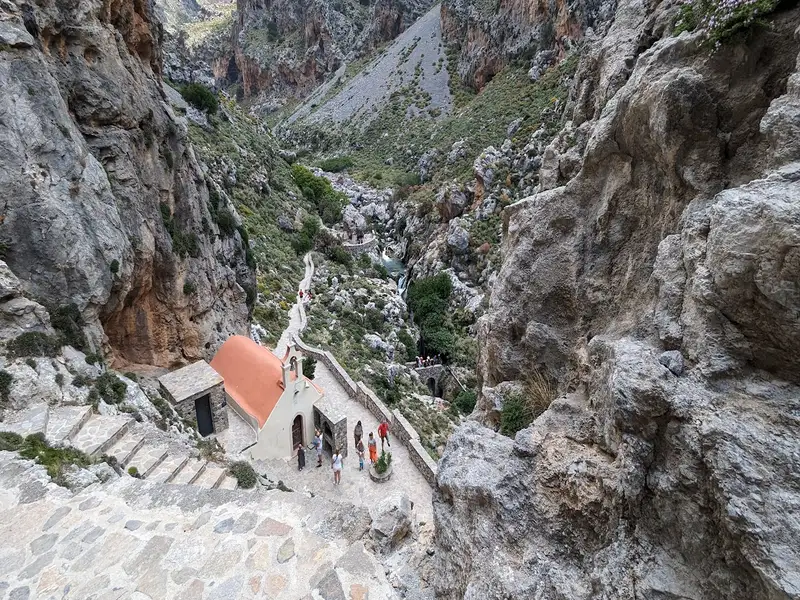
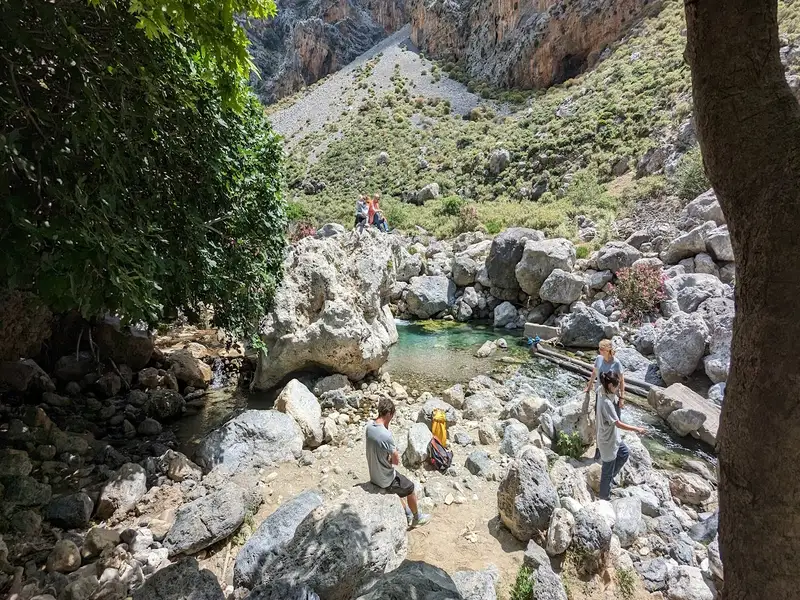
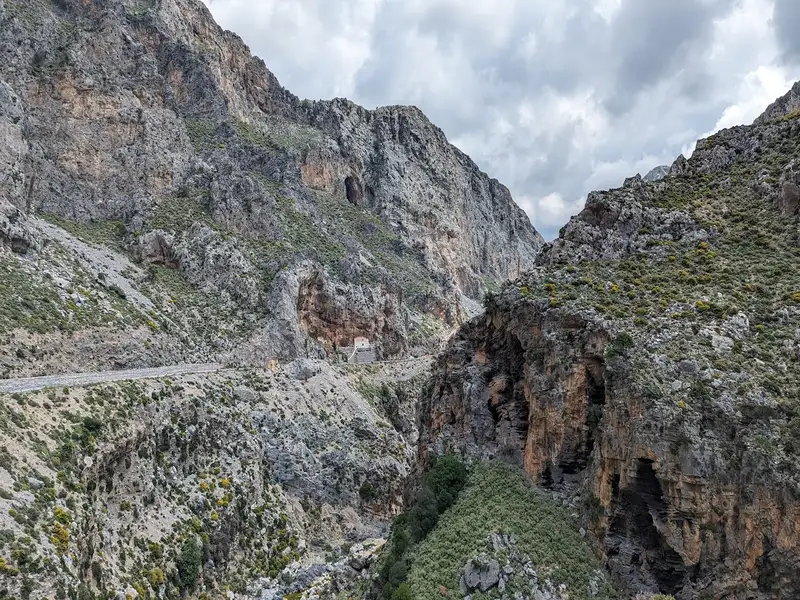
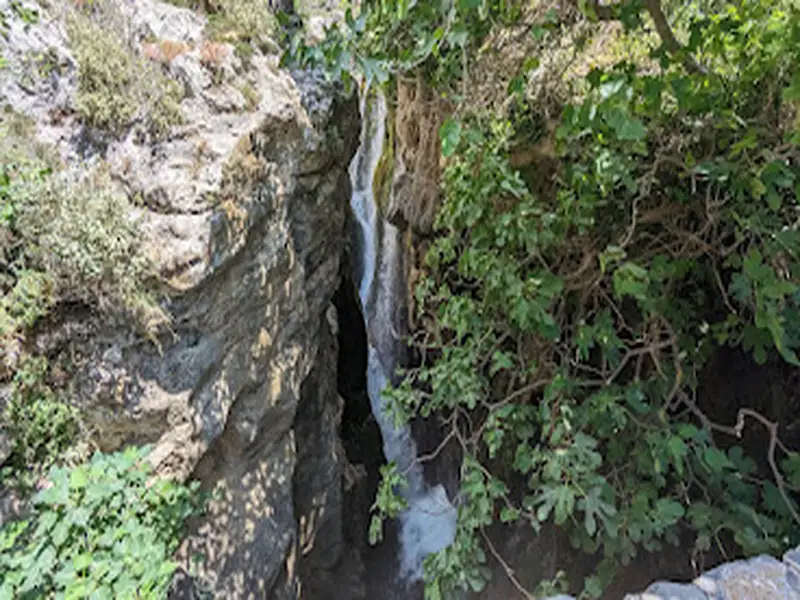
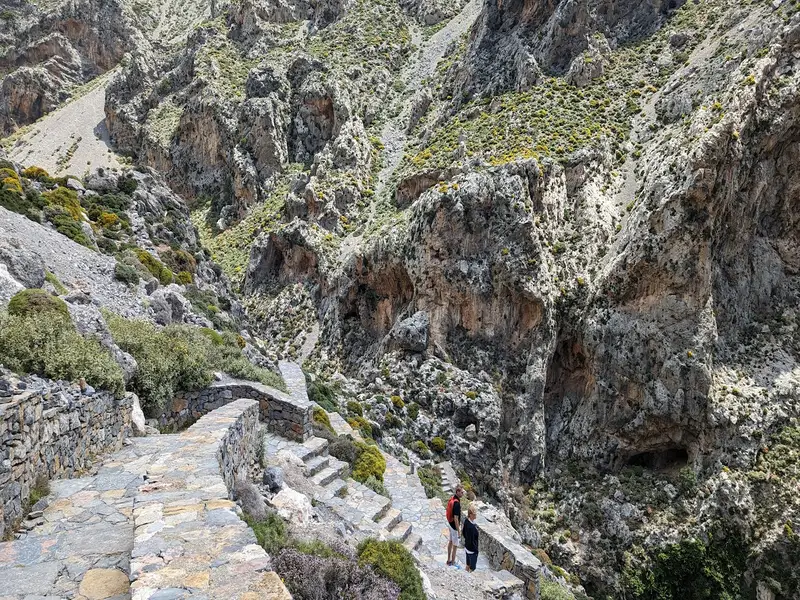
Kourtaliotiko Gorge is a hiking gorge 22km south of Rethymno, Crete, Greece, known for its waterfall, its year-round springs, and the chapel of Agios Nikolaos at the base of the cliffs. Kourtaliotiko Gorge runs for 3km between the Kouroupa and Koules mountains, and a paved road cuts through the canyon so you can reach the main viewpoints and the trailhead without a long approach. This guide covers what the gorge is, the waterfall and chapel, how to get there and park, the difficulty, what to see, and the tips worth knowing before you go.
No results available
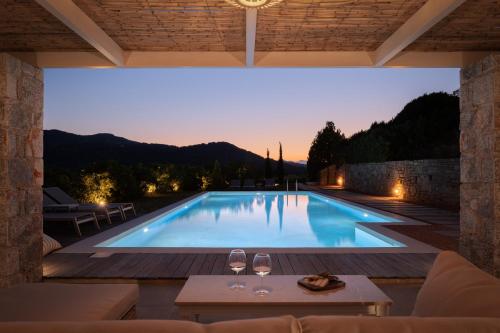
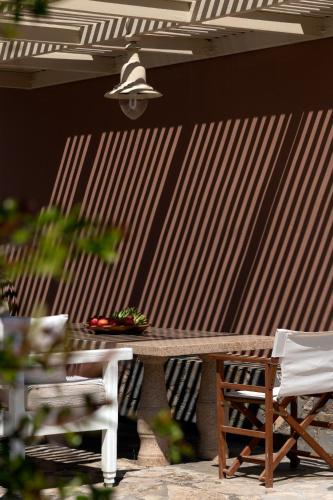
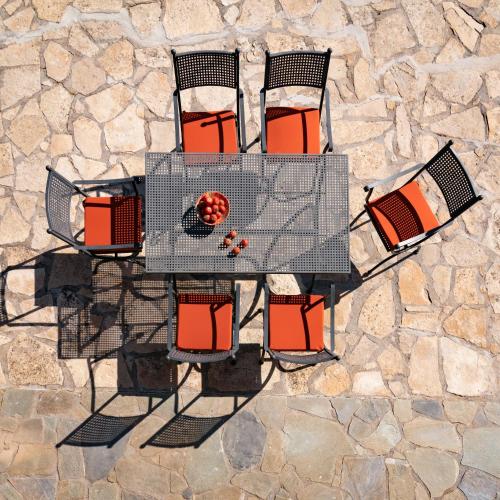
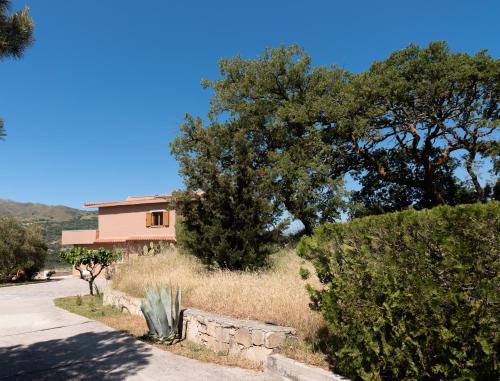
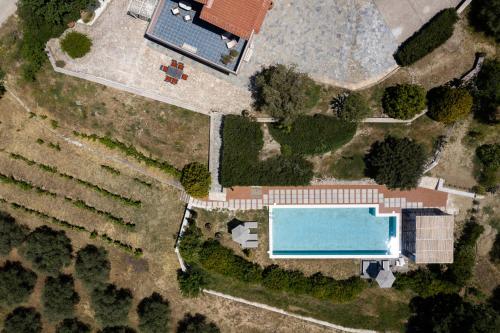
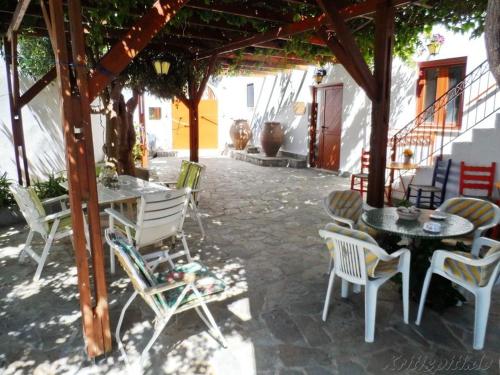
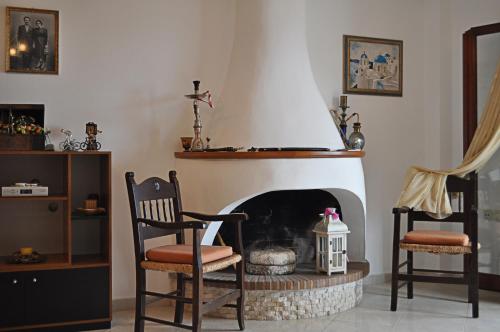
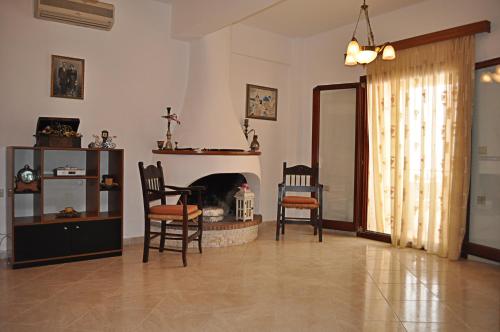
Featuring mountain views, Eleonas Estate offers accommodation with a balcony and a coffee machine, around 32 km from Archaeological Museum of Rethymno. This property offers access to a terrace, free private parking and free WiFi.
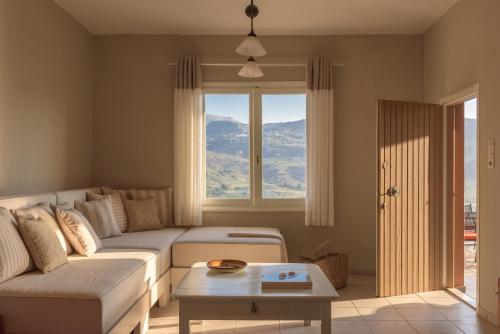
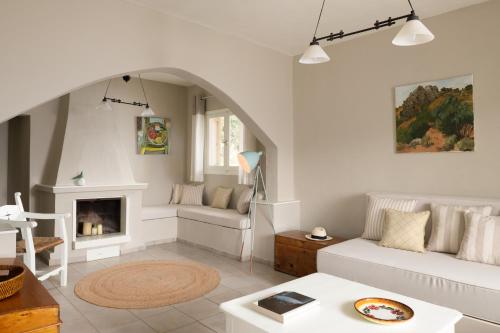
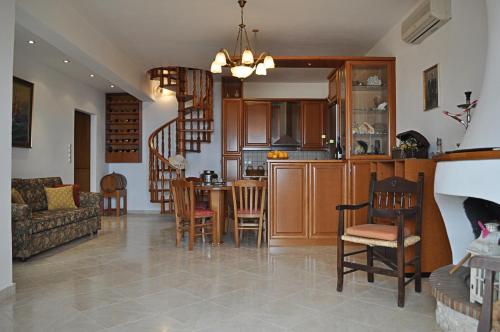
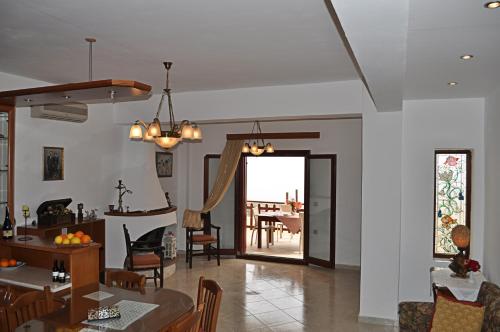
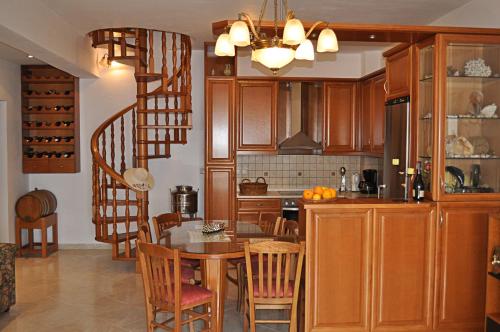
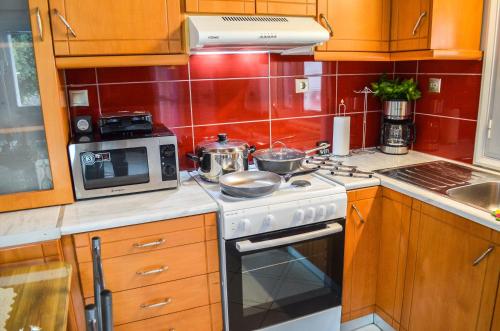
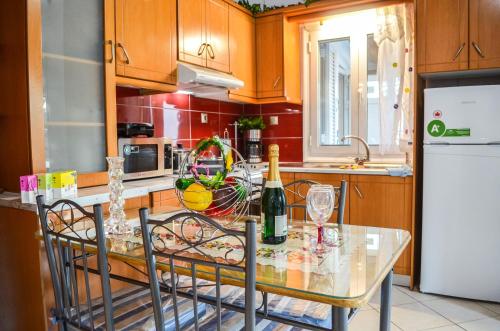
This air-conditioned holiday home comes with 3 bedrooms, a satellite flat-screen TV, a dining area, a kitchen with an oven, and a living room. Towels and bed linen are featured in the holiday home.
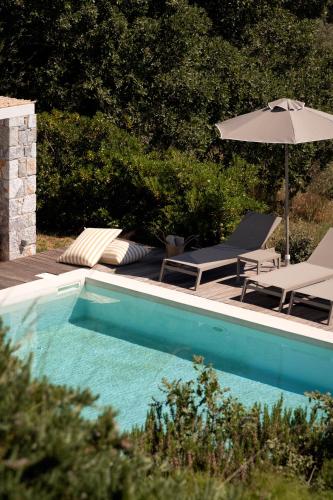
The holiday home offers a picnic area. In addition to a seasonal outdoor pool, Eleonas Estate also features a an indoor play area and shared lounge.
Museum of Ancient Eleftherna is 35 km from the accommodation, while Psiloritis National Park is 35 km away. The nearest airport is Heraklion International Airport, 93 km from Eleonas Estate.
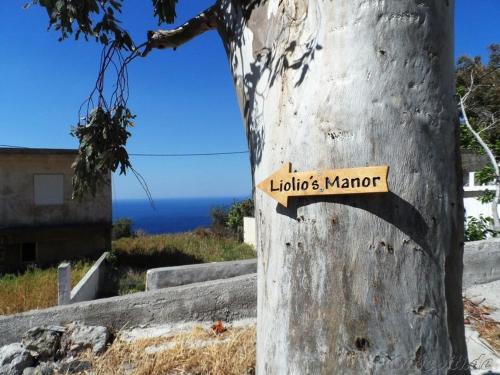
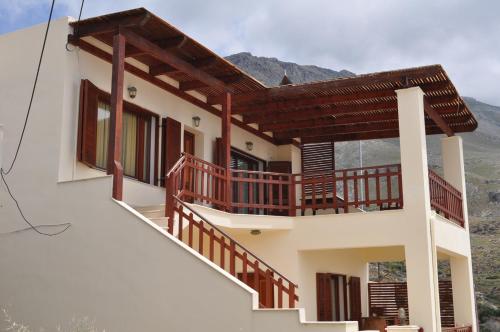
Boasting garden views, Liolio’s Manor features accommodation with a balcony and a coffee machine, around 36 km from Archaeological Museum of Rethymno. It has a garden, mountain views and free WiFithroughout the property.
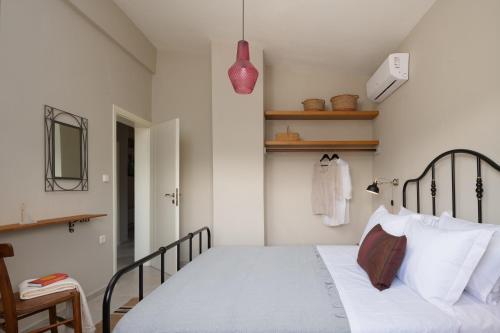
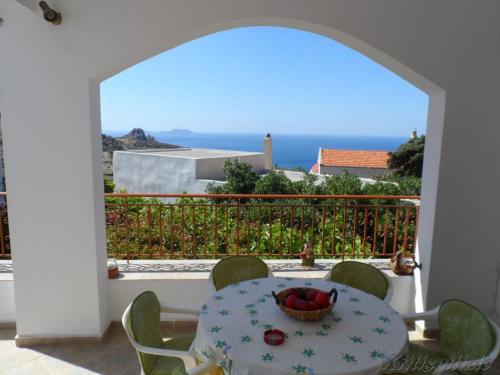
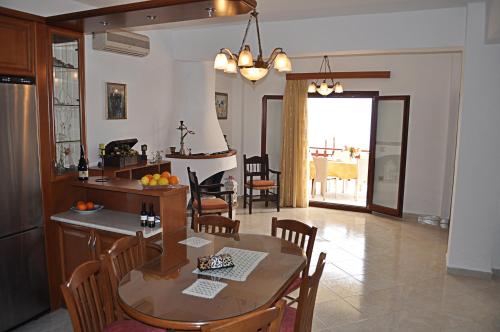
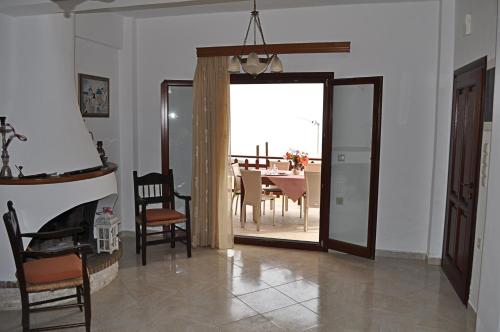
The holiday home features 2 bedrooms, 1 bathroom, bed linen, towels, a flat-screen TV with satellite channels, a dining area, a fully equipped kitchen, and a terrace with sea views.
Museum of Ancient Eleftherna is 47 km from the holiday home, while Psiloritis National Park is 48 km from the property. The nearest airport is Chania International Airport, 102 km from Liolio’s Manor.
from
€65
/night
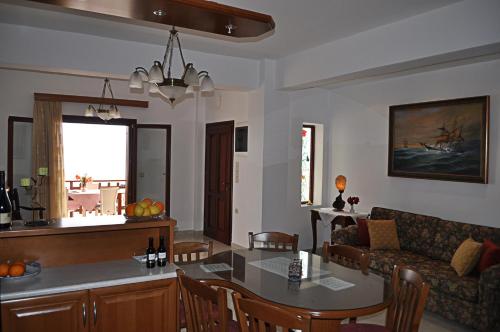
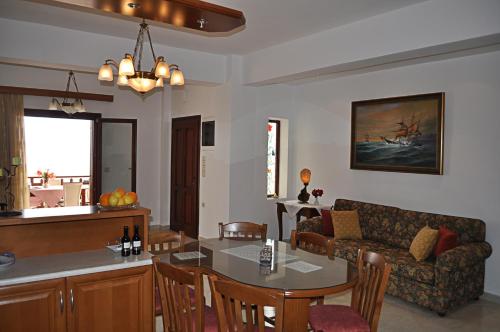
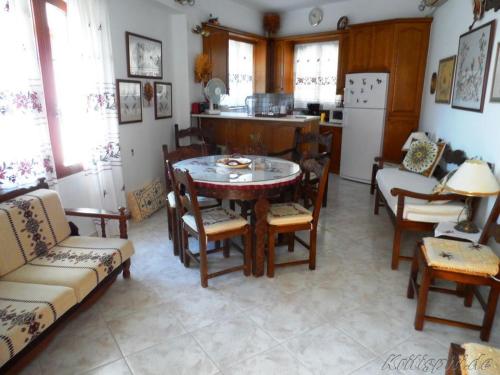
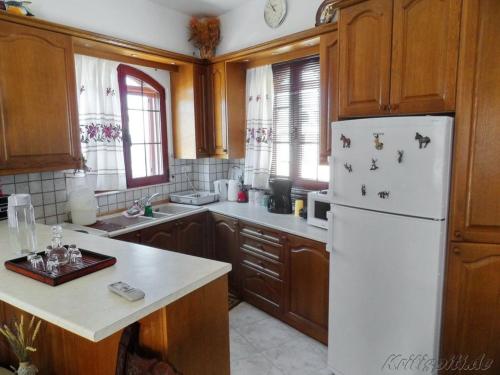
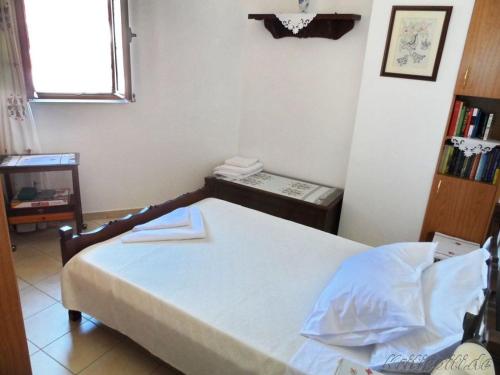
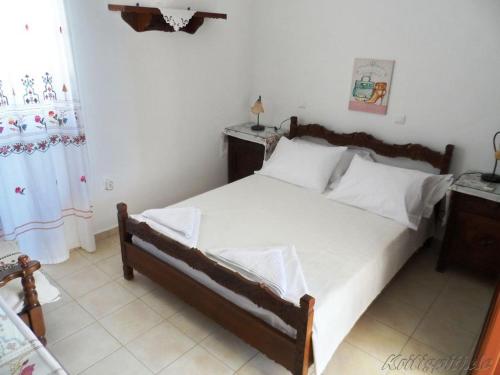
Boasting air-conditioned accommodation with a balcony, Villa Agalianos is situated in Kerames. It has barbecue facilities, a shared lounge, mountain views and free WiFithroughout the property.
The villa has 2 bedrooms, 2 bathrooms, bed linen, towels, a flat-screen TV with satellite channels, a dining area, a fully equipped kitchen, and a terrace with sea views.
Archaeological Museum of Rethymno is 36 km from the villa, while Museum of Ancient Eleftherna is 47 km from the property. The nearest airport is Chania International Airport, 102 km from Villa Agalianos.
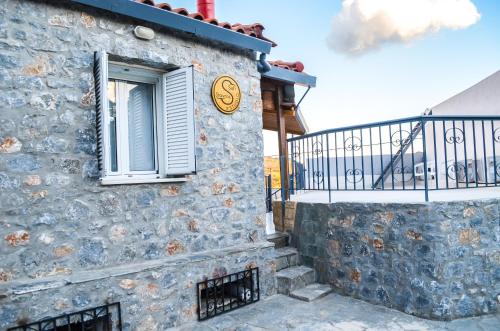
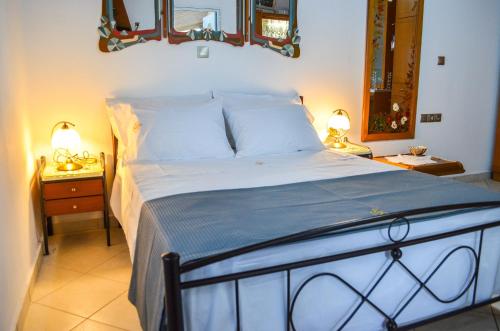
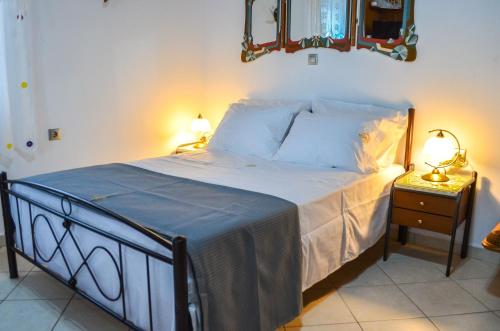
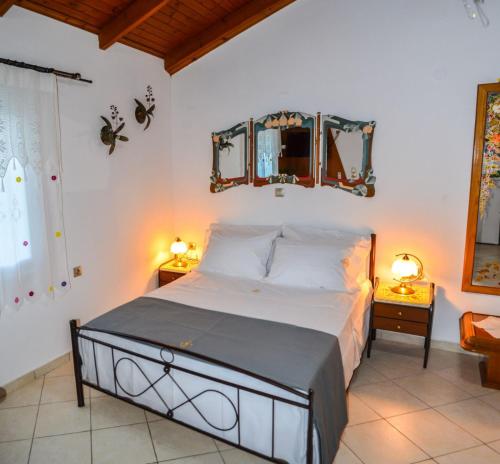
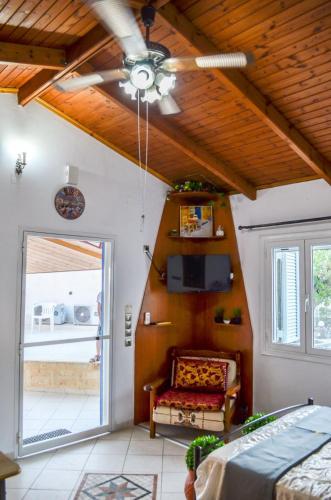
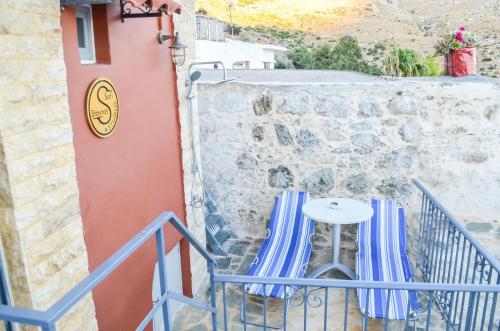
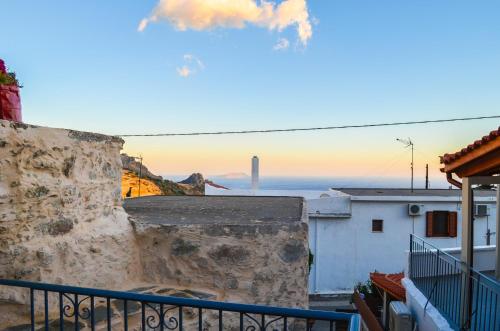
Featuring garden views, Sofi – Stavros Studio provides accommodation with a balcony and a kettle, around 36 km from Archaeological Museum of Rethymno. It has mountain views and free WiFithroughout the property.
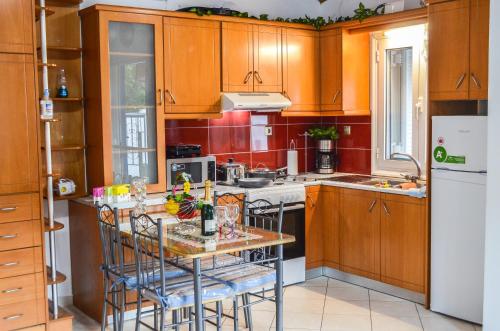
The holiday home with a terrace and sea views features 1 bedroom, a living room, a flat-screen TV, an equipped kitchen with an oven and a microwave, and 1 bathroom with a shower. Towels and bed linen are provided in the holiday home.
Museum of Ancient Eleftherna is 47 km from the holiday home, while Psiloritis National Park is 48 km away. The nearest airport is Chania International Airport, 102 km from Sofi – Stavros Studio.
from
€53
/night
No results available
Connect with thousands of Crete visitors and boost your bookings.
No results available
© All rights reserved. Crete Locals