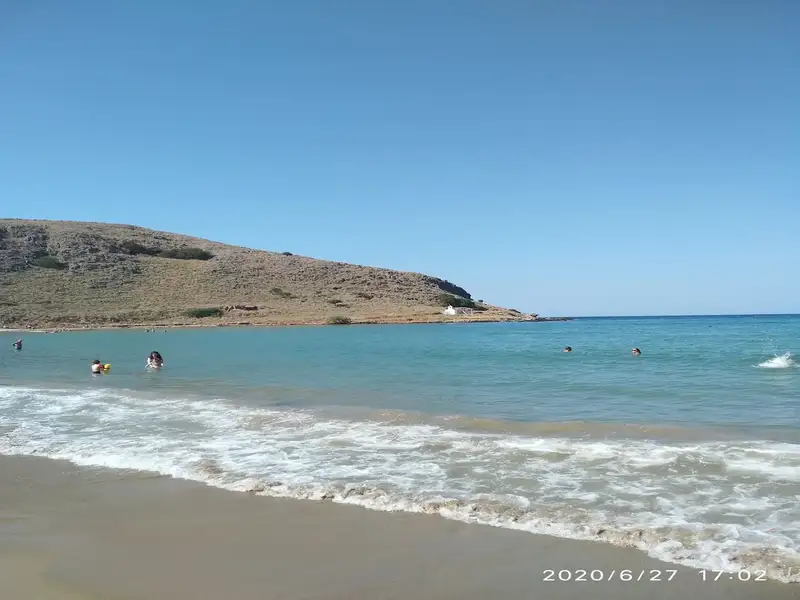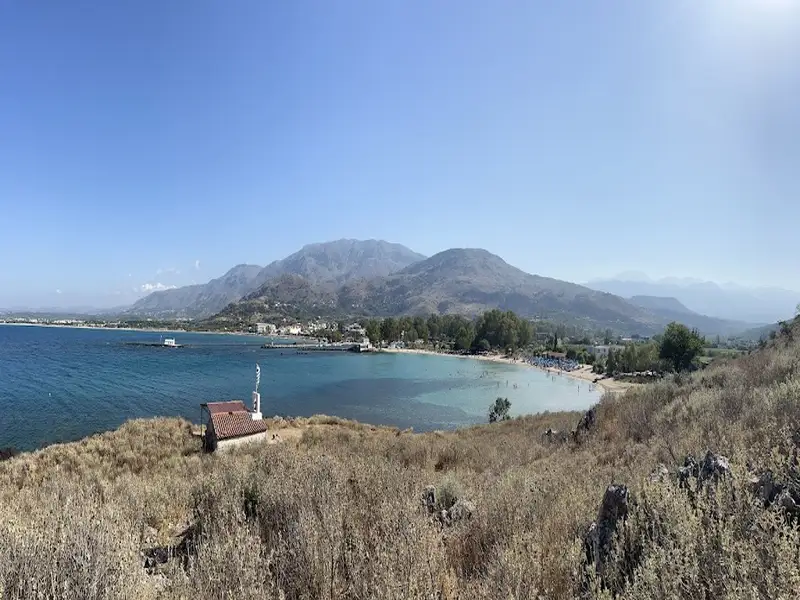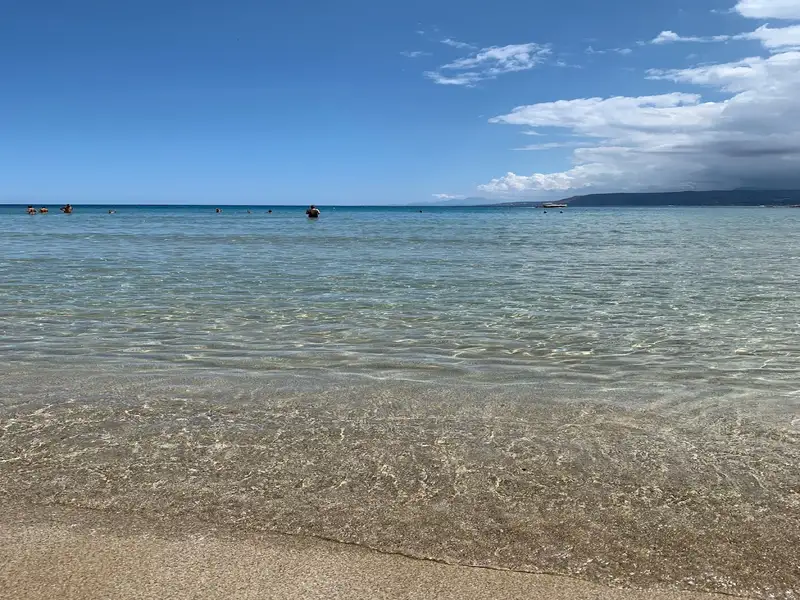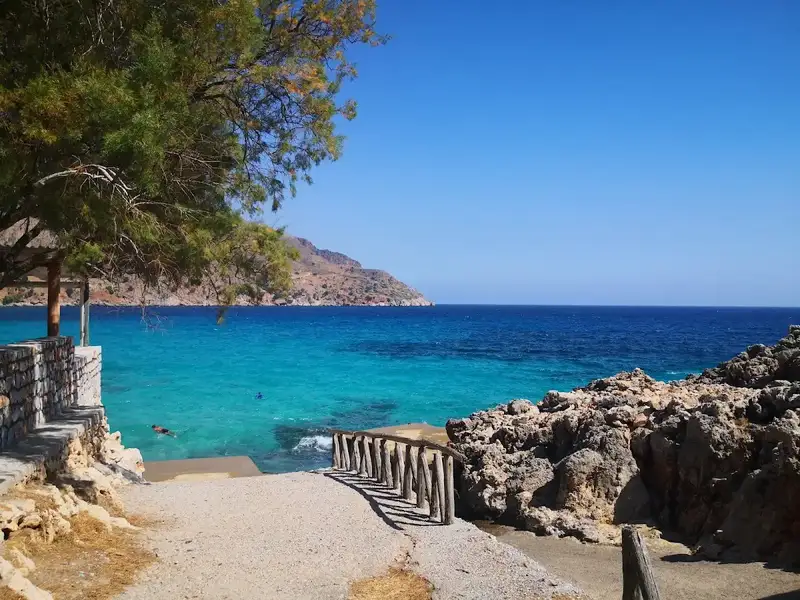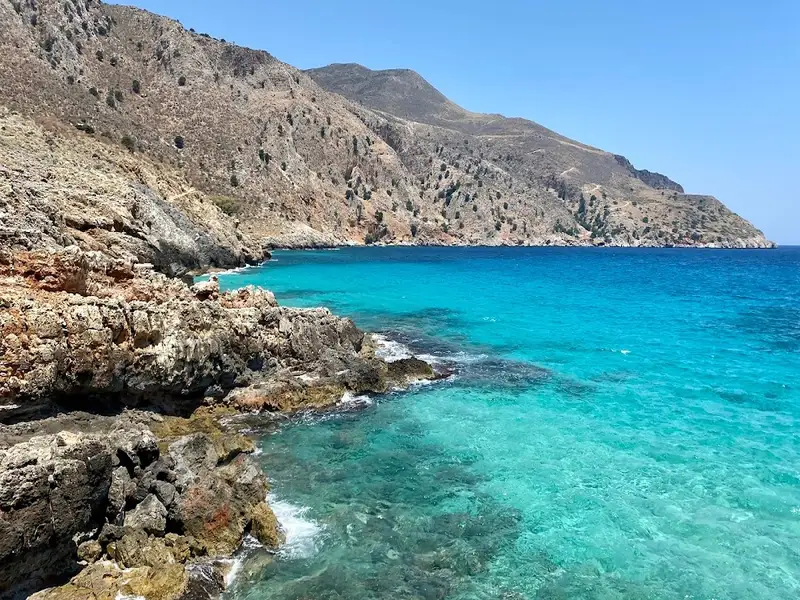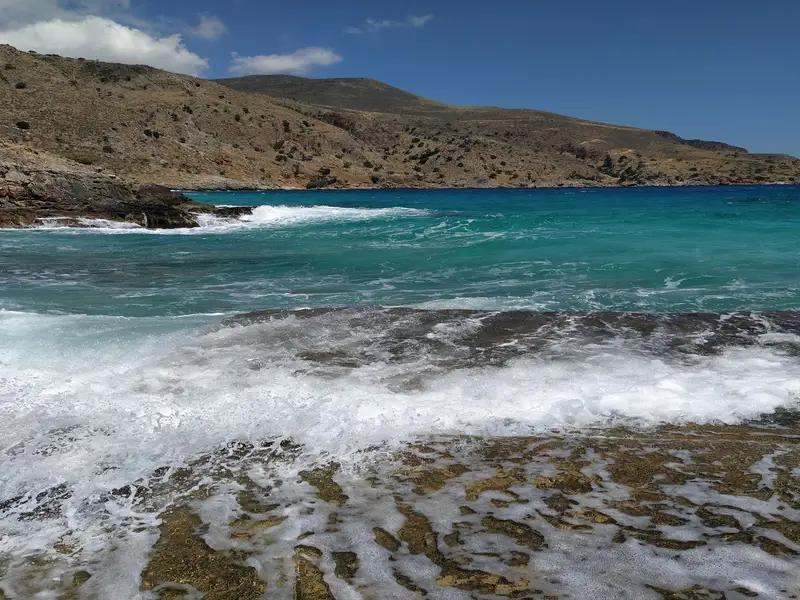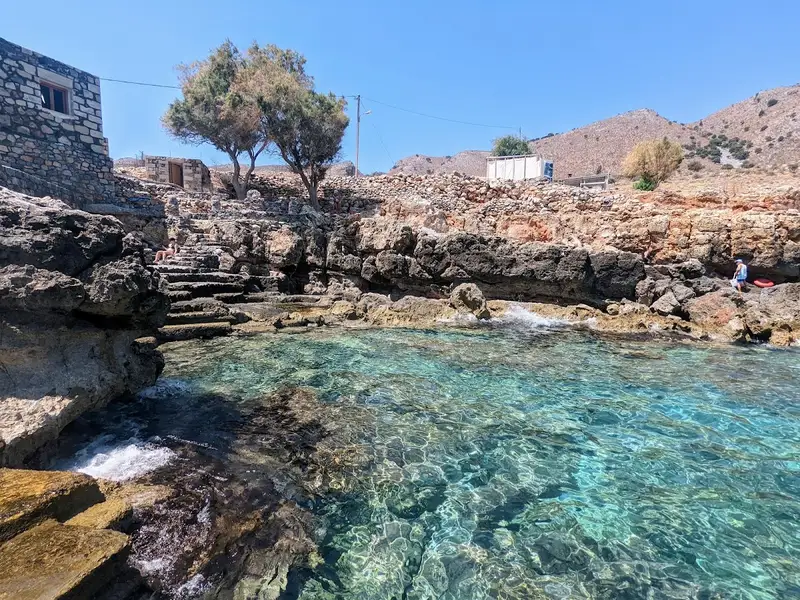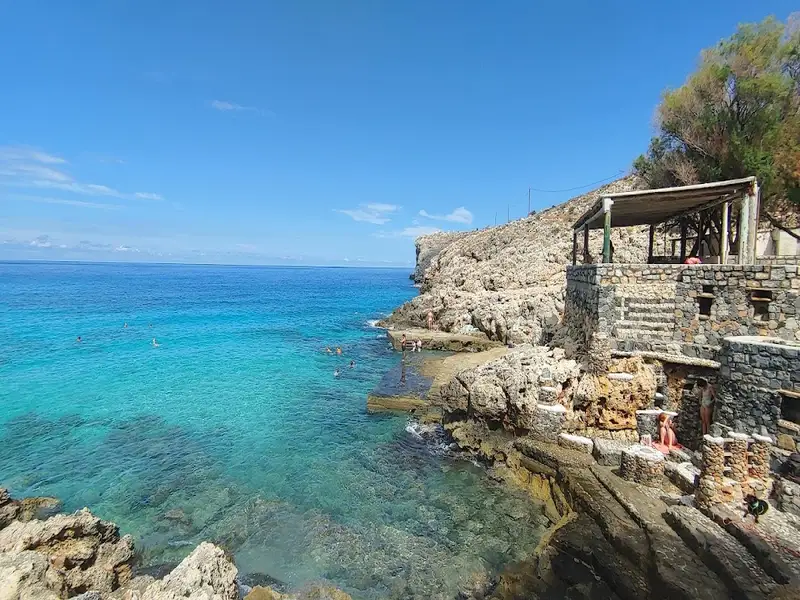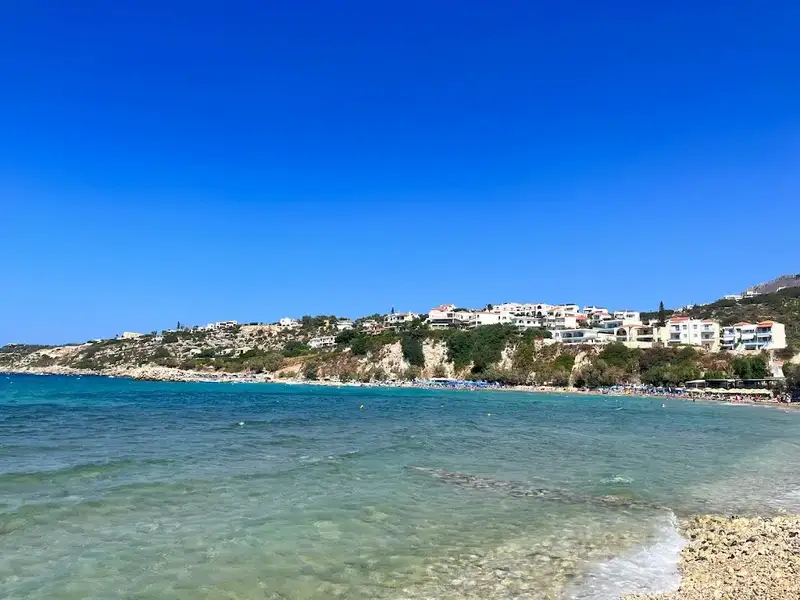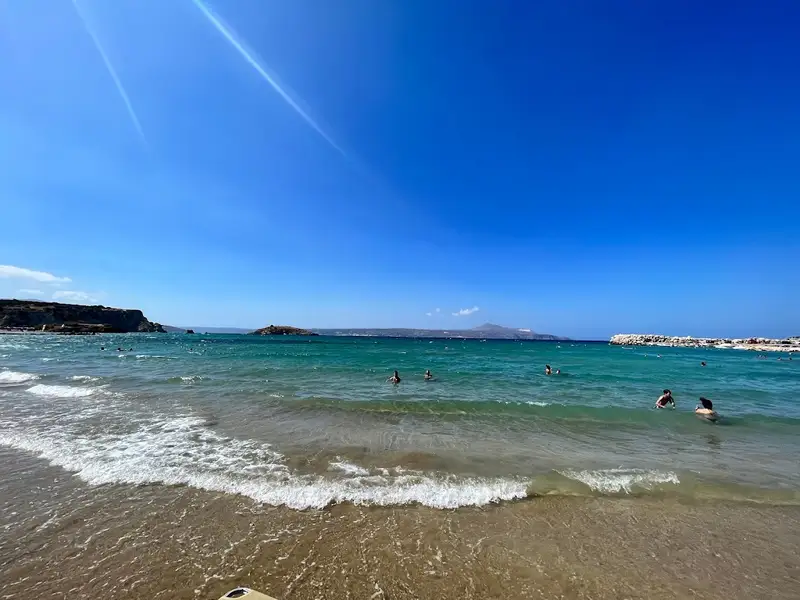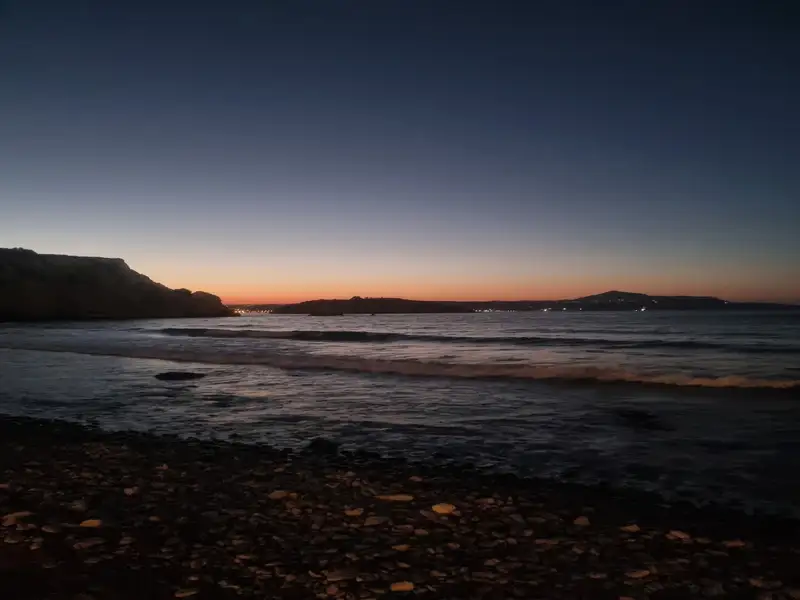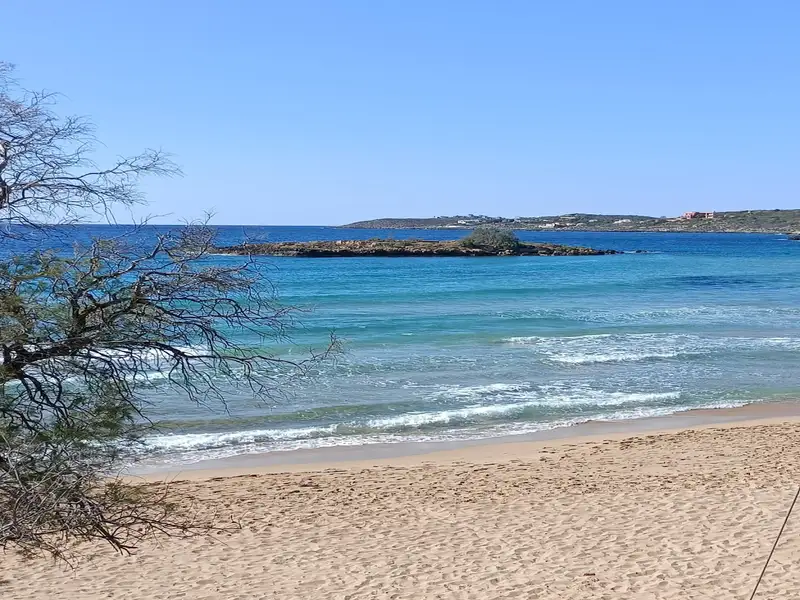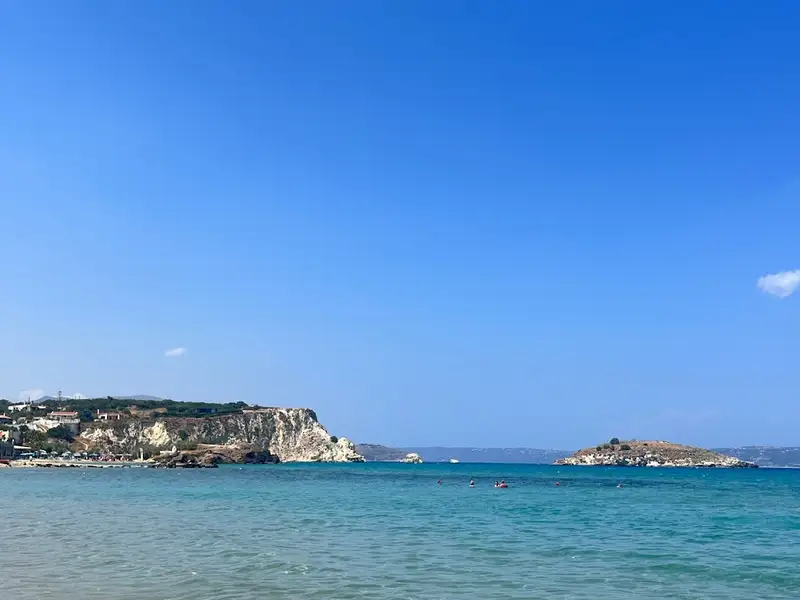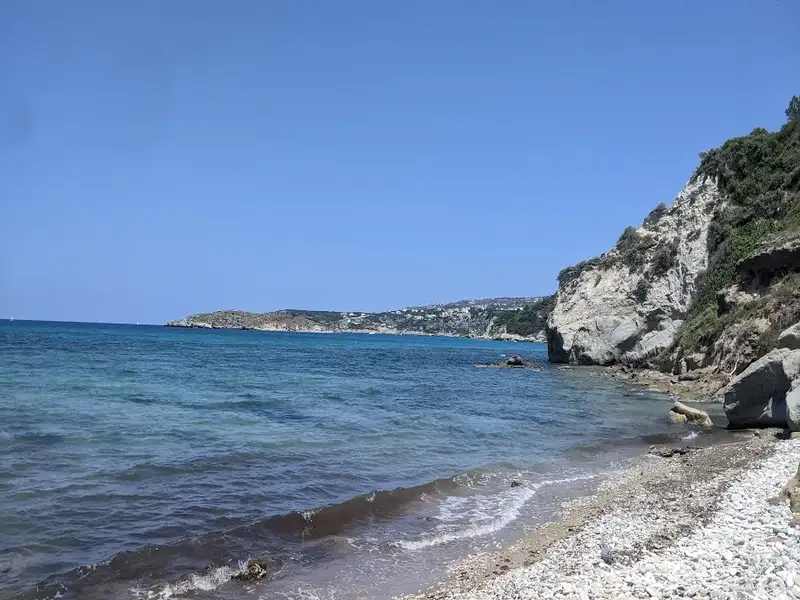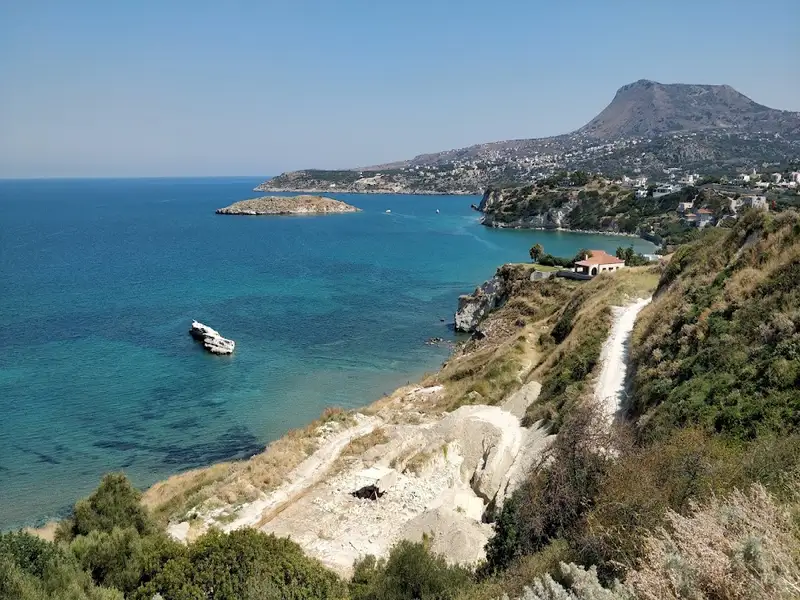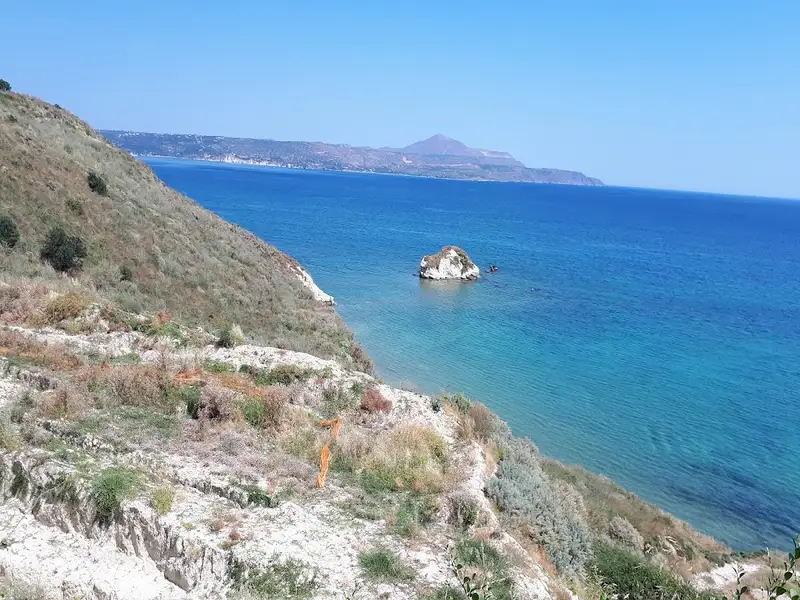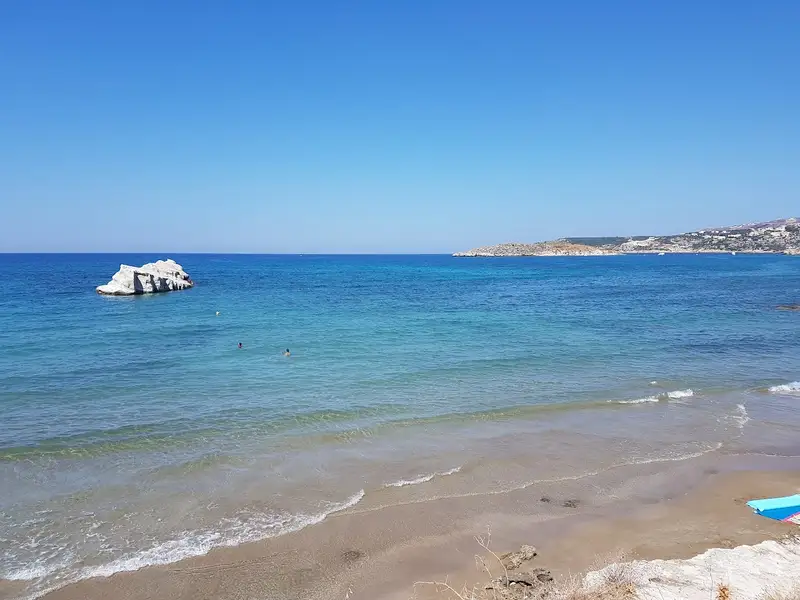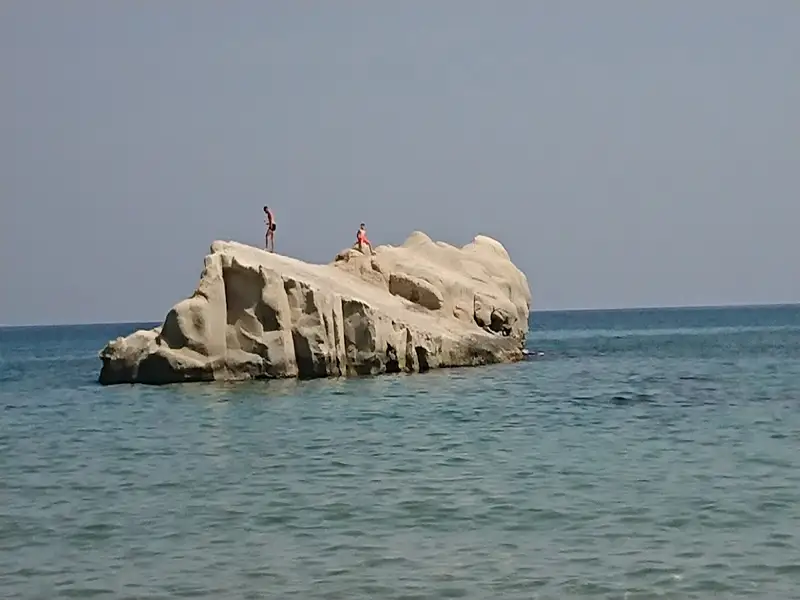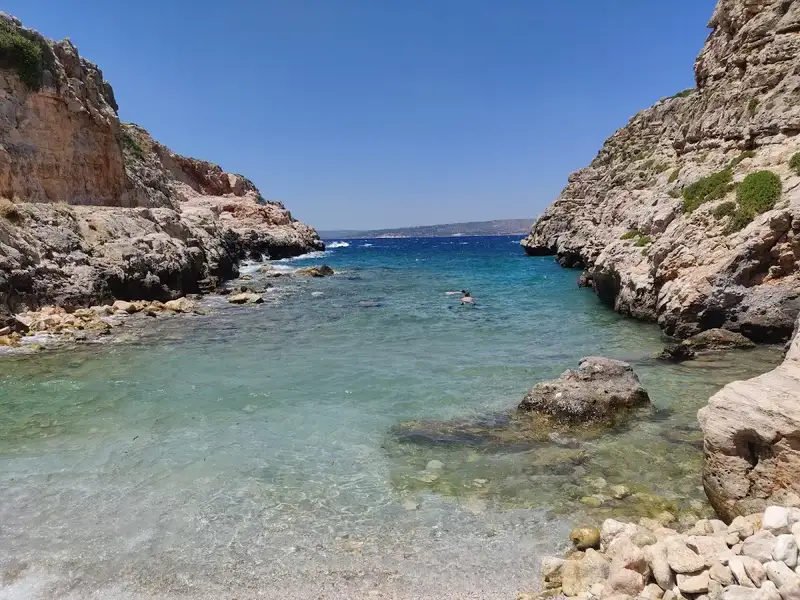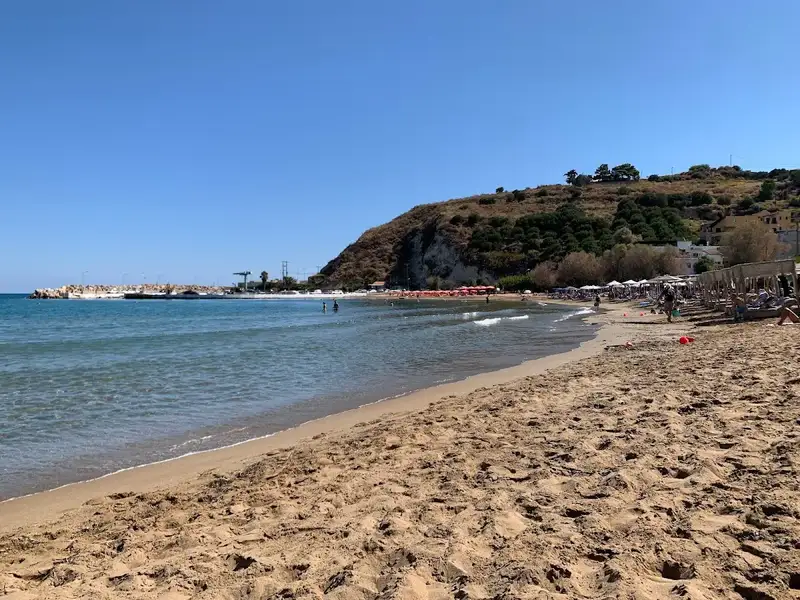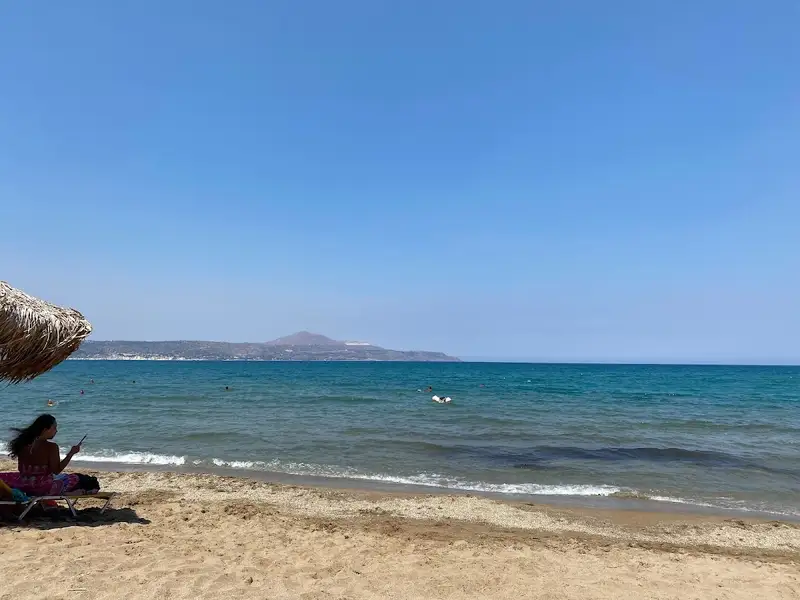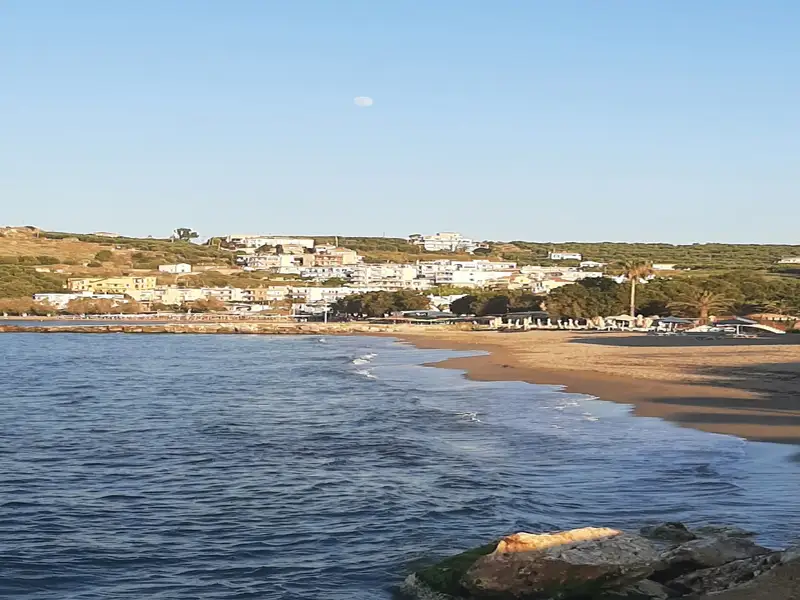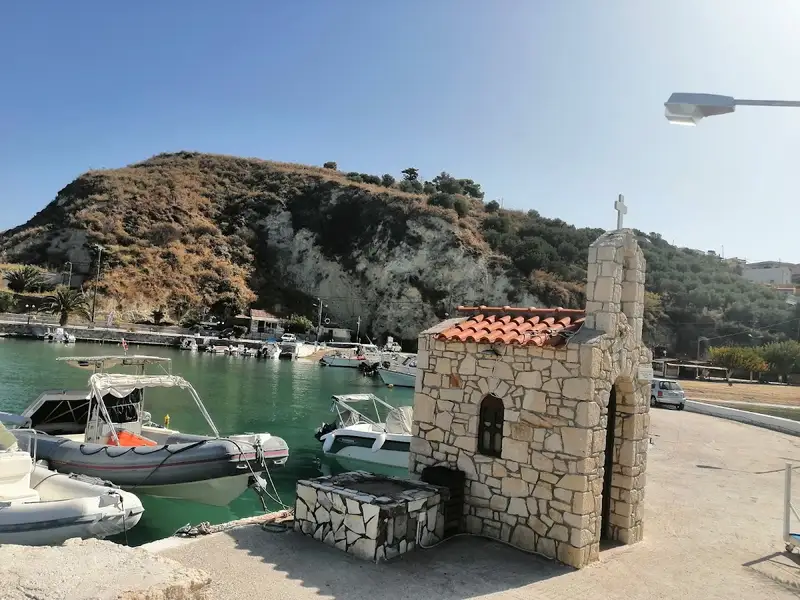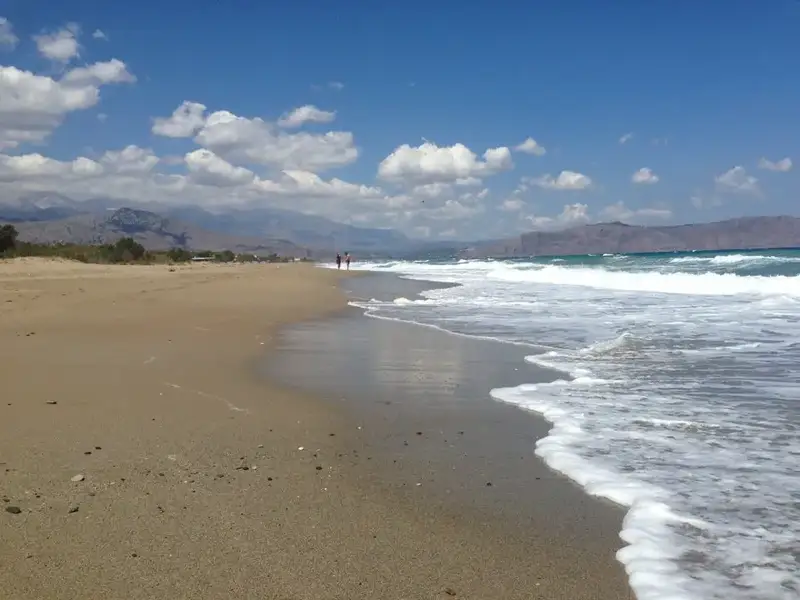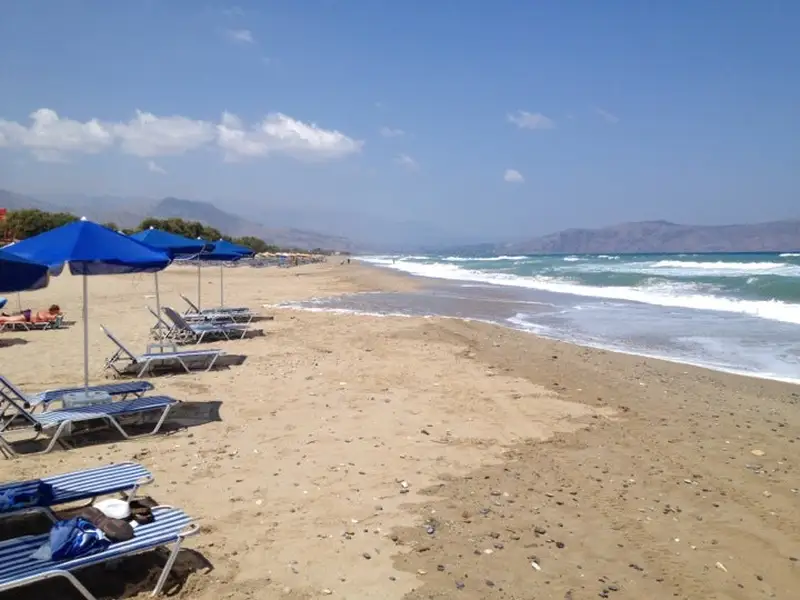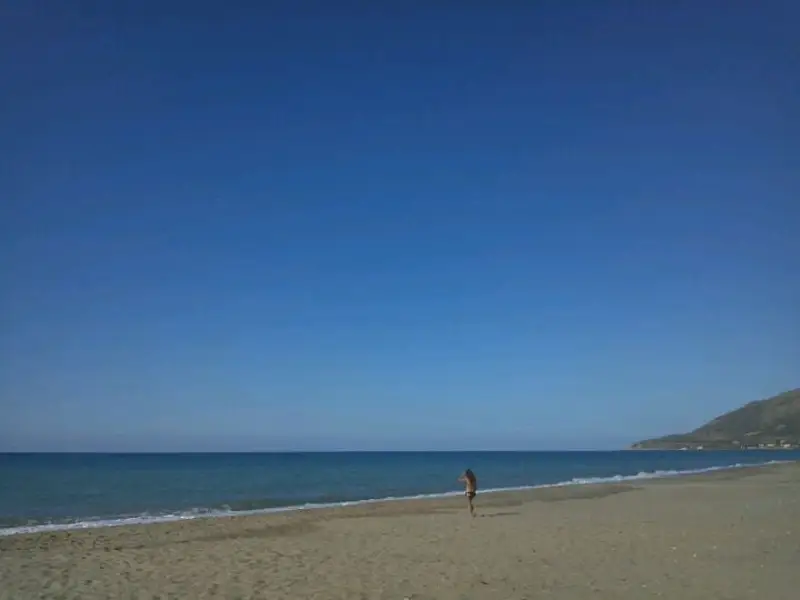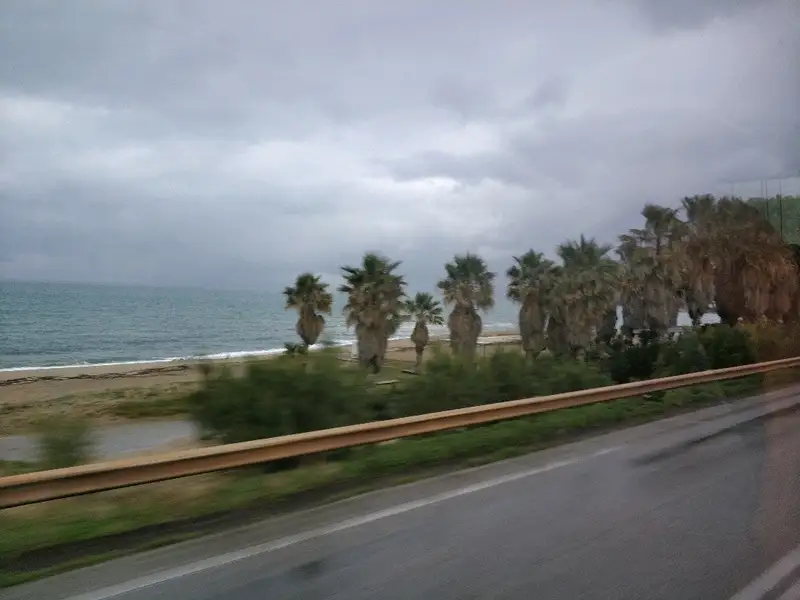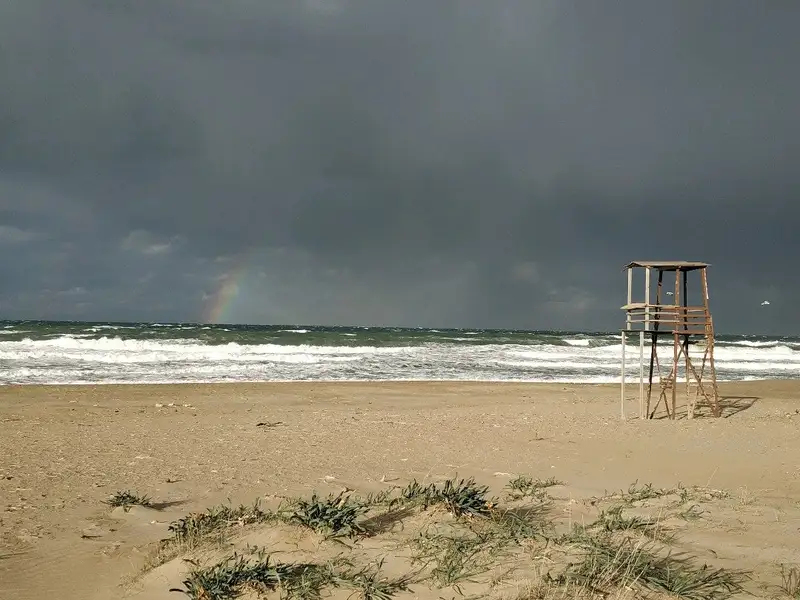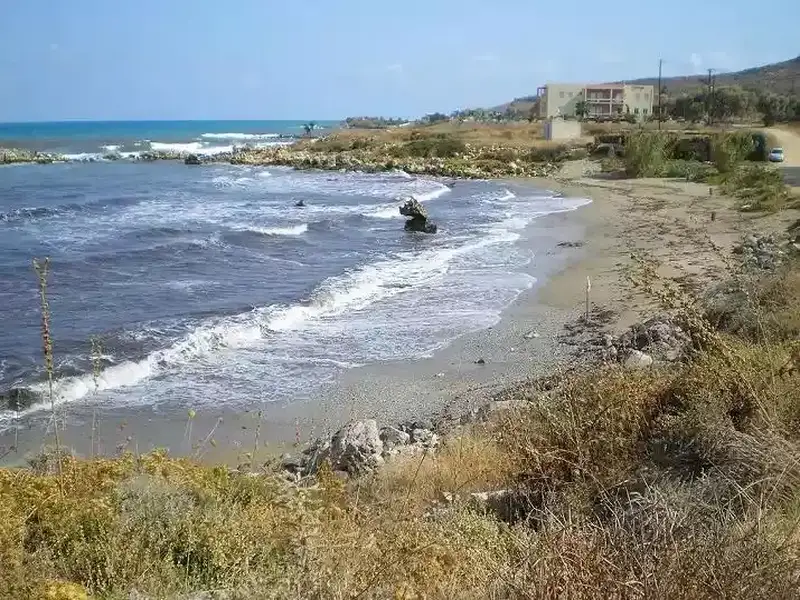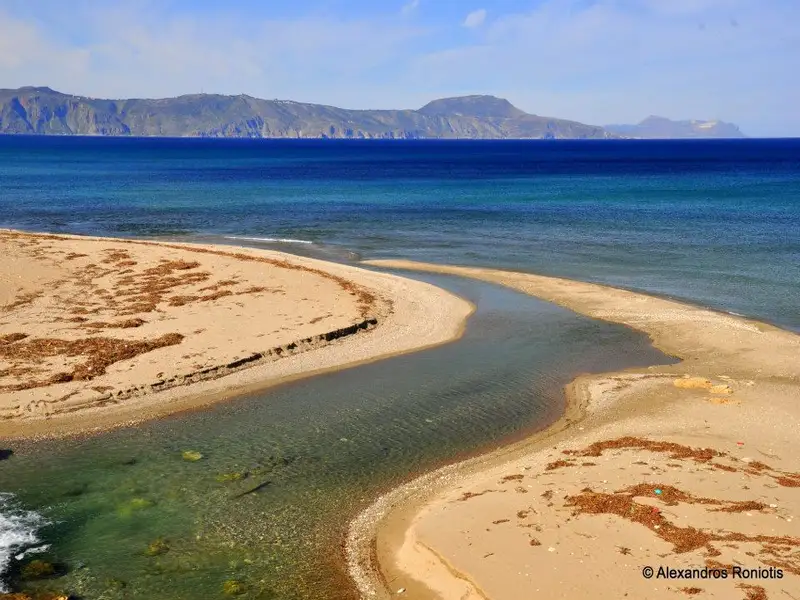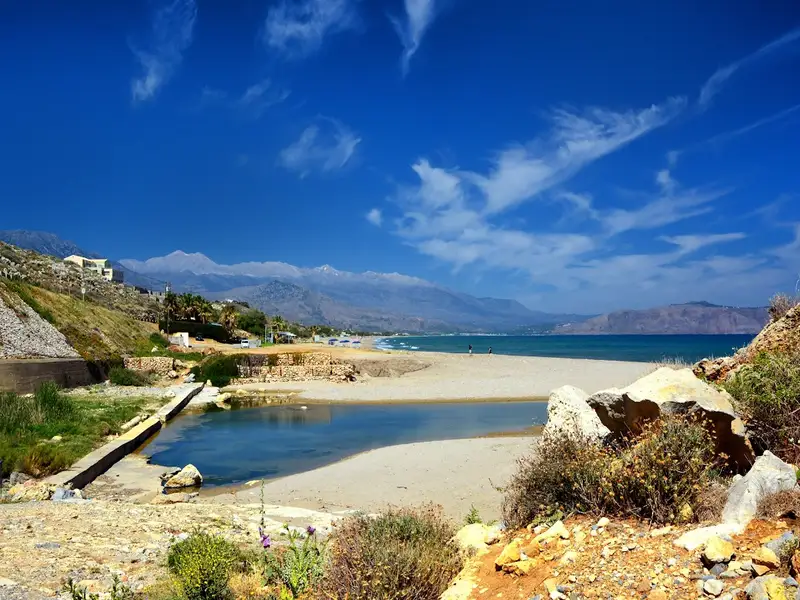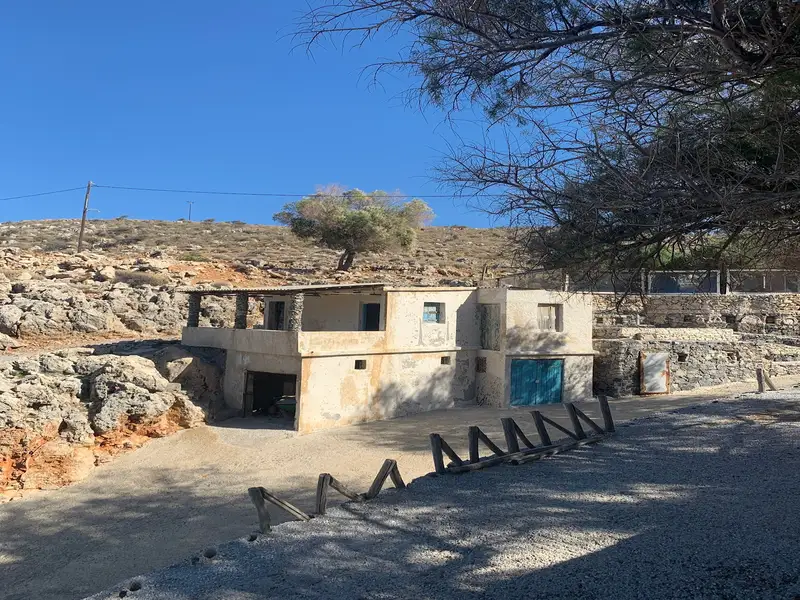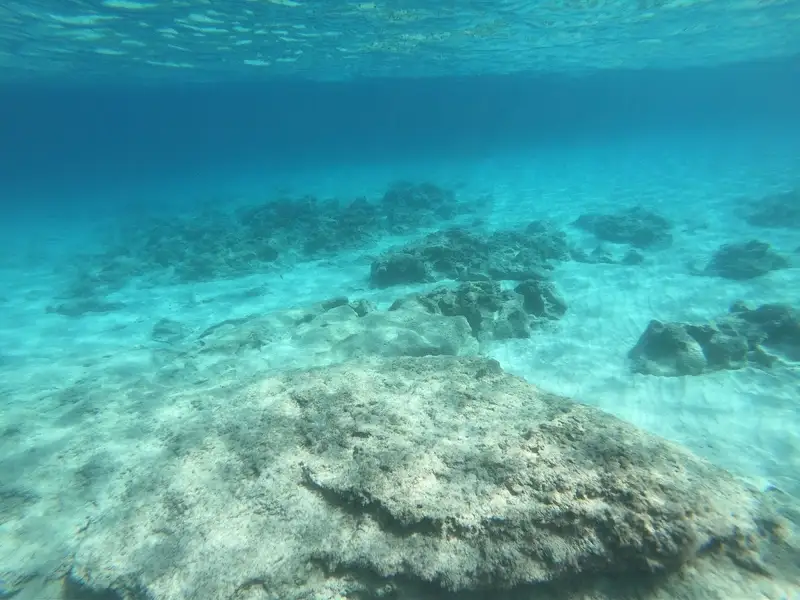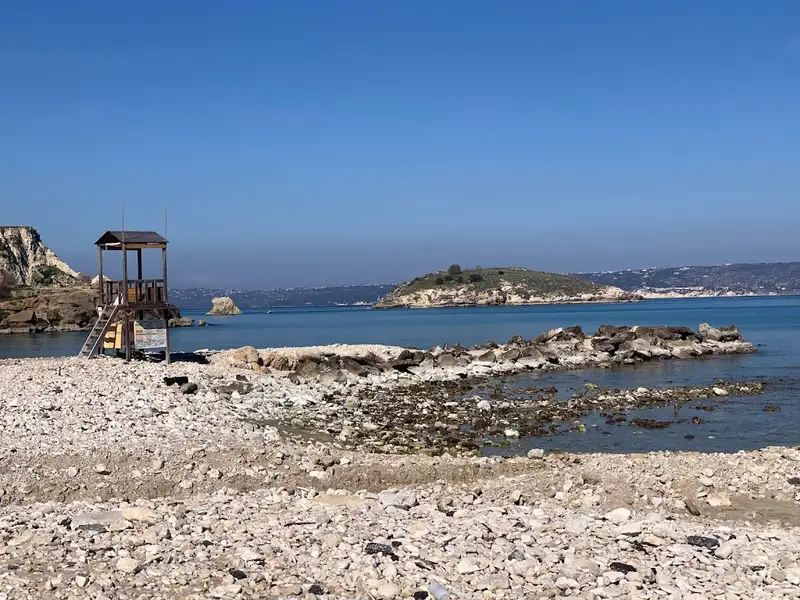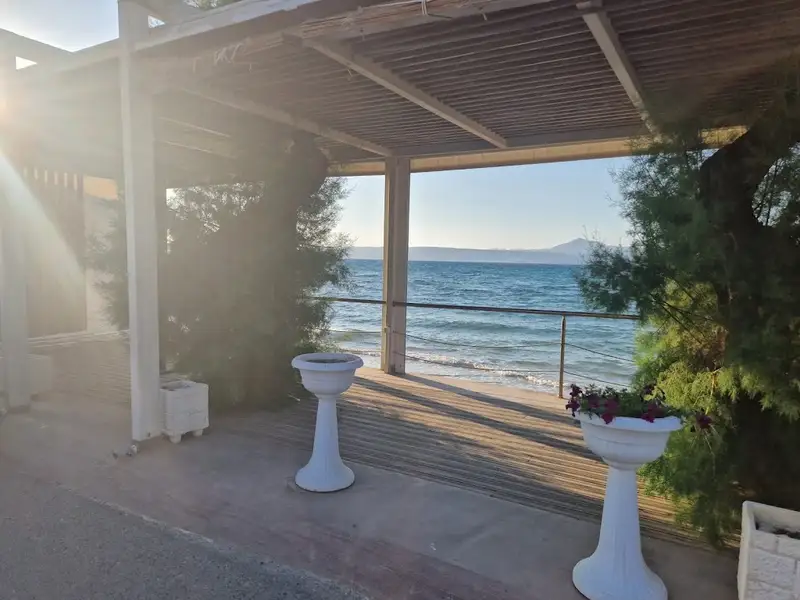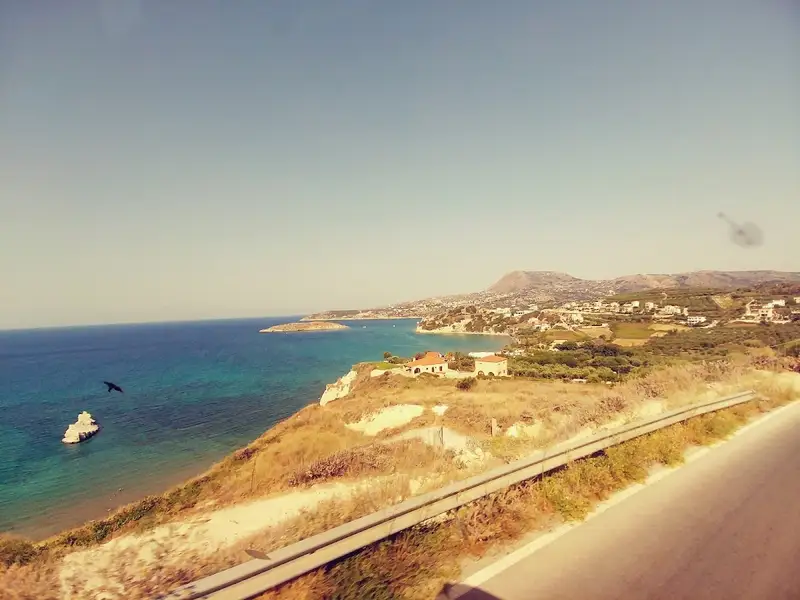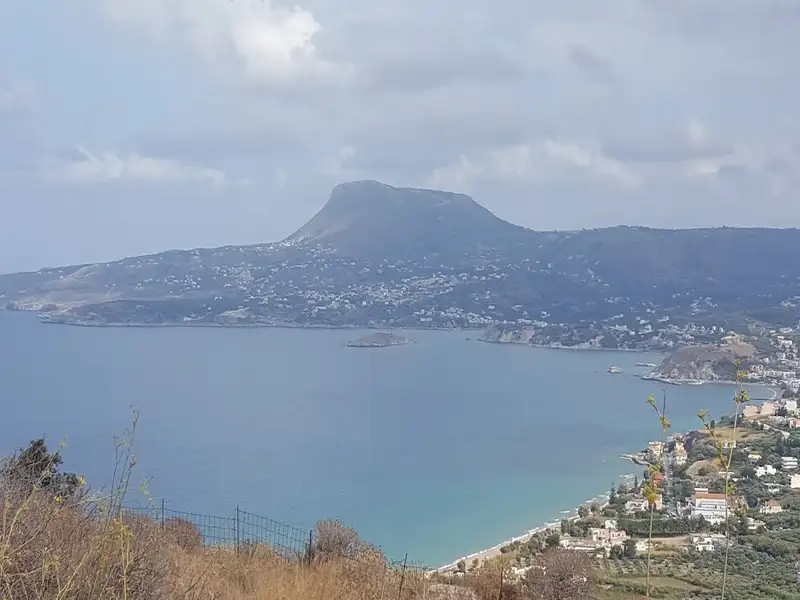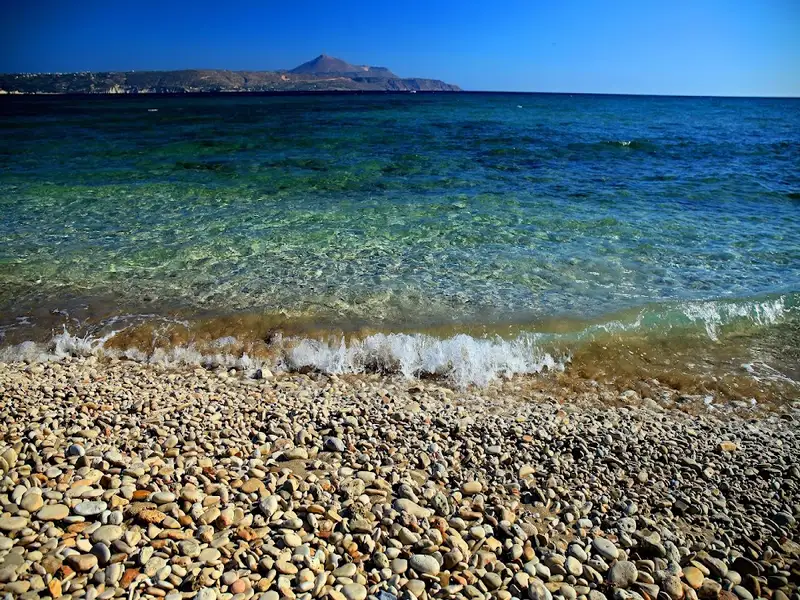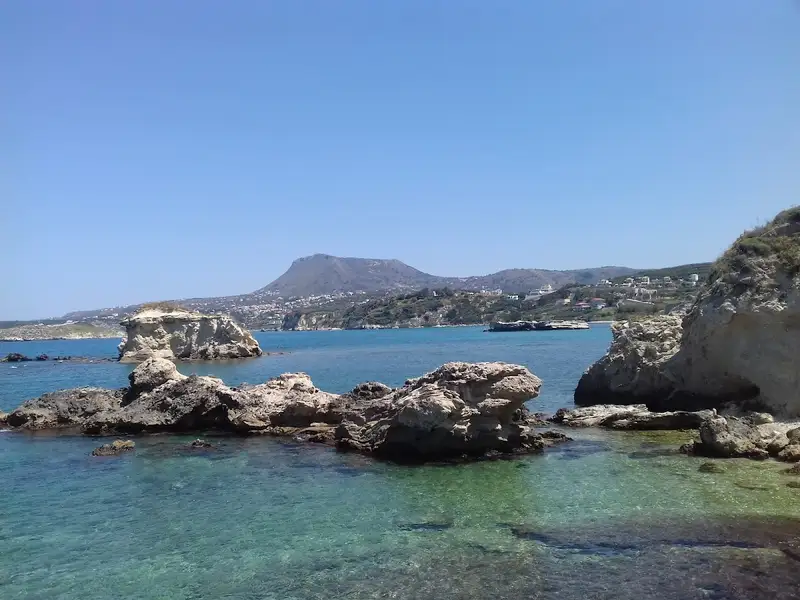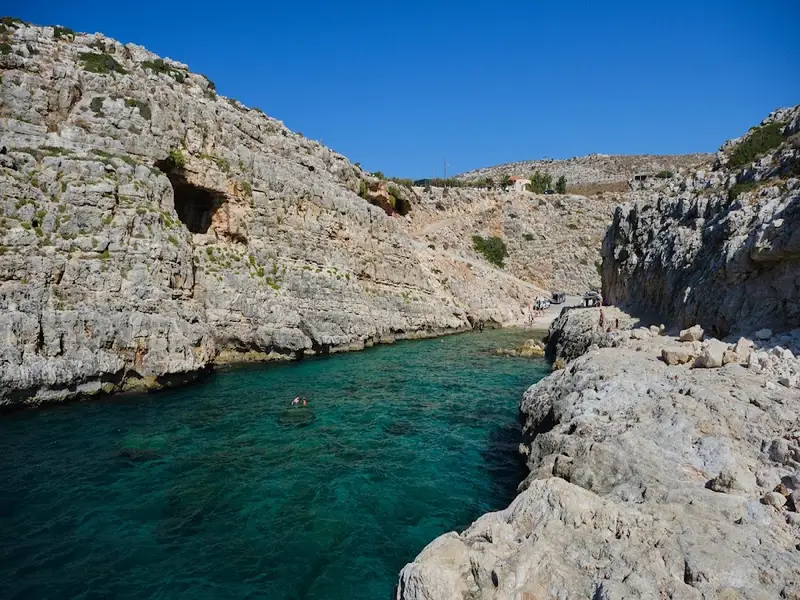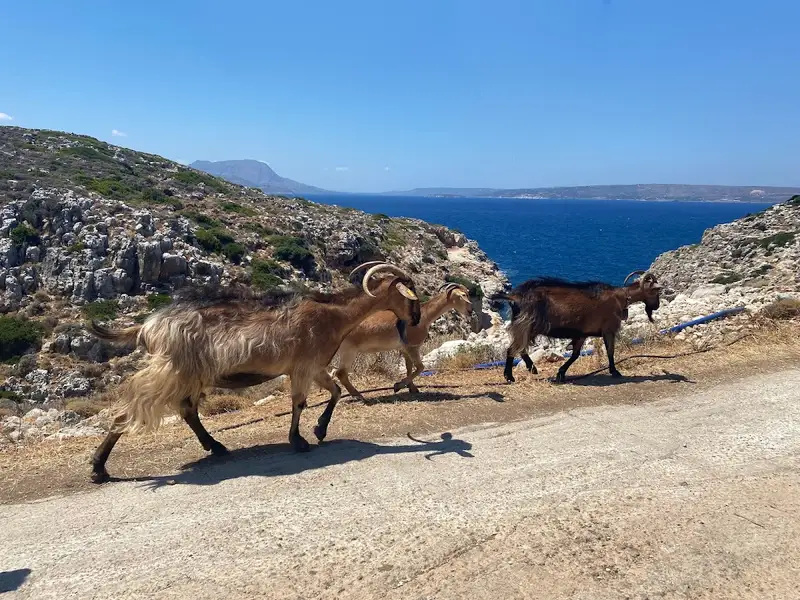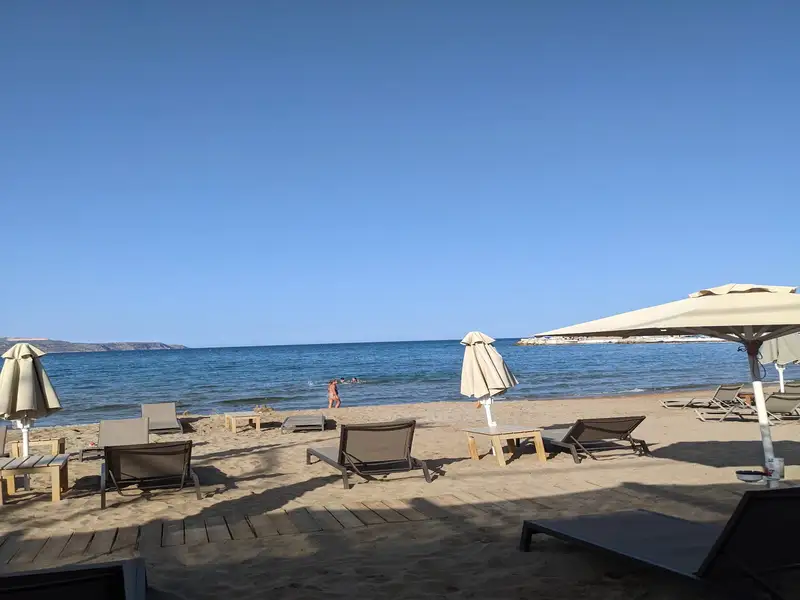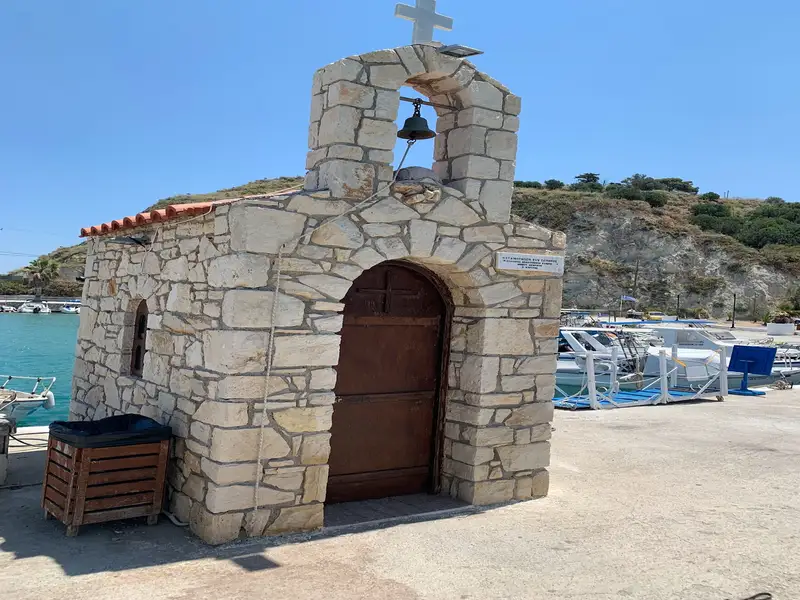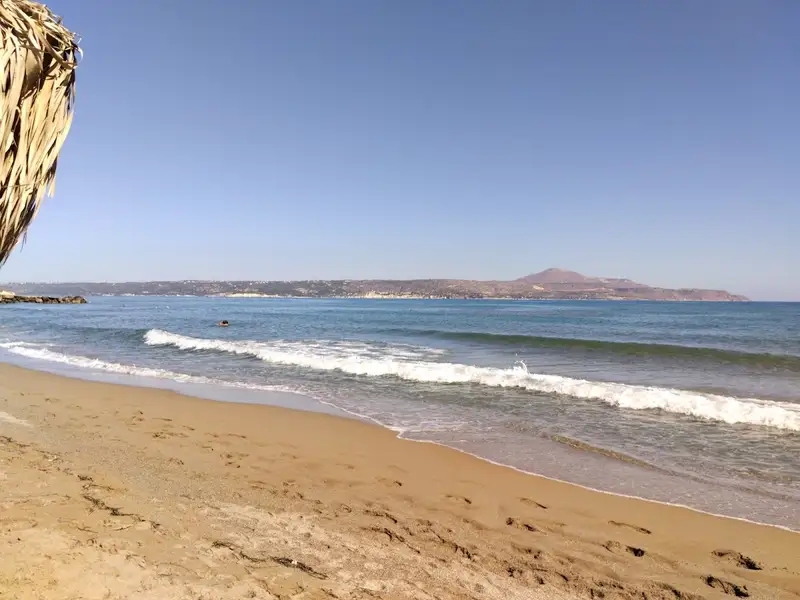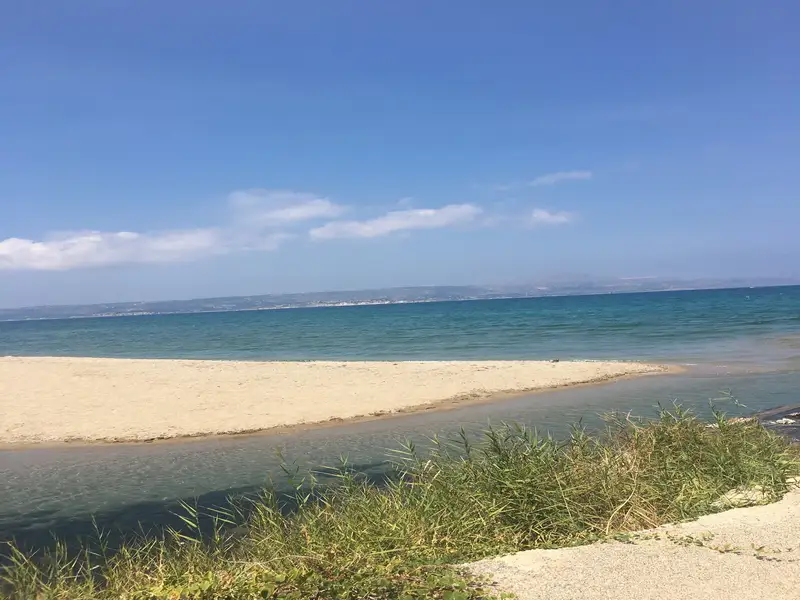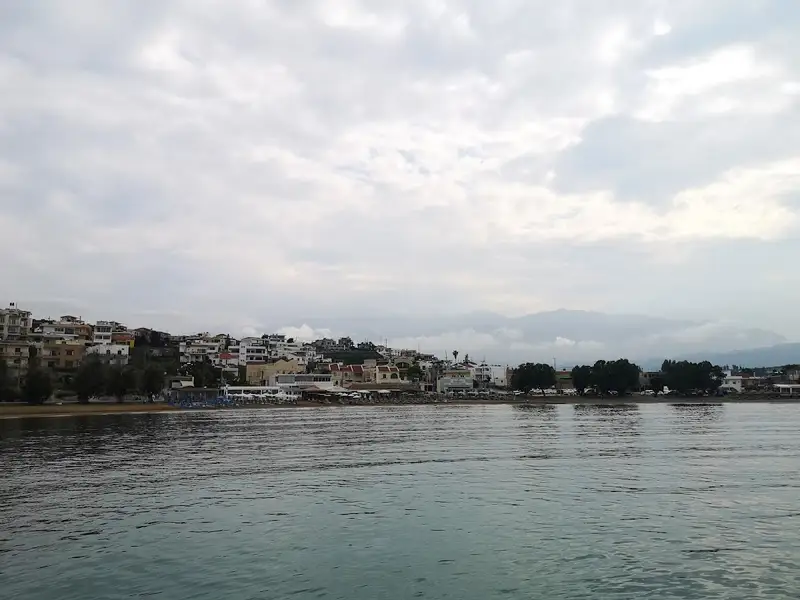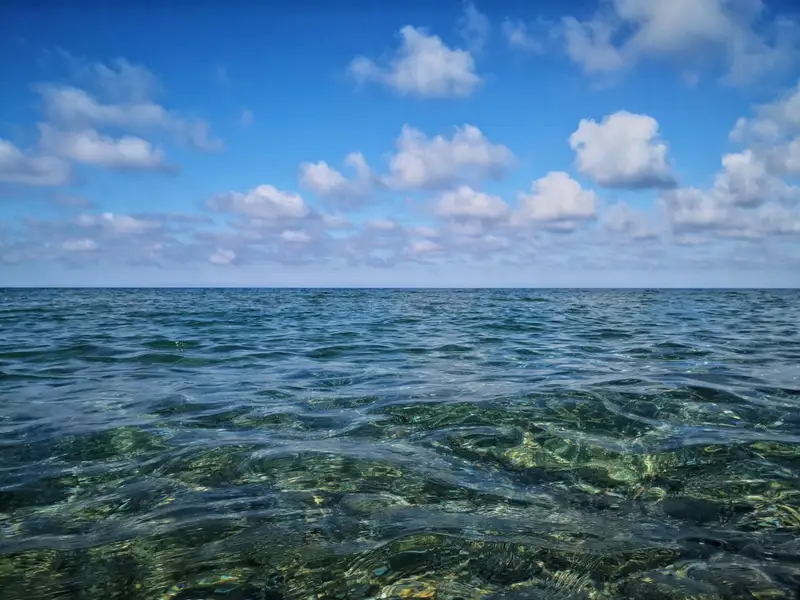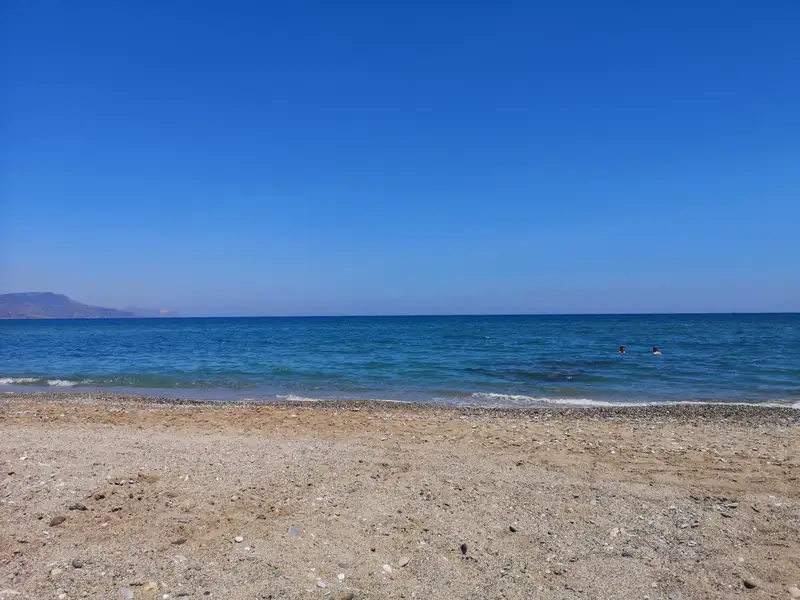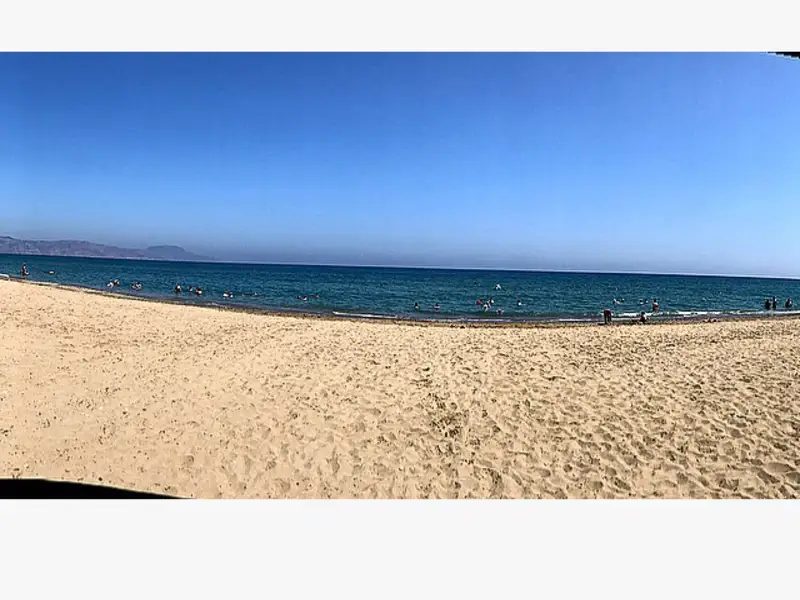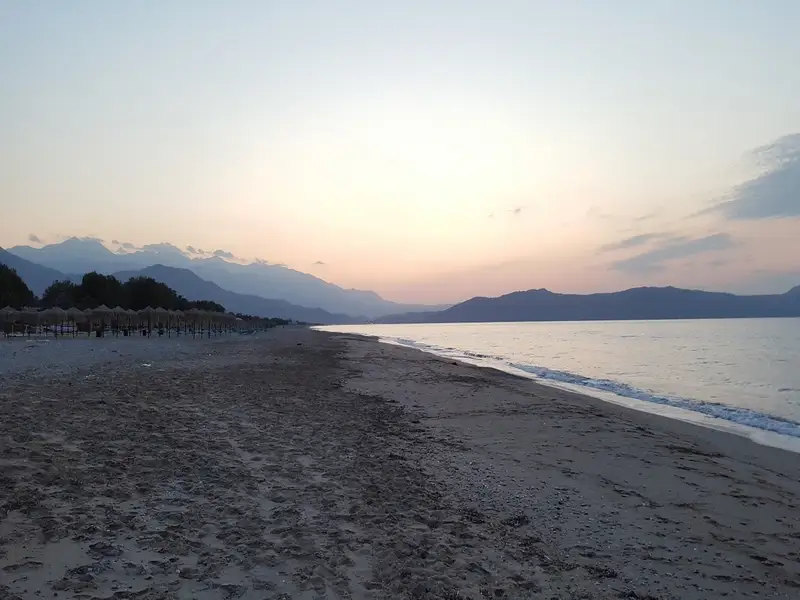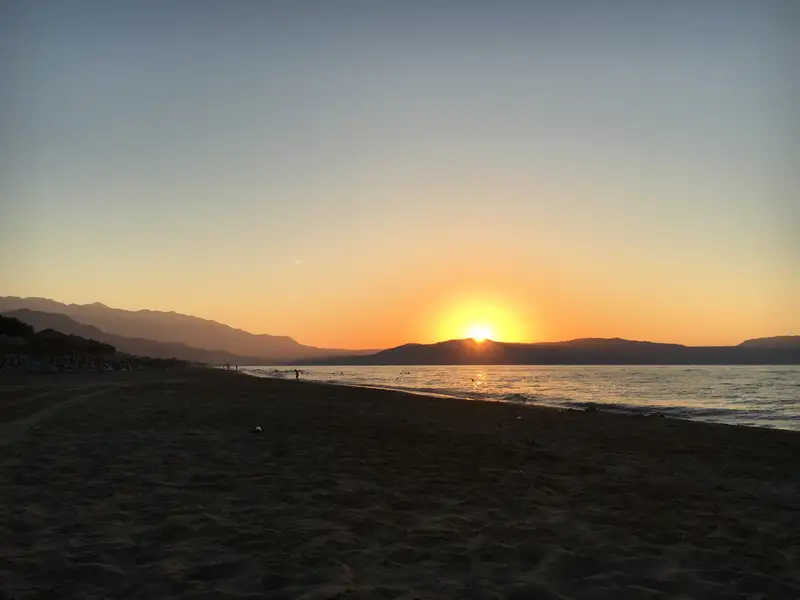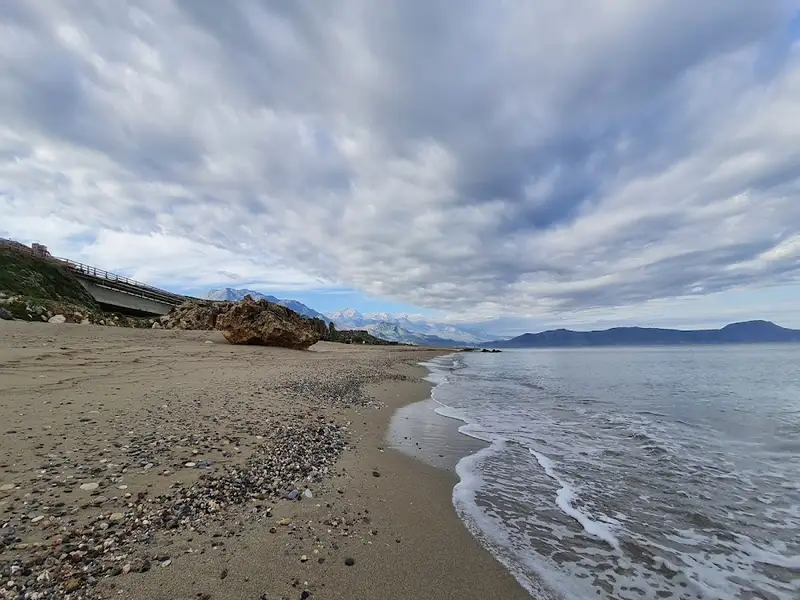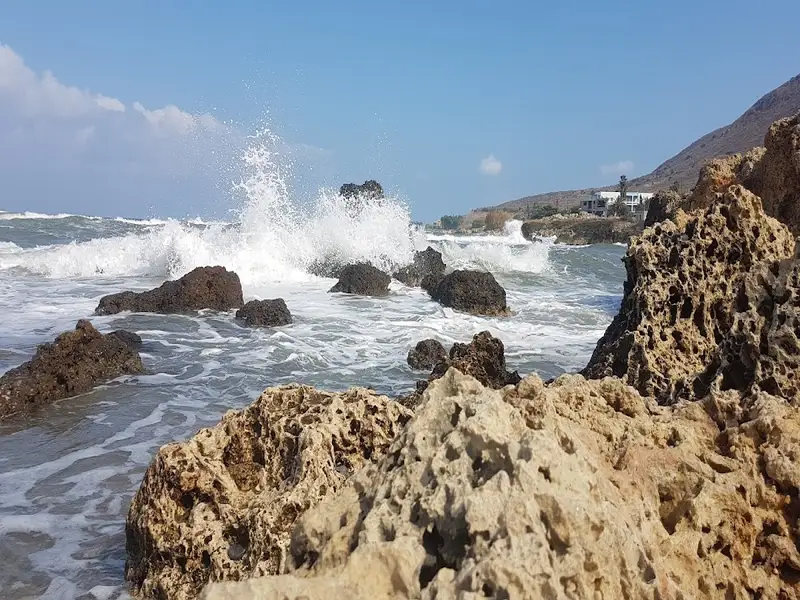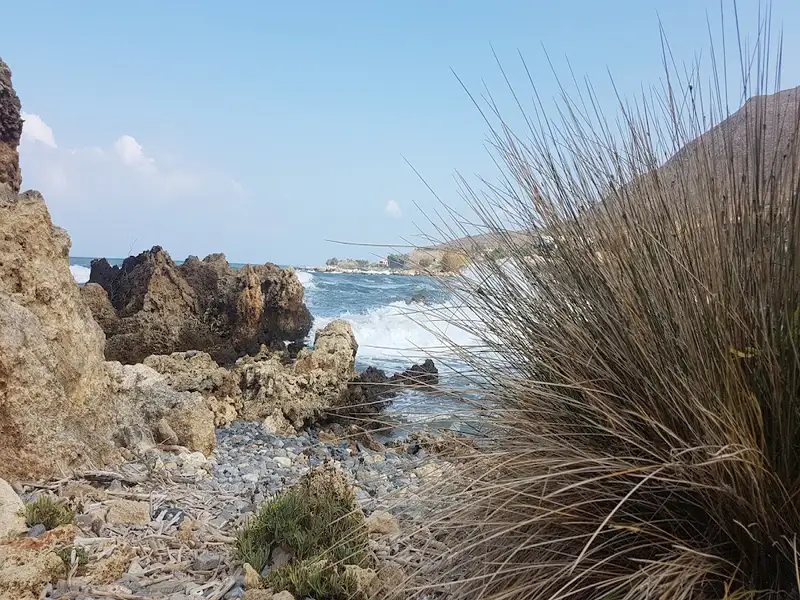
Kalivaki beach is the westernmost beach of Georgioupolis bay, on the north coast of Crete, 38 km east of Chania and 21 km west of Rethymno. Kalivaki sits at the mouth of the Almyros river, where the river meets the sea, so its sandy shore stays sheltered from the wind and its shallow water runs noticeably cool. This sheltered, family-friendly setting makes Kalivaki a good choice for children, especially on days when the wind stirs up the more open beaches nearby.
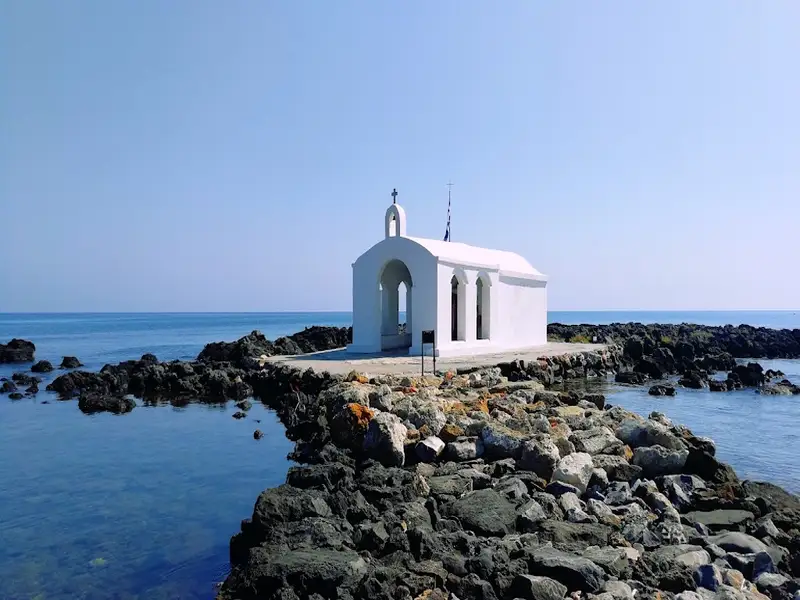
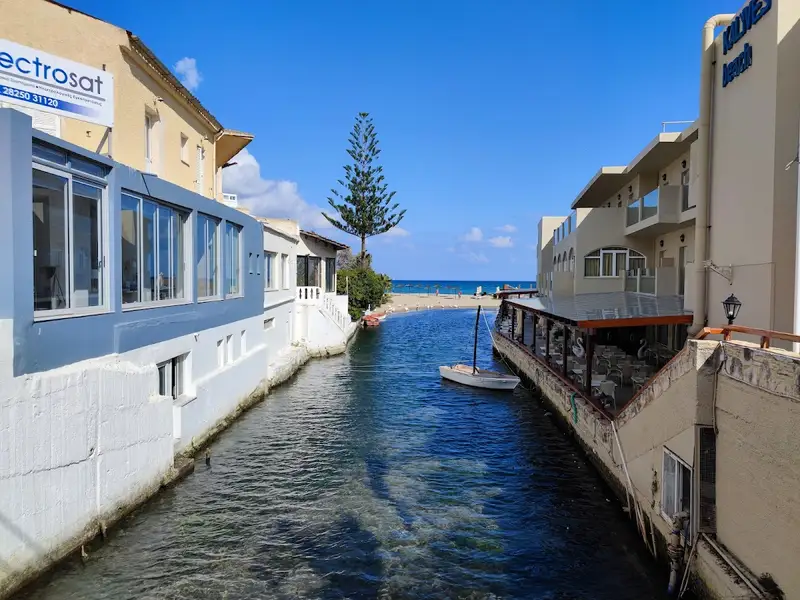
Kalivaki beach lies at the western edge of Georgioupolis bay, west of the Georgioupolis port and the church of Agios Nikolaos, 38 km east of Chania and 21 km west of Rethymno. Kalivaki sits at the exit of the Almyros river, joined by the smaller Boutakas stream, and both keep a steady flow of fresh water into the sea all year. The beach faces the open north coast, so its surface is calm in the sheltered corner near the river and turns wavy further out when the wind picks up. This position, tucked at the protected western end of the bay, is what sets Kalivaki apart from the longer, more exposed Georgioupolis beach to the east.
The water at Kalivaki is noticeably cooler than the open sea because the Almyros river and freshwater springs push cold water into the shallows. This cool current is strongest at the parts of the beach closest to the river mouth, where the cold river water meets the warmer sea. Many families come to Kalivaki for exactly this refreshing dip, which feels sharper and cooler than a swim on the neighbouring sandy beaches. Swim towards the eastern side of the beach, away from the river outflow, if you prefer warmer water.
Kalivaki is a sandy beach with soft sand and small dunes behind the shore, and its shallow, sheltered water suits families with young children. Kalivaki usually stays less crowded than the other Georgioupolis beaches, though visitor numbers rise on summer weekends. The sheltered cove keeps the water calm on windy days, when the longer beaches to the east grow choppy, so Kalivaki works well as a fallback when the wind is up. Where the Almyros river meets the sea the outflow can create a noticeable current and colder water, so keep children in the calmer, sheltered part of the cove and take extra care on windy days.
Kalivaki gives visitors umbrellas and sunbeds to rent, with beach bars and taverns nearby for food and water a few steps from the sand. Parking sits close to the shore and the beach is free to enter, so a family beach day here needs little planning. Services such as showers, changing rooms and a lifeguard are not a guaranteed feature at Kalivaki, so check what is open on arrival if you rely on them. Most of the beach services run mainly through the summer season, and they thin out in the quieter spring and autumn months.
Kalivaki beach is a recorded nesting point for the loggerhead sea turtle (Caretta caretta), which lays its eggs in the sand in the warm months. Keep clear of the soft dry sand and any marked nests, and avoid digging or pushing umbrella poles deep into the sand near the back of the beach. Take your litter home with you, because a single nest can sit just below the surface. These small steps let the turtles and their eggs stay undisturbed while you enjoy the beach.
Reach Kalivaki beach in a few simple ways from Georgioupolis and the main coast road:
Kalivaki sits between Chania and Rethymno, so a beach morning here fits easily with Lake Kournas, the Georgioupolis waterfront, and the quieter coves along the Apokoronas coast. Reaching them all on your own schedule is simplest with your own vehicle, which you can compare on our car rental in Crete page.
Kalivaki beach is the westernmost beach of Georgioupolis bay, on the north coast of Crete, 38 km east of Chania and 21 km west of Rethymno.
Yes, Kalivaki beach suits families, because the water is shallow, the cove is sheltered from the wind, and the beach stays calmer than the neighbouring Georgioupolis beaches. Keep children near the calmer part of the cove and away from the stronger current at the river mouth.
The water at Kalivaki is cold because the Almyros river and freshwater springs feed cool water into the shallows, and the effect is strongest close to the river mouth.
Kalivaki beach has umbrellas and sunbeds to rent, with beach bars and taverns nearby for food and water, and free parking close to the shore. Showers, changing rooms and a lifeguard are not guaranteed, so check what is open on arrival.
Drive or take a local bus to Georgioupolis, then follow the paved road or walk west from the port to the river mouth at the western end of the bay.
The main season runs from June to September, when the weather is warm and the beach services are open, while late spring and early autumn stay quieter for a calmer visit.
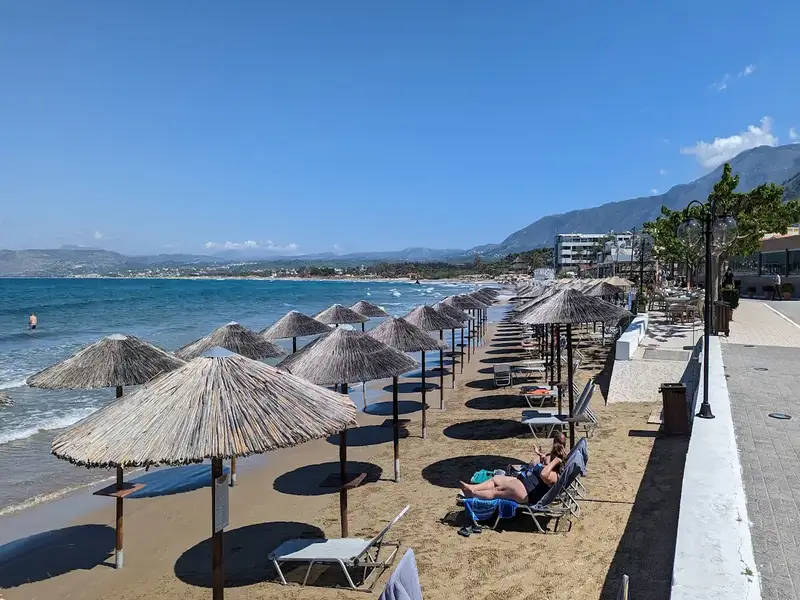
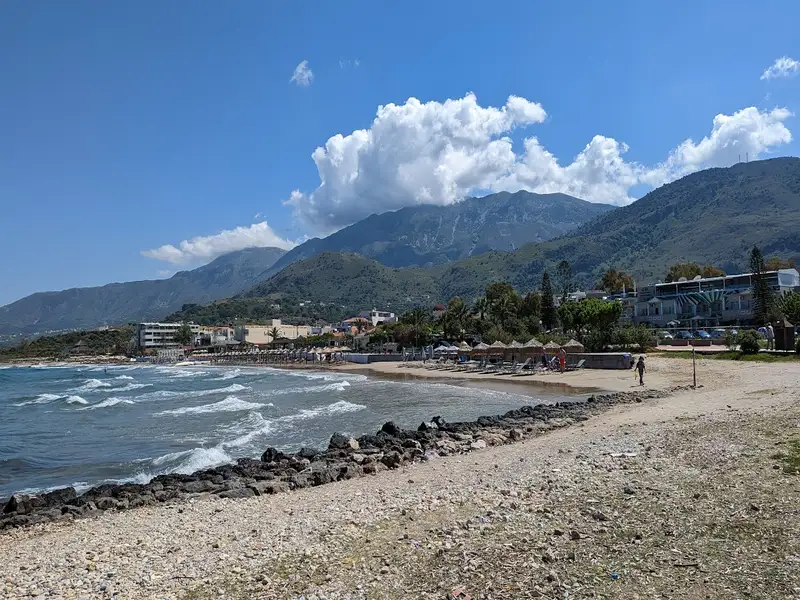
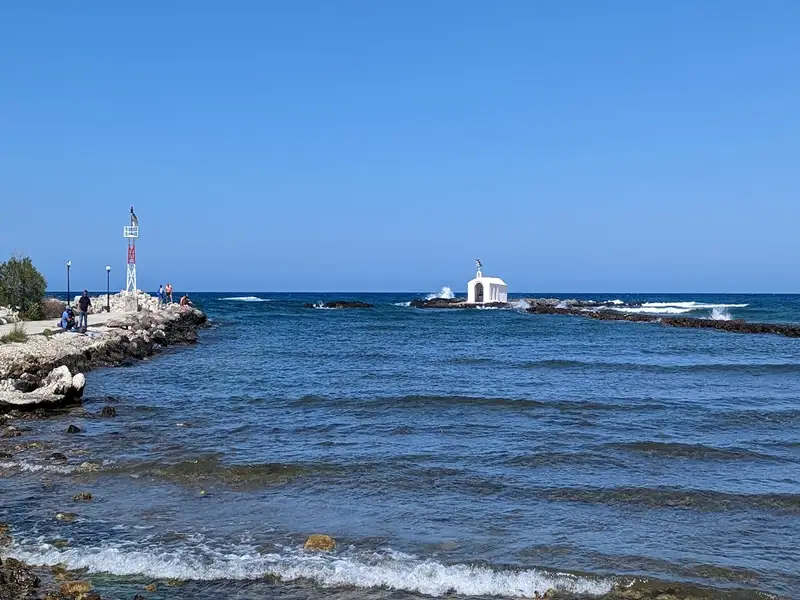
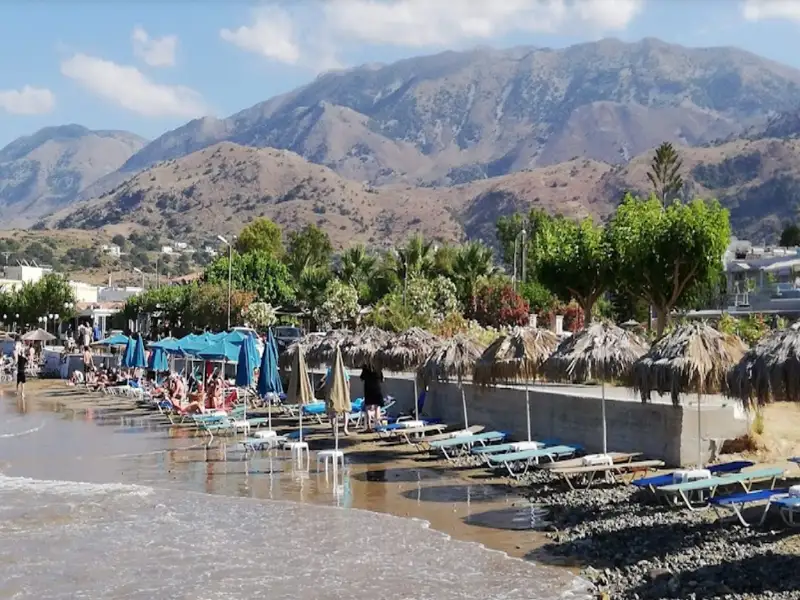
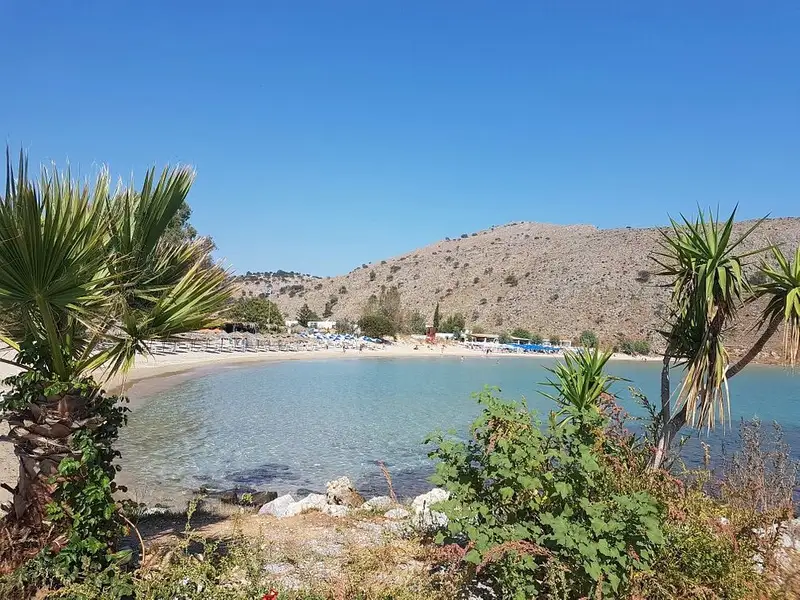
Georgioupolis, a small coastal town located 38km east of Chania and 21km west of Rethymnon, is a seaside resort nestled in a verdant valley crisscrossed by rivers and springs. Situated on the western edge of a sprawling 10km beach, the town’s beach spans 2km to the east, beginning at the Almiros river and terminating at Kavros beach, a natural continuation of the former. The beach in Georgioupolis is sandy, dotted with dunes, and has shallow waters.
The beach is well-maintained and child-friendly, with lifeguards on duty. Caution is advised during windy conditions due to sea currents. Amenities such as umbrellas, showers, and food and drink stalls are available for beachgoers. Approximately 700m east of the port, the Perastikos river bifurcates the beach, which then widens as it continues eastward. On the opposite end, west of Georgioupolis’s port and near the Almyros river’s exit, lies the picturesque Kalivaki beach.
Ombros Gialos (also spelled Omprosgialos or Ombrosgialos) is a small, rocky bay on the east coast of the Drapanokefala peninsula, 26km east of Chania. Ombros Gialos sits near the villages of Kefalas and Paleloni, and it centers on a little harbour whose dock lets swimmers step straight into deep, clear water. This is an unorganized cove built for people who want blue-green sea, a single well-known fish tavern, and calm surroundings rather than sunbeds and busy beach bars.
Use this guide to decide if the bay fits your day, then plan how to reach it.
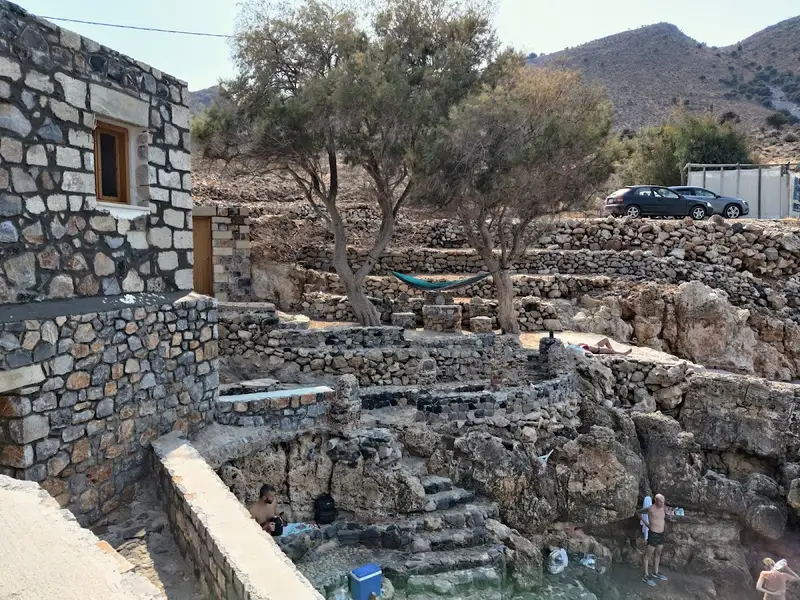
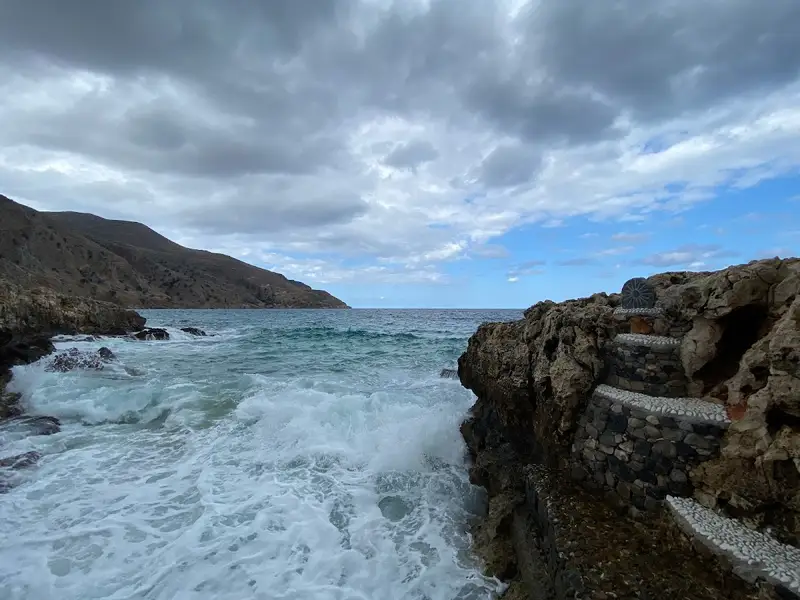
Ombros Gialos is a rocky beach with rocks in places rather than a wide sandy shore. The water runs deep blue and green right off the shore, and the small harbour includes a dock that swimmers use as a diving point into the crystal sea. The bay stays quiet and feels remote, because it lies well away from large resorts and organized beach services. You get scenery and swimming here, so treat it as a spot for a relaxed dip rather than a full day of loungers and amenities. The rocky character of the shoreline shapes everything about a visit, from where you enter the water to what shoes you pack, and the shore counts among the Crete beaches with rocks in places.
Ombros Gialos is reached by car on the asphalt road that starts from Paleloni. The paved route makes the drive straightforward once you are near the village, and the road leads down toward the harbour on the east coast of Drapanokefala. A boat trip is the other option, since you can arrive by private boat from a nearby port. Georgioupolis and Kalives both work as departure points for that short sea approach, and Georgioupolis in particular is an easy base if you are already exploring the wider stretch of coast covered in the guide to the Georgioupolis beaches.
Having your own vehicle gives you the most flexibility for a remote cove like this one, so many visitors combine the trip with other stops in Apokoronas by renting a car in Crete.
Ombros Gialos is not well organized, and it sits quite far from well-organized accommodation choices. One tavern stands next to the harbour, and it is very famous for its fish dishes. The taverna keeps food and water available on site, which covers the essentials for a visit. Beyond the taverna, plan to bring what you need, because the bay is a natural, low-key spot rather than a serviced beach.
The sea around Ombros Gialos is ideal for snorkelers and scuba divers. Deep, clear water sits right at the harbour dock, and swimmers commonly dive in from that dock into the blue sea below. The rocky seabed and deep-blue water make the cove a strong choice for anyone who wants to explore underwater rather than lie on sand. Enter carefully over the rocks, since the shoreline is stony in places and the water gets deep quickly near the dock. Water shoes help you cross the rocks comfortably and protect your feet at the entry points.
Ombros Gialos suits swimmers, snorkelers, and divers who prefer a quiet, scenic cove over an organized resort beach. The bay rewards visitors who value deep clear water, a good fish taverna, and calm surroundings. It is a weaker match for families who need sunbeds, umbrellas, and shallow sandy shallows for young children, because the shore is rocky and the services are minimal. Choose this cove for a relaxed swim and a seafood lunch, and pick a sandier, organized beach elsewhere if you want full facilities. Travelers who enjoy dramatic, off-the-beaten-path Chania coves often pair a visit here with a stop at the striking cliffs of Seitan Limania beach.
Ombros Gialos is on the east coast of the Drapanokefala peninsula, 26km east of Chania, near the villages of Kefalas and Paleloni.
Ombros Gialos is a rocky beach with rocks in places, and the water turns deep blue and green close to shore.
The bay is unorganized and has one taverna next to the harbour that is famous for its fish dishes and provides food and water on site.
Drive the asphalt road that starts from Paleloni, or arrive by private boat from a nearby port such as Georgioupolis or Kalives.
The deep, clear sea around the harbour is ideal for snorkelers and scuba divers, and swimmers dive straight in from the dock.
June to September is the best window for swimming and warm, settled conditions. For more coves along this coast, browse the wider collection of Crete beaches.
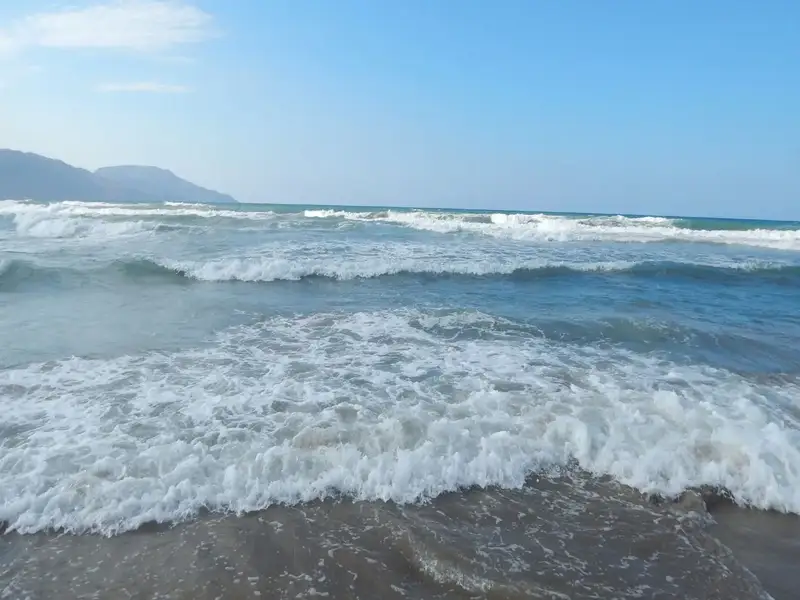
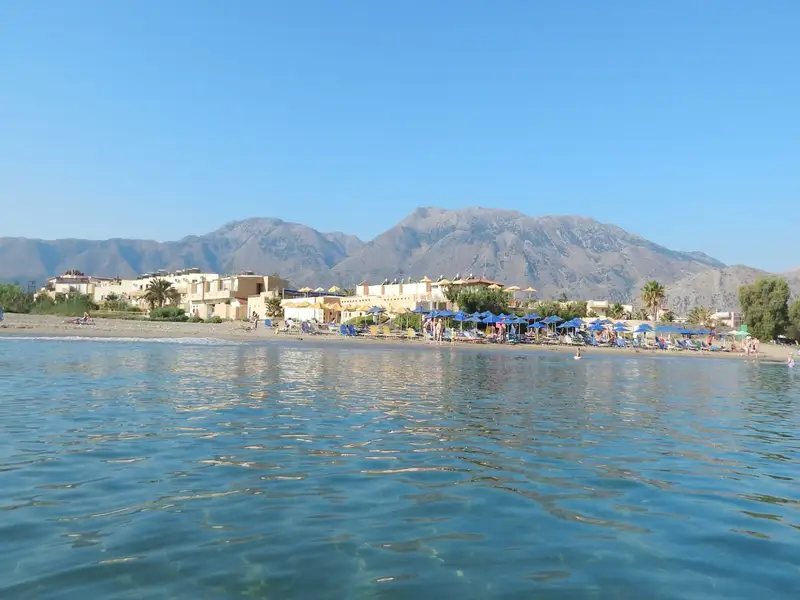
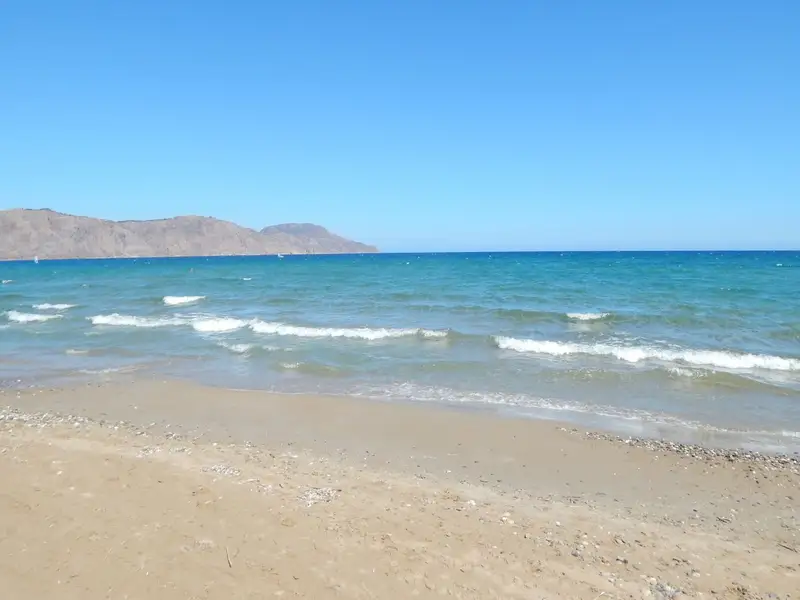
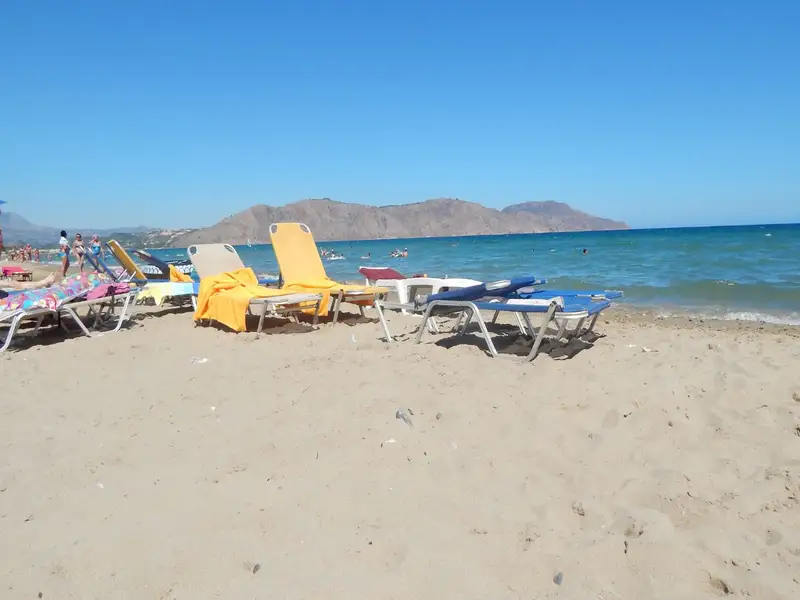
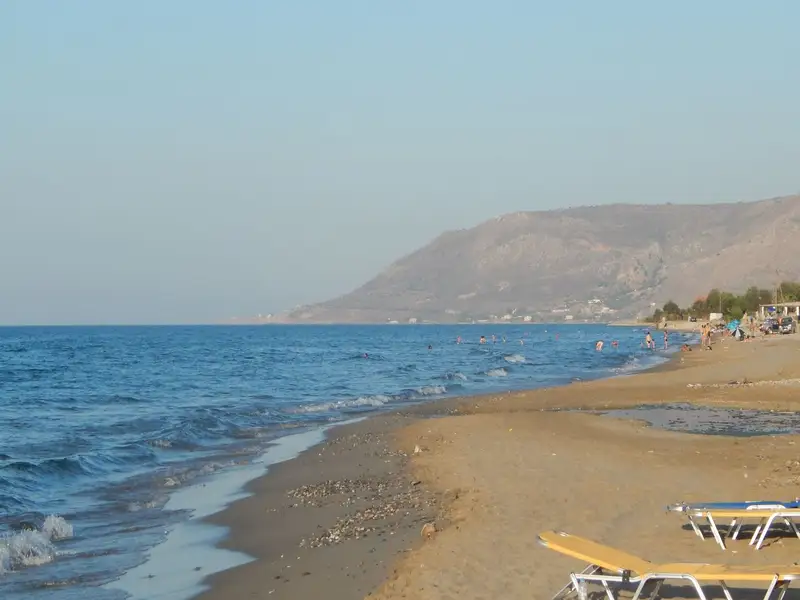
Located between Georgioupoli and Pyrgos, Kavros refers to the expansive beach situated just 4 km east of Georgioupoli, near the hotel bearing the same name. Though the area has experienced substantial tourist development, it’s somewhat less commercialized compared to the adjacent Georgioupolis. Kavros beach is a sandy stretch with transparent, shallow waters; however, its openness to the wind often results in notable wave activity. The beach provides several facilities for visitors, including an array of restaurants, cafes, and bars, making it a perfect spot for an all-day excursion. For those seeking tranquillity, parts of the beach remain unorganized, offering a more serene experience.
The place at its greatest part is developed and only a very small part of it has been left untouched. Between the remaining virgin parts of the beach, there is an extensive and very important ecosystem of dunes. The dunes of Kavros, like all dunes, host a significant and very fragile ecosystem that is home to its own plants. The most important role of the dunes in Crete is that they protect the inner lands from erosion. In the area, in winter we meet small ponds and the landscape is quite different from the summer.
Almyrida beach is a tranquil resort offering basic facilities along with a magnificent seafront. Almyrida is situated 23km east of Chania city and nestled on the southern edge of Souda Bay near Cape Drapanos. The surrounding pristine countryside and verdant olive groves provide perfect opportunities for hiking and exploration.
A short distance of just 1km to the east lies the scenic village of Plaka, the largest in the area, renowned for its welcoming atmosphere and healthy climate. The coast stretching to Drapanos Cape is dotted with numerous sea caves, presenting a breathtaking natural spectacle. Plaka is also celebrated for its charming, narrow lanes and well-preserved, traditional houses.
Each July, the village hosts the Plakiana festival, a tribute to the renowned lyre musician Michael Papadakis, or Plakianos, showcasing the area’s rich cultural heritage. Among the unforgettable experiences here is the mesmerizing sunset, a truly memorable sight.
Declared a region of infinite beauty in 1977, Almyrida boasts two beautiful sandy beaches with shallow waters. On calm days, they’re safe for children to play in. These two beaches are separated by a small rocky peninsula featuring a quaint white chapel. Ideal for water sports and windsurfing, the area is also renowned for its seaside taverns serving fresh fish and delicious traditional Cretan cuisine. Regular bus and taxi services connect Almyrida and Plaka to Chania city.
Directly across from the beach is the small island of Karga, a haven for birdlife and a popular spot for excursions and fishing. The island still bears traces of ancient Phoenician walls and shelters constructed by the Germans during World War II.
Almyrida is thought to have been a Phoenician colony, hence the nearby location Finikia. Here, you can find ancient ruins and tombs. At the entrance to the village lie the remnants of a 6th-century triple-aisle Christian basilica with well-preserved mosaics. Almirida also played a role in Crete’s history as the site of the last battle against the Turks in 1896.
For those interested in sightseeing, just four kilometres east of Almirida is Kokkino Chorio or Red Village. A small village with intriguing fortifications built by the Germans during their occupation (1941-1945) to safeguard the military port of Souda. This was also a filming location for the famous movie “Zorba the Greek”. Today, it hosts a small factory producing handmade glass using traditional blowing techniques.
Situated approximately 20km east of the city of Chania, Kera beach can be found on the southern coastline of Souda Bay, near the scenic villages of Kalives and Plaka. This beach, adorned with soft sand and the occasional pebble, is nestled amidst a breathtaking landscape of towering cliffs. The sea at Kera is shallow and boasts crystal clear waters. Although it lacks organization, the surrounding area offers numerous choices for lodging and dining. Those preferring less crowded spots will find Kera an ideal choice. The beach offers a striking view of Karga island and features a unique elongated rock in the sea towards its west end. This rock, named Karavos (meaning ship) by the locals, resembles a boat.
Close to the beach is the 19th-century church of Panagia Kera (or Dame Virgin Mary), erected on the location of a former monastery. According to local legend, when pirates once tried to invade the area, the inhabitants sought divine intervention from the church of Panagia Kera. In response to their prayers, the Virgin Mary turned both the pirates and their boat to stone.
Koutalis, also known as Koutalas beach, is positioned 25km to the east of the metropolis of Chania, situated near Cape Drepano and approximately 1km north of Kokkino Chorio. The region is notable for its extraordinary caves, such as the Elephants’ Cave and Petsis Cave. Adjacent to Koutalis, Kokkino Chorio is recognized for the WWII cavernous shelters erected by the Germans on Drapanokefala hill to safeguard Souda Bay, its charming traditional residences, and a collection of wells for water collection. This location also served as a filming location for “Zorba the Greek.”
Being relatively secluded, Koutalis beach is a familiar starting point for local scuba divers exploring the nearby sea caves. The beach is nestled at the end of a rocky gorge and cradled within a narrow bay, characterized by its large, round pebbles and stones. It’s the perfect spot for fishing and solitude, but ensure to pack essentials like umbrellas, food and water. To reach this location, head north from Kokkino Chorio village towards Drepano Cape, then onto the road leading to Faros (Lighthouse). Roughly 700m further north, look for the sign to Koutalas. A manageable dirt path will lead you directly to the beach, which might well be totally deserted. A large cave can be found next to the beach.
Vraskos Beach
A hidden gem between Koutalis and Almirida is Vraskos beach. Similar to Koutalis, Vraskos is located at the end of a short narrow gorge, but no road leads directly to it. The sea bed is quite rocky with patches of sand.
The coastal resort of Kalives is situated 19km west of Chania, along the southern edge of Souda Bay. This charming village is nestled in a verdant valley where several rivers meander. Its name, which translates to “Huts” in Greek, is thought to have originated from the primitive structures erected by farmers for summer overnight stays. The rivers of Xidas and Mesopotamos flow near the village’s eastern boundary. The combination of these rivers with the sea’s many springs results in a cooler sea temperature.
Adjacent to the Xidas river, both east and west, are two sandy beaches with shallow waters, exposed to northern winds. Named Xidas and Maistrali respectively, these beaches are well-equipped with standard tourist amenities. A petite, picturesque bridge at Xidas river’s mouth connects these two beaches. The scenic harbor of Kalives neighbors Maistrali and is connected to Chania through regular bus services. The area also houses banks, post offices, clinics, shops, and more.
North of Kalives, at the mouth of the Kiliaris river, lies the serene beach of Kiani Akti or Glaros. The Kiliaris river, which carries water from the White Mountains, maintains a year-round flow, a rarity in Crete. This results in cooler seawater near the river.
Kalives’ geographical position and fertile soil have made it a place of habitation since ancient times. It is believed to be the location of the ancient city Amfimatrion. Notable historical events include the construction of the Castel Apicorno fortress in 1206 and the village’s destruction by the pirate Barbarossa in 1538. The village is also close to the ancient city of Aptera and the Ottoman forts of Intzedin and Aptera.
The harbor houses a German cannon concealed in a cave on the other side of a mountain. A small window at the tunnel’s end offers breathtaking views of the cliffs and sea. This is merely one example of the German defensive structures scattered across the broader Apokoronas and Akrotiri Cape area.
Visitors are encouraged to stroll through the village’s picturesque narrow streets, eventually reaching the village’s central square, home to a large plane tree and the Agia Paraskevi church. The church, adorned with frescoes, was constructed during the German Occupation in World War II.
An old Venetian mill, one of Crete’s most complex, is located along the Mesopotamos river. Built from stone and kourasani (a mixture of mortar and ground tile), it is renowned for its durability.
Episkopi beach is a 3.5 km sandy beach on the north coast of Crete, 14 km west of Rethymno and 45 km east of Chania. Episkopi beach sits in a fertile valley between the Mouselas river and the river that runs out of the Petres gorge. The water is shallow and usually a little wavy, like most beaches on Crete’s north coast, and it takes its name from the village of Episkopi, 2 km inland to the south.
At a glance:
The sand is soft, with a short pebbly strip at the waterline that turns sandy underfoot as you walk in. Mornings are usually calm and clear enough to see the bottom, while an afternoon breeze can raise small waves. The shallow, gently shelving water suits families with children and makes the beach a good spot for a slow swim or a snorkel.
The western part of the beach is well organized. There you find lifeguards, showers, changing rooms, umbrellas and sunbeds, snack bars, and water sports. Tavernas and bars line the shore, several renting sunbeds under thatched umbrellas. Because the beach runs for about 3.5 km, you can still find a quieter, less developed stretch toward the eastern end near the Petres bridge.
The main coastal road between Rethymno and Chania runs parallel to the beach, so access by car is easy. Frequent KTEL public buses connect Chania and Rethymno and stop on the highway beside the beach, and parking is available at the shore. The simplest way to reach Episkopi and explore the rest of the north coast is to rent a car.
Loggerhead sea turtles (Caretta caretta) nest along this coast between May and September, and Episkopi is a recorded nesting point. If you visit in those months, keep clear of any marked nests and take your litter home with you.
Episkopi sits within a short drive of these stops:
The name Episkopi means “Diocese”: the village was the seat of the local diocese in the Byzantine period, and the old Episcopal church of St Nicholas nearby now stands in ruins. Almost unknown to travelers, the area is also the ancestral home of the Vardinoyannis family.
Episkopi beach is on the north coast of Crete in the Rethymno area, 14 km west of Rethymno and 45 km east of Chania. It lies below the village of Episkopi, between the Mouselas and Petres rivers.
Yes. The water is shallow and the sand is soft, and the organized western section has a lifeguard, so it suits children and less confident swimmers.
The western part is organized, with lifeguards, showers, changing rooms, umbrellas and sunbeds, snack bars, and water sports. The eastern end near the Petres bridge is quieter and less developed.
Yes, water sports are offered in the organized western section, alongside the lifeguard, showers, umbrellas, and snack bars.
The coastal Rethymno to Chania road runs next to the beach, so you can drive or take a KTEL public bus that stops on the highway. Parking is available at the beach.
The main season is June to September, when the weather is warm and dry. Late May, June, and September are usually quieter than midsummer.
Yes. The water is clear and shallow, and the rockier seabed near Petres beach to the east is a favorite for snorkeling and fishing.
Situated at the eastern edge of the expansive Episkopi beachfront, Petres beach, or Stones beach, is a 46km journey east from Chania and 13km west from Rethymnon. The beach owes its name to the majestic Petres Gorge that concludes at this point. The area is dotted with facilities such as accommodations, eateries, and even a diving school. The Vythos cove, positioned north of the other areas, offers umbrellas and a less sandy terrain. The rocky underwater landscape makes it a hotspot for fishing and snorkelling. However, the frequent northern winds can cause the sea to become wavy.
No results available
No results available
© All rights reserved. Crete Locals