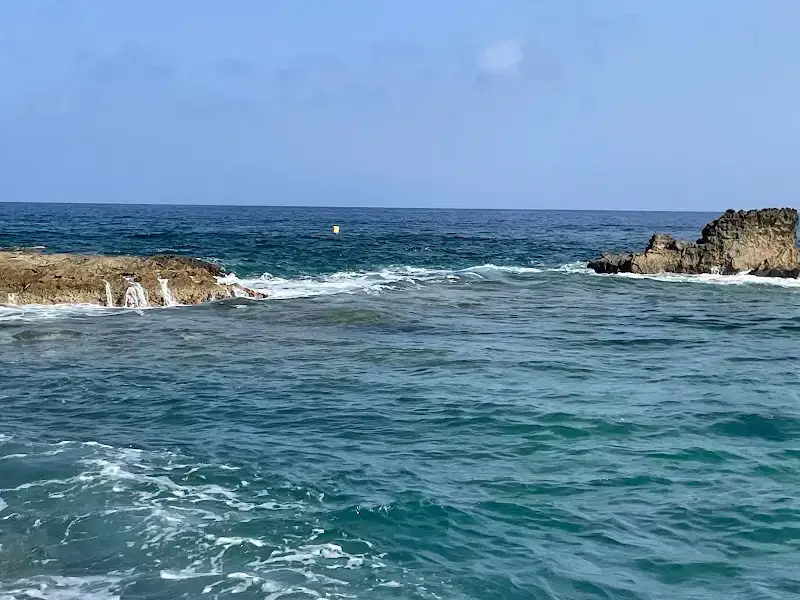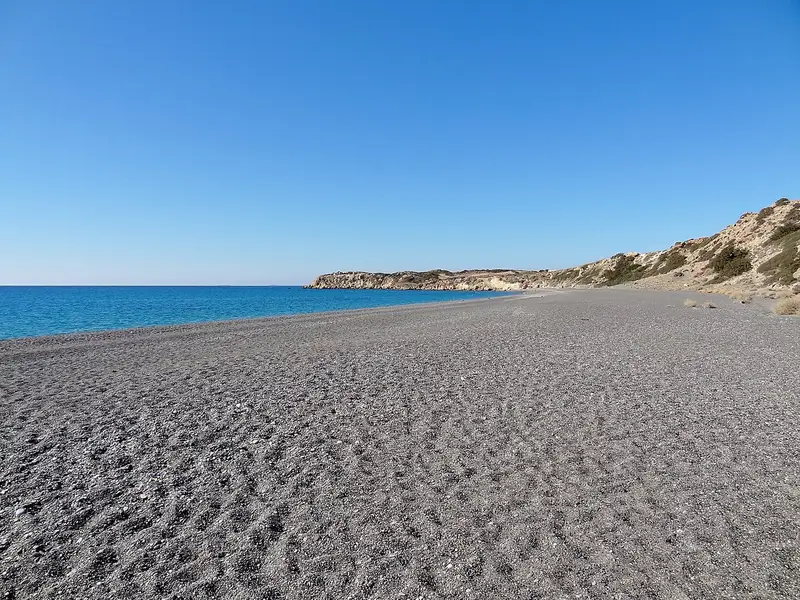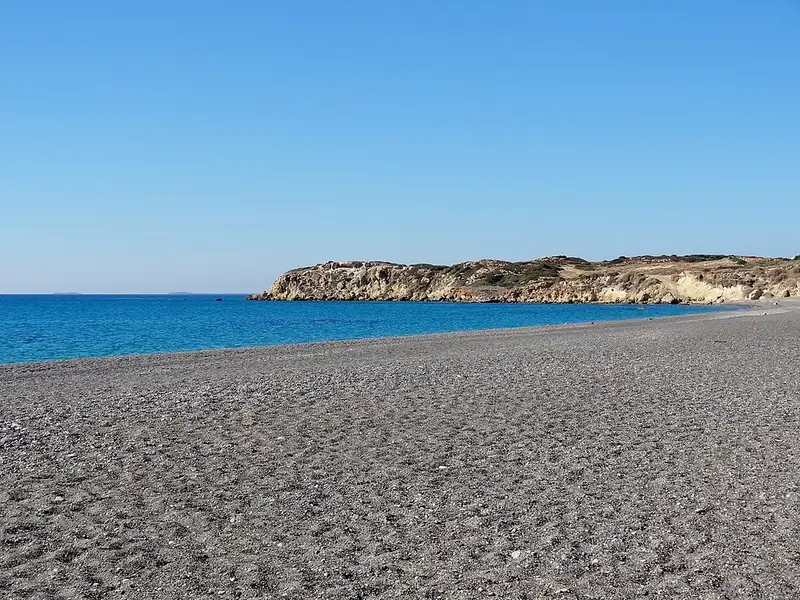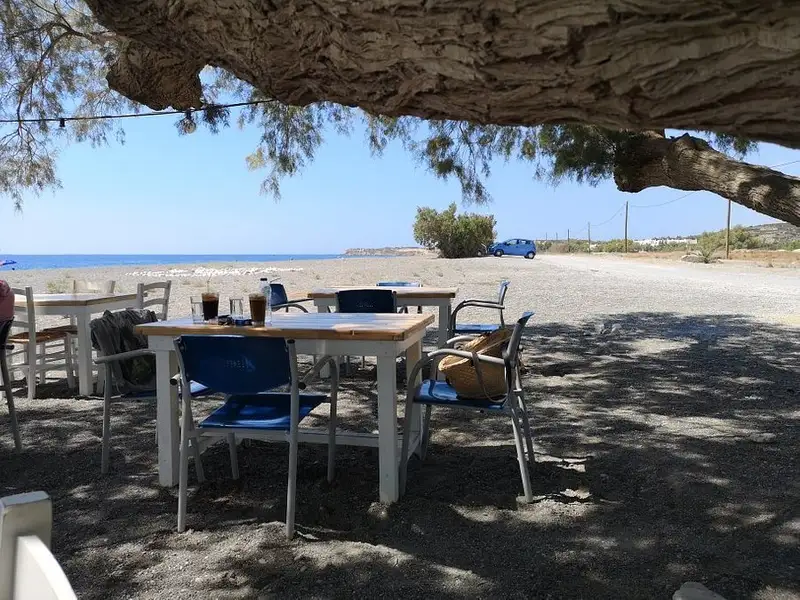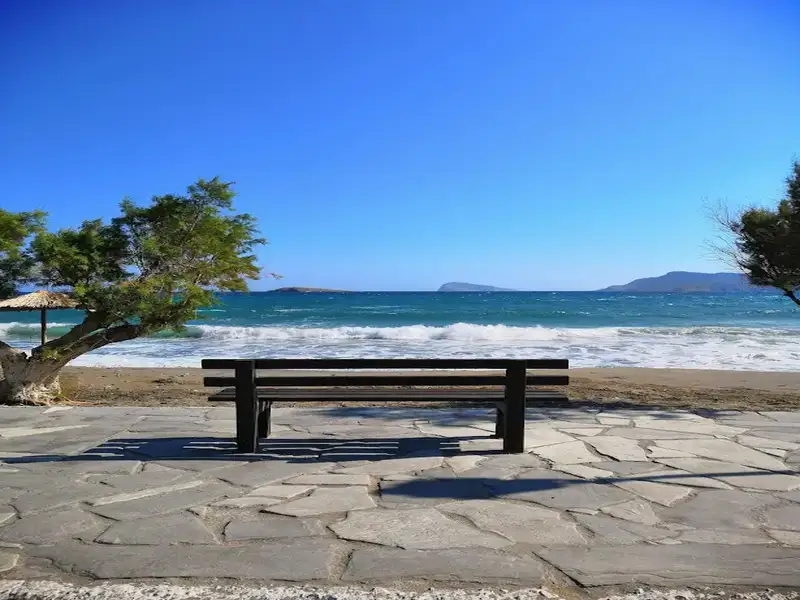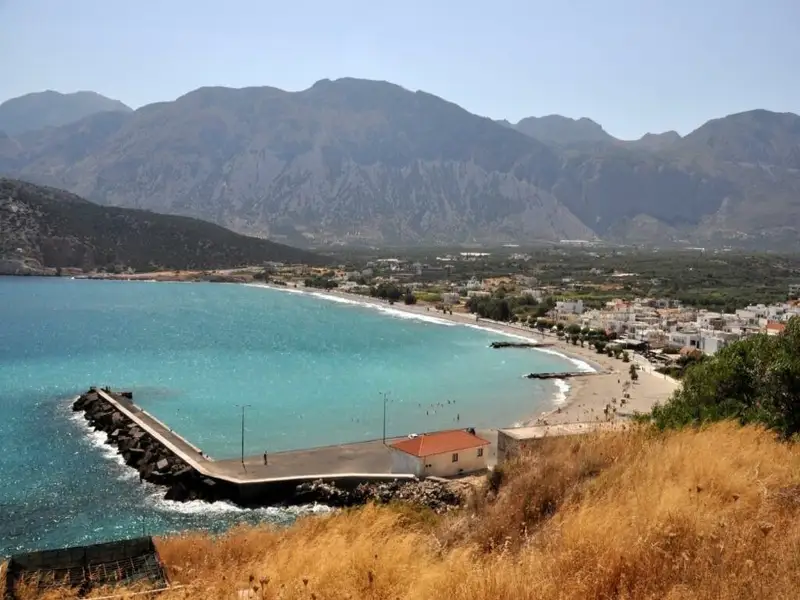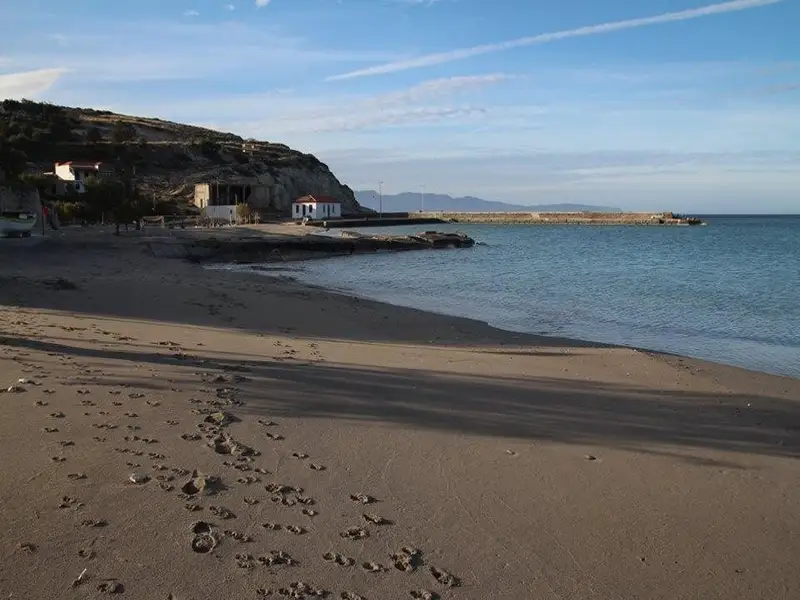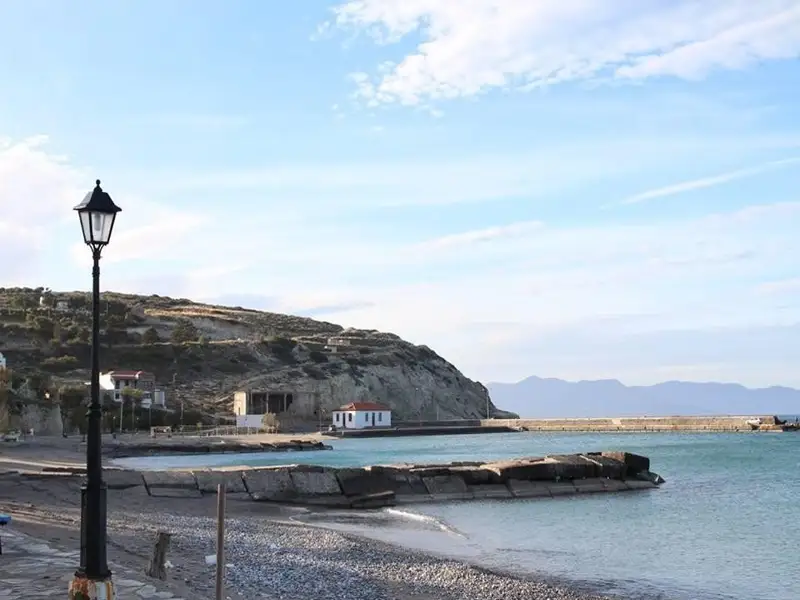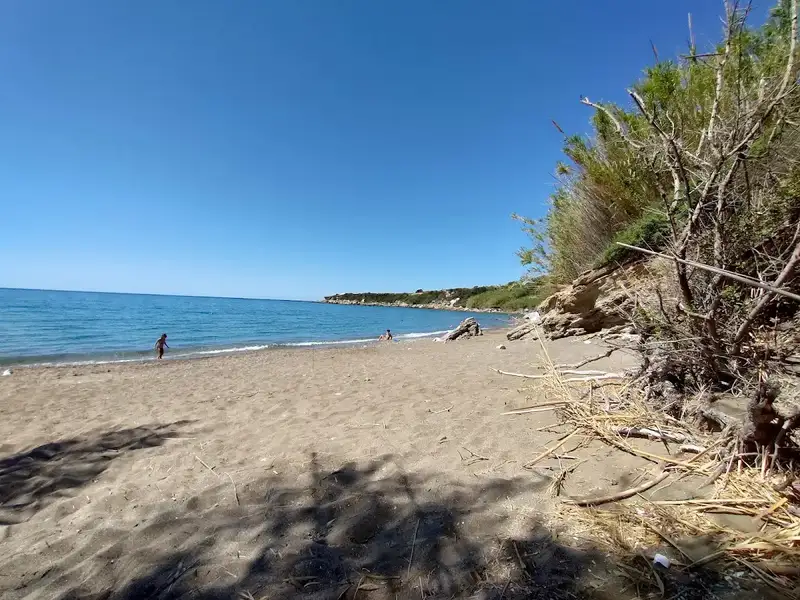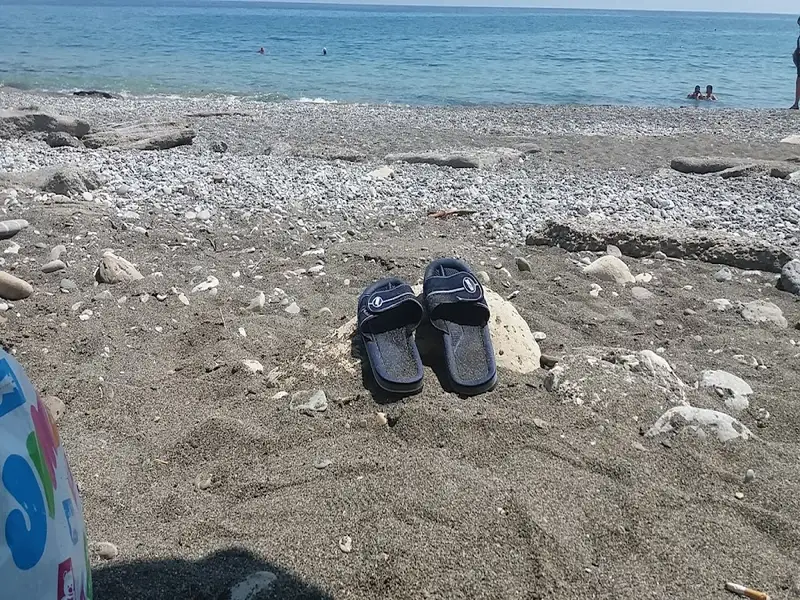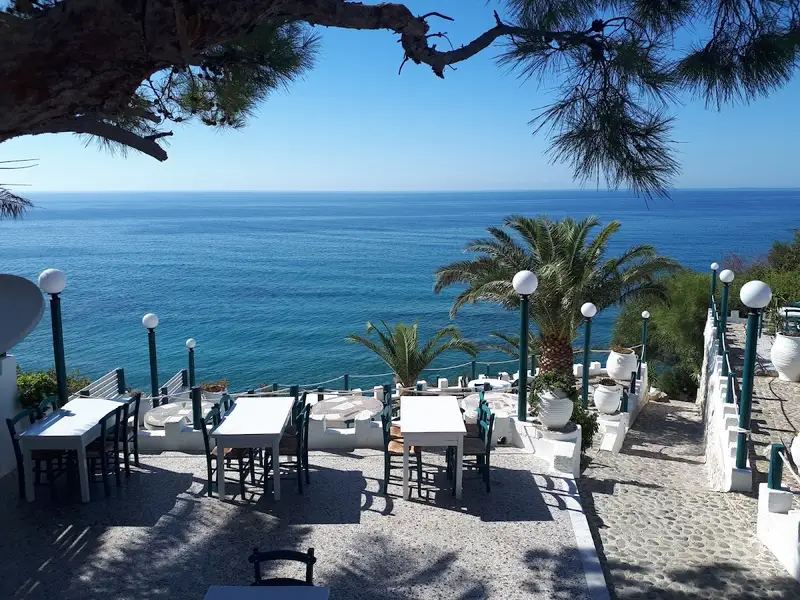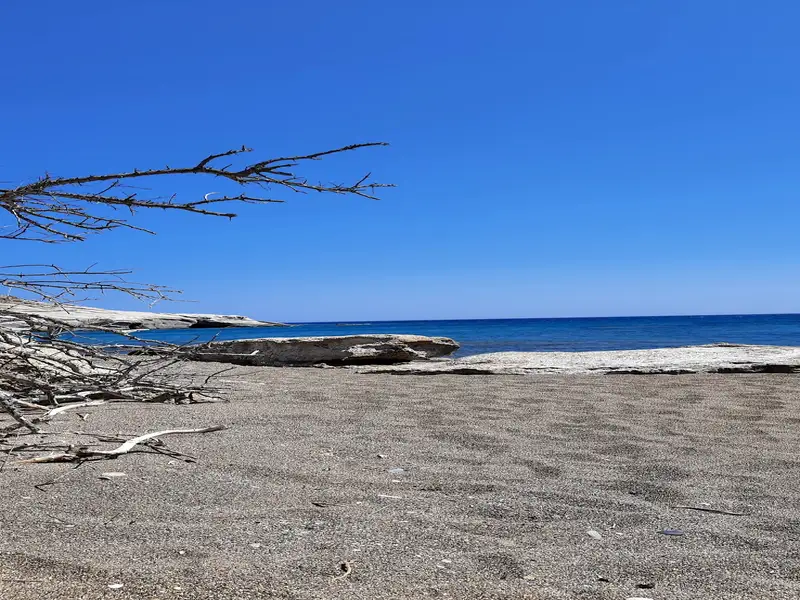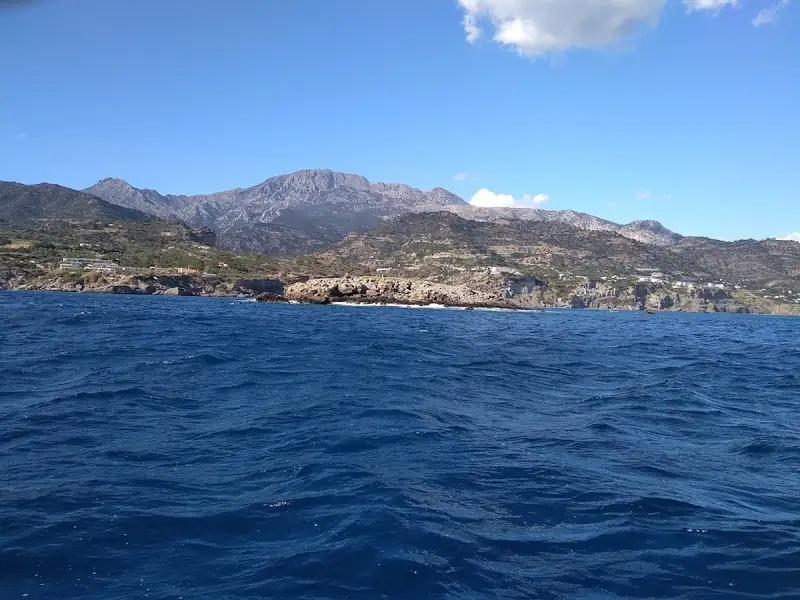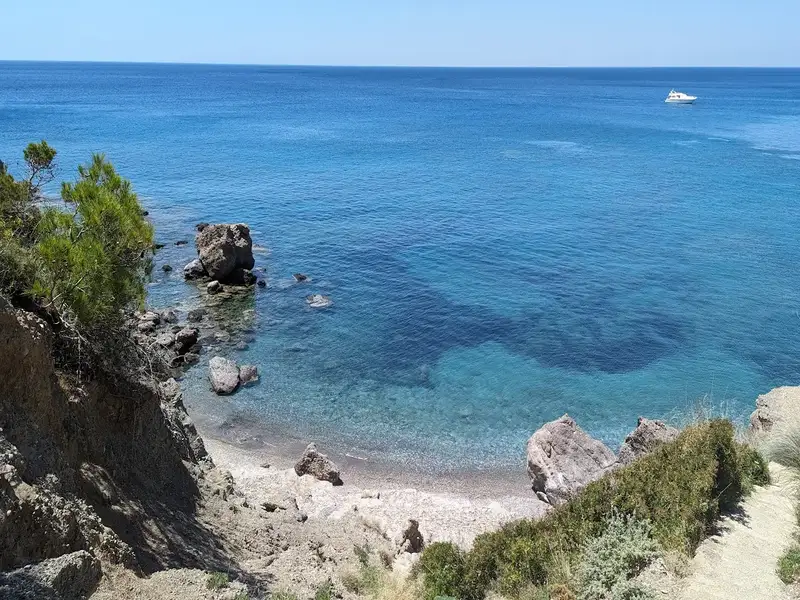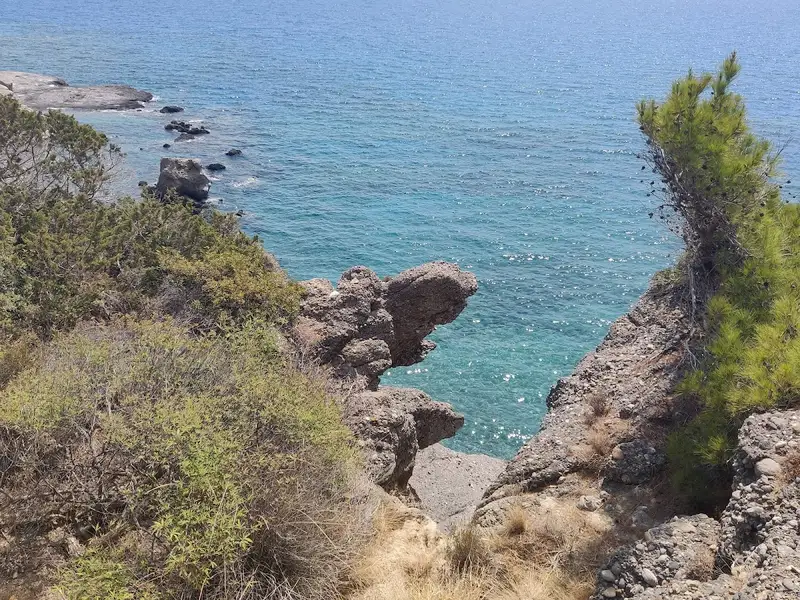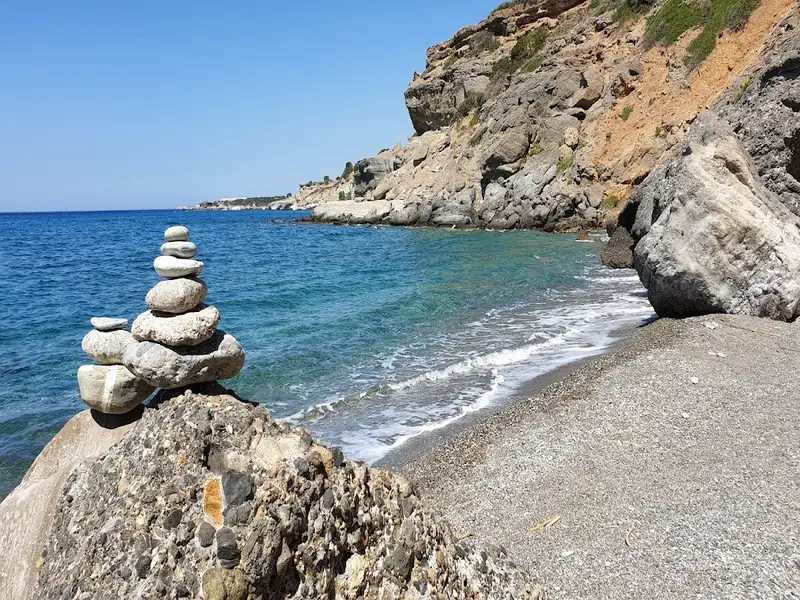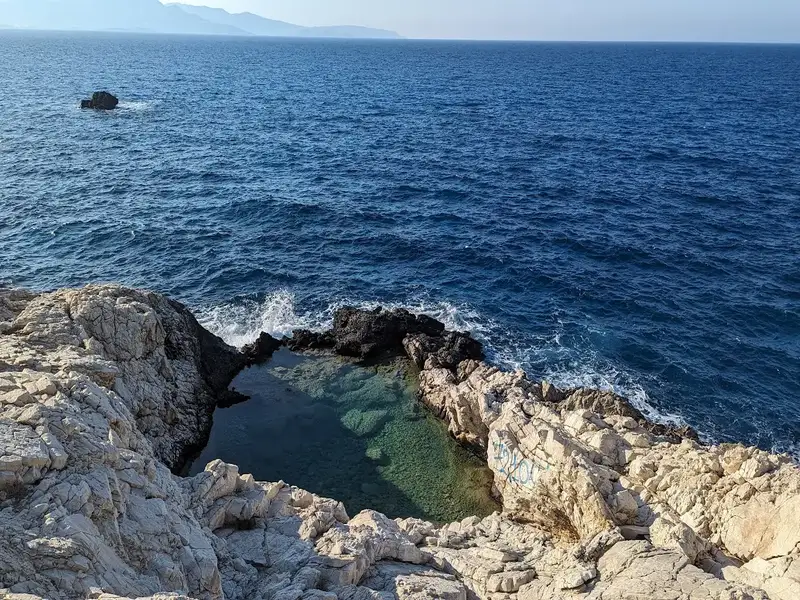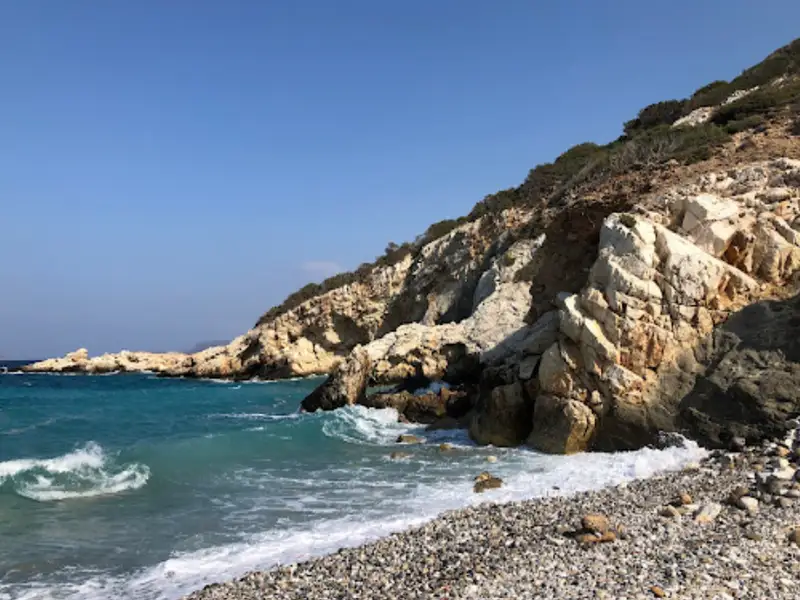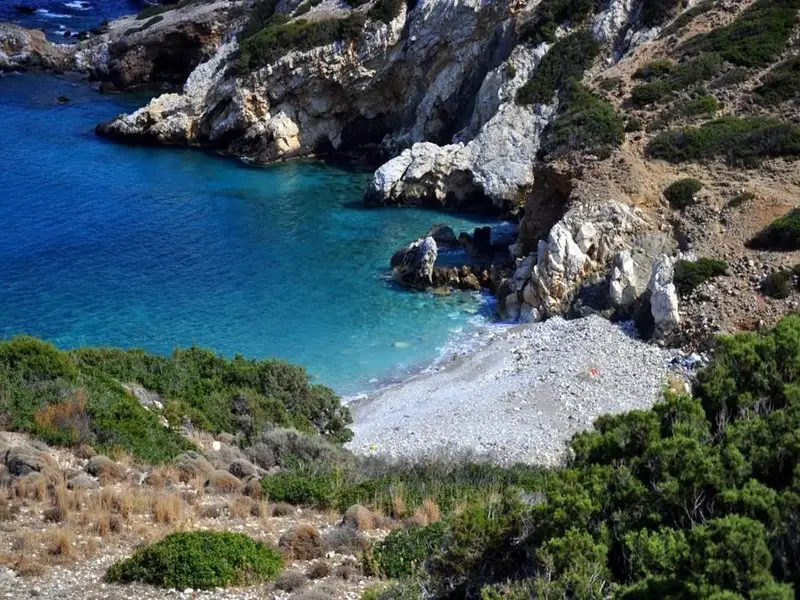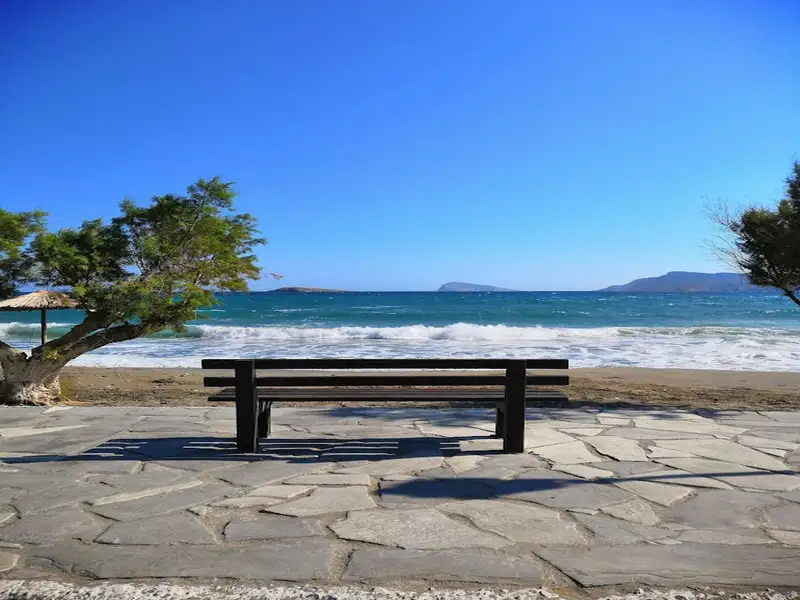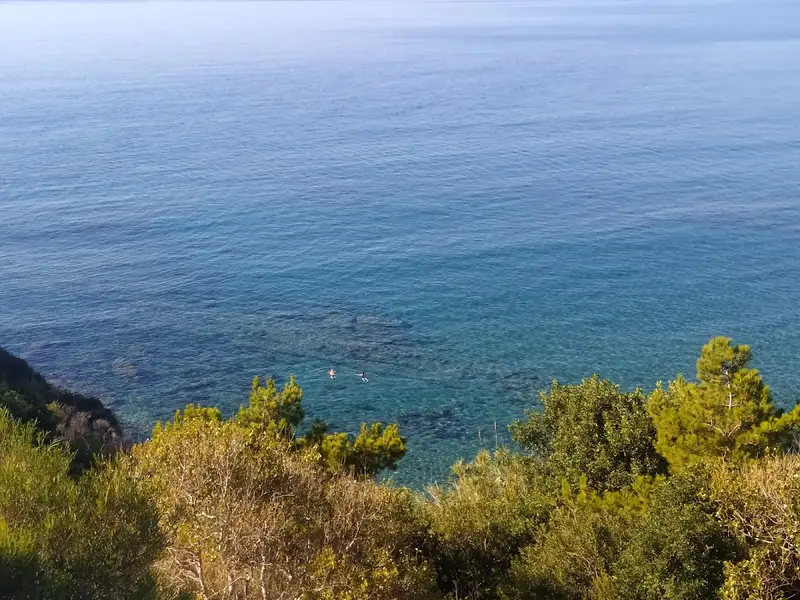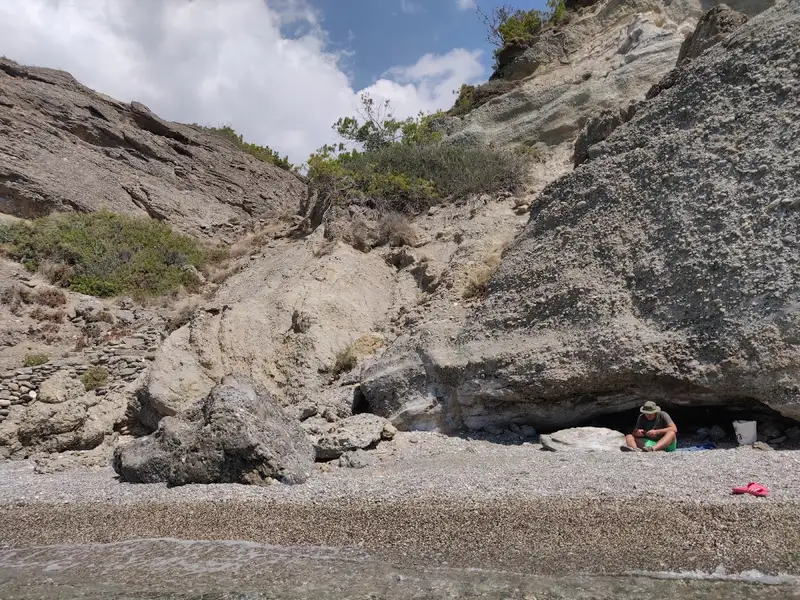
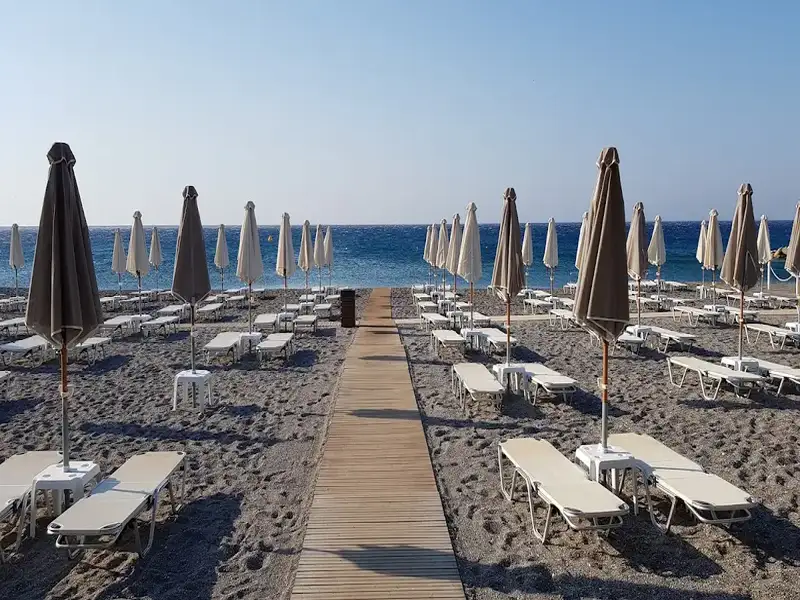

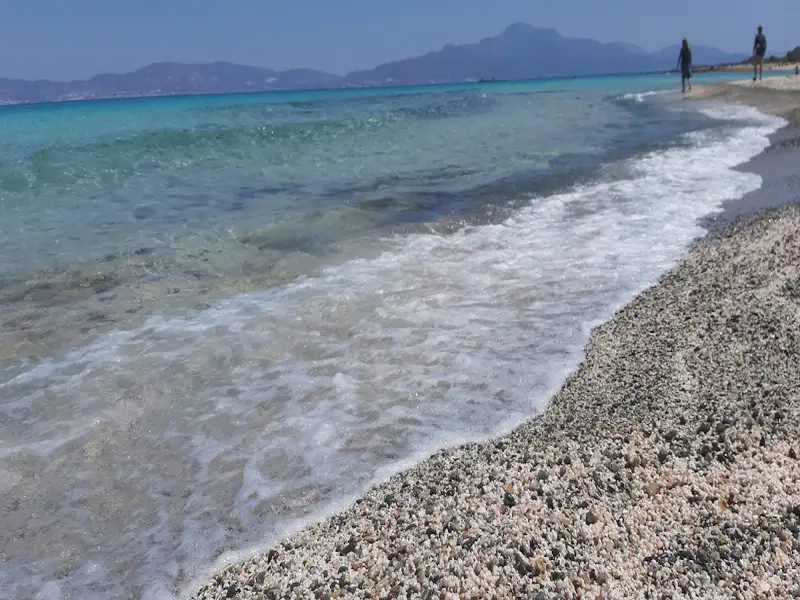
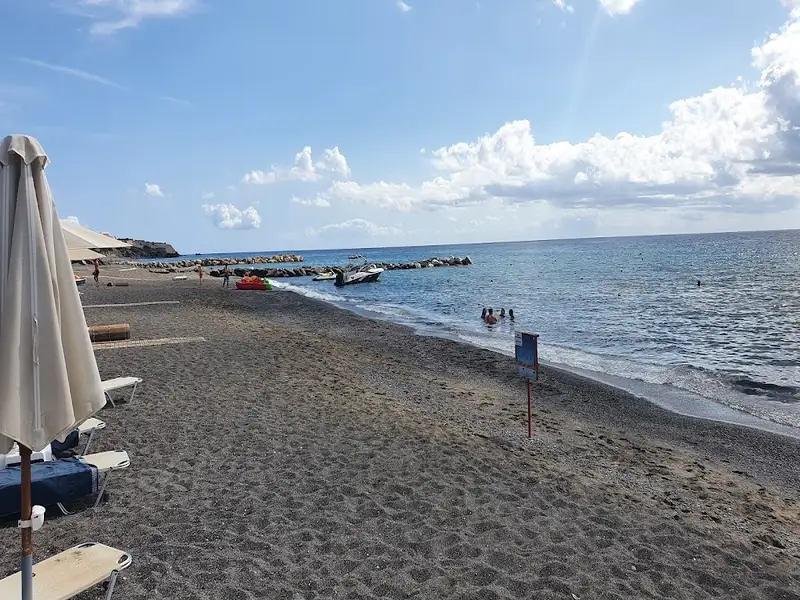
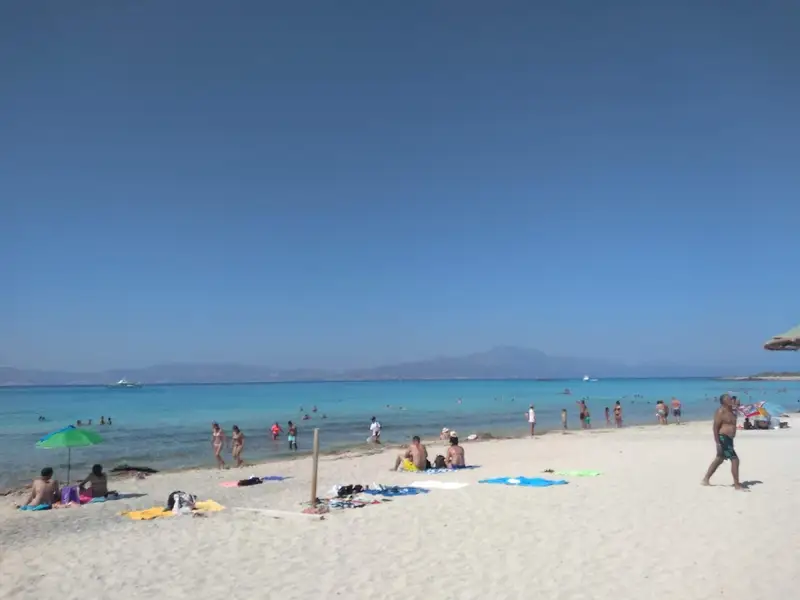
Just past the Peristeras suburb of Ierapetra begins the Katharades area, a chain of small beaches leading up to the popular coastline of the Koutsounari village. Known for its strong winds, it’s considered one of Crete’s windiest locations. The bays of this area are somewhat hidden, despite their proximity to the main road, leading to few visitors to the sequential bays. The area also goes by the name Paplinou, due to the nearby ancient Panagia Paplinou monastery.
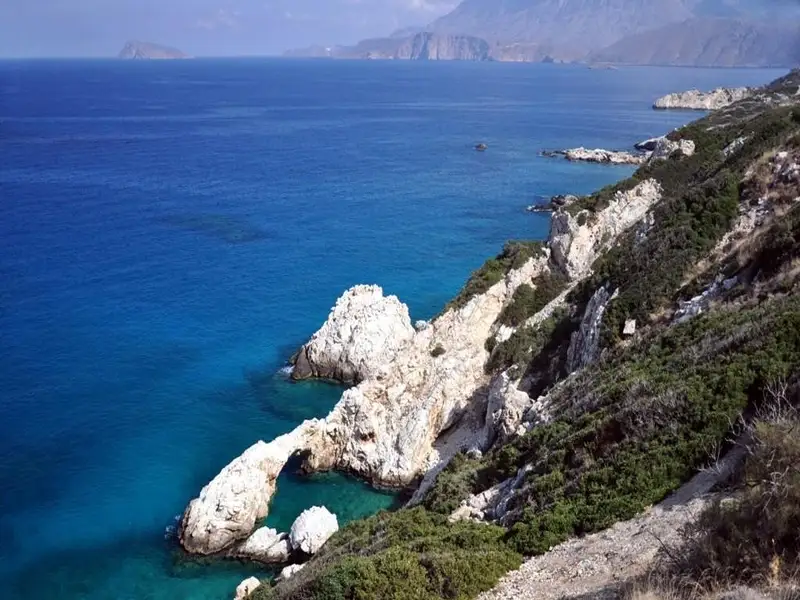
The stunning landscape is shaped by numerous rock shelters and unique rock formations, a product of erosion on the conglomerate soil over time. There’s been a slight increase in development in recent years, mainly due to the construction of large hotels near the coast. Consequently, the main road between Ierapetra and Makrygialos boasts a few restaurants, mini markets, and accommodations.
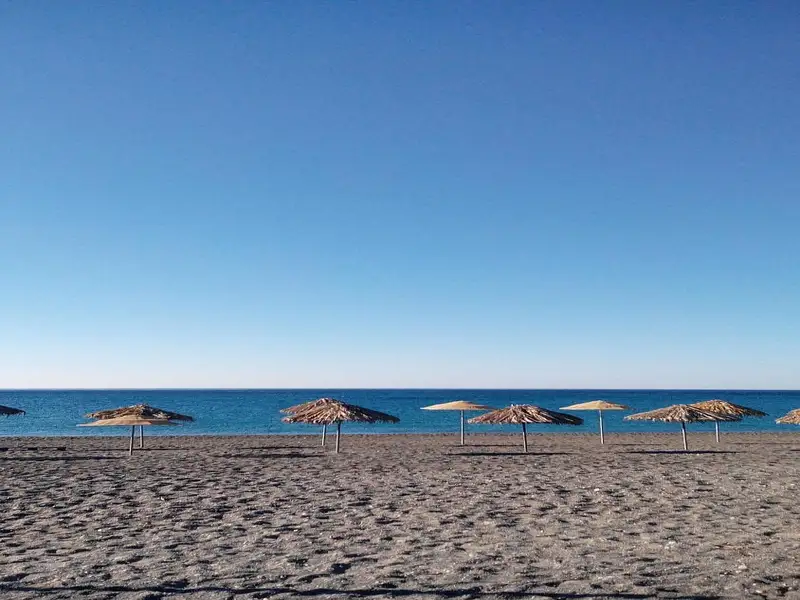
The beach features coarse grey sand, and its seabed has large, smooth rocks interspersed with sandy areas. The surrounding area is dotted with tamarisk trees offering shade, and umbrellas are also available. The beach is well maintained by the nearby hotels and features a beach volleyball court, sunbeds, showers, and water sports facilities.
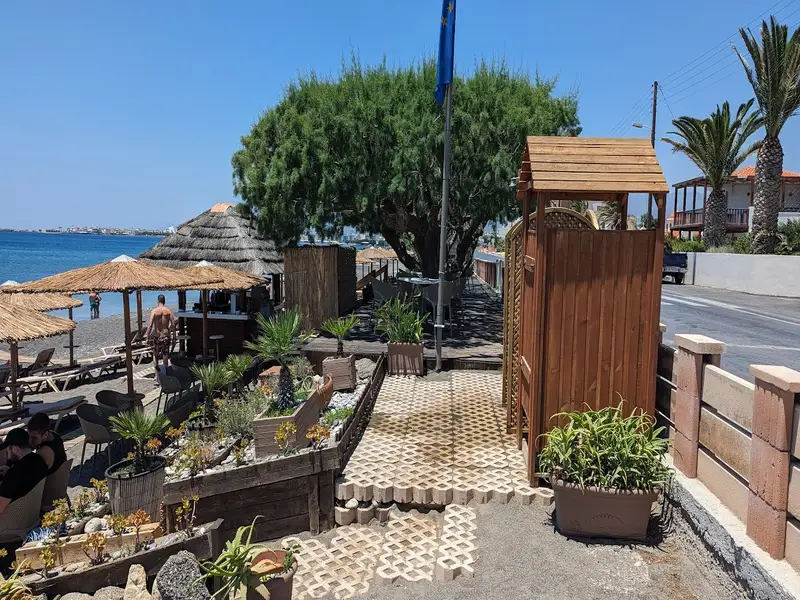
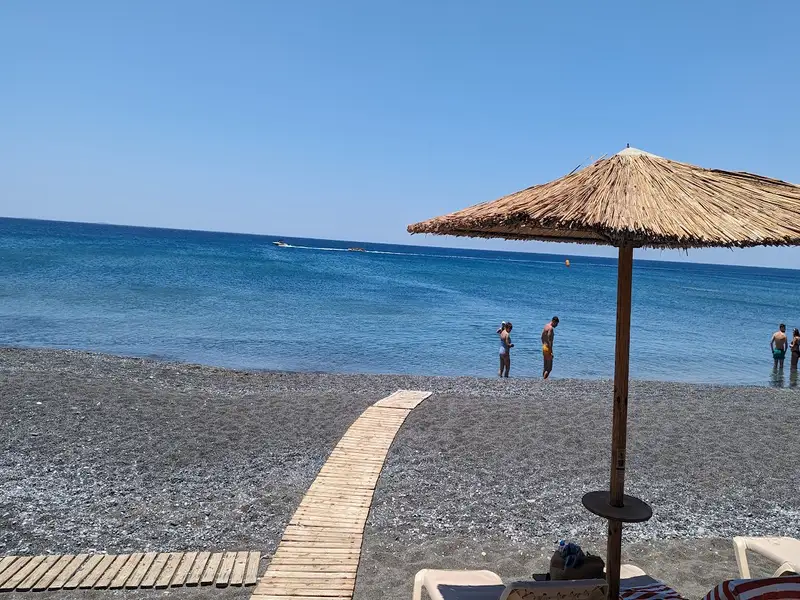
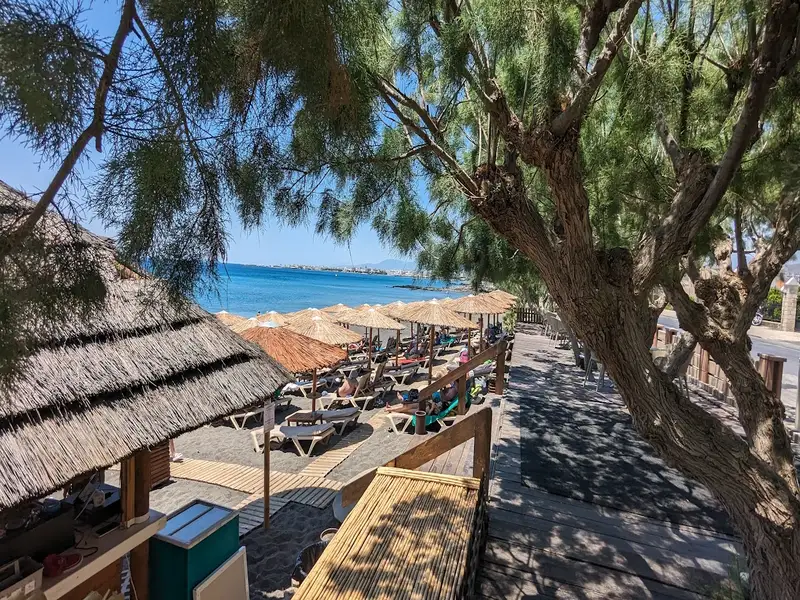
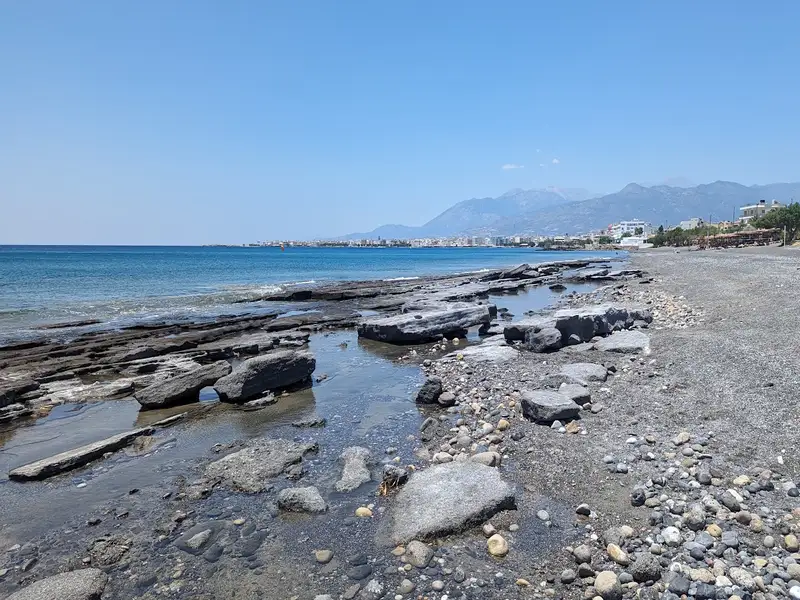
The city of Ierapetra, in close proximity to the Agia Fotini church, boasts the longest beach which spans 4km eastwards and is known as the East Beach of Agios Andreas. The name is derived from the Saint Andrew church, constructed at the exit point of the Kotovianou river. Initially, you will encounter the municipal beach, well-structured and surrounded by numerous large hotels. However, as you venture further east, the beach becomes more private. Despite this, it’s not suitable for nudists due to the main road that connects the city with Makrigialos and Sitia along the coast. The beach near the city center is sandy, but as you advance east, the sand gives way to small, grey pebbles and rocks, particularly up to the Livadia area.
The easternmost point of the extensive Ierapetra beach is known as Livadia, and beyond that, is named Peristeras. This secluded region is enveloped by towering cliffs. The beach itself is sandy, interspersed with several smooth rocks. The farthest part of Agios Andreas can be accessed by walking down the road. In addition to this, there is another sandy beach hidden behind the rocky end of the expansive beach in Peristeras, which can be reached via the road. This area is significantly shielded from onlookers, however, it’s quite rocky.
Koutsounari, a quaint seaside hamlet, lies 6km east of Ierapetra and 43km southeast of Agios Nikolaos. It nestles near the scenic village of Agios Ioannis, set against the backdrop of the Thripti Range. The village is perched on a verdant hill, surrounded by olive groves and pine trees, just a kilometer north of the South Cretan Sea coastline.
A kilometer to the south of Koutsounari is the expansive Long Beach of Agios Ioannis, stretching 5km, one of the longest in Crete. This broad, serene beach features the distinctive coarse grey sand typical of southern Crete. In many spots, tamarisk trees punctuate the landscape, and their length makes the beach appear deserted. The beach is somewhat organized in certain areas (near hotels) and is dotted with hotels, restaurants, mini markets, and a camping site.
If you venture eastward along the beach, you’ll encounter fewer swimmers. On the eastern end of Long Beach, a bay known as Psaropoula (named after an old local tavern) is shaped. Psaropoula features soft sand and tranquil waters, situated in front of a hotel, it is well-equipped with umbrellas, sunbeds, showers, and water sports. The sea here is typically calm, and the rocky seabed makes it a suitable spot for snorkelling.
Beyond Psaropoula lies another small cove boasting a well-appointed beach with umbrellas, showers, and water sports. This beach, located in front of the Kakkos Bay hotel, is called Villa Despot, translating to “Priest’s Villa” in Greek, named after a priest-owned building nestled between the two beaches. The beach is flanked by large rocks that provide a perfect spot for diving into the sea.
Visiting Long Beach in autumn offers a sight of the rare white sand lilies, signaling the summer’s end. These lilies are protected, so visitors are encouraged to appreciate their beauty from a distance without touching or picking them.
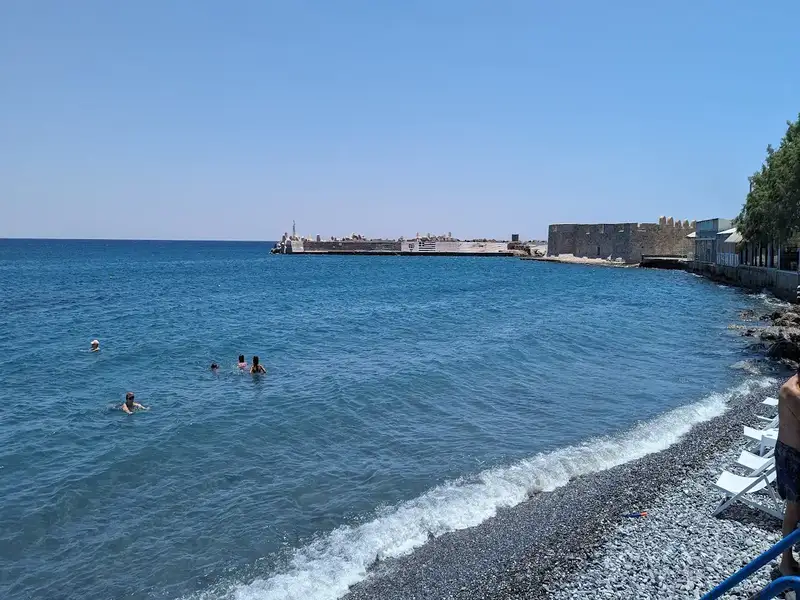


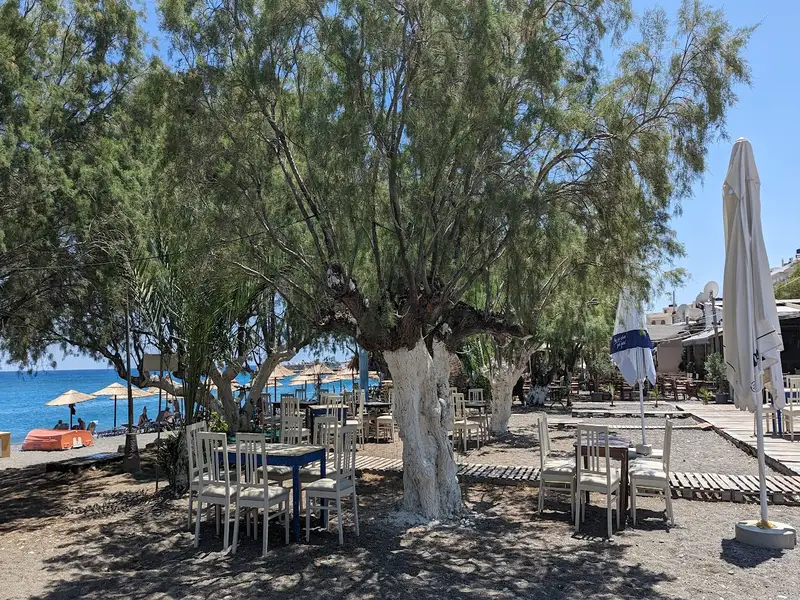

Ierapetra, the southernmost city of Greece, is nestled 35km southeast of Agios Nikolaos on Crete island. This city, located in one of the warmest regions of Crete, is a popular holiday destination, often frequented until late autumn. Ierapetra and its surrounding areas boast a vast beachfront, renowned for its stunning beaches adorned with unique fine black pebbles that do not stick to your feet, coupled with a typically calm sea.
In proximity to the town, there are three primary beaches for swimming. Starting from the west, the first is Limanakia, situated west of the city next to the old mosque. The beach features coarse sand, patches of a rocky seabed, and shallow waters, offering a peaceful atmosphere. Given its closeness to the city, all necessities are readily available. Limanakia also hosts a channel in the middle of the beach that leads to a small man-made salt lake.
A short stroll eastward will bring you to the Fort of Kales, which guards the harbour of Ierapetra. Adjacent to it is Apovathra Beach, a sandy beach with shallow waters. This beach is well-equipped with numerous facilities for water sports and scuba diving, making it the most organized beach in the town.
Pachia Ammos is a large village situated on the north side of the narrowest part of Crete, 20km east of Agios Nikolaos, on the road connecting Agios Nikolaos with Sitia and Ierapetra. The village is located at the exit of a fertile plain that is covered with olive groves. It has experienced mild development due to its local beach and the sights of the surrounding area. Visitors can find small hotels, rooms, and taverns in the village.
A long beach with sand and pebbles stretches in front of Pahia Ammos, 500m to the east. The beach is open to the north winds, and the sea is usually wavy. However, visitors can stay safe in the well-protected west part of the beach, which is sandy and clean and has umbrellas and sunbeds. For those seeking peace, the eastern part of the beach is an option, but it is unprotected from the waves, and currents carrying garbage due to the village’s location in the southern part of the Gulf of Mirabello. The beach in this area is pebbly and has several tamarisk trees. At the east end of the beach, a stream flows from the impressive Gorge of Ha in winter.
Pahia Ammos is situated on the site of the ancient city Minoa, which was an old harbour. The Institute for the Study of Prehistoric Aegean of East Crete is established here, which conducts systematic excavations in the area and deals with the promotion and protection of antiquities. The most famous archaeological site in the region is the Minoan cemetery and the settlement of Gournia, which is located 2km west of the village. The city flourished in 1600 BC and was built on a small hill. Gournia is located 2km east of Faneromeni Monastery, one of the most impressive monasteries in Crete built on a steep cliff.
Visitors can also visit the Minoan settlement Vasiliki, which is 4km south of the village and flourished in 2600-2300 BC. Vasiliki is considered the precursor of the major Minoan palaces and towns. From Vasiliki, visitors can drive 2km to the east to reach the village of Monastiraki, with the old watermills and the church of St. Stephen. Nearby is the exit of the imposing gorge of Ha, which causes awe from miles away.
Opposite Pahia Ammos you’ll see the small island Konida (i.e. nit, the egg of louse), which can be reached by boat. It is interesting to see how the place’s name has emerged; a few miles to the east (opposite Tholos) you’ll meet the very important island Psira (i.e. louse), while opposite Mochlos you’ll see the islet of Agios Nikolaos, also called Psilos (flea). All bugs together!
Ferma, a small coastal town, is situated 10km to the east of Ierapetra and 45km to the southeast of Agios Nikolaos, lying 4km south of the village, Agios Ioannis. The area is green and verdant, with dense pine forests, a stark contrast to the arid landscape of Eastern Crete. A string of tiny bays stretches along the coast, the largest being Livadi, also known as Ferma beach or Xerokamara. This beach, flanked by hotels, boasts fine pebbles, clear deep waters, and is bordered by lush vegetation and towering smooth rocks and steep cliffs.
Access to the unorganized beach is through two stairways starting from the nearby hotels. The beach features several springs and a small clump of Cretan Date Palm in its center. Following Livadi is Pigadi beach, named after a structure resembling a well. It, along with an adjacent small bay, can be reached via a stairway from the main road. The last beach in the area, Giorgakis, is similarly accessed via a steep path with iron stairs.
Ferma is known for its tranquil ambiance, making it an ideal spot for families to bask in the sun and enjoy the sea, with basic amenities within a short walk. If you’re visiting Ferma, ensure to explore the lush nature around. Check out the village of Agios Ioannis, stroll through its narrow lanes and churches, and visit the springs of Psychro and the Agios Ioannis waterfalls in the Milonas gorge.
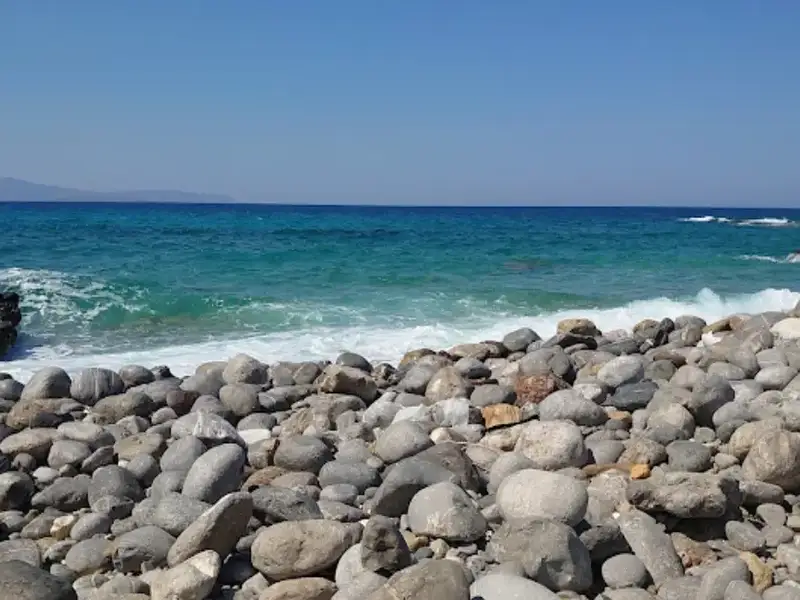
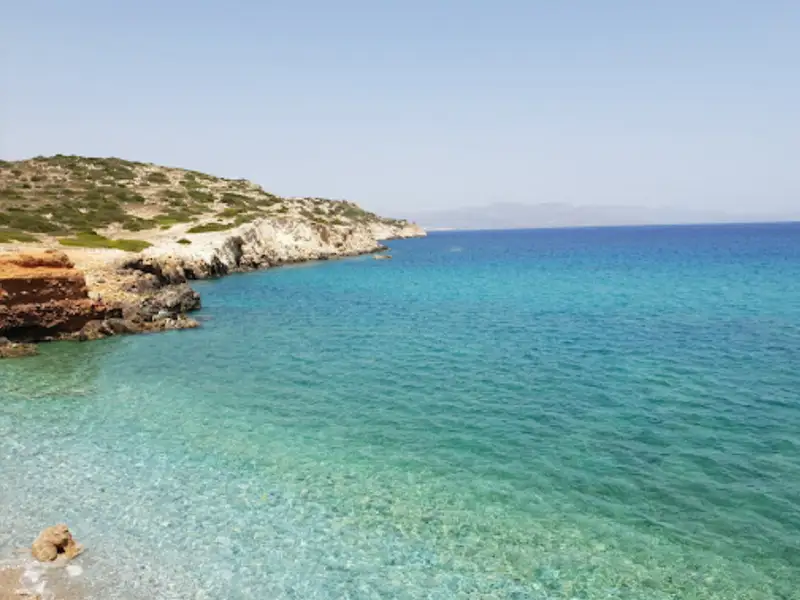

Kamini, situated near the renowned Minoan settlement of Gournia by Pahia Ammos, is an enchanting location composed of five sequential pebble beaches. Positioned north of the archaeological site, Kamini was most likely Gournia’s access point to the sea, explaining the presence of Minoan structures in the area, such as remnants of rooms, walls, and ship sheds or boathouses. The Gournia necropolis is also found in this area.
Kamini’s natural allure is as significant as its archaeological value. The coastline, adorned with limestone conglomerates and strikingly red soil, presents a stunning display of colors. The area boasts intriguing geological formations, sea caves, rock bridges, and five beaches speckled with fine or coarse pebbles. However, some of these beaches can be difficult to access.
Regrettably, the north winds often bring a disheartening amount of trash from across the Aegean Sea, littering the otherwise pristine landscape. This, coupled with the strong winds, tends to deter visitors. However, when the winds shift to the south, Kamini’s true splendor emerges, with turquoise and crystal-clear waters that truly are a sight to behold.
Situated about 10km east of Ierapetra and 45km southeast of Agios Nikolaos, within the vicinity of the Agios Ioannis village, lies the beautiful Giorgakis beach. This stunning beach is nestled in the Ferma area, a region renowned for its numerous beaches. Despite being surrounded by towering cliffs, you can reach the beach via stairs originating from the Ferma Solaris Hotel. Once you descend, you’ll find yourself on one of the most picturesque beaches in East Crete, adorned with fine pebbles, rocks, and naturally formed caves.
The beach is segmented into two sections by a low-lying rock. The smaller western beach is the outlet of a local stream that meanders from the Strongyli peak region. Before reaching the beach, the stream creates a stunning waterfall, about 10 meters in height, which showcases vibrant rocks and dries up during the summer.
Ferma’s broader area is a lush oasis within the typically dry landscape of Eastern Crete, enveloped by pine trees and dense vegetation. Nearby, you’ll find several freshwater springs that continue to drip, even in summer, promoting the growth of such lush greenery.
Gournia, situated 17km east of Agios Nikolaos and just 2km west of Pachia Ammos, is renowned for its ancient Minoan town, built atop a small hill. Named after the stone and wooden troughs (‘urna’ in Venetian) found in the vicinity, the original Minoan name of the town remains a mystery.
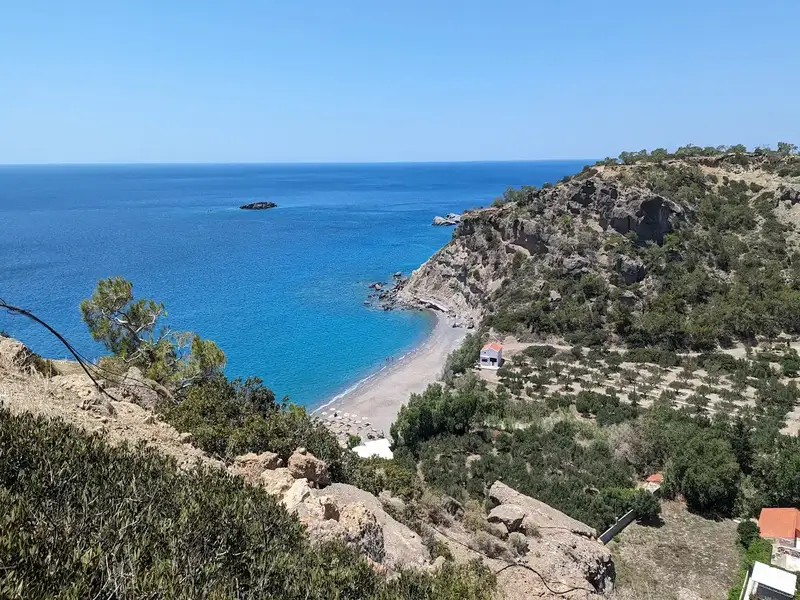
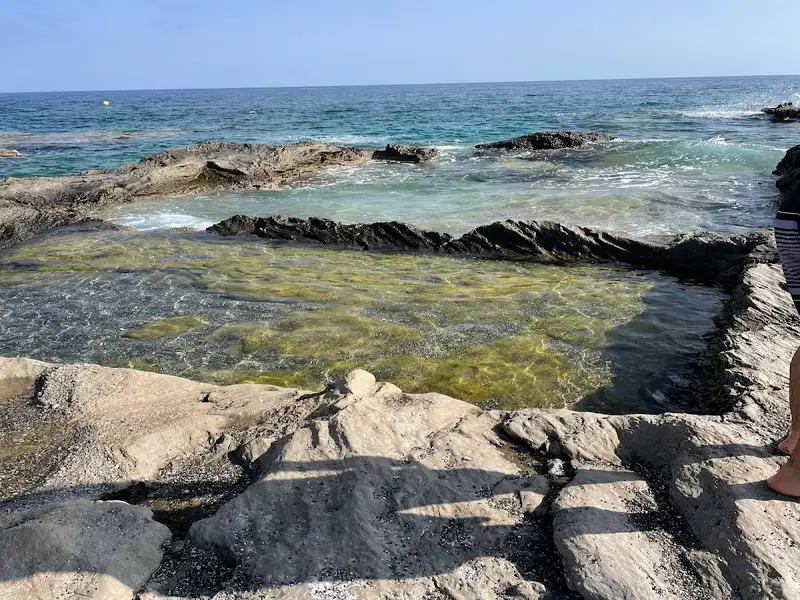
Nearby, a brief 1km journey north of the archaeological site of Gournia, lies the secluded Frouzis beach. Accessible by car, it sits nestled within a rocky bay, featuring pebbly shores and zero commercial facilities. While the broader area boasts beautiful sea caves and natural rock pools, the beach tends to accumulate litter carried by sea currents. This is also the case for the neighbouring beach, which houses an abandoned camping site.
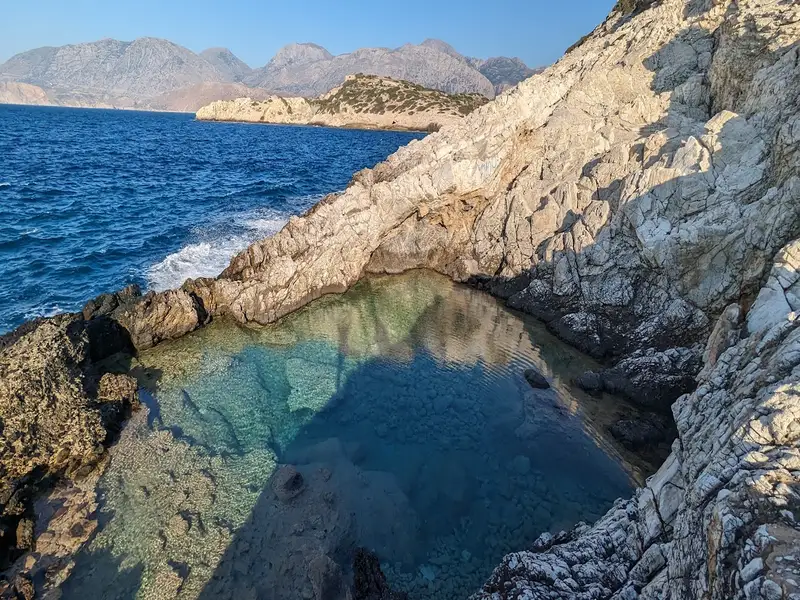
One of Crete’s most breathtaking natural pools is found near Gournia. This serene rock-bound pond offers an inviting swim, especially when the nearby sea is choppy. The vast cave next to it also provides a fascinating sight.
A trip to Gournia would not be complete without exploring the archaeological site to understand the layout of a small Minoan city. Having thrived in 1500BC, the city has been thoroughly excavated, revealing well-preserved walls, staircases, and streets. The city, centered around a hill housing a small palace, a market, and a temple, appears to have been destroyed by an earthquake around 1450BC, and it was completely abandoned by 1200BC. The Gournia cemetery was discovered in the Sfougaras region, near Kamini.
The beach of Agia Fotia is situated 45km southeast of Agios Nikolaos and 12km east from Ierapetra. It’s a small bay nestling at the outlet of a stream flowing down from the Thripti mountain. The name of the settlement is derived from the local Church of Agia Fotini, also known as Agia Fotia. The stream is cloaked by enormous plane trees, while the bay is encircled by conglomerate cliffs, adding to the enchanting landscape.
This beach is well-known and a favourite among the inhabitants of the city of Ierapetra. Its shores are covered in coarse greyish sand, while the water is crystal clear and tranquil. The beach is well-equipped with amenities including beach bars, taverns, and hotels. There are tamarisk trees on the beach where one can find shade. Additionally, beach volleyball tournaments are hosted annually at the local court, a recent tradition that has added to its popularity.
No results available
© All rights reserved. Crete Locals