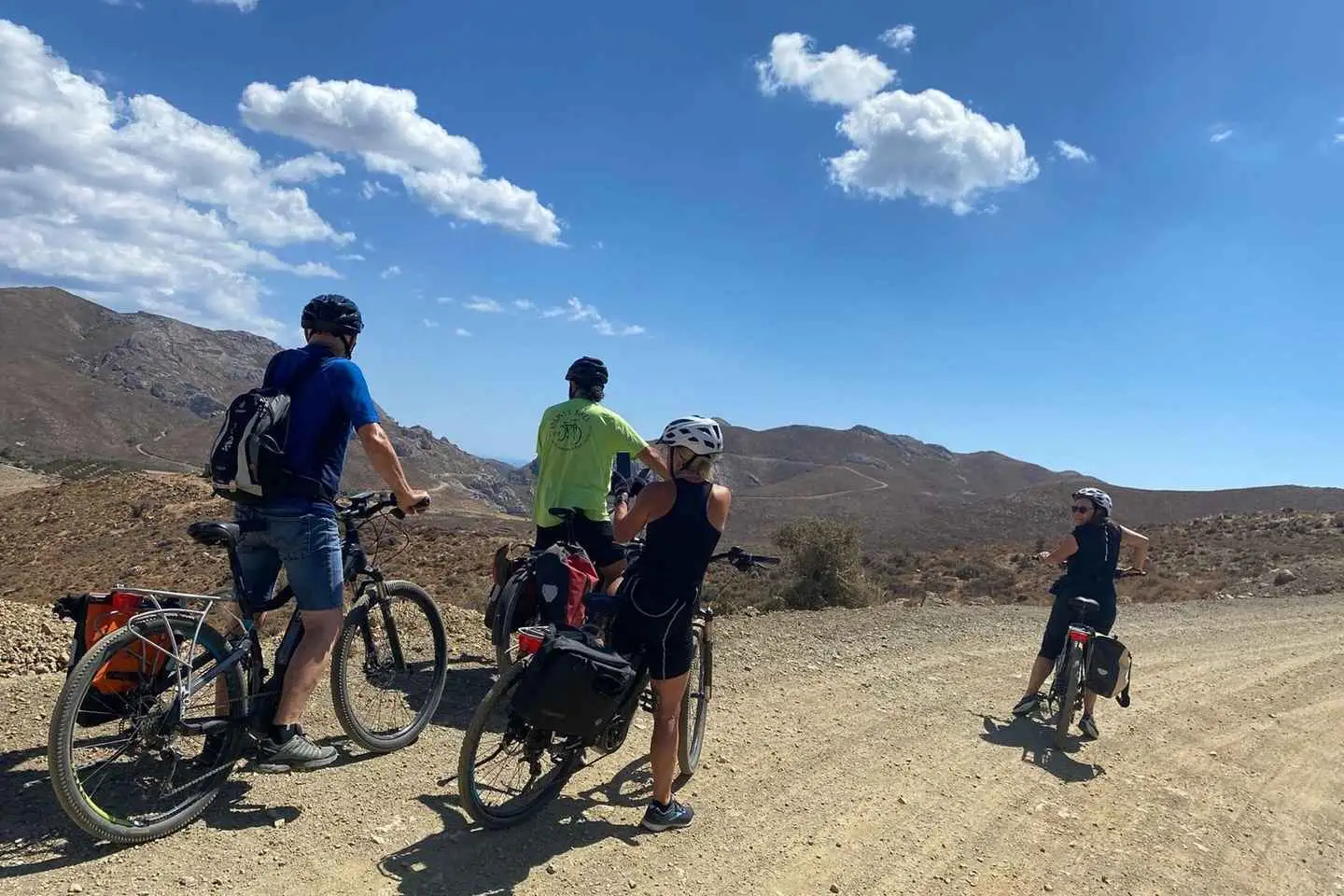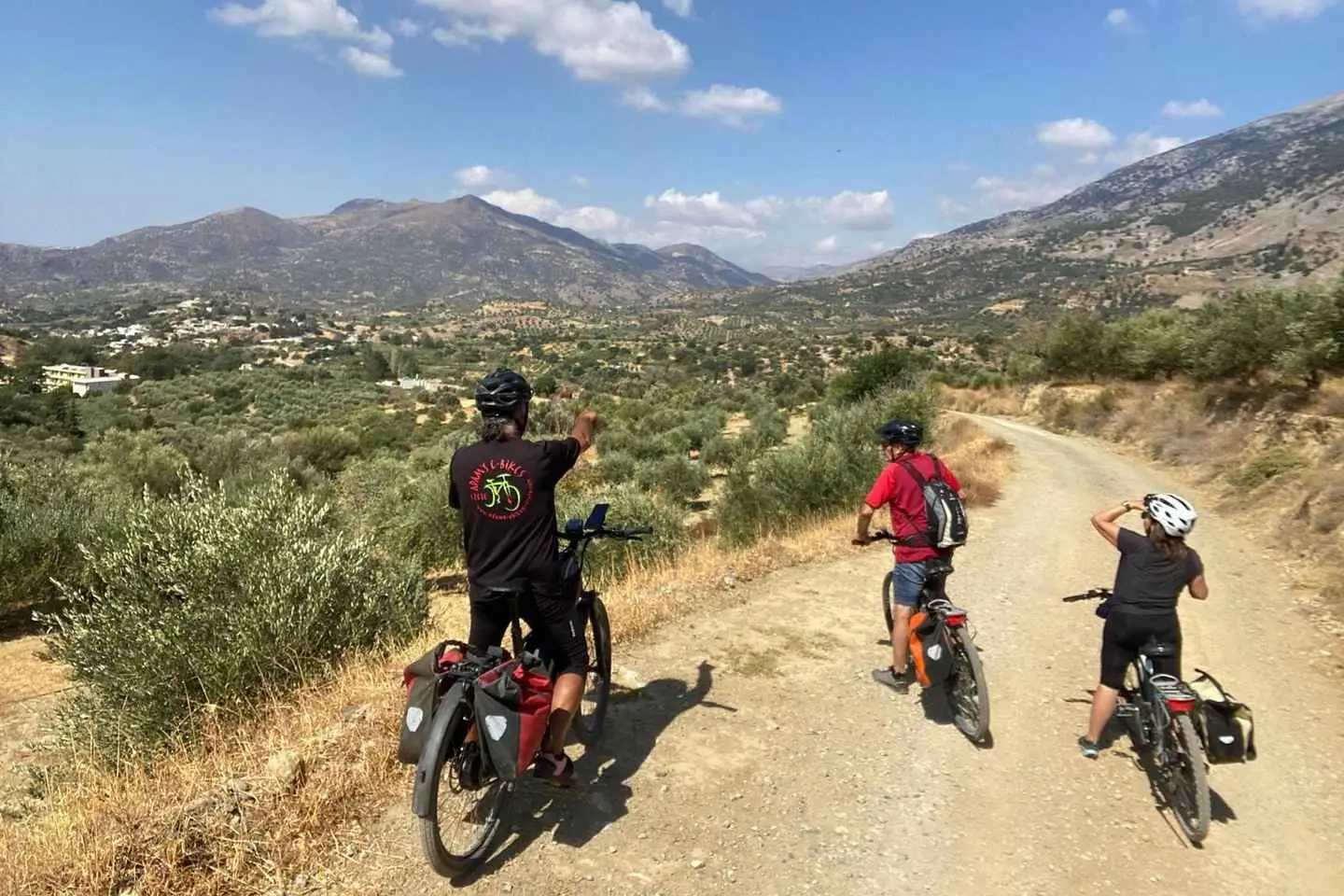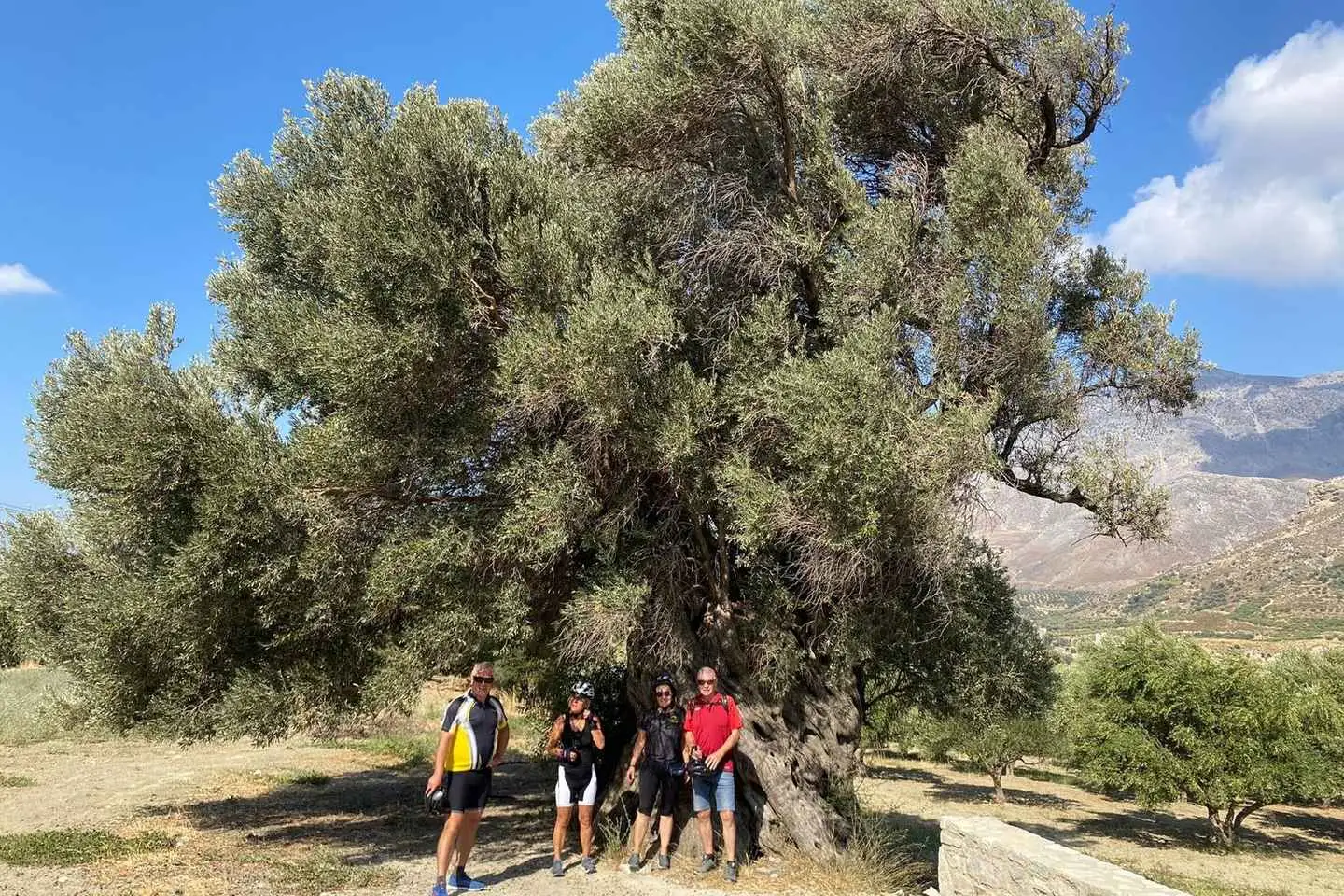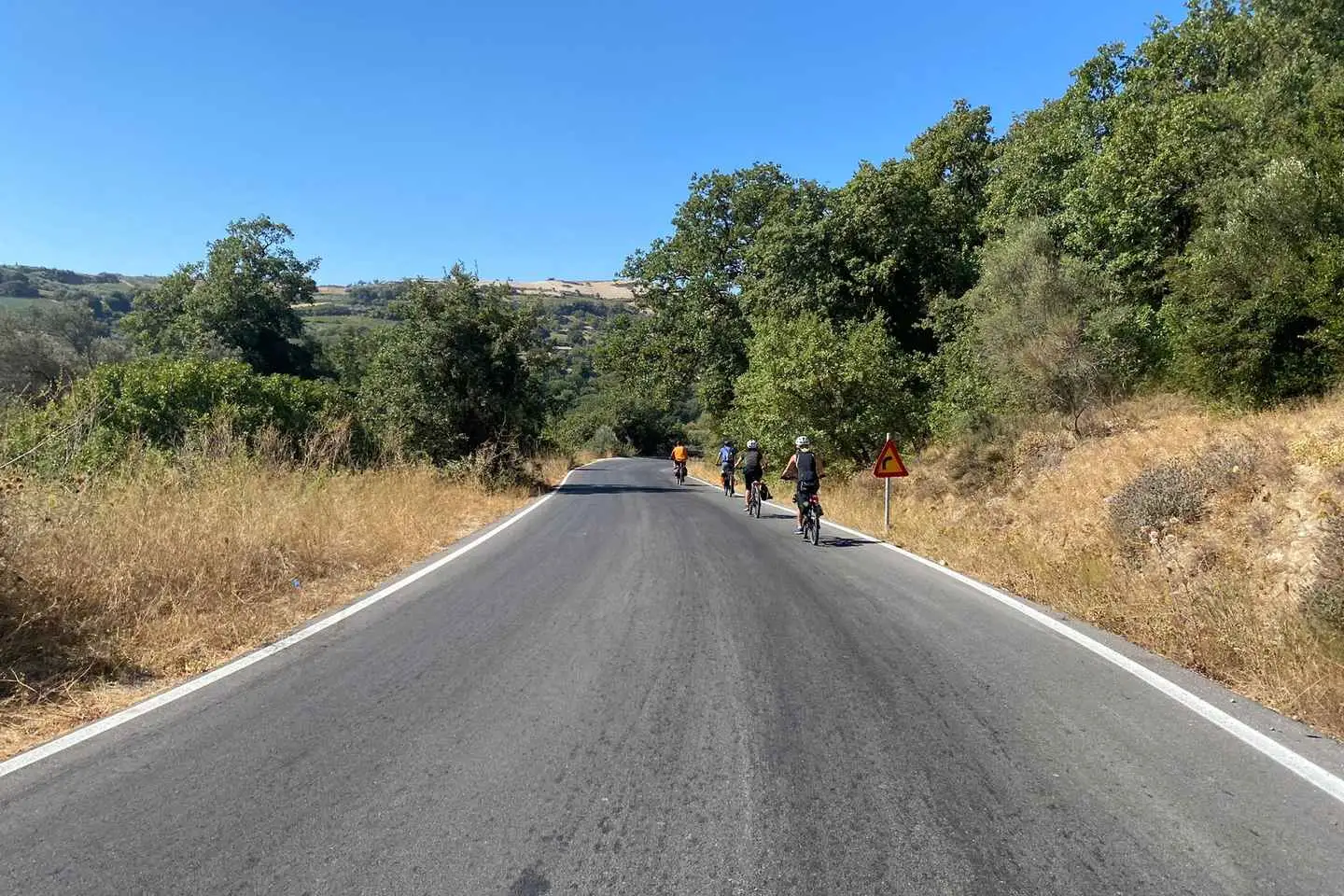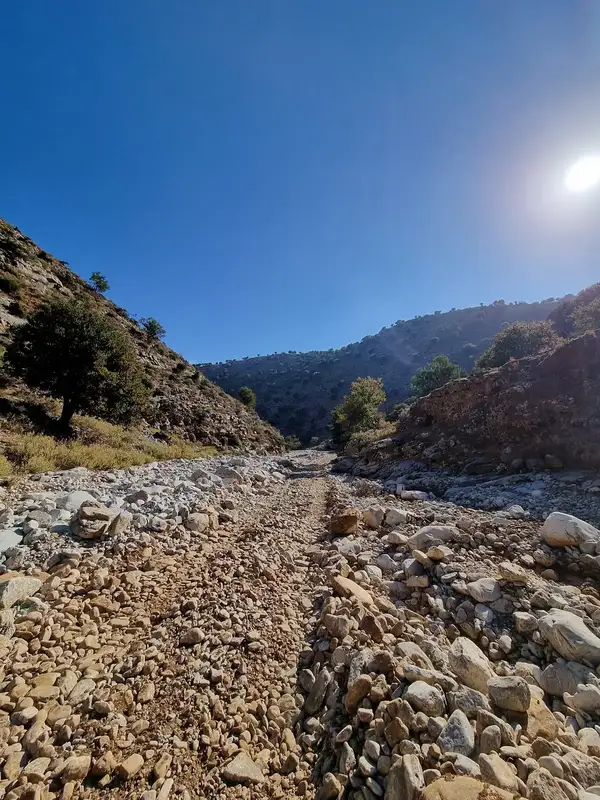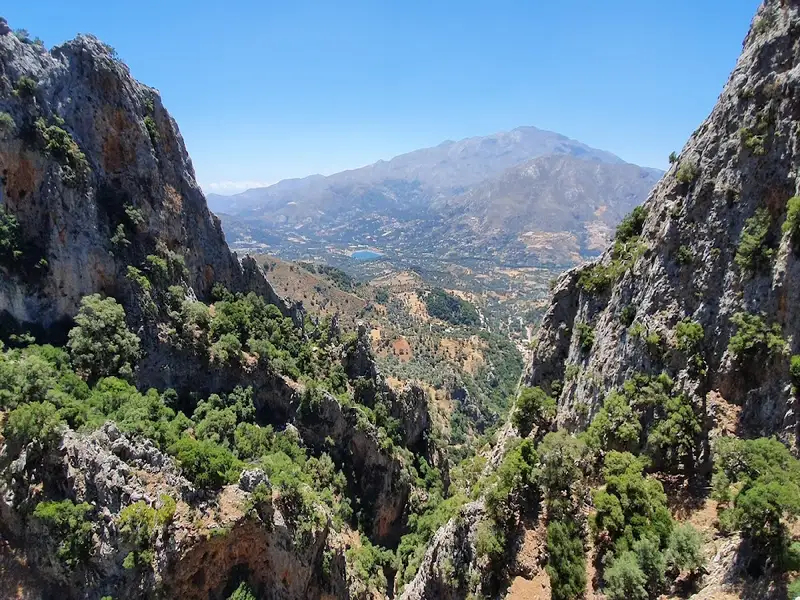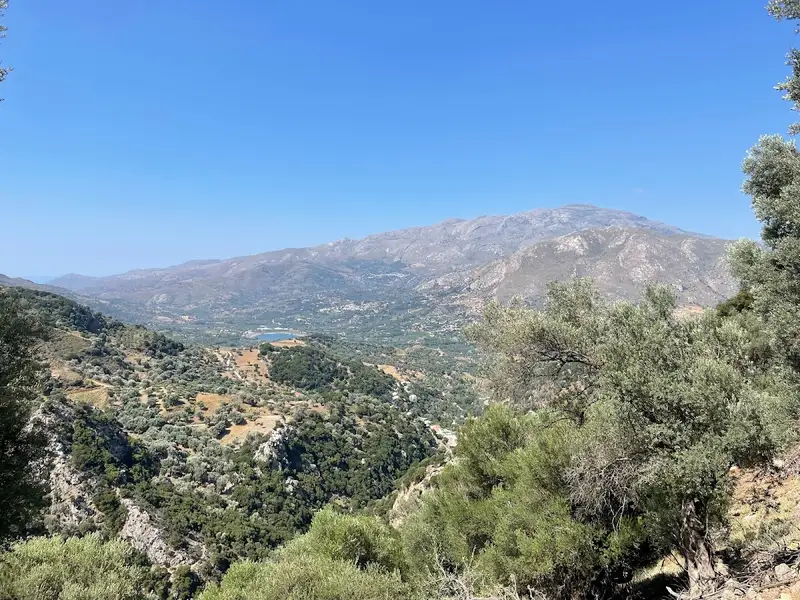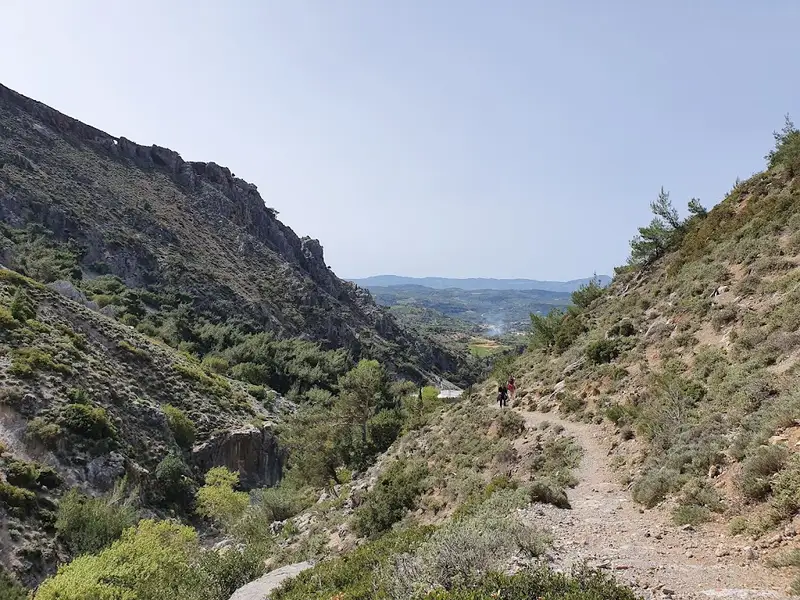
The start point is west of Heraklion from the beach of Ammoudara and head south towards the hinterland of Crete. After leaving the urban area behind us, entering a rural area full of vineyards and olive groves. On one side of the route people can see the holy mountain of Yioukta and on the other the highest mountain of Crete, Psiloritis. The first village on the way is Gournes and after a few kilometers is the village of Athanati. The road becomes uphill until the almost uninhabited village of Xirolia. Riding west and after a few kilometers the group will reach the capital of wine in Crete, the village of Dafnes. Here the well-known wine festival takes place every year in July.
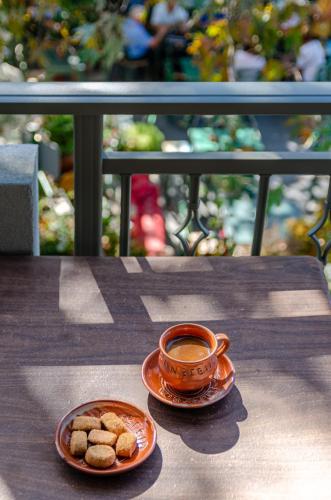
In this area there are many wineries that produce the best wines of Crete. Here the group of the bikers will taste 4 different wines, accompanied by Cretan cheese, rusks and olives. After the tasting the bikes will be left there and the group will go by car back to the starting point.
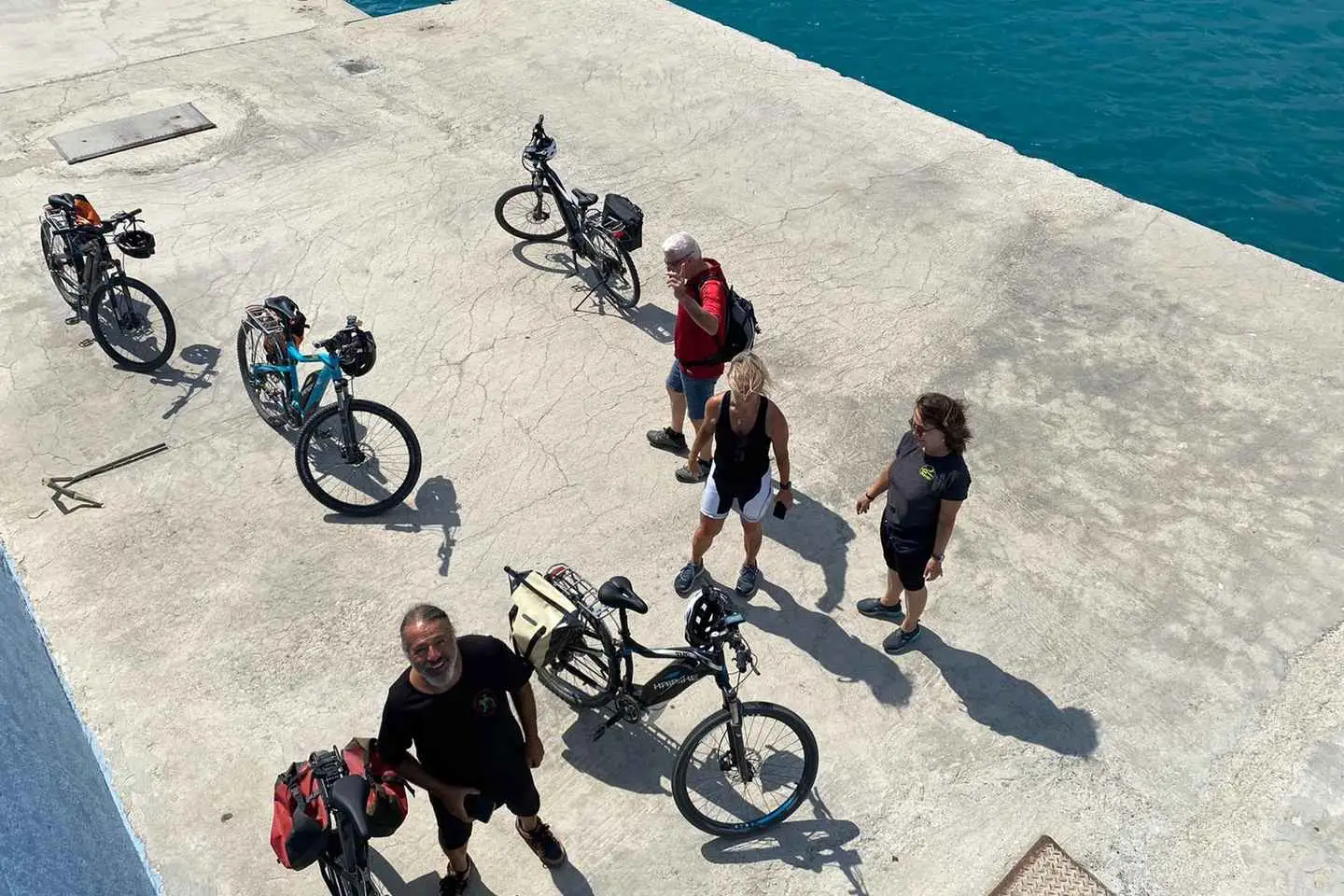
This e-bike tour is possible to be done by everybody who is able to ride a bike. It is 24 km long and the net riding time ist about 90 minutes.
If it has rained recently, then the route will change, because the previous route has some dirt roads and there will be mud.
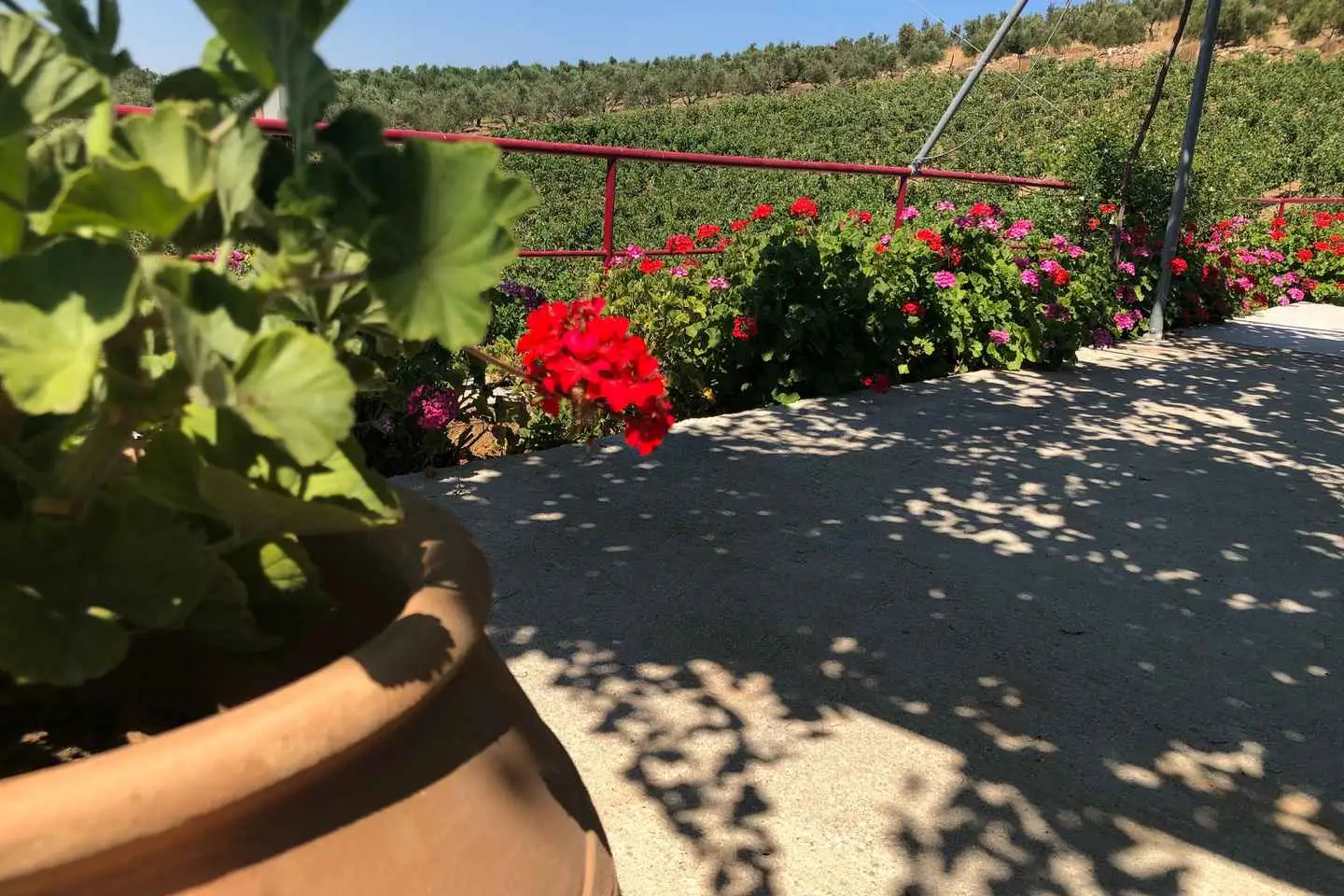
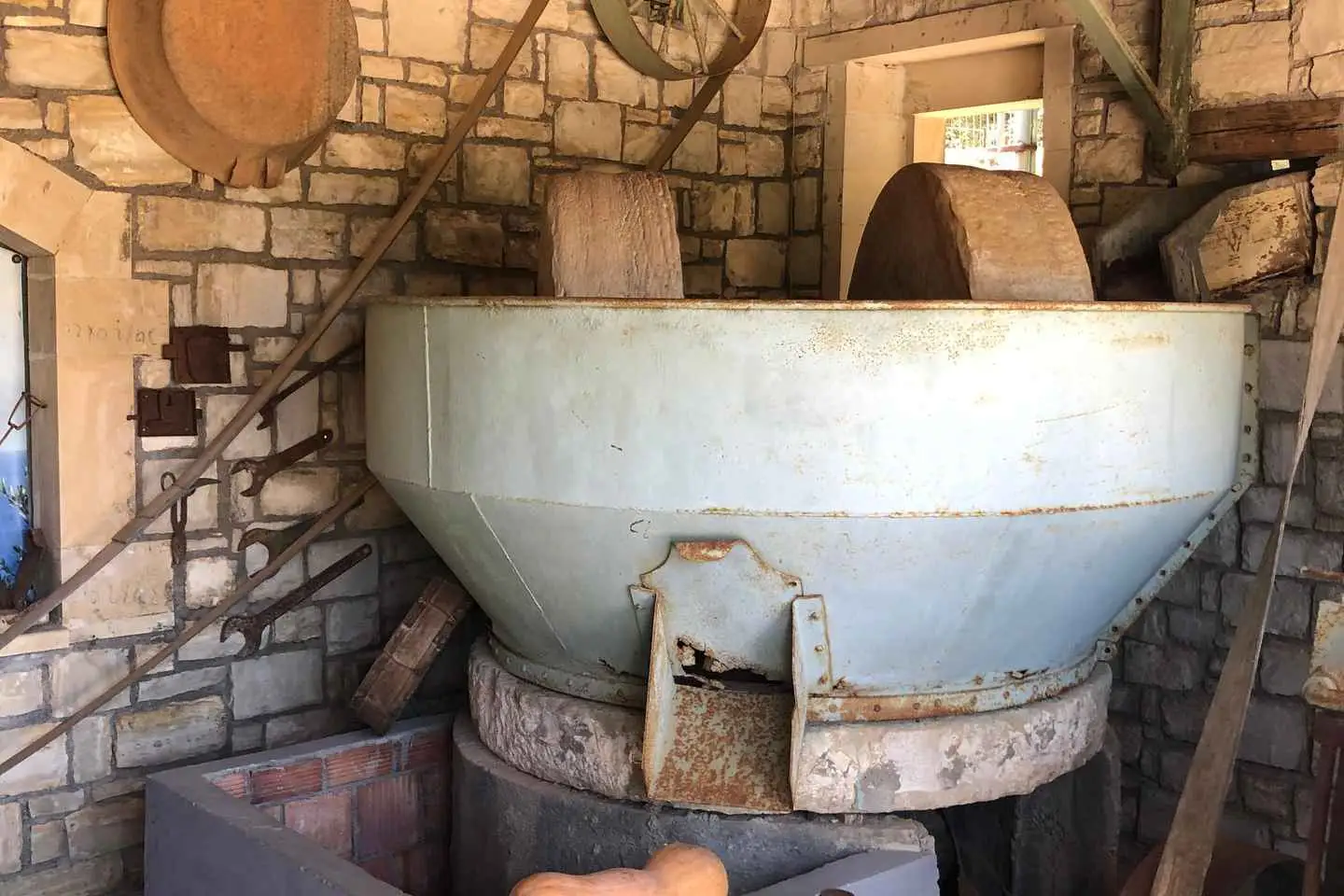
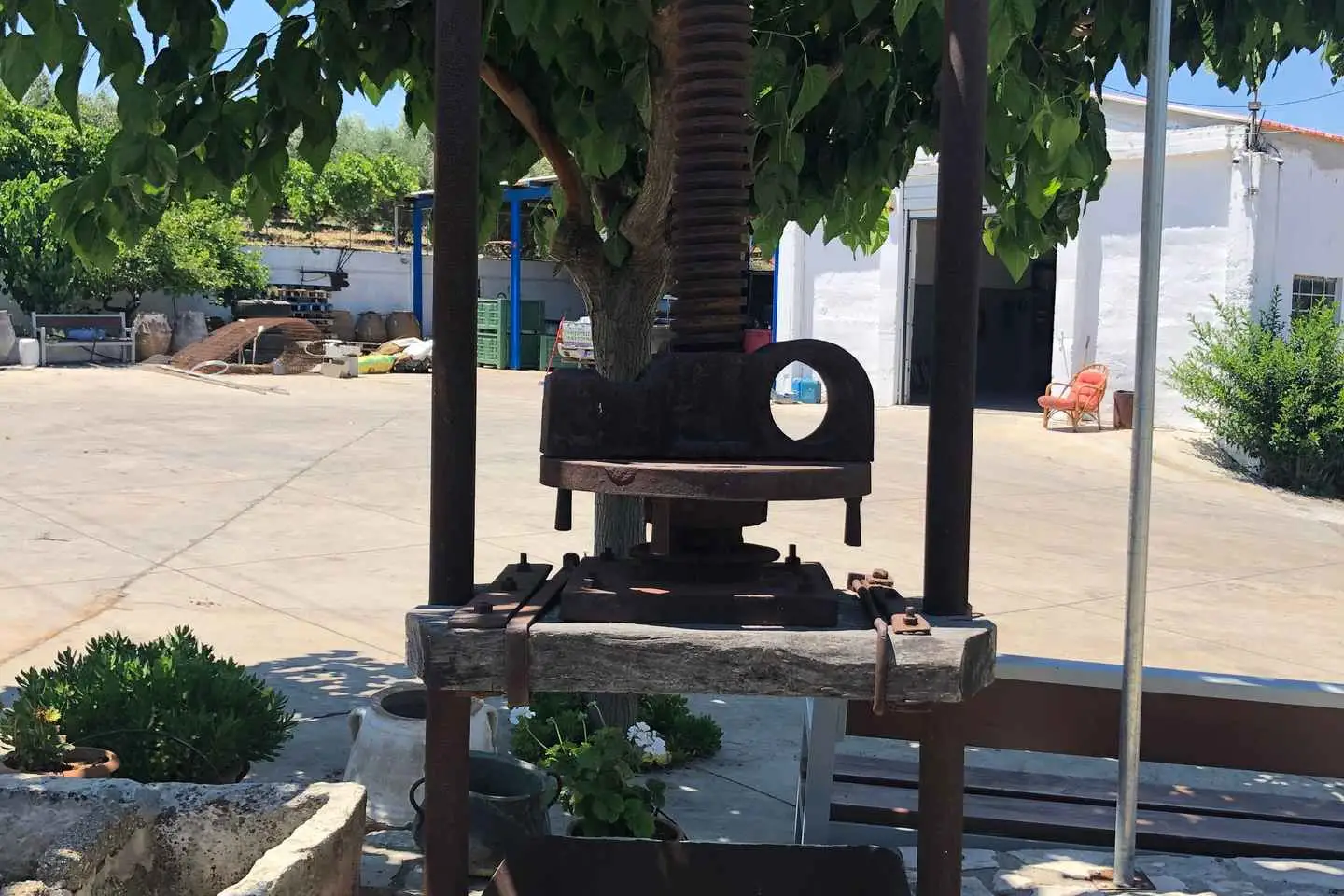
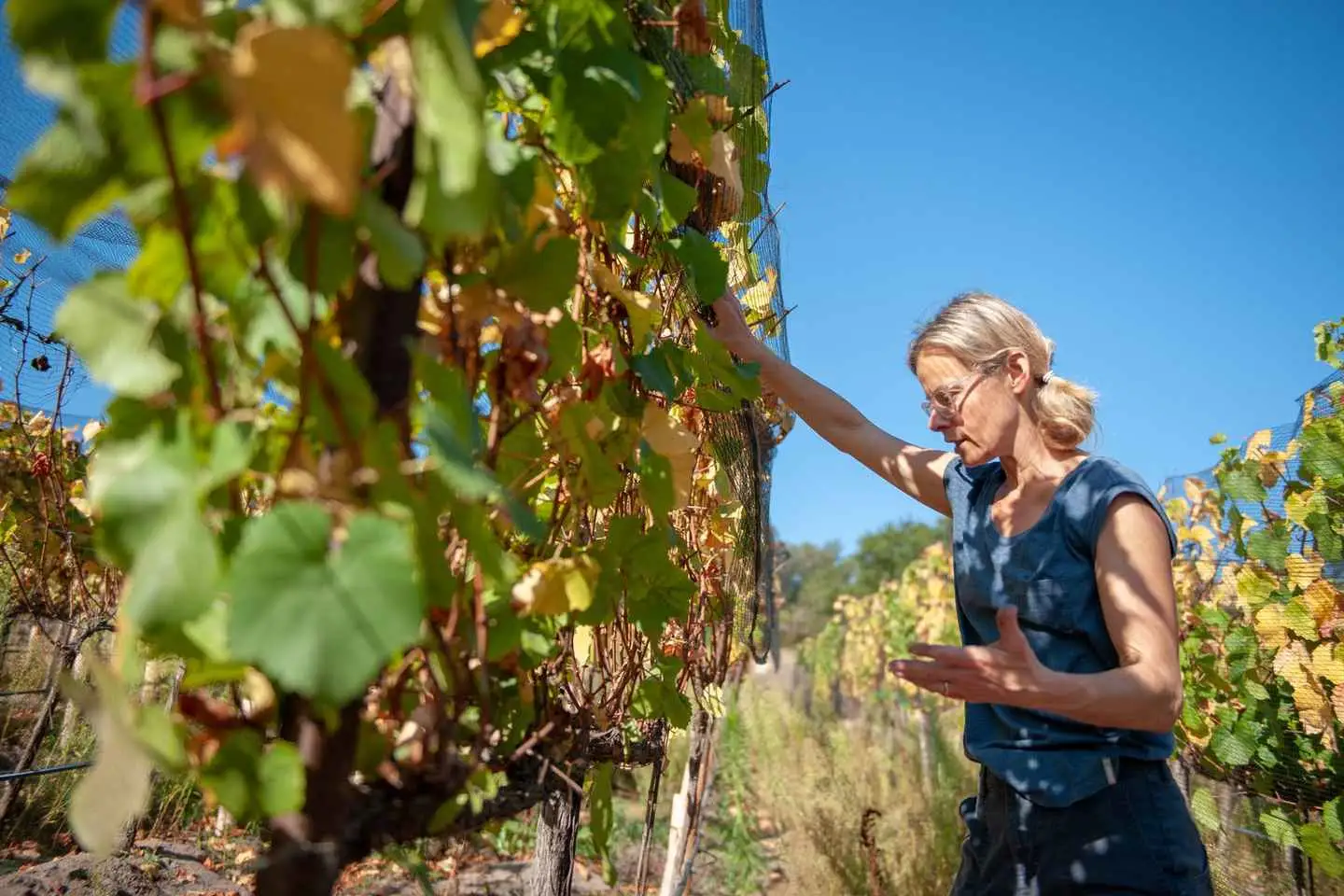
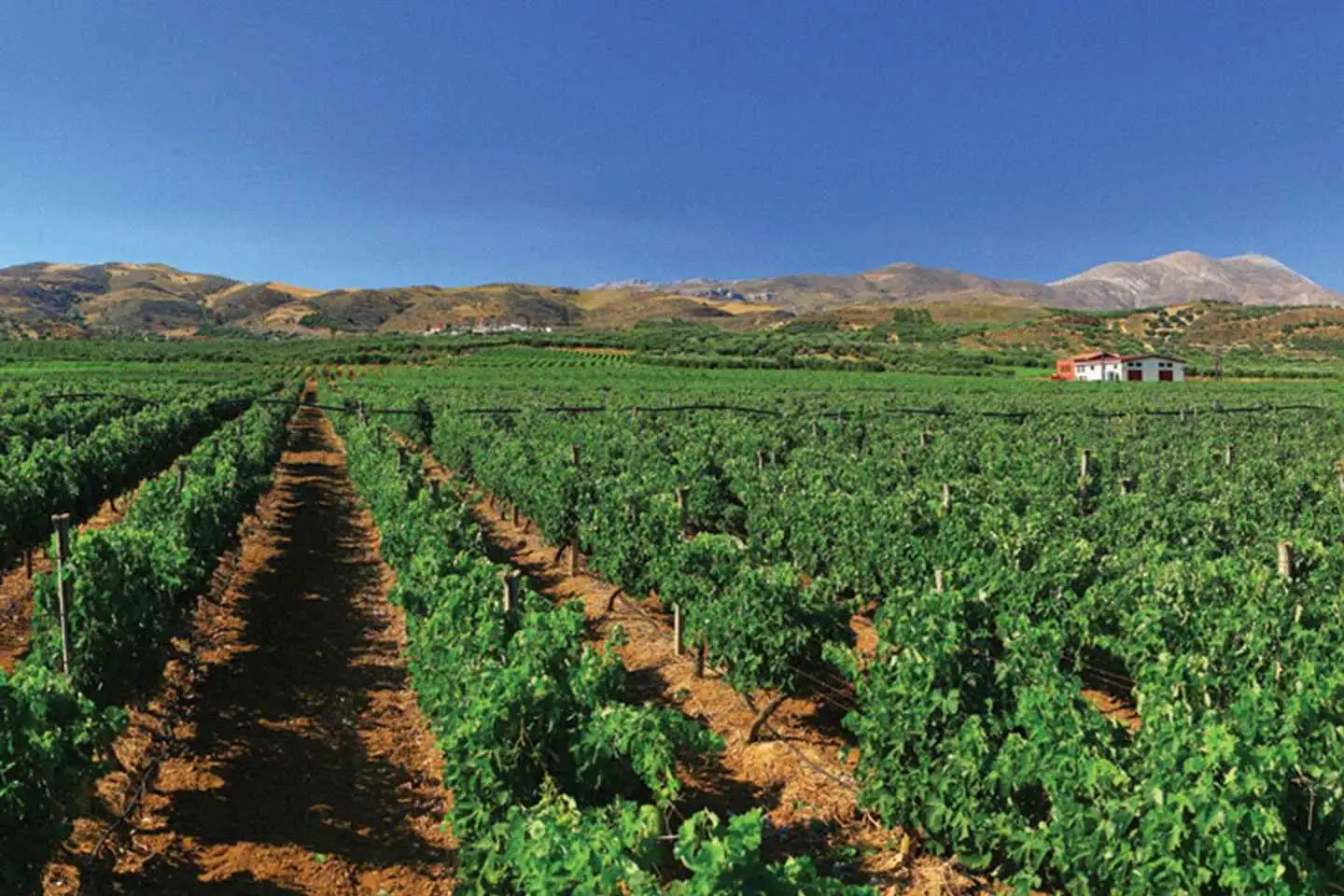
Discover the long kept secrets of wine and olives and Cretan tastes as you travel through Cretan villages in a semi private group of 6-8 persons in each vehicle.
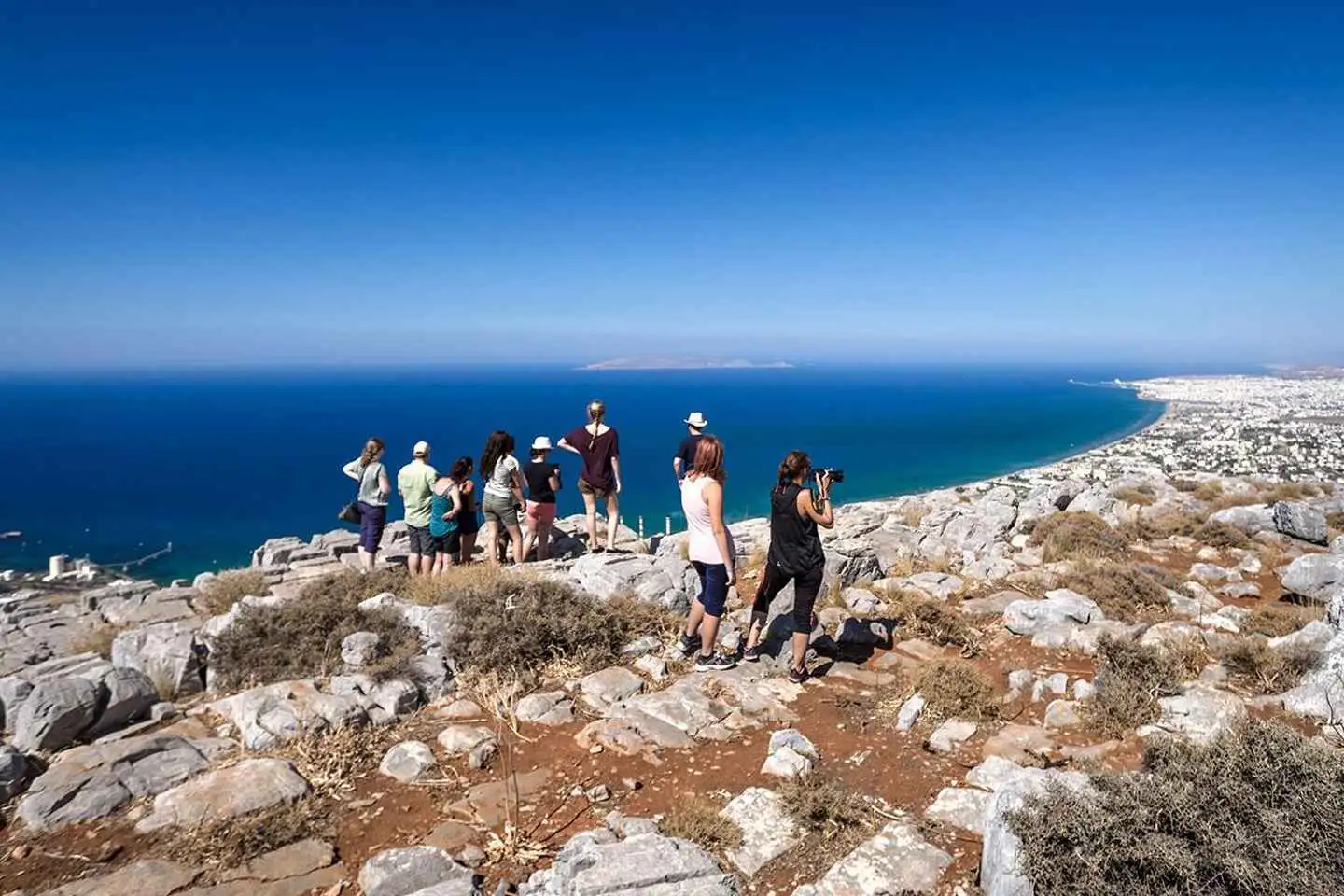
Our day safari in the secrets of the Cretan tastes and culture begins with a visit to Klados winery in Panormos. There we will be welcomed by the owner of the winery for a wine tour and a mouthwatering wine tasting experience unraveling the secrets of high longevity in Crete. Continuing our day we follow the north coastline through traditional villages of Sisses, Aloides in the heart of Cretan mountains admiring the unique view of Psiloritis and Mylopotamos area will inspire you to take pictures, combining the highest mountain top of Crete with the beautiful valley until we reach the historic Vosakos Monastery, that used to be a refuge for Cretan rebels during civil wars. Afterwards our amazing route continues with panoramic views that will take your breath away and If we are lucky, we will get to marvel up close some wild eagles and goats and take some photos. Driving through picturesque villages of Doxaro, Apladiana, Agia nestled amongst lush vegetation we will have plenty of opportunities to take photos of picturesque chapels, sheep, goats, sprawling vineyards and gorgeous olive groves. An asphalt route will lead us to a traditional and modern olive mill in Melidoni village in Rethymnon. There you will have the chance to be guided in three different olive oil factories (ancient handmade production, by the help of diesel engines and modern production with centrifuge) learn everything about the olives harvesting, olive oil production and taste some local olive oil.
Working up our appetite we arrive at a small village tavern in Melidoni, where we will introduce you to the Cretan cuisine with plenty of Cretan delicacies and let you feel the very essence of the renowned Cretan hospitality. On the way back we will follow an easy asphalt route through the national road before we reach back into Rethymnon town.
A unique wine and olive escape, an exciting adventure to embrace the renowned Greek hospitality, enjoy the sights and professional and relaxed service!!!
Combine some of the most unique panoramic views, visit a honey factory and taste, drive through traditional Cretan villages and find out all about the lifestyle of a Cretan shepherd by exploring an original shepherd’s hut called ‘’Mitato’’ with a small group of 6-8 people in each vehicle. Learn about the history and the traditions of the Island, meet the locals, explore the wildlife of Crete, embrace the renowned Cretan hospitality and taste the delicious Cretan cheese and cuisine.
Our day starts from Rethymnon city heading south east through coast line road until Melidoni Village and Apithano Honey factory where we make our first stop for a guided tour in the factoiry and tast some honey. After our morning stop and driving through the traditional villages of Milopotamos (Melidoni, Apladiana, Doxaro, Agridia Tsaxiana) and areas with dense vegetation, fresh aromas and unique views. The amazing route and views continue until we reach the historic Halepa Monastery, that used to be a refuge for Cretan rebels during civil wars where we make our second stop. The unique view from the monastery will inspire you to take pictures, combining the highest mountain tops of Crete with the beautiful valley.
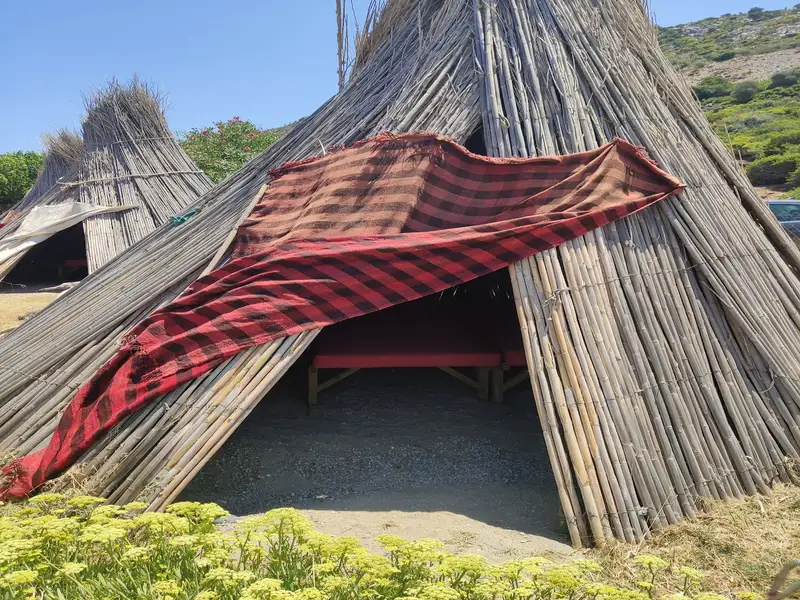
Afterwards our amazing off-road route continues and on the way up to the shepherd’s hut called “Mitato” the panoramic views will take your breath away. If we are lucky, we will get to marvel up close some wild eagles and goats and take some photos. The road will lead us up to a traditional Shepherd’s hut where you will find out all about the lifestyle of a shepherd and the cheese making process.
Leaving the shepherd’s hut and already working up our appetite we will soon arrive at a traditional Cretan tavern in Axos village, where we are going to introduce you to Cretan cuisine and heartfelt hospitality with plenty of local platters. Enough time will be provided after lunch for those who wish to enjoy a cup of coffee. On our way back we will follow an asphalt road that will lead us to the city of Rethymnon.
Embark on semi private safari tour for up to 6 or 8 persons per vehicle
Get picked up from your hotel in Gazi and head straight off-road along the river bed to the picturesque village of Pendamodi. Here, enjoy a quick stop to see the picturesque church and natural springs. Journey through the vineyards of the largest wine producing area on the island to the village of Krousonas and sample some local produce such as olive oil and raki. Enjoy some free time here to get a coffee and take in the stunning views.
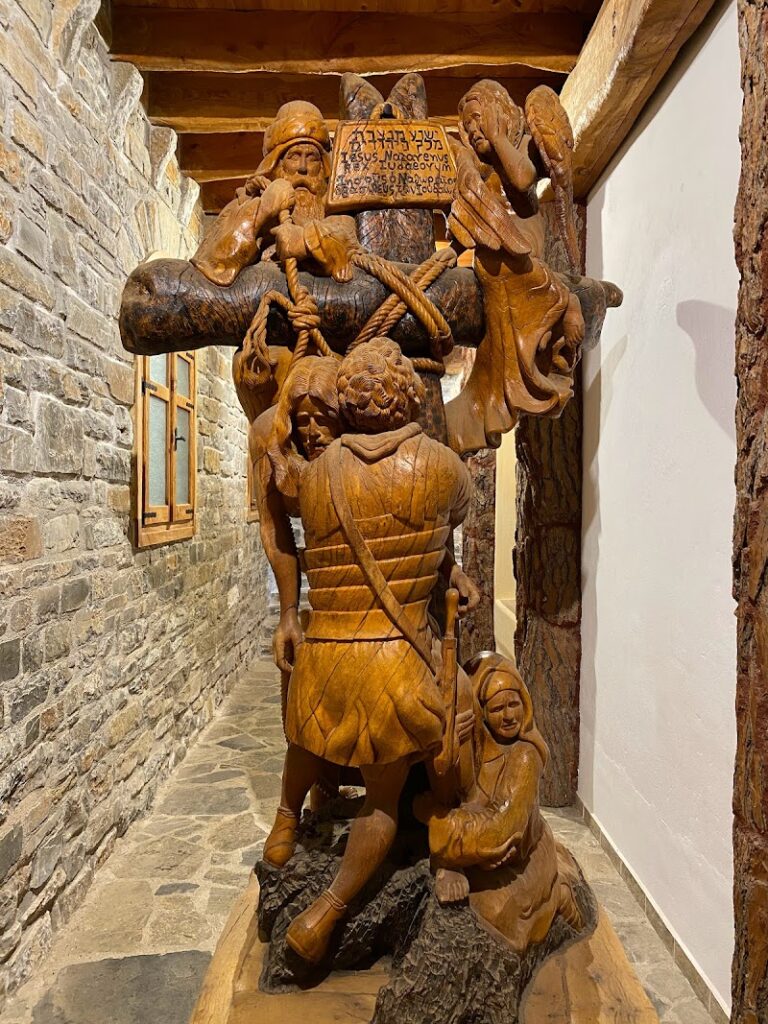
Continue towards Livadi Plateau with views of the many apple orchards in the area and meet some friendly local goats. Next, stop at the Nida Plateau, the highest point of the day, and enjoy spectacular views of Crete’s highest snowcapped mountain ‘Psiloritis’. Listen to tales of the resistance and Crete’s chequered history, visit a very unusual monument and a traditional Shepherds ‘mitato’, and experience the traditional Cretian method of cheese making.
Next, visit the Ideon Andron cave, where mythology states that Zeus took refuge and escaped death. Head to the famous village of Anogeia for a delicious BBQ lunch with unlimited wine (vegetarian option available) with views of the highest plateau on the island. Once refreshed, go for a short walk to the center of Anogeia (optional).
Finally, slowly head back off-road to the home of El Greco, the village of Fodele, and take some time to relax before beginning your journey back to the hotel.
No results available
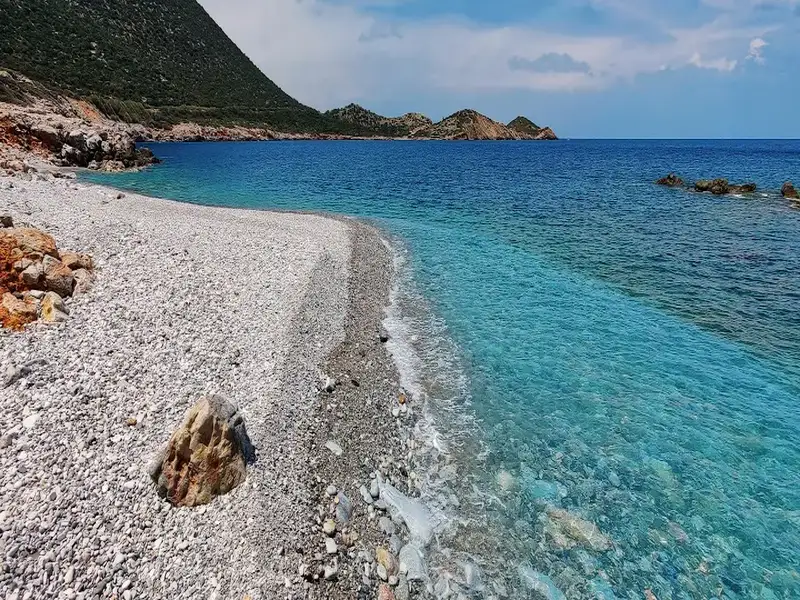
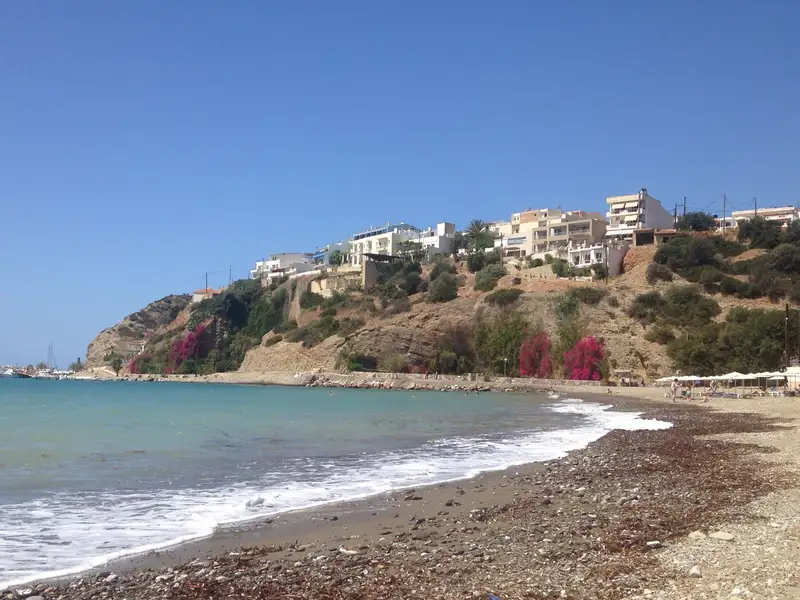
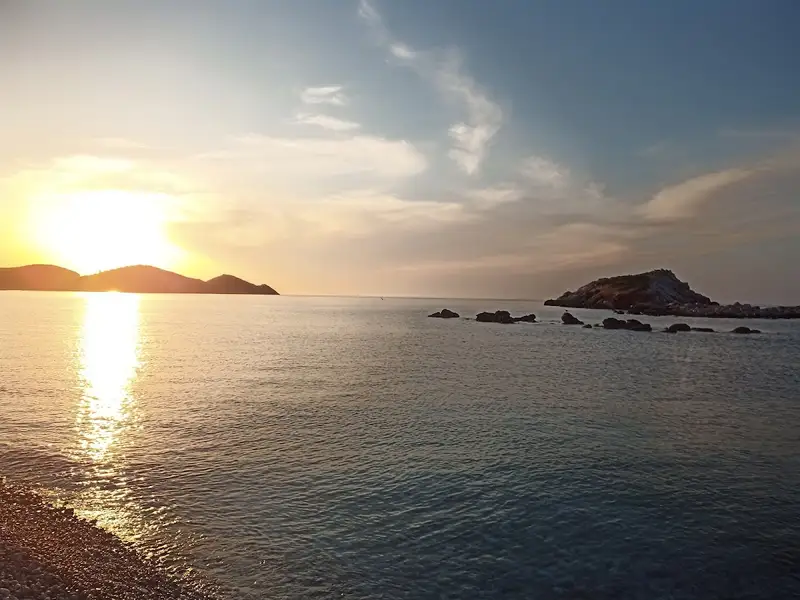
Between the coast of Panagia Charakiani and Kefali hill, where archaeological remnants have been found, lies the region of Propatoumenos, just a short distance west of Holy 317 Fathers Church. Propatoumenos translates to “the area that can be walked”. This is because there used to be a walking trail to the ancient town of Astali, near Bali. Given that the surrounding Talean mountains are incredibly steep and difficult to traverse, this area was perfect for walking. This broader area is rich in unexcavated Minoan settlements, most of which have been left to the mercy of roaming goats. Within this region, we encounter three remote pebbly beaches with pristine waters, situated just a stone’s throw away from the highway. The seabed, teeming with rocks, conglomerate formations and natural arches, is an ideal spot for snorkelling. Across the beaches, the small islet of Prassonissi, home to seagulls, can be accessed by swimming.
Kefala Beach
Tucked away to the east of Panagia Charakiani, near Bali, is Kefala Beach. This hidden gem, with its crystal clear waters all year round, remains fairly unknown. Although generally inaccessible, the beach unveils a stunning coastline adorned with vibrant hues of red soil and green vegetation from shrubs and wild carob trees during calm weather. Kefala has a charming pebble beach with a rich seabed. Further east, the beaches of Kalo Horafi and Vrahi can be found. Kefala gets its name from the low peak, about 40 meters high, situated just above the sea that once housed an unknown Minoan settlement. The entire area above the beach is scattered with remnants of ancient walls and structures.
Kalo Horafi, situated about 37km east of Rethymno and 43km west of Heraklion, is the former site of the 317 Agii Pateres Pelekida (317 Holy Fathers) monastery. While the original monastery cells no longer exist, a more recent chapel has been erected in their place. The area, known as Kalo Horafi, is marked by the rugged beauty of the Cretan landscape, complete with the towering Talean mountains and verdant ravines.
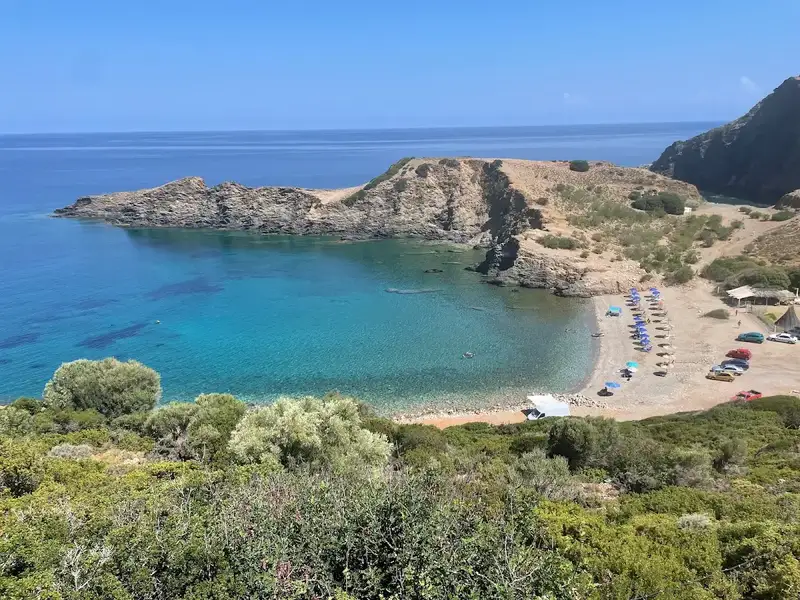
A brief unpaved path (200m), starting from the point on the main road where the Chnaris tavern stands, leads to a charming small beach facing the west. The beach, adorned with pebbles, is rarely crowded. Aside from the tavern and a few villas, the area is largely undeveloped. The beach is also recognized as Vossako, as it marks the beginning of the Vossako ravine, which leads to the Vosako monastery after a walk of approximately 1-1.5 hours. The monastery, which is dedicated to Timios Stavros (Holy Cross), was in ruins until recent restoration works unveiled a hidden treasure of the Cretan religious heritage that you should definitely visit (via Doxaro village).
Additionally, there is a second, smaller pebbly beach with a rocky seabed located just behind the northern end of the main beach, which is easily reachable on foot. This beach, named Vrahi beach, is perfect for snorkelling (but only on calm days).
Charakas is a region situated approximately 36km to the east of Rethymno and 44km to the west of Heraklion, near Bali. Just half a kilometer east of the Panagia Charakiani Church, a small peninsula forms where the petite beaches of Glaros and Katevati can be found. The major highway that links Heraklion and Rethymno is conveniently close by.
Katevati Beach
Located on the western edge of this peninsula is the small but charming Katevati beach, known for its large pebbles. It boasts spectacular views of the rugged Talean Mountains to the south. Its rocky underbelly makes it an ideal spot for fishing and snorkeling. However, it is unregulated, so visitors are advised to come equipped with necessities such as an umbrella, food, and water. Furthermore, it is shielded from the prevalent northern winds due to its eastern positioning. To the north of the beach, on a hill, there are ruins from an ancient settlement.
Glaros Beach
A short distance to the north of the first beach, accessible via a trail starting north of the highway, are the three beautiful beaches of Glaros (also referred to as Glaria or Peristeri) which face west. The beach gets its name from the small, greenish islet of Glaros that’s separated from the shore by a very narrow canal (less than 2m in width). While the shore is sandy, the seabed is rocky, making it an ideal spot for solitude seekers and snorkeling enthusiasts. The northernmost beach, which can be reached by crossing a hill with a Minoan settlement, is considered the most beautiful.
Charakiani Beach
Situated below the Panagia Charakiani Church is a beach with large, round pebbles that attract snorkelers and spearfishermen. This beach can be easily accessed by following a trail that starts from the church. It is easily identifiable by a small islet located directly opposite the beach.
Agia Galini, a well-loved seaside resort in the southern part of the Rethymnon prefecture, is located near the Amarianos or Platys River mouth. It’s 61km south of Rethymno city and 68km southwest of Heraklion. This quaint town flourishes with activity in the summer and offers all necessary tourist facilities. The stunning green beaches, the fascinating caves in the west, the legends of Icarus and Daedalus, the hippie memories and the peaceful sea, make this village a popular spot for numerous visitors.
Starting east of the port, a long beach extends to Kokkinos Pirgos. The sea here is typically serene. The beach section near the port is well-facilitated and features fine pebbles and chilled water, due to the nearby Platys or Amarianos River, located 200m east of the port. Near the river, remnants of an ancient Artemis temple have been discovered.
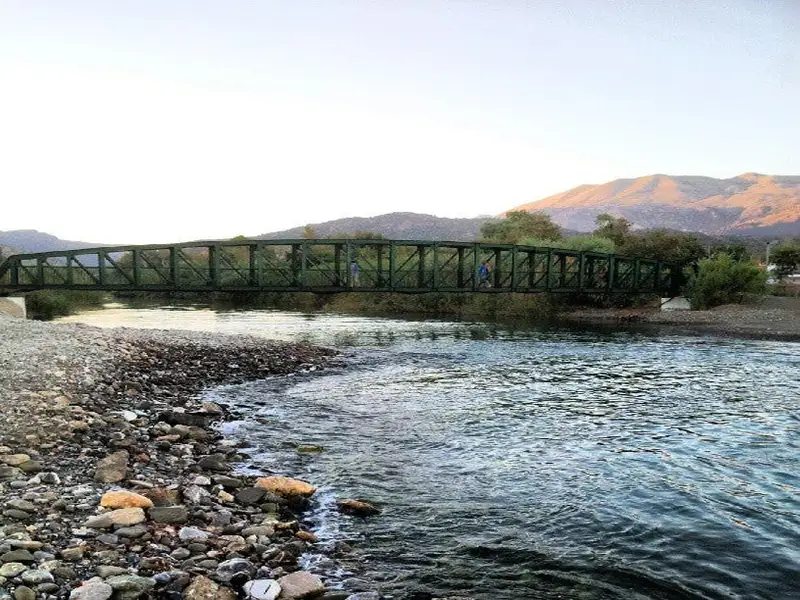
Crossing the river via a metal bridge leads to the second beach, which stretches another 1km to the east. This beach, with small pebbles and less organization, is adjacent to the Agia Galini camping site. As you progress eastwards, the beach becomes narrower and more rugged. A 1.5-2 hour walk will take you to Kokkinos Pirgos. This beach, inaccessible by road and favored by nudists, is completely unorganized so be sure to bring food, water, and umbrellas.
On the beach’s west end, beneath a hill with houses, there’s a small network of tunnels from World War II. You can explore these to reach the hilltop.
No results available
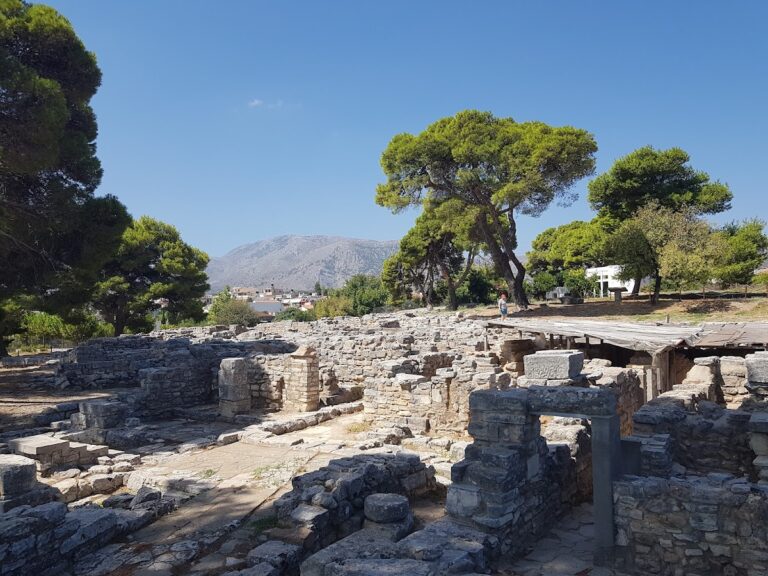
The Minoan mansion of Sklavokambos was unearthed in 1930 during the construction of the main road to Anogia, resulting in the destruction of a portion of the structure. This multi-story building features a main room where a clay ox head, a Late Minoan IB period style jug, and a stone rhyton were discovered. The building had at least 17 rooms.
Artifacts found in an upper story include 39 sealings (stamps), a cylindrical vessel, a stone hammer, and a clay foot. Representations from one of the Sklavokambos stamps have been discovered in Zakros, Gournia, and Hagia Triada. Notably, no frescoes or gypsum finishings were found at the Sklavokambos building, which are typically found in Minoan palaces.
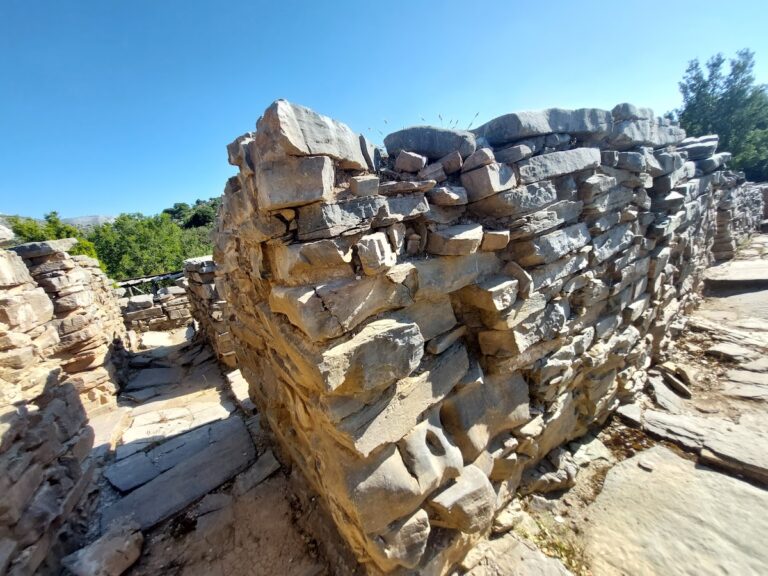
The ancient site of Zominthos can be found in the Psiloritis range, 7km west of Anogia, on the road leading to the Nida plateau. Discovered in 1982, Zominthos is considered one of the most significant archaeological finds in Crete, often compared to Knossos.
During archaeological work in the cave of Ideon Andron (1982), archaeologist Yiannis Sakellarakis spoke with a local shepherd who mentioned the name Zominthos. Sakellarakis immediately realized that this name referred to an ancient location and visited the site the next day, where he quickly identified traces of a Minoan mansion.
Excavations are still ongoing, conducted by the Greek Archaeological Service and the University of Heidelberg. So far, archaeologists have uncovered a large, luxurious building covering an area of 1360 square meters, constructed from local stone and consisting of around 80 rooms. The two- or three-story building had walls plastered with clay for insulation and adorned with murals. A smaller Mycenaean building has also been discovered nearby. It is remarkable that such a large complex existed at an altitude of 1200m, although it is believed to have been closed during the winter months due to snow.
The building was constructed around 1900 BC, reached its peak in 1600 BC, and was destroyed in 1400 BC, likely by an earthquake. Zominthos was undoubtedly one of the most prominent Minoan settlements and is thought to have been a station for Minoans visiting the sacred cave of Ideon Andron. Indeed, Zominthos is situated on the ancient trail that began at Knossos, passed through the gorge of Kroussonas, Livadi Plateau, and then through Zominthos, where a sacred spring was located (at the site of the current church of Saint Marina). According to Homer, King Minos visited Ideon Andron every nine years to receive laws for his people. Thus, Zominthos may have also been built to accommodate Minos during his visits to the cave.
However, Zominthos also appears to have served as a financial and organizational center for trading the famous Cretan cypress, as well as the popular agricultural products and livestock of the Ida Range. It is no coincidence that scripts from Knossos mention thousands of sheep, which likely originated from Ida.
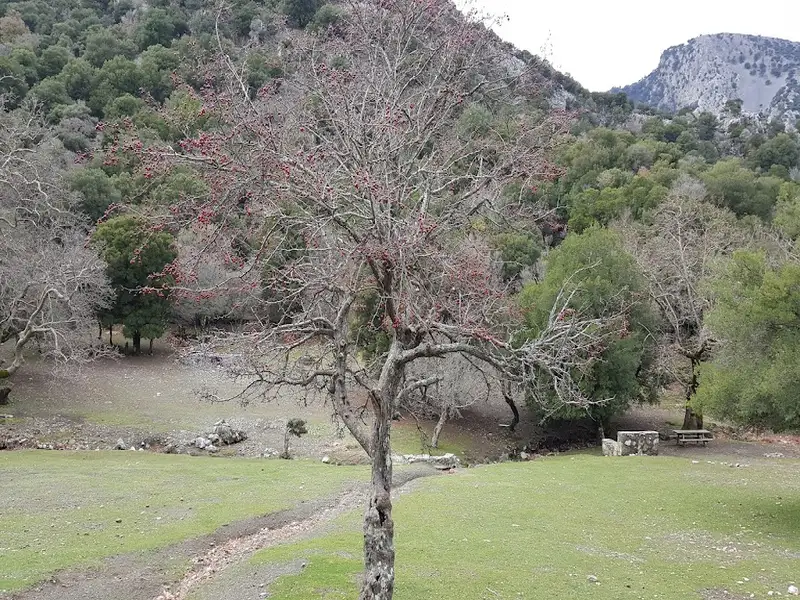
Archaeologists are working to reconstruct the physical environment in which Zominthos was situated. This task is relatively easy, as there has been no human presence for centuries, and the natural environment has remained intact. Additionally, within the archaeological site, a large hawthorn tree has been officially declared a monument of nature.
No results available
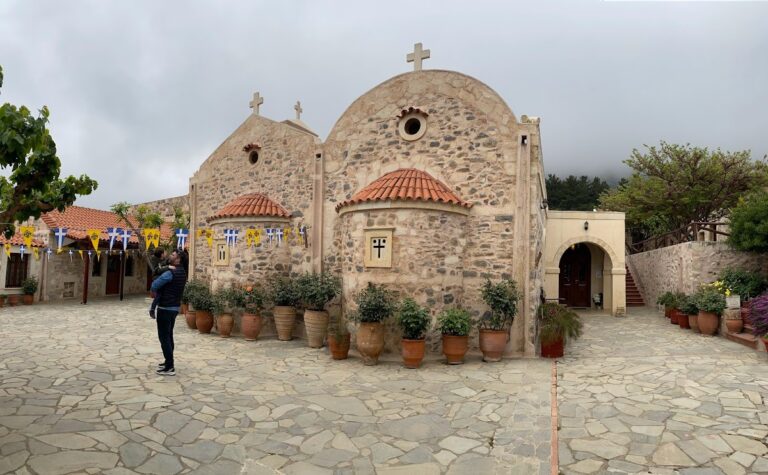
The Agia Irini monastery can be found 25km south of Heraklion and 3km west of Kroussonas village, situated on the slopes of Psiloritis at an elevation of 630m. To reach it, take the road that connects Kroussonas with the Livadi plateau.
Functioning as a nunnery, this monastery is among the oldest in Crete. It is thought to have been constructed towards the end of the Venetian Era, but was destroyed by the Turks in 1822 and later rebuilt in 1944.
Dedicated to St. Irene (celebrated on May 5) and the Assumption (celebrated on August 15), the two-aisled church is part of the monastery. As one of the thriving monasteries in modern Crete, it is exceptionally well-maintained by the resident nuns.
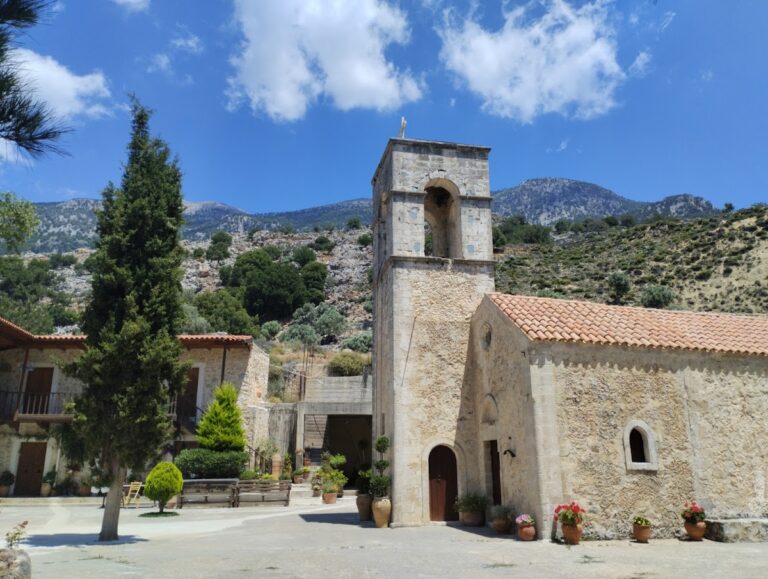
The Vrontissi Monastery can be found 49km southwest of Heraklion, situated near Vorizia Gorge and nestled between the villages of Zaros and Vorizia. From this vantage point, one can enjoy panoramic views of Vorizia village and the Messara plain. Dedicated to Saint Anthony, the monastery is among the oldest in Crete.
While the exact date of its construction remains unknown, it is believed that the monastery’s name comes from its founder. Initially, Vrontissi was a dependency of the nearby Valsamonero Monastery, but it eventually grew so wealthy that it surpassed its parent monastery and became one of Crete’s most significant monastic centers.
According to tradition, Michael Damaskinos and El Greco, two prominent figures in the Cretan School of Iconography, lived and worked at Vrontissi Monastery. In fact, six of Damaskinos’ icons, now on display at the Museum of St. Catherine in Heraklion, were once housed at Vrontissi. The surviving 14th-century frescoes in the church, which show influences from the Renaissance, demonstrate the high level of artistic expression that developed at the monastery.
The church itself is a two-aisled structure dedicated to St. Anthony (celebrated on January 17) and St. Thomas (celebrated on the first Sunday after Easter). Its bell tower, built in Venetian architectural style, stands as a separate structure. Several frescoes are preserved in the south aisle, including the Supper at Emmaus, the Apostles, Minologia, and Saint Symeon holding baby Jesus. The church also houses the 16th-century icon of Ambelos, created by Cretan artist Angelo.
Despite once being fortified, the monastery’s walls were eventually demolished in the name of modernization. The most striking remnant of the monastery’s former glory is the impressive 15th-century fountain that features depictions of Adam and Eve. At the feet of these figures, four others release water from their mouths, symbolizing the four rivers of Eden. This fountain is considered the most beautiful provincial example of fountains in Crete. The Turks referred to Vrondisi as Santrivanli Monastir, meaning Fountain Monastery.
Today, the Vrontissi Monastery serves as the International Village of Cretan Youth.
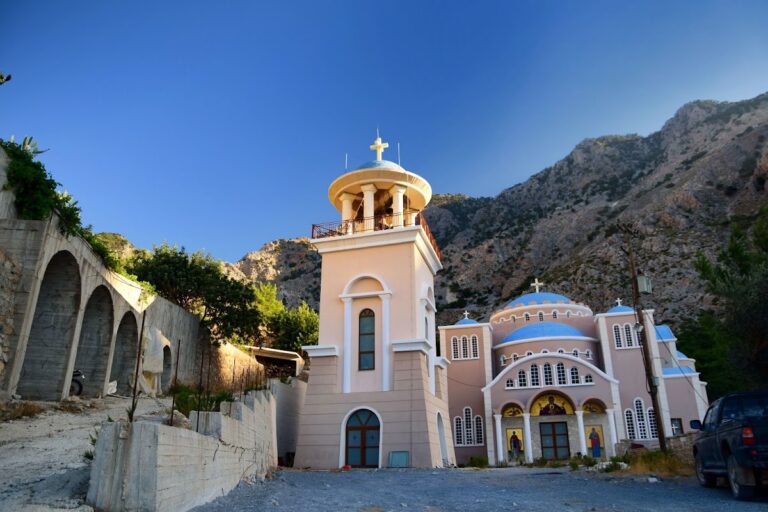
Agios Nikolaos Monastery (Saint Nicholas) can be found at the end of the stunning Gafaris (or Rouvas) canyon, approximately 48km southwest of Heraklion and 3km north of Zaros village. In 1994, a massive fire destroyed much of the gorge’s beautiful pine forest, and the monastery is located near this site.
Visitors can reach the monastery by car from Zaros, taking the path that leads to the gorge (20 minutes north of Lake Zaros). Regrettably, the monastery’s architecture is a modern and unattractive anomaly within this landscape. The only points of interest for visitors are the old church of St. Nicholas, featuring 14th-century Paleologean-style frescoes, and the restored temple of Agia Paraskevi.
Originally, the monastery functioned as a secondary monastery of Varsamonero Monastery. It was later abandoned but has since been repurposed as a monastery for Old Calendarists. They have constructed a large modern temple and various cells, utility rooms, and other facilities. The current temple is dedicated to the Resurrection of Christ and Agia Kiriaki, while the bell tower houses eight bells, the heaviest of which weighs 12 tons.
In the surrounding area, visitors can also explore the ancient cavernous church of St. Efthimios, adorned with numerous frescoes and featuring an inscription dating back to 1438.
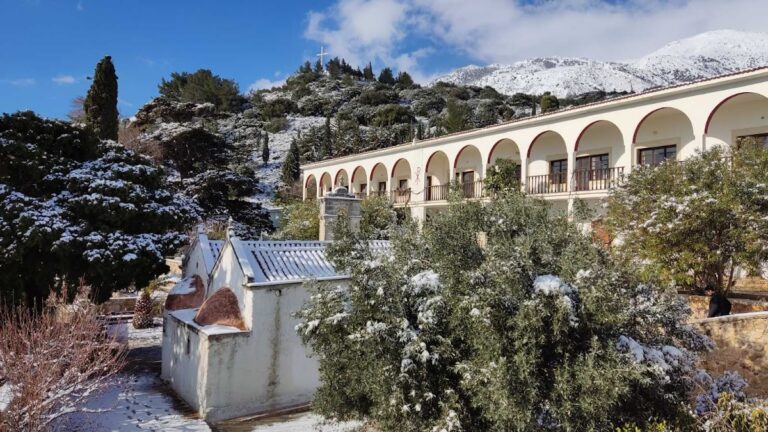
Perched at an elevation of 480m near the village of Asites, the Saint George Gorgolainis Monastery lies 24km south of Heraklion. This verdant area is adorned with massive platan, cypress, and oak trees, with one platan and one cypress tree within the complex designated as protected natural monuments by law.
As one of the oldest monasteries in Crete, the Saint George Gorgolainis Monastery has withstood numerous attacks during the Turkish occupation, serving as a refuge for the region’s rebels. Among them were chieftains Michael Korakas and Fragias Mastrahas, both renowned heroes across Crete. Within the monastery, you can find the statue and tomb of Mastrahas, who fell in battle against the Turks in Asites in 1868.
Maintaining its historical authenticity, the monastery’s monks abstain from using electrical equipment during liturgy. The temple, dedicated to Saint George, features an intricately designed iconostasis. While the temple itself is ancient, the surrounding monks’ cells are relatively new. Visitors will be struck by the old Venetian fountain that, until 1990, was adorned with a majestic marble lion, which has since been stolen.
No results available
No results available
No results available
No results available
No results available
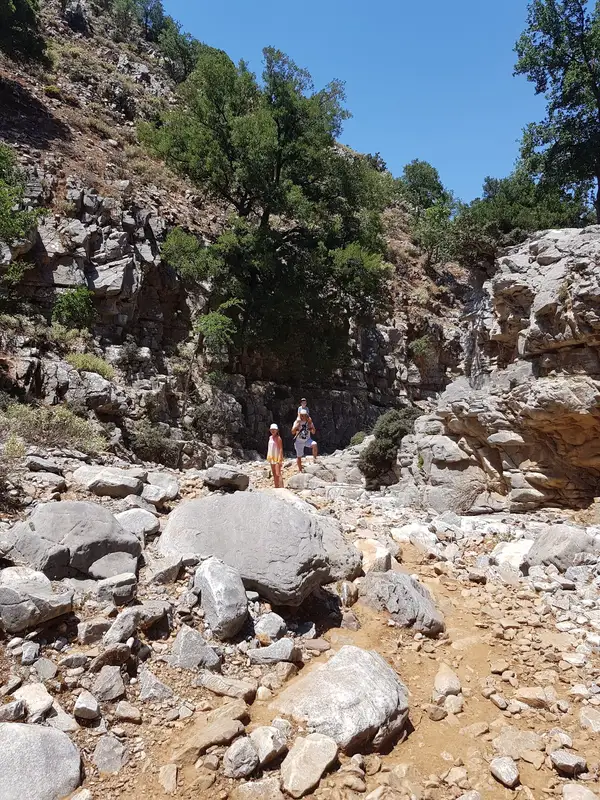
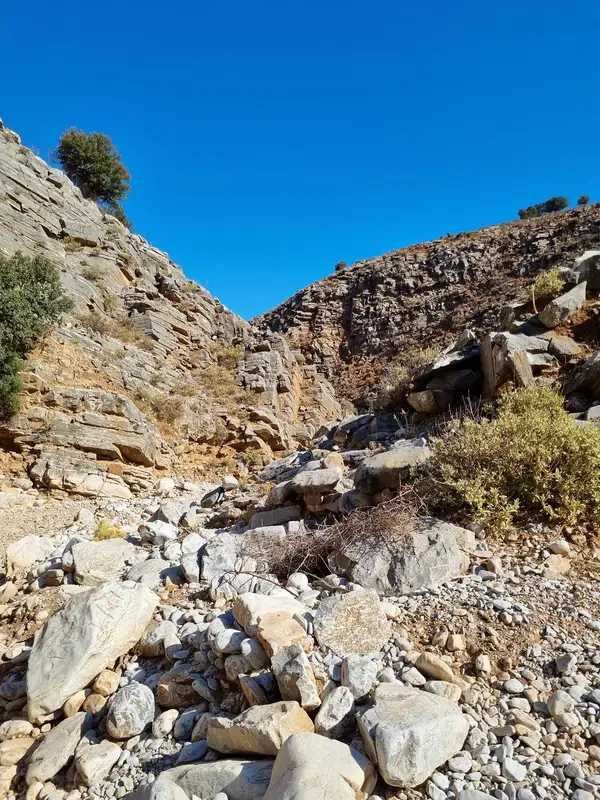
The Zoniana canyon is situated to the south of Zoniana village within the Psiloritis Range. It begins at a height of 950m, gathering water from several streams that flow from the Zoniana mountains, and concludes at the village at a height of 650m. The “serpentine” river Oaxis, which carries water until spring and ultimately drains into the Geropotamos river, flows through this gorge.
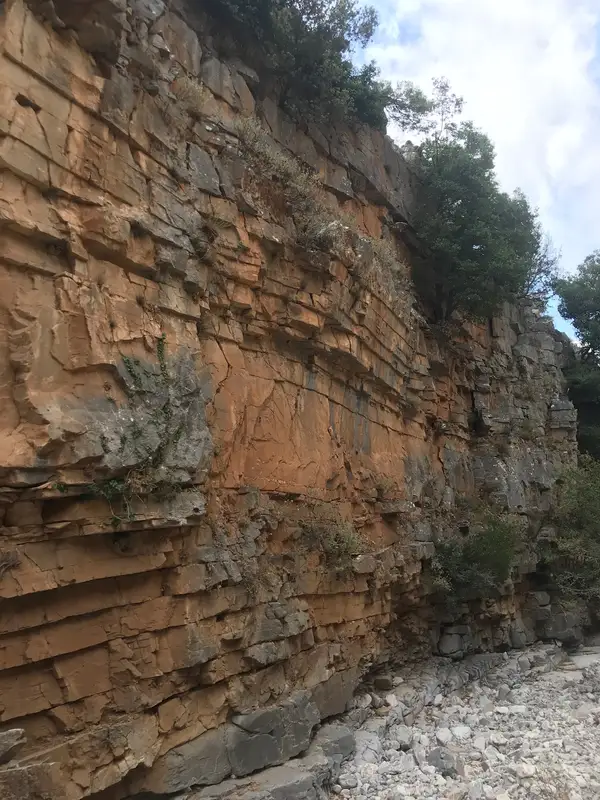
This gorge is not only easily accessible but also safe for hiking due to its gentle slope. The rock formations in many areas are truly remarkable, made up of numerous layers, and there are stunning geological structures and trees clinging to the steep slopes and narrow points. As it nears the village, the canyon broadens and morphs into a slender valley.
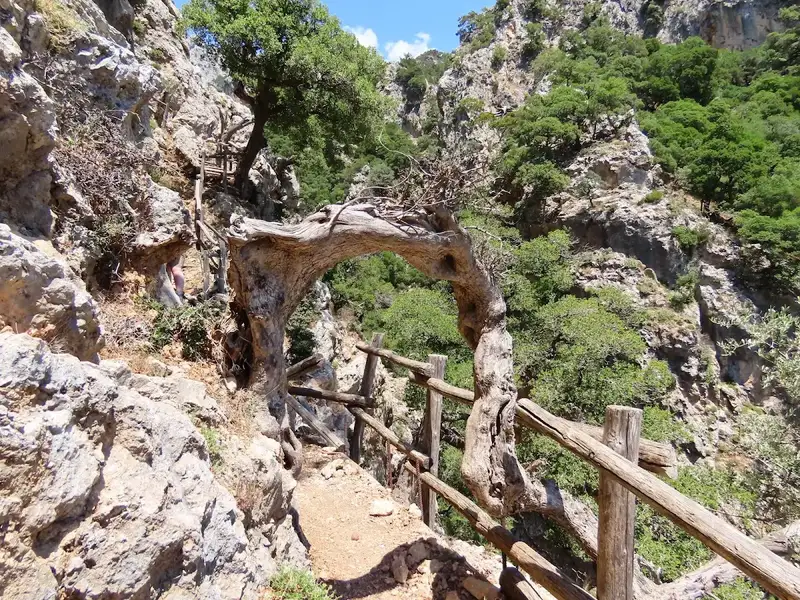
The Platania Gorge, positioned above the Platania village, links the southeast slopes of the Psiloritis range to the Amari valley, approximately 38km southeast of Rethymno. The river flowing through it collects water from the west of the Migia (1584m) and Spathi (1779m) peaks and channels it to the River Platys, which terminates in Agia Galini. A challenging yet secure trail winds its way up to the starting point at Kokkinoharako, skirting its steep slopes. The trail provides hikers with breathtaking views of the towering cliffs, vertical limestone rocks displaying yellow-red hues of erosion, rock shelters, and numerous caves.
At roughly 800m altitude, a small plateau hosts the cave-like church of Saint Anthony (Agios Antonios), constructed near a spring. The trail from Agios Antonios continues its ascent northwest, meeting a dirt road originating from the Vistagi village. On the opposite side of the gorge, in the east, lies the Panas cave, named after the ancient god Pan, god of the wild, shepherds, and flocks, who, as per local folklore, was born here. The cave houses petroglyphs from the Minoan era, indicating continuous worship at the site. The same dirt road from Vistagi provides access to the nearby church of Saint Mammes (Agios Mamas), the patron saint of shepherds in Christianity.
The Platania Gorge’s interior is stunning, though few get to witness it due to its steep waterfalls, which require technical canyoning equipment to navigate. The tallest waterfall stands at approximately 40m. The first known crossing of the gorge was in 2008 by the canyoning group of Giannis Bromirakis and Christoforos Cheiladakis. The cliffs provide a nesting habitat for various bird species, including vultures, hawks, wild pigeons, and crows.
The Agios Nikolaos, Gafaris or Rouvas gorge is nestled between the Ambelakia and Samari peaks. This gorge, the most significant in Psiloritis and central Crete, is named after the St Nicholas monastery located near its exit at Zaros. This area is an ecosystem teeming with diverse flora and fauna, smaller canyons, and striking geological formations and cliffs. It spans 4 km, with 2.7 km developed by the Forest Service for activities like hiking, mountaineering, rock climbing, and wildlife observation. However, a fire in 1994 significantly damaged the beautiful Rouvas forest near the gorge’s south entrance.
The Rouvas forest, located in the Saint Nicholas gorge, is a nationally significant ecosystem of holly trees. It covers the inner valley of Psiloritis, surrounded by the peaks of Ambelakia, Samari, Chalazokefala, Skinakas, Koudouni, and Giristi. The area’s trees are ancient, with some trunks exceeding 1 meter in diameter and reaching heights of 15 meters. They grow densely, forming a unique forest society, supplemented by various shrub species.
The forest houses other typical Cretan flora, such as aria, zelkova, cypress, pine, plane, and pear trees, covering approximately 30,000 acres. The uniqueness of the Rouvas forest lies in the holly trees’ unusual size and characteristics compared to their typical Greek counterparts. This is likely due to the absence of external factors that allowed these shrubby oaks to evolve into their current form. Around the forest, one can spot scattered “mitata” (shepherd houses), most of which are now abandoned.
Recommended hiking routes include Zaros Lake to Saint John (a 2.5-hour return trip) and Psakofarago to Agios Ioannis to Lake Zaros (a 5-hour trip). The first route starts from Zaros Lake, leading to the St Nicholas monastery before entering the Rouvas gorge. The trail then ascends through the old burned forest, offering stunning views of the Zaros and Messara planes, before entering a narrow gorge filled with dense vegetation. The path follows the river bed, abundant with water in spring, leading to the heart of the forest, the Agios Ioannis area.
The second route begins north of Agios Ioannis at the Psakofarago gorge, the upper extension of the Rouvas gorge. The trail starts from the Holy Cross church and ends at Lake Zaros, passing through Agios Ioannis and the Rouvas gorge. This route requires a transfer to the Holy Cross church and a pick-up from Lake Zaros. Both routes offer the chance to experience the unique beauty of the Rouvas forest and its surroundings.
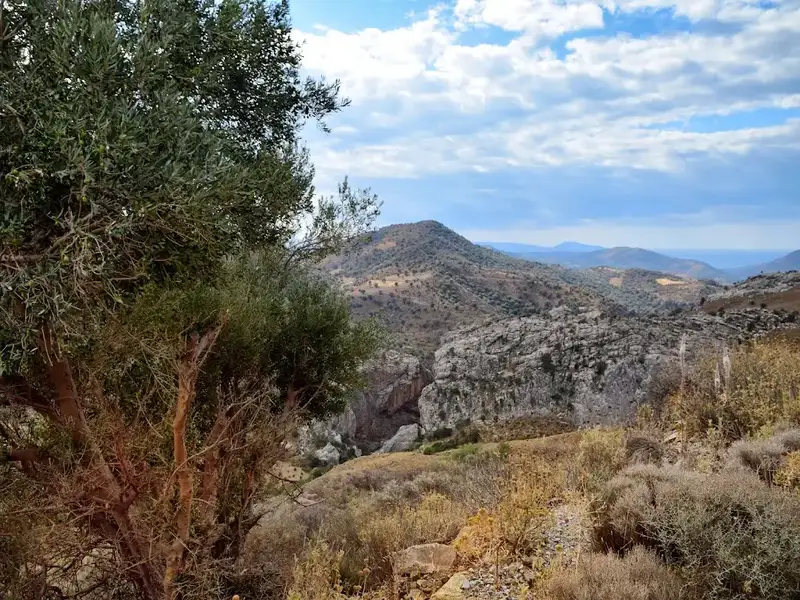
In the quiet, almost abandoned village of Chordaki, located in the Amari district, we discovered the hidden gem of Kynigospilios Canyon. Situated south of the village, this small but stunning canyon remains a secret, its location hidden from view, which contributes to its relative obscurity. The Kynigospilios Canyon boasts a significant water flow from the slopes of Mount Kedros, which lasts from winter through to late spring.
However, traversing the canyon requires the use of ropes and canyoning equipment due to the presence of eight stunning waterfalls along its path, with the last one being particularly breathtaking. Unfortunately, the canyon’s safety measures, installed by canyoners around 2011, are not ideally positioned, making them inaccessible during periods of high water flow. The canyon was christened ‘Koutsouna’ (meaning ‘small’) by the first group to cross it, as they couldn’t find an existing name for it.
At the canyon’s entrance, you’ll find two adjacent watermills, and the surrounding area is lush with greenery, including platans and oaks that provide ample shade. Beneath most of the waterfalls, you’ll find ponds perfect for swimming in the canyon’s crystal-clear river waters. The Kynigospilios Canyon eventually merges into the Platys River bed at its termination point.
No results available
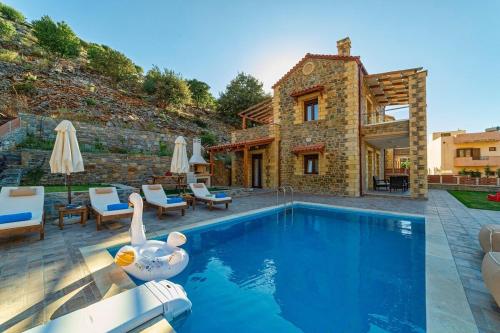
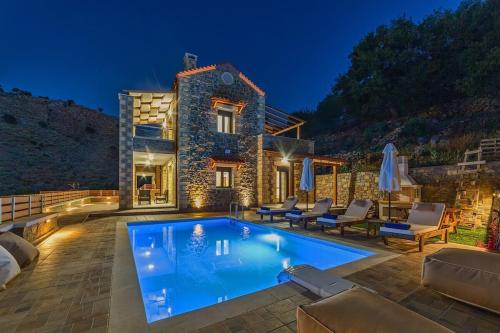
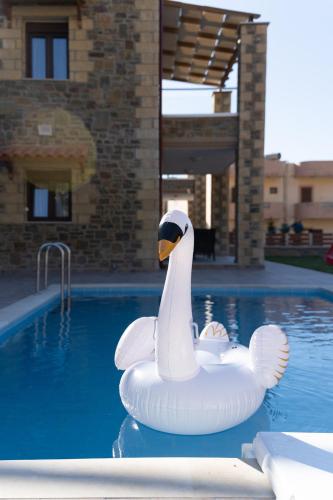
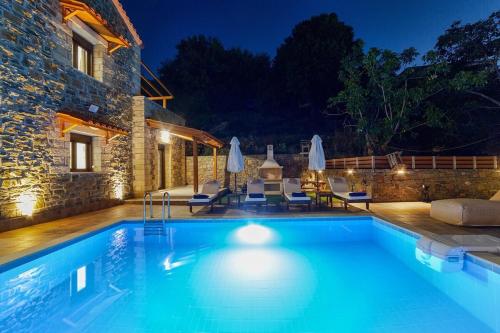
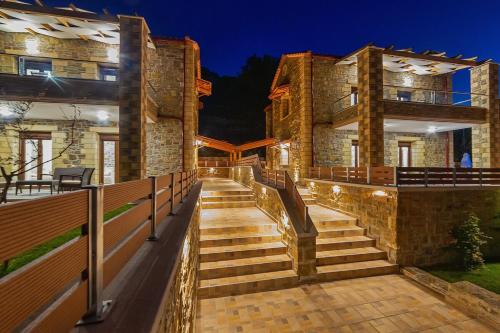
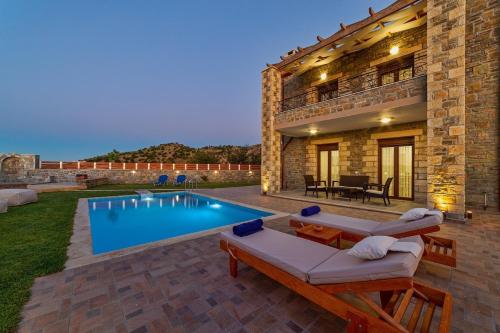
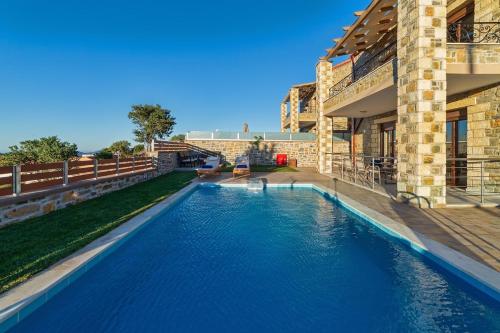
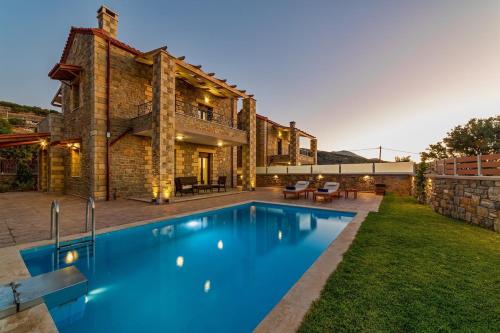
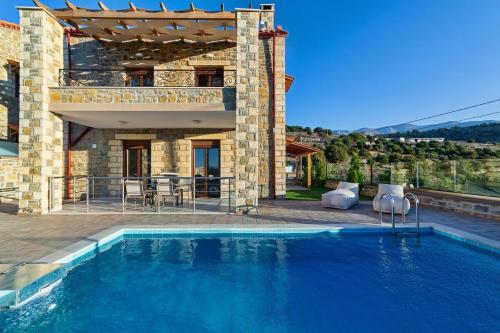
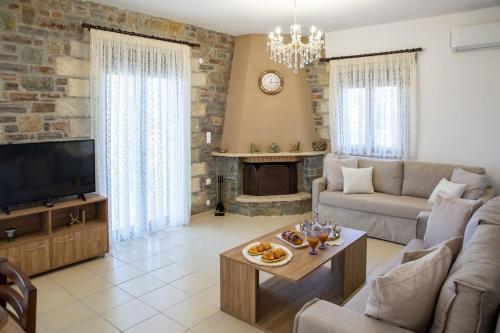
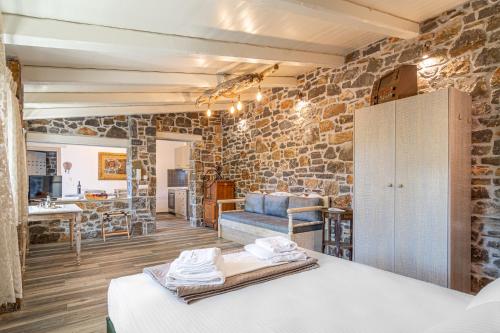
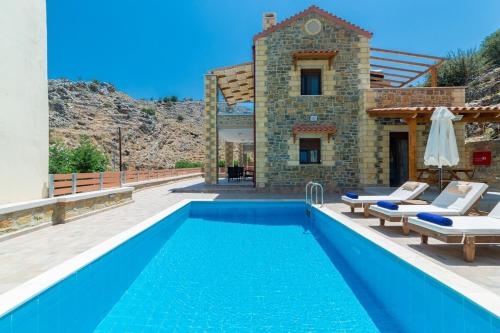
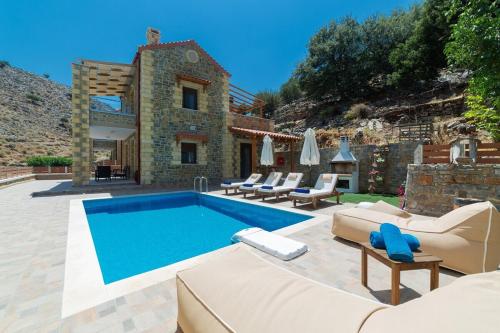
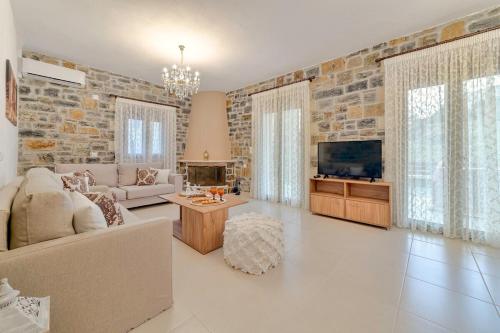
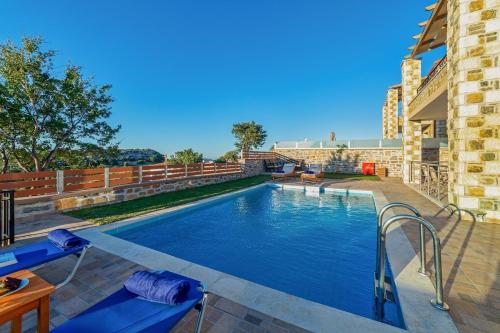
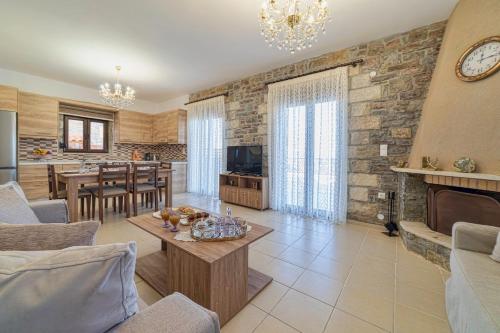
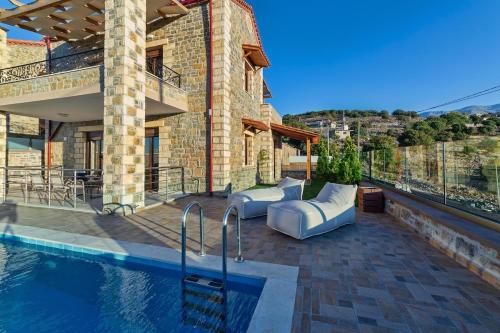
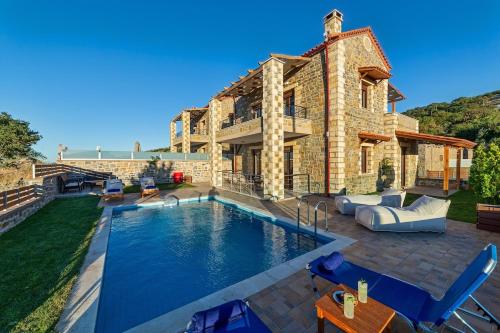
Set in Zonianá in the Crete region, Faraggi Villas offers accommodation with free WiFi and free private parking.
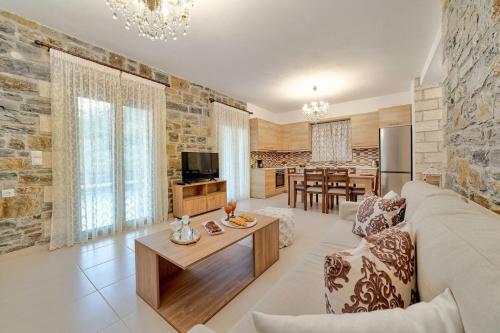
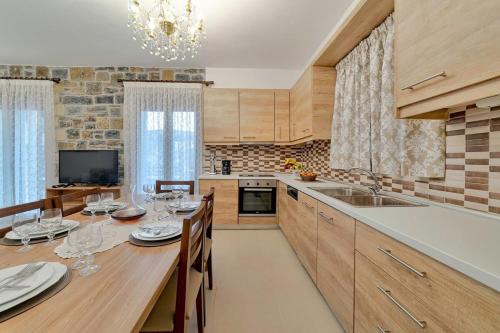
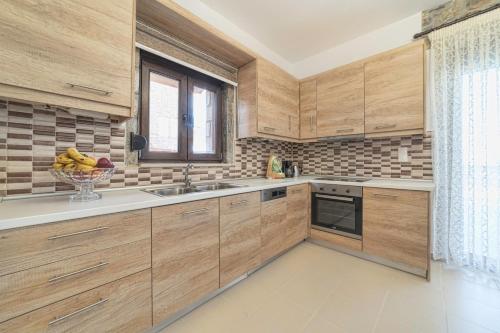
Each unit is fitted with air conditioning, private bathroom and a kitchen including a dishwasher, oven, microwave and a toaster. A fridge and kitchenware are also offered, as well as a coffee machine and a kettle.
Museum of Ancient Eleftherna is 33 km from the villa, while Venetian Walls is 43 km from the property. The nearest airport is Heraklion International Airport, 46 km from Faraggi Villas.
from
€152
/night
Set 34 km from Museum of Ancient Eleftherna, Asfendamos Villas offers accommodation with free WiFi and free private parking.
Each unit is fitted with air conditioning, private bathroom and a kitchen including a dishwasher, oven, microwave and a toaster. A fridge and kitchenware are also offered, as well as a coffee machine and a kettle.
Venetian Walls is 42 km from the villa, while Heraklion Archaeological Museum is 43 km from the property. The nearest airport is Heraklion International Airport, 46 km from Asfendamos Villas.
from
€152
/night
Perachori Boutique Studios in square has well-equipped accommodation boasting free WiFi in Anogia, 35 km from Venetian Walls and 36 km from Museum of Ancient Eleftherna.
The apartment provides guests with a patio, a seating area, satellite flat-screen TV, a fully equipped kitchen with a fridge and a stovetop, and a private bathroom with walk-in shower and slippers. Some units have a dining area and/or a balcony.
Heraklion Archaeological Museum is 36 km from Perachori Boutique Studios in square, while The Palace of Knossos is 39 km from the property. The nearest airport is Heraklion International Airport, 39 km from the accommodation.
from
€75
/night
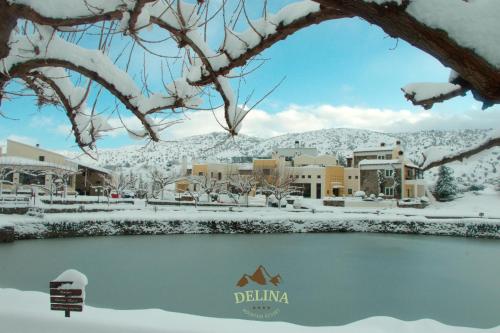
Set in an area of 28 acres, this resort combines the fine facilities of a luxurious hotel with the authenticity of Cretan tradition and the wild beauty of the island.
Delina Mountain Resort is located 1 km away from Anogia village, on the road towards Nida at an altitude of 910 metres. Take advantage of the hotel’s prime location to explore the natural landscapes of the island every season of the year. Delina Mountain Resort offers its services for pleasant moments of relaxation and rejuvenation. Specially decorated rooms which emit a sense of calmness and cleanliness are waiting for you to repel the intensity of everyday routine.
from
€42
/night
No results available
Connect with thousands of Crete visitors and boost your bookings.
No results available
© All rights reserved. Crete Locals