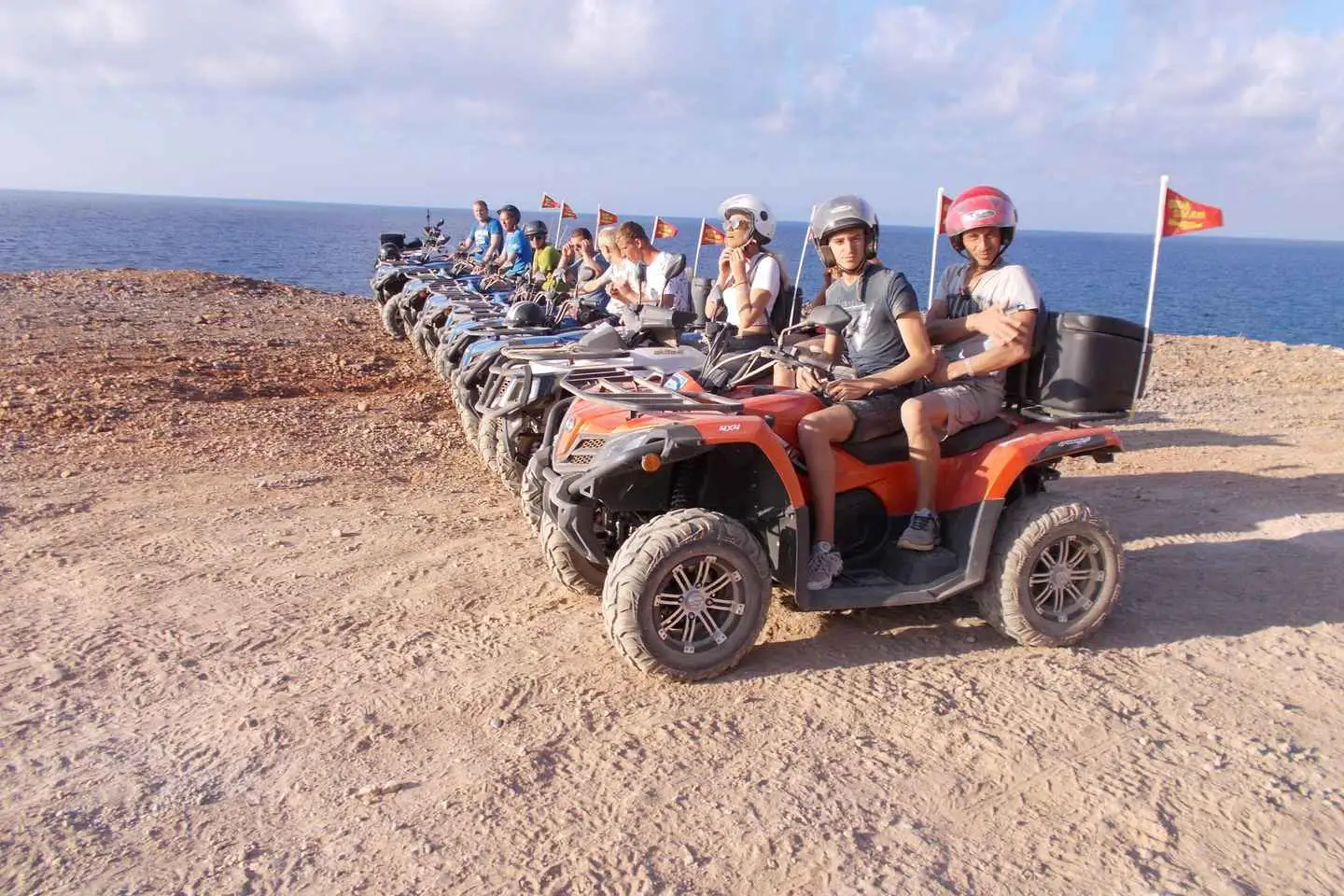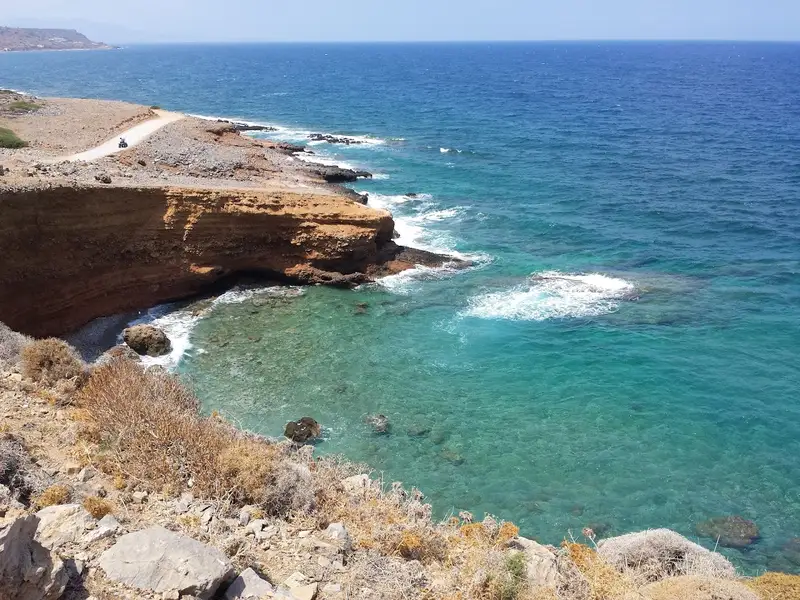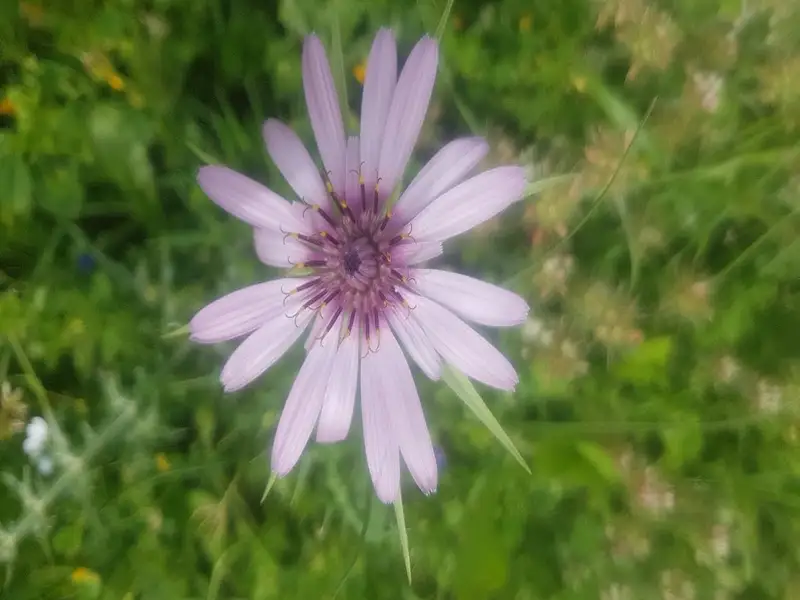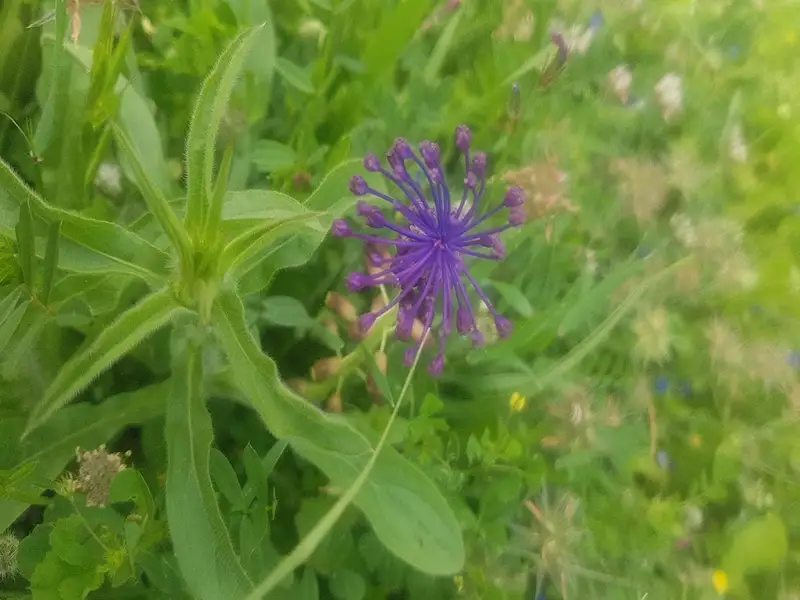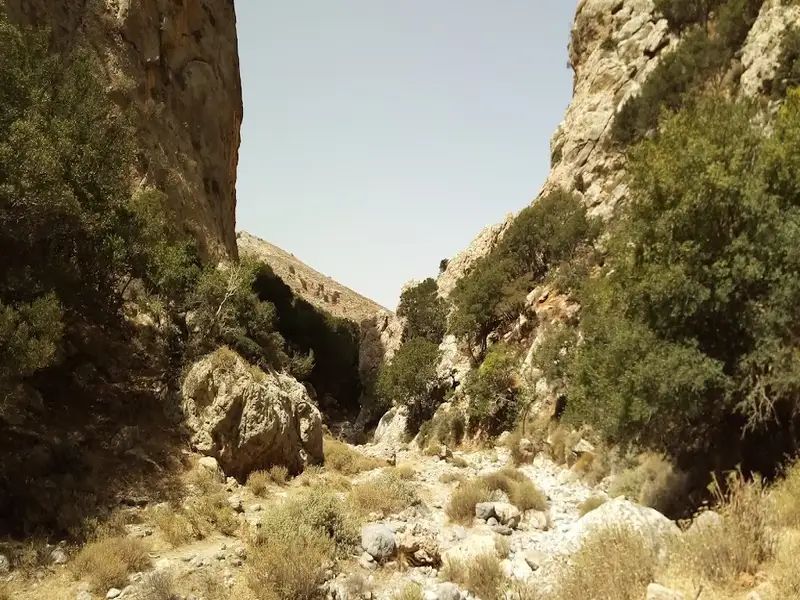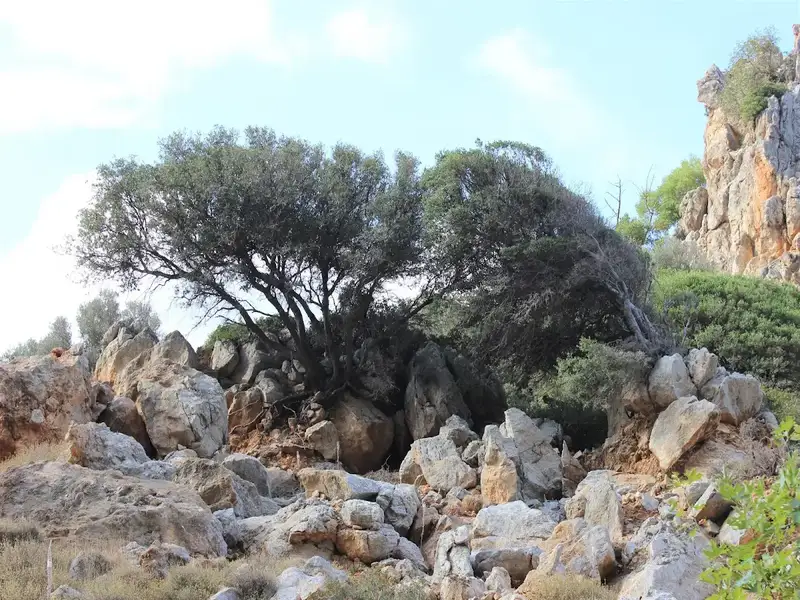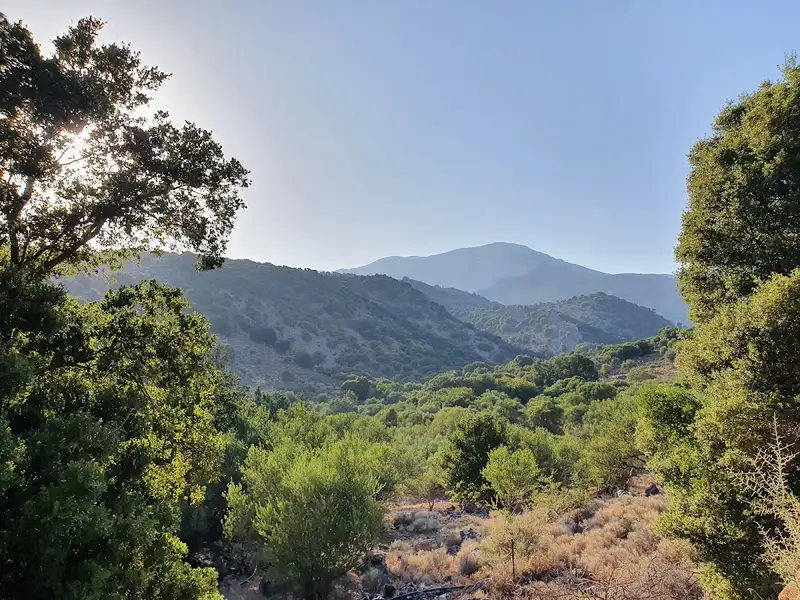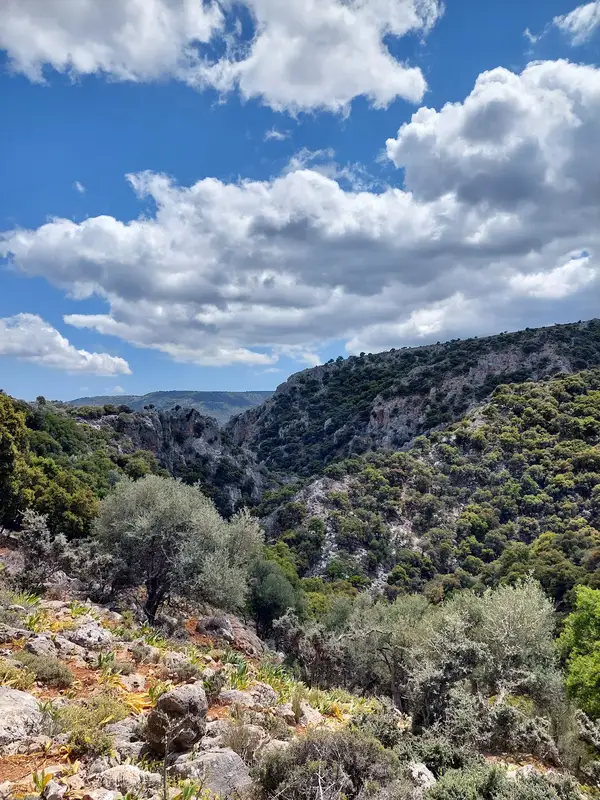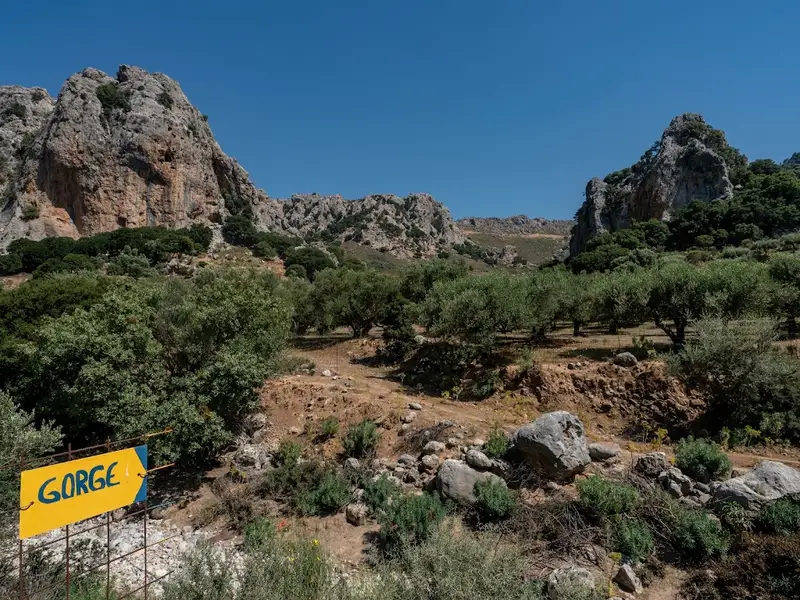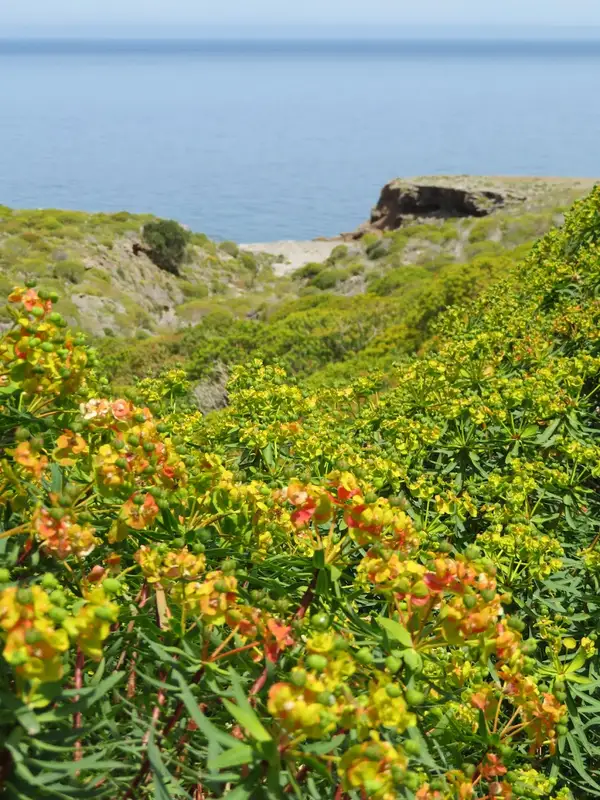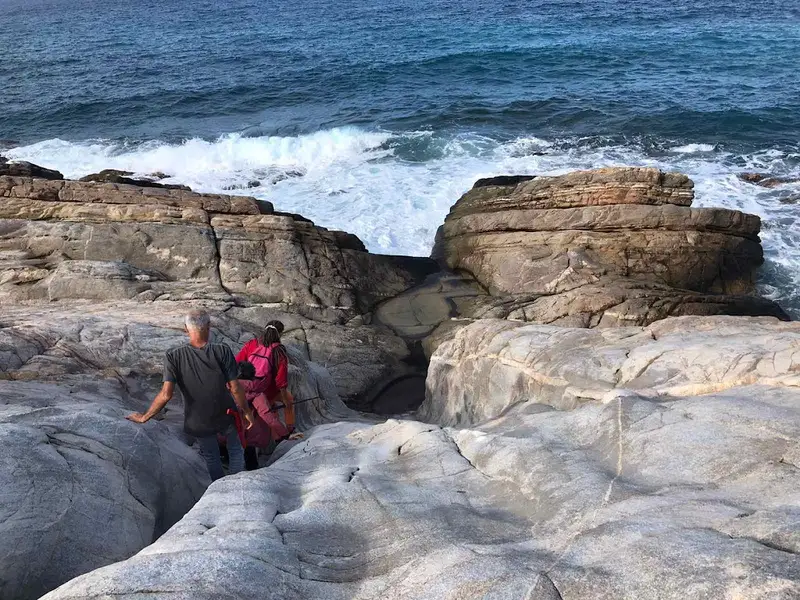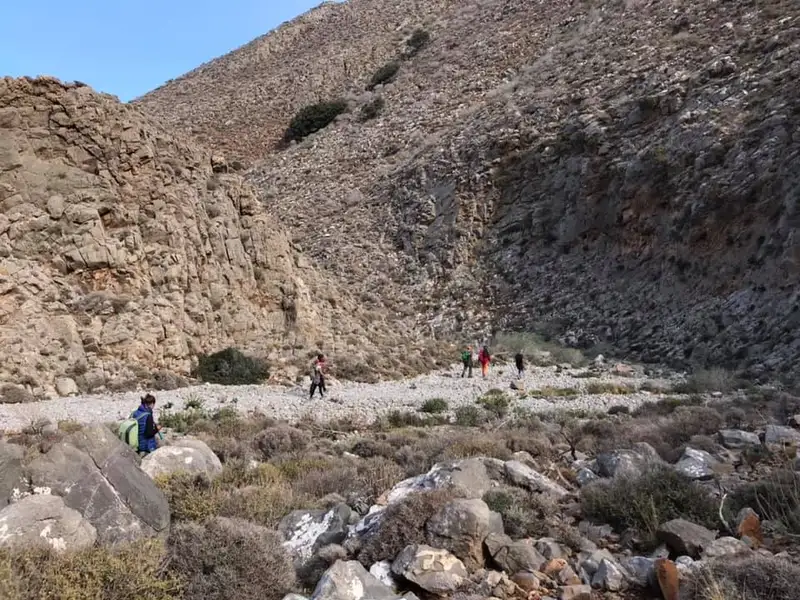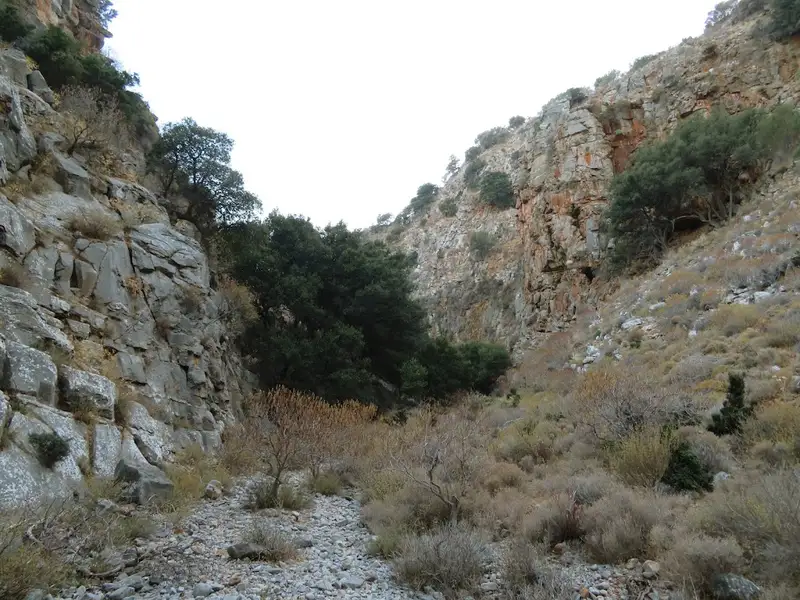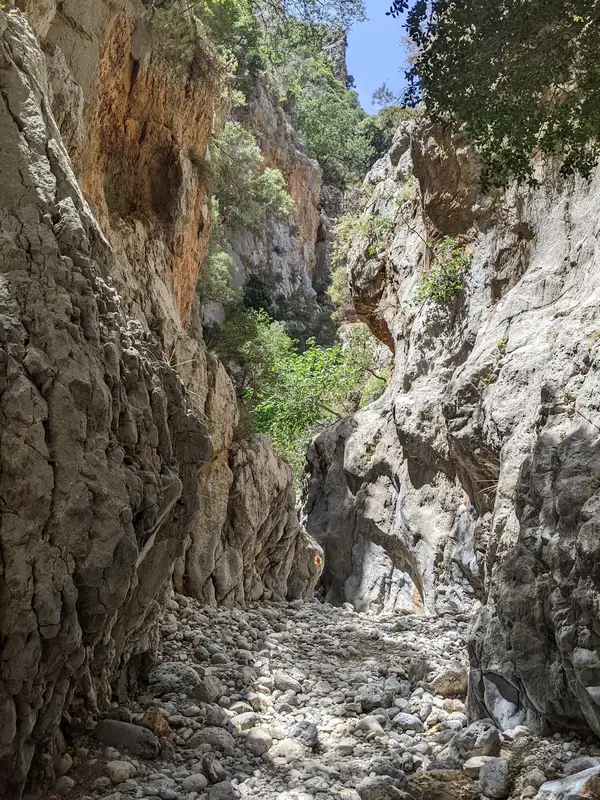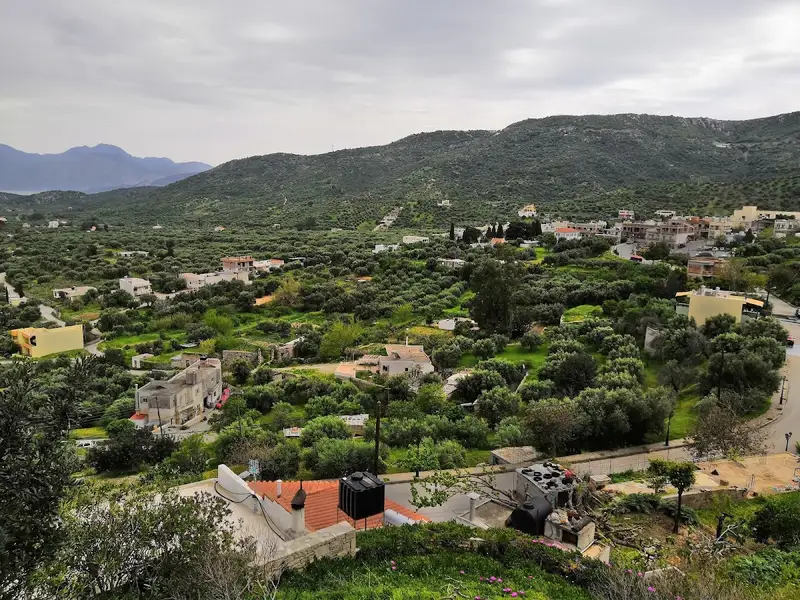


Starting we climb on an off-road terrain between olive groves through this green place full of colors, we will go quad safari on an impressive off-road route among the vineyards and to explore the Cretan nature that will amaze you!
We arrive at the PACHALIGO where we will relax in the Forest!!
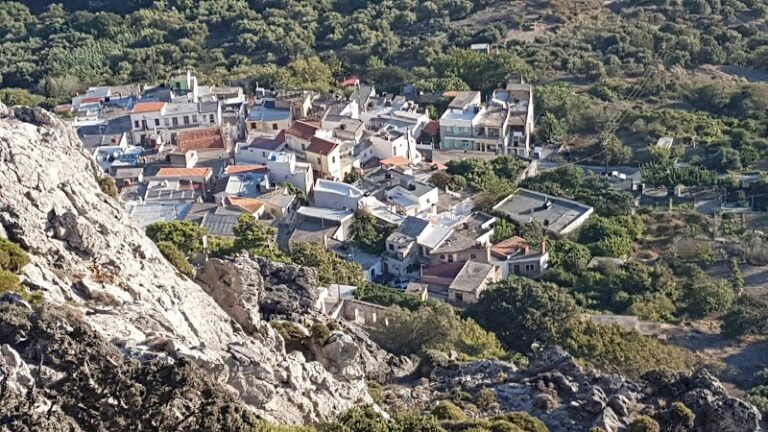
We have the opportunity to take amazing photos and then continue to explore beautiful parts of the offroad course ending through an amazing dynamic dusty-sandy off-road course and through the narrow streets of the traditional village of Sisi.
Having experienced an incredible Gocretesafari Quad Trip in Crete and having the opportunity to learn about the authentic Cretan life, we are sure that you will come back full of amazing memories that will last a lifetime!
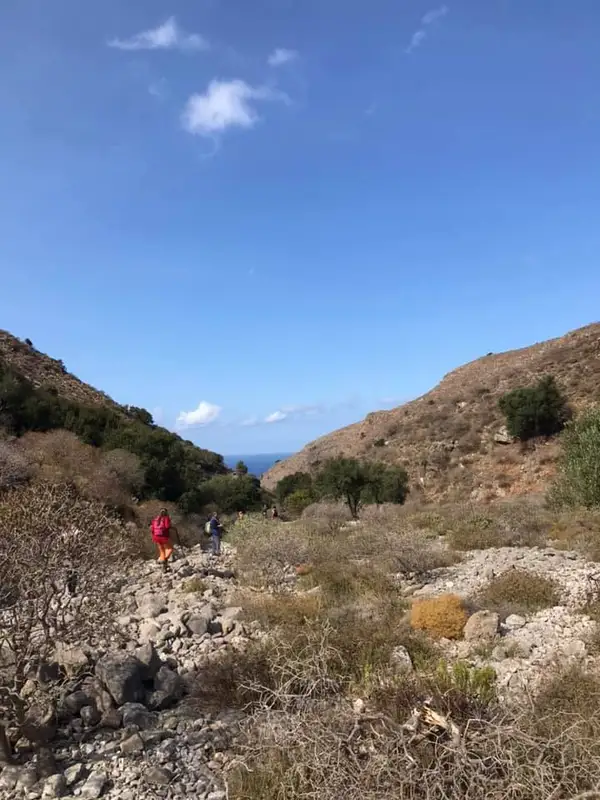
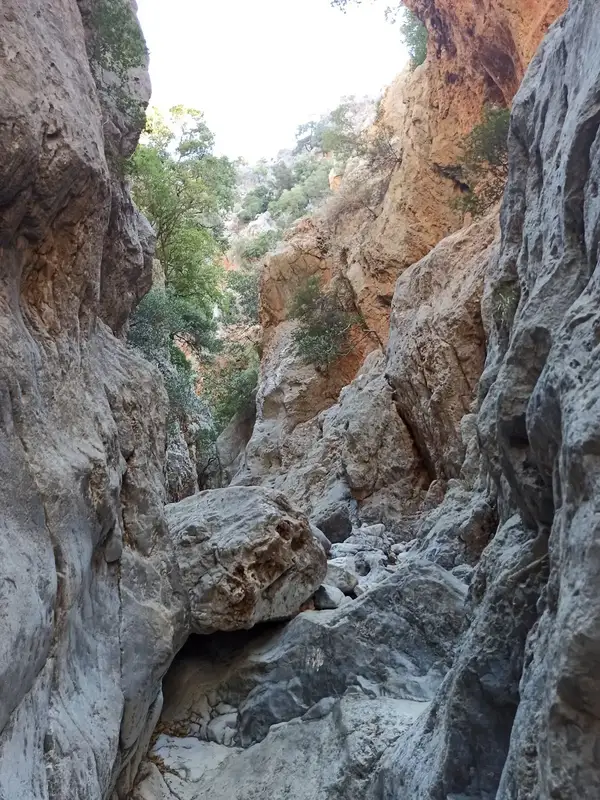
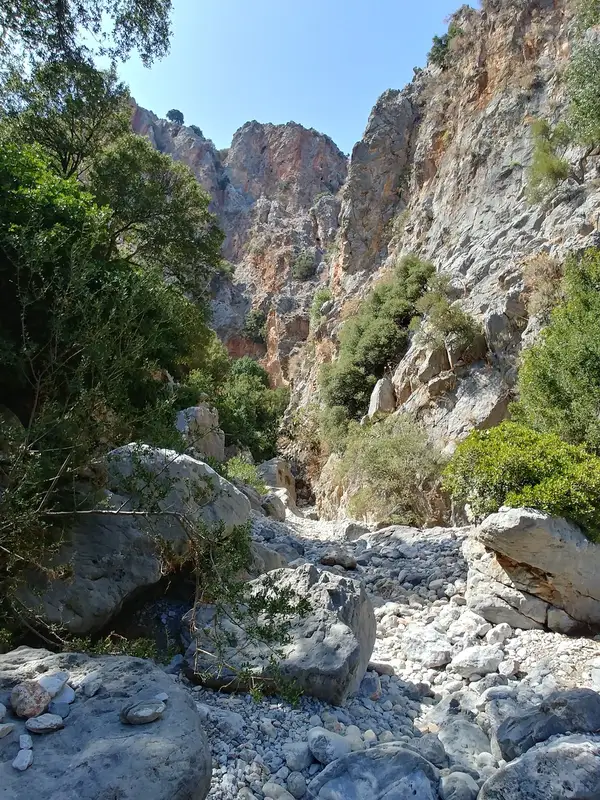
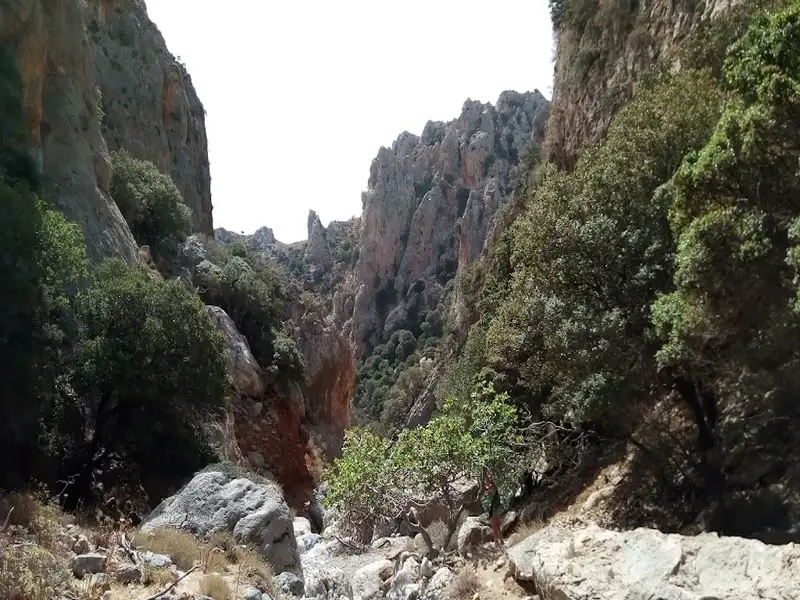
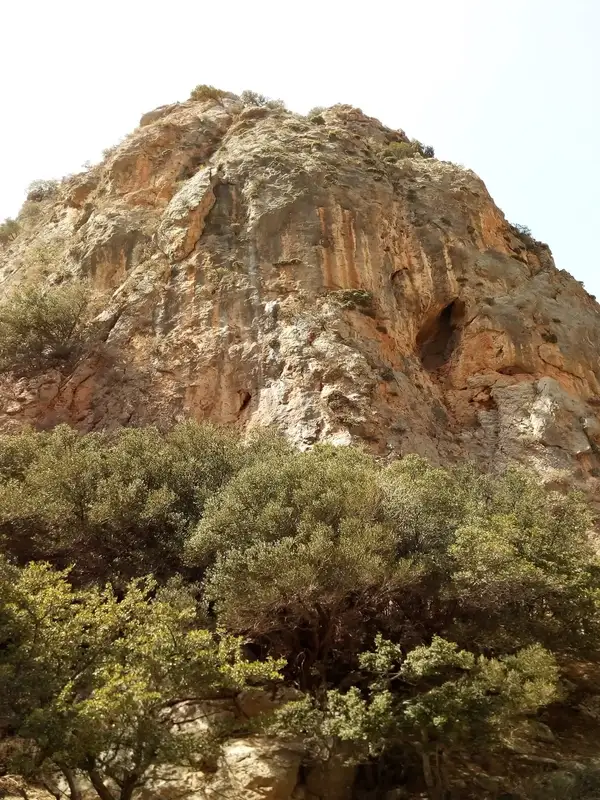
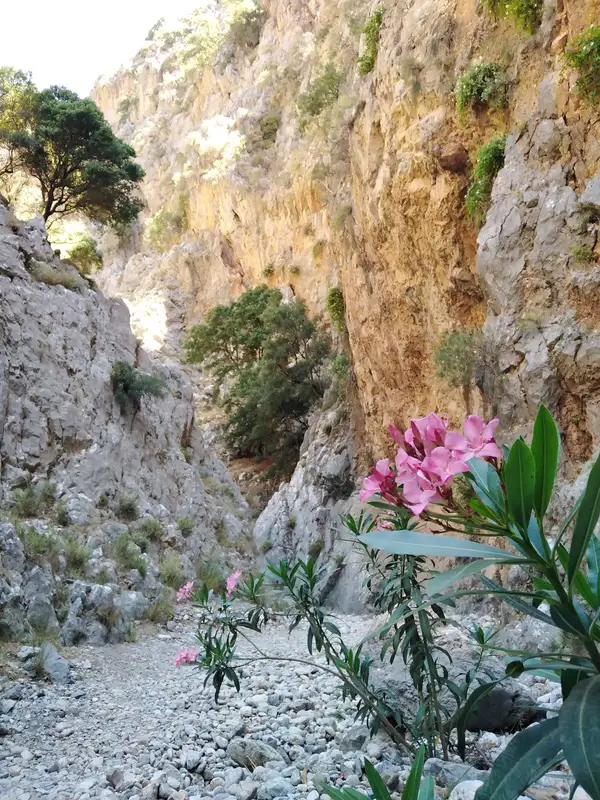
This tour is a special way to discover the countryside of Crete in a top buggy! You will experience the ultimate adventure, crossing gorges, in an breathtaking manner and being guided to places you have never been. Come and have a try. You will follow our experienced guide starting from our base to the archeological site, Minoa palace, where you will be shown around by a tour guide and then we continue by driving through the beautiful villages of Sissi , epano Sissi and Milatos where we will visit the Milatos cave.
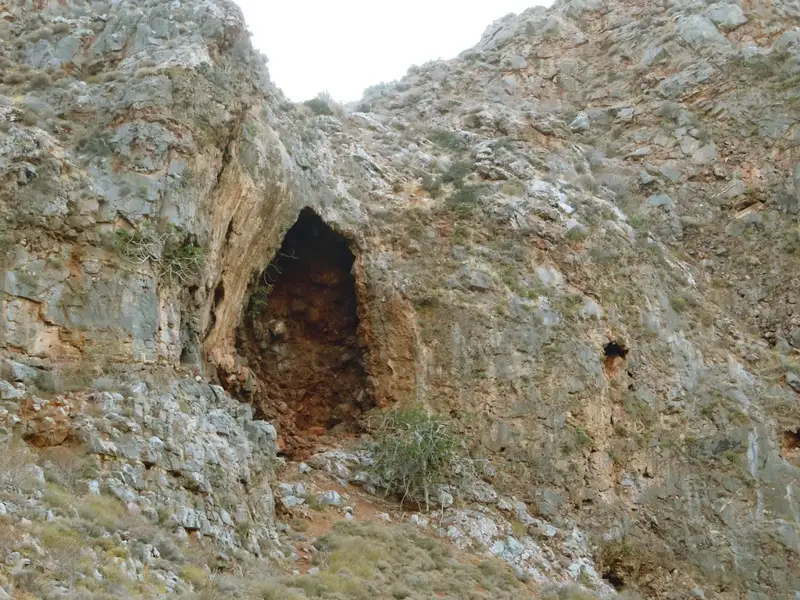
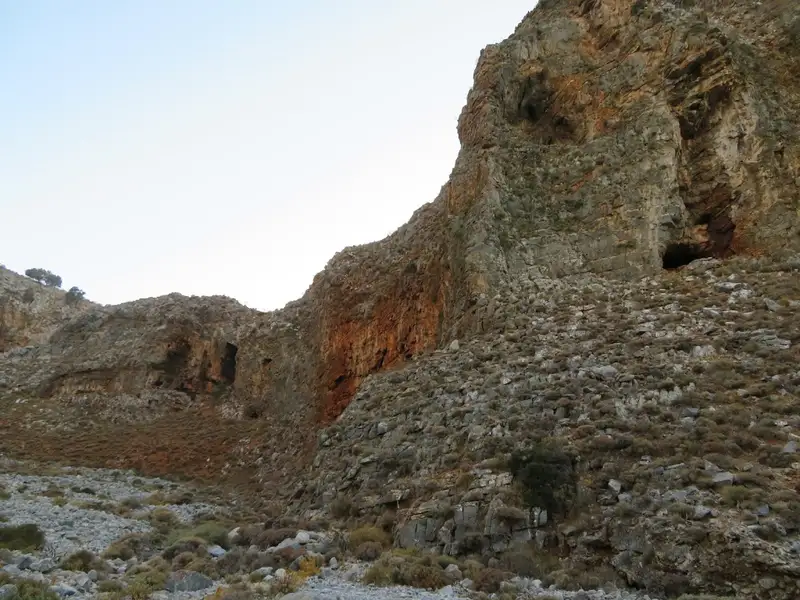
The cave is large, measuring 2,100 square meters, with eight small and large entrances. It is 73 meters long, and its widest point is 63 meters. We will come across a little church built in 1935, and a memorial of those slaughtered by the Turks.
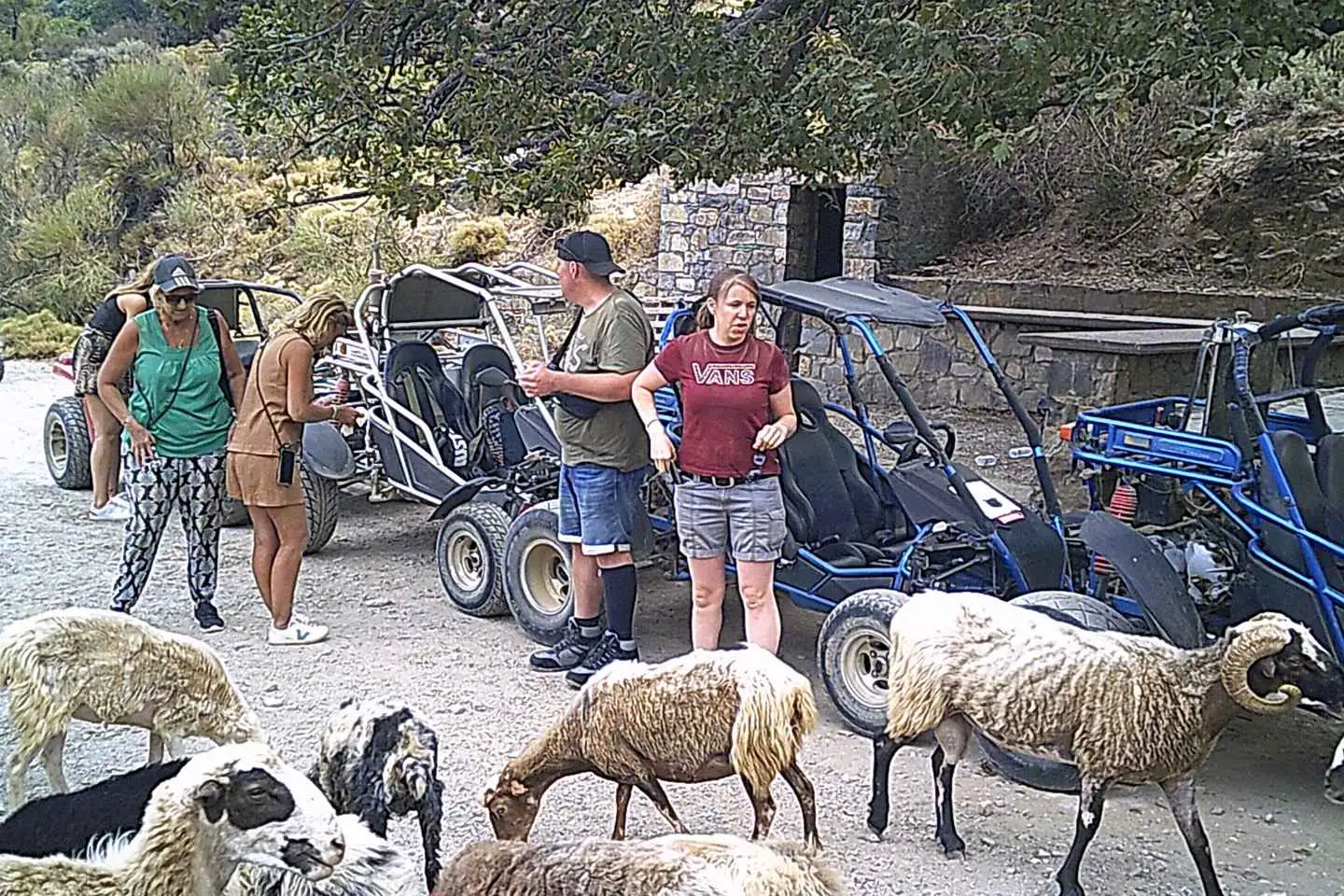
It doesn’t matter if you have never driven a buggy before as the vehicles are user-friendly, and everybody will get a detailed instruction and practice on the spot before we start our tour. What makes our tour unique is the fact that we reach the most hidden spots on the island where we meet the friendly locals. The distance of the tour is approx. 50km.
Get on board on the two-seater buggy with your partner and cruise along the endless rural roads of Crete with its amazing landscape. we wait for you !!!!!!
Explore off-road trails in Crete on a quad. Marvel at Minoa Palace and drive through olive groves. See an ancient oak tree and a 16th-century monastery. Savor a traditional Greek lunch in a cozy tavern and tour an olive mill. Bask in the sun and cool off with a swim in the sea at the end.
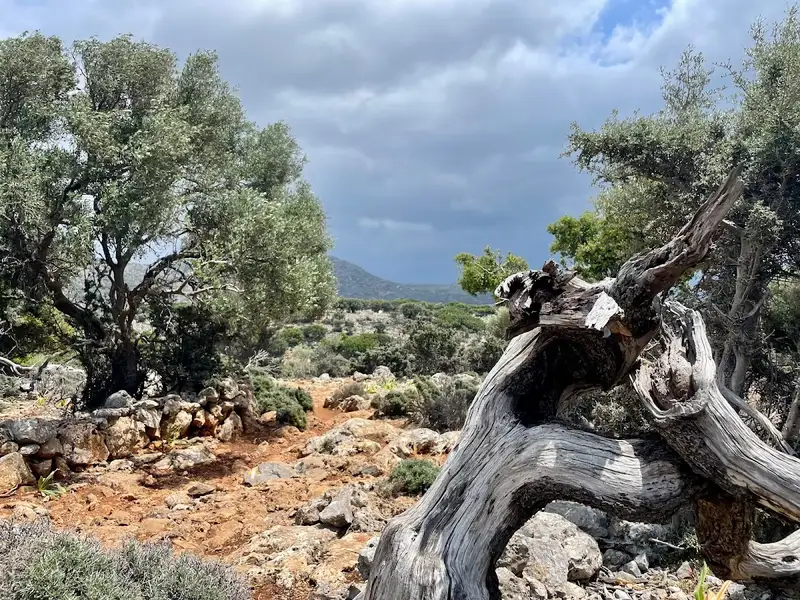
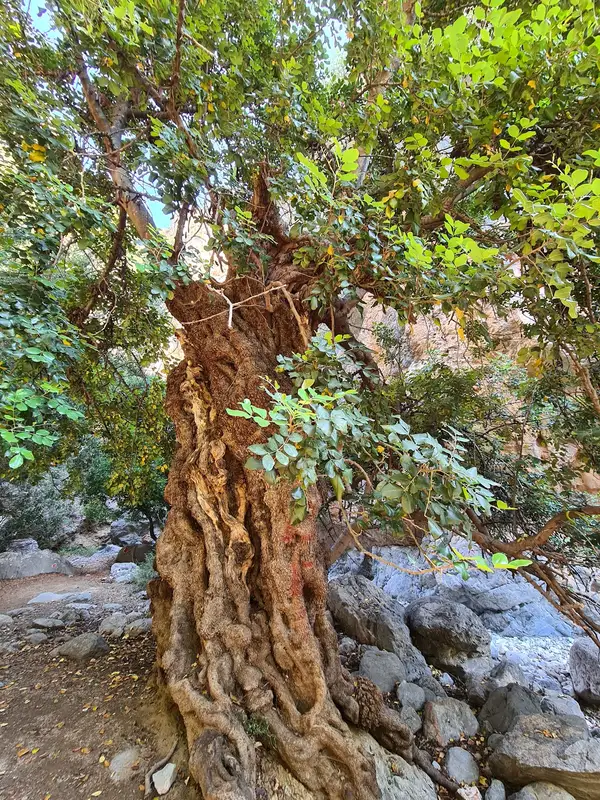
Go to the activity provider’s premises in Malia for a safety briefing. Then, head to Minoa Palace in Malia and continue to the village of Sisi. Cross a forest and pass through olive groves on your way up to the mountains to stop for a memorable photo at an 800-year-old oak tree.
Afterward, visit Vrahasi village and navigate its narrow streets as you head up a steep road to the Monastery of Agios Georgios Vrahasiotis. This monastery dates back to the 16th century. Every 30 minutes, you can stop to take photos and listen to the guide explain where you will go next.
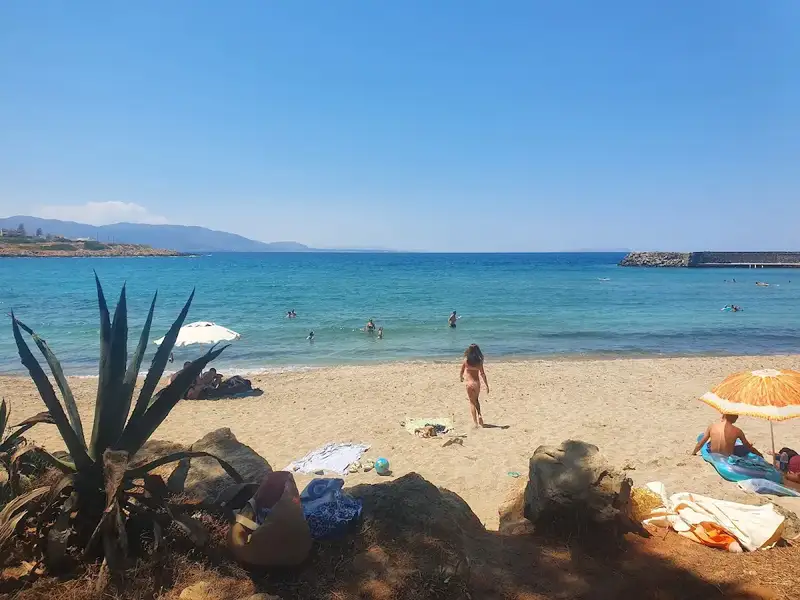
Next, go to the village of Latsida and eat a traditional local lunch in a tavern. Finish your meal and then follow your guide to Neapoli. Check out Vasilakis Estate, an award-winning olive mill where olive oil is produced. Enjoy a tour here and then continue to Sisi to relax on the beach and swim.
Finally, return to the starting point and then transfer back to your accommodation to conclude your adventure.
This tour is a special way to discover the countryside of Crete in a top buggy! You will experience the ultimate adventure, crossing gorges, in an breathtaking manner and being guided to places you have never been. Come and have a try. You will follow our experienced guide starting from our base to the archeological site, Minoa palace, where you will be shown around by a tour guide and then we continue by driving through the beautiful villages of Sissi , epano Sissi and Milatos where we will visit the Milatos cave.
The cave is large, measuring 2,100 square meters, with eight small and large entrances. It is 73 meters long, and its widest point is 63 meters. We will come across a little church built in 1935, and a memorial of those slaughtered by the Turks.
We will continue our tour by driving up the mountain and crossing some gorges. The longest stop of the tour will be made at the village of Latsida where lunch will be served in traditional tavern.
After eating and chatting, our trip will continue to the village of Neapoli where we will visit Vasilakis olive factory and have a friendly olive tour in an award-winning Cretan olive press.
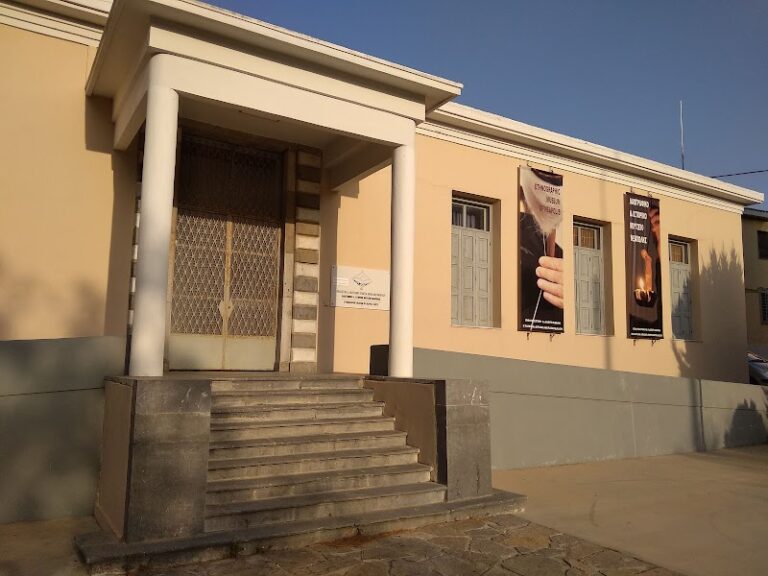
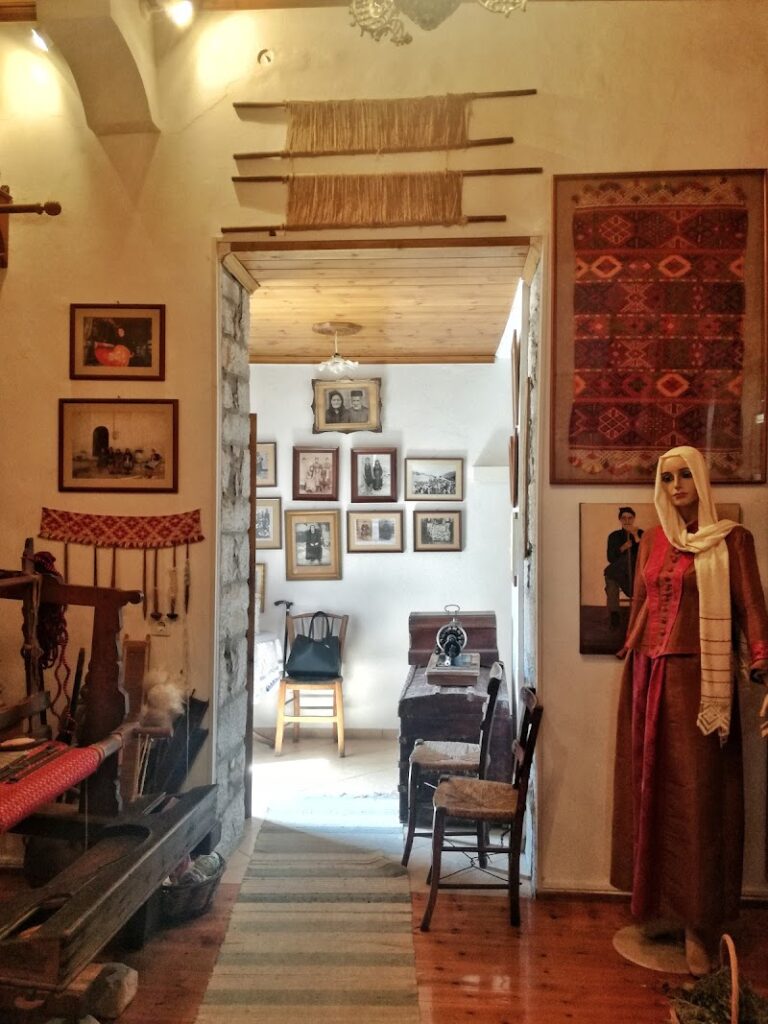
After that we will drive to the village of Vrahasi in a beautiful ethnic museum where you will have the opportunity to learn about the way the local people lived in the past. Nearing the end of our tour we will continue back to Malia where we will have our final stop at a small beautiful private beach, then we will drive back to our base where our journey began.
It doesn’t matter if you have never driven a buggy before as the vehicles are user-friendly, and everybody will get a detailed instruction and practice on the spot before we start our tour. What makes our tour unique is the fact that we reach the most hidden spots on the island where we meet the friendly locals. The distance of the tour is approx. 80km.
Get on board on the two-seater buggy with your partner and cruise along the endless rural roads of Crete with its amazing landscape. we wait for you !!!!!!
No results available
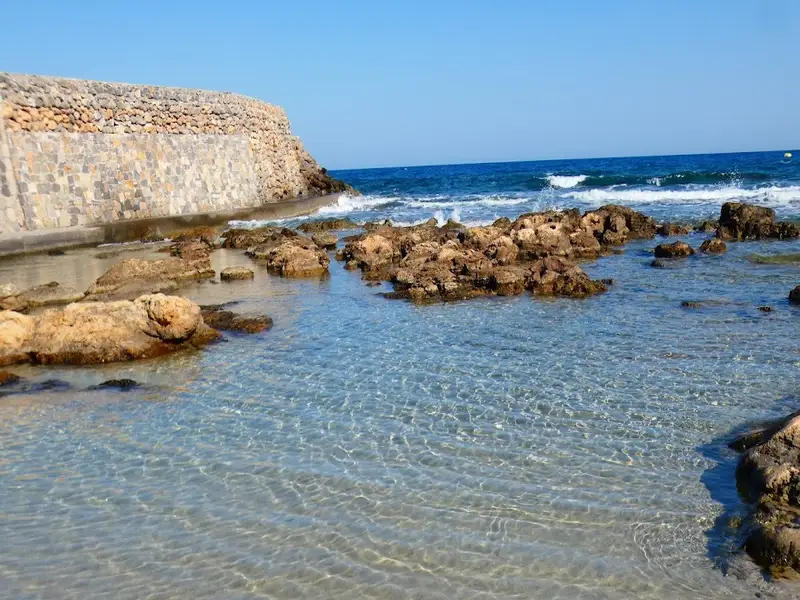
Situated 34km northwest of Agios Nikolaos and 16km east of Hersonissos, on the western fringes of the Mirabello province, lies Milatos. This coastal village has managed to preserve many of its traditional attributes. Just 1km north, one can find the coastal settlement known as Beach of Milatos or Paralia Milatou in Greek. The region is renowned for the Milatos cave, near the village, where a significant massacre of locals by the Ottomans took place in 1823. Today, Milatos is a popular tourist spot with a significant fishing port. The area is dotted with ancient olive groves and the shoreline is speckled with small, rocky inlets, some of which are suitable for swimming.
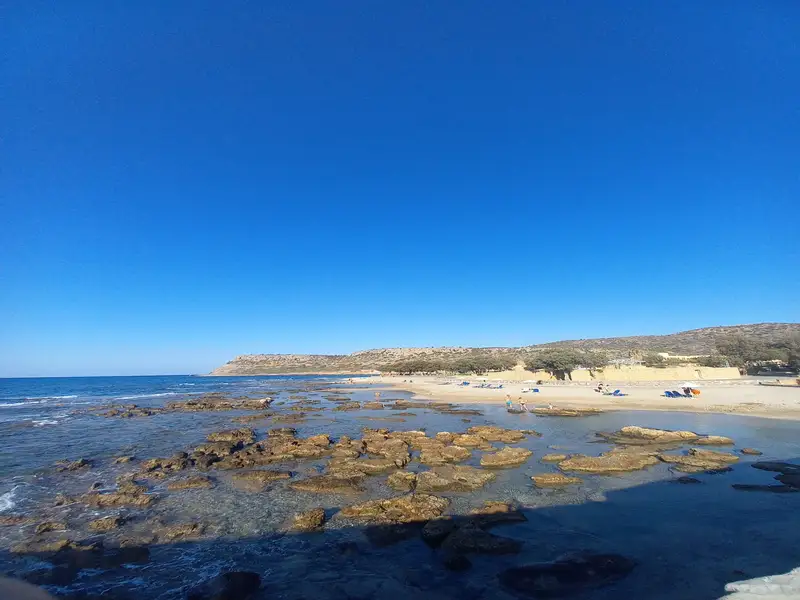
About 1km east of Milatos, in Pigada, you’ll discover small isolated bays with narrow sandy beaches nestled between towering cliffs. These secluded coves of Milatos are perfect for those seeking solitude, though the waves can be quite high. As you approach the village, just before reaching the harbour, you’ll encounter the main beach of Milatos. This sizable beach is comprised of pebbles and rocks in certain areas, and while it’s not fully facilitated, it’s conveniently close to the village’s amenities. Regrettably, this beach is also affected by the waves. The next beach is situated within the harbour (Limani), close to the village taverns. It’s a small sandy beach that’s quite well-maintained. This beach is the most frequented, as the water is always tranquil and safe for children.
The inventory of Milatos’ beaches would typically end here, but human intervention has altered this. Following the coastal road west from the village will lead you to the Minos Imperial hotel port. For the sake of tourism and revenue, the hotel has constructed two artificial beaches in the Volaki area, both bordered by a cement pier. Previously a natural rocky coast with a stunning seabed, it has now been transformed into a profitable sandy beach, organized by the hotel owners.
The village of Milatos was established near the remnants of the Minoan city Milatos, which was destroyed in the 3rd century BC by the rival city of Lyttos. Homer referenced it as one of the seven Cretan cities that sent troops to Troy. According to legend, Milatos was the name of a boy who was raised in a forest by a wolf. Upon reaching adulthood, he killed the city’s tyrant and fled to the coasts of Asia Minor. There, he founded the famous Miletus colony in 1500BC, which later became the birthplace of several distinguished philosophers such as Thales, Hippodamus, and Anaximander.
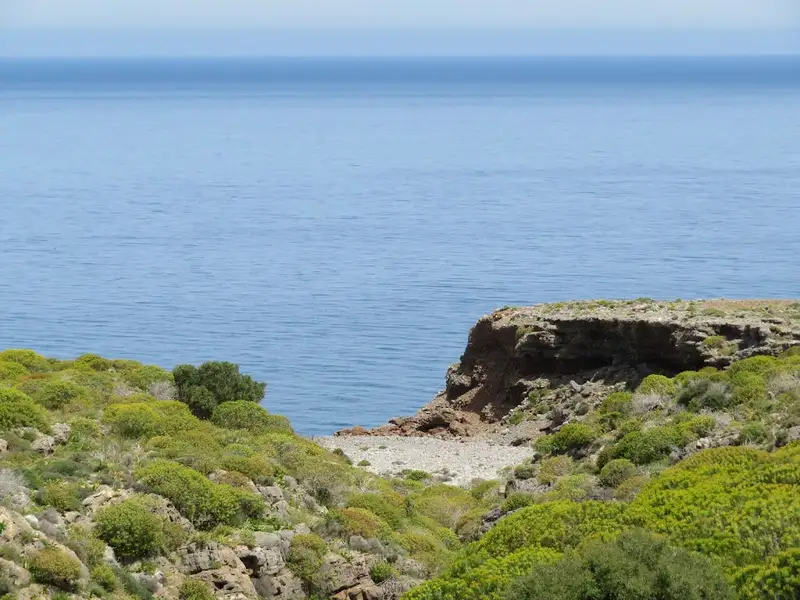
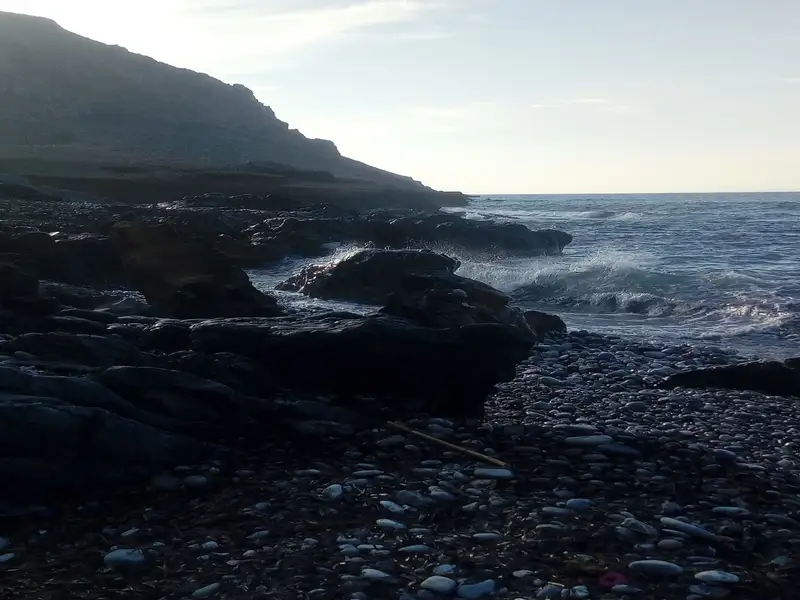
In the region of Anogia, located in the northern part of the Mirabelo province east of Milatos, you’ll come across several tiny, rocky coves. You can reach this area by driving through the rugged terrain. Vlychada Tzavlidon is one such beach, characterized by large pebbles. The beach walls display remarkable layers of conglomerate rocks, and at the western end, there’s a small arch at the base of which is a fresh water spring. This beach is situated at the exit of the gorge known as Christopatimata, or Christ’s Steps. The walls of this gorge are home to some peculiar formations, which are not easily noticeable. According to local lore, these are the footprints of Christ!
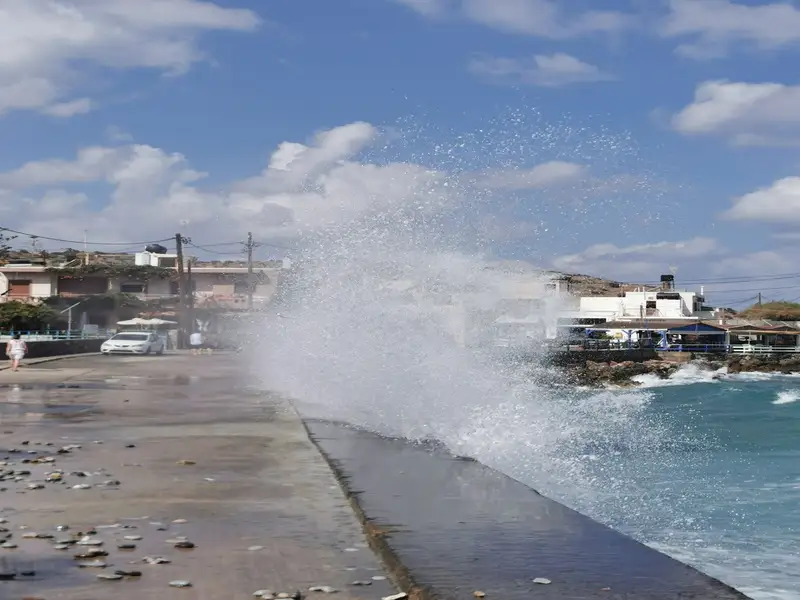
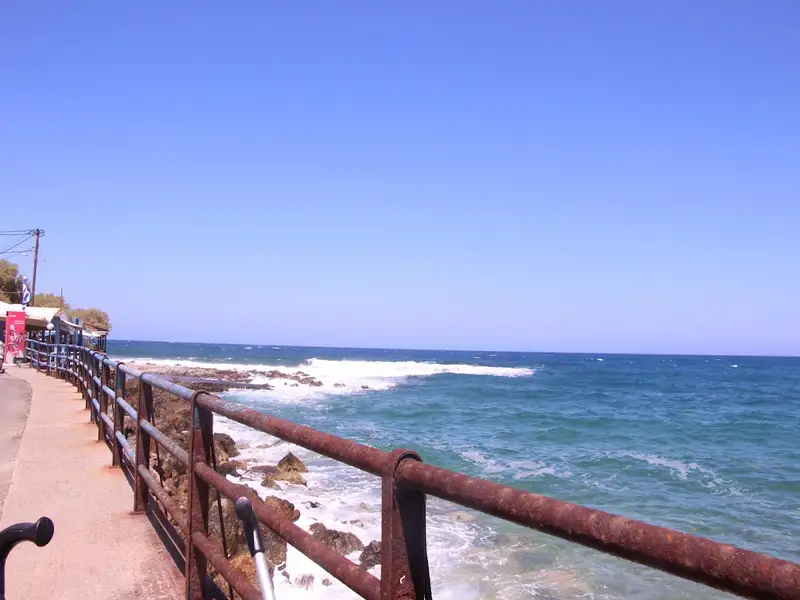
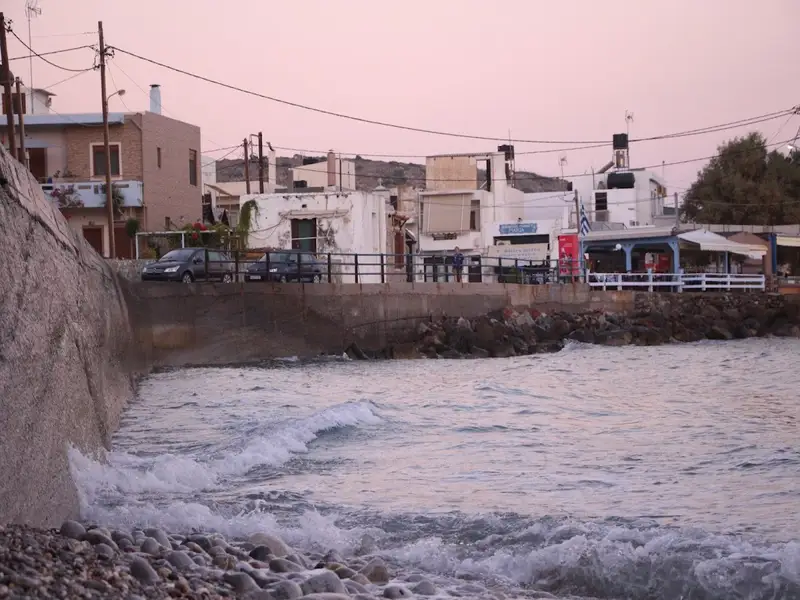
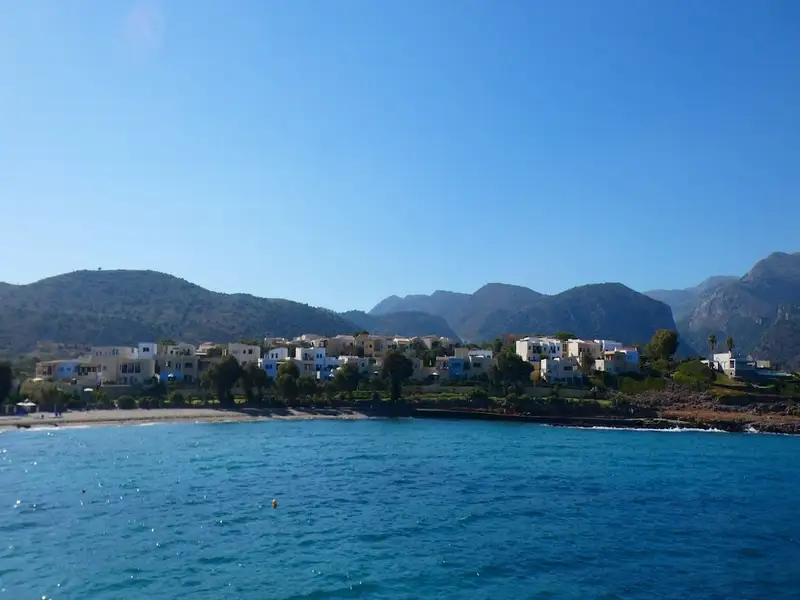
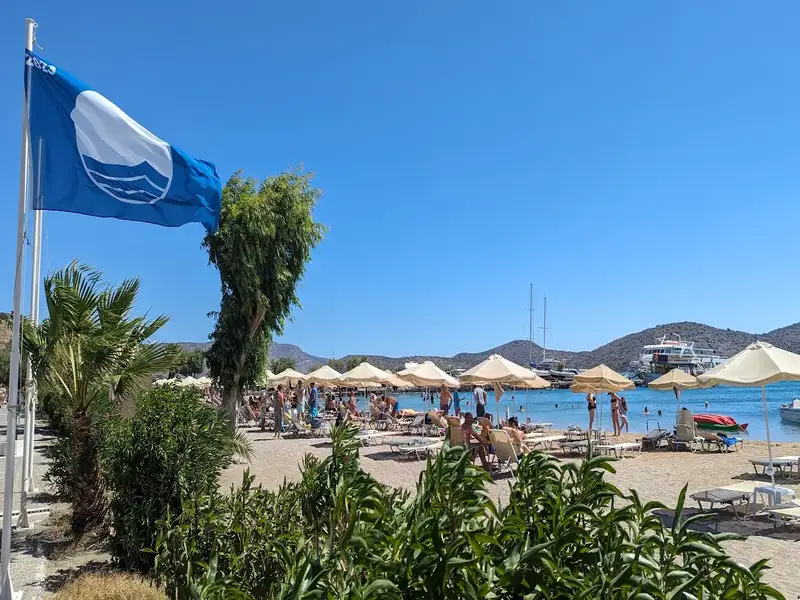
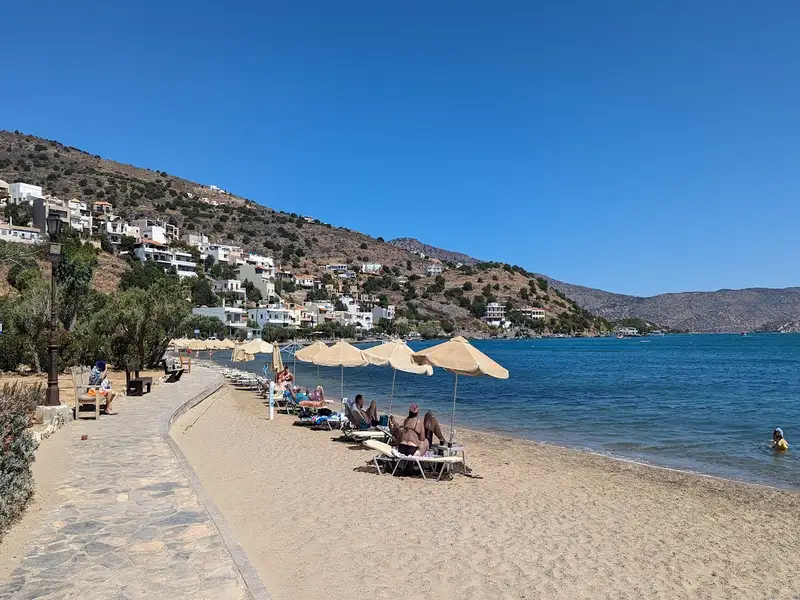
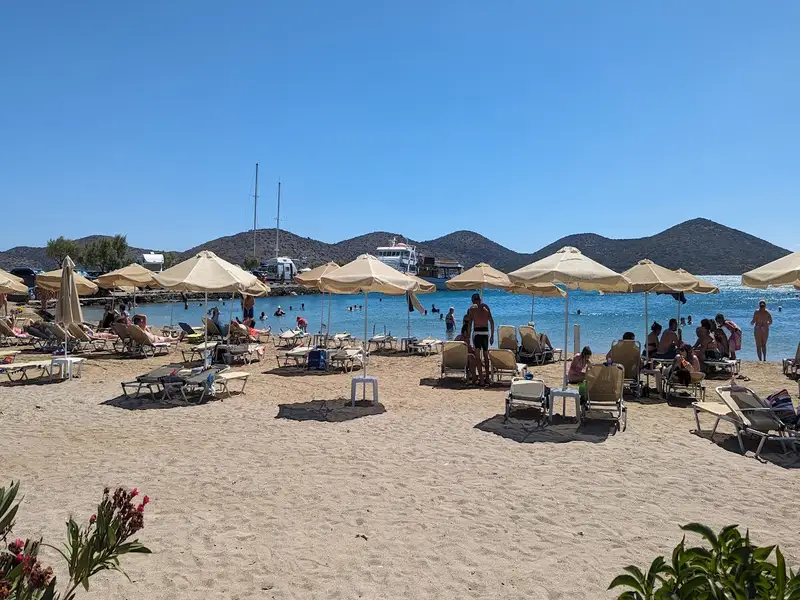
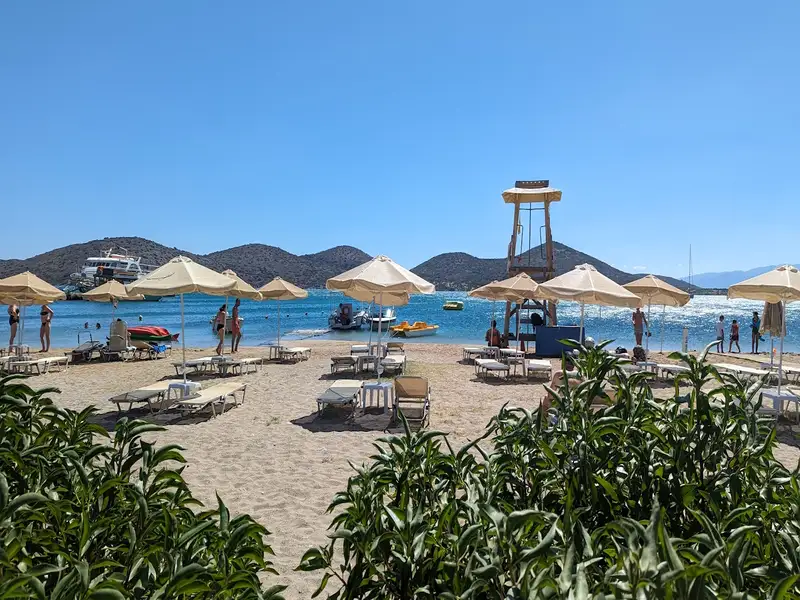
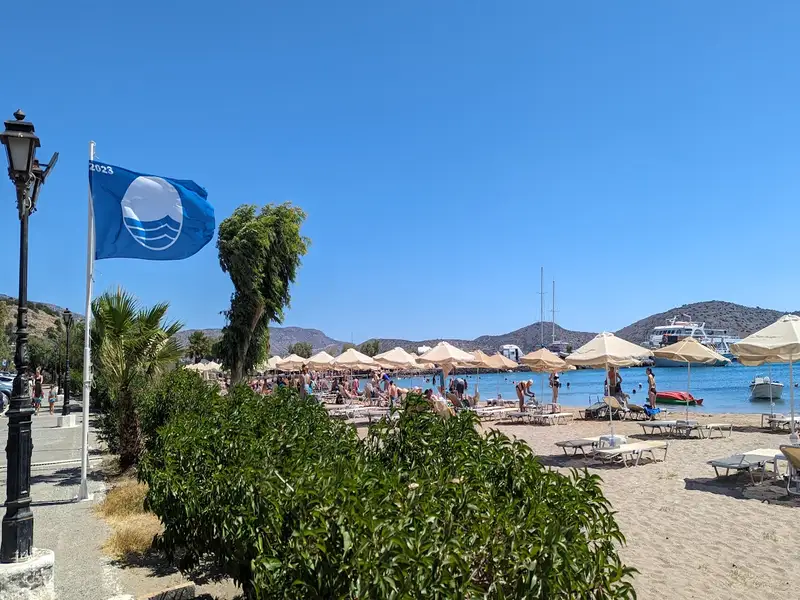
Sissi, also known as Sisi, is a tranquil traditional seaside village nestled 26km west of Agios Nikolaos and 41km east of Heraklion, not far from Malia. The village is renowned for its natural harbour, characterized by tranquil deep green waters, and its charming taverns nestled within narrow streets. The Sissi coastline is predominantly rocky, with only a few sandy stretches. The sea around here is typically choppy, making the only calm swimming spot the small beach within the harbor (Limani). This petite beach offers a few umbrellas and showers for visitors.
If you desire to explore other beaches, you can travel east to Harkoma bay, home to the well-kept Boufos beach. This sandy beach is exposed to the wind. Adjacent to it, you’ll find the smaller Avlaki beach, situated at the exit of a narrow bay.
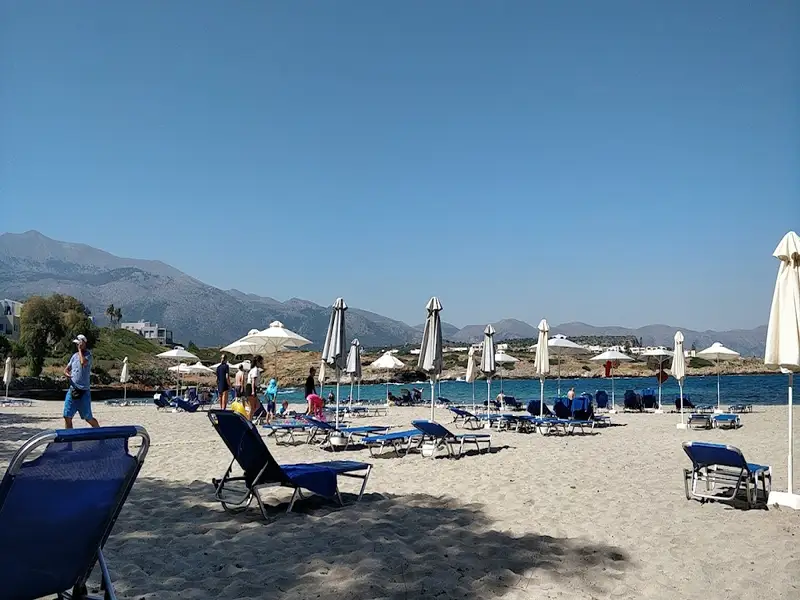
Moving further east, you’ll find the sandy Kalimera beach, located in front of the Kalimera Kriti hotel. Managed by the hotel, the beach is well-organized and boasts of shallow waters, making it perfect for children. On the opposite side of the hotel is Spiliada, the last beach within the Sissi territory. Spiliada is a sandy beach shaded by numerous tamarisk trees, offering a more peaceful atmosphere compared to the other beaches.
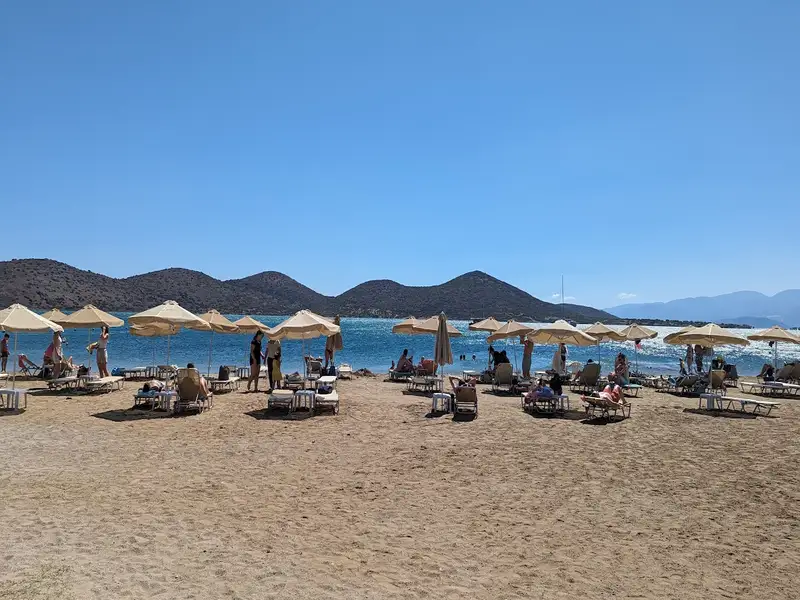
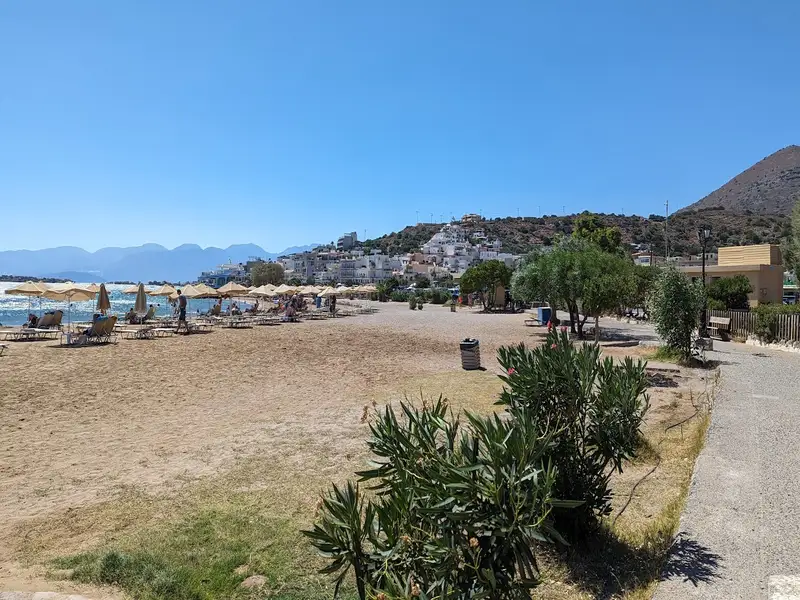
Elounda’s Skisma Beach is a picturesque sandy enclave, perfect for families. Its cleanliness and organization make it especially welcoming.
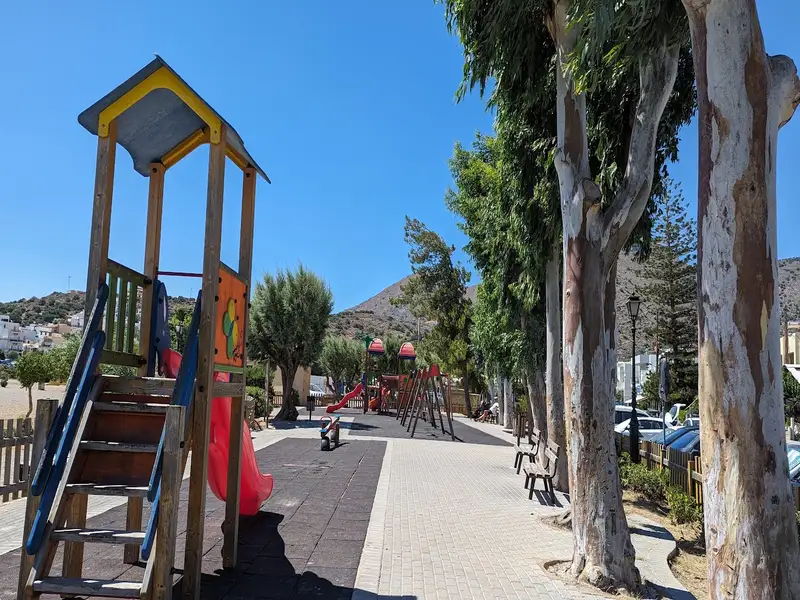
Little ones delight in its flat sandy terrain and the playground, while older kids gravitate towards the available water sports. Occasional winds result in bigger waves, offering simple surfing opportunities.
With convenient facilities like restrooms and showers, coupled with an array of nearby taverns, it’s an ideal spot for families with children.
No results available
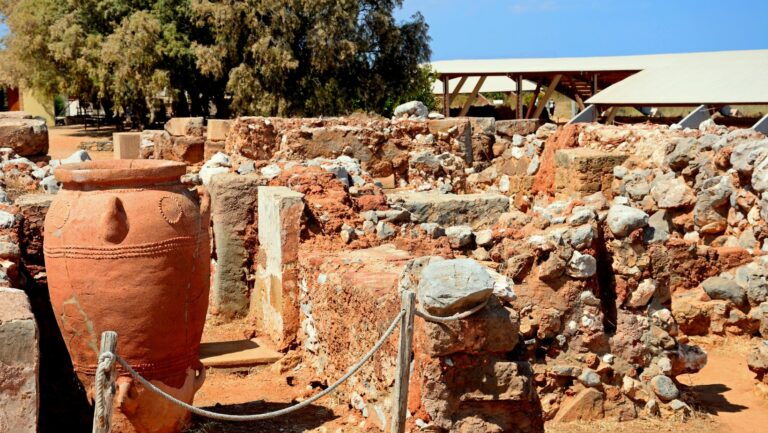
The Malia Palace is situated 3km east of Malia town, adjacent to the wetland and Potamos beach. It was a significant Minoan city that housed the third largest Minoan palace, following Knossos and Phaistos. According to mythology, Sarpedon ruled here, who was the brother of Minos and son of Zeus and Europa. Sarpedon was expelled by his brother Minos and then sought refuge in Lycia in Asia Minor.
Until 1880, the existence of the city was completely unknown when the landowner of the Chrysolakkos area discovered a few sheets of gold a few meters west of the palace. This led to excavations in the broader area by gold diggers. In 1915, Joseph Hatzidakis began excavations in the harbour, while in 1921, the French Archaeological School continued the works in Chrysolakkos, where they found one gold jewel depicting bees, which is considered the most important finding of Malia and is displayed in the Archaeological Museum of Heraklion.
The city’s name is still unknown, although it is probable that it was either Tarmaros or Milatos. The city minted its own coins depicting, on both sides, the goddess Athena and two dolphins. Moreover, the town covered an area of 1 square kilometre, with neighbourhoods built sparsely around the palace. The first palace was built around 1900BC occupying an area 8800sq.m., but it later destroyed in 1700BC. The palace had two floors with a central courtyard with a rectangular shape and four wings. The most important part was its west side. There were warehouses with many pots and jars, royal rooms, workshops, a weapons room (where the famous royal scepter was found) and altars. The palace was destroyed again in 1450BC, either by an earthquake or by attack.
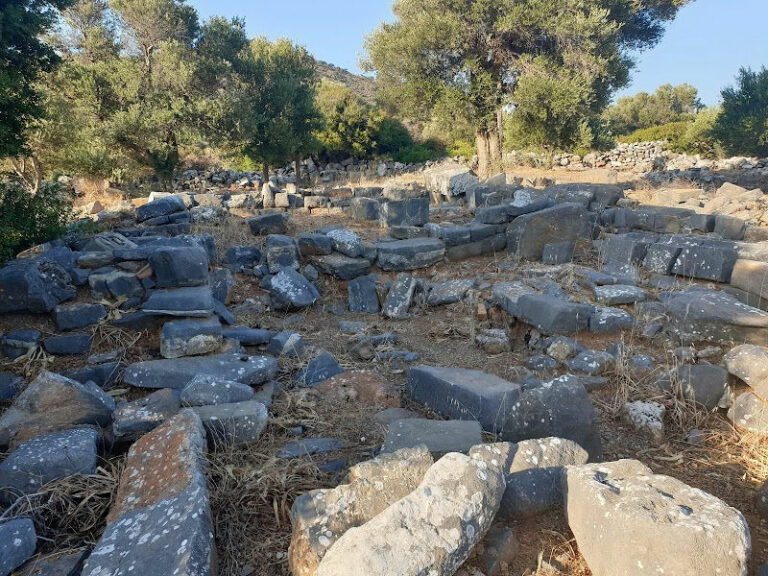
The quaint, age-old Sanctuary of Afrodision Iero, also known as the Aphrodite Temple, can be found close to the village of Lenika and has a history that stretches back to the 10th century BC. Interestingly, this very location was utilized in the 2nd century BC to construct a more expansive, two-aisled temple dedicated to Ares and Aphrodite, a fact supported by inscriptions discovered at the site.
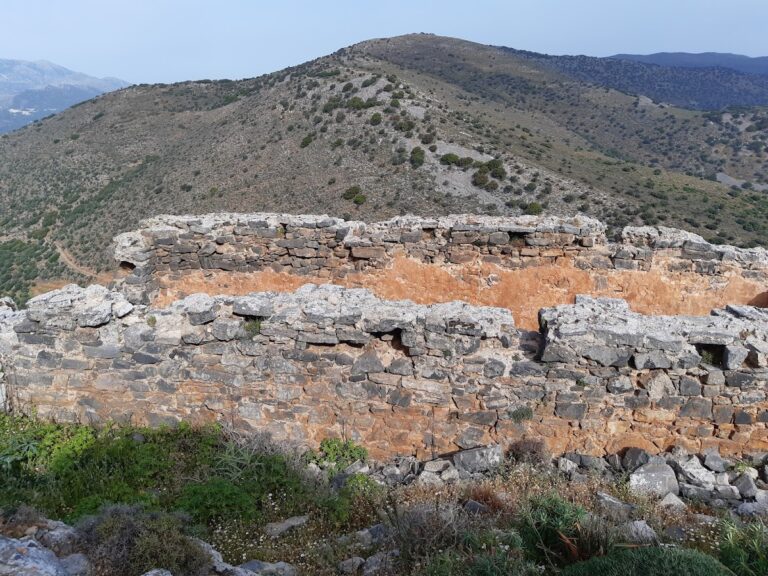
The ancient city of Itanos was a powerful city in Crete, particularly during the Hellenistic and Greco-Roman periods. The name Itanos comes from its founder, who originated from Phoenicia. At its peak, the city’s territory extended from Cape Samonio (now known as Cape Sidero) to Cape Erythrae (present-day Cape Goudouras). The city prospered due to the trade of glass, fishing, and Tyrian purple, a red dye derived from shell extracts. Koufonissi Island, owned by Itanos, was renowned for its purple production. Additionally, Palekastro was home to the temple of Diktaean Zeus, which brought significant profits to the region. The city was situated near the famous palm grove of Vai in East Crete.
Itanos’ power was evident in its impressive marble buildings, temples dedicated to Asclepius, Zeus, Tyche, Athena, and its own currency featuring the face of its protector, Athena. The city was a major rival of Praesus (near today’s Nea Presos) and Ierapytna (now Ierapetra). The primary point of contention was the majestic Temple of Diktaean Zeus and Koufonissi. Praesus managed to incorporate the Temple of Zeus into its territory, but Itanos regained it in 150 BC with the assistance of its Egyptian allies. A relevant inscription can still be seen on the wall of the Toplou Monastery, located a few miles to the west. After four years, the impoverished Praesus was destroyed by Ierapytna, leaving only Itanos and Ierapytna as the main players. As a result, disputes over the temple of Zeus and Koufonissi quickly escalated. Itanos began to decline in 795 AC due to an earthquake causing land subsidence, and it was further damaged by an Arab attack in the 9th century. However, even during this period, Itanos survived, as evidenced by its grand Christian churches. The city was not abandoned until the 15th century when repeated Arab raids forced its inhabitants to leave the coastal areas. It is believed that the residents founded the present-day village of Sitanos, near Nea Presos and Karydi, in the Zakros mountains.
Today, visitors can explore the archaeological site and admire various ruins such as the large tower on the western acropolis built with black stones, the grand Christian church in the eastern citadel of the Hellenistic settlement, the two Early Christian churches at the base of the hill leading to Vai, and the cemetery outside the town.
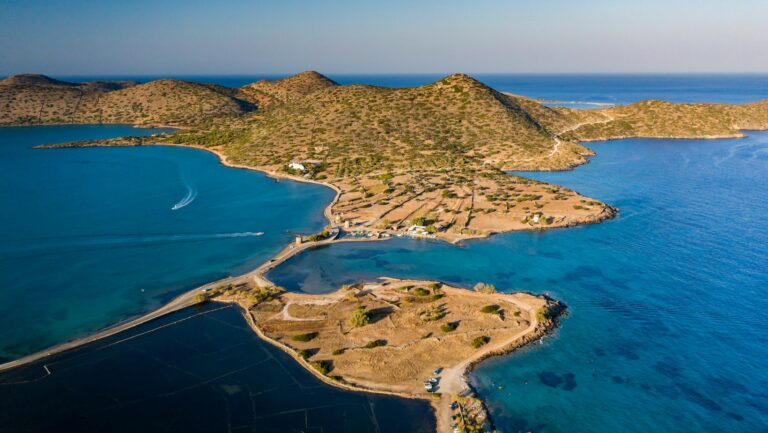
Not far from Elounda, close to the Venetian salt pans, we find a few remains of the ancient city Olous (most are submerged in the sea) or Oloundas, which was inhabited since the Minoan period. Olous was one of the hundred most important cities of ancient Crete, with a maximum population of over 30,000 people. The administrative system of Olous was Eunomia, a form of democracy. In Olous, Tallean Zeus, Apollo, and Vritomartis (Artemis) were worshipped.
Olous minted its own coin. The historian Svoronos identified 11 different types of coins. Most of them depicted Vritomartis Artemis on one side and Zeus with an eagle, a dolphin, or a star on the other. The development of Olous continued until the first Byzantine period, as evidenced by the basilicas of Poros with their marvelous mosaics and the Basilica of Kolokytha with its exceptional white marble parts.
No results available
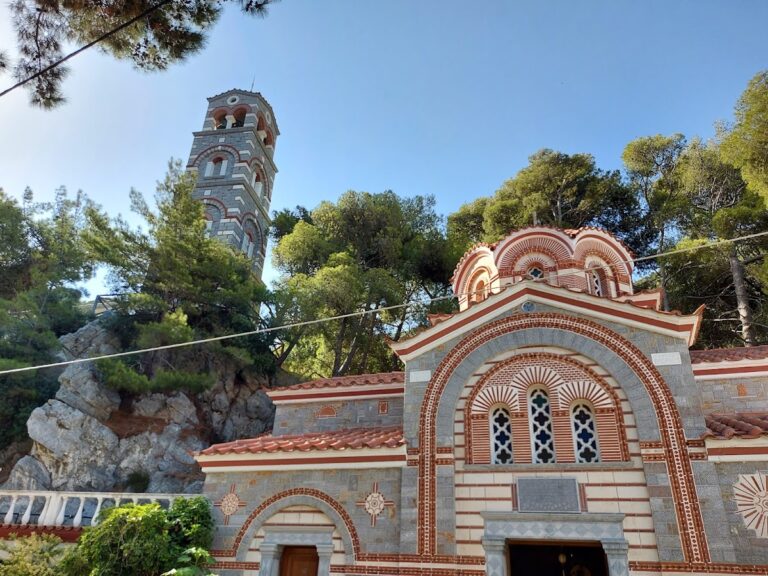
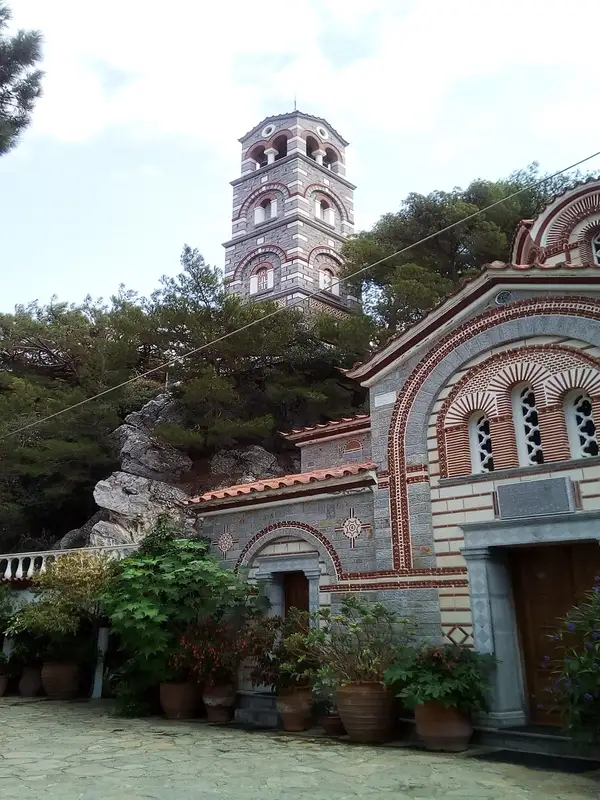
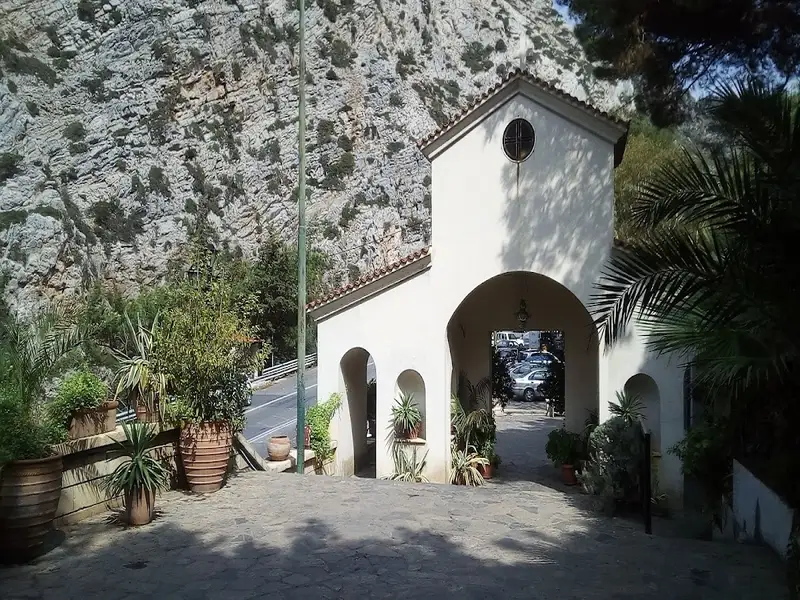
The male monastery of Saint George Selinaris is nestled in the heart of the Selinari gorge, close to Vrachasi village and Neapolis. The National Road, which connects Heraklion to Agios Nikolaos, runs alongside the monastery, making it a popular stop for many visitors daily. Cretans believe it is bad luck to pass through the canyon without stopping at St. George, a tradition that dates back to when travelers would stop to rest with their animals.
As per tradition, a monk from Rhodes named Nikolaos was guided by God to a location where he discovered the icon of St. George, leading him to build a church. Nikolaos resided at Selinari until his death, at which point he was buried in a small cave at the summit of Anavlohos mount, which he had carved himself. Several years after his passing, sailors from Rhodes were led to Nikolaos’ tomb by a shining star. Recognizing this as a divine sign, they transported his bones back to Rhodes. Anavlohos cave can be found on the eastern side of the gorge, directly opposite the monastery. The exact location can be identified by looking up at the gorge walls and spotting a large cross. While the cave is accessible by foot, climbing the steep path requires good physical fitness.
During the Ottoman Era, it is believed that the Turks attempted to destroy the monastery, as evidenced by the three bullets embedded in the old icon of Saint George, which is also considered miraculous.
A visit to the monastery is well worth it, as you can admire the stunning beauty of the lush canyon and cool off at the local spring. The monks are very welcoming and eager to share the history of the monastery. The central church’s main body is modern, as are the wall paintings in the chapel of St. George (the original temple built by Nikolaos). A modern nursing home also operates here, constructed on the ruins of the old monastery cells.
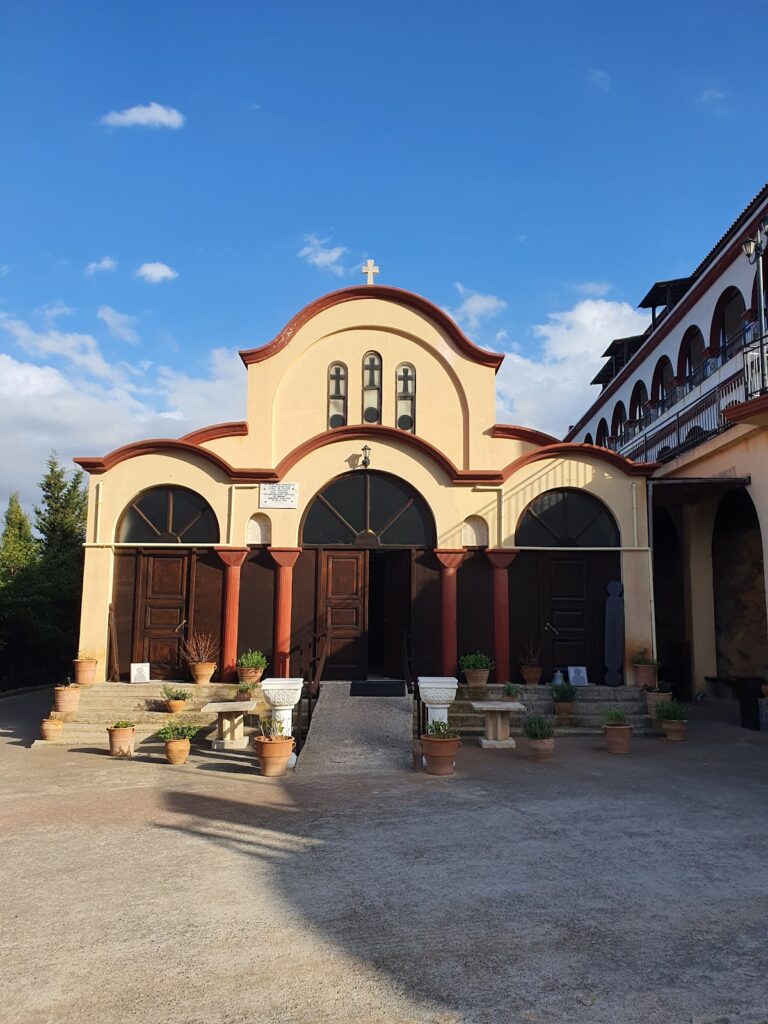
The Monastery of Virgin Mary Theogennitor, situated near Mohos, boasts a prime location overlooking the Stalis coastline. Despite being relatively new, this monastery has earned a significant reputation, primarily due to its founder, Father Apostolos. Previously a monk at the St. John Monastery in Anopolis, Apostolos was evicted in 2009 and subsequently established this monastery.
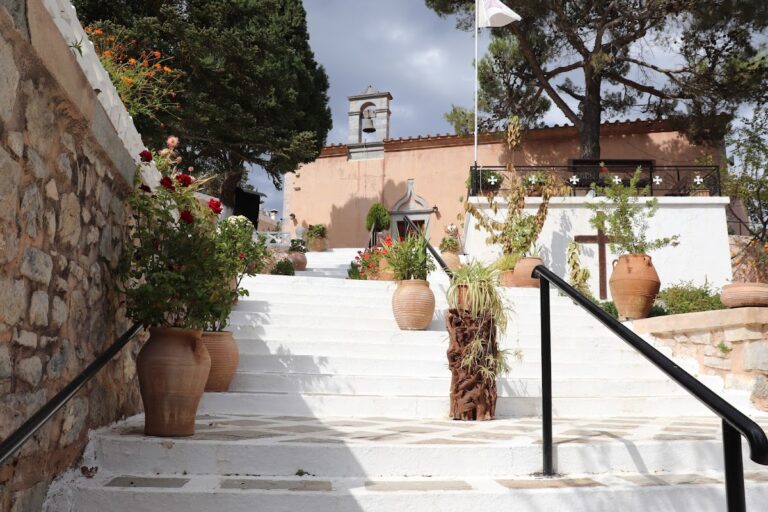
Located on a small hill adorned with oak trees near the villages of Agios Konstantinos and Marmaketo in the Lassithi Plateau, the Monastery of Panagia Kroustallenia is a historically significant site in Crete that is always worth exploring.
As per local tradition, the monastery’s name is believed to have originated either from its first founder, Kroustallenia, or from an icon of Panagia (Virgin Mary) discovered in a nearby cave, which was engraved on crystal (Kroustalenia also translates to “made of crystal” or “glass”).
The primary temple within the monastery is devoted to the Virgin Mary and observes its celebration on August 15. The monastery complex primarily features 20th-century buildings due to the multiple destructions it faced during the Turkish occupation.

Situated at the base of Louloudaki mountain, near the village of Kato Metohi in the Lassithi Plateau, the Vidiani Monastery is easily accessible as it lies just beside the plateau’s peripheral road.
Dedicated to Zoodochos Pigi (Life-Giving Spring), the monastery has been transformed from its previously abandoned state. The monk cells and other buildings within the complex have been restored, and it now functions as a male monastery. During the summer, flowers bloom throughout the grounds, and a small fountain in the courtyard, surrounded by towering cypress trees, symbolizes the spring of Life. Visitors can also enjoy a small café nestled under the shade of the trees. In partnership with the University of Crete, the monastery houses a modest natural history museum.
Constructed in the 19th century, both the monastery and the church are relatively new, likely built upon the ruins of an earlier monastery. The stone-built church features intricate masonry, stone-carved windows, and an exquisitely carved temple.
The area was once under the control of the Vidon family (hence the name Vidiani), who were descendants of a Venetian family that had been granted a portion of the plateau as a fief.
No results available
No results available
No results available
No results available
No results available
The Adrianos Gorge originates from the Adrianos village. There are areas within the gorge where large rocks obstruct the pathway, making navigation challenging, but achievable (it takes approximately 3 hours to traverse). In close proximity to the gorge, you can explore the Maridon and Atziganospilios caves.
The river that courses through the gorge is a segment of the Skoulikaris or Xeropotamos River. This river collects water from the Potami village valley and, after covering several kilometers, it finally drains near the Agios Nikolaos town stadium.
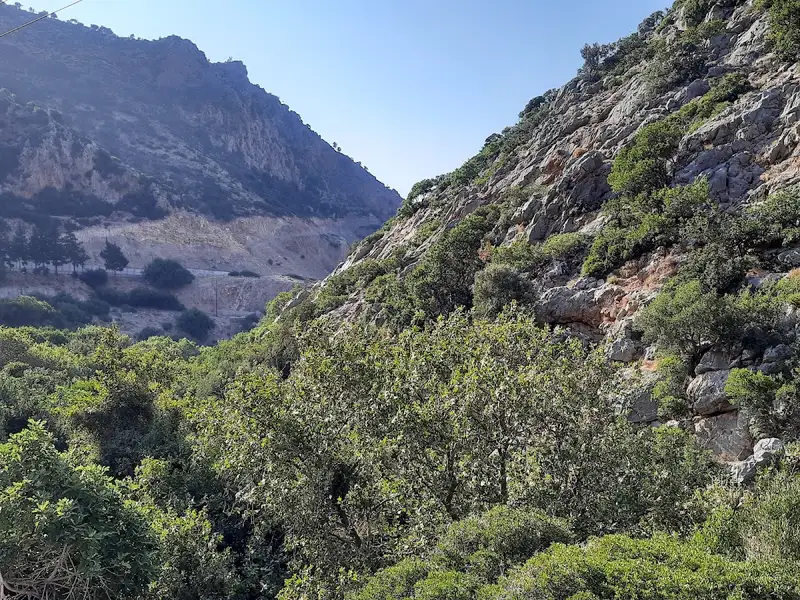
Located approximately 45km east of Heraklion and 21km west of Agios Nikolaos, the Gorge Sellinari is nestled on the eastern slopes of Selena Mount, draining the valley west of Vrachassi. This gorge is a well-known location for all Cretans as the National Road from Heraklion to Agios Nikolaos runs along it. Historically, it served as the natural passage from the region of Lassithi to the fertile north coasts of Heraklion.
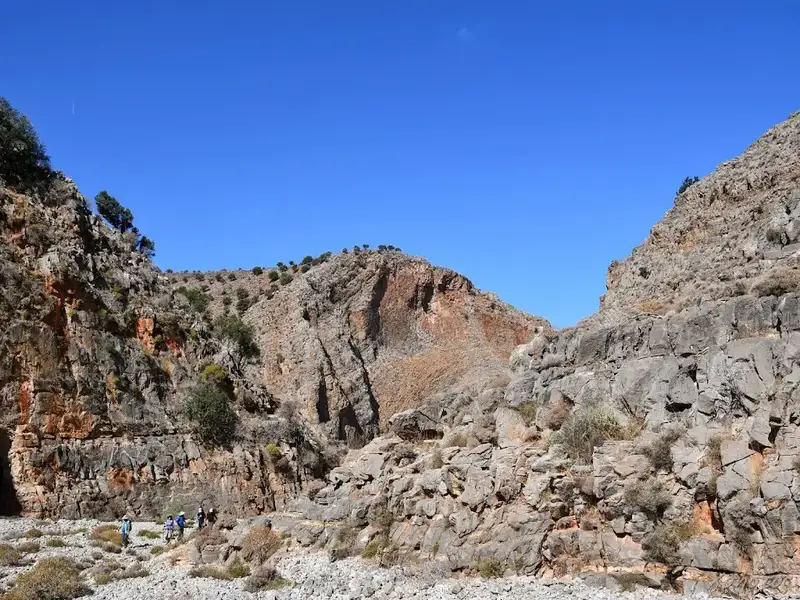
The dense vegetation of Selinari can be enjoyed either by car or by taking a leisurely walk until its exit near Milatos. A route worth exploring is the old National Road, which runs parallel to the New Road and winds through the gorge. The gorge walls and surrounding mountains provide a haven for many birds of prey. Selinari was once a refuge for the rare Cretan wild goat, but sadly, it is now extinct. Several springs are scattered around the area, but the most renowned attraction is the historic Saint George Monastery. For the Cretans, it is considered a bad omen to pass a gorge without stopping at the monastery. This belief stems from the past when the Selinari Monastery served as a rest stop for travelers and their animals.
The Maliaris Gorge, which originates near the Peronides village, travels west of the Souvlos village where a trail commences, and combines with the Anemaliaris gorge before concluding at the Tzavlidon Vlyhada beach. This gorge, characterized by scrublands, expansive areas, and cave-filled walls, is a classic representation of the Mirabello region. Notably, the gorge is home to a massive cave known as Volakospilios, situated in its center.
The Kritsa Gorge, located 9.5km southwest of Agios Nikolaos, begins near the charming village of Kritsa and concludes at Tapes village. This 4 km long gorge, at some points, is only 1.5m wide. It is fairly easy to navigate, with a few areas requiring caution, where large rocks need to be climbed over. However, it is not advisable to visit the gorge following rainfall, as the resulting ponds can obstruct the paths.
The canyon’s entrance near Kritsa is striking. The mountain is split in two, creating the narrow Havgas passage (Havgas is a common term for gorges in East Crete). In addition to the main trail that begins near Kritsa’s stone bridge, there is an alternate path that starts in the village itself.
Close to the trailhead, you’ll find a large rock that can be scaled with relative ease. Beyond this point, the canyon becomes even more breathtaking, with slender passages and towering walls that block out sunlight. This natural wonder is particularly beautiful in spring when flowers are in bloom and water levels are low. The walls eventually recede, revealing a picturesque valley filled with olive groves. If you continue along the riverbed for approximately 1.5 hours, you’ll arrive at the lovely village of Tapes, where you can relax at the local coffee shop.
No results available
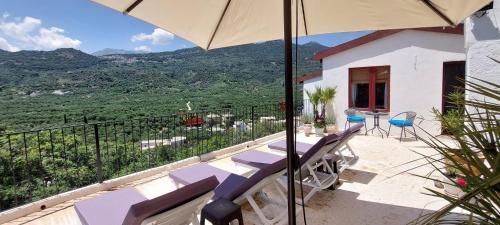
Offering free bikes and a garden, the stone Casa di Pietra are located in Neapolis. They feature fully equipped units with free WiFi access and mountain views. Elounda resort is a 15-minute drive away.
Fitted with a fireplace and parquet floor, all air-conditioned and tastefully decorated houses of Vintage come with 2 separate bedrooms. Each consists of a seating area with flat-screen TV and a kitchen with dining area and oven with hobs.
The property facilities include grocery deliveries. An array of activities can be enjoyed on site or in the surroundings, including cycling and hiking.
The popular Malia Village and Agios Nikolaos Town can be found a 15-minute drive away. This holiday home is 40 km from Heraklion International Airport.
Set in Nikithianós and within 12 km of Lake Voulismeni, Villa Sarichel features a terrace, non-smoking rooms, and free WiFithroughout the property. The property is around 38 km from Cretaquarium Thalassocosmos, 13 km from Panagia Kera Church (in Kritsa) and 15 km from Agios Nikolaos Port. Rooms come with a patio with views of the mountain.
The units come with a microwave, toaster, a coffee machine, a hot tub, a hair dryer and a wardrobe. All rooms are equipped with a kettle, while selected rooms here will provide you with a kitchenette with an oven, a stovetop and kitchenware. At the guest house rooms are equipped with bed linen and towels.
Lixnostatis Folk Museum is 23 km from Villa Sarichel, while Aquaworld Aquarium is 25 km away. The nearest airport is Heraklion International Airport, 46 km from the accommodation.
from
€63
/night
Set in Nikithianós, 12 km from Lake Voulismeni and 39 km from Cretaquarium Thalassocosmos, Platipodi stone house offers air-conditioned accommodation with a patio and free WiFi. The property features garden views and is 14 km from Panagia Kera Church (in Kritsa) and 15 km from Agios Nikolaos Port.
The holiday home with a terrace and mountain views has 1 bedroom, a living room, a flat-screen TV, an equipped kitchen with an oven and a microwave, and 1 bathroom with a shower. Towels and bed linen are offered in the holiday home.
Guests can also relax in the garden.
Lixnostatis Folk Museum is 24 km from the holiday home, while Aquaworld Aquarium is 26 km from the property. The nearest airport is Heraklion International Airport, 47 km from Platipodi stone house.
APIGANOS house, a property with a garden and a bar, is set in Khoumeriákos, 13 km from Lake Voulismeni, 40 km from Cretaquarium Thalassocosmos, as well as 15 km from Panagia Kera Church (in Kritsa). This property offers access to a balcony and free private parking.
With direct access to a terrace, this air-conditioned villa comes with 3 separate bedrooms and a fully equipped kitchen. Towels and bed linen are offered in the villa.
Agios Nikolaos Port is 16 km from the villa, while Lixnostatis Folk Museum is 25 km from the property. The nearest airport is Heraklion International Airport, 48 km from APIGANOS house.
from
€137
/night
No results available
Connect with thousands of Crete visitors and boost your bookings.
No results available
© All rights reserved. Crete Locals