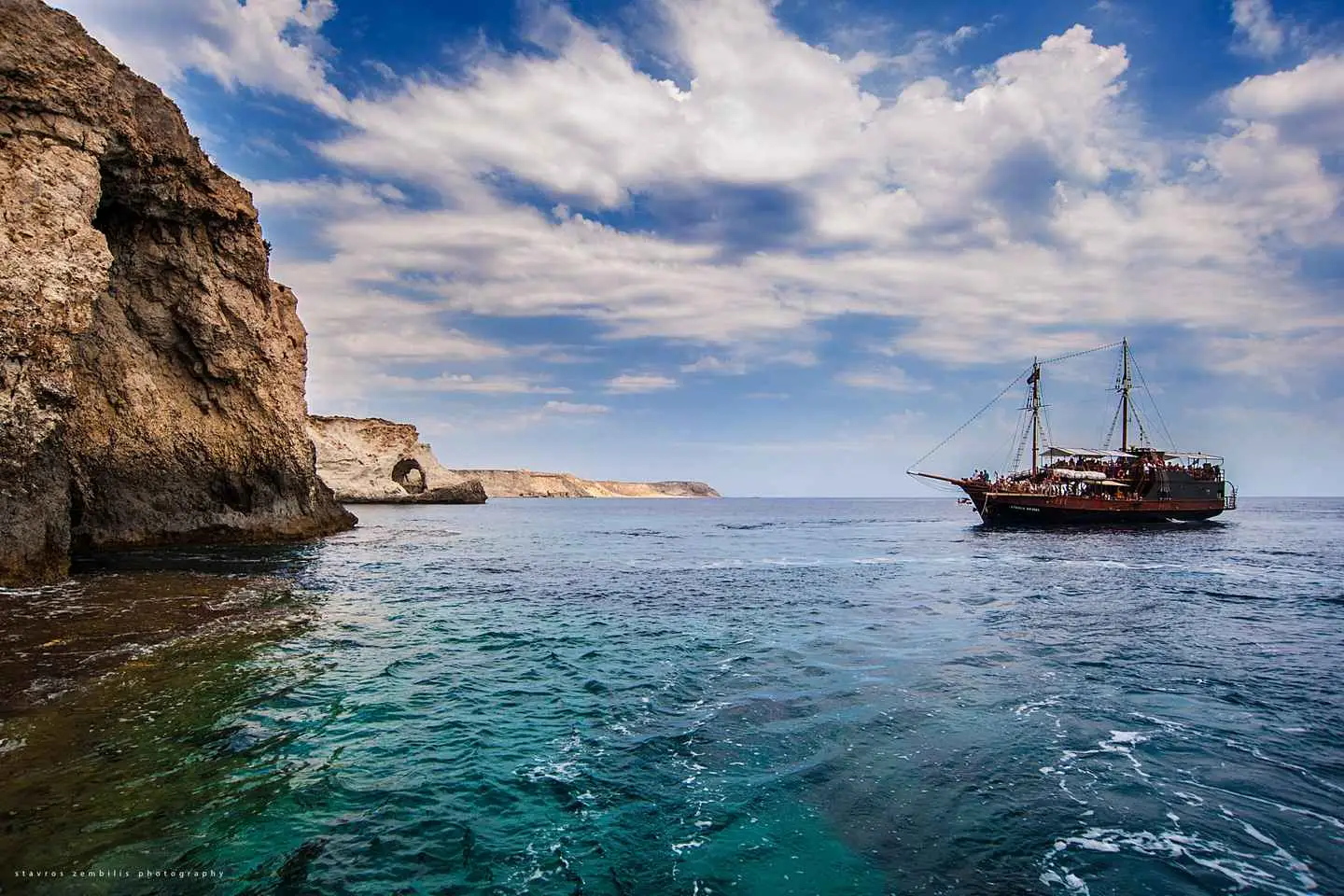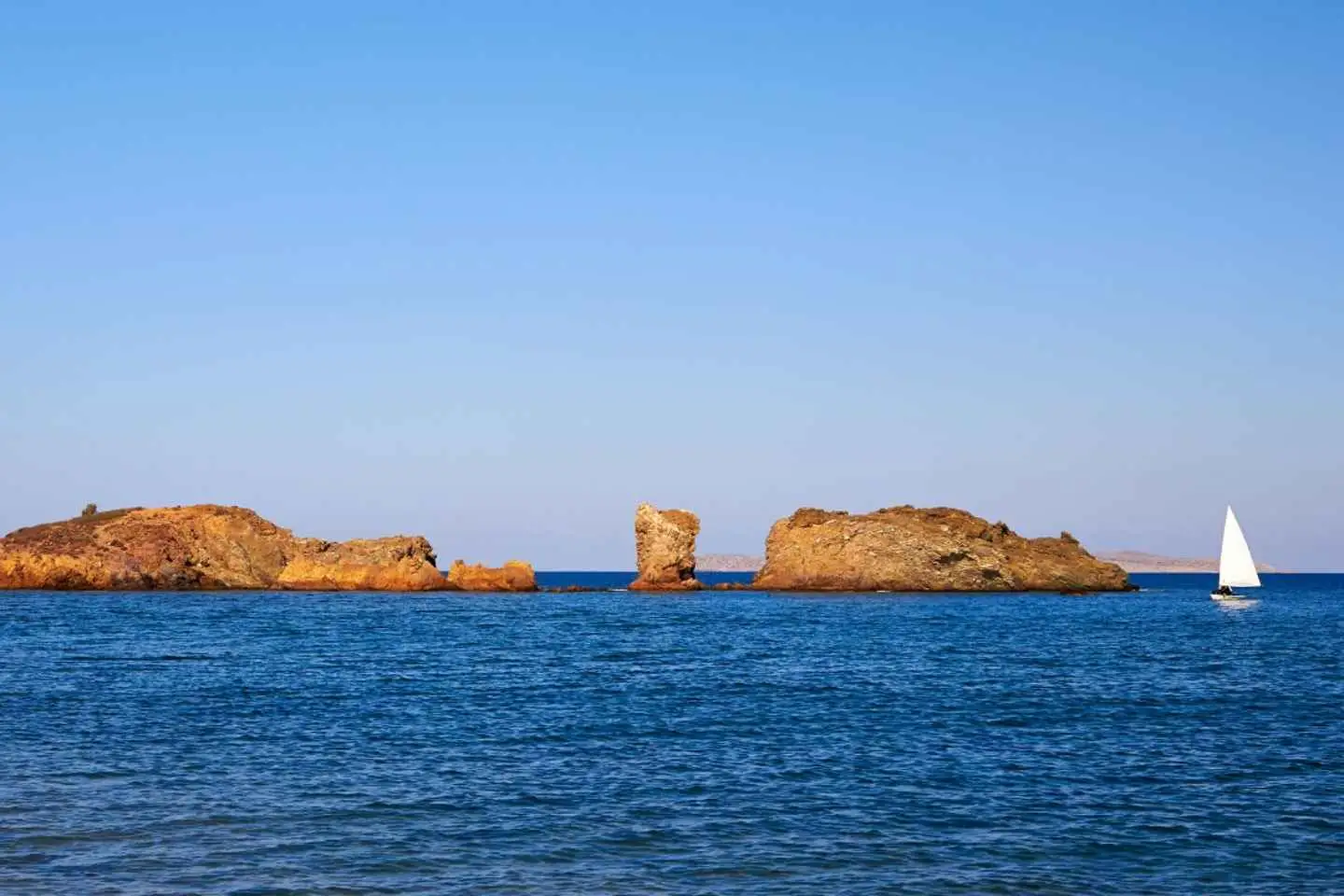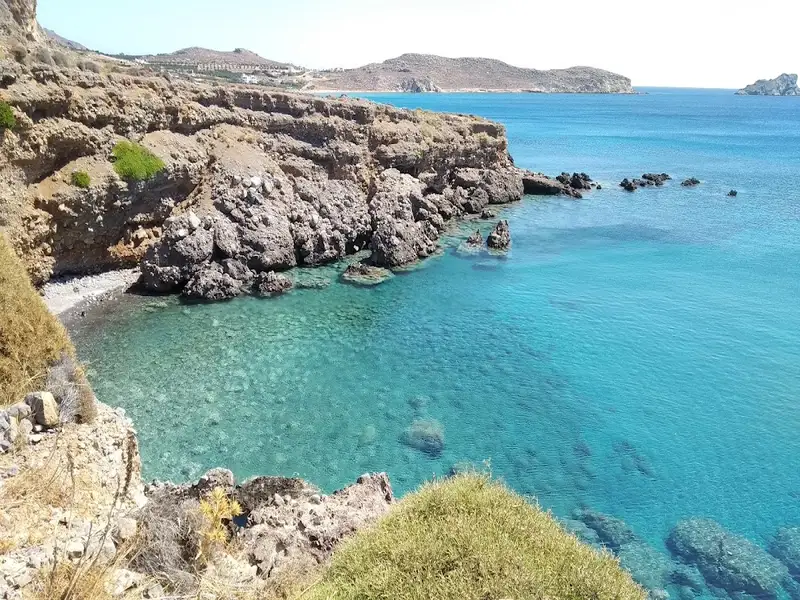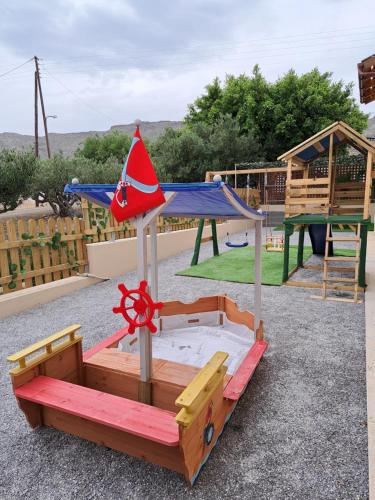
After arrival by bus in Makris Gialos to the southern coast of Crete, the boat trip begins with on the pirate ship “Eydokia” to Koufonisi. The trip through the crystal clear waters of the Libyan Sea takes about an hour. Approaching the island admire the views of caves and the steep cliffs.
The island is surrounded by 36 fantastic beaches and a walk around the island gives you the opportunity to enjoy the tranquility of the countryside, the emerald waters, and the fine golden sand.
The self-service bar is open throughout the cruise so you can enjoy lunch, snacks, salads, and drinks.
Discover the enchanting allure of East Crete with our meticulously crafted day tour.
Toplou Monastery
The journey starts as we make our way to the storied Toplou Monastery. You’ll be allotted 40 minutes to delve into its rich history, admire its distinctive architecture, and soak in the breathtaking views of the Cretan countryside that envelops this sacred site.
Vai Palm Beach
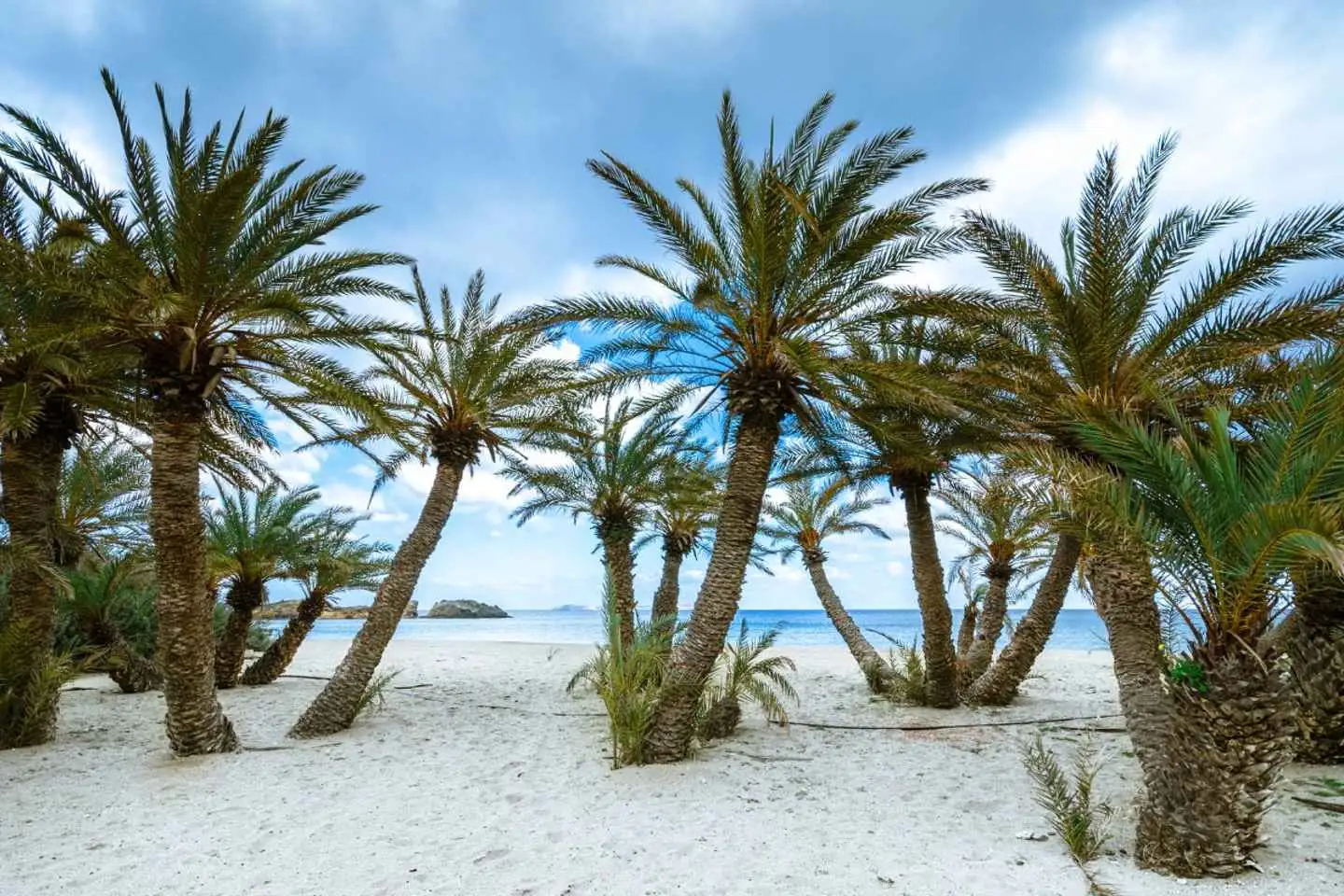
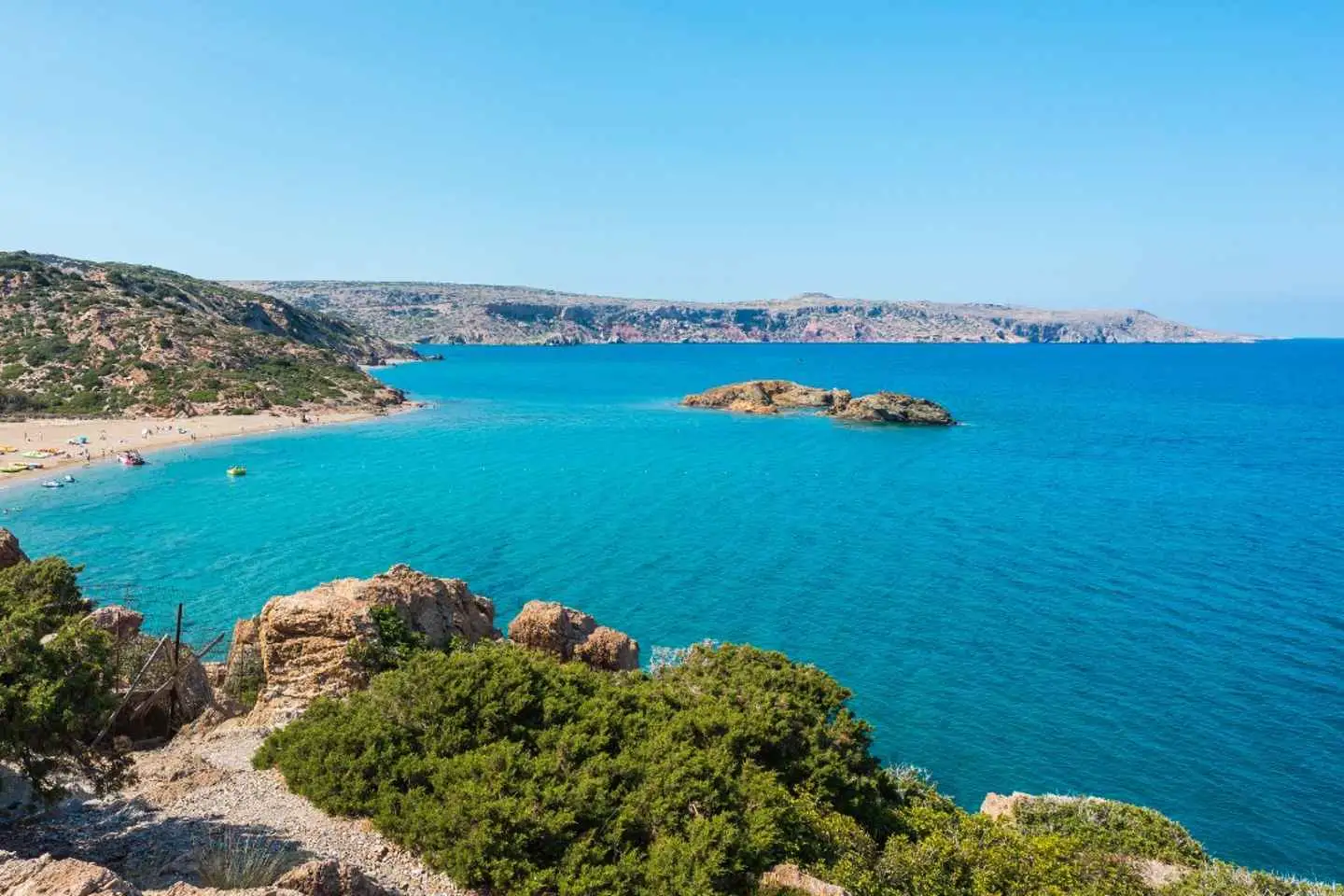
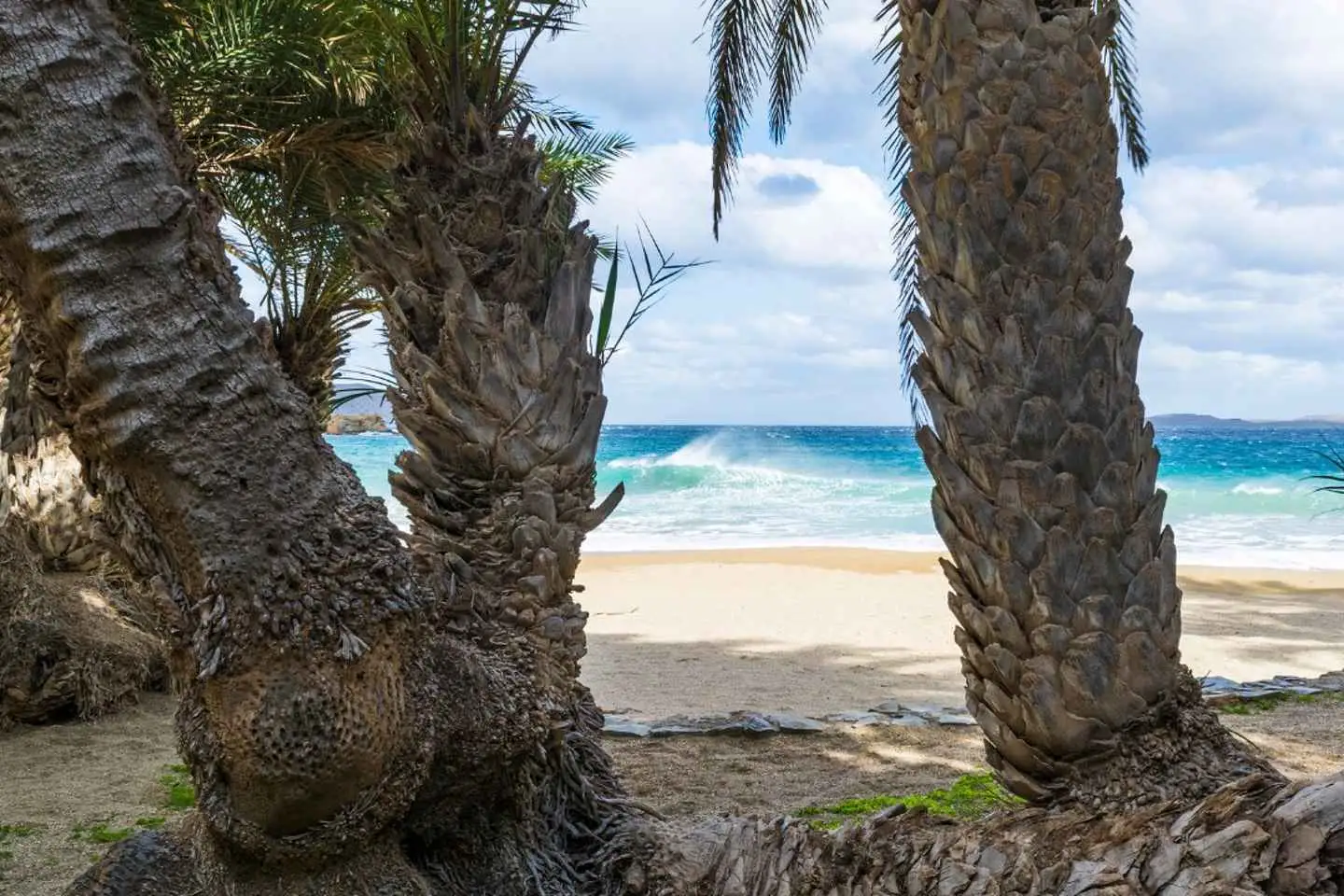
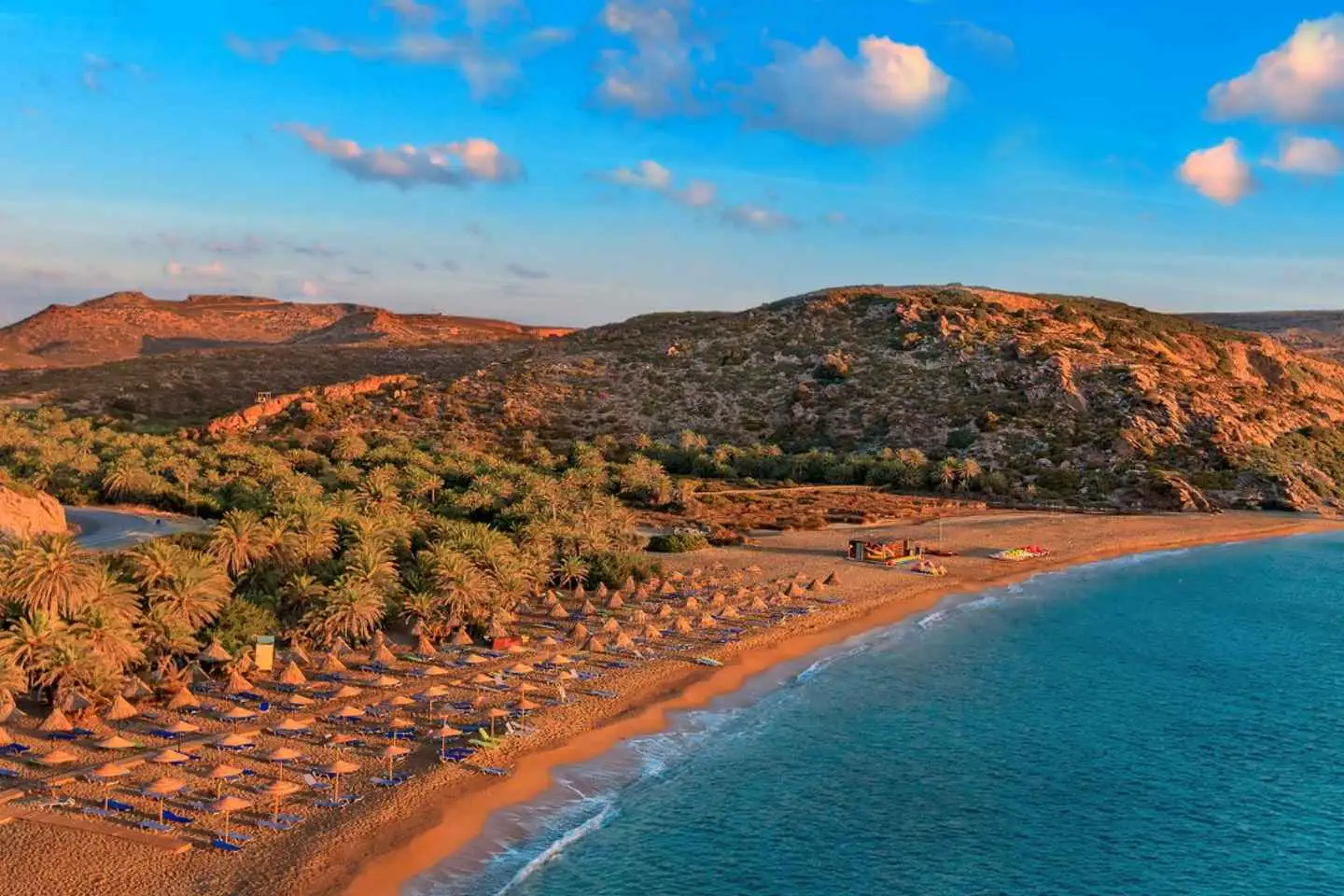
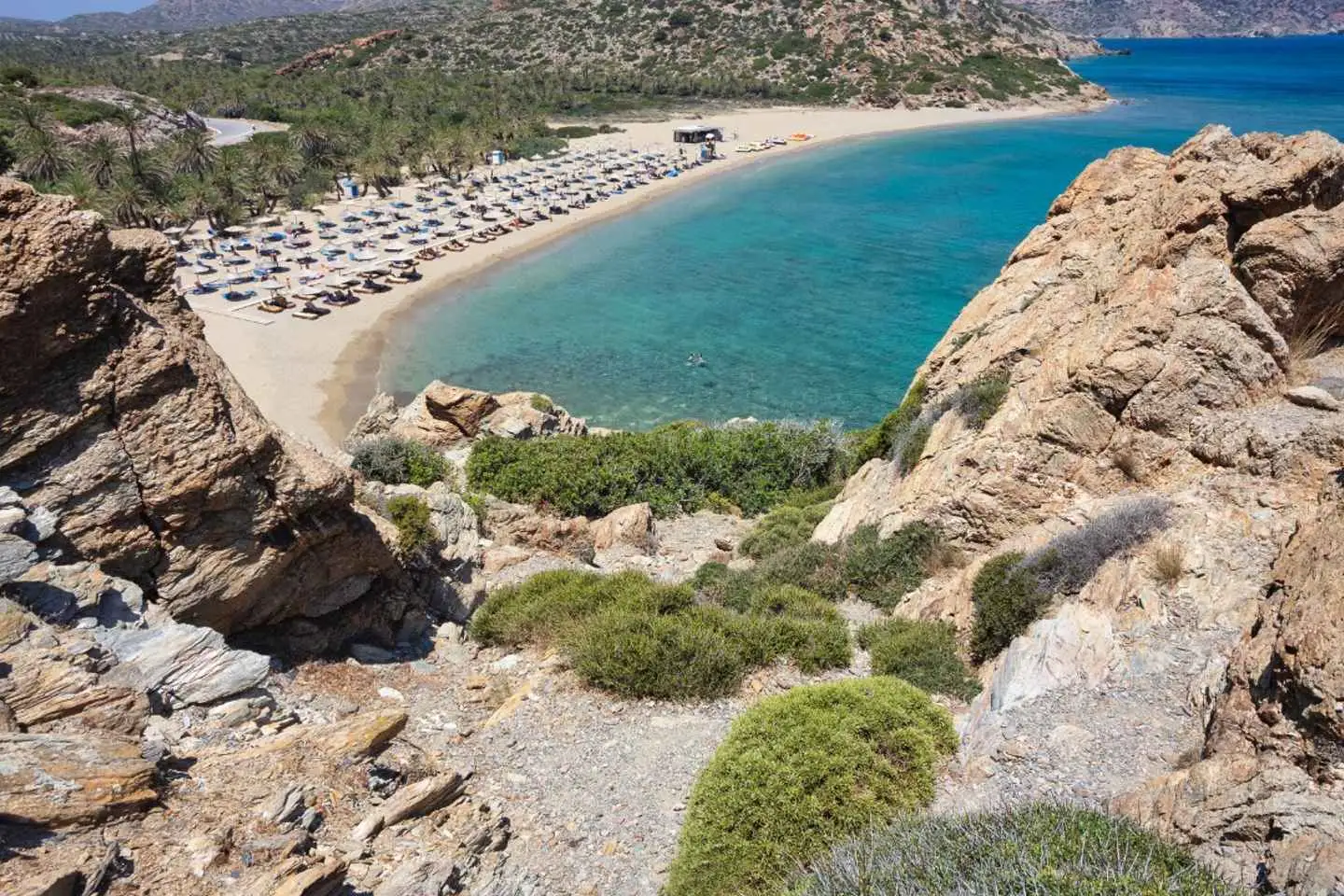
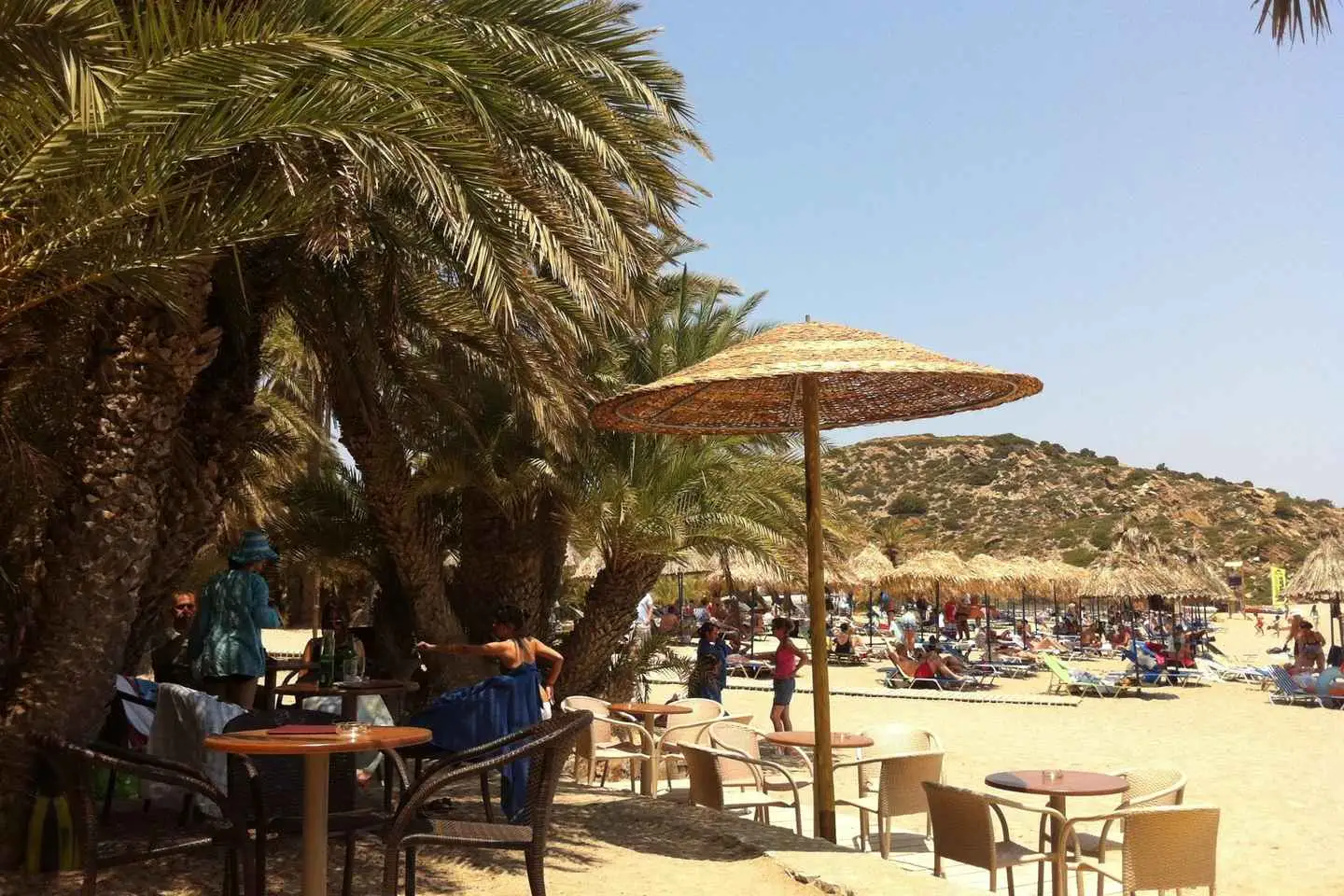
Next, we venture to the idyllic Vai Beach, celebrated for hosting Europe’s largest natural palm forest. Enjoy two hours of leisure time to swim in its azure waters, sunbathe on its golden sands, relish a tasty lunch, and take in the mesmerizing beauty of this unique landscape through your camera lens.
Sitia Town
Our exploration culminates in the picturesque town of Sitia, a gem that allows you to experience its lively beach road, enjoy a coffee at a traditional café, and indulge in exquisite local sweets over a 40-minute visit.
As the sun sets on this unforgettable day, we return to Heraklion by bus, carrying with us a treasure trove of memories from this enchanting journey through East Crete’s most cherished sights.
Start your day tour discovering the beautiful east part of Crete!
Visit Toplou, a 15th-century monastery located in a dry and barren area. Toplou monastery is one of the most significant monasteries in Crete, dedicated to Panagia (Virgin Mary) and St. John the Theologian.
Continue the tour to visit the largest palm forest in Europe, Vai Palm Beach. The palm forest draws thousands of visitors each year. They come not only for its wonderful palm forest, but also for the large sandy beach spread out at its foot.
Last stop of the day the cozy town of Sitia, with a lovely beach road and Venetian castle.
Detailed Time Schedule:
Morning Pick Up
We will start collecting participants from pick-up points in the morning.
Depending on the place of your hotel/apartment the bus drive will differ.
Bus Drive to Toplou: 2 hours amd 30 minutes
1nd stop: Toplou Monastery – 40 minutes
Our participants willenjoy a visit to the historical and beautiful Monastery of Toplou.There they will spend about 40′ of guided time and free time to take photos of the unique architecture and the Cretan Natural landscape outdoors.
Bus Drive to Vai Beach: 20 minutes
2rd stop: Vai Beach – 2 hours and 30 minutes
Stop at Vai, the biggest natural palm forest in Europe. Enjoy your free time to swim, sunbathe, have lunch and take photos of this exotic landscape of Crete.
Bus Drive to Sitia: 30 minutes
3rd stop: Sitia – 1 hour and 20 minutes
Participants will enjoy some free time to explore the town on their own pace, walk by the cosmopolitan beach road, have a coffee at a traditional cafe or taste the delicious local homemade sweets.
End of the tour – Arrival at resorts:
Embarkation in the buses and drive back to the hotels where we gathered participants in the morning.
Depending on traffic and on the pick-up places of each one, the time of journey back to the hotel will differ.
Return Bus Drive to Heraklion: Around 2 – 3 hours hours
Following collection from select areas, the experience starts from Agios Nikolaos heading east. This is an excellent opportunity for you to admire the sublime Gulf of Mirabello, which is Eastern Crete’s riviera. You will then pass through many picturesque villages before reaching the 15th-century Toplou Monastery.
The compound features a small museum with notable exhibits of Christian-Orthodox art, such as sacred utensils and chalcography by the monks of Mount Athos. There is also an olive press which produces olive oil of outstanding quality, as well as wine-making facilities. Both the olive oil and the wine produced in the monastery are exported all over the world.
You may participate in a wine and spirit tasting session (optional) at the monastery’s cellar, after which you will pay a visit to one of the main attractions in eastern Crete, the protected Palm Forest of Vai. It is unique in Europe and is located next to one of the most beautiful beaches of the island. At this location there will be plenty of time for you to enjoy swimming, as you bask in the rare beauty of the landscape. On your way back, you will stop at Platanos where you can watch the sunset in an area which boasts an enchanting view.
No results available
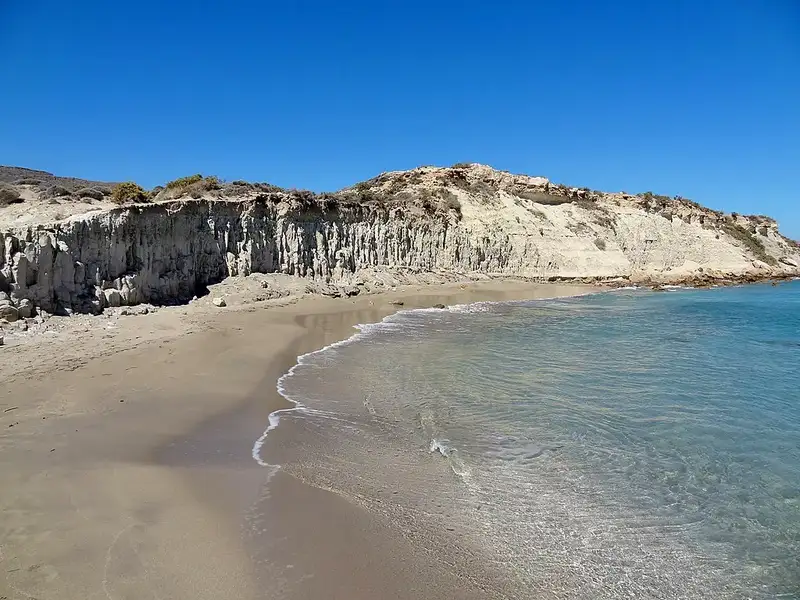


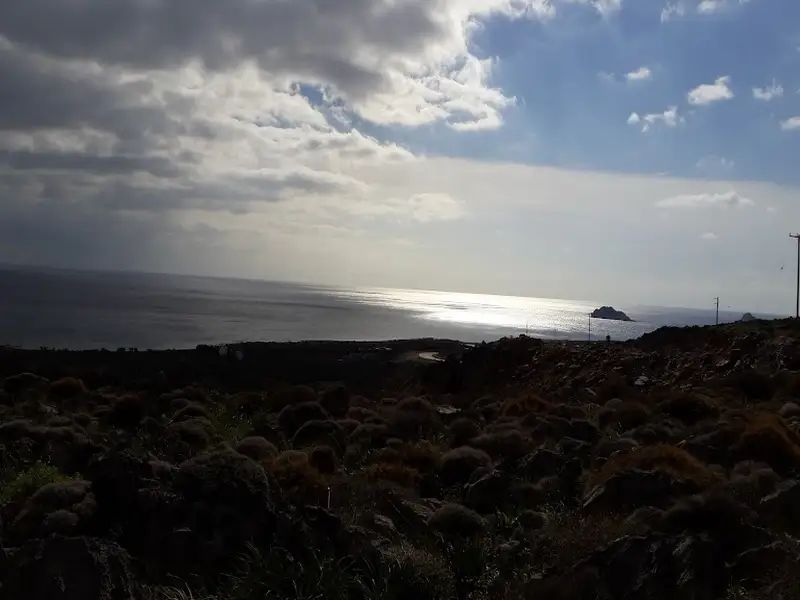
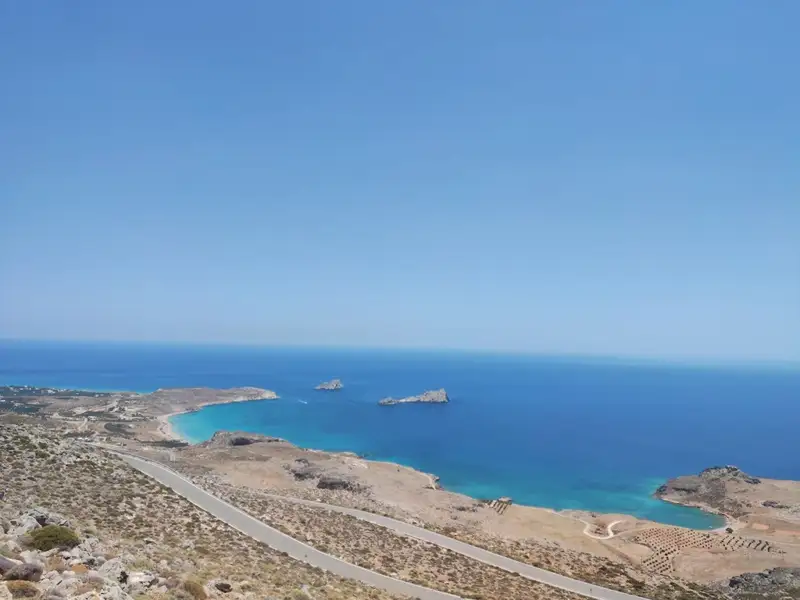
The remote settlement of Xerokambos is nestled 103km southeast of Agios Nikolaos, 47km south of Sitia, and 69km east of Ierapetra in the Lassithi prefecture. It is primarily accessible via the road that links the cities of Sitia and Ierapetra with Ziros. An alternative route is the asphalt road from Zakros. The journey from Ziros unveils lush green plateaus, abandoned medieval towns like Etia and Chametoulio, and offers breathtaking views of the South Cretan Sea and the rugged Gorge of Lamnoni.
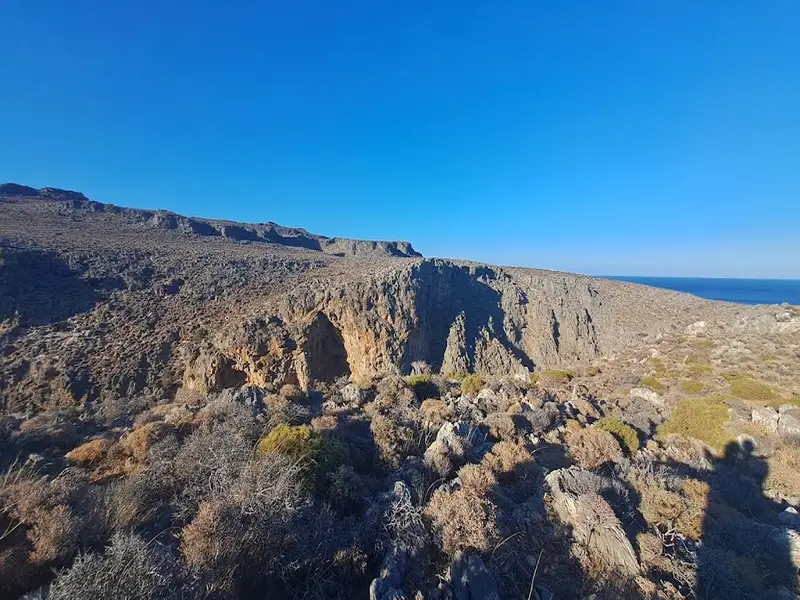
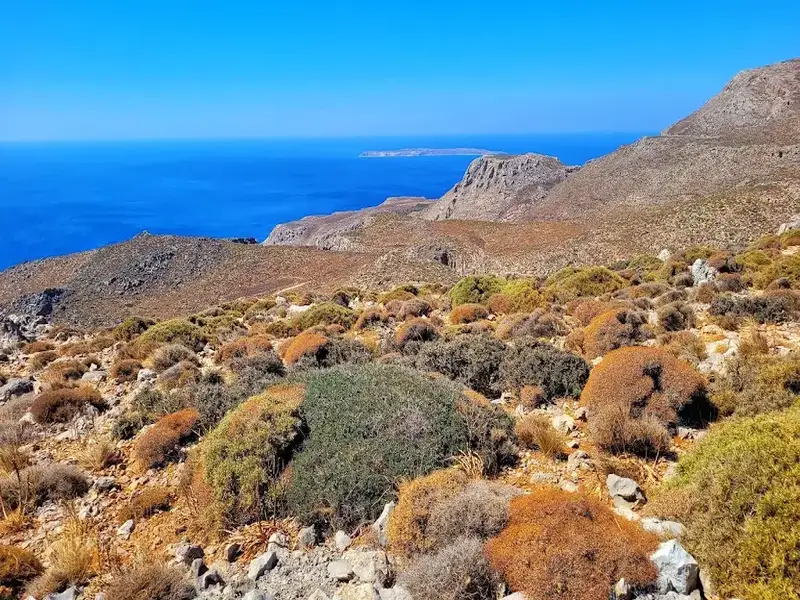
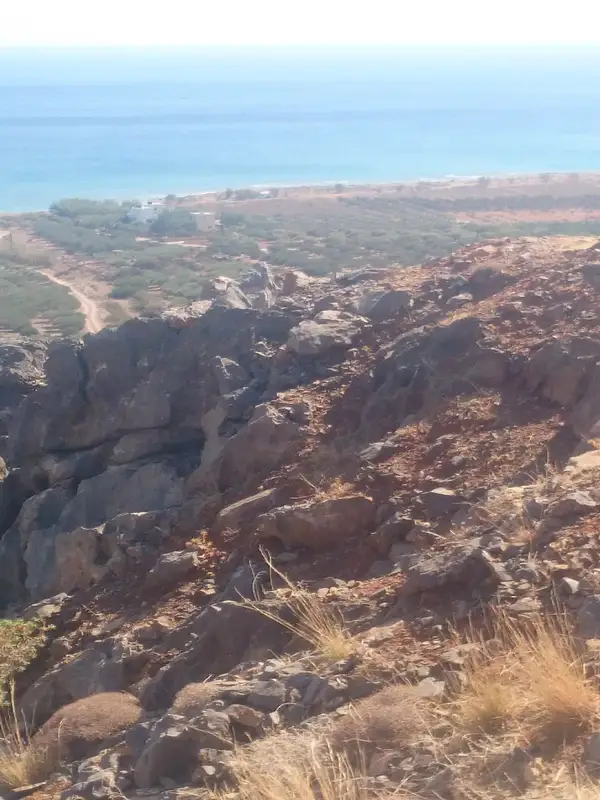
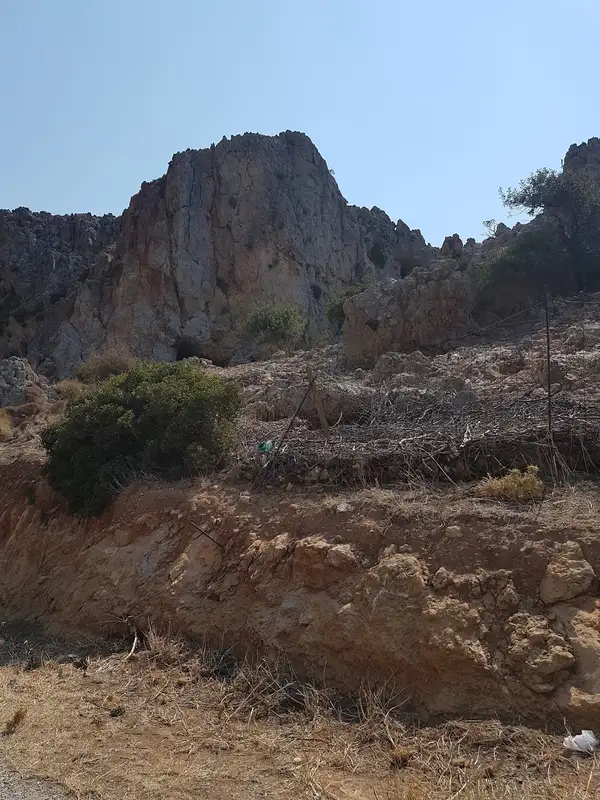
The stark, eerie landscape of Xerokambos is defined by barren rocks and towering mountains. Its sparse vegetation consists mainly of shrubs, with occasional olive groves. Despite its isolation, it has begun to evolve into a small tourist destination, especially after the roads were paved. Xerokambos, ideal for a peaceful retreat, is not recommended for those seeking nightlife. The village offers several accommodations, mini markets, and taverns, while a pharmacy, butcher, and petrol station are available in Zakros, a 15-minute drive away.
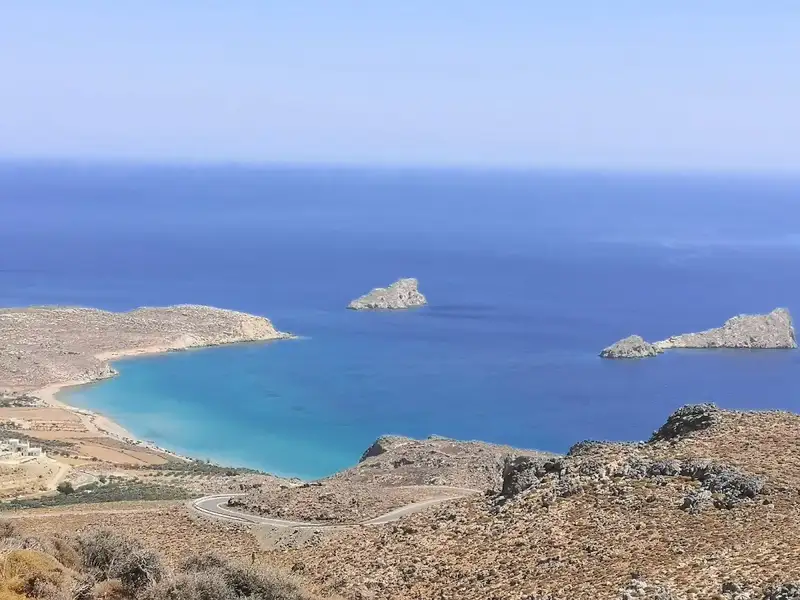
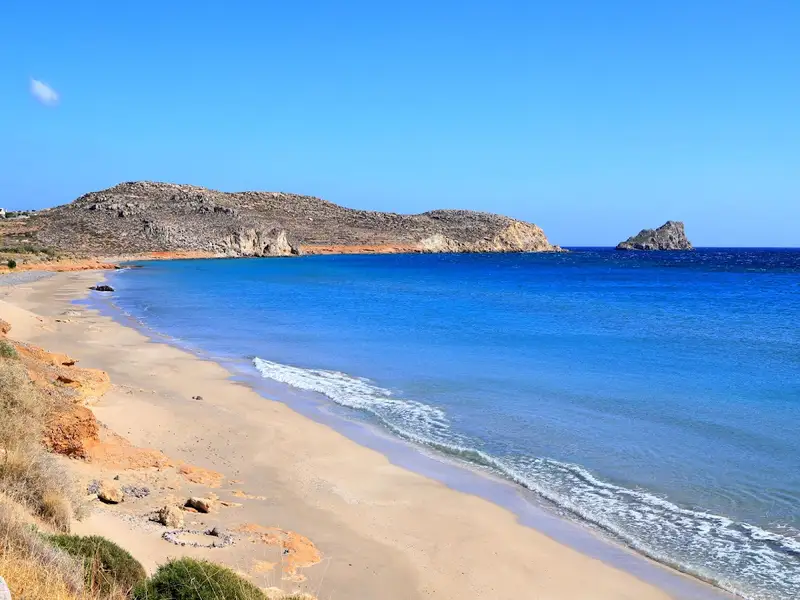
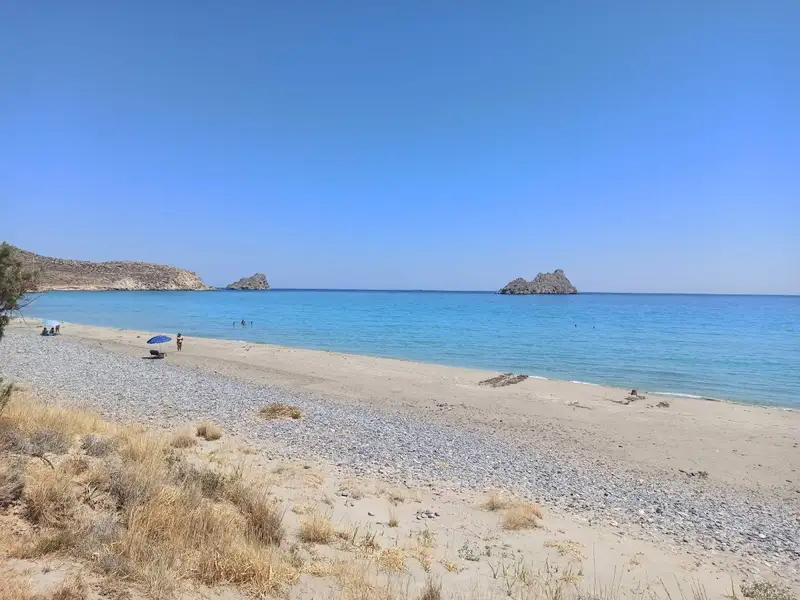
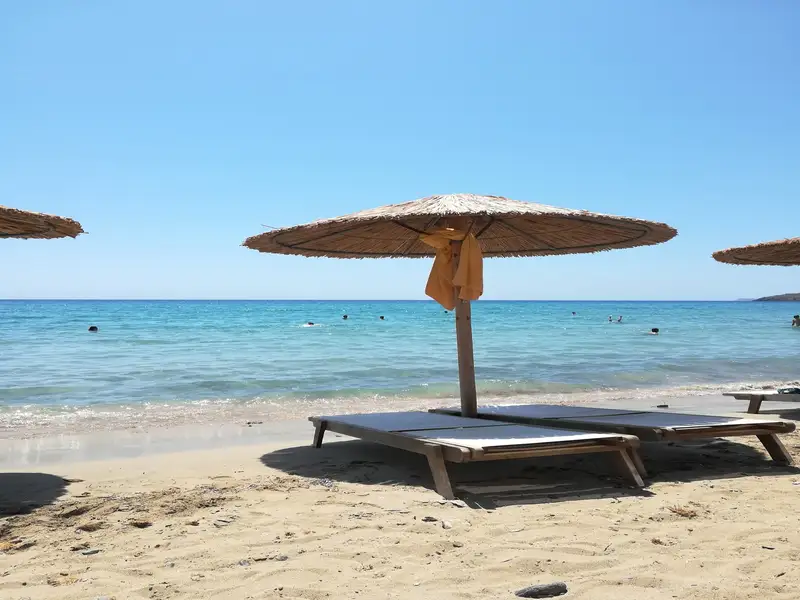
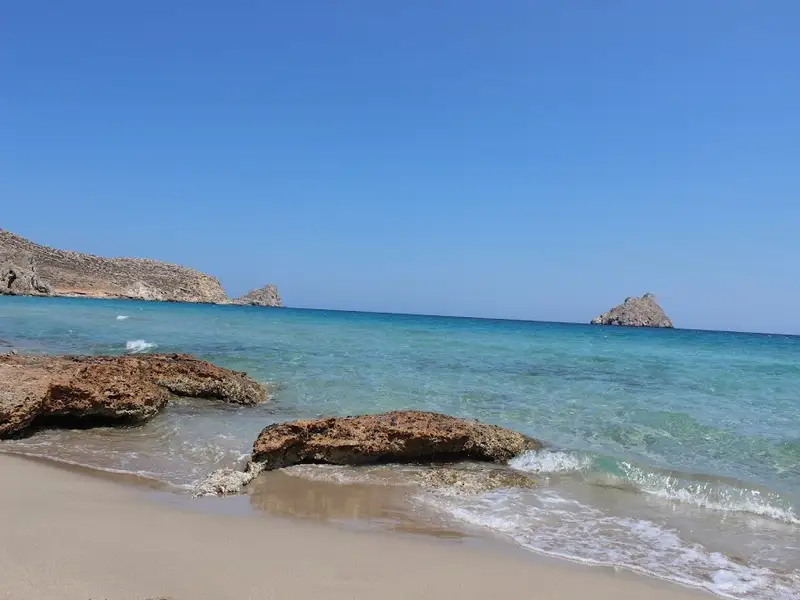
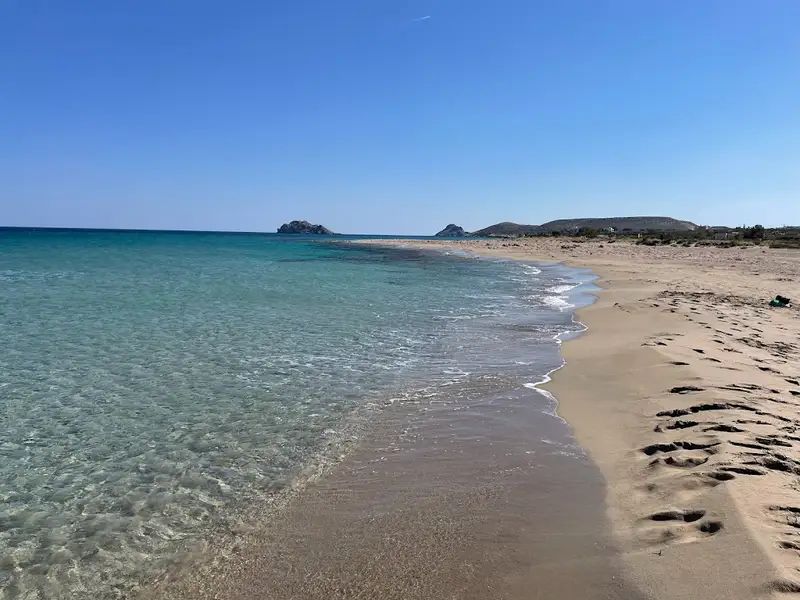
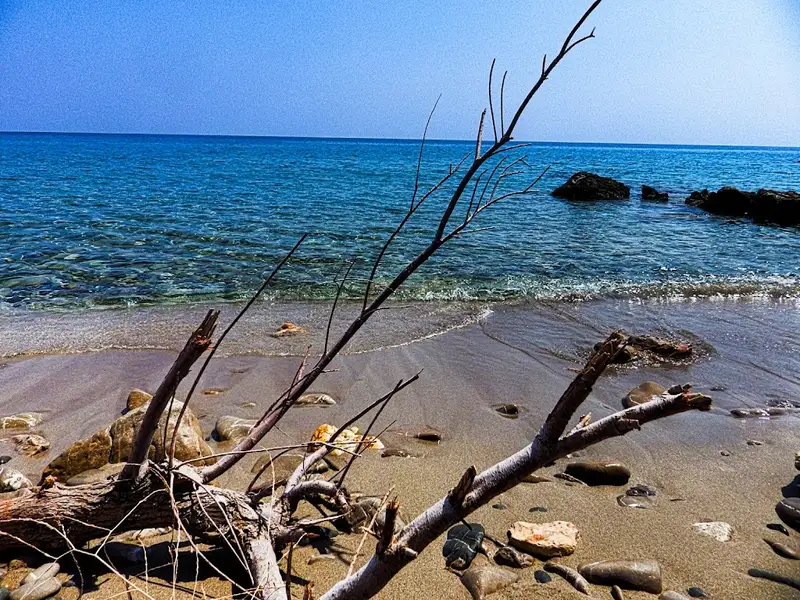
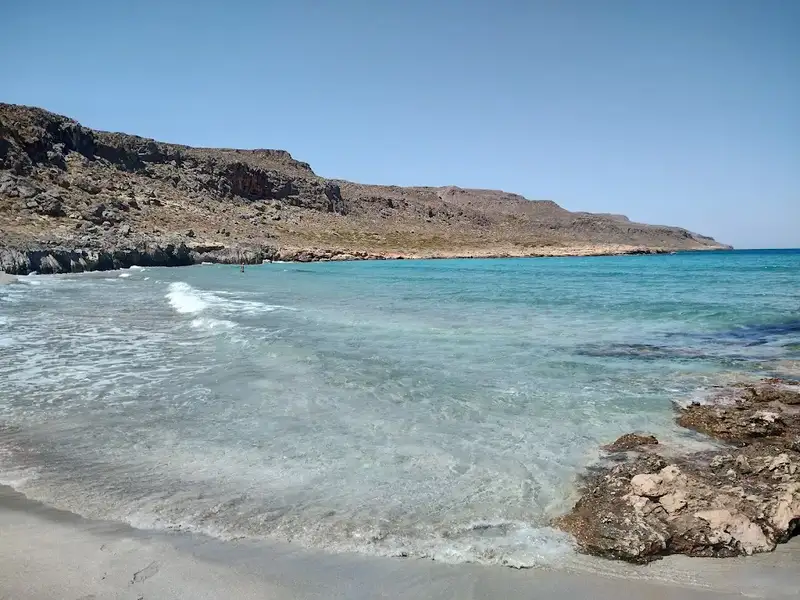
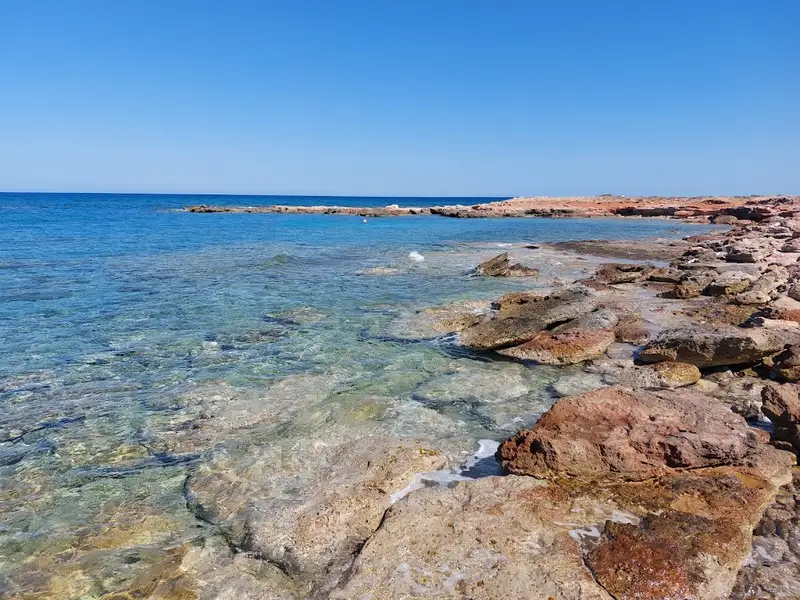
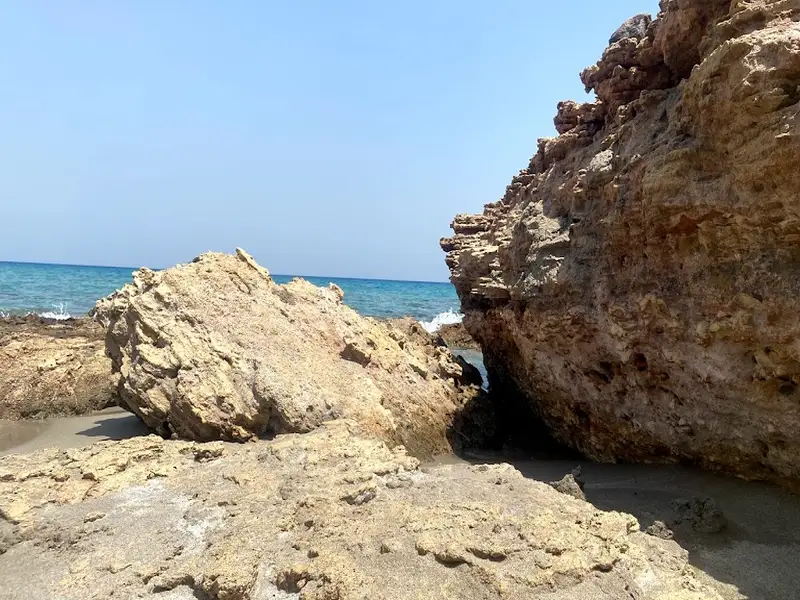
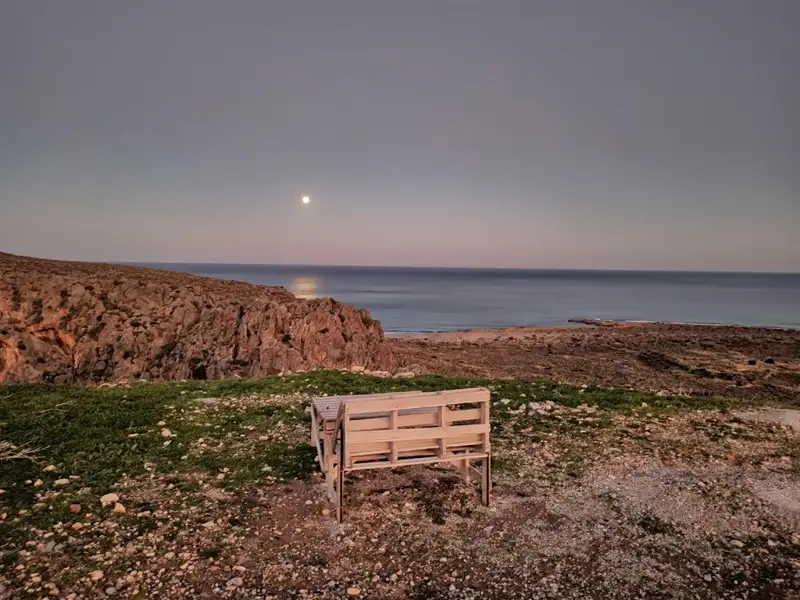
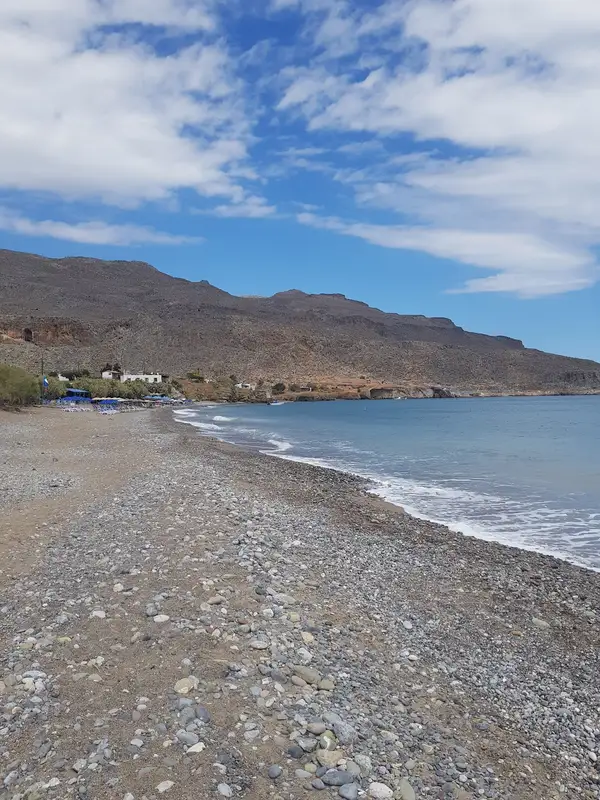
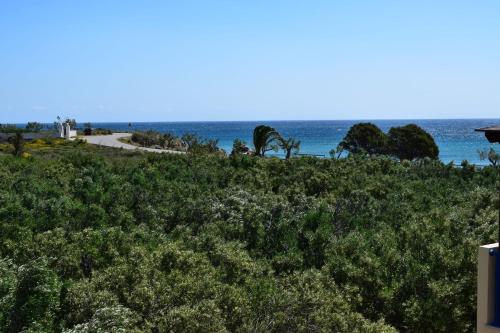
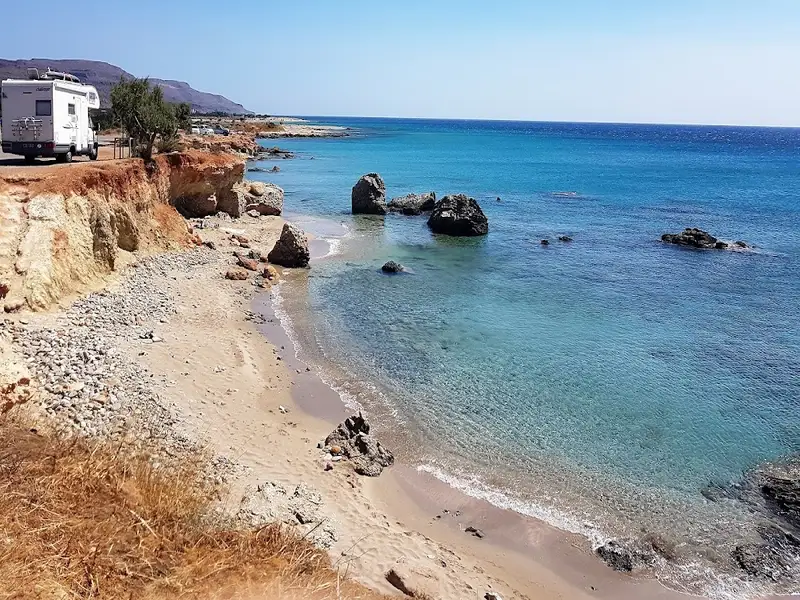
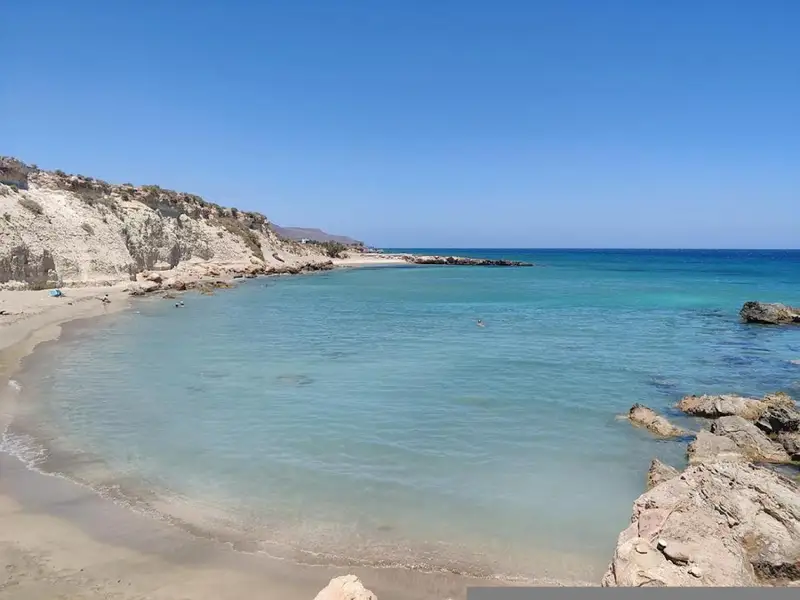
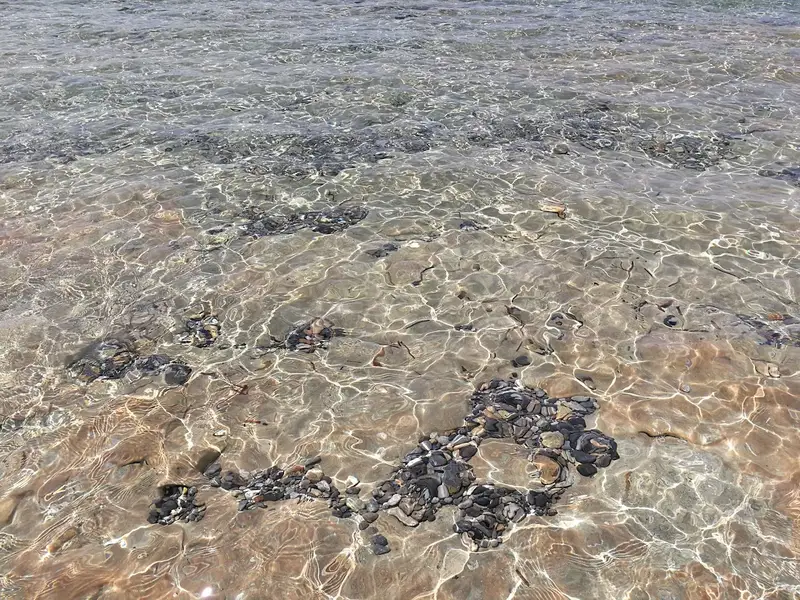
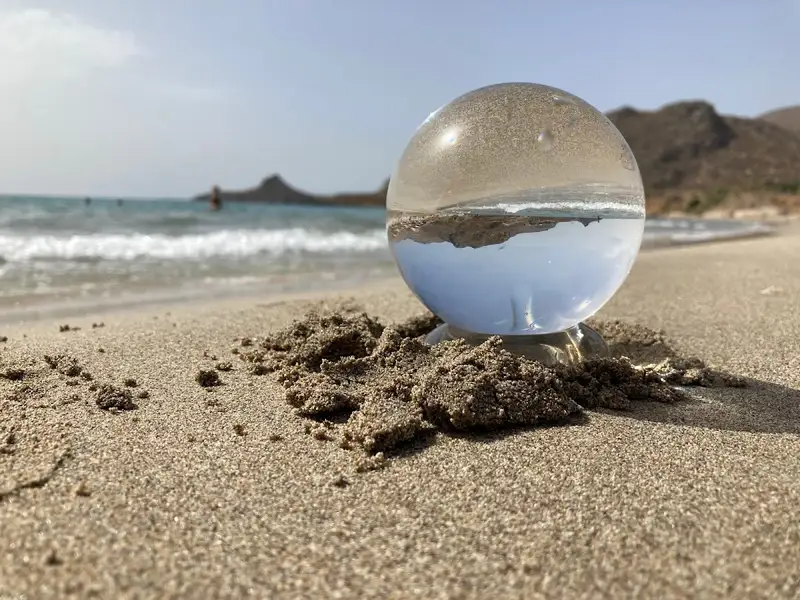
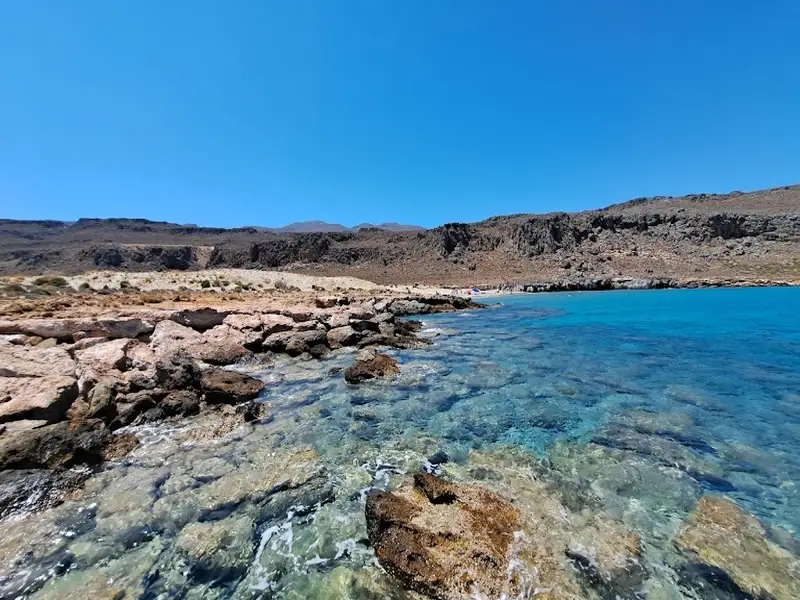
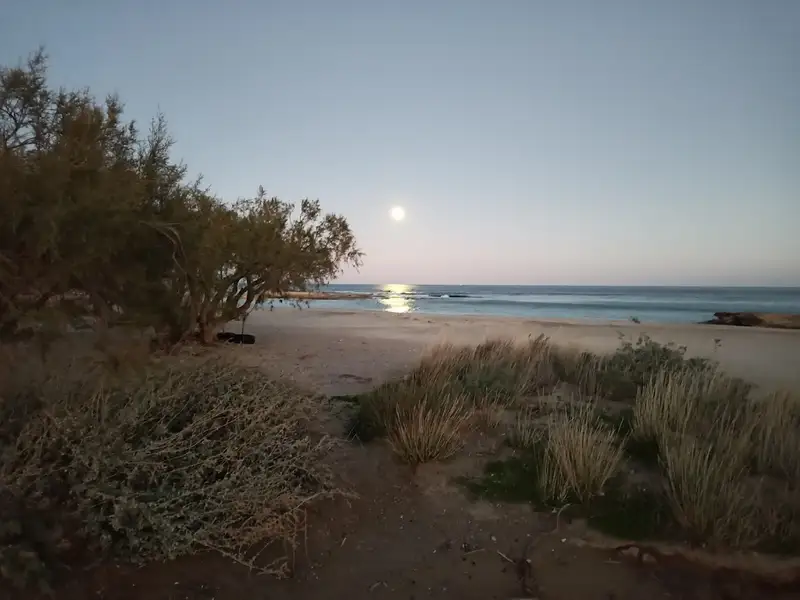
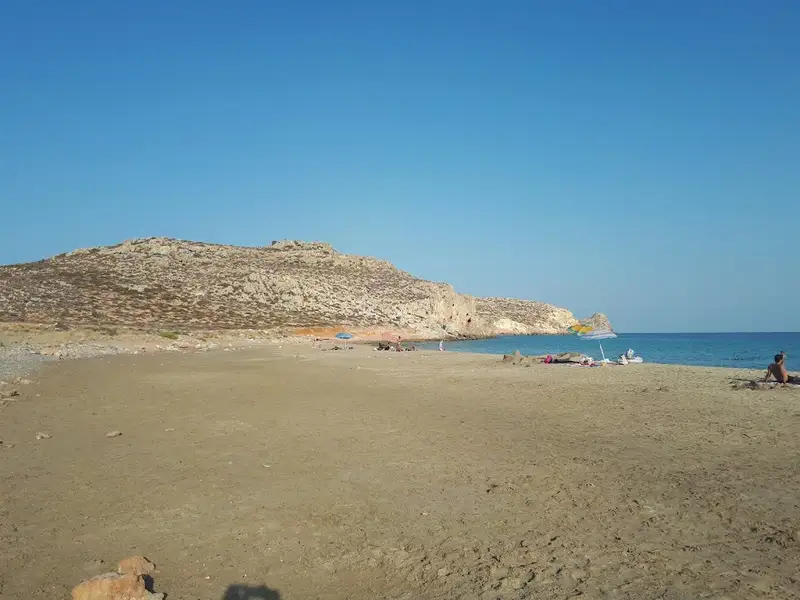
The serene sea and beautiful beaches of Xerokambos contrast sharply with the wild mountainous backdrop. The region offers a variety of beaches, including rocky, pebbly, sandy, and even a clay beach for natural spa enthusiasts.
The main region of Xerokambos, Ambelos, lies east of Cape Trahilos. This is where you’ll find the majority of accommodations and taverns. A picturesque blue-domed church, Saint Nicholas, and the remnants of the Hellenistic city of Ambelos are also sights to behold on a nearby hill. The first beach here, Gerontolakkos, or Agios Nikolaos, is followed by a narrow argillaceous beach where visitors often engage in mud baths. This beach is aptly named Argilos, which translates to clay.
Further along is Vourlia, a small bay featuring golden sand and local accommodations and taverns. From here, the coastline becomes rockier, stretching northeast through a protected area for the white sand Lilly.
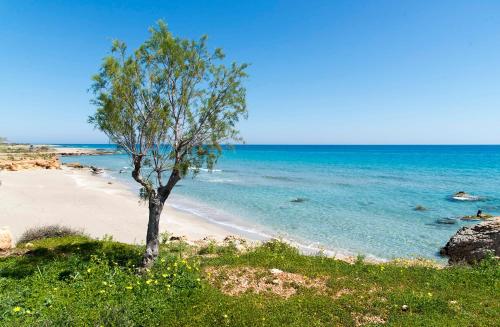
A 500-meter journey west from the Xerokambos settlement will lead you to the area’s initial hotels and the expansive beach of Mazida Ammos, the longest in Xerokambos. This stunning beach boasts white sands and crystal-clear shallow turquoise waters. To the east, it’s well shielded by Cape Trachilos, at whose tip you’ll find a sea cave named Fokiospilio. Across from Mazida Ammos, you’ll spot the minor islets known as Kavali.
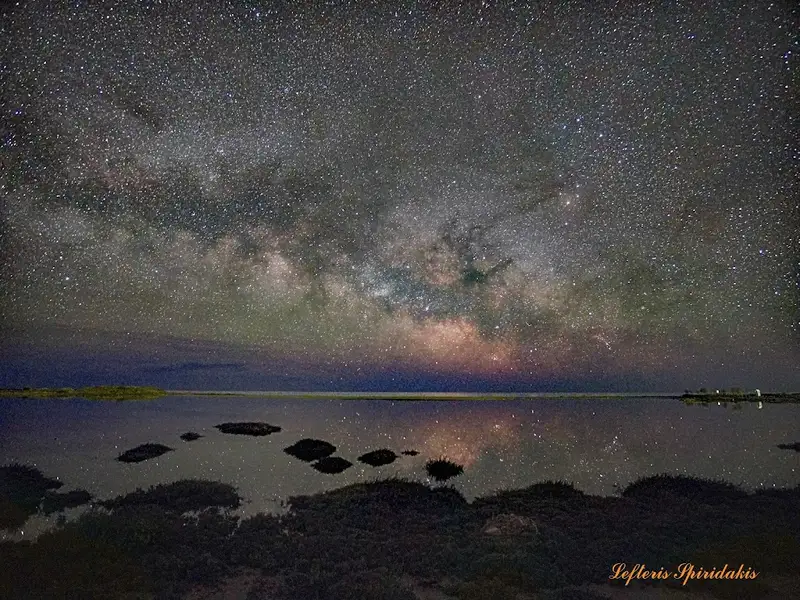
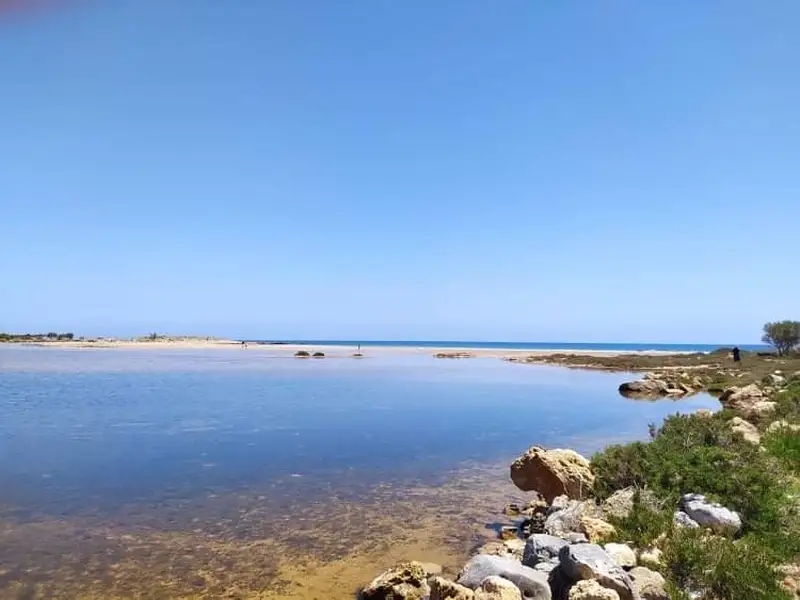
Located 500m east of Xerokambos, you will discover one of the most unique landscapes in Eastern Crete. A vast dried salt lake lies adjacent to the sea during the summer months, which may not seem particularly striking. However, visiting in the spring or winter months will reveal its true significance. During these seasons, the lake, known as Alatsolimni, or Salt Lake, fills with water and transforms into a miniature lagoon. This environment fosters the growth of thousands of microorganisms and serves as a sanctuary for migratory birds waiting for calmer winds. You may spot a variety of bird species such as herons, hawks, and flamingos.
A beautiful sandy beach with shallow waters extends in front of the lagoon, providing an ideal spot for solitude. The most opportune time to visit is early spring, when the lake is still flooded and the surrounding area is adorned with vibrant blossoms. Locals refer to this area as Alykes, which translates to saltpans, a name derived from the form of the shallow waters.
Opposite the bay, the islets of Kavali provide a suitable habitat for the Falco eleonorael. Other species in the area include the Falco peregrines, Aquila chrysaetos, and Hieraaetus fasciatus. During migration, the area is also frequented by the vulture Neoprhon percknopterus.
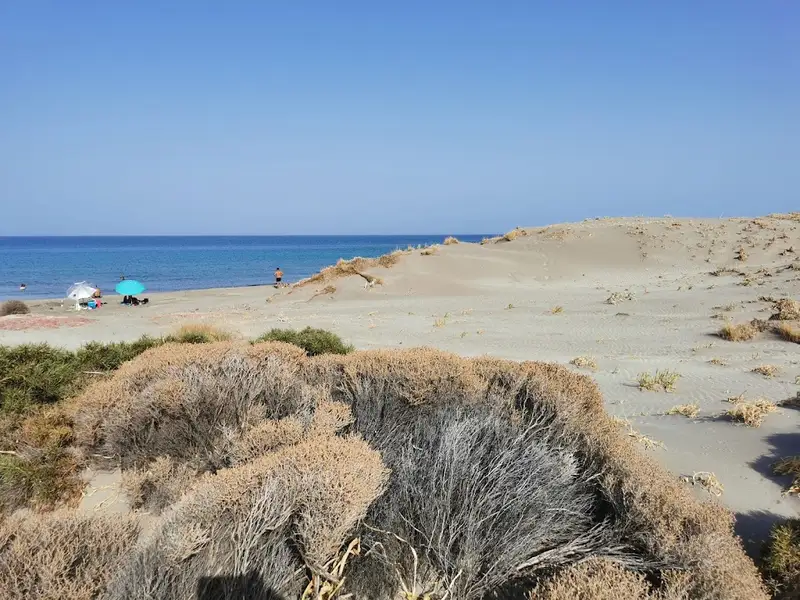
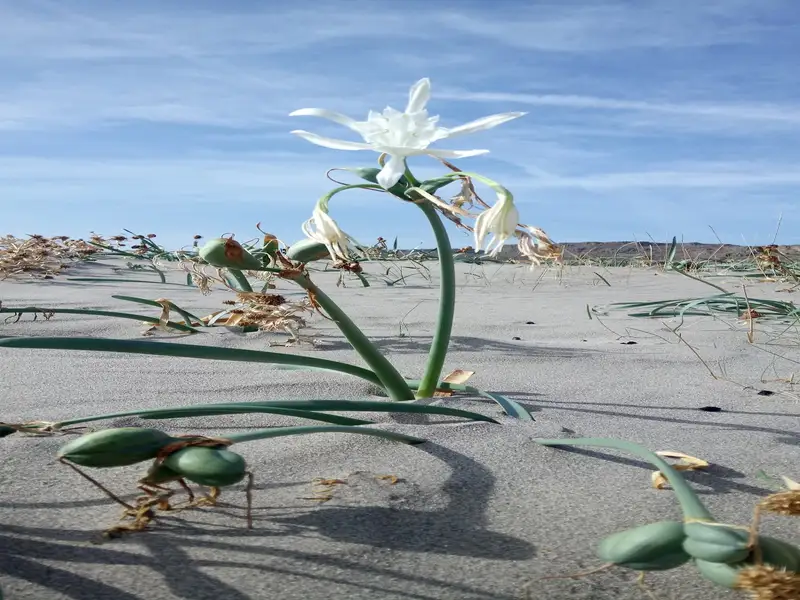
Alona beach, also known as Krinakia, is located near the exit of the Katsounaki Gorge, to the east of the Xirokambos settlement. A torrent from the gorge flows onto the Potamos beach during winter, situated adjacent to the stunning sandy beach of Alona. The beach is dotted with sand dunes, which are blanketed by white sea daffodils in the fall season. Trekking through the canyon is fairly effortless, highlighting a wild landscape with imposing walls; a trek from the top to the bottom of Alona is possible.
To the west of Alona lies another beach, Potamos, accessible by car. It’s located at the mouth of the Katsounaki river, characterized by large round pebbles. One can reach it by driving along the river towards the sea. While it may not be particularly remarkable, it offers a serene and secluded atmosphere. This beach is also referred to as Italika, named after Italian houses located on the beach.
No results available
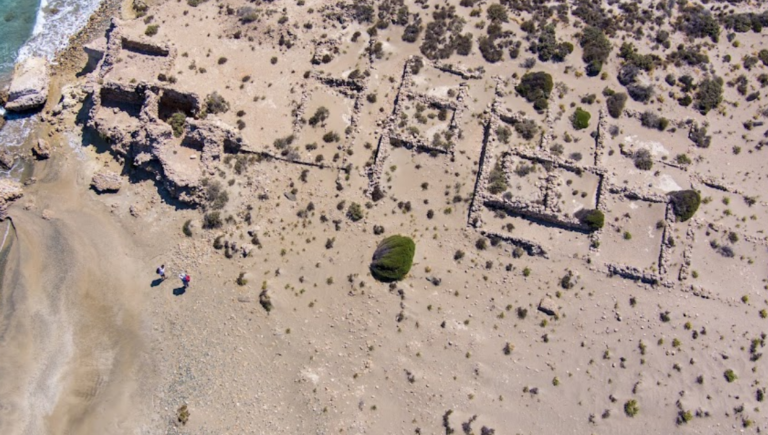
The thin yet often wavy stretch of sea dividing the islands of Koufonissi from the opposite coasts of Crete did not hinder the continuous presence of humans in ancient times. The ancient name Lefki (meaning white) was inspired by the shimmer of white limestone and marl in the sunlight.
Koufonissi was an economic and cultural center from the Minoan until the Greco-Roman Times and was claimed by all major cities of the region. As recorded on the inscription of the Magnites, currently embedded on the facade of the Toplou monastery church, there was a significant dispute between Itanos and Ierapytna about the island. In 132 AD, the island was owned by Itanos.
The history of the islands is closely tied to sponge fishing and processing of Tyrian purple, the red dye used by Ancients and Byzantines, which was extracted from the gastropod Murex brandaris. According to Aristotle and Pliny, live shells were collected in early autumn or winter and were then put in pots until many of them were gathered since each shell produced just one drop of dye. After that, the smaller shells were broken with stones. The larger mollusks were pierced and then a small gland called “flower” was extracted. Then, they put the milky liquid in salt, added a little vinegar, and left this in the sunlight. Its color turned red from yellow and was then diluted or condensed with boiling. The dye, the Tyrian purple, was sold at that time as it weighed in silver. If they added hyacinth blooms, the color was violet, but it was considered of inferior quality.
In 1976, excavations began on the island, uncovering remarkable findings. On the northwest edge of the island, at Anemertia, opposite the Marmara islet, and a short distance from the beach, the excavations revealed a well-preserved stone theater. The auditorium was damaged only on its west side, while a significant part of the central seats has completely disappeared. The auditorium has twelve rows of seats and a maximum length of 34 m. The distance of the twelfth row to the orchestra floor reaches 6 m. It is estimated that the auditorium could accommodate about 1000 people.
The orchestra, almost chamber, was paved with clay tiles. The stage, completely corrupt in its western part, should have a length of 20m while the width is estimated at about 9m. At the eastern end, one can make out the paraskenion, the pulpitum or stage, the hyposkenion, and also the east parados which was vaulted. The theater had rich decoration, which was vandalized. The theater was destroyed and burned with ferocity at the end of the 4th century.
East and south of the theater, the excavations revealed a settlement that seems to have been destroyed, such as the theater. Excavations have unearthed a large house or villa of which 8 proper rooms still exist. One enters through a small but impressive porch (propylon) facing the road which leads to the east parados of the theater. The kitchens were identified and also the household workshop for the preparation of purple dye. Two formal rooms for entertaining were found with mosaic floors of black and white geometrical designs (based on the rhombus and the cross) framed by a surround. In the main part of the settlement, other houses have been excavated; 16 rooms have been cleared – probably houses of fishermen since installations for the preparation of purple dye were found and also fishing equipment such as hooks and lead weights for nets.
The most important building of the settlement – following the theater – is the imposing building of the Public Baths (Balinea), which was in use from the 1st to the 4th AD century. The pathological love that Romans had for the public baths, combining physical cleaning with training and discussing, is well known. The Baths building was necessary not only in cities but also in small dorps. In rich houses, there was a separate area, a miniature of the public Baths (Balinea), while the imperial Baths (Thermae) were famous for their luxury.
The Bath complex of Koufonisi includes all the spaces that followed the standards of the Roman Baths: Around a garden, there are rooms such as that for the central heating system (whose walls are preserved at a height of 4 m), two hypocausts (perhaps for men and women separately), baths for sweating, warm, hot and cold bath, and changing rooms. Luxury is still visible in some rooms, in the preserved parts of the marble floor and walls. A large number of vaulted tanks with pipelines is impressive. They were used to bring water from the springs located north of the Temple to the other side of the island.
In the south part of the island, a temple was found, which unfortunately has suffered from predatory looting from the authorities (in 1920) to build a huge lighthouse, only 5m from the eastern short side of the temple where the entrance would have been, even though another stepped entrance was found on the north side. The overall dimensions of the temple were 18m x 15,7m with a crepidoma, while next to the north-west corner two large pieces of the colossal cult statue of the temple seen were found. This represented a deity enthroned on a cube-shaped seat. The fragments found are: a part of the seat with the left side of the pelvis, and the right leg from the draped or folded waist of the garment down to the ankle. Unfortunately, it is very damaged, but it appears to be of the Hellenistic period, and the height of the whole statue must have been over 2,50m.
The rest of the statue, however incredible it may seem, must have been broken up by the workmen and used as building material for the lighthouse (which was bombed in 1944). Here the lumps of marble can be seen wedged among the other stones, also the huge symmetrical blocks which were uprooted from the temple of which only the steps and the filling remain – even the flooring has disappeared. As if all this were not enough, in more recent years, a metal automatic lighthouse pylon (now removed) had been set up over the floor of the temple, placed perhaps, who knows, by the ironical hand of fate right where the colossal statue of the deity, worshipped by the people of Lefki, used to stand in all its splendor.
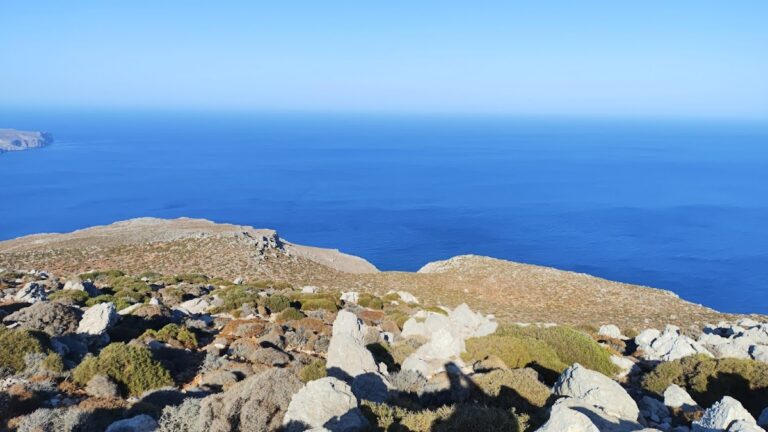
The peak of Traostalos (or Tragostalos) was initially excavated in 1963-1964 and later in 1978 by the archaeologist team led by Kostis Davaras. These excavations uncovered one of the numerous peak sanctuaries in Eastern Crete. In addition to the typical clay human and animal figurines found in peak sanctuaries, Traostalos is known for a female figure with a swollen leg. Other discoveries at Traostalos include ceramic boats and stone altars. A rescue excavation took place from April to October 1995, led by Stella Chryssoulaki.
Located at an altitude of 515m, the summit can be reached by a dirt road that starts from the village of Azokeramos in the Sitia province. The peak sanctuary appears to have a religious connection with the Pelekite Cave, situated on the western slopes of the hill, overlooking the sea.
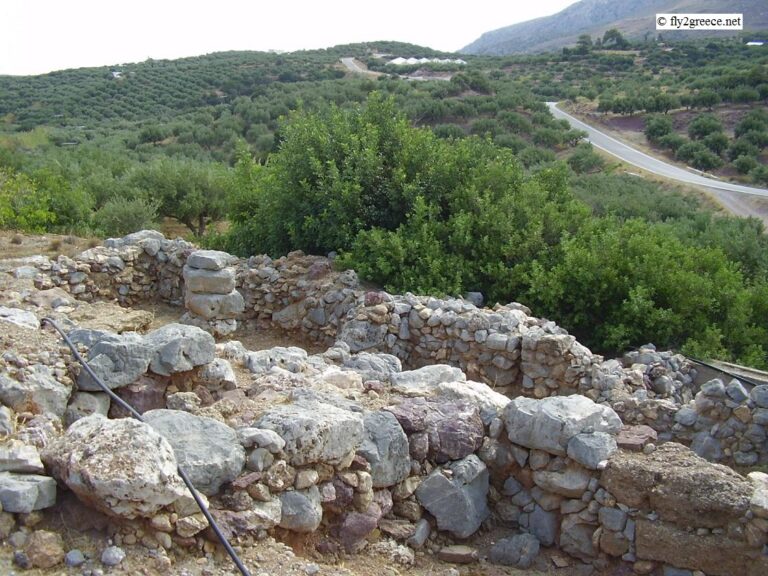
The Minoan villa of Zakros was unearthed in 1965 by N. Platon and I. Sakellarakis close to the town of Ano Zakros, along the road leading to Kato Zakros beach. This rural villa featured comprehensive facilities for wine production, bearing great resemblance to contemporary ones, and large jars for wine storage. The wine press can be seen at the Archaeological Museum of Sitia.
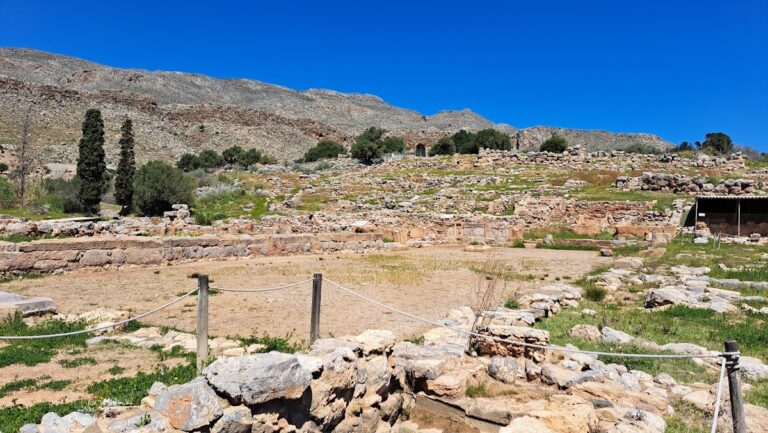
Zakros, situated in a secluded area of eastern Crete, 45km southeast of Sitia, was a significant port and administrative center for Eastern Crete during the Minoan Age due to its faster communication with the Middle East. Numerous findings, including gold sheets, ivory, jewelry, and pottery, highlight the city’s close ties with the ports of Cyprus, Egypt, and the Middle East.
The Palace of Zakros, constructed at the entrance of the impressive Gorge of the Deads, is the fourth largest Minoan palace to be excavated. The region is abundant in archaeological treasures, with the name of the gorge itself derived from the pre-Minoan graves discovered on its sides. While the site is open to visitors, most artifacts are housed in the museums of Heraklion, Sitia, and Agios Nikolaos.
The palace spans 4.5 acres, while the surrounding settlements cover a total area of 8 acres. Excavations began in 1900 by the British School of Archaeology and continued until 1940, revealing numerous Minoan houses and objects. Nikolaos Platon discovered the palace in 1961 after viewing three golden artifacts from Zakros in a doctor’s collection. The unlooted Palace of Zakros, with its intact treasury vault, is considered one of the most significant archaeological finds.
Similar to other palaces in Crete, the palace was constructed in 1900 BC, destroyed in 1600 BC, and re-destroyed in 1450 BC. The palace’s heart was a large central courtyard, which connected to a paved road leading to the port. Remnants of kitchens, workshops, warehouses, the treasury vault, the file room, a lustral basin, skylights, a banquet room, royal apartments, and a large pool-like fountain can still be seen around the courtyard. Numerous multi-room houses, likely auxiliary to the palace, were also located nearby.
A plethora of freshwater wells can be found in the Zakros region. Interestingly, many turtles reside in the wells located within the site. German scientists are studying this peculiar phenomenon and believe that the turtles’ presence in Zakros dates back to the Minoan era. Additionally, north of Zakros, near the Pelekita cave, visitors can see the quarry from which the palace materials were extracted.
No results available
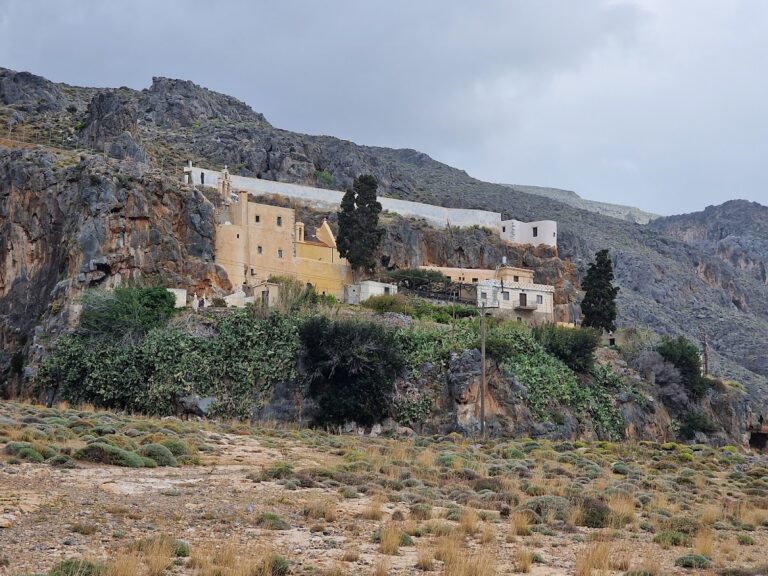
The Kapsas Monastery of St. John is situated 9km east of Makrigialos, adjacent to Goudouras, and is owned by the Toplou Monastery near Sitia. It is dedicated to the Beheading of St. John the Baptist, which is commemorated on August 29.
This monastery is constructed like a fortress on a steep, rocky slope above the sea, along the edges of the stunning Pervolakia gorge. A picturesque pebble beach can be found in front of the monastery.
It is said that the monk Joseph Gerontoyannis, who lived in a nearby cave, made the monastery famous due to his miraculous abilities. He was able to experience divine visions, walk on the sea to the neighboring island of Koufonissi, and cure any sickness. Today, he is honored on August 7.
No results available
No results available
No results available
No results available
No results available
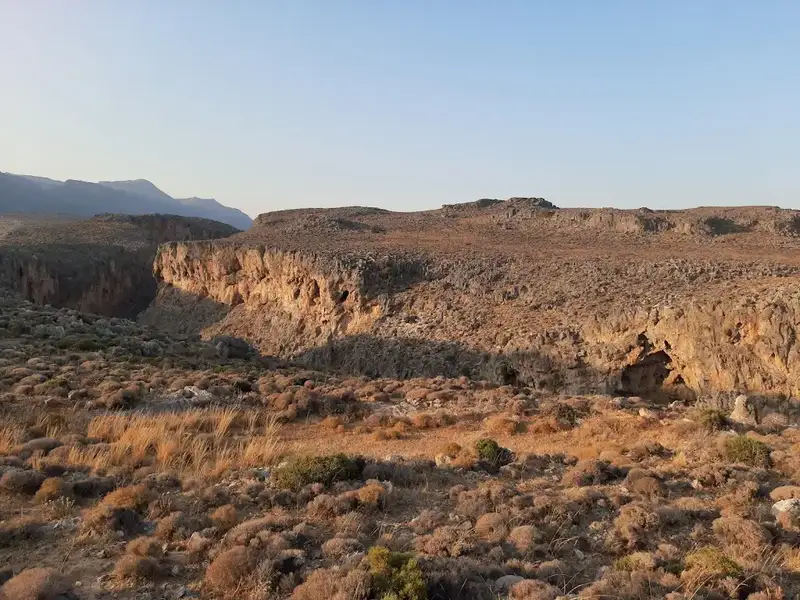
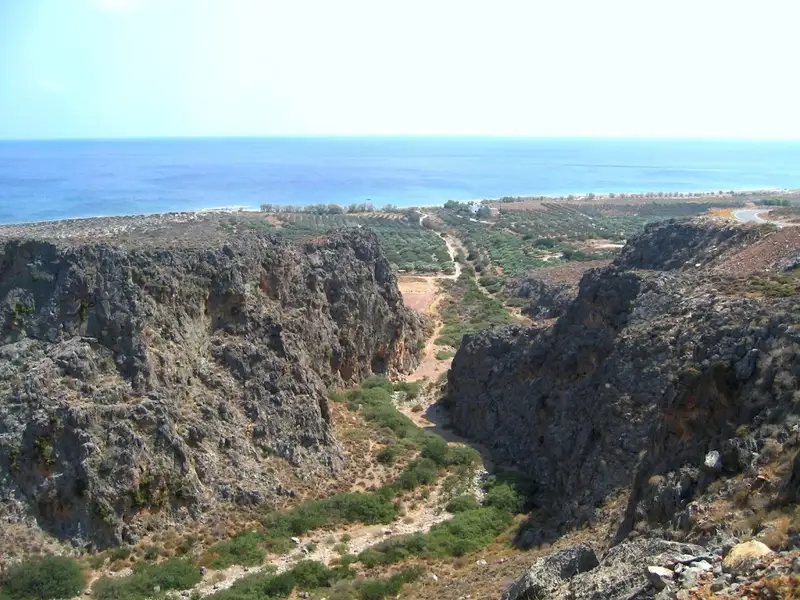
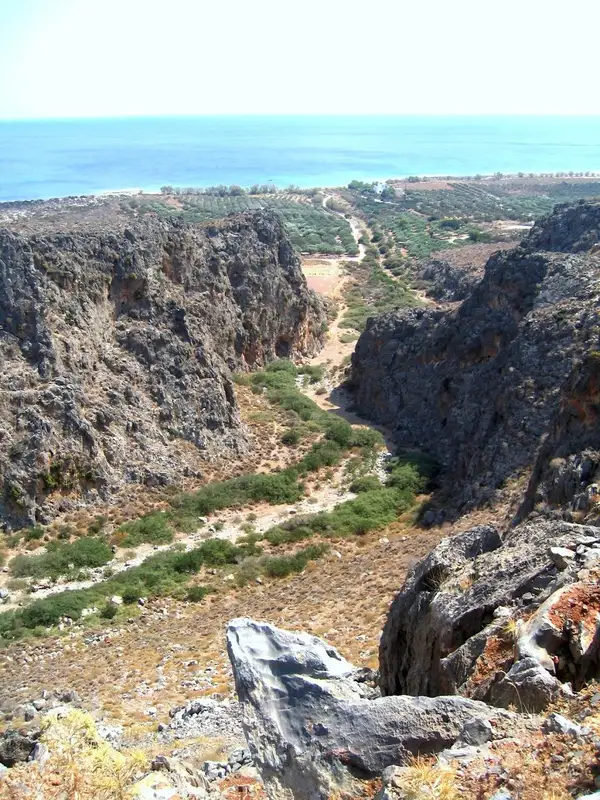
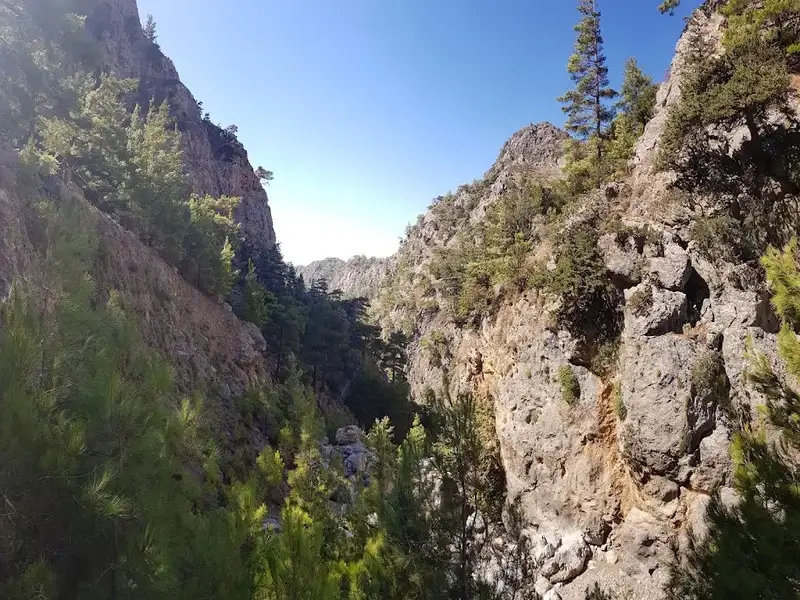
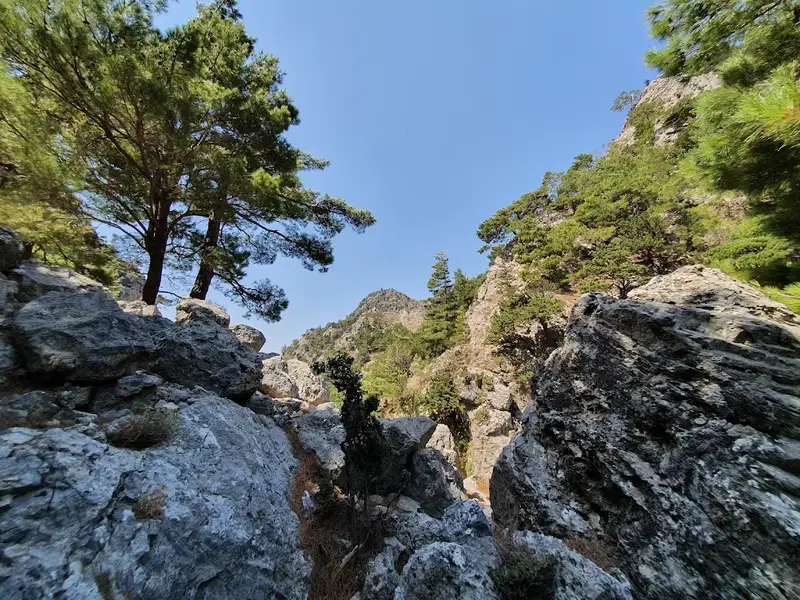
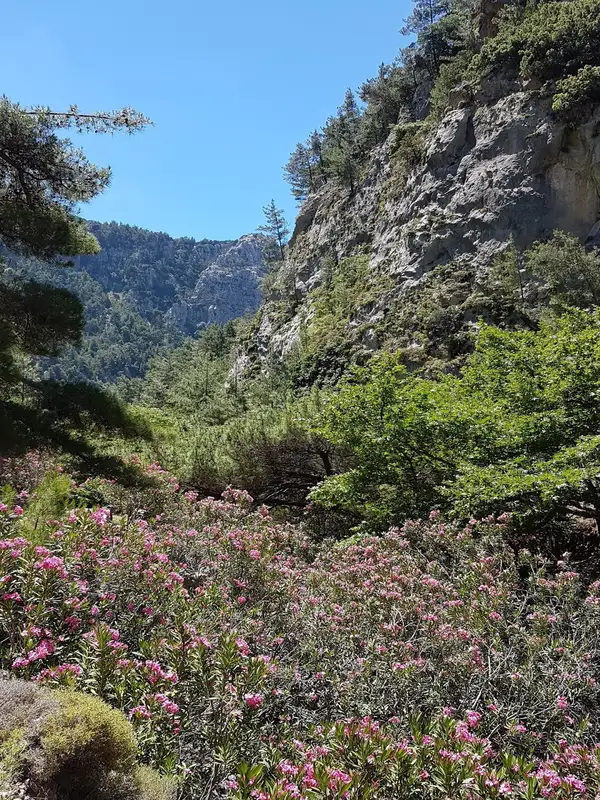
The Katsounaki Gorge is situated in the arid region of Eastern Crete, to the east of the Xirokambos community. It is essentially a combination of three parallel gorges that converge before they reach the shoreline. These gorges serve as a water transportation system from the eastern portion of the Sitia mountains.
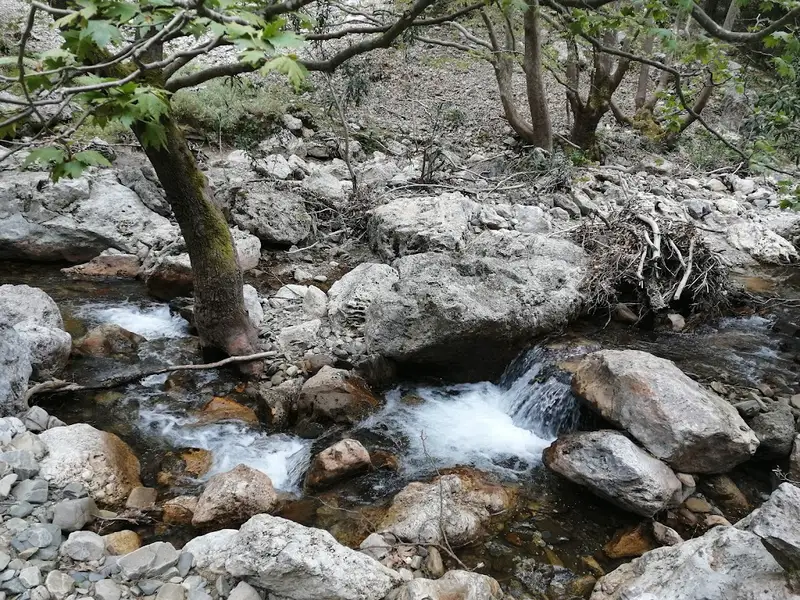
The river that flows through the gorge eventually leads to the Potamos beach, which is adjacent to the stunning sandy beach of Alona. Trekking through the canyon is a simple task and the scenery, with its towering walls, is truly untamed. An alternative option is to walk in the opposite direction starting from Alona.
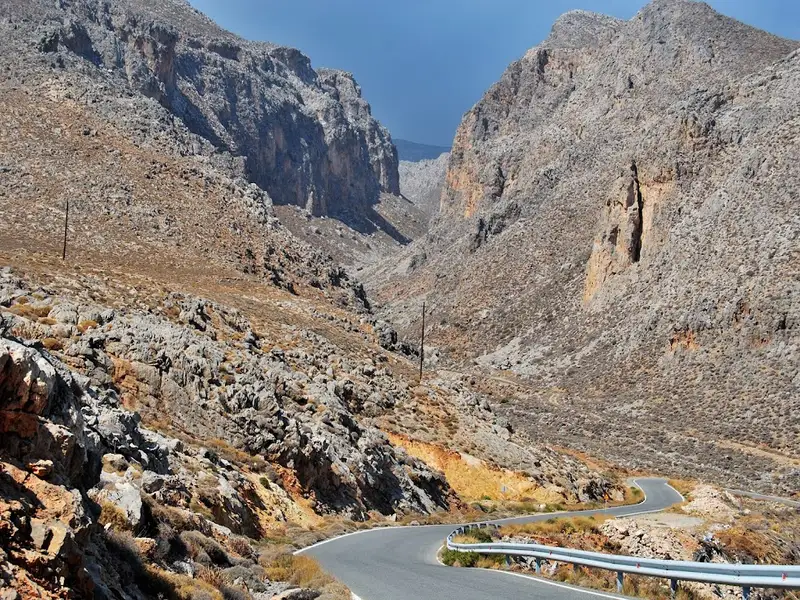
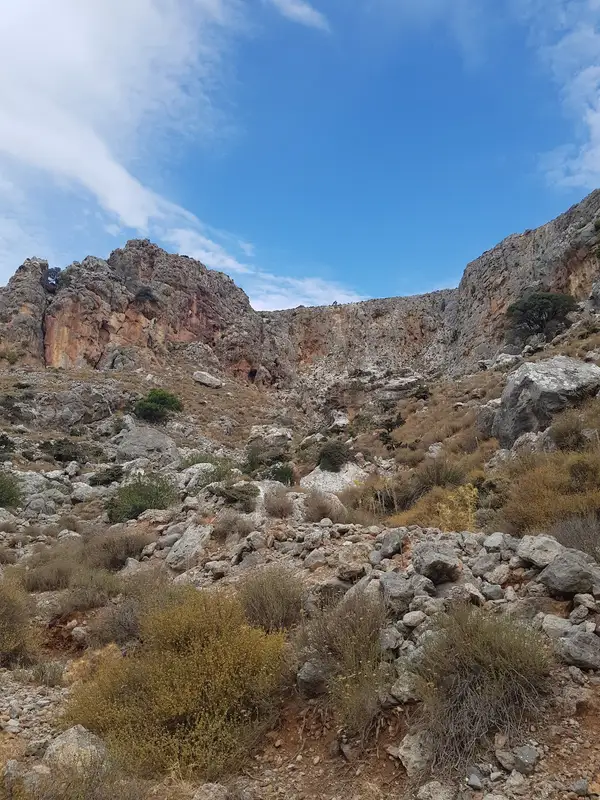
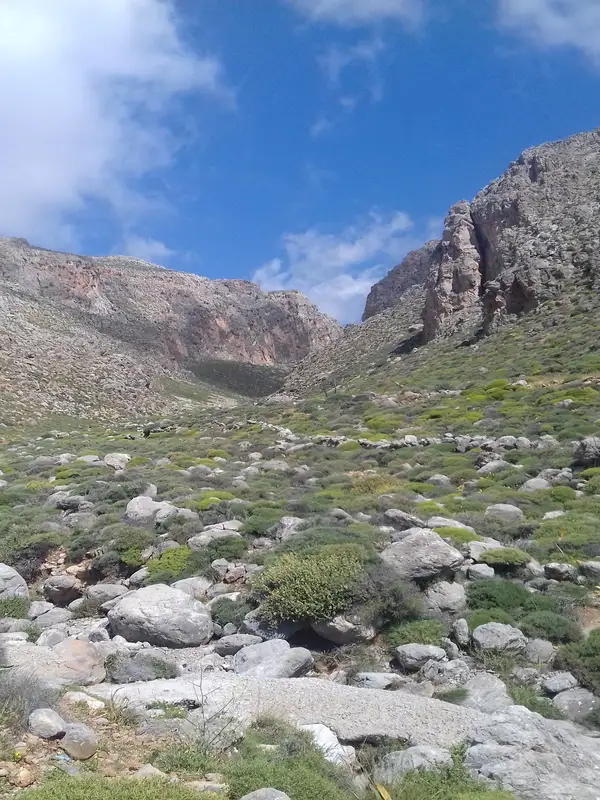
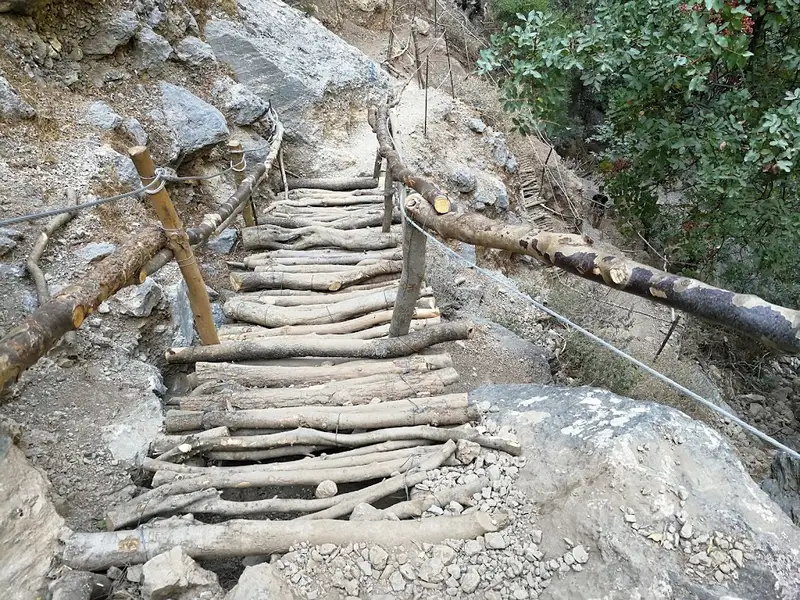
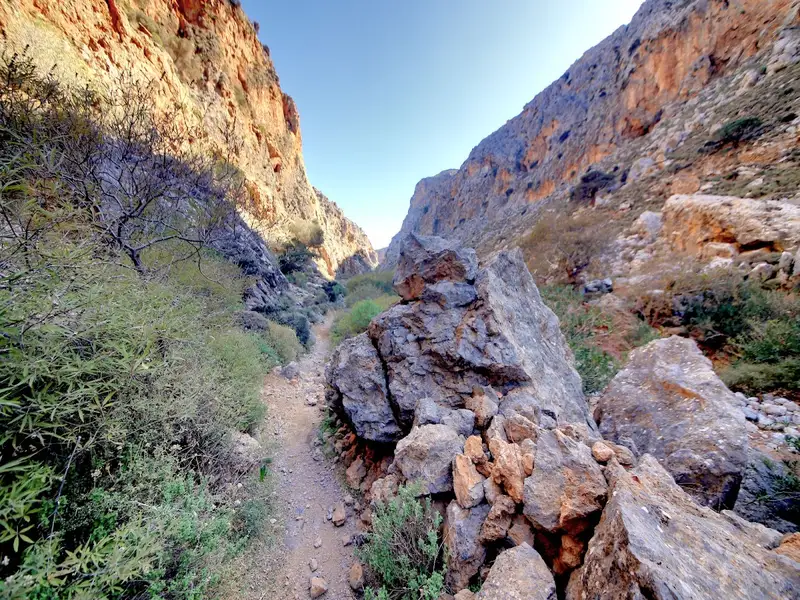
The Xerokambos Canyon, also known as Ziros Canyon, Hamaitoulo Canyon, or Lamnoni Canyon, is among the driest gorges in Eastern Crete. This gorge once served as a pathway from Ziros to Xerokambos. A hike through this gorge is relatively easy, taking roughly two hours to complete. The canyon is renowned for its rugged charm, featuring towering bare walls and sparse vegetation. As you traverse the gorge, you’ll be able to glimpse the expansive South Cretan Sea in the distance. During the summer, the area can become quite hot with little shade available. It’s recommended that one person in your group drives to the top entrance of the canyon at the small Lamnoni plateau or to the second entrance near Hamaitoulo village, then meets the rest of the group in Xerokampos. There, they can enjoy the area’s stunning sea views and emerald beaches.
Traveling from Xerokampos to the Ziros plateau, the gorge’s exit is clearly visible. From Ziros, head towards the abandoned Lamnoni settlement, approximately 4 km east. Here, you can follow the ravine that soon becomes the gorge. Initially, you’ll come across a small water fountain and may need to open a few gates to allow goats to graze. From this point, you can enter the gorge and walk towards its exit near the Ziros – Xerokampos road. The gorge then extends to Lygia beach.
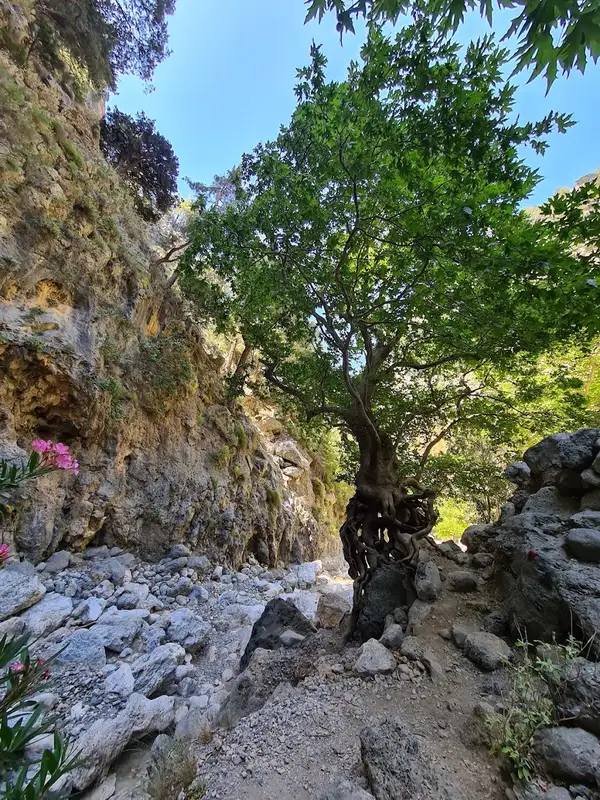
The Agia Irini gorge, located near the quaint town of Ziros, begins from the Agia Irini village and concludes at the stunning Agia Irini beach. An ancient path through the gorge leads to the Xerokambos area. Before reaching the sea, it converges with the Platyvolo gorge, which drains the small Hametoulo plateau where a dirt road leads to the beach.
Both gorges are rugged and untamed, characterized by steep inclines and towering walls. The westernmost branch, in particular, can be intimidating and hazardous for those unaccustomed to canyon hiking, though it doesn’t require any technical skills. A hike through the gorge typically takes between 2 to 3 hours, depending on your speed. The steep inclines, which start at an altitude of 500m and descend to sea level, can put significant strain on your knees. There are no marked trails, so hikers must navigate their own way.
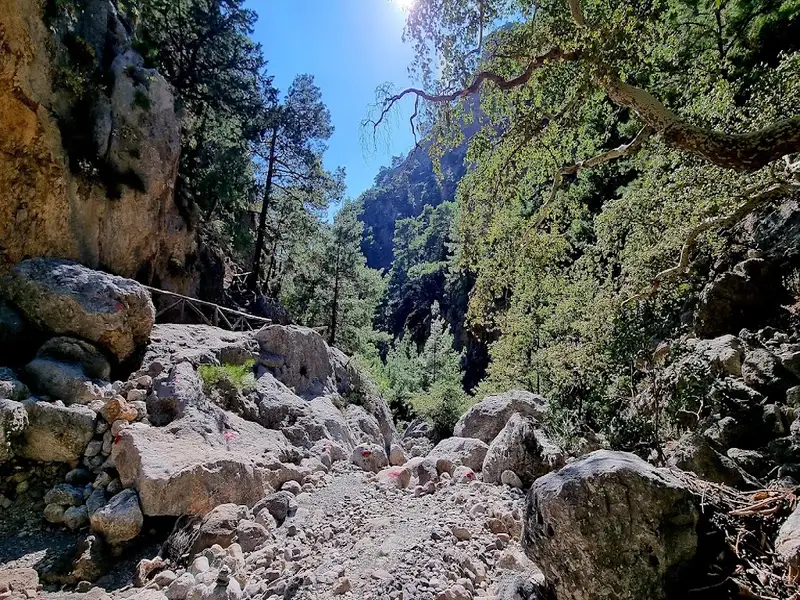
The stunning Kato Zakros Gorge, also known as the Gorge of the Dead, begins just a short distance from Ano Zakros, almost 100km southeast of the Agios Nikolaos church, and culminates at the picturesque Kato Zakros beach. The breathtaking landscape, historical significance, and easy access of the gorge draw numerous visitors each year. The path through the gorge is a segment of the renowned E4 European trail.
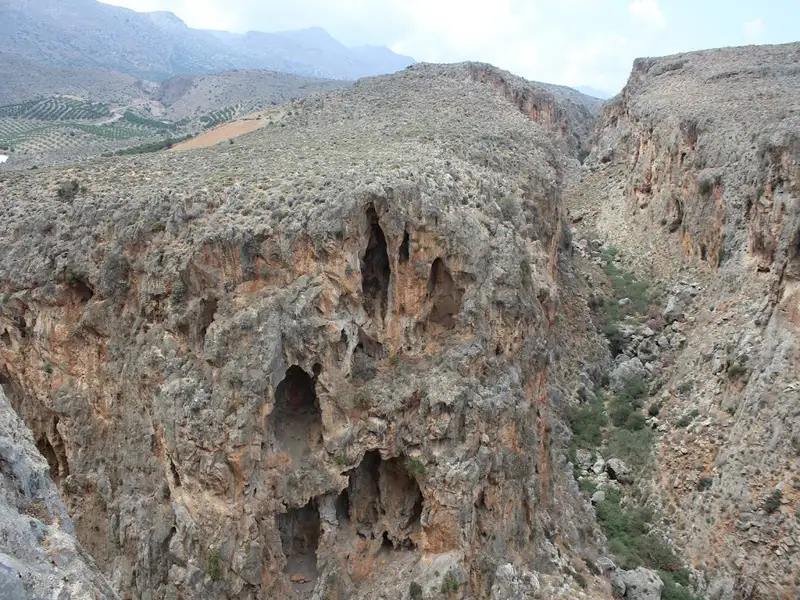
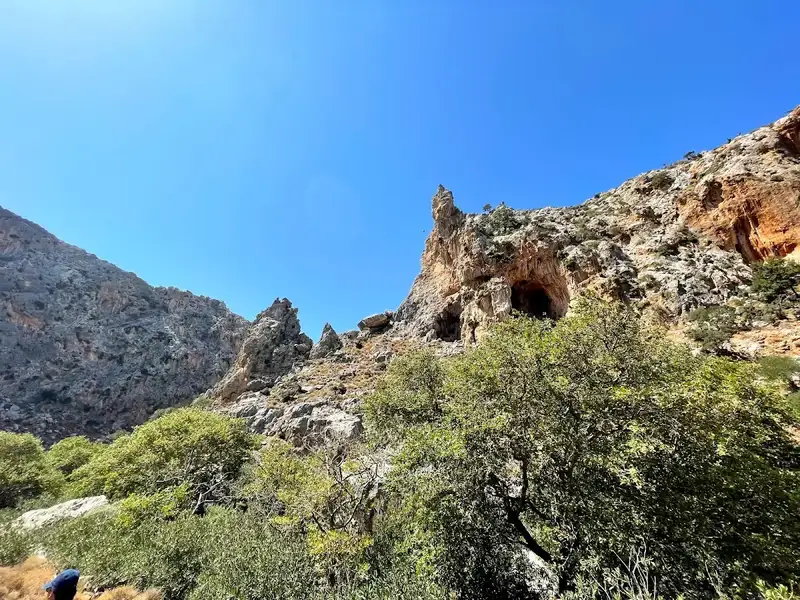
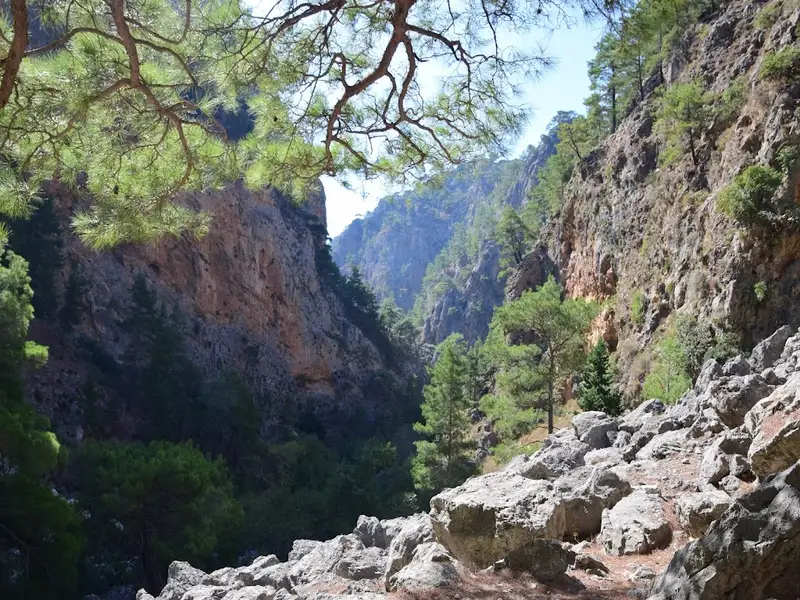
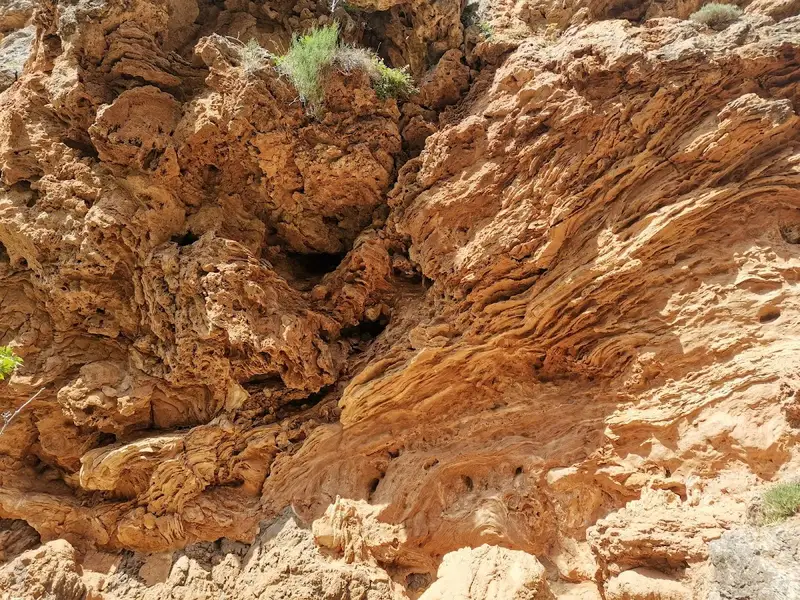
The gorge is incredibly beautiful, with towering walls that house large caves. Inside these caves, archaeologists have discovered tombs from the Minoan era that hold artifacts of significant archaeological value. This discovery led to the gorge and caves being dubbed “Gorge of the Dead” and “Caves of the Dead” respectively.
Visitors can park their cars in the Ano Zakros village and traverse the gorge, which takes approximately 2 hours to reach Kato Zakros. Here, you can relax on the beach and dine at the charming seaside village’s taverns. Don’t miss out on a visit to the nearby Minoan Palace of Zakros. A convenient bus service from Kato Zakros can take you back to Ano Zakros, saving you a return trek through the gorge.
No results available
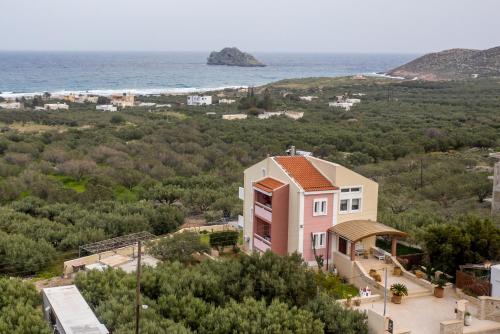
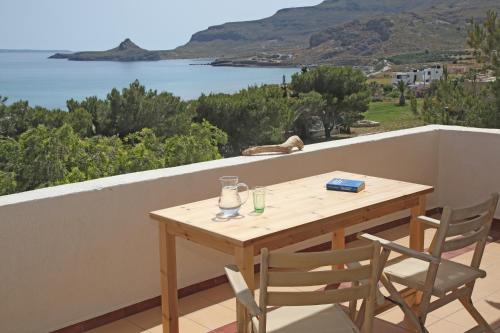
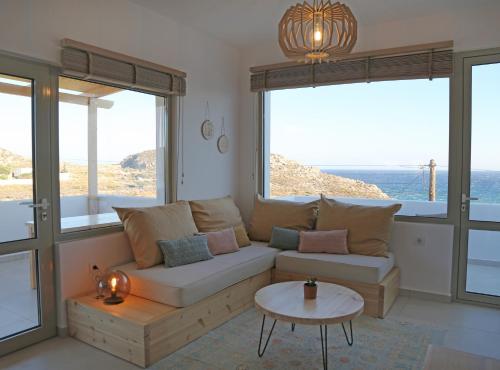
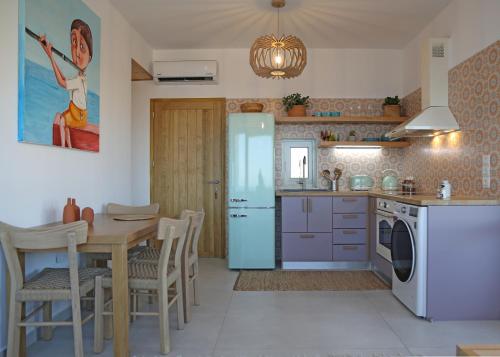
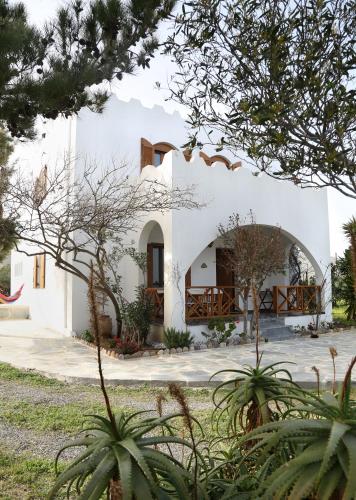
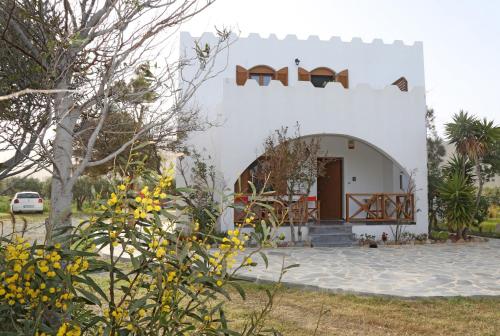
Located in Xerokampos, 1.3 km from Alatsolimni Beach and 1.4 km from Xerokampos Beach, Coastal Charm-Getaway to Artichoke’s Seaside Oasis provides air-conditioned accommodation with a patio and free WiFi. The Vai Palm Forest is within 36 km of the apartment.
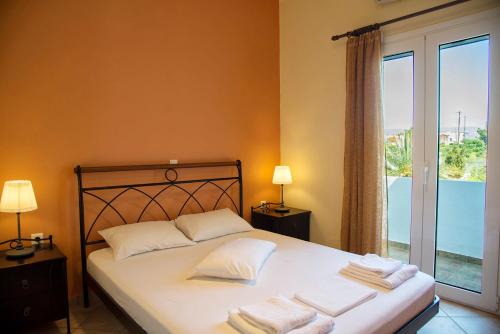
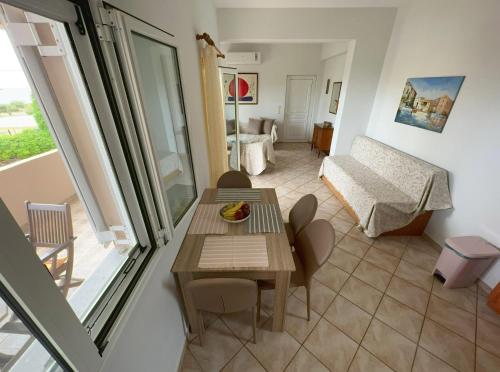
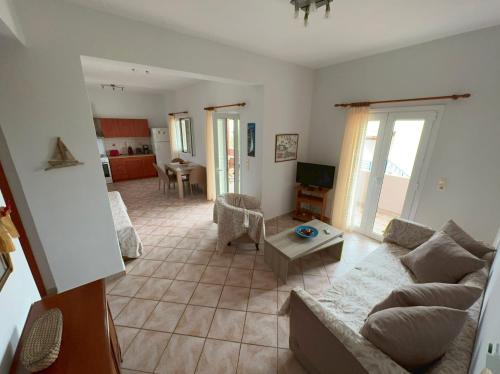
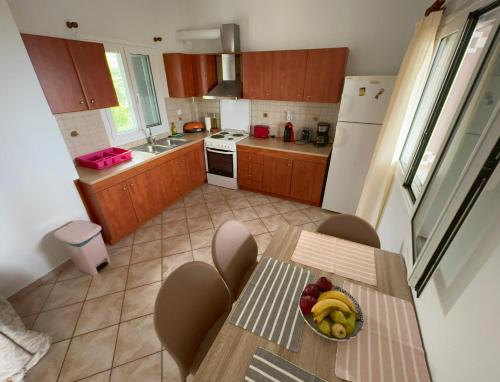
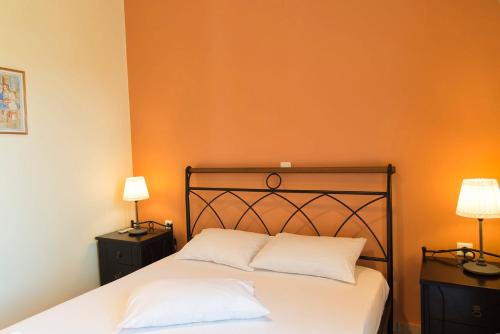
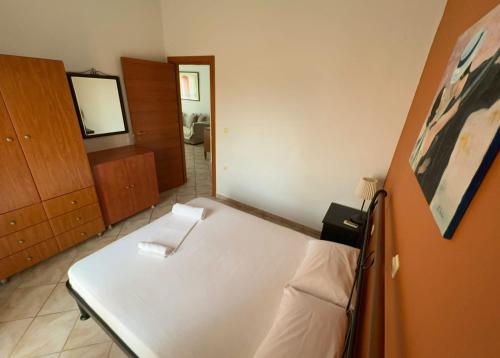
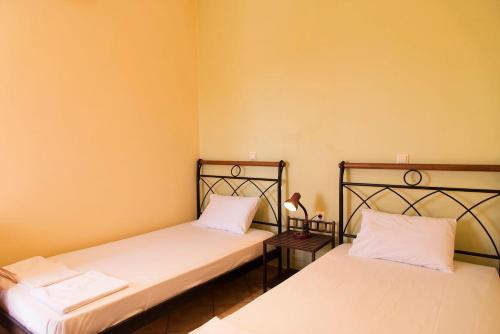
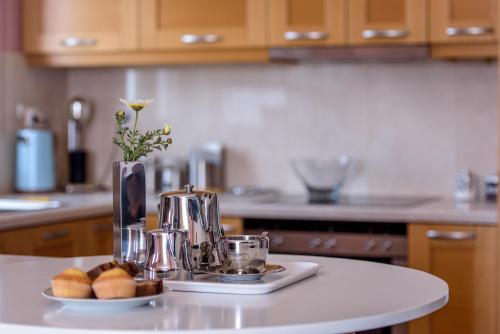
The 2-bedroom apartment is equipped with a living room with a TV, a fully equipped kitchen with oven and fridge, and 1 bathroom with a hair dryer. Towels and bed linen are provided in the apartment.
The nearest airport is Sitia Public Airport, 45 km from the apartment.
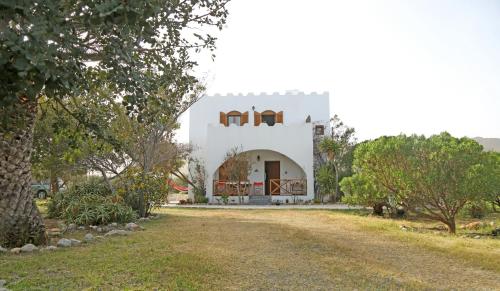
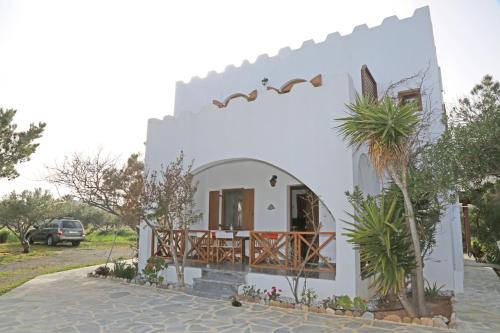
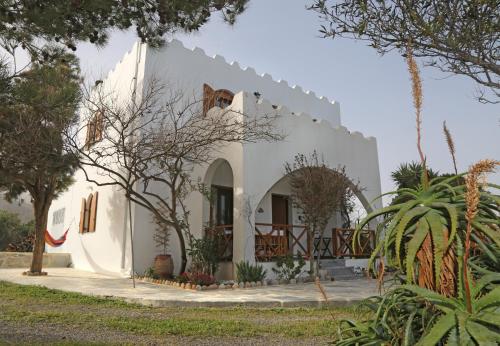
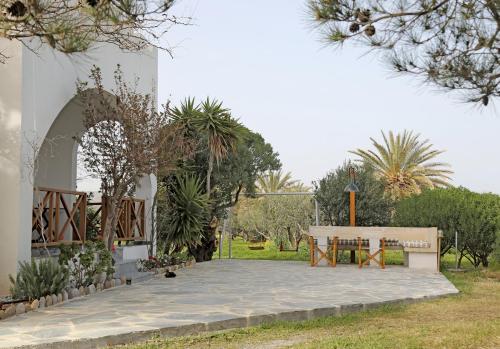
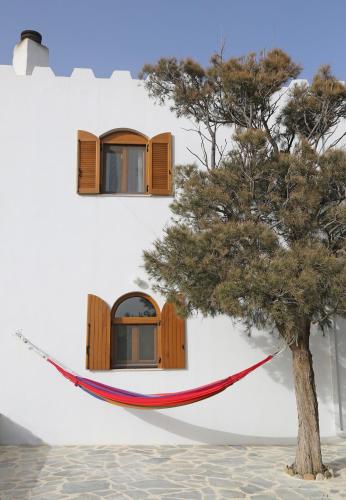
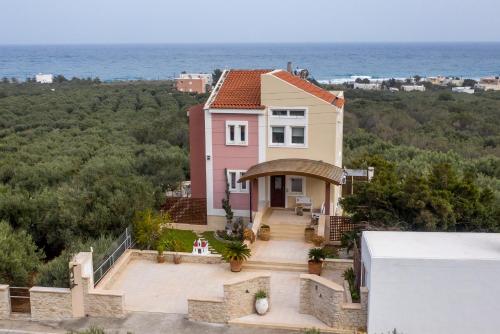
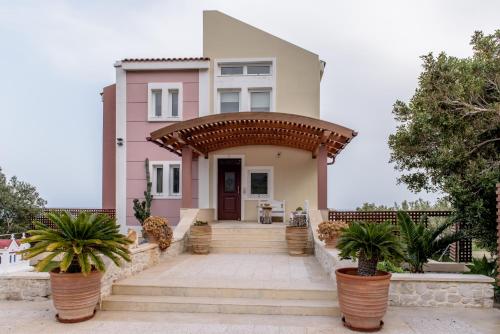
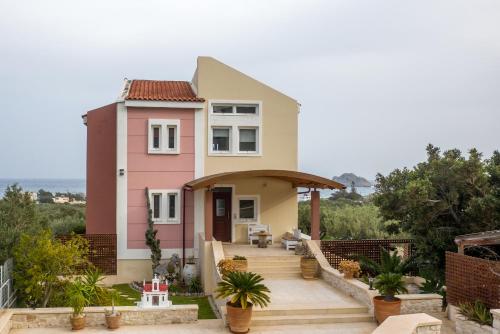
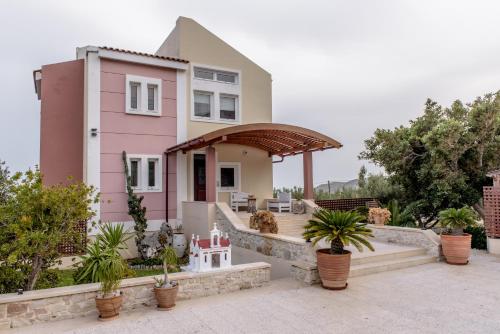
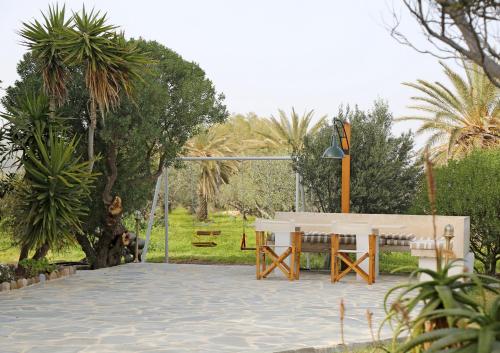
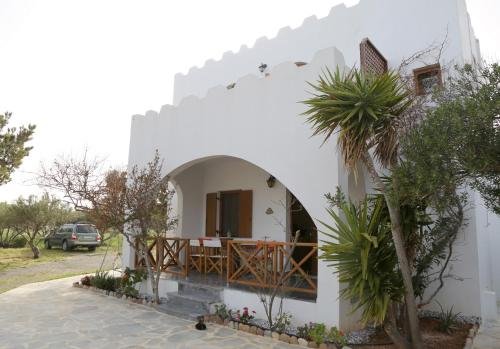
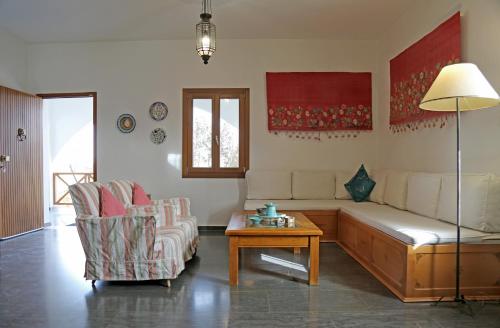
Located just 190m from Xerokampos Beach, Castello del Mare provides accommodation in Xerokampos with access to a lounge, a garden, as well as a kitchen. This beachfront property offers access to a terrace, free private parking and free WiFi.
The holiday home is equipped with 2 bedrooms, 1 bathroom, bed linen, towels, a flat-screen TV, a dining area, a fully equipped kitchen, and a balcony with garden views.
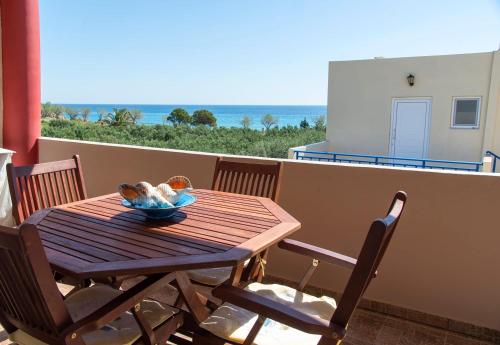
Thea apartments has sea views, free WiFi and free private parking, situated in Xerokampos, 1.1 km from Alatsolimni Beach.
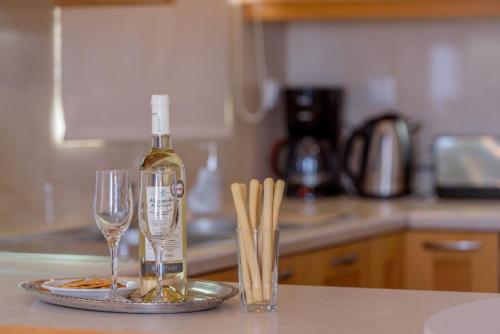
Each unit has a terrace, a fully equipped kitchen with an oven, a fireplace, a seating area, a flat-screen TV, a washing machine, and a private bathroom with shower and a hair dryer. A toaster, a fridge and stovetop are also available, as well as a coffee machine and a kettle.
The holiday home offers a picnic area.
If you would like to discover the area, windsurfing, diving and fishing are possible in the surroundings.
Xerokampos Beach is 1.6 km from Thea apartments, while Vai Palm Forest is 36 km from the property. The nearest airport is Sitia Public Airport, 45 km from the accommodation.
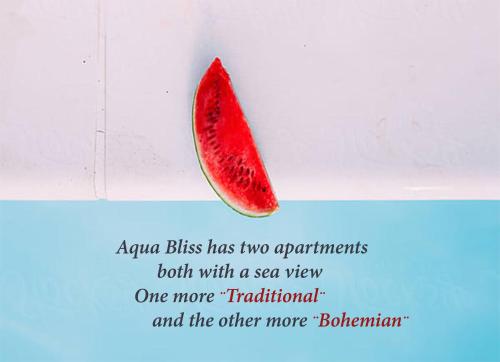
Aqua Bliss features quiet street views, free WiFi and free private parking, set in Xerokampos, 400 metres from Xerokampos Beach.
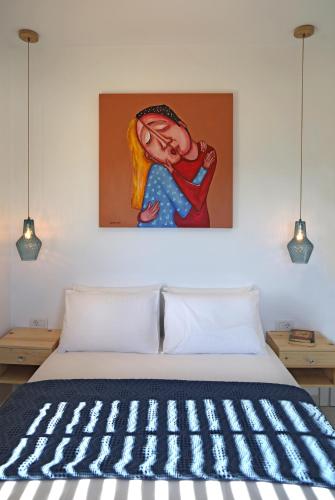
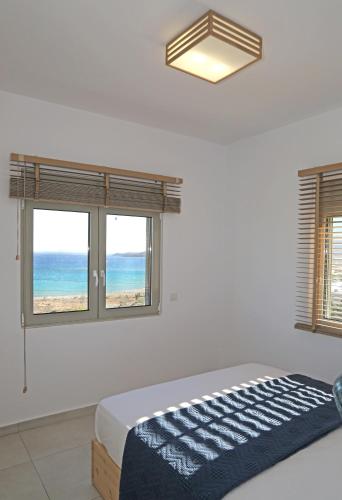
Offering a terrace or balcony with views of the sea and mountain, the units feature air conditioning, a seating area, satellite flat-screen TV and kitchen. An oven, a toaster and fridge are also featured, as well as a coffee machine and a kettle.
A car rental service is available at the apartment.
Alatsolimni Beach is 1.8 km from Aqua Bliss, while Vai Palm Forest is 37 km away. The nearest airport is Sitia Public Airport, 46 km from the accommodation.
from
€99
/night
No results available
Connect with thousands of Crete visitors and boost your bookings.
© All rights reserved. Crete Locals