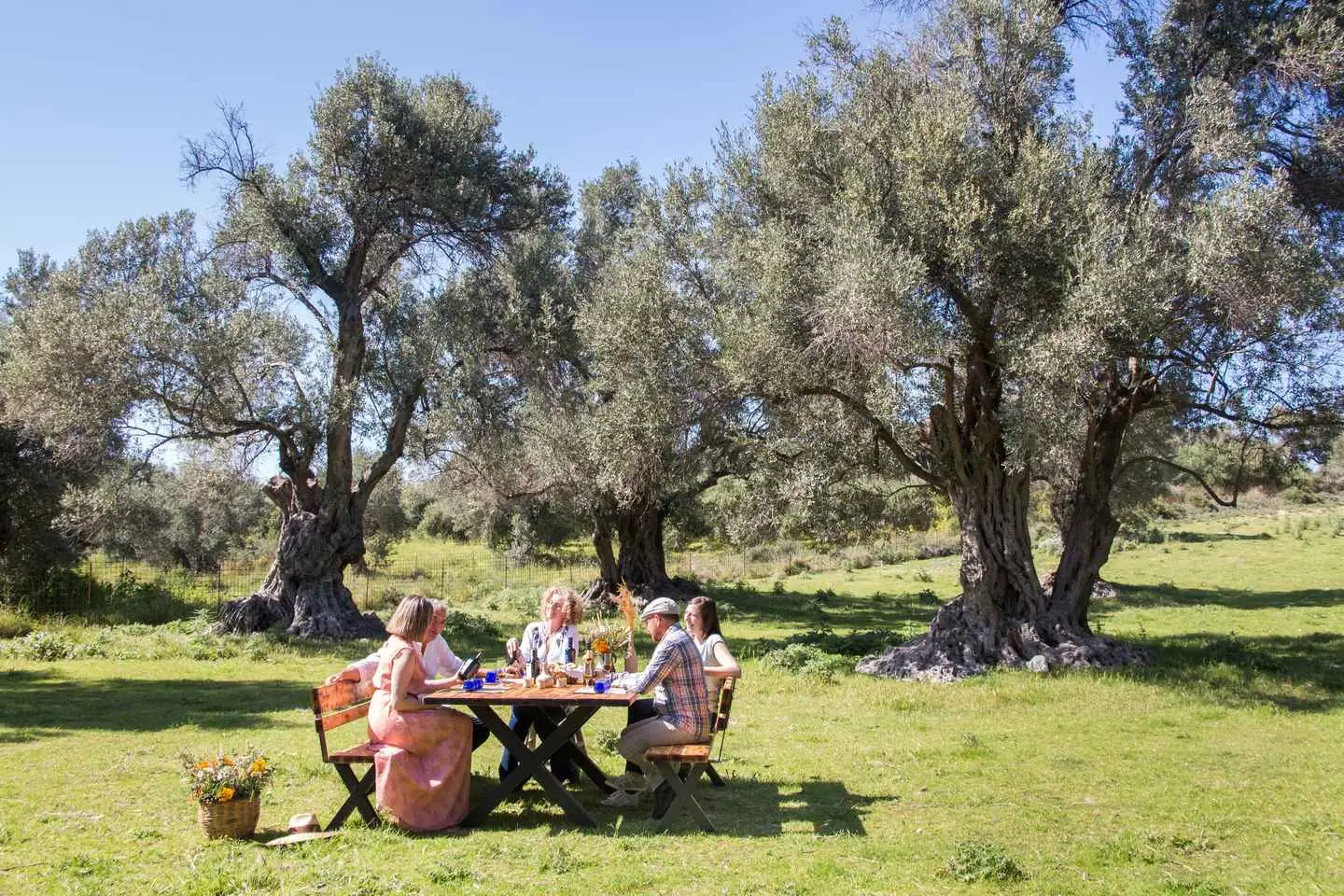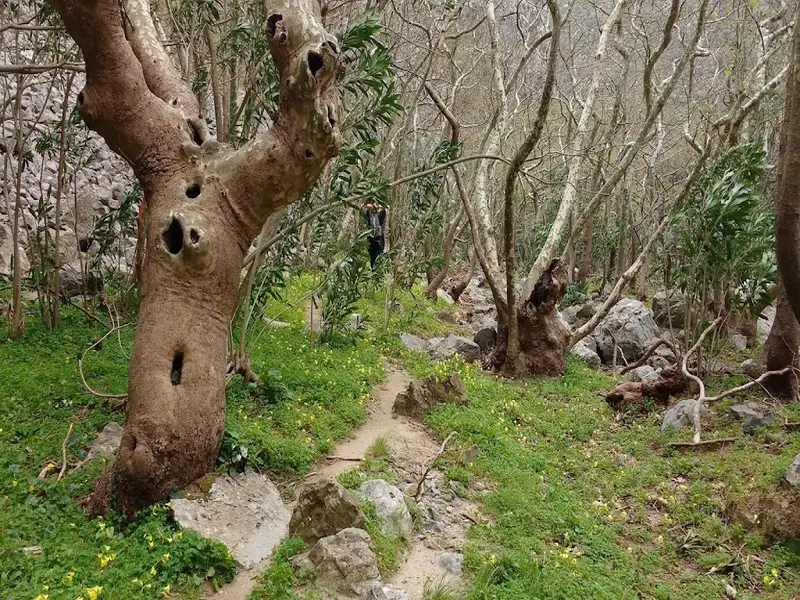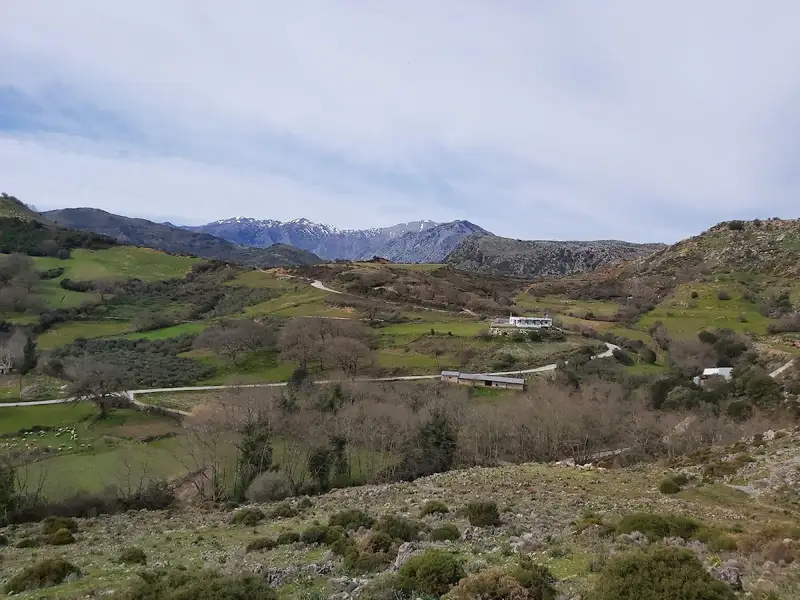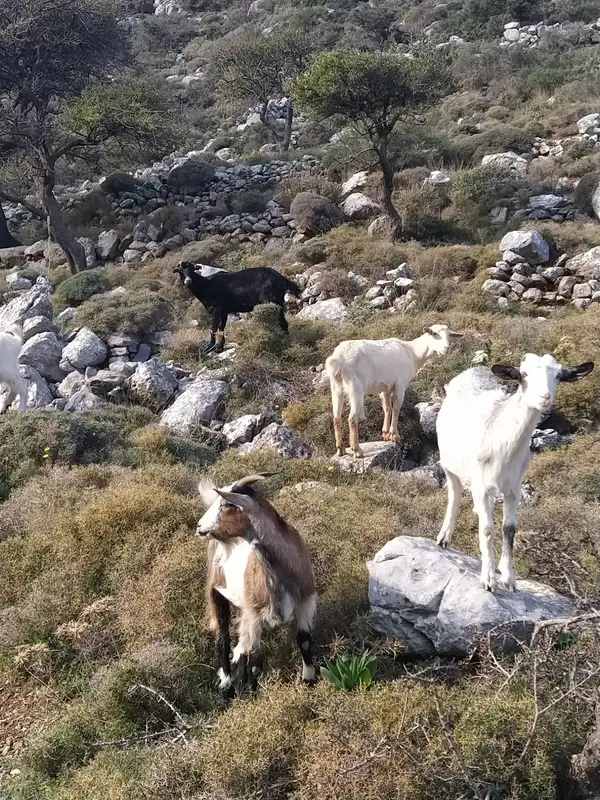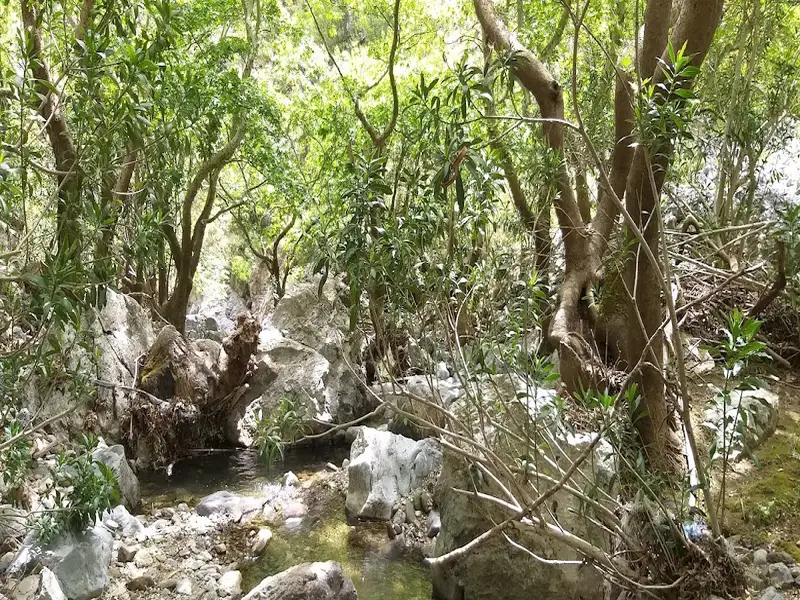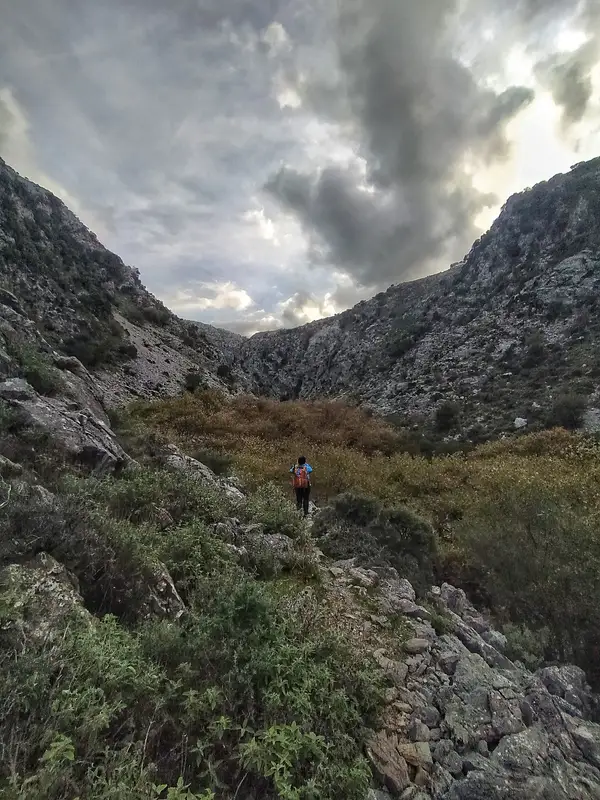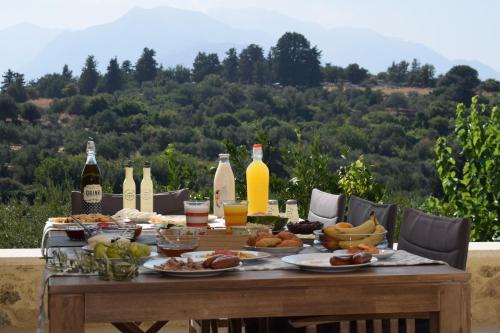
Create lasting memories in Crete as you enjoy an olive oil tasting experience under the shade of olive trees. This entire experience will be enjoyed in the middle of a 2,000-year-old monumental olive grove.
Discover the history, culture, and Cretan civilization of olive oil throughout the centuries. During your walk around the peaceful olive groves such as the holy Gethsemane Garden, you will discover the beauty of the Cretan landscape as well as the myths, flavors, and aromas of olive oil.
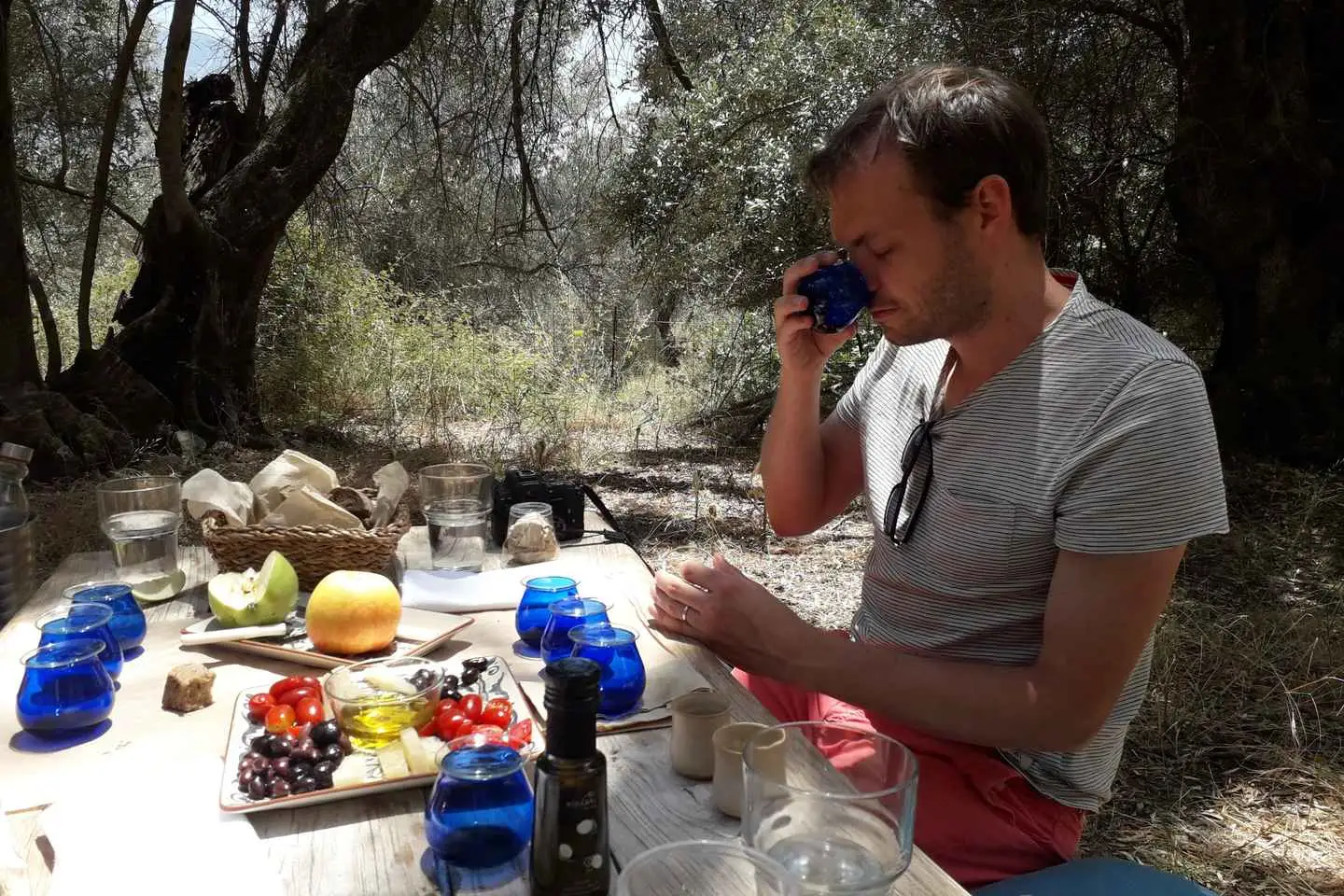
The activity includes an olive oil tasting of 4 different olive oils at a tasting table in the shade of some olive trees. During the tasting you will be pairing food with more types of olive oil, and you will receive tips on how taste, preserve, choose, cook, and fry olive oil. You’ll also receive more information about harvesting and olive oil extraction.
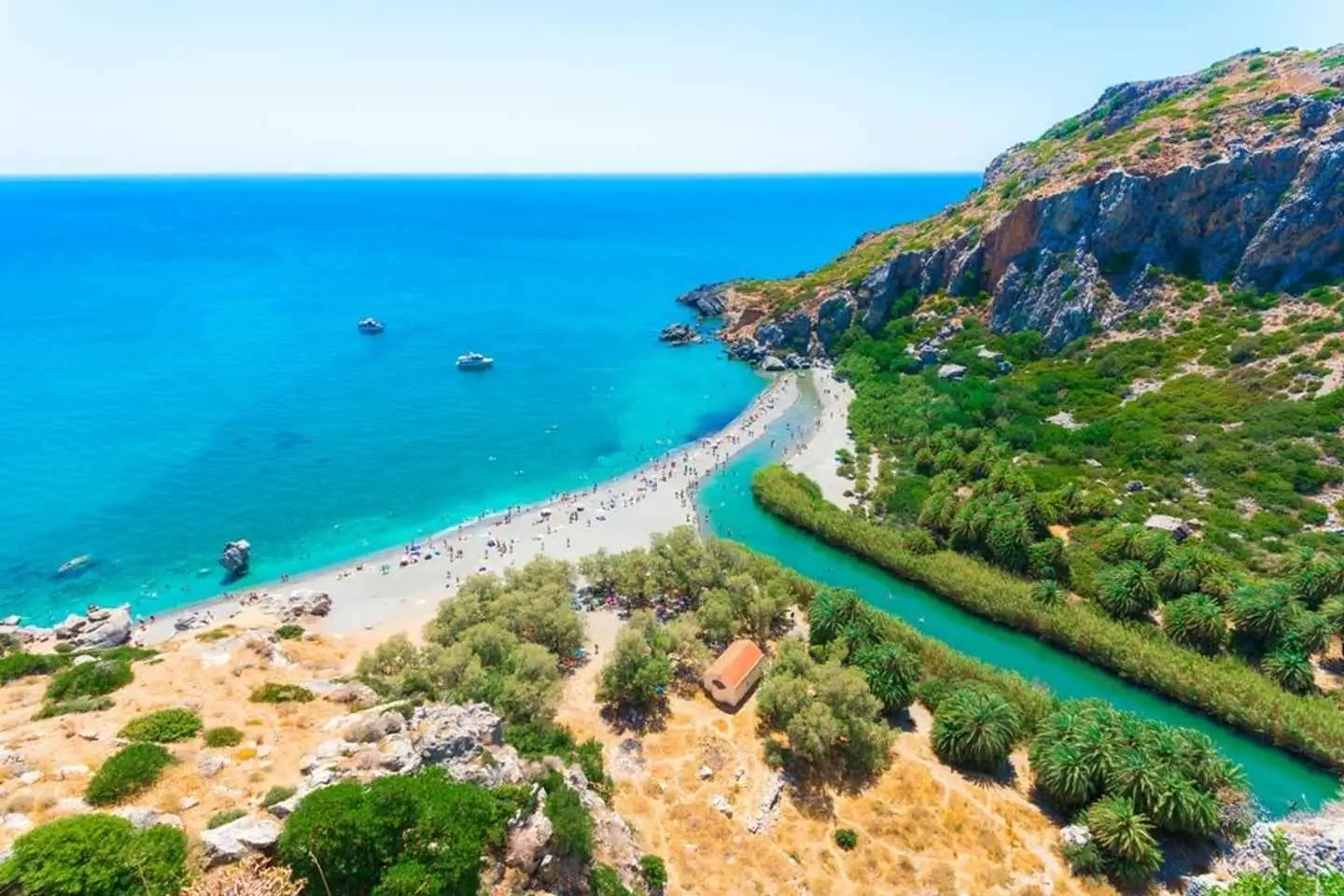
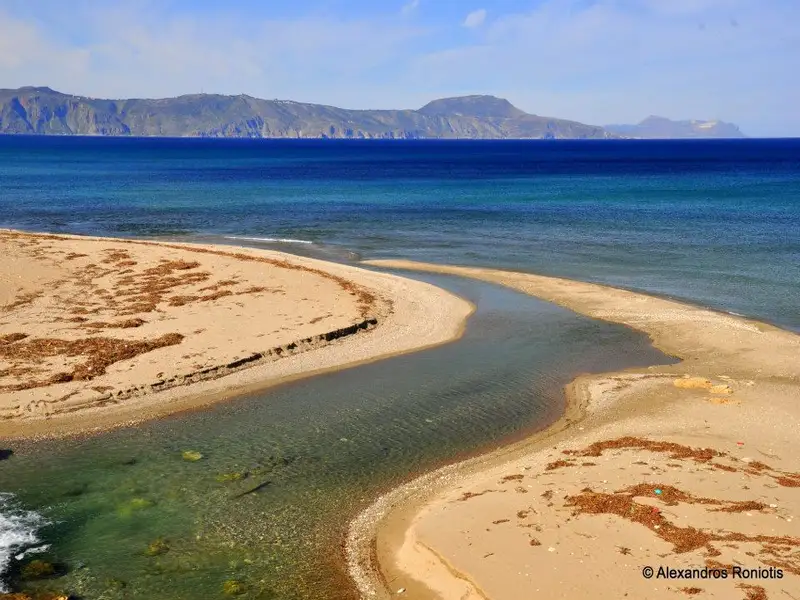
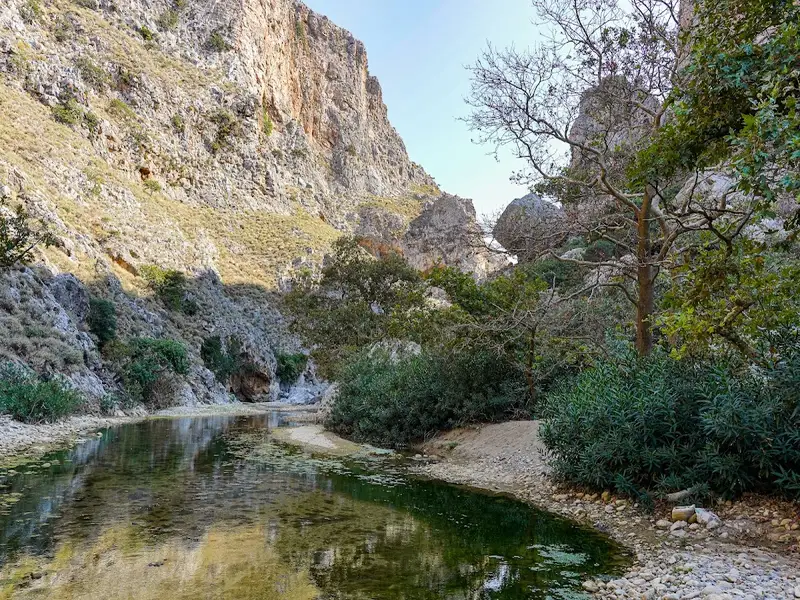
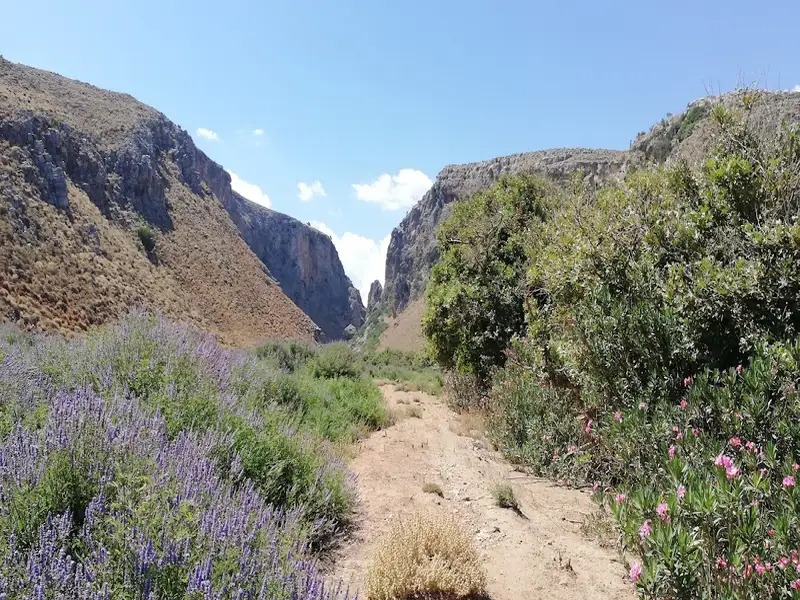
Discover one of the most famous beaches on the south coast of Crete. Travel through the wild Kourtaliotis Gorge where you will stop to see the magnificent landscapes and the springs of the river Preveli that flow inside the gorge and which result in the river at Preveli Beach.
Visit the south of Crete and stop at the viewpoint above where you will be able to enjoy a breathtaking view and take some fantastic pictures.
Enjoy a full-day excursion from Heraklion to Preveli Beach on a bus trip with a local guide. Discover South Crete’s Grand River, Kourtaliotikos Gorge, and a colony of Theophrastus palm trees. Sunbathe on the sandy beach, swim in the turquoise waters, watch for wildlife, or hike regional trails.
Begin your tour with a bus ride from the north coast to Preveli Beach, where you can swim in the turquoise Mediterranean water or stroll along the beach. Look for a rock shaped like a heart, known as The Stone of Lovers, and marvel at the steep cliffs and misty hilltops of nearby Kourtaliotikos Gorge.
Continue your tour by hiking along the banks of the Grand River to discover the Forest full of Theophrastus palm trees. Hike further up the river trail to a canyon and beach where you can further swim, hike, or sunbathe, before heading back down the path to the bus and returning to Heraklion.
10:45 Arrival at Preveli – free time
15:00 Departure from Preveli
16:50 Arrival in Heraklion
Route: 210 km
Duration: app. 7hours
See traditional villages, churches, mountains, gorges and beaches on this full-day tour from Rethymno.
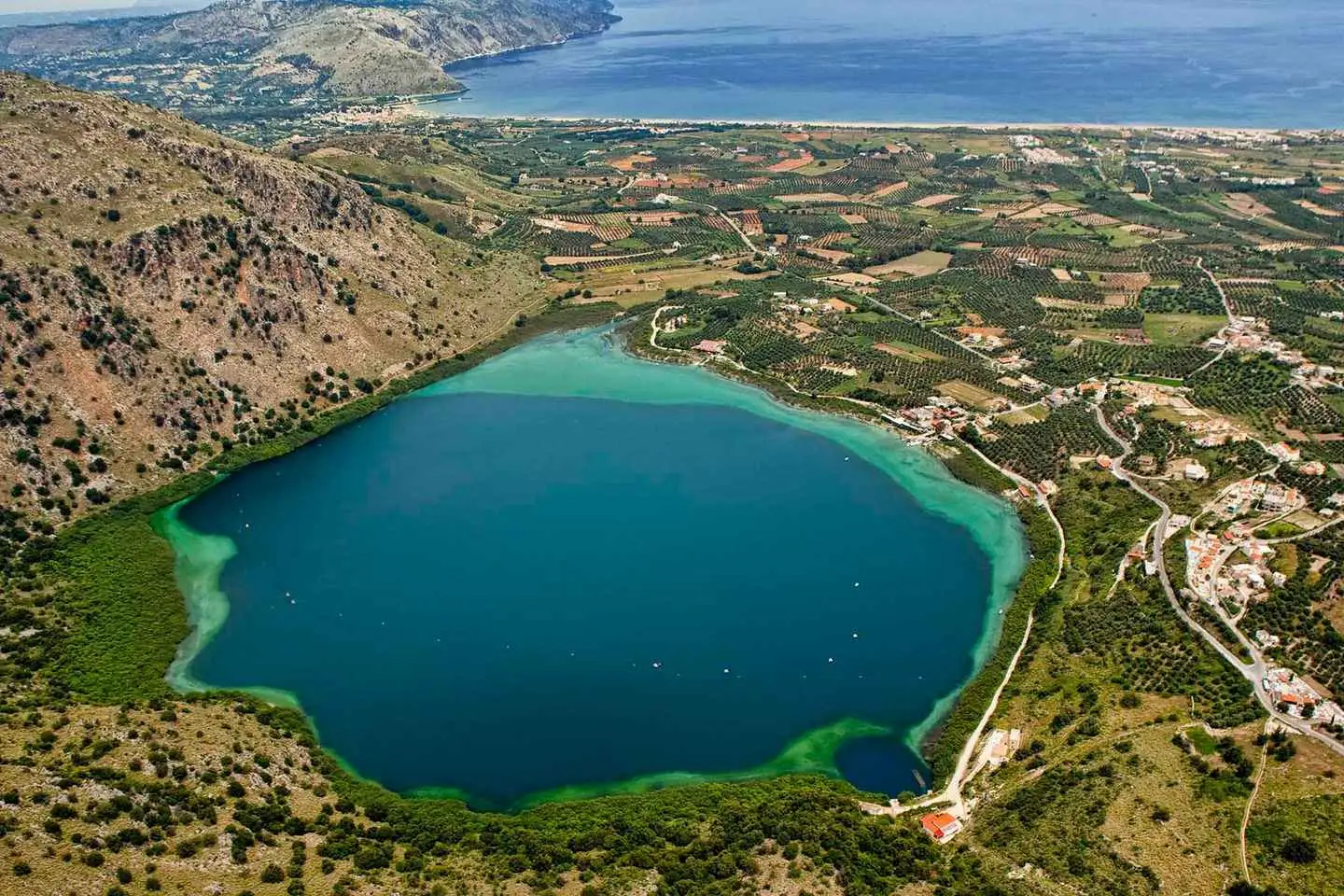
Stop at Kournas, Crete’s only fresh-water lake. Enjoy a short drive through the countryside to the traditional village of Argyroupoli, where you can enjoy a cup of Greek coffee.
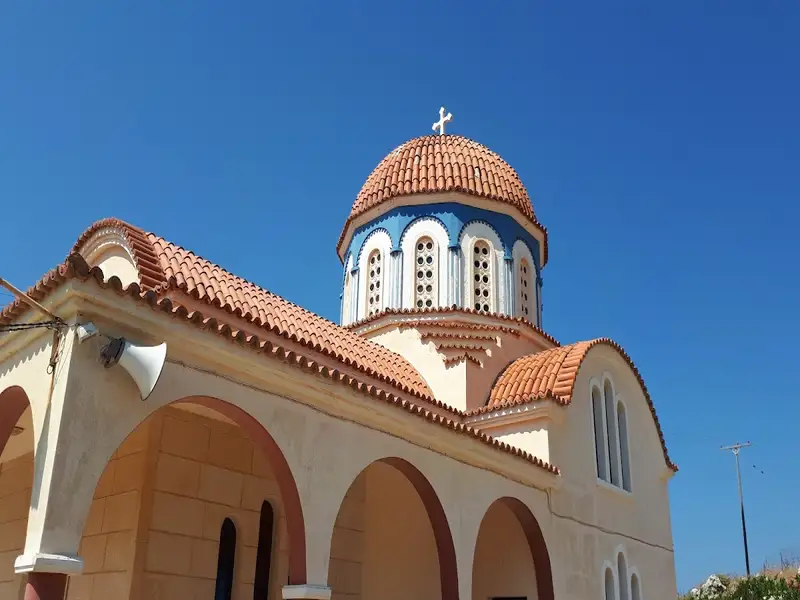
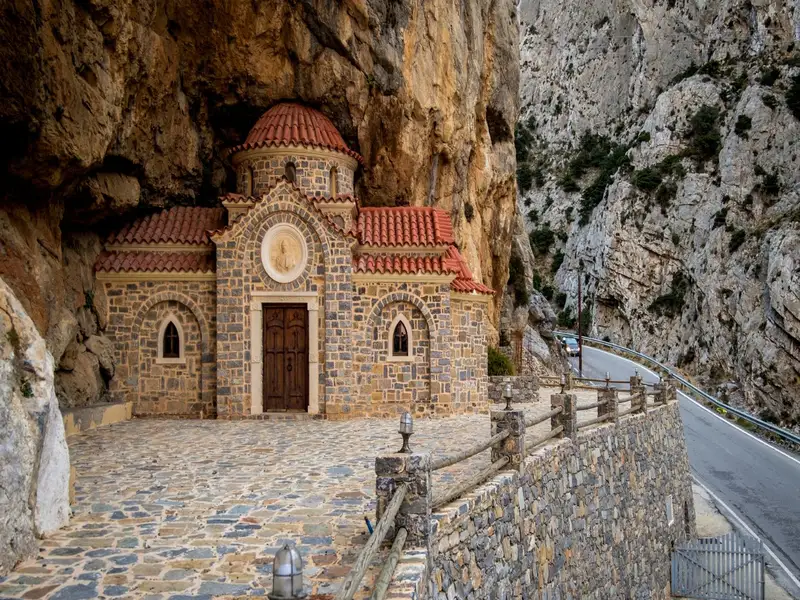
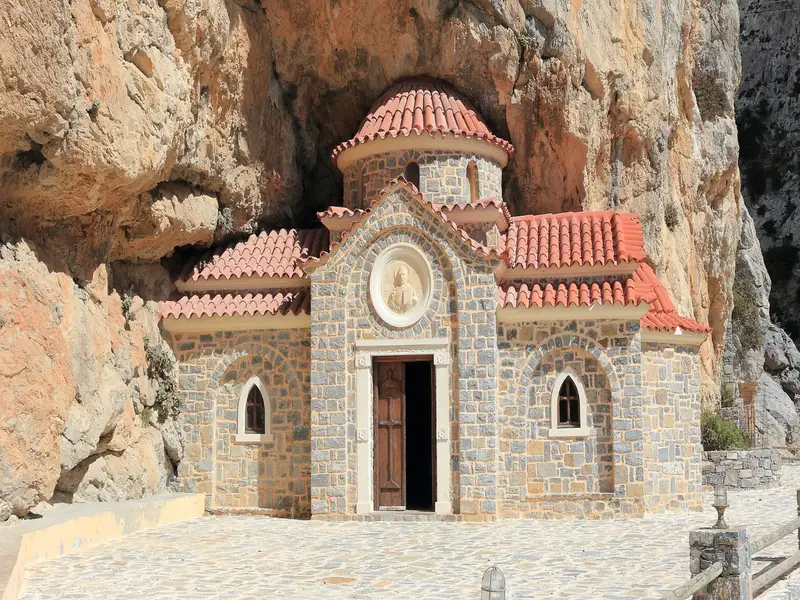
As the drive continues toward the island’s southern coast, notice the changes in the landscape. Just before the first glimpse at the Libyan Sea, stop at the Kotsifou Gorge and visit a beautiful old stone church.
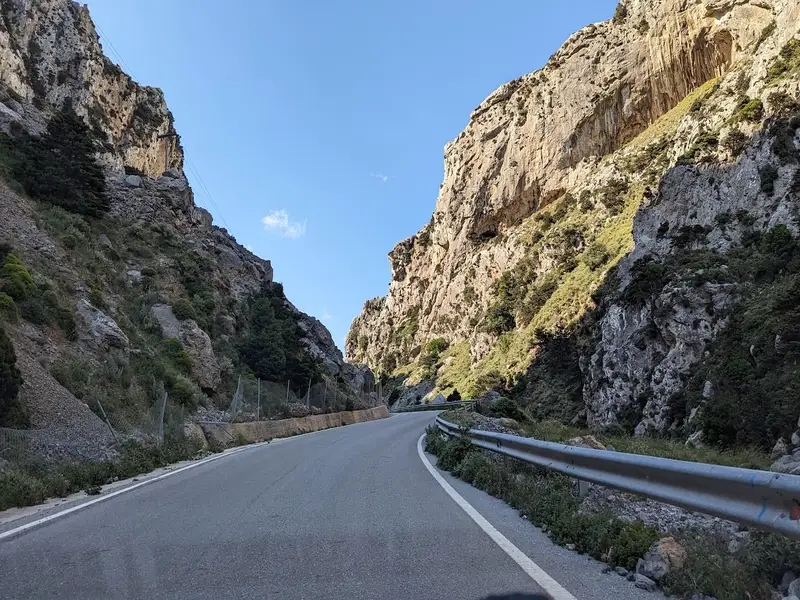
Take a break at the Bay of Plakias and enjoy some time relaxing on the beach or exploring the village. On the way back to Rethymno, drive through the Kourtaliotis Gorge and admire the natural wild landscape.
Join this unforgettable journey to the West Side of Crete, where you’ll uncover its rich heritage, breathtaking natural beauty, and charming towns that truly make this region unique. First, immerse yourself in the enchanting atmosphere of Chania Town for 2.5 hours.
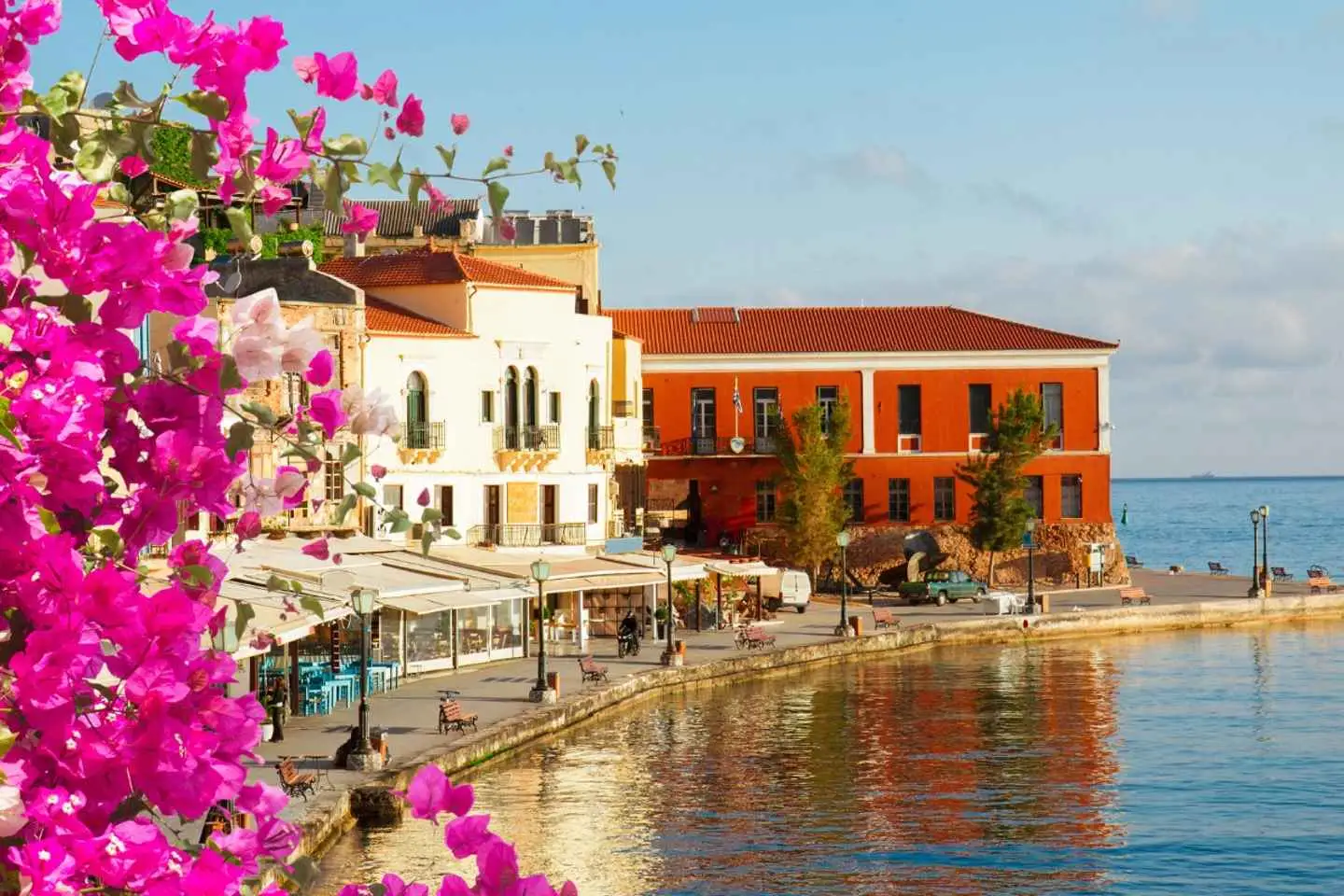
Wander along its picturesque Venetian streets, lined with charming shops, bustling markets, and delightful local restaurants. Don’t miss exploring the famous old port, teeming with activity and offering mesmerizing views. Spend leisurely moments strolling along the coastline or relaxing with a drink at a seaside café. Then continue the bus journey from Chania to the lake, which will take approximately 1 hour.
Discover the serenity of Crete’s largest natural lake, Lake Kournas, during our 1.5-hour visit. Marvel at the tranquil waters reflecting the majestic White Mountains, evoking an Alpine atmosphere. Choose to enjoy a scenic pedal boat ride, take a refreshing swim, or indulge in a delicious meal at one of the charming tavernas (additional cost).
Explore the captivating charm of Rethymno, a town steeped in Venetian heritage, during your 1.5-hour visit. Enjoy leisurely strolls along the old port, soaking in the picturesque vistas. Wander along the scenic oriental beach road, immersing yourself in the vibrant blend of cultures that define this coastal gem. Expect a return bus journey lasting approximately 2-3 hours, depending on the location of your hotel in the Heraklion Region.
No results available
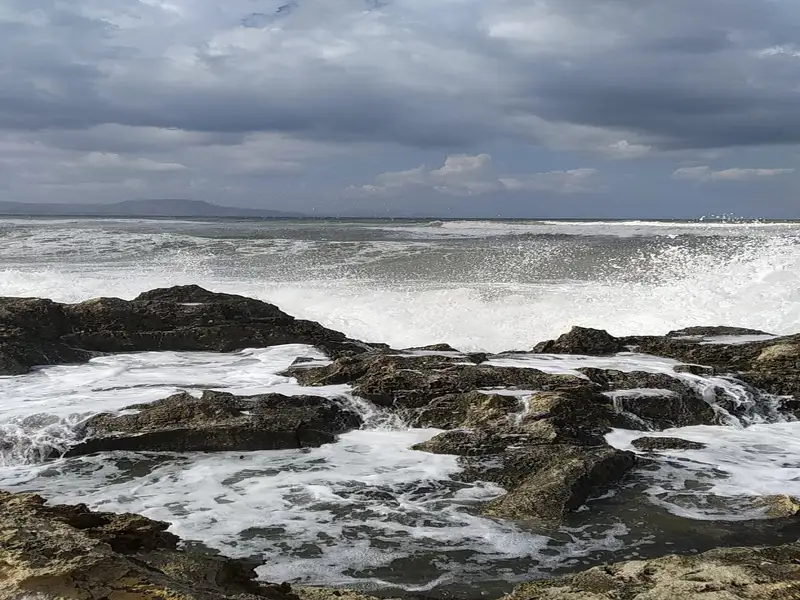
Situated at the eastern edge of the expansive Episkopi beachfront, Petres beach, or Stones beach, is a 46km journey east from Chania and 13km west from Rethymnon. The beach owes its name to the majestic Petres Gorge that concludes at this point. The area is dotted with facilities such as accommodations, eateries, and even a diving school. The Vythos cove, positioned north of the other areas, offers umbrellas and a less sandy terrain. The rocky underwater landscape makes it a hotspot for fishing and snorkelling. However, the frequent northern winds can cause the sea to become wavy.
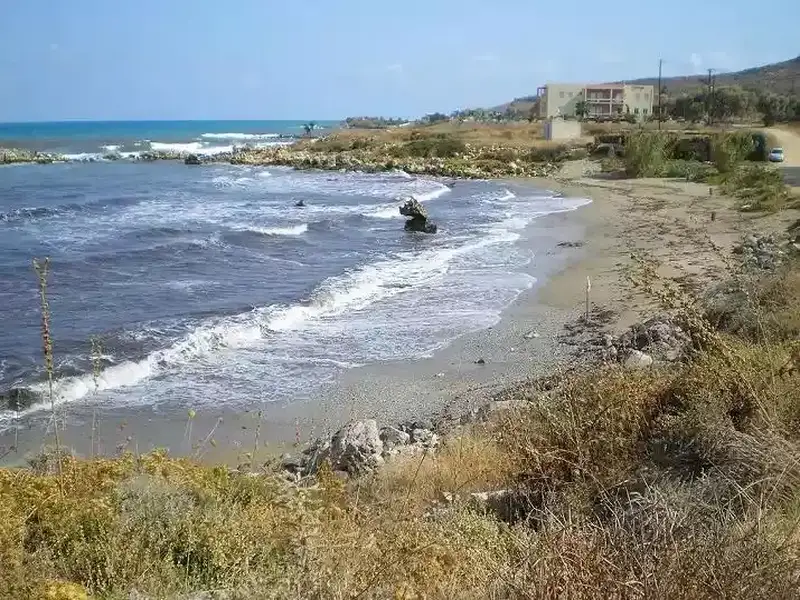
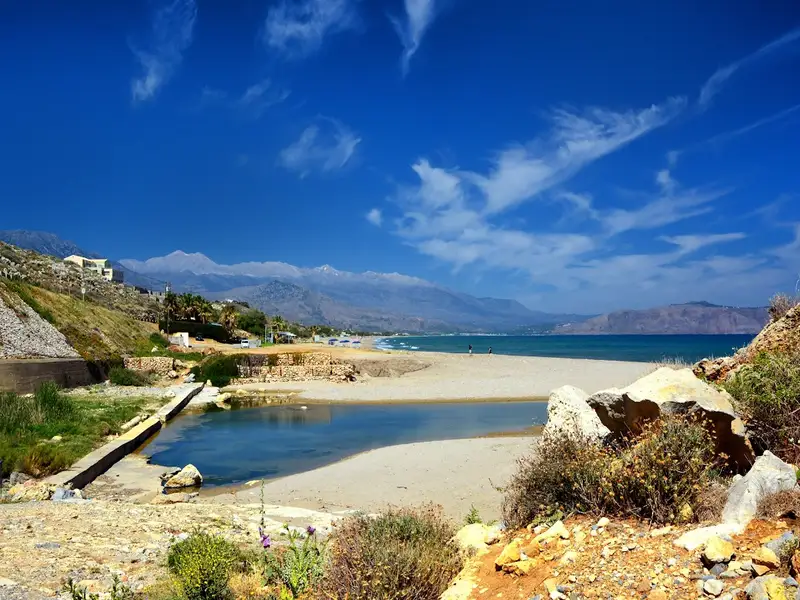
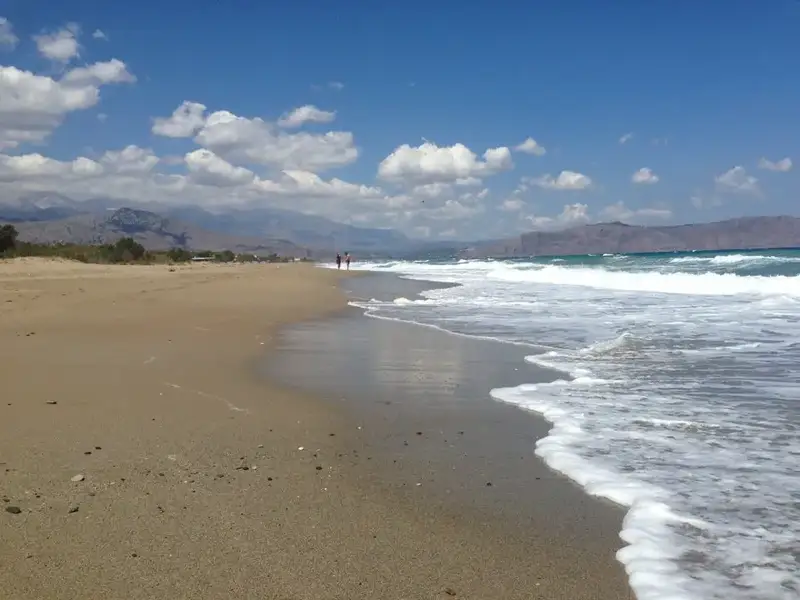
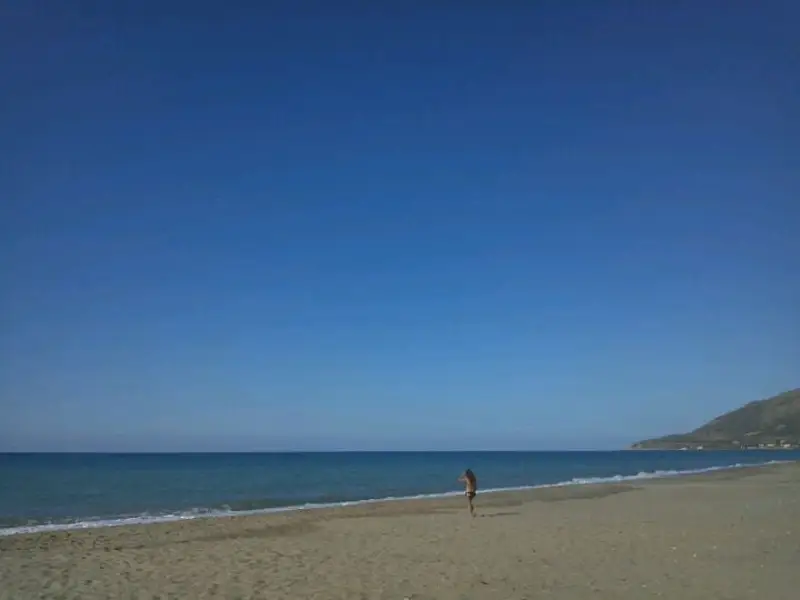
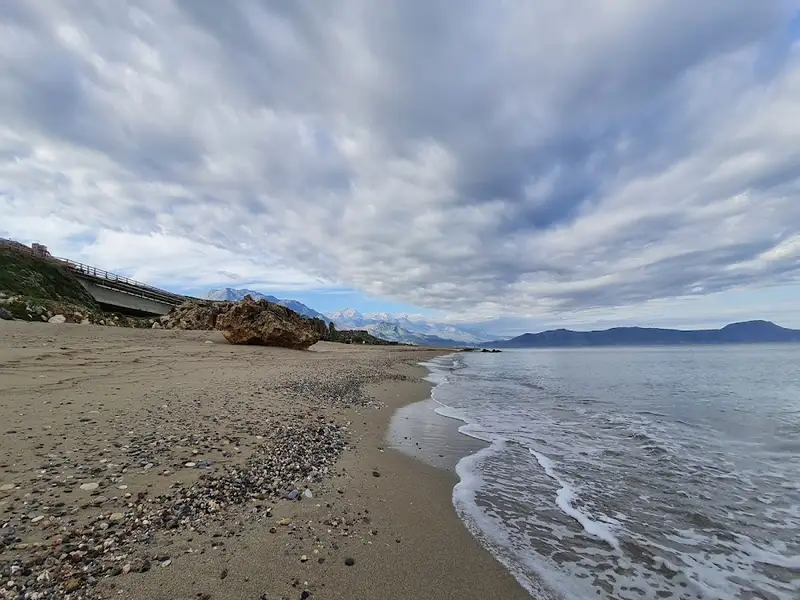
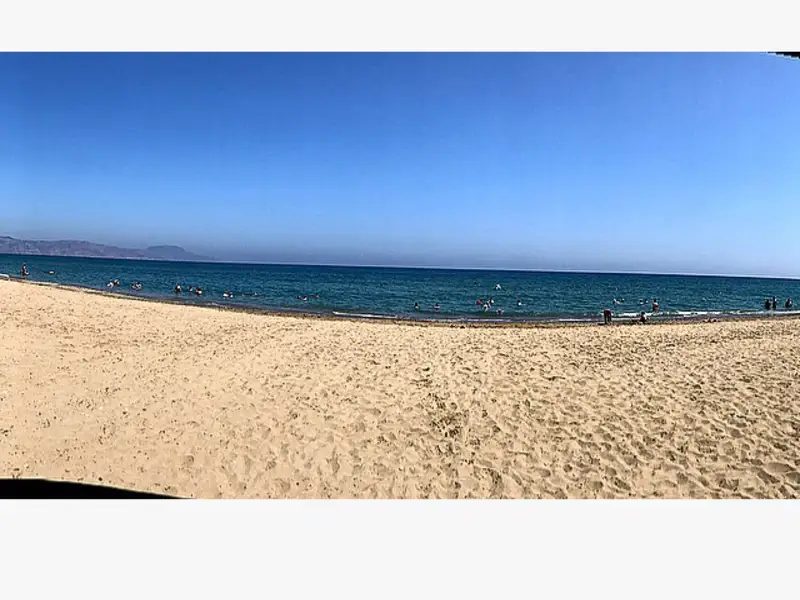
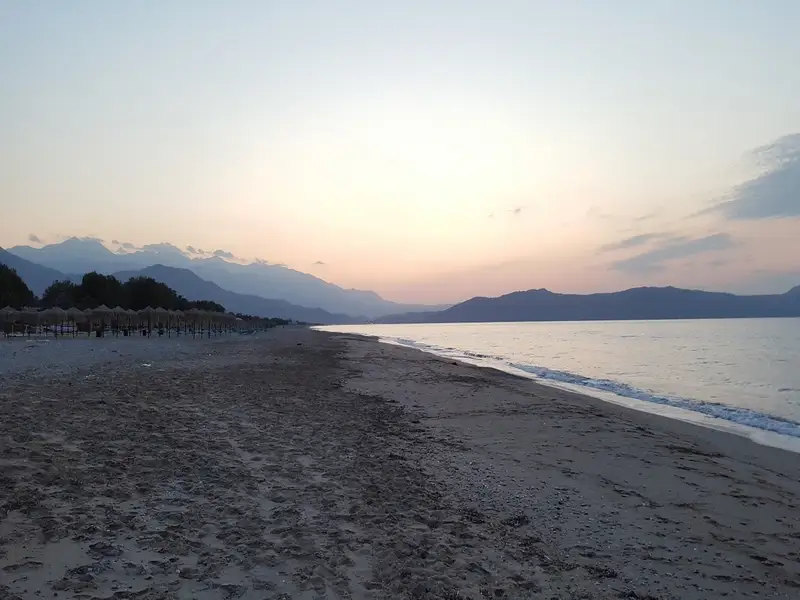
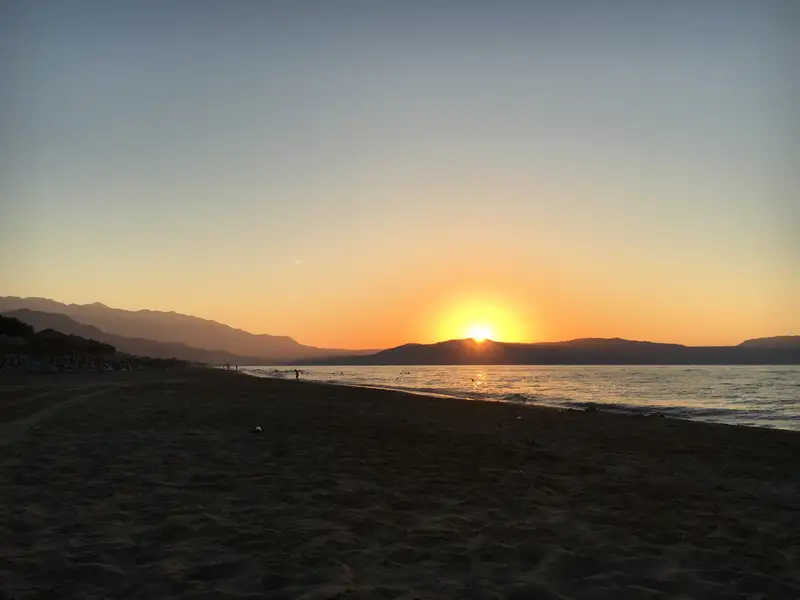
Episkopi beach is a 3.5 km sandy beach on the north coast of Crete, 14 km west of Rethymno and 45 km east of Chania. Episkopi beach sits in a fertile valley between the Mouselas river and the river that runs out of the Petres gorge. The water is shallow and usually a little wavy, like most beaches on Crete’s north coast, and it takes its name from the village of Episkopi, 2 km inland to the south.
At a glance:
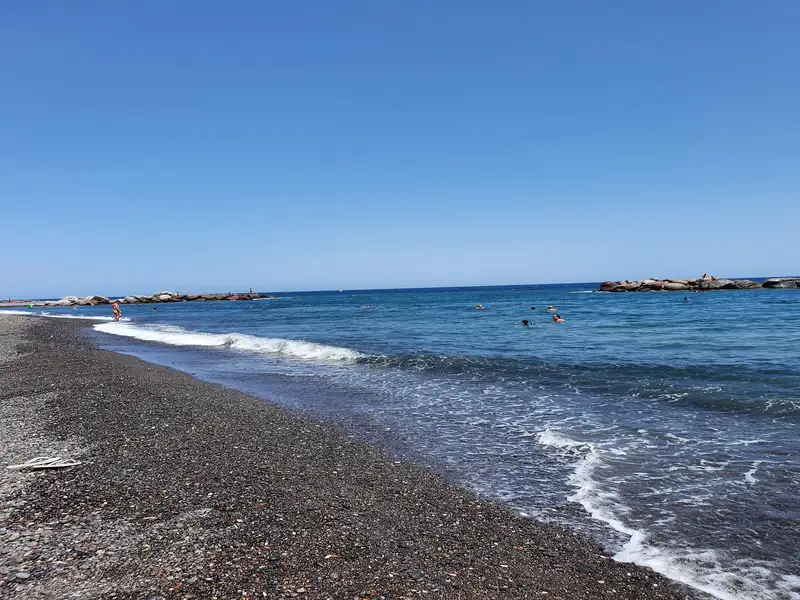
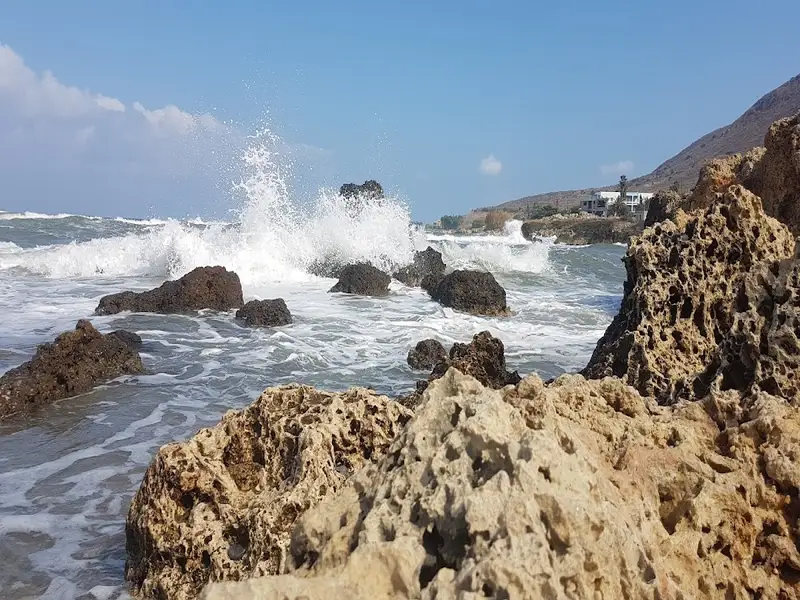
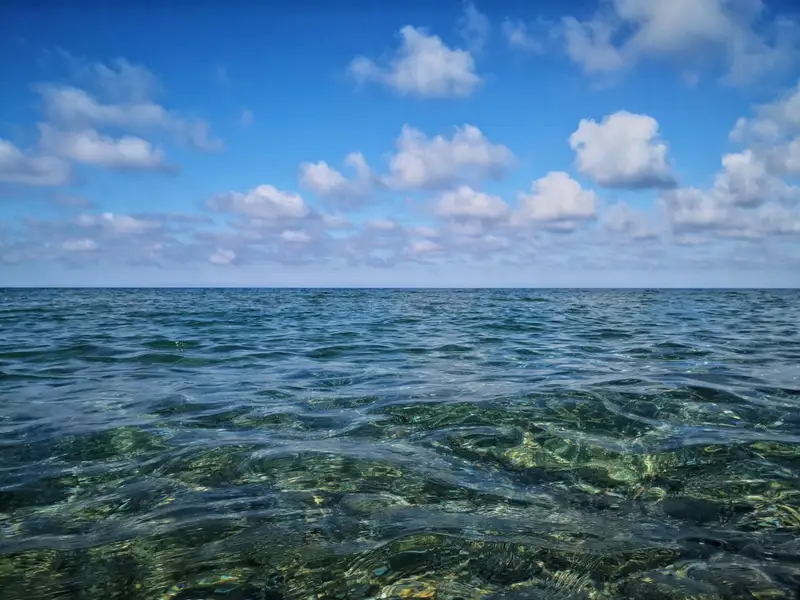
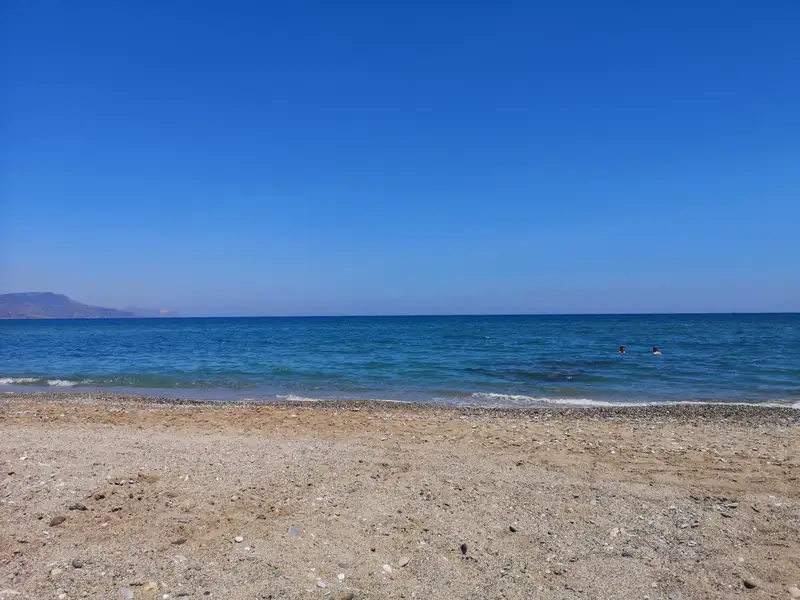
The sand is soft, with a short pebbly strip at the waterline that turns sandy underfoot as you walk in. Mornings are usually calm and clear enough to see the bottom, while an afternoon breeze can raise small waves. The shallow, gently shelving water suits families with children and makes the beach a good spot for a slow swim or a snorkel.
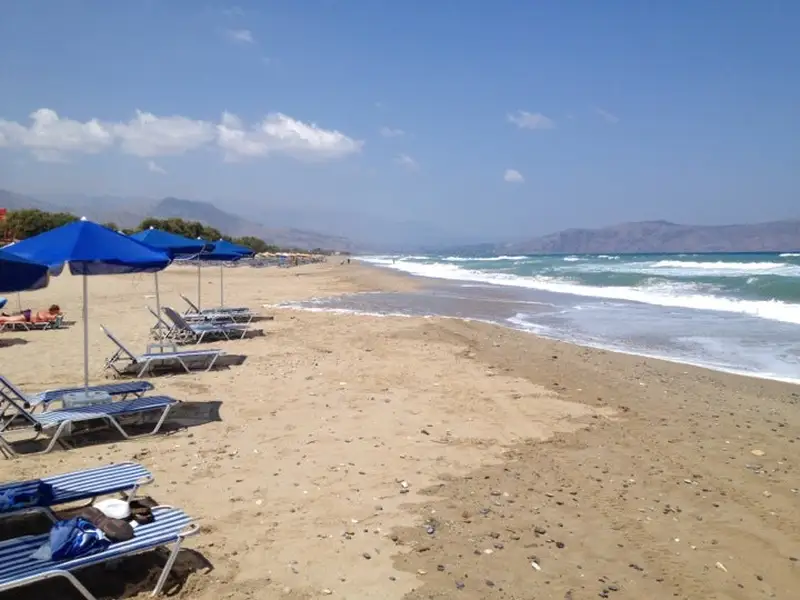
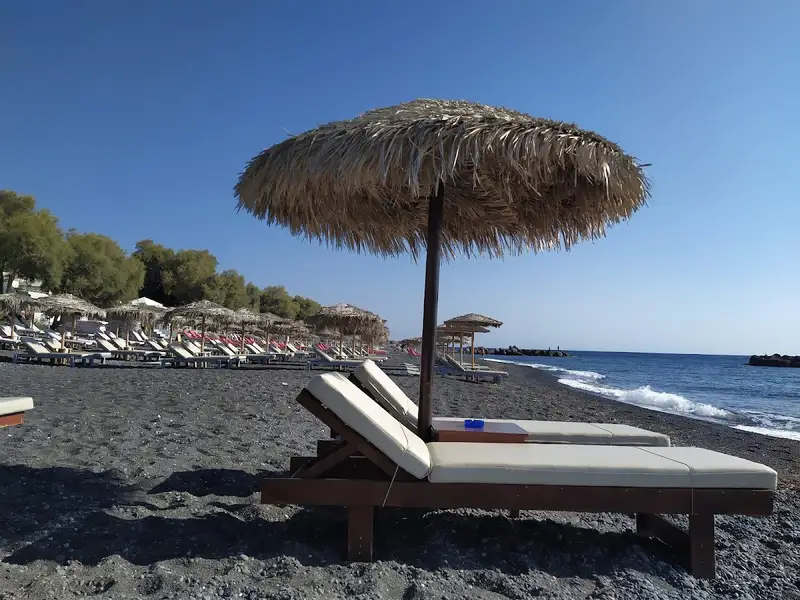
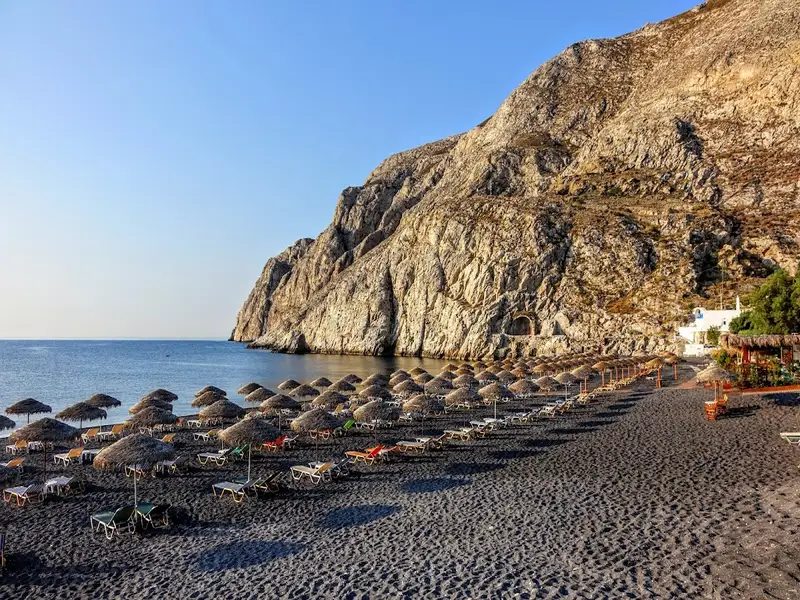
The western part of the beach is well organized. There you find lifeguards, showers, changing rooms, umbrellas and sunbeds, snack bars, and water sports. Tavernas and bars line the shore, several renting sunbeds under thatched umbrellas. Because the beach runs for about 3.5 km, you can still find a quieter, less developed stretch toward the eastern end near the Petres bridge.
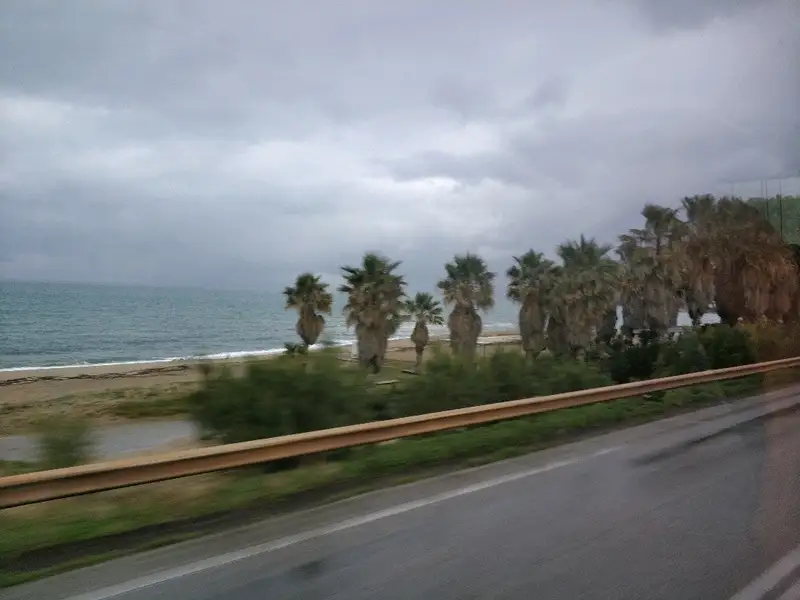
The main coastal road between Rethymno and Chania runs parallel to the beach, so access by car is easy. Frequent KTEL public buses connect Chania and Rethymno and stop on the highway beside the beach, and parking is available at the shore. The simplest way to reach Episkopi and explore the rest of the north coast is to rent a car.
Loggerhead sea turtles (Caretta caretta) nest along this coast between May and September, and Episkopi is a recorded nesting point. If you visit in those months, keep clear of any marked nests and take your litter home with you.
Episkopi sits within a short drive of these stops:
The name Episkopi means “Diocese”: the village was the seat of the local diocese in the Byzantine period, and the old Episcopal church of St Nicholas nearby now stands in ruins. Almost unknown to travelers, the area is also the ancestral home of the Vardinoyannis family.
Episkopi beach is on the north coast of Crete in the Rethymno area, 14 km west of Rethymno and 45 km east of Chania. It lies below the village of Episkopi, between the Mouselas and Petres rivers.
Yes. The water is shallow and the sand is soft, and the organized western section has a lifeguard, so it suits children and less confident swimmers.
The western part is organized, with lifeguards, showers, changing rooms, umbrellas and sunbeds, snack bars, and water sports. The eastern end near the Petres bridge is quieter and less developed.
Yes, water sports are offered in the organized western section, alongside the lifeguard, showers, umbrellas, and snack bars.
The coastal Rethymno to Chania road runs next to the beach, so you can drive or take a KTEL public bus that stops on the highway. Parking is available at the beach.
The main season is June to September, when the weather is warm and dry. Late May, June, and September are usually quieter than midsummer.
Yes. The water is clear and shallow, and the rockier seabed near Petres beach to the east is a favorite for snorkeling and fishing.
Kamari Beach is situated roughly 7km west of Rethymnon, close to Gerani village, at the entrance of Vederi Gorge. The coastal highway linking Chania and Rethymnon runs adjacent to the beach and over the Gerani bridge.
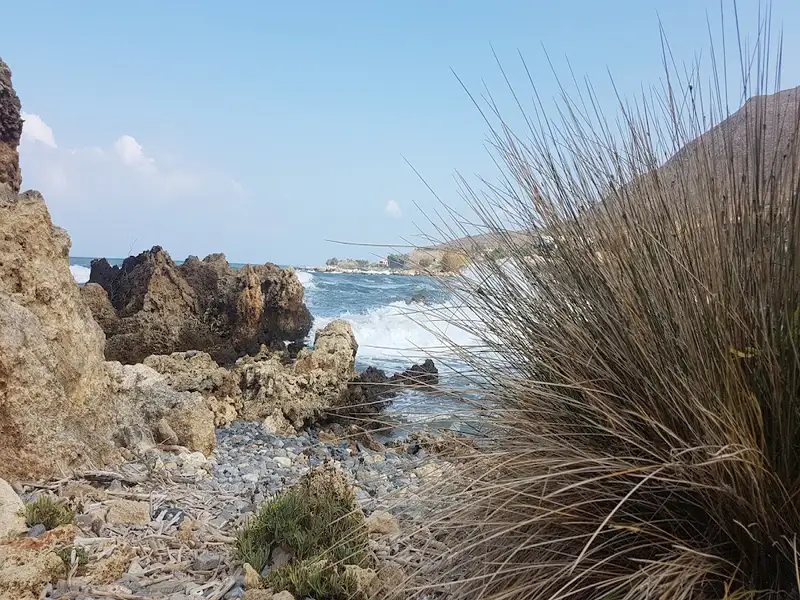
The beach is relatively compact, featuring pebbles and rocks in certain areas, making it a favourite among snorkelers. Despite being exposed to frequent northerly winds, it offers some amenities such as a few umbrellas, taverns, and rooms. Additionally, a quaint harbour and the charming Panagia Kamariani church can be found nearby.
A short distance south of the beach, one can find the sealed entrance to the Gerani cave, a significant archaeological site in central Crete, discovered unexpectedly during the construction of the main road. Moreover, visitors can explore the scenic narrow streets of Gerani village and visit the St George church along with several smaller churches.
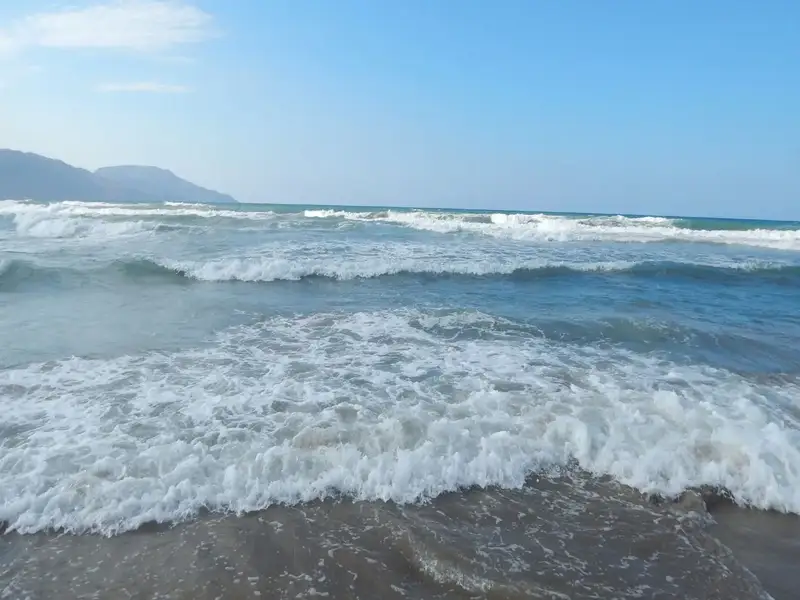
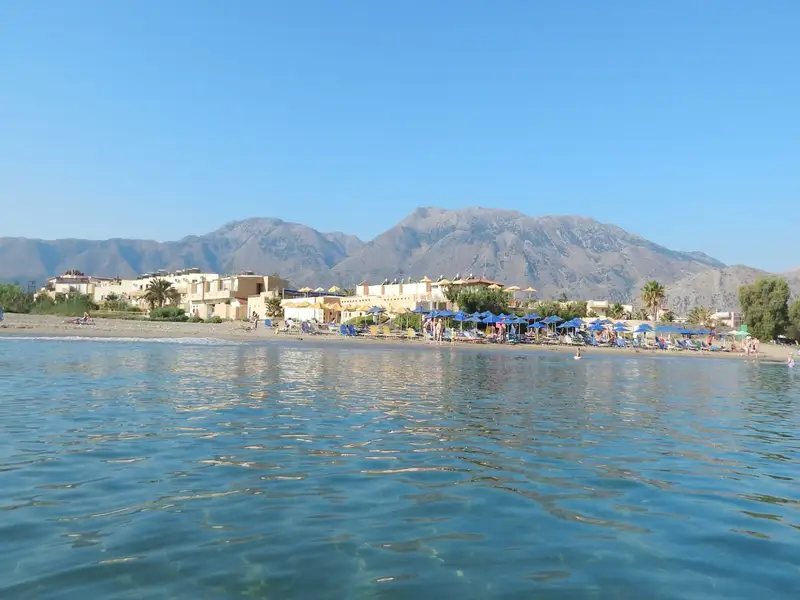
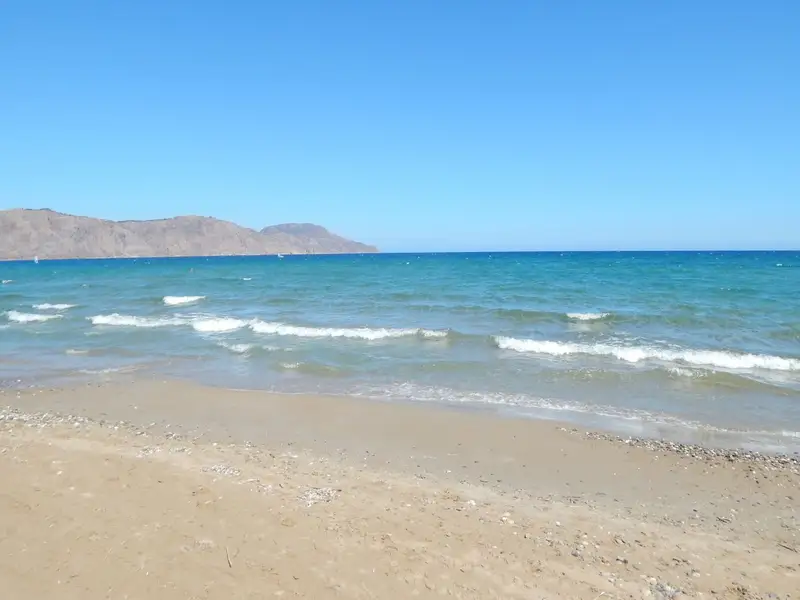
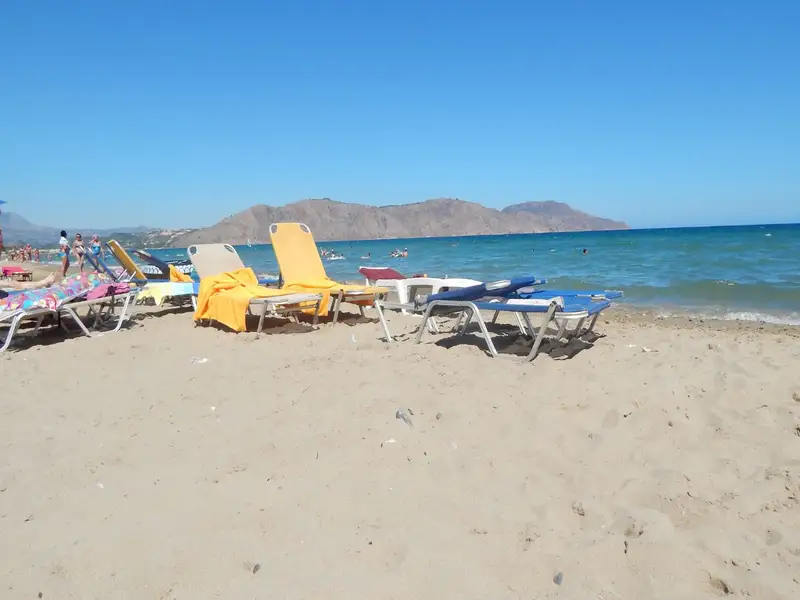
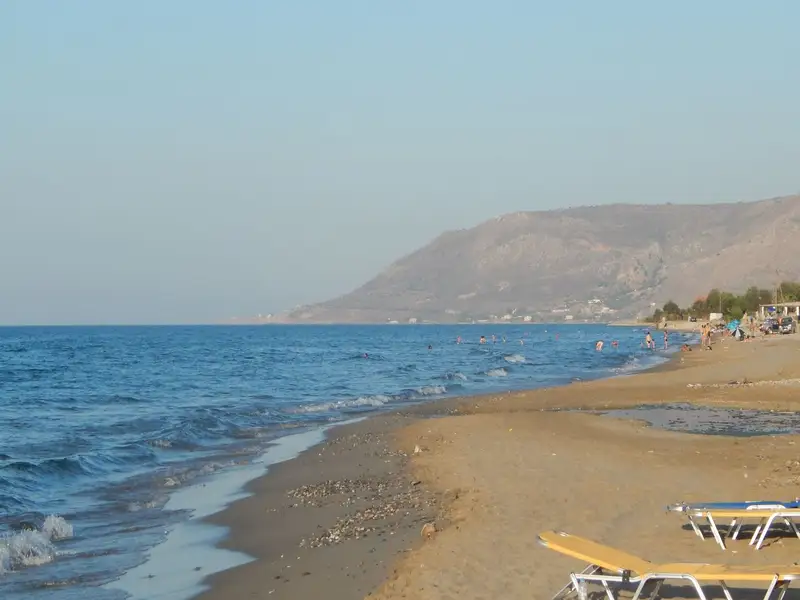
Located between Georgioupoli and Pyrgos, Kavros refers to the expansive beach situated just 4 km east of Georgioupoli, near the hotel bearing the same name. Though the area has experienced substantial tourist development, it’s somewhat less commercialized compared to the adjacent Georgioupolis. Kavros beach is a sandy stretch with transparent, shallow waters; however, its openness to the wind often results in notable wave activity. The beach provides several facilities for visitors, including an array of restaurants, cafes, and bars, making it a perfect spot for an all-day excursion. For those seeking tranquillity, parts of the beach remain unorganized, offering a more serene experience.
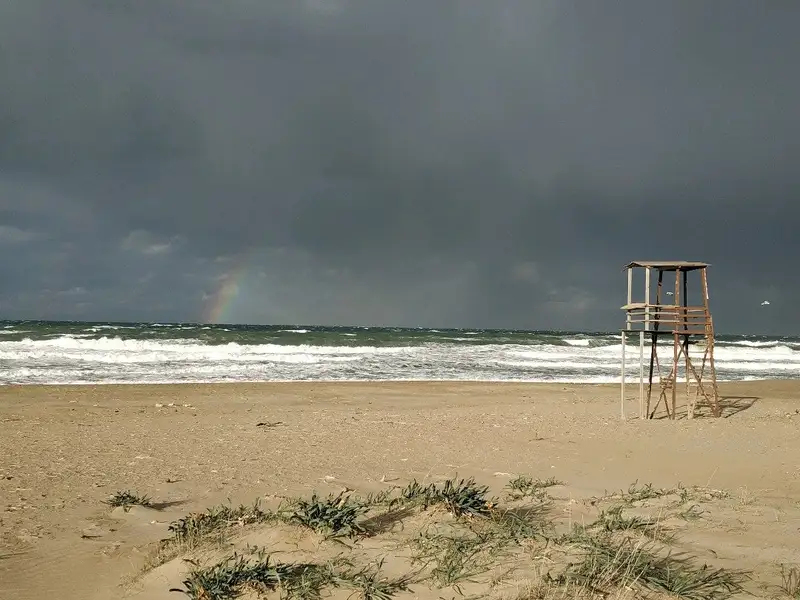
The place at its greatest part is developed and only a very small part of it has been left untouched. Between the remaining virgin parts of the beach, there is an extensive and very important ecosystem of dunes. The dunes of Kavros, like all dunes, host a significant and very fragile ecosystem that is home to its own plants. The most important role of the dunes in Crete is that they protect the inner lands from erosion. In the area, in winter we meet small ponds and the landscape is quite different from the summer.
No results available
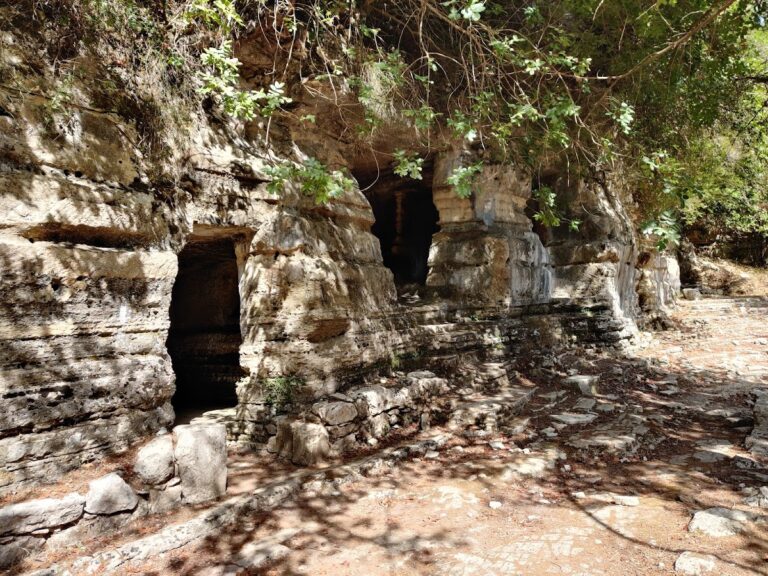
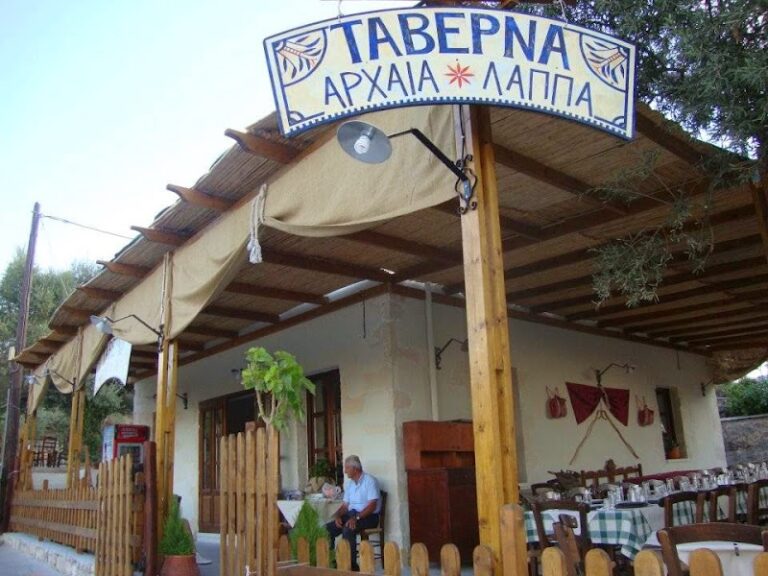
Ancient Lappa was built near the present-day town of Argyroupolis, situated 27km south of Rethymno. The area is now renowned for its springs with waterfalls, its old mills, and the lush green landscape that attracts thousands of visitors each year. Lappa, later known as Lappi or Lambi, is one of the towns believed to have been founded by Agamemnon in Crete. The citizens of Lyttos fled to Lapa after the massacre of Lyttos by Knossos. In 193 BC, Lappa became an ally with Teos, and in 183 BC with Pergamon.
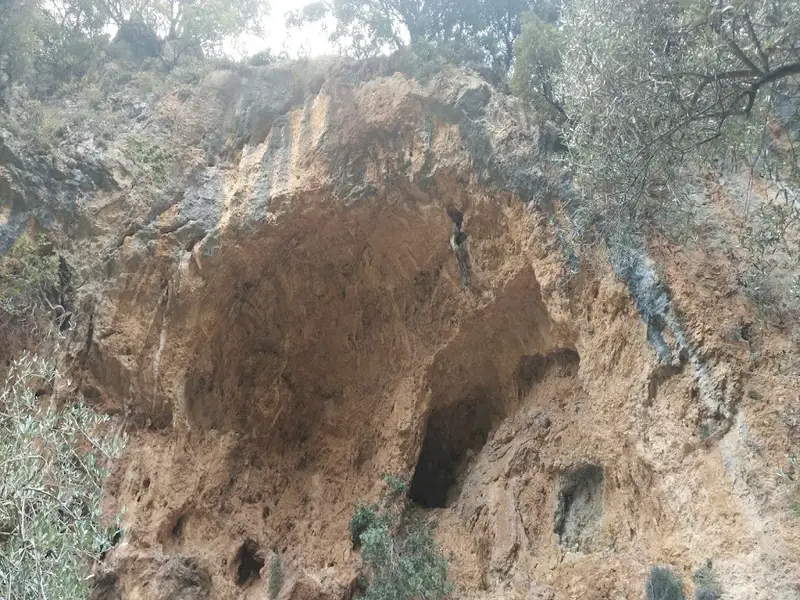
The city thrived until 68 AD when the Roman general Quintus Caecilius Metellus destroyed it. It was later revived as a Roman town with special privileges at the end of the Roman Era. Its glory is reflected in the magnificent monuments that have been discovered and the coins minted. In the area, Roman baths and basilicas with mosaics have been identified, as well as inscriptions and statues of Zeus, Aphrodite, and Dionysus. The Cave of Agia Dynami also appears to have played a significant role, with its essential spring that gushes through the rock.
Additionally, near the village is the temple of the Five Virgins (Thekla, Marianna, Ethane, Martha, and Mary), who are believed to have died there. Beside it lies the Roman necropolis with carved tombs, in a green area with a water spring and a plane tree that has been designated as a natural monument.
After the arrival of the Arabs in Crete, the town and the Diocese founded by Apostle Titus were destroyed. During the Venetian period, the city passed from the hands of the Hortatsis family to Alexios Kallergis. It then thrived once more, which is strongly reflected in the splendid Venetian buildings of the village. The Turks called the town Gaidouropoli (i.e., Donkey Town) until 1822 when the rebels renamed it Argyroupolis. The General Assembly of Crete took place in Argyroupolis in 1867 and 1878, the year that Cretans declared the Union of Crete with Greece, though the attempt ultimately failed.
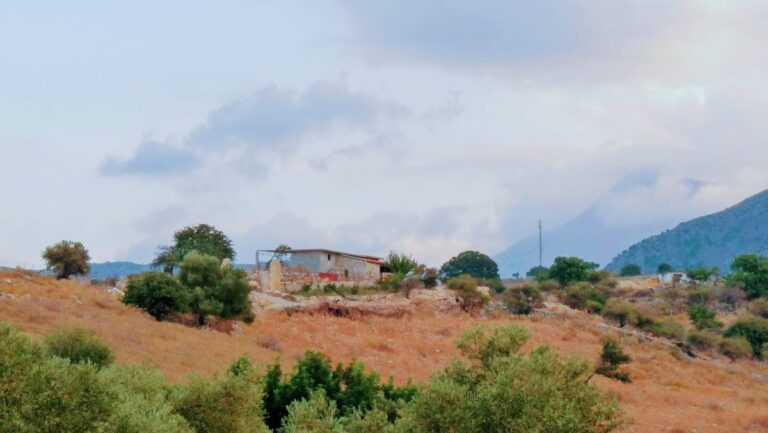
Located near the quaint village of Fylaki in the Apokoronas region of Chania, you’ll discover the vaulted tomb of Fylaki. Constructed during the post-Minoan times (after 1200 BC), it shares many similarities with the domed grave of Stylos at the Azogyres site.
This well-preserved and clean tomb features a lengthy entrance aisle, and its pyramid-like roof is truly striking. One particularly fascinating element is the massive carved boulder situated at the upper part of the entrance.
Finding the tomb can be somewhat challenging. Just 30 meters past the turnoff to Kastelos village, you’ll spot a small group of cypress trees near the tomb.
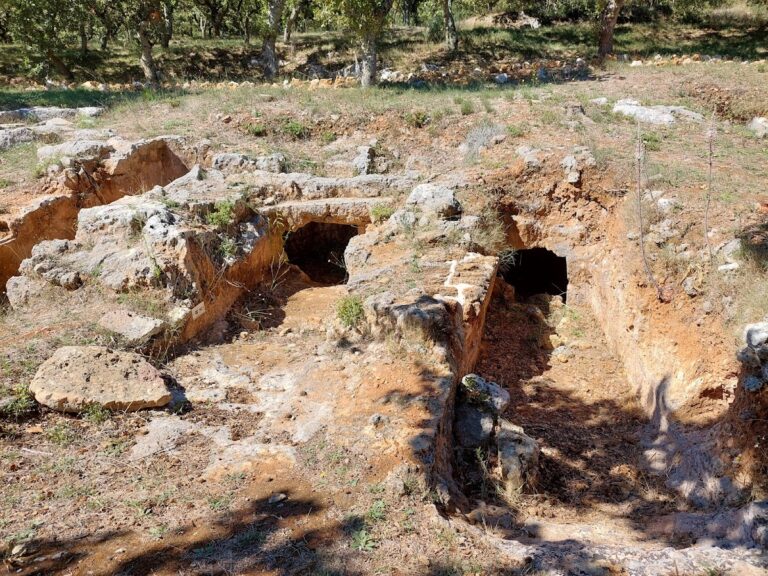
The Armeni Minoan necropolis is located 9km south of the town of Rethymnon, on the main road leading to the south coast of Crete. This significant Late Minoan III A-B (c. 1400-1200 BC) cemetery was found on a shallow hill called Prinokefalo, which translates to “hill of the wild oaks.”
Systematic excavations began in 1969, and by 2012, 231 tombs, including one tholos (domed grave), had been uncovered. A unique feature of the Armeni necropolis is that it initially had an overall plan, with specific areas designated for wealthy noblemen and the less fortunate. However, this plan was abandoned during the Late Minoan III B Period (1300-1200 BC), resulting in a mix of large and small tombs throughout the cemetery.
All the tombs were carved into the rock and consisted of a corridor and a chamber. The corridor was either a staircase or a ramp. Some tombs were left incomplete, with only a corridor and no burial chamber. The more affluent tombs had tombstones of varying sizes, with eleven found away from their original locations.
Each tomb likely represented a family group. Osteological (bone) analysis revealed that the average age at death for adult males and females was approximately 31 and 28 years, respectively. Most female deaths occurred between the ages of 20 and 25, likely due to the dangers of childbirth. Chemical analysis of bones indicated that the people buried at Armeni did not consume marine food, but their diet generally consisted of a fair amount of animal protein and plants. They suffered from various infectious and nutritional/metabolic diseases, as well as dental caries.
The primary discoveries in the tombs included clay larnakes, finely decorated pottery, bronze arms, utensils and ornaments, sealstones, and necklaces made from semi-precious stones. Among the most notable finds were a boar’s tusk helmet, a basket made of reeds and adorned with small bronze pins, a steatite pendant with Linear A script, and a stirrup jar with Linear B script (mentioning the name wi-na-jo).
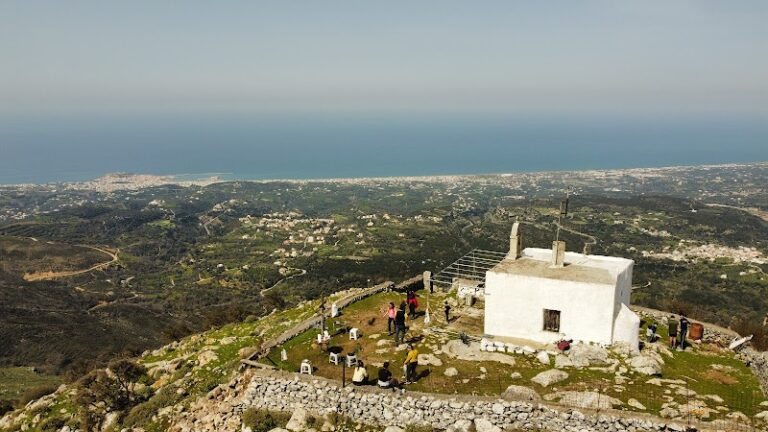
At the location of the chapel of Agio Pnevma (the Holy Spirit) on top of Mount Vrysinas, with an elevation of 858m, archaeologists have discovered what is likely the most significant Minoan Peak Sanctuary in West Crete, the peak sanctuary of Vrysinas. From this vantage point, one can see the northern coast of Rethymnon and the province of Agios Vasilios to the south.
Excavations at this open-air sanctuary have uncovered extremely important findings dating from 1900-1050 BC. The Minoans offered hundreds of zoomorphic and anthropomorphic clay offerings to their goddess. In 2011, a red steatite seal was discovered, engraved with the oldest known Minoan language, the hieroglyphic script. This is the only known example of this script in West Crete.
No results available
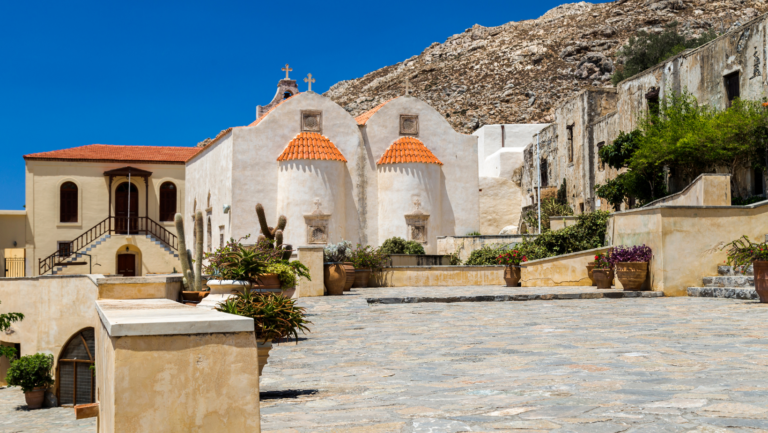
Preveli Monastery (also known as Prevelis Monastery) can be found 37km south of Rethymnon, nestled in a stunning natural landscape on the western slopes of Megalos Potamos (the end of Kourtaliotiko Gorge) and the nearby palm grove. The monastery complex consists of two separate monasteries situated 1.7km apart: the Kato (Lower) Monastery of Agios Ioannis Prodromos and the Piso (Back) Monastery of Agios Ioannis Theologos.
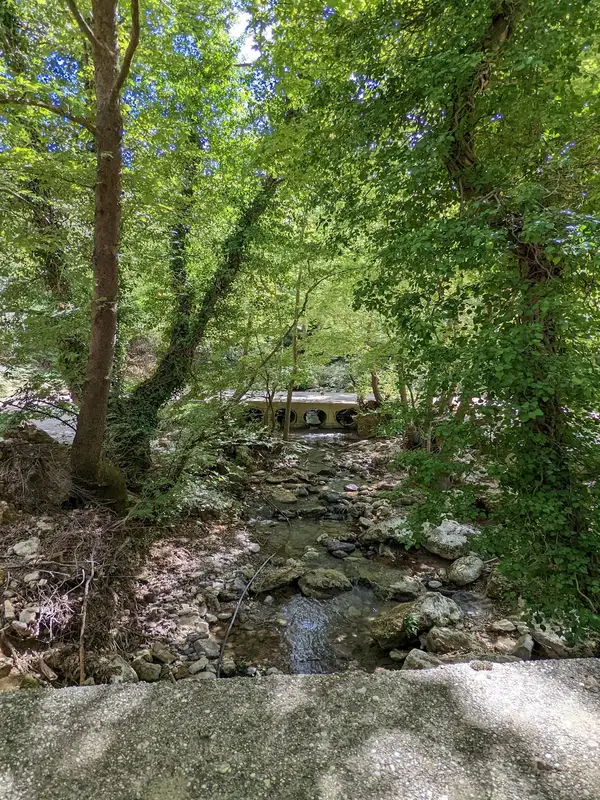
When approaching from Rethymnon, visitors first encounter the Kato Monastery of Agios Ioannis Prodomos (St. John the Baptist), which now lies in ruins. It is situated near the Megalos Potamos river and the region’s arched bridge. The monastery features an irregular arrangement of buildings centered around a courtyard, with the church of Saint John the Baptist at its heart. Surrounding the church are various structures that once housed the dining room, kitchen, abbot’s quarters, monks’ cells, an olive oil press, and storage rooms. The monastery was once in use year-round, as the surrounding land was ideal for cultivation and agriculture. However, it was eventually abandoned after being repeatedly destroyed and plundered by different conquerors of Crete.
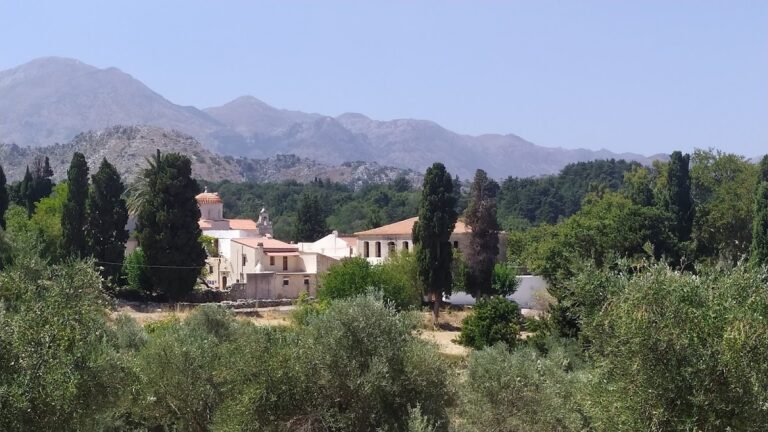
The Profitis Elias Monastery, situated on a hill with sweeping views 20km south of Rethymno and adjacent to Roustika village, is a relatively lesser-known monastery in Crete. Founded during the Venetian Era, it is among the island’s most historic convents.
Throughout its history, the monastery was repeatedly destroyed by the Ottomans, with the last instance occurring during the 1866 revolution. The monastery played an active role in the resistance against Turkish rule. Consequently, the monastery’s buildings, aside from the temple, were constructed in their present form after 1866. Additionally, Profitis Ilias made a significant contribution to preserving Cretan history by housing the Historical Archive of Crete during the German Occupation.
The monastery features a fortress-like architectural design. At the center of the courtyard, visitors will find a three-aisled basilica with a dome dedicated to Prophet Elijah (celebrated on July 20), the Holy Trinity, and Agia Zoni (August 31). The belfry of the monastery, along with that of Arkadi Monastery, are the only surviving Venetian bell towers in Crete. Surrounding the courtyard are the two-story monks’ cells, an incomplete guest house, and the refectory.
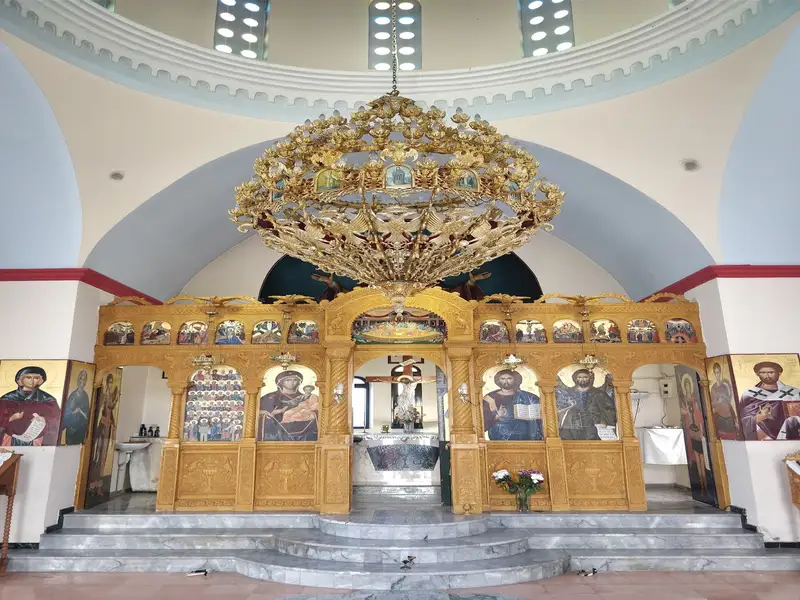
Within the temple, visitors can admire the ancient wooden iconostasis, the throne (dated 1843), and the pulpit. Additionally, numerous relics are housed in the sanctuary, including sacred vessels, vestments, gospels, crosses, relics of various saints, a brocade epitaph, old books (dating back to 1640), and manuscripts (from 1620).
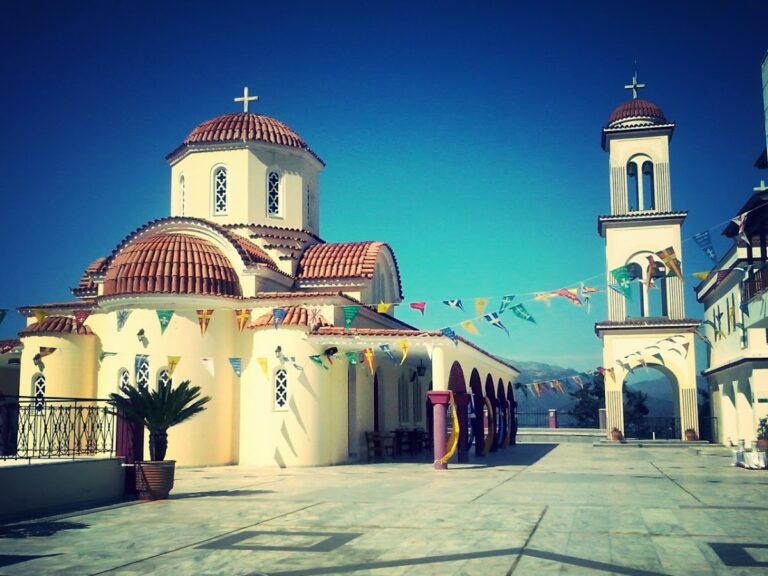
In the early 1990s, the monastery of Saints Raphael began operating on the hill of the Episcopacy (Diocese seat) of Lambi, Sivritos, and Sfakia in Spili. The primary temple is devoted to the martyrs Saint Raphael, Nikolaos, and Irini. Additionally, the monastery houses the chapels of Saint Irinaeus, Saint John the Baptist, Saint John the Hermit, and Archangel Michael.
Constructed atop Timios Stavros hill in the western suburb of Rethymnon called Koumbes, the Convent of Jesus Christ (Christ the Savior) likely dates back to the Venetian period, similar to numerous other temples and monasteries in the area.
Historians speculate that the monastery was originally home to the Convent of Our Lady of Erimitiani, as evidenced by a 17th-century Renaissance painting. However, the monastery was destroyed during the Turkish occupation of Rethymnon in 1645 and only reopened in 1935.
The monastery’s church features two aisles dedicated to the Transfiguration and St. John the Baptist. The nuns are responsible for the beautiful paintings and icons within the church. Additionally, the monastery houses a small museum and library containing books and memorabilia belonging to Bishop Titos Sylligardakis.
No results available
No results available
No results available
No results available
No results available
The Twin Ravines, or Kollita Gorges, are situated near the scenic village of Argyroupolis, approximately 22km southwest of the city of Rethymnon. The name derives from two adjacent canyons that conclude near the village of Kato Poros. The eastern canyon, Moundros Gorge, is bordered by the Vigla peak (567m) to the east and Nissiani hill to the west, which houses the deserted Nissi settlement. West of Moundros gorge lies the Vilandredo gorge, named after the village at its entrance and more commonly referred to as Kollita Gorge.
These gorges are perfect for casual hikers due to their ease and stunning beauty. They are particularly suitable for groups of friends who can park in Kato Poros or Argyroupoli, explore the Moundriano canyon, and return via the second Kollita Gorge.
Suggested Two Gorges Route
Starting from the verdant Argiroupoli, built on the ancient city of Lappa, we journey east to the village of Moundros, known for its springs and fountains. The village is home to many beautiful Venetian structures (old courts, prisons, and noble houses) and the churches of Saint Constantine, Saints Anargyri (11th century), and Saint Nicholas are well worth a visit. Don’t forget to wander the narrow streets of Moundros. Close to Moundros, the deserted Nissi settlement, famous for its stunning stone structures, can be found.
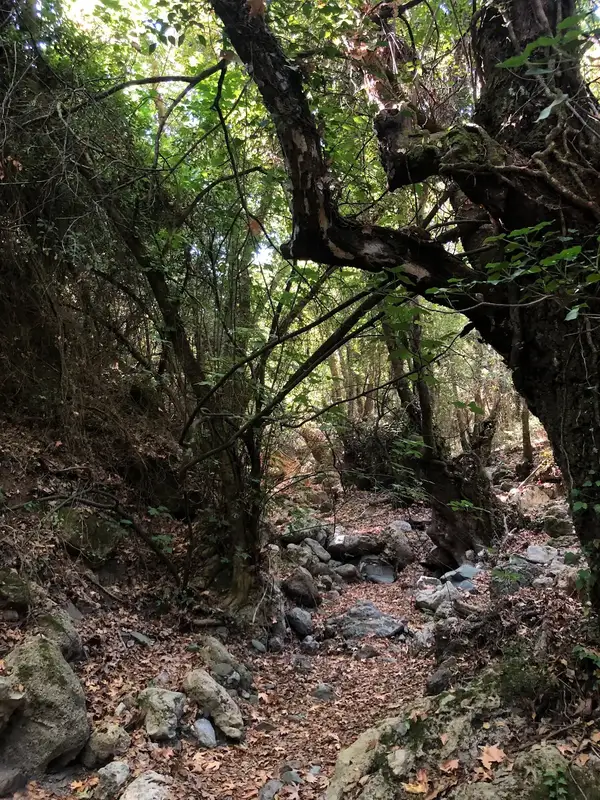
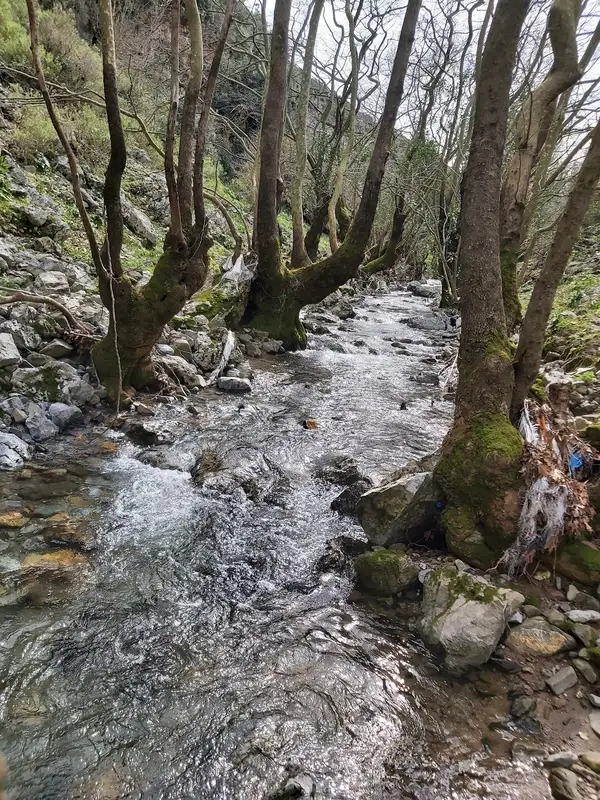
From the village, the entrance to the verdant Moundros gorge is accessible, leading to the village of Velonado. A well-defined path descends to the riverbed, which is usually filled with water. The canyon is filled with towering plane trees and several fresh water ponds. After roughly 1.5 hours of walking, we reach the southern entrance of Moundriano Gorge, near Velonado.
Upon exiting the canyon, we follow the asphalt road west to the entrance of the second canyon, Kollita Gorge, near Vilandredo. This canyon, more magnificent than Moundriano, is lush with plane trees, and the path follows the riverbed. The most beautiful section of the canyon is where the high walls nearly touch, forming a narrow passage. Fig and holly trees can be seen on the gorge’s slopes, hanging overhead. After approximately four hours, we exit the canyon, which once provided water for the Roman baths of Lappa, now Argyroupolis.
Following the ancient stone path through laurels, myrtles, and hollies, we reach Kato Poros and the area of Pente Parthenes (Five Virgins). Here, one can find the spring beneath the perennial plane tree of Pente Parthenes, the chapel of the Five Virgins, and the Hellenistic and Roman tombs of Lappa. From here, the trail broadens and leads us back to the lush green Argiroupoli. In Argiroupoli, the Venetian buildings, churches, and picturesque alleys are worth a visit. A popular attraction is the springs of Argyroupolis, with the most notable spring located in the cavernous chapel of Agia Dynami. The area is lush with several small waterfalls and numerous restaurants.
The Twin Ravines, or Kollita Gorges, can be found near the charming village of Argyroupolis, approximately 22km southwest of the city of Rethymnon. The name refers to the two parallel canyons that conclude near the village of Kato Poros. The easternmost canyon, Moundros Gorge, is bordered by the Vigla peak (567m) to the east and the Nissiani hill to the west, where you can find the abandoned settlement of Nissi. Adjacent to Moundros Gorge to the west, is the Vilandredo Gorge, named after the village at its entrance and often referred to as Kollita Gorge.
The gorges offer an ideal hiking experience for novices due to their ease and stunning surroundings. It’s a perfect outing for groups of friends – park your car in Kato Poros or Argyroupolis, explore the Moundriano canyon, and return via the second Kollita Gorge for a round trip.
A suggested itinerary for the two gorges starts in the verdant Argiroupoli, built on the site of the ancient city of Lappa. From there, head east to the village of Moundros, known for its springs, fountains, and beautiful Venetian architecture. Don’t miss a stroll through the narrow streets of Moundros and a visit to the churches of Saint Constantine, Saints Anargyri (11th century), and Saint Nicholas. Near Moundros, you’ll find the deserted settlement of Nissi, notable for its impressive stone structures.
From the village, make your way to the northern entrance of the lush Moundros Gorge, which leads to the village of Velonado. A well-marked path descends to the riverbed, which is typically full of water. The canyon boasts towering plane trees and several freshwater ponds. After about a 1.5-hour walk, you’ll reach the southern entrance of Moundriano Gorge near Velonado.
Exiting the canyon, head west on the asphalt road to the entrance of the second canyon, Kollita Gorge, near Vilandredo. This canyon is even more impressive than Moundriano, filled with plane trees and a path that runs along the riverbed. The most breathtaking part of the canyon is where its towering walls nearly touch, creating a very narrow passage. Along the slopes of the gorge, you’ll spot numerous fig and holly trees. After a total of four hours, you’ll exit the canyon, which once supplied water to the Roman baths of Lappa, now Argyroupolis.
Following the old stone path amidst laurels, myrtles, and hollies, you’ll reach Kato Poros and the area of Pente Parthenes (Five Virgins). Here, you’ll find a spring under the perennial plane tree of Pente Parthenes, the chapel of the Five Virgins, and the Hellenistic and Roman tombs of Lappa. From here, the trail broadens and leads back to the lush green Argiroupoli. In Argiroupoli, be sure to visit the Venetian buildings, churches, and picturesque alleyways. The springs of Argyroupolis are a popular attraction, particularly the spring in the cavernous chapel of Agia Dynami. The area is lush with several small waterfalls and numerous restaurants.
Situated 13km west of Rethymno, Petres Gorge opens up at the Petres beach. It houses the longest river in Rethymnon province, which is replenished by multiple tributaries that gather the waters of Kollita Gorges from the west to Mount Vrysinas in the east, spanning almost half of Rethymnon Prefecture. The river flows throughout the year and forms a significant wetland of Crete, particularly near its mouth at Episkopi.
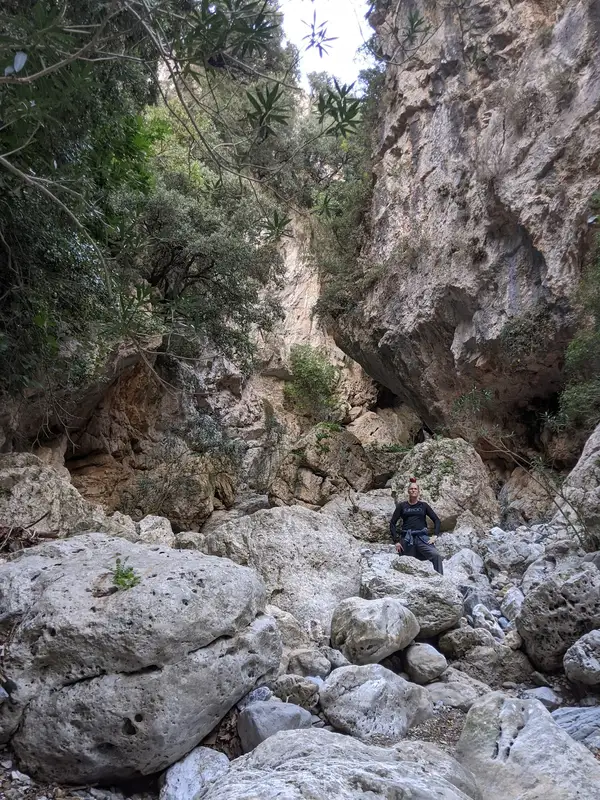
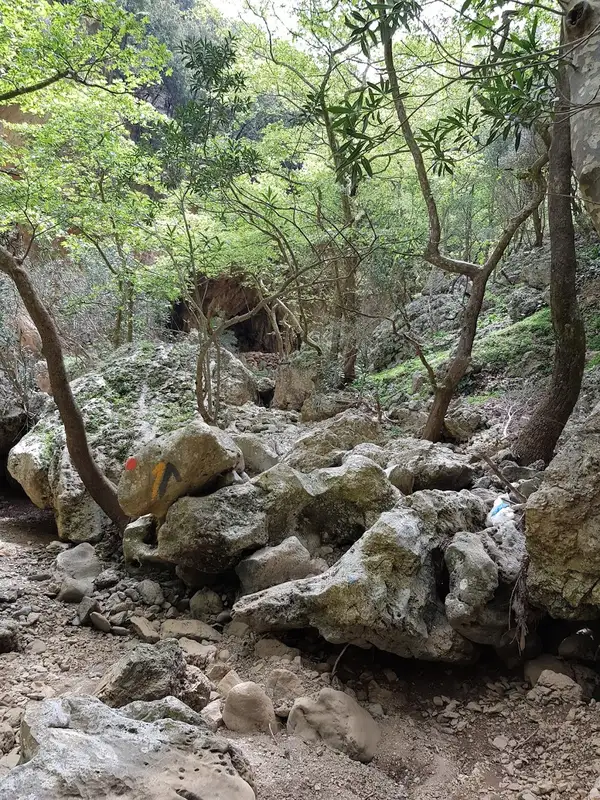
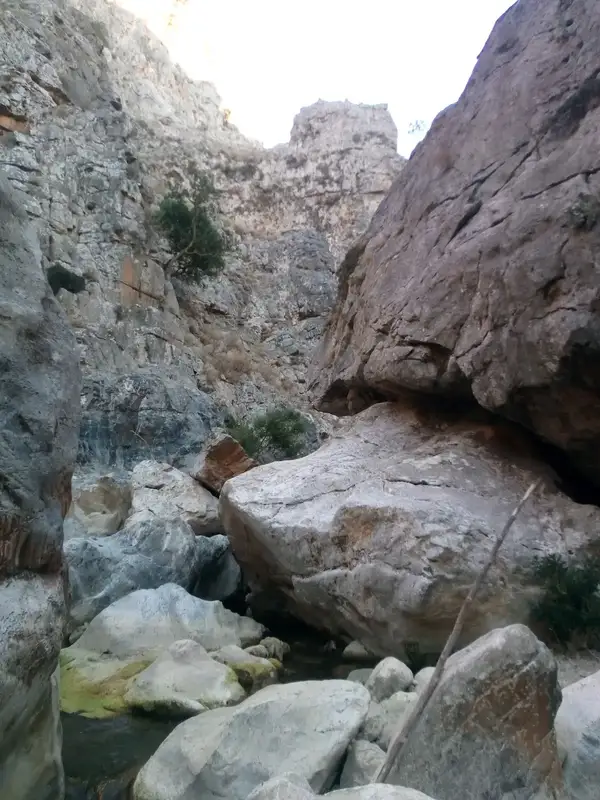
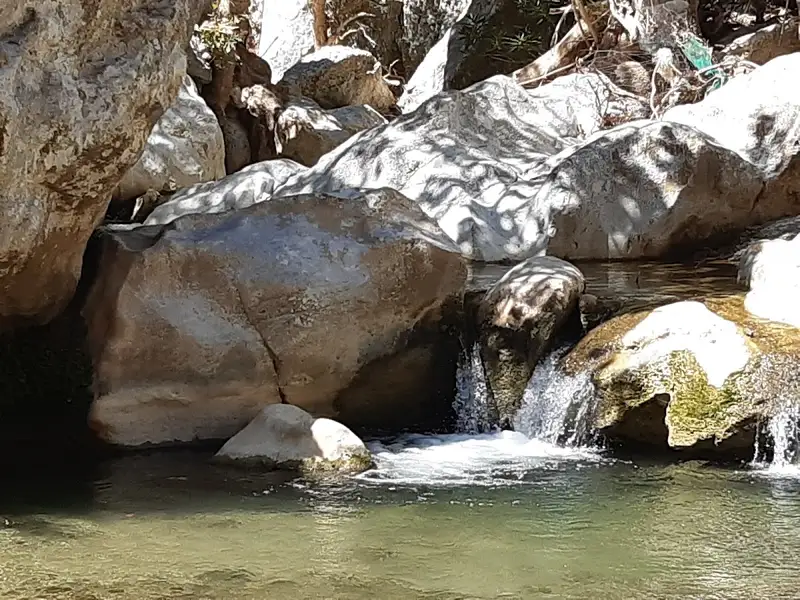
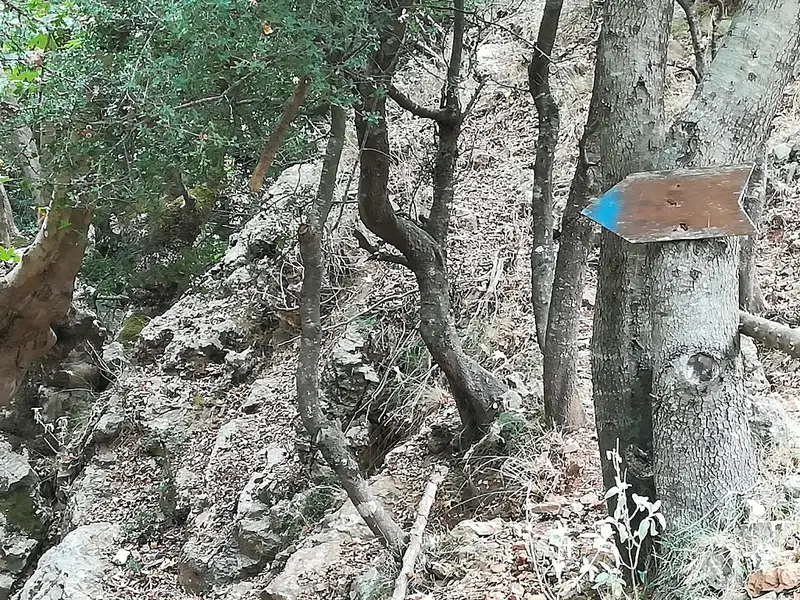
The gorge narrows down to a small section about 1km long, beginning near the village of Karoti. Despite its short length, it is definitely worth exploring. It is easily accessible and perfect for swimming in the ponds that form along its course. However, fences are installed to confine goats, so carrying a cutter might be useful in case the fences are locked. Certain areas with large rocks may require a bit of climbing and extra caution.
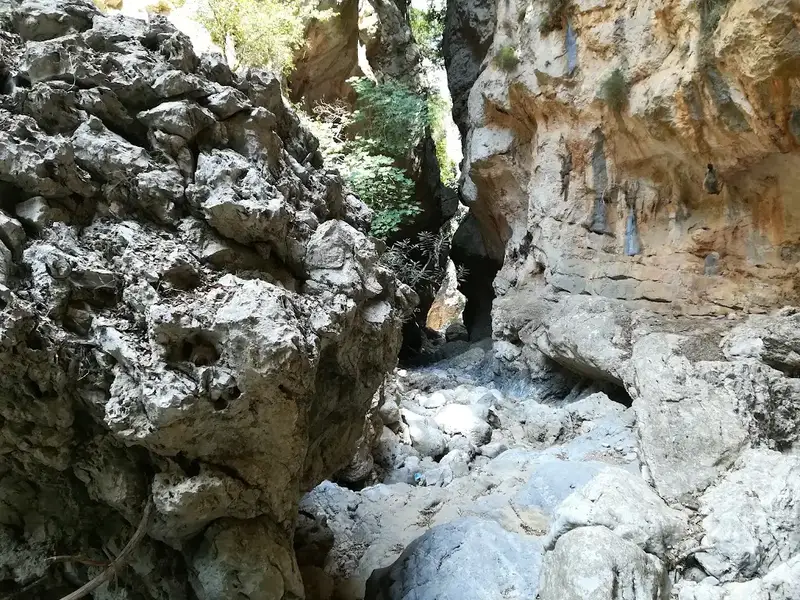
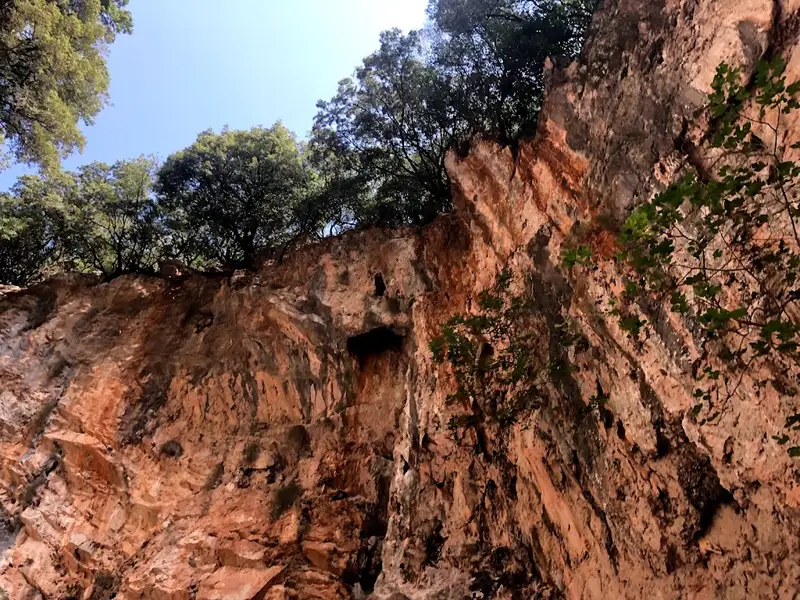
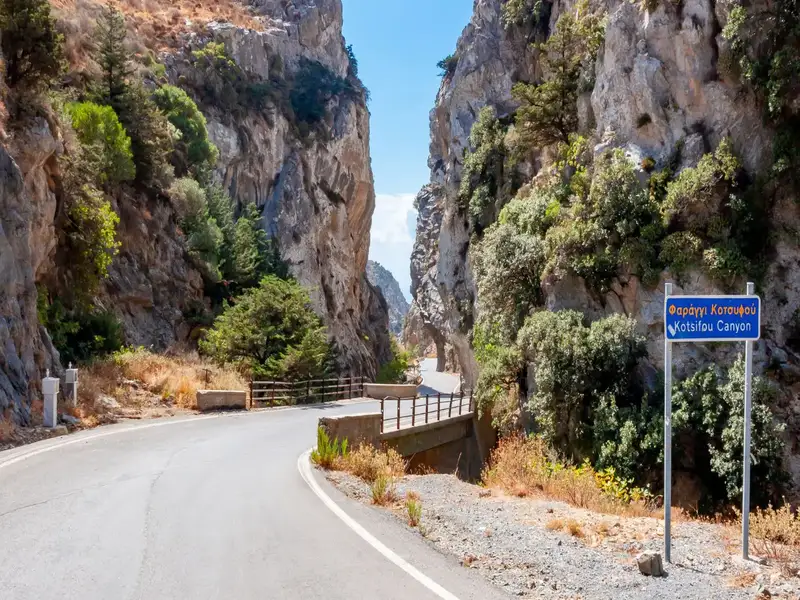
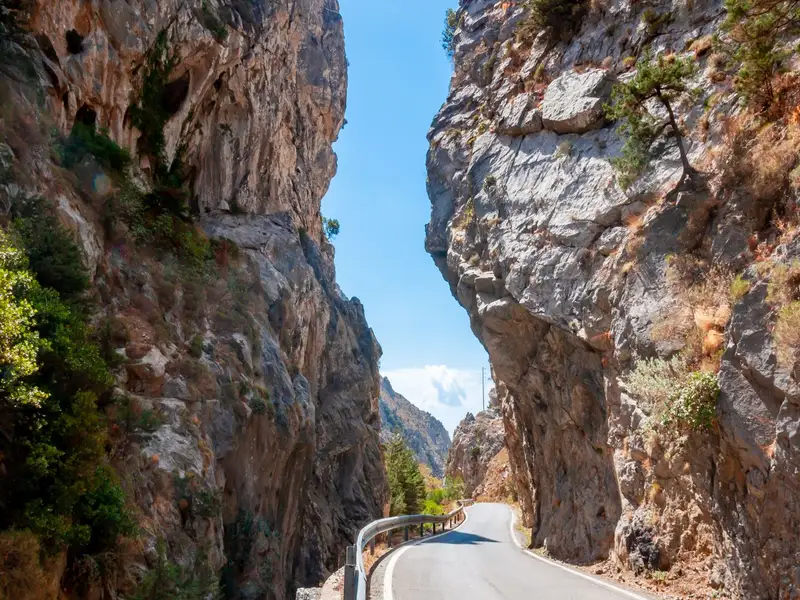
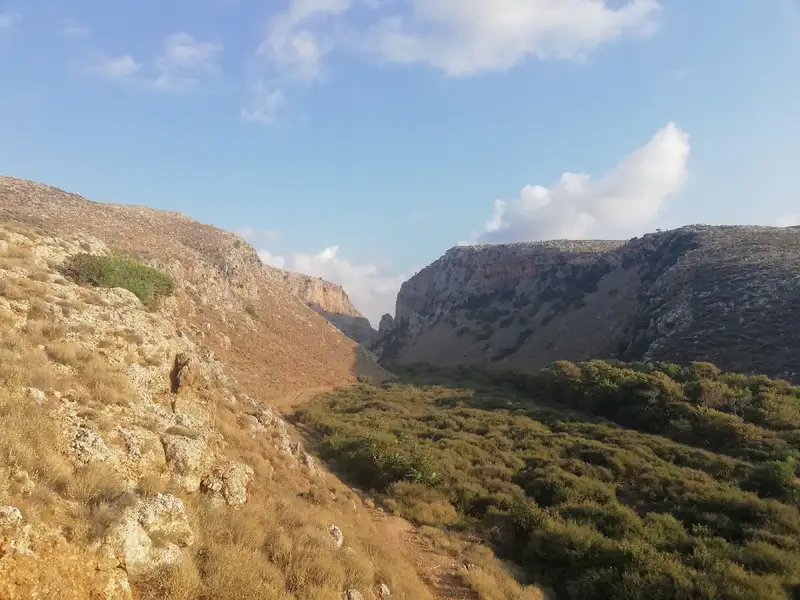
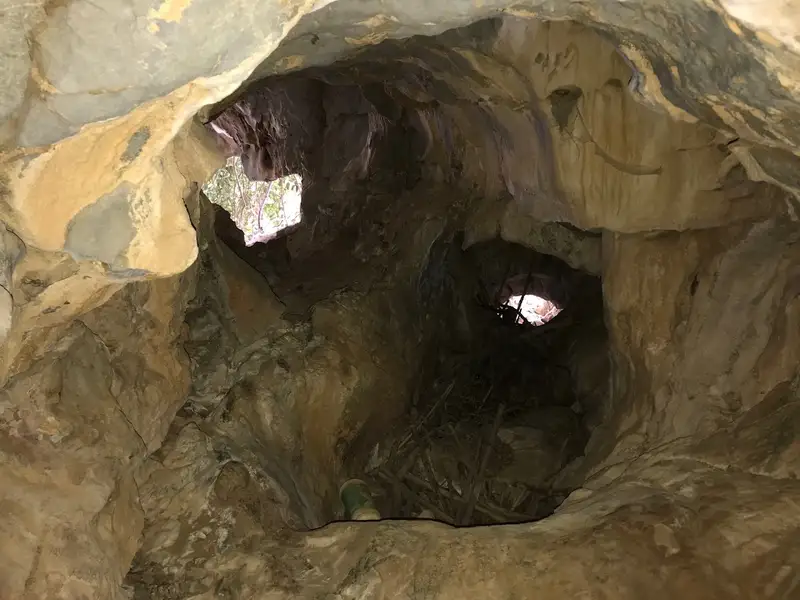
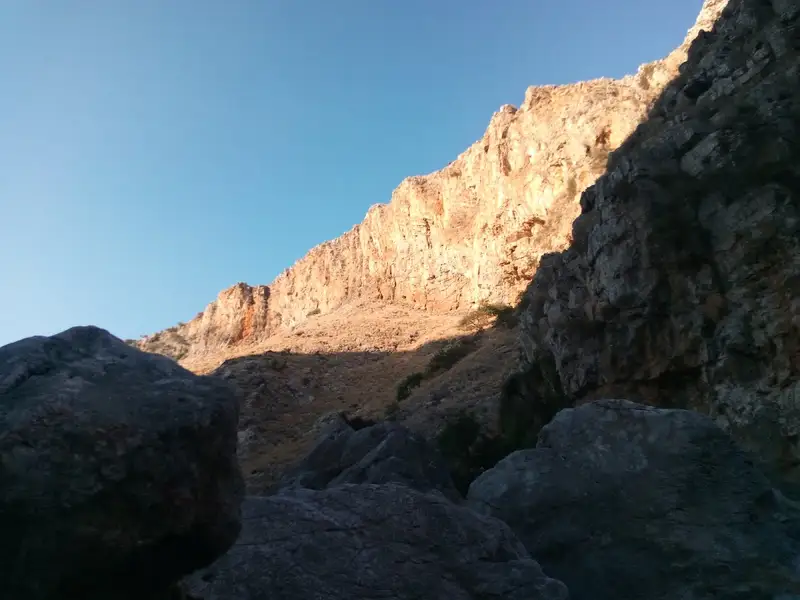
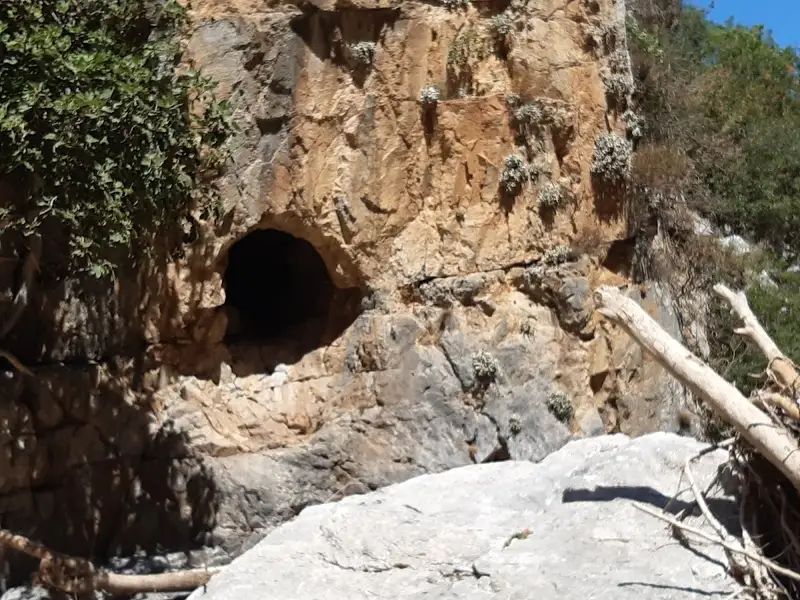
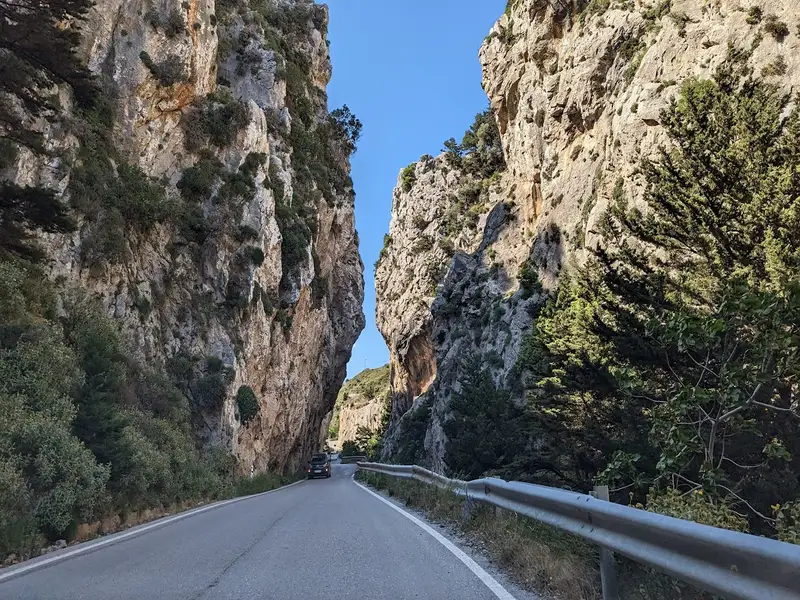
The gorge of Kotsifos starts at Kannevos village and ends at Plakias. The starting point is very narrow with a width of about 10m, which gradually increases and reaches 600m. The total length is 1800m, and the almost vertical sides that reach a height of 600m. Inside the gorge, there is a small temple built inside a rocky cavity dedicated to Saint Nicholas.
Hiking in the upper part of the gorge (Kanevos – Bridge of Sellia).
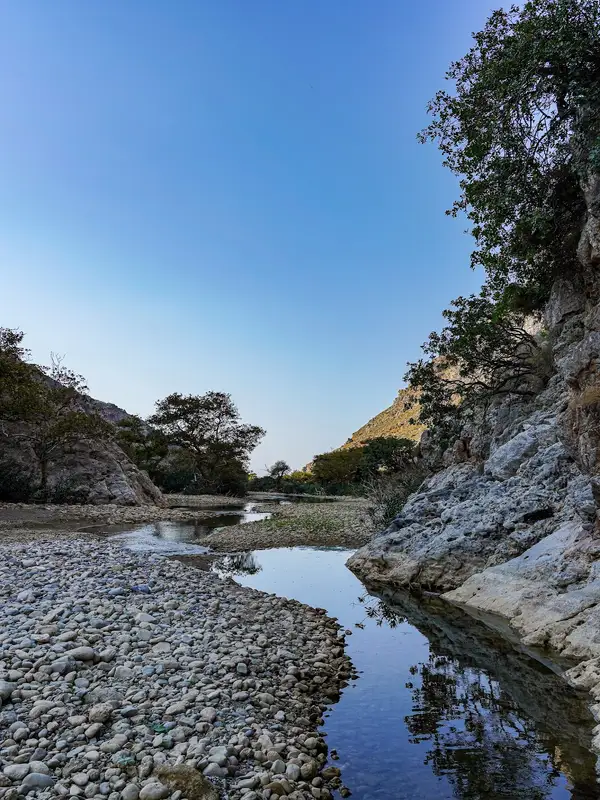
Starting from the village Kanevos you can start hiking on the riverbed and reach the bridge that connects villages Selia and Myrthios (after about one hour of course). Along the way, there are large boulders that block the passage, but with a little attention, you can overcome them. At one point the side-gorge of Boutsinas meets Kotsyfos with an impressive waterfall of 20 meters. In summer the riverbed is dry.
Course in the upper part of the gorge (Bridge of Sellia – Plakias)
At the location of the bridge that heads to Selia, the canyon gradually turns into a wide valley. You can continue our course at the bottom of the gorge, along the riverbed. After meeting a modern temple, after 3-4 minutes you meet a dirt road that heads backwards (opposite the flow of the river). If you follow this road in a few minutes you will meet the springs of Kotsifos where a pond is formed (surrounding villages get water from here). From here onwards, the river has a water flow throughout the year emptying on the beach of Plakias.
No results available
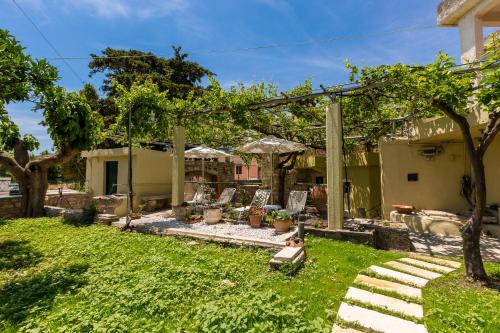
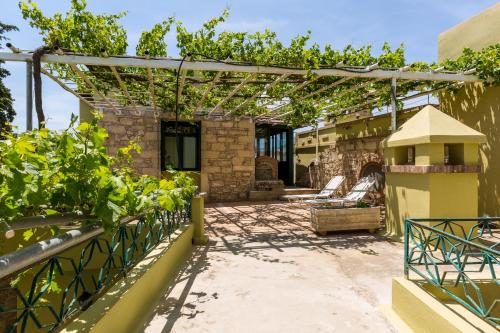
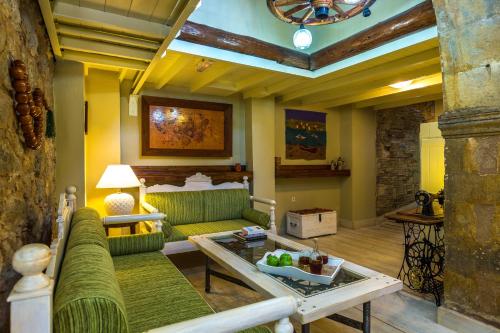
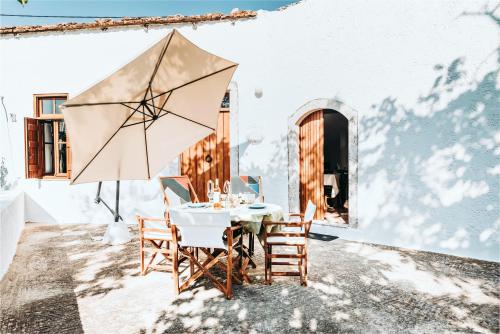
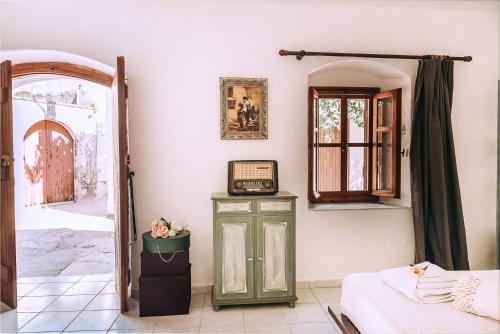
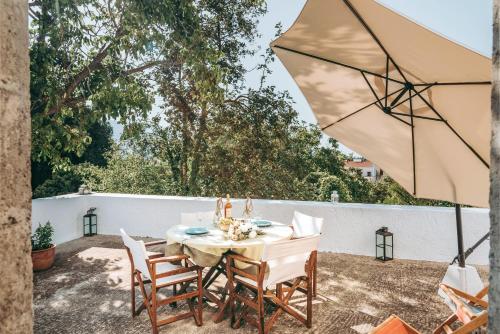
Boasting garden views, Patrico features accommodation with a balcony and a coffee machine, around 20 km from Archaeological Museum of Rethymno. This holiday home offers accommodation with a patio and free WiFi.
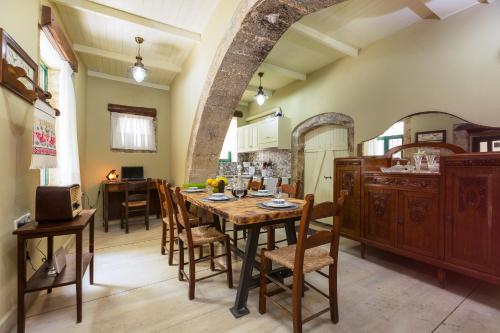
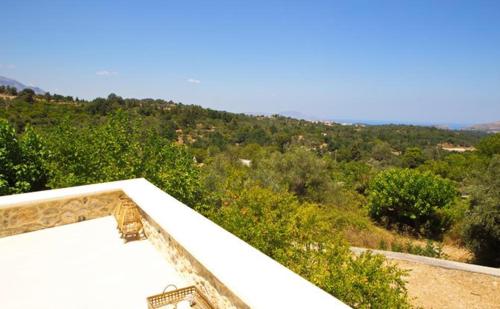
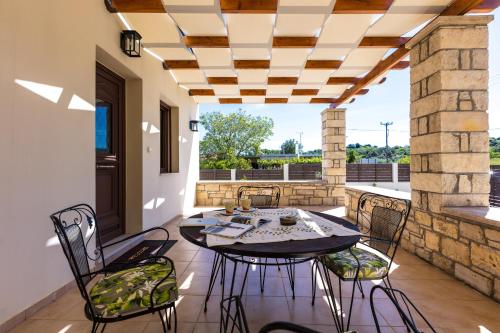
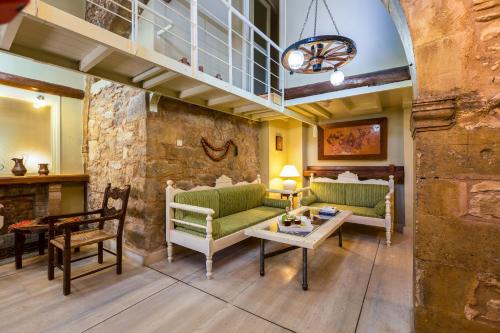
The holiday home features 4 bedrooms, 2 bathrooms, bed linen, towels, a flat-screen TV with cable channels, a dining area, a fully equipped kitchen, and a terrace with mountain views.
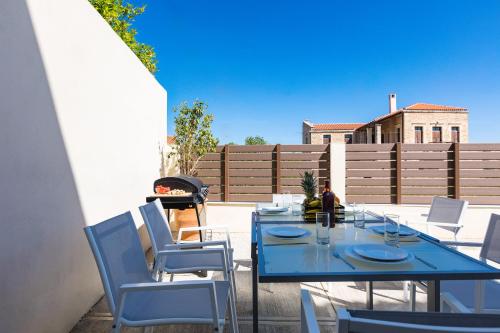
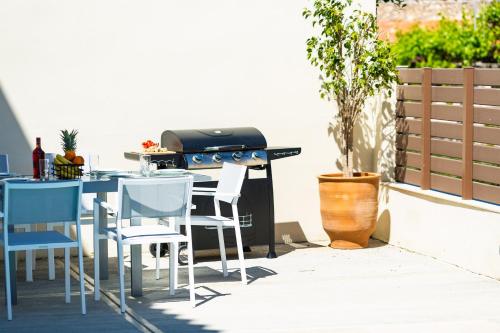
The holiday home offers a barbecue. If you would like to discover the area, cycling is possible in the surroundings and Patrico can arrange a car rental service.
Museum of Ancient Eleftherna is 44 km from the accommodation, while Municipal Garden is 19 km from the property. The nearest airport is Chania International Airport, 67 km from Patrico.
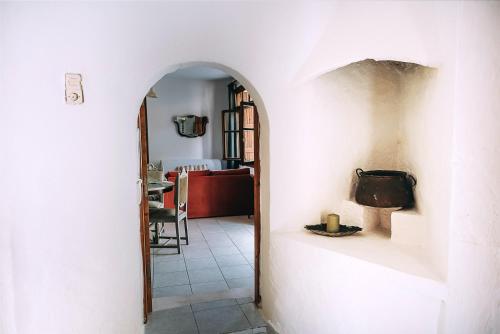
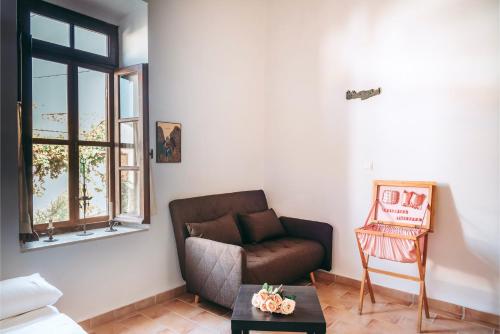
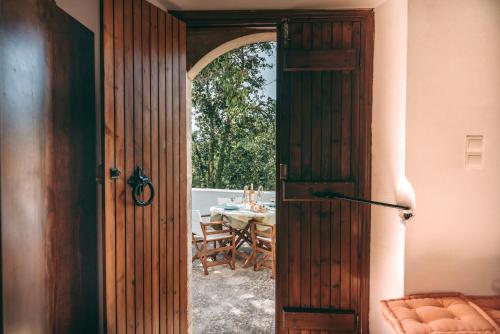
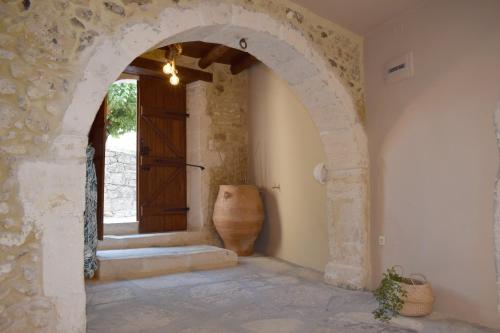
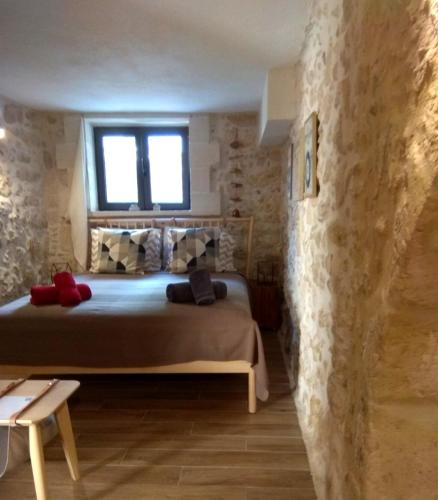
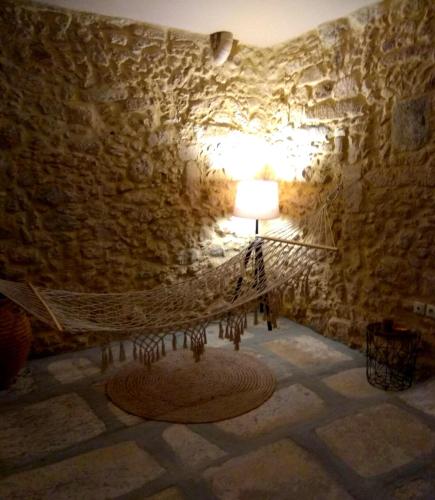
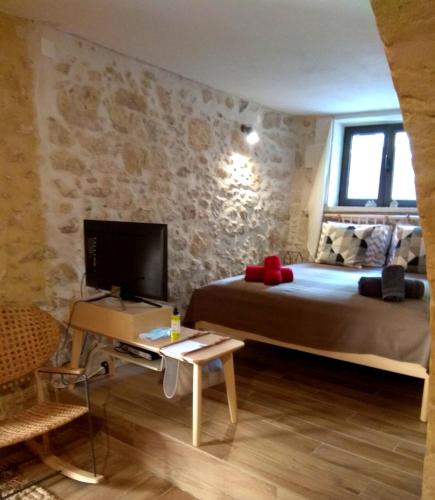
Located 43 km from Museum of Ancient Eleftherna, 18 km from Municipal Garden and 18 km from Centre of Byzantine Art, 3 bedrooms house with enclosed garden and wifi at Ρούστικα offers accommodation situated in Roústika. Both free WiFi and parking on-site are available at the holiday home free of charge. The property is non-smoking and is set 19 km from Archaeological Museum of Rethymno.
Leading onto a balcony with garden views, the spacious air-conditioned holiday home consists of 3 bedrooms. There is a seating area and a kitchen equipped with a fridge.
Historical and Folklore Museum is 18 km from 3 bedrooms house with enclosed garden and wifi at Ρούστικα, while Venetian Fortress is 18 km away. The nearest airport is Chania International Airport, 68 km from the accommodation.
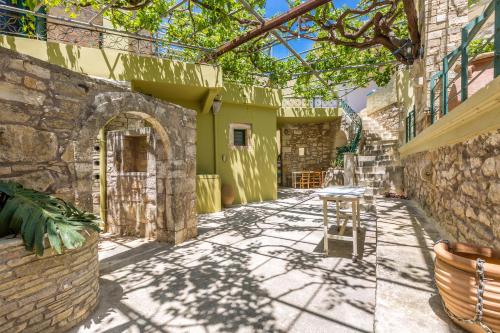
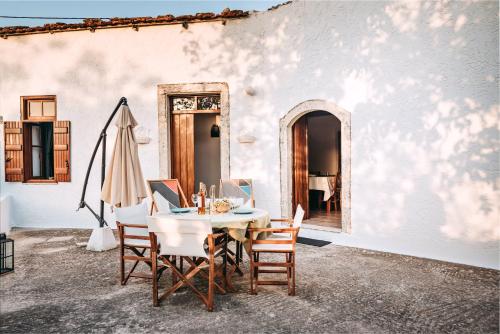
Set in Roústika in the Crete region, Vassili’s House has a patio. The accommodation is 19 km from the Archaeological Museum of Rethymno and features free WiFithroughout the property.
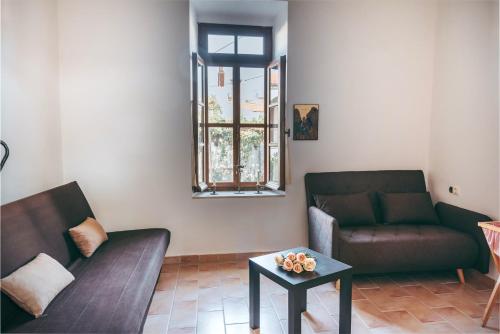
Leading onto a balcony with quiet street views, the air-conditioned holiday home consists of 1 bedroom. Offering a terrace with mountain views, this holiday home also has a flat-screen TV, a well-equipped kitchen with an oven, a microwave and a toaster, as well as 1 bathroom with a shower and a hair dryer.
Museum of Ancient Eleftherna is 43 km from the holiday home, while Municipal Garden is 18 km away. The nearest airport is Chania International Airport, 68 km from Vassili’s House.
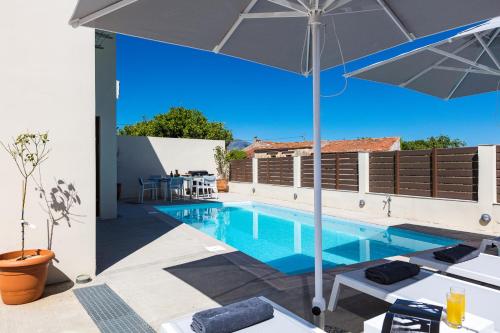
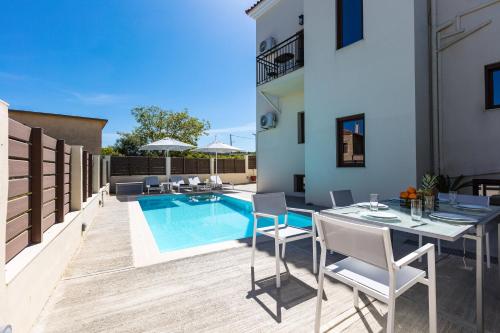
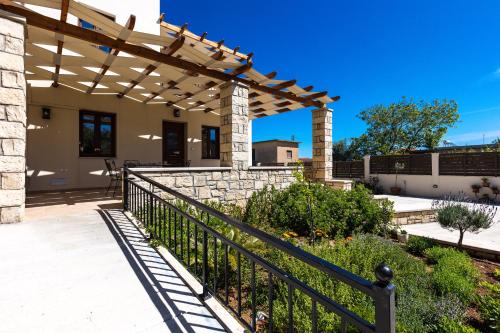
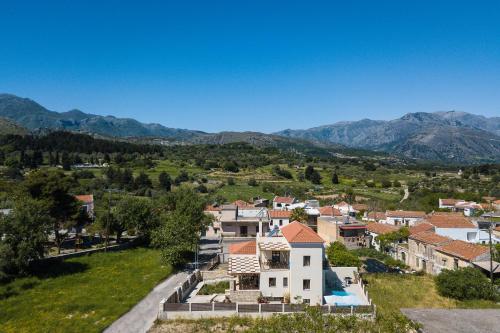
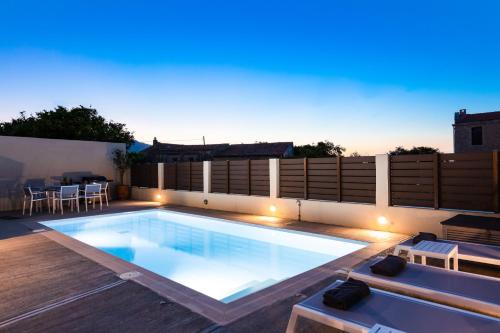
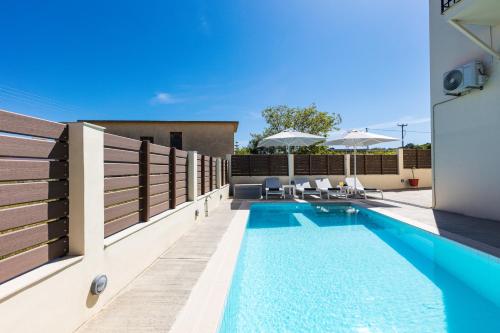
Boasting garden views, Roustika 4 Seasons offers accommodation with a patio and a coffee machine, around 18 km from Archaeological Museum of Rethymno. This villa has a private pool, a garden, barbecue facilities, free WiFi and free private parking.
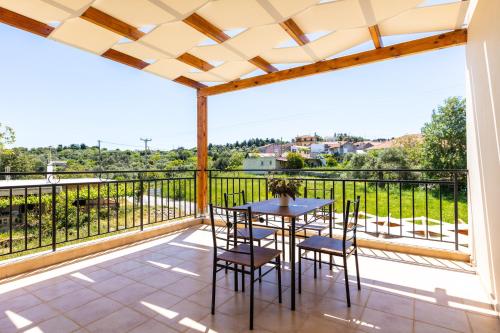
The villa has 4 bedrooms, 4 bathrooms, bed linen, towels, a flat-screen TV with satellite channels, a dining area, a fully equipped kitchen, and a balcony with pool views. The air-conditioned villa also features a seating area, washing machine and 4 bathrooms with a hair dryer.
The villa offers a sun terrace. Both a bicycle rental service and a car rental service are available at Roustika 4 Seasons, while cycling and hiking can be enjoyed nearby.
Museum of Ancient Eleftherna is 42 km from the accommodation, while Municipal Garden is 18 km from the property. The nearest airport is Chania International Airport, 68 km from Roustika 4 Seasons.
from
€121
/night
No results available
Connect with thousands of Crete visitors and boost your bookings.
No results available
© All rights reserved. Crete Locals