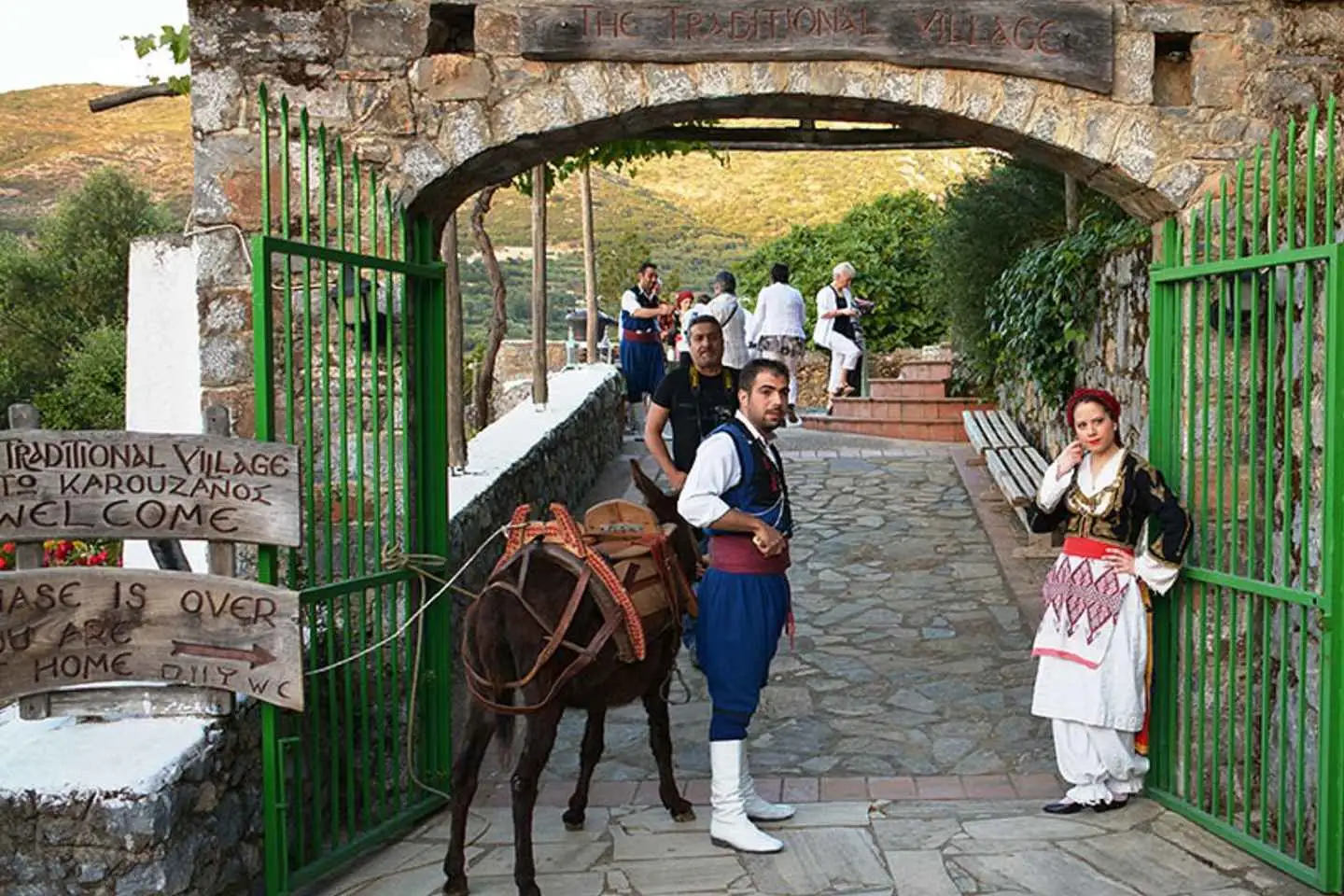

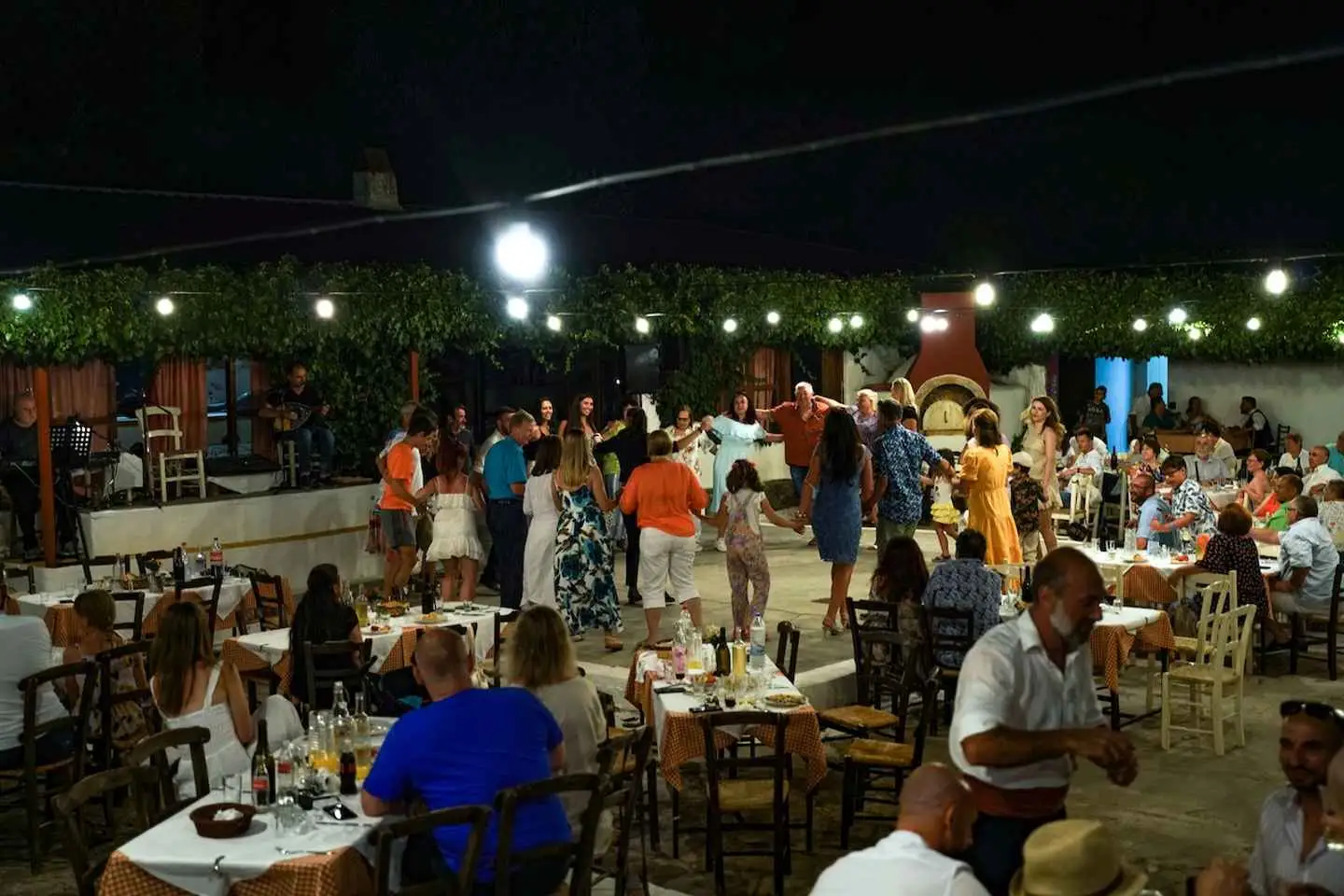
Explore a traditional Cretan village in the evening, try Greek cuisine, and watch a lively show of dancing and music on this entertaining trip.
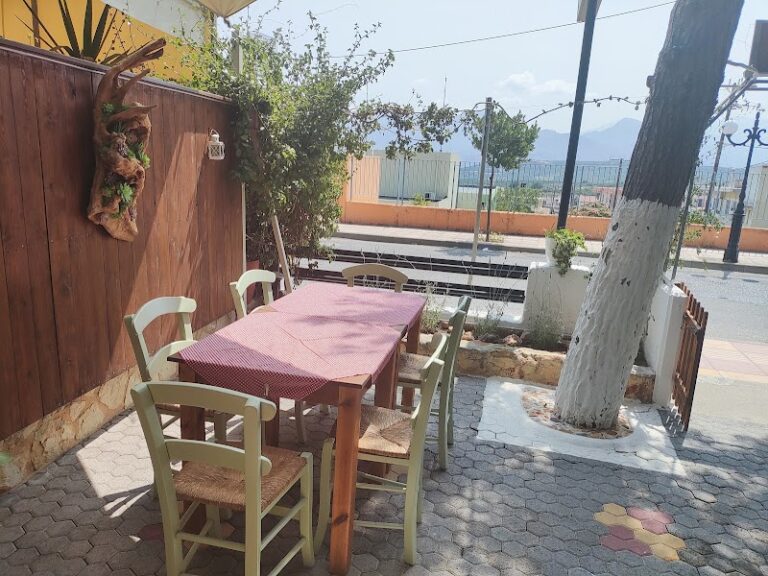
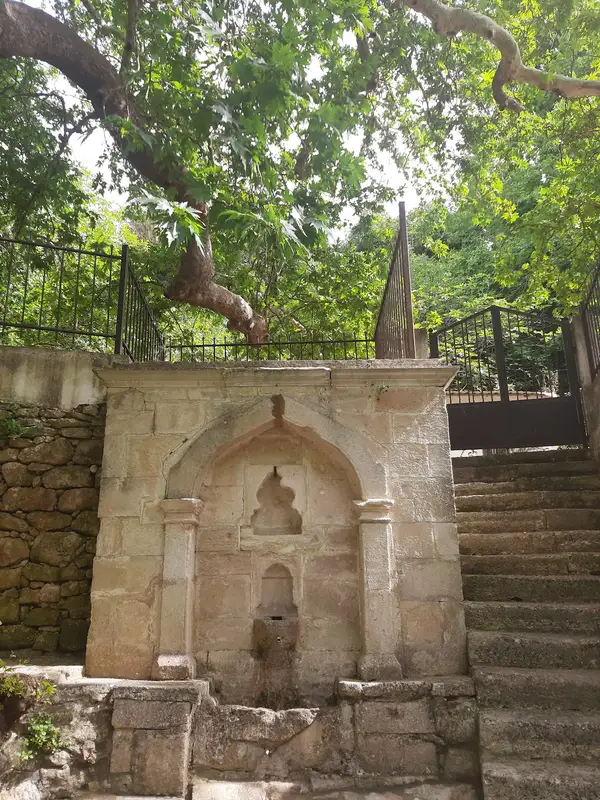
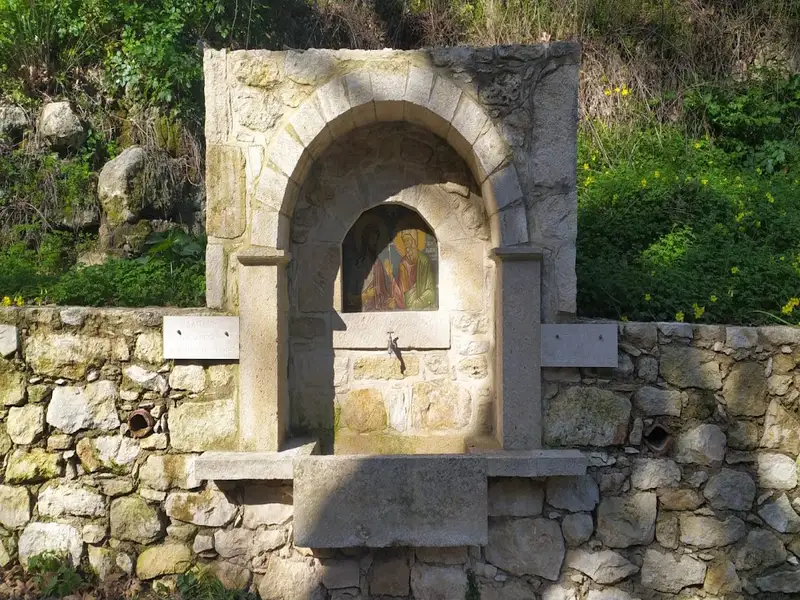
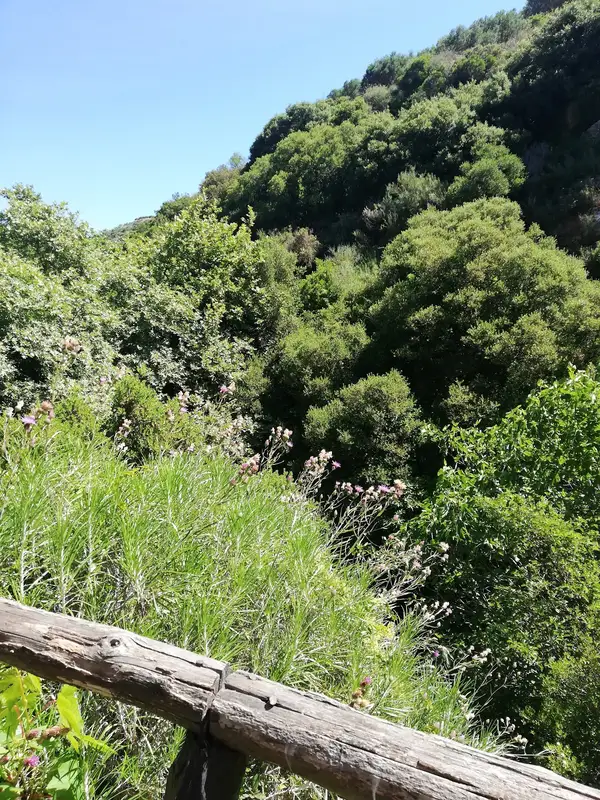
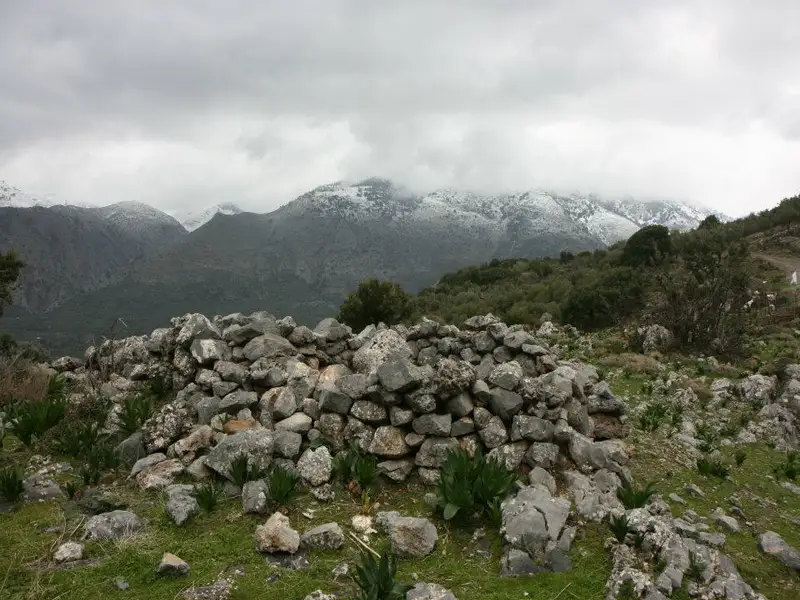
Begin with a beautiful drive through the mountains and arrive at the small village of Karouzanos. Enjoy free time to stroll around the narrow streets and old neighborhoods of the village. Take photos of the local architecture and gaze at the fantastic view of the Cretan mountains.
Next, experience an unforgettable show as local musicians and dancers perform. Join in and learn how to dance traditional dance moves. Savor typical Cretan food at the local restaurant and sip on a glass of wine.
Finally, after the show, head back to the bus for your journey back to your accommodation.


Intro:
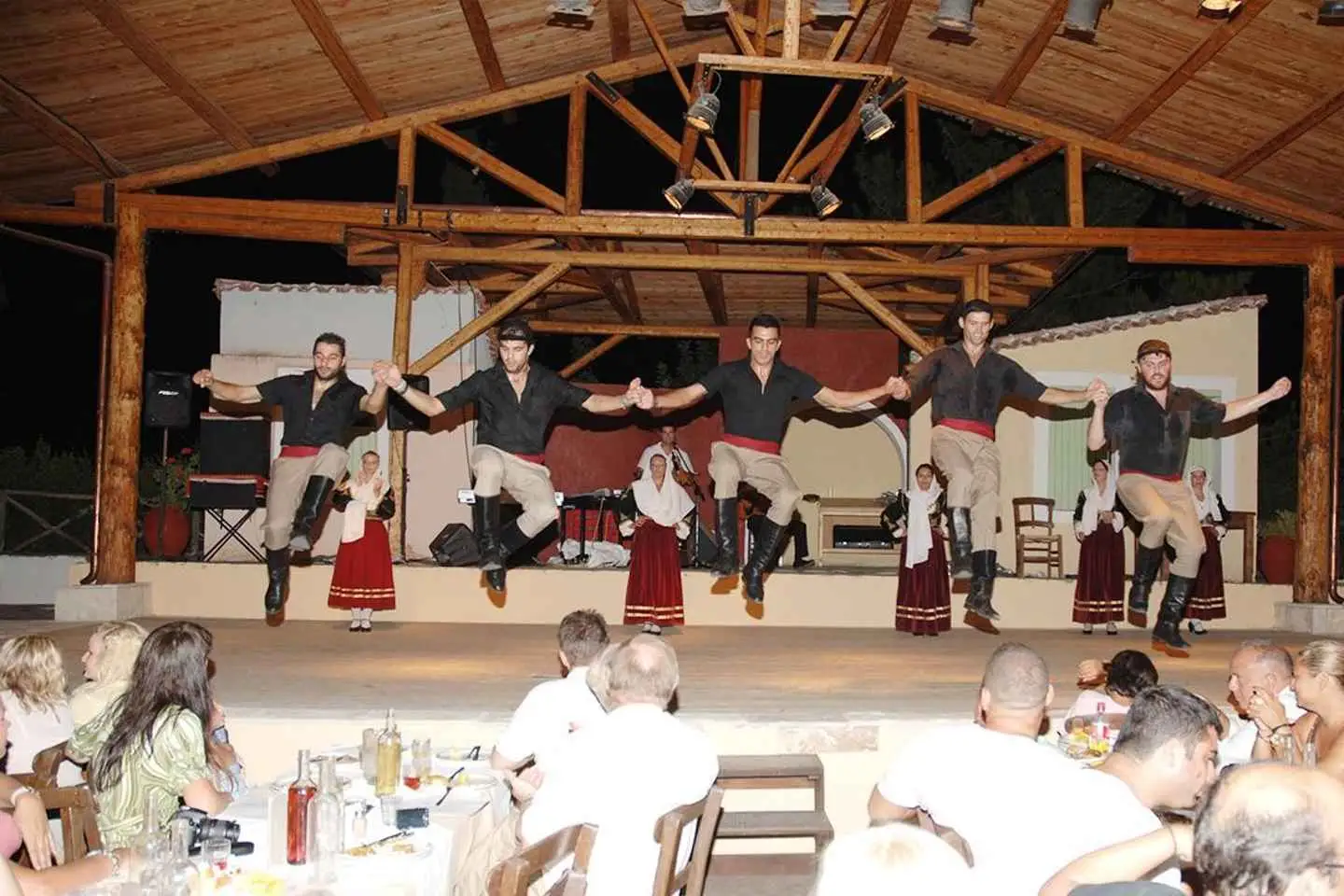
A Cretan night out with local food, wine, traditional music and the chance to get carried away in an experience you will never forget. All you need to bring with you is your good mood and your dancing shoes.
Full Description:
Our trip starts in the evening. After the pick up, we arrive at the small traditional village of Karouzanos, where you will be greeted by the locals. You will be surprised by their hospitality as they show you around and let you taste their local products like raki and honey. You will have time to walk around the village’s narrow streets and take pictures of the blossomed evening flowers and traditional houses.
Then we are ready to enjoy the spectacle!
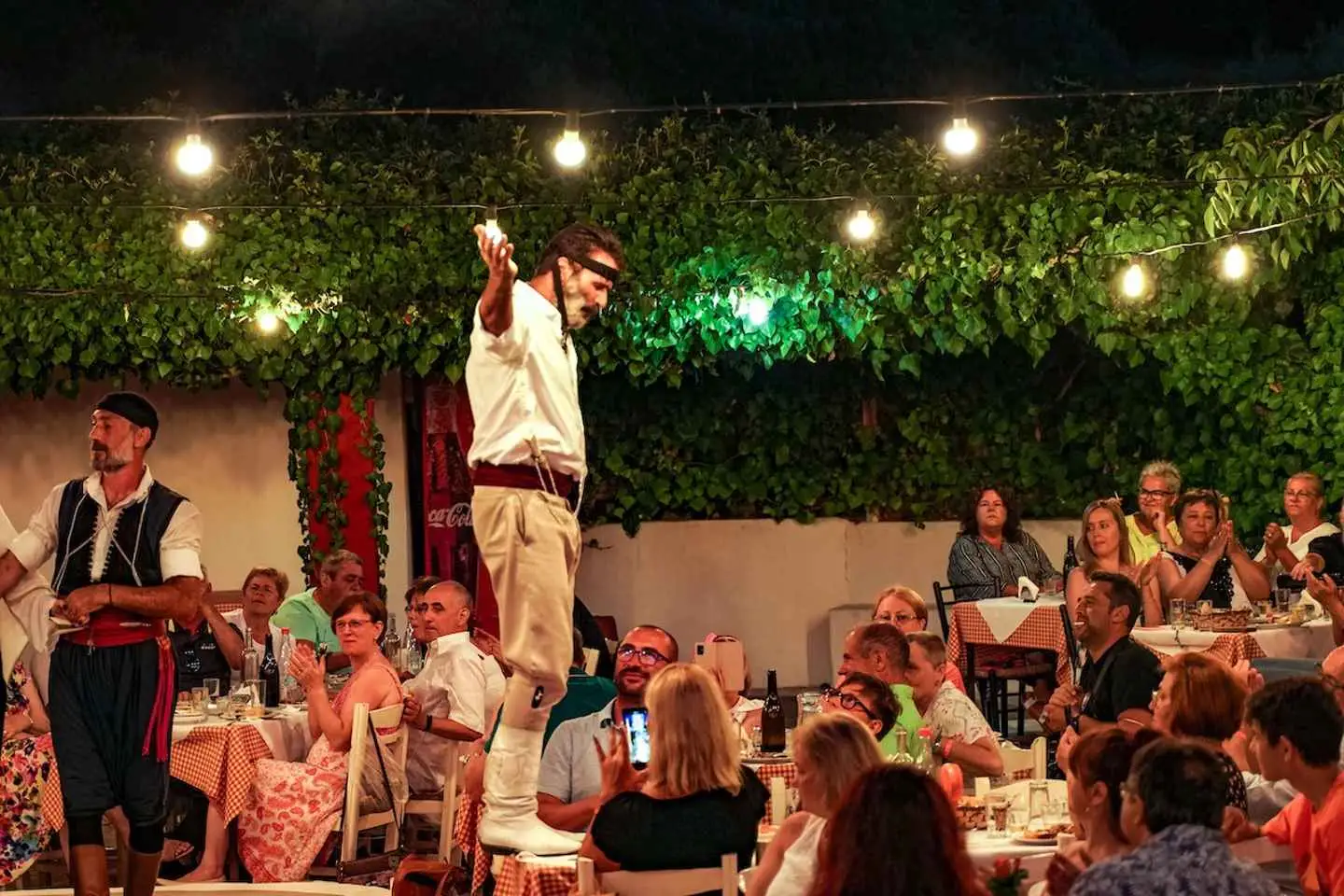
Watch the dancers perform folk and modern dances dressed in the traditional apparel, accompanied by the Cretan Lyra and the modern bouzouki. Taste the delicious food cooked with locally produced vegetables, cheese, meat and olive oil. The wine and raki are endless for the stronghearted.
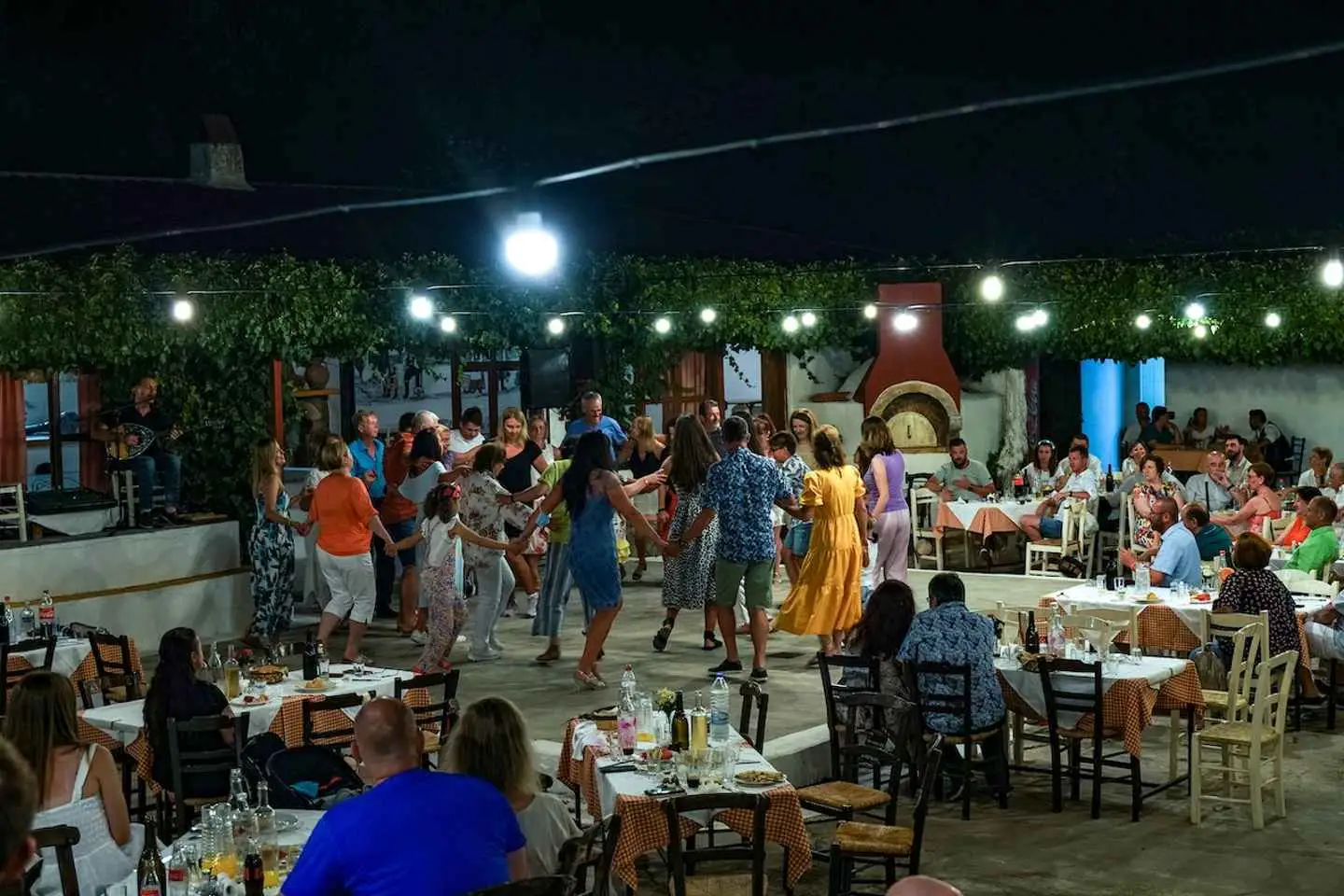
The night does not end there though , you will have the chance to be a part of the show yourselves. The friendly dancers will teach you the steps so that you can feel like a modern Zorba and absorb the magic of the evening.
Come with us to feel like a true Cretan.


Begin your excursion with a scenic drive through the majestic mountains, arriving at the delightful village of Karouzanos for a four-hour exploration.
Here, you’re invited to delve into the village’s allure, meandering through its slender streets and heritage-rich quarters while soaking up the extraordinary mountain vistas and the vibrancy of local life through your lens.
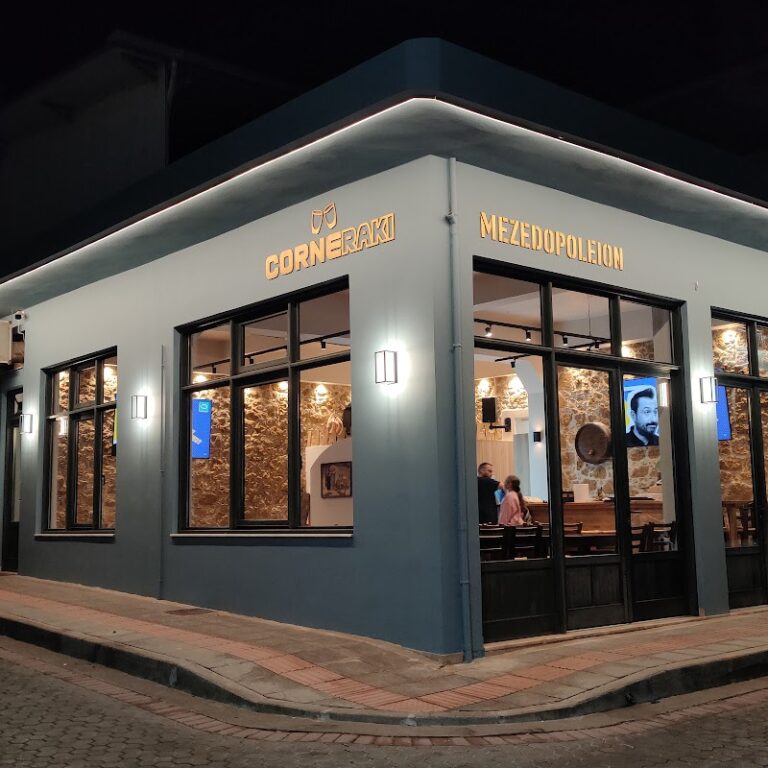
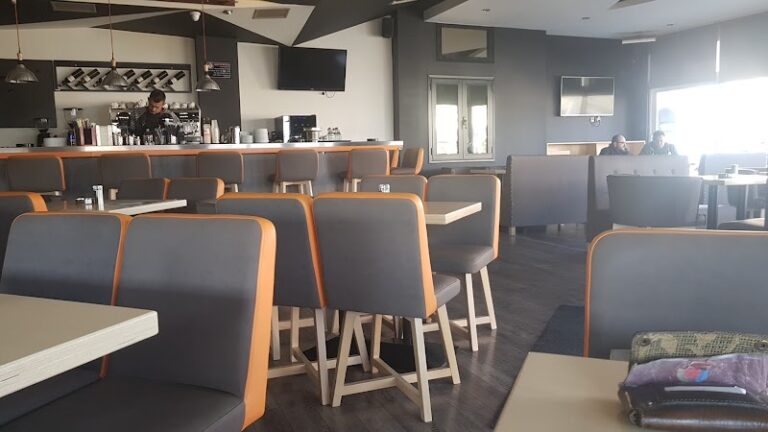
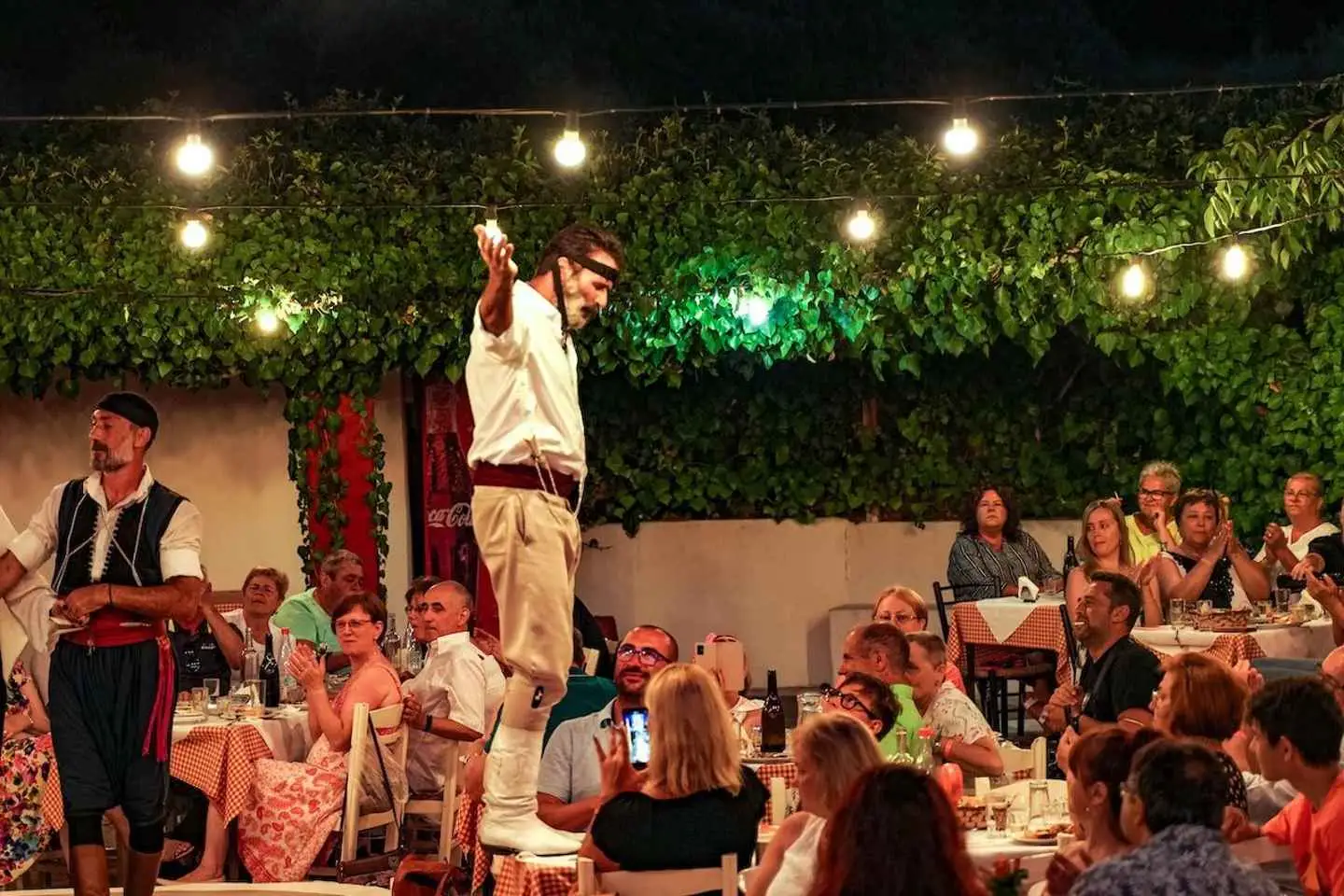
Upon reaching the taverna with our guide, anticipate a cultural feast as local musicians and dancers take the stage for a riveting show. Enjoy the tastes of Cretan cuisine and sip on local wines, all before joining the residents in a dance that promises to make the evening even more unforgettable.
The celebration culminates with a return bus journey, which may extend beyond an hour, retracing our steps back to your initial pick-up spot. The time may adjust according to traffic and varied pick-up points.
As the vibrant Karouzanos night draws to a close, cherish the kaleidoscope of memories made amongst friendly locals, amidst the flavors of Greek gastronomy and the toasts of shared libations. It’s a heartfelt goodbye to an evening that’s bound to echo in your narratives for years to come.
Early in the evening, under the starry sky, in a summer tavern with the atmosphere flooded with the aroma of jasmine and the sweet melody of lyre and bouzouki, in the ancient village of Karouzanos, you will have the opportunity to walk through the streets of the traditional village and take a look at the rural life of this charming place.
Then you will taste the traditional local dishes and the famous wine and shortly afterwards you will enjoy the unique grace of the Cretan dancers with their traditional costumes that will dance for you Cretan Greek and Folk dances.
Catch up at the dance with them, follow in their footsteps and feel for an evening like Zorba.
An ideal opportunity to have fun as Cretans, taste traditional dishes, learn a little more about the people of Crete and keep the memory of this wonderful night in your heart.
No results available
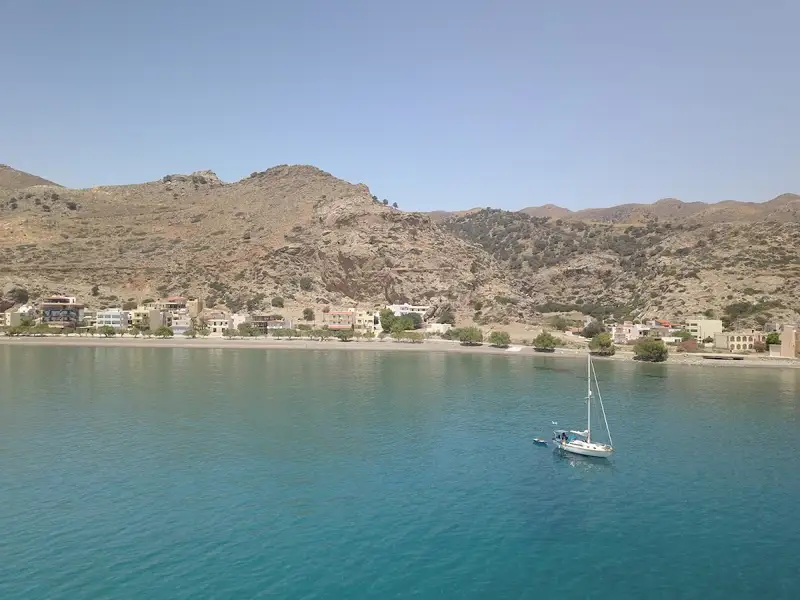
Tsoutsouras, derived from the Venetian word Zuzzuro, is situated 63km south of Heraklion, at the entrance of the formidable Mindris Gorge. It’s built on the location of the ancient city Inatos, which once served as the port for Priansos (located near Kasteliana village). More specifically, Tsoutsouras is the union of the two settlements, Pera Tsoutsouros and Tsoutsouros, that presently serve as the harbour for Arkalochori. Despite being well-organized and developed for tourism, it remains a peaceful holiday destination.
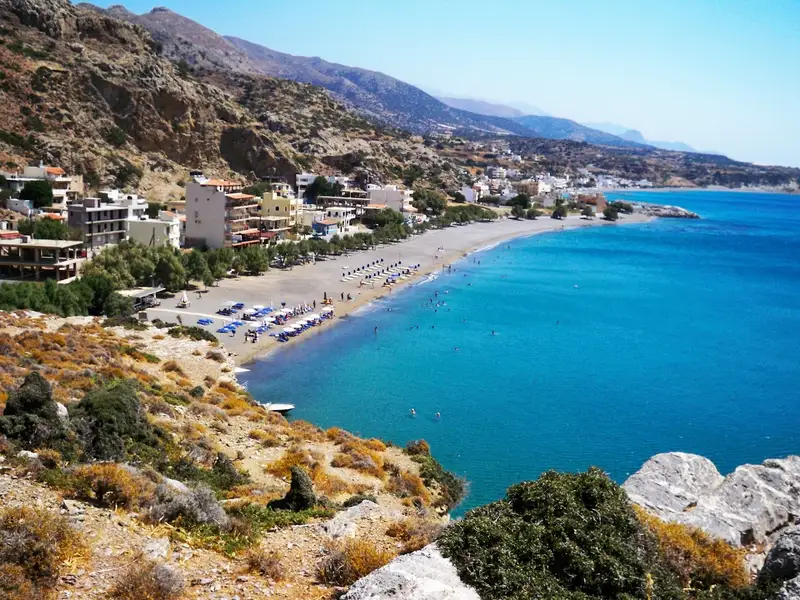
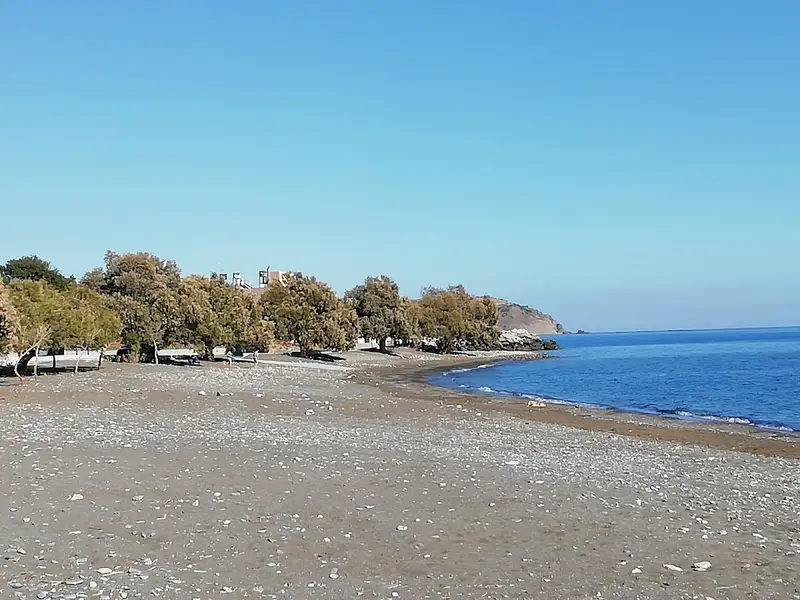
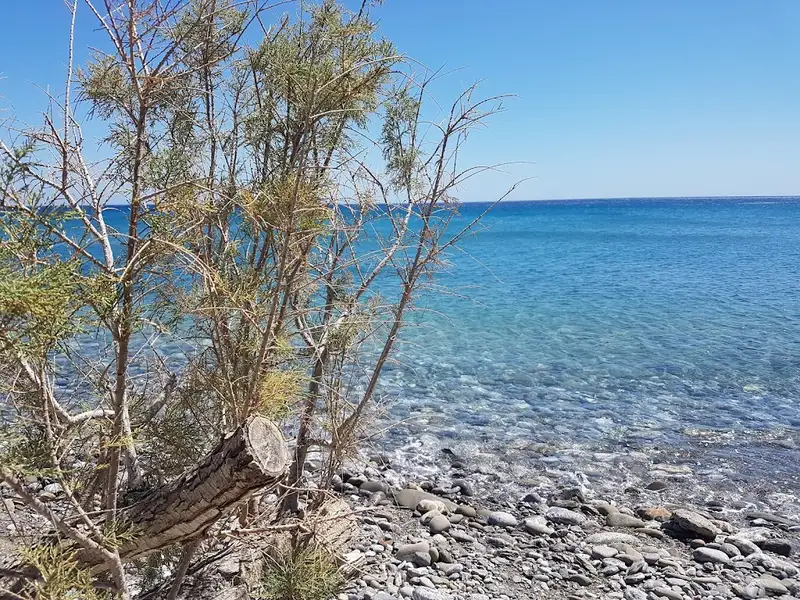
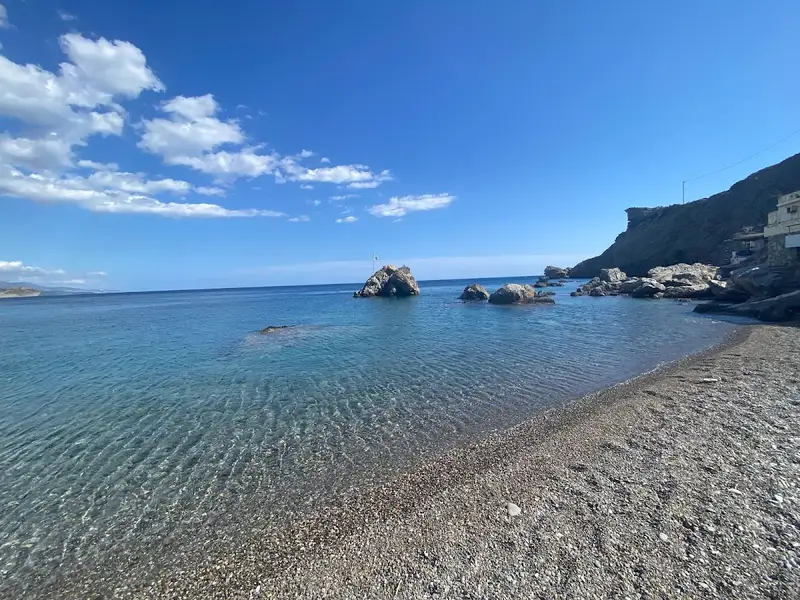
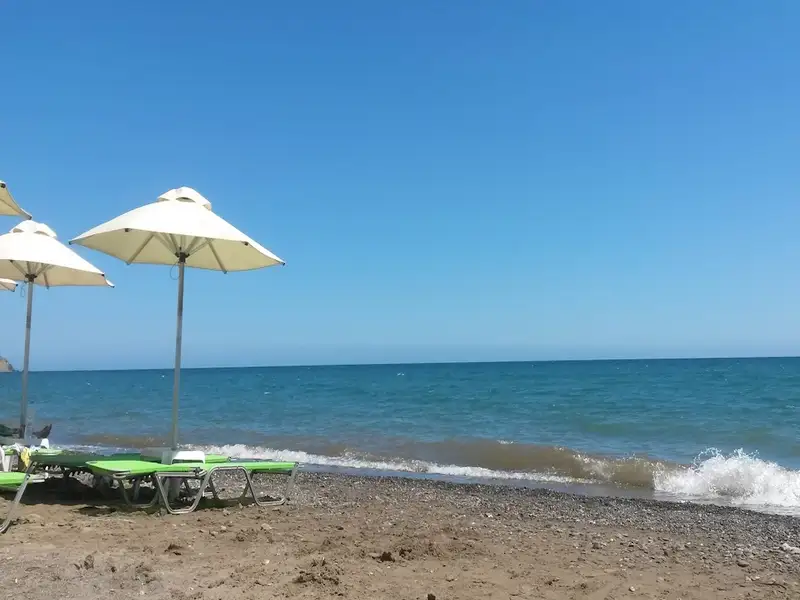
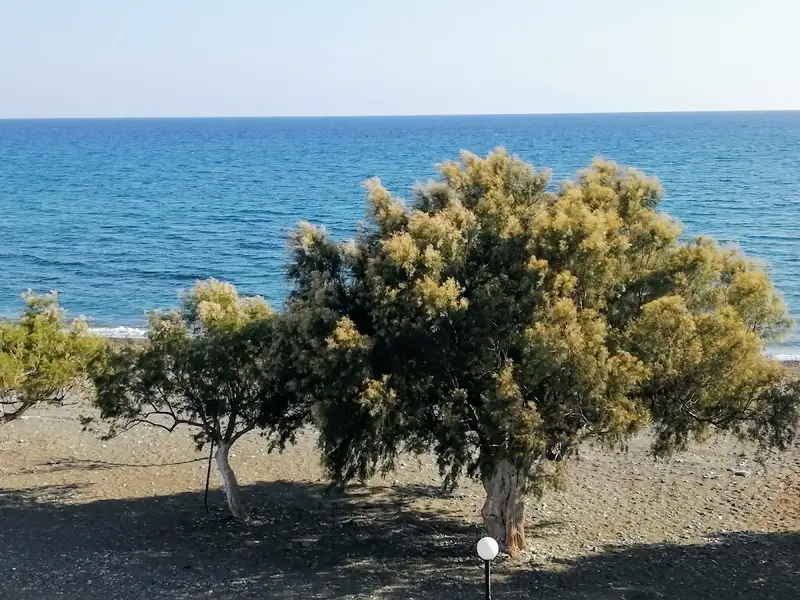
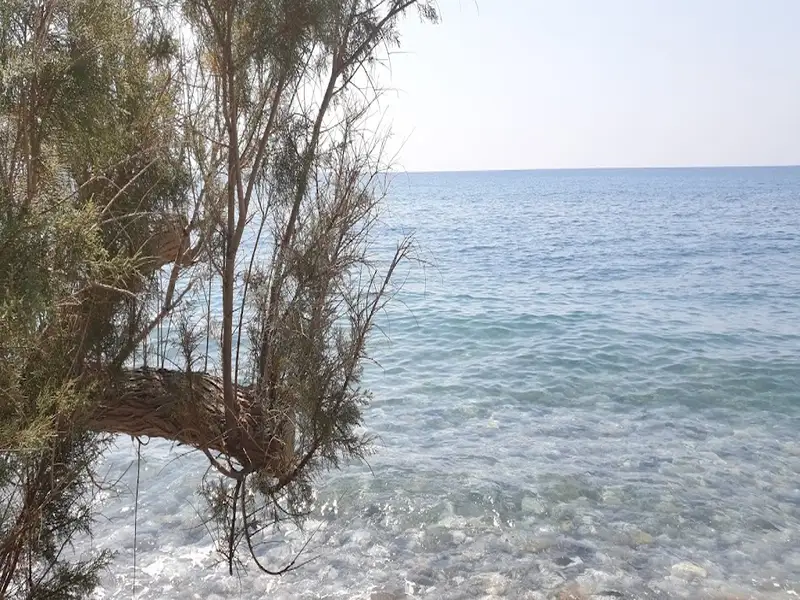
The village is home to the small harbour of Tsoutsouras, with two lengthy sheltered bays to its east and west, boasting a total length of 2km. These bays are characterized by beautiful coarse sand and crystal-clear waters. The beach is modestly organized with umbrellas and surrounded by several tamarisk trees, making it an ideal spot for family holidays as all necessary facilities for accommodation, entertainment, and food are nearby. For a more secluded experience, one can walk to the eastern end of the beach, where the sandhills and the easternmost part called Limniara, housing the sea cave Pourgonero, are located. Tsoutsouras can also serve as a base for exploring other nearby beaches.
Swimming in Tsoutsouras is traditionally viewed as therapeutic by many Cretans due to its high salt and iodine concentration, which aids in healing musculoskeletal and orthopedic issues.
Tsoutsouras is an area teeming with energy, myths, and folk narratives including tales about dragons, wild beasts, illegal excavations, and modern fantasy stories. In ancient Inatos, Eileithyia, the goddess of childbirth, was worshipped. Visitors can explore the cave where this goddess was worshipped for centuries, and where numerous offerings have been found, showcasing the sanctuary’s global influence. In recent years, this cave has garnered attention, making Tsoutsouras well-known throughout Greece. There have been reports of the American army confiscating objects of Minoan technological advancements from the cave and surrounding area for their own knowledge.
To the west of Tsoutsouras, two parallel mountains known as Zeus and Hera can be seen, which according to local tales, is where the king Asterion raised the sons of Zeus, Minos, Rhadamanthus, and Sarpedon, who later ruled Knossos, Phaistos, and Malia respectively. West of the harbour, in the Kerkelos area, remnants of ancient Inatos have been discovered. South of Kerkelos, the coast boasts unique karstic cave formations, including Drakospilia, where locals claim to have found a dragon skeleton. Despite the incredulity of this tale, numerous eyewitness accounts have left researchers puzzled. A Minoan settlement was also excavated in the Aliori area, located at the eastern end of the beach.
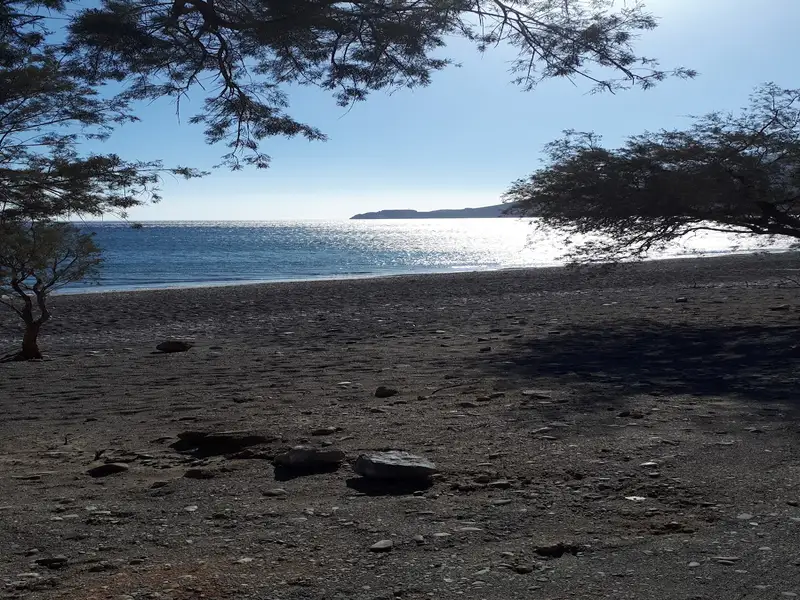
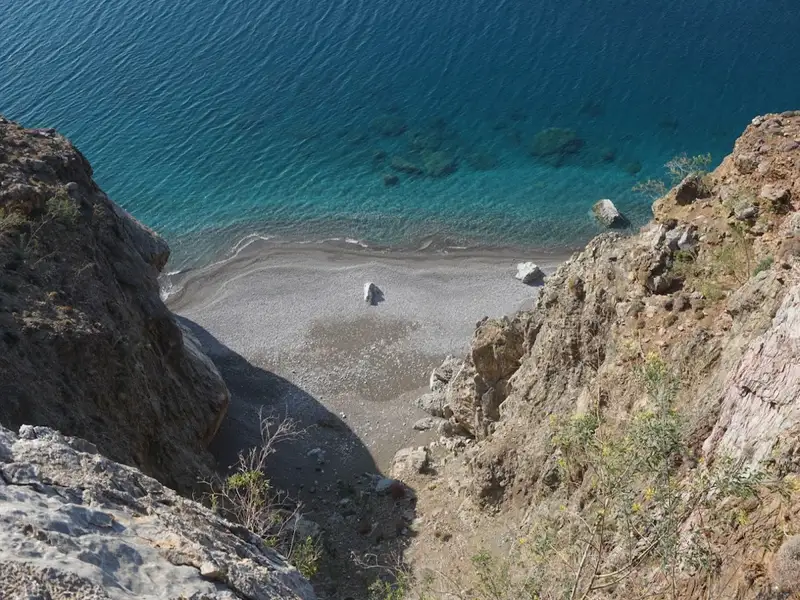
The Pourgonero beach, situated in the Krassas region, is a mere 500m eastward from the Tsoutsouras port, extending beyond the eastern boundary of the settlement. It represents the eastern section of Tsoutsouras bay, and lies at the foot of the Sarakinos hill. Legend has it that this location holds the eternal burial place of King Minos, the fabled king of Knossos. The beachfront of Pourgonero comprises two coves with large sand dunes, and the beaches facing these dunes are a mix of rocks and sand. These secluded, peaceful spots are ideal for those seeking solitude.
The Pourgonero region holds significant importance as a nesting ground for the endangered loggerhead sea turtles, with the nesting season running from May till fall. A visit to the beach in the late summer offers a view of the stunning white sand lilies, also referred to as the lilies of Knossos in Crete. Accessing the beach is fairly straightforward, given its proximity to Tsoutsouras. One simply needs to take the road towards Dermatos, and the dunes will be visible on the right. There are pedestrian paths leading down to the beach.
The Krassas region has the distinction of being the site of the first Aloe vera plantation in Greece.
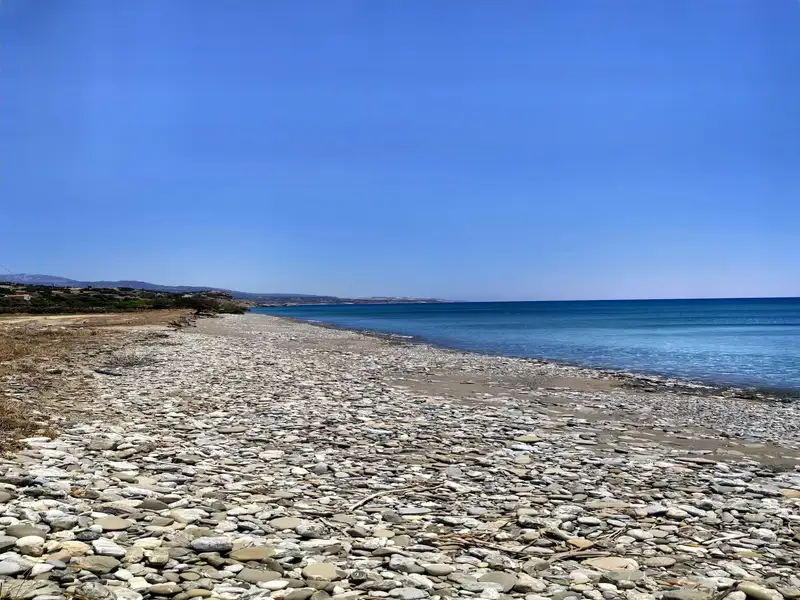
Listis, situated 69km southeast of Iraklion, is nestled between Kastri, 2km to its west, and Tsoutsouras. The beach stretch west of Listis, up to the Anapodaris river, is known as Kambala. This river is a significant wetland in Crete. Kamboula beach, with its charming pebbles and clear, blue waters, is quite a sight to behold. Though the area is not fully developed, a few accommodations have sprouted up in recent times. It’s an excellent choice for those seeking seclusion or wishing to sunbathe in the nude.
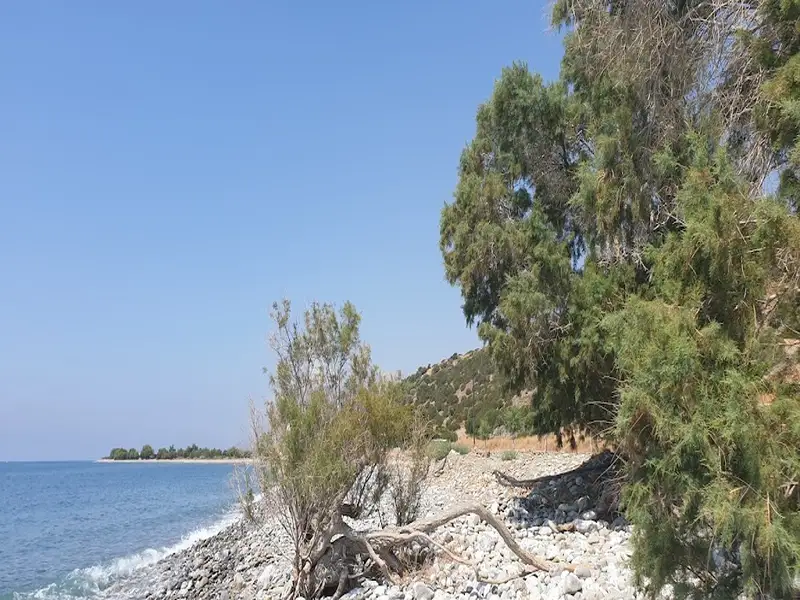
Contrary to the dry and warm surroundings, the Anapodaris river maintains water nearly all year round. Parts of the beach are dotted with tamarisk trees, providing much-needed shade. The beach is easily accessible, with the road connecting Kastri and Tsoutsouras running alongside it.
Maridaki, a coastal hamlet on the east side of Mount Asterousia, is located 65km south of Heraklion and on the west of Tsoutsouras Bay. A 2.5 km footpath is the only direct link between Maridaki and Tsoutsouras. However, a rough 15km dirt road starting near the village of Ahedrias (close to Mesohorio) gives access to the settlement. This road takes you through the towering cliffs and rugged rocks of Asterousia and leads to the monastery of Saint Nikitas. It’s advisable not to park your car under Maridaki’s trees, as the local goats may cause damage.
Maridaki, also known as Saint Panteleimon after its local church, is nestled in the arid, untamed landscape of southern Crete, at the mouth of the impressive Achendrias Gorge. A spring and a small stream provide drinking water to the beach all year around, creating an oasis with evergreen plane trees lining its banks. Near the springs, a large square with a 200-year-old plane tree and a small tavern can be found. Locals believe that fairies reside just beyond this spot. A 15-minute journey from the settlement reveals the striking Lichnistis waterfalls, visible until early spring.
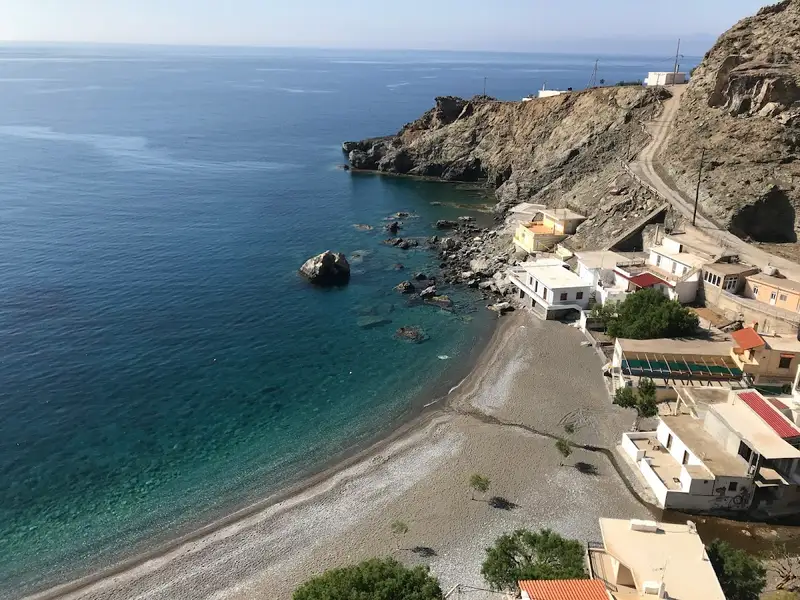
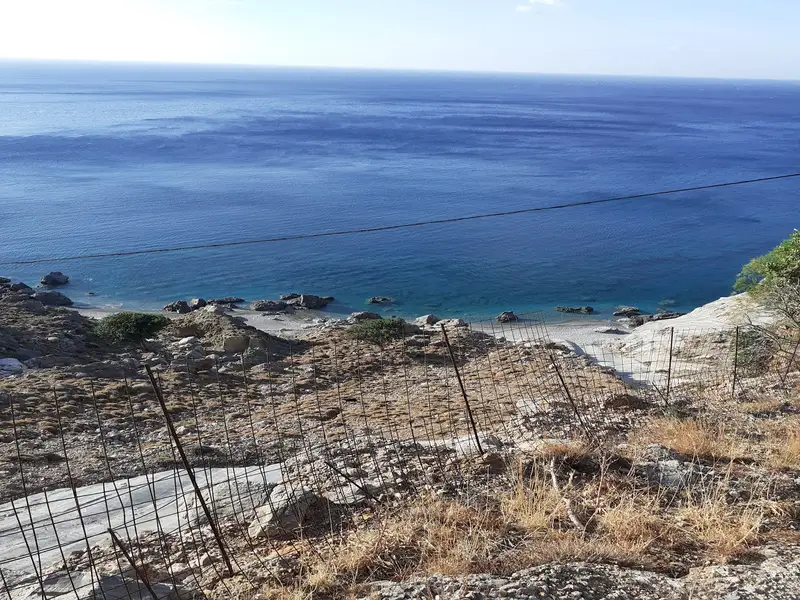
In this modest village, you’ll mostly encounter locals enjoying the sun and sea, residing in their summer homes which are casually built. The village’s coastline boasts a lovely pebble beach surrounded by towering rocks. Along the shore, sandy coves provide shade, but beware of goats traversing cliff edges as they often trigger landslides. The sea is deep and cool due to the stream. Maridaki has showers, a small coffee shop, a tavern, and a few rooms for rent. Two additional beaches are situated to the north of the settlement, at the base of Cape Kerkelos in an area known as Nisakia (or islets), named after two small sea rocks.
While in Maridaki, it’s worth visiting the village springs to enjoy the cool water. Nearby, the church of Saint Panteleimon, formerly dedicated to the Virgin Mary and St. Mamas, patron of shepherds, stands. If you have a car, consider visiting Saint Nikitas (2km from Maridaki), the beautiful palm grove of Saint Anthony (3km), and the chapel of the Holy Cross (1km outside the village).
Maridaki – Tsoutsouras Trail: Maridaki is one of the few places on Crete where foot travel is quicker than by car. From Tsoutsouras, a 20-minute walk along a well-maintained footpath takes you through a breathtaking landscape of wild carob trees, caves, and dry grasslands, offering stunning sea views. One of the caves, Drakospilia (Dragon’s Cave), is shrouded in mystery and tales of metaphysical phenomena. It’s entrance is small and may go unnoticed. The cave expands after the entrance and is home to bats. A narrow passage leads to a point from where, locals claim, no one has returned, possibly due to volcanic fumes. Legends of treasure, the tomb of a great king, monsters, and dragons fill the air, adding to the cave’s mystery. Some locals believe it houses the tomb of Alexander the Great, while others believe it’s the final resting place of King Sarpedon of Lycia, whose body is said to be preserved in honey. The mystery deepens with tales of U.S. missions and helicopter patrols when someone enters the cave. As per local lore, a submerged church dome from the lost city of Queen Achendra becomes visible at sunset from the last point where Tsoutsouras can be seen from the sea.
No results available
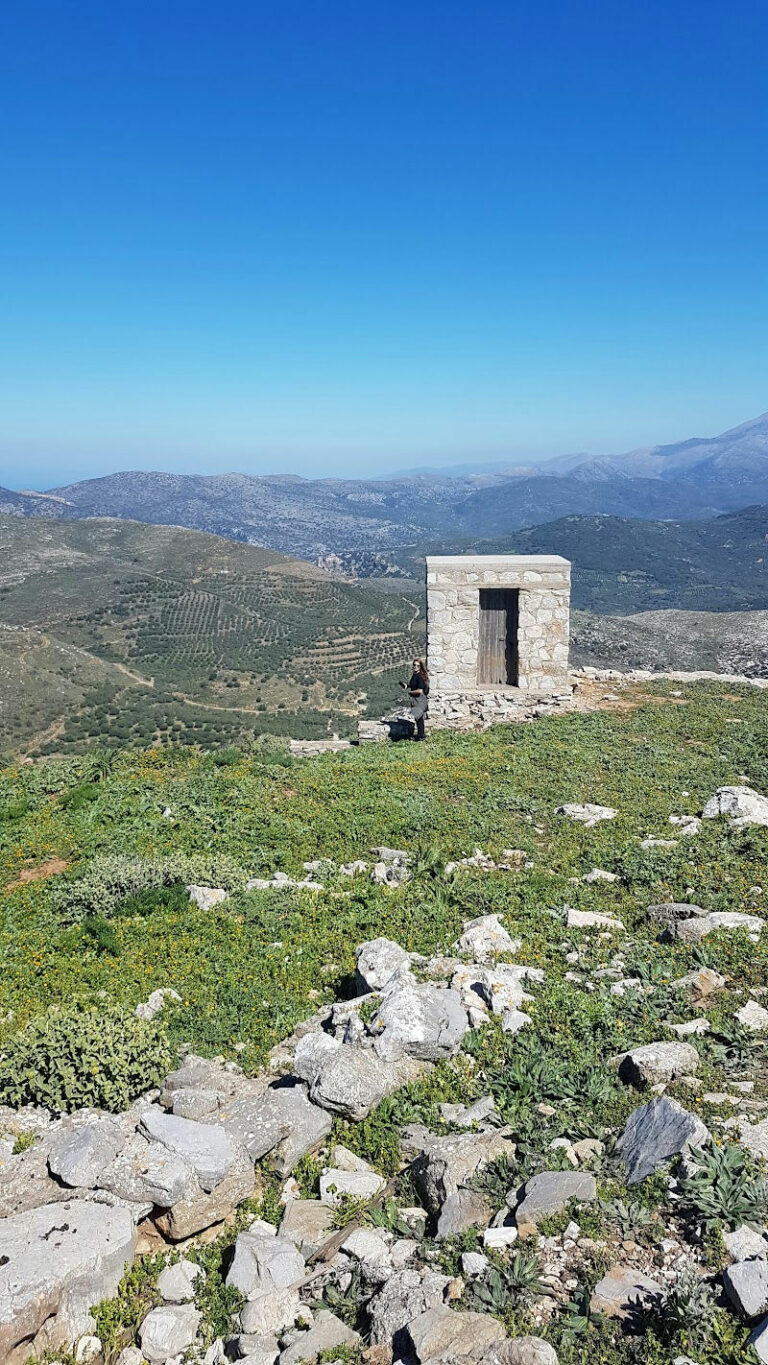
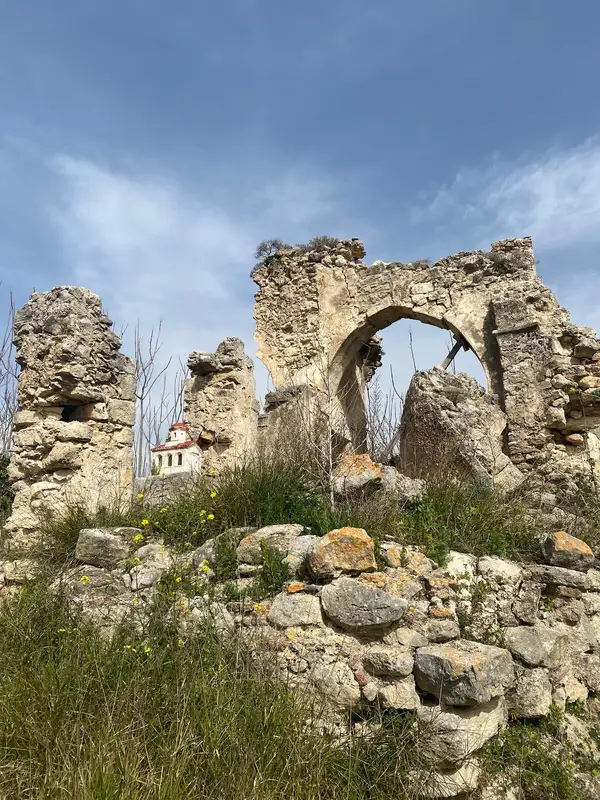
Perched atop the rocky hill of Prophet Elijah (Profitis Ilias) near Smari, at an elevation of 590 meters, lie the remnants of a fortress surrounded by a robust defensive wall. This location offers sweeping views over the fertile plains of Kasteli and Smari. Archaeologist Hadji-Vallianou believes this fortress to be the site of ancient Lyttos mentioned by Homer. The city was continuously inhabited from 1800 BC to 630 BC before being deserted by its residents.
Inside the city walls, three oblong structures can be found, and a sanctuary of Athena Ergani was identified on the northern side, confirmed by ceramic plates depicting the goddess Athena. These plates are considered the oldest representations of Athena in Crete. A settlement was constructed around the peak, enclosed within a secondary wall. A stone-paved street connects the village to the citadel. Large buildings, likely used as warehouses and workshops, were located outside the second wall.
The terraces outside the citadel are also fascinating, as they demonstrate how the city’s inhabitants managed to preserve the minimal soil in the area and cultivate wheat. Furthermore, the city’s development in such a rugged and rocky location would not have been possible without the presence of the water spring now found inside the Prophet Elijah church, situated just a few meters below the peak.
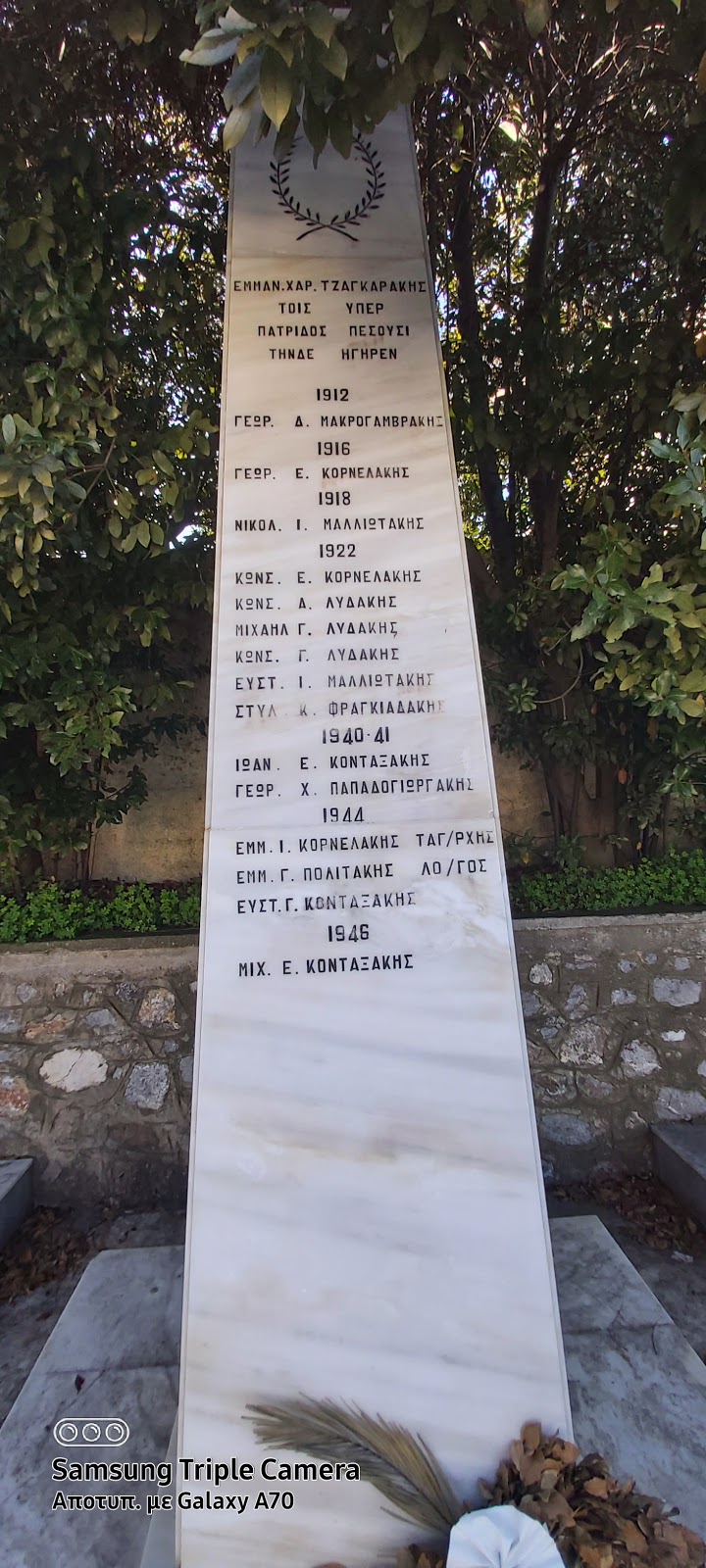
Ancient Lyktos, also known as Littos, can be found near the settlement of Xidas. This city was one of the most powerful in ancient Crete, a perpetual rival of Knossos, and it controlled the port of Hersonissos. Many ancient historians have written about Lyktos, mentioning that it was the oldest city in Crete, well-organized and constructed, and the place where Rhea’s parents advised her to give birth to Zeus.
Lyktos was a colony of the Lacedaemonians, and the deity Karnian Apollo was worshiped here. The city participated in the Trojan War, during which the leader of the Lyktaeans, Kiranos, sacrificed himself to save Idomeneus from Hector’s spear.
Lyktos held dominance over Eastern Crete and was in continuous conflict with its archenemy, Knossos. In 343 BC, Knossos occupied Lyktos, but the Spartans assisted the Lyktaeans in regaining their city. However, in 220 BC, while Lyktos was at war with Ierapytna, Knossos invaded the unguarded city, destroyed it completely, and captured the women. The returning Lyktaeans were too afraid to enter the city and instead sought refuge in Lappa (present-day Argiroupolis). This event led to the formation of an alliance against Knossos and the beginning of the First Cretan War.
With Sparta’s help, Lyktos was rebuilt and once again became one of Crete’s strongest cities. During the Roman period, the city fiercely resisted the Roman general Metellus, who eventually occupied it. Statues of Marcus Aurelius and Trajan from Lyktos can be found in the Archaeological Museum of Heraklion.
To supply water to Lyktos, water from the Kournia spring, located between Kera and Krassi, was transported to the city via a massive aqueduct. A portion of this aqueduct still stands north of Kostamonitsa village, resembling a wall (tihos).
The emblem of Lyktos coins featured an eagle with open wings and the head of a wild boar, accompanied by the word ΛΥΤΤΙΩΝ (Lyktaeans). Numerous artifacts have been discovered, including sculptures and two inscriptions of the city’s laws written in boustrophedon (alternating text direction per line).
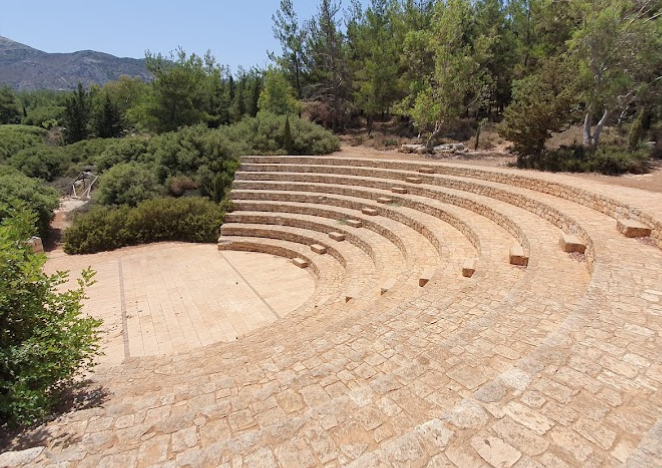
The archaeological site of Fourni can be found on a hill with the same name, situated 17km south of Heraklion and southwest of Kato Archanes. To visit the site (which is not always open, but you can contact the guard), you can either walk along the Minoan path that starts from Kato Arhanes and crosses the stunning artificial grove of Fourni, or climb the stairs from the Apano Archanes ring road.
At Fourni, archaeologists have identified a preminoan cemetery (2800BC-2200BC) which is, in fact, the largest prehistoric cemetery in the Aegean Sea. Additionally, more graves have been discovered, dating back to the period between 2200BC and 1200BC. You can also see the quarry from which the materials for the cemetery’s construction were extracted.
Archaeologist Ioannis Sakellarakis began excavations in 1964, and so far, 26 buildings have been uncovered, with most of them being graves. The objects found in these graves suggest that ancient Archanes had strong connections with the Aegean, Egypt, and the East.
Due to its significant findings, Fourni is considered the most important Minoan cemetery on Crete. The most notable discovery was the unlooted sarcophagus of the “Queen,” containing jewelry (over 140 pieces) of immense value and other items believed to accompany her to the next world. Remains of an ox and a horse sacrifice were also found. Many of these findings are exhibited in the Archaeological Museum of Heraklion and the Archaeological Museum of Archanes.
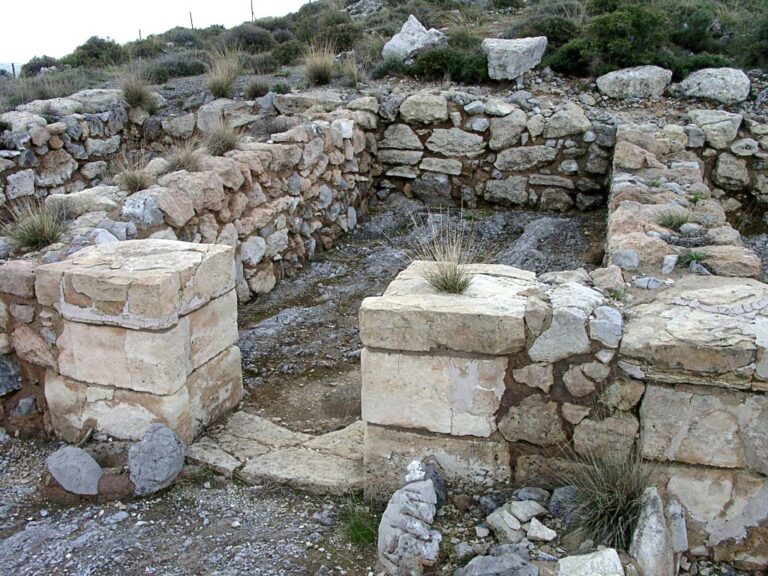
At the location known as Anemospilia, situated on the northern slopes of Mount Jiouchtas, archaeologists Giannis and Efi Sakellarakis discovered a small Minoan-era sanctuary in 1979 that took the global archaeological community by surprise. This modest sanctuary provided the first evidence of human sacrifices in Minoan Crete.
The two-story structure was constructed in the 17th century BC and was later destroyed by an earthquake a few decades afterward. To date, four sites have been uncovered, but there could potentially be more.
In the temple’s first room, numerous utensils were discovered, including around 150 pots of various shapes. The main room was filled with the largest temple utensils, pots, and jars. The east room, where bloodless rituals occurred, contained many objects and a stepped altar on which all worship utensils were placed. The bloody sacrifices took place in the temple’s west room, which had fewer findings.
The most significant discovery of the excavation was the presence of four human skeletons. Scientific investigations revealed that three of them (including one woman) were killed by the collapsing roof and a simultaneous fire. They were likely two priests and a priestess. The fourth deceased individual was the most intriguing discovery, as he was found lying on a trapezoidal table with a short sword or spear in his body. According to anthropologists and forensic experts, this man was a victim of human sacrifice, and the scene was preserved for posterity due to the earthquake.
No results available
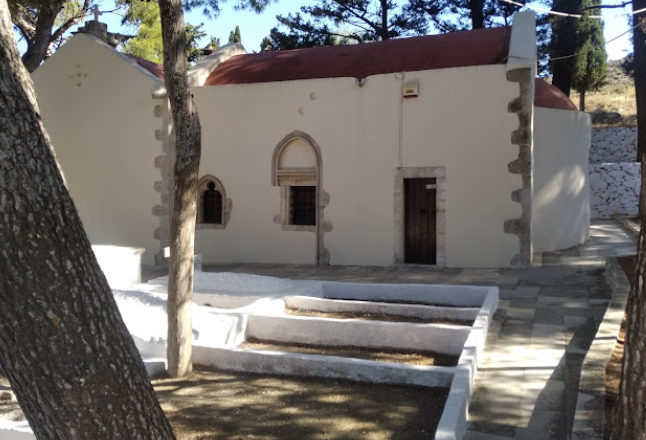
The Agia Moni (Holy Monastery) is situated approximately 60km east of Heraklion and 38km west of Ierapetra, close to Kavoussi Gorge. It is reachable through a brief road that begins at Ano Viannos and traverses a lush landscape.
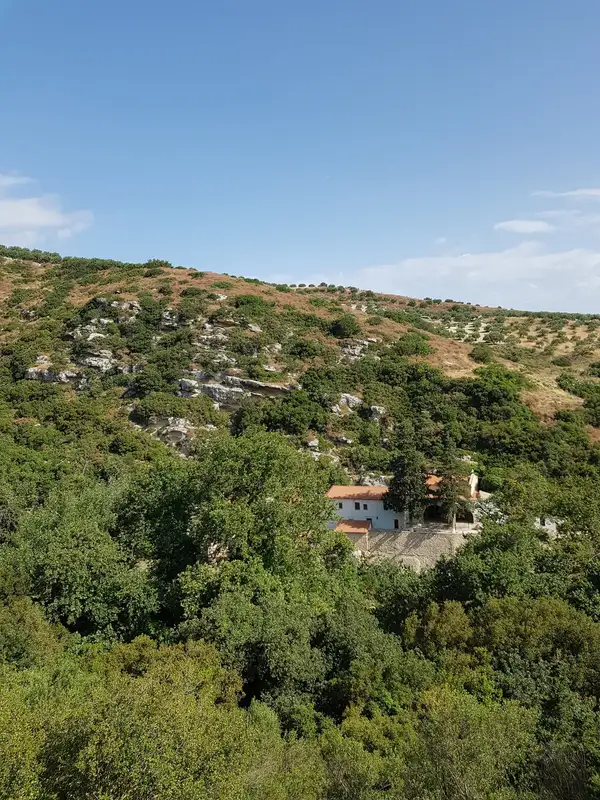
Functioning as a male monastery, Agia Moni is small and ancient. The Monastery’s church, featuring a striking gate, is dedicated to the Assumption (celebrated on August 15). Surrounding the church are the monks’ quarters.
While the exact date of its establishment is uncertain, tradition holds that it was constructed by three Cypriot nuns who initially built the church of Agios Dimitrios in Keratokambos. Due to ongoing pirate attacks, they were compelled to relocate to the mainland, where they established Agia Moni at its present location. It is also believed that one of these nuns founded the Panagia Keralimeniotisa monastery near Psari Forada.

Situated at the base of Louloudaki mountain, near the village of Kato Metohi in the Lassithi Plateau, the Vidiani Monastery is easily accessible as it lies just beside the plateau’s peripheral road.
Dedicated to Zoodochos Pigi (Life-Giving Spring), the monastery has been transformed from its previously abandoned state. The monk cells and other buildings within the complex have been restored, and it now functions as a male monastery. During the summer, flowers bloom throughout the grounds, and a small fountain in the courtyard, surrounded by towering cypress trees, symbolizes the spring of Life. Visitors can also enjoy a small café nestled under the shade of the trees. In partnership with the University of Crete, the monastery houses a modest natural history museum.
Constructed in the 19th century, both the monastery and the church are relatively new, likely built upon the ruins of an earlier monastery. The stone-built church features intricate masonry, stone-carved windows, and an exquisitely carved temple.
The area was once under the control of the Vidon family (hence the name Vidiani), who were descendants of a Venetian family that had been granted a portion of the plateau as a fief.
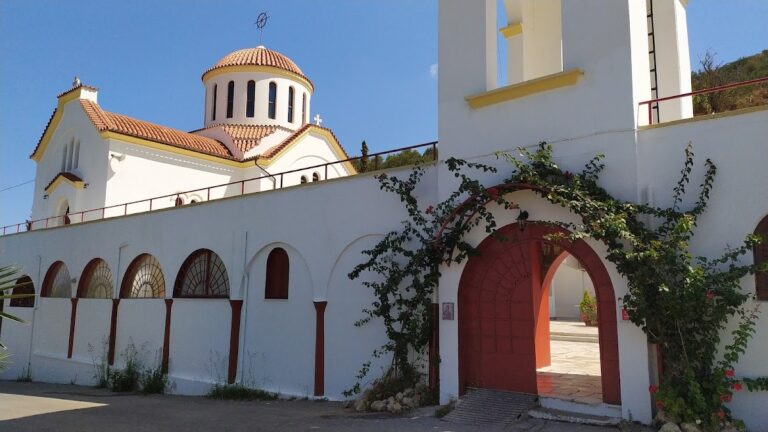
Agia Marina Monastery is situated 500 meters south of Voni village, and on its feast day (July 17), it attracts massive crowds from all across Greece. The number of visitors to Agia Marina is the highest in Crete, resulting in car queues stretching for kilometers. Numerous vendors can be found along the way to the church. Many devotees make vows to Agia Marina and walk to the monastery from Heraklion city.
Established in 1895 by John Kaparounakis, the monastery was built at the site where he claimed to have miraculously recovered from a severe illness after drinking water from a spring. A small chapel already existed there, but it was owned by a Turk, Hosref Pasha, who refused to permit the monastery’s construction. Legend has it that Agia Marina intervened, causing Pasha’s three children to fall ill. Upon realizing what had occurred, Pasha sold his property to Kaparounakis, who then renovated the existing church and built the Agia Marina Convent.
Agia Marina is considered the patron saint of sick children, and numerous miraculous events have been reported at the monastery. Visitors are often struck by the room filled with personal items from those who have experienced miracles, such as crutches.

The Kera Kardiotissa Monastery can be found 50km southeast of Heraklion, nestled within a forested area of the North Dikti Range, and adjacent to the road that leads to the Lassithi Plateau. This historic monastery has given its name to the nearby settlements of Kera and Ano Kera Kera.
Its exact foundation date remains a mystery. However, it is thought that the monastery’s establishment is linked to the miraculous icon of the Virgin Mary, from which it derives its name (Kera translates to Our Lady). Today, this icon is housed in the Church of San Alfonso in Rome. Created by San Lazaro in the 9th century, the icon portrays Panagia (Virgin Mary) cradling Jesus. Tradition has it that the icon was moved to Constantinople during the iconoclastic Era, only to return miraculously. Furthermore, in the Venetian Era, a wine merchant stole the icon and took it to Rome, where it remains to this day. In 1735, a replacement icon was introduced, which is also deemed miraculous.
The monastery’s stunning stone-built church is dedicated to the Nativity of Mary, celebrated on September 8. The current church was constructed in four stages, initially as a single-aisled temple, which was later expanded to include two rooms and a smaller chapel. Notable are the 14th-century frescoes, though they have been significantly weathered over time.
Due to its strategic location, the Kera Monastery served as a revolutionary center for the local province during the Cretan uprisings and subsequently endured numerous Turkish attacks. Presently, Kera functions as a convent and is well worth visiting, particularly when combined with a trip to the Lassithi Plateau.
No results available
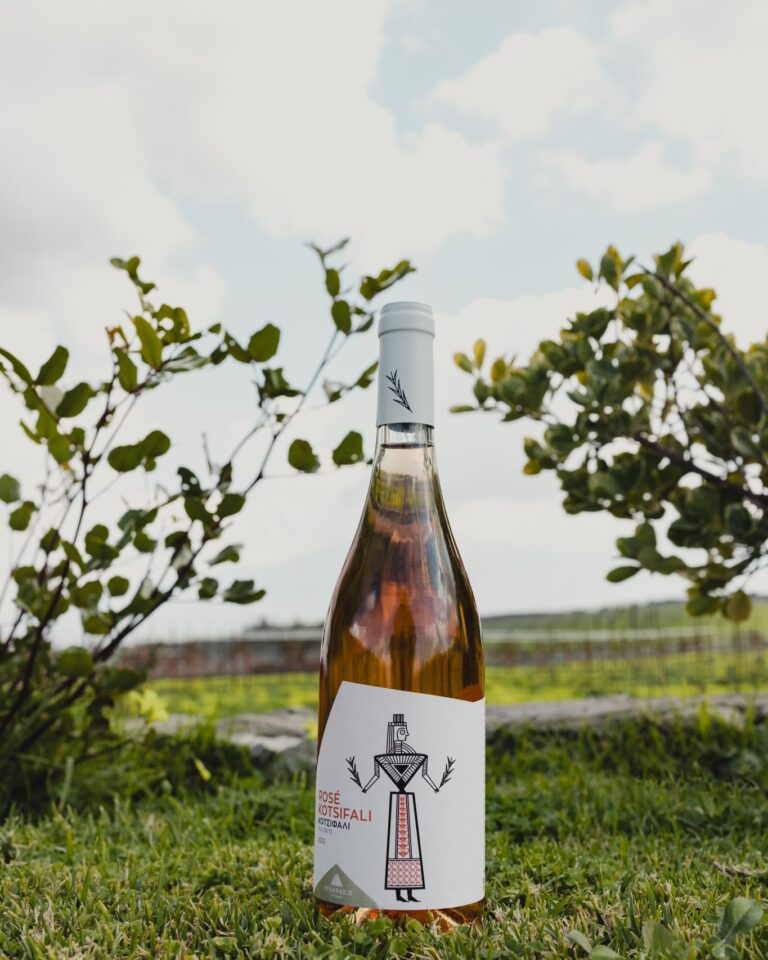
Nestled amidst the rolling hills of Alagni, Heraklion, Lyrarakis Wines is more than just a winery—it’s a legacy. Established in 1966, this family-run estate has been pivotal in bringing back to life some of the near-extinct grape varieties. Spanning over 14 hectares, the vineyard’s altitude and limestone-rich soil contribute to the unique flavour profiles of their wines. Whether you’re trying their fragrant Vineyard Lyrarakis Vilana Pyrovolikes or the aromatic Lyrarakis Plyto Psarades Vineyard, each bottle tells a story of passion and dedication.

No results available
No results available
No results available
No results available
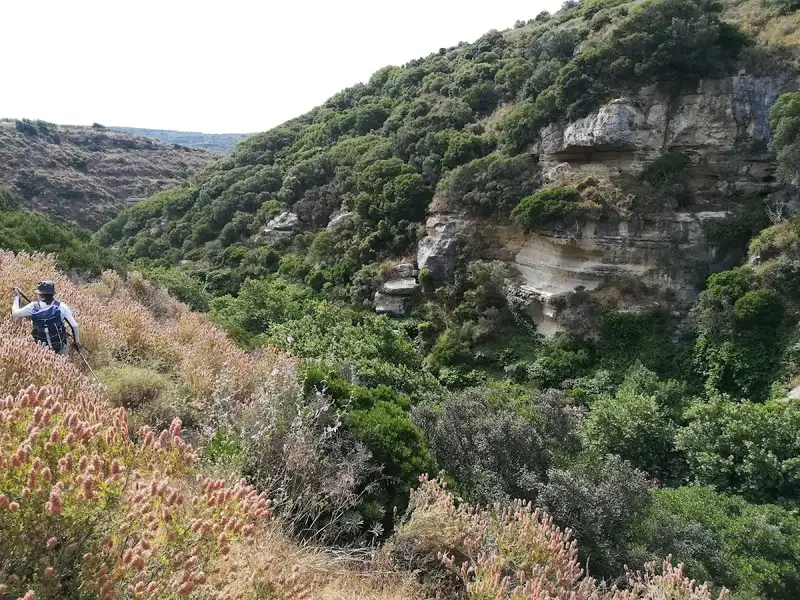
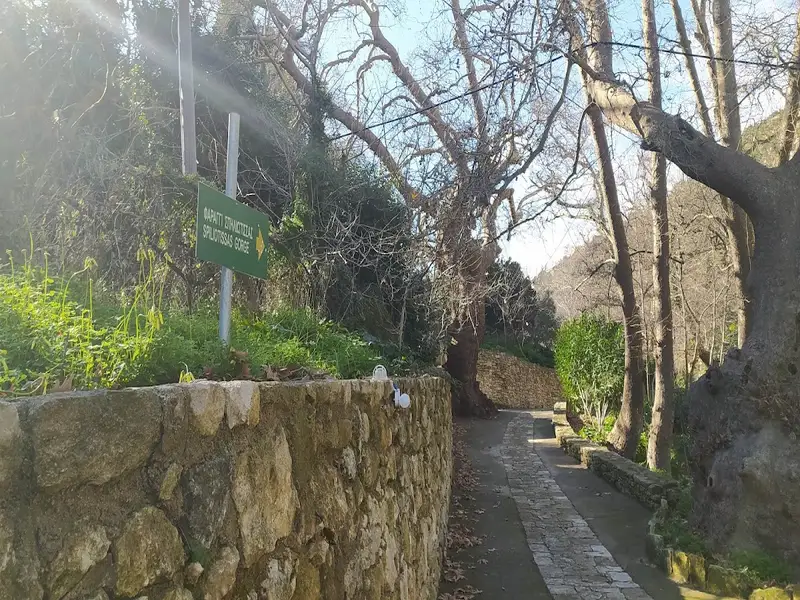
The Spiliotissa gorge, situated approximately 24km to the south of Heraklion, is a verdant chasm that originates from the Houdetsi village, passes through Agios Vasilios, and terminates in the Peza valley, where its waters feed into the Kounaviano gorge. The most picturesque section of the gorge is the 1.5km stretch between Houdetsi and Agios Vasilios. Starting from Houdetsi, where parking is available in the village, a well-kept trail leads down to Agios Vasilios, meandering through dense foliage and groves of orange and olive trees, irrigated by the stream.
At the beginning of the path, two Byzantine churches, Saint John the Baptist and Saint Nicholas, are encountered, along with two former grain mills. After approximately 500m, the historic Sinai Monastery of Panagia Spiliotissa can be found, which lends its name to the gorge. A quick exploration of the small monastery with its cave-like church is followed by a continued journey into the verdant heart of the canyon, towards Agios Vasilios. A beautiful fountain and the Byzantine church of Saint John are located just outside the monastery.
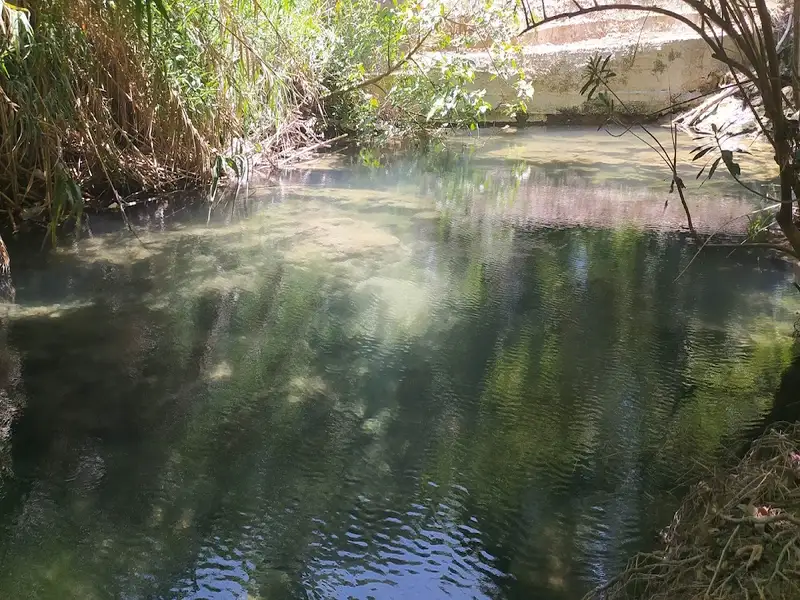
The Kounaviano gorge, known for its lush vegetation, is the greenest canyon in the entire Heraklion prefecture, serving as a verdant oasis in the heart of Pediada province. The gorge is named after the village of Kounavi in its district, even though it actually begins from the village of Peza, hence it could be referred to as Pezzano Gorge. This gorge is a tributary of the Karteros river and runs parallel to the Astrakiano gorge. The Astrakiano and Kounaviano gorges converge at the Kaki Rachi area near Skalani, forming the Karteros Gorge. Kounaviano’s entrance is situated at the northernmost point of the fertile Peza plain, collecting all the area’s water. It has numerous springs along its bed, some of which retain water throughout the year.
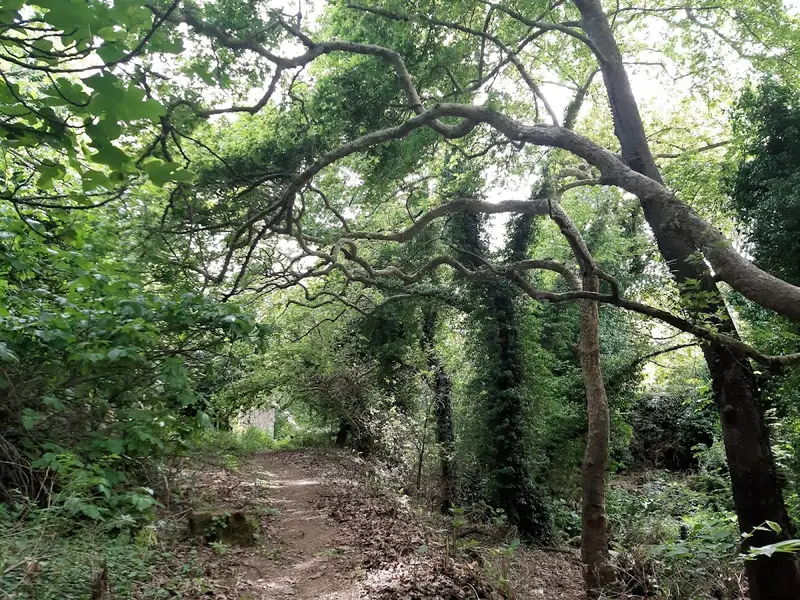
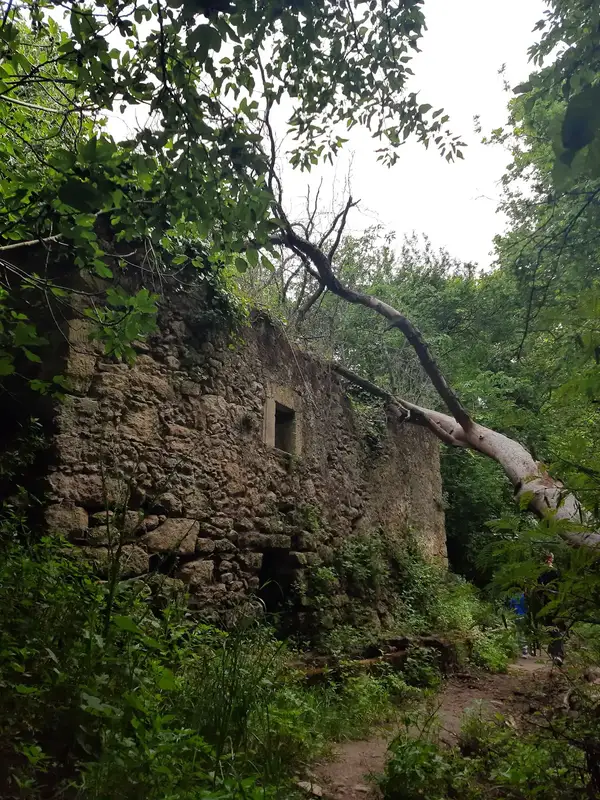
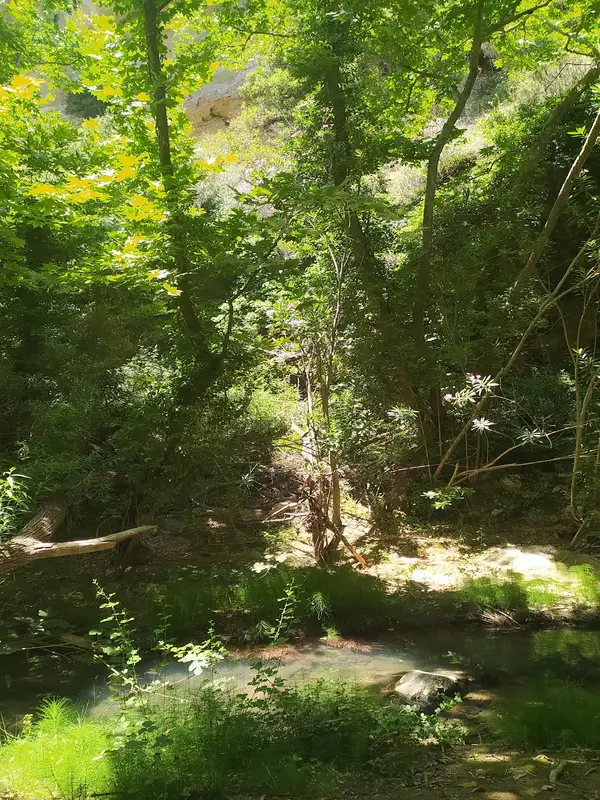
In recent years, the gorge’s trail has been marked and cleared, with the addition of small bridges, wooden railings, and informational signs. Walking along this trail is a delightful and easy experience, shaded by perennial plane, oak, and other trees. The riverbed walk is simple, without significant altitude changes or difficulties. At the gorge’s starting point, two small waterfalls can be seen. Old watermills, once used to grind the area’s cereals, can be found at three different points along the trail. This region has always been one of Crete’s most productive. Additionally, limestone kilns and various fruit tree gardens can be spotted. A walk from the gorge’s entrance at Peza to its exit at Kaki Rachi near Skalani takes approximately 2 hours.
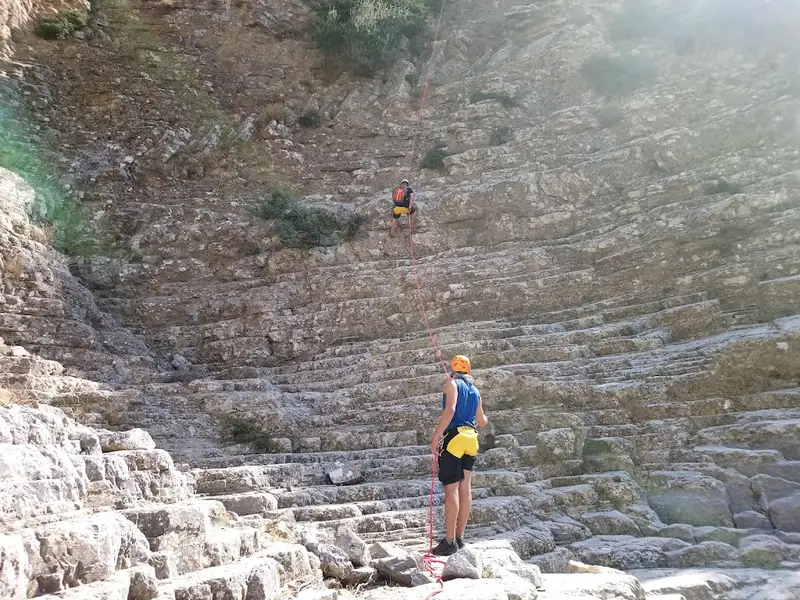
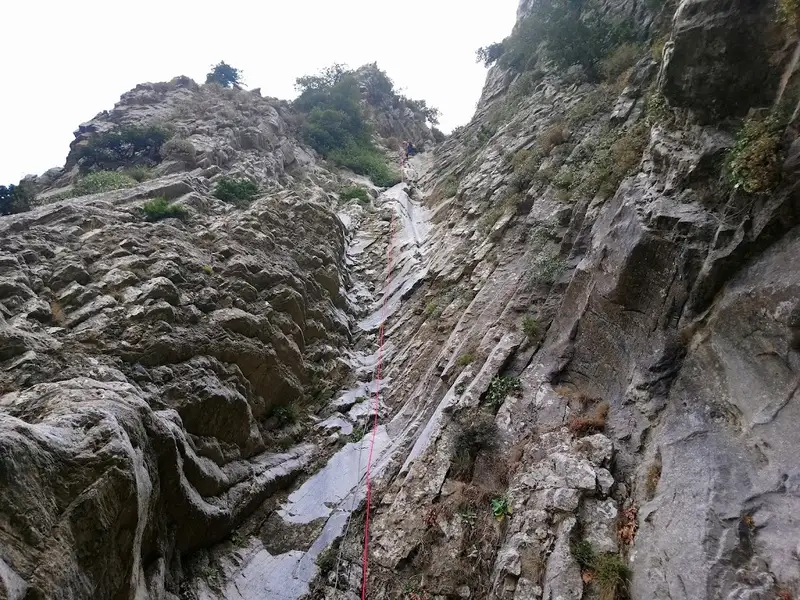
Eligas Gorge, a stunning natural monument, is nestled on the western side of Koupa Mountain, just above the village of Miliaradon in Embaros. This remarkable location boasts a towering waterfall with nine rappels, making it a perfect spot for canyoning. The altitude difference from the entrance to the exit is approximately 230m.
Eligas is just one of numerous waterfalls in the vicinity, standing tall at 150 meters. It cascades down in 5-6 stages, with the largest drop being 50 meters.
During the winter, the waterfall is fed by crystal clear water from the local ‘Papa Lagos’ springs. On exiting the gorge, it merges with the Baritis River, a primary tributary of the Anapodaris River.
In the Cretan dialect, Eligas translates to ‘waterfall’. The gorge is unique due to its distinctive formations, created by layers of limestone that resemble a vast open-air theatre with stone tiers.
A trail from Miliaradon village leads to the base of the waterfall. From there, visitors can ascend to its highest points, offering a breathtaking view of the impressive waterfall and the Baritis-irrigated plain villages.
The Astrakiano and Kounaviano canyons are two verdant gorges that converge near Skalani village and empty out onto Karteros beach. The combined length of these canyons is roughly 21 km. Situated to the east of Heraklion city, these gorges are part of the broader Mount Jiouktas area. They offer easy walking trails, making them perfect for families and children.
The longer of the two, Astrakiano, begins at the Paliarda location in Kolomodi and extends to the area beneath the deserted Kato Astraki village, after crossing the picturesque Astrakiani Kamara bridge. From Kato Astraki, a brief trail leads to the Neraidospilios site, known for its stunning pond and gushing water caves.
The path along the Karteros river commences from this point, offering a lush green trail equipped with wooden bridges and railings. After crossing the Aitania bridge at Kaki Rachi, we reach Kali Rachi where the Astrakiano and Kounaviano Gorges, originating from Peza, merge. From Kali Rachi, the river continues to Karteros along a well-structured path. This section, known as Karteros Gorge, passes by ancient water mills and the historic Saint Nicholas Church (Agios Nikolaos). Near the Karteros gorge exit, at the Mesa Karteros spot, you’ll find an old inn and a second chapel dedicated to Saint Nicholas. This location, accessible by car from Karteros, is an ideal picnic spot.
The Astrakiano canyon (Astraki – Kali Rachi) measures about 7km, with a hiking duration of 3-4 hours. The Kounaviano Gorge (Peza- Kali Rachi) is roughly 4km long, requiring about 2 hours for trekking. The shared section of the Karteros gorge (up to the second Saint Nicholas chapel (Kali Rachi – Mesa Karteros)) is approximately 6km.
The canyons’ route is abundant in natural, morphological, aesthetic, historical, and cultural aspects. The landscape boasts exceptional natural beauty, featuring springs, ponds, rivers, mini waterfalls, and lush vegetation. Prior to World War II, the canyon housed 10 watermills, and locals would fish for eels and crabs, some of which still exist today.
No results available
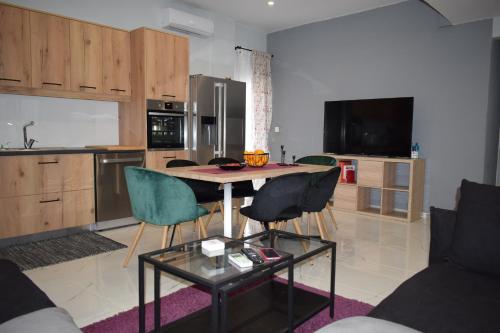
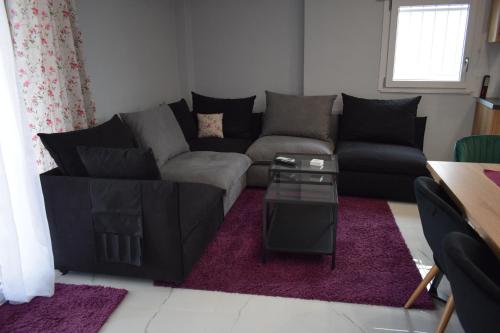
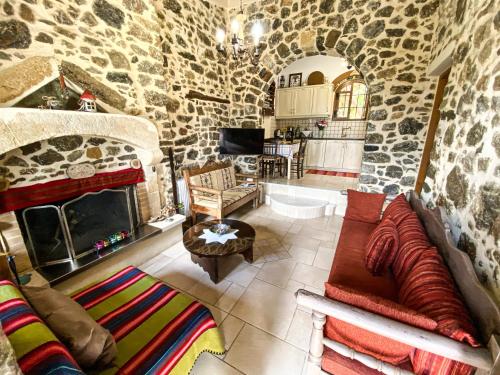
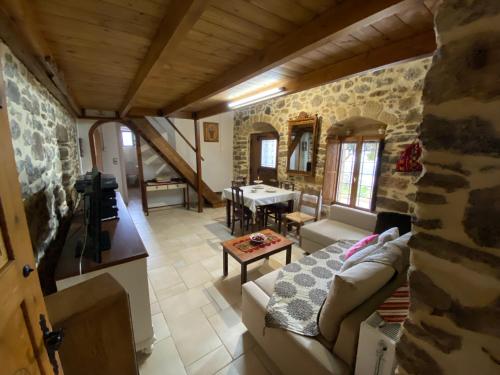
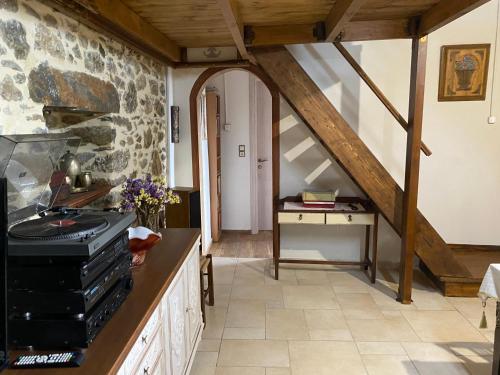
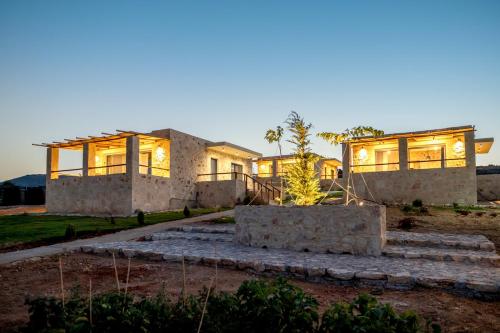
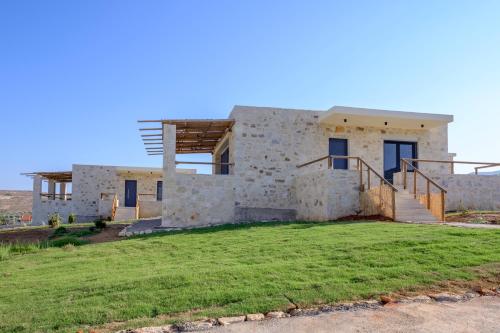
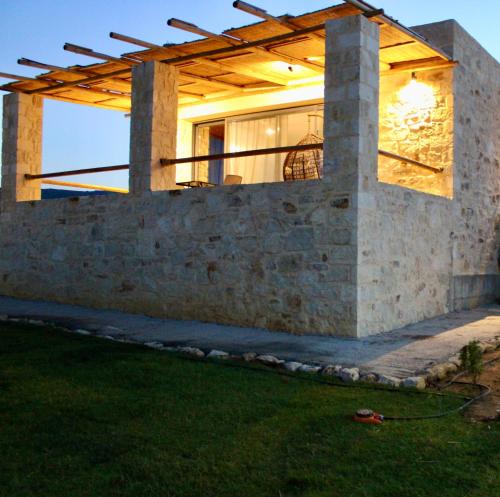
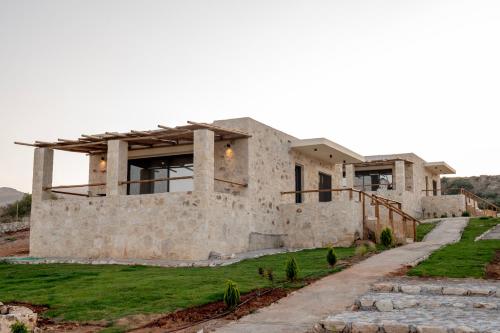
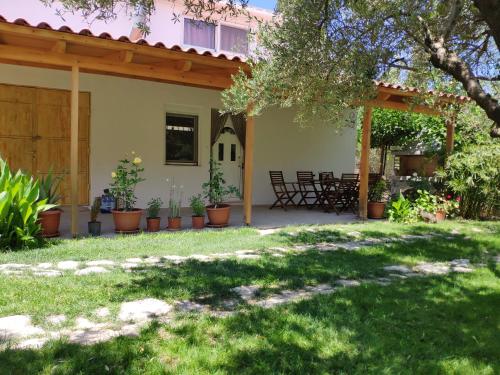
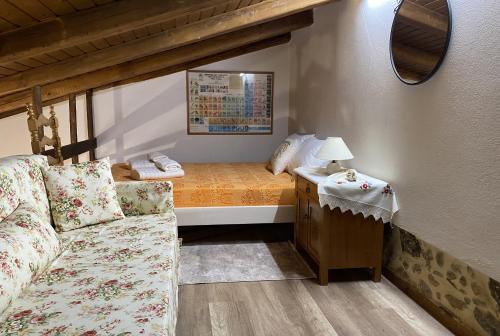
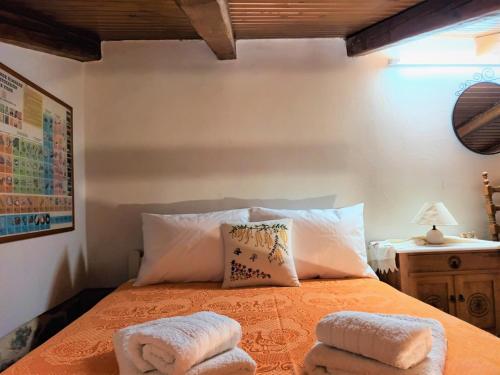
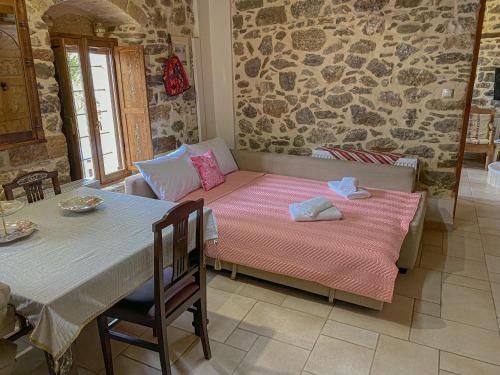
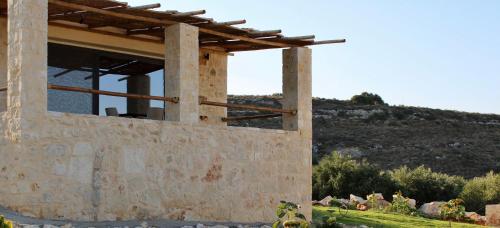
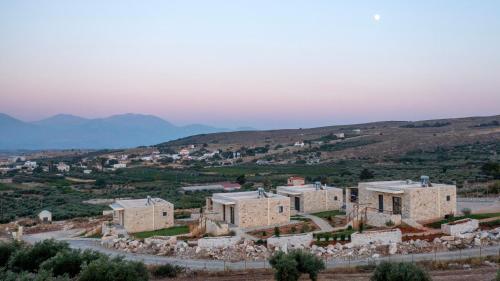
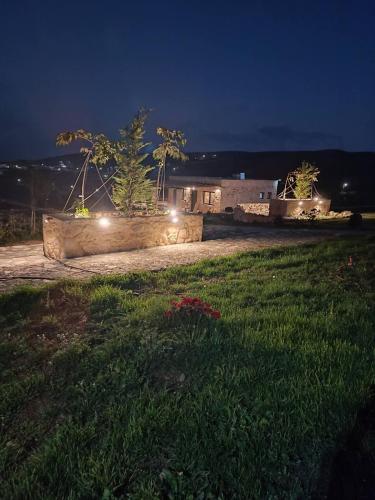
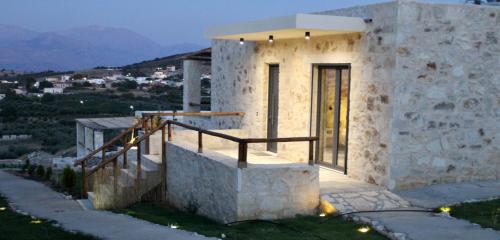
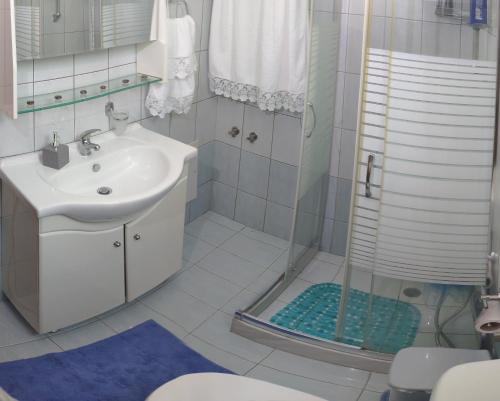
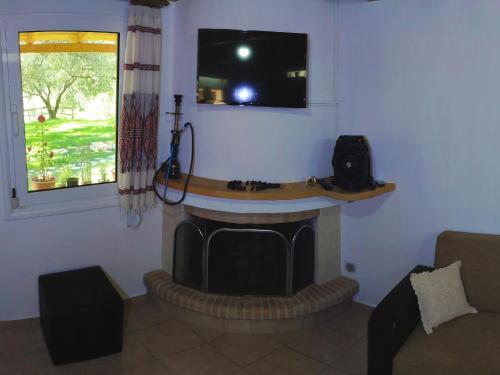
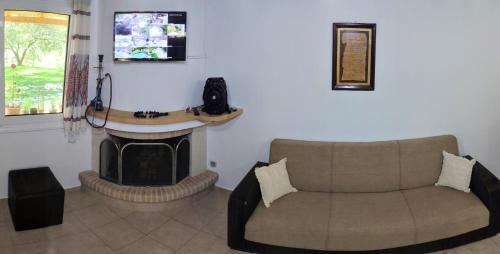
Located in Arkalochori in the Crete region, Nipiditos Village provides accommodation with free WiFi and free private parking.
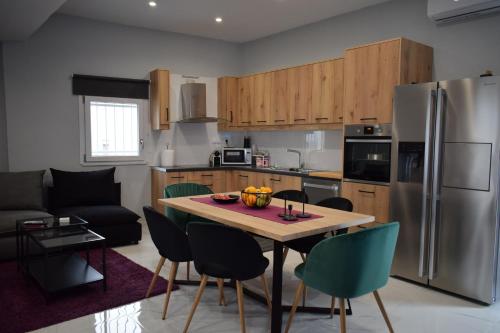
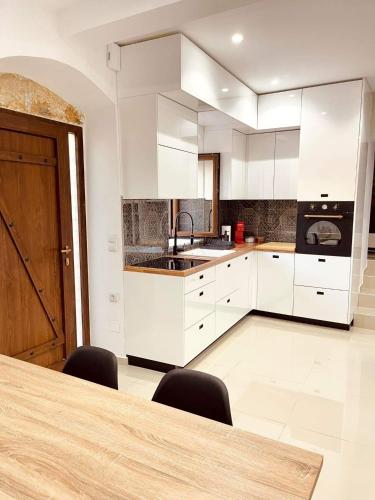
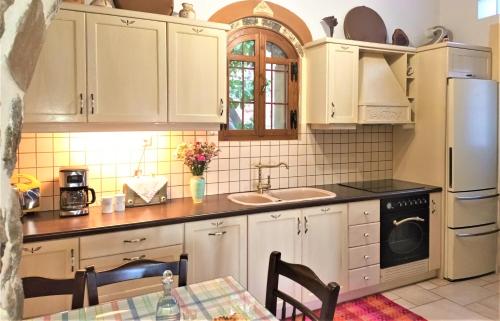
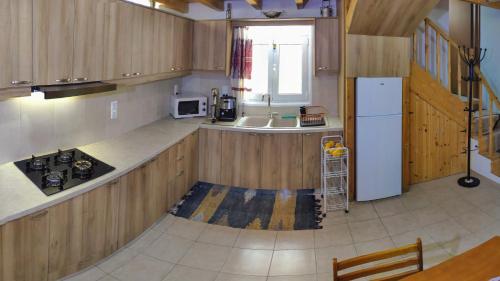
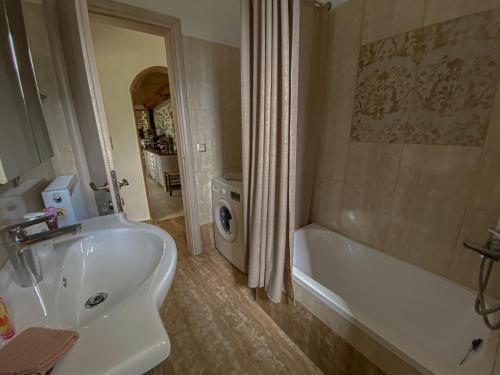
Some units are equipped with air conditioning, a flat-screen TV, washing machine and a coffee machine, as well as a kitchen.
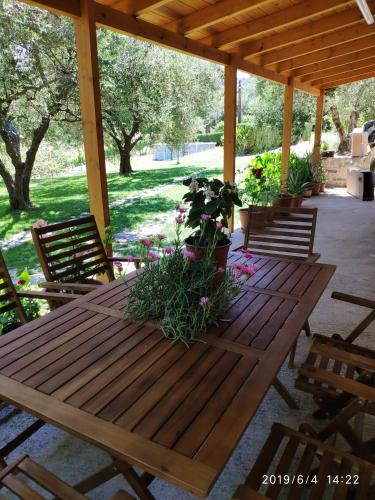
Guests at the villa can enjoy hiking nearby, or make the most of the sun terrace.
The Palace of Knossos is 31 km from Nipiditos Village, while Cretaquarium Thalassocosmos is 33 km away. The nearest airport is Heraklion International Airport, 35 km from the accommodation.
Set in Arkalochori, 31 km from The Palace of Knossos and 33 km from Cretaquarium Thalassocosmos, Fragk House offers a garden and air conditioning. This property offers access to a balcony, free private parking and free WiFi.
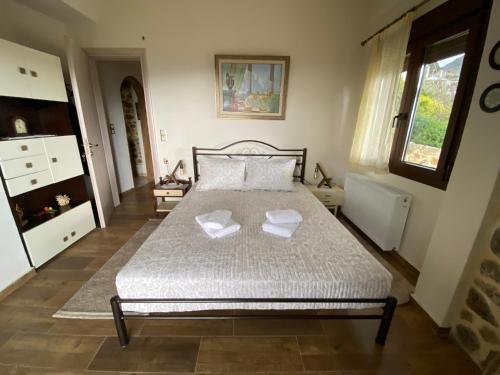
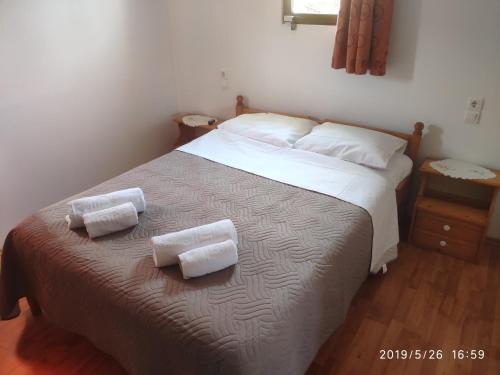
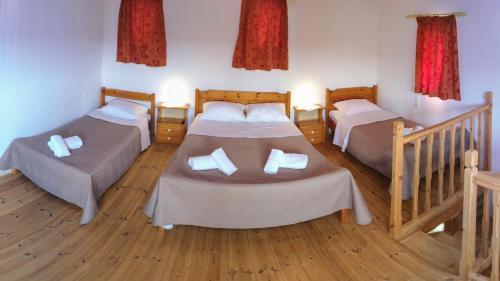
The holiday home with a terrace and mountain views has 2 bedrooms, a living room, a flat-screen TV, an equipped kitchen with an oven and a toaster, and 1 bathroom with a bath. Towels and bed linen are offered in the holiday home.
The holiday home offers a picnic area. A car rental service is available at Fragk House.
Venetian Walls is 37 km from the accommodation, while Heraklion Archaeological Museum is 38 km from the property. The nearest airport is Heraklion International Airport, 35 km from Fragk House.
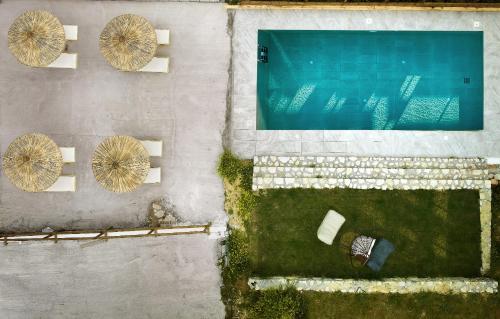
Alagni Cretan Resort features pool views, free WiFi and free private parking, set in Stíronas, 18 km from The Palace of Knossos.
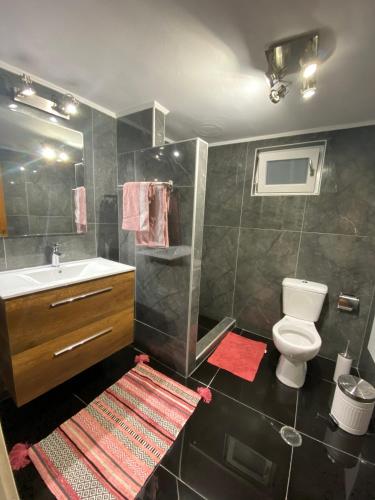
The villa provides guests with a terrace, mountain views, a seating area, a flat-screen TV, a fully equipped kitchen with an oven and a toaster, and a private bathroom with walk-in shower and bathrobes. A fridge, a stovetop and minibar are also featured, as well as a kettle.
The restaurant at Alagni Cretan Resort serves Greek, local and grill bbq cuisine.
The accommodation offers a picnic area.
If you would like to discover the area, cycling and walking tours are possible in the surroundings and Alagni Cretan Resort can arrange a bicycle rental service.
Venetian Walls is 24 km from the villa, while Heraklion Archaeological Museum is 25 km away. The nearest airport is Heraklion International, 22 km from Alagni Cretan Resort, and the property offers a paid airport shuttle service.
from
€221
/night
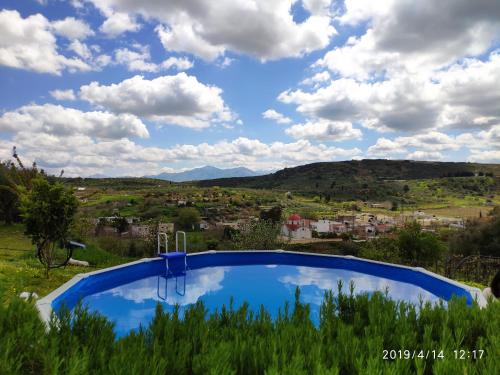
Offering a terrace and pool view, Green Farm-small paradise! is situated in Kalloní, 15 km from The Palace of Knossos and 21 km from Venetian Walls. This holiday home features a pool with a view, a garden, barbecue facilities, free WiFi and free private parking.
The holiday home with a patio and mountain views has 2 bedrooms, a living room, a flat-screen TV, an equipped kitchen with a microwave and a fridge, and 1 bathroom with a walk-in shower. Towels and bed linen are available in the holiday home.
The holiday home offers a picnic area. There is a shared lounge at this property and guests can go hiking nearby.
Heraklion Archaeological Museum is 22 km from Green Farm-small paradise!, while Cretaquarium Thalassocosmos is 32 km from the property. The nearest airport is Heraklion International Airport, 19 km from the accommodation.
No results available
Connect with thousands of Crete visitors and boost your bookings.
No results available
© All rights reserved. Crete Locals