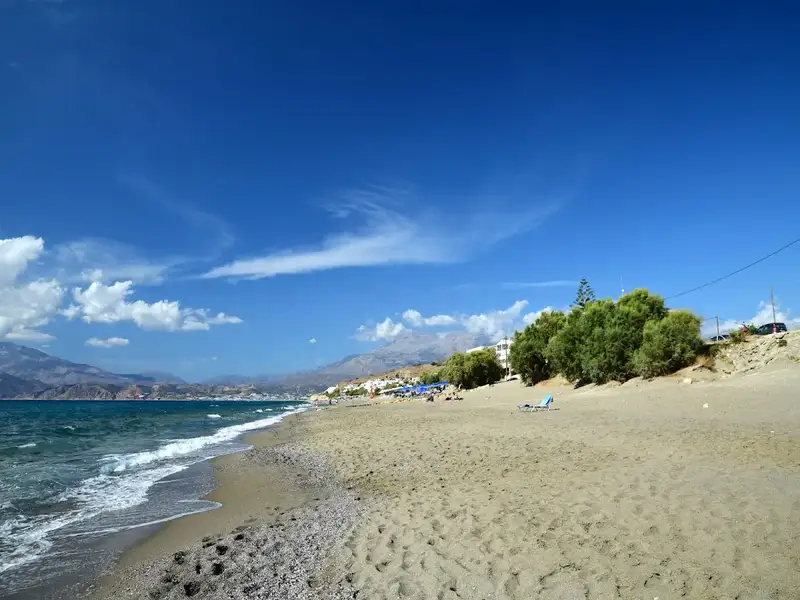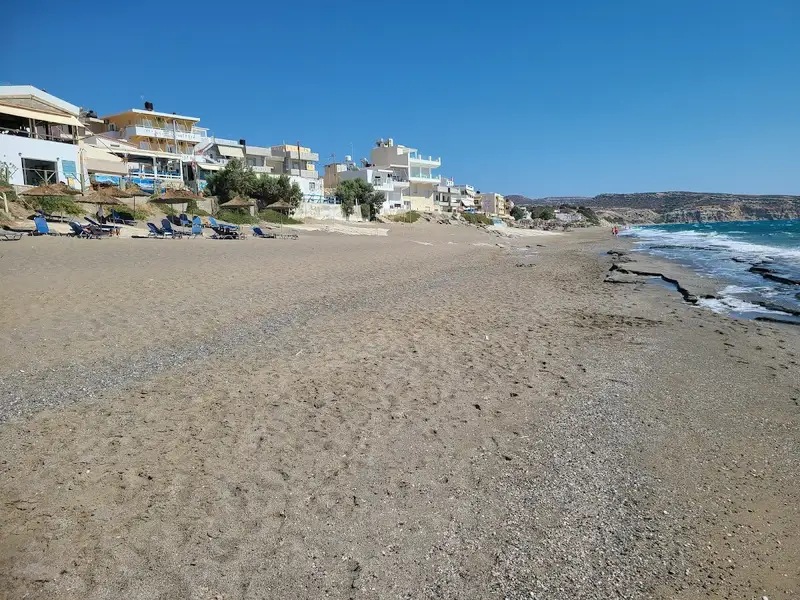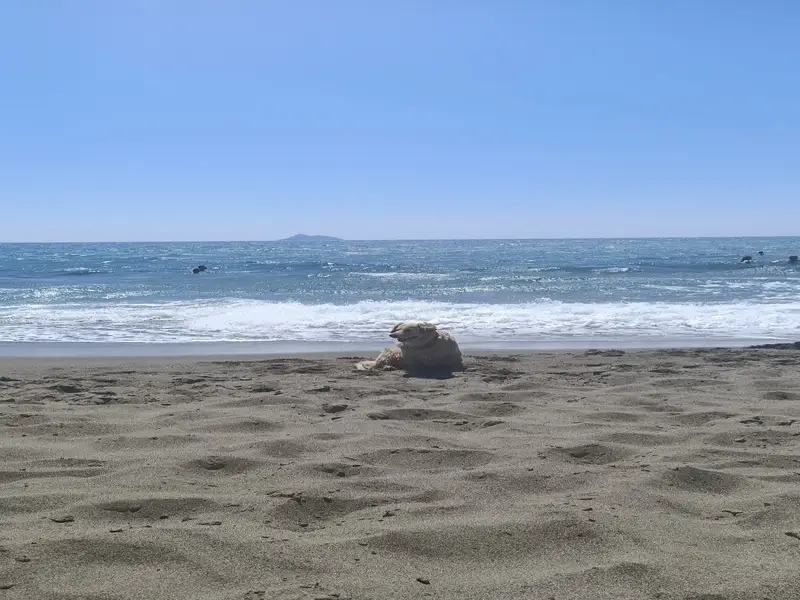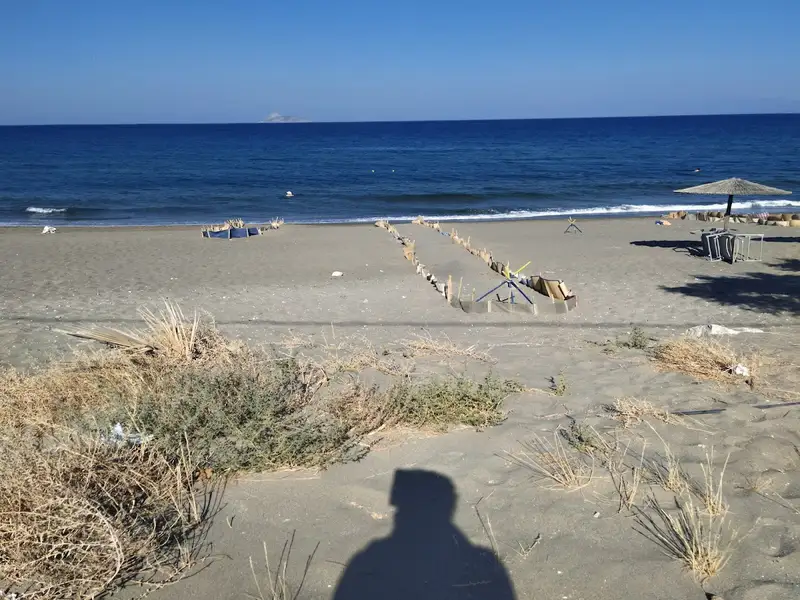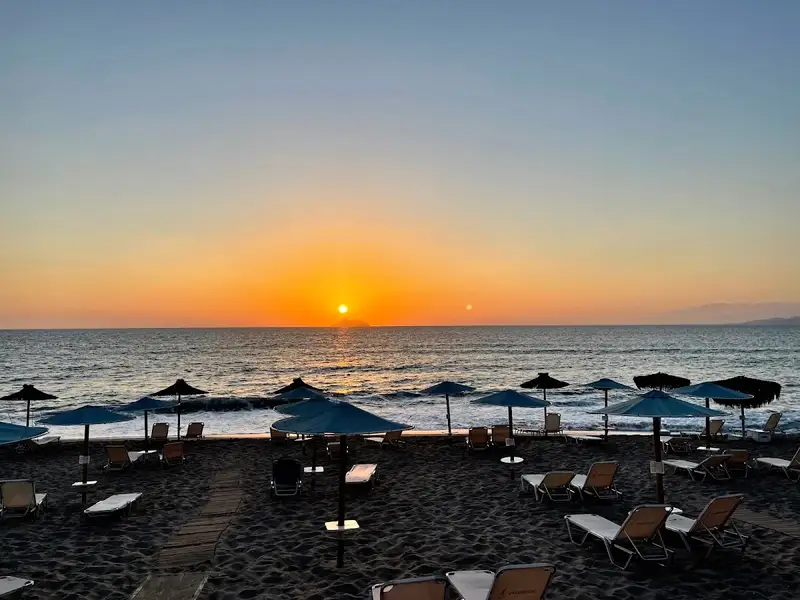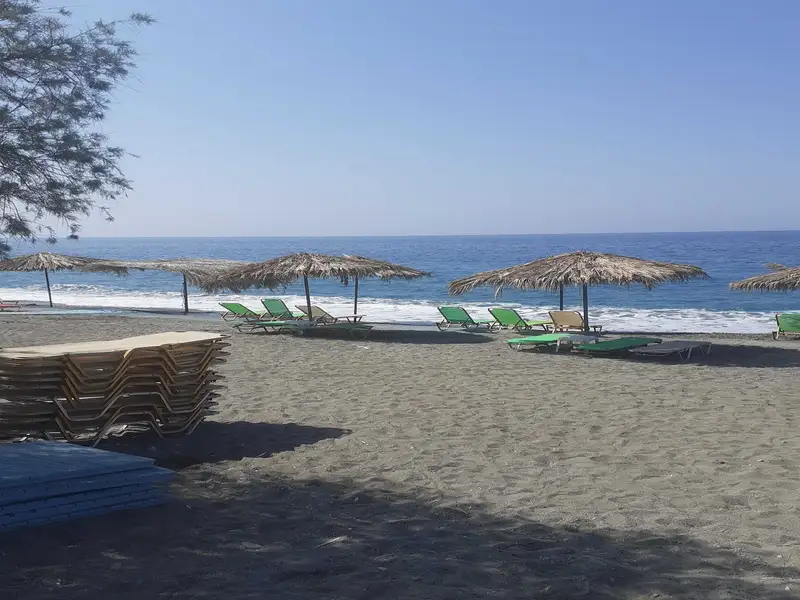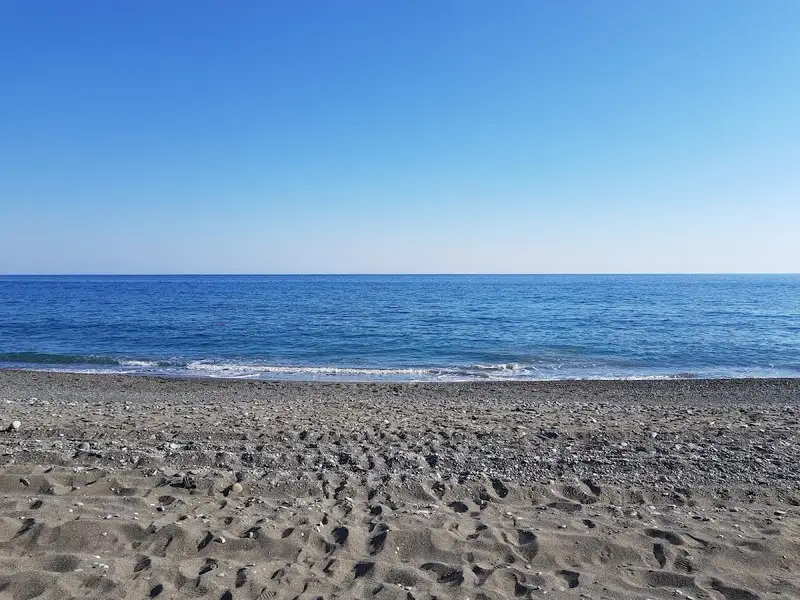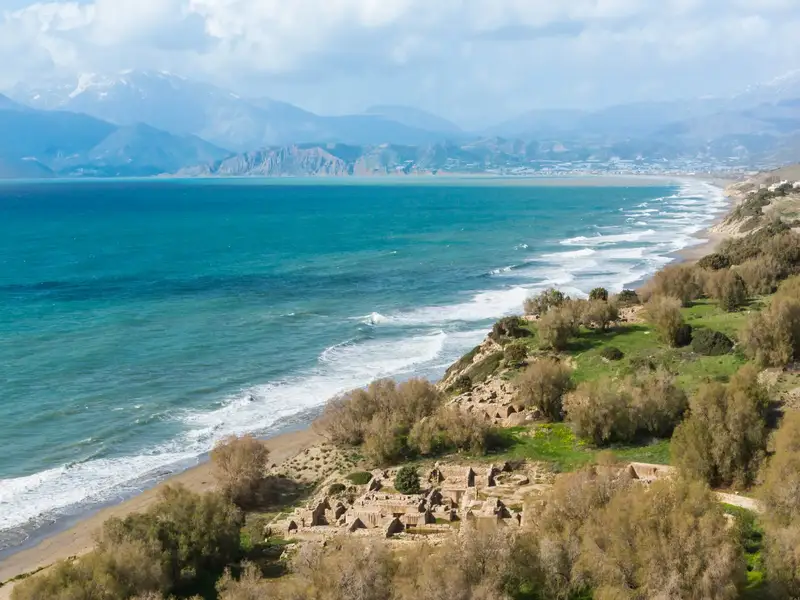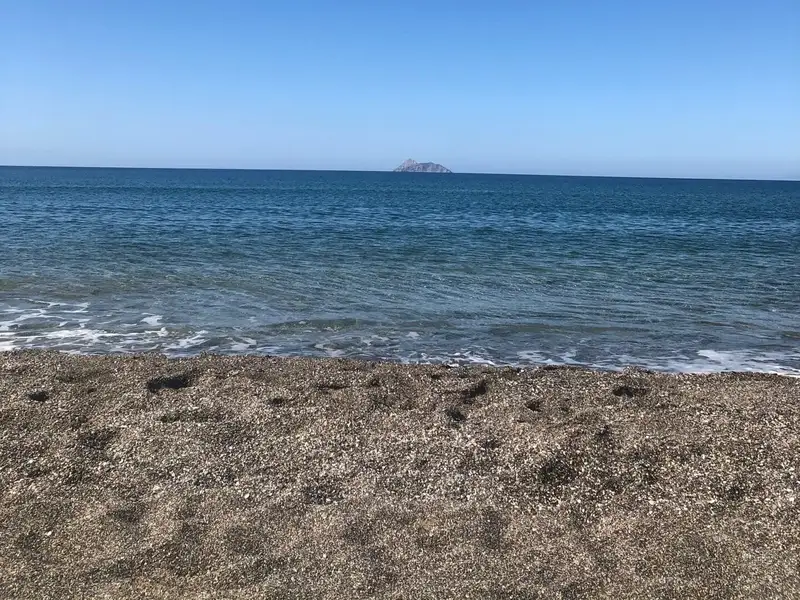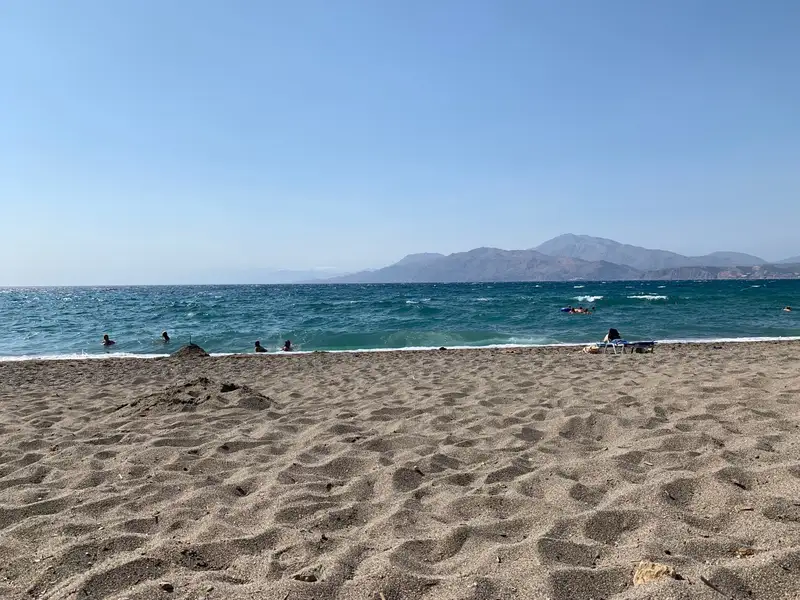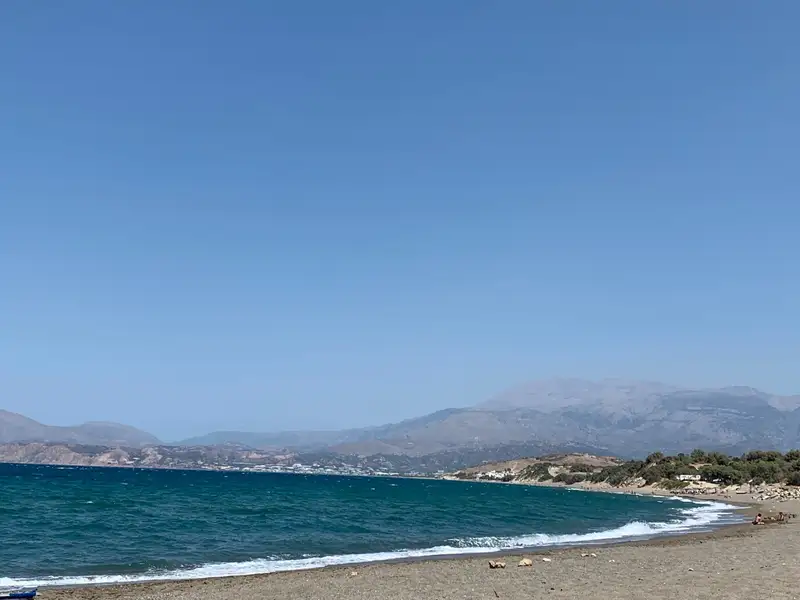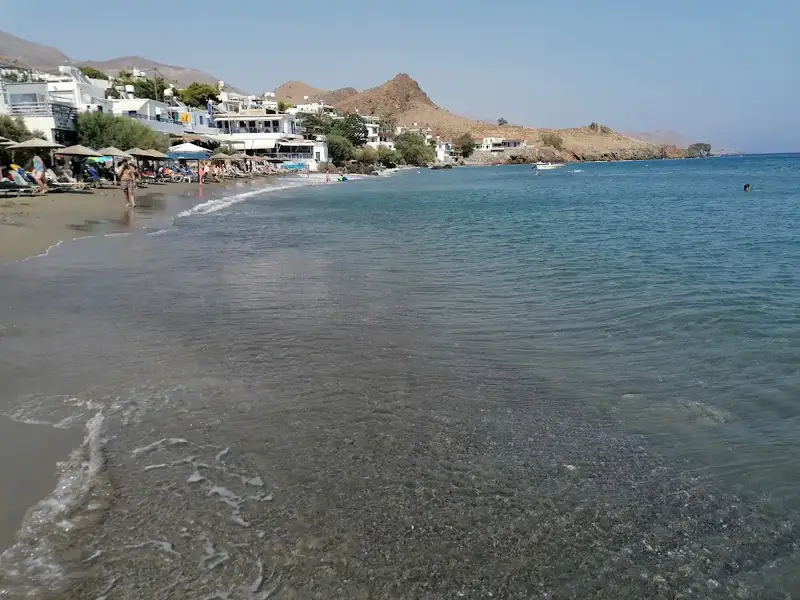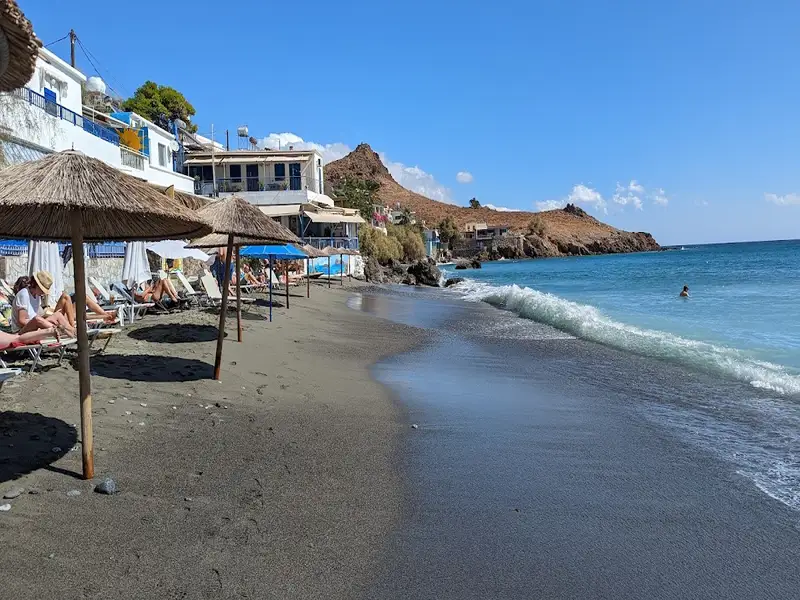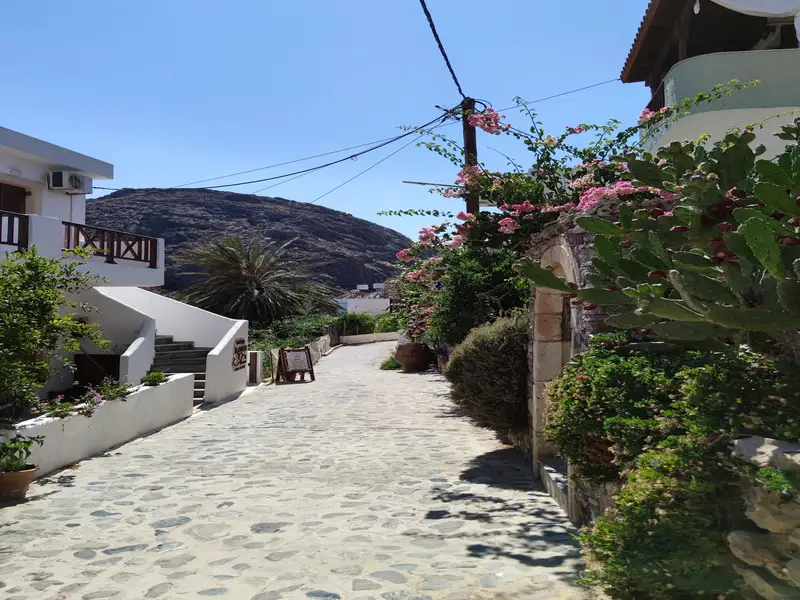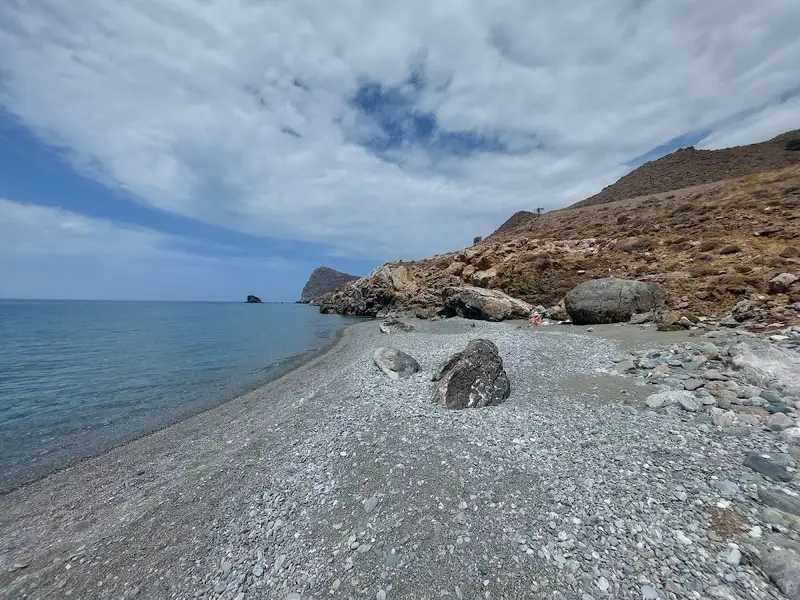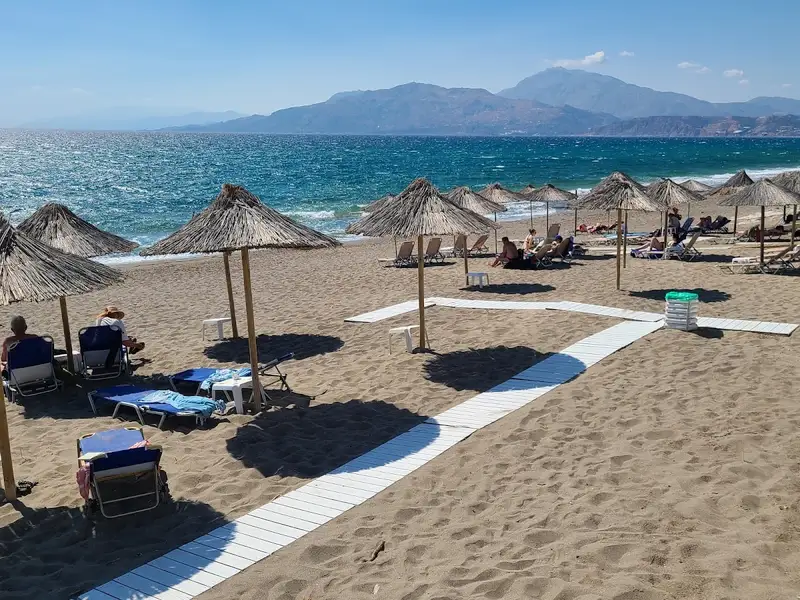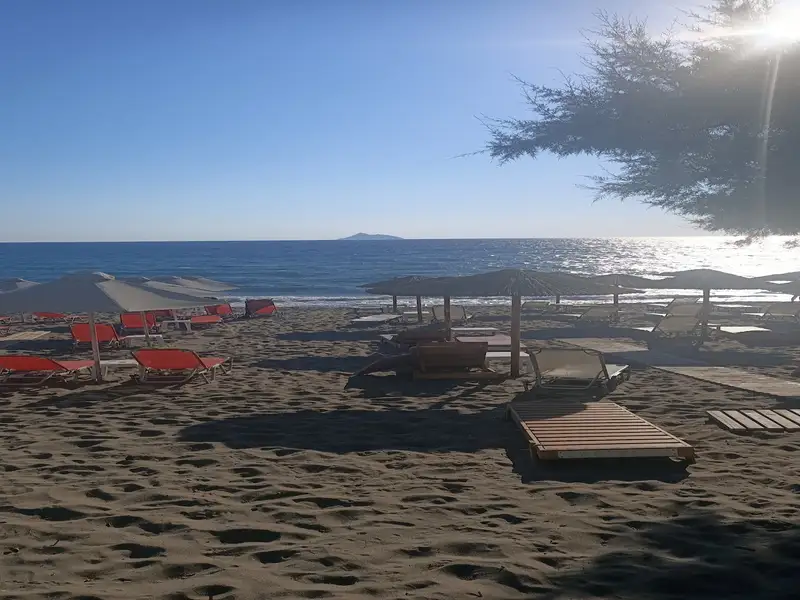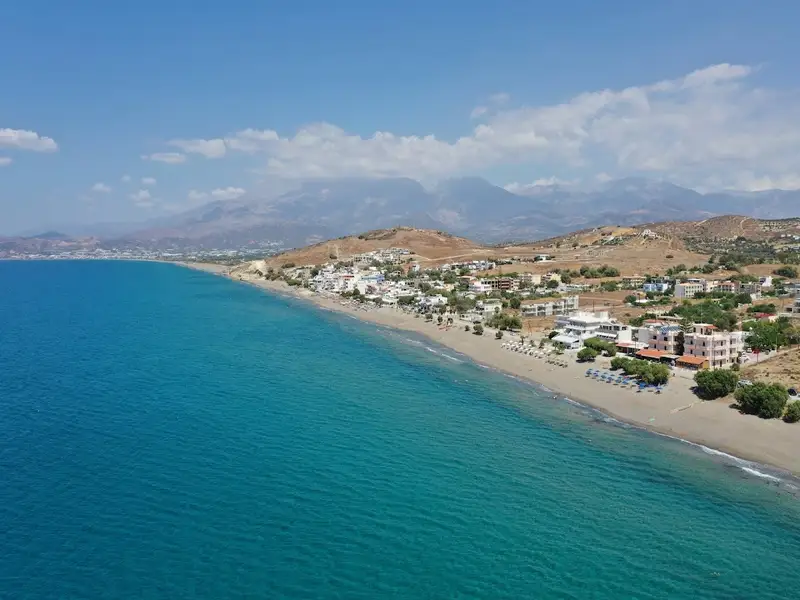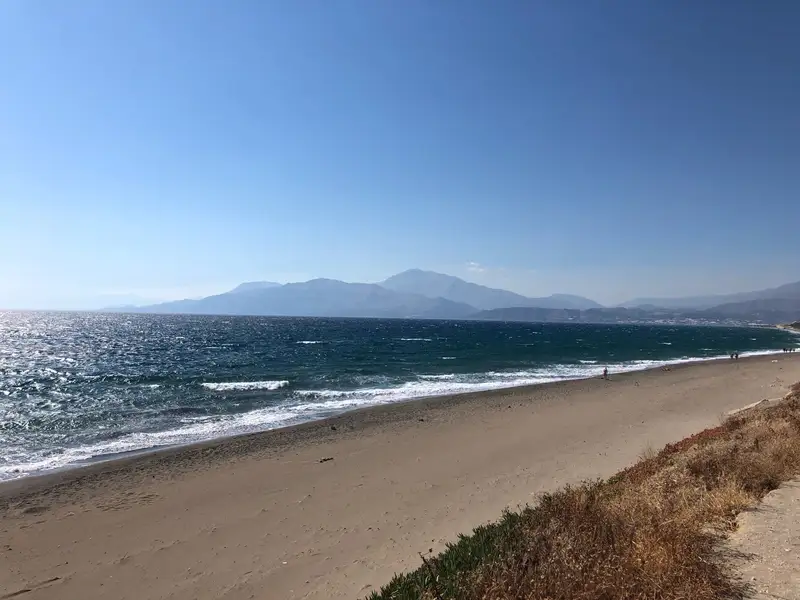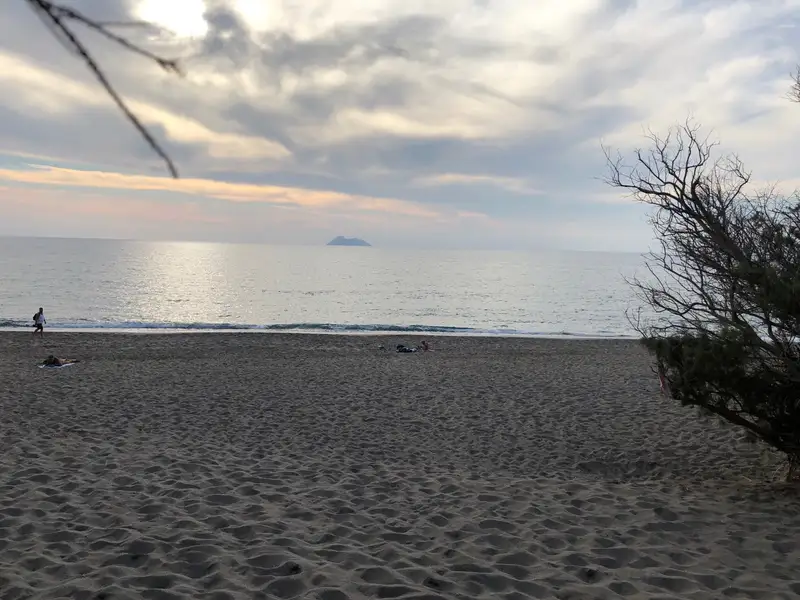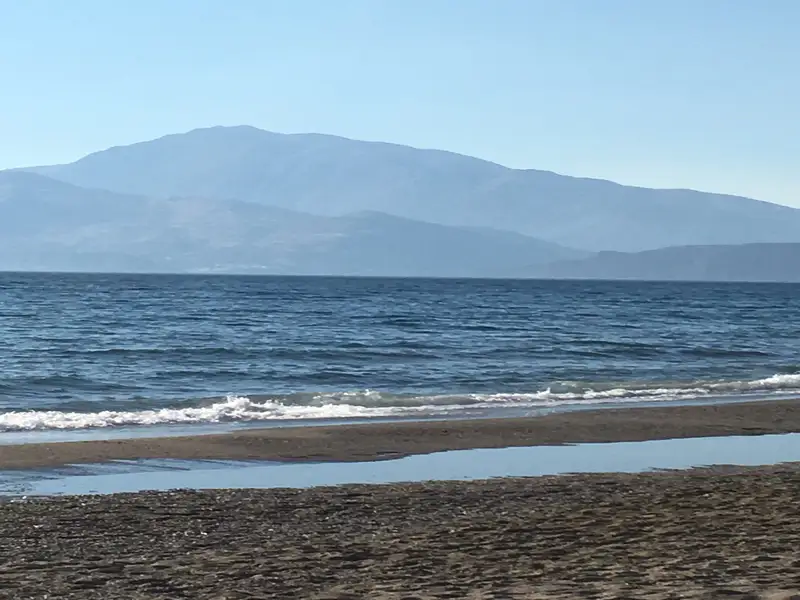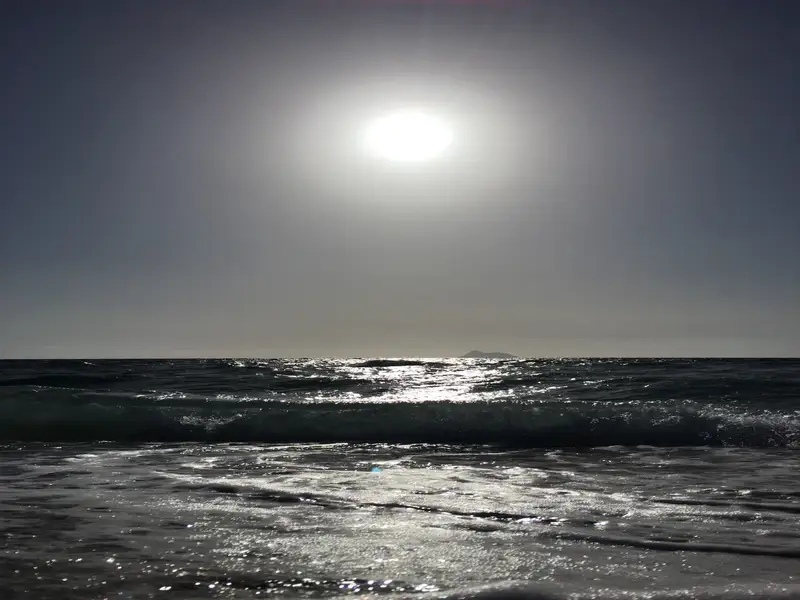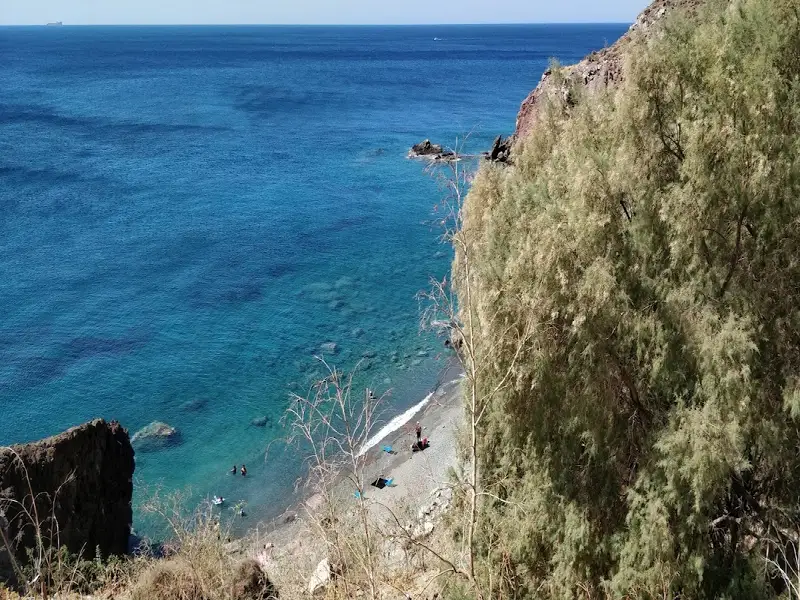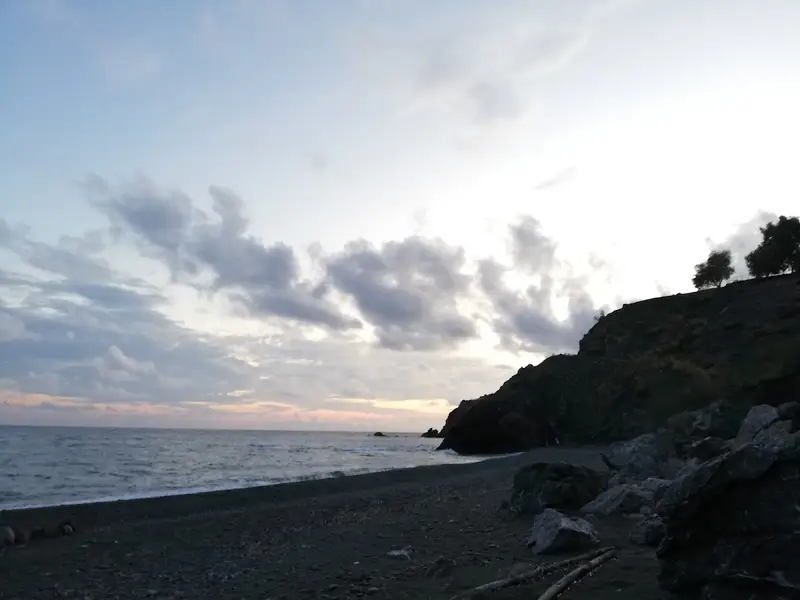
Kalamaki, a quaint seaside hamlet, is nestled between Matala and Kokkinos Pirgos, 65km southwest of Heraklion. The beach, a 2.5km stretch of the vast Messara Bay coastline, graces the village’s front. Its sandy shore is kissed by the sea, which conceals a slick, flat rock bed beneath its surface. It features large waves, usually stirred by northwest winds, making beach access challenging at times due to the rocky seabed.
The village-facing part of the beach is well-equipped with sunbeds, umbrellas, eateries, accommodation, a lifeguard, playground, and water sports. For a more isolated experience, head southeast towards Kommos beach, a favorite among nudists.
To the north, you’ll find Afratias and the Pahia Ammos beach, which features patches of rocks. Devoid of amenities, the beach does boast a small park used for hosting cultural events like concerts during summer months.
Further north lies the Timbaki military airport, now serving as a resort for Greek Air Force staff. Although the beachfront is accessible, trespassing beyond the fence is prohibited and could lead to arrest. Sometimes, parachuters and skydivers can be spotted descending from small aircraft, courtesy of a local club based at the airport. In 2008, a small plane crashed into the Kalamaki sea, with the pilot miraculously surviving the ordeal. The Tymbaki airport holds ecological significance for the Mesara plains as it’s intersected by the Geropotamos River, which flows out to the beach. This river, the area’s largest, serves as a sanctuary for hundreds of rare birds across its numerous ponds.
The sandy coast of Messara Bay is a protected breeding ground for the loggerhead sea turtle. To prevent nest destruction and avoid frightening these creatures, it’s best not to roam the beach’s darker areas during summer nights.
Although Kalamaki doesn’t boast a significant history due to its relatively new establishment, it’s a popular seaside resort for Kamilari locals. Some believe it once served as a small harbor for Phaestus or Gortys in ancient times, though no concrete evidence supports this claim.
The longest beach in the region, Psili Ammos, is situated to the east of the village Platia Peramata. This secluded and stunning beach does not cater well to camping due to the lack of tree shade. Still, at the eastern extremity, one can find large white rocks known as Asproharaki, which provide shade to those fortunate enough to claim them. The beach was thrust into prominence in 2010 when a significant Russian oil tanker was stranded there during a storm. Thankfully, no one was at risk and no environmental harm was done.
Paliomandra beach
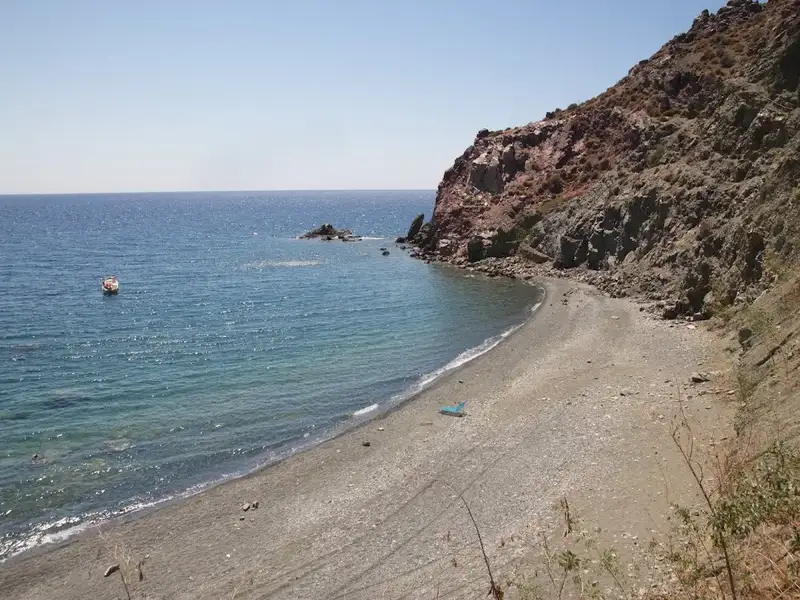
On your way to Psili Ammos from Tsigounas, you will encounter several minor beaches. The furthest east cove, reachable via a dirt road, is known as Paliomandra and is rather secluded. The beach features coarse sand and a rocky seabed, making it ideal for fishing and snorkeling.
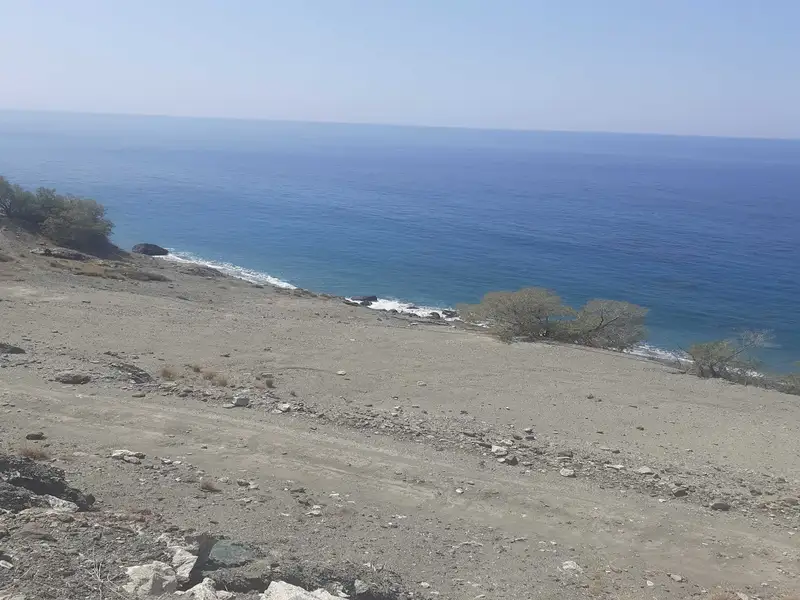
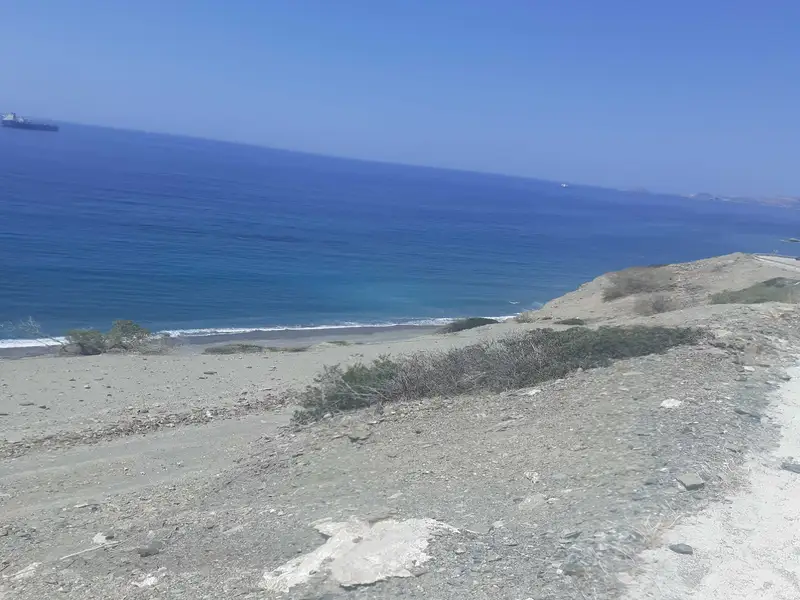
Platia Peramata, a quaint village situated 69km south of Heraklion and 7km east of both Kali Limenes and Lendas, nestles at the exit of a small, fertile valley that cuts through the rugged Asterousia Mountains. This valley begins at Antiskari village and concludes in a settlement, its rich soil used for growing early vegetables like tomatoes, cucumbers, and peppers in greenhouses due to the consistently high temperatures.
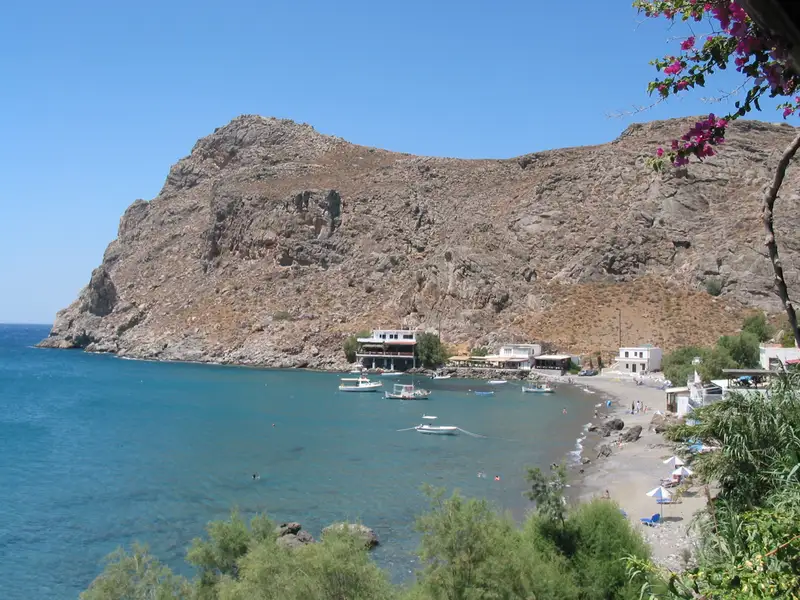
The region features numerous adjacent bays that form serene and picturesque beaches, frequented primarily by locals. At the heart of the settlement lies the small beach of Platia Peramata, known for its fine pebbles which are predominantly used to moor the locals’ boats. Despite the beach’s lack of extensive facilities, a handful of tavernas and rooms are available nearby. Tamarisk trees line the beach and are often used as camping spots. To the east of the settlement, East Platia Peramata beach, less favored by swimmers, offers another pebbly shoreline.
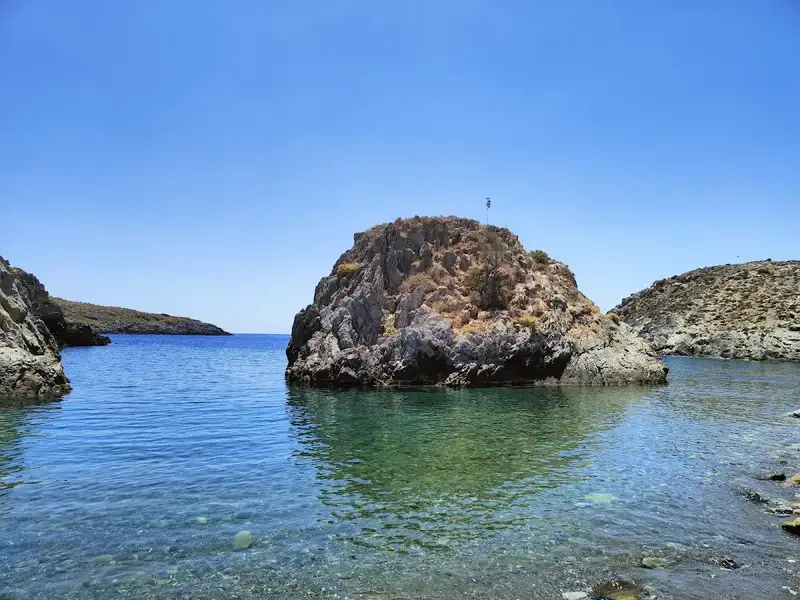


To the west of the village of Platia Peramata, you’ll discover the humble settlement known as Krigioi, with its array of unlawfully constructed homes and cottages. A brief drive along the local stream leads you to a stunning beach adorned with fine pebbles and crystal clear water. The uniqueness of Krigi lies in its numerous miniature beaches that stretch along the coast to Platia Peramata and the awe-inspiring soft limestone formations.
Overlooking Krigi is the quaint chapel of Saint Demetrius. To its west, you will find another secluded pebbly beach, Aspros Harakas, or White Rock, named for the pale rocks at its western end. However, Aspros Harakas may not appeal to everyone as it can only be reached by boat, boasts large stones and lacks shade.
Venturing further westward, you’ll stumble upon the three consecutive beaches of Kokkines Plakes, or Red Rocks. True to their name, these beaches are surrounded by reddish rocks and are primarily accessible via the sea.
Situated 66km southwest of Heraklion, Kommos (or Komos) lies a mere 2km north of Matala and in close proximity to Pitsidia village. It stands as the southernmost and remotest section of the extensive beachfront of Messara Bay. Once serving as the port of Phaestus, the remnants of the ancient port of Kommos can still be observed on the beach. It can be reached by driving towards Matala and following a sign to Kommos near Pitsidia.
The entire beachfront of Messara is exposed to the prevalent westerly winds. Visitors should exercise caution as the seabed can be rocky in certain areas. The beach also serves as a nesting ground for the protected loggerhead sea turtles (Caretta caretta) between the months of May and September.
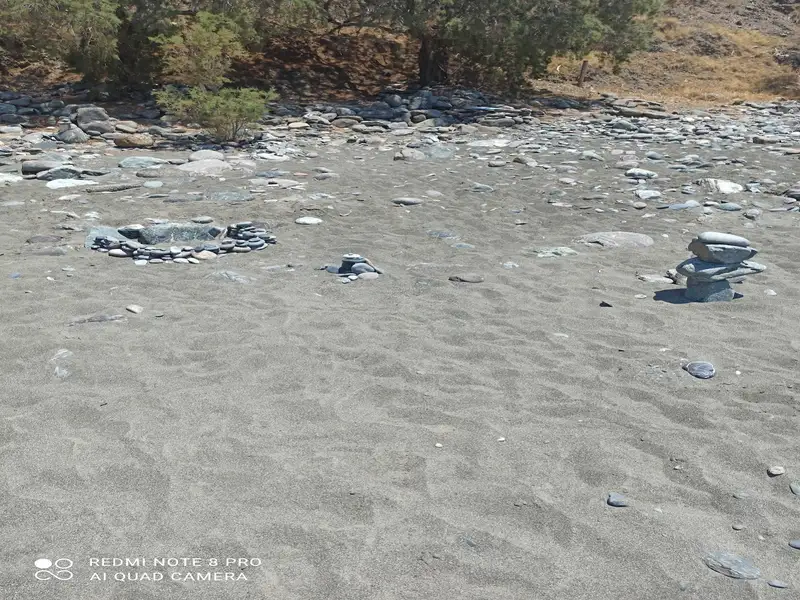
Potamos or Potamoserma, the northern section of Kommos, is a popular spot among naturists, dating back to when hippies frequented the area. The location is dotted with sparse tamarisk trees and devoid of buildings due to its protected archaeological status, restricting construction. Next to the archaeological site in the south, there is a developed beach equipped with amenities such as umbrellas, sun beds, a toilet, showers, a canteen and a lifeguard. Surrounding sand dunes are home to white sand lilies that mark the end of summer. Nearby Kalamaki or Pitsidia and Matala offer options for accommodation and dining.
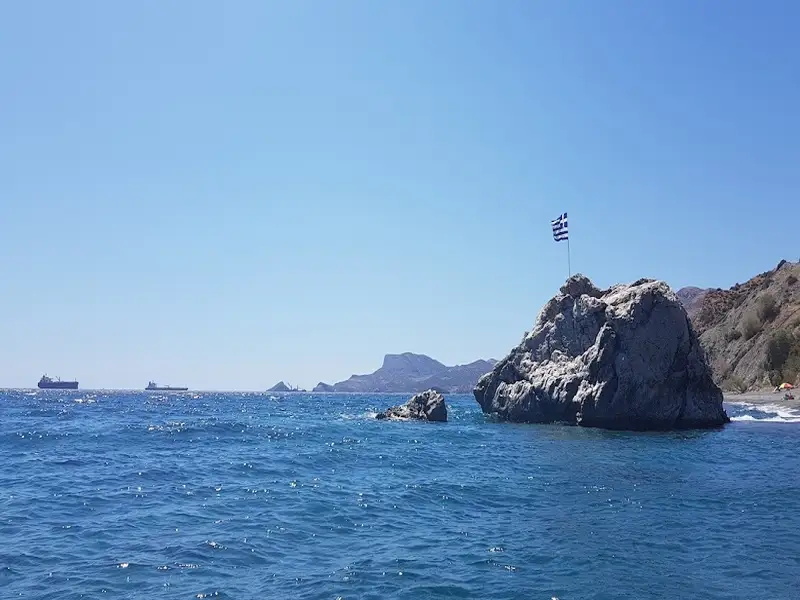
The sight of Paximadia islets during sunset is breathtaking. A large rock, known locally as Volakas, stands 300m out at sea, opposite the archaeological site. According to local lore, this rock is the tip of the boulder that the blinded Cyclops Polyphemus hurled at Odysseus’ ship to prevent his escape, following Odysseus and his crew’s escape from Polyphemus’ cave.
Kommos, the ancient port of Phaestus, was established around 200BC. However, it was subsequently destroyed by an earthquake and then rebuilt at the same location. The archaeological site of Komos, not open to the public, houses a Minoan harbour, public buildings, warehouses, oil presses, shipyards and a large courtyard. Archaeologists have uncovered a small temple, constructed on the ruins of an older one.
To the west of Lendas, you’ll encounter the quaint village of Tsigounas, which is home to the modest beach of Limanaki that serves as a local harbour due to its safeguarded orientation. The village of Tsigounas derives its name from the term ‘tsigounis’, meaning ‘stingy’, which is a reference to a local spring that produces a limited amount of water.
Just about 1km eastward from the Chrysostomos settlement, you’ll come across the stunning Maha beaches. The first beach, primarily used as a harbour, is rocky and unorganized. However, there are a few rooms and a tavern in close proximity, with a road that leads right to the beach. If you continue to follow the dirt pathway that runs parallel to the beach towards the east, you’ll discover another breathtaking beach after about 100m. This beach boasts fine pebbles and deep, crystal blue waters. Although there are no trees to offer shade, there’s a cave on the eastern side of the beach that provides some respite from the sun. Do note that camping is prohibited here, as indicated by the signs scattered around the area.
Situated 75km southwest of Heraklion, Dyskos, also known as Dytikos, is just a stone’s throw away from Lendas, separated only by the renowned Cape Lion. The legend says that Lion was one of the lions that served the goddess Rhea and was turned to stone at this location.
The settlement of Dyskos is nestled just west of Lion, where a sprawling beach with fine pebbles stretches out all the way to the village of Tsigounas. To reach this spot, one must travel the paved road from Lendas in the direction of Gerokambos. About a kilometer past Lendas, the beach will come into view on the left. In the absence of a car, one can still get to Dyskos by following the brief trail that skirts Cape Lion.
The eastern section of the beach, which lies in front of the village, is moderately developed with a handful of taverns and accommodation options. As one ventures westward, the beach becomes more secluded. The western area, close to Gerokambos, is particularly favored by nudists. In the past, Dyskos was a popular destination for hippies. For those seeking respite from the sun, numerous tamarisk trees line the beach providing ample shade.
Dyskos is also well-known for its breathtaking sunsets, with the sun disappearing behind the wild Asterousia mountains.
Situated 74km south of Heraklion, on the southern fringes of the grand Asterousia Mountains, is the isolated seaside village of Lendas. This modestly designed tourist resort promises a serene vacation. The journey to Lendas, from Agii Deka near Mires town, via the village of Miamou, is via a narrow paved road that winds through the rough mountains, descending from an elevation of about 1000m to sea level, offering an awe-inspiring view of the Lendas sea.
The vicinity is scattered with beaches, popular among naturists. The beach in the village of Lendas, shielded on the east by Cape Psamidomouri and on the west by the renowned Cape Lion, was once the old port of Lendas, which has since been relocated to Loutra. This beach is the busiest in the area with basic amenities such as umbrellas, showers, sunbeds, and water sports. Beyond the beach, numerous taverns and rental rooms are available. The beach’s trademark is its ducks that wander freely. Additionally, the endangered loggerhead sea turtle lays its eggs on Lendas beach between May and September. For those seeking solitude, the secluded beaches of Dyskos and Loutra are ideal.
Lendas is established on the site of the ancient city Levina, a name believed to be derived from the Phoenician “Lavi” meaning Lion. A lion-like cape located west of the village supports this belief. Legend says this lion was one of the lions pulling goddess Rhea’s chariot and was turned into stone at this location. Another theory suggests the name originates from the Phoenician word “levina”, meaning white, describing the whitish hue of the local rocks. The modern name Lendas is derived from the Greek word “Leondas” meaning lion. This cape, also known as Lion, is an archaeological site that can be visited by a short 15-minute walk to its peak, where you can enjoy a beautiful sunset. Archaeologists have uncovered evidence of early Minoan graves and a settlement, which had ties with Egypt. The ancient city of Levina prospered in the Hellenistic and Roman era, serving as a port for Gortys, the most powerful town in Crete at the time.
East of Lentas, a spring with supposed healing properties can be found. Even today, studies suggest the water aids in healing stomach, blood, and bleeding disorders. Consequently, a massive temple dedicated to the divine doctor Asclepius and Hygeia Sotira was built in the 4th century AC. This temple gained fame as a center for hydrotherapy, physiotherapy, and psychiatry, attracting patients from distant places, such as Libya. Remnants of the temple, a Byzantine church dedicated to Agios Ioannis Theologos, and Roman baths can still be found in the area. Levina was presumably abandoned in the 7th-8th century due to frequent pirate attacks.
East of the village, opposite the Psamidomouri Cape, a rock resembling a crouching elephant can be seen, with another beach formed opposite the rock. Further on, Cape Trafoulas bears a resemblance to a crocodile from Lendas. According to a local legend, Cleopatra once visited Lendas with her favorite animals, namely a lion, a crocodile, and an elephant. She was so enchanted by the place that she left her animals behind when she returned to Egypt. To this day, these “animals” remain there, patiently waiting for Cleopatra’s return.
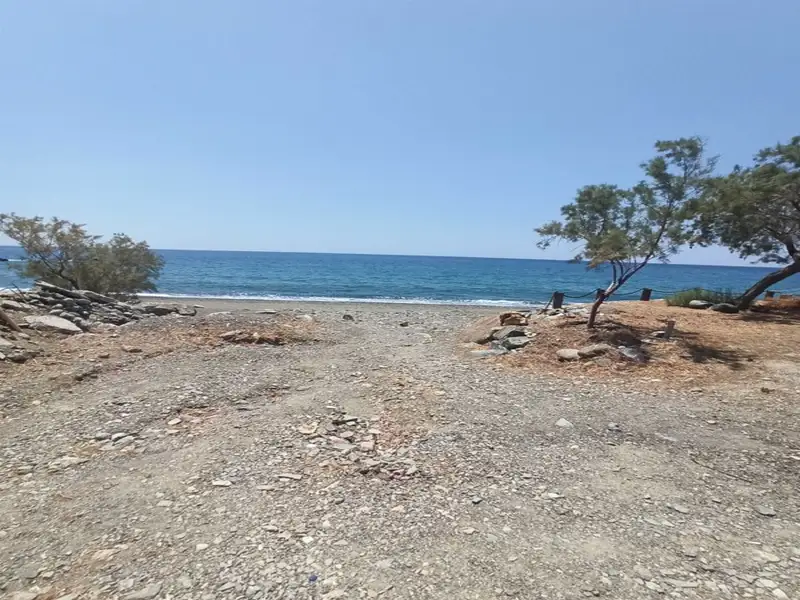
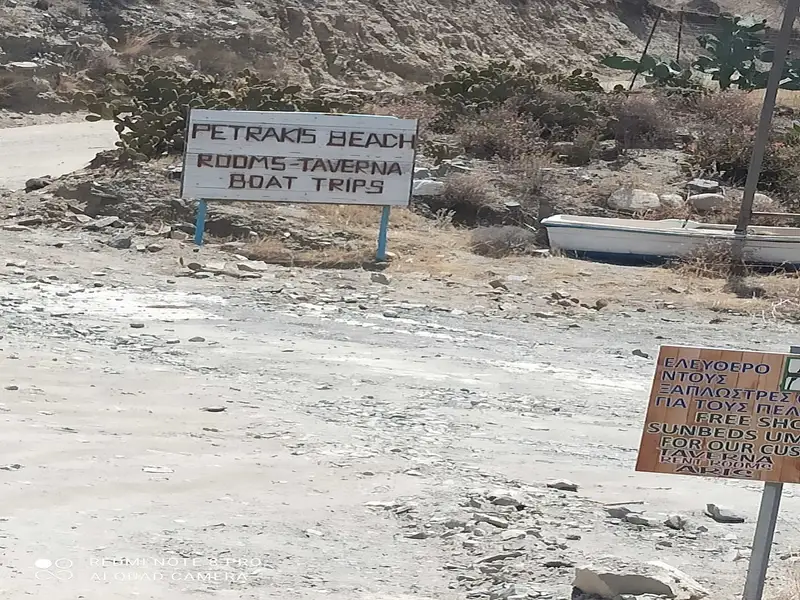
East Tsigounas, also known as Petrakis, is a serene beach situated 1km east of Lendas and 76km south of Heraklion on the foot of the rugged slopes of the Asterousia Mountains. The beach can be reached by car from Lendas via a road leading east to the local port. A section of it is referred to as Ostria, named after a small local hotel.
East Tsigounas is home to a quaint hamlet comprising 2-3 taverns with rooms and a handful of houses. The hamlet overlooks a lengthy beach adorned with beautiful round pebbles. Tamarisk trees line the beach, providing shade and an ideal spot for camping. Despite not being well-developed, the beach does offer a few umbrellas provided by the taverns.
No results available
No results available
© All rights reserved. Crete Locals