
Crete’s south set to hit near 40°C on Thursday while north stays near 30°C, forecast shows
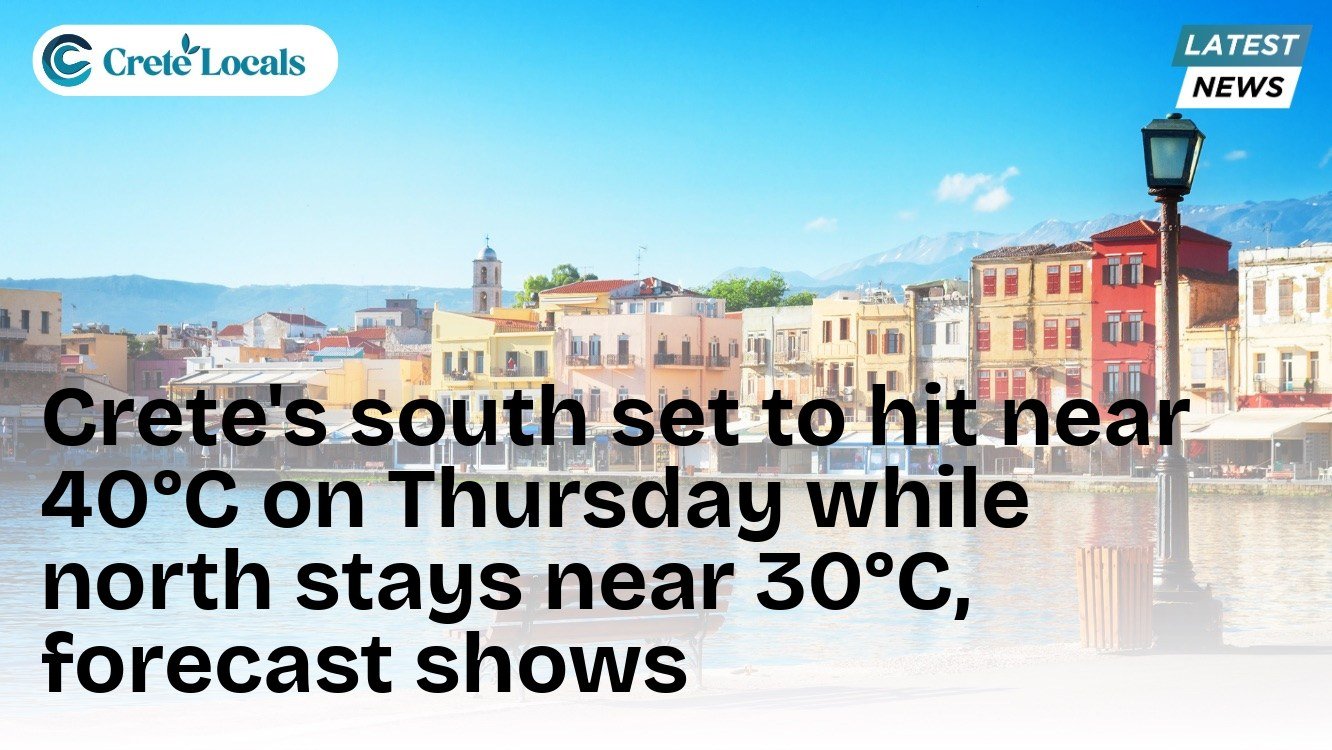
Crete is expected to see a sharp temperature divide on Thursday, September 3, with the mercury nearing 40°C in the south of the island around midday while the north stays closer to 30°C, according to the latest forecast.
The roughly 10-degree gap between the two regions is expected to be noticeable across the island. Winds are forecast to blow from the northwest at up to 4 Beaufort.
The pattern follows a broader stretch of high temperatures in Crete this week, part of a run of forecasts pointing to highs in the low-to-mid 30s in recent days.
National forecast for September 3
Nationally, the forecast calls for cloud cover on Thursday morning, mainly over northern and eastern mainland Greece and parts of the North Aegean. Localized rain and scattered storms are expected chiefly in Central and Eastern Macedonia and possibly parts of Central Sterea. Cloud and localized rain are forecast to spread gradually to the rest of the mainland during the morning, with relatively elevated dust concentrations in the atmosphere.
Temperatures are forecast to range from 19 to 31°C in Western Macedonia, 20 to 35°C in the rest of Macedonia and Thrace, 21 to 36°C in Thessaly, 19 to 33°C in Epirus, 20 to 37°C in Sterea and the Peloponnese, 21 to 35°C in the Ionian islands, 18 to 36°C in the North and East Aegean islands, 22 to 32°C in the Cyclades and Dodecanese, and 18 to 34°C in Crete, according to the national forecast.
Winds in the Aegean are expected to blow from the north at 4 to 6 Beaufort, while in the Ionian Sea winds will blow from the northwest at 3 to 5 Beaufort, strengthening to 4 to 6 Beaufort from midday.
In Attica, intermittent cloud is expected, mainly in the north of the region, with temperatures in central Athens ranging from 28 to 35°C. In the Thessaloniki area, cloud, localized rain and possibly scattered storms are forecast at intervals, with temperatures in central Thessaloniki ranging from 26 to 32°C.
The warm spell continues a summer marked by persistent heat across the island, a period during which sea temperatures around Crete have often stayed warmer in September than in June, according to NOAA data.