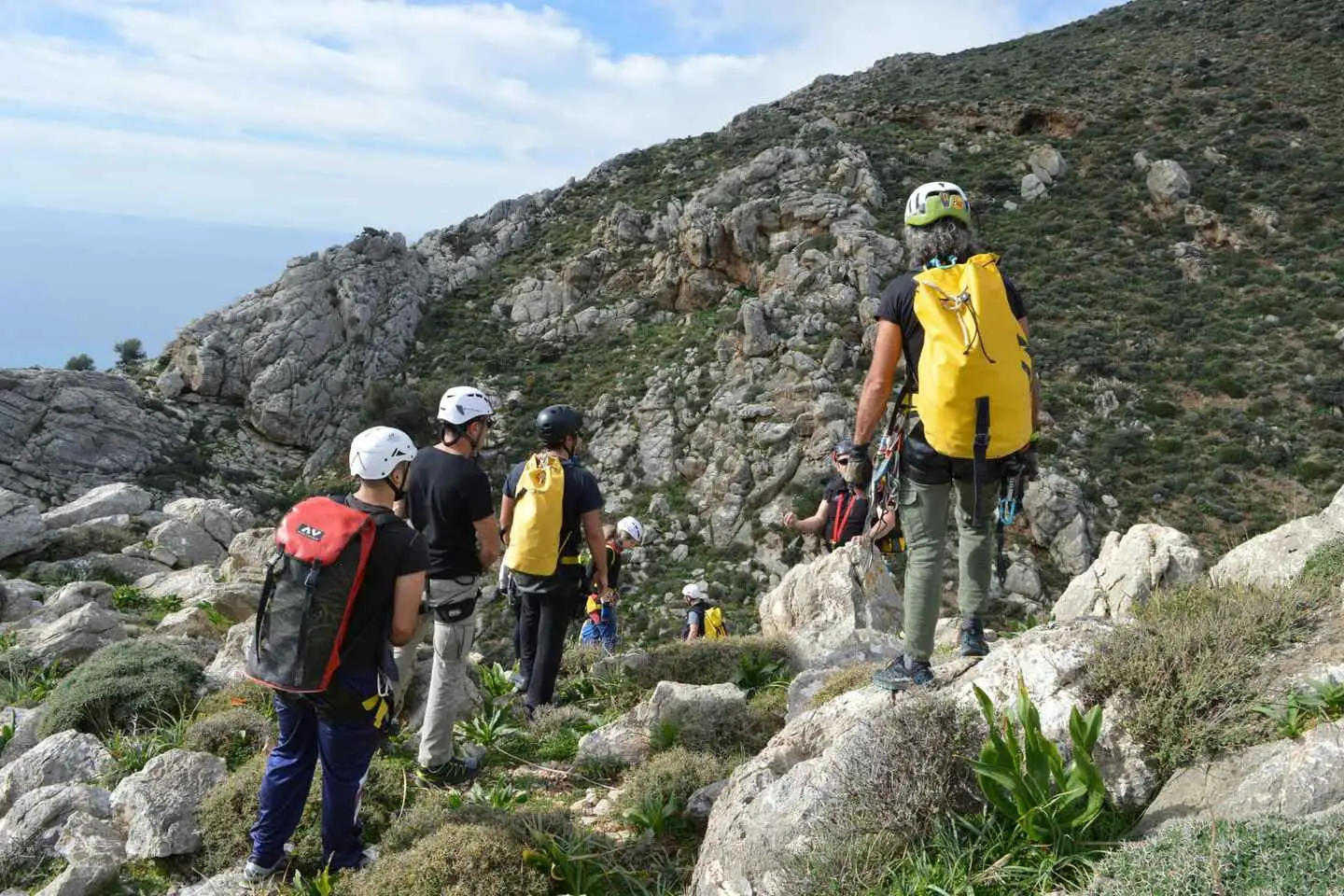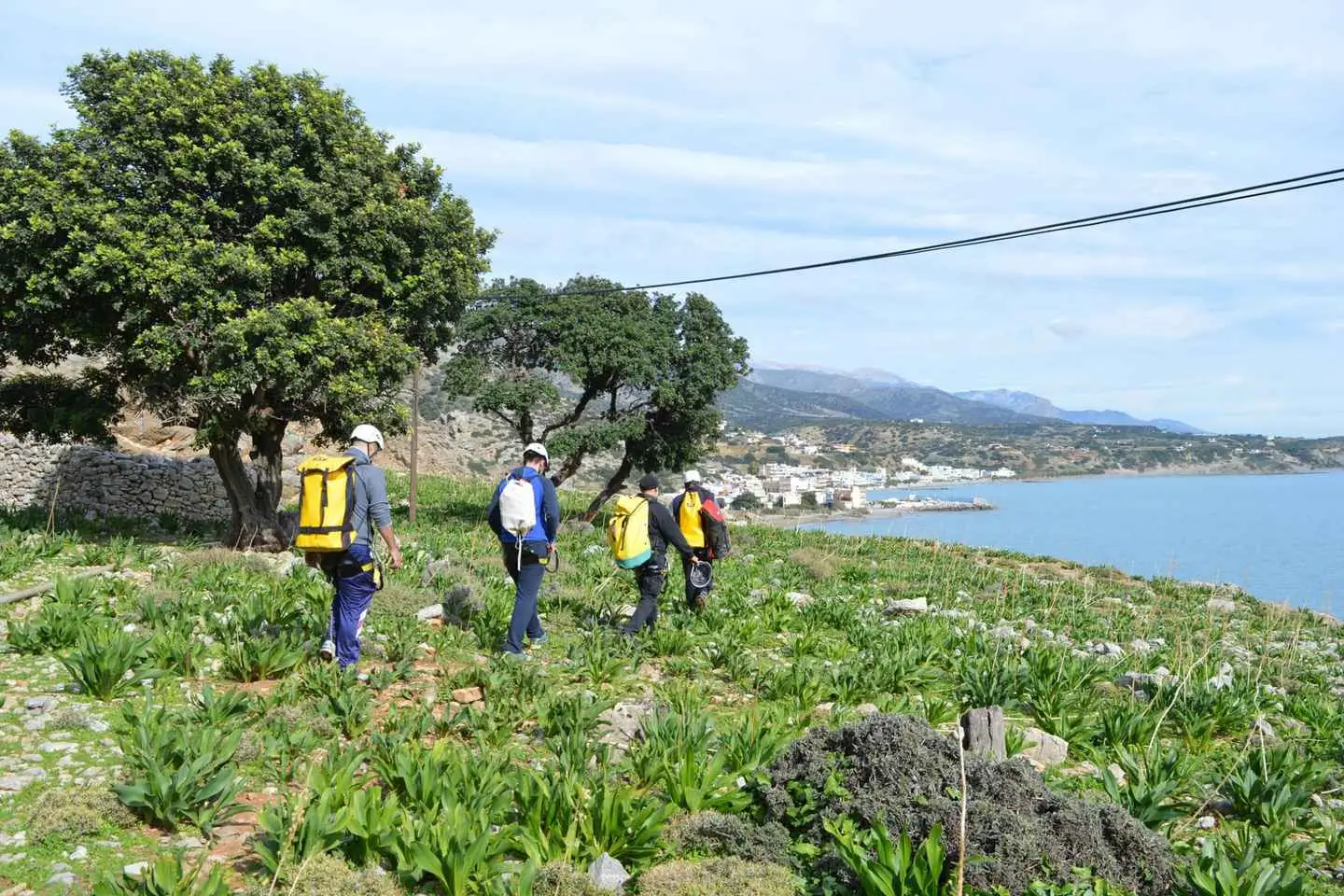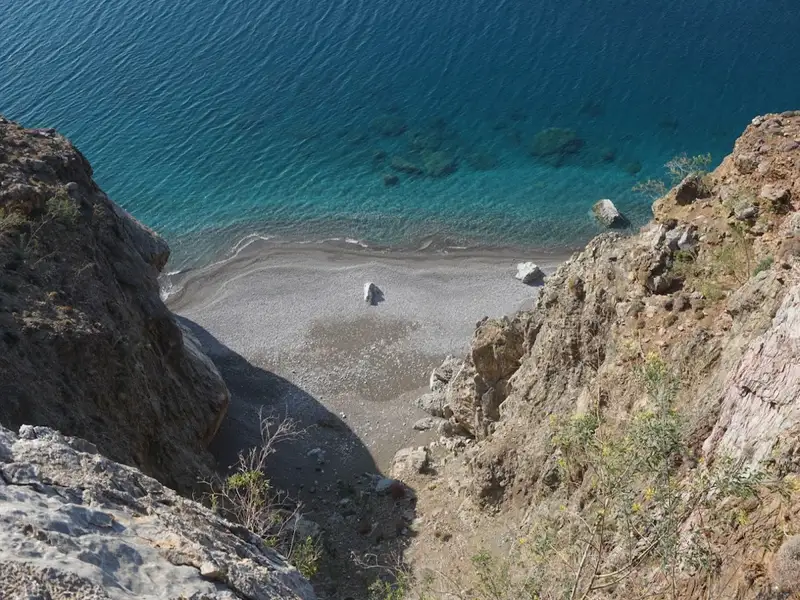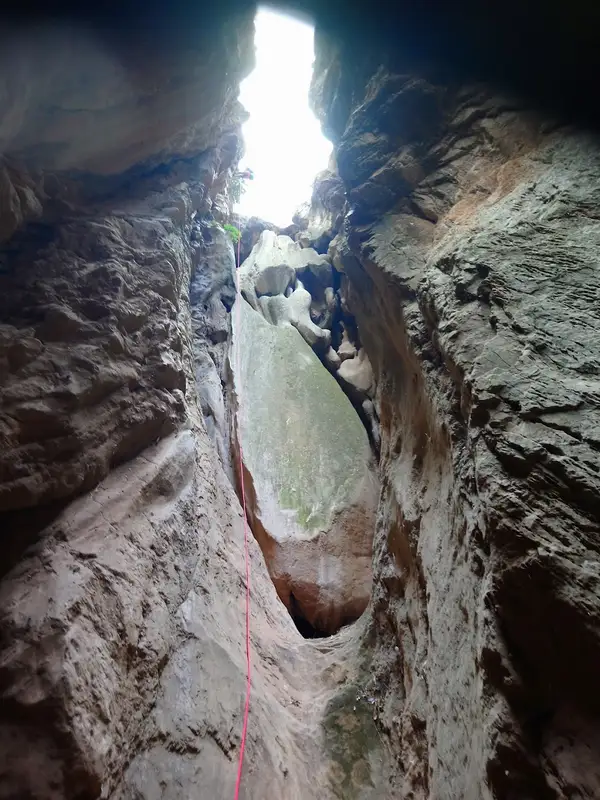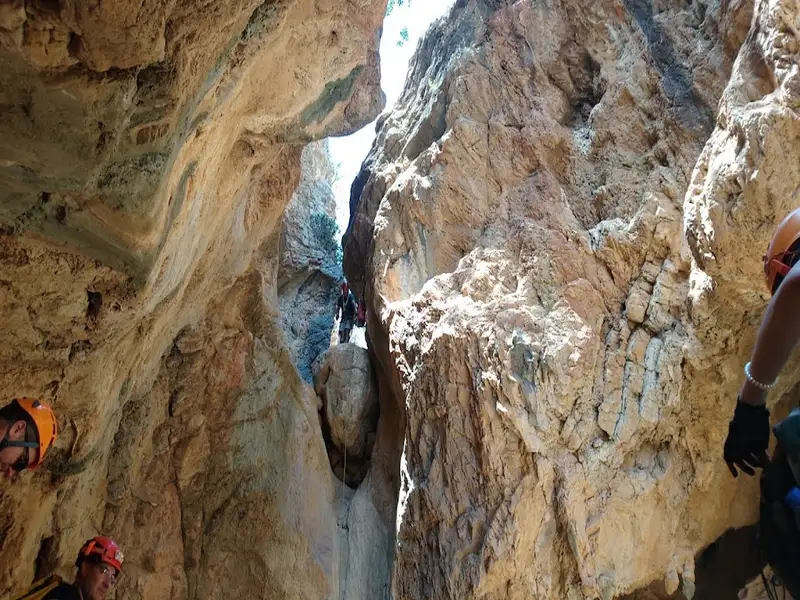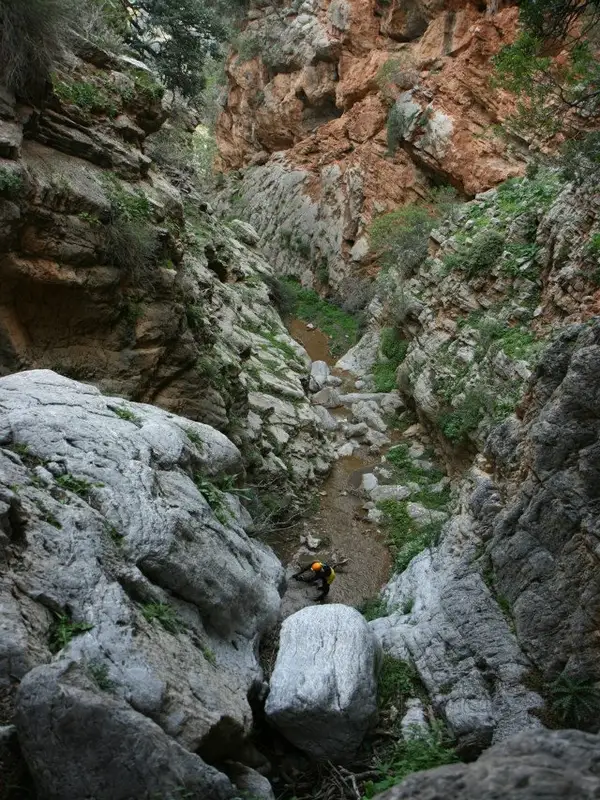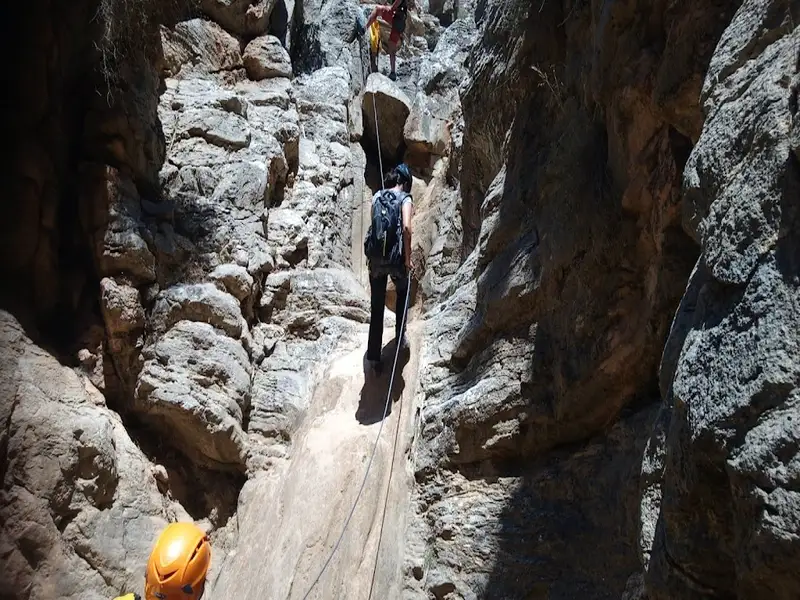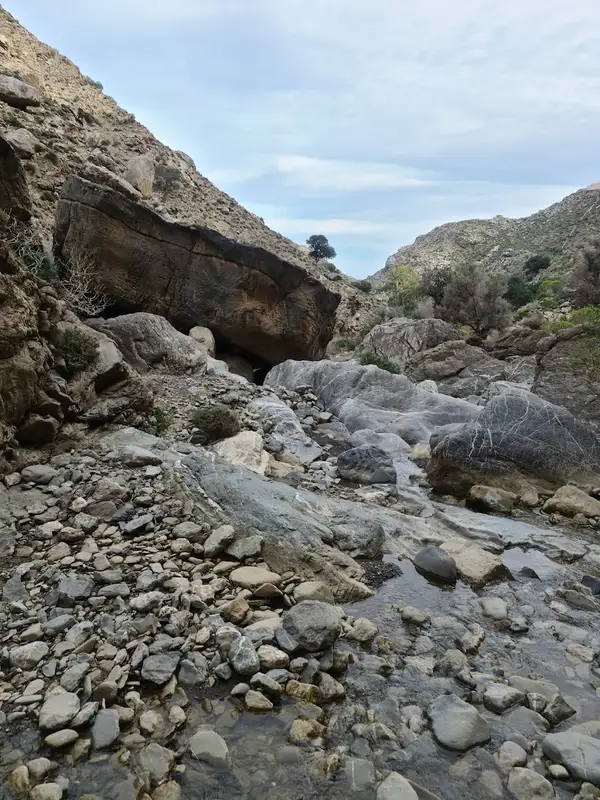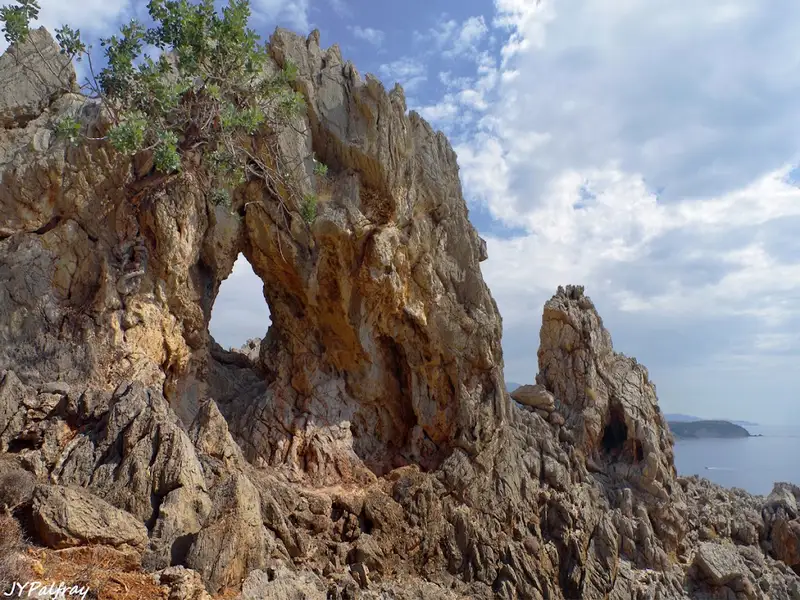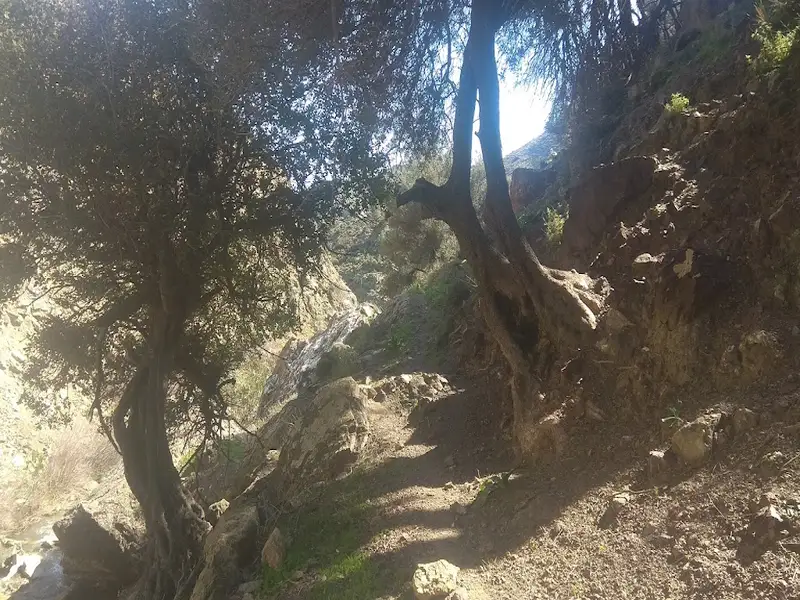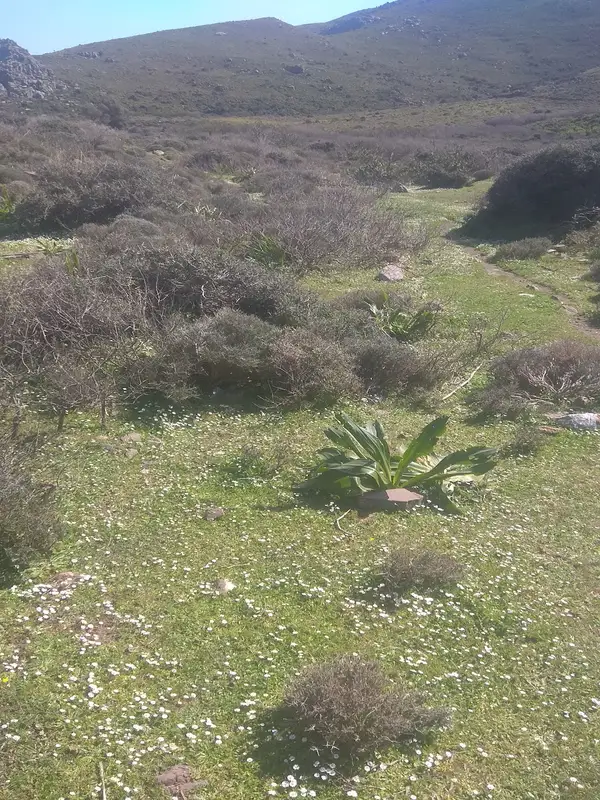
Discover Tsoutsouros gorge, one of the many gorges in the Viannos area of South Crete. Abseil down this beautiful and technical canyon, suitable for beginners and anyone up for a challenge.
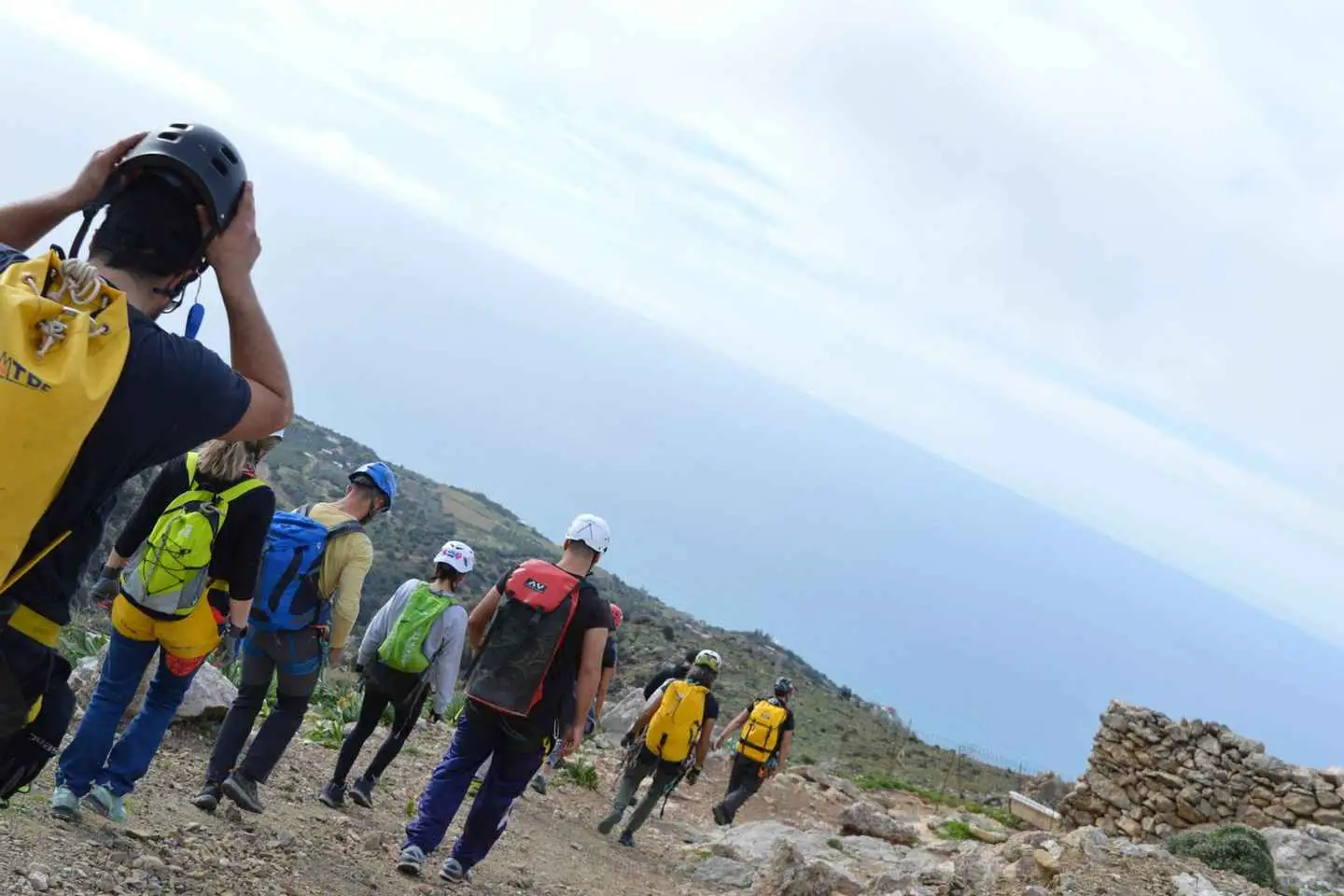
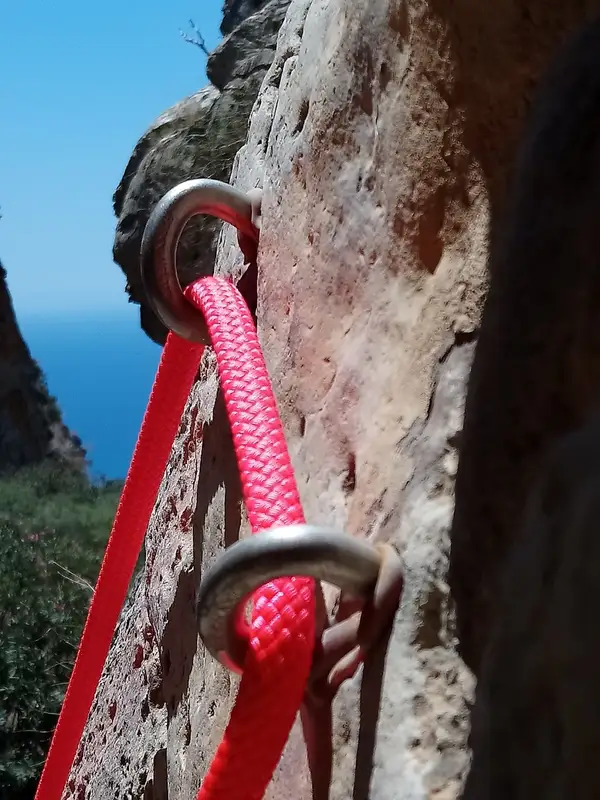
Begin your adventure with a short hike from the parking lot and reach the entrance to the canyon. From there, hear a short safety and equipment briefing before strapping up and entering the canyon. Start with short and easy abseils, ideal for getting used to the techniques and the use of the equipment. Gradually, take on longer and steeper abseils.
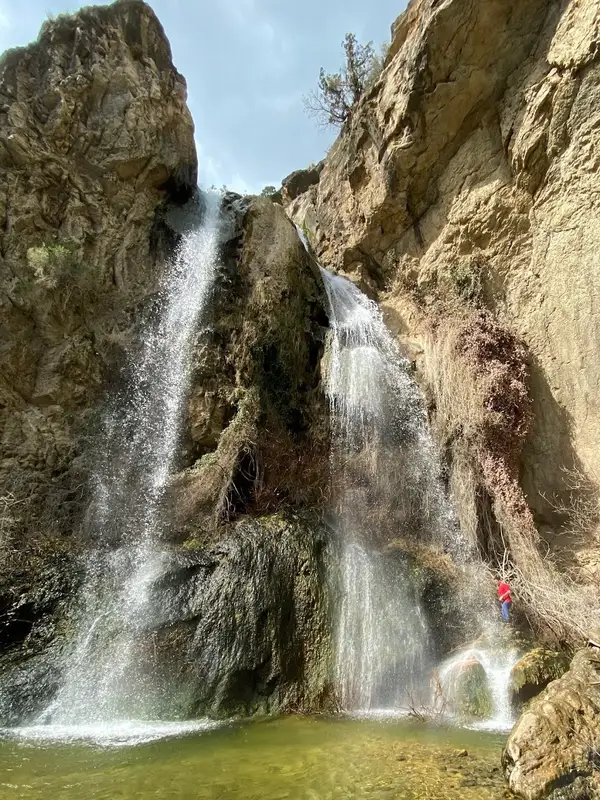
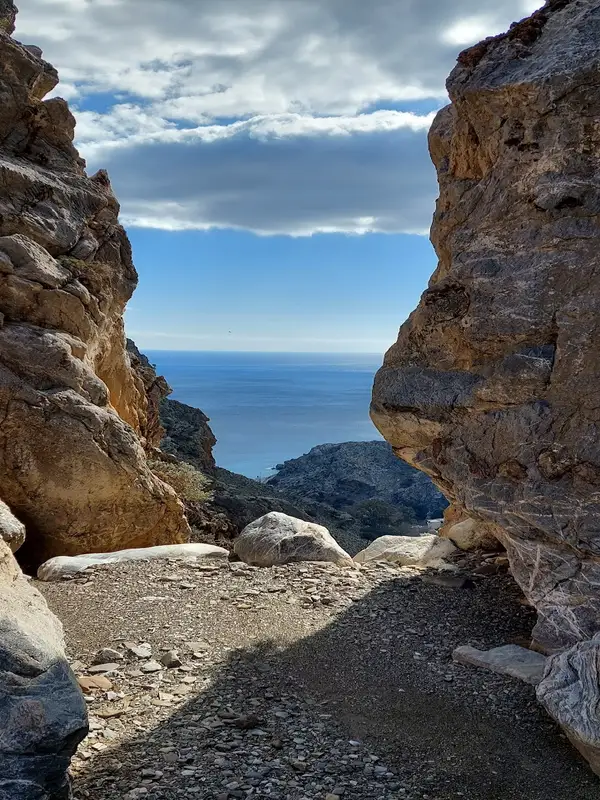
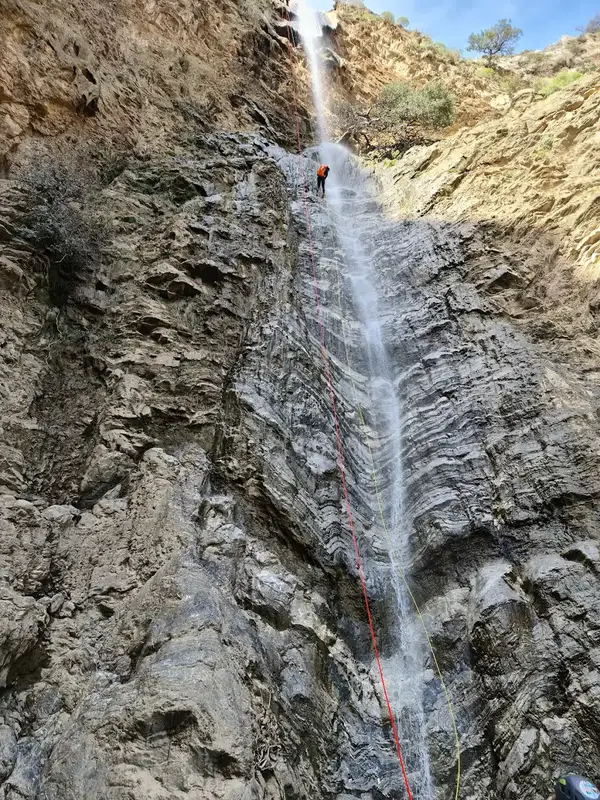
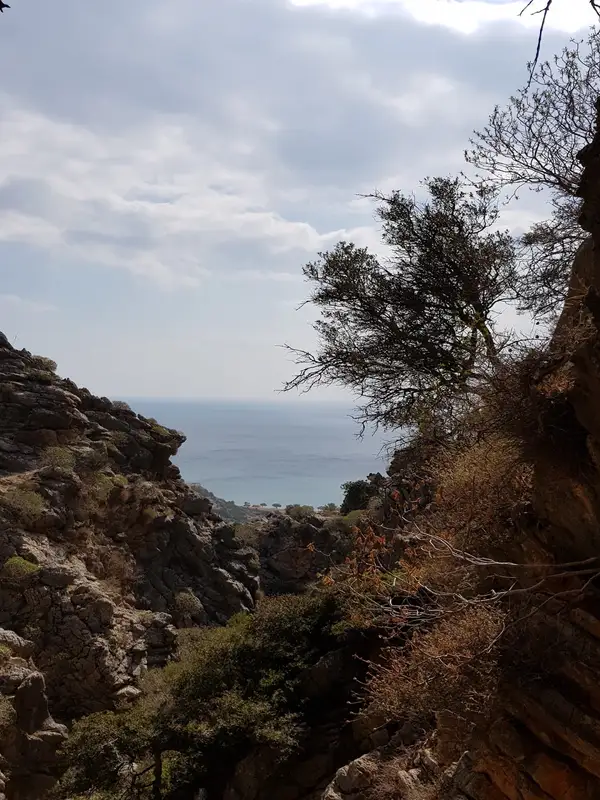
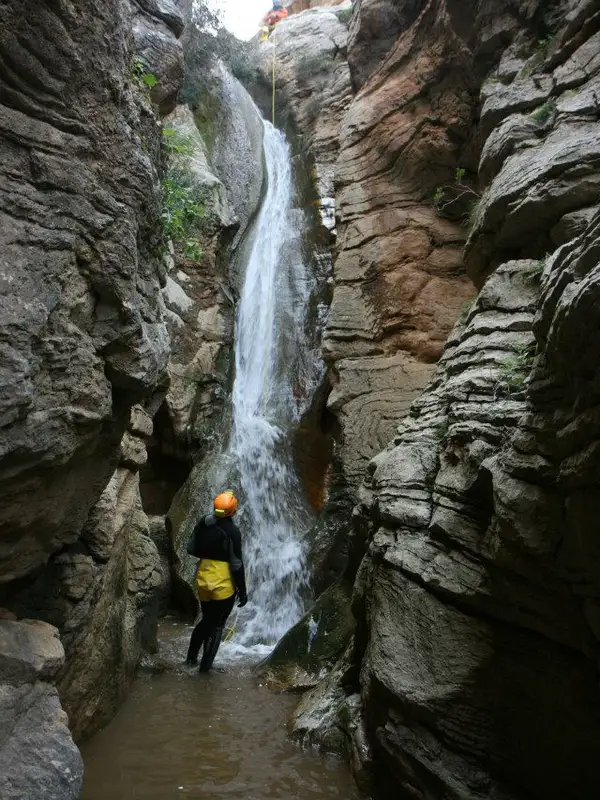
Admire the constantly changing terrain and seaview during your descent through the canyon. Depending on the weather conditions, you may come across water in the gorge until the beginning of summer. If so, have the incredible opportunity of abseiling through waterfalls.
The duration of the descent can vary from 3 to 4 hours depending on the experience of the group. After your abseil, head to the beautiful Tsoutsouros village.
Through this route you will have the opportunity to take a wine tour at a local winery with tasting and information on wine production from ancient times to the present day. Also enjoy the route which combines impressive mountains, a panoramic view of southern Crete, the impressive gorge with the incomparably beautiful waterfall Richtra and the charming beaches of southern Crete.
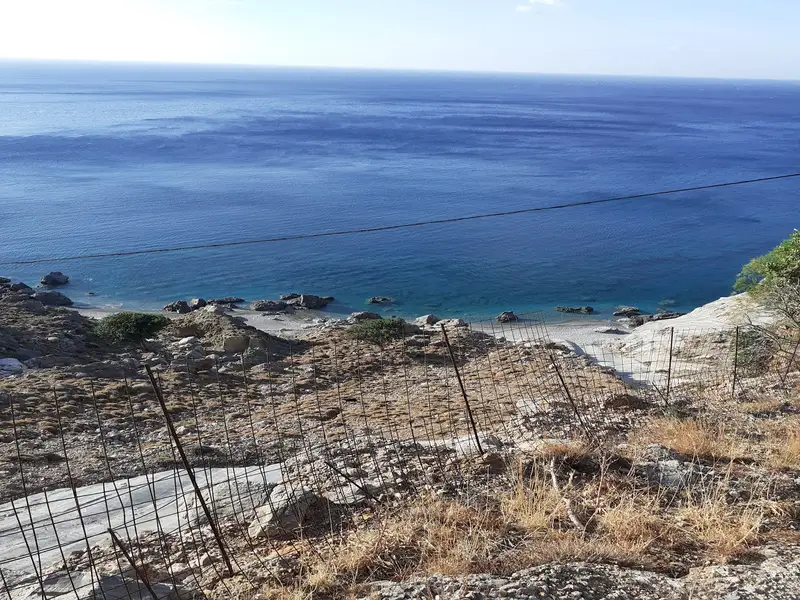
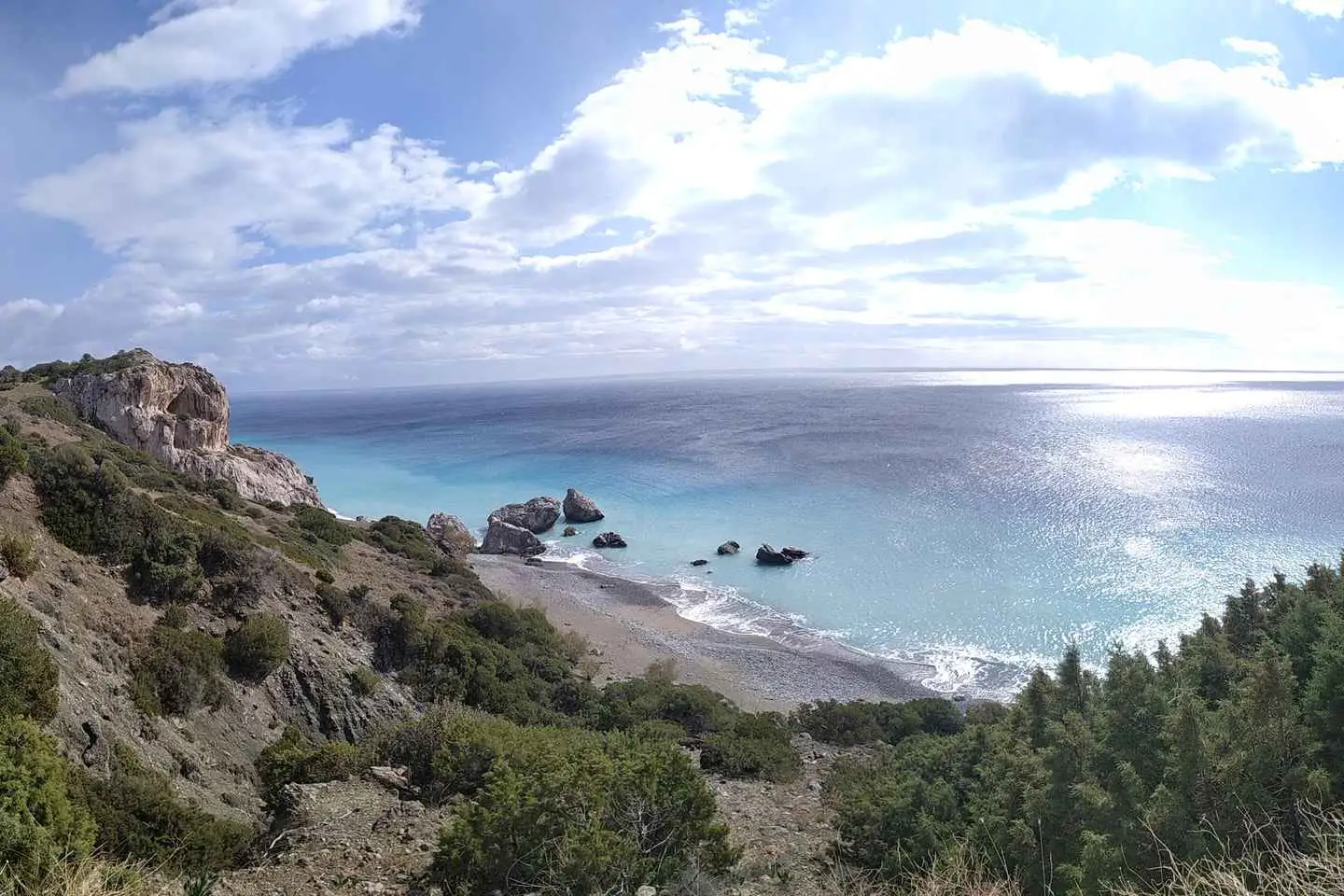
Starting from your hotel we head to the winery where the wine experts will introduce you to this special world of wine. You will have the opportunity to taste but also to learn all the secrets of production, of the varieties we have in Crete, as well as winemaking techniques of yesterday and today. Then we will cross a route through small traditional villages surrounded by verdant hills and olive groves. Just before our descent into the gorge we will make a photo stop at a spot with an incredibly beautiful panoramic view of the South Cretan sea that will amaze you!
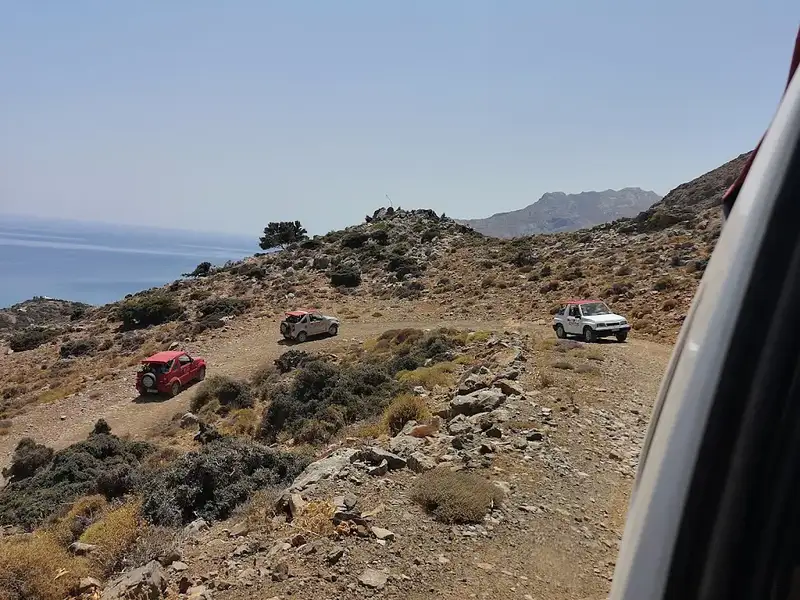
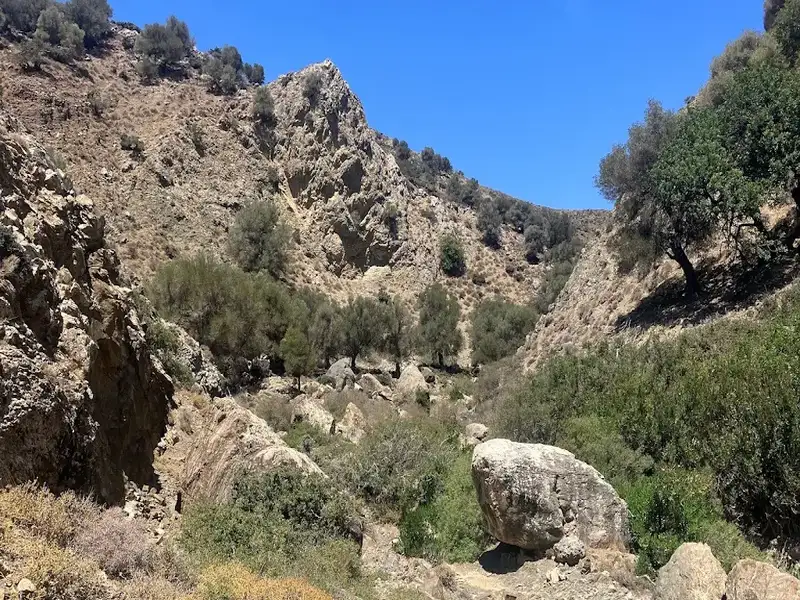
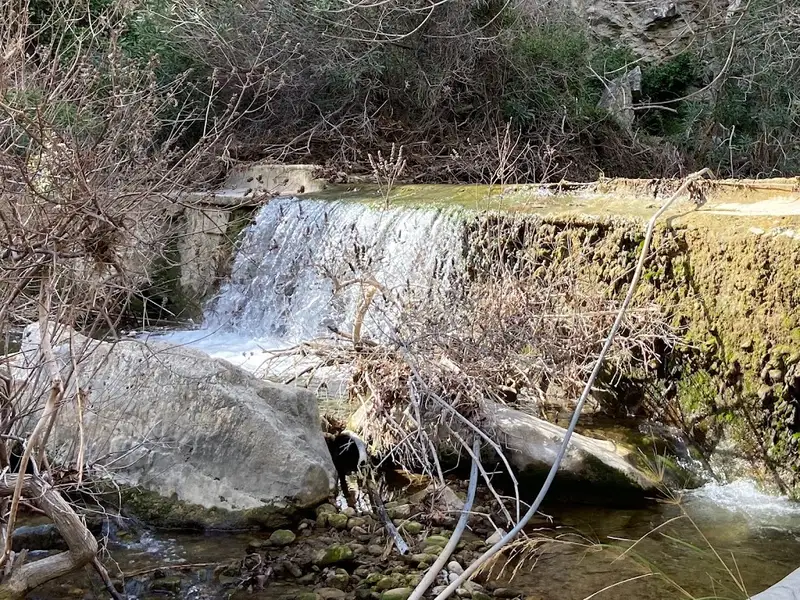
Then we will head to the local gorge by a highly impressive off-road descent with continuous spectacular views amidst nature. The Portela Gorge which has an extremely unspoiled landscape that will be deeply etched in your memory as its river passes through cliffs and sheer cliffs, rich in both flora and fauna ending in the spectacular Richtra waterfall with flowing water until the spring that ends in Keratokampos.
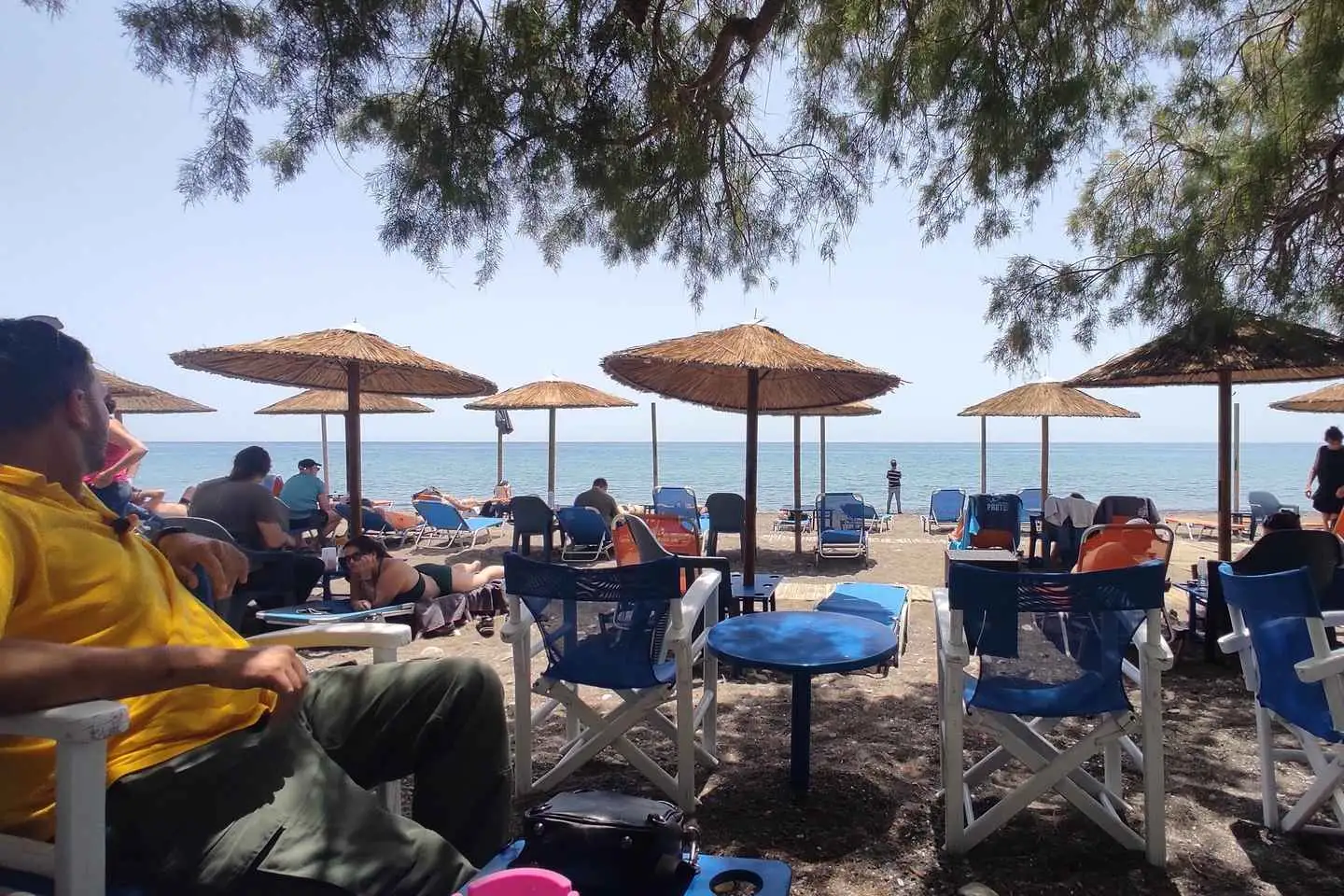
Having enjoyed our walking exploration among this magical landscape we will be transferred to the beach of Tsoutsouros, where you will have enough time to enjoy both the crystal clear waters of southern Crete and a wonderful bbq lunch by the sea. This quiet and welcoming place will enchant you and the photos you will take will be impressive.
Full of unique memories and images we take the way back having visited unique places and having experienced life experiences!
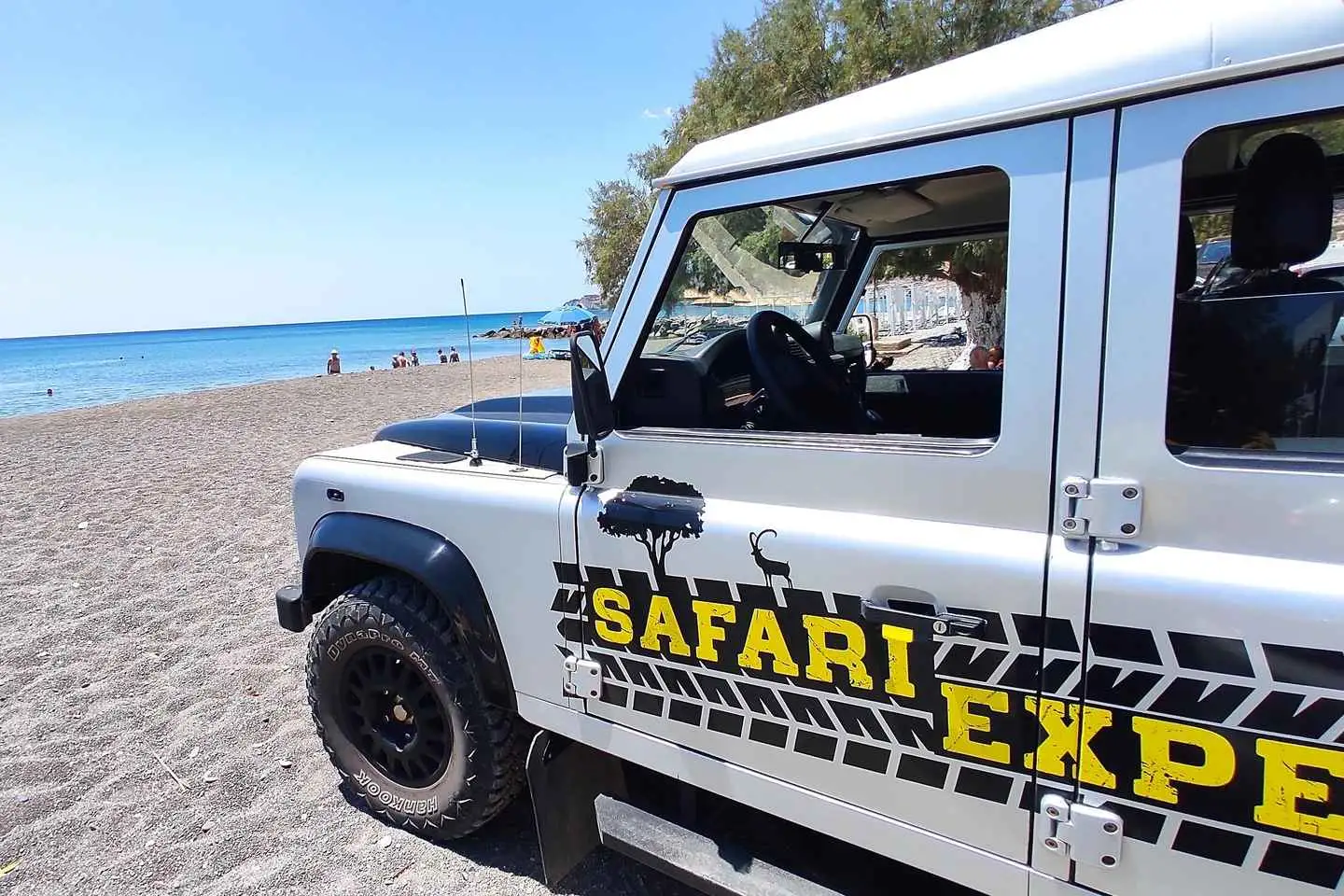
Discover the magic of South Crete on a Self-Drive Private Jeep Safari in Convoy with our Brand New & Fully air conditioned 4X4 Dacia Duster. Shared or Private!
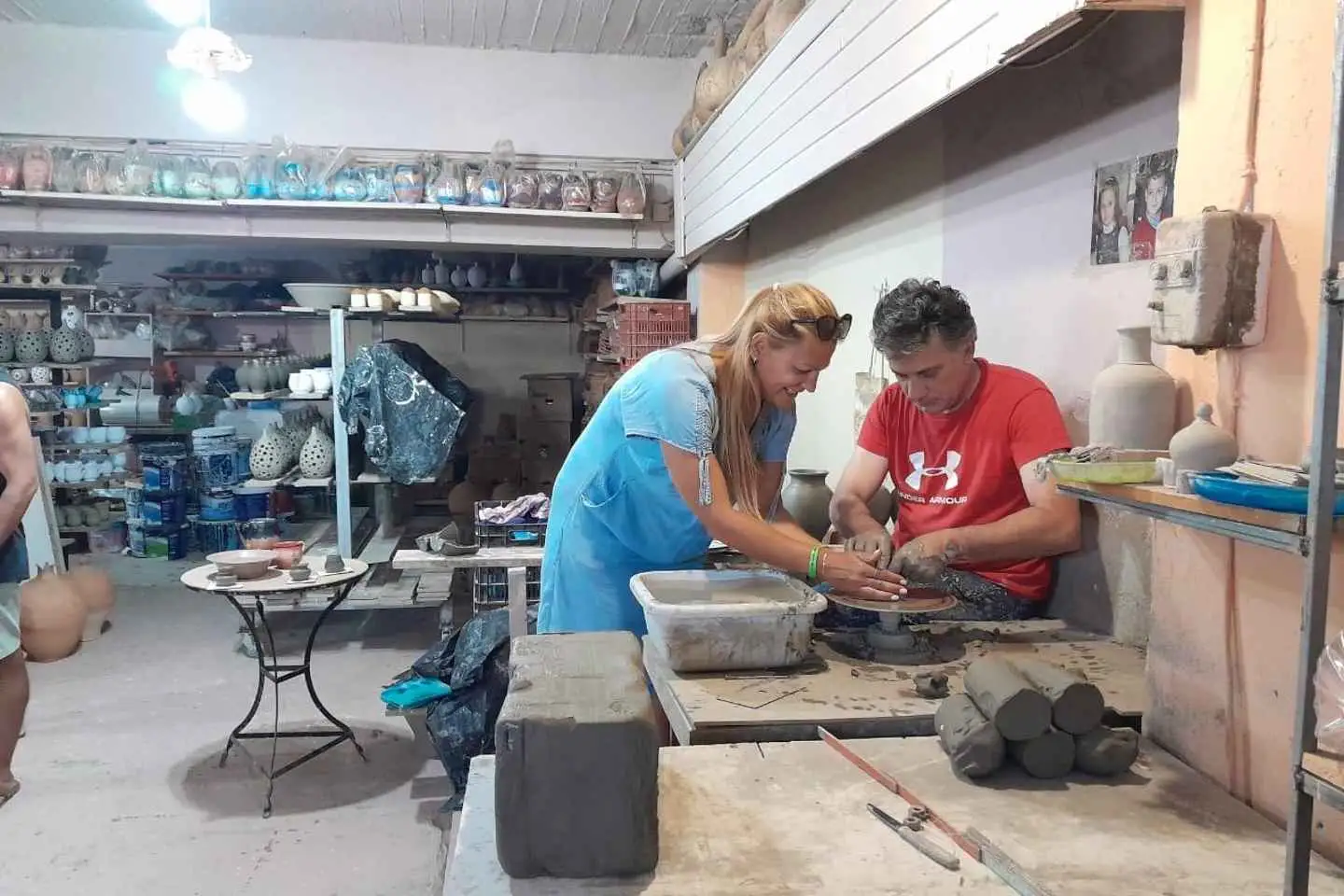
Feel the Off-road, Swim in the South, visit the local pottery workshop, create your ceramics and feel the authentic vibes of Crete! We start by exploring off the beaten paths through olive groves, traditional villages, scenic landscapes, and more! Then let’s uncover the art of pottery from ancient traditions to modern processes in the local workshop. We continue our adventure with an impressive off-road descent through the Gorge of Portela that is offering a breathtaking photo stop. Enjoy seaside driving along the Libyan Sea, Swim in the crystal-clear waters of Tsoutsouros beach and have your lunch by the sea. We end our day with panoramic views, letting the essence of Southern Crete captivate us! Take the wheel and let’s explore the South!
This tour gives you the opportunity to explore the real Crete in a small group.
We visit an olive oil factory to learn how olive oil is made now with modern machines and how used to be made in the olden days and of course we taste different kind of olive oil and honey.
Next stop is at the old village of Krasi where we go for a walk around the village to see the oldest plane tree in Crete which is estimated around 2000 years old then we are off to Lasithii plateau where we learn about the old wind mills that were used in the past to pump the water up for irrigation and the old wind mills that were used for grinding to make flour.
Now it’s time to go and {meet Zeus } at his cave , well actually we can’t promise that because last time we visited his birthplace he wasn’t there ( had a day off ) …….. so no promises.
Then we drive around Lasithii Plateau through old villages where time seems to have stopped then we visit a family restaurant to enjoy some Cretan traditional food ….and some local house wine….( or local beer…) well let’s be local just for a day or two….. maybe you like it ( maybe you don’t but give it a go …..)
After enjoying our lunch and wine ( or local beer) it’s time to hit the road to go back to your hotel where we picked you .
No results available
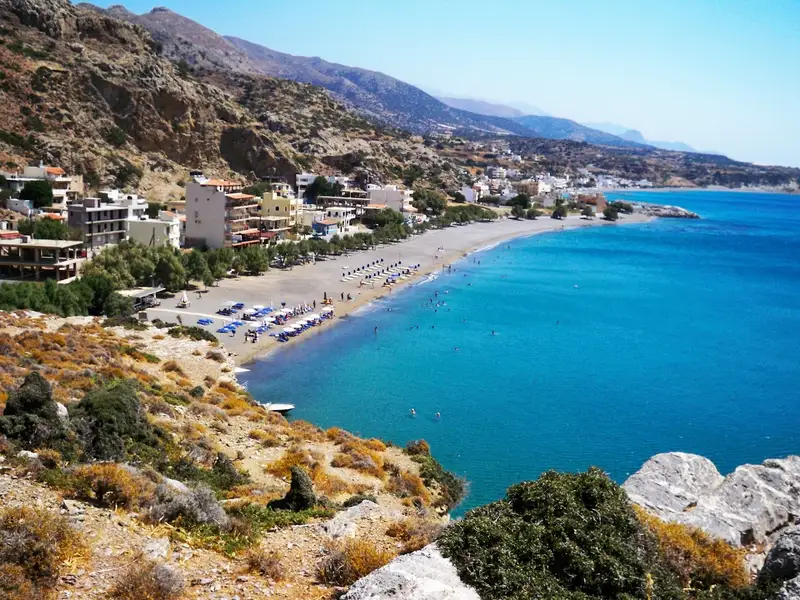
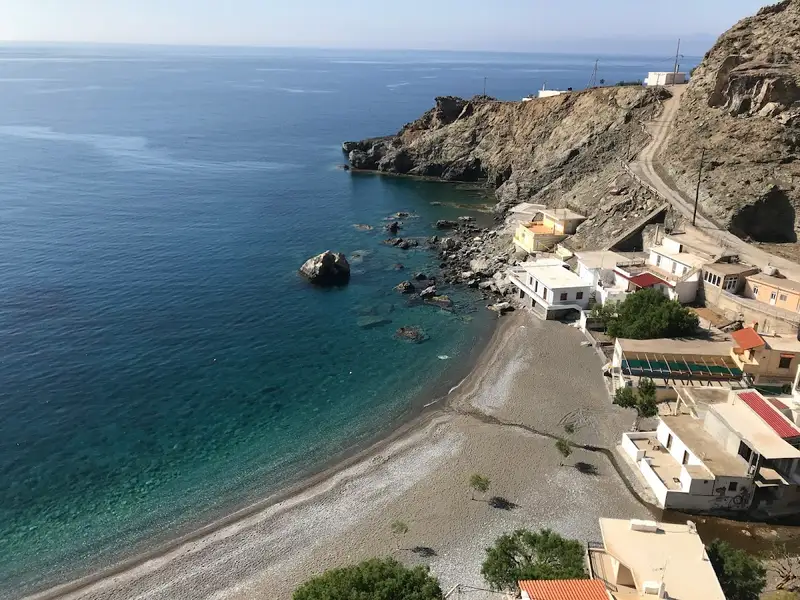
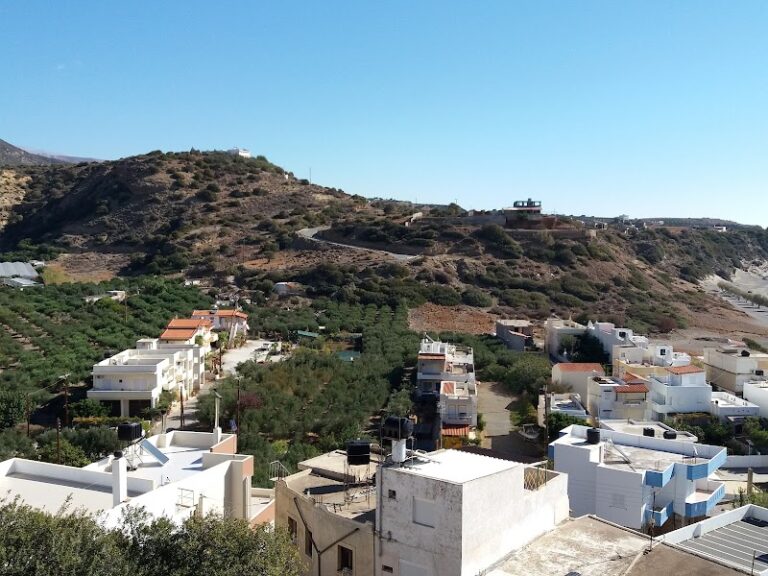
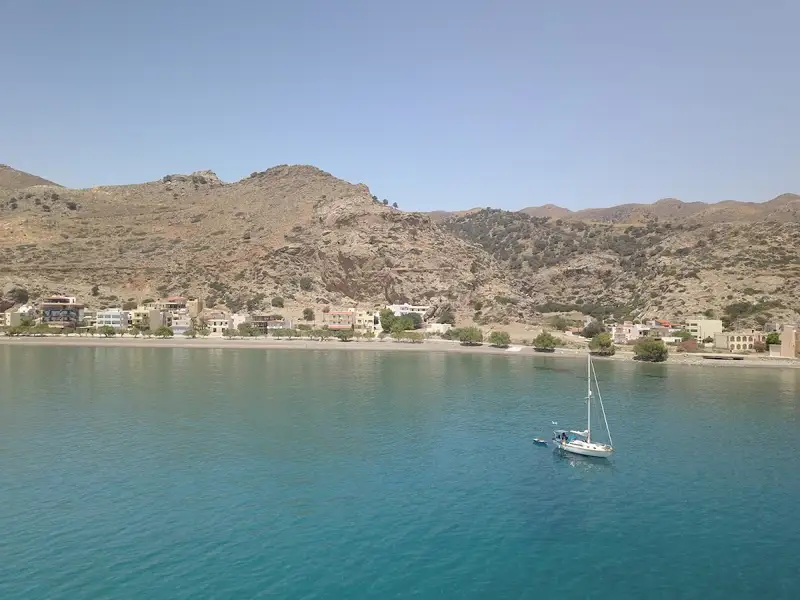
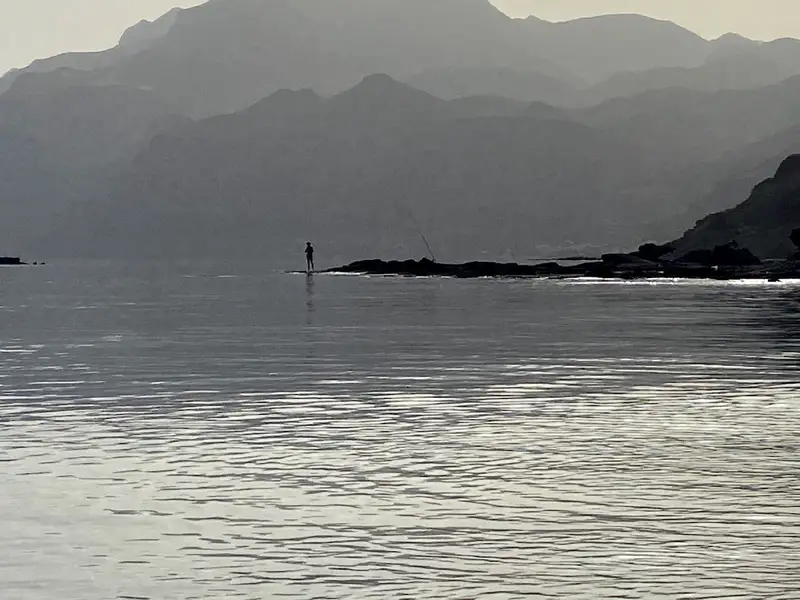
Tsoutsouras, derived from the Venetian word Zuzzuro, is situated 63km south of Heraklion, at the entrance of the formidable Mindris Gorge. It’s built on the location of the ancient city Inatos, which once served as the port for Priansos (located near Kasteliana village). More specifically, Tsoutsouras is the union of the two settlements, Pera Tsoutsouros and Tsoutsouros, that presently serve as the harbour for Arkalochori. Despite being well-organized and developed for tourism, it remains a peaceful holiday destination.
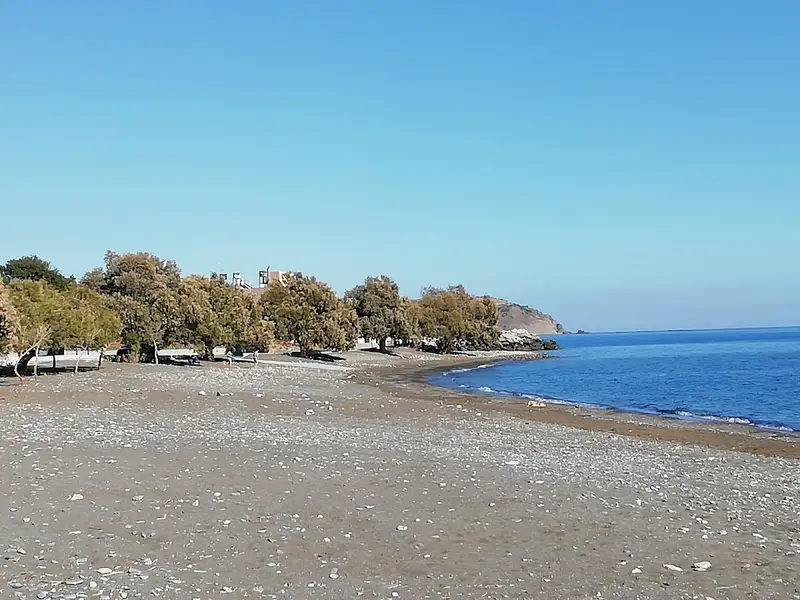
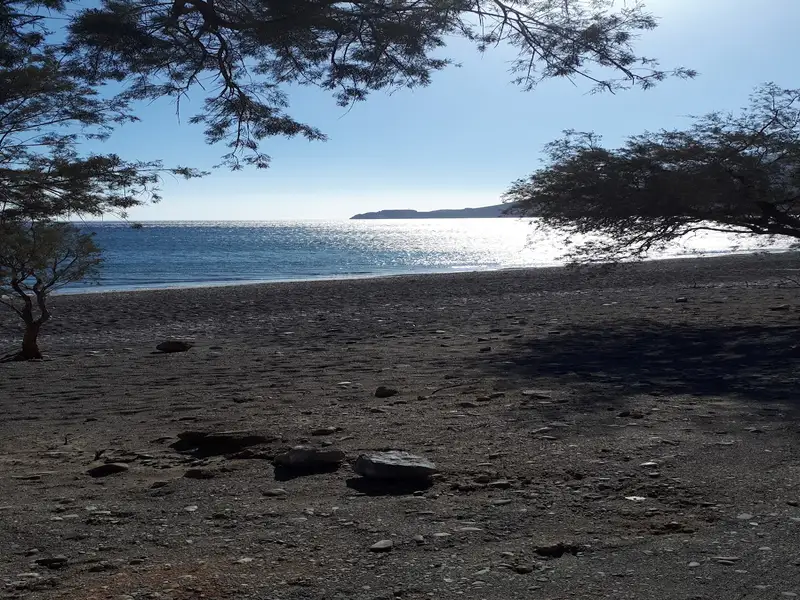
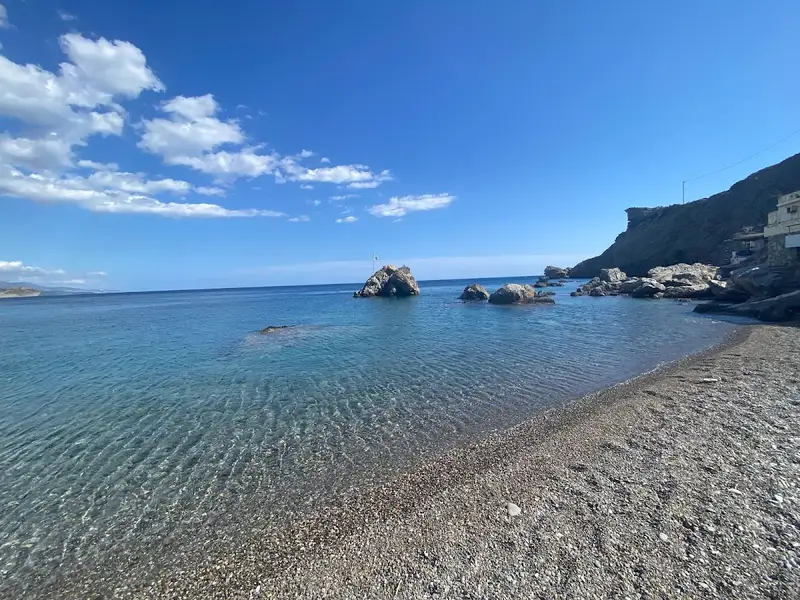
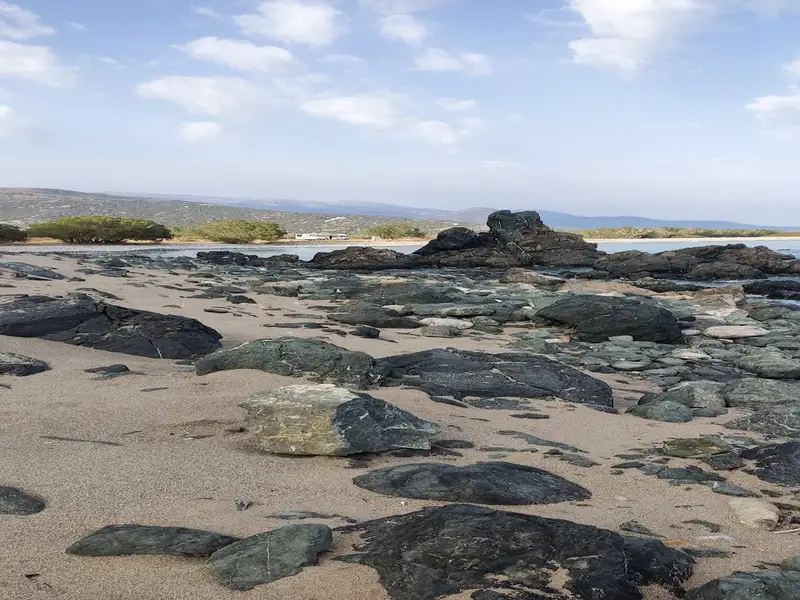
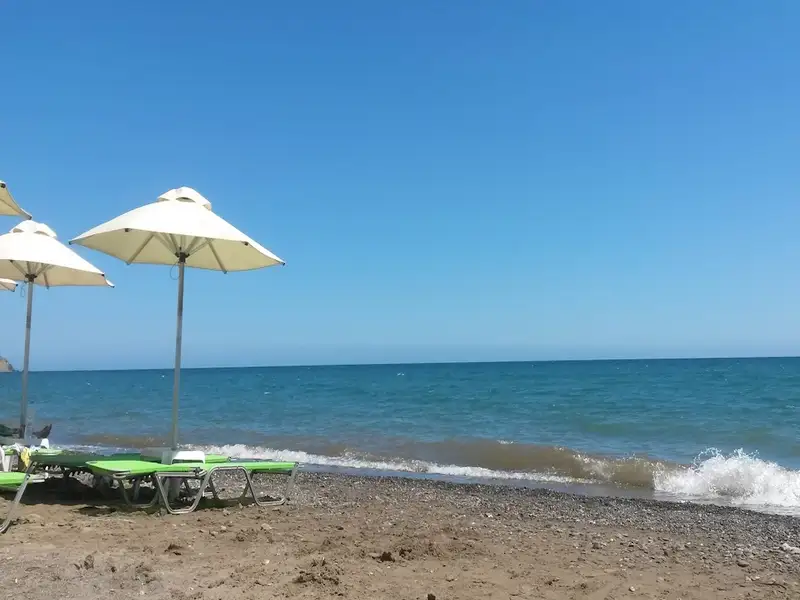
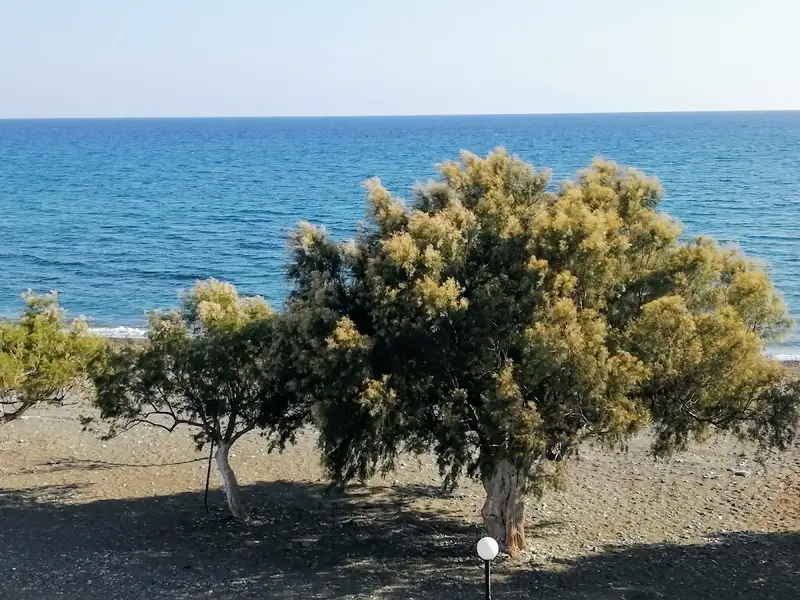
The village is home to the small harbour of Tsoutsouras, with two lengthy sheltered bays to its east and west, boasting a total length of 2km. These bays are characterized by beautiful coarse sand and crystal-clear waters. The beach is modestly organized with umbrellas and surrounded by several tamarisk trees, making it an ideal spot for family holidays as all necessary facilities for accommodation, entertainment, and food are nearby. For a more secluded experience, one can walk to the eastern end of the beach, where the sandhills and the easternmost part called Limniara, housing the sea cave Pourgonero, are located. Tsoutsouras can also serve as a base for exploring other nearby beaches.
Swimming in Tsoutsouras is traditionally viewed as therapeutic by many Cretans due to its high salt and iodine concentration, which aids in healing musculoskeletal and orthopedic issues.
Tsoutsouras is an area teeming with energy, myths, and folk narratives including tales about dragons, wild beasts, illegal excavations, and modern fantasy stories. In ancient Inatos, Eileithyia, the goddess of childbirth, was worshipped. Visitors can explore the cave where this goddess was worshipped for centuries, and where numerous offerings have been found, showcasing the sanctuary’s global influence. In recent years, this cave has garnered attention, making Tsoutsouras well-known throughout Greece. There have been reports of the American army confiscating objects of Minoan technological advancements from the cave and surrounding area for their own knowledge.
To the west of Tsoutsouras, two parallel mountains known as Zeus and Hera can be seen, which according to local tales, is where the king Asterion raised the sons of Zeus, Minos, Rhadamanthus, and Sarpedon, who later ruled Knossos, Phaistos, and Malia respectively. West of the harbour, in the Kerkelos area, remnants of ancient Inatos have been discovered. South of Kerkelos, the coast boasts unique karstic cave formations, including Drakospilia, where locals claim to have found a dragon skeleton. Despite the incredulity of this tale, numerous eyewitness accounts have left researchers puzzled. A Minoan settlement was also excavated in the Aliori area, located at the eastern end of the beach.
Maridaki, a coastal hamlet on the east side of Mount Asterousia, is located 65km south of Heraklion and on the west of Tsoutsouras Bay. A 2.5 km footpath is the only direct link between Maridaki and Tsoutsouras. However, a rough 15km dirt road starting near the village of Ahedrias (close to Mesohorio) gives access to the settlement. This road takes you through the towering cliffs and rugged rocks of Asterousia and leads to the monastery of Saint Nikitas. It’s advisable not to park your car under Maridaki’s trees, as the local goats may cause damage.
Maridaki, also known as Saint Panteleimon after its local church, is nestled in the arid, untamed landscape of southern Crete, at the mouth of the impressive Achendrias Gorge. A spring and a small stream provide drinking water to the beach all year around, creating an oasis with evergreen plane trees lining its banks. Near the springs, a large square with a 200-year-old plane tree and a small tavern can be found. Locals believe that fairies reside just beyond this spot. A 15-minute journey from the settlement reveals the striking Lichnistis waterfalls, visible until early spring.
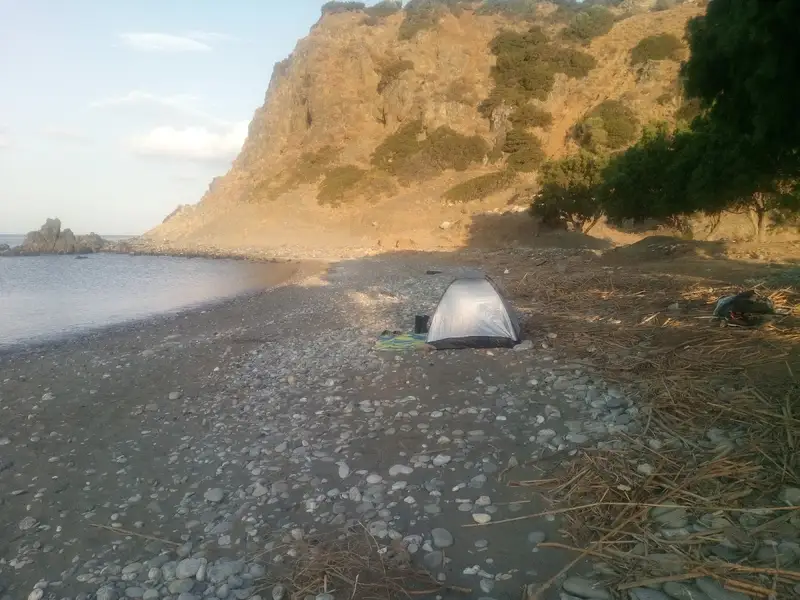
In this modest village, you’ll mostly encounter locals enjoying the sun and sea, residing in their summer homes which are casually built. The village’s coastline boasts a lovely pebble beach surrounded by towering rocks. Along the shore, sandy coves provide shade, but beware of goats traversing cliff edges as they often trigger landslides. The sea is deep and cool due to the stream. Maridaki has showers, a small coffee shop, a tavern, and a few rooms for rent. Two additional beaches are situated to the north of the settlement, at the base of Cape Kerkelos in an area known as Nisakia (or islets), named after two small sea rocks.
While in Maridaki, it’s worth visiting the village springs to enjoy the cool water. Nearby, the church of Saint Panteleimon, formerly dedicated to the Virgin Mary and St. Mamas, patron of shepherds, stands. If you have a car, consider visiting Saint Nikitas (2km from Maridaki), the beautiful palm grove of Saint Anthony (3km), and the chapel of the Holy Cross (1km outside the village).
Maridaki – Tsoutsouras Trail: Maridaki is one of the few places on Crete where foot travel is quicker than by car. From Tsoutsouras, a 20-minute walk along a well-maintained footpath takes you through a breathtaking landscape of wild carob trees, caves, and dry grasslands, offering stunning sea views. One of the caves, Drakospilia (Dragon’s Cave), is shrouded in mystery and tales of metaphysical phenomena. It’s entrance is small and may go unnoticed. The cave expands after the entrance and is home to bats. A narrow passage leads to a point from where, locals claim, no one has returned, possibly due to volcanic fumes. Legends of treasure, the tomb of a great king, monsters, and dragons fill the air, adding to the cave’s mystery. Some locals believe it houses the tomb of Alexander the Great, while others believe it’s the final resting place of King Sarpedon of Lycia, whose body is said to be preserved in honey. The mystery deepens with tales of U.S. missions and helicopter patrols when someone enters the cave. As per local lore, a submerged church dome from the lost city of Queen Achendra becomes visible at sunset from the last point where Tsoutsouras can be seen from the sea.
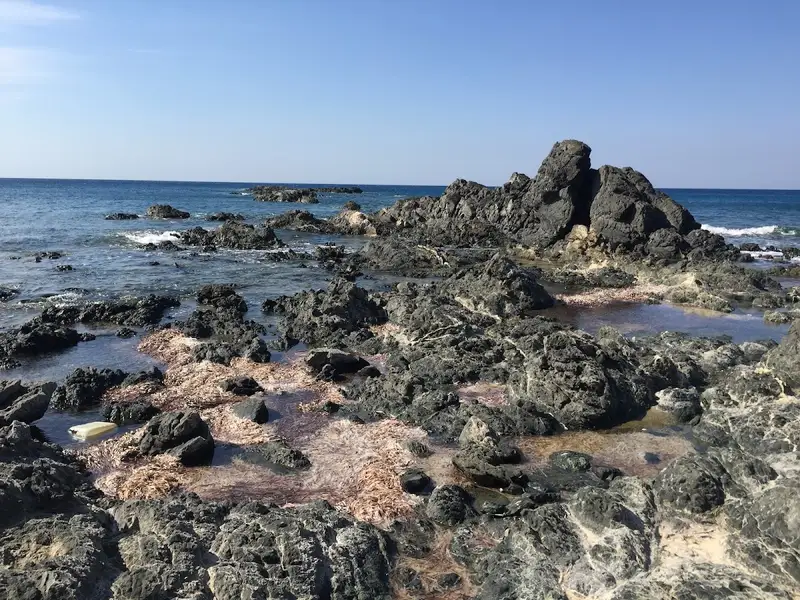
The Pourgonero beach, situated in the Krassas region, is a mere 500m eastward from the Tsoutsouras port, extending beyond the eastern boundary of the settlement. It represents the eastern section of Tsoutsouras bay, and lies at the foot of the Sarakinos hill. Legend has it that this location holds the eternal burial place of King Minos, the fabled king of Knossos. The beachfront of Pourgonero comprises two coves with large sand dunes, and the beaches facing these dunes are a mix of rocks and sand. These secluded, peaceful spots are ideal for those seeking solitude.
The Pourgonero region holds significant importance as a nesting ground for the endangered loggerhead sea turtles, with the nesting season running from May till fall. A visit to the beach in the late summer offers a view of the stunning white sand lilies, also referred to as the lilies of Knossos in Crete. Accessing the beach is fairly straightforward, given its proximity to Tsoutsouras. One simply needs to take the road towards Dermatos, and the dunes will be visible on the right. There are pedestrian paths leading down to the beach.
The Krassas region has the distinction of being the site of the first Aloe vera plantation in Greece.
Dermatos, situated 64km southeast of Heraklion and 4km to the east of Tsoutsouras, is nestled in a valley on the western banks of Crete’s longest river, the Anapodaris. Evidence of a past Minoan settlement has been discovered in the area.
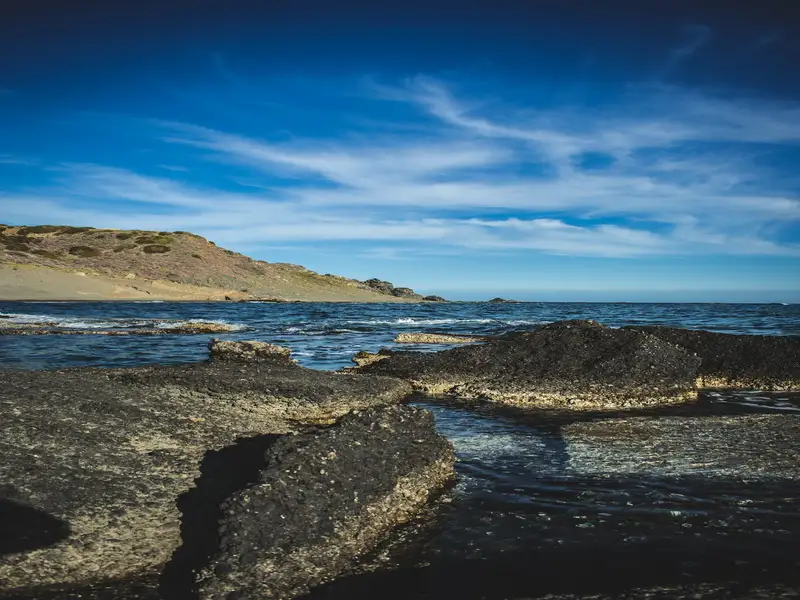
The beach at Dermatos, with its mix of pebbles and sand, offers an idyllic and tranquil spot for relaxation and solitude. Surrounding the beach are olive groves and tamarisk trees, adding to its remote charm. The shallow sea water, with its enchanting blue hue, enhances the serene atmosphere. To reach this secluded beach, take the paved road from Tsoutsouras heading west to Keratokambos. The road conveniently runs alongside the beach.
No results available
No results available
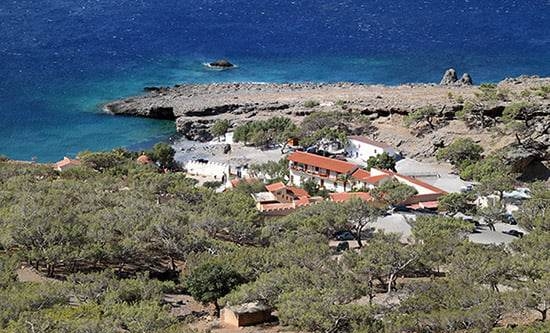
Located at the end of Katarraktis gorge in the Asterousia Mountains, Koudoumas Monastery is 80km south of Iraklion and just 40m away from a stunning beach. It is considered one of Crete’s most remote monasteries, as reaching it from Heraklion takes approximately 2.5 hours. A 24km safe dirt road begins at the village of Sternes (reachable from Charakas) and is situated at an altitude of 1000m near the peak of Kofinas (1231m). As you descend towards sea level, you’ll be treated to breathtaking (and slightly terrifying) views of the sea and cliffs that can induce vertigo. Along the way, you’ll pass the pine grove of Koudoumas and encounter numerous goats perched on the sharp, bare rocks.
In this quintessential Cretan landscape, you’ll discover the ancient male monastery of Koudoumas. The church, constructed within a cave, is dedicated to the Assumption (celebrated on August 15). The surrounding area is filled with caves, many of which are still inhabited by hermits. From the monastery, you can follow a fascinating trail leading to the cave of St. Anthony or another path that takes you to Avvakospilios Cave. Additionally, some nature enthusiasts prefer to reach Koudoumas by walking along the trail that starts from Sternes (3 hours) and meanders through a beautiful pine grove.
The name Koudoumas possibly originates from the monastery’s founder. A Venetian document from 1280 references the surname Cudhumano, which could be related to Koudoumas. The current monastery was constructed in 1870 by monks Parthenios and Eumenios Charitakis on the site of the previous, ruined monastery. It had been abandoned, like all other coastal monasteries in Crete, due to frequent pirate attacks on the island’s shores in the 15th century.
Every year on August 15, Koudoumas celebrates with pilgrims arriving from all over the Messara region. Many of them arrive on August 14 and spend the night either in the guest rooms or on the beach. The monastery also honors monks Eumenios and Pathenios, who re-established the monastery and have been recognized as Saints, with a celebration on July 10.
Koudoumas Monastery houses the icon of Our Lady of Kykkos of Dexiokratousa (Right Hand Holding), discovered in the house of Ali Pasha in Ioannina and donated to the monastery by Helen Skandalaki in 1957. Additionally, a chapel contains the icon of the Visitation, which is associated with a miracle that occurred in 1940 (see the history section below).
Renowned for their hospitality, the monks offer overnight accommodation to all visitors. Many locals reside here throughout the summer, enjoying the basic amenities (kitchen, water, bath, etc.) provided in the monastery’s small guest rooms. The monastery complex also features a welcome room, a refectory, a library, a small museum, and the monks’ cells.
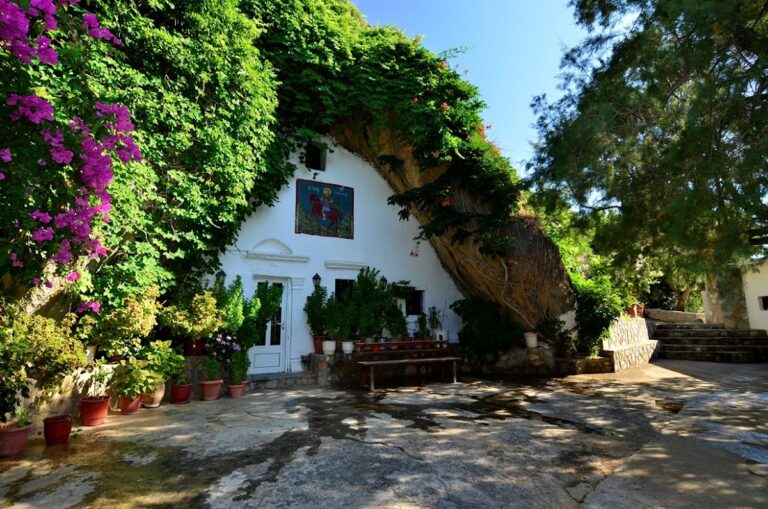
Located 65km south of Heraklion and nestled on the eastern side of the rugged Asterousia Mountains, Agios Nikitas is a stunning monastery that was once a hermitage for monks from Koudoumas Monastery. Perched atop a high hill, it offers breathtaking views of the Libyan Sea. The monastery’s church, which is dedicated to St. Nikitas (celebrated on September 15), is housed in a cave and dates back to 1640.
Within the church, visitors can admire ancient frescoes and a smoke-stained roof – a testament to the attacks by the Turks. Engravings from past visitors can also be found here. Additionally, a small stalactite in the sanctuary produces water, which is then shared with pilgrims as holy water. The monastery is believed to be miraculous and is home to hospitable monks who are always eager to share the monastery’s wonders, as well as offer coffee and fruit to visitors. Overnight stays in the cells are also possible.
Agios Nikitas serves as a verdant oasis amid the arid landscape of the Asterousia Mountains. The area’s dry climate allows for the growth of mango and avocado trees in the monastery’s gardens.
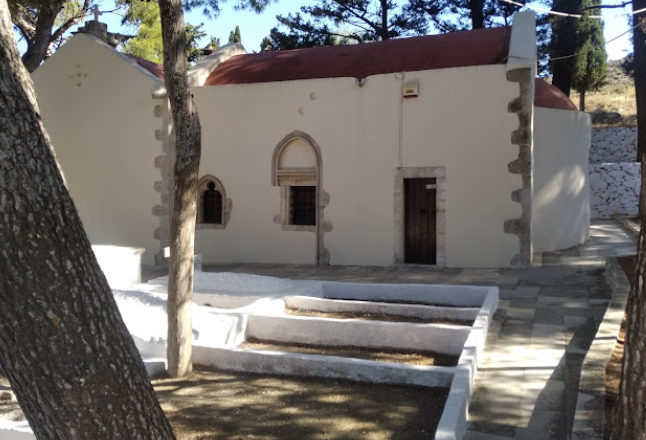
The Agia Moni (Holy Monastery) is situated approximately 60km east of Heraklion and 38km west of Ierapetra, close to Kavoussi Gorge. It is reachable through a brief road that begins at Ano Viannos and traverses a lush landscape.
Functioning as a male monastery, Agia Moni is small and ancient. The Monastery’s church, featuring a striking gate, is dedicated to the Assumption (celebrated on August 15). Surrounding the church are the monks’ quarters.
While the exact date of its establishment is uncertain, tradition holds that it was constructed by three Cypriot nuns who initially built the church of Agios Dimitrios in Keratokambos. Due to ongoing pirate attacks, they were compelled to relocate to the mainland, where they established Agia Moni at its present location. It is also believed that one of these nuns founded the Panagia Keralimeniotisa monastery near Psari Forada.
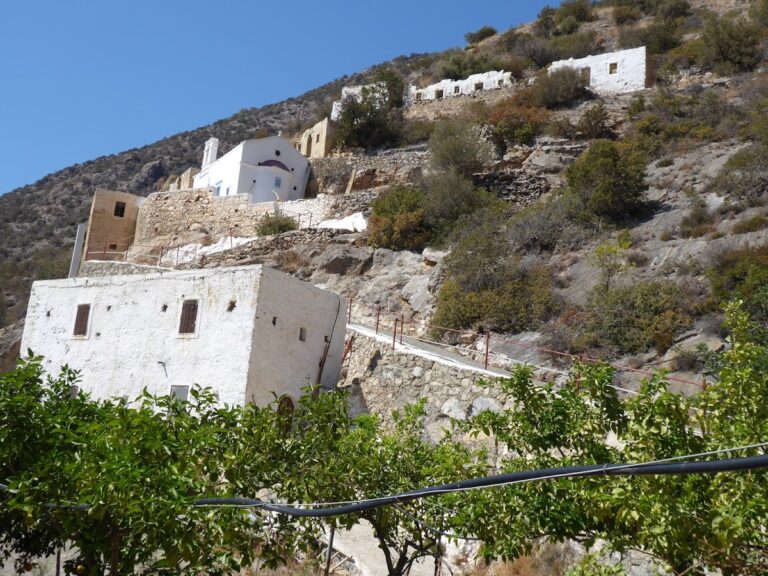
The Arvi Monastery is situated near the Arvi Gorge, atop a high vantage point with stunning views of the sea. Currently abandoned, the remaining monks’ cells provide a glimpse into its history.
It is thought that the monastery was initially constructed on the remnants of the ancient Temple of Arvian Zeus, located in the valley formed at the exit of the Arvi Gorge. However, due to the formation of marshes in the valley, it was eventually relocated to its present elevated location.
Within the monastery grounds, there are two churches – one quite old and the other relatively new – both dedicated to Saint Anthony.
No results available
No results available
No results available
No results available
No results available
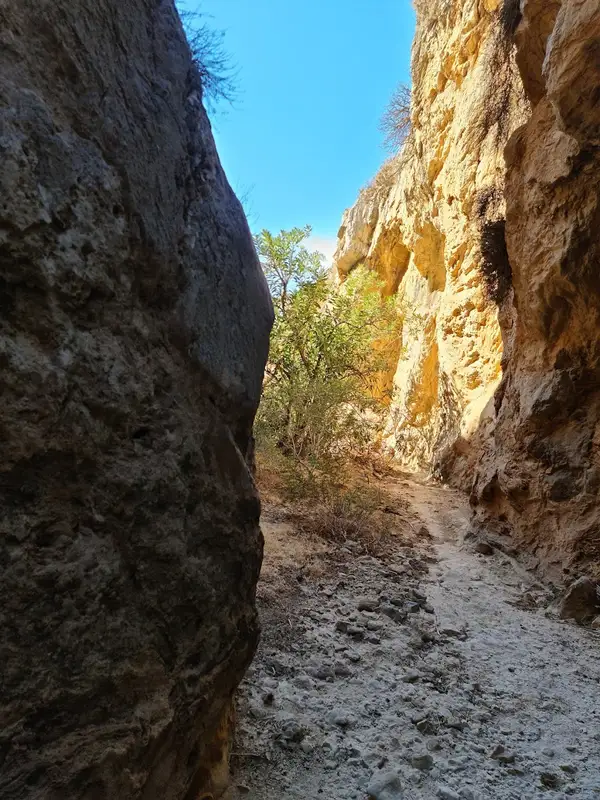
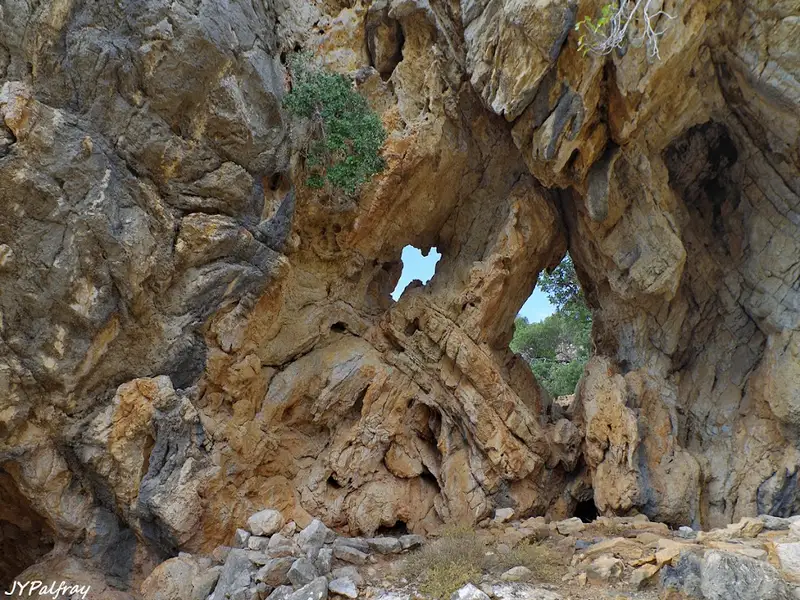
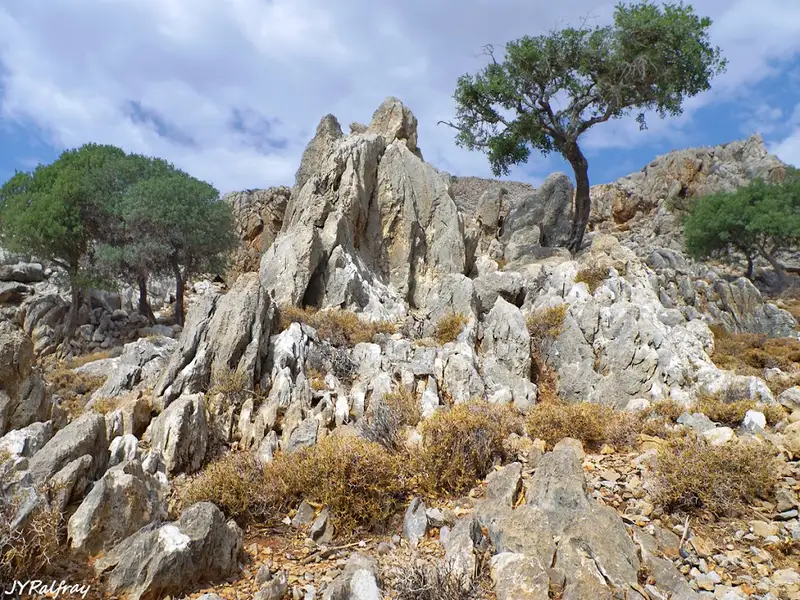
Situated in the eastern region of the Asterousia range, the Tsoutsouras Canyon is nestled within the Tsoutsouras area. This canyon is one of the many inaccessible ones in the region, initiating at the Sfakias position and culminating near the Larinaki area, close to the settlement. The sight of it can be quite breathtaking at first glance.
Despite its relatively short length of 1.5km, the Tsoutsouras Canyon serves as an excellent training ground for those new to canyoning. It’s a technical gorge, implying that the only way to navigate it is through the use of canyoning ropes. There are 12 descents or rappels within the canyon, with the highest one towering at 30m.
The majority of these rappels are found near the canyon’s exit, where the gorge deepens and the rocks display a stunning array of colors. During spring, the presence of water enhances the experience of rappelling down the waterfalls, making it truly unforgettable.
A few kilometres west of Tsoutsouras gorge in the eastern Asterousia range, you’ll find the smaller and narrower Troulla gorge. Though it’s shorter than the Tsoutsouros canyon, it has captivated the hearts of canyoners with its over 15 stunning waterfalls, the tallest reaching 15m. Its close proximity to the Tsoutsouras Canyon makes its geological features similar. It was endearingly named Tsoutsouraki, meaning small Tsoutsouras, by the first group to traverse it.
The entrance to the gorge is situated just west of a remarkable rock known as Troulla near Tsoutsouras, at a location called Meli Lakos (Honey’s Pit). The exit is located in the area of Staoussa, adjacent to the village. Descending the gorge requires technical canyoning equipment, particularly during the winter when the waterfalls are in full flow.
The Achendrias gorge, situated approximately 50km south of Heraklion, concludes at the Maridaki beach. It traverses the barren landscape of the Asterousia Range, marked by stark mountains, jagged rocks, and coarse grazing lands. The gorge is quite accessible for the most part, except for the final stretch, which can only be navigated by seasoned canyoners. This is where high waterfalls form due to the Asterousia fault line.
The journey begins gently from the plain of the Achendrias village, where the gorge collects water. It initially passes through the Farangouli location, a fairly open ravine. It then moves through the Plakoures position, a striking stony mass with layered limestone, before reaching the sea via the Lihnistis gorge. Just before it reaches the sea, it forms five waterfalls, the tallest of which is 60 meters and named Lihnistis. This part requires canyoning equipment to cross, otherwise, one must turn back and follow the trail in the Ligiofarago.
After the waterfall, the landscape transforms into a verdant river valley at the Maridaki settlement, just before the sea. This area is lush with a spring, tall plane trees, and babbling water. If you’re fortunate, you might even spot the river fairies who are said to reside here!
If you prefer not to walk along the gorge, you can still enjoy its beauty by driving the rugged 15km dirt road from Mesohorio to Maridaki, passing by the Agios Nikitas monastery and the Agios Antonios palm grove. A significant portion of this route runs alongside the gorge.
The canyon is home to a large population of raptors and vultures, making the Asterousia gorges the largest habitat for these birds in Europe.
At the gorge’s exit, you’ll find the Lichnistis waterfall, a sequence of 5 waterfalls with the tallest standing at 60 meters. These waterfalls flow after heavy rainfalls and form ponds that are ideal for a refreshing dip in the spring. The waters of Lichnistis originate from springs south of the Ahendrias village and flow into the gorge, whose exit is home to Lichnistis. It’s a mere 10-minute walk from the Maridaki settlement. Named after the way the water disperses into the air like a misty cloud, resembling the winnowing process, the Lichnistis waterfall is one of many in the Asterousia mountains.
The Mindris Gorge, starting near Filippi village and ending at the Tsoutsouras port, spans a length of 6km. It’s an open canyon with no vertical walls and a riverbed that dries up in the summer, making it easy to traverse. Along the riverside, remnants of ancient settlements from the Minoan to Roman Era have been discovered.
One can start their hiking journey from the road that links Kasteliana and Tsoutsouras. This route takes you through the riverbed of the Myndris River, where carob trees are predominant. Midway through the canyon, at Perdikoneri, you’ll find a spring with drinkable water.
In the vicinity of the canyon and near Tsoutsouras, archaeologists have unearthed signs of the ancient town of Inatos, including Roman Baths, a trail, and several other structures dating back to the Minoan era.
No results available
Set in Tsoútsouros, 300 metres from Tsoutsouras Beach and 300 metres from Pera Tsoutsouras Beach, Apollon offers a restaurant, sea views and free WiFi.
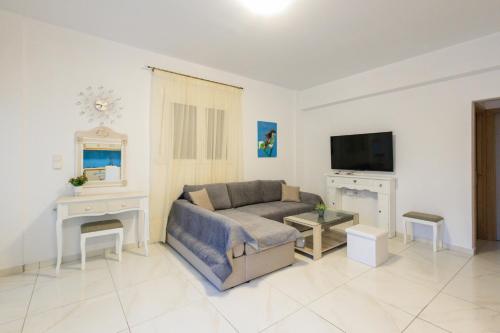
All of the air-conditioned units feature a private bathroom, flat-screen TV, fully-equipped kitchen and terrace. Some units feature a balcony and/or a patio with mountain views.
Continental and American breakfast options are available every morning at the aparthotel.
There is a shared lounge at this property and guests can go hiking nearby.
Aliori Beach is 700 metres from Apollon, while The Palace of Knossos is 48 km away. The nearest airport is Heraklion International Airport, 52 km from the accommodation.
Located in Tsoútsouros, 300 metres from Tsoutsouras Beach and 500 metres from Pera Tsoutsouras Beach, Colorful House Tsoutsouras provides air-conditioned accommodation with a terrace and free WiFi. With mountain views, this accommodation offers a balcony.
This apartment is equipped with 1 bedroom, a kitchen with a dishwasher and an oven, a flat-screen TV, a seating area and 2 bathrooms equipped with a shower. Towels and bed linen are provided in the apartment.
Aliori Beach is 700 metres from the apartment, while The Palace of Knossos is 48 km away. The nearest airport is Heraklion International Airport, 52 km from Colorful House Tsoutsouras.
Situated 100 metres from Tsoutsouras Beach in Tsoútsouros, blue sea suites features accommodation with air conditioning and free WiFi.
Each unit features a balcony offering sea views, a flat-screen TV, a well-fitted kitchen and a private bathroom with walk-in shower, a hair dryer and free toiletries.
The apartment offers a terrace.
Aliori Beach is 500 metres from blue sea suites, while Pera Tsoutsouras Beach is 700 metres from the property. The nearest airport is Heraklion International Airport, 52 km from the accommodation.
Featuring city views, Filocsenia luxury apartment at tsoutsouras provides accommodation with a balcony and a coffee machine, around 70 metres from Tsoutsouras Beach. It features mountain views and free WiFithroughout the property.
The apartment comes with 2 bedrooms, 1 bathroom, bed linen, towels, a flat-screen TV with cable channels, a dining area, a fully equipped kitchen, and a terrace with sea views.
Aliori Beach is 400 metres from the apartment, while Pera Tsoutsouras Beach is 700 metres away. The nearest airport is Heraklion International Airport, 52 km from Filocsenia luxury apartment at tsoutsouras.
from
€72
/night
No results available
Connect with thousands of Crete visitors and boost your bookings.
© All rights reserved. Crete Locals