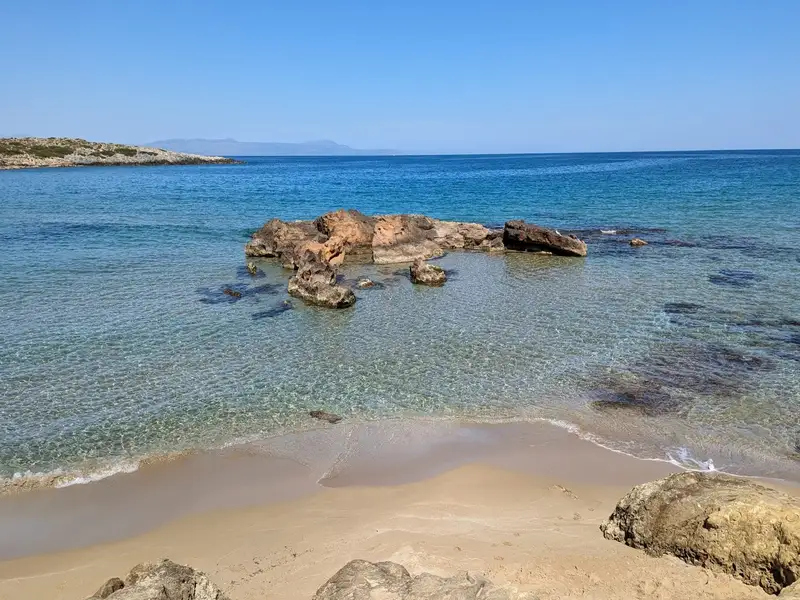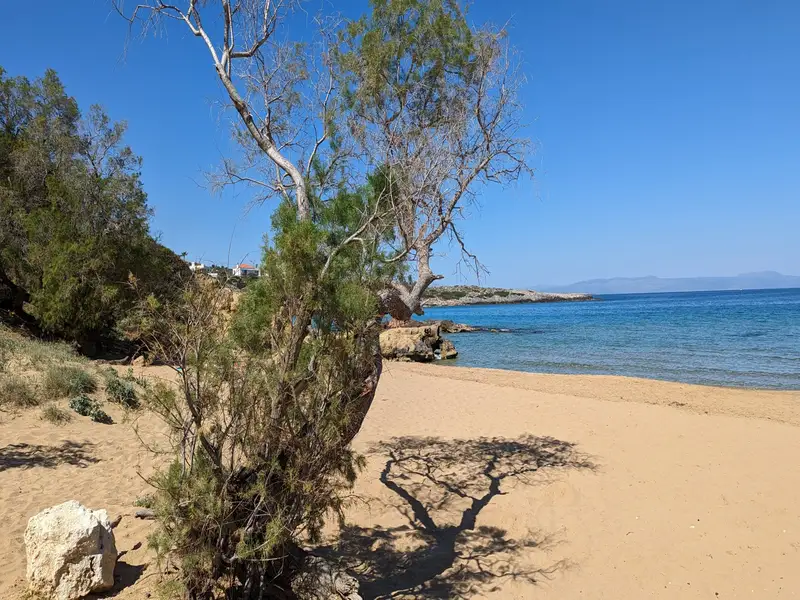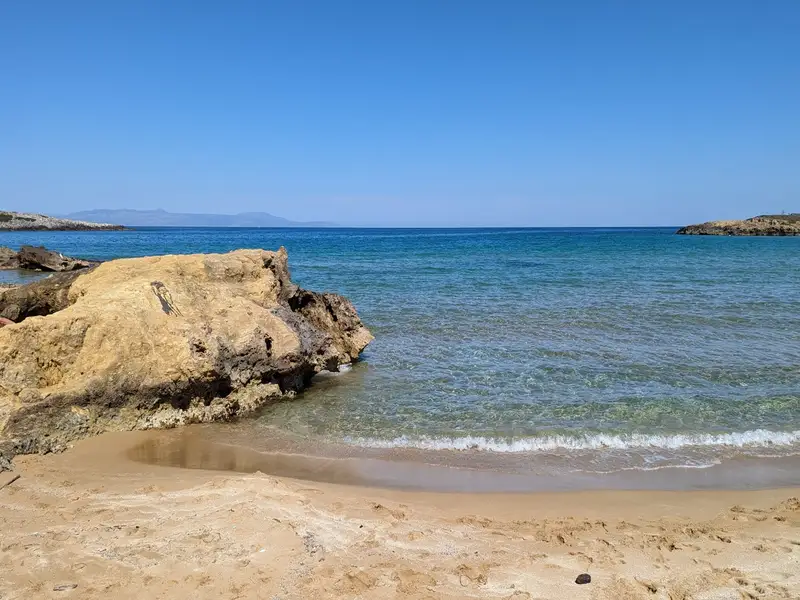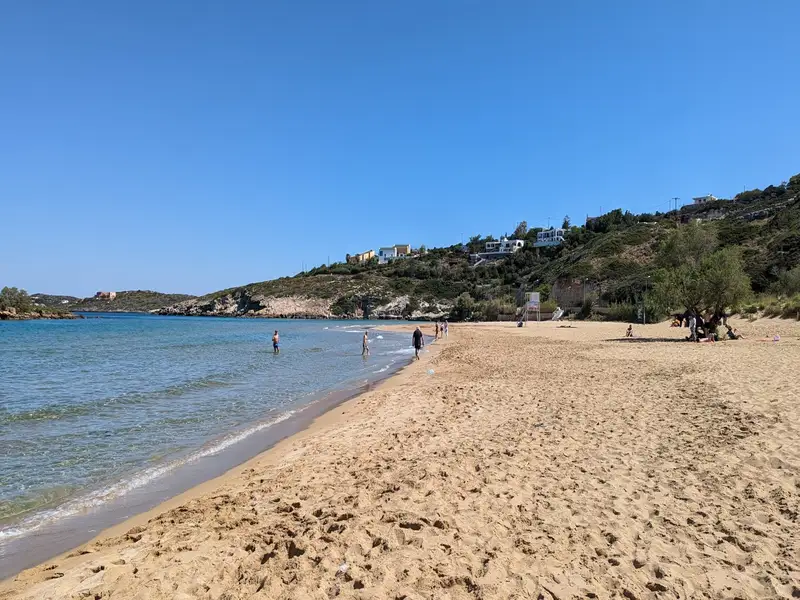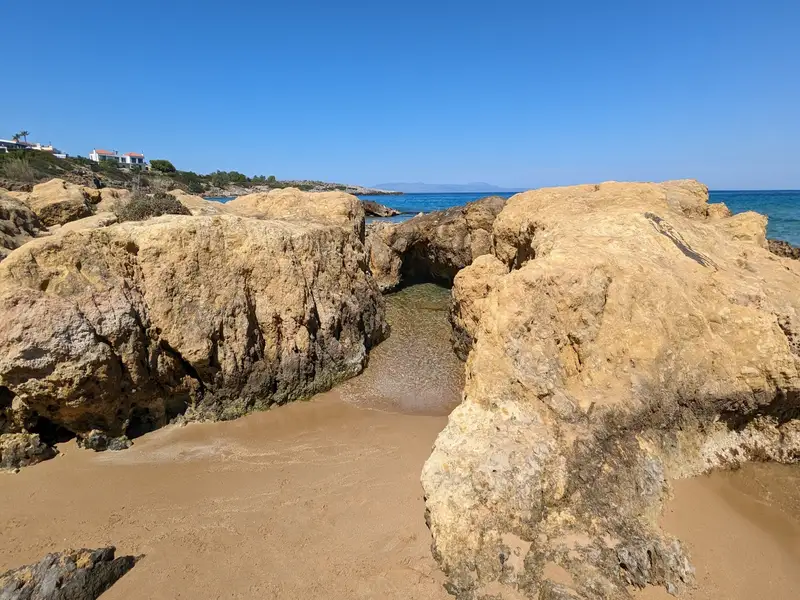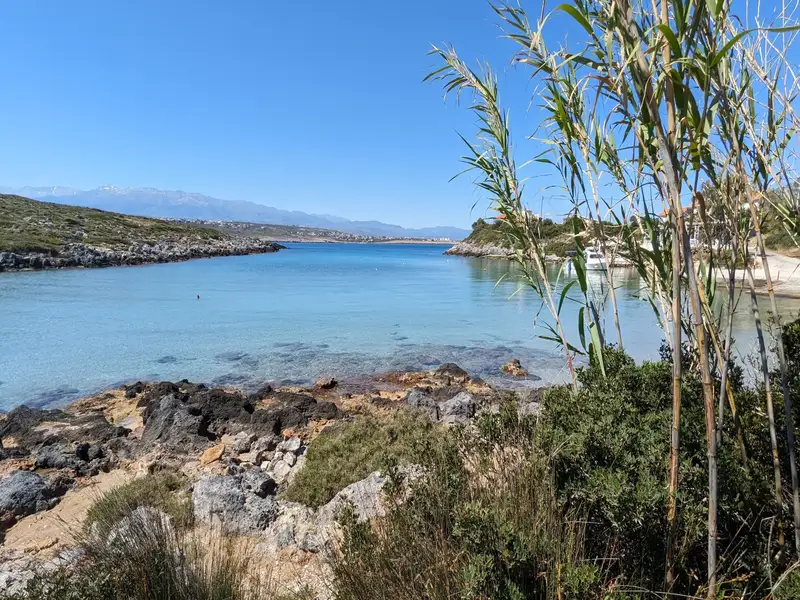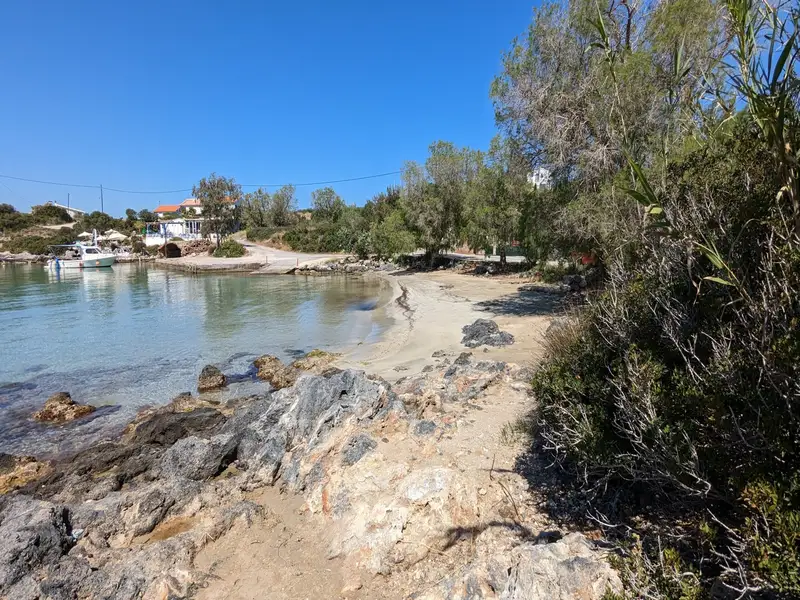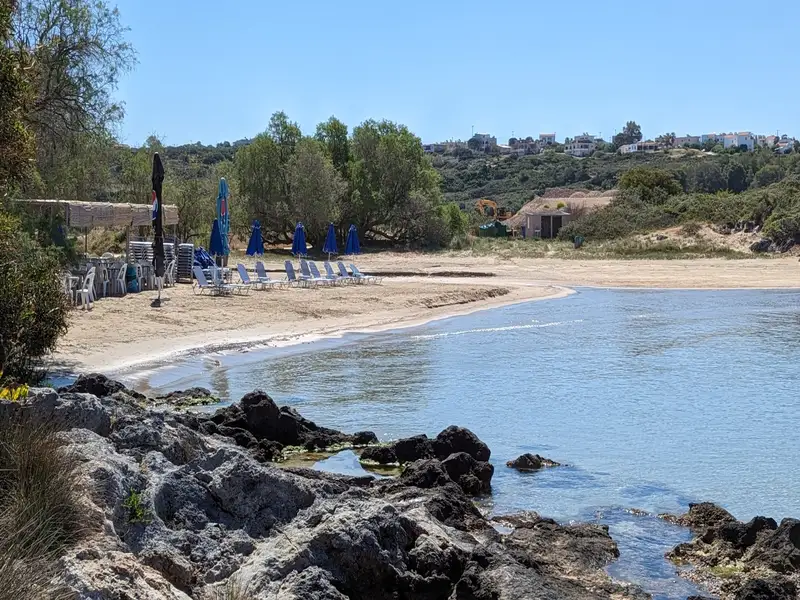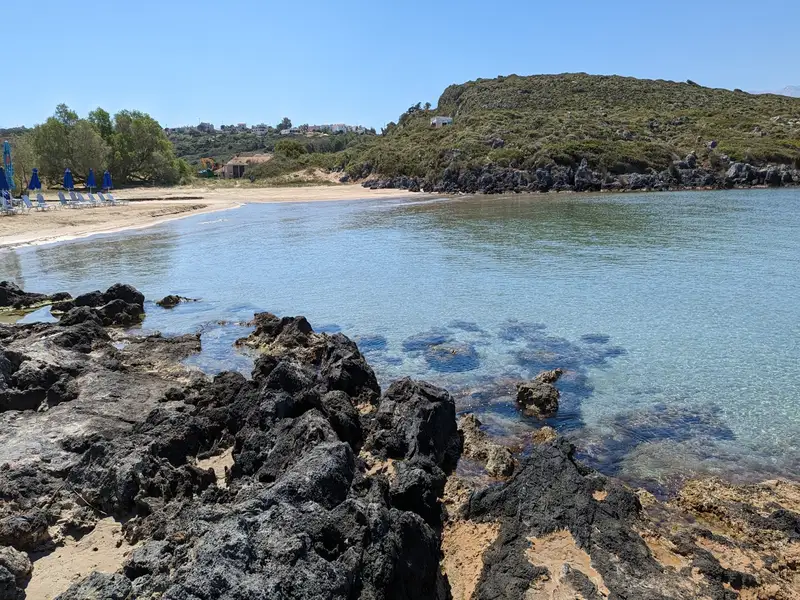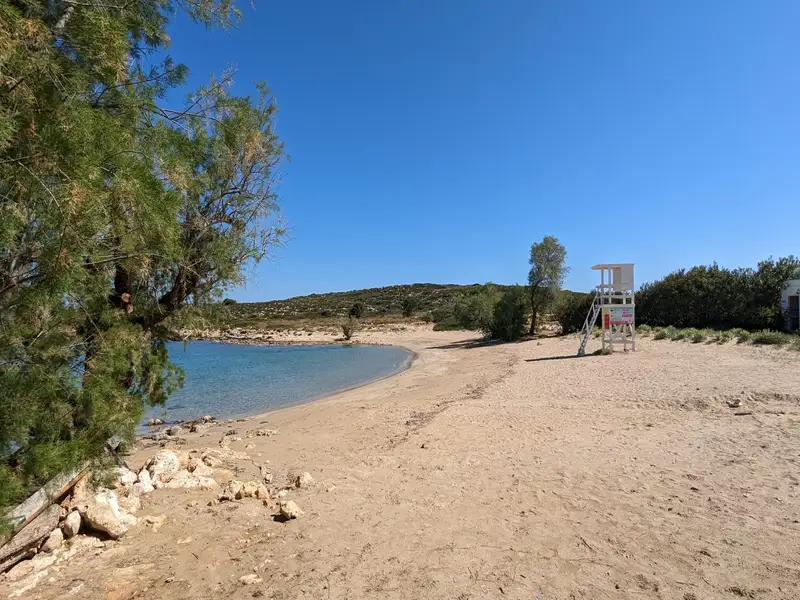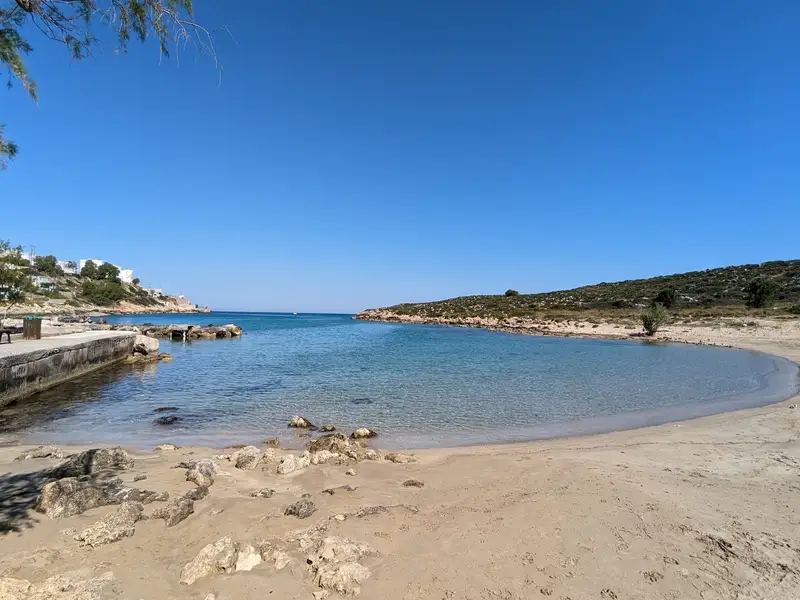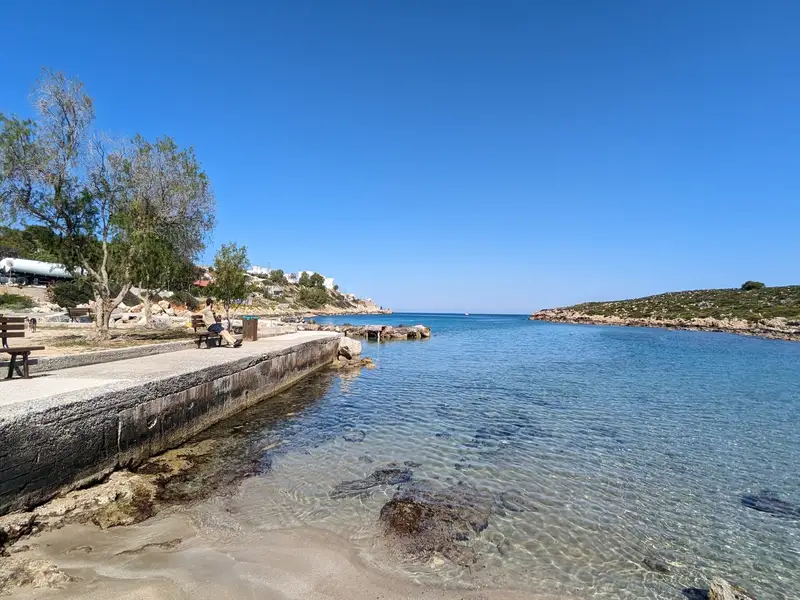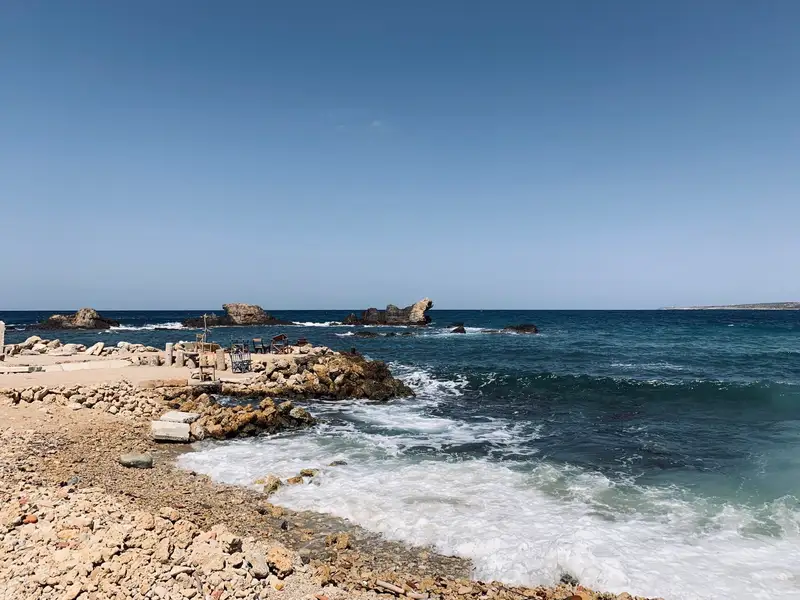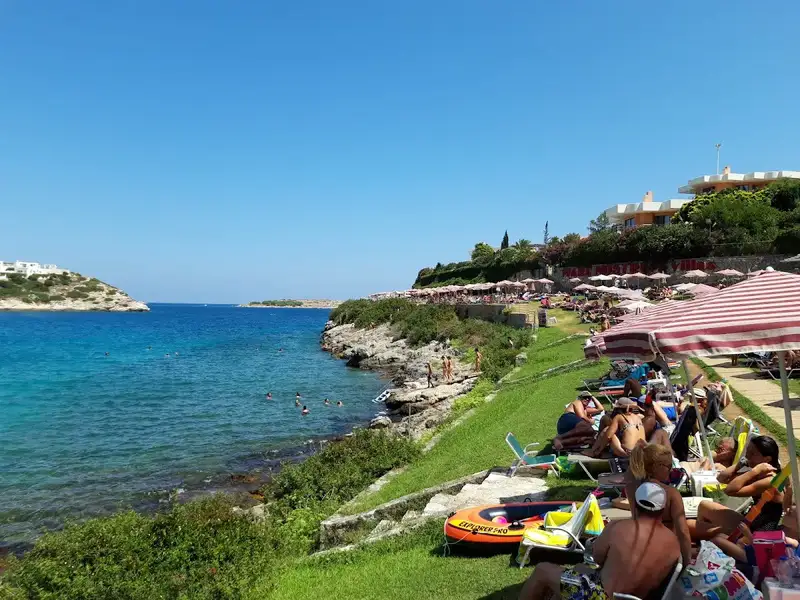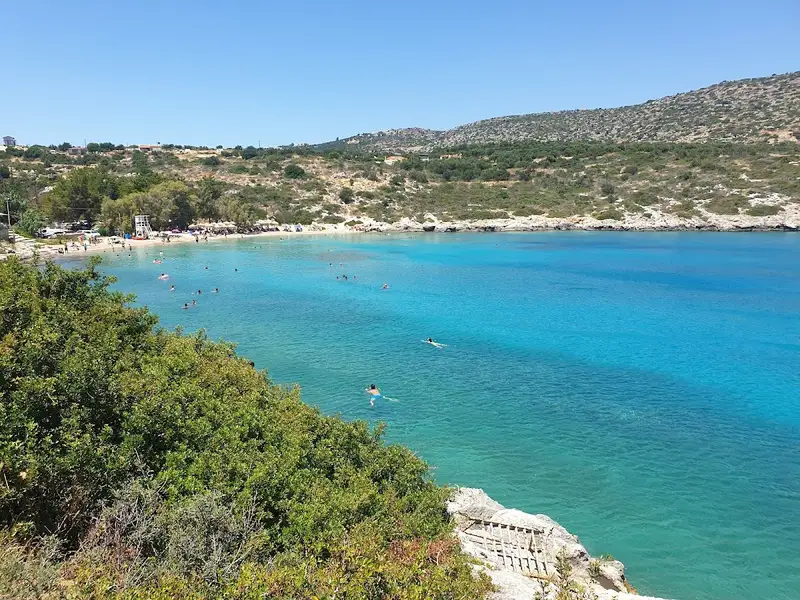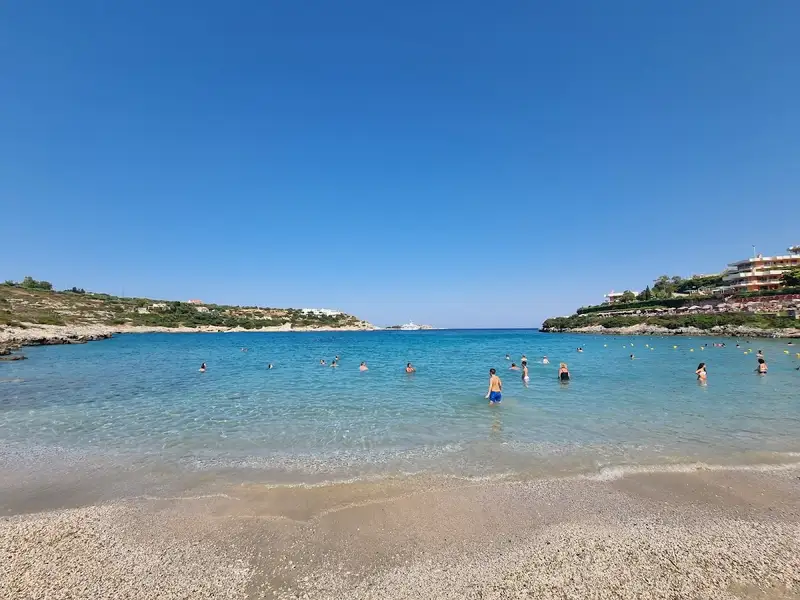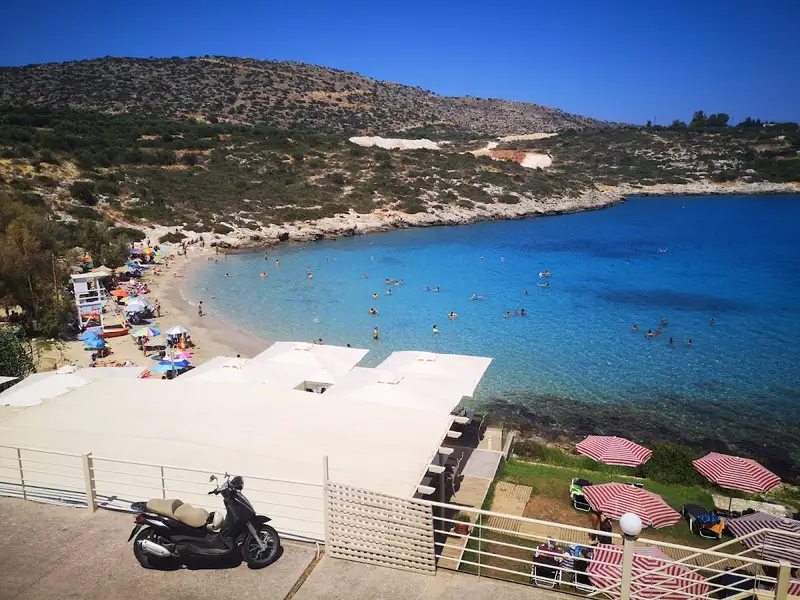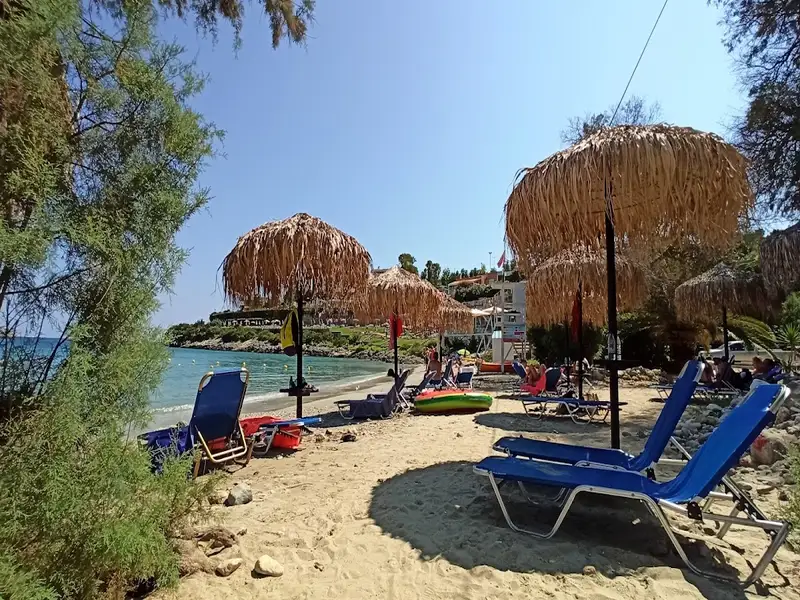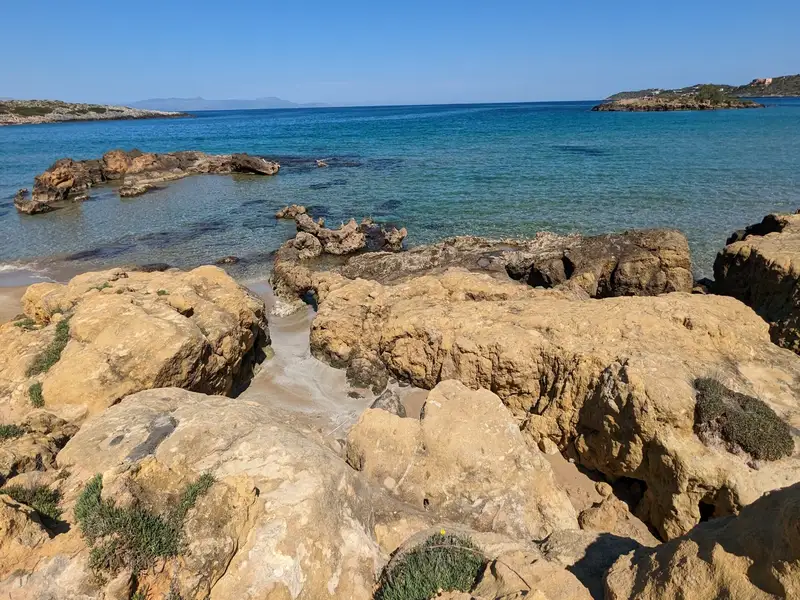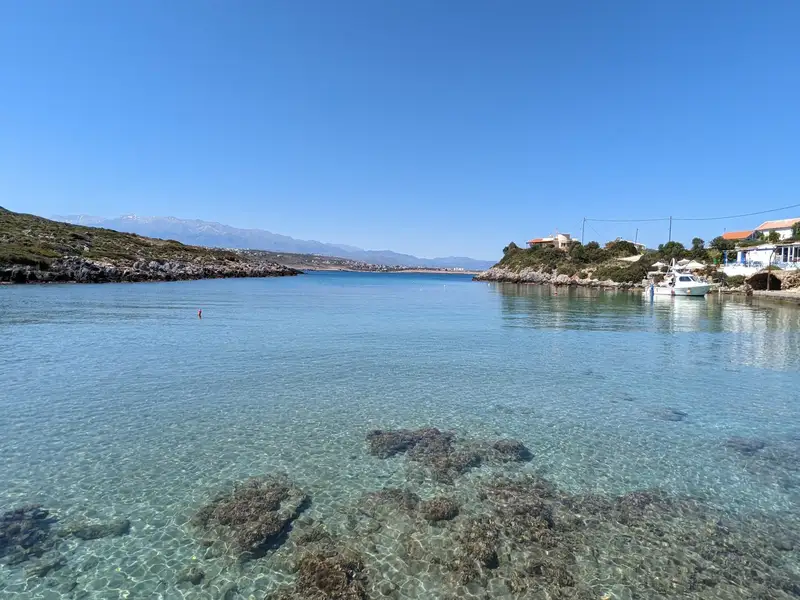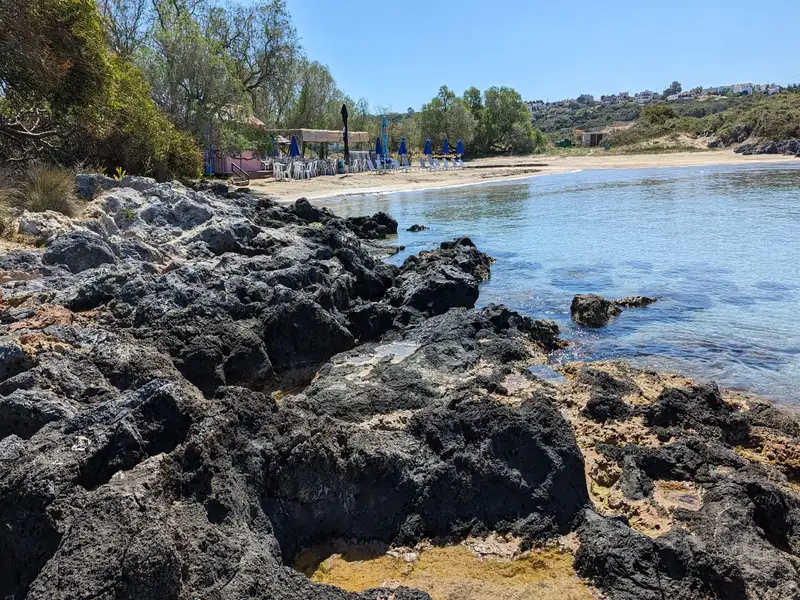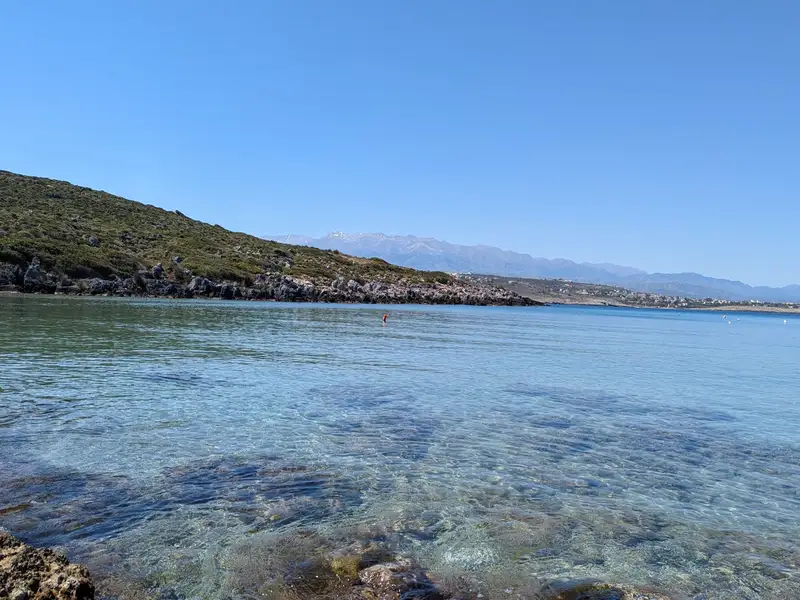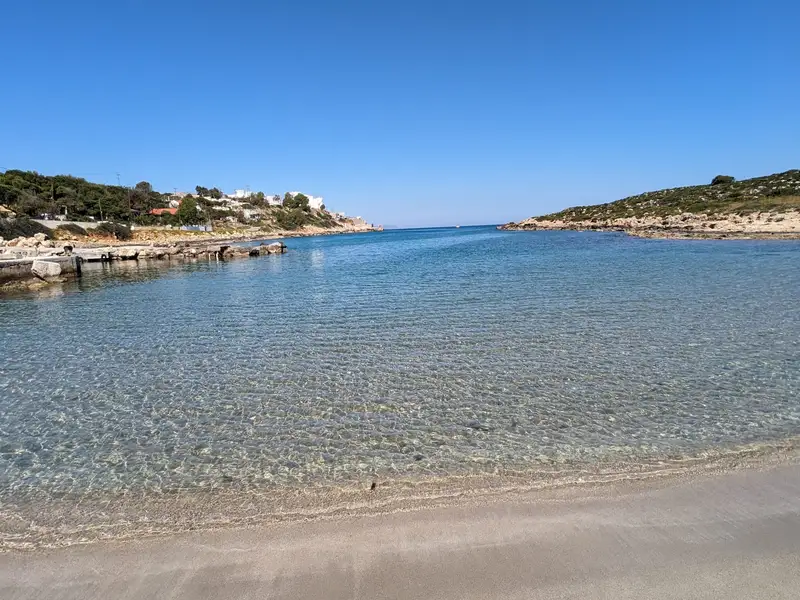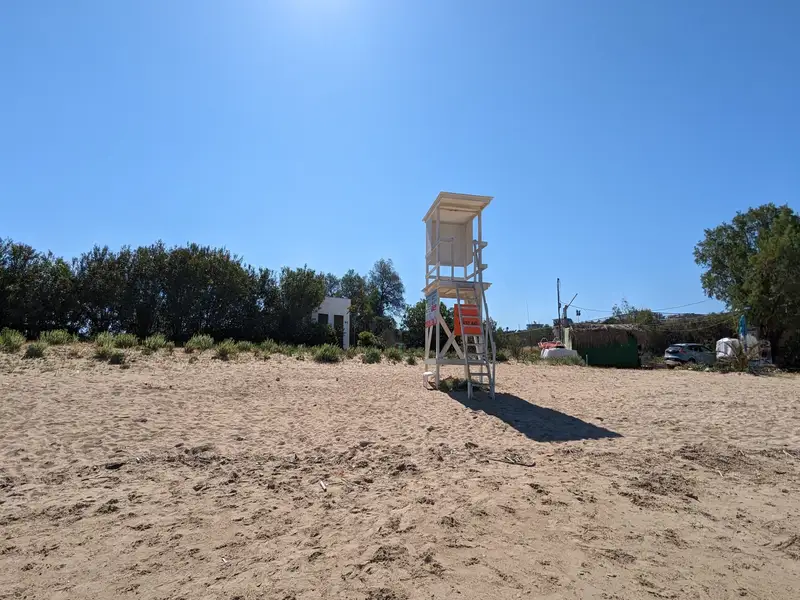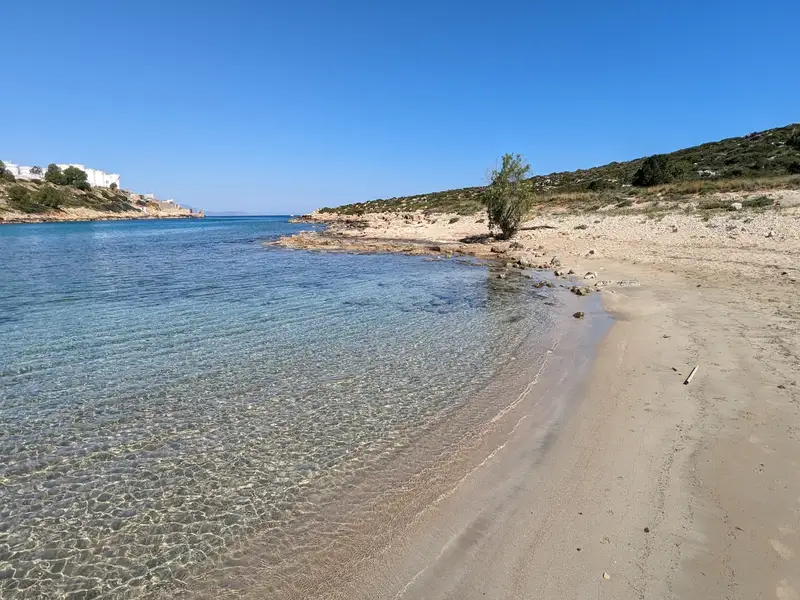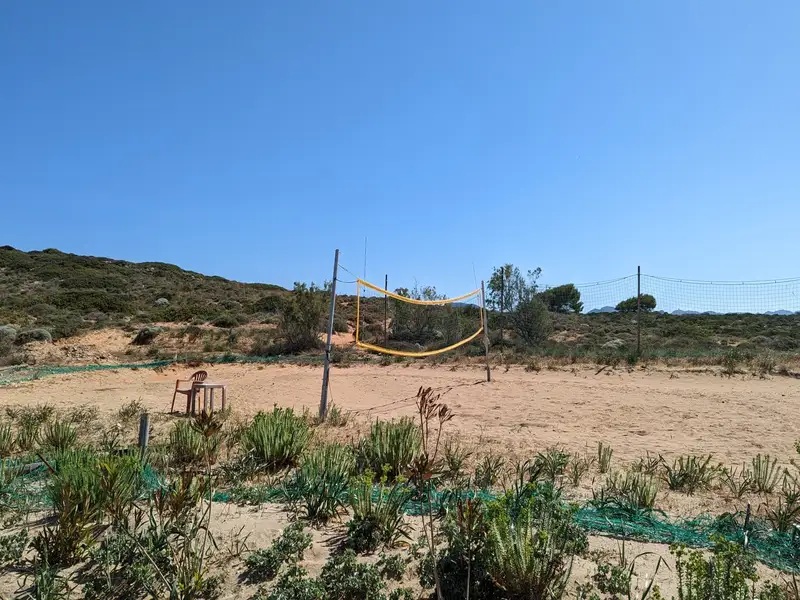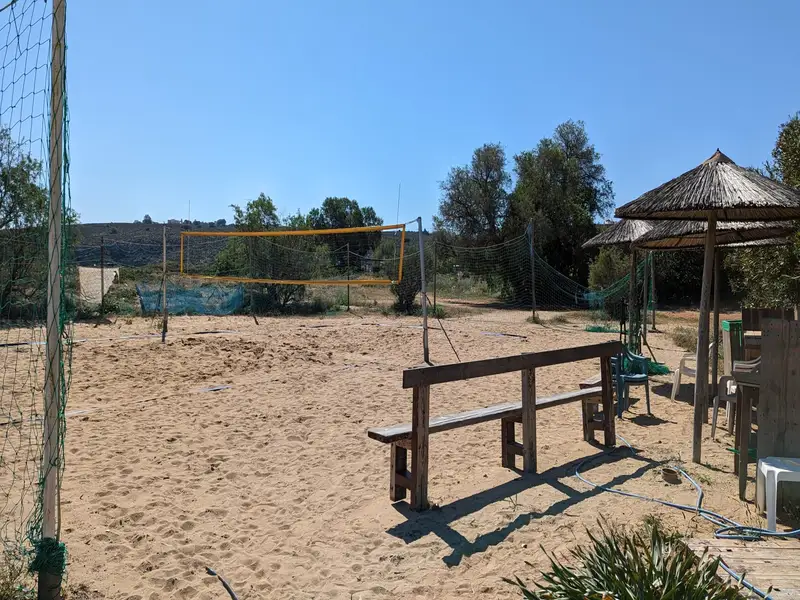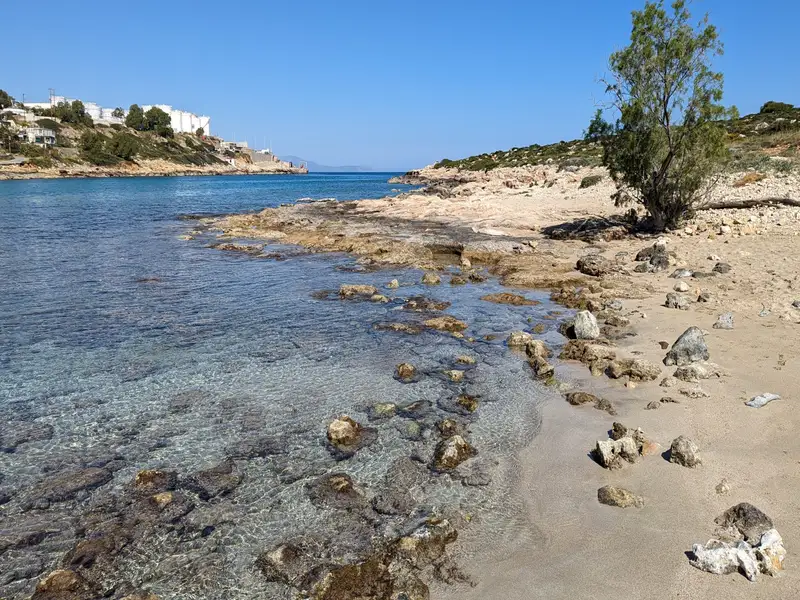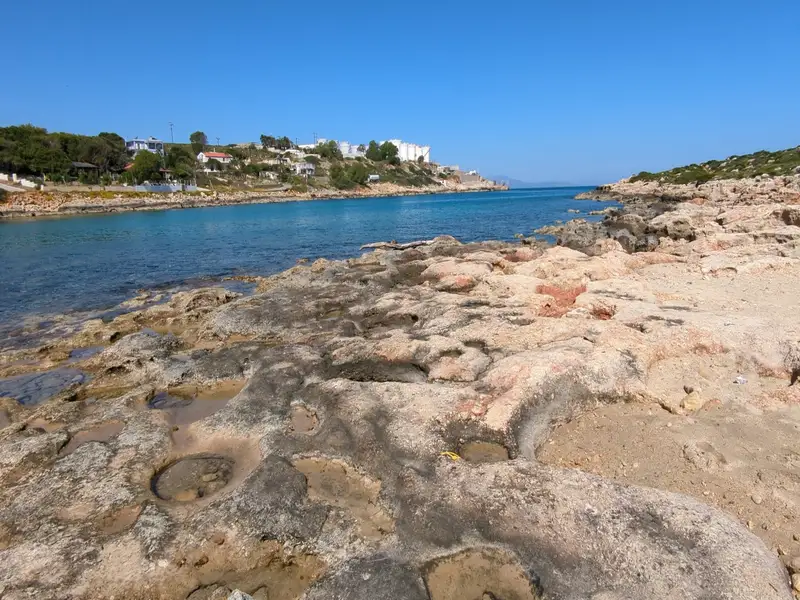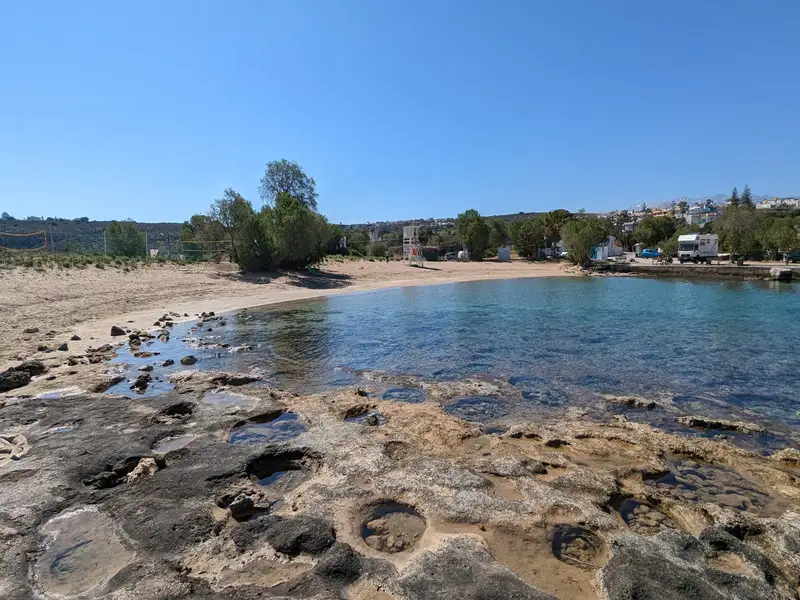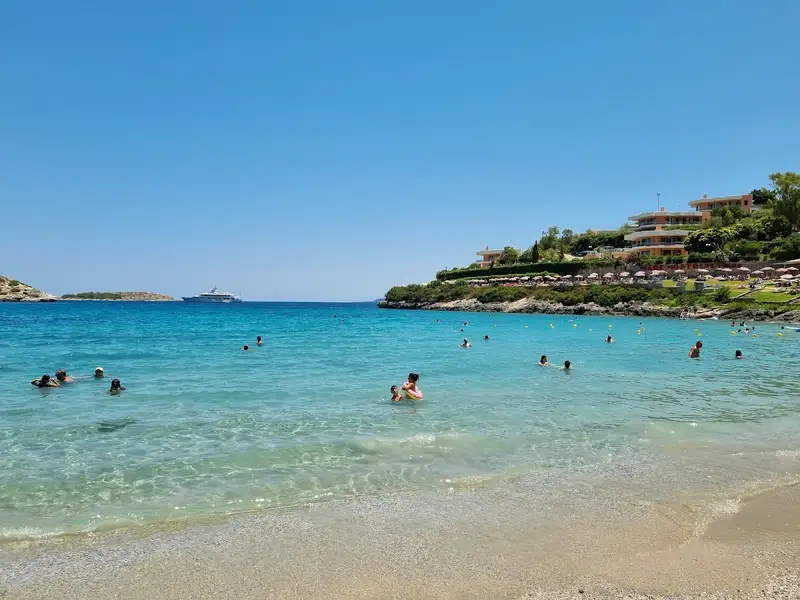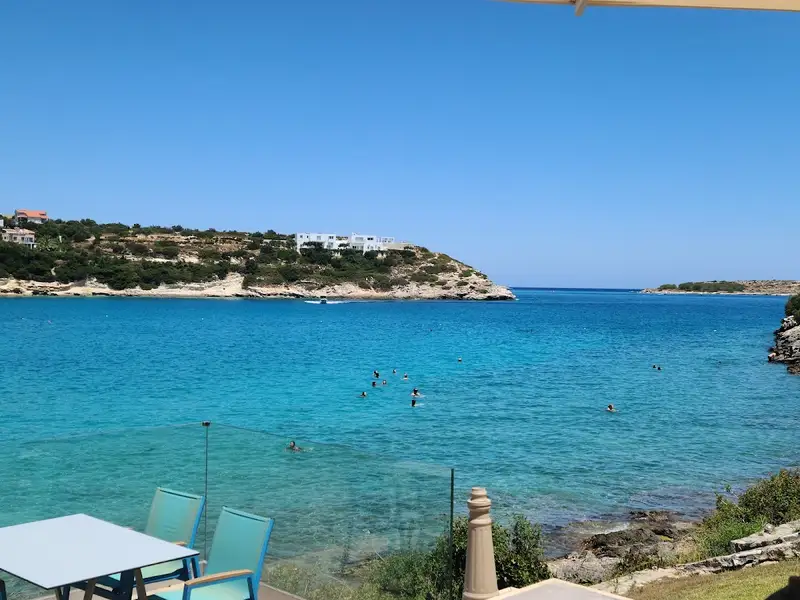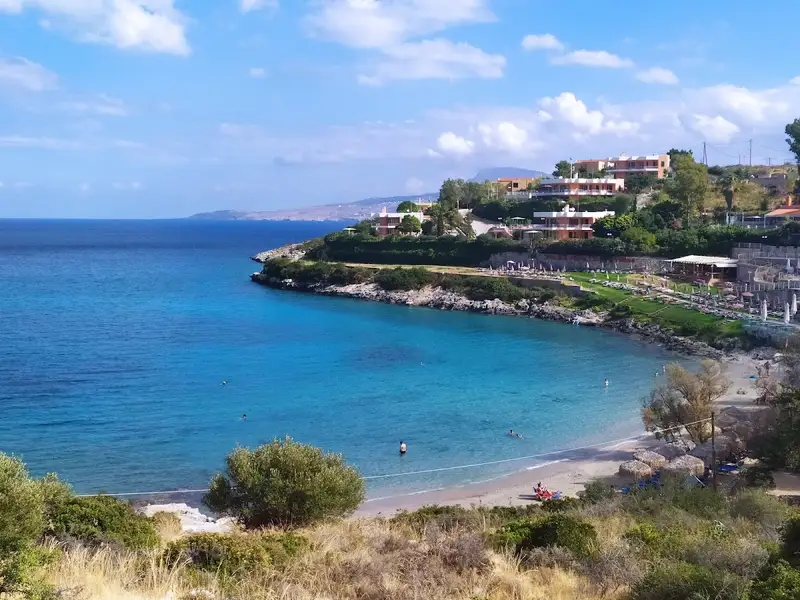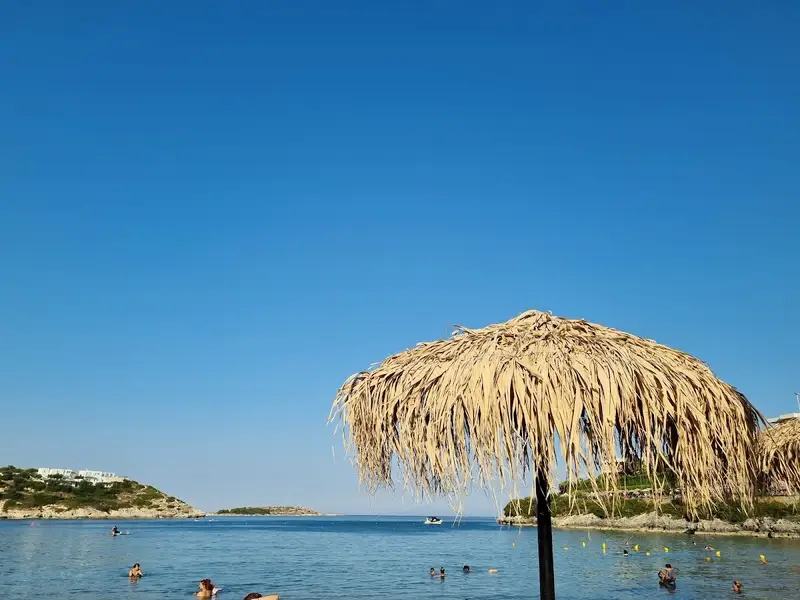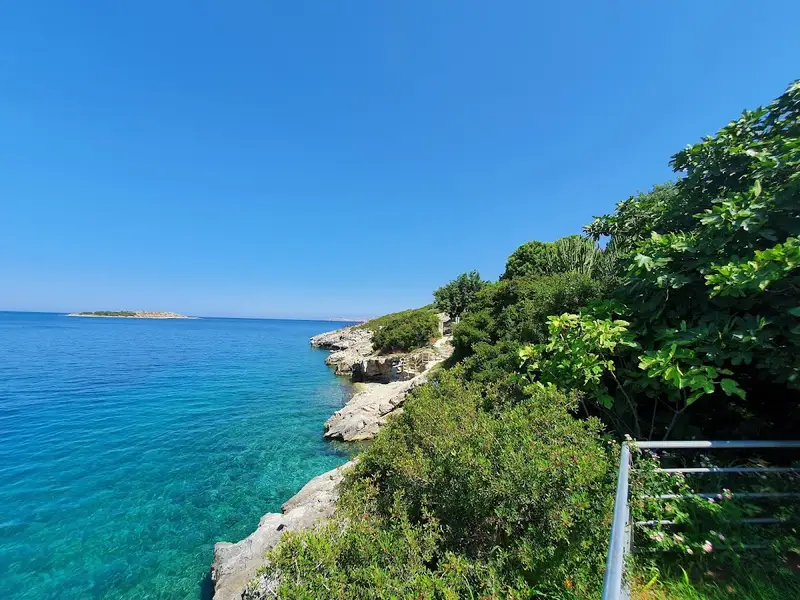
The seaside village of Kalathas is located 12km northeast of Chania city, in a natural bay at Cape Akrotiri, which is open to the north winds. Current Kalathas is a relatively new village, which has been inhabited by residents of Chania who wanted to live away from the city centre.
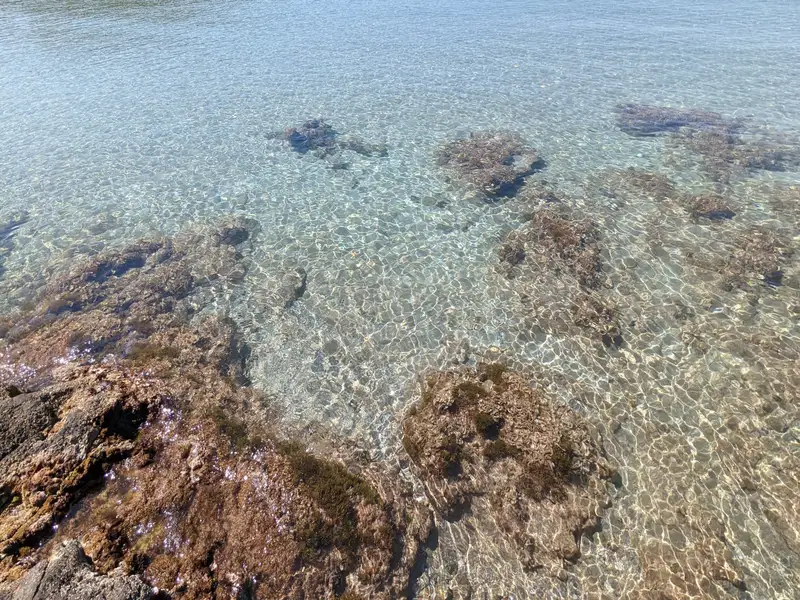
The beach in front of the village is beautiful, with fine sand and shallow crystal clear water. Opposite Kalathas, there is a small island which you can easily reach by swimming.
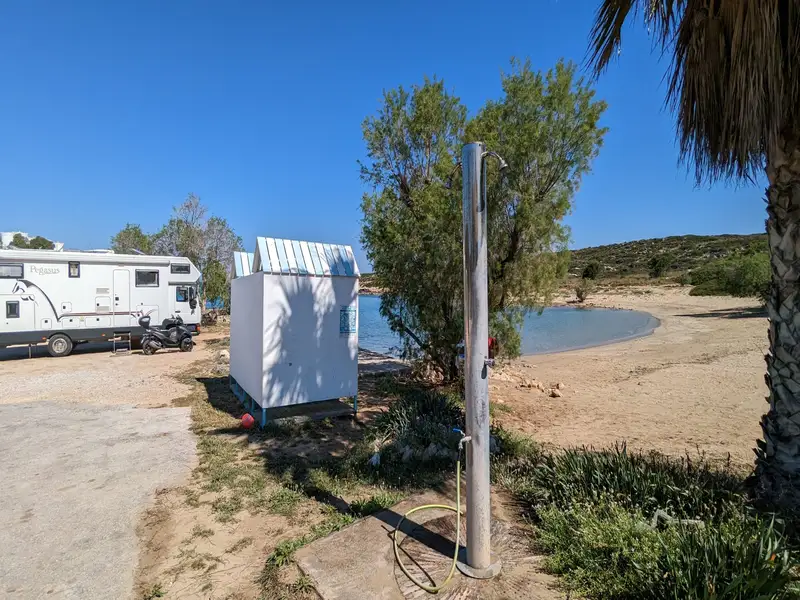
The beach is very well organized with umbrellas, water sports, restaurants, hotels, lifeguards, mini markets, etc.
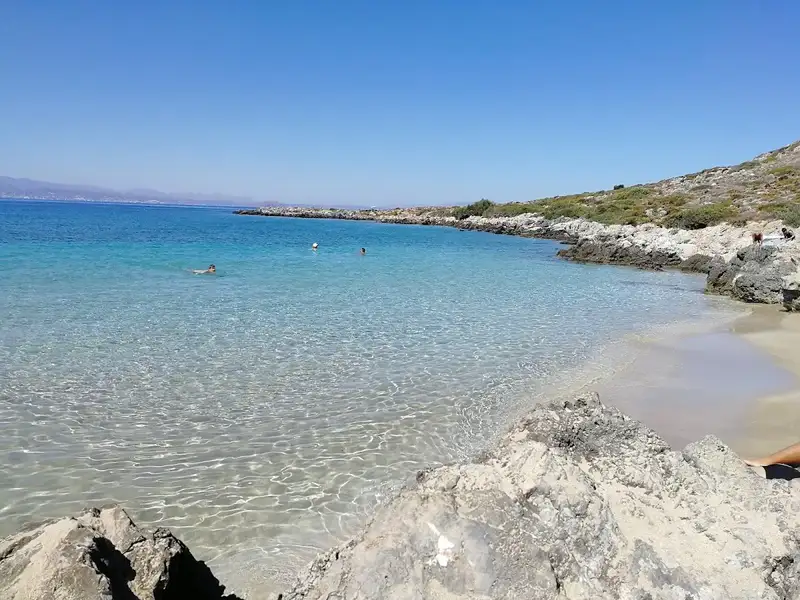
West of the main bay, beyond the rocky end, there is a secluded sandy bay. This is not organized and is ideal for those who do not like crowded places.
Tip: If you continue towards the far right of the beach, you will find a rather remote beach with usually hardly any people should you wish to avoid the crowded part of the beach.
Tersanas is a charming coastal village situated 13km northeast of Chania, tucked away in a small cove on the west side of Cape Akrotiri. While it serves as the harbour for the neighbouring village of Chorafakia, Tersanas is a well-developed area and a popular holiday destination.
The beach at Tersanas is nestled within a natural harbour that faces southwest. With its white, fine sand and crystal-clear shallow waters, it’s a small beach that can get crowded, especially on weekends. Visitors can take advantage of the available sunbeds, umbrellas, showers, and snack bars. Its calm waters and proximity to tourist facilities make it perfect for families, and there are buses from Chania that stop at Tersanas.
Macherida, a small beach, is situated 14km northeast of Chania and 1km west of Chorafakia village, in close proximity to Tersanas. Its name is derived from the Greek word “machairi” meaning “knife,” inspired by the knife-like appearance of a rocky cape at its northern end. Another theory suggests it was named after the Gladiolis italics flower, known as “macherida” in Greek.
The bay, facing southwest, is typically calm. At the heart of the bay lies a beautiful beach with white sand and turquoise water, enclosed by sharp rocks. The water clarity here is exceptional due to the sea currents that frequently change direction, sweeping away any rubbish. While the beach isn’t developed, there has been some residential construction in the vicinity in recent years. Macherida beach, with its seclusion, is a popular spot for nudists and is one of the preferred beaches for the gay community in Chania.
The surrounding coastline serves as a unique habitat for various wild species. Close to the main road, amidst the rocks, is the Macherida pond that resembles a crater with saltwater springs. This provides a sanctuary for water snakes, turtles, and seagulls. The city bus route to Stavros passes through Tersanas and runs close to Macherida beach.
Agios Onoufrios, a serene seaside village located 8km north of Chania and close to Kounoupidiana, is a hidden gem worth visiting.
The beach of Agios Onoufrios is quiet and sandy, and well protected from the winds, as it is located in a deep bay, along with a picturesque small port. Although not well-organized, it’s a popular spot for locals who come for the picturesque landscape and traditional taverns. The only downside is the fuel tanks located northwest of the beach, which break the peaceful atmosphere.
Despite this, the beach is equipped with sunbeds, parasols, showers, changing rooms, and a lifeguard service. For sports enthusiasts, there are two volleyball courts available. Overall, Agios Onoufrios is a great destination for those looking for a quiet beach away from the crowds.
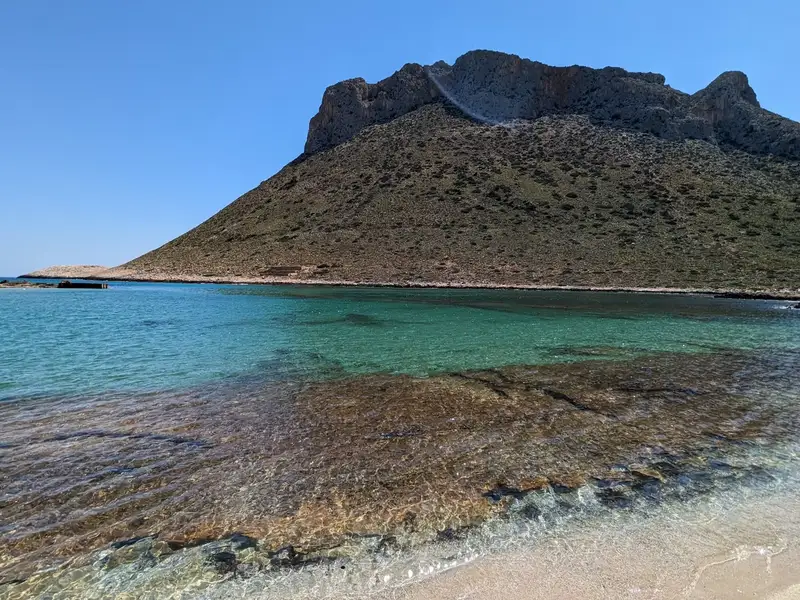
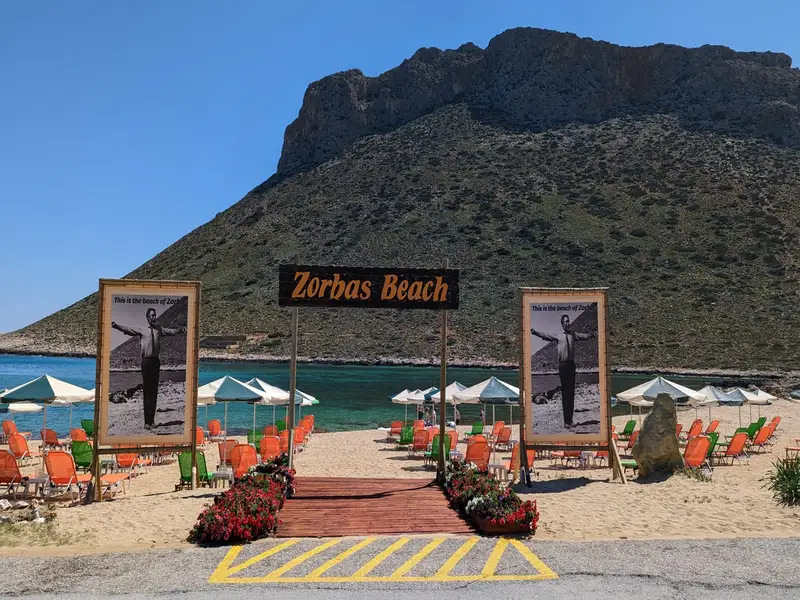
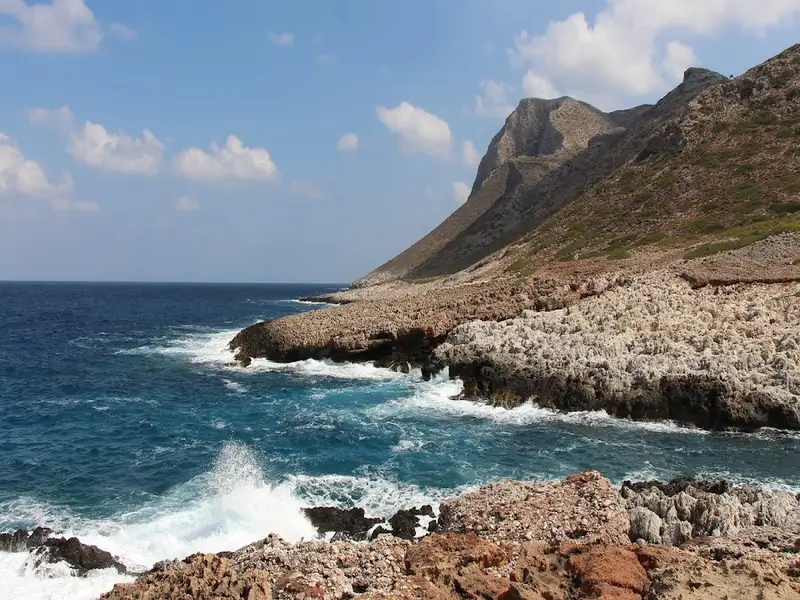
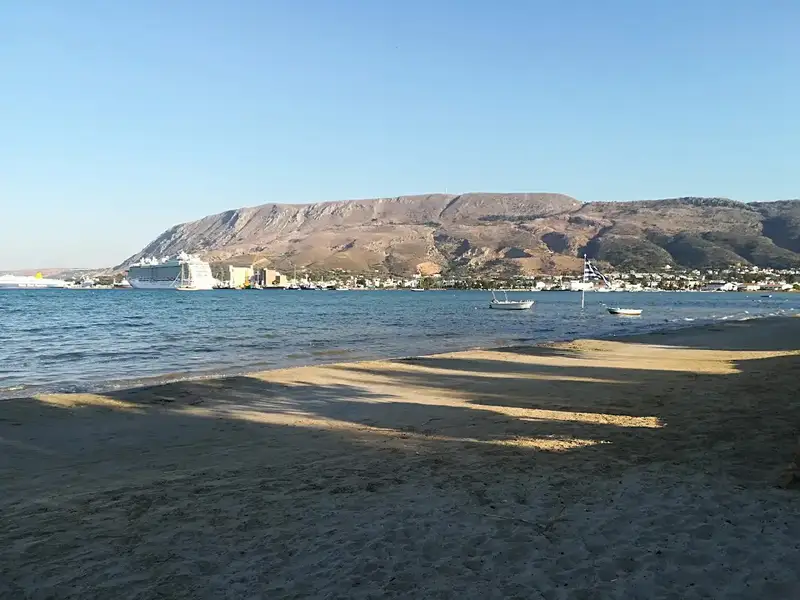
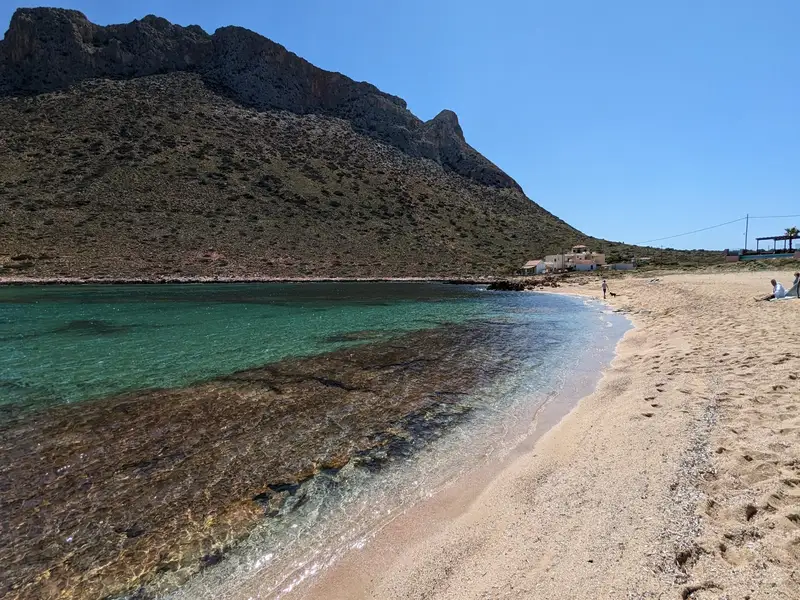
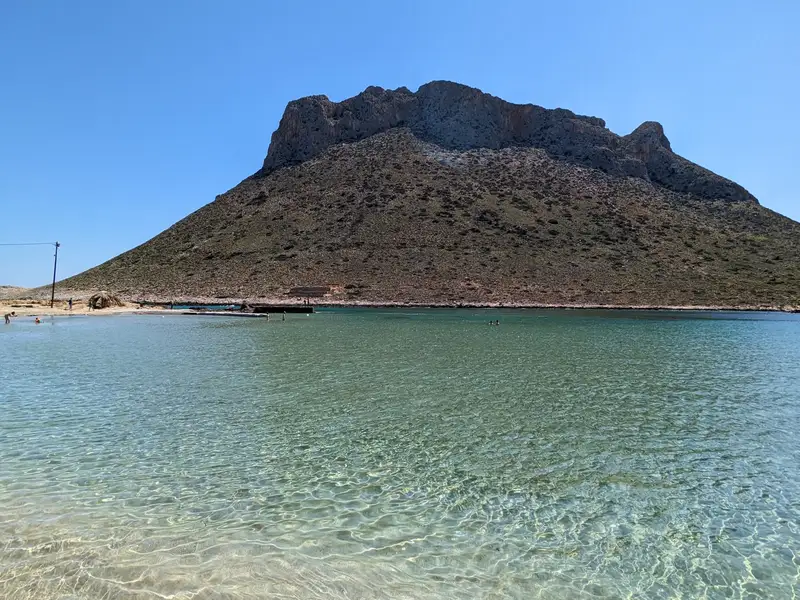
Stavros beach is situated 17km northeast of Chania on the farthest point of Cape Akrotiri, is known for its distinct, camel-shaped mountain, Vardies. This towering landmark gained recognition in the film “Zorba the Greek” as the backdrop for Anthony Quinn’s iconic Sirtaki Dance in 1964. Once a quaint fishing hamlet, Stavros has since transformed into a bustling tourist hub, complete with numerous hotels and top-tier tourist facilities. The area’s popularity is further boosted by its two stunning beaches.
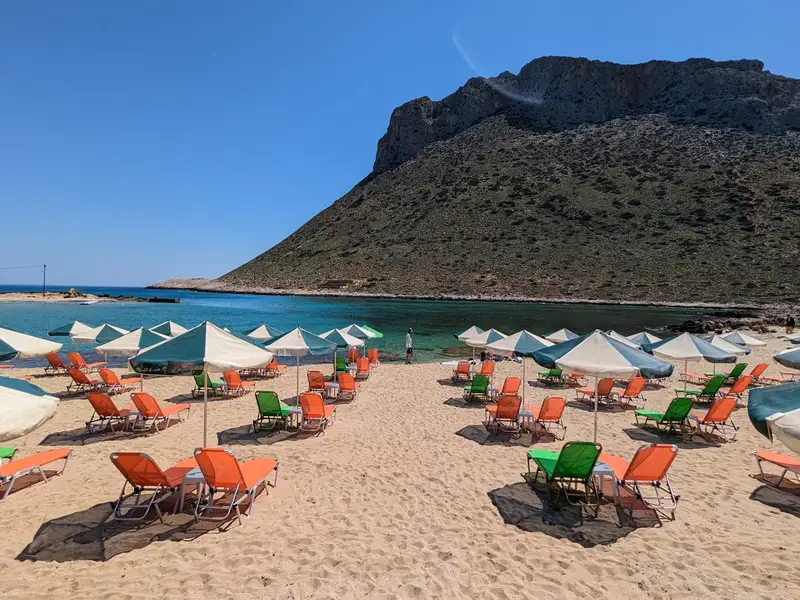
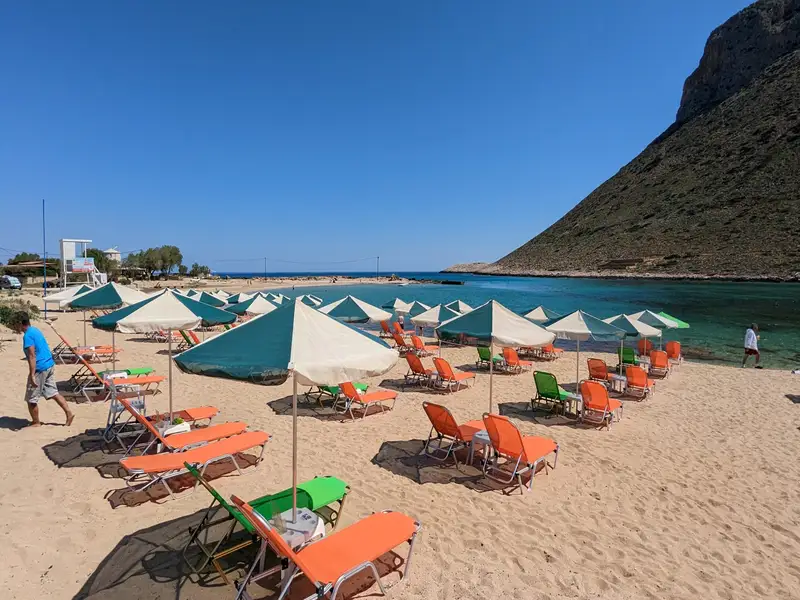
The primary beach lies to the village’s east, nestled at the base of the Vardies mountain and adjacent to the scenic harbour. It forms a protected, semi-circular lagoon with pristine white sands and shallow, turquoise waters. The contrast between the rugged mountain and the tranquil beach provides a unique and enchanting swimming experience. As anticipated, the beach is well-equipped with all the necessary amenities.
200 meters northwest of the main beach, you’ll find Stavros’ secondary beach, a mix of sandy stretches and rocky areas. It’s less developed and cleaner than its counterpart, but its exposure to the elements can lead to wavy seas. The peninsula separating the two beaches holds historical significance, housing remnants of an ancient quarry that provided limestone for Chania’s Venetian-era Walls (13th- 17th century).
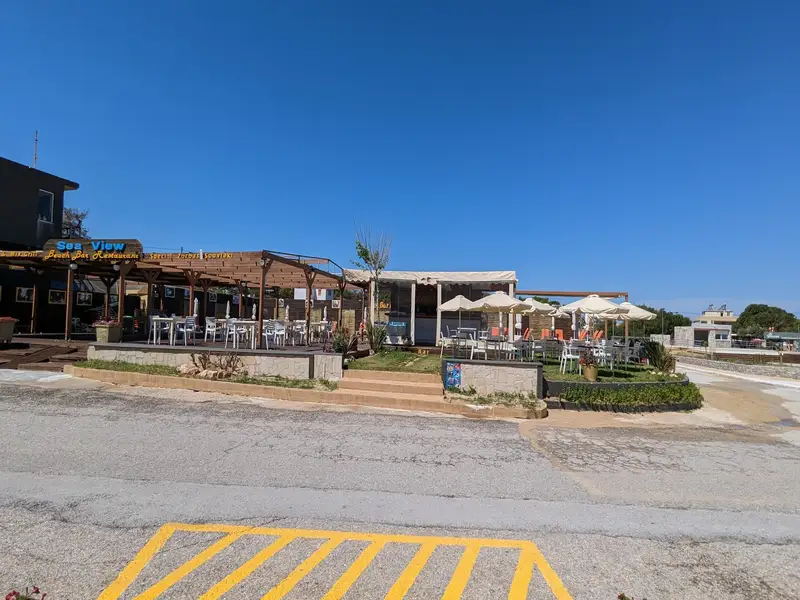
Beyond beaches, Stavros offers an array of other services including accommodation, eateries, mini markets, shops, cafes, and regular bus connections to Chania city.
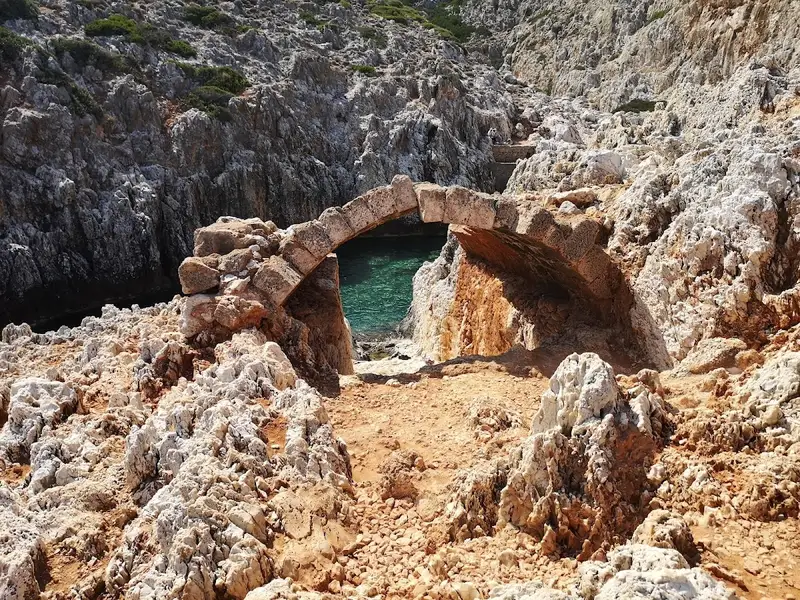
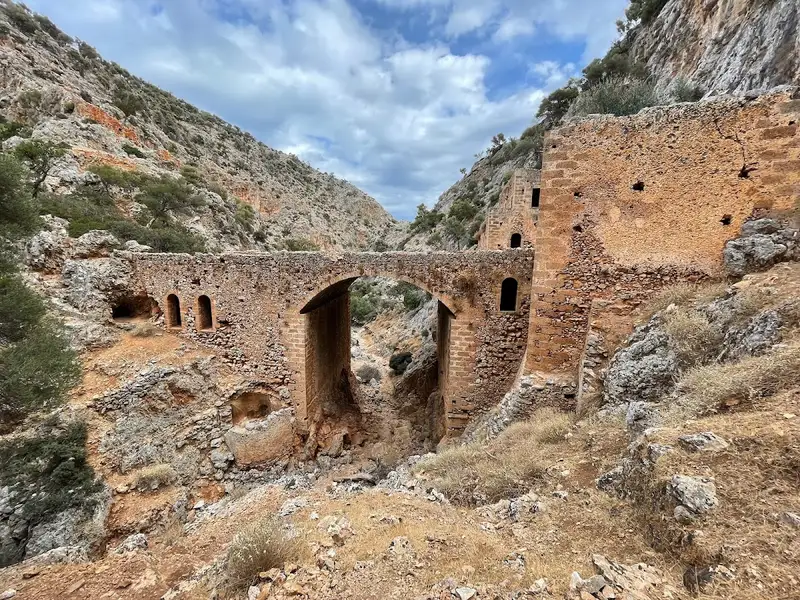
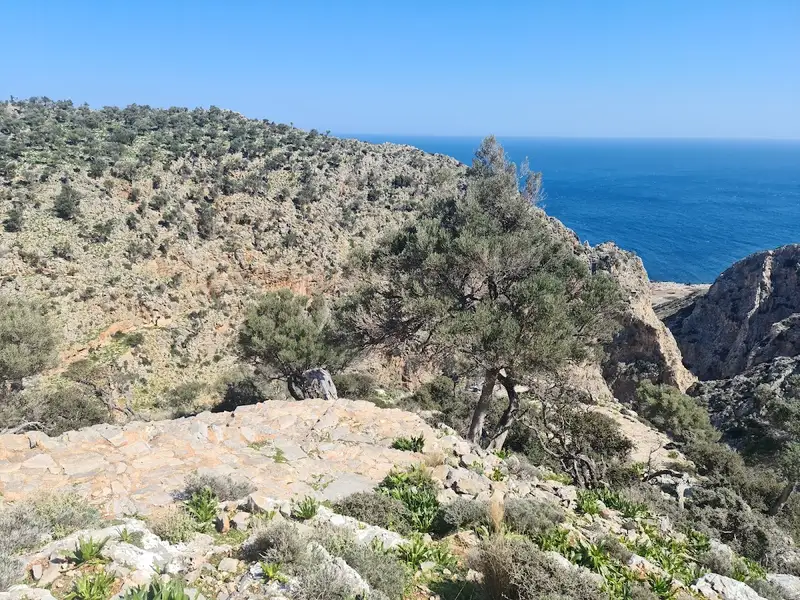
Katholiko Bay, nestled in northwest Crete, is just a 30-minute drive from Chania. This captivating destination promises an adventurous hike that showcases numerous caves, a historic abandoned monastery, a stunning Avlaki gorge, and finally culminates at the picturesque Katholiko Bay. This beach once served as a port for the Katholiko Monastery, where monks used to dock and mend their boats. Its strategic location also made it a prime target for pirate invasions, leading to the monastery’s abandonment in the 16th century.
To embark on this adventure, start at the Gouverneto Monastery. A 30-minute trek will lead you to the deserted Katholiko Monastery. Venture below the bridge, traverse the Avlaki gorge, and in another 20 minutes, the mesmerizing beach awaits. While it’s a rocky haven devoid of sand, the crystalline waters more than compensate. With towering cliffs enclosing the beach, it’s an ideal spot for cliff-diving enthusiasts. Note that the area lacks shade, but there’s a quaint cave on the mountainside for some respite.
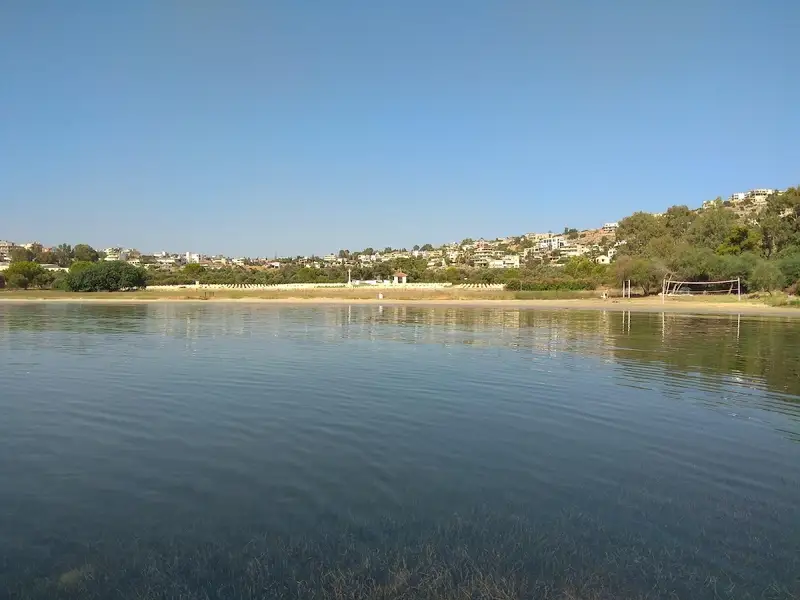
Vlites beach, a well-sheltered spot situated in the grand Souda bay, lies about 5 km to the east of Chania city and holds the title of the longest beach in the bay. This expansive beach takes shape north of the Moronis River’s mouth, extending northwards to the Souda Bay War Cemetery.
The sandy seashore is ideal for kids due to its typically tranquil state and shallow waters. Previously, its closeness to both the Souda Naval Base and Souda’s commercial port led many locals to avoid swimming in its waters. However, chemical analysis has confirmed the water’s cleanliness, assuring that swimming at Vlites beach is entirely safe.
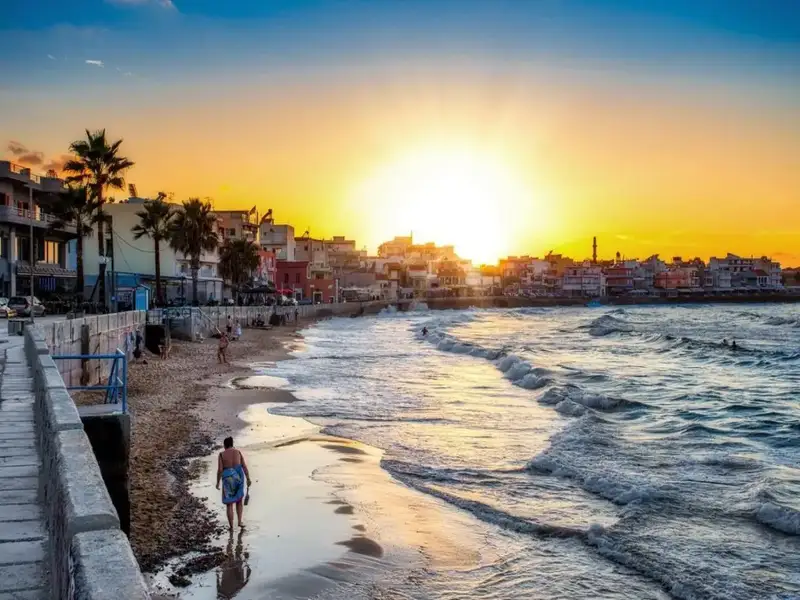
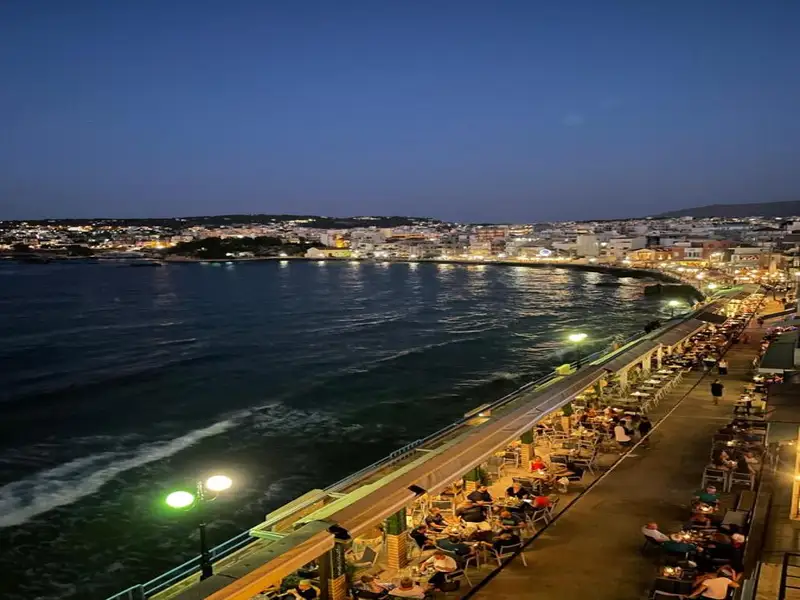
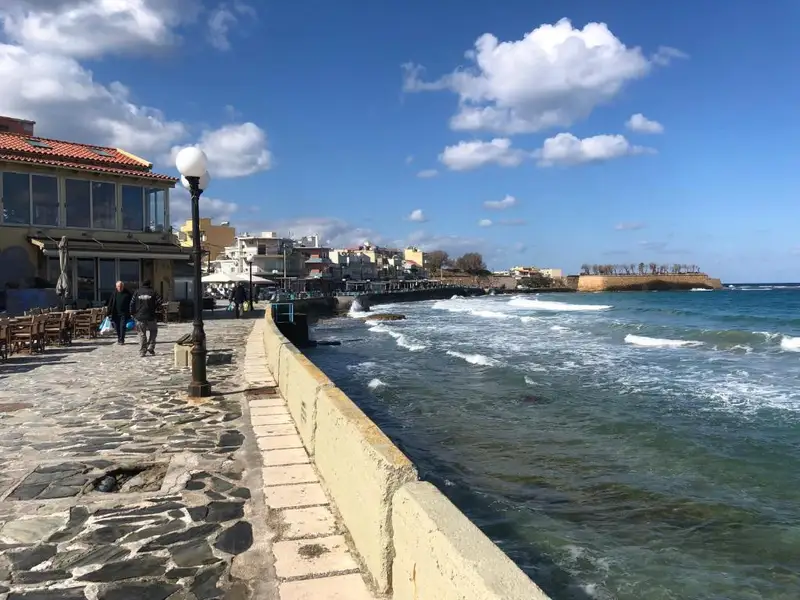
Koum Kapi is a roughly 1km strip of sand and a cafe and bar district on the eastern edge of Chania’s old town, just beyond the Venetian port. It is best known for its long coastal street lined with cafes and nightclubs rather than for classic beach days, and it stays unorganized, with no sunbed or umbrella setup. People do swim on the sandy east side, though many locals still hold back after years when swimming here was banned. Come for a seafront coffee, a sunset drink, and an easy walk from the old town; treat the swim as a bonus rather than the reason to visit.
Koum Kapi sits at the eastern edge of the scenic port of Chania, directly in front of the historical Bedouin district. The area was once home to African economic migrants who lived in rush-made huts during the Ottoman period, having first arrived on the island as slaves. None of those huts remain today. The only visible structures now are the buildings along a long coastal street lined with cafes and nightclubs.
The name comes from the Turkish phrase Kum Kapisi, meaning the Gate of Sand. This was a gate on the Venetian Walls that stood next to the sandy beach, and the district still carries that name. Backed by the old town and open to the sea, Koum Kapi reads more as a lively urban waterfront than a resort beach.
The heart of Koum Kapi is its seafront promenade. A long coastal street runs beside the water, lined with cafes and nightclubs, and this is where most visitors spend their time. It works through the whole day, from morning coffee to late-night drinks, with the sea and the old-town backdrop in view.
The strip sits within easy reach of the Venetian harbour and the old town, so it pairs naturally with a wider evening out. Browse guided walks, tours, and other bookable options to build a full day around the waterfront on the Crete Locals list of things to do in Chania and across the island.
Koum Kapi stretches for about 1km to the east, running beneath a pedestrian road. To the west, the sea meets the road’s wall with no beach in between, so there is little room there. On the east side, a strip of sandy beach forms, and this is where most people swim. Further east, a beautiful cove takes shape, though locals still tend to avoid swimming in it.
The sand is soft, the water reads blue, and the shallows stay shallow close to shore, with a sea surface that is usually calm. In earlier years Koum Kapi was a popular swimming spot in Chania, but declining seawater quality led to a swimming ban. Recent upgrades to the city’s biological cleaning infrastructure have improved the water, and the city’s Water Supply and Sewerage Authority considers it safe for swimming again. Even so, the beach stays unorganized and is still not fully trusted by many locals, so it is sensible to check conditions on the day before you get in.
Koum Kapi lies within the city of Chania, on a paved road at the eastern edge of the old town, which makes it one of the easier spots to reach on foot from the centre. Bus services run to the area, and the paved-road access means you can also drive in.
There is a parking area near the beach, but it fills up and gets crowded in peak season, so arriving early helps. Compare rental options through Crete Locals car rental in Crete when you want the freedom to move between beaches and villages across the wider region.
Koum Kapi fits travellers staying in or near Chania old town who want a seafront base for coffee, food, and drinks without leaving the city. It is family friendly, with shallow, usually calm water on the east-side sand, and it suits anyone who values atmosphere and walkability over a fully organized beach.
It is a weaker choice if you want sunbeds, umbrellas, and beach services, or a long stretch of open sand. For a more conventional swim close to town, the sandy bays just west of the harbour are a better match than Koum Kapi.
A short way east, in the Halepa suburb of Chania beside the Agia Kyriaki chapel and beach, you will find Kouloura, a small rocky pond. It serves as a favoured natural pool among Halepa residents, many of whom have their own story about the place.
Koum Kapi also sits close to some of the city’s landmarks, including the Venetian Harbour, the Archaeological Museum of Chania, and the Municipal Market of Chania. When you are ready to swim somewhere more open, nearby options include Lazaretta islet, Vlites beach, Chrissi Akti beach, and the sandy Nea Chora beach just west of the port. You can plan a wider coastal route from the full Crete Locals guide to beaches in Crete.
Koum Kapi beach is in the city of Chania, on the island of Crete, Greece, at the eastern edge of the old town in front of the historical Bedouin district.
Yes, Koum Kapi beach is suitable for swimming, and the city’s Water Supply and Sewerage Authority considers the water safe after infrastructure upgrades. It is still recommended to check the water conditions before entering the sea.
The beach has sand, the water colour is blue, the water near shore is shallow, and the surface of the sea is usually calm.
Visitors can swim on the east-side sandy strip and enjoy the several cafes and restaurants along the coastal street.
Koum Kapi beach is unorganized, so it has no sunbeds or umbrellas, but there are accommodation options and food and water available nearby.
The beach is reached by bus services and by a paved road, and there is a parking area nearby that can get crowded in peak season, so it helps to arrive early.
Yes, nearby attractions include the Venetian Harbour, the Archaeological Museum of Chania, and the Municipal Market of Chania.
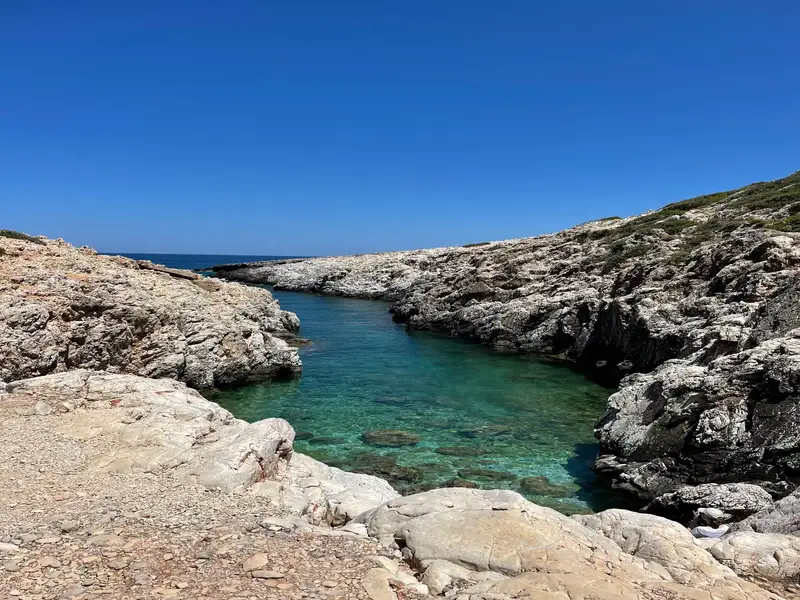
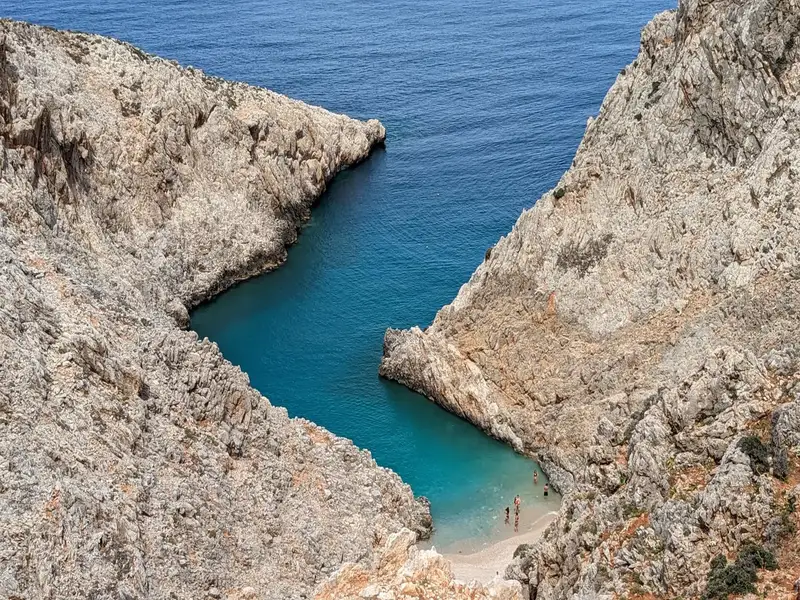
Seitan Limania beach (which translates to “satan harbours”), is situated 22km northeast of Chania and 2km east of the village of Chordaki. This intriguing location is on the eastern side of Akrotiri Cape. Named Seitan Limania due to the untamed landscape, steep cliffs, and powerful sea currents perceived as dangerous, it features three parallel, narrow, well-sheltered coves.
The northern cove is home to the breathtaking Stefanou beach, with its deep, azure waters. The beach is decorated with fine pebbles and sand, carried from a nearby quarry through the Diplohahalo canyon. To the right and left of the cove, towering marble rocks stand guard, protecting the beach from inclement weather. Its reputation has grown quickly since 2010 when an asphalt road made it more accessible; during peak season, it can get crowded, so arriving early is advised.
The road leading to Seitan Limania beach is a bit curvy and steep, but it should not be a problem for those who have driven on mountain roads before. The road has been recently paved, and during the drive, one can enjoy the natural beauty of Crete. The asphalt road descends abruptly and ends at a parking area near the beach. It is essential to put the handbrake on when parking the car and use stones to secure the tires.
To reach the beach, park the car near the church of Agios Spyridon and walk for 10-15 minutes down the path. Wearing trainers is recommended as the path can be slippery, and flip-flops should be avoided.
Seitan Limania beach does not have any amenities, which is why it is not crowded, but it is essential to bring water (at least a litre per person), sunscreen, towels, food, drinks, and entertainment such as headphones or a book.
The beach is magnificent, with soft sand and crystal clear blue waters, and one can also encounter friendly goats.
The coastal retreat of Loutraki can be found 16km to the east of the city of Chania, nestled near the American military base in Souda. Loutraki, along with the nearby Marathi, are the two primary tourist hotspots in the eastern region of Akrotiri.
Loutraki boasts a tranquil beach with fine, soft sand and crystal clear, shallow waters, making it an ideal spot for children. The beach is well-maintained and equipped with all the standard tourist facilities, all under the cool shade provided by the trees along the beach. Visitors can hire umbrellas, dine in local taverns, rent rooms for their stay, and partake in a variety of water sports.
Additionally, there is a large parking area available for visitors, which is shaded by tall eucalyptus trees.
No results available
No results available
© All rights reserved. Crete Locals