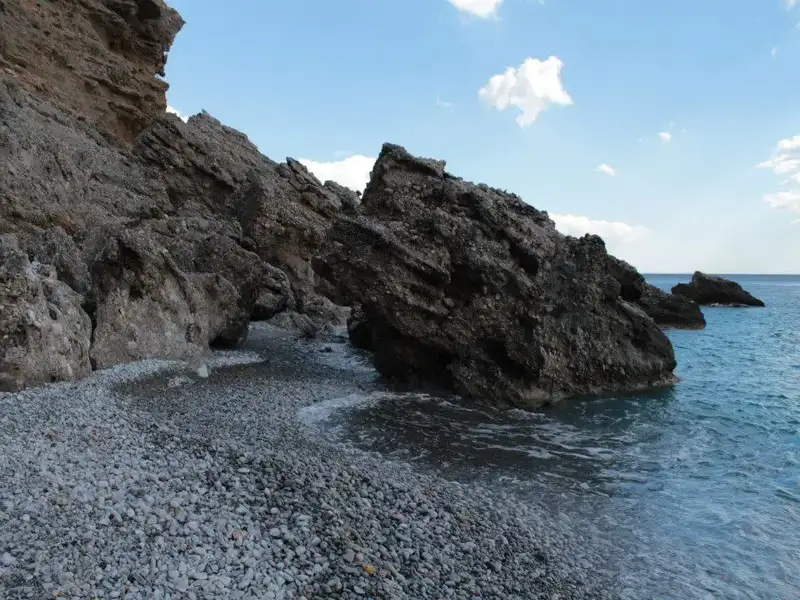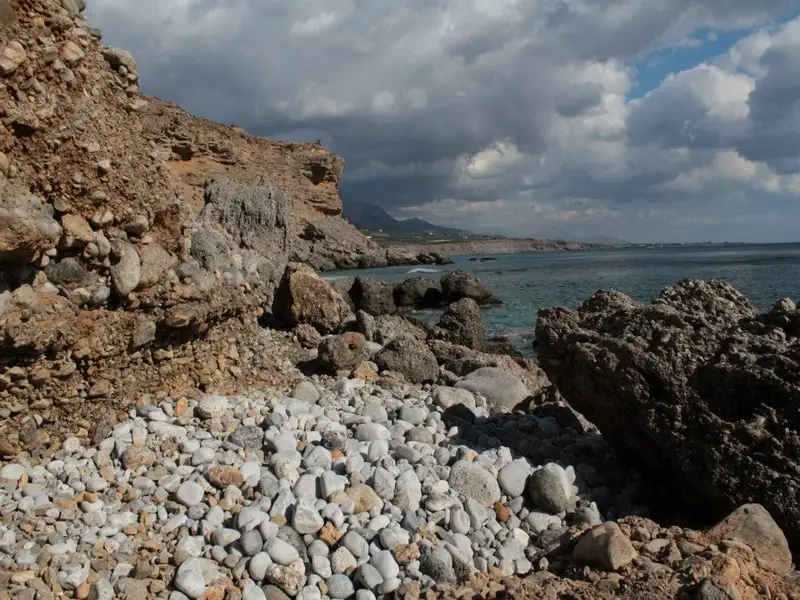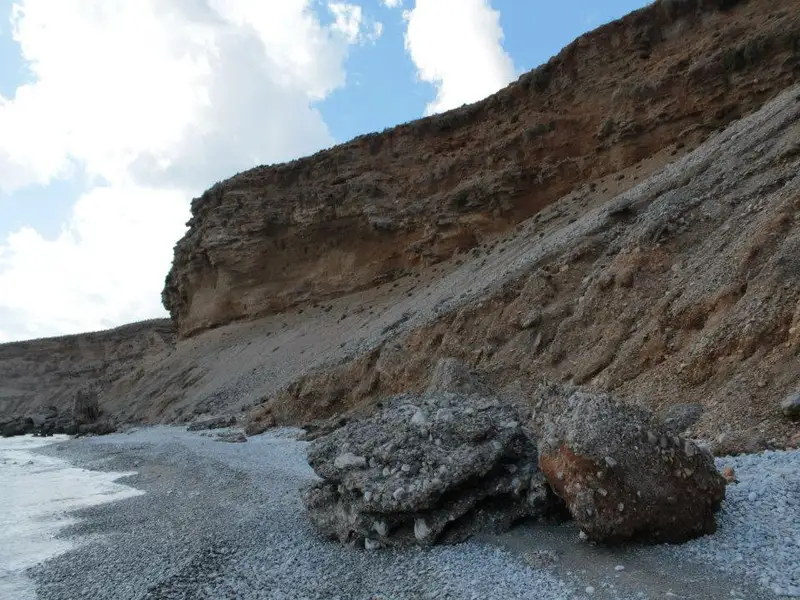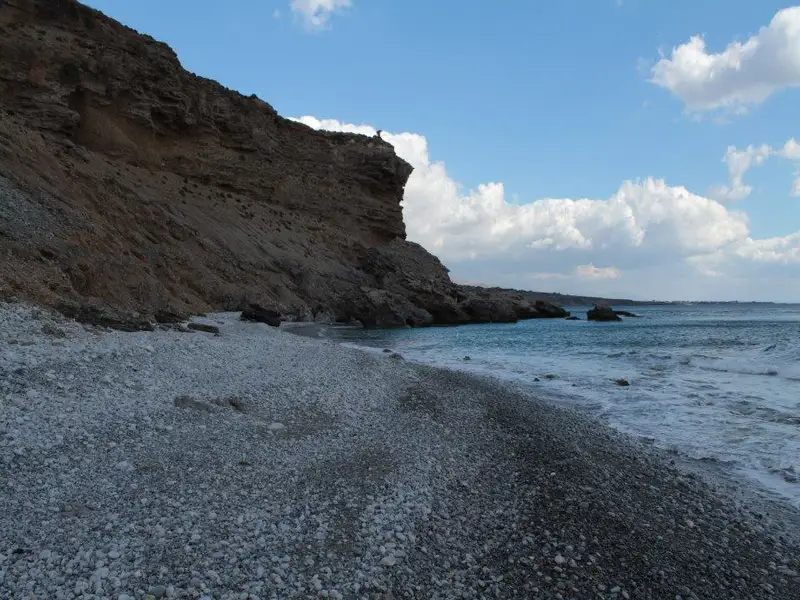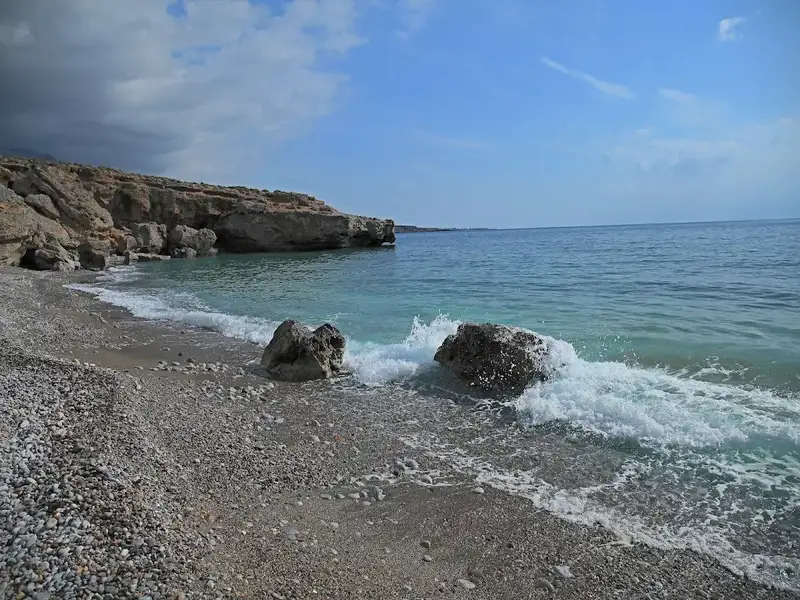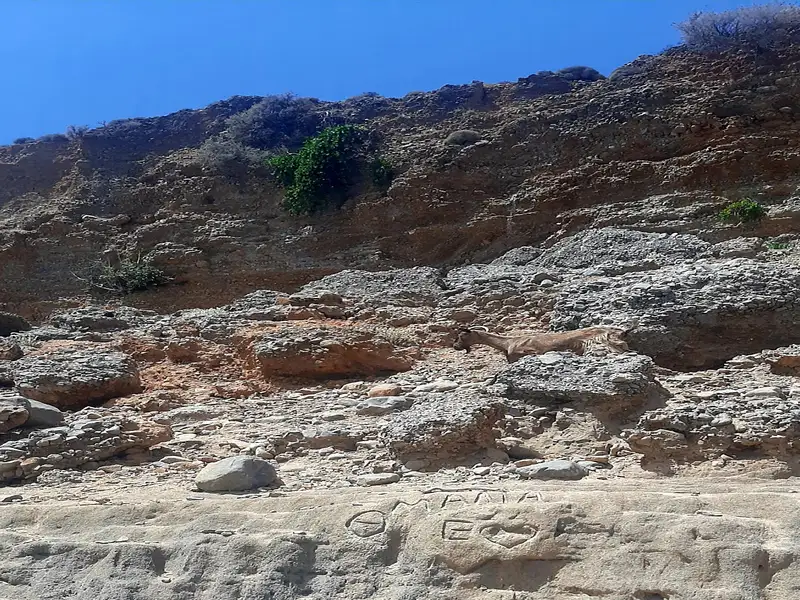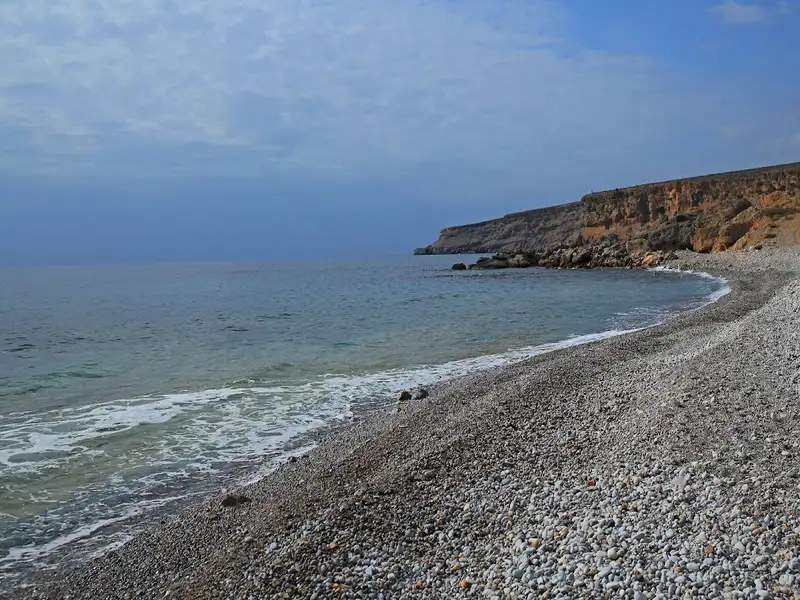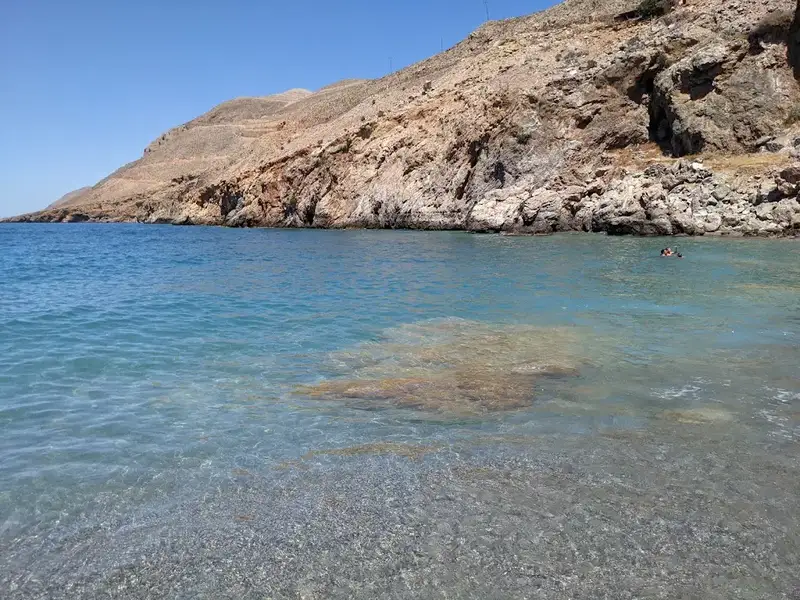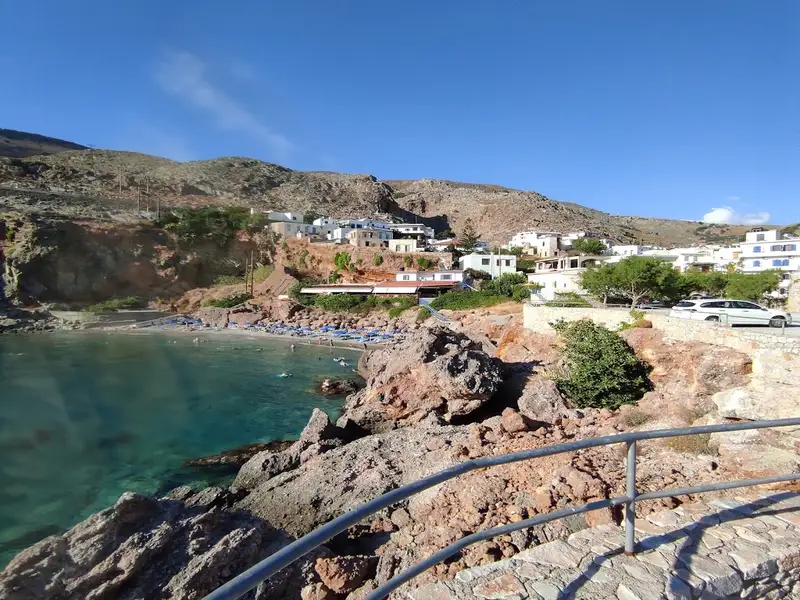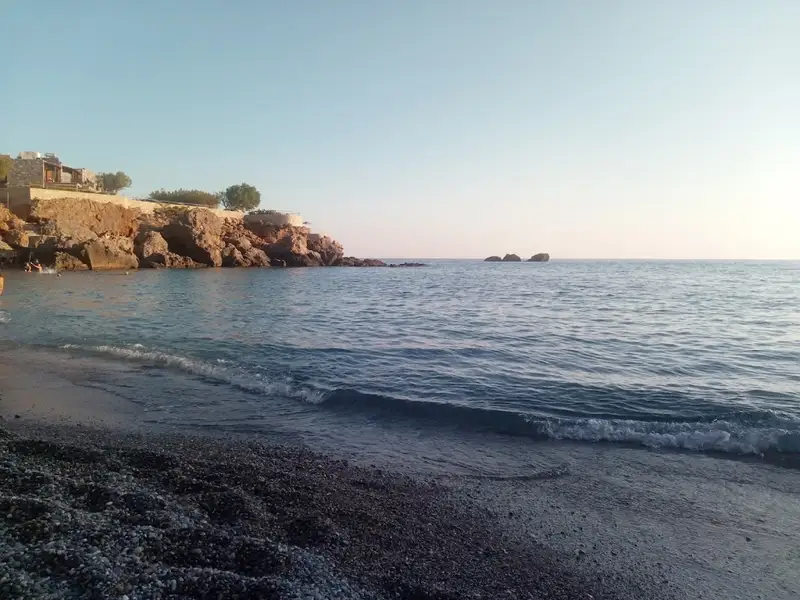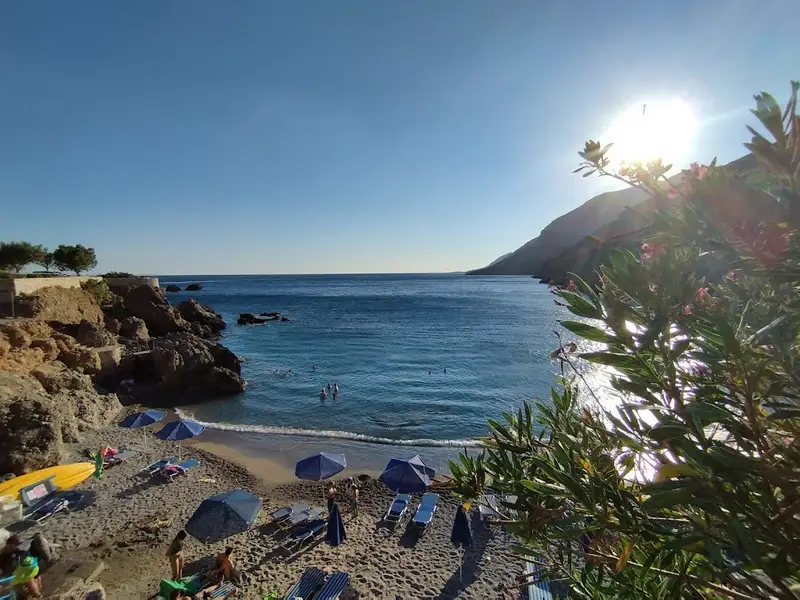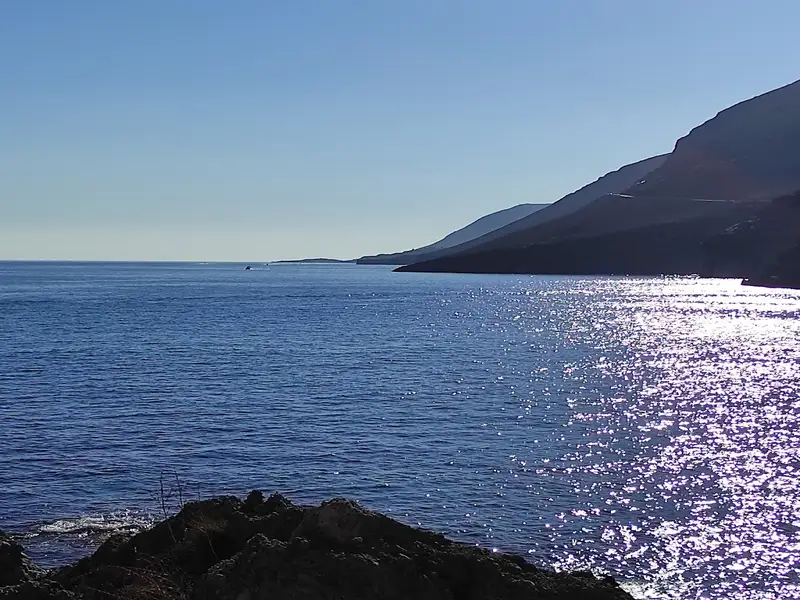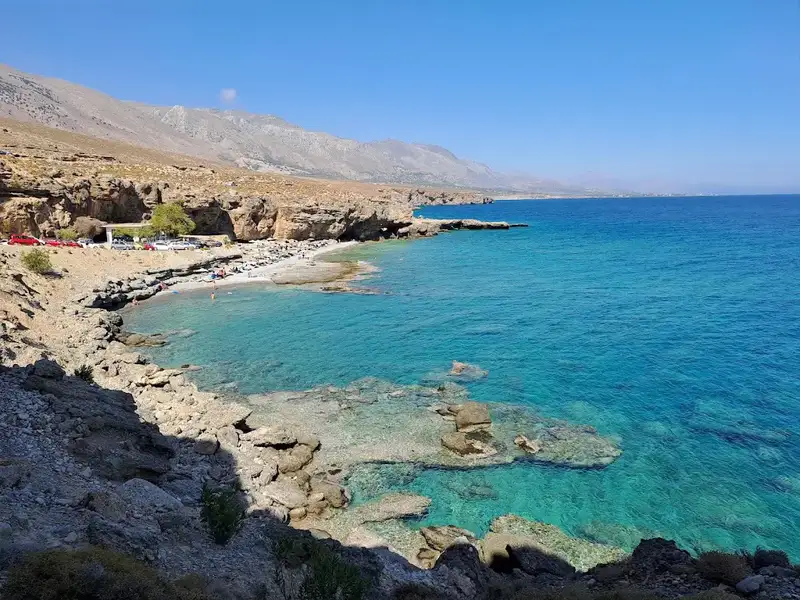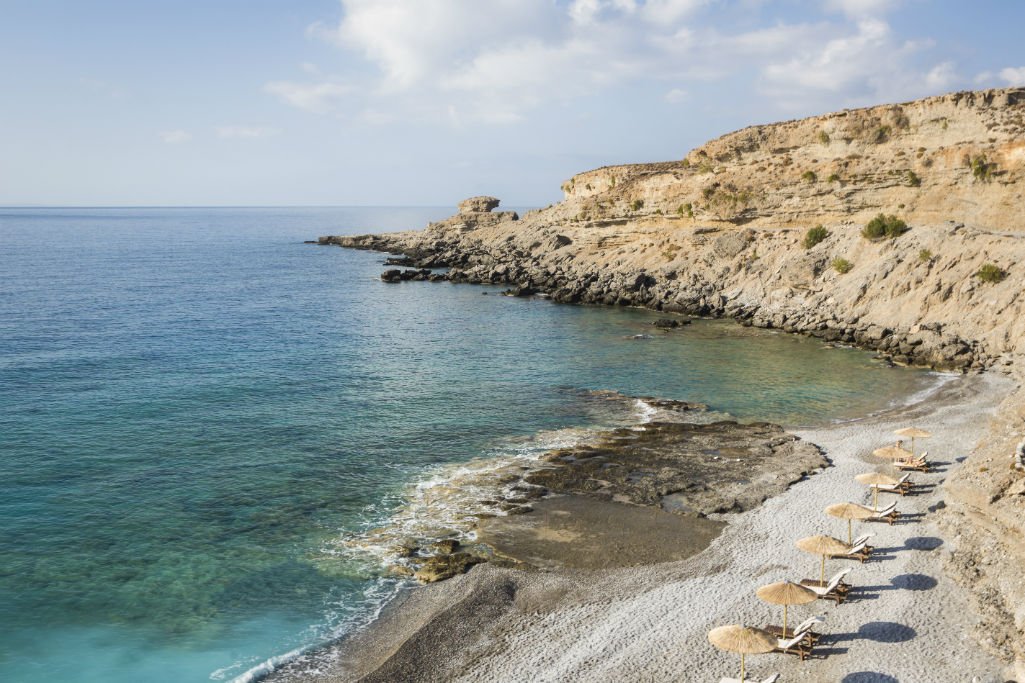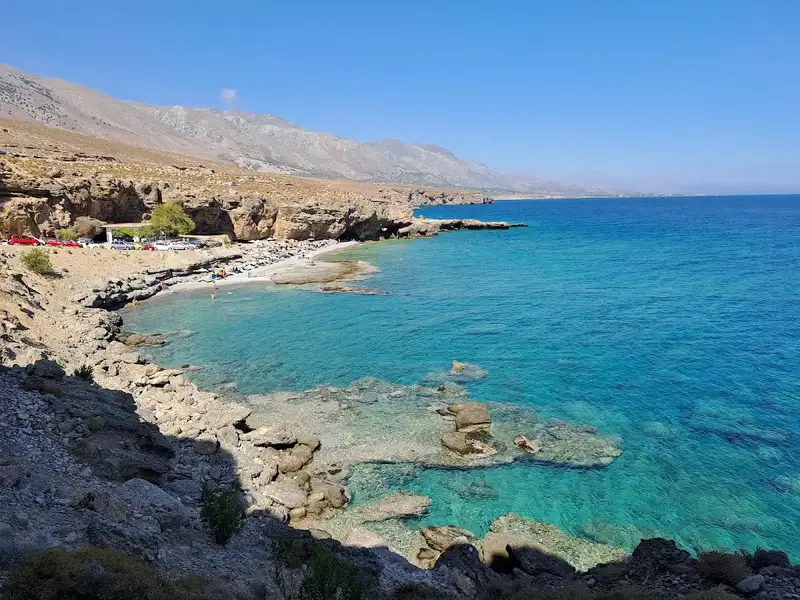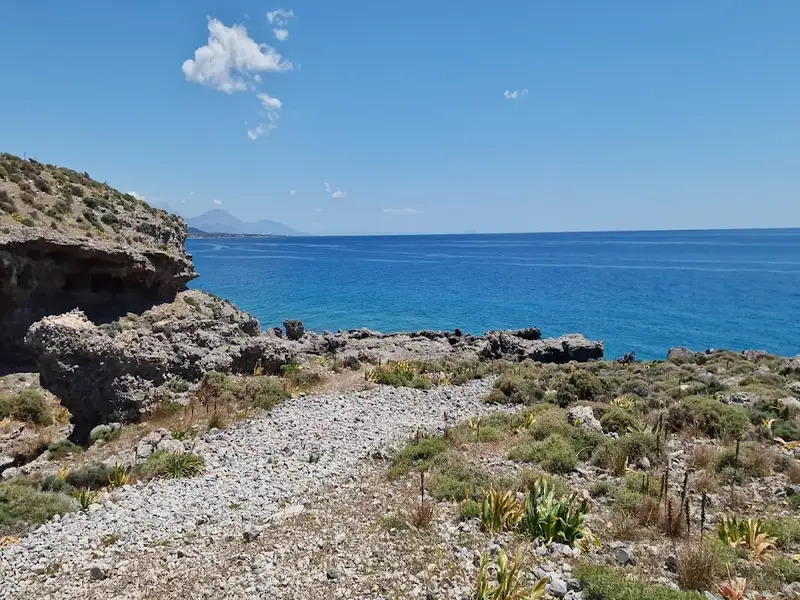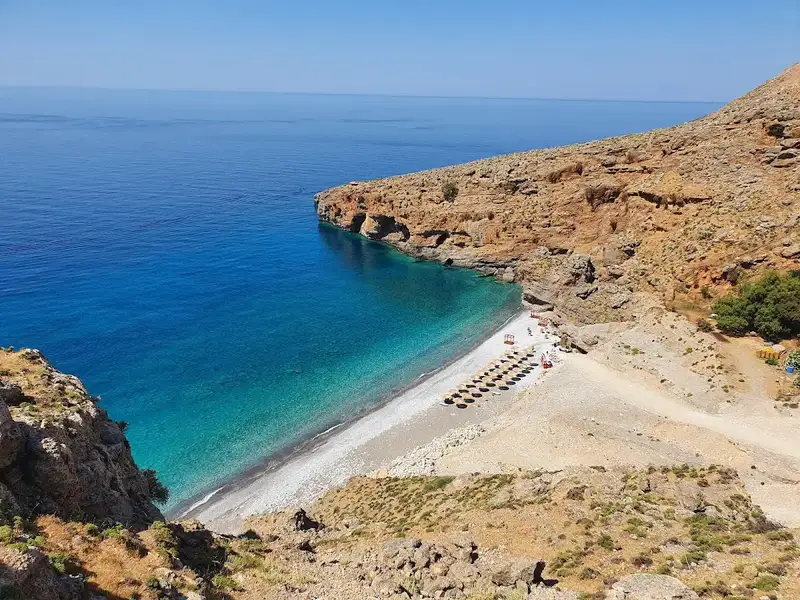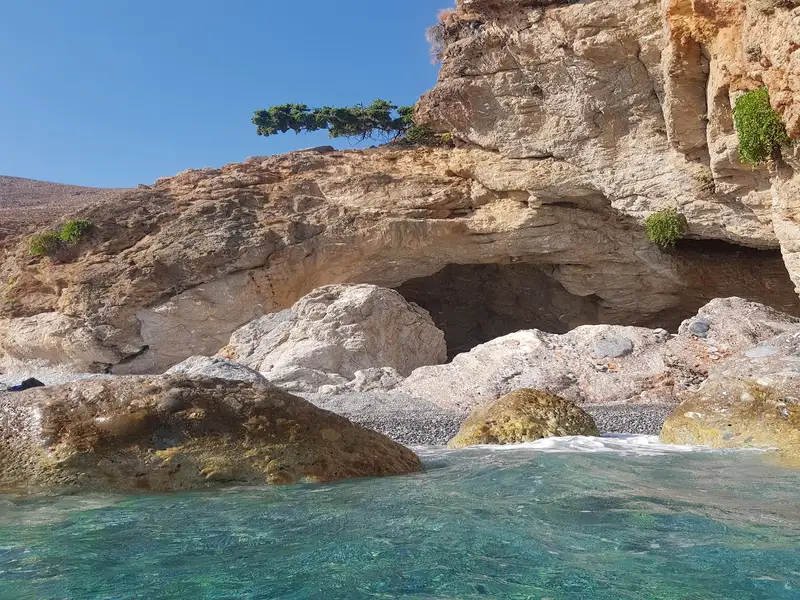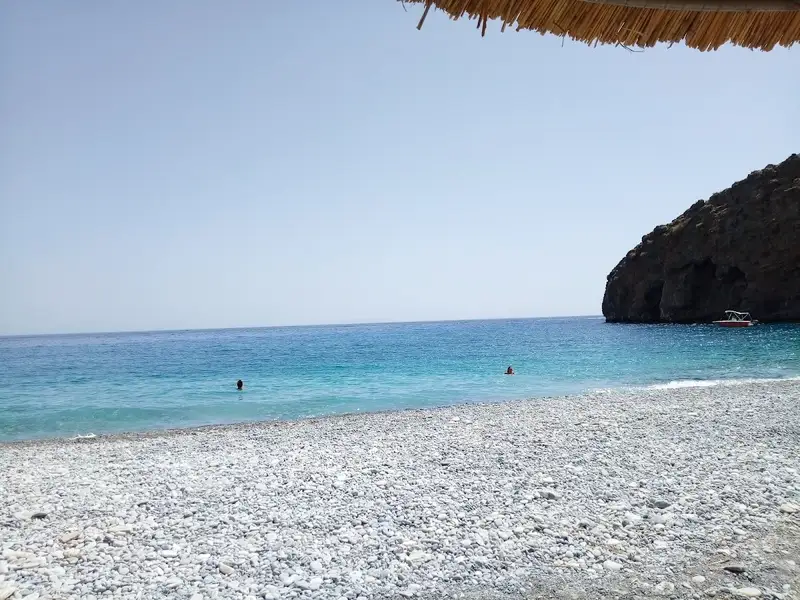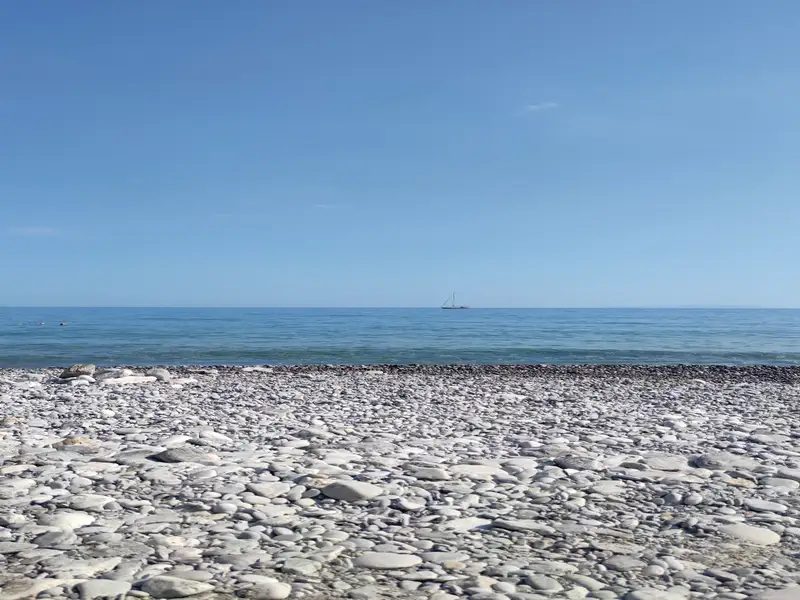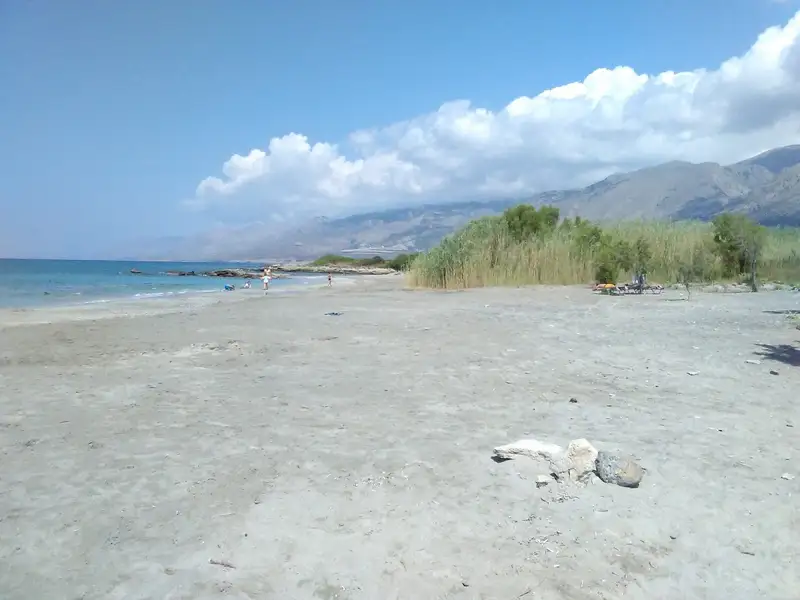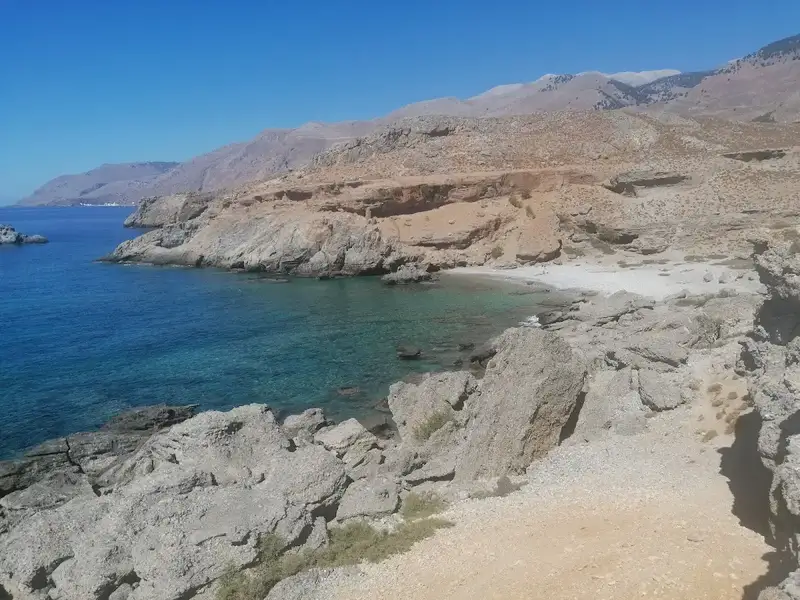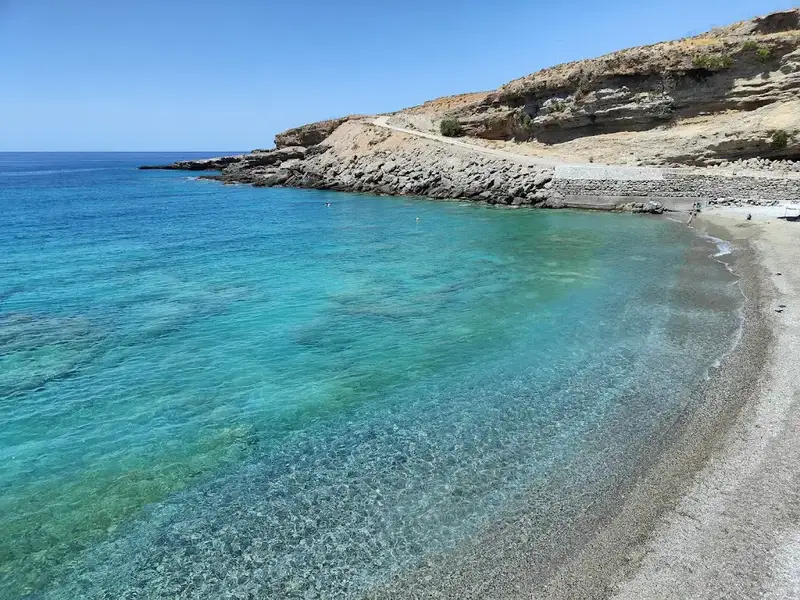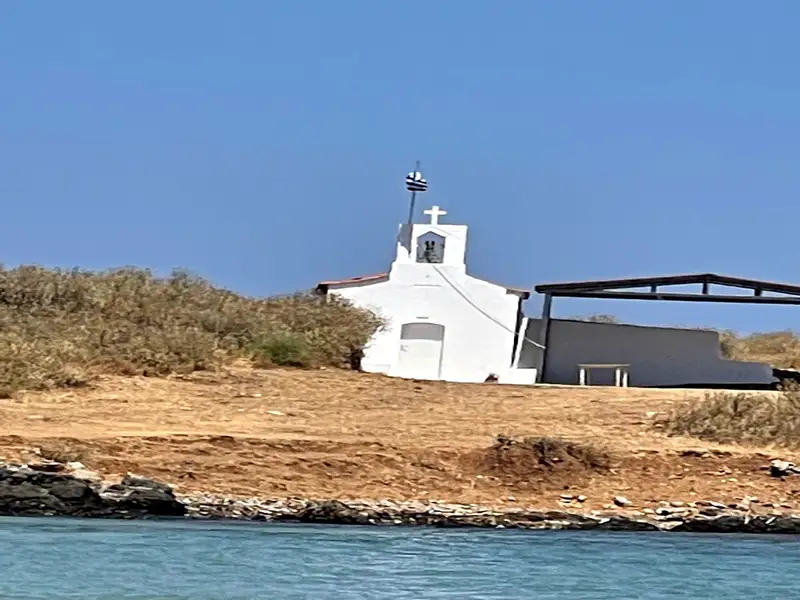
A few meters to the west of Koutelos beach, you will find the hidden gem known as Leska beach. Its name, which translates to “Steep Place” or “trap” in the local Cretan dialect, is derived from the sheer cliffs that surround the area. The beach is mostly pebbly, but you can find patches of sand here and there. On the western side, there’s a tiny cove with a rocky seabed. It’s primarily accessible by boat, as the journey on foot from Koutelos beach can be dangerous due to unstable terrain and towering cliffs.
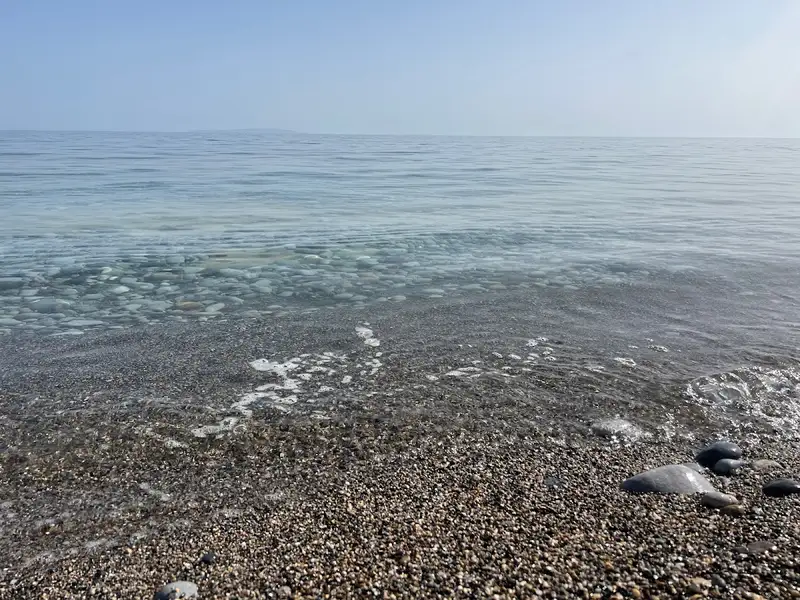
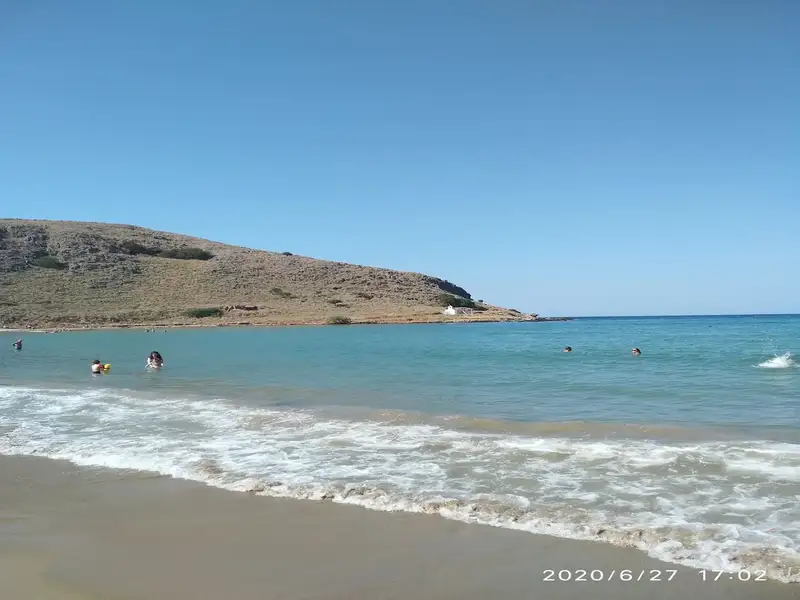
Koutelos, a tranquil and unstructured beach with large round pebbles, is situated close to the village of Nomikiana. It’s approximately 9km to the east of Chora Sfakion, 4km to the west of Fragokastelo, and 76km to the south of Chania.
If you’re traveling from Sfakia, take the road leading to Fragokastelo. Shortly after passing Vouvas and Nomikiana, turn onto the road leading to the beach. Koutelos is clearly signposted. It’s a place worth visiting if you’re in the area, but it’s not a standalone attraction. It’s best to combine a trip to Fragokastelo with a visit to Koutelos if you’re looking for some peaceful moments or a bite to eat at the local fish tavern.
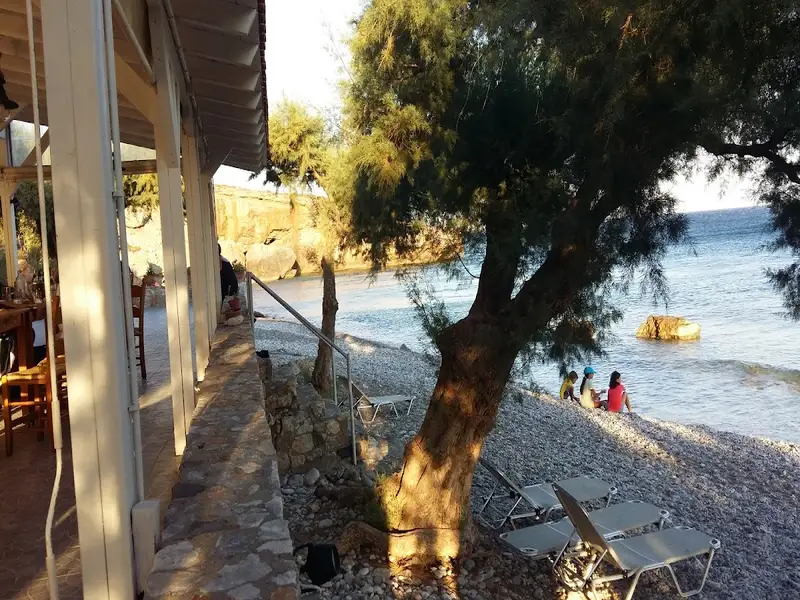
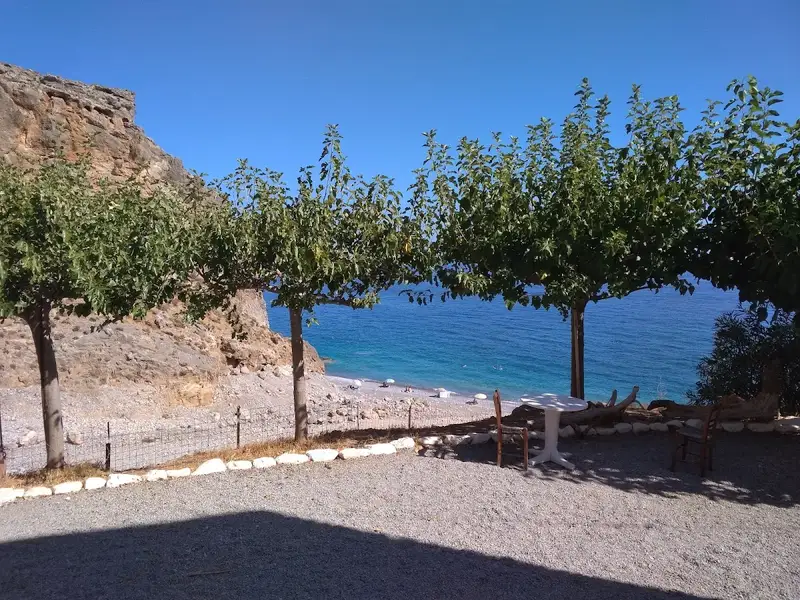
The beach features a traditional fish tavern where you can also find accommodations in a few adjacent rooms. Additionally, the beach is dotted with tamarisk trees providing shady spots. Next to the beach, you can explore the cave of Anapsis or set up camp at the small bay of Pera Koutelos, located to the west of the main beach. Between Koutelos and Vatalos beach, you’ll find the rocky beaches of Psilou Roumi Cape. Just a few meters to the west of Koutelos beach, there’s the secluded Leska beach.
Sfakia, also known as Chora Sfakíon, is a quaint town located on the southern coast of Chania. This town, nestled near the end of the Sfakiano Gorge and 74km south of Chania city, serves as the capital of the isolated and mountainous region of Sfakia.
Vrissi, the primary beach of Chora Sfakion, can be found at the town’s western end. This appealing pebbly beach is well-maintained and conveniently close to the town’s facilities. You can stroll down the narrow lanes of the village to reach the beach. Overlooking the eastern end of the beach is the ancient Byzantine church of Saint George, locally known as Agios Georgios.
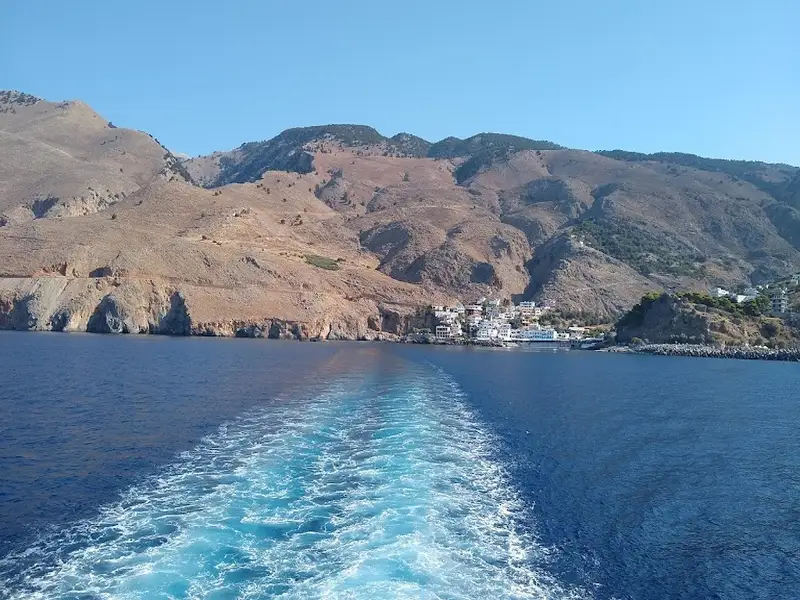
Adjacent to the quaint harbour of Sfakia, locally referred to as Limani or Ombrosgialos, is another beach. Although smaller and less attractive than Vrissi, it is well-arranged and situated in front of the local tavernas. This harbour is the departure point for the ferry service to Agia Roumeli, Loutro, Sougia, Gavdos island, and Paleochora. A memorial above the beach pays tribute to the final Australian, British, and New Zealand forces who were evacuated from this bay by British and Australian warships between 28th May and 1st June 1941, after the intense Battle of Crete.
Venturing east from Fylaki beach, a mere 100 meters away, you’ll encounter the terminus of the Sfakiano Gorge, where a beautiful pebbly beach has taken shape. This region, known as Plakakia, is home to some of Crete’s most breathtaking beaches, nestled within slender fjords. In fact, several of these beaches have developed within small caves! A challenging dirt road provides access to the vicinity of the beach.
Filaki beach is located 3 km from the village of Sfakion on the south coast of Crete and 75km south of Chania. If you are staying in Chora Sfakion, it is an easy walk to the beach. Filaki means “Prison”, it was named like this due to its remote location.
It is a pebble beach with rock formations. It is the only official nudist beach on the island. Thanks to the only nudist hotel in Crete in the immediate vicinity, you will meet many like-minded people.
The beach is not wild– Filaki has a well-developed infrastructure: it has a parking lot, water closets, bars, sling chairs, and umbrellas. A more friendly nudist beach cannot be found in Crete.
Crete’s southern treasures offer a diverse range of experiences, catering to a variety of interests.
Historical and Religious Sites: For those fascinated by religious history, the stunning Chrisoskalitissa Monastery is a must-visit. Perched atop a colossal rock, this holy sanctuary offers striking views and a rich historical narrative.
Nature Exploration: If you’re an outdoor enthusiast seeking immersion in nature, the Sfakiano Gorge is an absolute treat. Offering tranquil trails for serene walks, Sfakiano is an oasis of peace and scenic beauty on this idyllic island.
Beach-side Activities: For beach lovers, Filaki Beach holds its own unique charm. It’s not just the azure waters that captivate; the beach also hosts licensed naturist taverns serving delectable local cuisine. Moreover, adrenaline-pumping activities like snorkelling and spearfishing are readily available for thrill-seekers.
Iligas, a stunning beach with turquoise waters and sandy shores, can be found 1km west of Chora Sfakion and 74km south of Chania city on Crete island. It sits at the mouth of the Kavi Gorge originates near Anopolis and features three separate beaches, each divided by impressive sea caves.
The primary beach, which is quite lengthy, can be reached by taking a short stroll from the main Sfakia-Anopolis road. The superior beaches are situated east of this and can only be accessed by boat or by swimming from the main beach.
You can find a small tavern offering rooms for rent on the main Iligas beach, but Chora Sfakion offers more facilities. Iligas is considered one of the most beautiful and easily reachable beaches in southern Crete. Each of the three beaches hosts several caves, providing shadows and coolness. The beach’s accessibility and proximity to Sfakia make it an ideal spot for a brisk 10-15 minute walk from Sfakia.
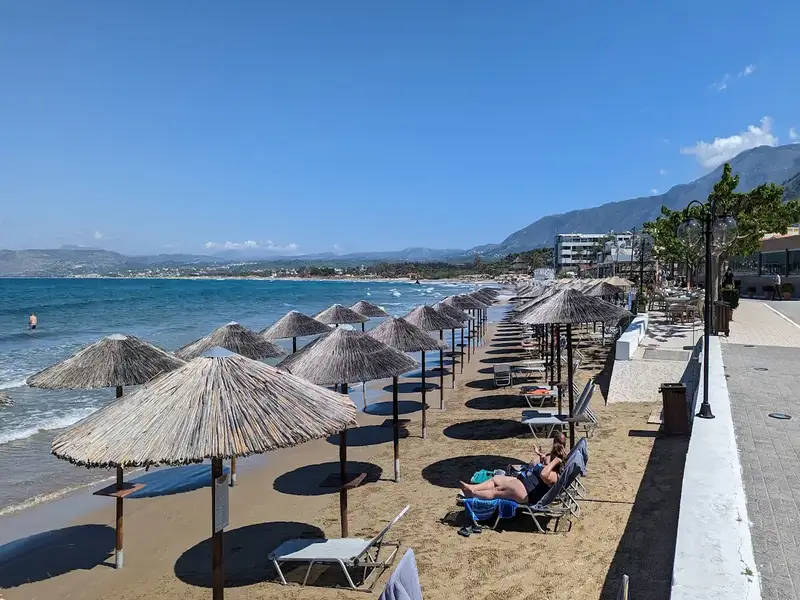
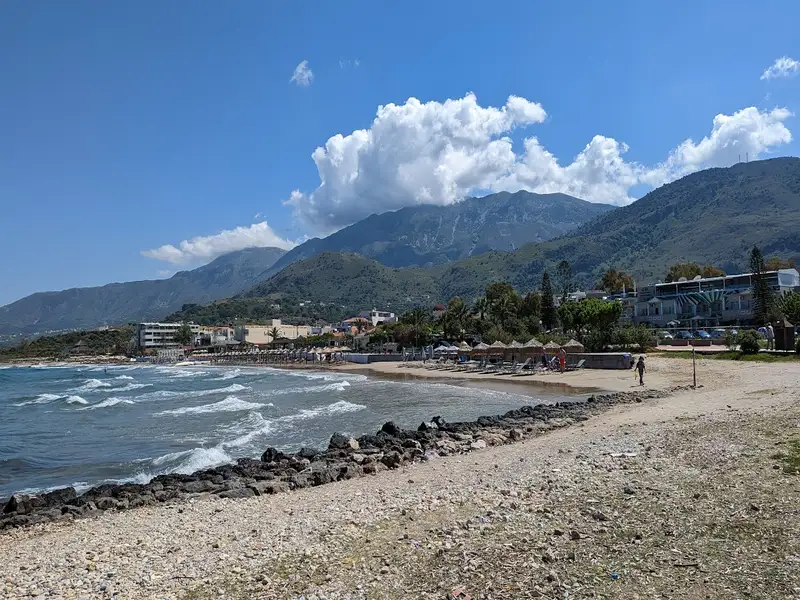
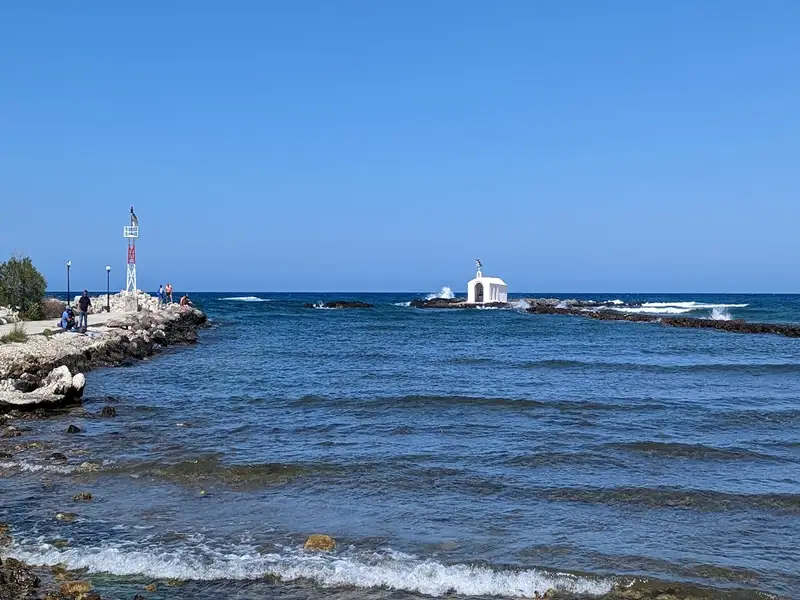
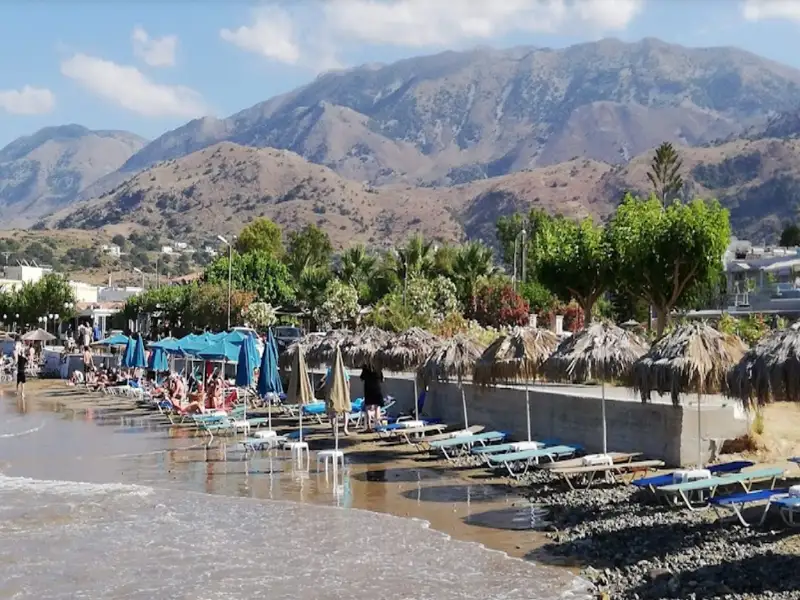
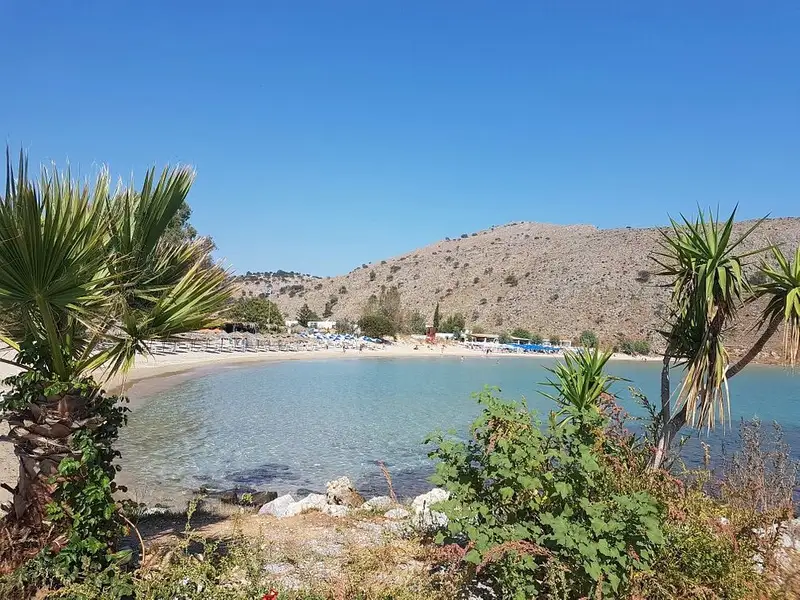
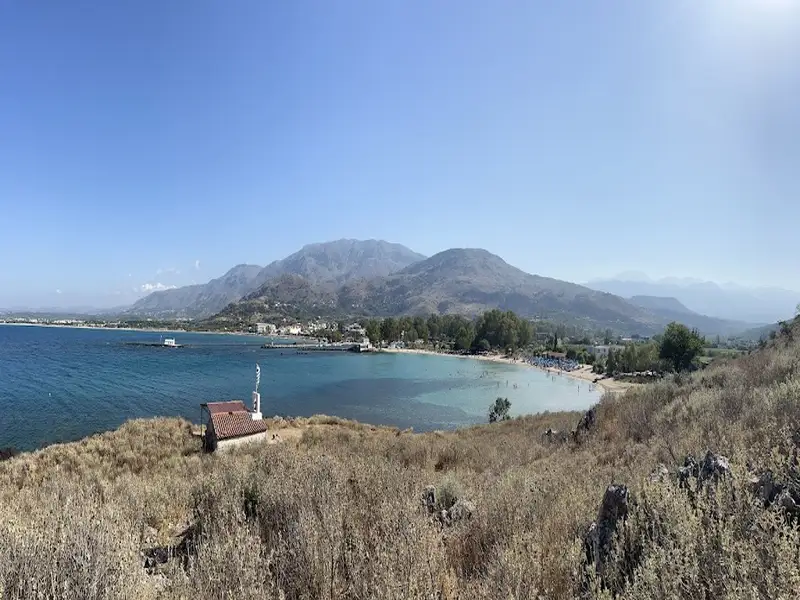
Georgioupolis, a small coastal town located 38km east of Chania and 21km west of Rethymnon, is a seaside resort nestled in a verdant valley crisscrossed by rivers and springs. Situated on the western edge of a sprawling 10km beach, the town’s beach spans 2km to the east, beginning at the Almiros river and terminating at Kavros beach, a natural continuation of the former. The beach in Georgioupolis is sandy, dotted with dunes, and has shallow waters.
The beach is well-maintained and child-friendly, with lifeguards on duty. Caution is advised during windy conditions due to sea currents. Amenities such as umbrellas, showers, and food and drink stalls are available for beachgoers. Approximately 700m east of the port, the Perastikos river bifurcates the beach, which then widens as it continues eastward. On the opposite end, west of Georgioupolis’s port and near the Almyros river’s exit, lies the picturesque Kalivaki beach.
The beach Amoudi is located about 1.5km east of Chora Sfakion and 75km south of Chania, in an area with several adjacent pebbly beaches and very close to the nudists’ hotel Vritomartis. It is one of the many unknown beaches around Chora Sfakion, and one of the nicest. The area, due to conglomerate rocks, is full of small pebbly beaches, such as Agios Charalambos, Filaki and Plakakia.
A rough dirt road, which in the last section becomes quite bad, leads to the beach. Despite its name (ammoudi means sandy beach), Amoudi beach is not sandy but pebbly with crystal clear waters, the cleanest of all the beaches of the area. The seabed is quite remarkable with beautiful formations. Left and right of the beach, the rocks rise forming caves in conglomerate grounds, decorated with caper plants. Caves offer shade on hot summer days.
On the west side above the beach, there is a shrine which overlooks the sea from where the view at Amoudi bay is unique. The most impressive of all, however, is the geological formation called Fokia (Seal). It is a cave on the west edge of the beach, which at its deepest point creates a small beach and has a second outlet to the sea. Because of the two outputs and the easy possibility of escape this cave was used as a nest for sea seals that are still in the area.
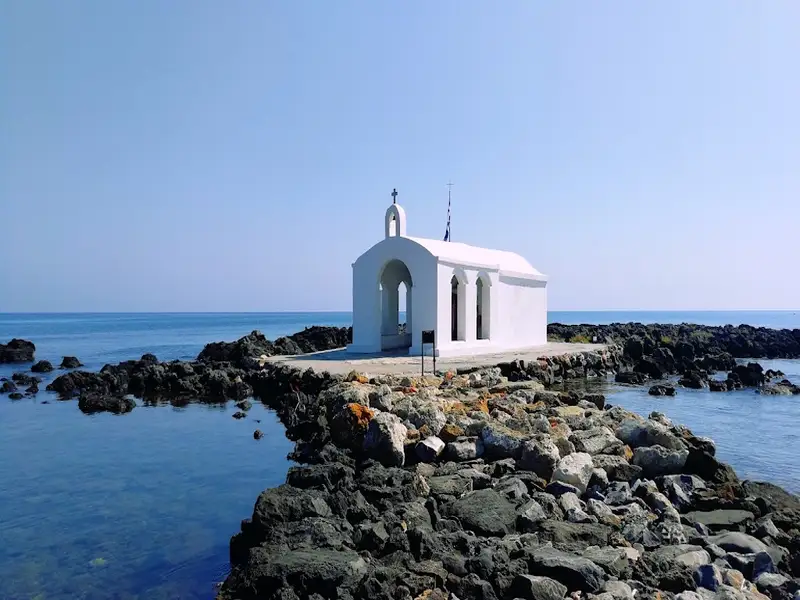
On the east side of the beach, there is a path through the rocks leading after five minutes to the cavernous church of Saint Charalambos honoured highly by Sfakians. Next to the chapel, there is the slightly organized beach of Agios Charalambos, not organised. Saint Charalambos was the saint who protected people from the plague, so they used to build chapels dedicated to the Saint at the entrances of villages. But in Sfakia, where the dominant communication with the outside world was based on the sea, they built the temple on the shores. The coves and the nearby beach of Filaki are mainly occupied by nudists, actually being the only “official” nudism-friendly beaches on Crete (due to the nudists’ hotel).
The Agios Charalambos cove lies adjacent to a local hotel that caters exclusively to nudists. Situated 1.5km east of Chora Sfakion and 75km south of Chania, it can be found in an area dotted with several nearby pebble beaches. The shoreline comprises 3-4 sequentially isolated coves, with Sfakiano Ammoudi being the first one and Agios Charalambos the following one. A small path through the rocks, before reaching Agios Charalambos, leads to the cave-like church of Saint Charalambos, revered by the Sfakians. Known for protecting people from plagues, Saint Charalambos had chapels built in his name at village entrances. However, in Sfakia, where sea was the primary means of communication, the temple was built along the coast.
The coves, along with the nearby Filaki beach, are primarily occupied by nudists, making them Crete’s only “official” nudist-friendly beaches due to the presence of the nudist hotel. The beaches are pebbly and occasionally exposed to rare southern winds. Their isolated nature means there are no accommodation services, water sports, sunbeds, or lifeguards available. Only the Filaki beach houses a single canteen that can be accessed by car.
To reach the beaches, one can drive from Chora Sfakion or walk, heading east and taking a right turn about 150m after the gas station encountered when leaving Sfakia, towards the Vritomartis hotel. A junction lies just below the hotel. The left (eastern) road leads to Filaki beach, while the right (western) road takes you to the Ammoudi and Agios Charalambos coves.
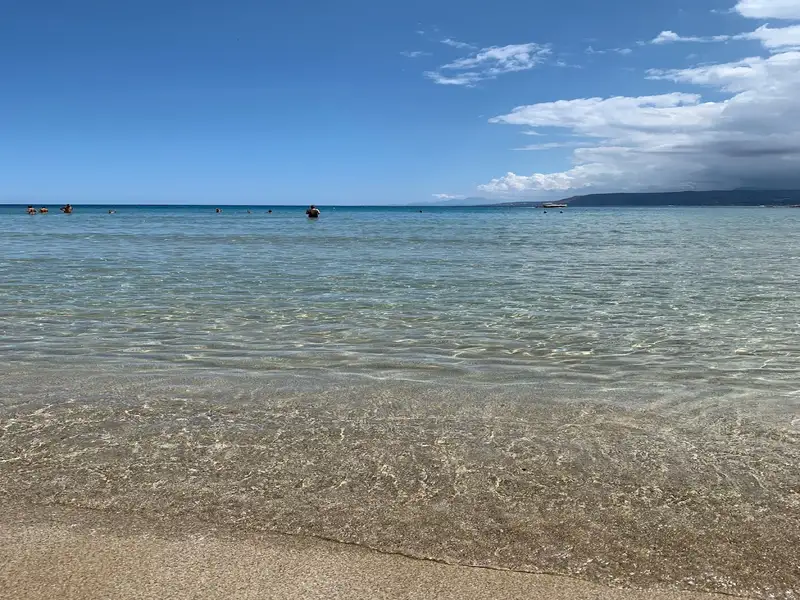
Located 38km east of Chania and 21km west of Rethymnon, Kalivaki is the furthest beach to the west in the bay of Georgioupolis. Nestled near the exit of the Almyros and Boutakas rivers, which maintain a steady flow of water year-round, Kalivaki is a gorgeous sandy beach. The water here is particularly cool, owing to the influence of the rivers and freshwater springs. Kalivaki is a well-appointed beach, complete with umbrellas, water sports facilities, and nearby restaurants. Its protective positioning relative to the other Georgioupolis beaches makes it an excellent choice for children, especially on windy days.
No results available
© All rights reserved. Crete Locals