
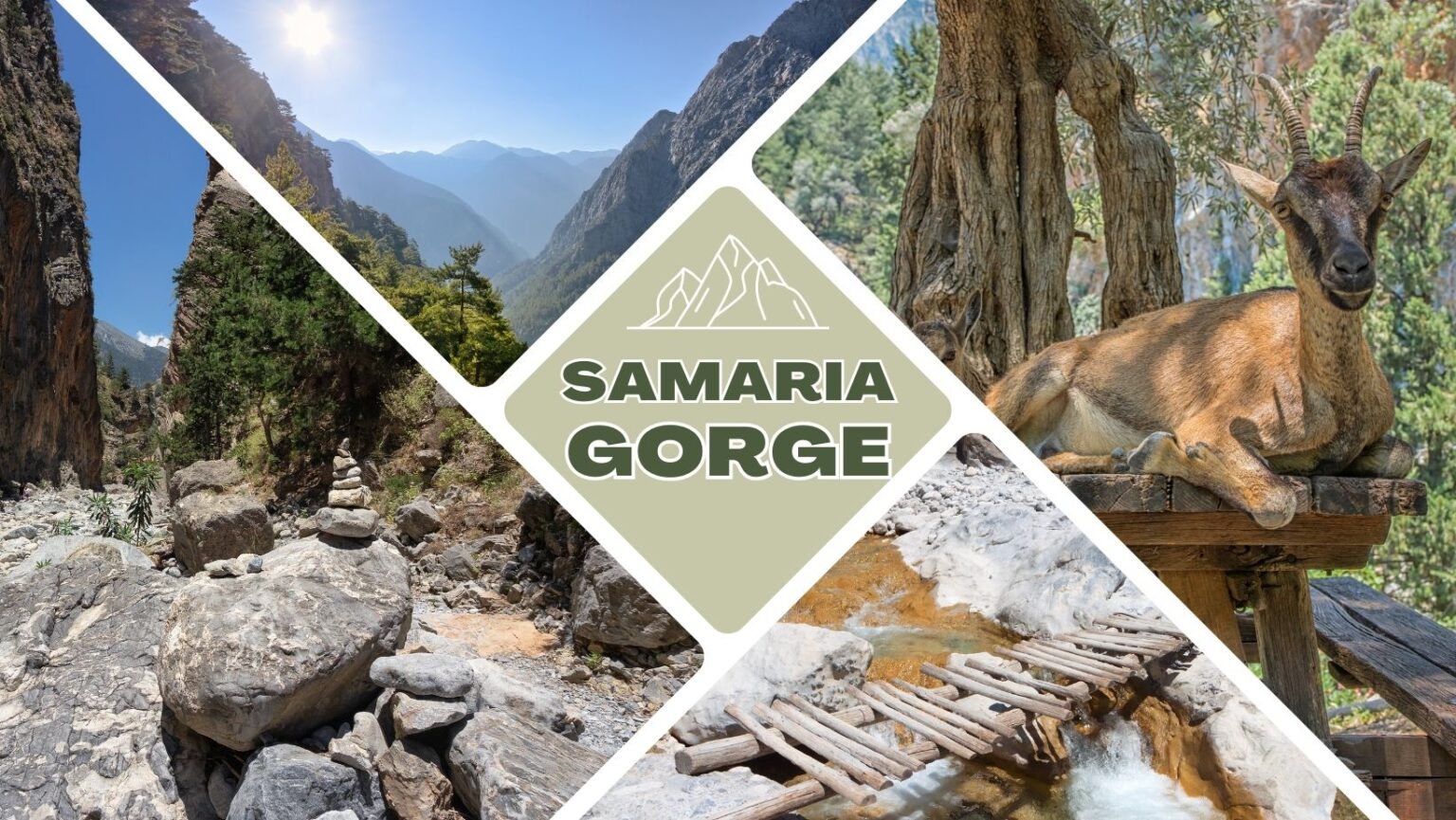
The Samaria Gorge is a 16 km (10 mile) point-to-point hike through a national park in the White Mountains of southwest Crete. The trail runs almost entirely downhill, from an entrance at 1,250 m to the Libyan Sea, and most walkers finish it in 4 to 7 hours. You start at Xyloskalo near Omalos, walk out at the seaside village of Agia Roumeli, and leave by ferry, because no road reaches the far end. Entrance costs €10, the park opens daily from 1 May to 31 October, and the single biggest planning task is booking your onward transport before you go.
This guide covers exactly how hard the walk is, how to time it, how to get there and back, what the ticket includes, and what to carry.
The Samaria Gorge is the longest gorge in Europe that you can hike end to end, and it is the headline walk of Crete. It cuts through the White Mountains (Lefka Ori) and drops from the Omalos plateau down to the south coast. Tectonic movement carved the gorge more than 2 million years ago, as the island of Crete took its present shape.

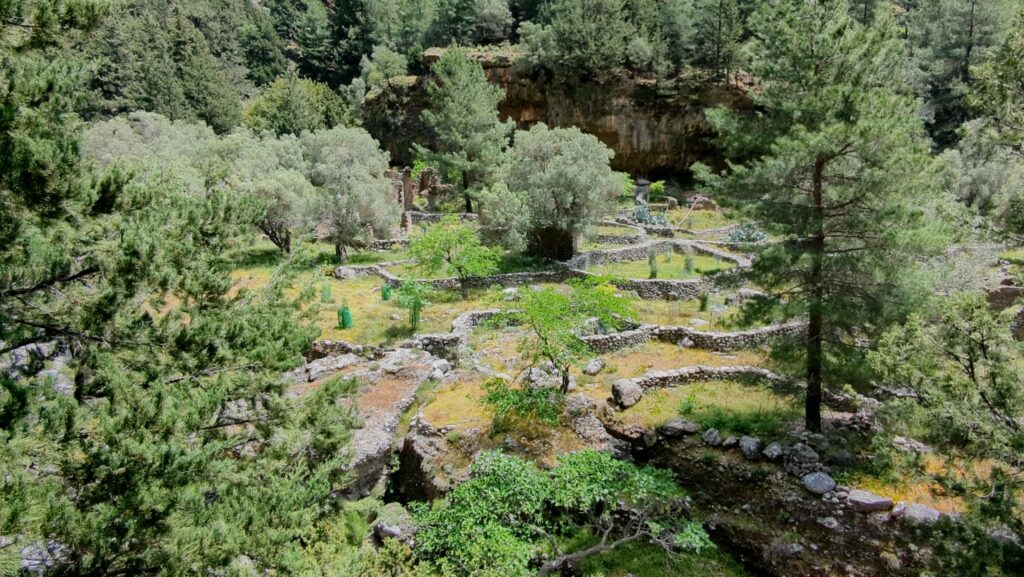
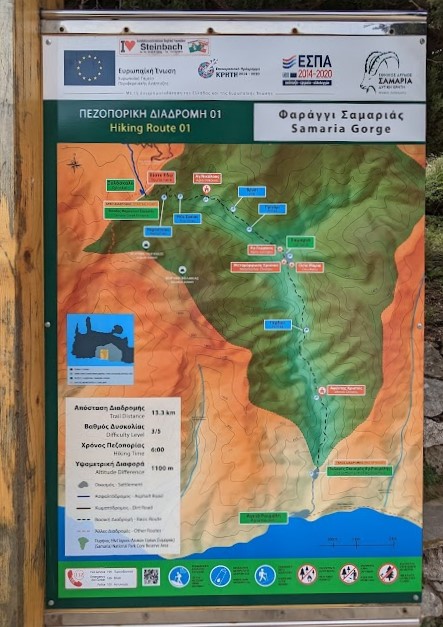
People lived inside the gorge for centuries, and it sheltered locals during the Turkish occupation, the German occupation, and the civil war. In 1962 the Greek state gave the area national park status, resettled the residents of Samaria village, and opened the route to visitors. The abandoned village still sits roughly halfway down the trail and marks the natural rest point of the hike.
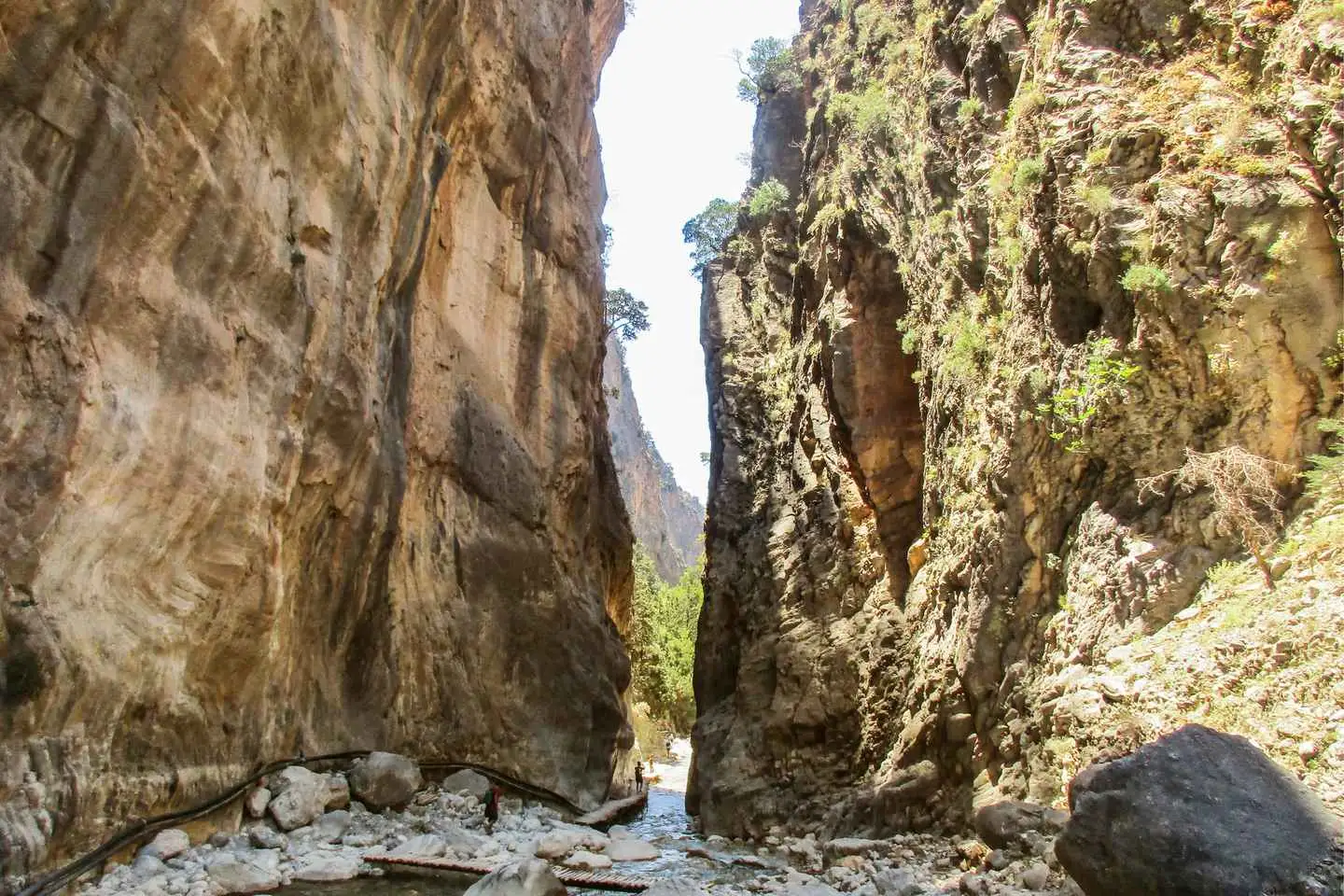
Two features define the walk. The first is the sheer scale of the cliffs, and the second is the Iron Gates, the narrow throat of rock near the end where the canyon closes to just a few metres across.
The Samaria Gorge is moderately hard, and the difficulty is front-loaded rather than spread evenly. The trail is mostly downhill, which spares your lungs but tests your knees and quads over several hours of descent.
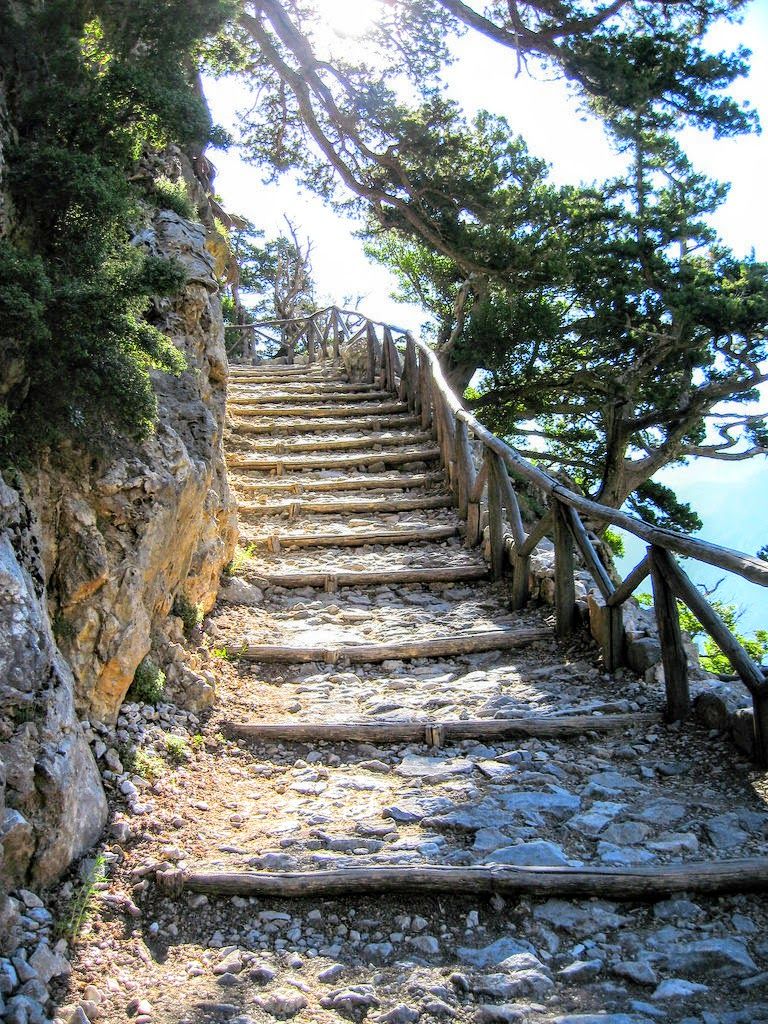


The hardest section is the first 6 km, where the path drops steeply from the entrance on a rocky, stepped descent with a couple of sharp gradients. After those first 6 km the walk becomes easy: once you reach the floor of the gorge, the trail flattens out and follows the riverbed at a gentle grade all the way to the coast. Steep stone steps at the very start (the “wooden staircase” of Xyloskalo) set the tone for that opening stretch.
Nothing on the route requires climbing skill or a head for heights. The main risks are a twisted ankle on loose stones and fatigue in the heat, so pace matters more than fitness. Take the descent slowly, and the gorge rewards you rather than punishes you.
The Samaria Gorge is 16 km (10 miles) long from the entrance to Agia Roumeli. That total splits into two parts:
The route is one continuous downhill hike, not a loop, so you finish at a different place from where you started. That single fact shapes every transport decision below.
Most people walk the Samaria Gorge in 4 to 7 hours, and your own time depends on pace and how often you stop. Use these rough bands to plan your day:
Add a buffer on top of your walking time. You need to reach the park exit and Agia Roumeli with enough margin to catch the ferry, which is the last scheduled transport out.
The Samaria Gorge hike starts high and ends at sea level. The northern entrance at Xyloskalo sits at an altitude of about 1,250 m, and the trail descends the whole way to the shore of the Libyan Sea at Agia Roumeli. Xyloskalo means “wooden staircase”, a name that describes the steep switchbacks at the top.
The most dramatic point is the Iron Gates (also called the Gates), located 1.3 km from the southern exit. Here the cliff walls close to just 4 m apart while rising to a height of 500 m overhead. There are no actual gates, the name comes from the illusion of the rust-tinted rock walls appearing to seal shut as you look up the narrow passage. This is the single most photographed spot in the gorge.
The width elsewhere varies from a few metres to several hundred, so the Iron Gates stand out sharply against the open stretches on either side.
The Samaria Gorge opens daily from 1 May to 31 October, 7:00 to 16:00, and closes completely for the winter. In 2025 the park reopened on 6 May. Rangers can also shut the gorge at short notice during rain or strong wind, because flash floods and rockfall make the riverbed dangerous, so check the official park website before you set out.
The best time to hike is May and the second half of September into October, when the weather is mild and the crowds thin out. May is the standout month: wildflowers bloom, temperatures stay cooler than midsummer, and the park has just reopened. July and August turn hot and very crowded, which makes the exposed lower gorge hard going.
The gorge sits in a hot-summer, wet-winter climate, and the numbers below show why the season runs from spring to autumn.
Entry to the Samaria Gorge costs €10 ($10.75, £8.60) in 2025. You buy the ticket at the Xyloskalo entrance before you start.
Some visitors enter free of charge:
Keep your ticket for the entire walk, because rangers check it at the exit gate. That check is a safety system, not a formality: it lets the park count how many people have entered and confirm that everyone has come out before dark.
The Samaria Gorge is a one-way hike with no road at the far end, so you always leave Agia Roumeli by ferry and then continue by bus or car. Choose one of three approaches, ordered here from easiest to most independent:
Book a guided tour from Chania or Rethymno, and every logistical problem disappears. The tour bus collects you from your hotel, and on the drive to Xyloskalo the guide covers safety and the plan for the day. You do not have to walk with the group, the guide simply checks on everyone and shares background along the way.
At Agia Roumeli the tour gives you a ferry ticket to Chora Sfakia (about one hour by boat), where a bus meets you for the roughly hour-and-a-half drive back to Chania. Tours from Heraklion also exist: they drive to Omalos in the heart of the White Mountains for breakfast before the hike, and an English-, German- and Greek-speaking mountain escort accompanies the group.
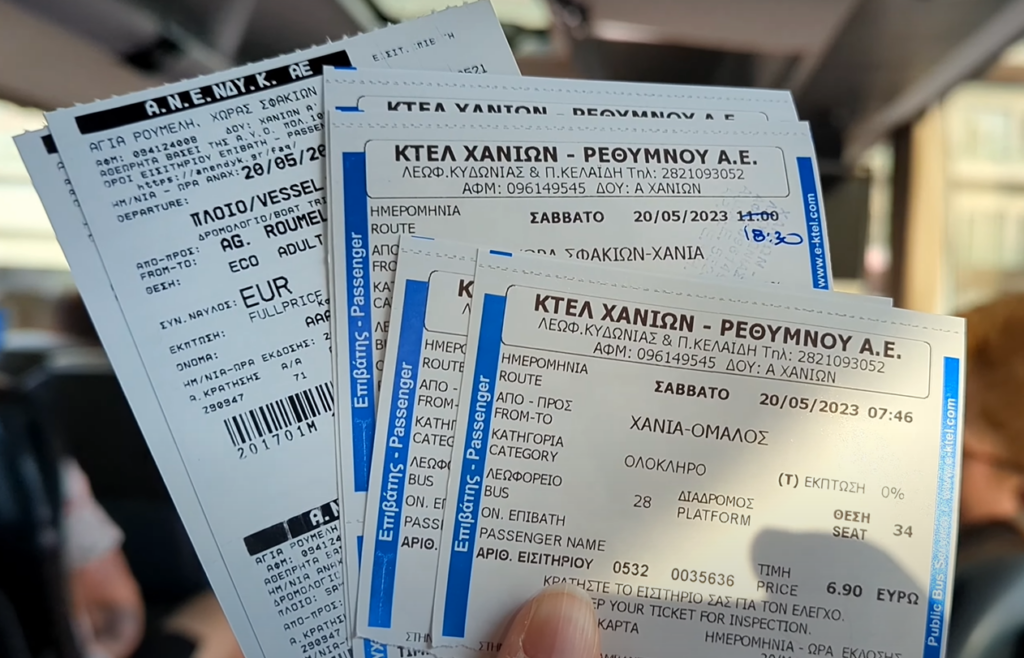
Reach the gorge by public transport, and the buses and ferries connect into a single ticket. Chania is the main gateway city on the north coast, and its bus station sells both legs of the trip.
Follow these steps:
Drive yourself only if you can give the trip two days, because you enter at one end and exit at another. Parking at the national park entrance is free. Two setups work:
Pack for heat, sun, and a long descent on stone. The lower gorge has almost no shade after Samaria village, and the terrain is hard underfoot for hours, so a few items make a real difference.
Time the walk around the ferry, not the other way round. The 17:30 boat is your lifeline out of Agia Roumeli, so set off early and keep enough margin that a slow pace or a long lunch never puts it at risk.
The Samaria Gorge protects rare plants and animals, and that biodiversity is why it became a national park. The upper reaches grow tall cypresses, many centuries old, alongside Kermes oaks and Cretan maples, while the sheltered floor supports plants found nowhere else.
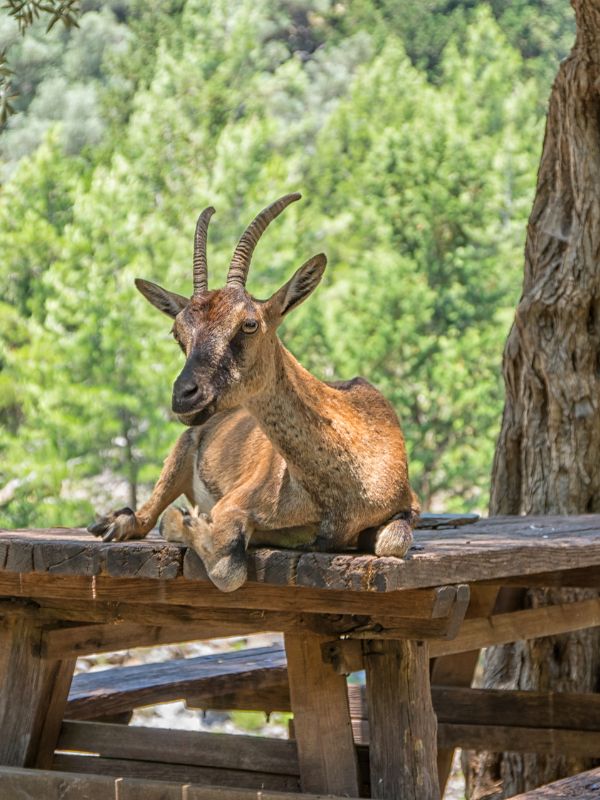
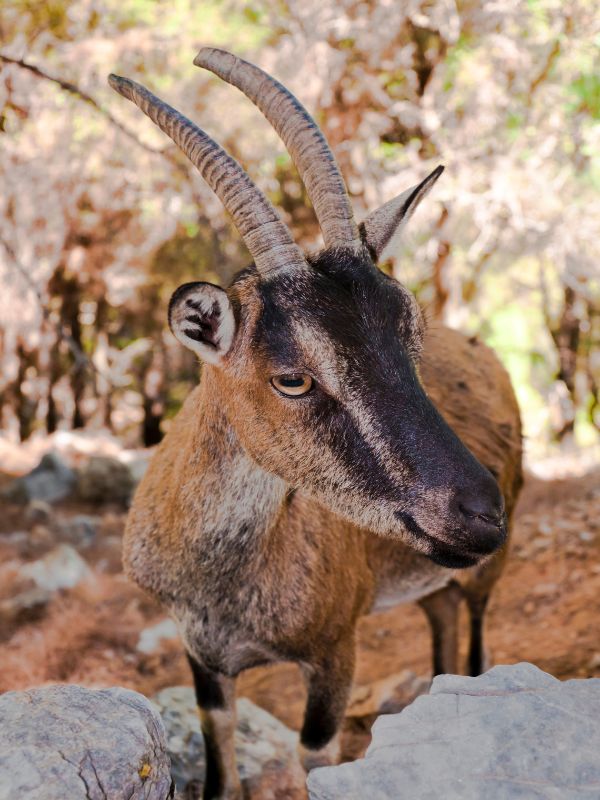
The signature animal is the kri-kri, the Cretan wild goat (also called the agrimi, Capra aegagrus creticus). It is chestnut brown with a darker stripe running from the neck along the spine to the tail, and it moves easily across the cliffs. Sightings are common on the quieter upper slopes, especially early in the day.
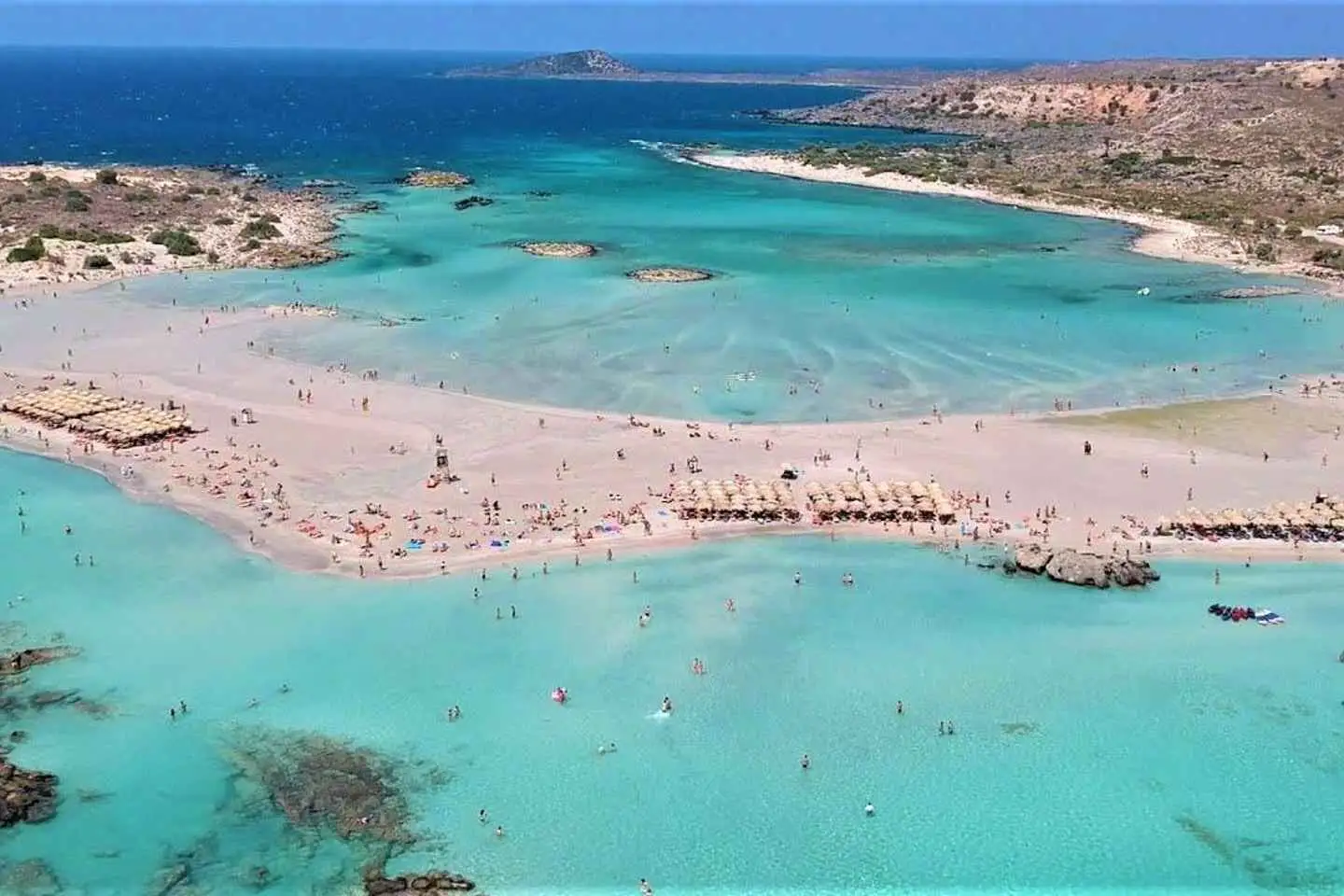
Agia Roumeli spreads more than 3 km of beach at the mouth of the gorge, and the shoreline is the reward at the end of the walk. The village faces the Libyan Sea, and its beaches range from busy and serviced to quiet and remote.
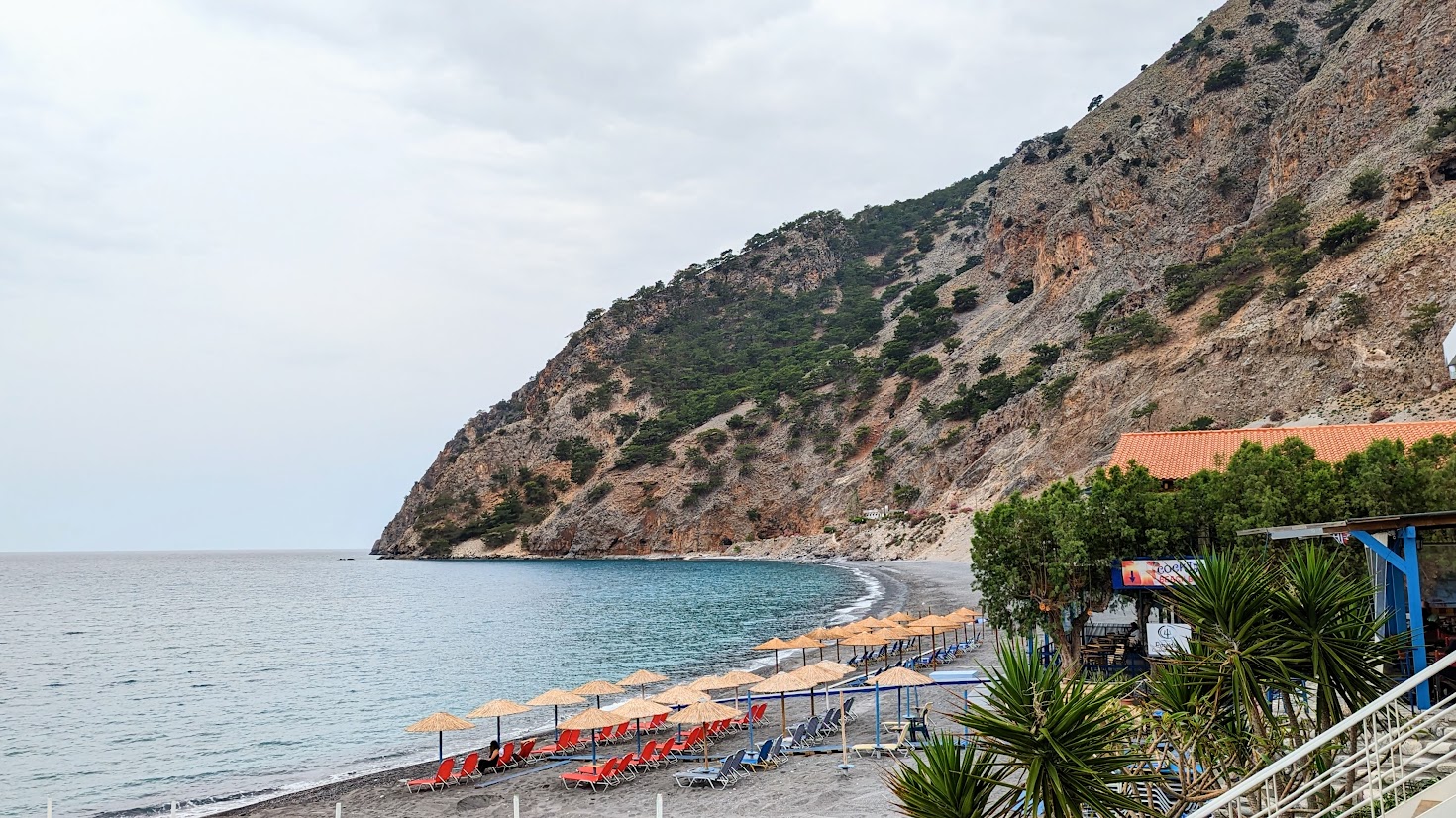

A cold swim here after the descent is a Cretan tradition well worth the towel in your pack.
Plan for 4 to 7 hours. A brisk pace takes about 4 hours, a leisurely pace with photo stops about 5 hours, and a relaxed pace with a meal stop at Samaria village about 6 hours.
It is moderately hard and mostly downhill. The steep, rocky first 6 km are the toughest part and test your knees; after that the trail flattens along the riverbed and becomes easy.
Entry costs €10 in 2025. It is free for EU citizens under 18, over 65, or with a disability, and for non-EU children under 4.
The gorge opens daily from 1 May to 31 October, 7:00 to 16:00, and closes for winter. Rangers may close it during heavy rain or strong wind, so check the official website first.
You leave Agia Roumeli by ferry, because no road reaches it. The boat runs to Chora Sfakion or Sougia, usually departing at 17:30, and a connecting bus then returns you to Chania.
Yes. Start from Agia Roumeli instead and walk inland to the Iron Gates, the church of Saint George, and Samaria village, then turn back to the beach when you tire. This lazy route reaches the most spectacular scenery without the full downhill descent.
If the Samaria Gorge leaves you wanting more, Crete has dozens of walkable canyons across the island. For hikers ready to compare the alternatives, from the dramatic cliffs of the Aradena Gorge to the gentler paths of the Imbros Gorge, our roundup of the most beautiful gorges in Crete lays out the best options side by side.