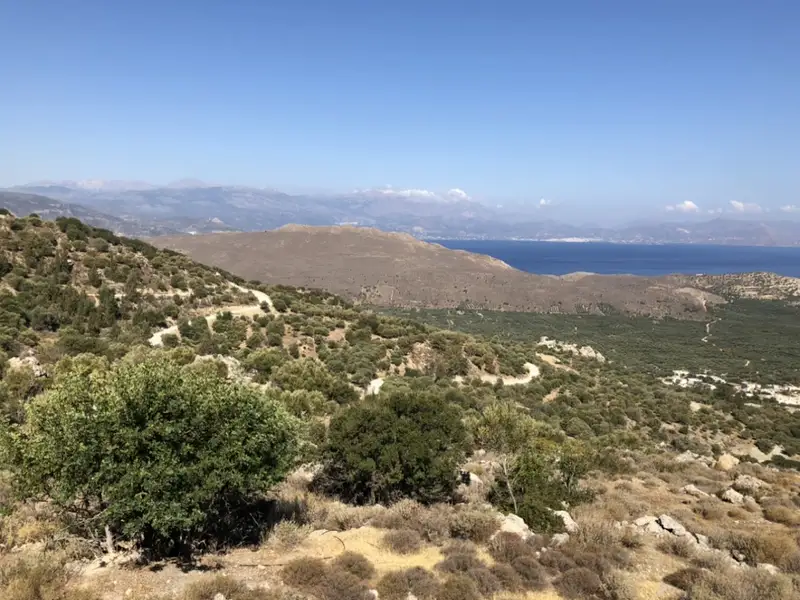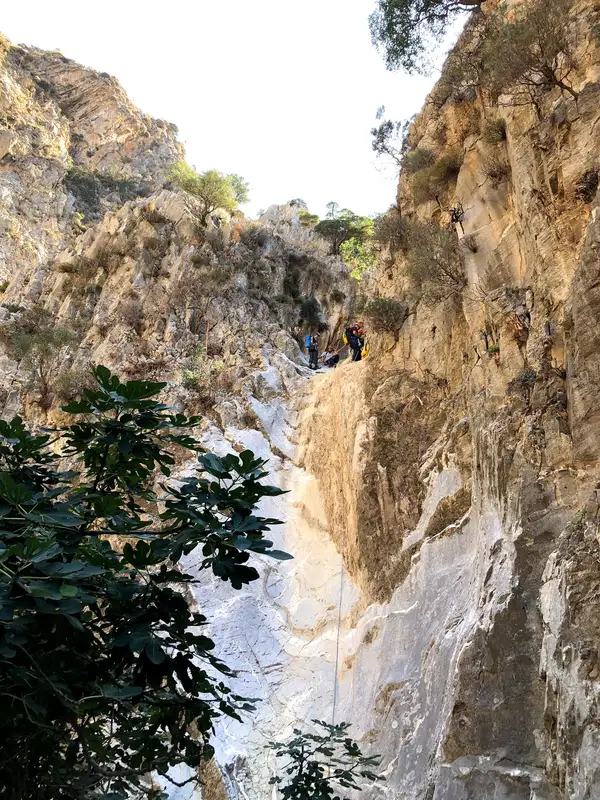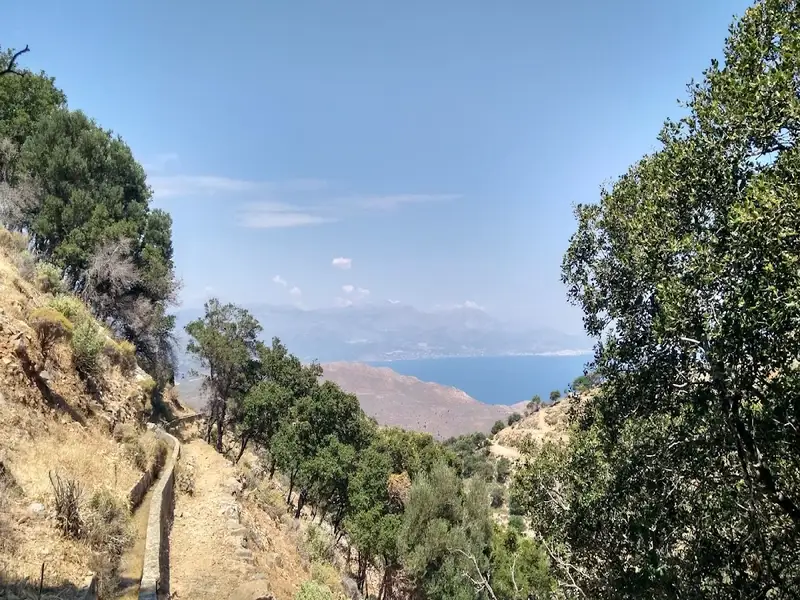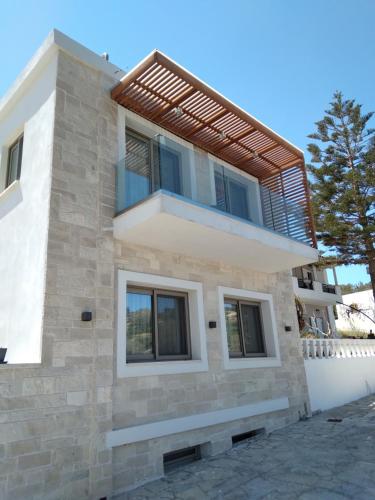
This Land Rover excursion is the perfect way to explore the central part of Crete, visiting 2 different plateaus and learning about mythology as well as local life.
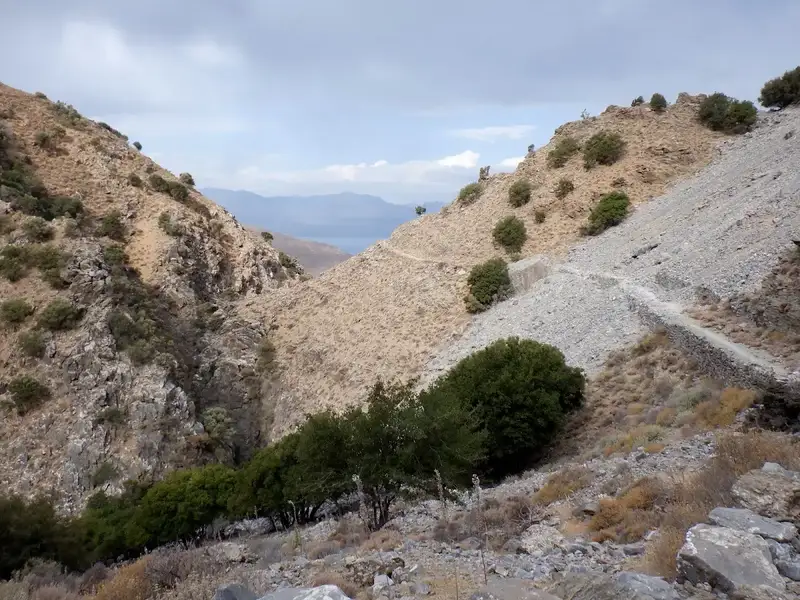
We head out in the Land Rover to the plateau of Katharo, passing through the largest forest on Crete. The roads here are basically non-existent and the mountains reach heights of 1,500 meters. You’ll have a refreshment stop at a kafenion (coffee shop) somewhere in the wilderness.
The tour continues on along dirt tracks, through valleys, and across rivers, and the journey starts to get exciting! At the next stop you’ll have the opportunity to take photos from a spectacular viewpoint above the Lassithi Plateau. You’ll then head to the plateau to enjoy your BBQ lunch, along with unlimited wine.
After lunch you’ll travel back in time as you visit the Eco Village, where you can see local crafts being made by traditional methods. The next stop will be Zeus’s cave where, according to mythology, the father of the gods was born. If you’d like to enter the cave there is a EUR 4 entrance fee that’s payable at the site.
Your driver/guide will take you on to Seli, where you can take photos of the unique scenery. You’ll continue on to the village of Krassi, noted for its 2,000-year-old plane tree and natural spring water source. As you make your way back you’ll pass through Selinari, an area where you’ll be on the lookout for vultures, now an endangered species.
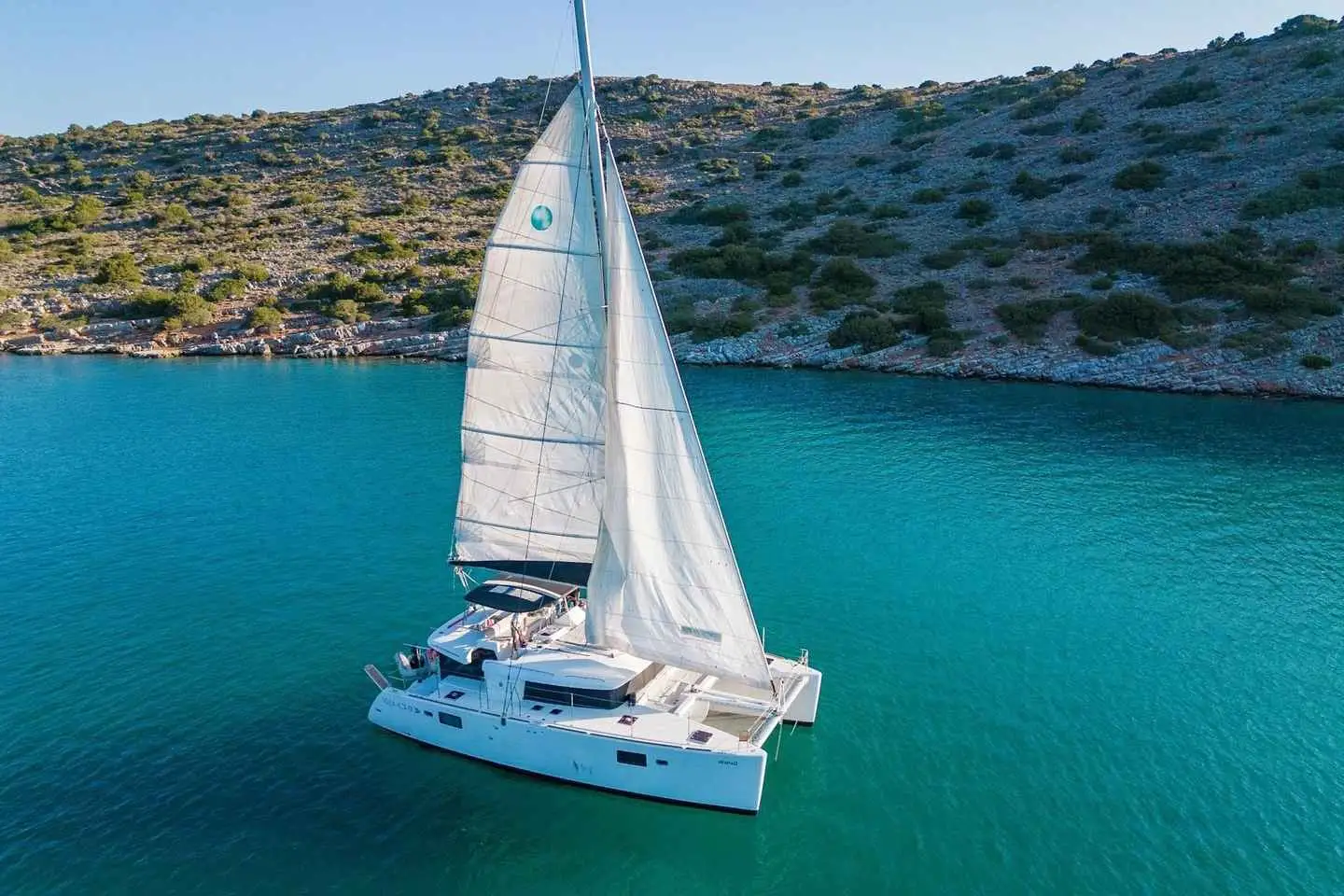
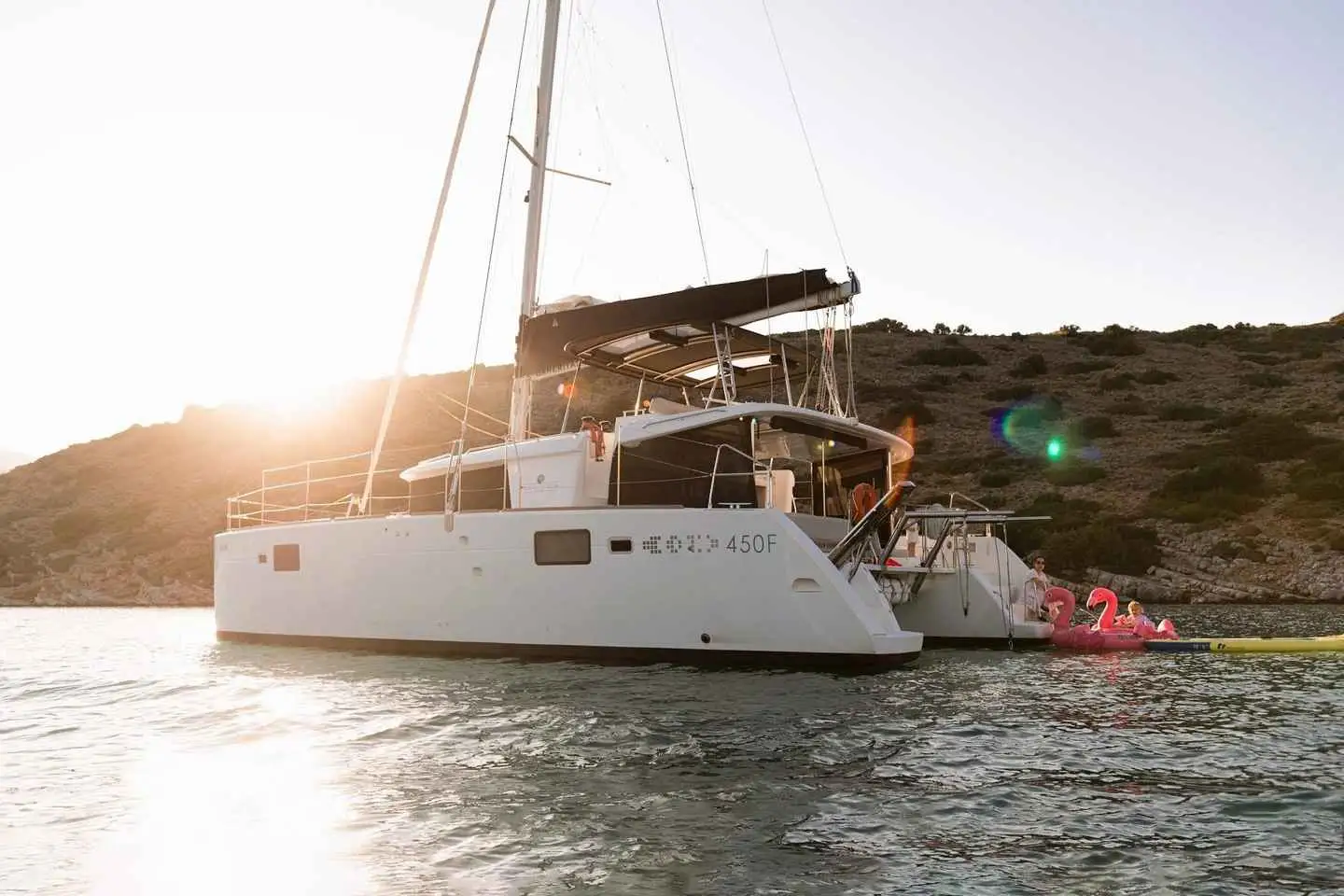
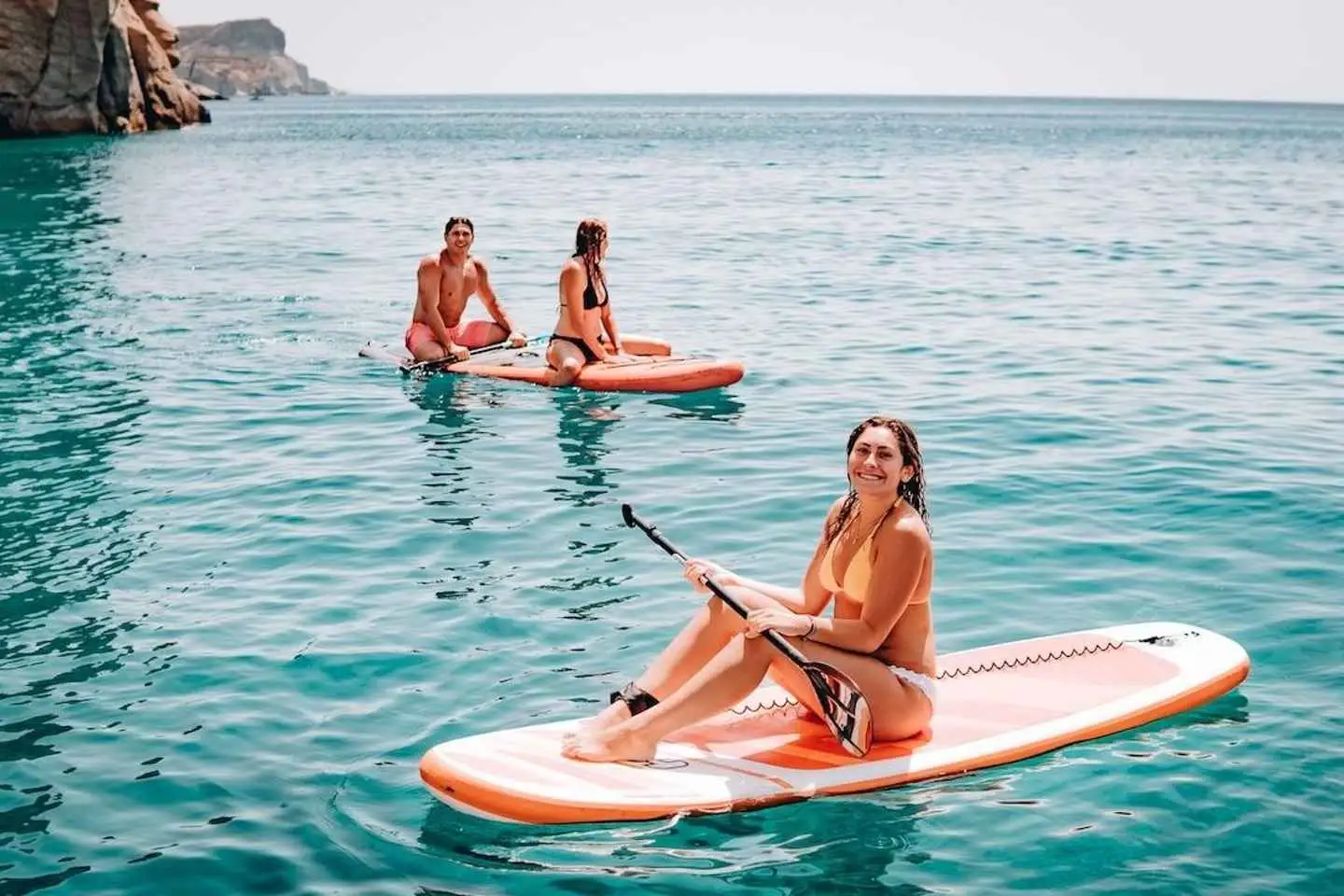
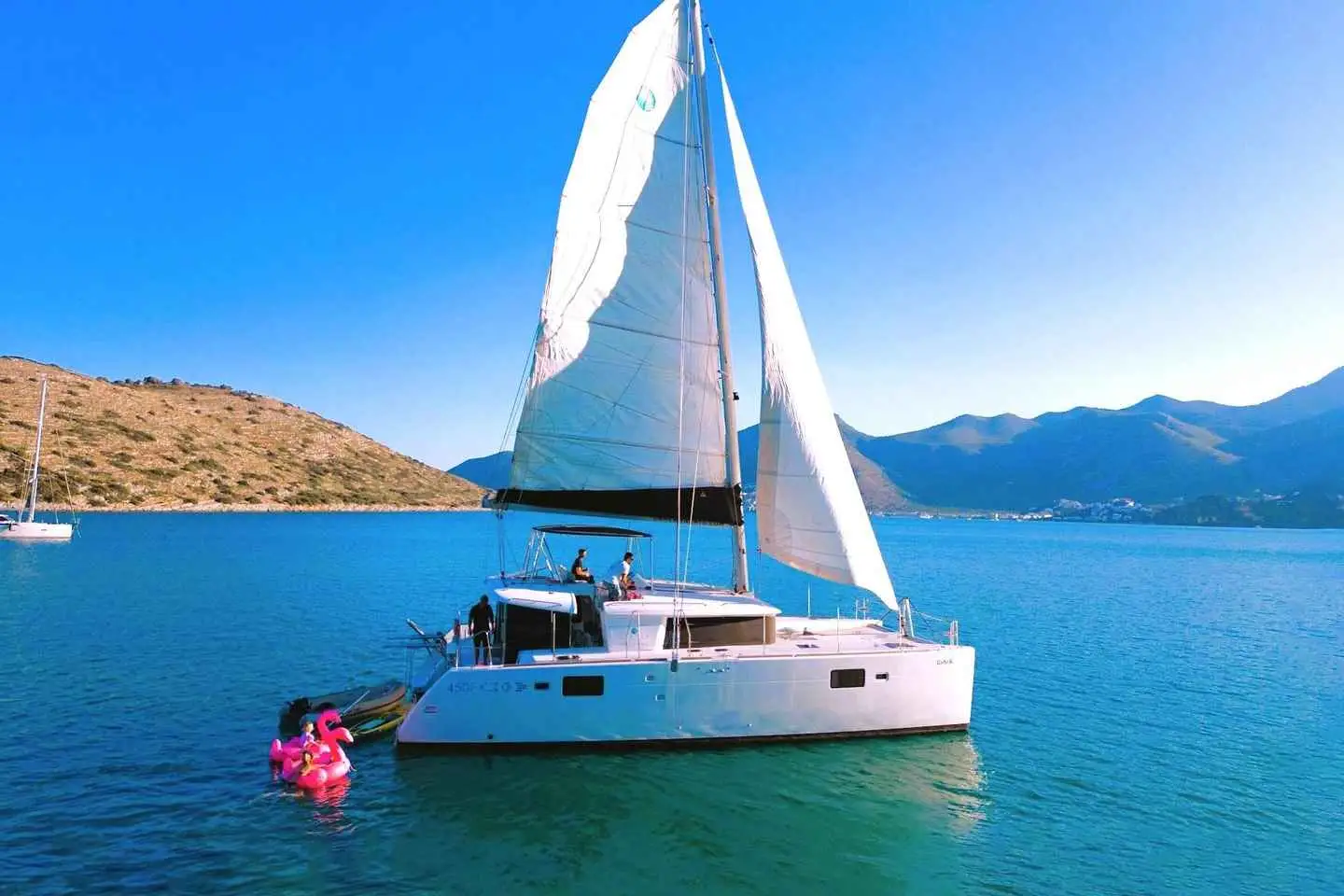
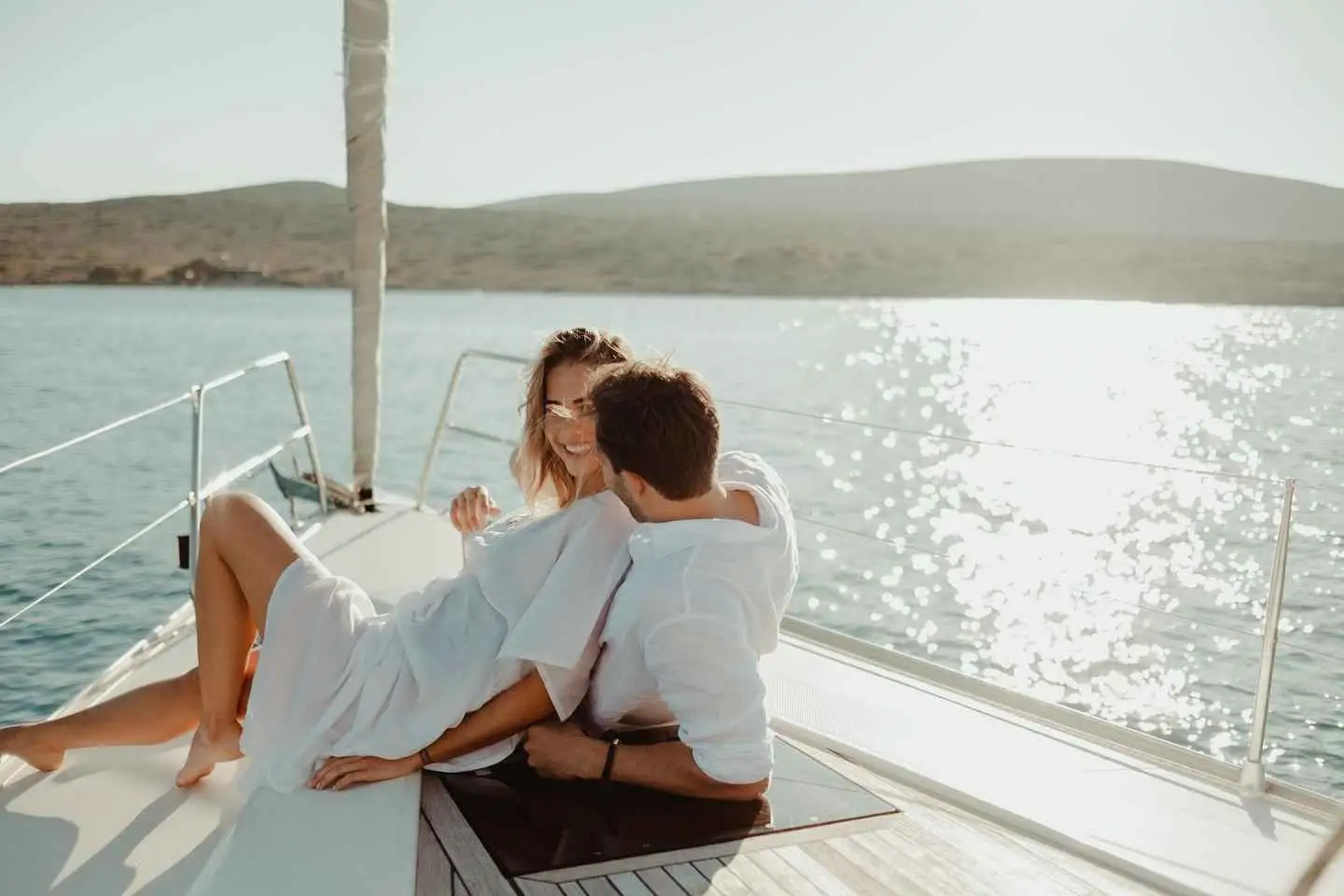
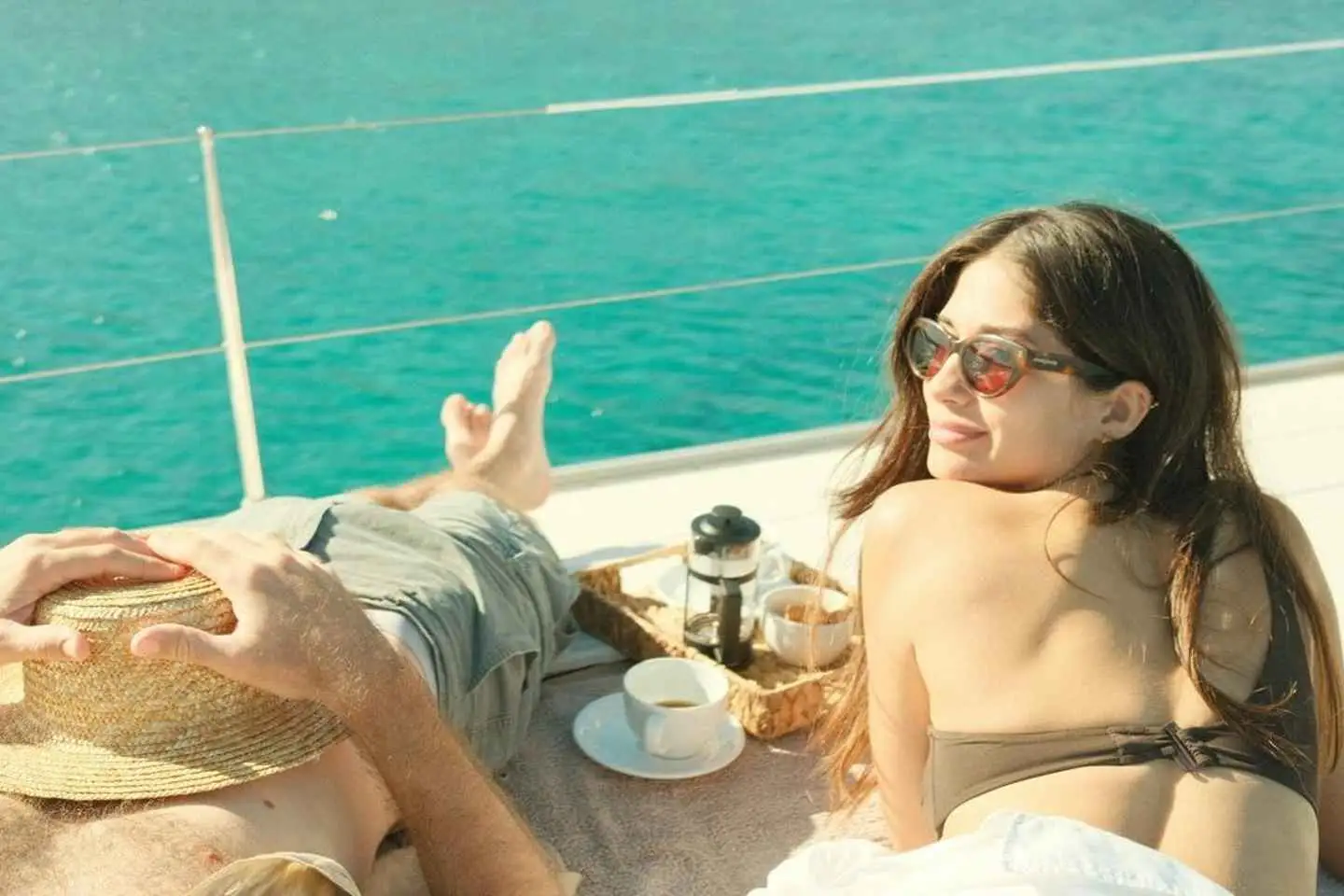
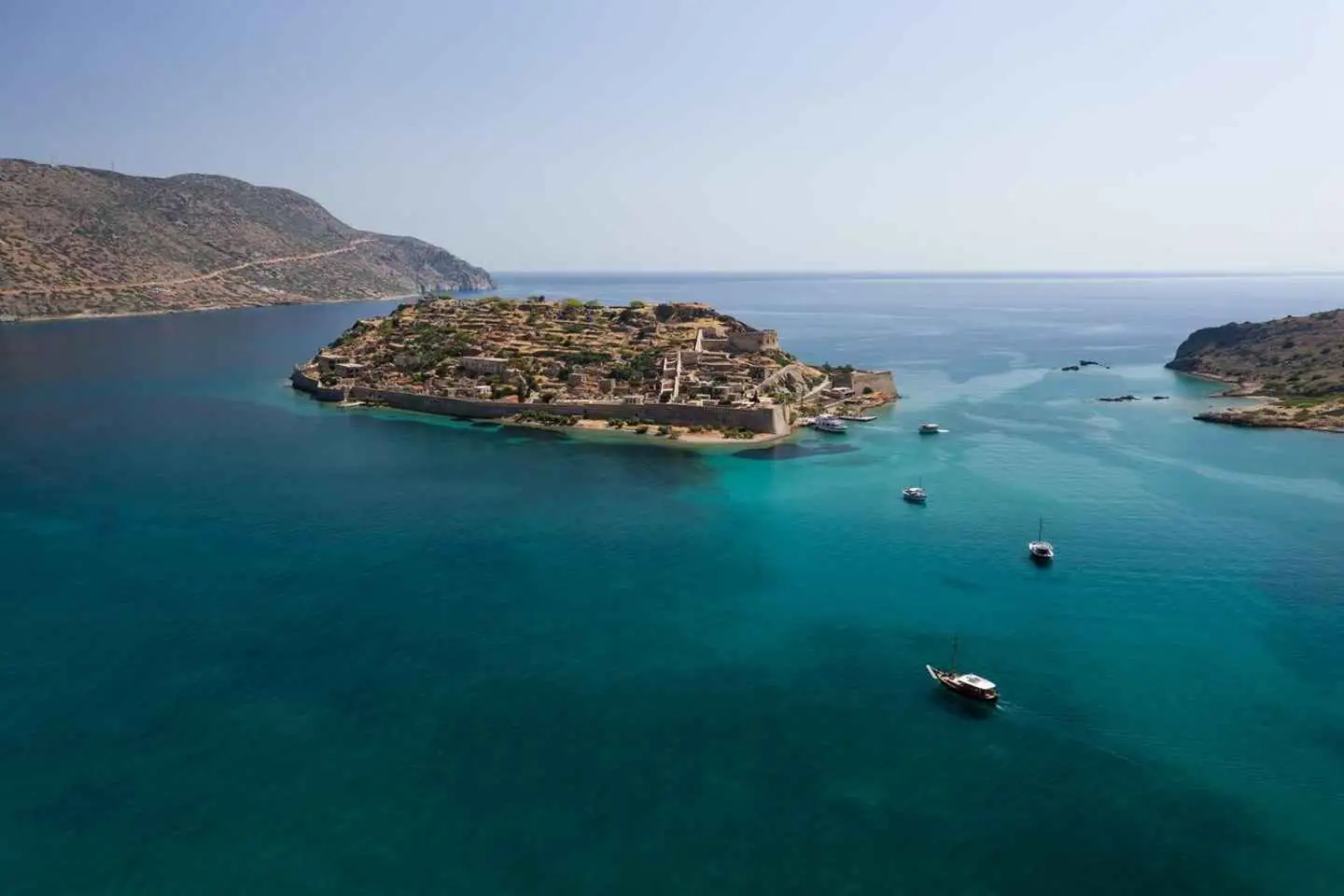
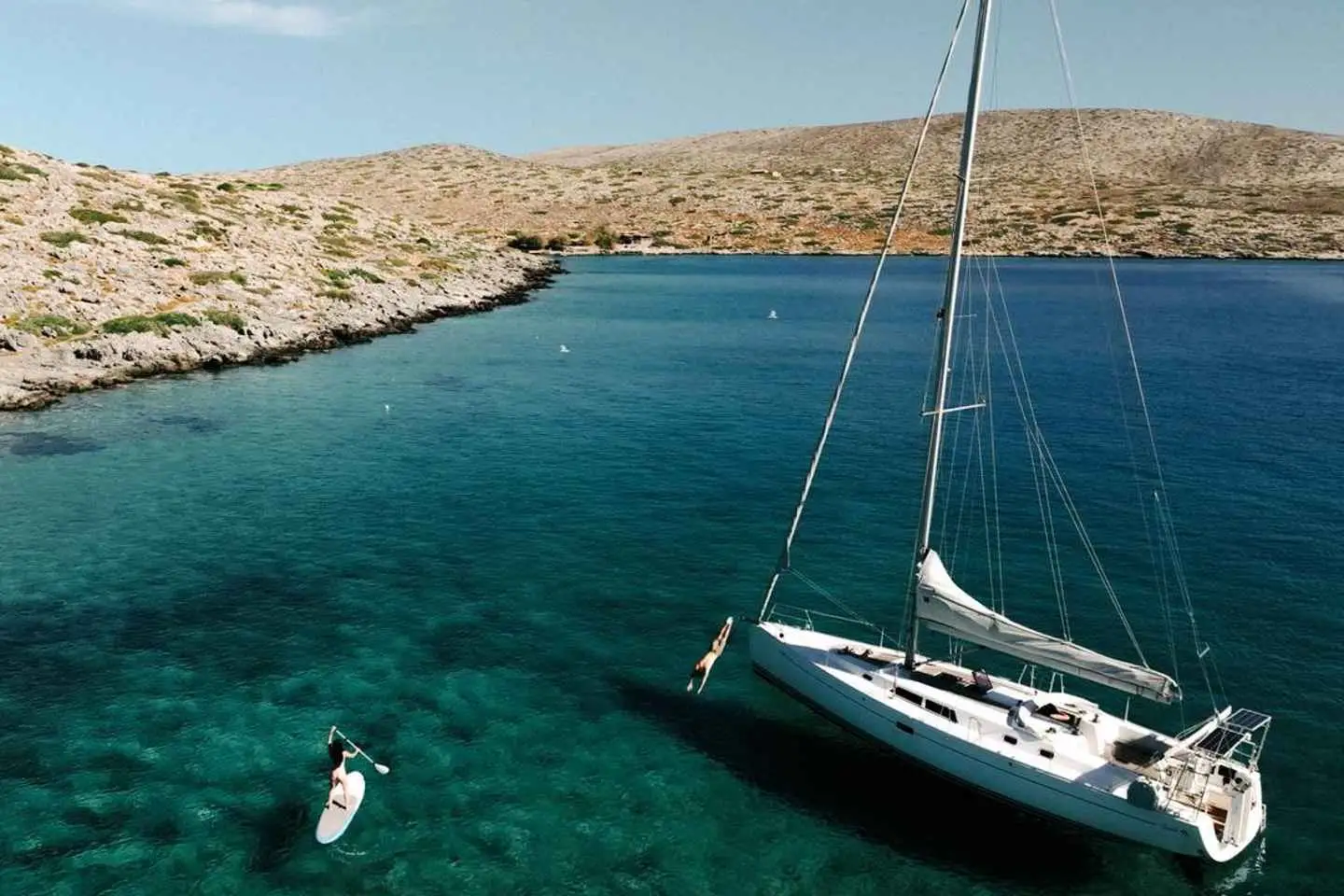
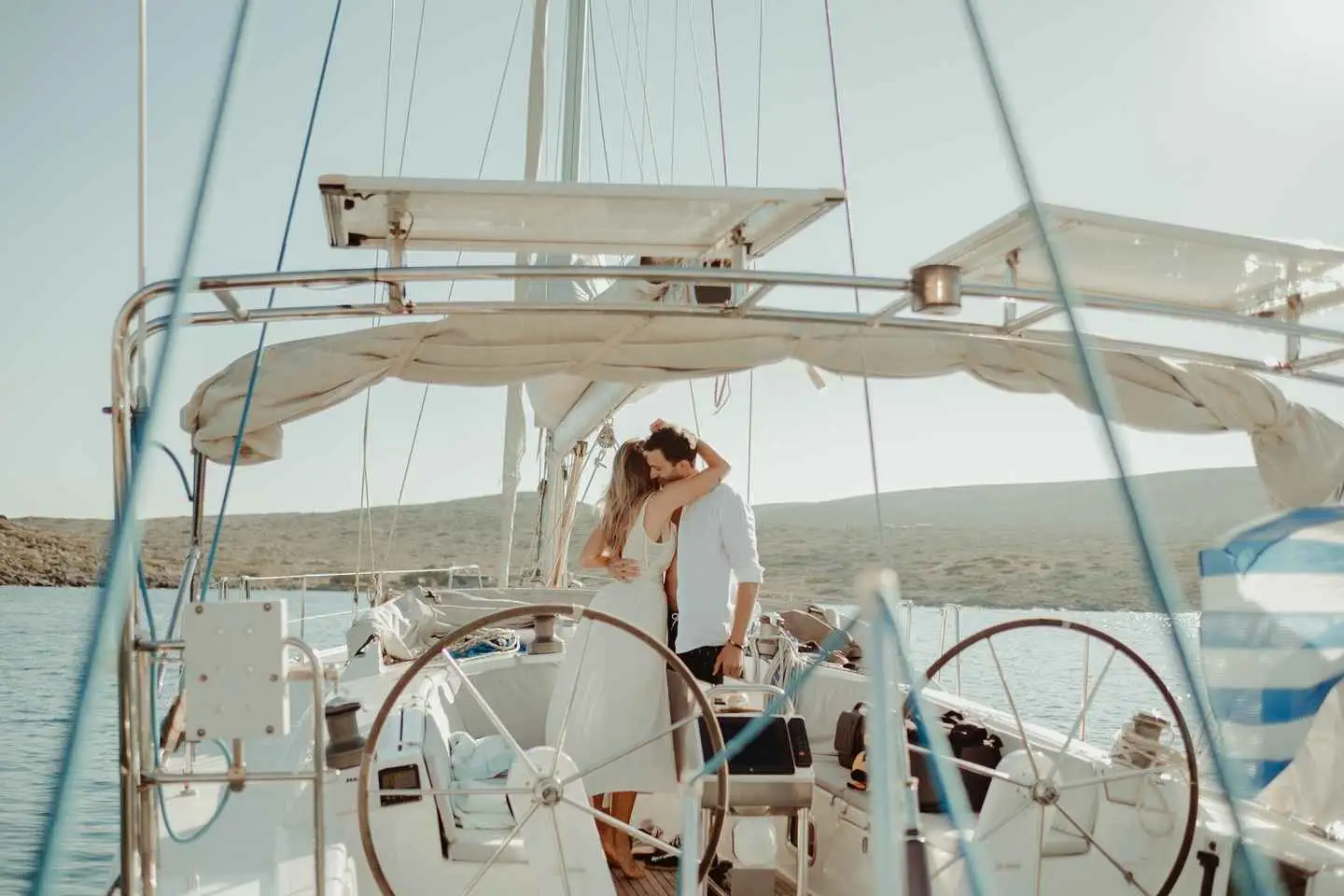
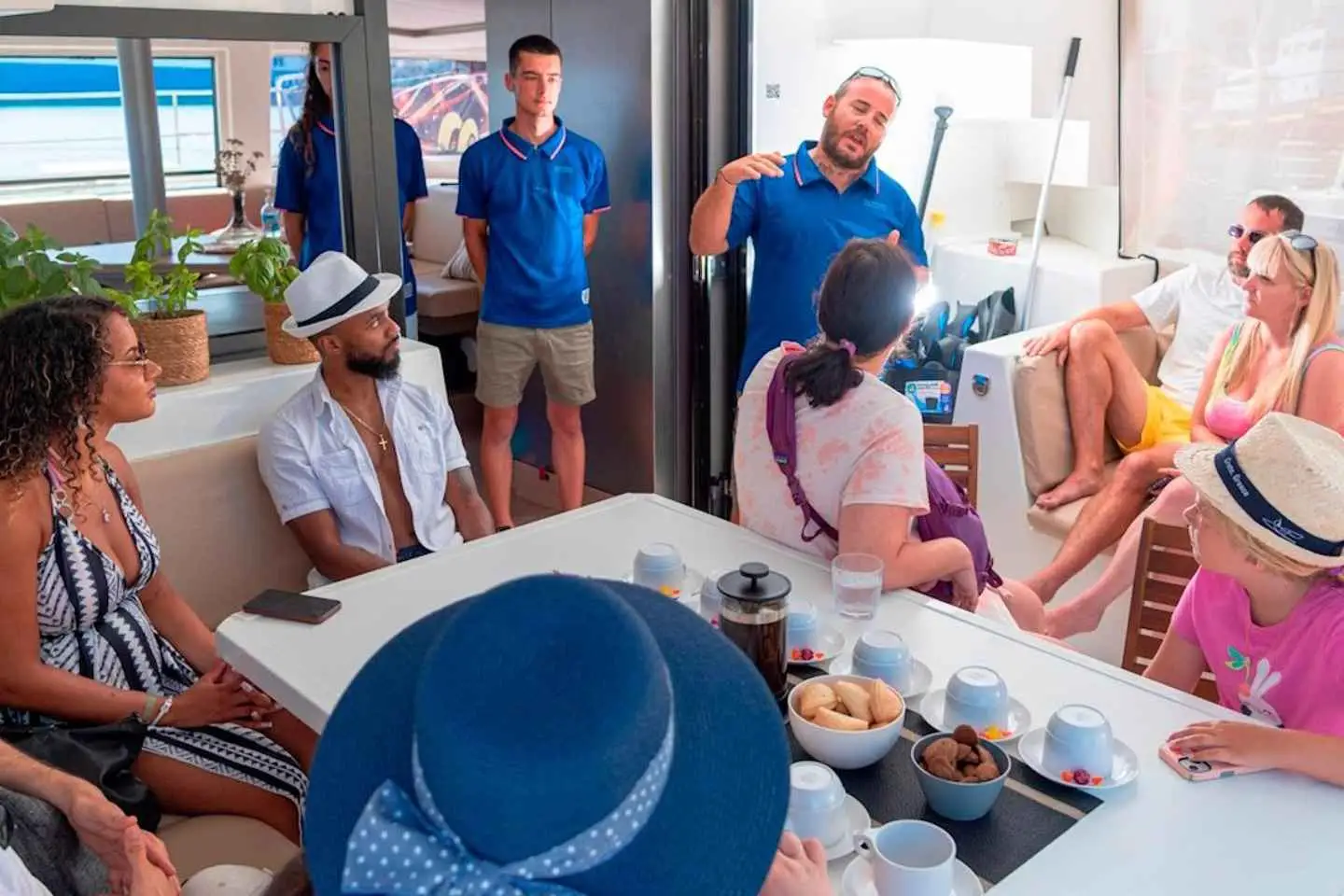
Sailing trip is designed for half a day – just enough time to enjoy sea and swimming activities.Afternoon sailing trip is suitable for those who prefer waking up late and avoid the hottest hours. The boat trip starts at the port of Agios Nikolaos. Guests will have the opportunity to see famous island Spinalonga from the water. Our catamaran Lagoon 450F* will comfortably accommodate up to 20 guests. For adults, we have snorkel equipment, SUPs, tackle and fishing bait. For children – a box with toys, colouring books, board games. And inflatable flamingos and unicorns for the entire family. Food on a cruise is our pride. For our guests, we have compiled a Mediterranean-style menu with seafood** and unlimited drinks.
* Catamaran model may change,
** The menu consists of local, high quality products. Dishes are subject to change.
Sailing trip is designed for half a day – just enough time to enjoy sea and swimming activities. The yacht cruise starts in the morning at the port of Agios Nikolaos. Guests will have the opportunity to see famous island Spinalonga from the water. Our catamaran Lagoon 450F* will comfortably accommodate up to 20 guests. For adults, we have snorkel equipment, SUPs, tackle and fishing bait. For children – a box with toys, colouring books, board games. And inflatable flamingos and unicorns for the entire family. Food on a cruise is our pride. For our guests, we have compiled a Mediterranean-style menu with seafood** and unlimited drinks.
* Catamaran model may change,
** The menu consists of local, high quality products. Dishes are subject to change.
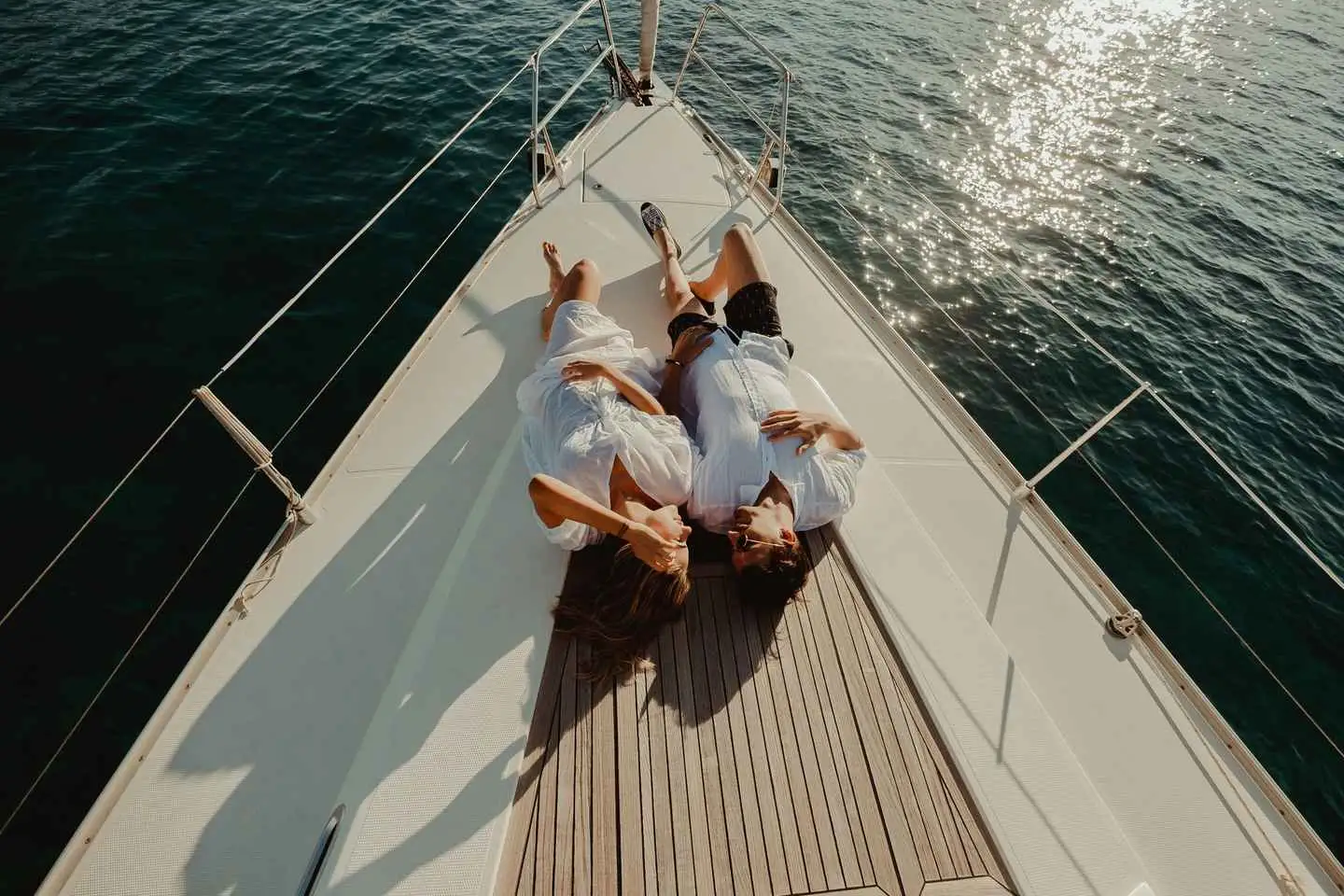
Departing from the Marina of Agios Nikolaos, our journey promises a semi-private escape filled with delightful socializing and shared experiences. It begins with relaxation, sunbathing on the sundeck, or actively participating in sailing procedures. Marvel at the stunning coastal views as we sail, feeling the invigorating sea breeze against your skin.
After circumnavigating Spinalonga and admiring the Venetian fortress from the sea, we set sail toward Kolokitha. Upon reaching Kolokitha, we drop anchor in one of its beautiful bays, where you’re free to immerse yourself in its pristine waters, explore the coastline, or simply unwind on deck, soaking in the Mediterranean sunshine.
Avanti Sailing ensures your comfort with a delectable meal served on board, featuring locally sourced ingredients and complemented by premium local wine and refreshments of your choice. Enjoy a selection of ripe, seasonal fruits as we gently sail back to the Marina of Agios Nikolaos, leaving you feeling invigorated, revitalized, and prepared for the evening ahead.
No results available
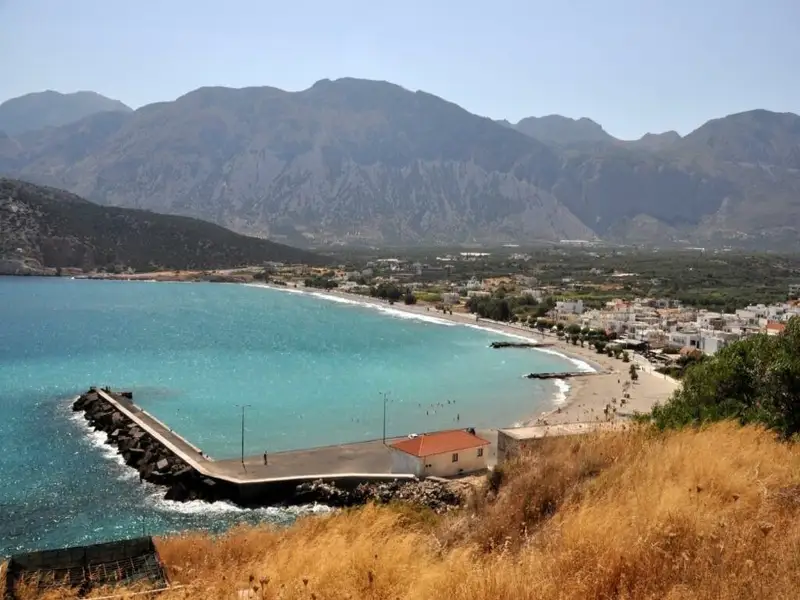
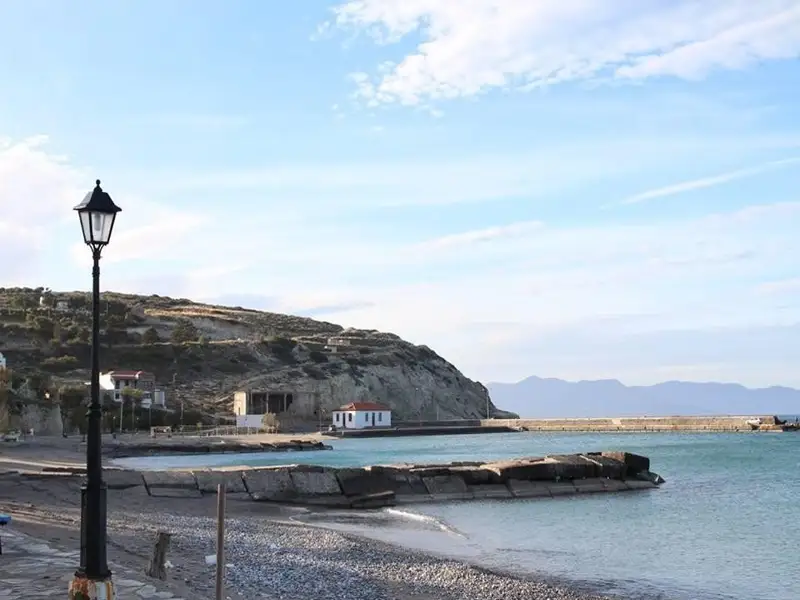
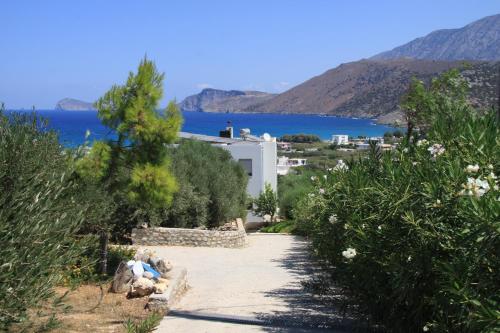
Pachia Ammos is a large village situated on the north side of the narrowest part of Crete, 20km east of Agios Nikolaos, on the road connecting Agios Nikolaos with Sitia and Ierapetra. The village is located at the exit of a fertile plain that is covered with olive groves. It has experienced mild development due to its local beach and the sights of the surrounding area. Visitors can find small hotels, rooms, and taverns in the village.
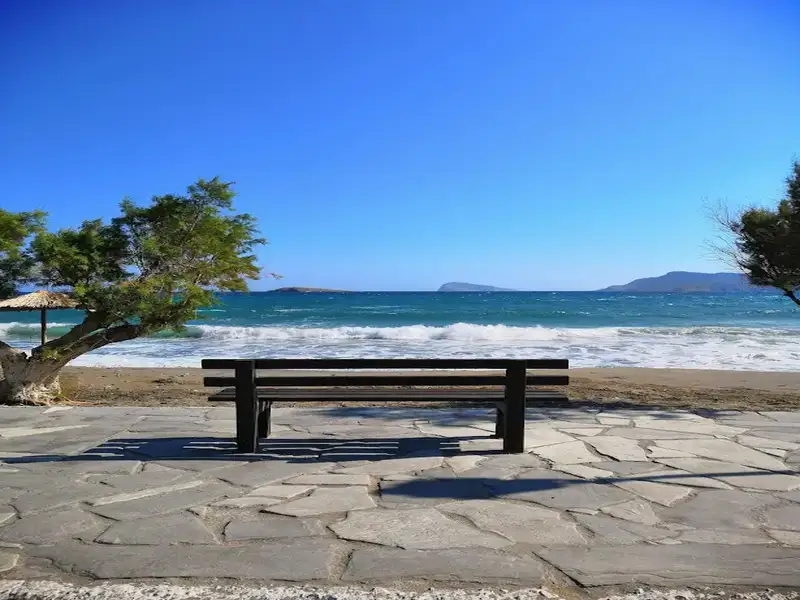
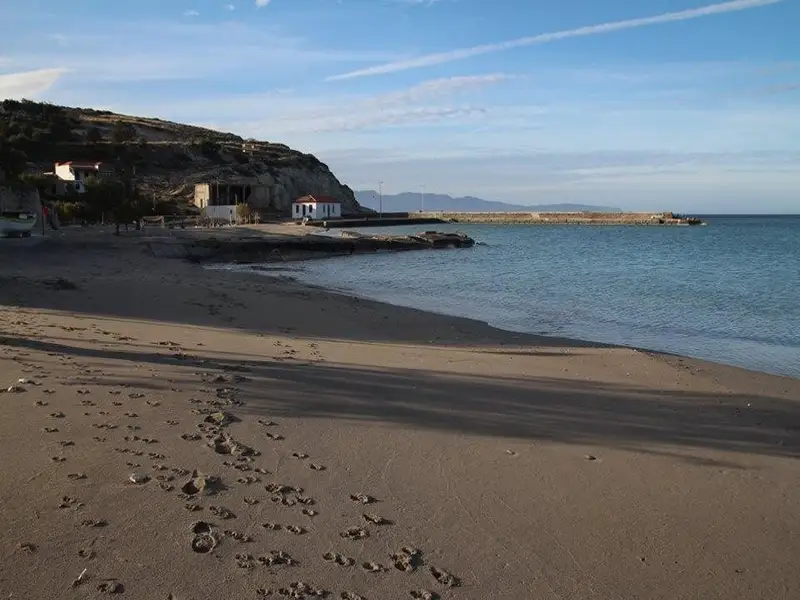
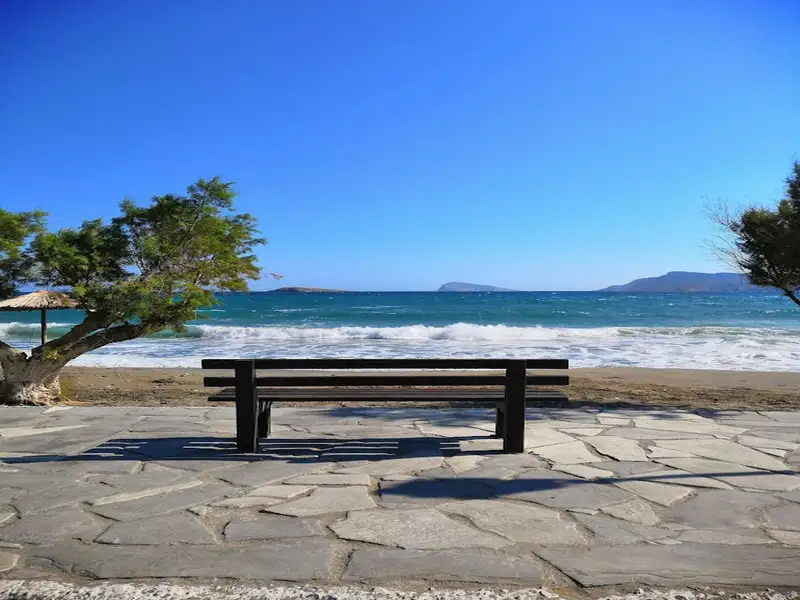
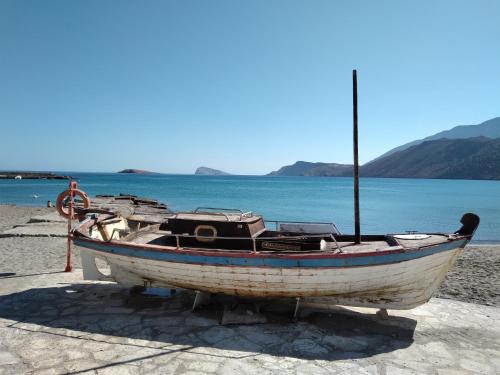
A long beach with sand and pebbles stretches in front of Pahia Ammos, 500m to the east. The beach is open to the north winds, and the sea is usually wavy. However, visitors can stay safe in the well-protected west part of the beach, which is sandy and clean and has umbrellas and sunbeds. For those seeking peace, the eastern part of the beach is an option, but it is unprotected from the waves, and currents carrying garbage due to the village’s location in the southern part of the Gulf of Mirabello. The beach in this area is pebbly and has several tamarisk trees. At the east end of the beach, a stream flows from the impressive Gorge of Ha in winter.
Pahia Ammos is situated on the site of the ancient city Minoa, which was an old harbour. The Institute for the Study of Prehistoric Aegean of East Crete is established here, which conducts systematic excavations in the area and deals with the promotion and protection of antiquities. The most famous archaeological site in the region is the Minoan cemetery and the settlement of Gournia, which is located 2km west of the village. The city flourished in 1600 BC and was built on a small hill. Gournia is located 2km east of Faneromeni Monastery, one of the most impressive monasteries in Crete built on a steep cliff.
Visitors can also visit the Minoan settlement Vasiliki, which is 4km south of the village and flourished in 2600-2300 BC. Vasiliki is considered the precursor of the major Minoan palaces and towns. From Vasiliki, visitors can drive 2km to the east to reach the village of Monastiraki, with the old watermills and the church of St. Stephen. Nearby is the exit of the imposing gorge of Ha, which causes awe from miles away.
Opposite Pahia Ammos you’ll see the small island Konida (i.e. nit, the egg of louse), which can be reached by boat. It is interesting to see how the place’s name has emerged; a few miles to the east (opposite Tholos) you’ll meet the very important island Psira (i.e. louse), while opposite Mochlos you’ll see the islet of Agios Nikolaos, also called Psilos (flea). All bugs together!
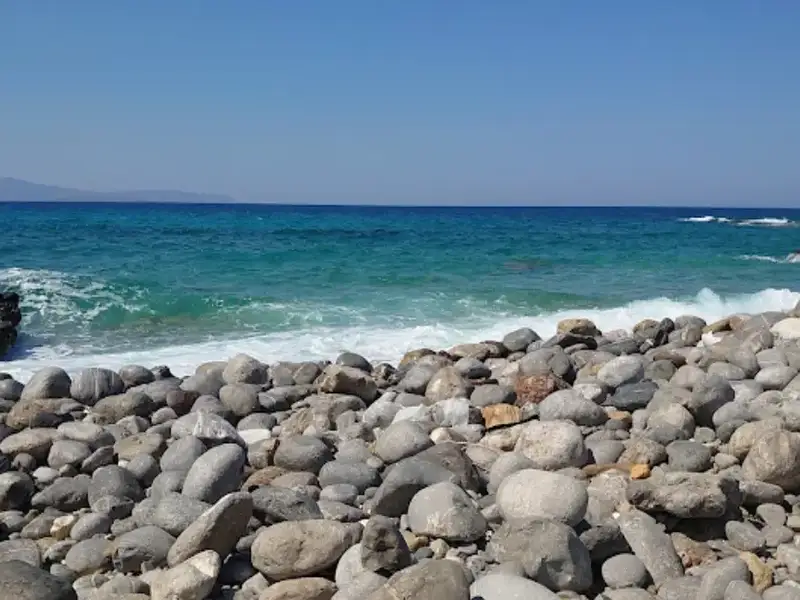
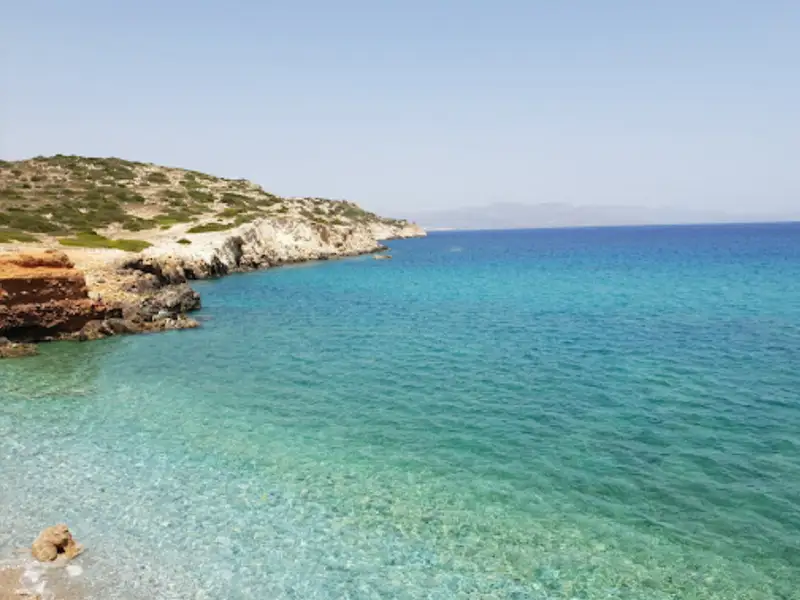

Kamini, situated near the renowned Minoan settlement of Gournia by Pahia Ammos, is an enchanting location composed of five sequential pebble beaches. Positioned north of the archaeological site, Kamini was most likely Gournia’s access point to the sea, explaining the presence of Minoan structures in the area, such as remnants of rooms, walls, and ship sheds or boathouses. The Gournia necropolis is also found in this area.
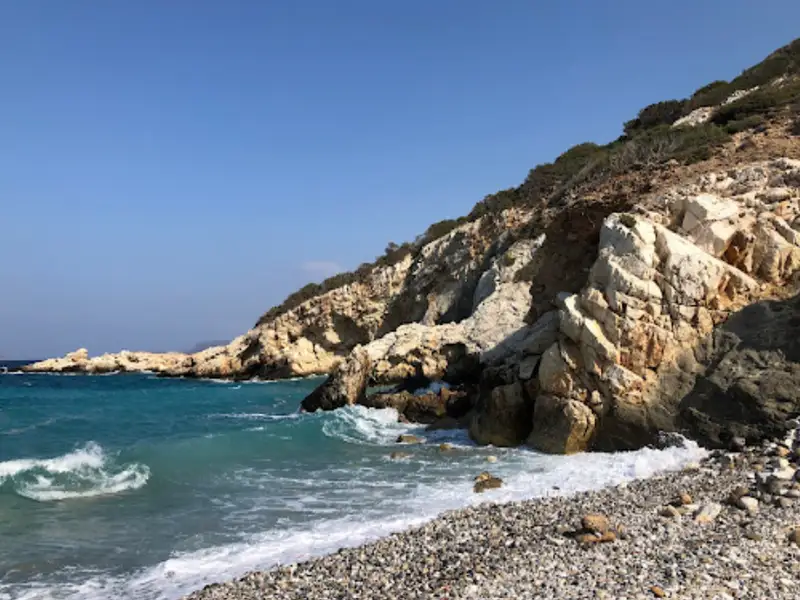
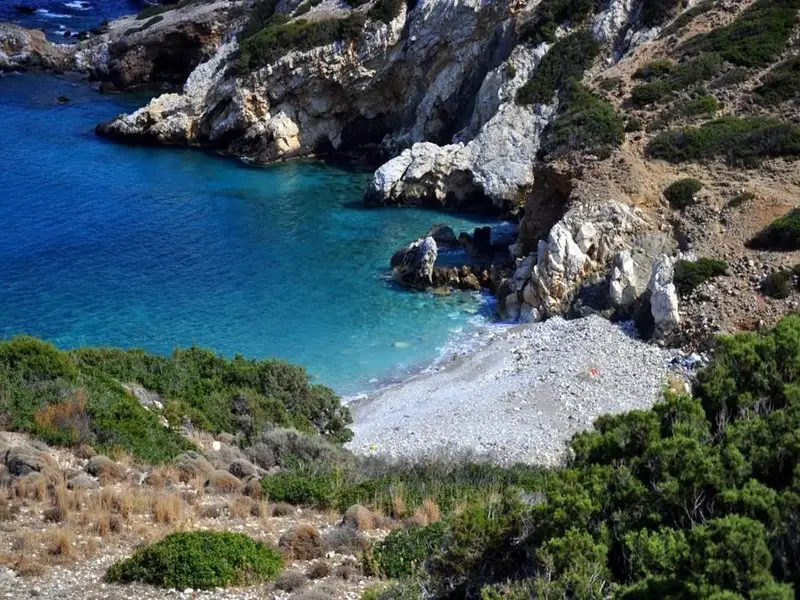
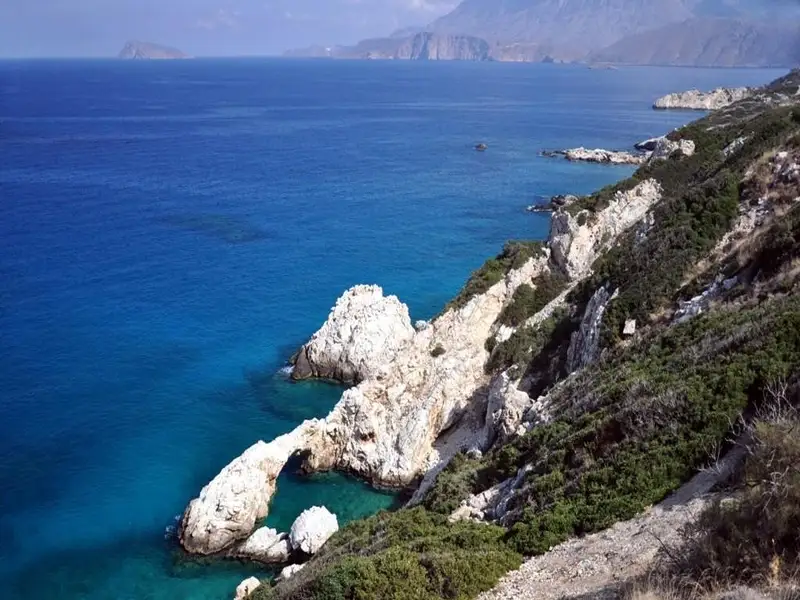
Kamini’s natural allure is as significant as its archaeological value. The coastline, adorned with limestone conglomerates and strikingly red soil, presents a stunning display of colors. The area boasts intriguing geological formations, sea caves, rock bridges, and five beaches speckled with fine or coarse pebbles. However, some of these beaches can be difficult to access.
Regrettably, the north winds often bring a disheartening amount of trash from across the Aegean Sea, littering the otherwise pristine landscape. This, coupled with the strong winds, tends to deter visitors. However, when the winds shift to the south, Kamini’s true splendor emerges, with turquoise and crystal-clear waters that truly are a sight to behold.
Gournia, situated 17km east of Agios Nikolaos and just 2km west of Pachia Ammos, is renowned for its ancient Minoan town, built atop a small hill. Named after the stone and wooden troughs (‘urna’ in Venetian) found in the vicinity, the original Minoan name of the town remains a mystery.
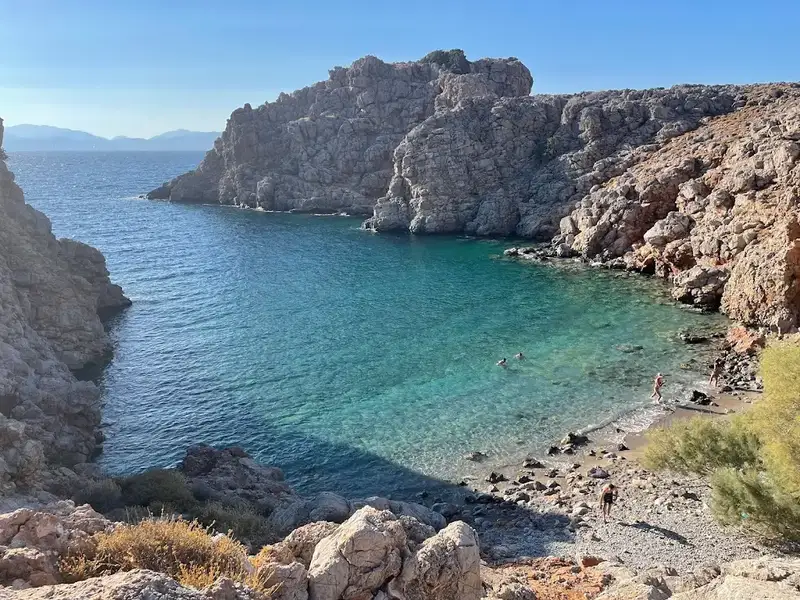
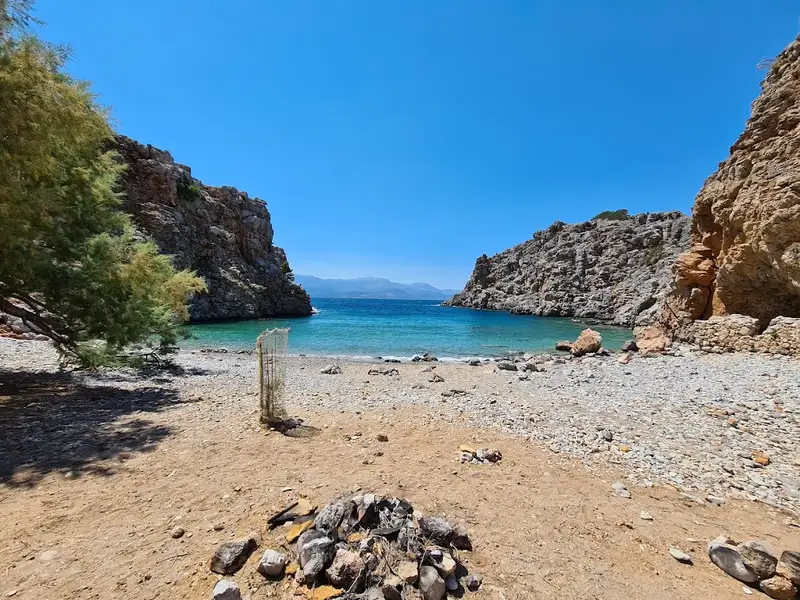
Nearby, a brief 1km journey north of the archaeological site of Gournia, lies the secluded Frouzis beach. Accessible by car, it sits nestled within a rocky bay, featuring pebbly shores and zero commercial facilities. While the broader area boasts beautiful sea caves and natural rock pools, the beach tends to accumulate litter carried by sea currents. This is also the case for the neighbouring beach, which houses an abandoned camping site.
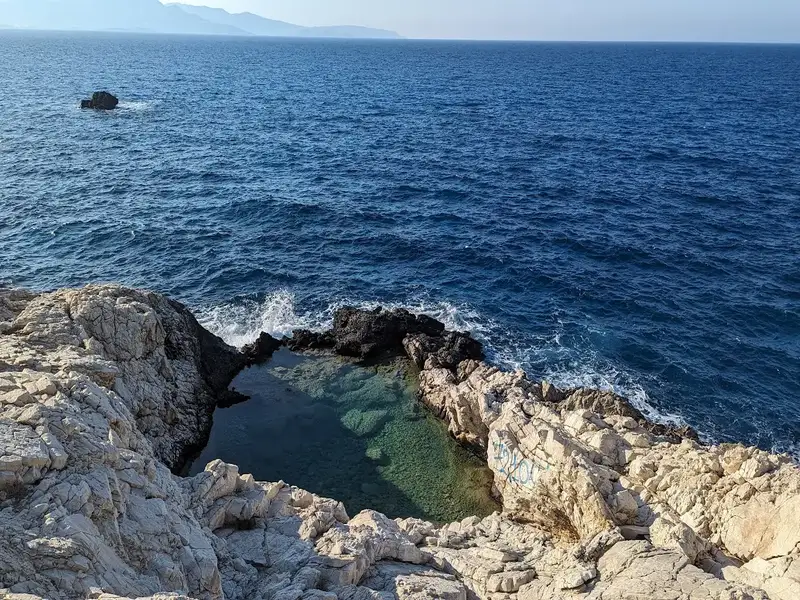
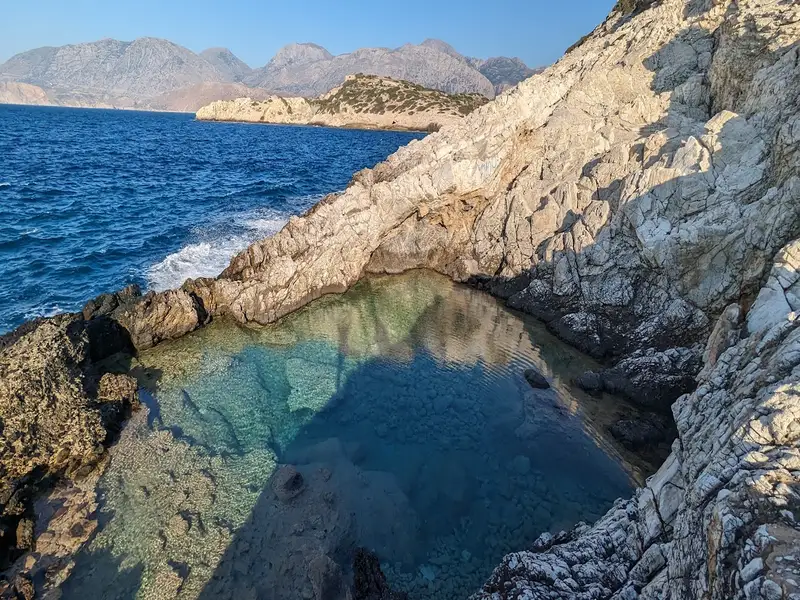
One of Crete’s most breathtaking natural pools is found near Gournia. This serene rock-bound pond offers an inviting swim, especially when the nearby sea is choppy. The vast cave next to it also provides a fascinating sight.
A trip to Gournia would not be complete without exploring the archaeological site to understand the layout of a small Minoan city. Having thrived in 1500BC, the city has been thoroughly excavated, revealing well-preserved walls, staircases, and streets. The city, centered around a hill housing a small palace, a market, and a temple, appears to have been destroyed by an earthquake around 1450BC, and it was completely abandoned by 1200BC. The Gournia cemetery was discovered in the Sfougaras region, near Kamini.
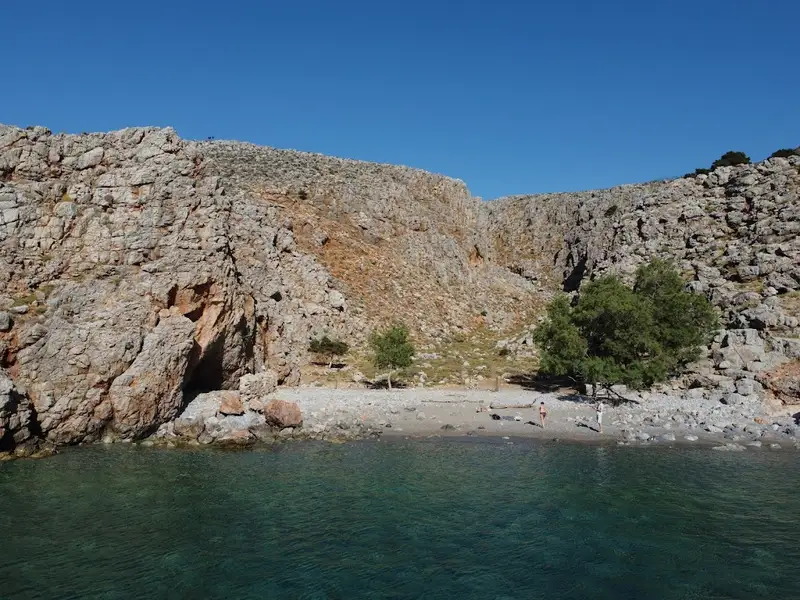
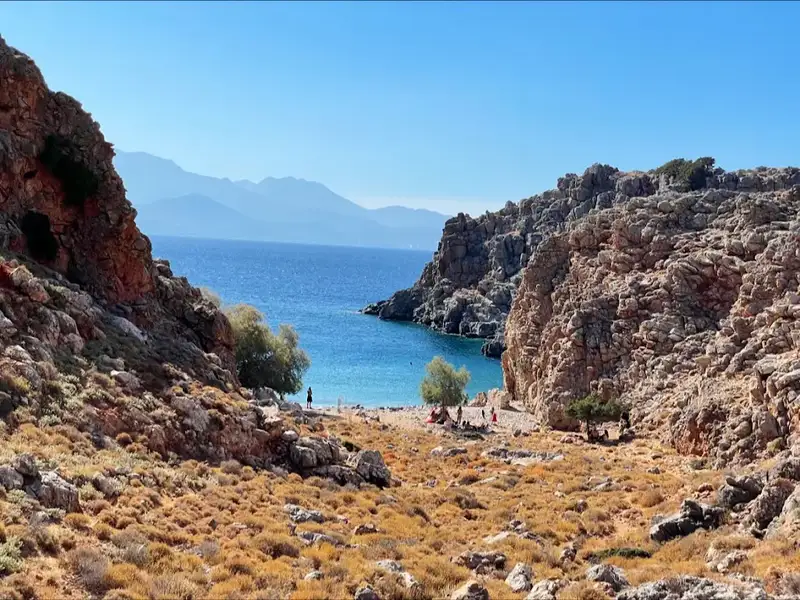
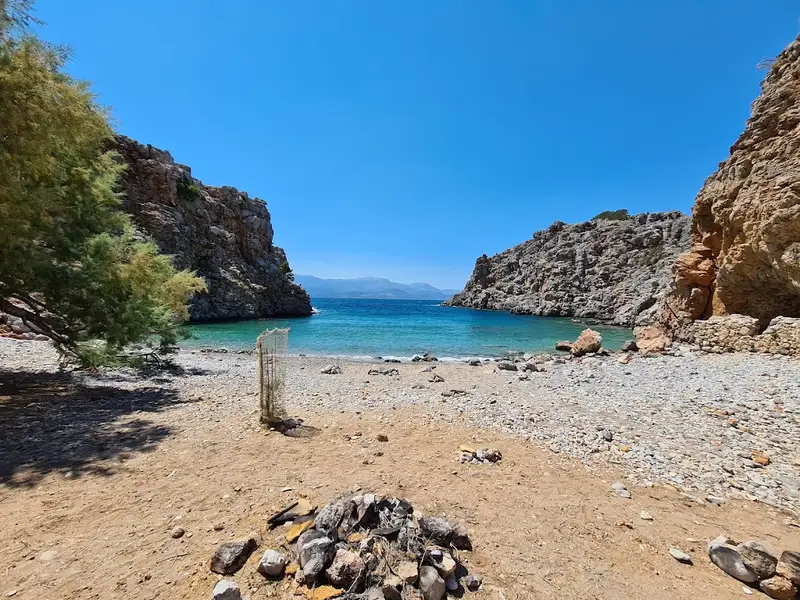
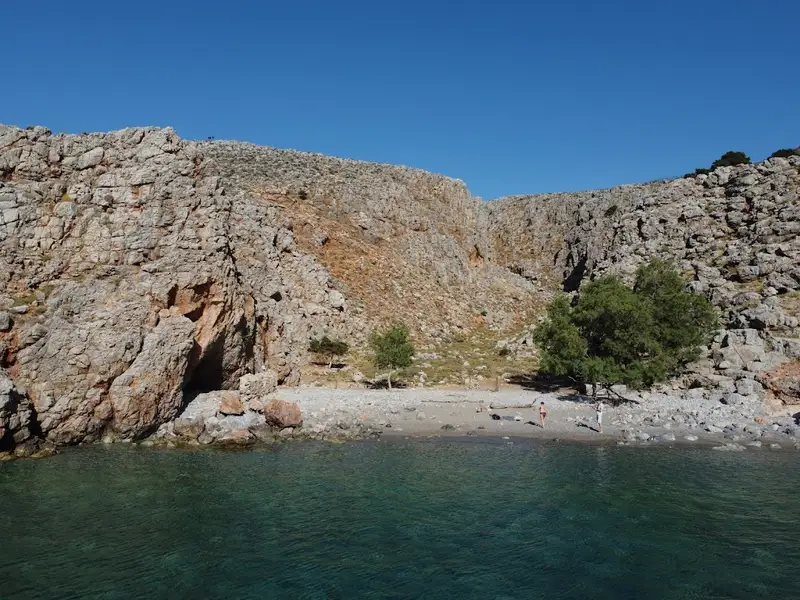
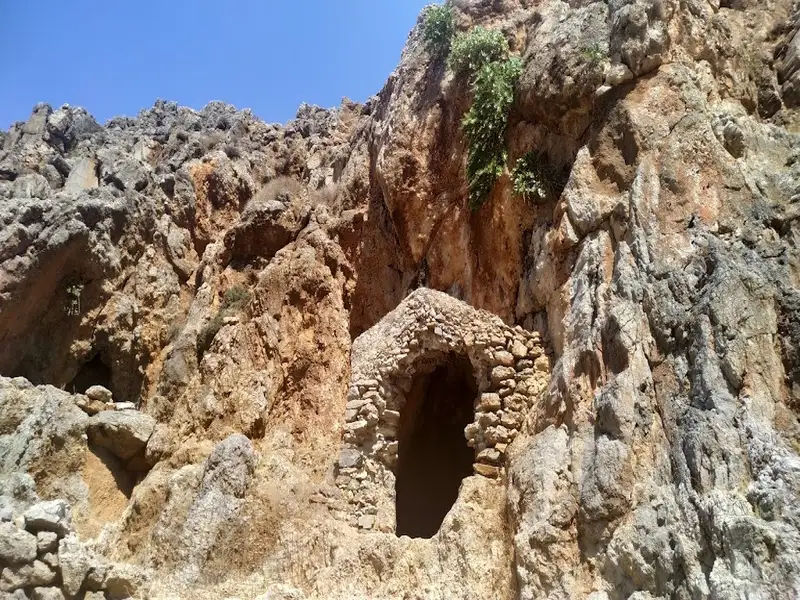
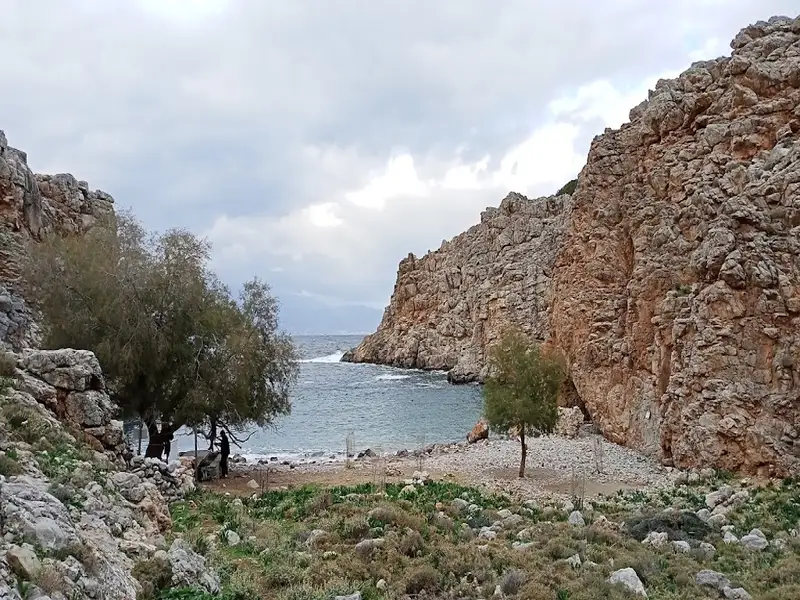
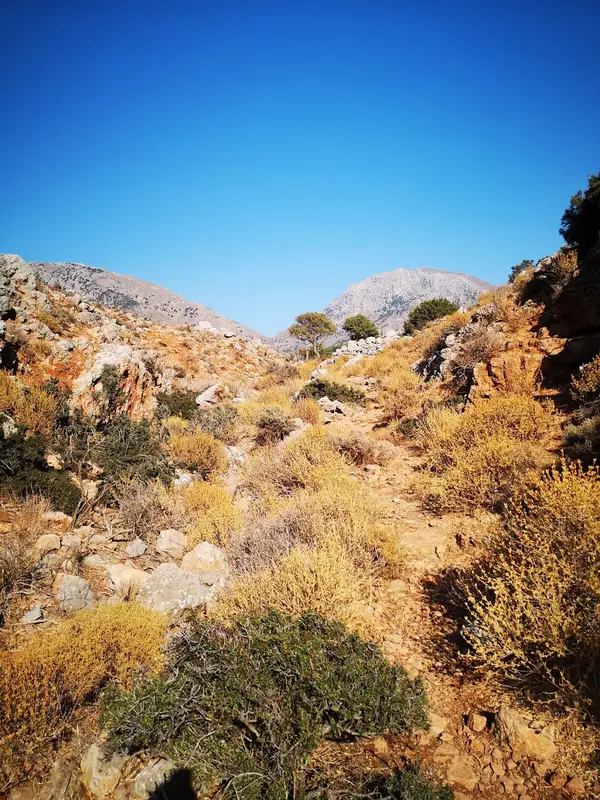
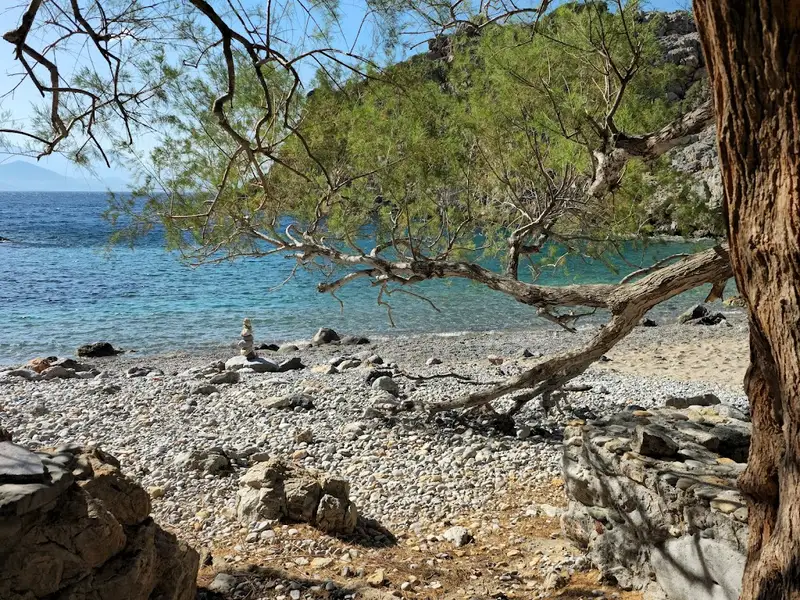
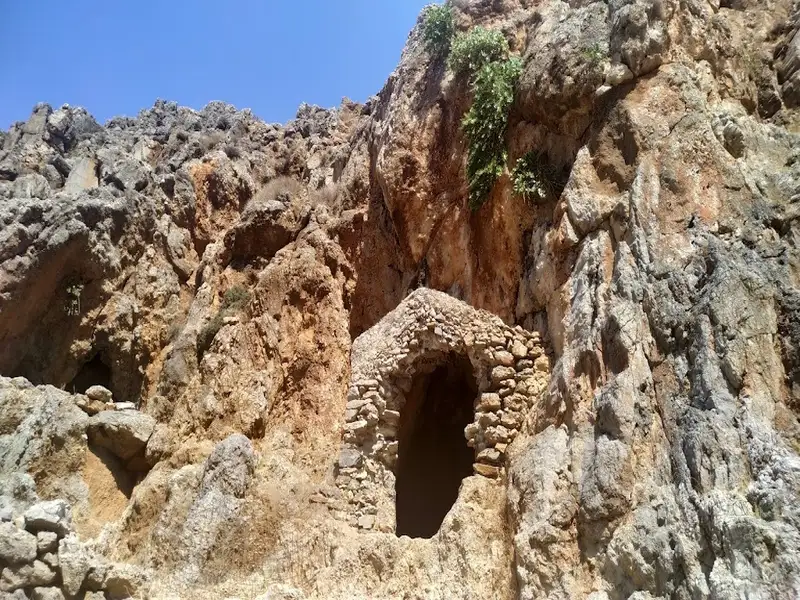
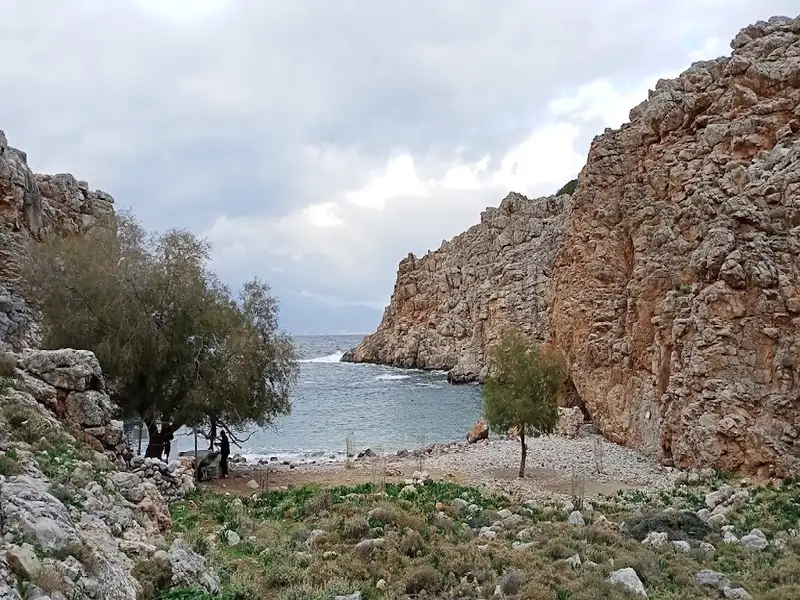
Agriomandra, a hidden gem of a beach, can be found 24km east of Agios Nikolaos, or alternatively, 3km west of Kavousi village and Tholos beach. This beach, hidden at the exit of the Agriomandra gorge, is only accessible by foot through the canyon. To reach the entrance to the gorge, follow a dirt road that cuts through the verdant meadows west of Kavoussi, known as Lakos Ambelion. A short, manageable trail from this point will bring you to the beach, about a 10-minute walk. Along the way, you’ll notice several petite caves nestled into the rocks, one of which is a stone-built church from the Byzantine era, dedicated to St. John the Theologian. As you continue on, you’ll come upon the stunning pebbly beach with its transparent green waters, tucked away between the protective arms of the gorge cliffs.
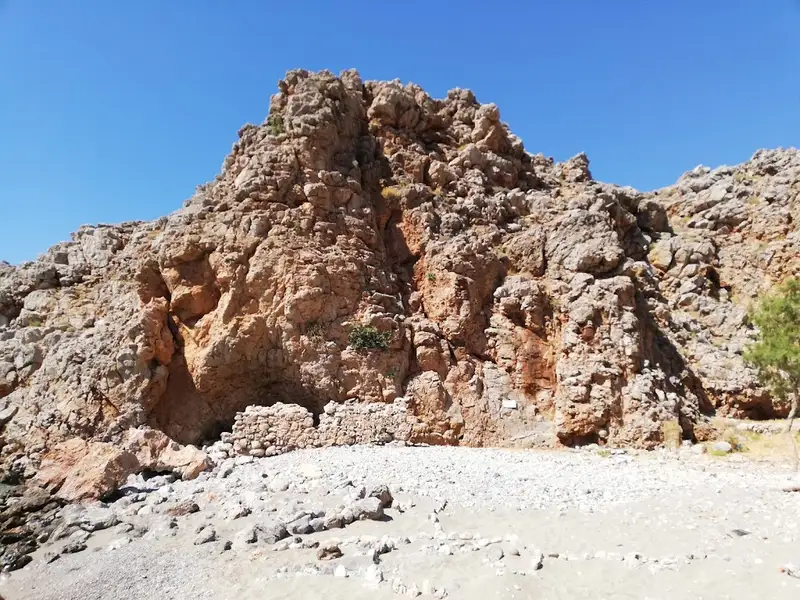
The seclusion of the beach, primarily due to its challenging access, makes it the perfect spot for privacy, nudism, and snorkelling. Tamarisk trees provide ample shade and the beach itself was first used as a port by the Venetians, with remnants of their buildings still visible today. In fact, until 1920, goods and animals were transported to Agios Nikolaos from this sheltered harbour due to the lack of roads. You’ll also notice the remains of a tax office and a well once used for water.
The name Agriomandra comes from the Greek words Agrios, meaning wild or savage, and mantra, meaning a pen for animals. The term mandra is often used in Crete to describe open spaces where animals were gathered for shipping. The beach’s alternate name, Agiomandra, is likely a nod to the church of St. John located in the gorge.
If you ever visit, consider a walk north along the steep shore to Tholos. After about 400m, you’ll come across the deserted Sykies beach, named for the fig trees that inhabit the area. Next, you’ll encounter the striking landscape of towering cliffs, reaching their peak height of 250m at the impressive Spathi cape, a locale known to the locals as the Sword of Homatas. Here, a rocky beach with crystal clear blue waters awaits, accessible only by boat. The cape is also accessible from Tholos, being in close proximity to both the Theriospilios Cave and the Chryssokamino ancient site.
No results available
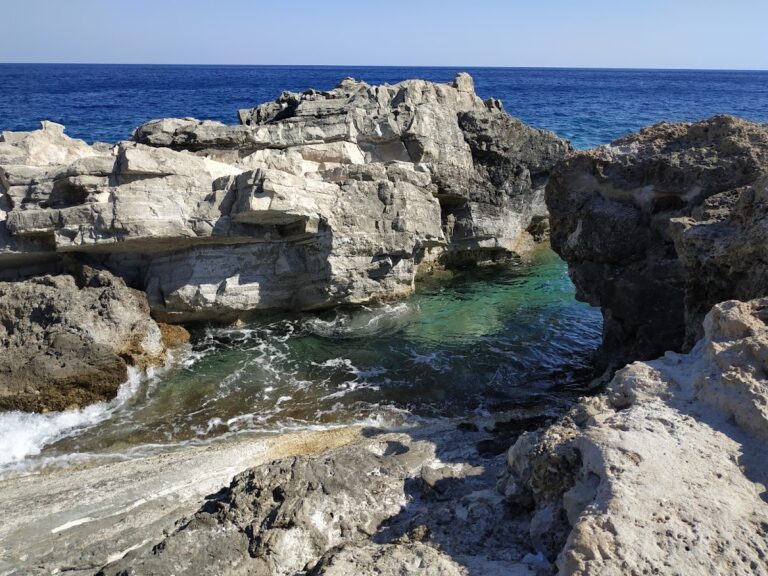
Located at Vothoni of Kakia Skala, in the province of Ierapetra, you can find the Roman fish tanks carved by the Romans into the soft sandstone, featuring a small opening to the sea to allow fresh water to flow in. There are also some steps in one corner.
It is not difficult to envision a housewife from that time standing on top, pointing, and exclaiming, “I want that one!” This historical site is truly impressive and well worth the effort to visit.
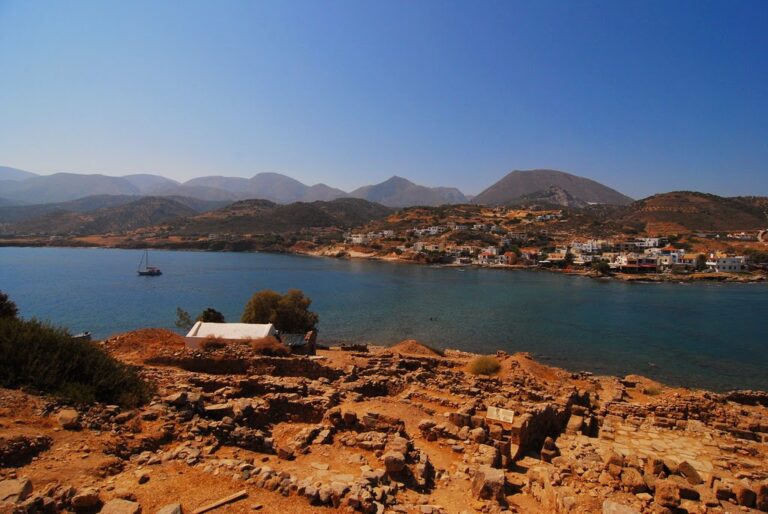
The small islet Scoglio de Muflo, also known as Psilos (meaning flea), is located opposite the island of Mochlos and was a significant commercial center and port from antiquity until the Byzantine Era. To the west lies a larger island called Psira (meaning lice), and another islet called Konida (meaning lice egg or nit) can be found opposite Pahia Ammos. Additionally, the island is sometimes referred to as Agios Nikolaos due to the picturesque chapel of Saint Nicholas, the patron saint of sailors.
The islet of Mochlos is a designated archaeological site that continues to be excavated. The prosperity of ancient Mochlos was abruptly interrupted when the island became separated from Crete’s mainland. In the past, the island was actually the tip of a narrow peninsula, which formed two natural harbors. In the current sea area between the island and the mainland, where the depth does not exceed 2.5 meters, traces of Roman buildings have been discovered.
Since 3650 BC, the island has been inhabited and thrived during the Minoan era due to its natural harbor and surrounding fertile plain, which provided strong advantages in a region with stormy seas and rugged mountains. Mochlos imported obsidian from Milos and raw materials from the East, with which it had close trade relations. Although the settlement was destroyed by the eruption of the Santorini volcano, it was eventually rebuilt. During Roman times, Ierapytna controlled Mochlos and fortified it against enemy attacks. The island continued to flourish until the Byzantine era when, like all coastal areas of Crete, it was abandoned due to pirate raids.
Many tombs from all periods of the Minoan era have been discovered, containing important artifacts such as seals, golden jewelry, pottery, steatite vases, axes, and a jewelry storage box with a knife in the shape of a dog. The most significant find was a golden ring depicting a nude goddess sitting on a peculiar ship, having left a small house on the rocky coast. Additionally, an entire area with workshops, known as the “neighborhood of artisans“, was found where gold jewelry, gems, and stone vessels were produced.
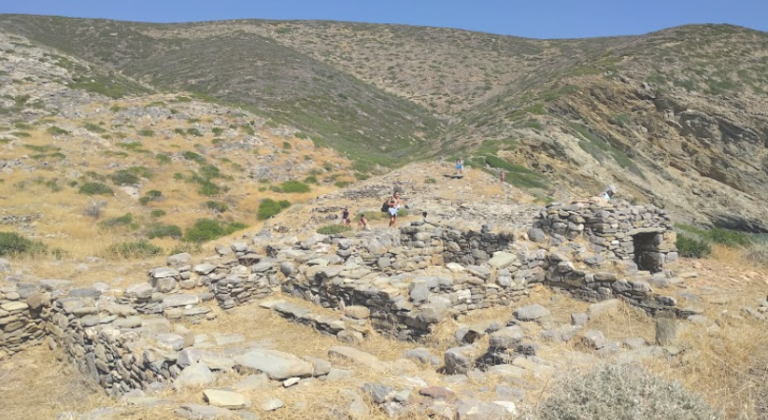
Psira is a tiny uninhabited islet situated 1 mile north of Tholos beach, at the northeastern edge of the Gulf of Mirabello. A Minoan settlement spanning 15-20 acres has been discovered on Psira, making it one of the most significant sites in Crete. The name Psira translates to louse in Greek, inspired by the island’s shape, which resembles the insect. Interestingly, there is a small island nearby called Konida (meaning nits – lice eggs) and another islet in Mochlos named Psilos (meaning flea)!
The primary attraction of Psira is the ruins of the small Minoan town of Tholaria, which thrived between 1700BC-1450BC on a small peninsula on the south coast. Despite its modest size, the town was home to wealthy merchant, craftsman, fisherman, and sailor families who maintained connections with the Mediterranean. It is likely they were involved in trading purple dye, similar to the Isle of Lefki.
The initial excavations at Psira were conducted by a team led by American archaeologist Richard Seager in 1908. The archaeological site included houses, a square, a temple, a cemetery, but no palace was discovered. The valuable findings uncovered suggest that the inhabitants of Psira were affluent. Notable discoveries include a jar adorned with cattle heads and olive branches, and a mural depicting two Minoan women in conversation, wearing impressive dresses. Additionally, several ancient shipwrecks surround Psira, attracting many divers searching for antiquities (albeit illegally).
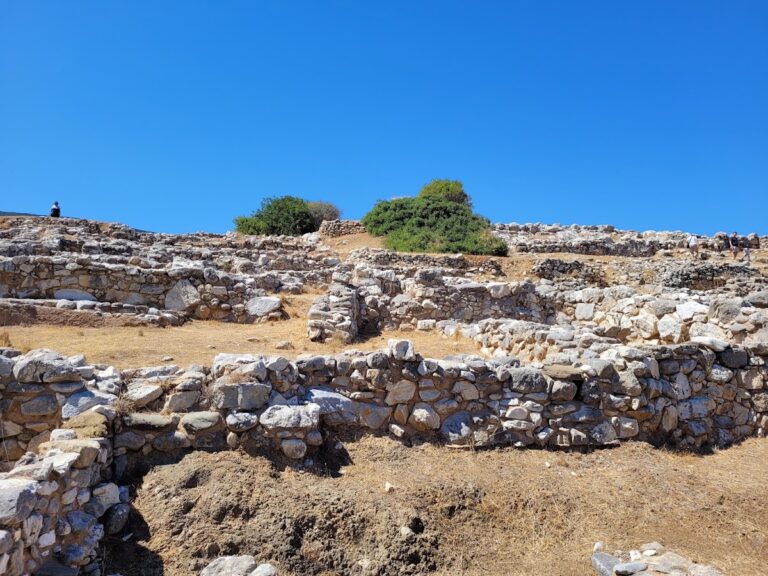
The archaeological site of Gournia can be found on a hill to the west of Pachia Ammos, near the road that connects Agios Nikolaos to Ierapetra, approximately 19km east of Agios Nikolaos. This city, which thrived during the Minoan period, is regarded as the most comprehensively excavated Minoan town on Crete. Due to its excellent preservation, it has been dubbed the “Pompeii of Crete“. The excavation of Gournia was carried out by an American Archaeology Group, led by Harriet Boyd, between 1901 and 1904.
The city seems to have prospered between 1550-1450BC, before being destroyed by an earthquake in 1450BC and ultimately abandoned around 1200BC. Its true name remains unknown, with the name Gournia being derived from the stone and wooden bowls – basins (urns) that were discovered at the archaeological site prior to the excavations.
Visitors can enjoy strolling along the paved streets of the archaeological site and getting a sense of what a small Minoan town was like. Excavations have uncovered houses, walls, stairs leading to second floors, storage rooms, and workshops. The discovery of various tools (such as chisels, hooks, hammers, and pots) helps us to envision the daily life of the Minoans. Notably, there was also a sewerage system in place.
At the summit of the hill, a small palace has been discovered, along with a large courtyard (believed to be the market), a primitive theater, and a temple dedicated to the goddess of snakes. The cemetery of Gournia was found in the Sfougaras area, quite close to the beaches of Kamini.
No results available
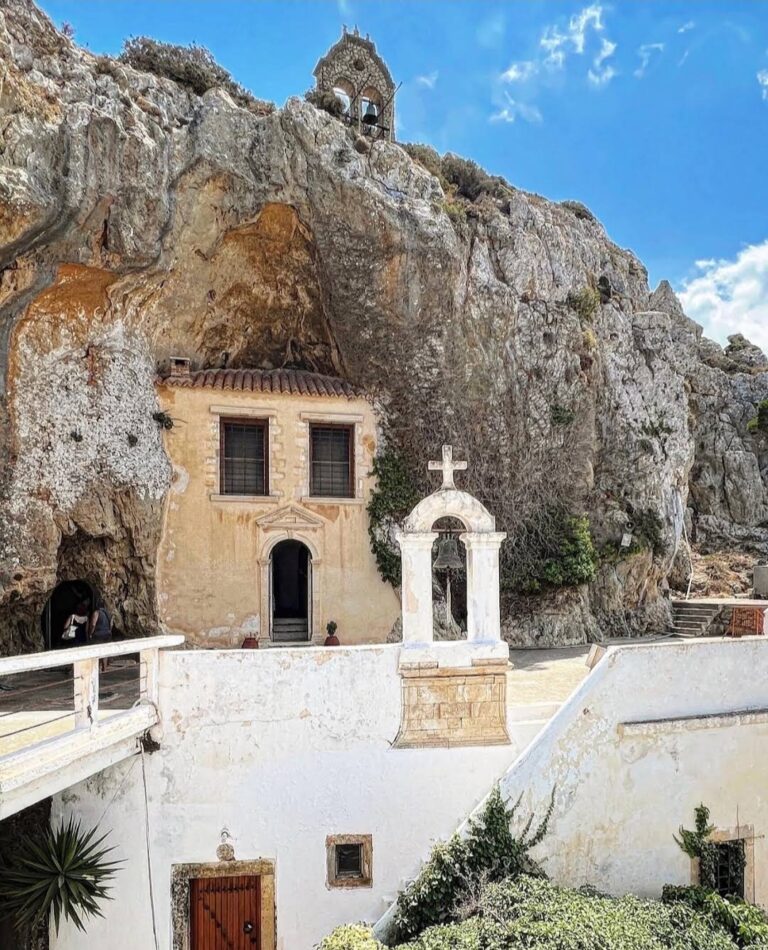
The Panagia Faneromeni Monastery, also known as Virgin Mary of Gournia, is situated northwest of Pachia Ammos and 24km south of Agios Nikolaos. This male monastery is perched on a steep slope at an altitude of 540 meters, offering breathtaking views of the sea. The two-aisled monastery church, dedicated to the Virgin Mary and Zoodohos Pigi (Source of Life), is built within a cave.
As one of the most renowned monasteries in eastern Crete, the Panagia Faneromeni Monastery attracts pilgrims from all over the island, especially on August 15th, its celebration day. Some even arrive on foot to fulfill a vow.
Constructed on a steep incline, the monastery resembles a fortress overlooking the sea. Its strategic position reflects the defensive nature of the Faneromeni Monastery against the frequent pirate attacks along the Cretan coast. The architecture is reminiscent of monasteries that were restored in the late 16th and 17th centuries.
Legend has it that a shepherd once lost his best ram every afternoon. One day, he decided to follow the ram and witnessed it drinking water flowing from the cave. As the shepherd approached, the icon of the Virgin Mary was “revealed” to him. When he took the icon home, it vanished, only to be found again in the cave where the monastery was eventually built. It is said that the same icon reappears and mysteriously disappears again, particularly on the Assumption and other Marian feasts.

Located in the picturesque green area of Malles near Ierapetra, the Monastery of Panagia Exakousti now serves as a convent for women. The nuns run a textile workshop, a tailoring and needlework shop, and sell various souvenirs.
The monastery’s history is closely tied to a captivating figure who once resided there, Abbot Hatzi Ananias. It is said that as a baby, Ananias would not nurse on Wednesdays and Fridays, and refused to touch his mother’s breast. He never consumed meat, fish, or cheese, and dressed in animal skins while using a stone as a pillow. At 14 years old, he moved to Kapsas Monastery, where he was influenced by Monk Gerontoyannis. In 1877, he returned to Malles and discovered the icon of the Virgin Mary (Panagia) in a cave amidst the ruins of the Exakousti Monastery. This inspired him to rebuild the monastery. Following his death, Ananias was declared a saint, and during his lifetime, he was believed to have performed miracles. Pilgrims would travel to Exakousti to receive his blessings or healing. Today, the monk’s tomb can be found within the monastery.
The monastery’s church is a single-aisled, vaulted basilica dedicated to the Virgin Mary’s Birthday, celebrated on September 8th. While the icons on the iconostasis are more recent, two older icons of Panagia and John the Baptist are also present. The iconostasis was crafted by the Makrakis and Farsaris brothers, renowned wood carvers in Crete’s religious community. Additionally, the monastery houses a small cave with a chapel dedicated to the Transfiguration of Christ, where Ananias discovered the Virgin Mary’s icon. In the northeastern corner of the monastery, the nuns have also constructed a chapel dedicated to the Blessed Fathers and Mothers.
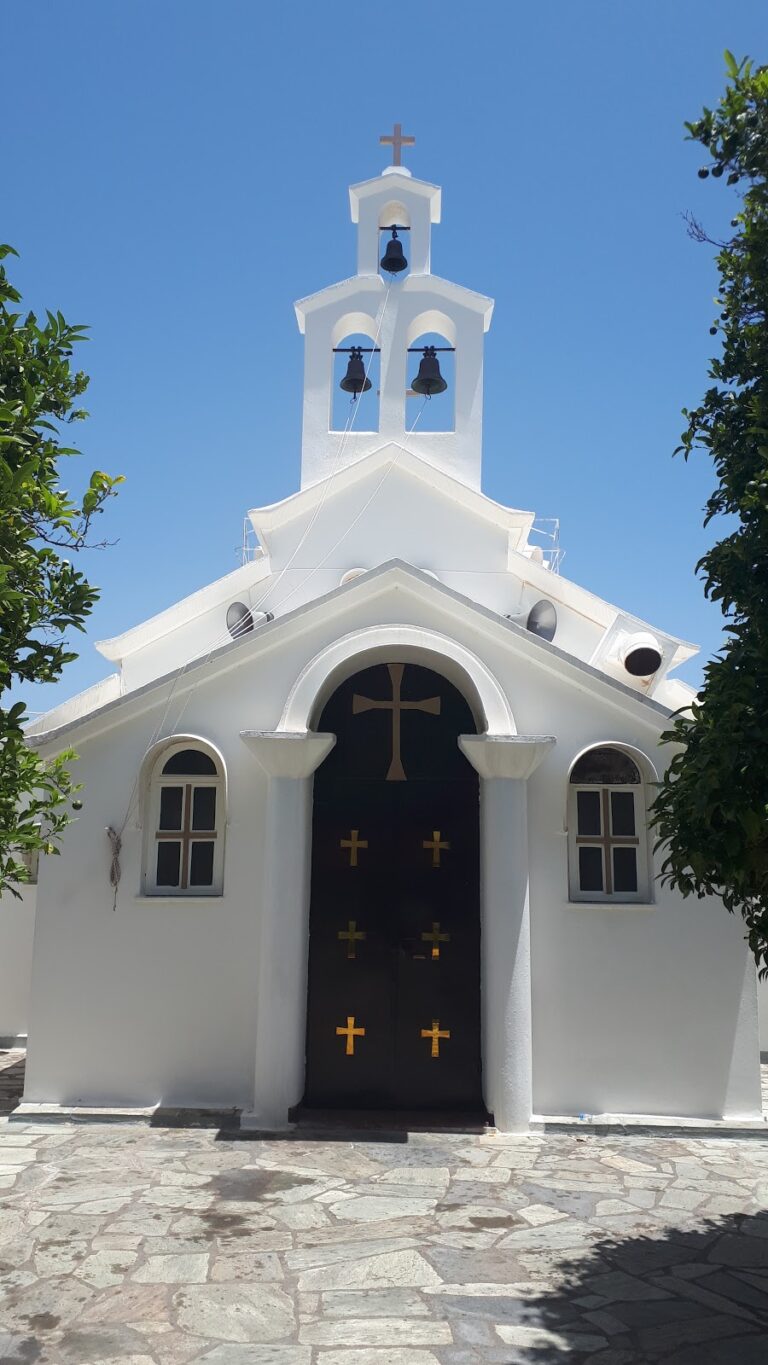
The Axion Esti Monastery is situated on a hill 2km north of Ierapetra. Its full name is the Female Monastery of the Resurrection of Christ and Virgin Mary “Axion Esti”.
Established in 1984, this modern monastery is for women and is encircled by the monks’ cells. The primary temple is a three-aisled church, with each aisle dedicated to the Virgin Mary, the Resurrection of Christ, and the Annunciation. Additionally, within the monastery, you can find the chapels of the Nativity of the Lord, All Saints, and Holy Trinity. Outside the complex, the Church of the Transfiguration is also present.
Notably, the monastery’s primary celebrations occur on Easter’s Resurrection and June 11th (Virgin Mary).
No results available
No results available
No results available
No results available
No results available
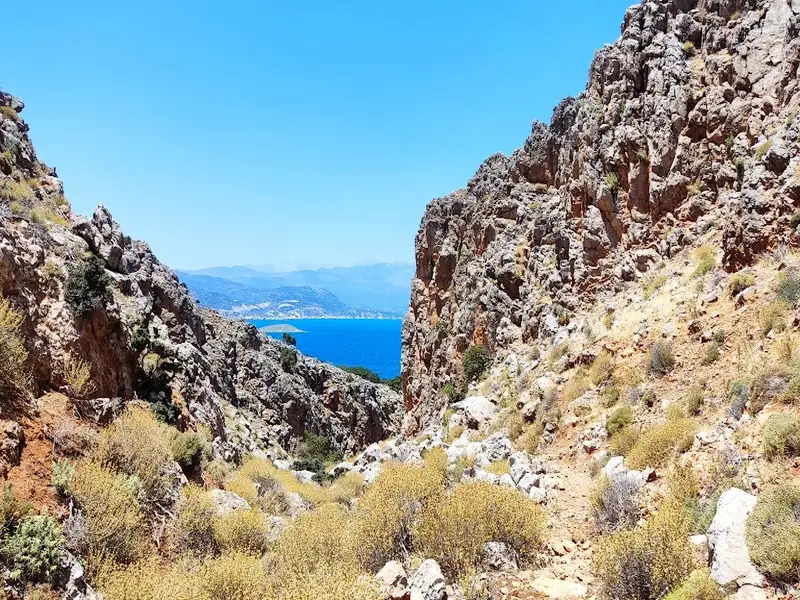
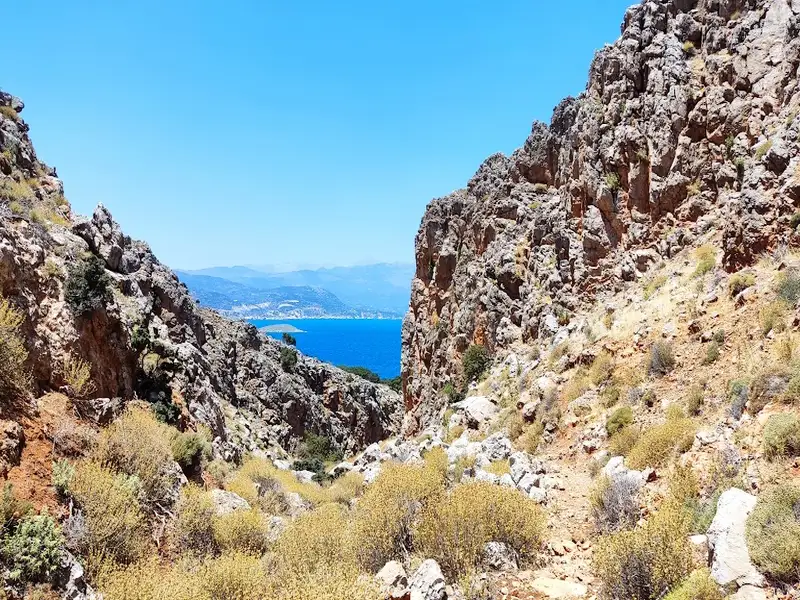
The Agriomandra gorge, though brief in length, leads to the charming, small beach of Agriomandra. To reach it, one must traverse the verdant meadows to the west of Kavoussi, known as the Lakos Ambelion area, via a dirt road until the gorge’s entrance is reached.
Commencing from this point, a straightforward trail leads to Agriomandra beach within a mere 10-minute walk. As you approach the beach, you’ll notice several petite caves embedded within the rocks. One of these has been constructed from stone and serves as a church, built during the Byzantine era by a hermit and dedicated to St. John the Theologian. This church is still occasionally used for baptisms.
A short walk further, approximately 650 meters from the parking area, you’ll arrive at the stunning pebble beach, graced with crystal-clear, emerald waters.
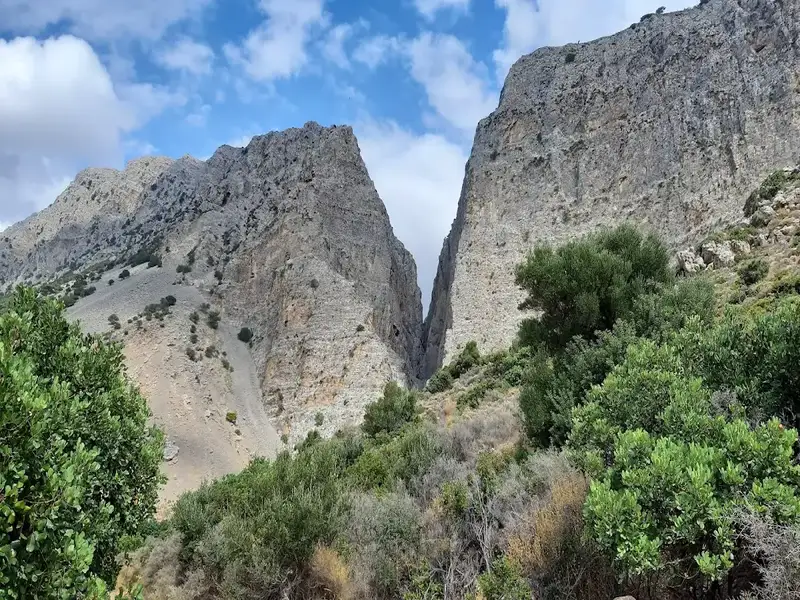
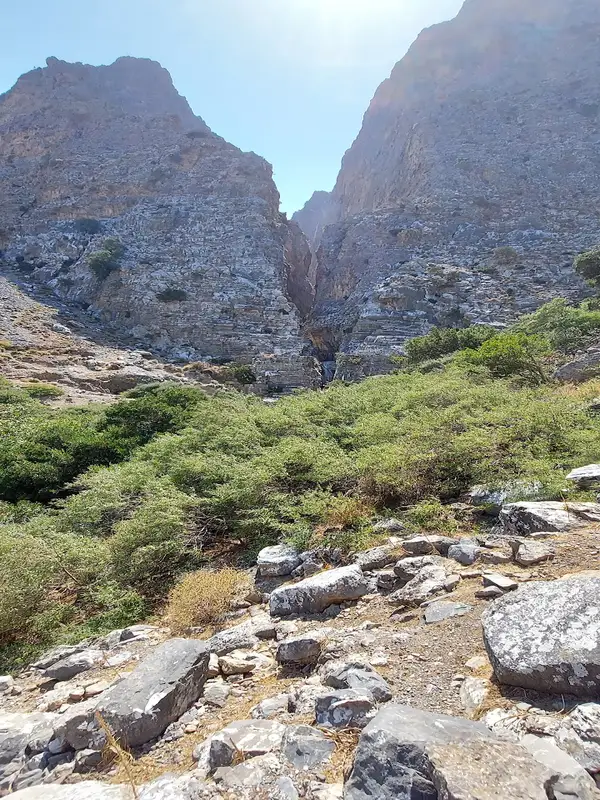
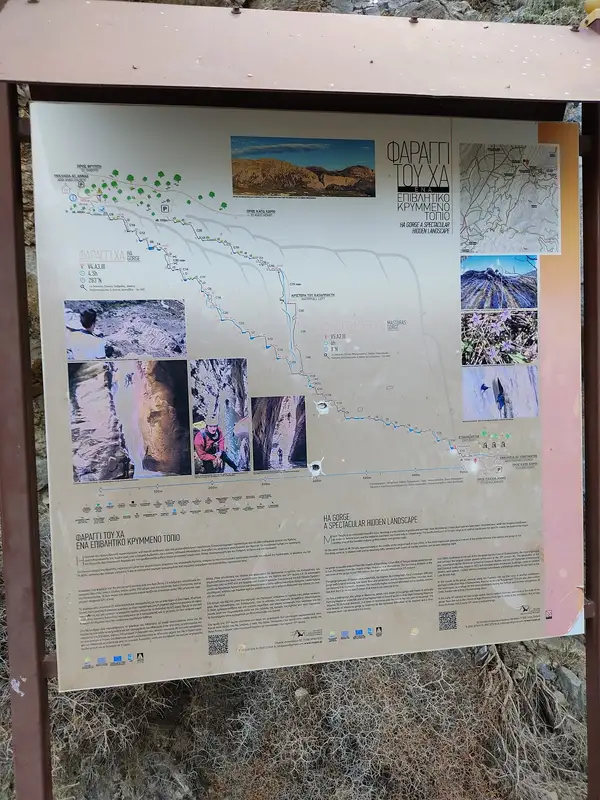
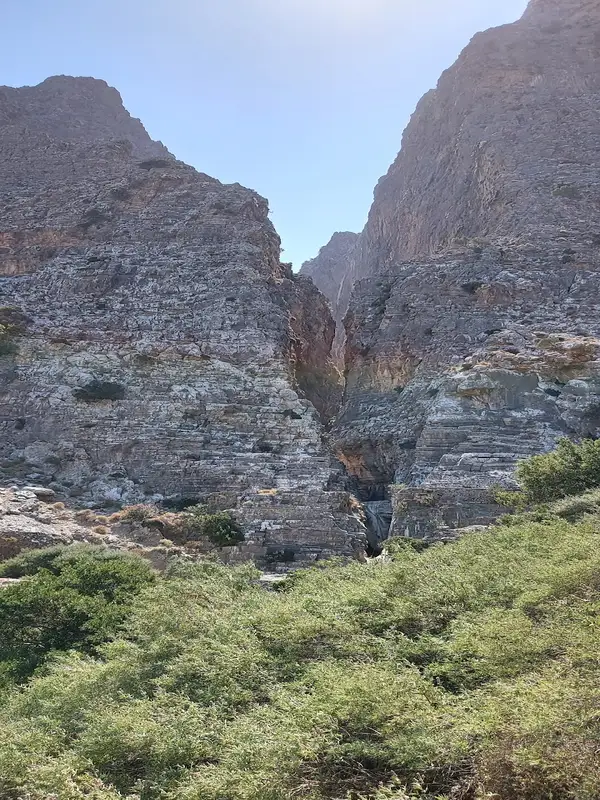
Ha Gorge, a mesmerizing natural wonder carved into the western side of Mount Thrypti, channels water from the Thripti plateau to the Pachia Ammos beach. The gorge’s journey commences near the Saint Anne Byzantine church and the E4 footpath at approximately 800m altitude, and concludes near the Monastiraki village, about 100m above sea level.
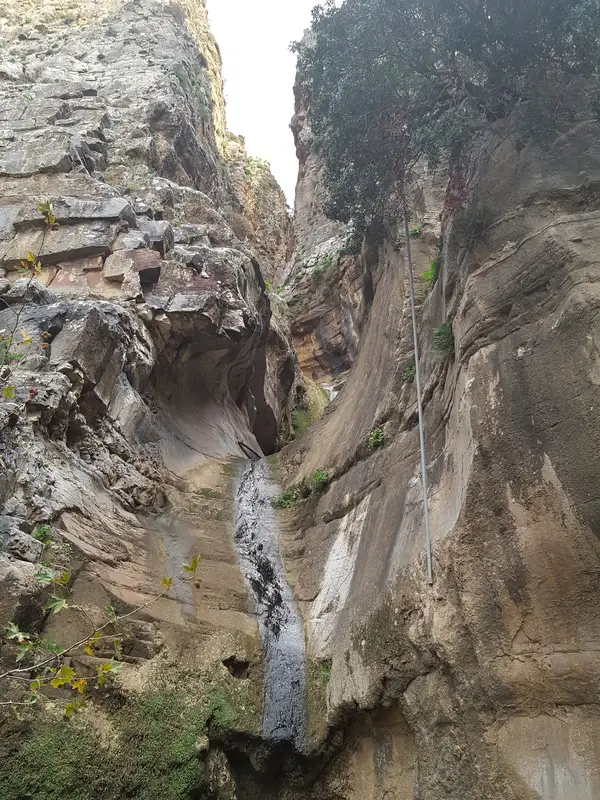
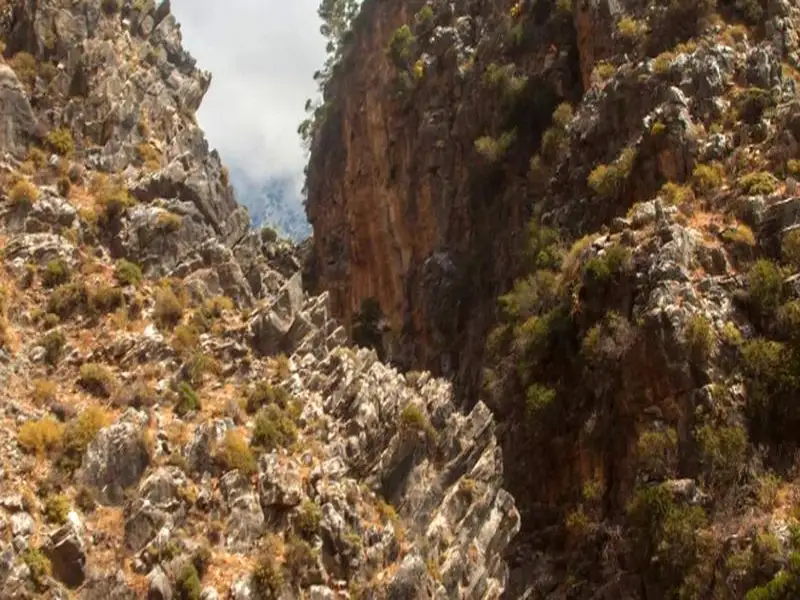
Traversing the Ha Gorge demands canyoneering skills and specific gear due to its series of cascading waterfalls, including a 35m high plunge. The gorge tightens to a mere thirty centimetres at certain points, squeezed between cliffs that rise to 400 meters. The Mastoras waterfall, one of Greece’s tallest free falls reaching 215m, contributes substantial water midway through the route.
For those with less experience, a hike from the Monastiraki exit of the gorge provides a peek into its splendour, leading to a charming pond at the base of the final waterfall and past ancient grain mills. The name of the gorge, Ha, originates from the Greek verb “Hasko,” which means to create a gap. However, local folklore offers vibrant alternative explanations. From stories of misleading Saracens to myths of a golden chariot hidden deep within, the Ha Gorge is not only a stunning natural spectacle but also a symbol of intriguing local mythology.
In the eastern region of Crete, the term Havgas is frequently encountered, often used to name canyons and in some variations such as Ha, Havgoudi, and so on. One of the many gorges bearing the Havgas name is located near Kavousi, in the Ierapetra province. This gorge is essentially the lower segment of the wild Mesonas gorge, which originates from the Thripti plateau.
The section known as Havgas begins close to the Minoan settlement of Azorias and concludes its path in Kavoussi. Despite its short length of only 700m, traversing it via its stream demands technical (canyoning) gear due to the presence of six stunning waterfalls. The tallest of these waterfalls reaches 20 meters in height and retains water well into the late winter.
As an alternative, the gorge can be navigated by foot along the ancient hiking trail that skirts the canyon from its eastern side, linking Avgos to Kavoussi.
Located on the northern slopes of the Thripti range, near Kavoussi village and Avgos settlement, you’ll find the short but incredibly wild and imposing Mesonas gorge. This 4km long gorge requires technical canyoneering equipment to traverse its steep waterfalls. The gorge connects the Thripti Plateau to the Kavoussi plain, with its exit close to the Azorias archaeological site. The same stream forms the technical Havgas gorge, crosses the fertile Kavoussi plain, and eventually empties onto Tholos beach.
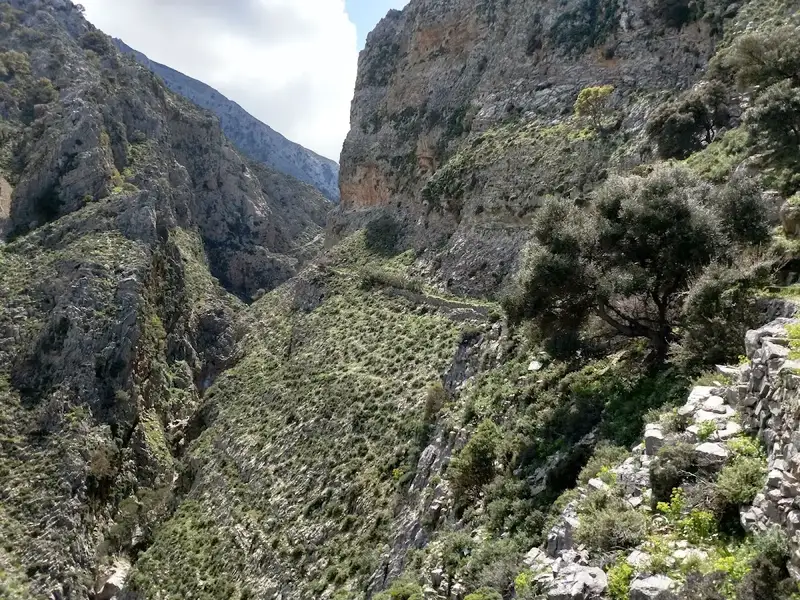
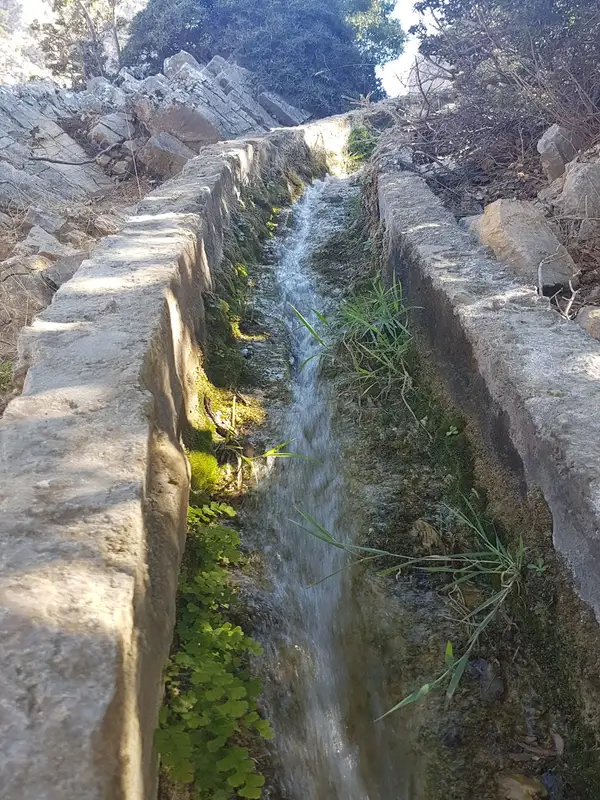
Starting from the Tsamadi position near Thripti village, there’s a hiking trail that runs high above the gorge bed, following the concrete channel used to transfer spring water to Kavoussi. The breathtaking views of the canyon, surrounding mountains, and Mirabello bay are beyond words. The trail descends to ancient Azorias, from where you can approach Kavousi via the ancient path parallel to the Havgas Gorge, or through the dirt road passing the Monumental Olive Tree of Azorias.
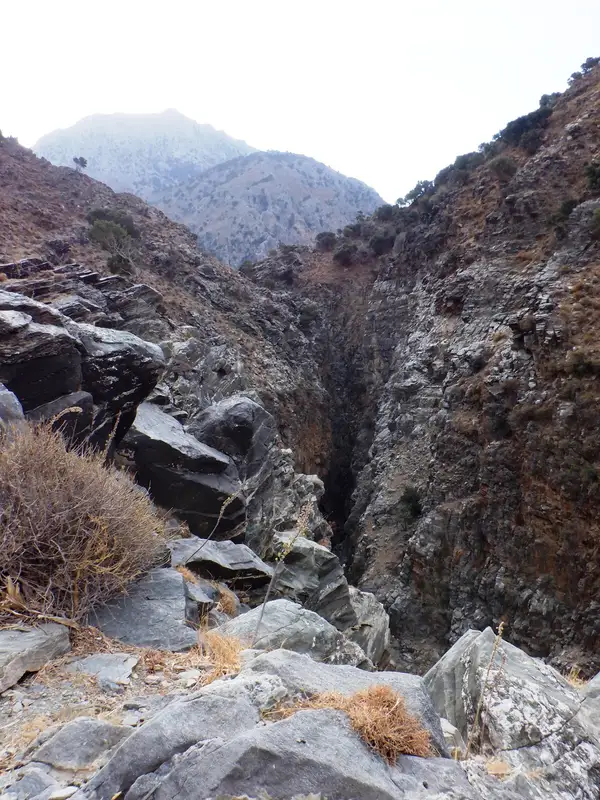
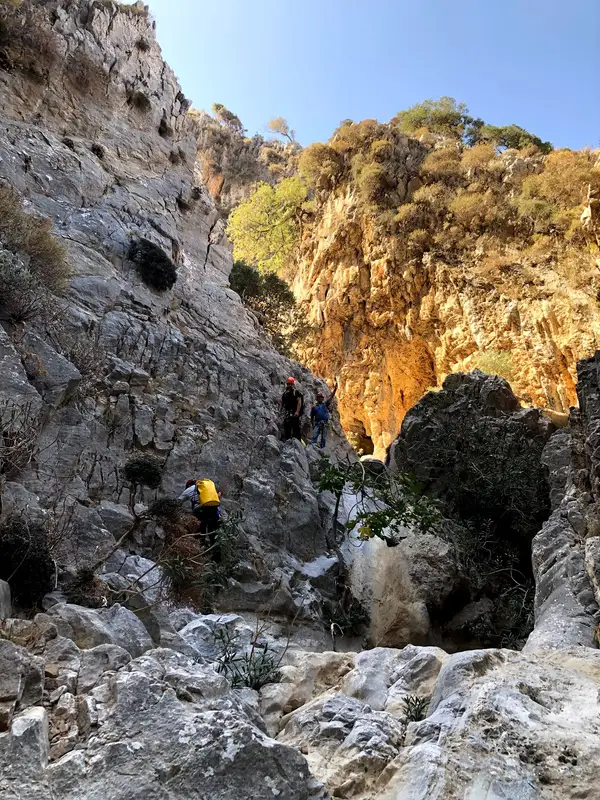
For canyon enthusiasts wanting to traverse the river bed, it’s worth noting that the water levels are generally low, with the flow ceasing mid to late spring depending on seasonal rainfall. The gorge starts out smoothly, with the hiking portion exceeding the steep descent sections. The last part of the gorge changes dramatically, narrowing significantly and forming high waterfalls, with the highest rappel at 30m. A small group of canyoneers can descend its 9 rappels in about 3 hours.
No results available
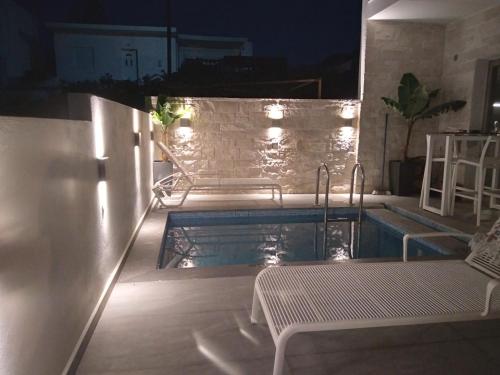
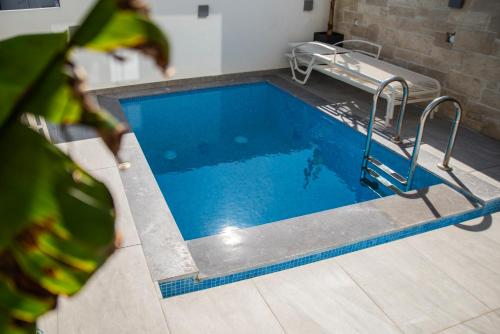
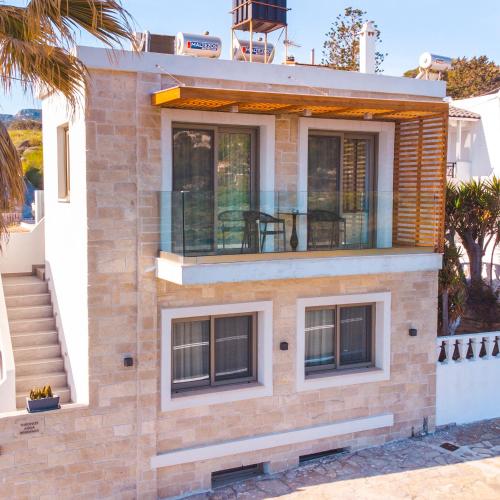
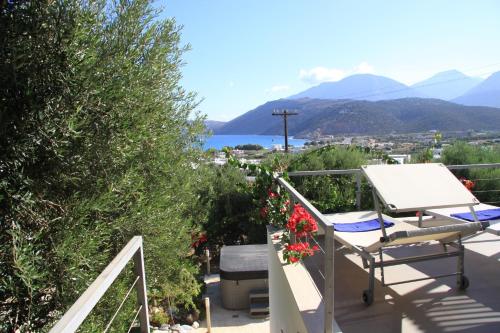
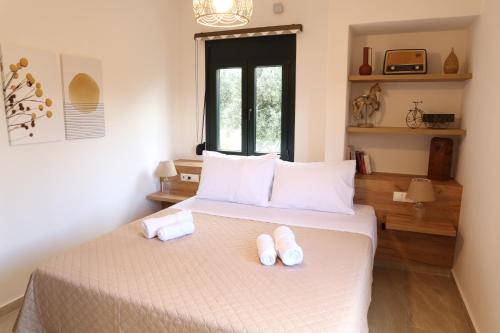
Situated in Pachia Ammos and only 20 km from Lake Voulismeni, Thronos Aqua Appartment 1 features accommodation with sea views, free WiFi and free private parking. The property has mountain and pool views, and is 20 km from Panagia Kera Church (in Kritsa).
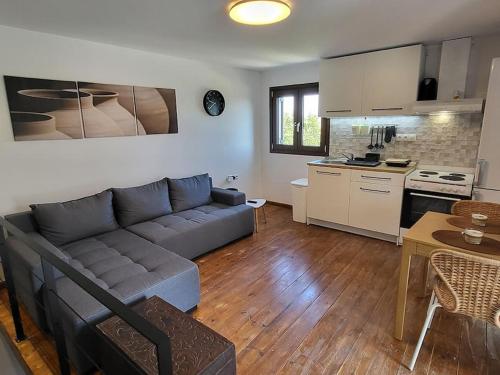
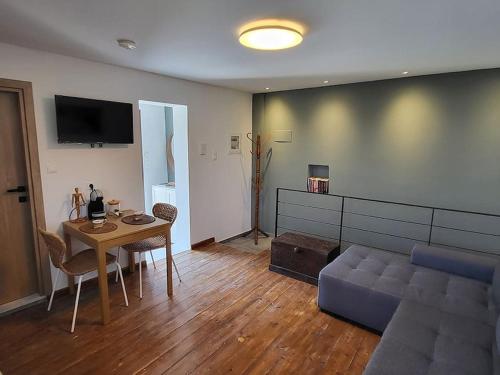
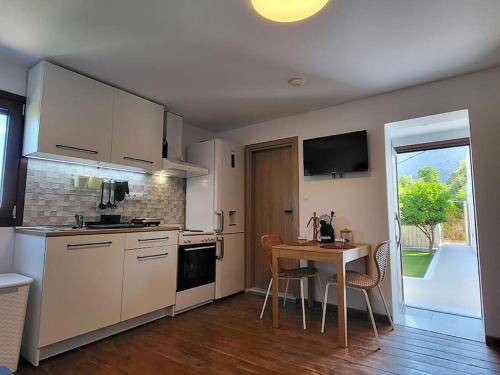
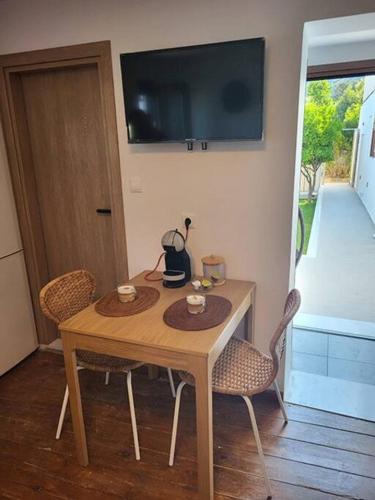
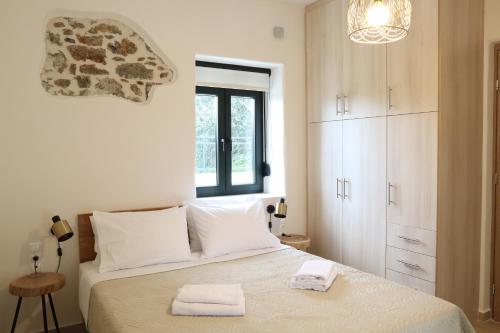
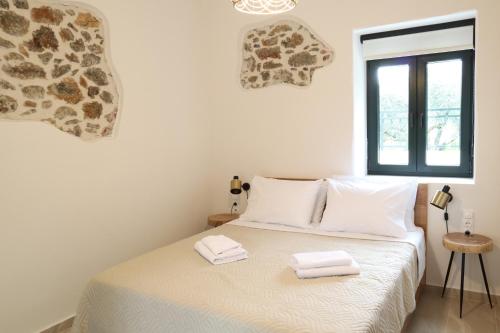
Boasting a Nintendo Wii, the apartment has a kitchen with an oven, a toaster and a fridge, a living room, a dining area, 2 bedrooms, and 1 bathroom with a shower. A flat-screen TV is available.
The apartment offers a terrace. Guests can enjoy the outdoor swimming pool at Thronos Aqua Appartment 1.
Agios Nikolaos Port is 21 km from the accommodation. The nearest airport is Sitia Public Airport, 44 km from Thronos Aqua Appartment 1.
from
€113
/night
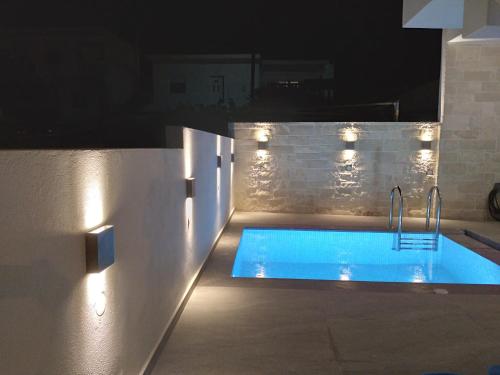
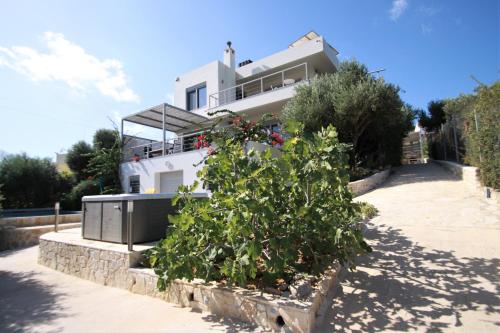
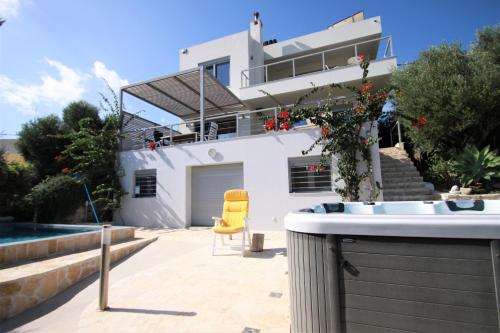
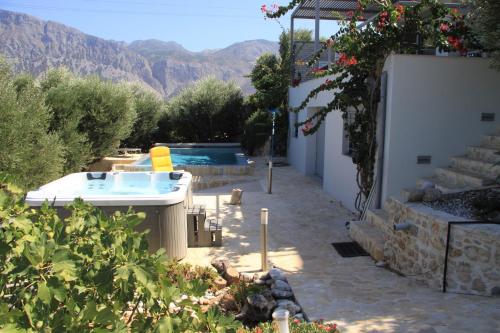
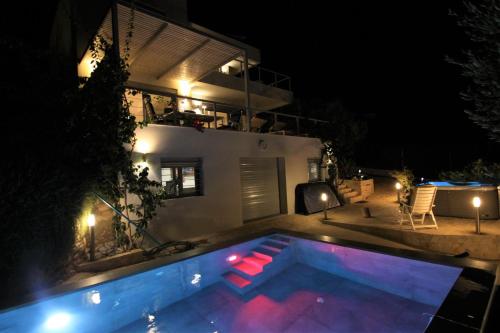
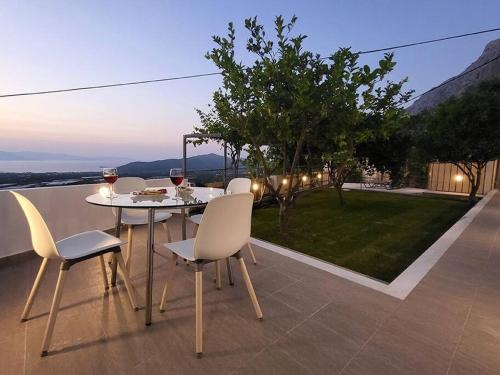
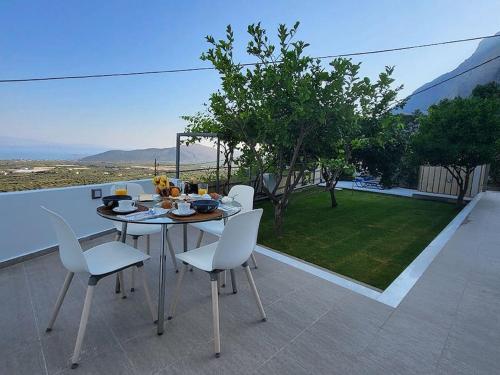
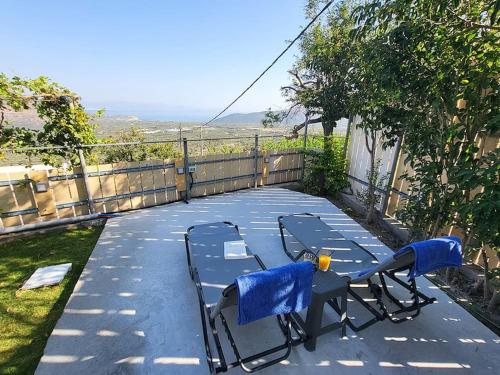
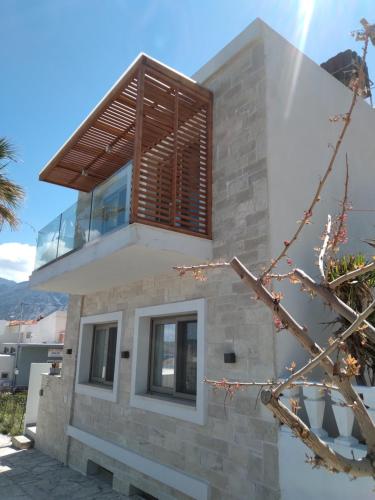
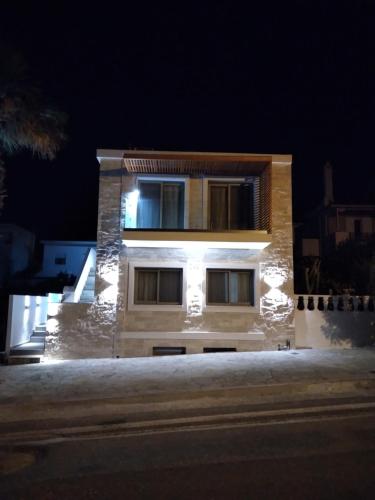
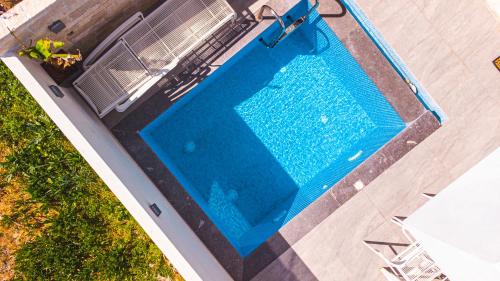
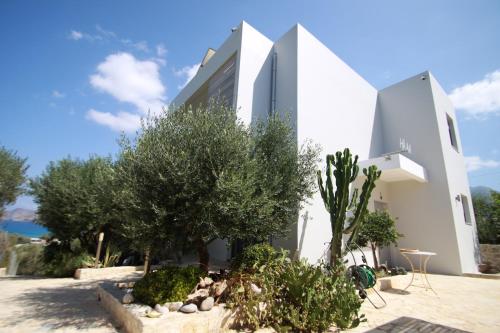
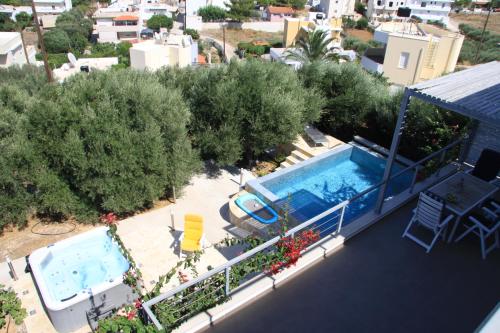
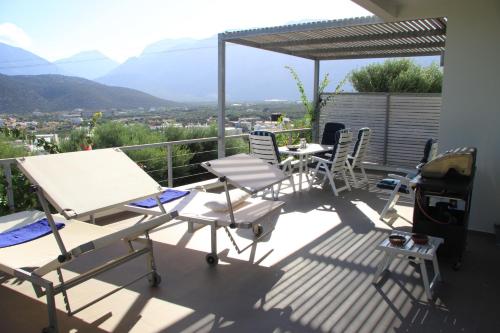
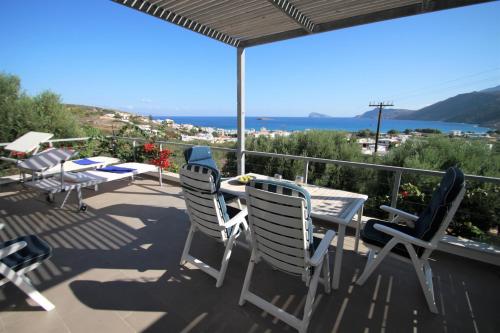
Boasting air-conditioned accommodation with a private pool, mountain view and a patio, Außergewönliche Private Villa Meer, Berge, Pool Ostkreta is set in Pachia Ammos. This beachfront property offers access to a balcony, free private parking and free WiFi.
The villa with a terrace and sea views has 2 bedrooms, a living room, a flat-screen TV, an equipped kitchen with a dishwasher and an oven, and 2 bathrooms with a walk-in shower. Towels and bed linen are offered in the villa.
The villa offers an outdoor fireplace. Guests at Außergewönliche Private Villa Meer, Berge, Pool Ostkreta can enjoy fishing nearby, or make the most of the garden.
Lake Voulismeni is 20 km from the accommodation, while Panagia Kera Church (in Kritsa) is 20 km from the property. The nearest airport is Sitia Public Airport, 45 km from Außergewönliche Private Villa Meer, Berge, Pool Ostkreta.
Located in Ierápetra, 25 km from Lake Voulismeni and 25 km from Panagia Kera Church (in Kritsa), Saint George House provides air-conditioned accommodation with a balcony and free WiFi. The property has garden views and is 26 km from Agios Nikolaos Port.
The holiday home with a terrace and sea views features 1 bedroom, a living room, a flat-screen TV, an equipped kitchen with an oven and a toaster, and 1 bathroom with a shower. Towels and bed linen are provided in the holiday home.
A continental breakfast is available daily at the holiday home.
Guests can also relax in the garden.
The nearest airport is Sitia Public Airport, 46 km from Saint George House.
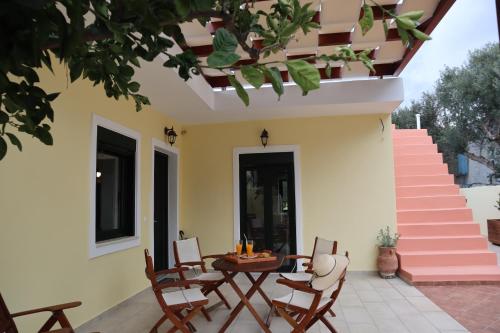
Elpida’s house is situated in Ierápetra, 26 km from Lake Voulismeni, 25 km from Panagia Kera Church (in Kritsa), and 27 km from Agios Nikolaos Port. This property offers access to a patio, free private parking and free WiFi.
The holiday home features 3 bedrooms, 2 bathrooms, bed linen, towels, a flat-screen TV, a dining area, a fully equipped kitchen, and a terrace with mountain views. The air-conditioned holiday home also features a seating area, washing machine and 2 bathrooms with free toiletries.
The nearest airport is Sitia Public Airport, 39 km from the holiday home.
No results available
Connect with thousands of Crete visitors and boost your bookings.
No results available
© All rights reserved. Crete Locals