
Crete has a recorded history that spans more than 5,000 years, from Neolithic settlers and the Minoan civilization that began shortly after 3000 BC to union with Greece in 1913 and the present day. The island’s story follows its position at the crossroads between Western Europe, the Middle East and North Africa, a location that made it a hub for trade and a prize fought over by Minoans, Mycenaeans, Dorians, Romans, Byzantines, Arab pirates, Venetians, Ottomans and, in World War II, German forces. This guide walks through each era in order, with the key dates and what happened, so you can place every ruin, fortress and monastery you see on Crete into its period.
Crete’s oldest human remains belong to Neolithic hunter-gatherers who arrived from Asia Minor and became farmers in the Messará plain. These early settlers laid the foundation for what came next. Shortly after 3000 BC, a new migration of more skilled people arrived and started the Minoan era.
The Minoan civilization was Europe’s first advanced society, and it flourished on Crete from shortly after 3000 BC until around 1450 BC. Sir Arthur Evans validated the existence of this civilization through his archaeological discoveries. At its peak the island held over 2 million inhabitants, four times more than today, and Knossos, the capital, housed 100,000 residents.
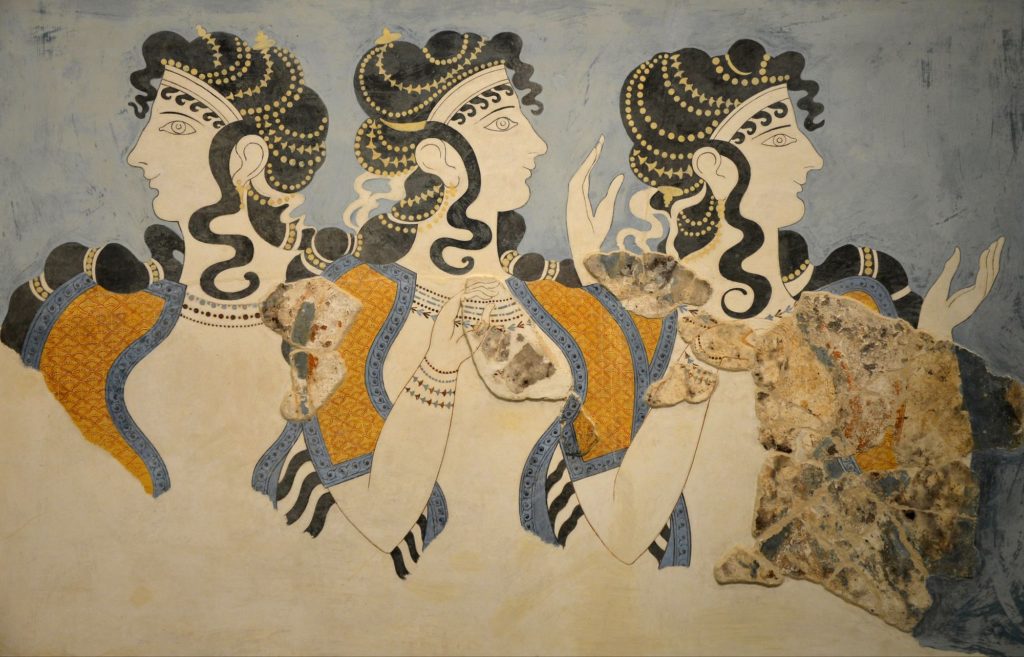
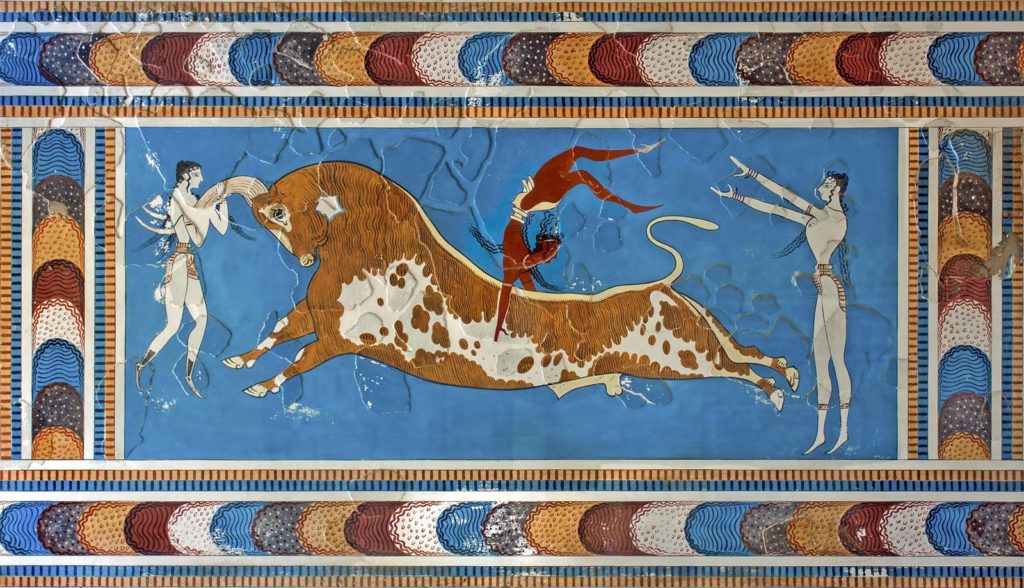
Minoan society built its great palaces at Knossos, Phaistos and Mália between 2000 and 1900 BC. An earthquake destroyed those palaces around 1700 BC, and the Golden Age of Minoan civilization that followed lasted about 250 years. A high priest led the society and ran both the church and the country’s economy. People worshipped the Mother Goddess, the divine power was symbolized by the bull, and the labrys (two-edged axe) served as the sacred symbol.
The Minoans developed an alphabet, printing writings, and complex water systems and installations. Women played an important and active role in the life of the palace. Minoan artists decorated entrances, walls, floors and pottery using natural paints, clay, copper and bronze, along with imported materials such as lapis lazuli from Afghanistan, ivory from Syria, and gold, silver and black obsidian from Anatolia.
Trade turned Crete into a maritime power. The Minoans processed and re-exported copper and bronze, along with special foods such as olive oil, honey and wine, and they became one of the most significant maritime powers in the Mediterranean.
The Minoan civilization ended around 1450 BC, and the cause is still debated. The charred remains found at Knossos and the ashes of Zákros suggest that a large-scale conflagration took place. One theory blames the explosion of the volcano Thíra, on the island of Santorini north of Crete, which caused a tsunami, earthquakes and ash storms; Thíra erupted in 1500 BC, half a century before the destruction of the Cretan civilization. Another theory holds that the Minoan civilization disappeared because of attacks by invaders or local rebels. You can still walk the ruins of these palaces and other ancient sites among the archaeological places across Crete.
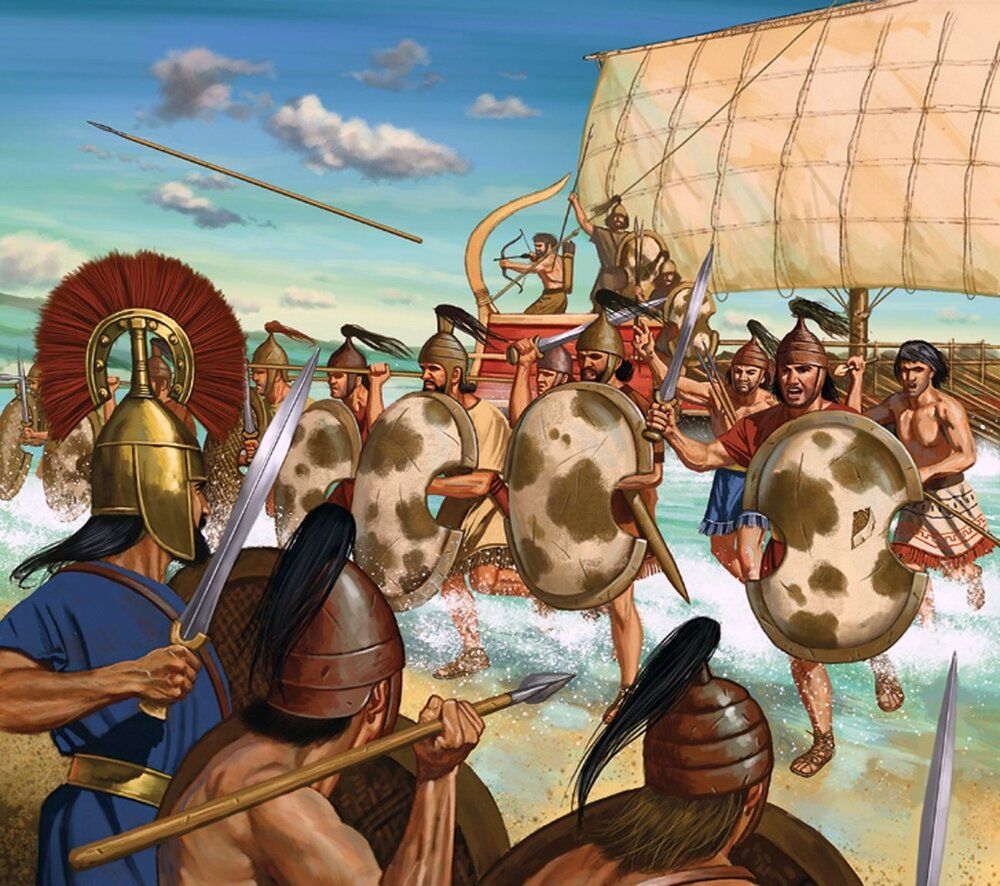
The Dorians and later the Romans reshaped Crete after the Minoan collapse. Around 1200 BC, the Dorians invaded the island, coming from the Balkans and crossing mainland Greece and the Aegean Sea. Most of the inhabitants living in the coastal areas retreated to the mountains to escape the invaders.
Crete lagged behind during the Classical Age (480 to 338 BC), while mainland Greece went through its heyday. Gortys (today Gortyn) grew into the leading city-state, and the Athenians recognized Crete as the cradle of their culture. The Code of Laws of Gortys survives as evidence of a society of free people, vassals and slaves led by a class of aristocrats.
The Romans needed three years of hard fighting to conquer Crete in 67 BC. Crete then remained a province of the Roman Empire until 396 AD, with its capital at Gortys. Roman rule built roads, harbours and aqueducts, and introduced sewage systems for households and heating systems.
Christianity reached Crete when the Apostle Paul arrived in 60 to 61 CE and commissioned his disciple Titus to convert the islanders. Titus encountered difficulties in dispelling pagan beliefs but died peacefully as bishop of Gortys in 107 AD, becoming the island’s patron saint, Ágios Títos.
When Roman power split, Crete reverted to the Byzantine Empire. Attacks by pirates and Islamic forces brought terror to the inhabitants, and pirates of Andalusia occupied the island from 824 to 961 AD. The Byzantine commander Nikeforos Phokas recaptured Crete after a bloody siege of Heraklion.
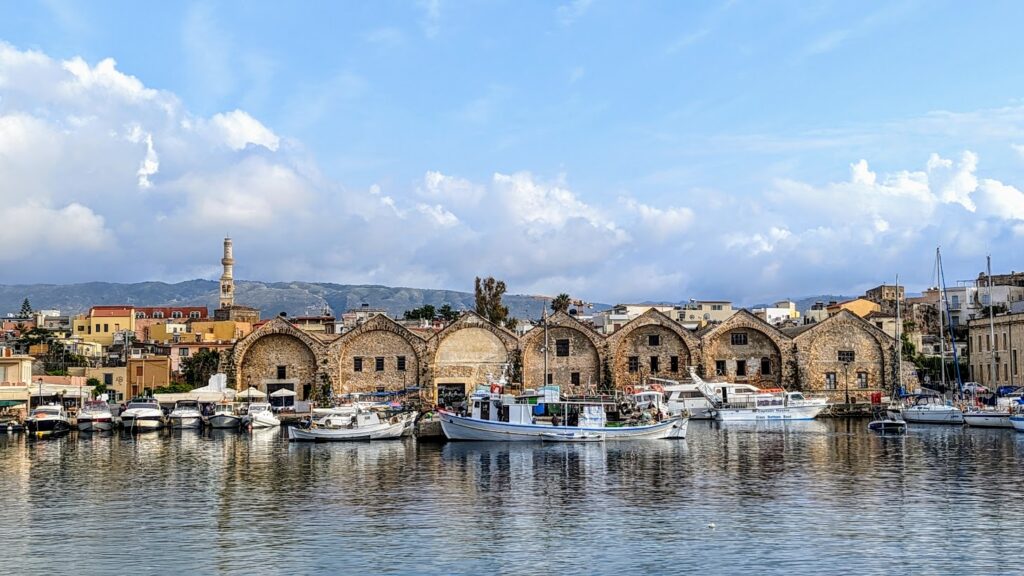
Venice controlled Crete for 465 years, from 1204 to 1669, longer than any other foreign power. In 1204, Crete was given to Boniface of Montferrat, who immediately sold it to Venice for 1,000 silver units. The island became the first official colony of Venice and was ennobled with the coat of arms of the Lion of St. Mark.
The Cretan Renaissance flourished in the 15th and 16th centuries under Venetian rule. Many churches and monasteries were built during this period, and a wave of Byzantine artists arrived after 1453 and established important art schools. Vitsentzos Kornaros (1553 to 1613) wrote an epic poem in the island dialect, Erotokritos. In the 14th century, wealthy native Cretans began to marry settlers and govern the island alongside them.
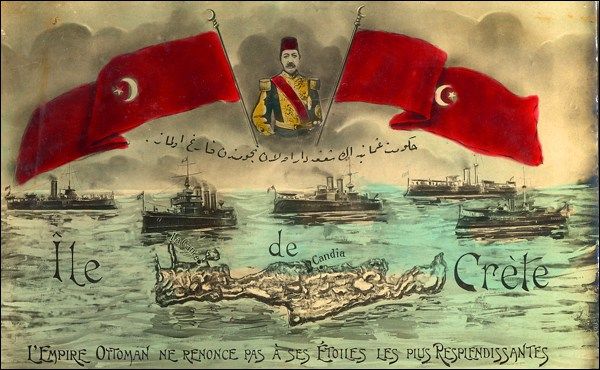
The Ottoman conquest of Crete took more than half a century and climaxed in a 22-year siege of the capital. The Ottoman Turks first drove the Venetians and Genoese out of Asia Minor and mainland Greece, then out of all the islands in the Aegean Sea. Their flagship, under Barbarossa, led raids on Chania, Réthymno and Sitía in the 1530s.
Chania and Réthymno fell to the Ottomans in 1645. Two years later, the siege of the capital, Candia, began, and it lasted 22 years. The 12,000 defenders held out even though a plague weakened them. Hussein Pasha, the Turkish commander, was called back to Constantinople and sentenced to death by hanging for his failure. An estimated 30,000 defenders lost their lives, while the attackers lost 118,000 people. As the conquerors entered the city gates in 1699, the Venetians negotiated their departure by taking important relics, which were brought back to the island only in 1966.
Ottoman rule lasted from 1669 to 1898 and represented a period of cultural and economic stagnation. The rulers of the empire were not interested in investing in this new territory, and the island regressed into a kind of Middle Ages. Ottoman rule left very few signs of its passage through Crete: it built several mosques and few houses in the big cities, and Muslims represented half the population until the 1840s. Most Ottoman remains are decorative fountains on the city streets, located in the squares and at the entrance to places of worship. Many Cretans in the cities publicly converted to Islam to get rid of their taxes but secretly continued to practice Christianity.
Cretan resistance to Ottoman rule was constant and often brutal. In 1770, Daskalogiannis, a Cretan shipowner from Sfakiá, led a revolt encouraged by the Russians, who hoped to distract the Turks while attacking the Ottoman Empire elsewhere. The promised help never came, Daskalogiannis was skinned alive, and the event was immortalized in an epic poem. The rugged terrain that sheltered these rebels still draws visitors to the mountain routes and gorges of Crete.
The atmosphere changed after 1830, when part of Greece gained independence from the Ottoman Empire. Crete stayed under Egyptian rule for another two decades, and the Ottomans then tried various forms of semi-independent rule, with representation for Christian nobles, but without success. The insurgencies continued to erupt but were brutally stopped. During the Great Revolt of 1866, hundreds of Christian Cretans and many converts to Islam died in a suicide explosion at Arkádi Monastery. Several more insurgencies took place between 1889 and 1895. Literary works celebrated the repeated sufferings of the islanders, such as The Songs of Digenis, Pandelis Prevelakis’s novel The Cretan, and the writings of Nikos Kazantzakis.
Crete gained autonomy in 1898 and finally united with Greece in 1913. The European powers forced the Ottomans to grant Crete autonomy within the empire and to accept Prince George, the second son of King George of Greece, as high commissioner. This decision was not enough for the Cretan nationalists. The prince ruled over an island divided between ultranationalists and peace supporters, and he gave up in 1906. Only in 1913, under the leadership of the Cretan Eleftherios Venizelos, did the long-awaited enosis, the union with Greece, take place.
Union changed the island’s population. Muslim Cretans had been moving to Rhodes, the Middle East and Anatolia since 1897. The disastrous invasion of Greece into Turkey from 1919 to 1922 ended in defeat by the Turks and accelerated this movement through the forced exchange of population between Greece and Turkey in 1923. The last thousands of Muslims were expelled, and Orthodox refugees from Asia Minor took their place.
The Battle of Crete began on May 20, 1941, when German paratroopers captured the airfield in Máleme, west of Chania. British, Australian and New Zealand soldiers joined the Cretan militia in the battle but were forced to retreat to other parts of the island. Many were evacuated to Egypt, while several thousand remained on the island and retreated to the mountains. The Allies lost 2,000 people and had another 12,000 taken prisoner, while the Germans had 4,500 dead.
The Cretans immediately began to organize resistance movements against the German forces. Initial efforts to shelter Allied soldiers and help them leave the island were unexpectedly successful. After the capitulation of Italy in September 1943, German reprisals against civilians became even more frequent. At the beginning of 1944, the resistance achieved an incredible victory by kidnapping the commander of the German troops, General Kreipe, and evacuating him from the island; in response, the Germans burned entire villages and killed many locals in the Amári Valley.
The occupation of Crete ended in May 1945, when the Germans abandoned Chania. Bombing left many cities on the island in ruins. Crete still escaped the devastating civil war in mainland Greece from 1946 to 1949, and it felt less affected by the oppressive junta of 1967 to 1974 compared to other communities.
Greece became a member of the European Community in 1981, and Crete has been part of modern European Greece ever since. The PASOK party, led by Andreas Papandreou, won the election, and Crete voted overwhelmingly with PASOK, which formed the first quasi-socialist government in Greek history. Papandreou’s son, George, became prime minister in 2009, and the economic crisis hit the country during his tenure; a technocrat coalition replaced him in 2011.
Antonis Samaras, the leader of the New Democracy party, was appointed prime minister in 2012, and the country began to take additional austerity measures. The unemployment rate in Greece rose to a record 28% in 2014, while unemployment among the young reached a worrying 60%. In 2015, the Greeks moved from the right-wing New Democracy to the left-wing SYRIZA, and Alexis Tsipras was elected prime minister. After holding a national referendum in the same year, Tsipras signed the third bailout, under which Greece would receive a loan of approximately 84 billion euros in exchange for many reforms, including raising VAT and privatizing state-owned companies.
A group of SYRIZA deputies opposed the controversial reforms and sparked a riot within the party. Tsipras resigned after five months, only to return a month later. During his brief absence, Vassiliki Thanou-Christophilou took office and became the first woman prime minister in Greece. By 2017, the unemployment rate in general and among young people stood at 22% and 44%.
Today the layers of this history sit side by side across the island, from Minoan palaces and Roman Gortys to Venetian harbours, Ottoman fountains and World War II memorials. Renting a car is the simplest way to reach these sites at your own pace, and you can compare options for car rental in Crete.
Crete’s recorded history spans more than 5,000 years. The oldest human remains belong to Neolithic hunter-gatherers who arrived from Asia Minor, and the Minoan era began shortly after 3000 BC.
The Minoans built Europe’s first advanced civilization on Crete, from shortly after 3000 BC until around 1450 BC. They constructed the palaces at Knossos, Phaistos and Mália, developed an alphabet and complex water systems, and became one of the most significant maritime powers in the Mediterranean before their civilization ended around 1450 BC.
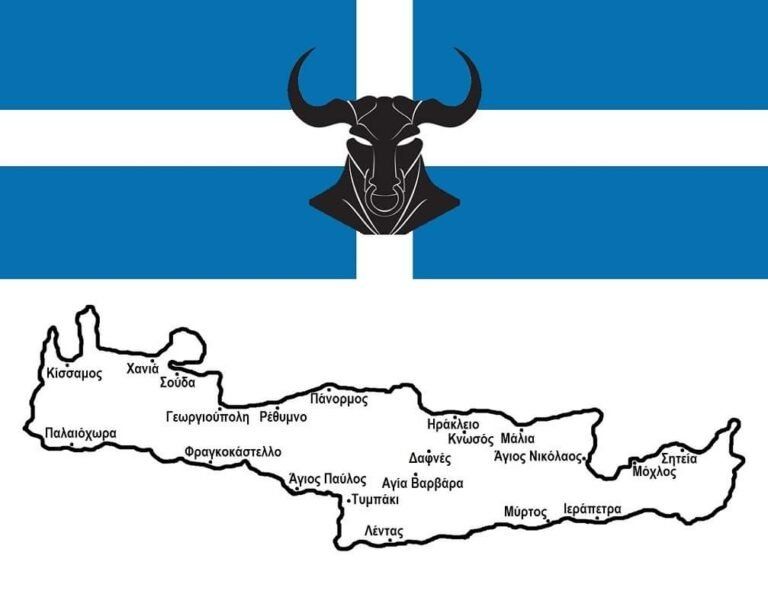
The Battle of Crete was the German airborne invasion of the island in World War II. It began on May 20, 1941, when German paratroopers captured the airfield in Máleme, west of Chania, and British, Australian, New Zealand and Cretan forces fought back before the occupation set in.
Venice ruled Crete for 465 years, from 1204 to 1669. The Venetian period produced the Cretan Renaissance of the 15th and 16th centuries and ended with the fall of Candia to the Ottomans in 1669.
Crete united with Greece in 1913. The union, known as the enosis, took place under the leadership of the Cretan statesman Eleftherios Venizelos, 15 years after the island gained autonomy in 1898.