Village name suffixes reveal Crete’s family and historical roots, CretaOne reports
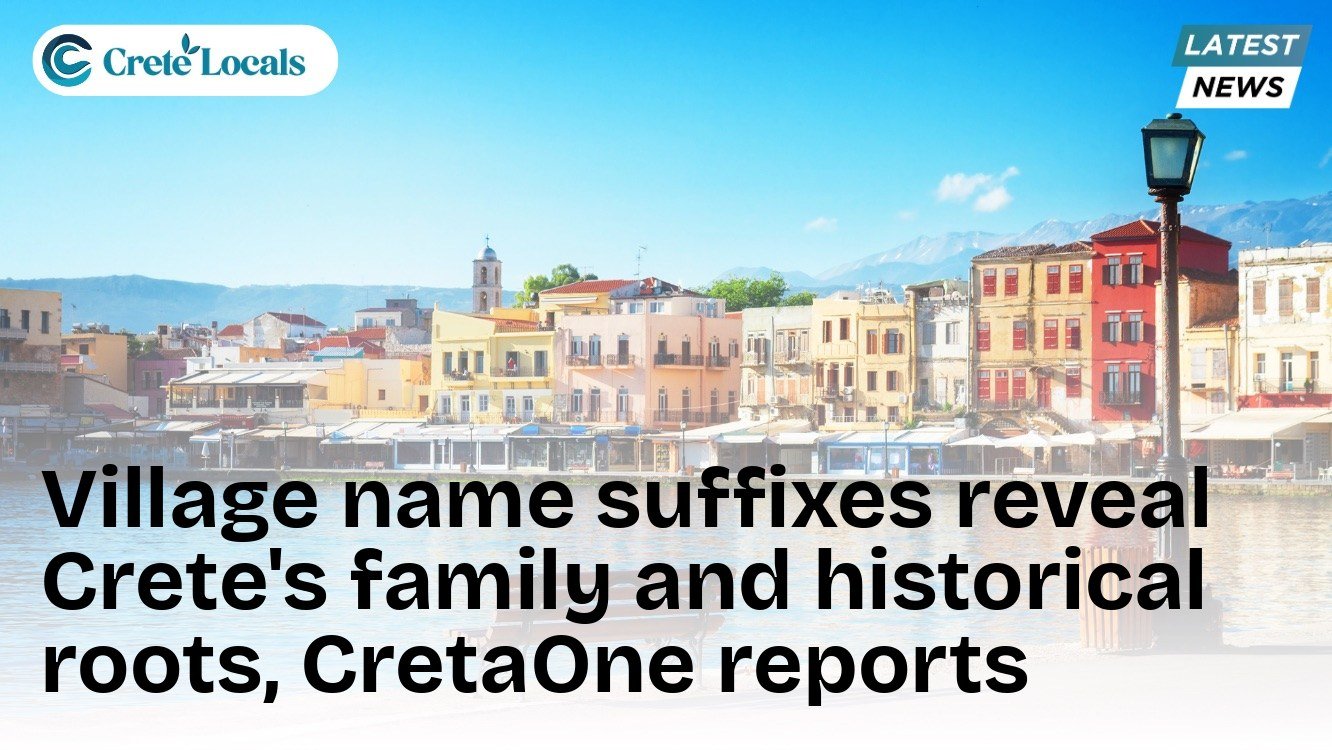
Common endings found in the names of Cretan villages, including “-ianá,” “-ia” and “-chóri,” often carry traces of families, former landowners, occupations, terrain features or different historical periods on the island, according to a report by CretaOne.
The outlet notes that many road signs across Crete display place names that appear to be simple geographic markers, but that these names can function as small linguistic records of the island’s past.
Family names behind “-ianá” endings
According to CretaOne, in several Cretan place names the ending “-ianá” is linked to family or patronymic naming, meaning a settlement could take its name from the people or family who settled or dominated a given area. In this way, the report says, a place name effectively answered the question of who lived there.
The report also addresses the second component “-chóri,” which appears in many Greek place names and is directly tied to the idea of a settlement. CretaOne says this ending was often preceded by a feature that distinguished a particular place from a neighboring one, whether related to location, a person, an occupation or a natural characteristic.
“-ia” endings resist a single explanation
CretaOne describes the “-ia” ending as a more complex case, since there is no single rule that explains all names carrying it. Similar endings can have different origins depending on the specific place name, according to the report, which states that properly explaining a name requires examining its older forms, historical sources and the linguistic changes that occurred over time.
The report links this complexity to Crete’s history under Byzantine, Venetian and Ottoman rule, periods it says left traces not only on monuments but also on language. Some place names changed in pronunciation, others were adapted into Greek, and some survived for centuries in a form close to their original one, CretaOne says.
CretaOne has previously reported on seven Cretan village names whose stories trace back to Byzantine families, geography and local legend, a theme the outlet says extends across many villages on the island. It has also reported on how old stone bridges in Crete carry their own record of local history. Visitors exploring villages across Crete can find similar naming patterns in the signposts of many towns they pass through.