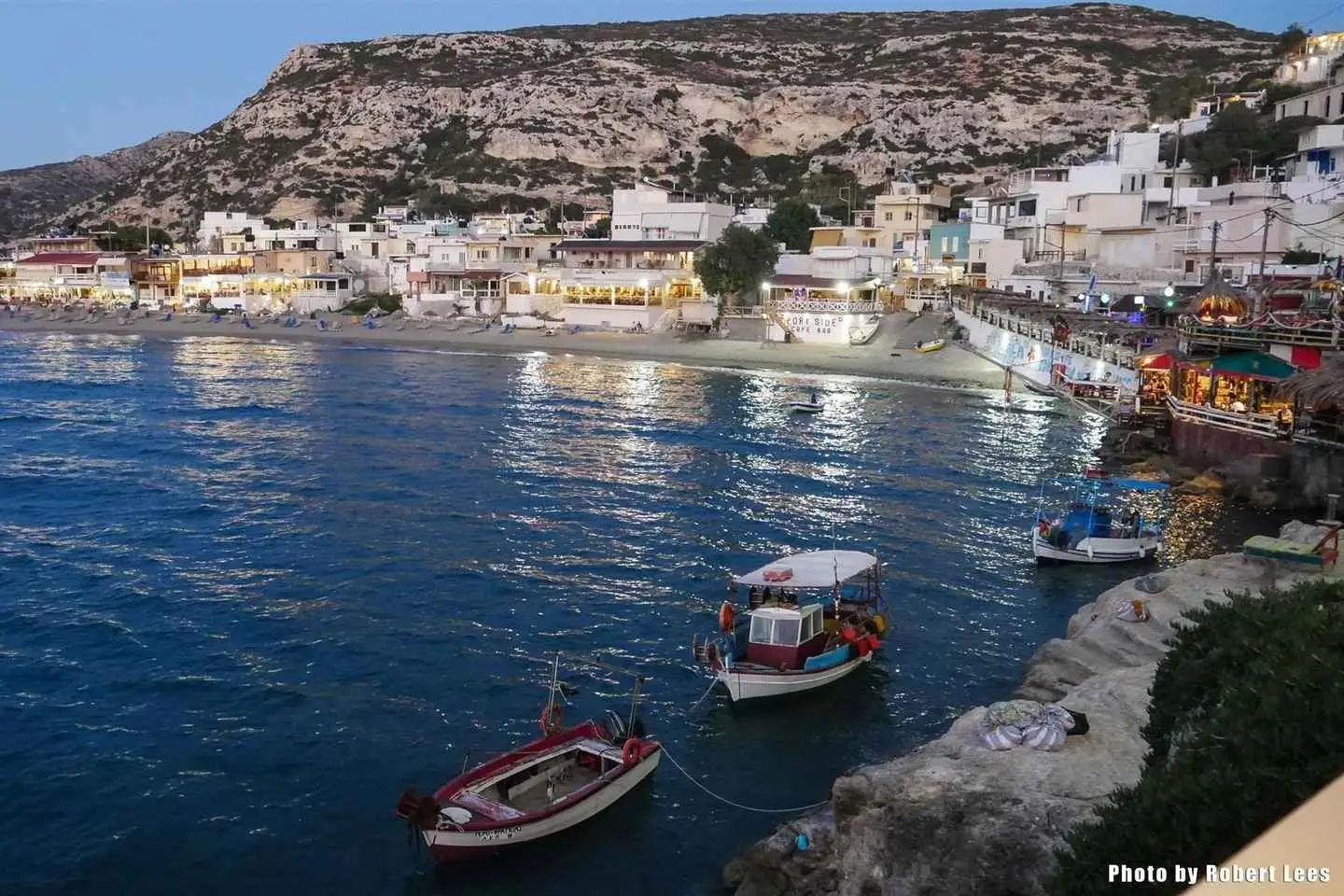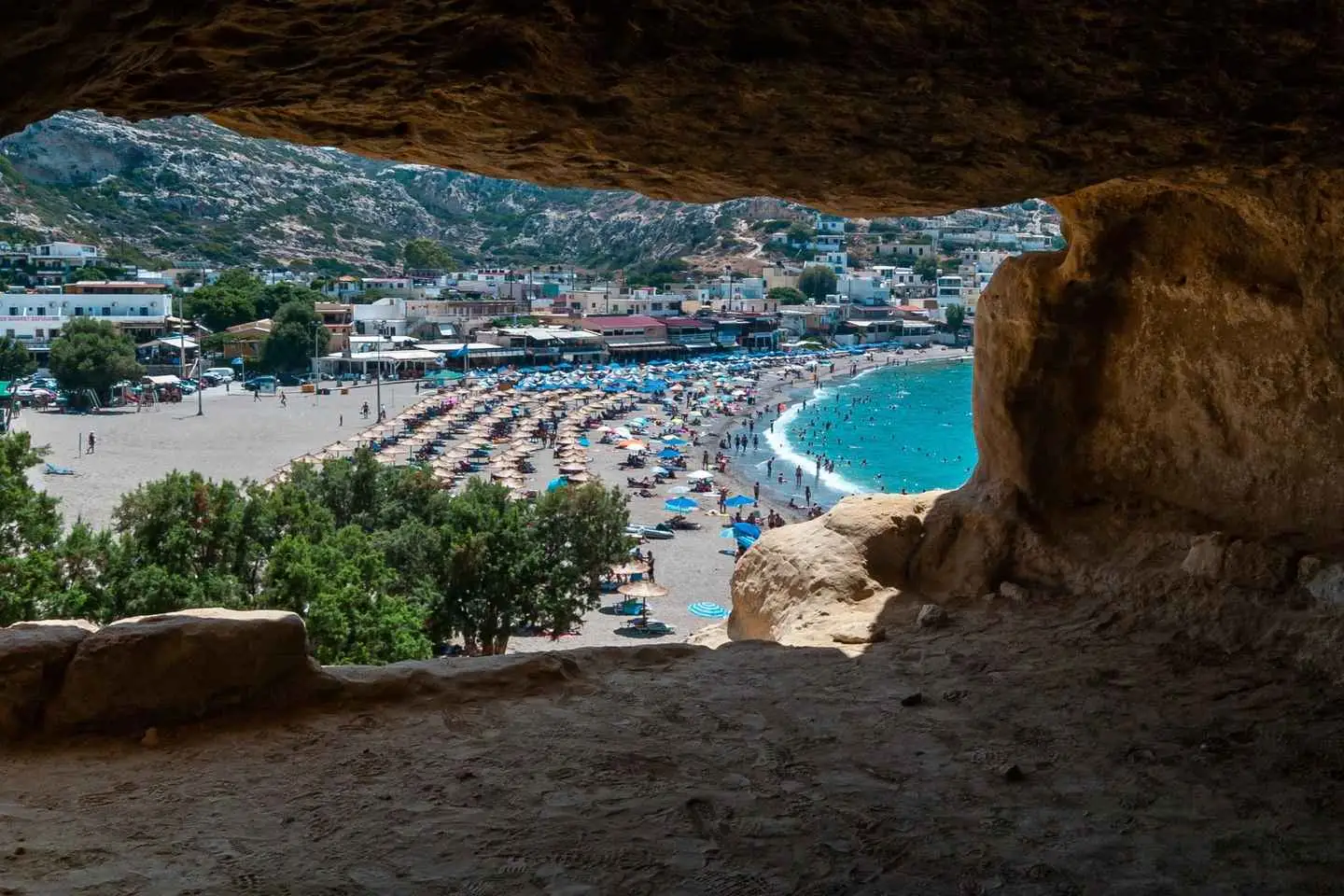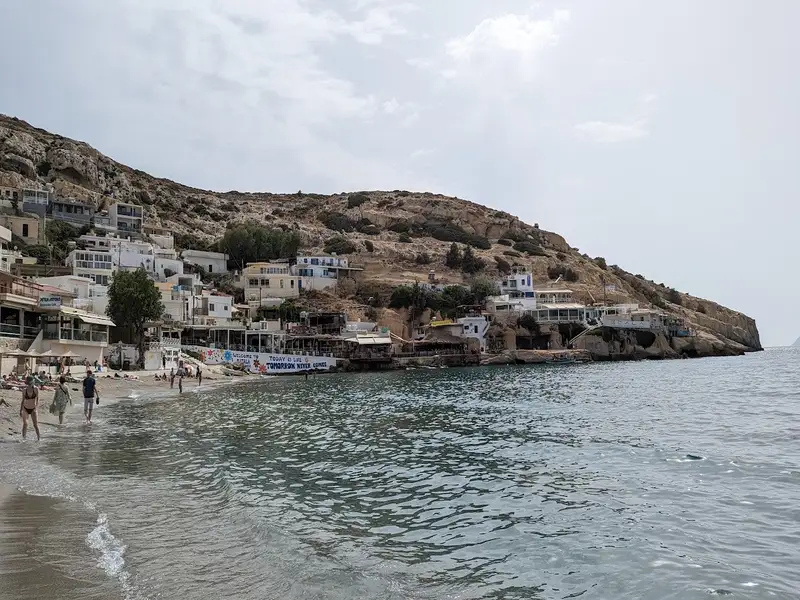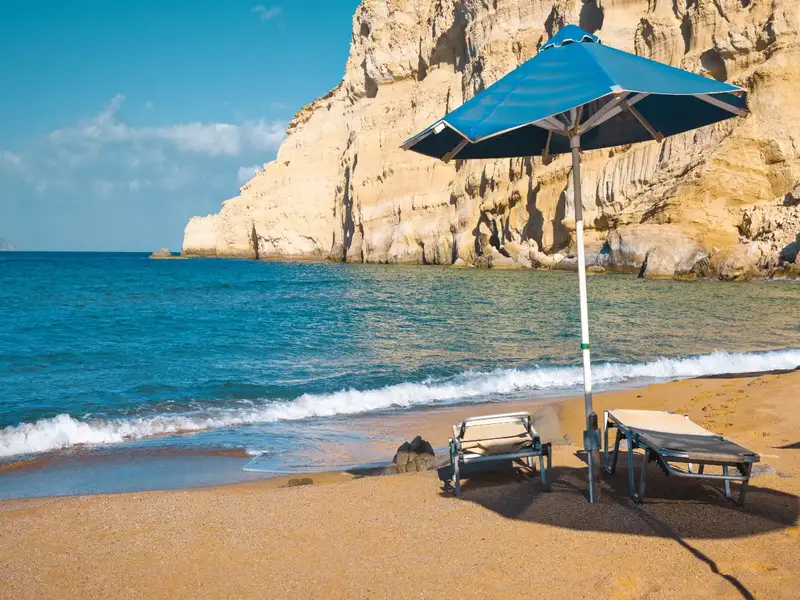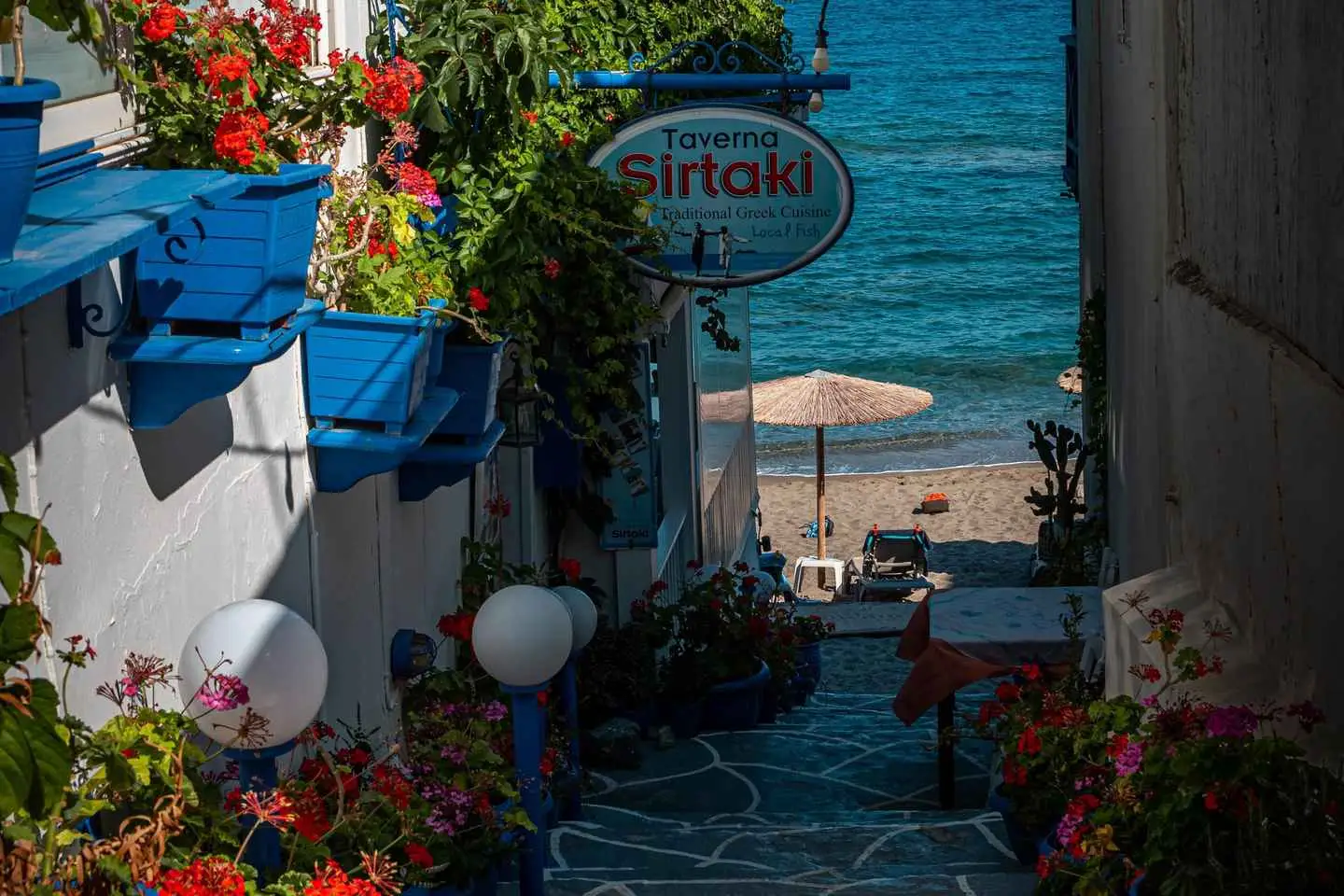
Set in Matala, a few steps from Matala beach and 1.1 km from Red Sand Beach, Διαμέρισμα Villa Iro offers air conditioning. It has a garden, mountain views and free WiFithroughout the property.
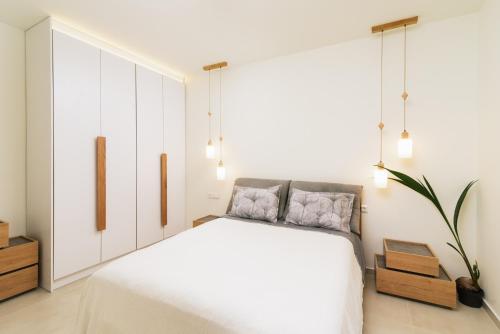
The apartment with a balcony and sea views features 1 bedroom, a living room, a TV, an equipped kitchen with an oven and a toaster, and 1 bathroom with a hot tub. Towels and bed linen are featured in the apartment.
A car rental service is available at the apartment.
Phaistos is 12 km from Διαμέρισμα Villa Iro, while Museum of Cretan Ethnology is 15 km away. The nearest airport is Heraklion International, 64 km from the accommodation, and the property offers a paid airport shuttle service.
Villa Iro
No results available
Find below list of things to do near Διαμέρισμα Villa Iro:
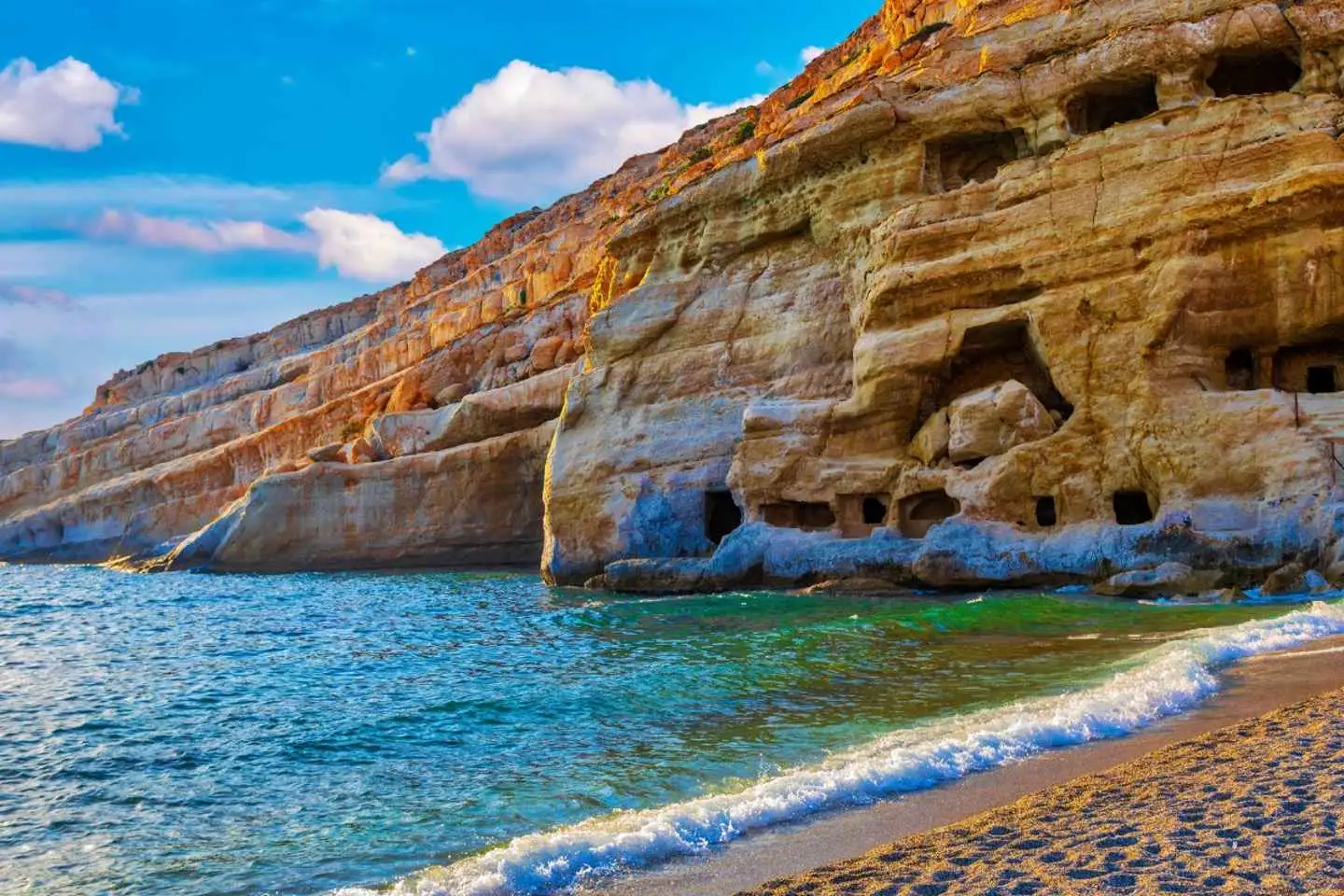
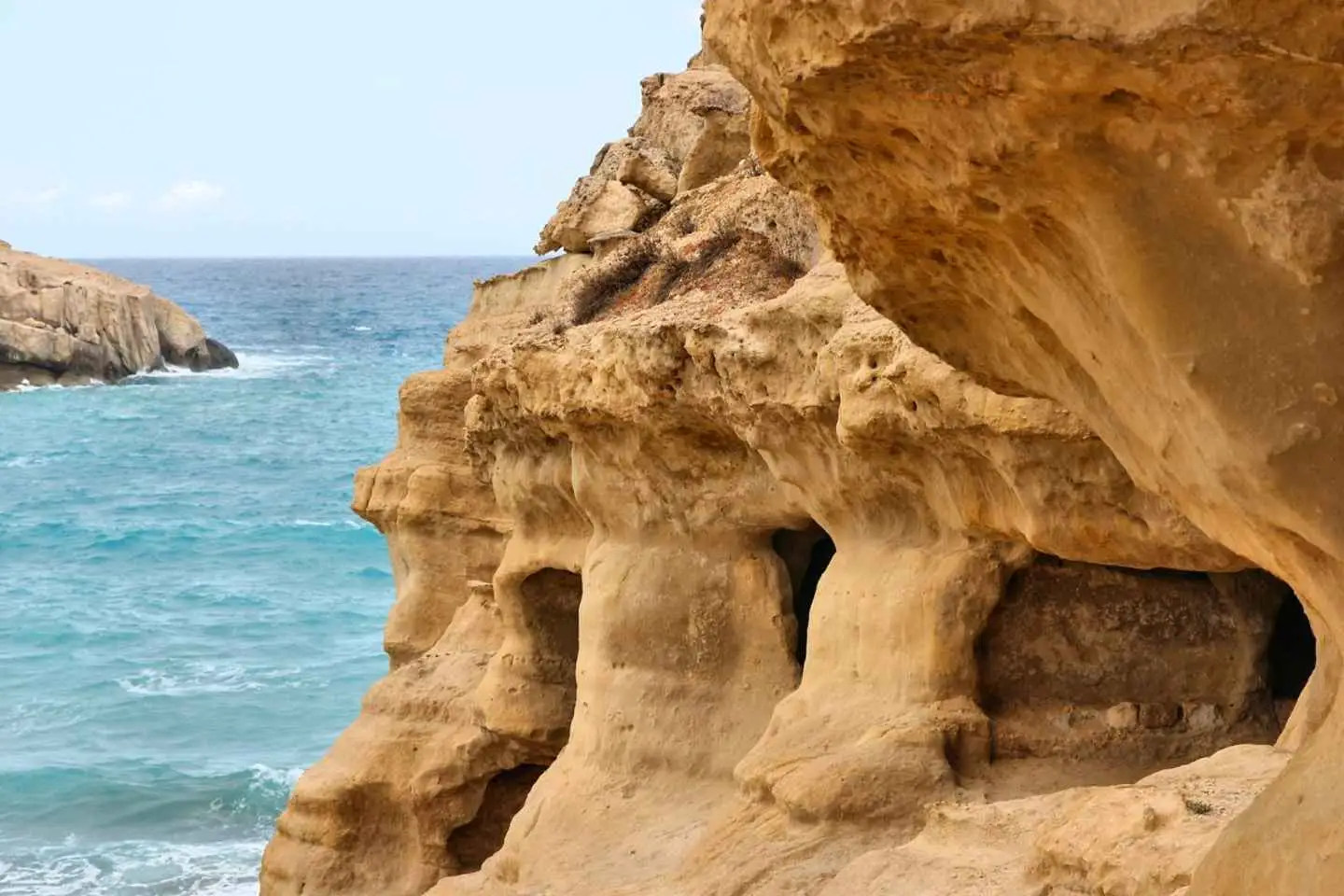
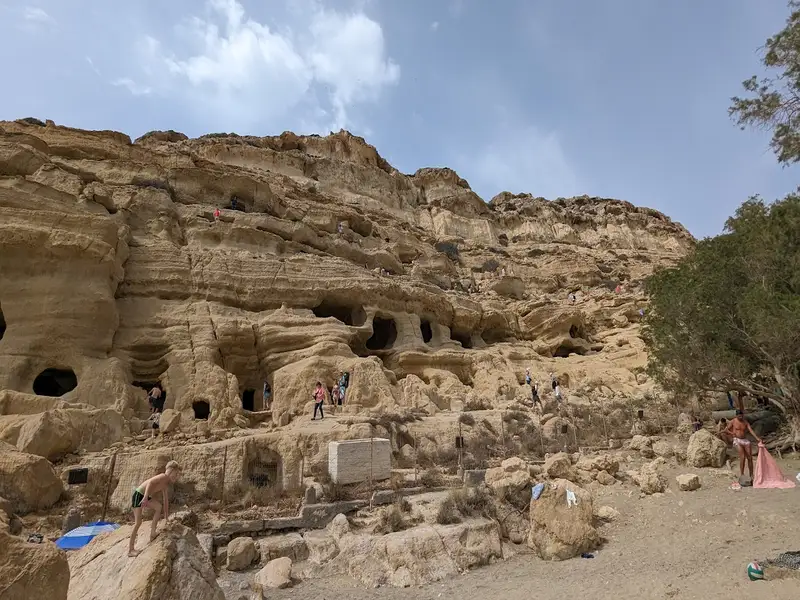
We reach the famous beach of Matala. This is the place where Zeus, having taken the form a bull, swam ashore with Europa on his back before dragging her off to Gortys. Both the Minoans and the Romans used the place as their harbor. Nevertheless, for most people, Matala means only one thing: hippies. Back in the late 1960s – 1970s, this little town was a colony of the “flower children”, who lived in the caves that used to be former Roman tombs. Here we will enjoy the crystal waters, the warm sun and lunch by the sea, while later we can explore the prehistoric caves, carved on thesteep rocks of the area.
11:00 Arrival at Matala – free time
15:00 Departure from Matala
16:15 Arrival in Heraklion
Route: 90 km
Duration: app. 8 hours
Extras: Entrance Caves Matala (optional): 2,00 €
Pick up
Malia: 08:30
Stalis: 08:35
Hersonisos: 08:45
Anissaras: 08:55
Analipsi: 09:10
Gouves: 09:20
Gournes: 09:30
Kokkini Hani: 09:30
Karteros: 09:35
Heraklion: 09:45
Ammoudara: 09:55
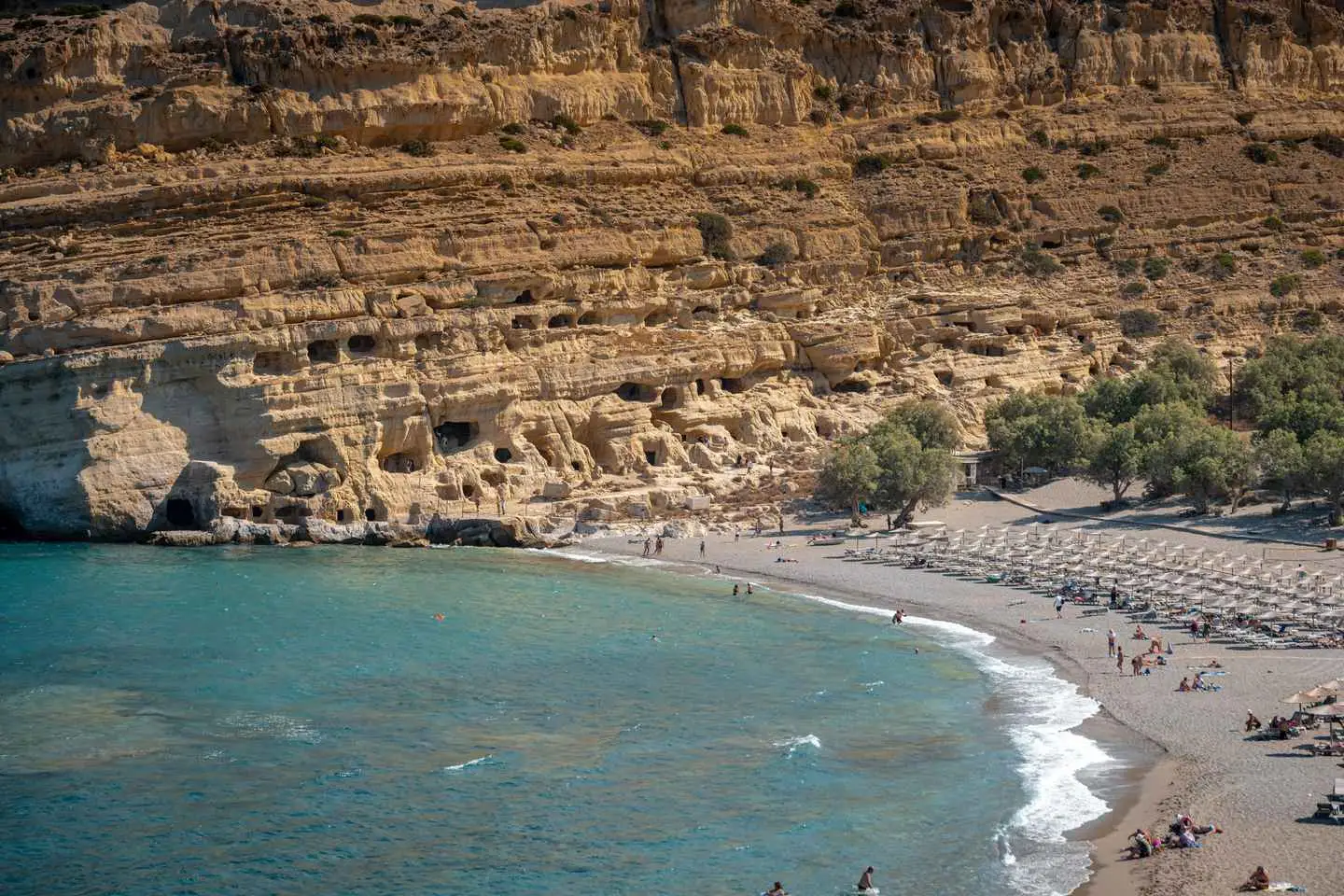
Early in the morning we will pick you up from your hotel or the nearest suitable pick up point with one of our air conditioned and comfortable buses so that we lead you at first to Matala, famous for the artificial caves in the cliff of the bay that were created in the Neolithic history, used later through the years as tombs or more likely as living spaces. In recent history, during the 70’s, the caves were occupied by hippies, a history that is nowadays celebrated every June during the 3 day Matala Beach Festival. In Matala you can enjoy swimming at the sandy beach, have a drink or a snack in one of the small picturesque cafe, or explore the village and the surrounding area. Three hours later, leaving from Matala we will go to Agia Galini, a famous tourist resort also in the South coast of Rethymno region, where you can relax, swim or enjoy your lunch in one of the many restaurants located at the small port and the alleys of the village. Final destination in our trip will be Spili, a small, traditional and very beautiful village, located at the Southwest side of mountain Vorizi, 30 klms away from the city of Rethymno. You can enjoy a walk, a soft drink at the central square with the famous 25 lionhead marble taps with water always running from the mountain.
One hour later we will take our way back to Rethymno where our day trip will come to an end.
Join us on a unique adventure as we travel along the island’s beautiful southern coast, stopping to enjoy the stunning scenery, cute towns, and stunning views of the water.
Get ready to be blown away by Matala’s stunning natural beauty when we get to this cute town. Grab a delicious lunch by the water and get ready to enjoy the beauty of the clear water, the warm sun, and the weather. Get ready for an interesting trip through ancient caves that have been carefully cut into the steep rocks of this amazing place.
Matala is known for its beautiful beaches, clear waters, and towering hills that make the village’s setting truly gorgeous. It is located in a calm bay. The town has an interesting past. In the 1960s and 1970s, hippies came there because of its free-spirited vibe, natural beauty, and easygoing way of life. This is the spot where Zeus, dressed as a bull, brought Europa to Gortys while riding on his back. Both the Minoans and the Romans used this spot as a harbour. Matala, on the other hand, is usually associated with hippies by most people. The “flower children” lived in this cute town in the late 1960s and early 1970s. They were a group of free-spirited people. The caves, which used to be Roman tombs, were where they lived.
Our next stop is the famous beach of Matala, where you can swim, lay out in the sun on the fine sand, and explore the interesting caves that used to be home to the hippie community. Along the beach, there are also ruins of Roman buildings, such as the remains of an arena and a Roman bath.
Matala beach is beautiful, but after you’re done there, take a stroll through the village’s pretty streets. You will be charmed by the village’s traditional buildings, brightly coloured homes, and lively atmosphere. Enjoy the village’s charm by looking around the one-of-a-kind shops, eating delicious local food, or just relaxing in the friendly atmosphere.
As the day comes to a close, we’ll head back to Heraklion, remembering all the wonderful things that happened. On our trip to Matala, you will see the stunning natural beauty and interesting past of Crete. Make memories that will last a lifetime and amaze you.
Set off on a memorable day trip to southern Crete, a journey that weaves together the island’s historical richness with the stunning beauty of the Mediterranean.
Visit to Gortys Site:
Start with a 1.5-hour exploration of the ancient Gortys Site, delving into 5000 years of history. Wander among ruins that narrate the island’s past, from Minoan civilization to Roman dominion, revealing ancient laws, temples, and the essence of life in antiquity.
Matala’s Scenic Charm:
Then, take a scenic bus ride to the captivating town of Matala, once a haven for 60s and 70s hippies and still a magnet for those drawn to its relaxed atmosphere and scenic beauty. Spend over 4 hours enjoying Matala’s clear waters, exploring its iconic cliffside caves, and savoring a seaside lunch that offers a taste of Crete’s culinary delights.
Peaceful Return
Conclude your day with a peaceful bus ride back, reflecting on the day’s adventures and the everlasting beauty of Crete’s landscapes.
This day trip promises a blend of history, culture, and natural beauty, ensuring lasting memories.
Intro:
Located approximately 68 km southwest of Heraklion, Matala is one of the most popular destinations and one of the most beautiful beaches of our island. Mostly famous for the caves carved in the rocks next to the beach and the hippies of the 60’s.
Gortyna,also known as Gortys, was a city of ancient Crete mentioned by numerous ancient writers for its importance and splendor that is by no means inferior to that of Knossos.
Full description:
Once you are greeted by our friendly driver and guide, your day trip is about to begin.
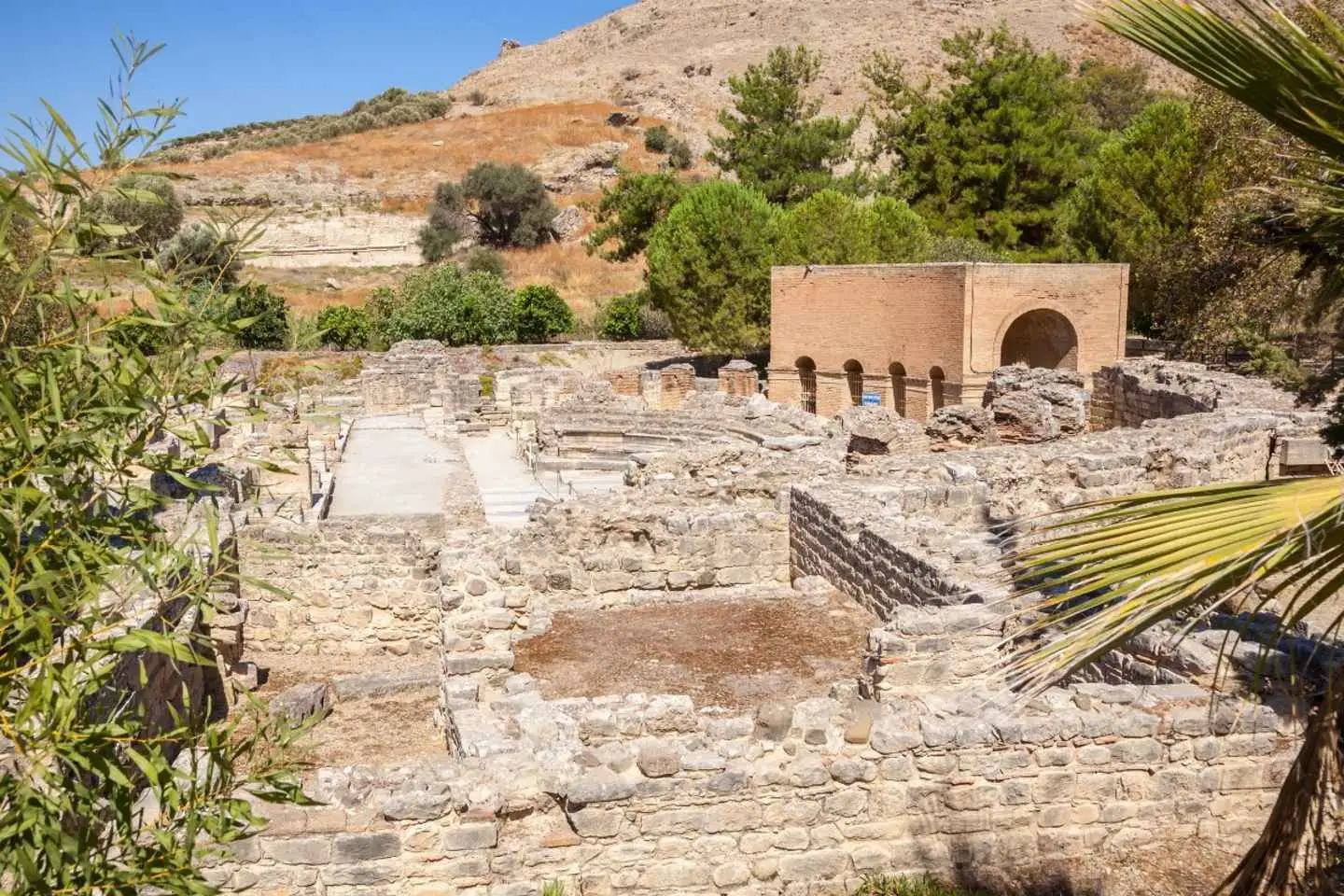
Our first stop of the day is a visit to the archaeological site of Gortyn which is located 45 km south of Heraklion. Inhabited since 3000 BC, evolved as one of the largest cities during the Minoan era, finally reaching its peak during the Roman Empire, the city of Gortyn is one of the most important archaeological sites in Greece. Walk around the site and have a chance to travel back in time while admiring the ancient ruins.
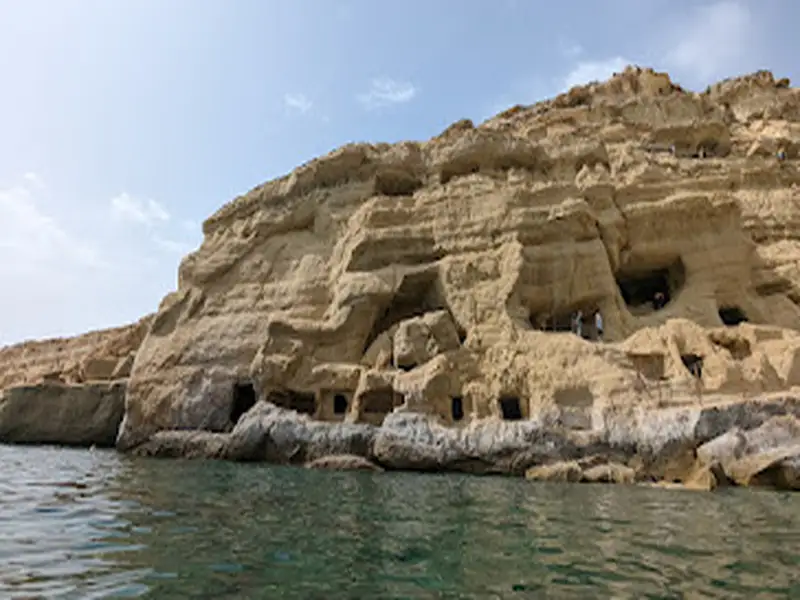
After a quick ride, we reach our second destination, the village of Matala. As we approach the village, a beautiful sandy beach of around 300 m long will greet you. You will have plenty of time to dive in the crystal clear deep water, swim under the Cretan sun and have lunch in one of the traditional taverns surrounding the beach. Matala is also known for its hand-carved caves that are found in the cliff of its bay. The caves were created in the Neolithic Age and were used throughout history as living spaces. During the 60’s the caves were occupied by the hippies who travelled from all over the world in search of their very own paradise on earth.
Explore the intriguing caves, enjoy a refreshing dive and allow us to take you on an unforgettable experience.
We start driving through the route of the vineyards of crete. The villages we will cross are famous for the grape varieties and their wines and that is why there are many well-known wineries on our way.
Our first stop is at agios thomas a village at an altitude of 760 meters, dating back to 1371 AD. In the village there are byzantine churches, ruins of the byzantine aqueduct as well as roman era tombs.
Going down, we will cross the messara valley and following a route through olive groves, we will reach the monastery of odogitria one of the most famous monasteries of crete, dating back to the 14thcentury. You will be amazed by the beauty of the monastery and you will have the opportunity to visit the museum with objects of the daily life of cretans.
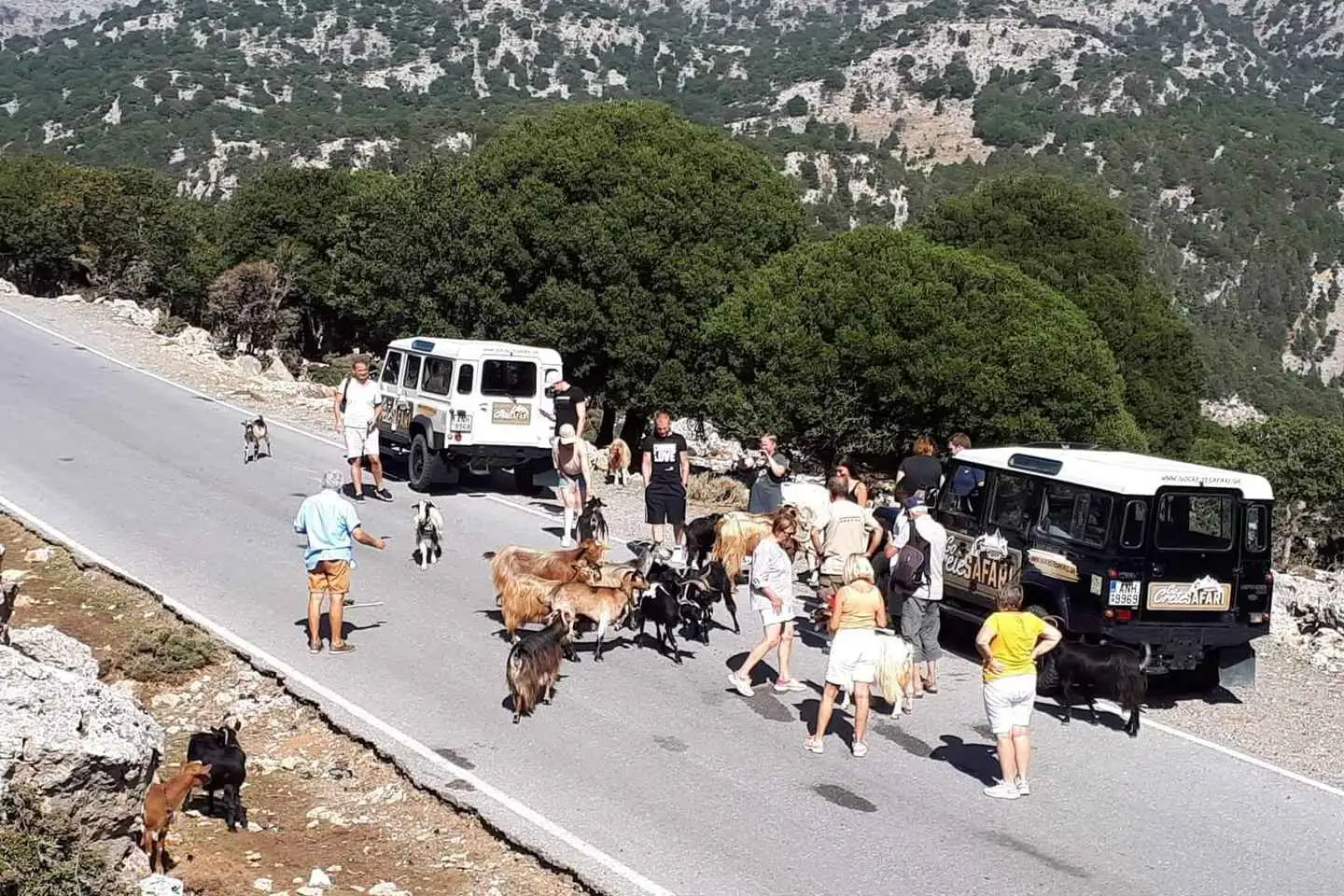
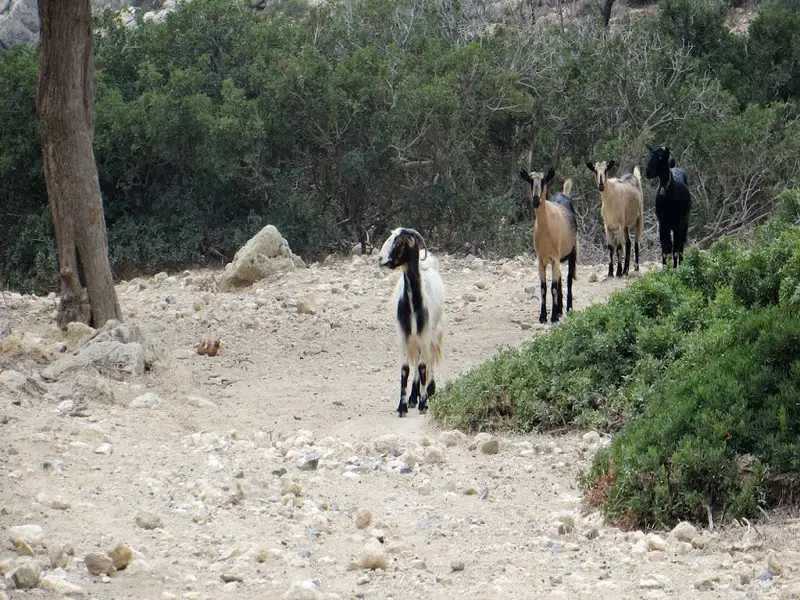
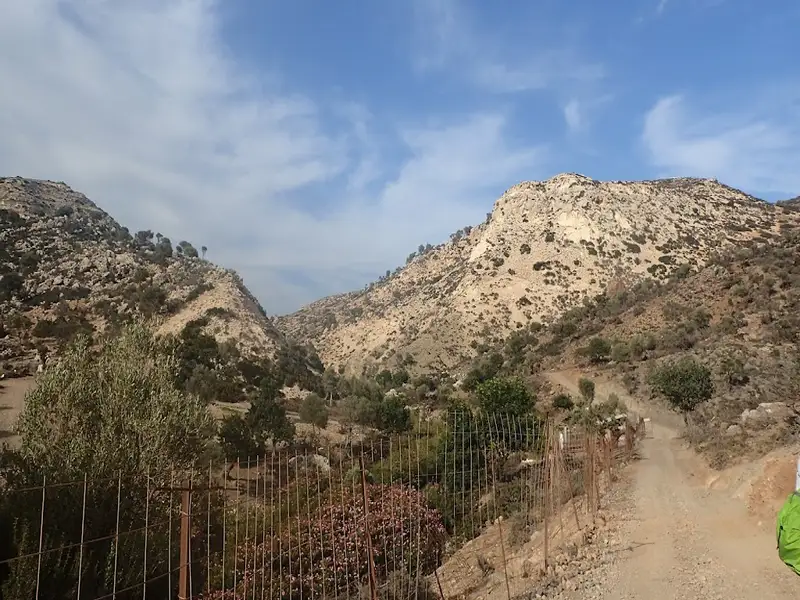
Following a beautiful dirt road we arrive at the entrance of agiofarago and start crossing it on foot. Walking through the gorge (with zero difficulty degree) you will have the opportunity to get close to sheep and goats which are beautiful and absolutely harmless. After 20 minutes walking you will end up on a beach with fine pebble that will really enchant you. It is the paradise of southern crete
After swimming in the crystal clear waters and driving through a beautiful dirt road we reach matala, the famous village of southern crete where the hippies lived in the 70s. You will have free time to admire the beauties of the village and visit the caves of the hippies.
We return to the hotel through a beautiful route. This journey will amaze and fill you with pictures that will stay with you for a lifetime.
No results available
Find below list of beaches near Διαμέρισμα Villa Iro:
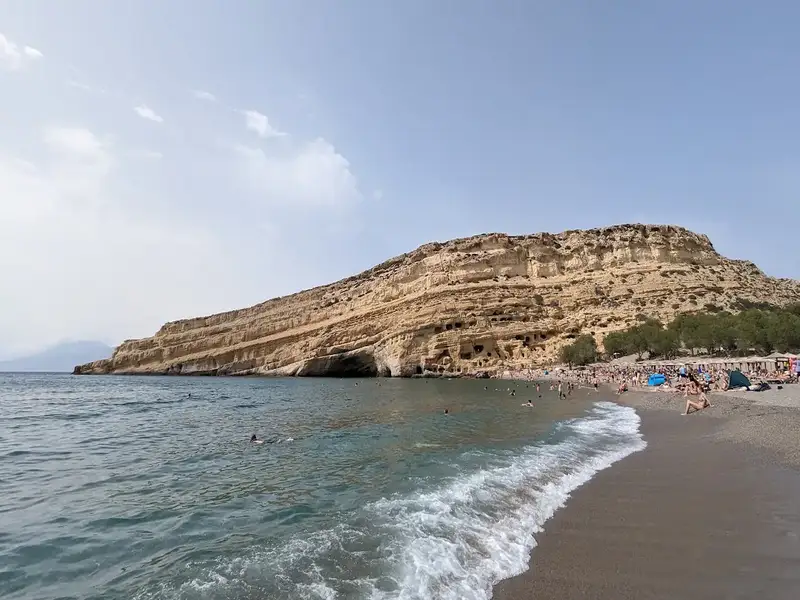
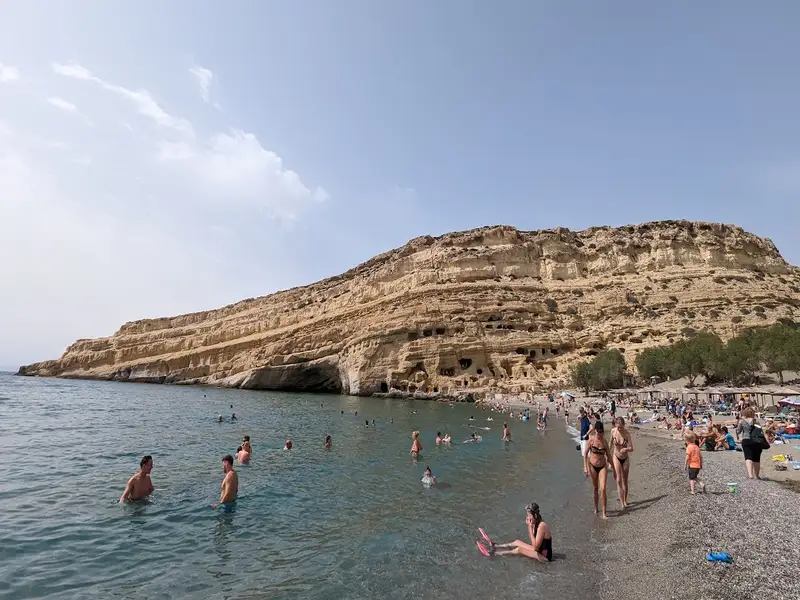
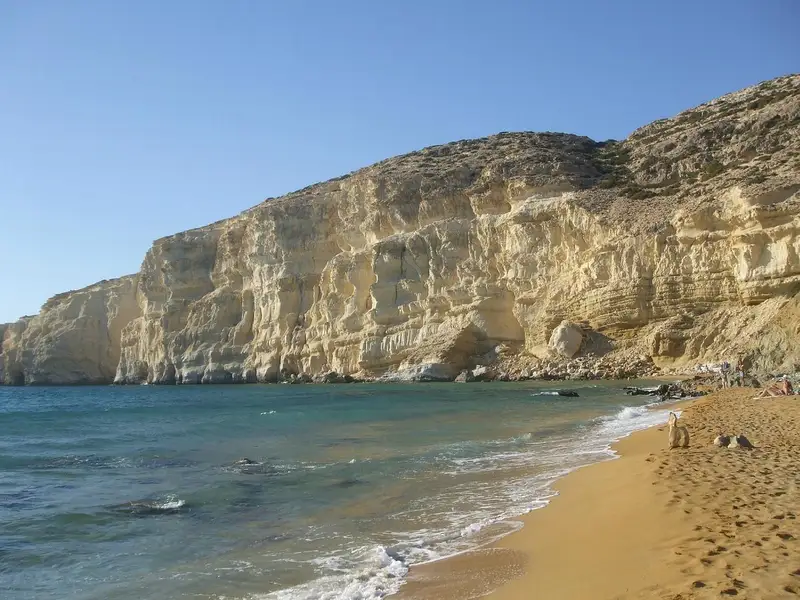
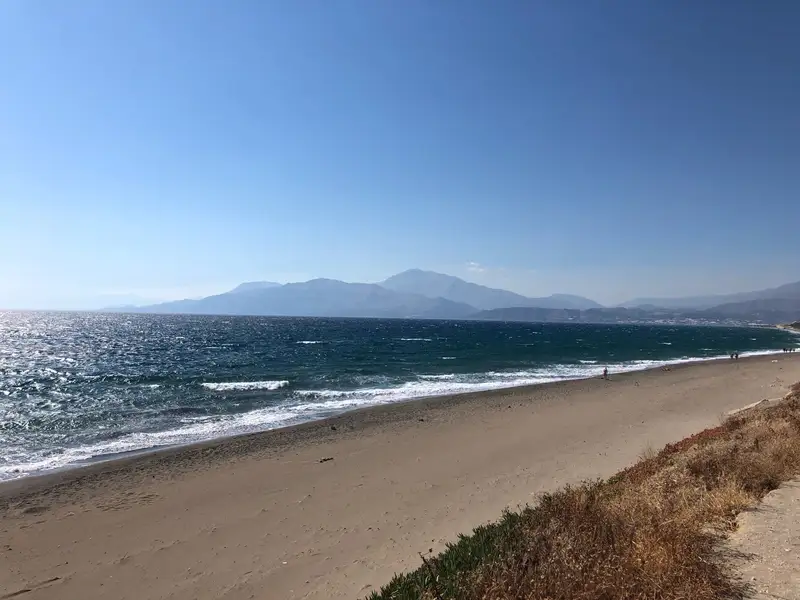
The beach of Matala is situated 68km southwest of Heraklion, where the Messara plain and Asteroussia Mountains intersect. It is one of the most frequented tourist spots in Crete and the most well-known beach in the southern region of the Heraklion prefecture. Matala is notable for its rock-carved caves and its association with the hippie culture of the 1970s. It lies in close proximity to Phaestus, the second largest palace of the Minoan civilization, having once served as its port. During the era of the Romans, Matala transformed into a port for Gortyn.
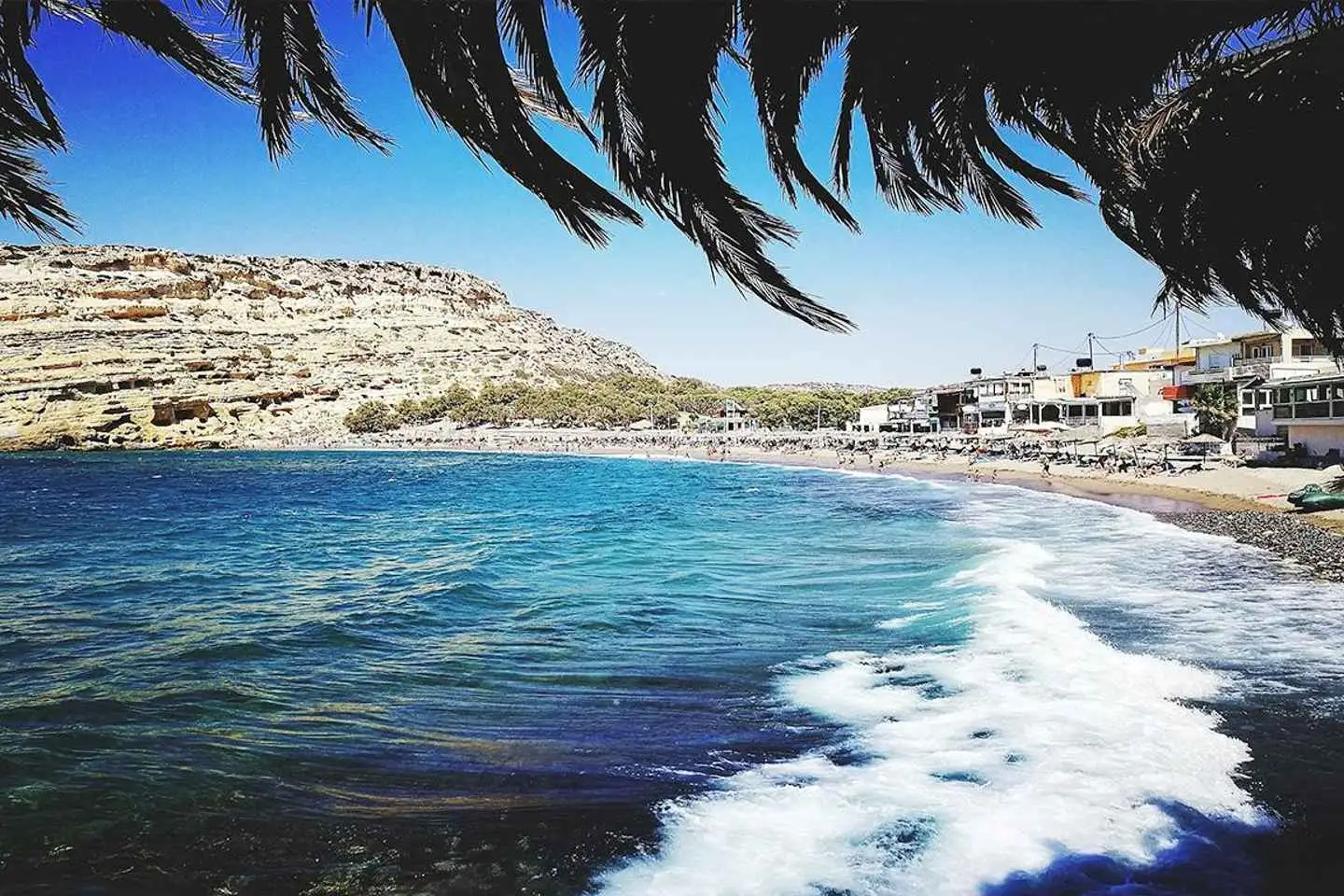
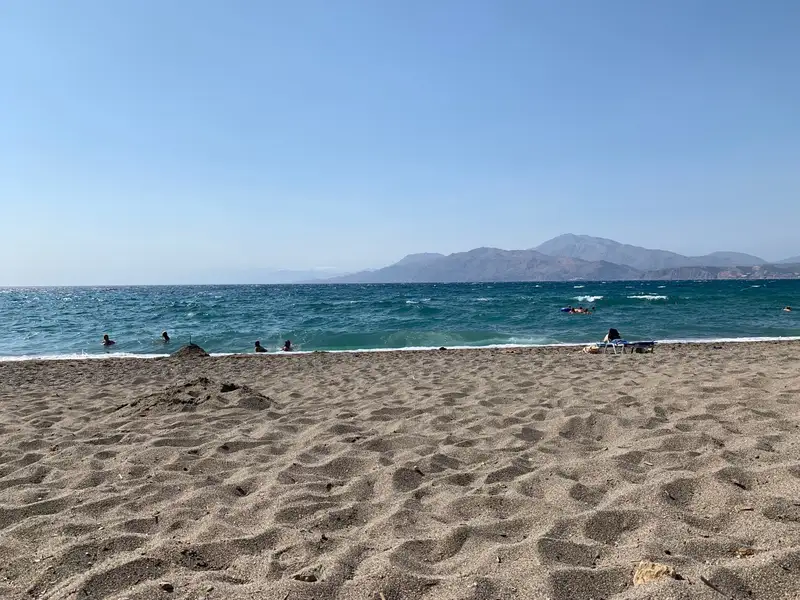
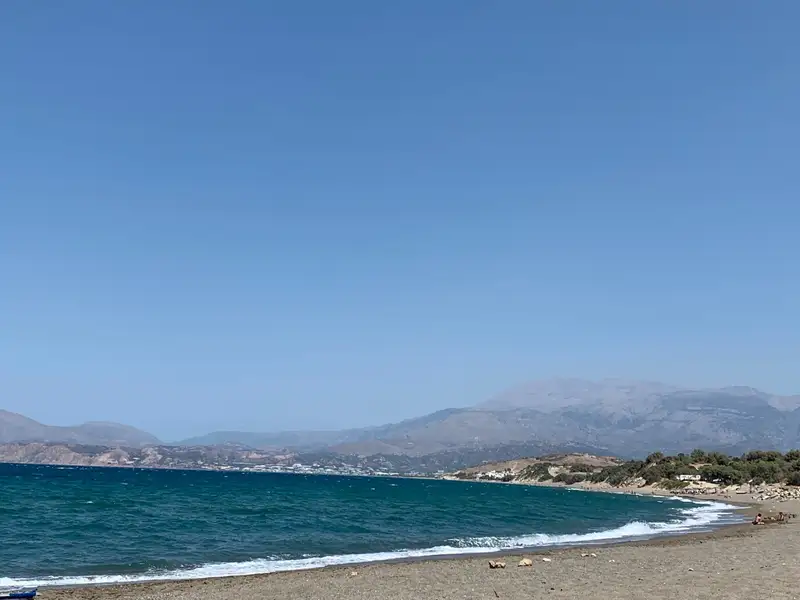
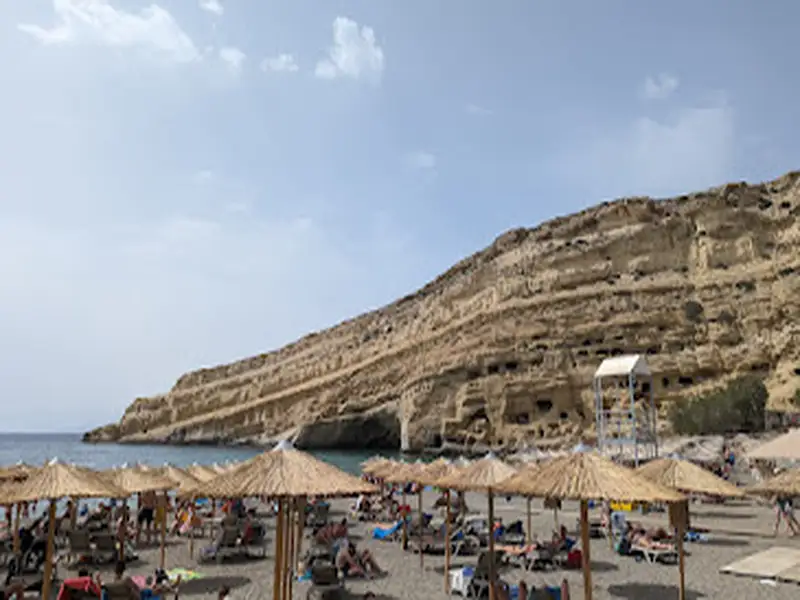
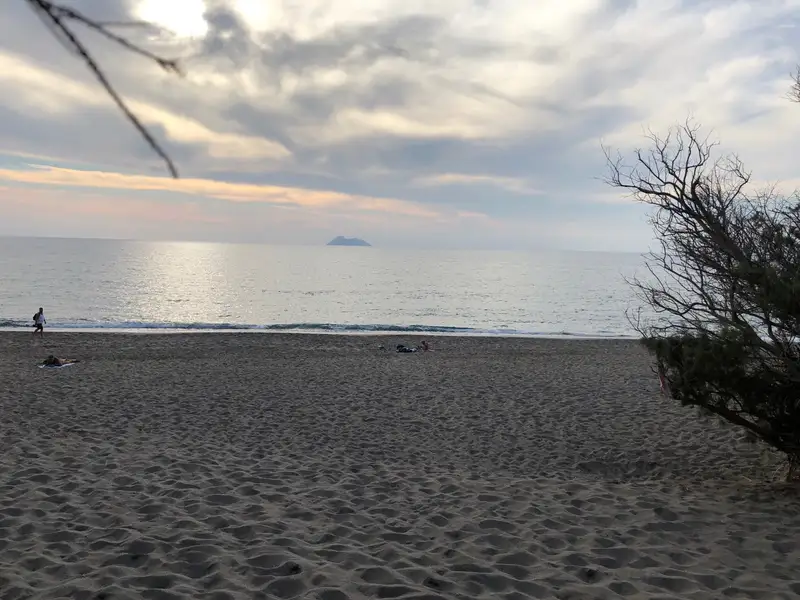
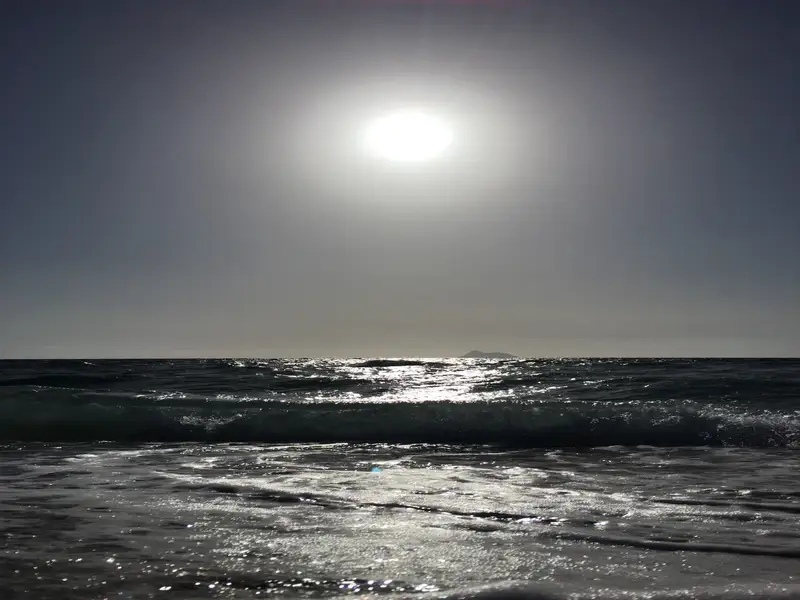
Nestled at the end of a small valley, Matala overlooks an enclosed bay with a picturesque view of the Paximadia islands. The beach spans 300m and features beautiful sandy shores, fine gravel, and crystal-clear deep waters. However, parts of the seabed, particularly the central area, are quite rocky and waves are common due to frequent westerly winds. A large cave can be found on the northern part of the beach, from which some thrill-seekers dive.
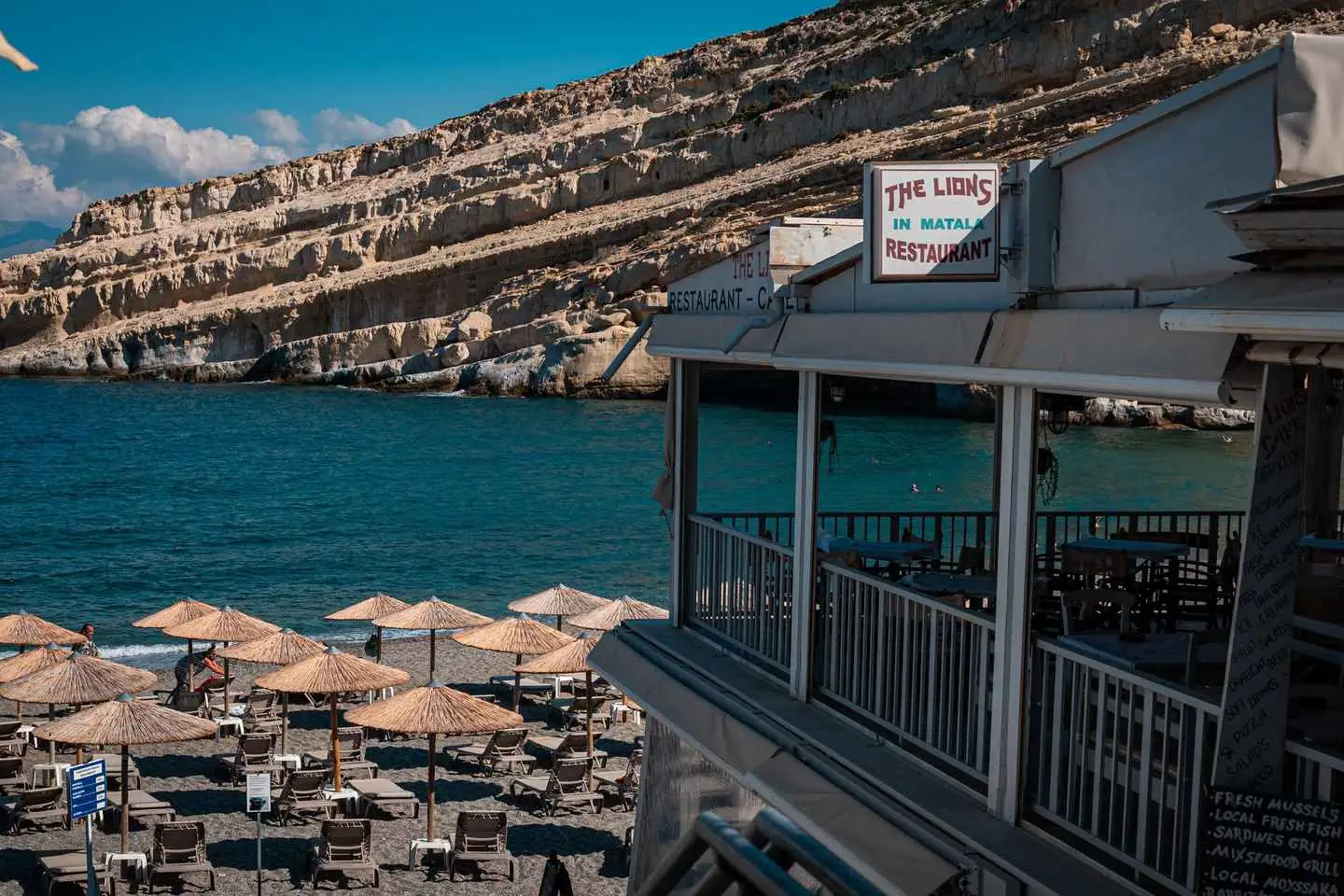
Matala beach is well-equipped with amenities such as umbrellas, restrooms, showers, lifeguards, first aid facilities, beach volleyball courts, snack bars, water sports, excursion boats, and a camping site. The surrounding area of Matala offers a range of accommodation, dining, and entertainment options. The beach is largely shaded by tamarisk trees, providing a respite from the sun. Come evening, the beach bars are brimming with people, both locals and tourists. The internationally acclaimed Matala Festival draws large crowds every June.
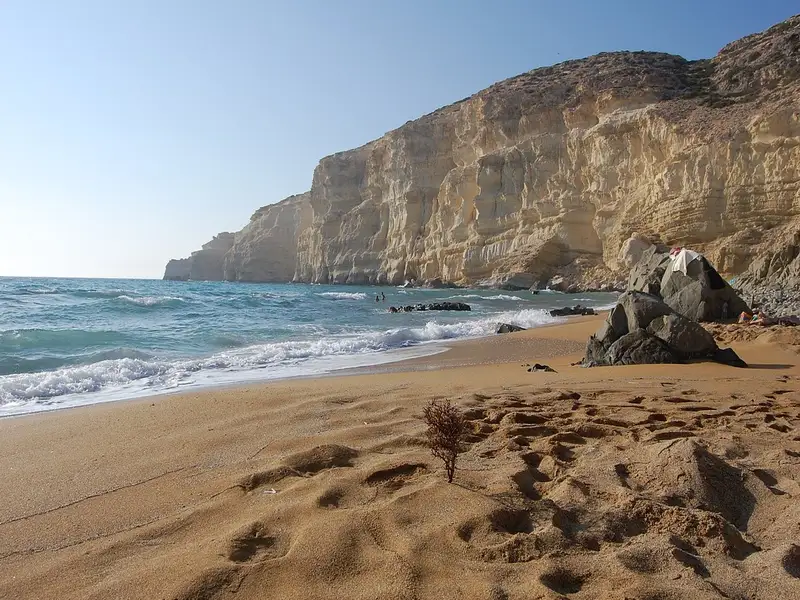
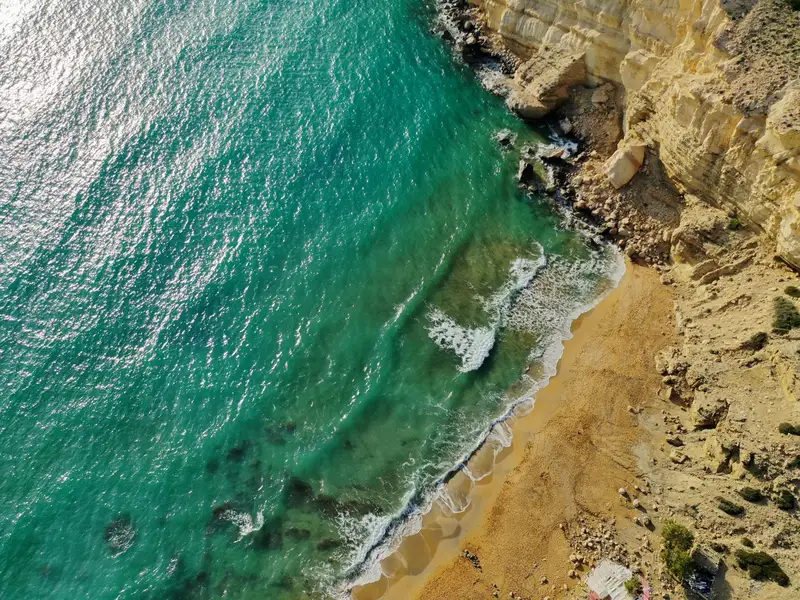
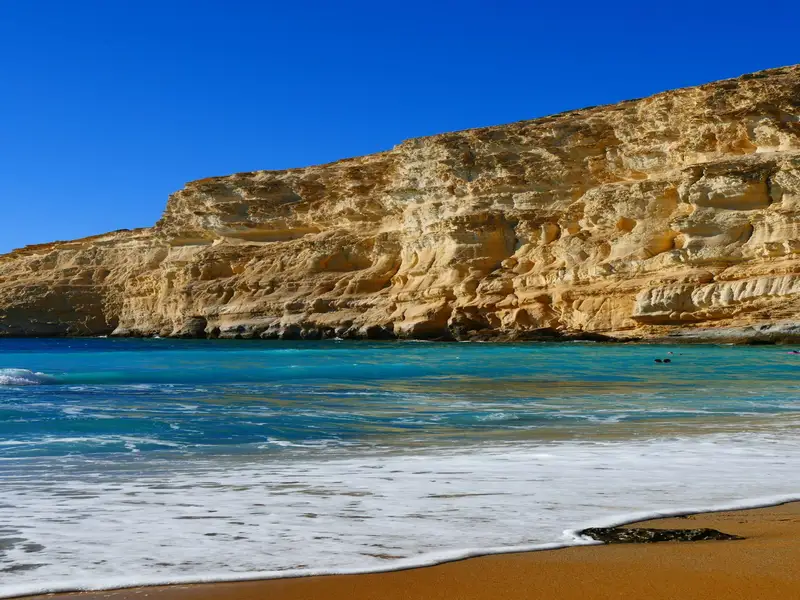
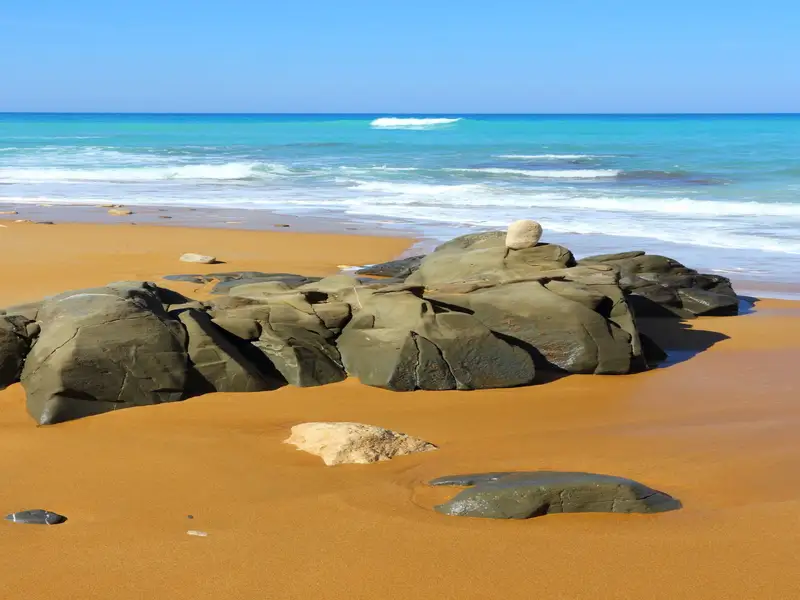
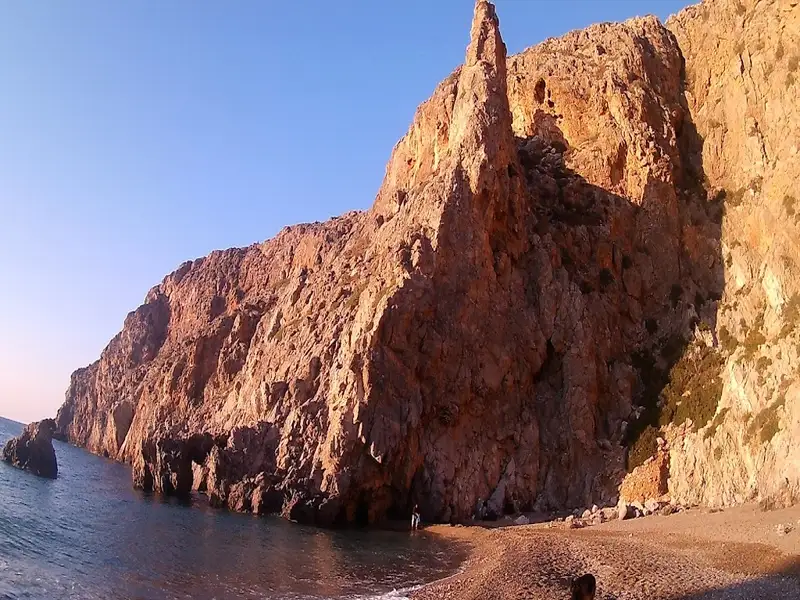
Red Beach, known in Greek as Kokkini Ammos, is a red-sand beach on the south coast of Crete, about 800 metres south of Matala and 68 kilometres southwest of Heraklion. You reach it on foot over Kastri hill or by boat from Matala harbour. The rust-red sand comes from the local geology and sets off a blue-green sea, which is what makes the beach so striking.
The beach is remote and unorganised. It has no road access, so it stays quiet even in high season, and it is open to the western winds that blow across this part of the coast.
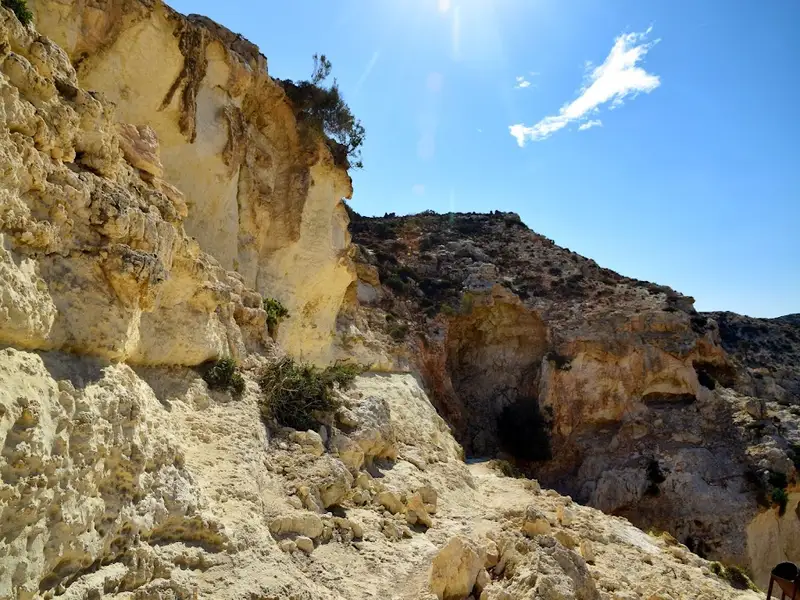
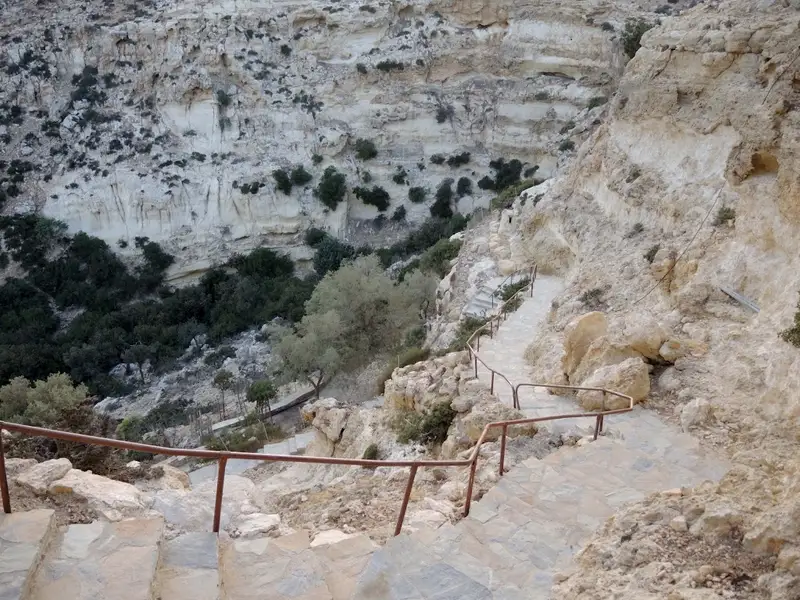
Most visitors walk from Matala on a marked trail that crosses Kastri hill north of the village. The walk takes about 15 to 25 minutes one way and involves some rock scrambling at the start and a steep descent near the end, so wear proper walking shoes rather than sandals. The route is clear but rough underfoot.
Follow these steps from Matala:
You can take a boat from Matala harbour for a small fee of around 5 euros each way if you would rather not hike. A car makes the wider Matala area much easier to reach, since the beach sits on the exposed south coast with no road nearby, so you can compare options for a hire car in Crete.
Red Beach has very few facilities. There is a simple stone-wall coffee shop that opens occasionally for food and drinks, plus a small number of umbrellas that fill up quickly. The only natural shade comes from a few tamarisk trees near the canteen, so it is worth bringing your own mat, umbrella, water, and snacks.
You can swim here, but the beach faces the prevailing western winds and the sea is often wavy, so take care on windier days. The reward for the effort is a quiet bay with panoramic views, clear water, and wide sunset views over the sea.
Red Beach was a favourite of hippies in the 1960s and 1970s, and enthusiasts have kept visiting ever since. The northern part of the beach is known as a nudist-friendly area and has an international reputation for it. The beach and its surroundings are protected under the Natura 2000 programme because of their ecological value.
At the northern end, a long limestone formation resembles the rock of Matala. It is decorated with carvings of Minoan and Egyptian sea figures made by Gerard, a Belgian admirer of Matala, and these sculptures have become part of the beach’s character.
Between Matala and Red Beach stands a large rock called Theosini, which gives wide views over Messara Bay. The sea has eroded it into a marine cave known as Kouroupi, reachable only by boat. The cave shelters endangered Mediterranean monk seals and several species of wild pigeon.
Walk the marked trail from the northern edge of Matala over Kastri hill, which takes about 15 to 25 minutes and includes some rock scrambling and a steep final descent. Alternatively, take a boat from Matala harbour for around 5 euros each way.
Yes, you can swim at Red Beach, but it faces the western winds and the sea is often wavy, so swim with care on windy days. Calmer conditions give clear blue-green water.
Red Beach rewards the short hike with rust-red sand, clear water, panoramic views, and quiet sunsets. Its limestone carvings and protected setting make it more than an ordinary swim stop.
Yes. The northern part of Red Beach is well known as a nudist-friendly area and has an international reputation for it.
Facilities are minimal: an occasional stone-wall coffee shop and a few umbrellas. Bring your own mat, umbrella, water, and food, since the only natural shade comes from a few tamarisk trees.
No. Red Beach has rust-red sand from the local rock, not pink sand. The pink-tinted sand Crete is famous for is at Elafonisi, in the southwest of the island.
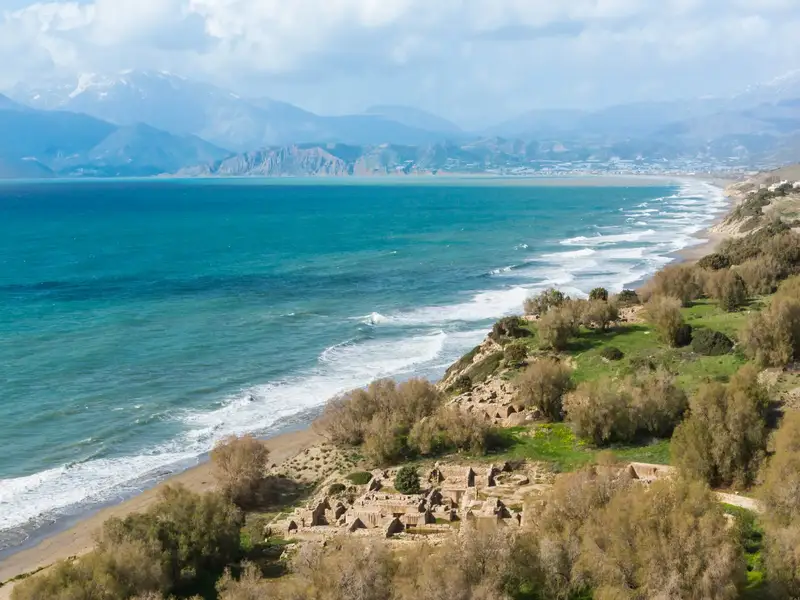
Situated 66km southwest of Heraklion, Kommos (or Komos) lies a mere 2km north of Matala and in close proximity to Pitsidia village. It stands as the southernmost and remotest section of the extensive beachfront of Messara Bay. Once serving as the port of Phaestus, the remnants of the ancient port of Kommos can still be observed on the beach. It can be reached by driving towards Matala and following a sign to Kommos near Pitsidia.
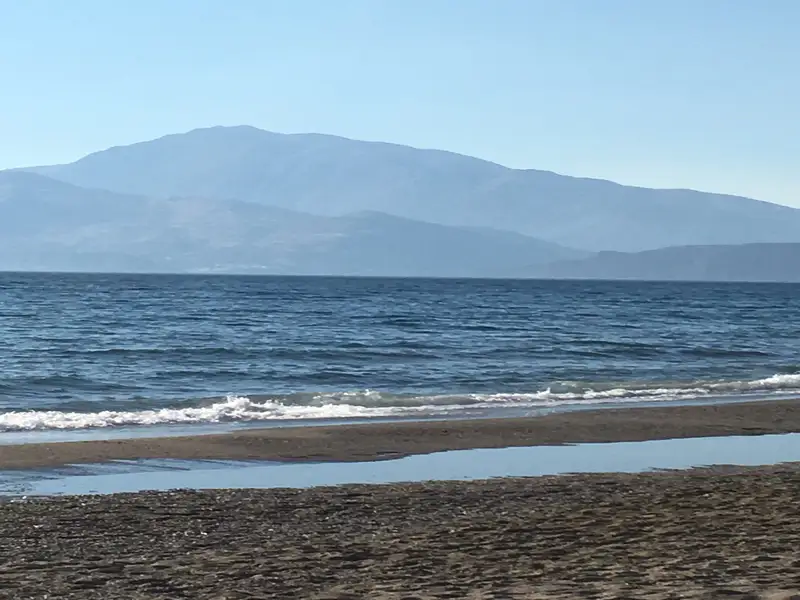
The entire beachfront of Messara is exposed to the prevalent westerly winds. Visitors should exercise caution as the seabed can be rocky in certain areas. The beach also serves as a nesting ground for the protected loggerhead sea turtles (Caretta caretta) between the months of May and September.
Potamos or Potamoserma, the northern section of Kommos, is a popular spot among naturists, dating back to when hippies frequented the area. The location is dotted with sparse tamarisk trees and devoid of buildings due to its protected archaeological status, restricting construction. Next to the archaeological site in the south, there is a developed beach equipped with amenities such as umbrellas, sun beds, a toilet, showers, a canteen and a lifeguard. Surrounding sand dunes are home to white sand lilies that mark the end of summer. Nearby Kalamaki or Pitsidia and Matala offer options for accommodation and dining.
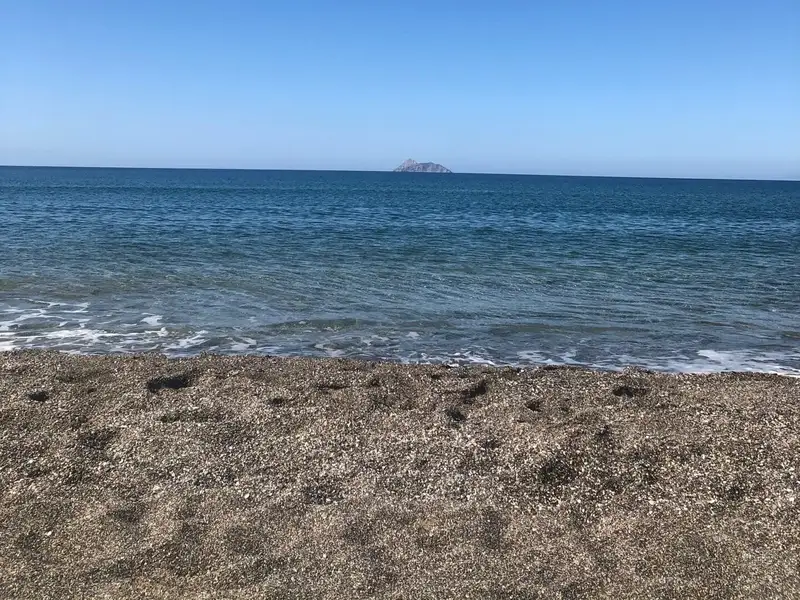
The sight of Paximadia islets during sunset is breathtaking. A large rock, known locally as Volakas, stands 300m out at sea, opposite the archaeological site. According to local lore, this rock is the tip of the boulder that the blinded Cyclops Polyphemus hurled at Odysseus’ ship to prevent his escape, following Odysseus and his crew’s escape from Polyphemus’ cave.
Kommos, the ancient port of Phaestus, was established around 200BC. However, it was subsequently destroyed by an earthquake and then rebuilt at the same location. The archaeological site of Komos, not open to the public, houses a Minoan harbour, public buildings, warehouses, oil presses, shipyards and a large courtyard. Archaeologists have uncovered a small temple, constructed on the ruins of an older one.
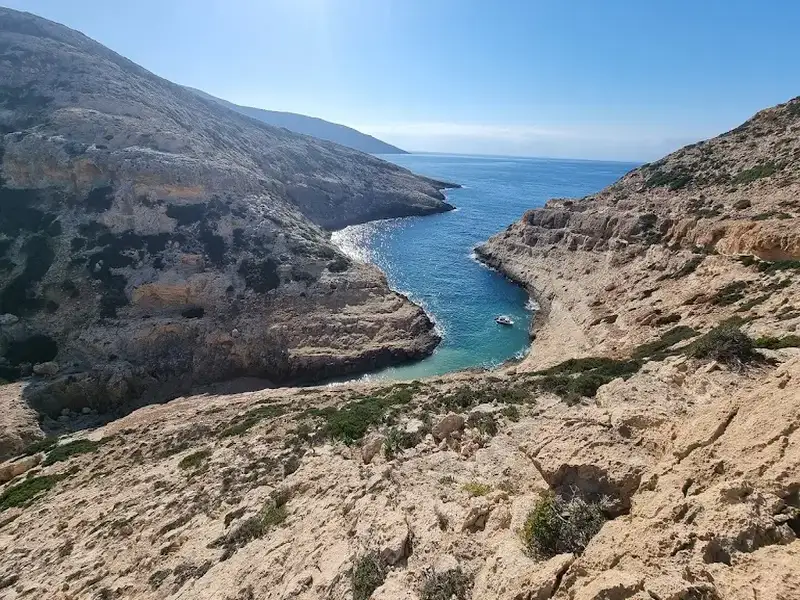
Gournia, a remote area situated on the outskirts of the Pigaidakia village in the Asterousia Mountains, lies between Vathi beach and the rugged location of Sideropetra. This is along the route that links Matala with Vathi. Reaching Gournia from the mainland demands a high level of fitness due to the strenuous and shadeless journey. However, the raw charm of the landscape makes up for the difficulty.
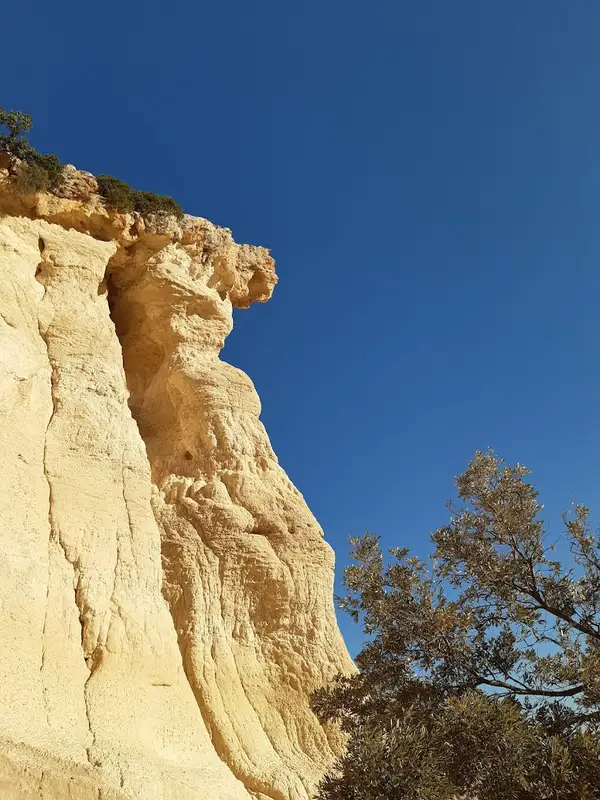
The region is marked by the soft white limestone that has been eroded by the sea, giving it a resemblance to a lunar landscape. In Gournia, there are five successive, narrow, and rocky bays formed at the outlets of deep streams, reminiscent of tiny fjords. Several small natural ponds, or troughs, which give the place its name, Gournia (meaning troughs), are also present.
In the largest and most dramatic fjord, a small, captivating beach is occasionally formed, depending on the eastward carrying portable materials by the winter rains. This unnoticed beach was photographed by Manolis Dretakis and Nektarios Savvakis in May 2020, providing a delightful surprise as it was previously considered just a rocky bay.
To reach Gournia, one has to endure a walk from Matala, which takes around two and a half hours, or from Vathi, taking one and a half hours, where a dirt road from the Monastery of Panagia Odigitria leads to the area.
No results available
Find below list of gorges near Διαμέρισμα Villa Iro:
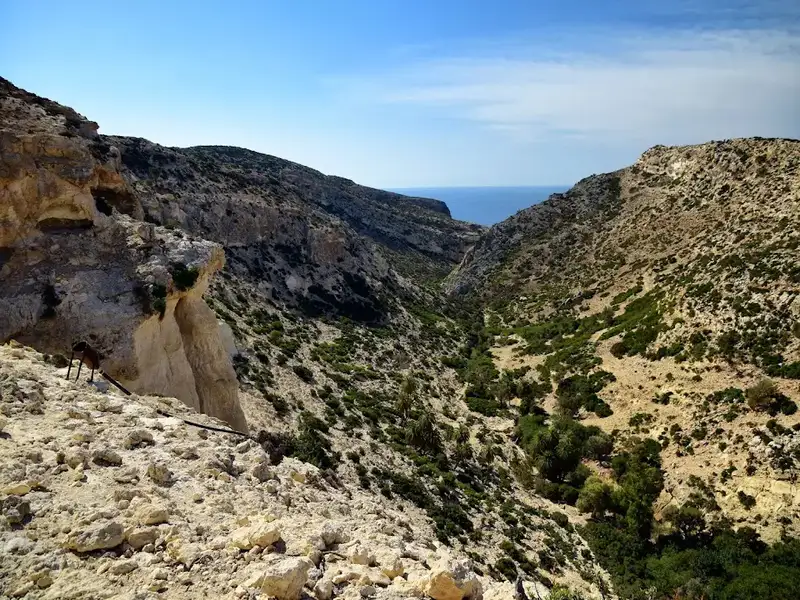
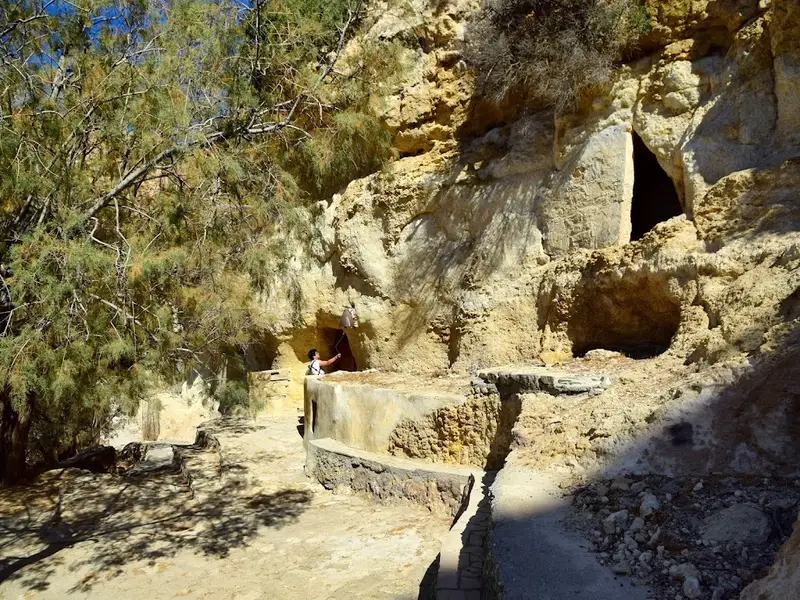
The Martsalo Gorge, stretching around 2km, is nestled on the southern coast of the rugged Asterousia Range. It collects rainwater from the Aginara region, near the Panagia Odigitria Monastery and eventually flows out onto Martsalo beach. Initially, a well-kept short trail leads from the closest dirt road to the historic church of Panagia Martsaliani. This ancient church, dating back to the early Christian era, is believed to have served as a catacomb, providing refuge for the first Christians. Surrounding the church, one can find hermit cells carved into the rocks and remnants of old structures.
From this point, it’s a relatively easy descent into the gorge’s bed, leading to the picturesque Martsalo beach. According to local lore, the Apostle Paul briefly landed here during his journey to Rome. The path to the beach is dotted with clusters of Cretan date palm trees, forming the second largest colony in Asterousia, only surpassed by the palm forest of Agios Nikitas.
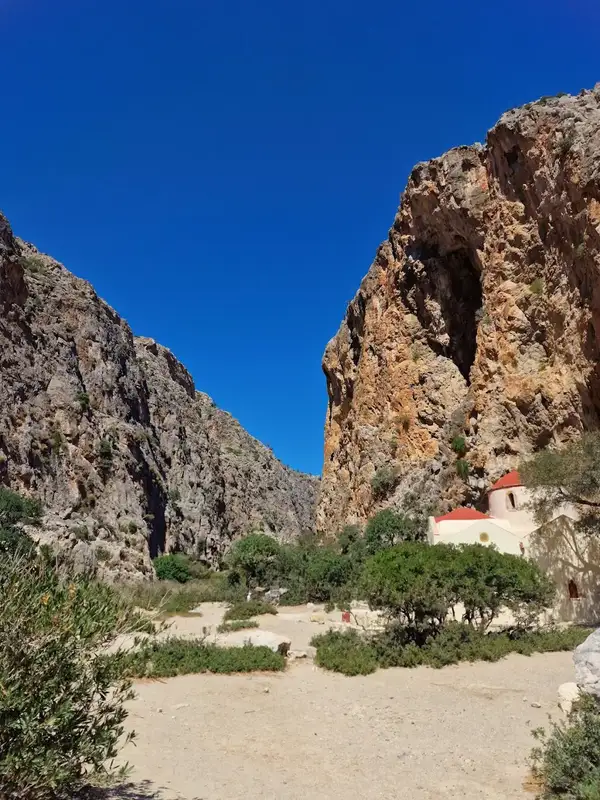
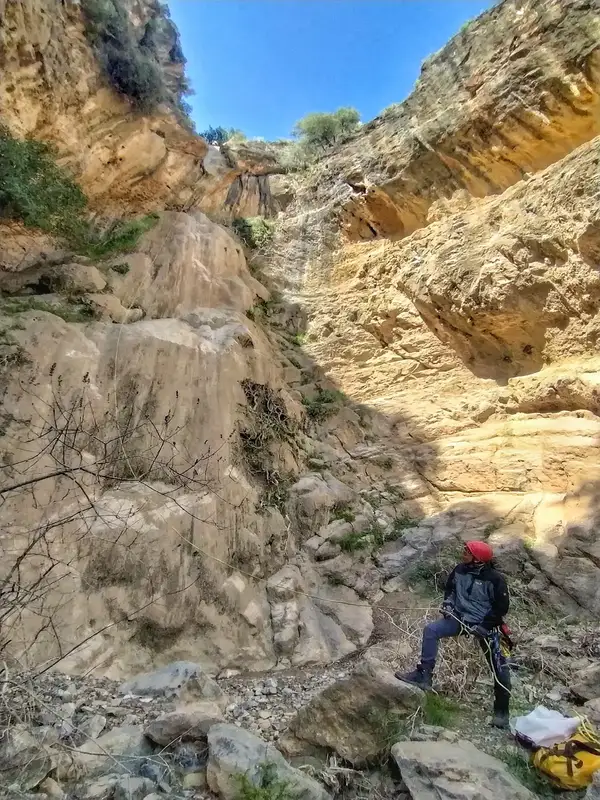
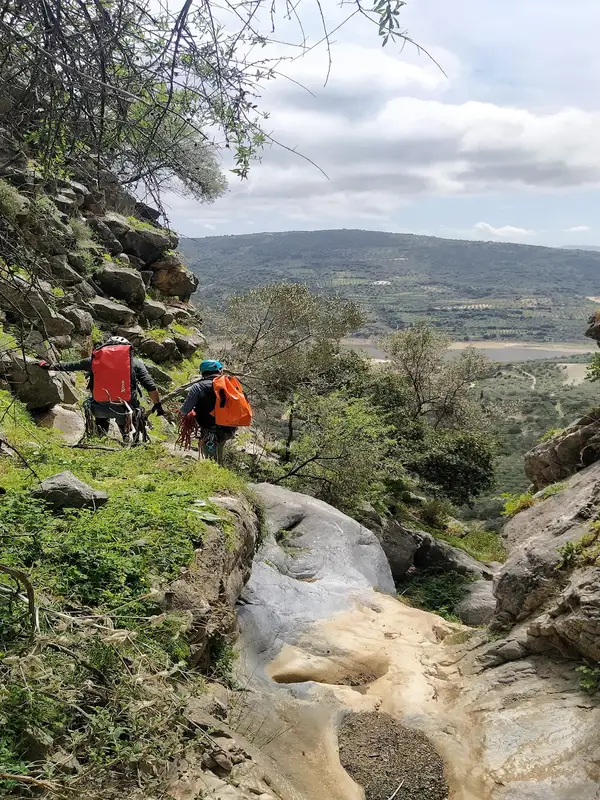
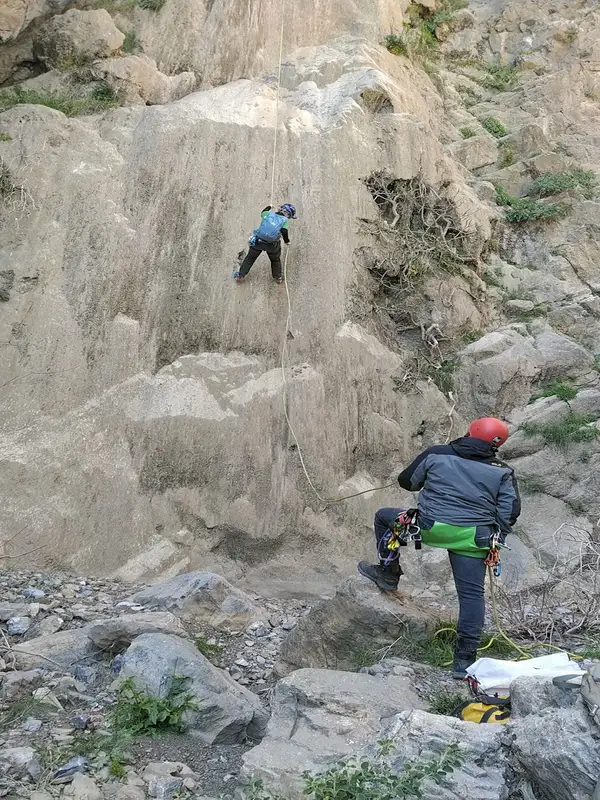
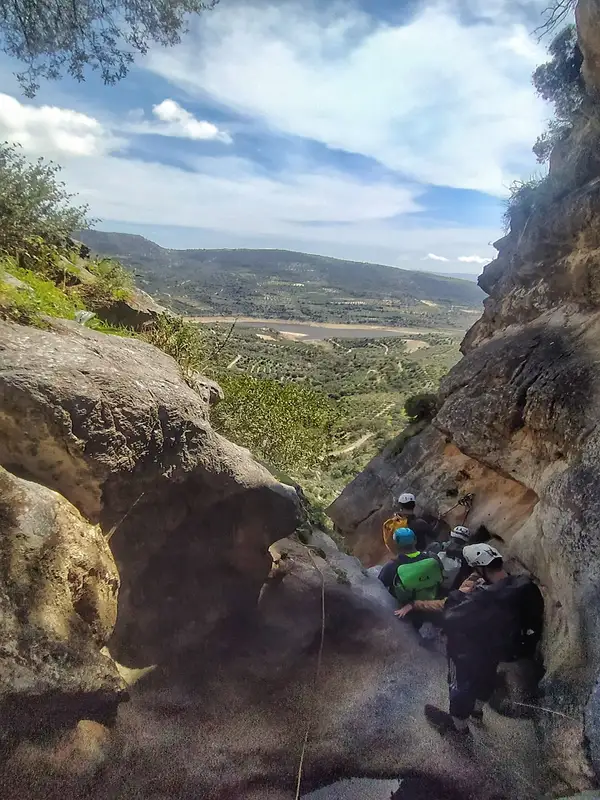
The Agiofarago Gorge, situated to the south of the Panagia Odigitria Monastery, was formed near two stream beds. One stream originates from the north-northeast of Gyalomonochoro, while the other begins west of Pigaidakia village. These two streams converge near Saint Kiriaki’s chapel, and after a fairly gentle course, they form the main Agiofarago Gorge that terminates at the stunning Agiofarago beach. The gorge features vertical cliffs with caves, but the path along the flat stream bed is quite easy to traverse. Just before reaching the sea, there’s a climbing field where climbers are often spotted.
Agiofarago, meaning Gorge of Saints, is named after the hermits who established a significant hermitage in Central Crete during the early Christian era, following Saint Paul’s visit to the region. As per a legend, around 300 hermits lived here in complete solitude, only gathering once a year in the Cave Goumenospilios to count their numbers and see who had died in the past year. The church of Saint Anthony (Agios Antonios), encountered on the way to the cave Goumenospilios, became the hub of the area’s asceticism when the hermits began forming a religious community. The church, believed to have been renovated three times, initially started as a small church in a rock cave. As the hermit population grew, the church was expanded. The final renovation is thought to have occurred in the 14th or 15th century. A small well outside the church supplied the hermits with water as there was no nearby spring. A circular Minoan tomb on a small hill south of the church indicates human presence from the Minoan era.
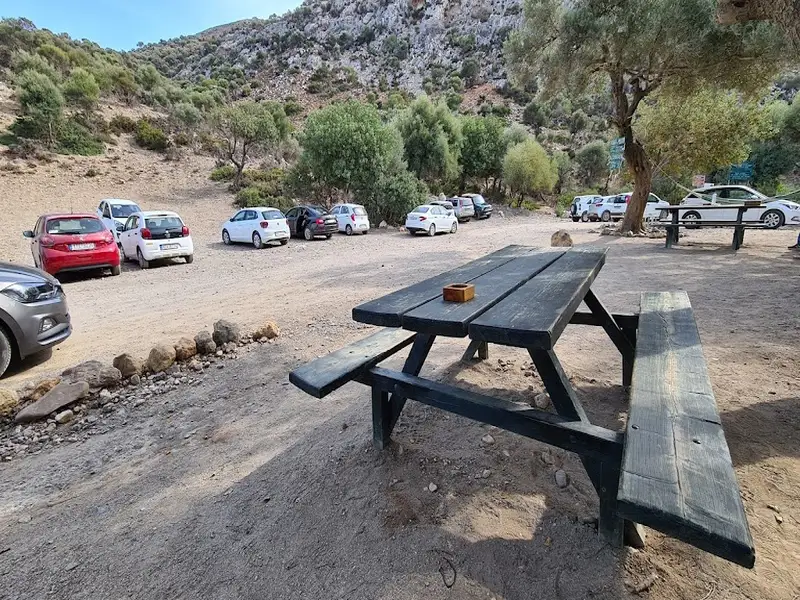
You can reach Agiofarago in several ways. You can take a boat from the ports of Kokkinos Pirgos, Agia Galini, or Kali Limenes, or you can take a dirt road starting from the historic Monastery of Odigitria near Sivas, which the area is a part of. From the monastery, follow the signs to Agiofarago, descend into the gorge, and continue until you reach a dead-end and a small parking area. Be cautious not to park your car under the trees as goats might climb on the roof to eat the leaves, causing damage. The hike from the parking area to the sea through the gorge takes approximately 25-35 minutes.
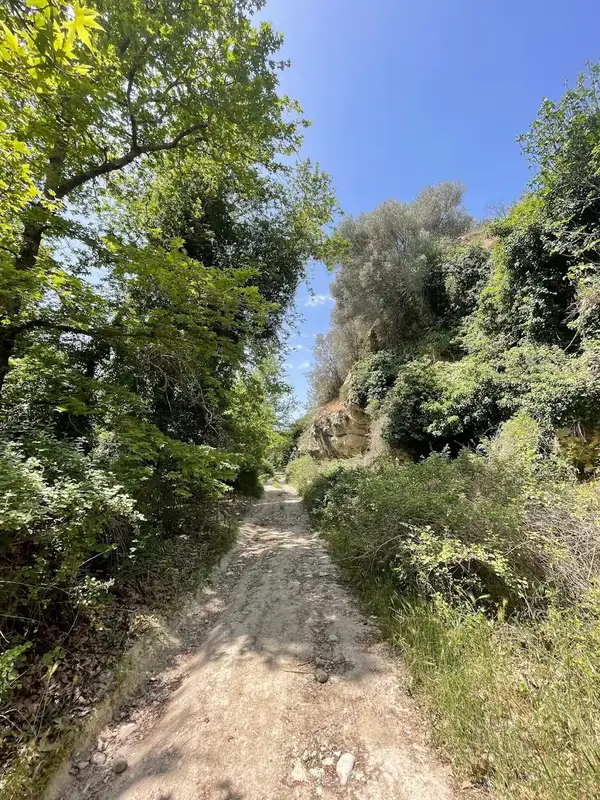
The Apolychnos Gorge, situated just a few kilometers north of the town of Mires, is nestled in an area abundant with olive groves. This gorge is essentially a narrow valley that traces the path of a river, which in certain areas deepens and is surrounded by thick vegetation. The Tourki stream that flows through it carries water from a valley that begins west of Makres village to the Geropotamos river. The gorge, which is roughly 3 km long, begins near the village of Panagia and concludes at the traditional settlement of Agios Antonios (Vrelis). It’s conveniently accessible, particularly near its exit close to Agios Antonios, as it’s adjacent to the main road from Mires.
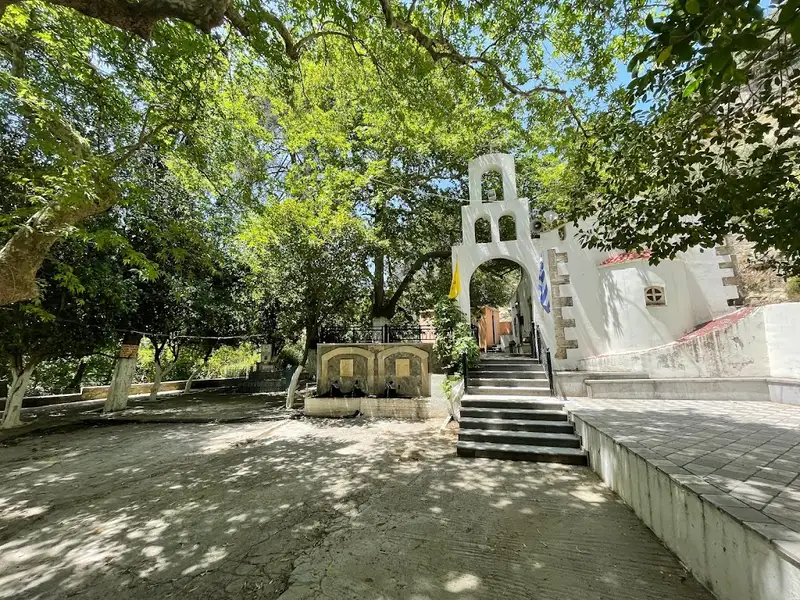
The gorge is named after the deserted village of Apolychnos, which is situated within the gorge at an elevation of 220m. This village, enveloped by verdant trees and bubbling springs, is home to the stunning Byzantine church of Saint Panteleimon, located in the village square.
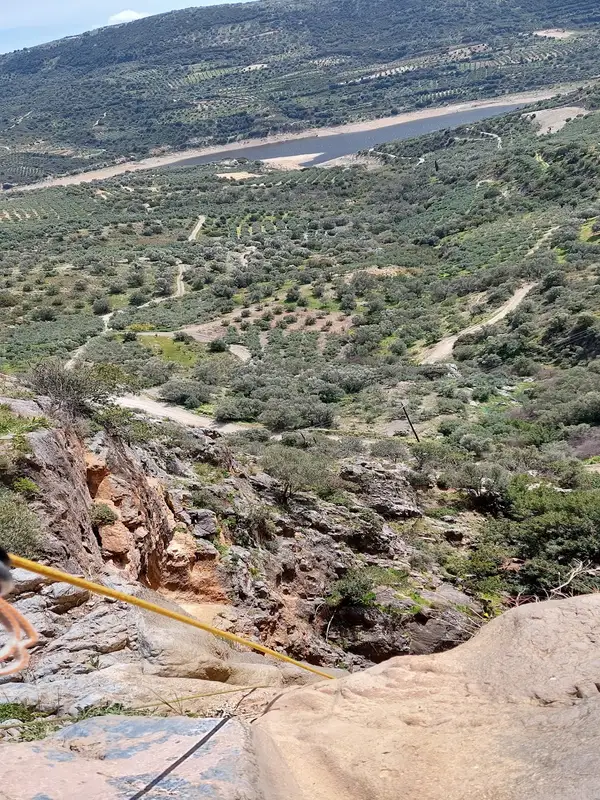
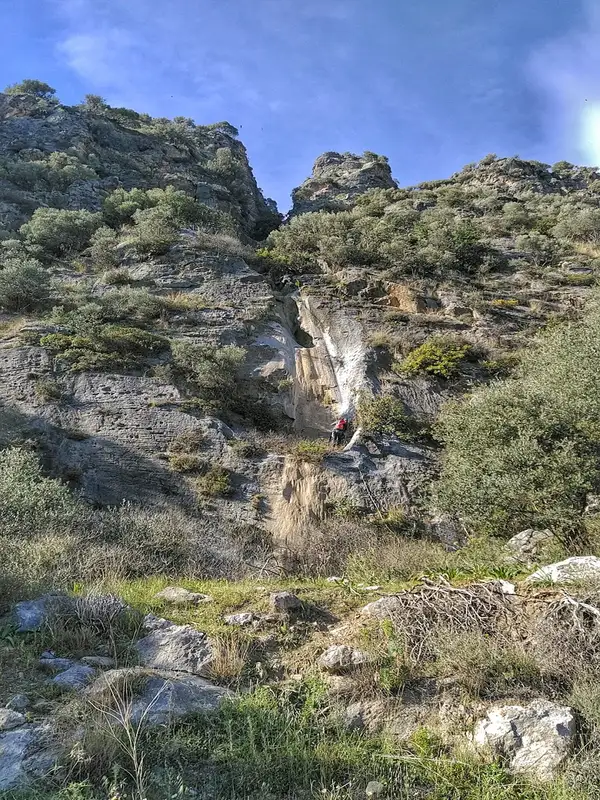
On the southeastern flank of Mount Sanida, near the quaint village of Skourvoula, you’ll find a petite yet wildly untamed chasm known as Rizopetro. This gorge culminates in a striking 60m waterfall that cascades into the lake of the Faneromeni dam, a sight to behold especially after heavy downpours.
No results available
© All rights reserved. Crete Locals