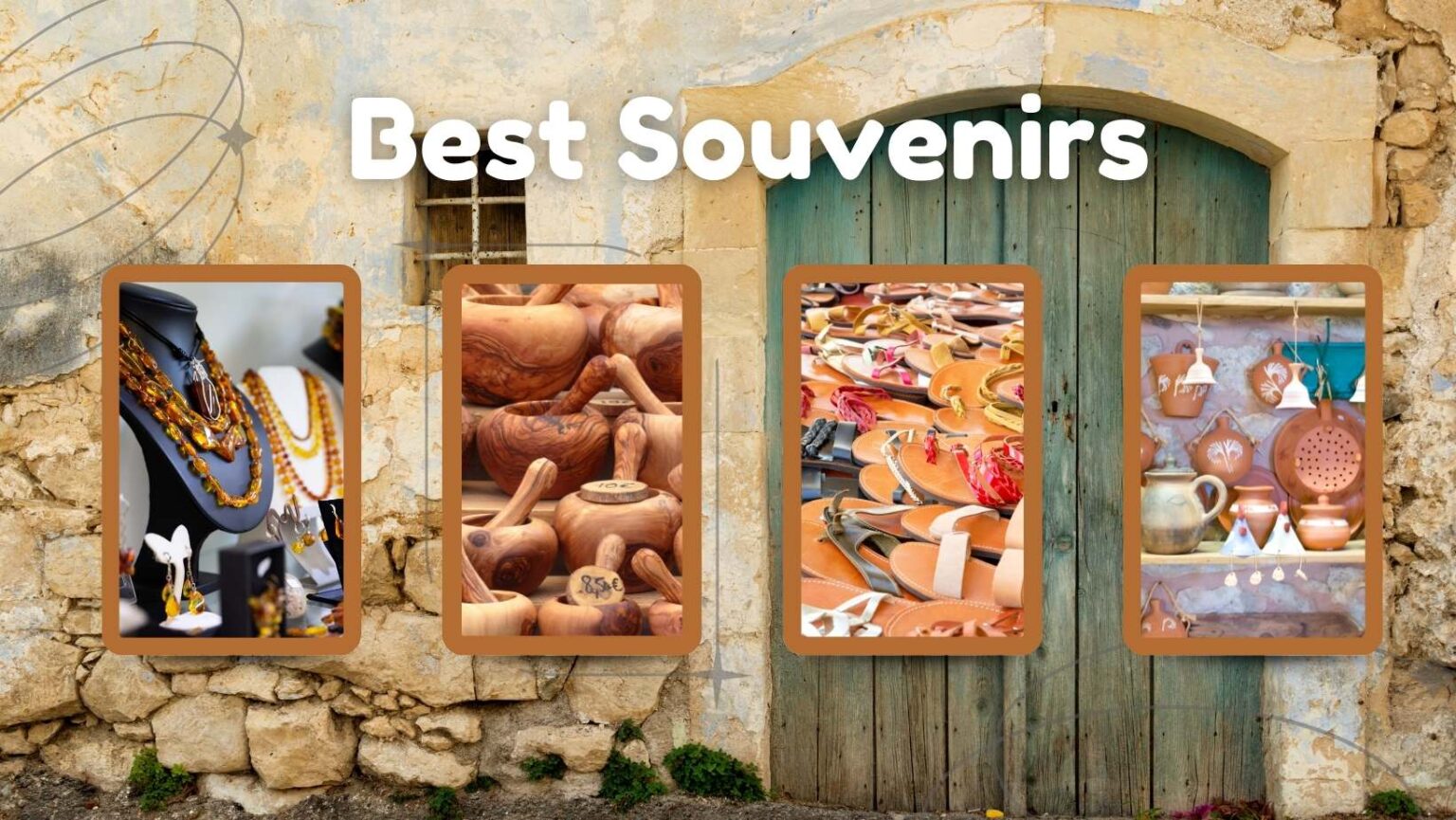
The best souvenirs from Crete are the island’s own produce and handmade crafts: extra virgin olive oil, raki (tsikoudia), thyme honey and mountain herbs, olive-wood objects, blue-enamel ceramics, leather sandals and stivánia boots, handmade daggers, handwoven yfandá textiles, amber komboloi and Minoan-pattern jewellery, and hand-painted icons. The mass-produced magnets and fridge trinkets fill the shops on the main tourist strips, but the narrow lanes of the old towns hide small family workshops that still make the real thing. Prices swing widely between the two, and off-peak visitors often find room to negotiate.
Souvenir shopping in Crete rewards patience over convenience. The categories below start with the edible and drinkable classics that every Cretan household hands to a guest, then move through the crafts you preorder, watch being made, or hunt down street by street.
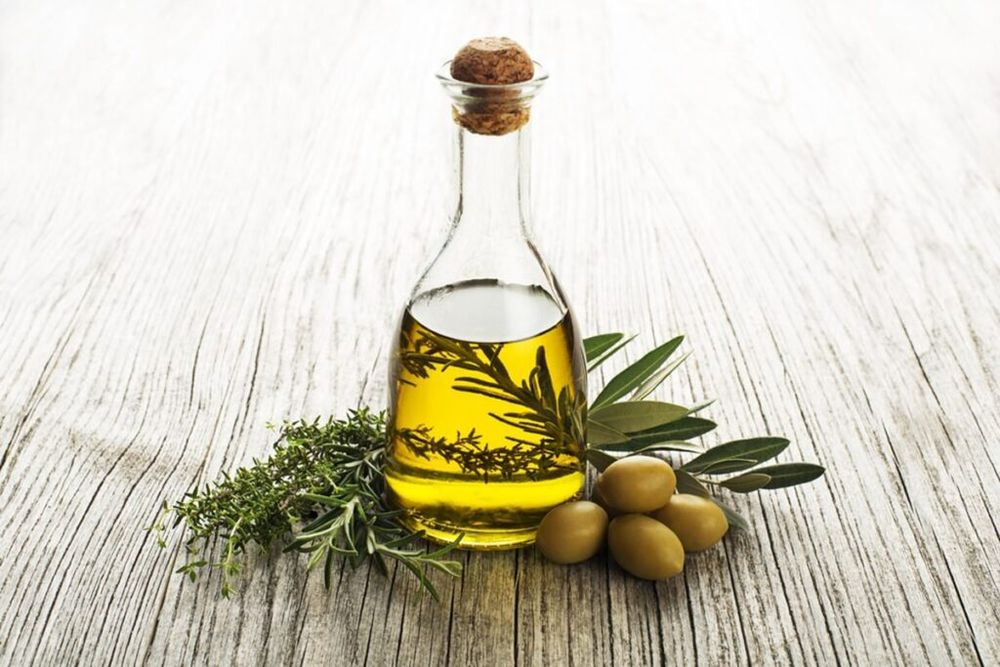
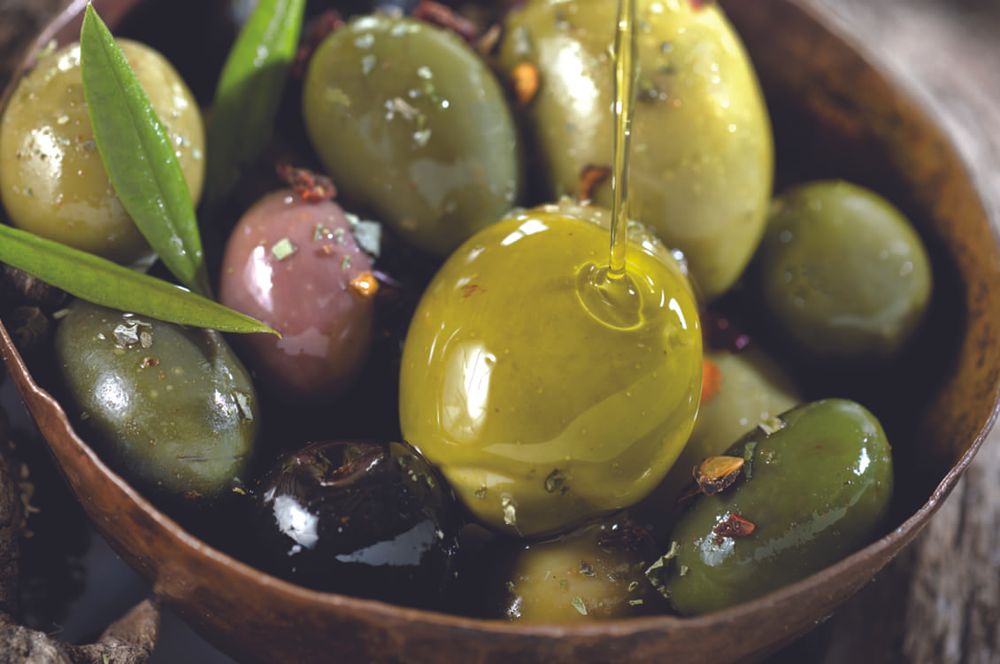
Cretan extra virgin olive oil is the single most iconic souvenir to carry home, widely regarded as the finest in Greece. Cretan olive oil rewards a little label-reading before you buy: the cold-pressed oils from Sitía, Toploú and Agía Triáda are the ones locals single out. Olives themselves also travel well and make an easy, inexpensive gift.


Honey ranks among the staples of the local table, and the island’s version is infused with the aroma of wild herbs and flowers. Alongside olive oil, it anchors the traditional Cretan breakfast, and a sealed jar keeps for months with no special handling.
Herbs grow across the Cretan hills, where locals pick, dry and pack them for kitchens around the world. The most common come in small textile bags, such as:
Raki, also called tsikoudia, is Crete’s national spirit and its most sociable souvenir. Raki is distilled from the grape remnants left after winemaking, which gives it a potent, aromatic character close to Italian grappa. A bottle costs little and extends the flavours of the holiday into everyday life back home.
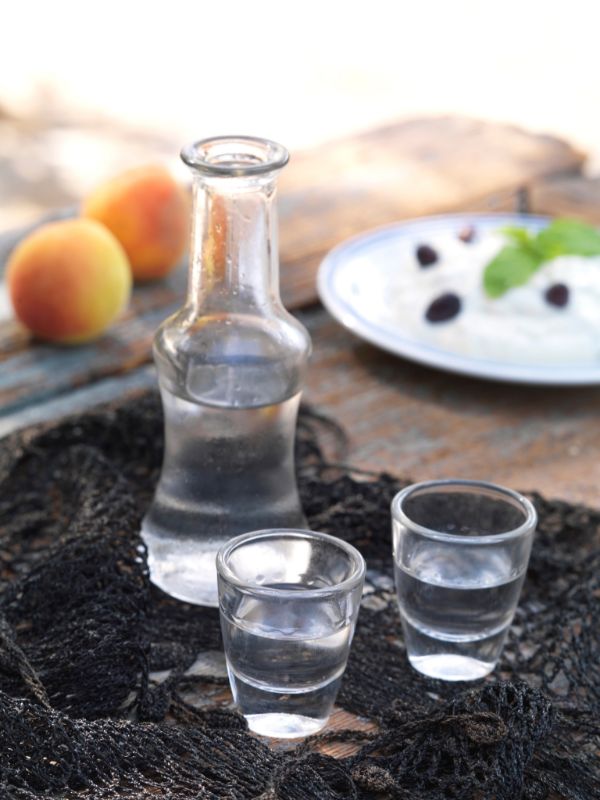
On the island, raki means more than a drink. It stands for hospitality, generosity and social bonding, and hosts pour it after a meal as a matter of course.
Cretan olive-wood objects are carved from branches pruned during the annual tree-cleaning or from dry, seasoned trunks. Craftsmen turn the wood into cutting boards, kitchen utensils, napkin rings and candle holders. A good cutting board is cut from a single piece, so it resists splitting; larger items demand more wood and labour, which is why they never sell cheaply.
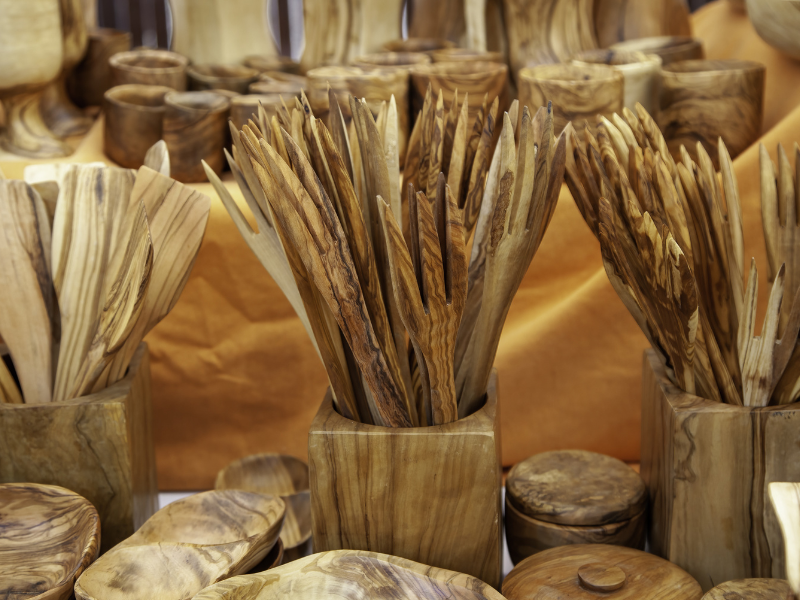
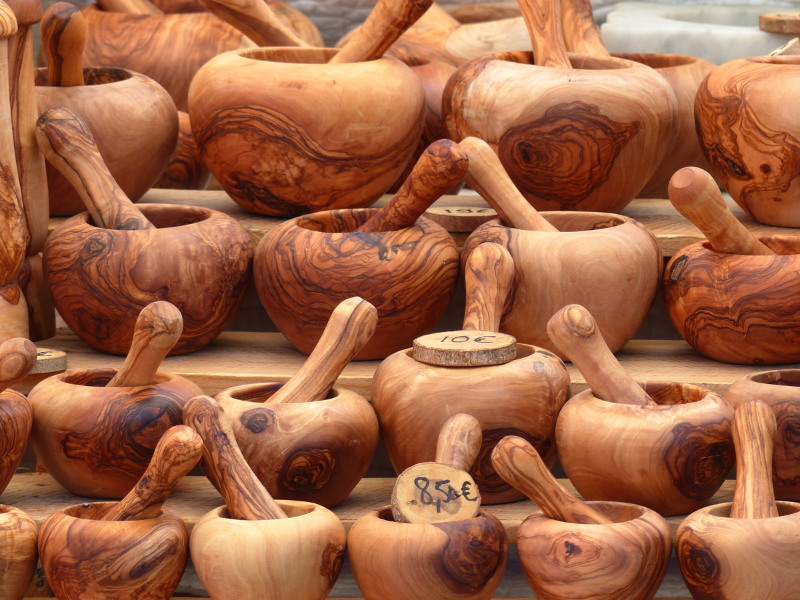
Olive-wood pieces are stocked in souvenir shops across the island. Quality shows in two ways: the silky-smooth surface and the natural scent, both of which come from the Cretan olive-oil finish rubbed into the local wood.
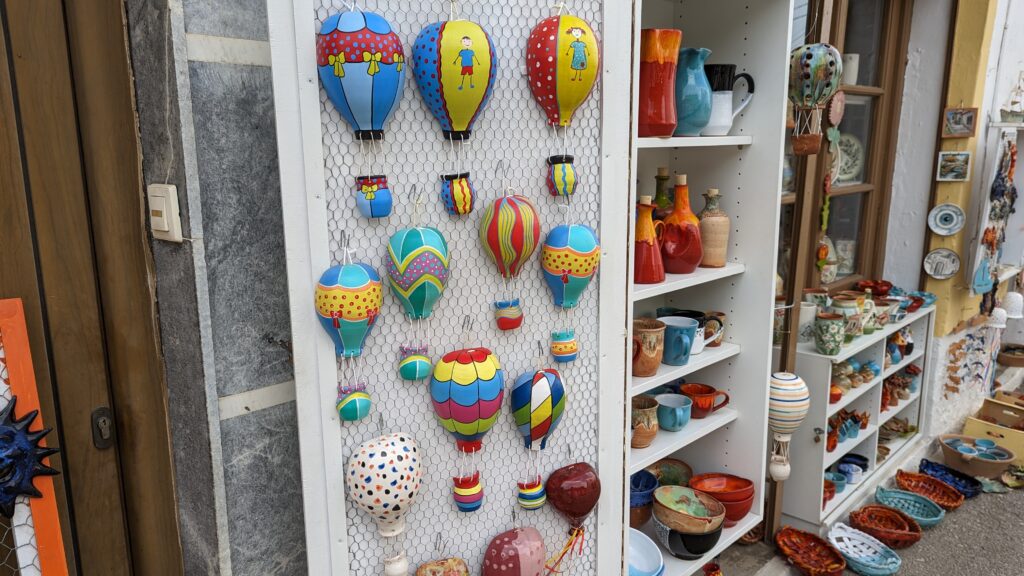
Cretan ceramics carry a pottery tradition that runs unbroken from the Minoan era to today. The range spans tiny keepsakes to large garden pieces, some enamelled and some left plain, with the blue Chania enamel among the most striking. Traditional decoration favours marine themes, Minoan elements and Greek mythological motifs, while Chania’s avant-garde galleries also stock modern, abstract work.
Ceramics are best bought where they are made. Potters work at the wheel in the open workshops of Margarites village, so you can watch a piece take shape before you choose one.
Cretan leather covers both everyday accessories and the traditional stivánia shepherd’s boots. Accessories include bags, handbags, travel bags, sandals and belts, and Skrydlóf Street in Chania is the place to compare quality and price across several shops.
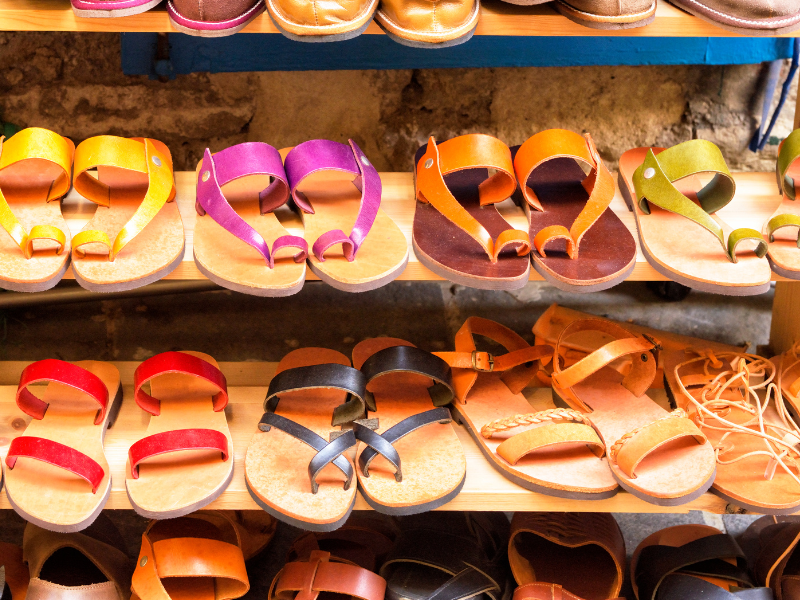
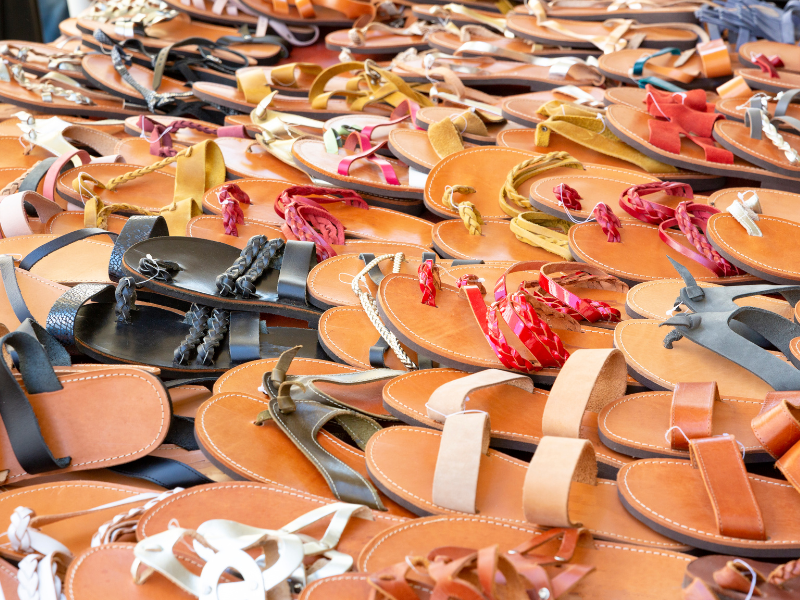
Traditional leather sandals with low soles and leather straps are still sold on the streets of Réthymno and Chania, and a workshop in Kritsá keeps the craft alive, though mass-produced footwear has largely replaced the handmade kind. For something built to last, buy a pair of stivánia: long boots that reach close to the knee, with a thick sole and a lifespan of many years. Stivánia are handmade to order, so preorder them and allow about a week for the pair to be ready.
Cretan daggers are handmade blades that double as folk art, forged by craftsmen in Réthymno and Chania. A Cretan dagger pairs a stainless-steel blade with an olive-wood handle, and the handle is usually inscribed with a mantináda, a rhyming Cretan couplet. One of the best traditional knifemaking districts, the Maherádika, sits in Chania.
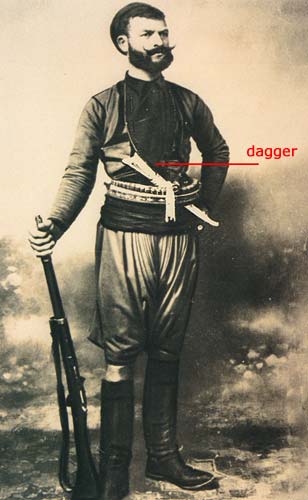
Two neighbouring addresses anchor the district. O Armenis, at Sifáka 14 and owned by Michail Pakhtikos, sells the knives; a few steps away at Sifáka 18, the Tzangarakis antique shop specialises in copper objects.
Cretan textiles are handwoven from sheep’s and goat’s wool into a cloth called yfandá. Weavers tailor yfandá into clothes, carpets and rugs. Weaving machines now do much of the work, yet handmade pieces are still around, and the colour tells you which is which: bright shades point to synthetic dye, while soft pastels come from natural dyes, and the price gap confirms the difference. The most common motifs are dolphins, fish and stylized figures of Greek goddesses.
The best fabrics turn up in Kritsá and Anógia, near the Dictean Cave in Lasíthi, and of course in Chania. The island’s only traditional weaver, Mihalis Manousakis, keeps a shop in Roka at Zampelíou 61, in the area of the Venetian port of Chania. The nearby Tophanás district is the place to hunt antiques, though they are far from cheap, and the owner openly sells copies alongside authentic pieces.
Embroidery is the alternative for anyone who passes on woven cloth. The choice runs to beautifully embroidered tablecloths and napkins, with handmade examples the finest and the priciest. This is an endangered craft, so genuine hand embroidery is increasingly hard to find; the Center of Traditional Folk Art and Culture, at Skoufón 20 in the Evraïkí quarter of Chania, sells a number of outstanding modern pieces.
Cretan jewellery pairs Minoan-pattern gold and silver with collectable amber komboloi. Gold and silver are sold largely by weight, with a modest markup for the workmanship, which keeps them relatively affordable. The pieces include necklaces, bracelets, rings and earrings set with ancient Minoan patterns, with or without precious stones.
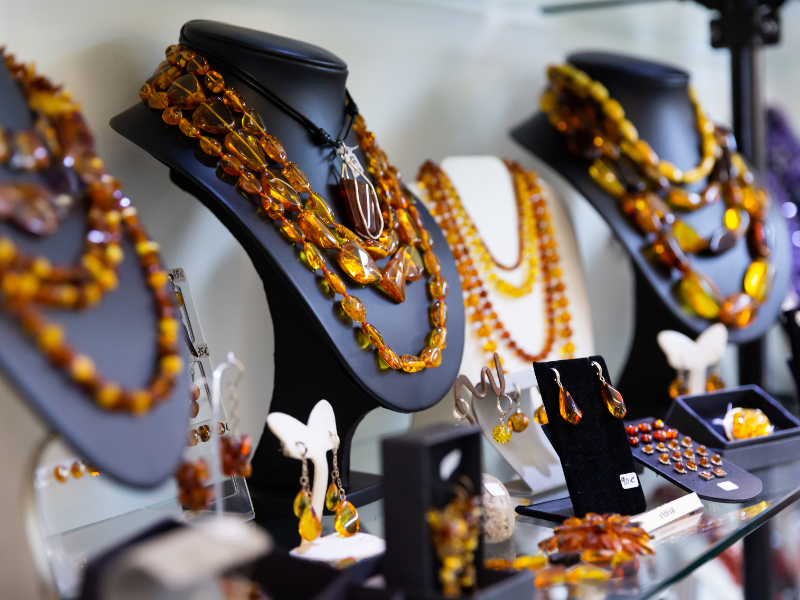
For amber, head to the old port of Chania. Kahraman Komboloi & Jewelry holds the widest selection of solid amber in collectable komboloi and unique handmade jewellery. Its handmade komboloi use rare materials, such as Kahraman, red Egyptian faturan, mastic and yusuri, alongside more economical options in mineral stones, wood, bone, horn and aromatics.
Cretan art centres on Chania and on hand-painted Orthodox icons. Artists have gathered in Chania since the 1960s, which lifted the quality of art sold here well above the rest of the island. In the Evraïkí district, several large galleries show work by both local and international artists.
Religious icons and portraits remain significant in Cretan art because of their place in the Orthodox Church. For centuries these icons were prized souvenirs for European pilgrims, though modern synthetic colours dulled their charm for a time. Recent years have brought a return to traditional icon-painting methods, both for restoring church works and for sale, and most Cretan monasteries sell copies of famous icons, as do many jewellery stores.
Authentic Cretan souvenirs reveal themselves through material, finish and provenance rather than price tags alone. Handmade wood carries a natural olive-oil scent and a seamless, single-piece build. Natural-dyed textiles show soft, pastel tones instead of bright synthetic colour. Buy where the item is made, such as the potters’ workshops of Margarites or the knifemakers of the Maherádika in Chania, and ask the maker directly, because the honest ones will tell you when a piece is a copy.
Extra virgin olive oil is the most typical souvenir from Crete, widely regarded as the best in Greece. Cold-pressed oils from Sitía, Toploú and Agía Triáda are the labels locals recommend most.
Shop in the narrow streets of the old towns rather than the main tourist strips. Chania concentrates many of the island’s best makers, from the leather shops on Skrydlóf Street to the knifemakers of the Maherádika on Sifáka Street, while Margarites is the place to buy ceramics straight from the workshop.
Pack bottles of olive oil and raki in your checked luggage. Both are liquids, so they exceed the carry-on limit; wrap each bottle well to guard against breakage in transit.
Cretan souvenirs range from a few euros for herbs, magnets and small olive-wood items to much higher prices for handmade boots, weavings and jewellery. Handmade pieces cost more than mass-produced ones because they take more time and material, and visitors travelling off-peak often find sellers willing to negotiate.
A mantináda is a rhyming Cretan couplet inscribed on the olive-wood handle of a traditional dagger. The verse turns a working blade into a personal keepsake, which is part of why handmade Cretan daggers are collected as folk art.