
Crete’s modern roads often trace routes used since antiquity, CretaOne reports
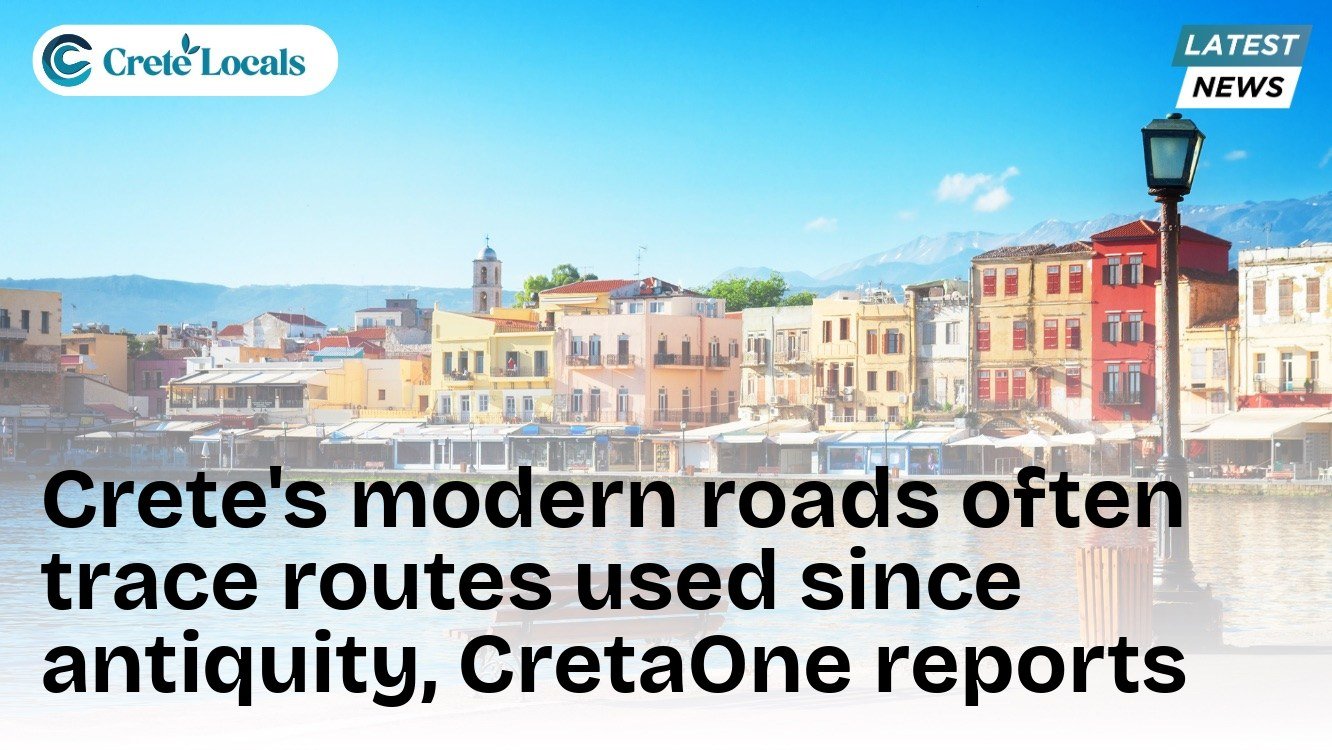
Some of Crete’s modern roads follow travel corridors that predate asphalt and cars by thousands of years, according to a report by CretaOne.
Long before today’s paved highways existed, people on the island moved between the north and south coasts, cities, ports and mountain areas using a different network of paths, the report says. These movement patterns were not created by modern roads; in many cases, roads arrived much later to serve routes that were already significant, CretaOne notes.
North coast to the Mesara plain
One of central Crete’s most important routes historically connected the Heraklion area on the north coast with the Mesara plain to the south, according to the report. Today drivers cover this route by car, but in the past, communication between the northern coast and the large southern plain carried major importance, CretaOne says.
Knossos was located to the north, while Gortyna later developed into one of the island’s most important centers, the report notes. Between the two sites lay mountain passes and natural corridors that were used to move people and goods, according to CretaOne.
Before cars, people and animals made the journey
Everything that needed to be transported once traveled by different means, the report says: loaded pack animals stood in for trucks, and dirt paths and trails served the function that paved roads do today.
Geography often determines where a road runs
A mountain does not disappear because cars were invented, and a gorge or plain does not shift position, CretaOne notes. As a result, the natural corridors that served people centuries ago can continue to shape movement across the island today.
Modern roads do not necessarily match ancient paths along their entire length, the report acknowledges, but the overall direction of travel can remain strikingly familiar. Anyone curious about how landscape continues to shape travel on the island can explore some of the driving routes across Crete that follow these long-used corridors.
Asphalt as the latest layer
CretaOne frames this as perhaps the most striking takeaway: the next time someone drives from Heraklion toward the island’s interior, the need to travel from one side of Crete to the other did not begin with the automobile. The means of transport changed, the roads changed, and the speed changed, but according to the report, the need to connect the two sides of the island is far older than any of that.
The report is part of a series by CretaOne exploring traces of the island’s past hidden in its present-day landscape, following similar features on Crete’s old stone bridges and on how village name suffixes reveal local history.